
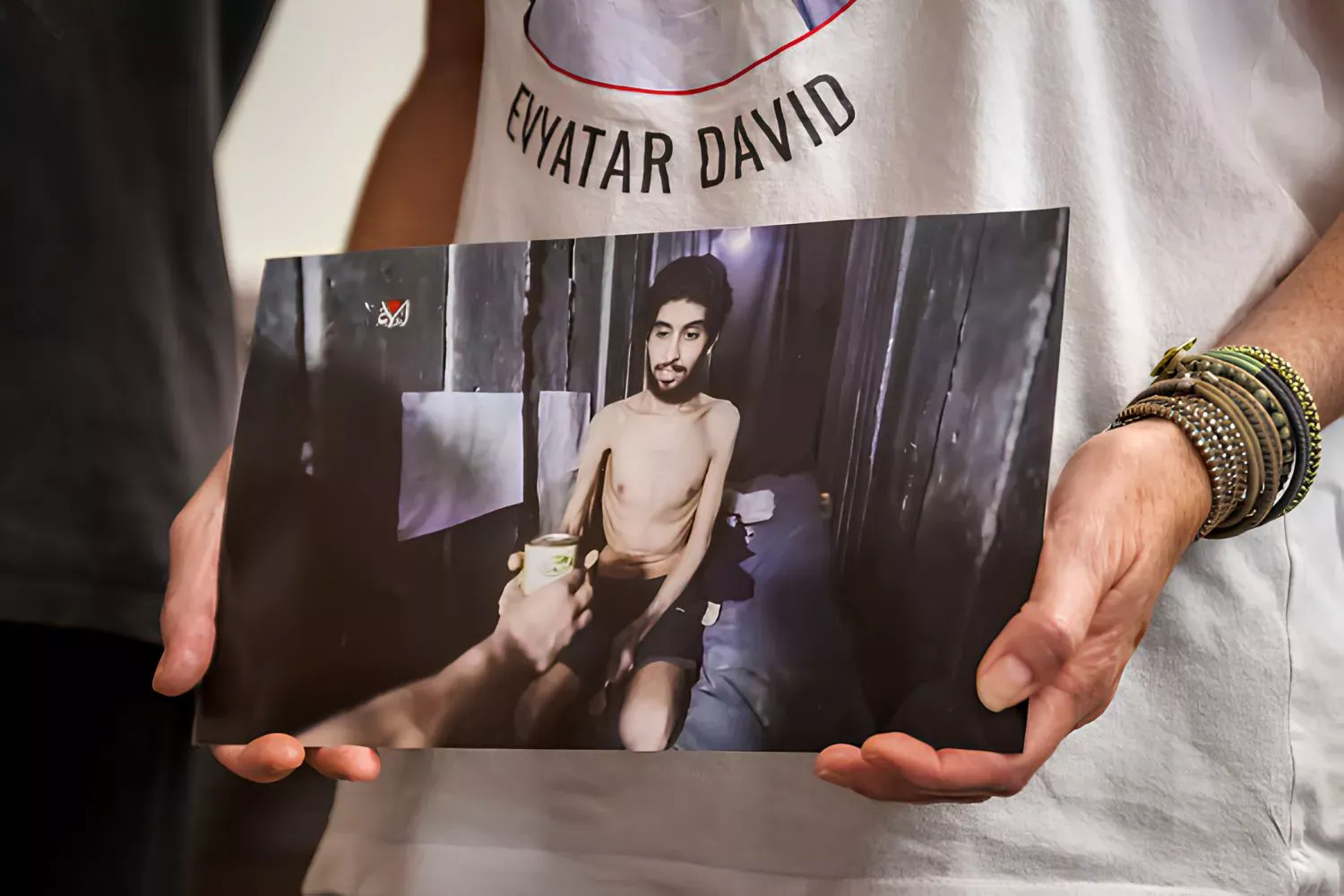
Kidnapped: Hostage-Taking as a Form of Torture
“We were brutally kidnapped from our house. Our girls saw things
that kids that age, or any age, should not see. You feel like you want
to pinch yourself and wake up from this movie. We just slept, cried.
Every day that passed was an endless eternity.”
- Danielle Aloni
Executive Summary
On October 7, 2023, Hamas and its related militias invaded southern Israel and forcibly abducted 247 men, women, and children. Prior to that attack, 4 hostages were already being held in Gaza. Over 2 years later, all of the hostages have come home, and a reckoning is now due.
This report is based on the testimony of released hostages and the health care professionals who treat them. It analyzes the clear and absolute prohibition on torture under international law, and integrates the findings of the United Nations Special Rapporteur on Torture, whose 2025 report identified a clear pattern of physical and psychological abuse suffered by hostages during captivity, as well as post-traumatic harm after their release.
We reveal here that 88 percent of the hostages were civilians. Among them, 23 hostages were aged 12 or younger at the time of their abduction, and 34 were aged 60 or older. Fifty percent of the hostages were non-Israeli or held dual or multiple citizenships, including citizens of at least 24 different countries.
The hostages were held in harsh, degrading, and inhumane conditions and were denied medical care, food, access to personal hygiene, and natural light. Threats of execution, prolonged isolation, sexual assault, and abuse were routine experiences in captivity. 68% of the hostages held for over 200 days were forced to participate in propaganda videos. So far, 12 released hostages have described being sexually assaulted in captivity, including women and men. 33 hostages were executed by their captors.
At least 78 released hostages showed signs of starvation, acute malnutrition, and severe muscle wasting, having received as little as a single piece of bread each day, even as their captors ate full meals. Most hostages faced inadequate hygiene, physical violence, and extended periods of immobility during captivity. Psychological assessments further reveal acute dissociation, emotional numbing, and severe mental withdrawal.
“For 491 days, I was kept mostly underground in Hamas terror tunnels, chained, starved, beaten, and humiliated.” - Eli Sharabi
This report calls upon United Nations mechanisms, State Parties to the Convention Against Torture, and international accountability bodies to address the October 7 attacks and the hostage-taking as conduct that constitutes torture, and recognize former hostages and their families as victims of torture. Torture is absolutely prohibited under international law. It cannot be justified or contextualized. Hostage-taking is not merely arbitrary detention. It is the deliberate weaponization of human suffering to bend political will.
The Jerusalem Institute of Justice urges States and international bodies to reject any framing of the hostage-taking of Israelis as a legitimate military tactic or political bargaining tool. Finally, we call for the perpetrators and co-conspirators to be held accountable through criminal trials, civil litigation, and the application of universal jurisdiction.


Joint kinetic operation - USA & Israel
Legal Justification for Preemptive Self-Defense: The February 28, 2026, Joint Operation
This position paper examines the February 28, 2026, joint kinetic operation conducted by Israel and the United States. It sets out the legal case for treating the operation as a lawful exercise of preemptive self-defense under Article 51 of the UN Charter in response to an imminent threat posed by Iran. Grounded in the Caroline test, ICJ jurisprudence, and relevant principles of international law, the paper argues that the operation was a measure of last resort, not an act of aggression
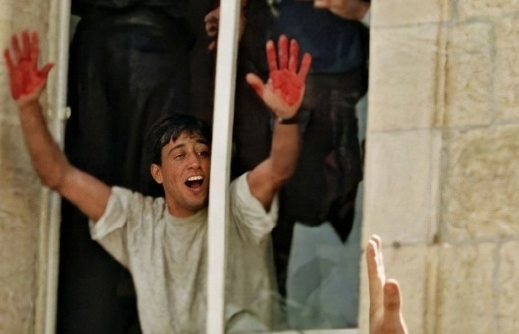
Gaza After Hamas
GAZA AFTER HAMAS:
THE PALESTINIAN AUTHORITY`S CAPACITY TO GOVERN
Despite the Palestinian Authority’s historical support for armed struggle against Israel, the PA’s steadily eroding legitimacy among the Palestinian public, and deep Israeli distrust, alongside the absence of a stable and strong alternative leadership and the PA’s response to the October 7 massacre, international discourse around the potential involvement of the Palestinian Authority in the Gaza Strip is growing. Some in the international community consider the PA the most legitimate potential actor to govern Gaza because the PA is the internationally recognized governing body of the Palestinian people through the Palestinian Liberation Organization (PLO) and the Oslo Accords. In their view, the PA is also the only Palestinian institution with pre-established ministries, security structures, and donor-backed administrative capacity to run the Strip effectively.
However, to be accepted on an international level (specifically according to the terms of the United States and Trump) as a candidate for the governance of the Gaza Strip, it must undergo verifiable reform on three main fronts: the elimination of the “Pay-for-Slay” fund, the eradication of indoctrinatory educational systems, and the establishment of stable government structures and cooperative leadership.
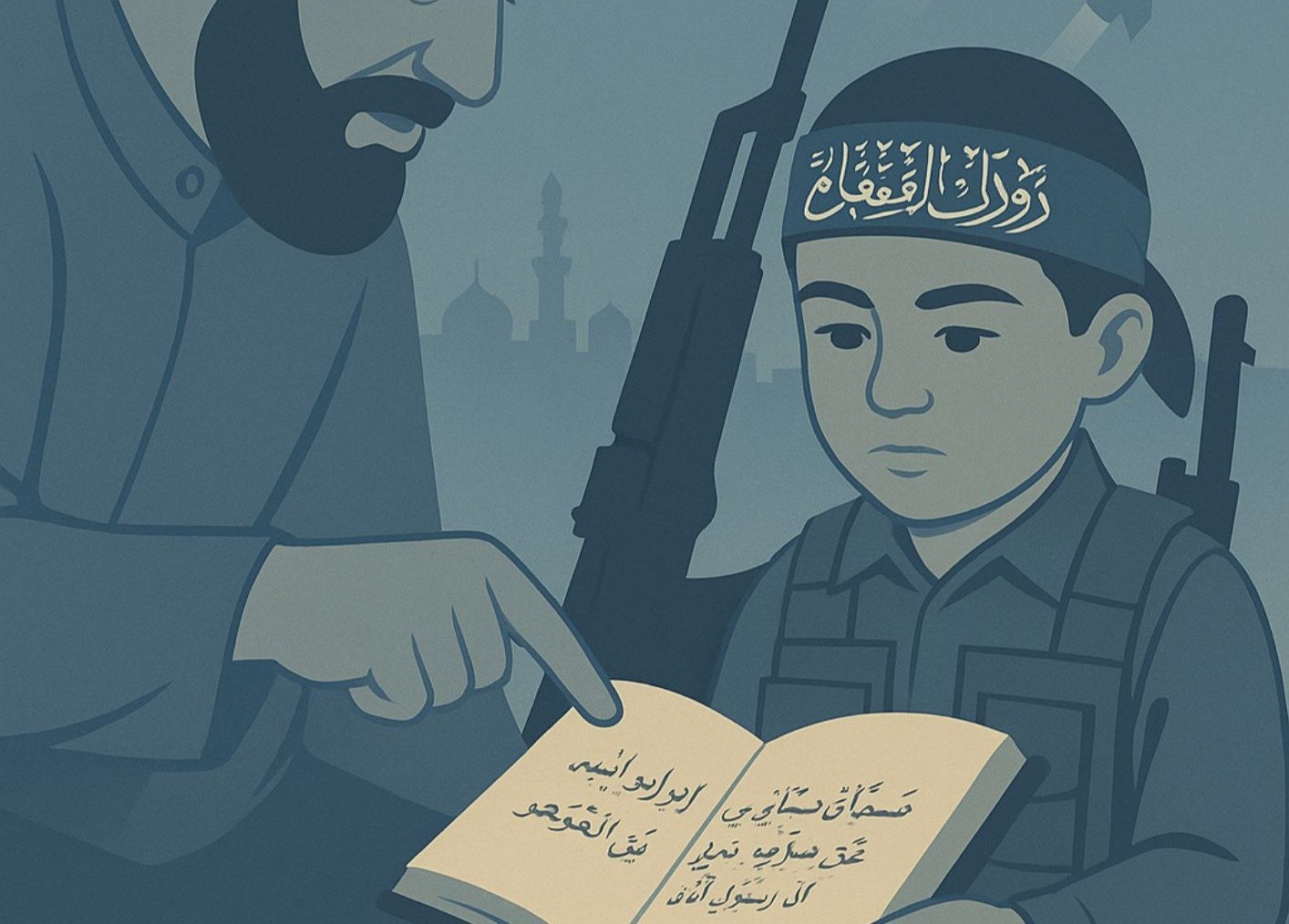
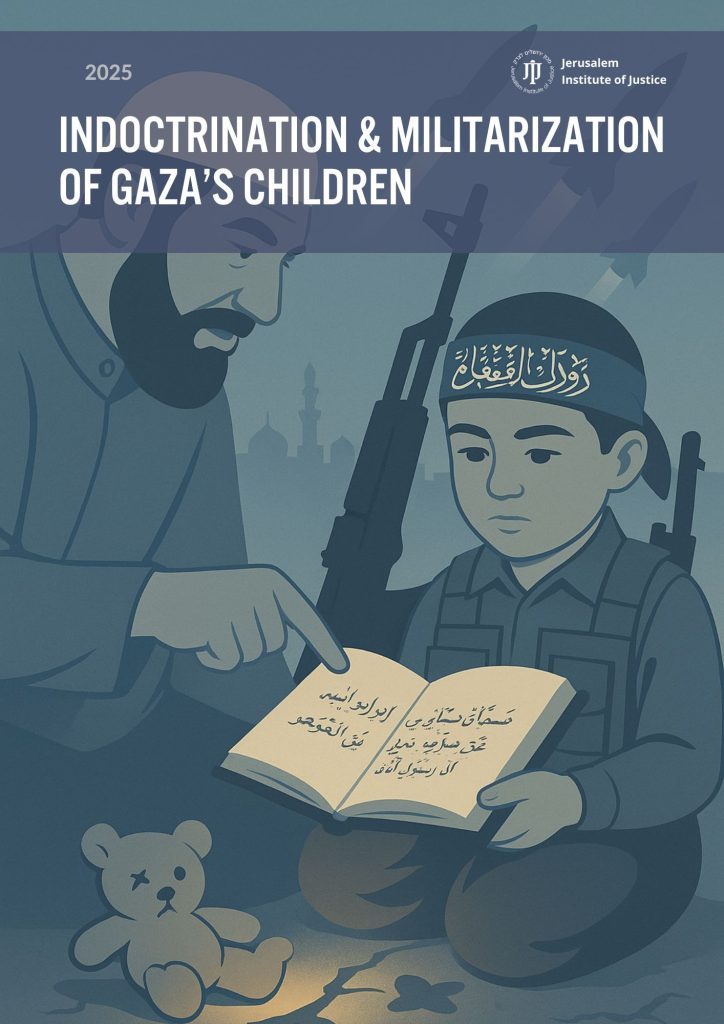
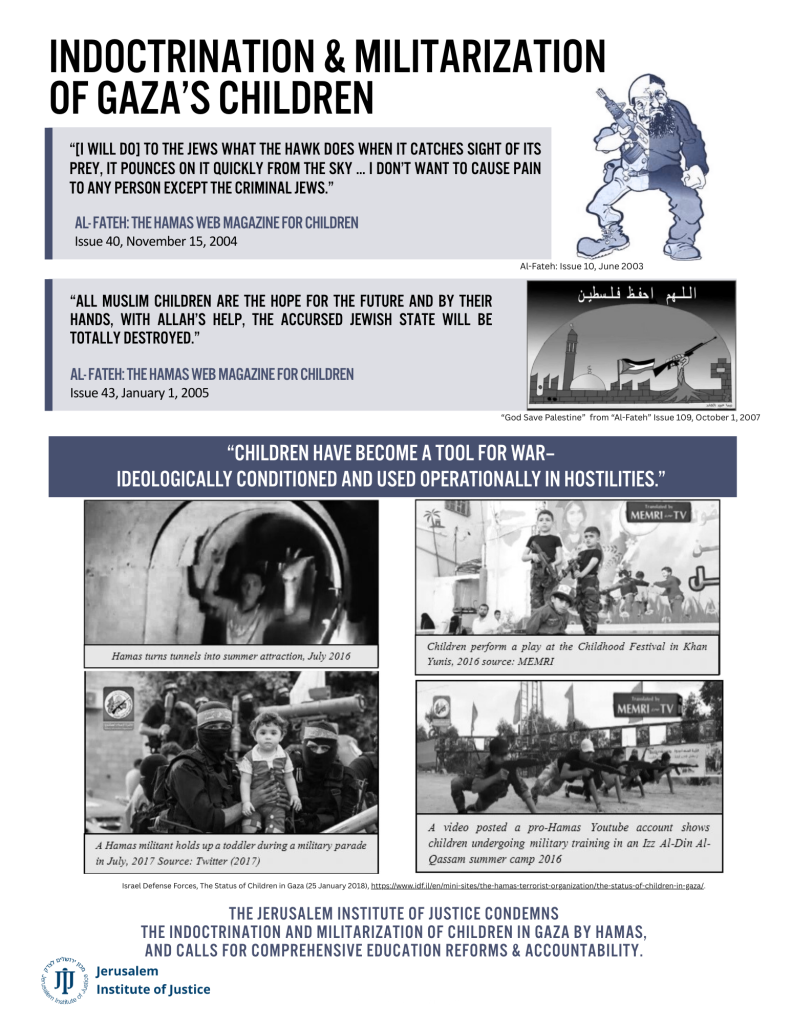
Indoctrination & Militarization of Gaza’s Children
This report examines the systematic indoctrination and militarization of Palestinian children in the Gaza Strip, primarily orchestrated by Hamas. Through educational institutions, media, summer camps, and direct involvement in military operations, Hamas has created an environment where children are psychologically conditioned, trained, and, in many cases, recruited for armed conflict. These practices constitute grave violations of international humanitarian law (IHL), international criminal law (ICL), and international human rights law (IHRL)
Read the full report here.
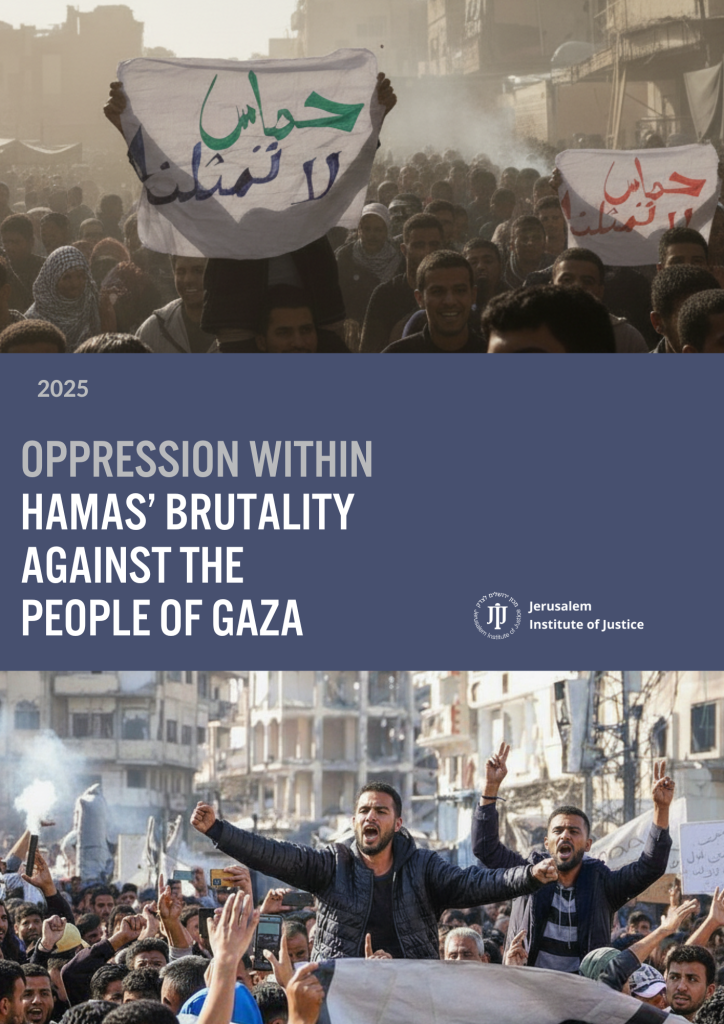
The Oppression Within
Hamas’ Brutality Against the People of Gaza
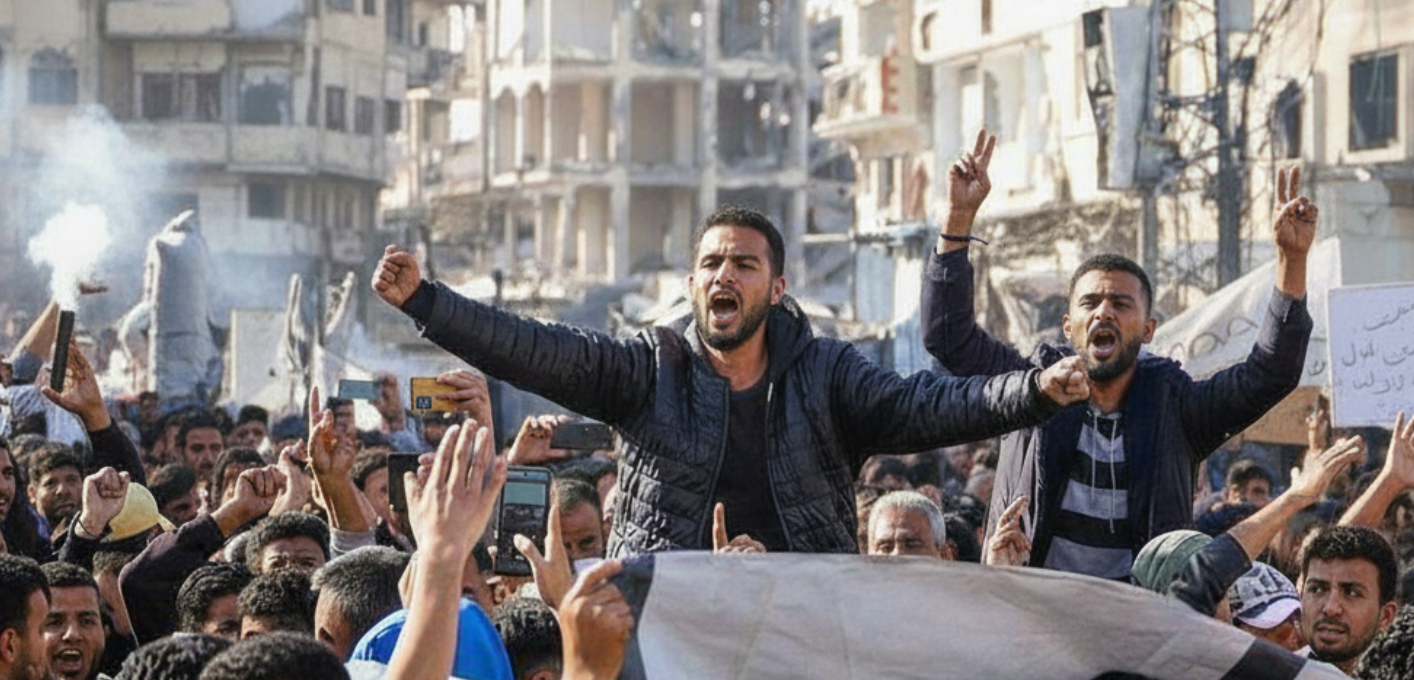
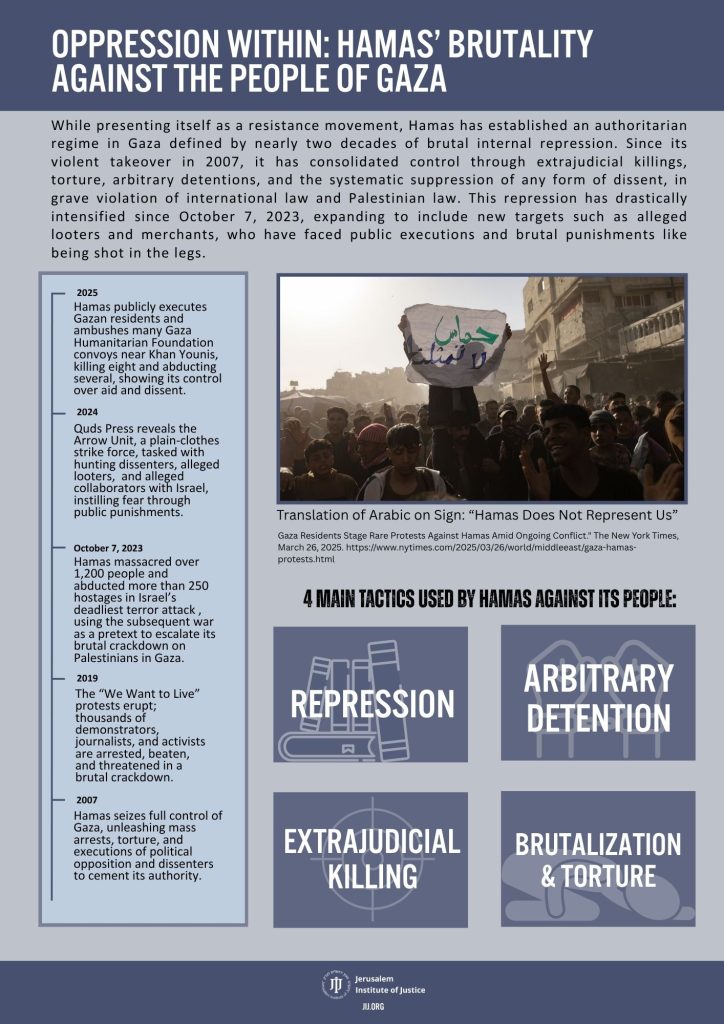
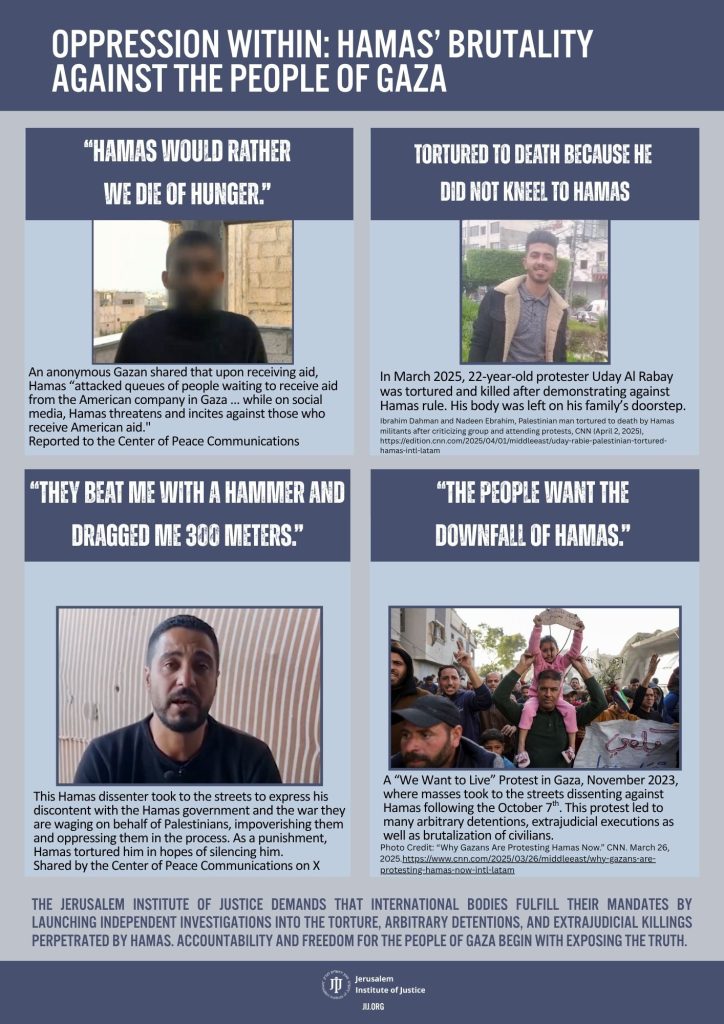
A systematic campaign of internal repression defines Hamas's rule in Gaza. Since its 2007 takeover, the group has used extrajudicial killings, torture, and arrests to consolidate power and silence dissent. This report documents how this brutality has intensified since October 7, 2023, with the new "Arrow Unit" carrying out summary executions and violent crackdowns on civilians and protesters.
Read the full report here.
Key Findings on Hamas’ Internal Repression in Gaza
Oppression Within: Hamas’ Brutality Against the People of Gaza
Hamas maintains control over Gaza through a pattern of violence and intimidation. Our fact sheet highlights how the group has escalated its repression since October 7, 2023, meeting the legal criteria for both war crimes and crimes against humanity. Findings include:
- Intensified Brutality: The "Arrow Unit" conducts public executions of alleged collaborators and looters.
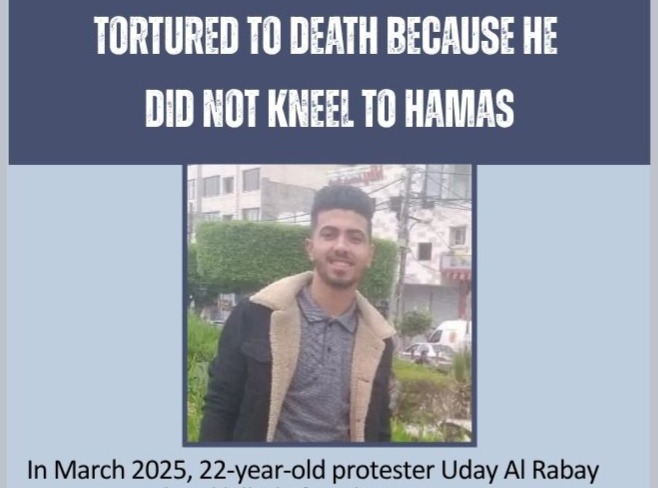
- Targeting Civilians: Hamas has killed protesters and humanitarian workers who try to challenge its authority.
- Weaponizing Aid: The group controls aid distribution and targets those who seek it independently.
Download as pdf.
Download
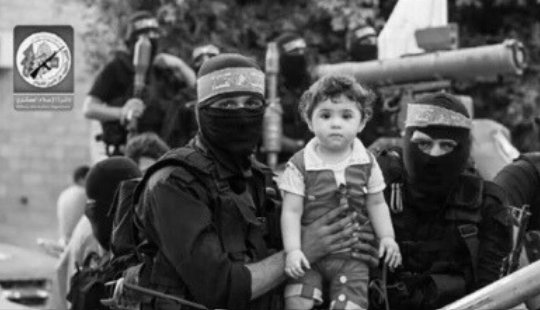
Child Soldiers in Gaza - FactSheet
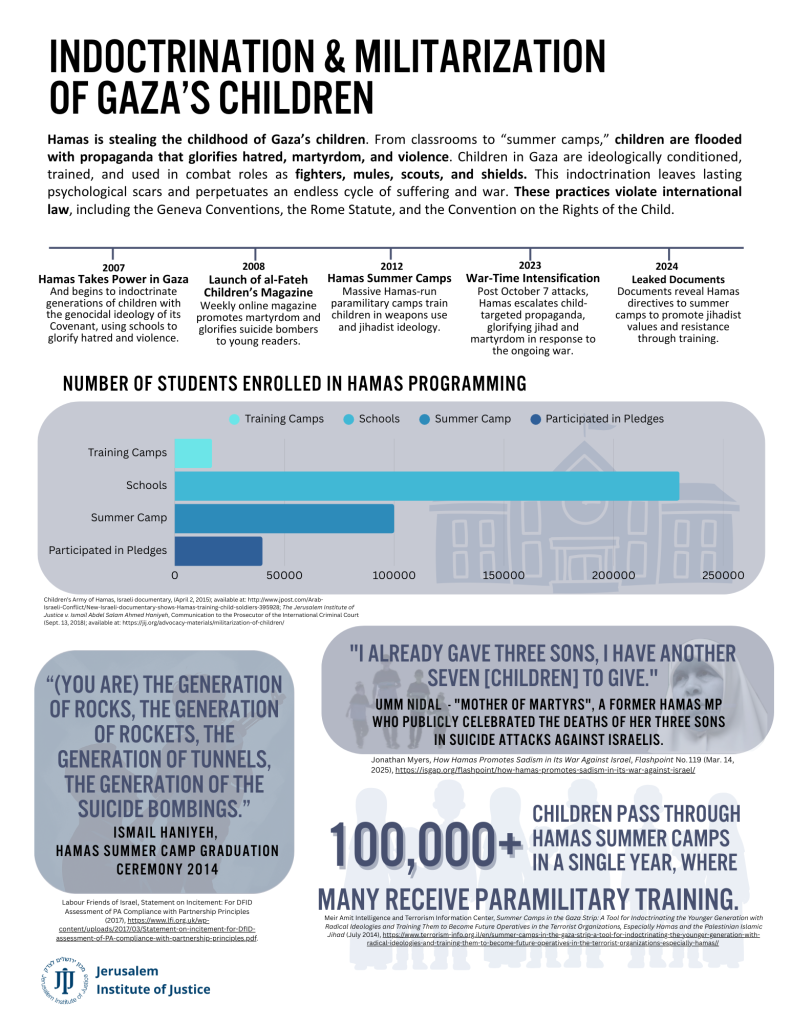
Indoctrination / Militarization of Gaza's Children
Through educational institutions, media, summer camps, and direct involvement in military operations, Hamas has created an environment where children are psychologically conditioned, trained, and, in many cases, recruited for armed conflict. These practices constitute grave violations of international humanitarian law (IHL), international criminal law (ICL), and international human rights law (IHRL). JIJ condemns the indoctrination and militarization of children by Hamas and calls for comprehensive education reforms and accountability. Download factsheet here.
Download
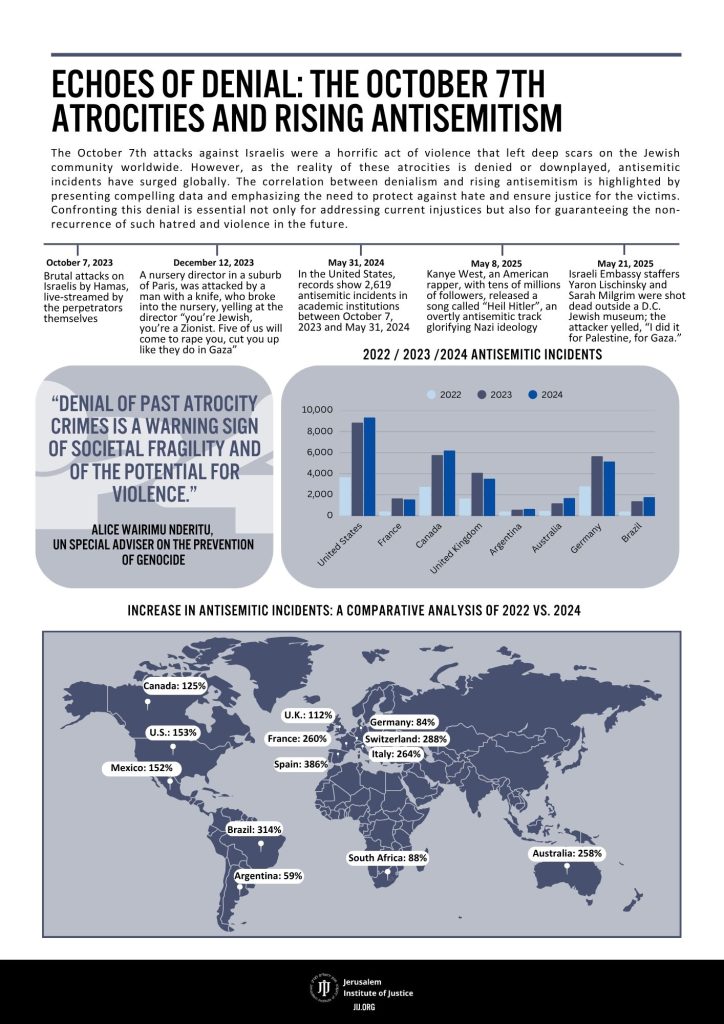
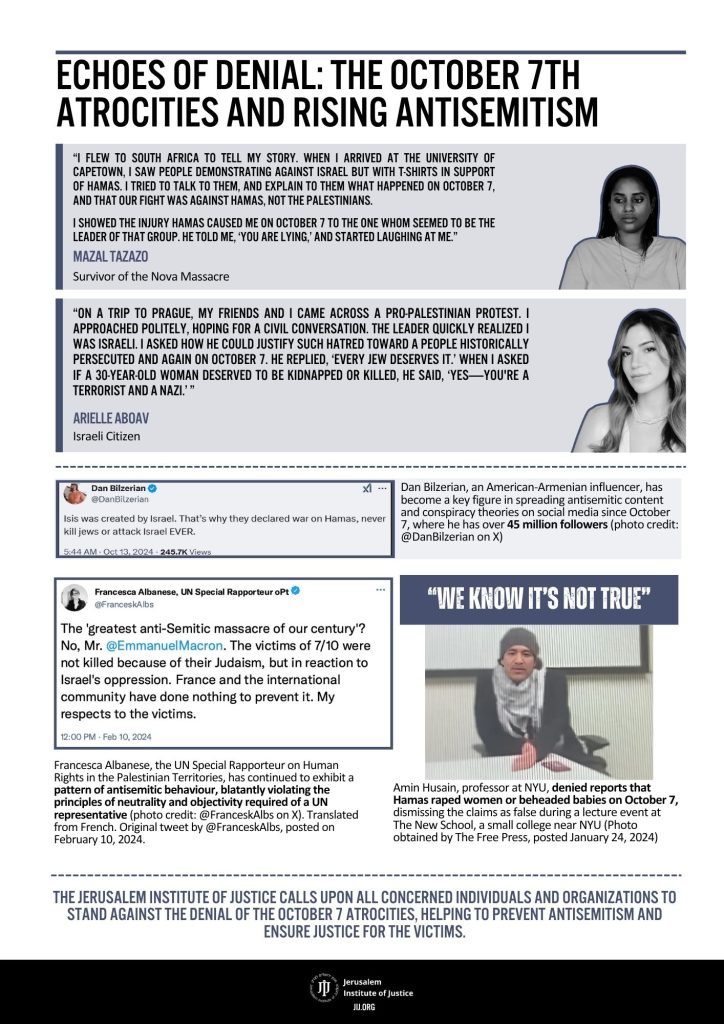
2025 - Echoes of Denial - FactSheet
The October 7th Atrocities and Rising Antisemitism
The October 7th attacks against Israelis were a horrific act of violence that left deep scars on the Jewish community worldwide. However, as the reality of these atrocities is denied or downplayed, antisemitic incidents have surged globally. The correlation between denialism and rising antisemitism is highlighted by presenting compelling data and advocating for legislation and resolutions that prohibit the denial of such events to protect against hate and ensure justice for the victims. Enacting such laws is vital not only for addressing current injustices but also for guaranteeing the non-recurrence of such hatred and violence in the future. Download factsheet here.
Download
2025 Report - ECHOES OF DENIAL - OCT. 7TH ATROCITIES & RISING ANTISEMITISM
“Denial of atrocity crimes is a warning sign of societal fragility and the enduring presence of
the conditions that allowed this large-scale hatred and violence to erupt in the past.”
Alice Wairimu Nderitu, Under-Secretary General and Special
Adviser on Prevention of Genocide to the United Nations
Secretary General
The October 7, 2023, atrocities committed by Hamas against Israeli civilians were among the most documented terror attacks in history. Despite overwhelming evidence, including livestreamed videos and numerous survivor testimonies, a disturbing pattern of distortion and denial of these events has emerged. This report examines the denial of the October 7 atrocities, links such denial to rising antisemitism, and reviews the current legal frameworks addressing atrocity denial. It also discusses the necessity and promotes the adoption of new legislation against such denial and provides recommendations for international cooperation to combat this dangerous phenomenon.