
Covert Attempts to Smuggle Weapons by Hamas
Israel withdrew from Gaza in August 2005, in order to alleviate tensions with Palestinian authorities in the Middle East. Since this peacemaking effort, Israel has faced extreme hostilities from Palestinian terrorist organizations in Gaza; rockets have been fired from Gaza to Israeli neighborhoods and cities, especially in the south. Moreover, terrorist organizations, like Hamas, as well as their sponsors, have been smuggling weapons disguised among civilian goods via the Mediterranean Sea to Gaza. Their main objective through the use of these weapons is to promote violence, attack Israeli civilians and neighborhoods, and begin military hostilities with the Israeli Defense Forces.
In response to these heightened intrusions, Israel declared a naval blockade on the Gaza strip on January 6, 2009 under the Notice to Mariners No. 1/2009. The chief of Israel’s naval forces, Eliezer Marom, stated the exigencies of having such a blockade in order to ensure the safety of the state of Israel and its citizens, “There is huge potential in smuggling weapons by sea, both in because of the simplicity of route and the large quantities it enables to smuggle. If we allow free entry of ships into the Gaza Strip, weapons will come in droves to terrorist operatives in the Gaza Strip.”
According to the Israeli “Turkel Report,” the blockade was established “for military-security reasons, which focused on preventing weapons, ammunition, military supplies, terrorists and money from entering the Gaza Strip, and the need to prevent the departure of terrorists, vessels filled with explosives and other maritime borne threats from Gaza.”
These smuggling attempts have commenced as early as 2001 and have lasted until current day. Written below are several of the numerous smuggling attempts that were capable of being intercepted by the Israeli Defense Forces and prevented from reaching terrorist groups in Gaza and causing harm to Israeli civilians.
One such incident occurred on May 7, 2001 on the vessel named Santorini which was intercepted during its voyage from Lebanon to the Gaza strip. In the ship contained forty tons of weapons that included Strela anti-aircraft missiles, mortars, rifles and guns, grenades, mines and explosive material, anti-tank RPG-7 missile-launchers, and artillery rockets.
Less than a year later, on January 3, 2002, the Karin-A was intercepted in the Red Sea. Before its sail to Gaza, the ship was sent to Sudan and Yemen to carry civilian goods, which would be used to disguise what was really carried aboard. The Karin-A held 80 submersible containers holding 50 tons of weapons, including RPG-7 rockets, RPG-18 anti-tank rocket launchers, Iranian-made anti-tank and antipersonnel mines, 2200 kilograms of high explosive demolition blocks, Sagger anti-tank launchers and missiles, as well as rifles, machine guns, AK-47s, 735 hand grenades, 700,000 rounds of small ammunition, and diving equipment.
On November 3, 2009 the Franco was found carrying 36 shipping containers holding 500 tons of weapons, rockets, and missiles aboard the cargo vessel, which was later discovered to be sent from Iran. The weapons were disguised as civilian goods and hidden from view among hundreds of other containers on board.
50 tons of weapons were found aboard the Victoria on March 15, 2011. These weapons were hidden behind regular civilian goods. The 50 tons consisted of 60mm and 120mm mortar shells, C-704 anti-ship missiles, and ammunition for Kalashnikov assault rifles. Most of the weapons, including the C-704 missiles, were manufactured in Iran.
Israeli Naval Forces discovered and seized an Iranian ship in the Red Sea on March 5, 2014. Dangerous strategic arms were spotted among the cargo, including rockets. The weaponry was destined to reach terror organizations in the Gaza Strip via Sudan.
The Israeli Navy, Israel Security Agency, in addition to the Israeli Police arrested Salim Jamal Hassan Na’aman in April 2016, for he possessed vessels that did not remain within designated fishing zones. Na’aman stated that he was involved in smuggling arms used for the manufacturing of rockets. The rockets were to be given to Hamas and other terrorist organizations within Gaza. He revealed Hamas’ plans to use fishermen to disguise terror activity and revealed that fisherman supported smuggling efforts between Gaza Strip and Egypt.

A blockade is defined as “a belligerent operation to prevent vessels and/or aircraft of all nations, enemy as well as neutral, from entering or exiting specified ports, airfields, or coastal areas belonging to, occupied by, or under the control of enemy nation.” It constitutes one of the measures that can be taken under Article 51 of the United Nations Charter, which safeguards the right of collective self-defense when an armed attack occurs. Under Article 51 of the United Nations Charter, Israel is entitled to take all the reasonable steps in order to protect its population from the protracted armed attacks carried on by Hamas and the other terrorist organizations operating in Gaza. As outlined in Section II, the naval blockade is not only legally justified but also complies with all the requirements set by the relevant rules of international law.
In the UN “Palmer Report,” the conflict between Israel and the terrorist organizations operating in Gaza is clearly characterized as an armed conflict: “Israel has faced and continues to face a real threat to its security from militant groups in Gaza. Rockets, missiles and mortar bombs have been launched from Gaza towards Israel since 2001 […] the uncertain legal status of Gaza under international law cannot mean that Israel has no right to self-defense against armed attacks directed toward its territory.” The UN Report then highlights how in fact there have been various incidents in which ships carrying weapons were intercepted by the Israeli authorities on their way to Gaza. It consequently concludes that Israel was definitely entitled to take reasonable steps to prevent the influx of weapons and that a blockade in those circumstances is a legitimate exercise of the right of self-defense.
Not only has the naval blockade constituted a legitimate measure adopted for defending the Israeli territory and population, but also it was (and continues to be) properly enforced in accordance with the relevant rules of international law, including the "San Remo Manual on International Law applicable to Armed Conflict at Sea."
Article by Moriah Khalili and Beniamino Parenzo

Children's Rights Abuses in the West Bank and Gaza
Executive Summary of Sons of Violence Report:
Violations of Children's Rights under the Palestinian Authority and Hamas
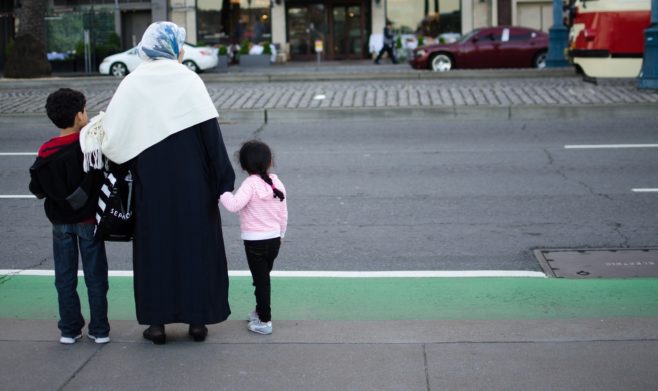
The Universal Declaration of Human Rights’ (UDHR) main principle is that all human beings have the right to life, liberty, and security of person, including the right to education, freedom from torture or cruel treatment and punishment, freedom to peacefully assemble, and freedom of thought, conscience, and religion.
With the recognition of Palestine as a non-member observer state to the United Nations (UN) in April 2014, the Palestinian Authority (PA) agreed to comply with 13 international conventions of human rights and humanitarian law. As such, the PA is obligated to comply with international human rights law (IHL) and implement all provisions laid out in the conventions. Complying with IHL requires Palestinian leadership (the PA and Hamas) to be bound by international laws protecting children’s rights.
In 1991, the Palestinian Liberation Organization (PLO), under Chairman Yasser Arafat, signed the United Nations Convention on the Rights of the Child (CRC); however, as the PLO was not a state, the PLO was unable to formally ratify the convention, thereby failing to have full legal impact in the territories. Despite this, the Palestinian National Authority (PNA) issued a report into the implementation of the CRC in the territories, which was received and reviewed by the CRC. This report examines the current violations of children’s rights in the West Bank and Gaza by the Palestinian government, and suggests that the PA and Hamas have failed to implement, nor do they intend to fulfill, their international promises. All information in this report was obtained through news sources, PA government materials, and interviews with individuals living and working in Gaza and the West Bank. All names have been withheld.
This report looks at Article 29 of Palestinian Basic Law, and how it applies to IHL and the CRC. It states that children have the right to:
- Comprehensive protection and welfare.
- Not to be exploited for any purpose … and not to be permitted to perform work that might damage their safety health or education.
- Protection from harmful and cruel treatment.
- Not to be subjected to beating or cruel treatment by their relatives.
- To be segregated… from adults, and be treated in a manner that is appropriate to their age and aims at their rehabilitation.
Palestinian Child Law No. 7 (2004) defines a child to be any human being under the age of 18, “including the unborn.” Palestinian law agrees with the CRC in the belief that young people under 18 years of age are considered more vulnerable and therefore require certain protections under the law.
With 47.5% (2014) of the Palestinian population under 18 years of age, the implementation of proper children’s rights protections is crucial. However, due to its foundations in traditional Sharia Law, Palestinian civil law lacks many of the democratic, secular, and egalitarian principles that are espoused by IHL and the CRC.
GENERAL PRINCIPLES
The Independent Commission for Human Rights (ICHR) monitored multiple cases of rights violations against children in 2015, reporting that large numbers of detainees in Palestinian jails were children between 16 and 17. Detainees were subjected to different forms of torture, including beating, kicking, punching, flogging, cold water dousing, and being forced to strip.
For young girls and women, honor killings are carried out when these girls are believed to have transgressed cultural norms (this includes issues of modesty, career choice, marriage, and relationships). Honor Killings, usually carried out by members of the girl’s family, do so in an attempt to restore the family’s reputation. Individuals in both the West Bank and Gaza confirm reports on the continuation of this practice, with one JIJ source explaining the prevalence of honor killings in Hebron (West Bank) where he heard of at least ten cases in 2014. Unfortunately, reliable data on the total number of child victims of honor killings is unavailable. This is, in part, due to the Palestinian government considering 15-year-old girls (West Bank) and 17-year-old girls (Gaza) as eligible for marriage, and therefore not victims. In the territories, Sharia Law dictates that those who reach puberty are considered adults and are thereby subject to the full force of the law. This directly contradicts the international definition of the ‘child’ as stated in the CRC, and as reiterated by Palestinian Basic Law.
CIVIL RIGHTS AND FREEDOMS
In the West Bank, many children are denied the right to legal existence. Under Palestinian law, extramarital sex is illegal, therefore women who give birth out of wedlock are punished. Honor killings play a role here, where families beat or kill girls or women who find themselves pregnant outside of marriage. Women are thus forced to give birth in secret in an effort to ensure their safety, abandoning their babies. One institution in the West Bank reports that on average 50 to 80 undocumented babies are born each year. The consequences: these children are denied a family name or an ID card, preventing them from establishing an identity in society.
An additional issue relates to the abandoned child’s religious identity. Regardless of where the child is found (Christian or Muslim communities), the child is automatically assumed to be Muslim. The implications of this are that, under Islamic Law, adoption is forbidden, therefore depriving ‘Muslim’ children the option of official adoption. These roadblocks to establishing legal identity and existence are in violation of the CRC; the PA fails to assist in the registration of these abandoned children, thus reneging on its obligations to protect the most basic of children’s rights.
Regarding access to information, the PA and Hamas fail to protect children with regards to information sharing and education. Instead, Palestinian leadership engages in indoctrination and incitement to violence through social networks, national TV children’s programs, basic education curriculums, and children’s magazines. Children in the territories are encouraged to become martyrs, to think of Jews as “barbaric monkeys,” and to spill blood in the name of the Koran. In addition, propaganda campaigns directed by both Fatah and Hamas promote and encourage child soldiers, with images depicting children dressed as soldiers, handling weapons, and promoting death and martyrdom. In many of these programs, the children are no older than 6 or 7 years of age, directly violating the CRC’s objectives of seeking to ensure safe and secure access to information that promotes the child’s “social, spiritual, and moral well-being, and physical and mental health.”

FAMILY ENVIRONMENT AND ALTERNATIVE CARE
According to the Ministry of Social Affairs (MoSA) in the West Bank and Gaza, the Ministry is entrusted with the care and protection of disadvantaged children, who include children with unknown parentage, those in social care institutions, and children with divorced or separated parents. MoSA’s guidelines for child care include the supervision of governmental and non-governmental children’s institutions, and the regulation of procedures for admission into institutional care. Yet, lack of resources leads to a lack of supervision and regulation.
Regarding foster care, with adoption being illegal under Islamic Law, MoSA is developing a ‘religiously acceptable’ foster care process called kafalah. Another roadblock to the system — foster care is only available for Muslim families in the West Bank, thus excluding non-Muslims from getting the help they need. Yet, despite legal requirements for foster care and foster families being outlined by MoSA, it has been found that there are no identifiable mechanisms in place to enforce routine and review of placement, and to ensure the wellbeing of the child.
Regarding issues of abuse and neglect, MoSA implements the National Child Care and Protection Protocol (2007) and defines conditions that place children at risk. These include violence, abuse, neglect, exploitation, incest, and assault — all of which are grounds for removal of a child from the family setting. However, according to Article 62 of the Jordanian Legal Code 1960, corporal punishment is deemed lawful “in the home,” with forms of discipline being permitted according to “general custom.” While Article 42 of Palestinian Child Law (2004) and Article 29 of the Amended Basic Law (2003) both state that children are to be protected from violence and abuse, these provisions fail to protect children in practice. A survey conducted by PCBS found that 9 in 10 children in the West Bank and Gaza reported being hit, beaten, or abused, with primary offenders identified as family members. Yet it is also significant to note that reporting abuse is an obstacle in and of itself: one JIJ source purports that, while it is required by law to report abuse when suspected, most refrain from involving police out of fear of the abuser exacting revenge on the child.
Regarding rape and sexual abuse against women and girls, reporting abuse is not easy and poses a threat to the women’s safety. Cultural taboos surrounding sex in Palestinian society make it difficult to acquire real statistics of rapes and sexual assaults, but it is believed that sexual violence within the family is not infrequent. According to one JIJ source, a girl 16 and under cannot seek help without a parent present, and there is no regard for confidentiality of a minor. Should the police take action, the victim faces a greater threat regarding her damaged reputation in her community, while the law commits the abuser only to a maximum of one day’s imprisonment.
BASIC HEALTH AND WELFARE
In its agreement to comply with the international conventions on human rights, the PA also acceded to the Convention on the Rights of Persons with Disabilities (2006), which holds that those persons with disabilities “must enjoy all human rights and fundamental freedoms.” Yet, it has been found that disabled children suffer from discrimination and degrading treatment in both the West Bank and Gaza. For example, one 2011 PCBS report found that 37.6% of children with disabilities 15 and up had never been enrolled in an educational institution, with 53.1% being reported as illiterate. According to a 2013 UNICEF report on the ‘state of the world’s children’, disabled children are regarded as “pitiable” and not as equal individuals. This is due largely to a “dominant perspective” that puts able-bodied individuals at a superior status than disabled individuals. This perspective is reflected in both national policy, regulations, and language used.
EDUCATION, LEISURE, and CULTURAL ACTIVITIES
Article 37 of Palestinian Child Law stipulates that every child has the right to be educated until the age of 18, and that the government should take all necessary measures to prevent school drop-outs. While the PA has attempted to provide a secure educational environment for children in the territories, they struggle to provide children with safe environments conducive to learning. Official Palestinian sources attribute high dropout rates to the low quality and weak promotion of education throughout the West Bank and Gaza, as well as to various cultural and societal factors that affect school enrollment.
Following the issue of violence against children, it has been found that the schooling system in the territories primarily uses violence to discipline students. A 2010 UNICEF report found that over 50% of students in West Bank schools were subjected to both physical and verbal abuse. The same study found that over 50% of teachers believed physical beatings were an “acceptable means of punishing students.” This phenomenon can be explained by the lack of educator skills and qualifications. PCBS reported in 2011 that only 29.3% of Palestinian teachers had Ministry of Education level qualifications. Also contributing to this issue is the fact that, as shared by professionals in the field, educators are simply “burned out.”
The issue of overcrowding also contributes to high dropout rates and, possibly, rates of abuse. One source explains how each of his classes in Gaza had nearly 50 students. Official Palestinian sources corroborate this claim, explaining how student numbers are increasing while classroom numbers are lacking, unable to absorb the many incoming students. Another source explains how teachers (according to his experience in Gaza) do not know how to “deal” with students in both government and UNRWA schools — teachers will “banish you…hurt you, they talk to you like you’re an animal.”
One factor that contributes to sexual harassment of girls is the government enforced gender-segregation of schools. All schools in Gaza are now gender-segregated at 9 years of age. Most government schools in the West Bank also enforce gender-segregation, with the exception of some private or UNRWA schools that remain coeducational. This separation has led to boys harassing female students, which some officials attribute to the lack of exposure to one another in safe, neutral environments.
A review of Palestinian school textbooks and curricula reveals a number of human rights violations. Recurring topics include the rejection of the State of Israel and denial of its right to exist, the demonization and incitement of violence against Jews, and a downplay of peace advocacy in favor of incitement. The hate speech and incitement to violence that educators run their classrooms with stands in stark contrast to the spirit of the CRC and IHL.
SPECIAL PROTECTION MEASURES
Article 93 of Palestinian Labor Law bans the employment of children under the age of 15 in the West Bank and Gaza, with children between the ages of 15 and 17 being permitted to work under certain controlled conditions. However, these laws are not carried out in practice, for child labor is still prevalent in the territories. For example, while the law includes children who work with relatives, many under age children are found to be working on family farms due to agriculture being a central aspect of Palestinian life. One 2010 report on Palestinian households shows that 4.1% of children between the ages of 5 and 11 worked for their families; 2.9% of this age group worked outside their household. To connect to the issue of school dropout rates, child employment is deemed a significant factor for students failing to attend school.
RECOMMENDATIONS
Regarding civil rights and freedoms, Palestinian leadership should ensure official registration and citizenship at birth and should step up their efforts in supporting institutions working with abandoned children. Furthermore, there should be an immediate cease to all promotion of martyrdom and incitement of violence through media and the education system. Finally, a just and effective punishment should be enforced on those who perpetrate honor killings.
Regarding family environment and alternative care, adoption practices and processes should be secularized, and religious freedom among children should be put into practice. MoSA should enforce a more efficient follow up care system for children in the foster system and ensure that the child’s rights are both protected and respected. Children should be protected from cruel and degrading punishment at home, in the workplace (if they are working), and at school through the development of protective legislation and installing penalties for use of corporal punishment. Moreover, the age of legal marriage should be raised to 18 so as to protect young girls and enable them to continue their studies in a healthy environment.
Regarding basic health and welfare, the rights of disabled children should be upheld and protected through developing educational programs and raising awareness on the subject of disability.
Regarding education, more classes should be opened to accommodate the increasing number of students and address the issue of overcrowding. Teachers should receive specialized training with information on education and discipline from a human rights perspective, in addition to having a selection criteria enforced for hiring education staff. All textbooks and curricula should be revised to remove message of incitement against Israel and the Jews. Finally, formal programming to foster gender equality should be implemented throughout all schools in the territories.
Regarding special protection measures, Palestinian leadership should establish a system that allows school personnel to report cases of children dropping out of school in favor of employment in an effort to promote learning and personal development of Palestinian children.
Remember the Second Lebanon War
On July 16, 2008 the bodies of Eldad Regev and Ehud Goldwasser were released by Hezbollah and returned to Israel. Regev and Goldwasser, honored soldiers, were both part of the Israeli Defense Forces (IDF); Regev was in the Givati brigade, and Goldwasser was ranked First Sergeant. Both soldiers were kidnapped on July 12, 2006, near the border of Lebanon. As a result of their deaths, the Second Lebanon War ensued.
Hezbollah began this military strife by sending rockets toward Shlomi, a town in northern Israel. This was followed by their infiltration through the northern border of Israel where they murdered eight soldiers, injured another six soldiers, and kidnapped Eldad and Ehud. Hezbollah continuously fired hundreds of rockets to cities throughout Israel. As a result of their operation, known as “True Promise,” the IDF organized air as well as artillery raids to fend off the Lebanese army and Hezbollah. The IDF later began a ground invasion into Lebanon. Former Prime Minister Ehud Olmert attempted to make peace by constructing a four-point plan. The main objectives included returning Eldad Regev and Ehud Goldwasser, in addition to having a cease-fire. In a blatant disregard for this proposal, thousands of rockets were fired at Israeli cities.
After a month of war, on August 11, the United Nations (UN) approved the Security Council Resolution 1701, which called for an immediate ceasefire. This was an attempt to end the conflict by disarming Hezbollah and withdrawing Israeli forces from the south of Lebanon. The casualties that resulted from the war were horrific; 121 IDF soldiers were killed, 43 Israelis, and approximately 1,191 Lebanese.
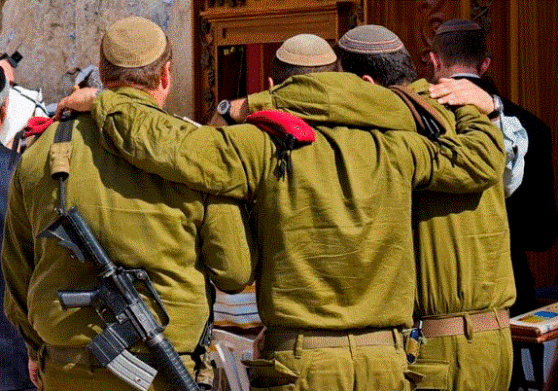
We must always recognize the extent of our soldiers’ service, their courage as they fight on our behalf, and the risk they take to protect Israeli lives. The Jerusalem Institute of Justice acknowledges the fact that IDF soldiers’ bravery and devotion are what keep the state of Israel proudly standing as a democratic home for its citizens. We salute and thank the IDF soldiers, who fight on our behalf and place the lives of others before their own.
Article by Moriah Khalili
The War Between Fear and Freedom — Our Western Response to the Refugee Crisis
This article originally appeared in The Times Of Israel, here.
Article by Clair Splawn, an American by citizenship and British at heart, Claire is originally from Tennessee, USA but grew up in Bradford, England. She holds a degree in law from the UK, studied counter-terrorism at Hebrew University and has interned at the Jerusalem Institute of Justice for the past year. She is passionate about refugee issues, human rights and social justice.
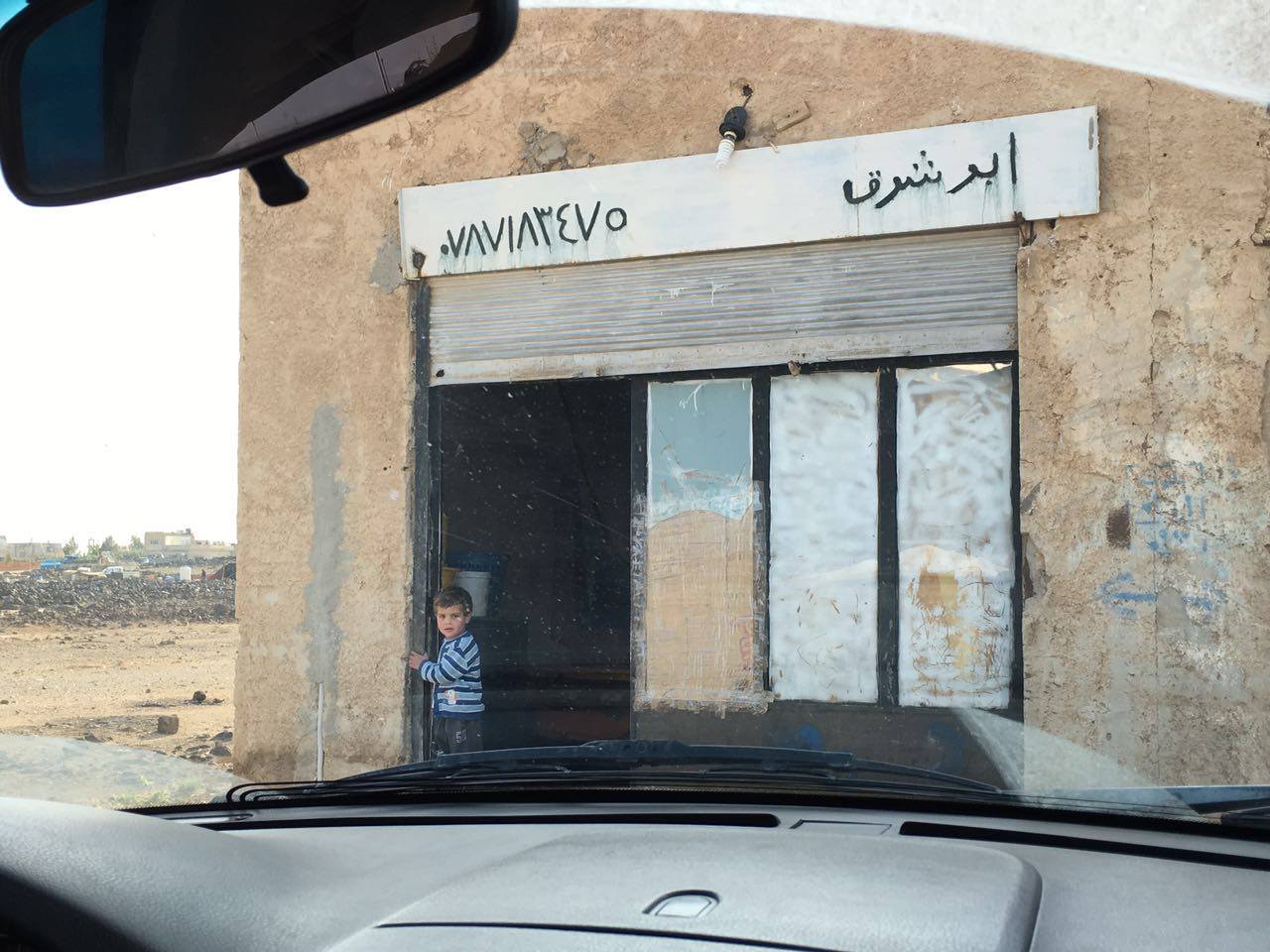
I recently took a humanitarian aid trip as part of a team tasked to work with Syrian and Iraqi refugees in villages in rural Jordan. The stories I heard exposed the tragic effects of war and gave fresh insight into the damaging mindset we have developed in the West towards this crisis. I hope to challenge this mindset by outlining a way forward.
First, let me give you a little personal insight. I am 21 and grew up in Bradford, England. I am a law graduate, culturally British whilst carrying an American passport. I have been living in Jerusalem, Israel for the last year as a human rights intern in a non-profit organisation. Like many, I received a leftist, liberal education and consider myself a passionate humanitarian. As it relates to refugees, I have often believed politics to be an institution that only serves to dehumanise a hurting people, and have therefore endeavoured to avoid it. A naïve perspective, I know – ‘politics’ inevitably intersects an issue as publicly contentious as the refugee crisis. But it took a trip to Jordan on what was, ironically, a humanitarian trip, for me to reach the conclusion that humanitarianism alone without some political action, will not be enough to make a difference in this crisis.
The journey across the border from Israel to Jordan proved relatively straightforward: pay the Israeli exit fee, stop briefly at the duty free to spritz the perfumes, board a bus, ride five minutes across the border, pay for my Jordanian visa, smile for a photo, and call a taxi. Uneventful, apart from acquiring another stamp in my passport, which is always exciting for those who love to travel. Once in Amman, we settled into the guesthouse before heading out to share an evening meal with a local Syrian family. They had now been Jordanian residents for several years, entering shortly after the war began in Syria.
Our hosts had graciously agreed to cook a traditional Syrian meal for us that night. Two options quickly presented themselves to our team: cook or clean up after the meal. Naturally I opted for the former, because – let’s be honest – with cooking, the end result is food. So, I peeled potatoes and garlic cloves, sliced pita bread and listened eagerly as the family talked me through the culinary preparation of five Syrian dishes that incorporated rice, beef, okra, tomatoes, roasted almonds and a multitude of spices. Watching this couple work together became a touching lesson of service, consideration and love. The few introductory details I had been given about their story centred on hardships. While that was evident, it did not dominate their relationship. Rather, they seemed to recognise the gift they had in each other, and it was the hope to which they clung.
The husband possessed a better command of English than his wife. Over dinner, he recounted their journey from a contented lifestyle in Syria to living in limbo in Jordan. Originally from Damascus where the husband had practiced law, the family chose to leave Syria after realising the danger they faced:
“I had just finished our daughter’s nursery room when the war started. Then missiles started coming. Our home was destroyed, there’s nothing there anymore.”
They fled with just the clothes on their backs and a bag of supplies for their young daughter, taking a taxi out of Damascus before sunrise. From there they travelled to Lebanon and boarded a flight to Jordan. They entered legally as tourists, believing as many did, that they would return home within a few months. However, one year on with no hope of return, they applied to the UN for refugee status, and were refused. Due to their initial legal entry as tourists, they were informed that they did not qualify for refugee status. Their situation has been unchanged for the past four years. Every year, they have applied anew to the UN. Each year, they are refused without explanation. Where does this leave them?
The family has long outstayed their tourist visa for Jordan, but without refugee status and no home left in Syria, they have nowhere to go. Again, the husband’s words over dinner: “In Jordan, I can’t even work. I am educated, but can’t find a job. Here, we have nothing.”
Most Syrians have gone from stable jobs, families and homes into an uncertain life entirely dependent on the aid of others. They can claim neither job, friends nor even refugee status. It’s easy to see why these situations look hopeless.
I left their home that evening with mixed emotions. I was humbled by the strength they displayed; yet frustrated at my utter helplessness to aid them in their situation. From a legal perspective, my head spun with ideas for helping them achieve refugee status, while wondering about the legal system in Jordan and the facilities available for refugees.
I recognised afresh, the importance of humanitarian aid to assist in the day-to-day life of this family, but was struck with the temporariness of this assistance. Our response to the refugee crisis seems akin to providing a plaster for a broken bone, when the true need is long-term and foundational so an entire life may be rebuilt. And this is just one family! There are hundreds of thousands more just like them.
So what does this have to do with the West?
The refugee crisis has come to our doorstep. The UN Refugee Convention – an instrument of international law – and the principle ofnon-refoulement dictate that unless an individual presents a threat to national security, we cannot legally return refugees to a nation where their life may be endangered or crucial human freedoms violated. We in the West have been proud advocates for such human rights laws. If we care as much about these rights as we claim to do, we must be willing to shoulder the work needed to secure them for refugees. Otherwise, we are hypocrites.
Most societies, relying on news reports and social media, have linked the refugee crisis to terrorism, responding largely from fear of the latter. Since the war in Syria sent refugees flooding to the West, refugees as an entire group have been force-fit into one of two exclusive boxes: human beings in need or radical Islamists who must be resisted. We are pressured to act towards all refugees by giving our allegiance to one view alone. Why not both?
Naturally, the terrorist attacks in Paris and Brussels put people on edge. These attacks demonstrate the existence of violent individuals. We know they cannot be stopped entirely, without completely shutting our borders. Even that won’t keep out the homegrown terrorists. We are scared because the threat is, indeed, real. Still, while we recognise these fears, our morality and humanity impel us to open our doors, because many refugee families are just as scared of radical Islamists as we are.
In other words, we cannot distinguish easily, on the ground, between “those in need” and “radical Islamists”. Both are unavoidably present in the refugee flood from Syria. They have been mixed together and we’re terrified that we can’t tell the difference.
How then, shall we reconcile these two mindsets? By urging both the fear-mongers and the “welcome everyone” supporters, to act. Both have valid views. Both are uniquely skilled at running their mouth while their feet stay still. The fear-mongers commonly ask important policy questions that need to be addressed, and the “welcome everyone” supporters encourage a mindset of local action.
Our convictions, whatever they may be, must be coupled with practical, yes even political, solutions. These often fall under integration.
Integration encompasses a multitude of issues – culture, language, education, work, jobs, economy, healthcare, welfare, benefits, religion, and more. It raises many questions. How many refugees can we, realistically, take? What facilities will we set up to help them integrate? What about language classes? Will families receive benefits if they have children and cannot find work? Shall they be given access to our free (in the UK) healthcare? For how long? And who pays for all of this? How?
These issues do not rest solely on the shoulders of the politicians we love to criticise so much. It’s on us – on our communities.
From an economic (and statistical) standpoint, many are so desperate for work that they will benefit our economies far more, long-term, than some of our own citizens who live off government handouts. Refugees can enrich our communities, schools and workplaces, but that means they are in our communities. Are you prepared to connect with them, encourage them or take them to a language class? Will you help their kids enrol at school, or find a doctor? In other words, are you prepared to help them integrate in your neighbourhood?
These are the pertinent questions and they are both political and practical. Whatever our answer to each of them may be, no one is exempt from responsibility to act.
It is one thing to publicise an opinion online for the plight of refugees, but quite another to get involved with them in your local community. ‘Human rights’ must not become some distant, trendy, fleeting ideal from which we can run when we have to get our hands dirty. If we care about the refugee crisis as much as our Facebook, Twitter and Instagram suggests, we must do something about it. The West doesn’t need any more self-righteous keyboard campaigners.
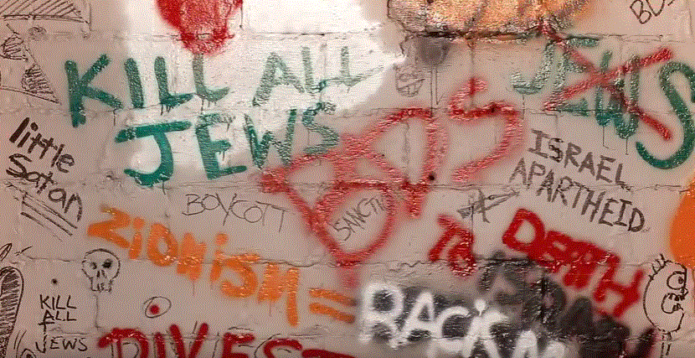
Join the Battle Against Anti-Semitism
There are few betrayals as disheartening as when law enforcement officers abuse the citizens whose lives they are paid to protect.
JIJ team traveled to Brussels, Belgium to testify in a case funded by JIJ's Litigation Fund for Combatting Anti-Semitism. We are officially requesting the State Prosecutor to indict a Belgium police officer, who wrote on his Facebook page, "The word Jew itself is dirty. If I were in Israel, frankly, I would do to the Jews what they do with the Palestinians — slaughter each and every one of them." We should never underestimate the power of words, especially when spoken by people in authority.
Anti-Semitic incidents are more prevalent today in Western Societies than they have been since the 1930's. In 2016, Jews in Europe have been insulted, harassed, stalked, chased, spat on, beaten, raped, and murdered for being Jewish. Just two weeks ago, a machete-wielding teen attacked a Jewish teacher outside of a Synagogue in the French city of Marseilles. This act prompted a local Jewish authority to ask fellow Jews to refrain from wearing their traditional kippas (skull caps) to stay safe. The attacker told police that he had acted in the name of the Islamic State.
France is still reeling from a series of attacks in Paris on November 13, 2015 that killed 130 people and just marked the anniversary of attacks on the satirical newspaper, Charlie Hebdo, and a kosher grocery store, which killed 17 people. In each case, the Islamic State group claimed responsibility.
JIJ will continue to fight anti-Semitism both in the courtroom and in the court of public opinion. Each of our cases requires hundreds of hours of preparation and thousands of dollars in expenses. We would like to thank everybody who has contributed to JIJ's advocacy, and ask you to consider donating again today. Your support will help us expand our advocacy, to ensure that anti-Semitic incidents in our region and beyond do not remain unanswered.
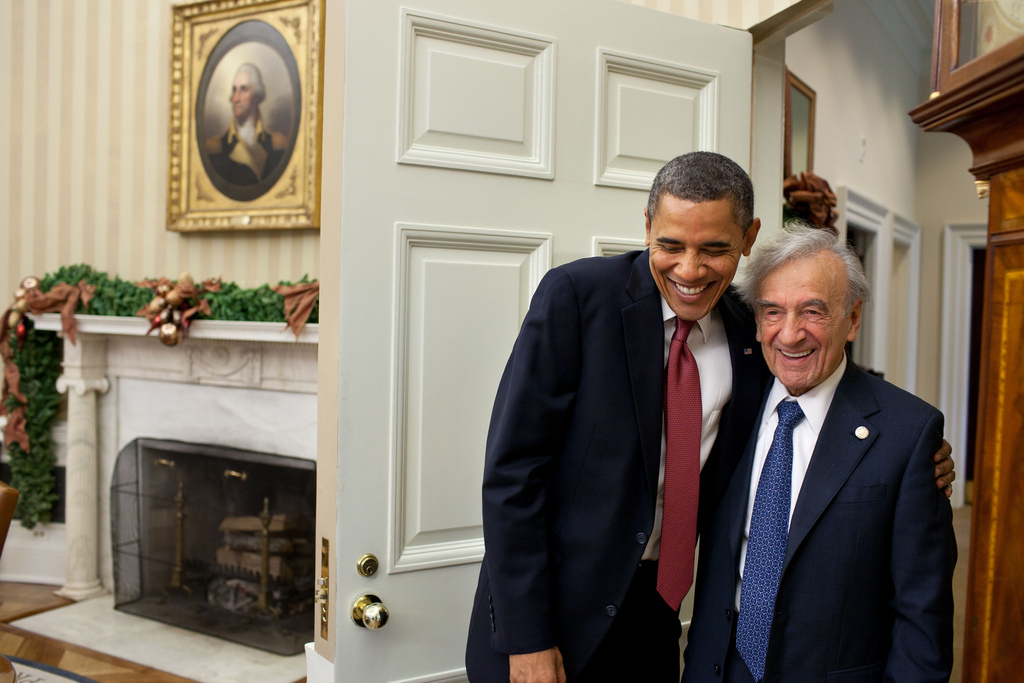
We Mourn the Passing of Eli Wiesel
The Jerusalem Institute of Justice mourns the passing of Elie Wiesel, 87, one of the world’s most dedicated, untiring, and articulate voices against man’s inhumanity to man. After he experienced the horrors of the Holocaust as a child prisoner in Auschwitz and Buchenwald, Elie Wiesel dedicated his life to generating public awareness and to fighting against genocide, hatred, and injustice.
Wiesel’s passion for justice knew no bounds. He defended the cause of Soviet Jews, Nicaragua's Miskito Indians, Ethiopian-born Israeli youth, Argentina's "Disappeared," Cambodian refugees, the Kurds, and victims of famine and genocide in Africa, apartheid in South Africa and war in the former Yugoslavia.
He was recognized for not remaining silent in the face of the enemies of human rights and human dignity, stating during his Nobel Peace Prize acceptance speech, “We must always take sides. Neutrality helps the oppressor, never the victim. Silence encourages the tormentor, never the tormented.” He would often say, “the opposite of love is not hate, it is indifference.”
We join all those who love humanity and hate injustice in honoring the legacy and mourning the loss of Elie Wiesel, the conscience of a generation
A Sweet Victory Against BDS
I would like to believe that most churches and Christian organizations, who buy into the BDS (Boycott, Divest, Sanction) movement against Israel, do not understand that they are embracing a campaign, which is driven by Islamic extremist ideology. The BDS campaign explicitly opposes the peace process and any dialogue with Israel. Anything short of the elimination of Jewish sovereignty in the Middle East is unacceptable to its leaders. They have been saying for over a decade that until 5.5 million descendants of Palestinian refugees are allowed to return to Israel, causing the Jews to become a minority and Muslims to become the majority, thus annulling Jewish government; until 450,000 Jewish citizens are expelled from their homes in Judea and Samaria, the heartland of Israel; and until a one-state solution called "Palestine" is created, the world should divest from Israeli companies, boycott Israeli professors and sanction Israel in every way.
The BDS movement consistently portrays Israel as worse than Hamas. When an extreme Islamic dictatorial terrorist organization is constantly portrayed as better than a Jewish democracy, you can be sure that anti-Semitism, rather than Palestinian human rights, is actually driving the agenda. When Israeli Jewish professors are boycotted by European universities and Israeli Arab professors are not, you can be sure that anti-Semitism, rather than Palestinian human rights, is actually driving the agenda. When companies owned by Jewish Israelis undergo divestment and companies owned by Arab Israelis do not, you can be sure that anti-Semitism, rather than Palestinian human rights, is actually driving the agenda.
It is nothing less than a fiasco that major Christian movements around the world, including the World Council of Churches, the United Methodist Church in the US, the Methodist Church of Great Britain, the United Church of Canada, the Presbyterian Church, the Episcopal Church, the Church of England and the United Church of Christ, have endorsed BDS, at least to the extent of boycotting products from companies active in Judea and Samaria. The Jerusalem Post published an article in April 2015 titled, "Israelis who Hate Israel and the Christians who Fund Them", covering two Israeli organizations, BADIL and Zochrot, which actively delegitimize the Jewish state and promote the complete right of return for all descendants of Palestinian refugees. These organizations have multi-million dollar budgets, 93% of which are funded by Christian organizations.
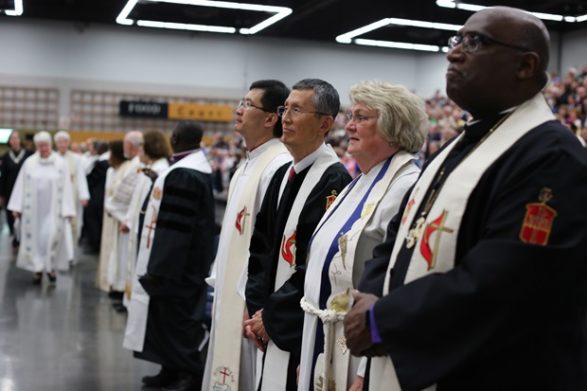
Two months ago, on the 17th of March, I had the privilege to share this perspective with a group of leaders from the United Methodist Church (UMC) in African nations. These African church leaders, who represent a significant voting bloc in the General Conference of the UMC, came to Israel to gather information and learn first-hand from people advancing human rights in our region, what is actually happening on the ground. After I spoke with this group in Jerusalem and had a very lively Q&A session, they unanimously promised me that they would squash the initiative of their General Conference to support BDS. I am thrilled to see that these honorable leaders fulfilled their promise. In an historic reversal, the UMC General Conference decided last week to reject four BDS resolutions. Apparently, for the time being, the UMC’s pension fund will not invest in Israeli banks, a direct result of a 2012 decision to support BDS; nevertheless, the decision last week was a step in the right direction.
Photo by Kathleen Barry, United Methodist News Service

Do your part fighting Anti-Semitism
https://www.youtube.com/watch?v=FIdiwjZh8Zo
The Jerusalem Institute of Justice invites you to get involved and fight Antisemitism where ever you are!
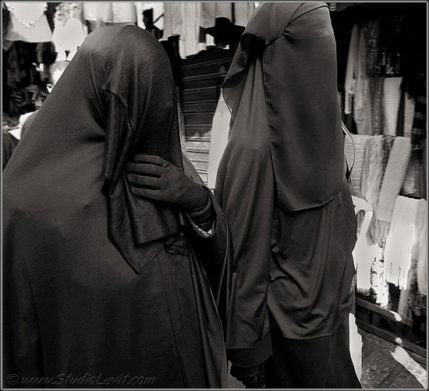
Discrimination against Women under the Palestinian Authority and Hamas
The following report examines the degree to which the Palestinian governing authorities in the West Bank and Gaza adhere to CEDAW. Findings indicate their acute failure to protect women’s rights within both legal codes and cultural practices. Even in cases where legal codes guarantee certain women’s rights, laws are either not enforced
or inconsistently enforced and very few categories of rights receive complete protection. For example, in 2011 the Fatah-controlled Palestinian Authority (PA) published an extensive document entitled “National Strategy to Combat Violence Against Women 2011-2019.” This document is an impressive acknowledgement of women’s rights violations, but despite the authorities’ ostensible intentions to counteract violence against women, the problems outlined remain rampant.
Downloads
Hidden Injustices
This report highlights the human rights violations regularly committed by the Palestinian government authorities. These include arbitrary detention, torture and cruel punishment, violation of the freedom of expression and the freedoms of the press, violation of the freedom of religion and minority rights, and violation of the rights of women and children. The EU and the US share a guiding principle that all nations should uphold and affirm the human rights of each individual, wherever they may reside in the world. As critical sustainers of the Palestinian Authority’s leadership through the provision of vast quantities of annual aid, how much more so, then, ought the EU and the US require accountability of the PA?