53rd Session of the Rights Council - Agenda Item 7 - JIJ's Statement
https://www.youtube.com/watch?v=rUUKMJd_Chc
On the 10th of July, the UN Human Rights Council held a session on Item 7 of its agenda. This Item is defined as the “Human rights situation in Palestine and other occupied Arab territories.” This is, in fact, the only country-specific item on the agenda and has served as a pretext to issue a disproportionate amount of resolutions against Israel. The Jerusalem Institute of Justice, which holds Special Consultative Status in the UN, has participated in this session. JIJ’s Human Rights, Law, and Research Officer, Carolina Grimberg Golijov, issued a statement opposing this item and calling upon the Council to respect its mandate and work for the protection of human rights.
Read the full transcript: JIJ's Oral Statement Transcript - 53rd HRC session -agenda item 7


Indoctrination of Children- Policy Proposal to the ICC
Summary of Input to the Office of the Prosecutor at the International Criminal Court
To Renew the Policy Paper on Crimes Against or Affecting Children
For the full report, press here
The Jerusalem Institute of Justice has submitted its substantive input to the Office of the Prosecutor of the International Criminal Court as part of their public consultation aimed at updating the policy paper concerning crimes against or affecting children. The primary objective of this public consultation, in which our organization actively engages, is to enhance the effectiveness of investigations and prosecutions pertaining to crimes committed against or adversely impacting children. JIJ actively works to raise awareness and combat the utilization of children in hostilities, highlighting the significance of addressing indoctrination as a means of exerting psychological pressure on children to join armed groups.
The Rome Statute of the International Criminal Court does not explicitly define the actions of conscripting, enlisting, or using children in hostilities. Instead, the scope of these activities is determined by referencing relevant treaties, principles of international law, and general legal principles derived from national legal systems, all in line with internationally recognized human rights standards. The ICC Trial Chamber I acknowledged that children under 15 are typically unable to give genuine and informed consent when enlisting. Given the interpretive nature of the Rome Statute, indoctrination can be considered within the purview of enlisting or conscripting as it involves imposing prescribed beliefs, inhibiting critical evaluation, and fostering violence normalization. Indoctrination plays a significant role in exerting psychological pressure on children to join armed groups or forces, and its methods can range from formal education to military-oriented summer camps, mass media, and online networks.
The involvement of children as combatants in conflict situations not only jeopardizes their own well-being and development but also poses a threat to the prospects of peace and stability in affected regions. Children exposed to violence during their formative years are at risk of becoming agents of violence themselves, hindering their potential as contributors to lasting peace. Conflict-affected children suffer enduring mental and physical trauma, with child soldiers experiencing even greater levels of violence as witnesses and perpetrators. This trauma can manifest in various disorders, impacting their mental health, behavior, and education. The consequences of children's trauma extend beyond their individual experiences, profoundly shaping communities and societies. Transgenerational effects are observed, with former child soldiers more likely to exhibit violent behavior, and their trauma potentially being passed down to their own children, perpetuating a cycle of violence and contributing to ongoing conflicts. Recognizing the broader impact and intergenerational nature of child soldiering highlights the urgent need to address this issue as a means to break the cycle of violence and promote sustainable peace.
For the full report, press here
Download
Report of the “State of Palestine”
Jerusalem Institute of Justice written submission
to the UN Human Rights Committee
on the Report of the “State of Palestine”
Executive Summary
Press this link for the full report
The Jerusalem Institute of Justice (JIJ) submitted a report to the Human Rights Committee of the UN regarding Palestinian adherence to the International Covenant on Civil and Political Rights (ICCPR). JIJ's report exposes inadequate law enforcement, incitement to violence, and acts of torture and inhumane treatment by the Palestinian government, directly contradicting Palestinian claims of compliance with international law.
The Human Rights Committee is a United Nations treaty body comprised of 18 international law experts tasked with ensuring that countries adhere to the International Covenant on Civil and Political Rights (ICCPR). Countries self-report their adherence to the treaty to legitimize their sovereignty and prove their benevolence. The State of Palestine used its report to deceive the international community and attack the State of Israel while claiming they uphold International Law.
Article 2 of the ICCPR prohibits discrimination. However, the Palestinian educational curriculum promotes violence, excludes peace education, and fosters a biased narrative. Palestinian textbooks legitimize violence, glorify terrorists, erase Israel from maps, and demonize Israelis. This indoctrination of violence among children has long-lasting effects and obstructs peace initiatives, and it can manifest itself in acts of terror perpetrated by children and adults. In the State of Palestine, terrorists are rewarded with glory. Their families receive a payment if the terrorist dies or is arrested; the price increases corresponding to the severity of the crimes. Alongside monetary incentives, terrorists are treated like martyrs. Summer camps where Palestinian children are trained to fight Israel through acts of violence are named after killed terrorists.
Article 6 of the ICCPR safeguards the right to life. The use of human shields by the Palestinian authorities is a grave violation of international humanitarian law and breaches Article 6. This concerning practice has been observed in various conflicts, including Operation Protective Edge and the March of Return protests. Moreover, evidence suggests the concealment of rocket production facilities, armories, and combatants in or near residential areas, further jeopardizing civilians and disregarding international norms.
Article 7 of the ICCPR prohibits torture and cruel treatment. However, the Palestinian authorities have a significant gap between their legal framework and practical enforcement in preventing such acts. The Committee Against Torture (CAT) has expressed concerns over incidents of torture and mistreatment in custody, including the lack of confidentiality in complaint handling and the insufficient independence of investigation bodies. Former detainees' testimonies provide clear evidence of inhumane treatment, torture, denial of rights, and various forms of abuse. Arbitrary arrests and torture are used against Palestinians exercising their fundamental rights, like peaceful protests or criticizing the regime. These abuses appear to stem from higher authorities' directives. From 2016 to 2021, the Palestinian Independent Commission for Human Rights received 4,279 claims. Palestinians commit these acts of torture onto Palestinians.
Article 20 prohibits war propaganda and advocacy for hatred; JIJ's report highlights the notable discrepancy between the legal measures established by the Palestinian authorities and their practical enforcement. Despite legal restrictions, instances of incitement and hate speech persist. Palestinian television broadcasts content, such as the series "The Path of Sacrifice," glorifying terrorists and their acts of terror. Social media platforms like TikTok and Telegram are also utilized to spread messages of hate and incitement, including simulated attacks by young children against Israeli soldiers. Palestinian leaders publicly encourage lone-wolf attacks and the procurement of weapons, fostering hatred instead of promoting peace. School textbooks and cultural events are utilized to propagate hate, as seen in a musical production featuring dancers in military attire glorifying combat against the perceived "enemy."
Lastly, Article 24 safeguards the rights of children. Despite international laws protecting children's vulnerability, Palestinian children continue to be recruited and involved in violent acts, including clashes, shootings, and stabbings. Organizations like Hamas run summer camps that promote aggression and hostility, jeopardizing these children's safety, rights, and development. This perpetuates a culture of violence with far-reaching consequences for individuals and society.
Based on the information provided, JIJ recommends that the Human Rights Committee issue the following calls to the “State of Palestine”: expunge textbooks advocating violence and terrorism, adopt an internationally accepted definition of terrorism, cease financial support to terrorism, refrain from using human shields or concealing military targets in civilian areas, end the use of torture and ensure thorough investigations, discontinue the promotion of hatred and violence through media and social media platforms, and take measures to prevent the recruitment of children in hostilities and protect their rights. These recommendations aim to promote peace, tolerance, and the protection of human rights.
An Examination of Israel's Judicial Reform
Israel's proposed judicial reform has sparked significant societal controversy, revealing the ongoing tension between the Executive and Judiciary branches. Supporters of the reform argue that it will enhance democracy in Israel. At the same time, opponents fear that it will undermine the democratic principles of checks and balances, granting too much power to the Executive branch and potentially endangering minority and human rights. The debate over the reform has created a deep divide within Israeli society.
In the attached report, we explore the four components of the proposed reform, give you an overview of the current situation, and explain what changes the reform would like to bring about. We will also examine the arguments presented by supporters and opponents of the reform.
Examining the Israeli Judicial Reform
https://www.youtube.com/watch?v=ZT129G9vgn0
Israel's proposed judicial reform has sparked significant controversy within society, revealing the ongoing tension between the Executive and Judiciary branches. Supporters of the reform argue that it will enhance democracy in Israel, while opponents fear that it will undermine the democratic principles of checks and balances, granting too much power to the Executive branch and potentially endangering minority rights and human rights. The debate over the reform has created a deep divide within Israeli society. In this lecture, we explore the four components of the proposed reform, provide an overview of the current situation, and explain what changes the reform seeks to bring about. We will also examine the arguments presented by both supporters and opponents of the reform.
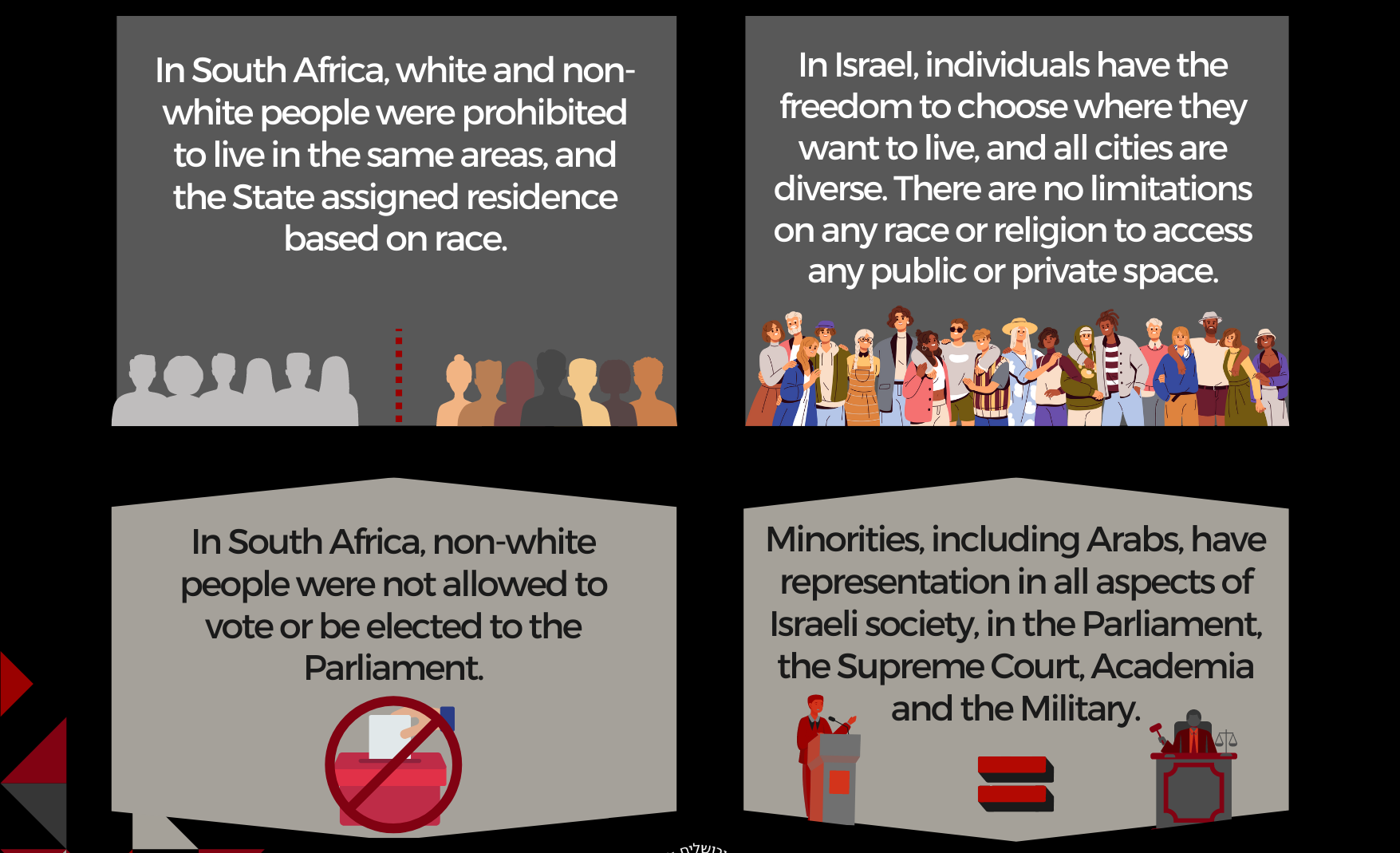
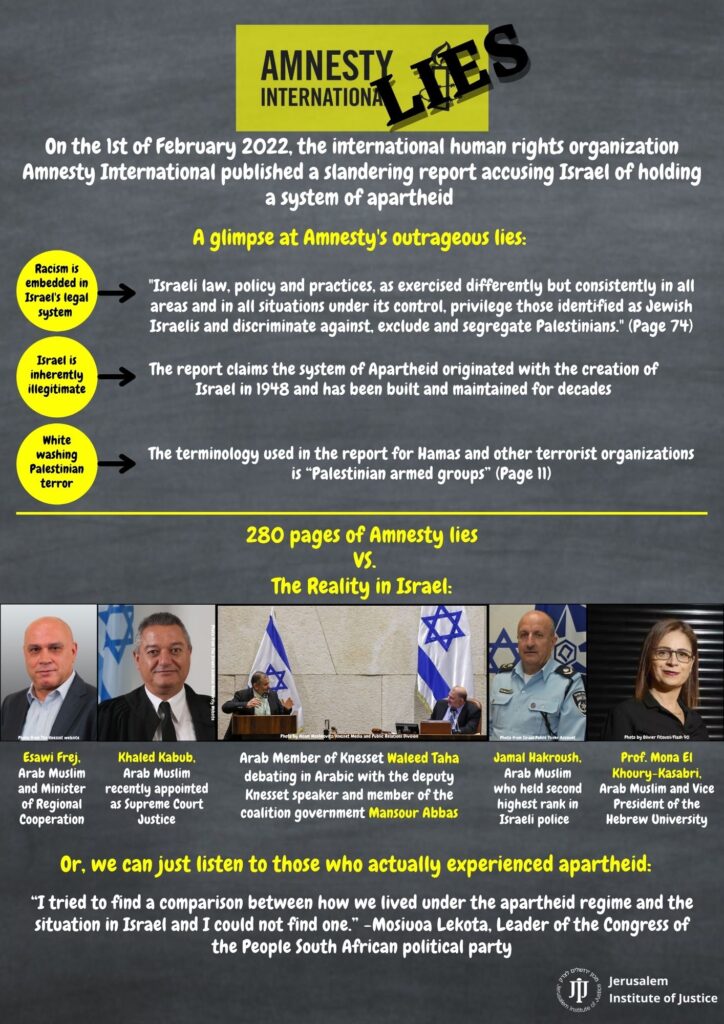
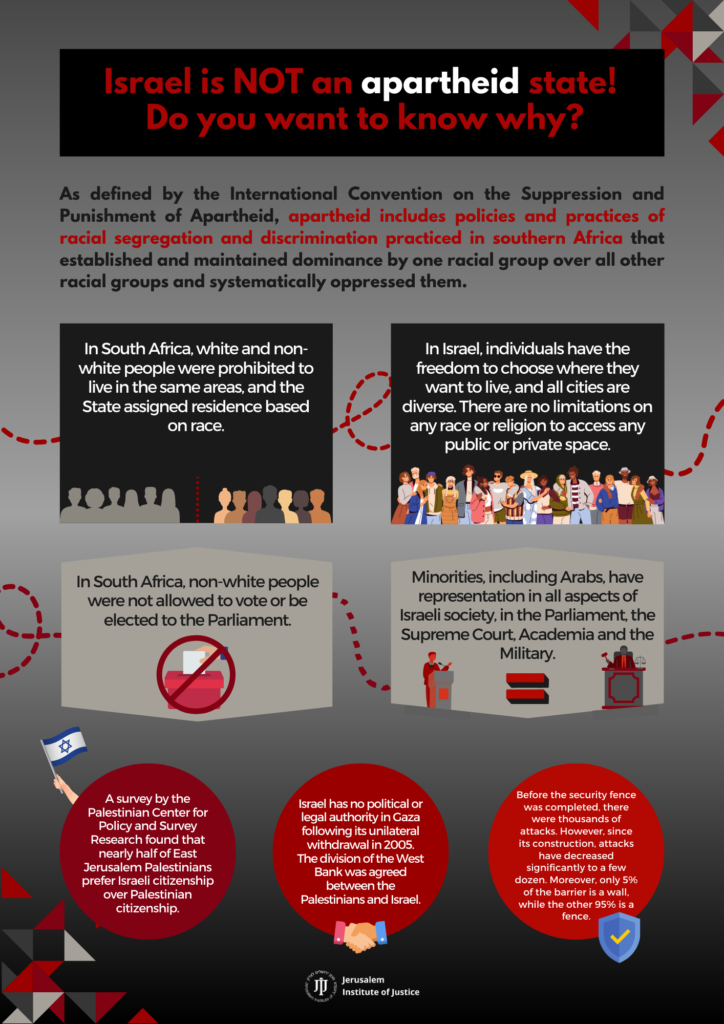
Not Apartheid
As defined by the International Convention on the Suppression and Punishment of Apartheid, apartheid includes policies and practices of racial segregation and discrimination practiced in southern Africa that established and maintained dominance by one racial group over all other racial groups and systematically oppressed them.
Download
Statement for the 67th Session of the Commission on the Status of Women
On this International Women's Day, we are proud to share an important discussion taking place today at the United Nations Commission on the Status of Women.
For over a decade, the Jerusalem Institute of Justice has worked tirelessly to end the sex trade in Israel. As part of this mission and as a member of the United Nations Economic and Social Council, we have submitted a written statement in support of the Commission's theme of "Innovation and technological change, and education in the digital age for achieving gender equality and the empowerment of all women and girls."
JIJ sees the great potential for innovation to further empower women and supports these developments. We must also acknowledge the risks posed by technological advancements, particularly the rise in prostitution facilitated by social media platforms. We are taking steps to combat this phenomenon through our "Project NOA", which promotes legislative initiatives and societal change.
We take this opportunity to appeal to the UN and nations globally to adopt the Nordic model which involves the decriminalization of prostituted people, the criminalization of purchasers and profiteers of sex, as well as education and support services for survivors. We are encouraged by the success of this model in Israel and are confident in its potential to protect vulnerable women and girls.
Please read JIJ's full statement here. Together, we can lead the fight on behalf of women and achieve true gender equality.
JIJ's oral statement at the 50th session of the UNHRC
https://www.youtube.com/watch?v=w8SAwlfw0D4
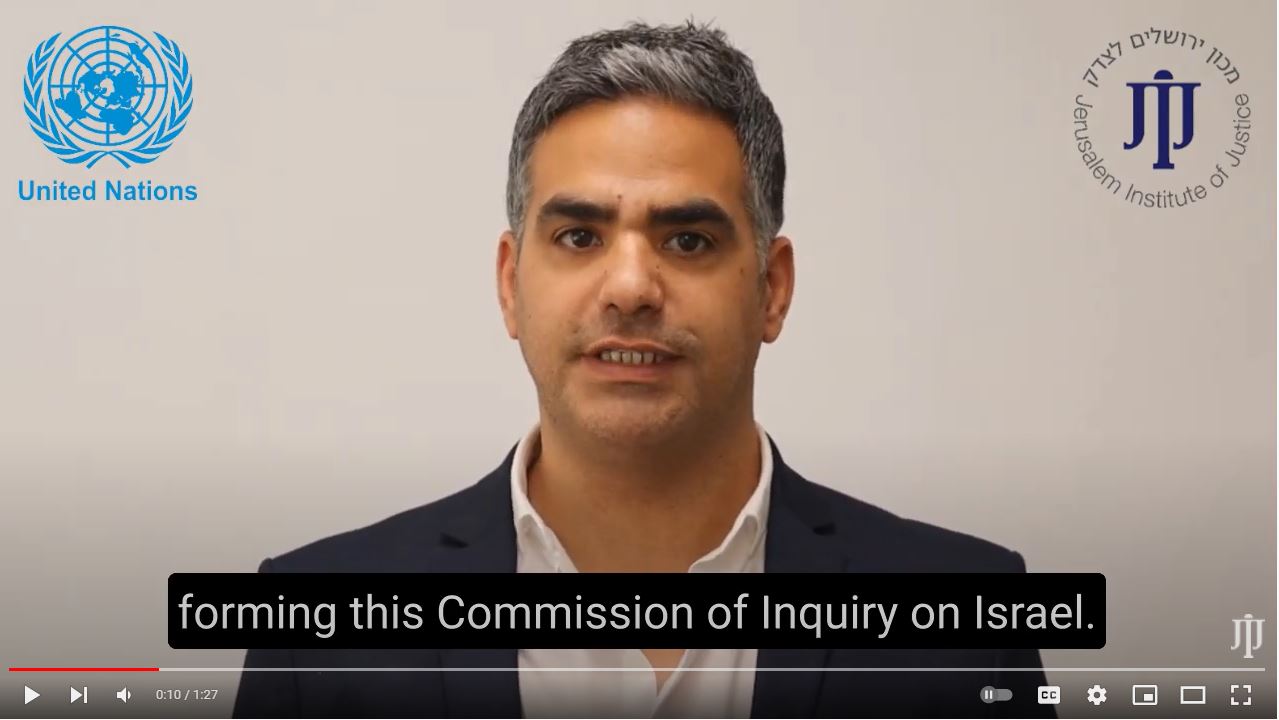
JIJ's Adv. Uri Morad, presented both oral and written reports at the 50th Session of the Human Rights Council. JIJ objects to the mandate of the Independent International Commission of Inquiry (COI) on the Occupied Palestinian Territory including East Jerusalem and Israel. We are standing for Israel and objecting to the vilification of the only democracy in the Middle East. We will not be silenced and we will not back down.
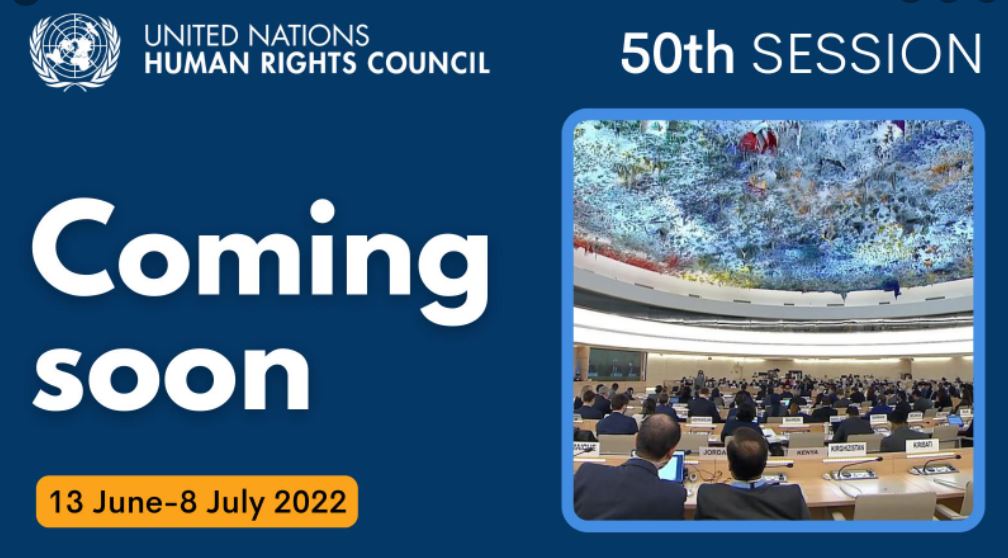
HRC 50th Session - Written Statement
Read Original Document
Mr. President,
We, the Jerusalem Institute of Justice, an Israeli NGO fighting to promote human rights, defend democracy, and improve the overall quality of life for Israelis and Palestinians alike, find it of the utmost importance to reject the so-called independent commission of inquiry named “The United Nations Independent International Commission of Inquiry on the Occupied Palestinian Territory, including East Jerusalem, and Israel (COI)”.
Israel-UN relations have known many lows throughout the years. From General Assembly resolution 3379 equating Zionism with racism, through the anti-Israel 2001 Durban World Conference against Racism which devolved into a vicious forum for Israel bashing and antisemitism, the UN has shown time and time again that its founding values of universality, impartiality, objectivity, and non-selectivity, are disregarded when it comes to the condemning of Israel. Let us be clear, this systematic campaign is done with the clear intention of delegitimizing the only democracy in the middle east.
The COI was formed in the wake of the 2021 Gaza Conflict, a conflict which erupted as a result of the indiscriminate firing of rockets and mortars by the Palestinian terrorist organizations in Gaza. The formation of this COI constitutes an escalation in the UN’s hostile approach towards Israel. If up until today the UN’s resolutions had more of a declarative nature, this COI was formed to prepare the ground for operative steps against Israel. This commission goes as far as to call upon third states to ignore Israel’s sovereignty and take action in regards to the Israeli-Palestinian conflict. Furthermore, the COI was tailor-made to enable the International Criminal Court to take legal action against Israel on the basis of the alleged Israeli breach of the Rome Statue.
It is enough to look at the COI’s mandate to grasp its prejudice towards Israel. The bias of the COI is especially evident in the terminology used in the text of the mandate, which designates the commission to “Investigate all underlying root causes of recurrent tensions, instability and protraction of conflict, including systematic discrimination and repression based on national, ethnic, racial or religious identity”. This kind of terminology has been put forth to prepare the ground for the commission’s expected false conclusion that Israel is an apartheid state. In addition, this terminology shows the commission will try to assign all the responsibility on the continuation of the conflict on Israel.
Furthermore, this commission of inquiry was assigned an extremely wide scope to investigate. Although the inquiry was formed as a response to the 2021 Gaza conflict, the scope of the investigation, as designated by its mandate, permits it to focus on issues related to the conflict since 1948. If this commission was formed as a response to the conflict in Gaza last year, why is it investigating the history of the conflict since 1948? Moreover, the terrorist organization Hamas is not mentioned even once in the resolution or the text of the mandate. This goes to show, once more, the minor role Hamas will be given in this commission’s report.[1]
This commission is of unprecedented measures. It has received an extremely large budget of millions of dollars, an unusually large staff of 18 permanent workers, and is also one of only 2 UN bodies ever created with an open-ended mandate. No other commission of inquiry has ever received a continuing mandate. Additionally, like any other “objective” UN inquiry on Israel, the choice of the inquisitors is intended to pre-determine the answer – even though this is in clear violation of UN rules. The Code of Conduct for Special Procedures Mandate-holders states very clearly that members of inquiries are required to follow to a specific code of conduct - they are supposed to uphold the highest standards of impartiality. “The work of the Council shall be guided by the principles of universality, impartiality, objectivity, and non-selectivity”.[2]
The three members of this Commission are anything but independent. The head of the Commission, Navi Pillay, was a key leader of the 2001 UN Durban World Conference against Racism which called Israel a racist state. Additionally, as United Nations High Commissioner for Human Rights during the 2008-9 and 2014 Gaza wars, Pillay played a pivotal role in promoting the Goldstone report and the outrageous slander that Israel targeted and murdered children. Since leaving office, she’s made a habit of promoting BDS and accusing Israel of apartheid. In a speech to the South African Department of International Relations and Cooperation’s seminar “The Year of Oliver Tambo and The Palestinian Struggle under Apartheid Rule, Pretoria, South Africa,” Pillay stated the following: “Apartheid is now being declared a crime against humanity in the Rome Statute, and it means the enforced segregation of people on racial lines, and that is what is happening in Israel.”[3] At the same event, Pillay also noted that she has met with members of the BDS campaign and that she hoped this “Palestinian struggle to end colonization”[4] will “catch on, as did the anti-apartheid movement.”[5] Is having an individual who has already accused Israel numerous times of being an apartheid state and who has publicly endorsed the BDS campaign lead this commission consistent with the UN’s own standard of impartiality?
In addition, the two other members of the committee, Miloon Kothari and Chris Sidoti, both hold anti-Israel extremism and Palestinian partisanship records. In 2002 Khotari issued a report claiming Israel was guilty of “ethnic cleansing” during the Second Intifada. In 2006 he claimed in a UN press release that the factors underlying the ongoing conflict between Israel and the Palestinians are the World Zionist Organization and Jewish National Fund’s colonization activities in the Jordan Valley. Chris Sidoti provides strategic guidance and advice to the Australian Centre for International Justice which works in partnership with the Palestinian Human Rights Organization Council. This Australian Centre issued a report in 2021 that calls on the Australian government to endorse BDS and the criminal prosecution of Israelis.[6] In conclusion, none of the three members of this so-called independent Inquiry meet the UN’s own rules of independence, impartiality, and objectivity.[7]
The result of this witch hunt is a foregone conclusion. This unfair commission of inquiry is expected to accuse Israel of being an apartheid state and thus target its legitimacy as a state. Therefore, we call on the Human Rights Council to revoke the resolution forming this commission. Alternatively, we recommend the removal of the three prejudiced judges heading the commission and that impartial judges be instated in their place.
Let us finish with, none other than, former Secretary General, Mr. Ban Ki-moon, who in a talk with Israeli students admitted the UN’s bias towards Israel saying the following:
“Unfortunately, because of the [Israeli-Palestinian] conflict, Israel’s been weighed down by criticism and suffered from bias — and sometimes even discrimination.”[8]
[1] https://www.ohchr.org/en/hr-bodies/hrc/co-israel/index
[2] https://ap.ohchr.org/documents/dpage_e.aspx?si=A/HRC/RES/5/2
[3]https://www.youtube.com/watch?v=6sIEfCf1Dhs&ab_channel=NTUInstituteofScience%26TechnologyforHumanity
[4] Ibid.
[5] https://www.youtube.com/watch?v=nF61qfb5J-k&ab_channel=Africa4Palestine
[6] Ibid.
[7] https://ap.ohchr.org/documents/dpage_e.aspx?si=A/HRC/RES/5/2
[8] https://www.timesofisrael.com/israel-faces-bias-at-un-ban-says/