
Responding to the ICC - New Reports
Watch the following interviews of JIJ's team
Interview with JIJ Director of US Policy & Diplomacy, Monique Beadle on i24 News.
Interview with JIJ Human Rights Lawyer, Carolina Gimberg on Kan En Espanol.
Interview with JIJ Attorney, Uri Morad on Radio 103FM.
Interview with JIJ Attorney, Uri Morad on Radio Kan Moreshet

A Step Too Far: The UN Human Rights Council COI Report on Israel
After clashes between Israel and Hamas in May 2021, the UN Human Rights Council opened a Commission of Inquiry (COI) to investigate human rights abuses in Israel. Over the course of the past two years, the COI has produced three reports detailing one-sided, biased information about the events on the ground, falsely portraying reality for so many Israelis and Palestinians. In its latest report, the COI focused on “Israel’s attacks, restrictions, and harassment of civil society actors” and revealed numerous concerning human rights violations in the Palestinian Territories and East Jerusalem. However, the UN fell into its biased routine of disproportionate representation once again.
Although unequal treatment is expected with the UN’s long history of anti-Israel sentiment, the most recent proceedings took matters to new heights. Throughout the report and live session, the COI explicitly supported BDS and similar Israel-boycott organizations and categorized them as legitimate forms of protest. The COI also ignored terrorism enacted by both Palestinian leadership and civilians and called on UN member states to support the Palestinian resistance. These actions not only fail to uphold the COI’s mission to “establish the facts and circumstances” and “identify those responsible,” but it glorifies antisemitism in the world’s most prominent human rights organization, setting a precedent that poses a serious threat to Jews around the world (the UN Independent International COI on the OPT Mandate, 2021).
In the COI report’s section detailing Israel’s delegitimization of Palestinian civil society, the COI claims that Israel instituted various measures to limit BDS, such as removing their funding and cutting business deals. By preventing BDS from acting freely, Israeli authorities were denying their supporters the right to freedom of expression, which is considered a human rights violation. As a response, the COI asserts that:
“Everyone shall have the right to freedom of expression; this right shall include freedom to seek, receive and impart information and ideas of all kinds, regardless of frontiers, either orally, in writing or in print, in the form of art, or through any other media of his choice,” (Human Rights Council 53rd Session Report, pp 11)
Such statements blatantly support accounts of institutionalized antisemitism and violent resistance espoused by BDS leaders. There are numerous cases in which the BDS has voiced its antisemitic views. BDS co-founder and leader Omar Barghouti freely admits that BDS “opposes a Jewish state in any part of Palestine.” In another, a BDS leader in South Africa stated, “BDS [...] will help bring about the defeat of Zionist Israel and victory for Palestine.” Lastly, Barghouti claimed that “B.D.S. treats resistance to what it sees as Israeli oppression, including by armed struggle, as a legitimate right. Asked if B.D.S. condemned the violence that targeted Israeli soldiers, he declined to comment” (Halbfinger et. al, Is B.D.S. Anti-Semitic? A Closer Look at the Boycott Israel Campaign).
BDS’ opposition to a Jewish state in Israel’s borders is not hidden. They openly deny the Jewish people’s right to self-determination in the land of Israel and advocate against a peaceful solution. While every individual should have the right to criticize any institution and exercise his or her freedom of expression, there is a difference between disagreement and encouraging human rights crimes. BDS clearly legitimizes terrorism and harm to innocent Israeli civilians as a means to wipe Israel off the face of the Earth.
To add fuel to the fire, the COI commissioners have explicitly shared similar views in interviews and sessions. Navi Pillay, the chief commissioner, has spent a large portion of her career fighting Israel, from lobbying governments to boycott Israel to creating the “Sanction Apartheid Israel” petition. On numerous occasions, Pillay has affirmed her support for BDS, such as “I hope that the Palestinian struggle to end colonization gains this kind of momentum, especially in the civilian campaign of BDS, Boycott, Divestment, and Sanctions” at a conference in South Africa (November 29, 2017). Furthermore, Miloon Kothari, one of three commissioners of the COI, stated outright in the session, “States want to [...] correctly uphold the rights of the Ukrainians to resist, and we want to see the same standards applied to the case of Israel and Palestine.” In short, just as the Ukrainians use armed resistance and violence against Russia, so should the Palestinians. Violence is an encouraged response (3rd Meeting 53rd Session of Human Rights Council).
By confirming BDS as a legitimate protest organization, the UNHRC supports both human rights violations and violence as a means to an end. They support the continuation of conflict, not peace, and are actively making the world a more dangerous place for the Jewish people.
As a Jewish student studying human rights in university, I am deeply disappointed in the COI’s report and frightened by its precedent. Firstly, one of the most important lessons of higher education is to never rely on one narrative. Every conflict has multiple angles, but ignoring basic facts detracts from the truth. Highlighting the Israeli perspective is just as crucial to progress as highlighting the Palestinian one, and peace can only emerge through mutual recognition.
Secondly, this statement arrives at a dangerous time for the Jewish people, as antisemitism has slowly crept back into all sectors of our society. Many of my peers have been alienated for their assumed pro-Israel opinions after simply expressing their Jewish identities. Not only do individuals fear expressing their opinions on Israel, but the environment no longer allows them to be open about being Jewish. By giving the green light to BDS, the COI contributes to “removing [...] civil-society actors from the public space to stop their activities, silencing their voices and punishing them, and often also deterring others,” the exact environment the UNHRC claims Israeli authorities wrongfully create for Palestinians (Human Rights Council 53rd Session Report pp 20).
As a path forward, the UNHRC COI must condemn BDS for crossing the line from free speech to antisemitism. By drawing this line, the UNHRC can simultaneously protect the freedom of expression, as well as the Jewish people. Second, the UNHRC must recognize the terrorism enacted by Palestinian civilians and leadership. If they assert that Israeli violence is a human rights crime, they must at least recognize that it exists on the other side, let alone criticize it.
The only path to upholding human rights is to escape emotional narrative, present challenging issues from either side and hold both sides accountable for their actions. It is crucial to call out Israel when they commit crimes, just as criticism is warranted for any democracy, but displaying biased, one-sided evidence only inhibits progress and perpetuates the harmful, decades-long conflict. Every innocent Palestinian and Israeli equally deserves fair treatment from their governments and international institutions, and hiding the truth prevents human rights for all.
By Molly Goldstein - JIJ Intern
A Step Too Far: The UN Human Rights Council COI Report on Israel
After clashes between Israel and Hamas in May 2021, the UN Human Rights Council opened a Commission of Inquiry (COI) to investigate human rights abuses in Israel. Over the course of the past two years, the COI has produced three reports detailing one-sided, biased information about the events on the ground, falsely portraying reality for so many Israelis and Palestinians. In its latest report, the COI focused on “Israel’s attacks, restrictions, and harassment of civil society actors” and revealed numerous concerning human rights violations in the Palestinian Territories and East Jerusalem. However, the UN fell into its biased routine of disproportionate representation once again.
Although unequal treatment is expected with the UN’s long history of anti-Israel sentiment, the most recent proceedings took matters to new heights. Throughout the report and live session, the COI explicitly supported BDS and similar Israel-boycott organizations and categorized them as legitimate forms of protest. The COI also ignored terrorism enacted by both Palestinian leadership and civilians and called on UN member states to support the Palestinian resistance. These actions not only fail to uphold the COI’s mission to “establish the facts and circumstances” and “identify those responsible,” but it glorifies antisemitism in the world’s most prominent human rights organization, setting a precedent that poses a serious threat to Jews around the world (the UN Independent International COI on the OPT Mandate, 2021).
In the COI report’s section detailing Israel’s delegitimization of Palestinian civil society, the COI claims that Israel instituted various measures to limit BDS, such as removing their funding and cutting business deals. By preventing BDS from acting freely, Israeli authorities were denying their supporters the right to freedom of expression, which is considered a human rights violation. As a response, the COI asserts that:
“Everyone shall have the right to freedom of expression; this right shall include freedom to seek, receive and impart information and ideas of all kinds, regardless of frontiers, either orally, in writing or in print, in the form of art, or through any other media of his choice,” (Human Rights Council 53rd Session Report, pp 11)
Such statements blatantly support accounts of institutionalized antisemitism and violent resistance espoused by BDS leaders. There are numerous cases in which the BDS has voiced its antisemitic views. BDS co-founder and leader Omar Barghouti freely admits that BDS “opposes a Jewish state in any part of Palestine.” In another, a BDS leader in South Africa stated, “BDS [...] will help bring about the defeat of Zionist Israel and victory for Palestine.” Lastly, Barghouti claimed that “B.D.S. treats resistance to what it sees as Israeli oppression, including by armed struggle, as a legitimate right. Asked if B.D.S. condemned the violence that targeted Israeli soldiers, he declined to comment” (Halbfinger et. al, Is B.D.S. Anti-Semitic? A Closer Look at the Boycott Israel Campaign).
BDS’ opposition to a Jewish state in Israel’s borders is not hidden. They openly deny the Jewish people’s right to self-determination in the land of Israel and advocate against a peaceful solution. While every individual should have the right to criticize any institution and exercise his or her freedom of expression, there is a difference between disagreement and encouraging human rights crimes. BDS clearly legitimizes terrorism and harm to innocent Israeli civilians as a means to wipe Israel off the face of the Earth.
To add fuel to the fire, the COI commissioners have explicitly shared similar views in interviews and sessions. Navi Pillay, the chief commissioner, has spent a large portion of her career fighting Israel, from lobbying governments to boycott Israel to creating the “Sanction Apartheid Israel” petition. On numerous occasions, Pillay has affirmed her support for BDS, such as “I hope that the Palestinian struggle to end colonization gains this kind of momentum, especially in the civilian campaign of BDS, Boycott, Divestment, and Sanctions” at a conference in South Africa (November 29, 2017). Furthermore, Miloon Kothari, one of three commissioners of the COI, stated outright in the session, “States want to [...] correctly uphold the rights of the Ukrainians to resist, and we want to see the same standards applied to the case of Israel and Palestine.” In short, just as the Ukrainians use armed resistance and violence against Russia, so should the Palestinians. Violence is an encouraged response (3rd Meeting 53rd Session of Human Rights Council).
By confirming BDS as a legitimate protest organization, the UNHRC supports both human rights violations and violence as a means to an end. They support the continuation of conflict, not peace, and are actively making the world a more dangerous place for the Jewish people.
As a Jewish student studying human rights in university, I am deeply disappointed in the COI’s report and frightened by its precedent. Firstly, one of the most important lessons of higher education is to never rely on one narrative. Every conflict has multiple angles, but ignoring basic facts detracts from the truth. Highlighting the Israeli perspective is just as crucial to progress as highlighting the Palestinian one, and peace can only emerge through mutual recognition.
Secondly, this statement arrives at a dangerous time for the Jewish people, as antisemitism has slowly crept back into all sectors of our society. Many of my peers have been alienated for their assumed pro-Israel opinions after simply expressing their Jewish identities. Not only do individuals fear expressing their opinions on Israel, but the environment no longer allows them to be open about being Jewish. By giving the green light to BDS, the COI contributes to “removing [...] civil-society actors from the public space to stop their activities, silencing their voices and punishing them, and often also deterring others,” the exact environment the UNHRC claims Israeli authorities wrongfully create for Palestinians (Human Rights Council 53rd Session Report pp 20).
As a path forward, the UNHRC COI must condemn BDS for crossing the line from free speech to antisemitism. By drawing this line, the UNHRC can simultaneously protect the freedom of expression, as well as the Jewish people. Second, the UNHRC must recognize the terrorism enacted by Palestinian civilians and leadership. If they assert that Israeli violence is a human rights crime, they must at least recognize that it exists on the other side, let alone criticize it.
The only path to upholding human rights is to escape emotional narrative, present challenging issues from either side and hold both sides accountable for their actions. It is crucial to call out Israel when they commit crimes, just as criticism is warranted for any democracy, but displaying biased, one-sided evidence only inhibits progress and perpetuates the harmful, decades-long conflict. Every innocent Palestinian and Israeli equally deserves fair treatment from their governments and international institutions, and hiding the truth prevents human rights for all.
By Molly Goldstein - JIJ Intern
HRC 50th Session - Written Statement
https://www.youtube.com/watch?v=w8SAwlfw0D4
Read Original Document
Mr. President,
We, the Jerusalem Institute of Justice, an Israeli NGO fighting to promote human rights, defend democracy, and improve the overall quality of life for Israelis and Palestinians alike, find it of the utmost importance to reject the so-called independent commission of inquiry named “The United Nations Independent International Commission of Inquiry on the Occupied Palestinian Territory, including East Jerusalem, and Israel (COI)”.
Israel-UN relations have known many lows throughout the years. From General Assembly resolution 3379 equating Zionism with racism, through the anti-Israel 2001 Durban World Conference against Racism which devolved into a vicious forum for Israel bashing and antisemitism, the UN has shown time and time again that its founding values of universality, impartiality, objectivity, and non-selectivity, are disregarded when it comes to the condemning of Israel. Let us be clear, this systematic campaign is done with the clear intention of delegitimizing the only democracy in the middle east.
The COI was formed in the wake of the 2021 Gaza Conflict, a conflict which erupted as a result of the indiscriminate firing of rockets and mortars by the Palestinian terrorist organizations in Gaza. The formation of this COI constitutes an escalation in the UN’s hostile approach towards Israel. If up until today the UN’s resolutions had more of a declarative nature, this COI was formed to prepare the ground for operative steps against Israel. This commission goes as far as to call upon third states to ignore Israel’s sovereignty and take action in regards to the Israeli-Palestinian conflict. Furthermore, the COI was tailor-made to enable the International Criminal Court to take legal action against Israel on the basis of the alleged Israeli breach of the Rome Statue.
It is enough to look at the COI’s mandate to grasp its prejudice towards Israel. The bias of the COI is especially evident in the terminology used in the text of the mandate, which designates the commission to “Investigate all underlying root causes of recurrent tensions, instability and protraction of conflict, including systematic discrimination and repression based on national, ethnic, racial or religious identity”. This kind of terminology has been put forth to prepare the ground for the commission’s expected false conclusion that Israel is an apartheid state. In addition, this terminology shows the commission will try to assign all the responsibility on the continuation of the conflict on Israel.
Furthermore, this commission of inquiry was assigned an extremely wide scope to investigate. Although the inquiry was formed as a response to the 2021 Gaza conflict, the scope of the investigation, as designated by its mandate, permits it to focus on issues related to the conflict since 1948. If this commission was formed as a response to the conflict in Gaza last year, why is it investigating the history of the conflict since 1948? Moreover, the terrorist organization Hamas is not mentioned even once in the resolution or the text of the mandate. This goes to show, once more, the minor role Hamas will be given in this commission’s report.[1]
This commission is of unprecedented measures. It has received an extremely large budget of millions of dollars, an unusually large staff of 18 permanent workers, and is also one of only 2 UN bodies ever created with an open-ended mandate. No other commission of inquiry has ever received a continuing mandate. Additionally, like any other “objective” UN inquiry on Israel, the choice of the inquisitors is intended to pre-determine the answer – even though this is in clear violation of UN rules. The Code of Conduct for Special Procedures Mandate-holders states very clearly that members of inquiries are required to follow to a specific code of conduct - they are supposed to uphold the highest standards of impartiality. “The work of the Council shall be guided by the principles of universality, impartiality, objectivity, and non-selectivity”.[2]
The three members of this Commission are anything but independent. The head of the Commission, Navi Pillay, was a key leader of the 2001 UN Durban World Conference against Racism which called Israel a racist state. Additionally, as United Nations High Commissioner for Human Rights during the 2008-9 and 2014 Gaza wars, Pillay played a pivotal role in promoting the Goldstone report and the outrageous slander that Israel targeted and murdered children. Since leaving office, she’s made a habit of promoting BDS and accusing Israel of apartheid. In a speech to the South African Department of International Relations and Cooperation’s seminar “The Year of Oliver Tambo and The Palestinian Struggle under Apartheid Rule, Pretoria, South Africa,” Pillay stated the following: “Apartheid is now being declared a crime against humanity in the Rome Statute, and it means the enforced segregation of people on racial lines, and that is what is happening in Israel.”[3] At the same event, Pillay also noted that she has met with members of the BDS campaign and that she hoped this “Palestinian struggle to end colonization”[4] will “catch on, as did the anti-apartheid movement.”[5] Is having an individual who has already accused Israel numerous times of being an apartheid state and who has publicly endorsed the BDS campaign lead this commission consistent with the UN’s own standard of impartiality?
In addition, the two other members of the committee, Miloon Kothari and Chris Sidoti, both hold anti-Israel extremism and Palestinian partisanship records. In 2002 Khotari issued a report claiming Israel was guilty of “ethnic cleansing” during the Second Intifada. In 2006 he claimed in a UN press release that the factors underlying the ongoing conflict between Israel and the Palestinians are the World Zionist Organization and Jewish National Fund’s colonization activities in the Jordan Valley. Chris Sidoti provides strategic guidance and advice to the Australian Centre for International Justice which works in partnership with the Palestinian Human Rights Organization Council. This Australian Centre issued a report in 2021 that calls on the Australian government to endorse BDS and the criminal prosecution of Israelis.[6] In conclusion, none of the three members of this so-called independent Inquiry meet the UN’s own rules of independence, impartiality, and objectivity.[7]
The result of this witch hunt is a foregone conclusion. This unfair commission of inquiry is expected to accuse Israel of being an apartheid state and thus target its legitimacy as a state. Therefore, we call on the Human Rights Council to revoke the resolution forming this commission. Alternatively, we recommend the removal of the three prejudiced judges heading the commission and that impartial judges be instated in their place.
Let us finish with, none other than, former Secretary General, Mr. Ban Ki-moon, who in a talk with Israeli students admitted the UN’s bias towards Israel saying the following:
“Unfortunately, because of the [Israeli-Palestinian] conflict, Israel’s been weighed down by criticism and suffered from bias — and sometimes even discrimination.”[8]
[1] https://www.ohchr.org/en/hr-bodies/hrc/co-israel/index
[2] https://ap.ohchr.org/documents/dpage_e.aspx?si=A/HRC/RES/5/2
[3]https://www.youtube.com/watch?v=6sIEfCf1Dhs&ab_channel=NTUInstituteofScience%26TechnologyforHumanity
[4] Ibid.
[5] https://www.youtube.com/watch?v=nF61qfb5J-k&ab_channel=Africa4Palestine
[6] Ibid.
[7] https://ap.ohchr.org/documents/dpage_e.aspx?si=A/HRC/RES/5/2
[8] https://www.timesofisrael.com/israel-faces-bias-at-un-ban-says/
When Does Criticism of Israel Become Anti-Semitism?
By Nikki Golomb.
As a Jewish-American university student, I have been faced with the impossible task of determining when a professor, a student group, or an event has gone too far in criticism of Israel as a Jewish democracy. Is this legitimate criticism of Israel as an imperfect state, or is it holding Israel to an unfair standard of perfection? Is this criticism of Israel as a Jewish nation, or a political state? Is this anti-Semitism masked as anti-Zionism, a more “acceptable” form of criticism? And if so, where do we draw the line?
Anti-Israel rhetoric is often referred to as the “new anti-Semitism.” Classical anti-Semitism – such as the blood libel, Nazi symbolism and graffiti, and destruction of Jewish tombstones – are easy to identify, illegal, and largely socially unacceptable. Anti-Israel speech, on the other hand, is much more palatable to the public. However, anti-Israel rhetoric is often used as a more “acceptable” form of anti-Jewish sentiment, as the only Jewish state is held to a higher standard than any other country in the world.
There is a very fine line between legitimate political criticism of Israel and anti-Semitism. Many of us know all too well that recognizing the line is not only very difficult, but also vital in order to not infringe upon free speech while also condemning hate speech. However, Israel is not perfect, and thus denouncing any criticism of Israel as anti-Semitism ignores the political challenges faced within Israel and also holds Israel to a different standard than other countries. So how do we know when to speak up against anti-Semitism?
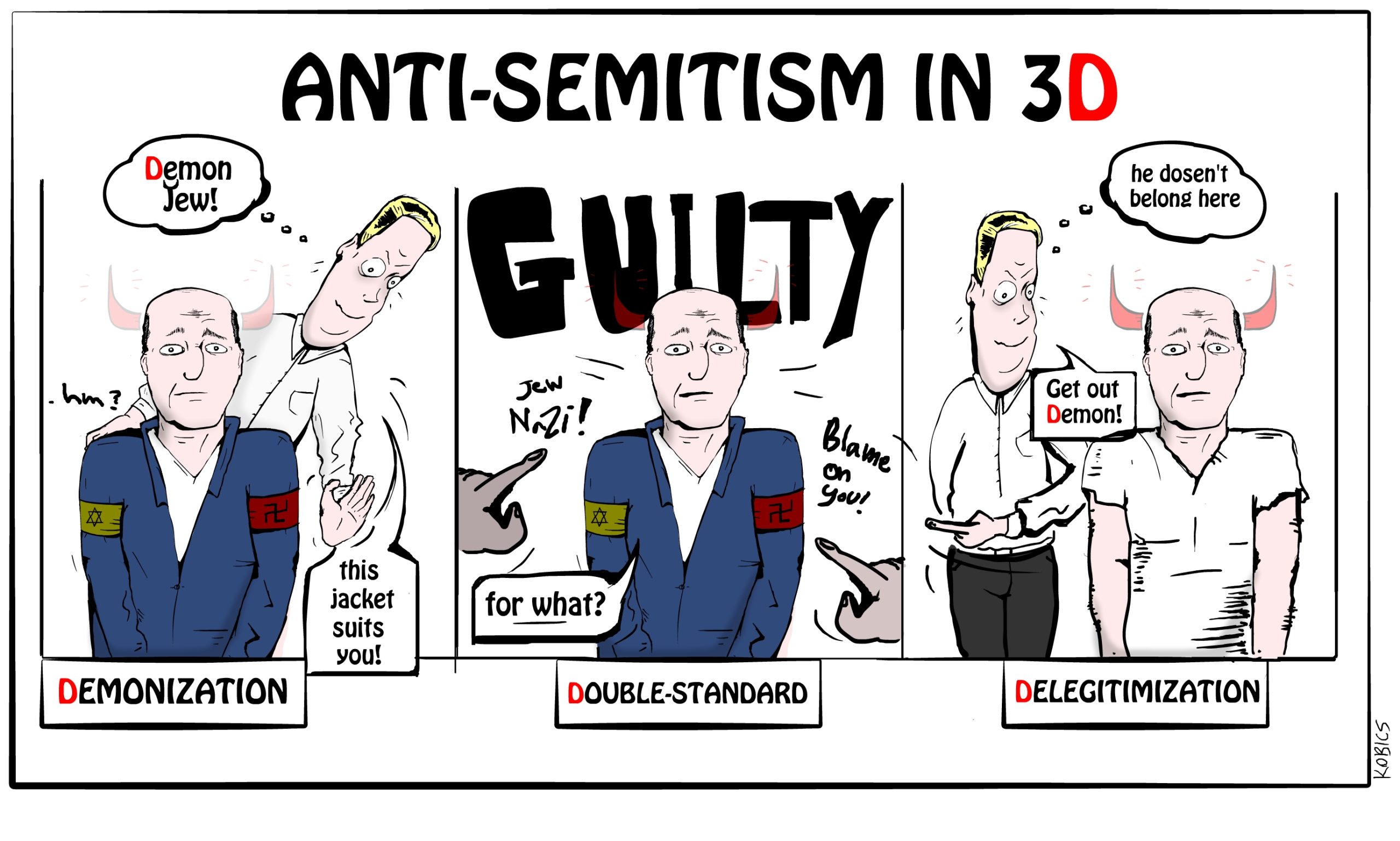
Natan Sharansky, Chairman of the Executive for the Jewish Agency for Israel and human rights activist, proposed what he calls the “3-D test” to differentiate between legitimate criticism of Israel and anti-Semitism. This test dictates that if a statement or action demonizes Israel, holds Israel to a double standard, or delegitimizes Israel (the “3 Ds”), it is in fact anti-Semitic.
Demonization
Demonization, the first of the 3 Ds, is relatively easy to identify as it has been a marker of anti-Semitism for centuries. Depicting Jews as the embodiment of evil (i.e. “Jews have horns” or “Jews are the devil”) is one of the oldest forms of anti-Semitism. Today, demonization of Israel includes comparing Israel to Nazi Germany, equating Palestinian refugee camps with concentration camps, or depicting Israeli political leaders as the devil.
Demonization of Israel is clear anti-Semitism, with a shift of focus from Jews as individuals to the Jewish nation. When criticism of Israel is focused on its nature as a Jewish state, when its policies are blown out of proportion, and when criticism reflects anti-Jewish sentiment that has persisted for centuries, anti-Semitism is the culprit.
Double Standard
Discriminatory laws holding Jews to a different standard than other citizens have also existed for centuries. From empires imposing additional taxes on Jews, to outright denying the right to Jewish practice, to more recent ghettoization, Jews have been subject to different laws than their neighbors.
The same is happening today, at the international level. Of the 2017-2018 UNGA resolutions condemning countries, 20 of the resolutions were against Israel – and six against the rest of the world combined. Furthermore, since the establishment of the UN Human Rights Council, about 50% of its resolutions concerning specific countries have been against Israel. No other country has received such treatment. Singling out Israel for condemnation while ignoring massive human rights abuses in other parts of the world is holding Israel to a double standard. Expecting Israel and Israeli organizations to adhere to a higher standard of human rights singles out Israel as the only Jewish state, and is thus an expression of anti-Semitism.
Delegitimization
Delegitimization is slightly harder to identify, but just as important. It refers to any action or comment delegitimizing Israel as a Jewish democracy, or denying Israel’s right to exist as one. It can be accusing Israel of colonialism, ethnic cleansing, and apartheid; or it can be claiming that Israel was established illegally and on lands that it has no right to own, thus delegitimizing Israel’s very right to exist at all.
Dozens of Muslim states and Christian states exist, yet there is only one Jewish state. Denying its right to exist is inherently anti-Semitic because it discriminates against Israel based on its nature as a Jewish state. Making false claims of ethnic cleansing or apartheid delegitimizes Israel by implying that it is founded on racism and discrimination and thus has no right to sovereignty. The same argument can be made of the claim that Israel has no legal, historical, or cultural right to the land; however, making these claims is anti-Semitic because it nullifies Jewish history, nationalism, and right to self-determination.
Discussion and Conclusion
Expressing disapproval for specific Israeli policies is a legitimate form of criticism. Arguing against political action, the way one does with regards to other countries, is not only acceptable but also healthy – no positive progress can be made without open dialogue and political discussion. However, when one (or more) of the “3 Ds” become present and that criticism crosses the line into anti-Semitism, nothing productive can happen. No positive change can happen when the criticism is based on anti-Jewish arguments. When someone demonizes Israel, holds it to a double standard, or delegitimizes it, their tactics must be called out for what they are. This is the only way to ensure that anti-Semitism is recognized and stopped, and legitimate criticism is taken seriously so as to promote progress.
Your Regret Has Been Duly Noted
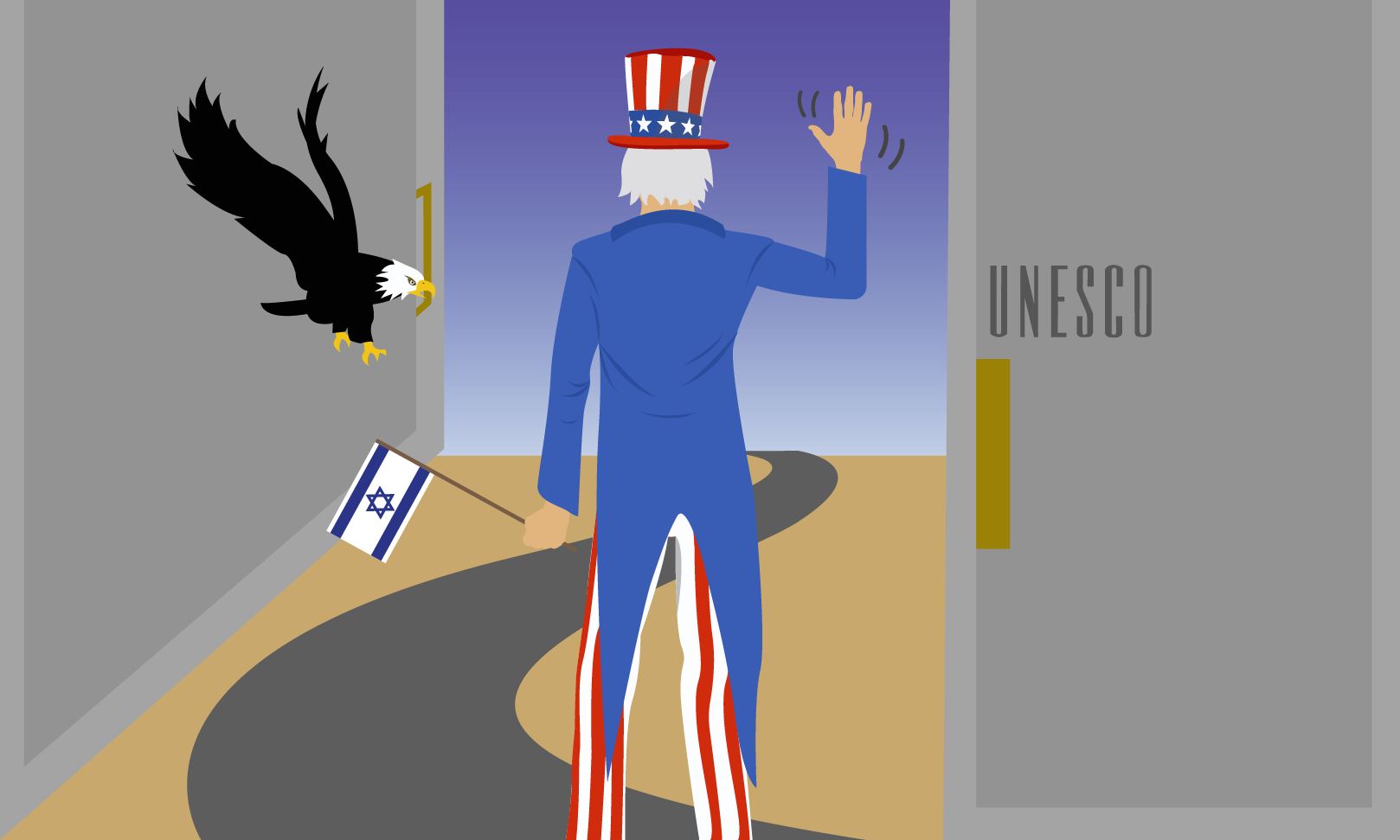
The recent decision of the U.S. to withdraw from UNESCO triggered an expression of profound regret by its director, but begs the question, “... and what took you so long?”
Led by President Reagan, the U.S. played hooky from UNESCO from 1984 to 2003 on the grounds that the organization “extraneously politicized virtually every subject it deals with, (and) has exhibited hostility toward the basic institutions of a free society, especially a free market and a free press.” That invites repetition of the old joke, “But aside from that, Mrs. Lincoln, what did you think of the play?
The same sound grounds for withdrawal from UNESCO have been well-publicized for the past five years. Could withdrawal have anything to do, for instance, with past decisions to include the writings of Che Guevara in UNESCO’s “memory of the world” register? The reappointment of Syria to a committee dealing with human rights? Formation of a Unesco chair at the Islamic University of Gaza - an institution tied to Hamas? Or, maybe, giving out a life-sciences award that was sponsored by Africa’s longest-ruling dictator?
While the decision’s timing may have caught Israel by surprise, the decision process had been underway for some time, with Israel’s knowledge and participation. It hardly exposes a grave lack of mutual coordination. Otherwise, Netanyahu could not have joined hands mere hours after the decision became public, thus avoiding charges of collusion between Israel and the United States.
Claiming, typically, to know Americans best, UNESCO’s Director General argued that “universality” drives detailed goals shared by the American people themselves, and should take priority over non-payment of America’s financial dues. Yet Irina Bukova knows that financial withdrawal in 2011 was mandated by U.S. law after UNESCO admitted ‘Palestine’ as a full member. This served as an advance warning of stronger steps to come, despite Secretary of State John Kerry’s personal determination to subvert Congressional intent and restore participation without conditions. Or is Bukova using diplomatic sarcasm to blast Trump for choosing money over human need, an obligation she will oh-so-nobly defer?
Even the New York Times placed the key decision-point in its headline and lead, though bracketed, with quotation marks: “What it (the Trump administration) called the group’s ‘anti-Israel’ bias’. " Since no one had demanded the U.S. pay up, tying withdrawal to finances may not rise to the level of fake news, but its frequent mention in media coverage amounts to mere journalistic noise.
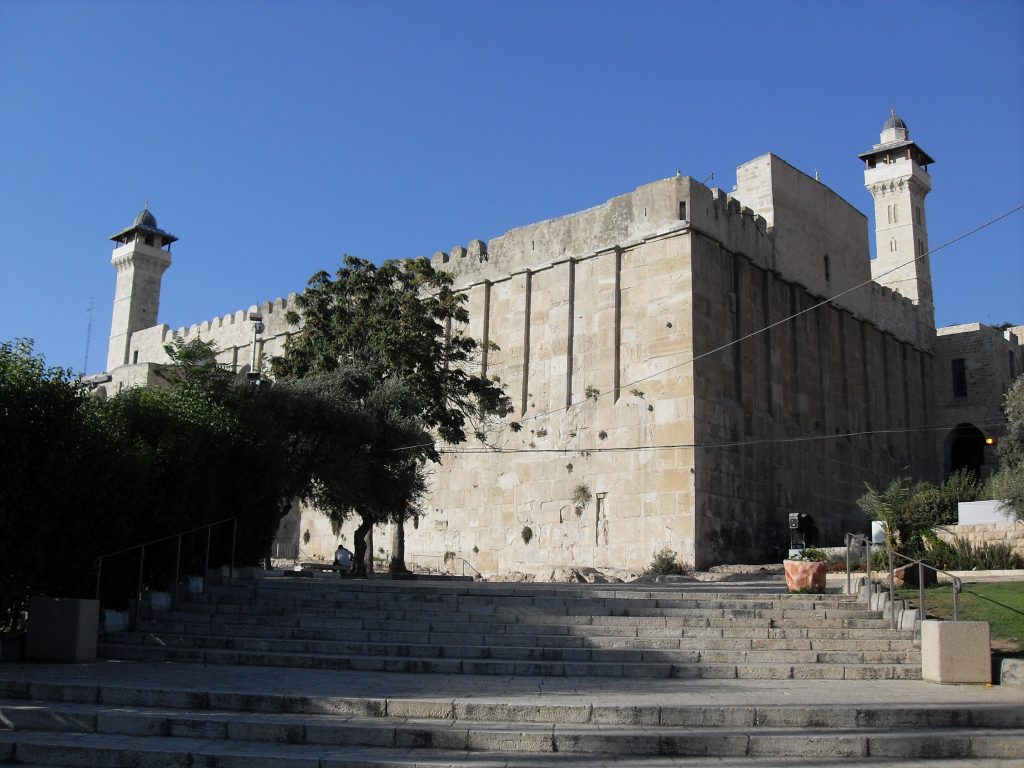
By contrast, the National Geographic, a long-time apologist for UNESCO, detailed the crucial connection between its mission to protect World Heritage Sites, actual (not merely ‘claimed’) anti-Israel bias and American withdrawal. Having determined in 2001, that the Temple Mount shall be named and referenced as always-and-only a protected Muslim holy site, this summer’s UNESCO decision to contradict Moses and declare Hebron the historic heritage of Palestinians probably served as the tippingpoint to three months of internal American and Israeli consultation.
(below, Cave of the Patriarchs, Hebron)
Arguably, the U.S. withdrawal has as much to do with image as substance. Yet, in the U.N. and, even more so, the Middle East, image and substance often prove to be one and the same.
Then again, just possibly the tide may be turning in favor of historic truth over narrative fictions. "I think it's a catastrophic decision," said Daniel Rondeau, a former French envoy to the body. "It's a fracture that seriously jeopardizes the very nature of UNESCO - its universal dimension - and the very concept of multilateralism." Given the perverse ways that UNESCO defines and acts upon so-called ‘universal’ and ‘multilateral’ values, one can only hope that Rondeau’s fears are justified, and that the doors of this theatre of the absurd will, indeed, close.