
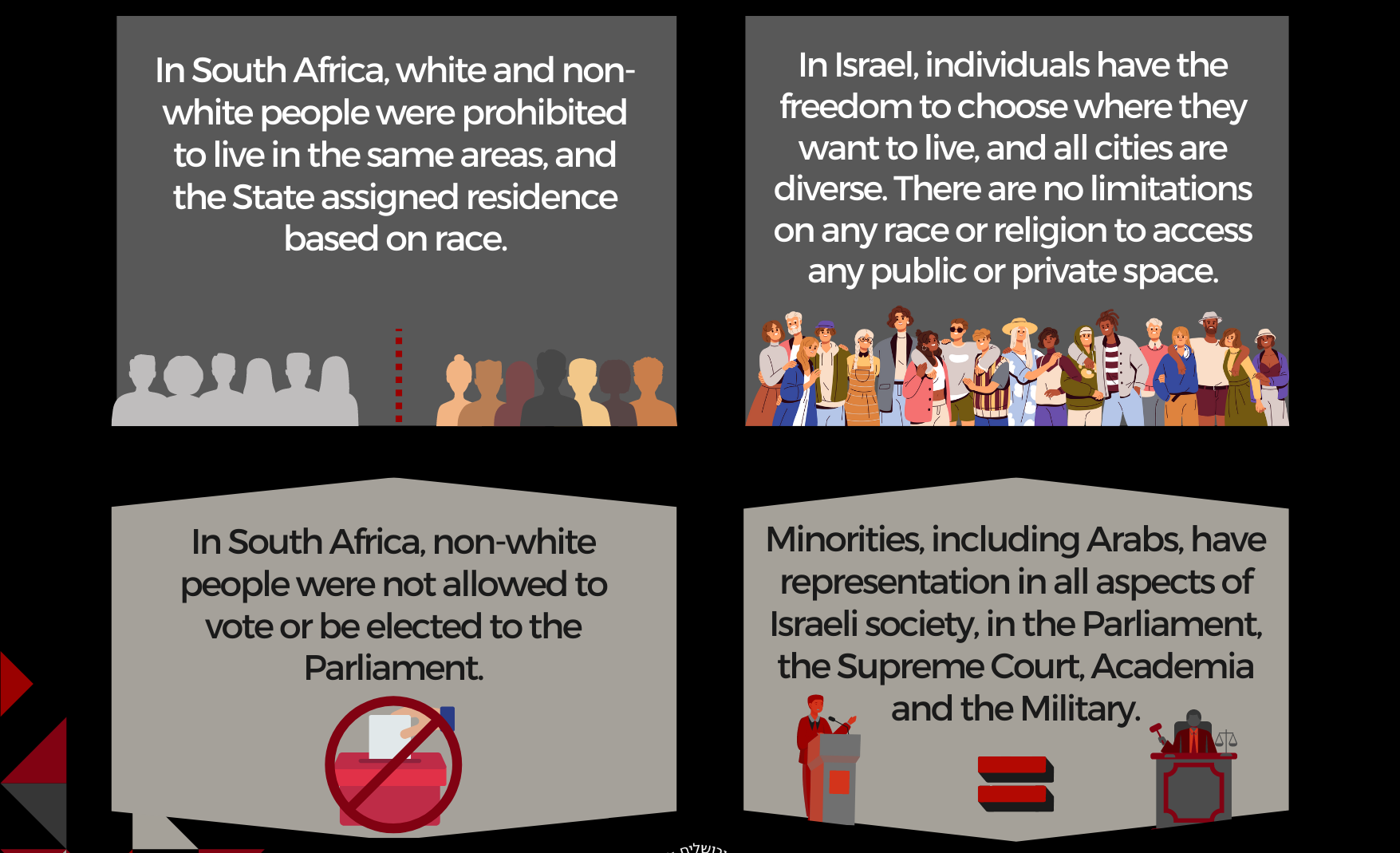
Not Apartheid
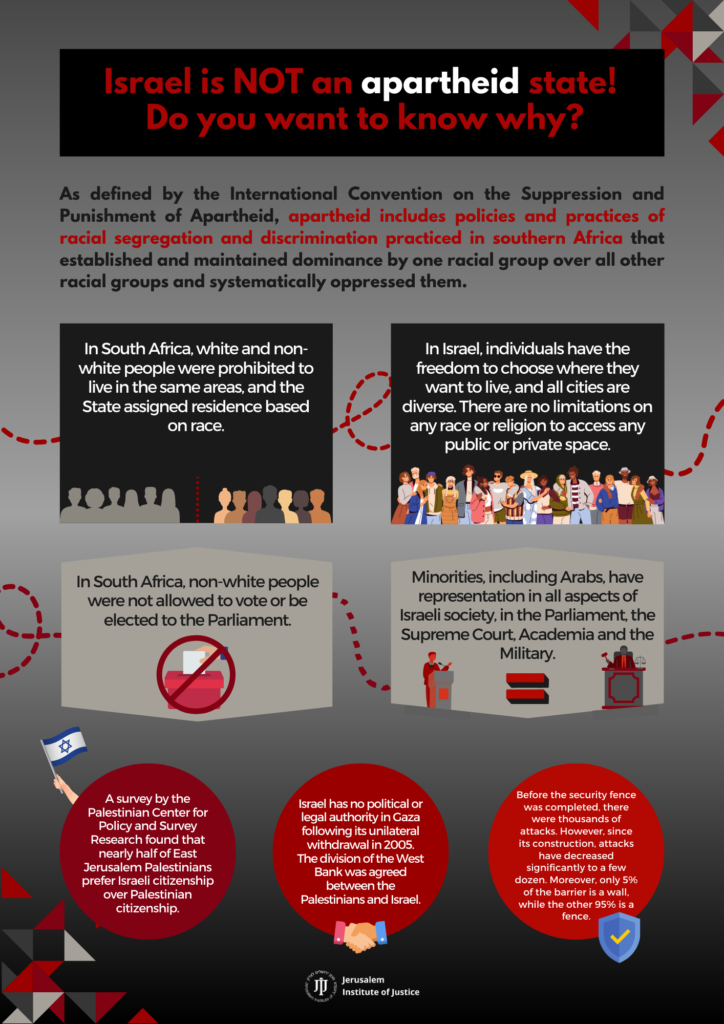
As defined by the International Convention on the Suppression and Punishment of Apartheid, apartheid includes policies and practices of racial segregation and discrimination practiced in southern Africa that established and maintained dominance by one racial group over all other racial groups and systematically oppressed them.
Download

Boycotting UN Investigations
The Only Productive Boycott for Israel
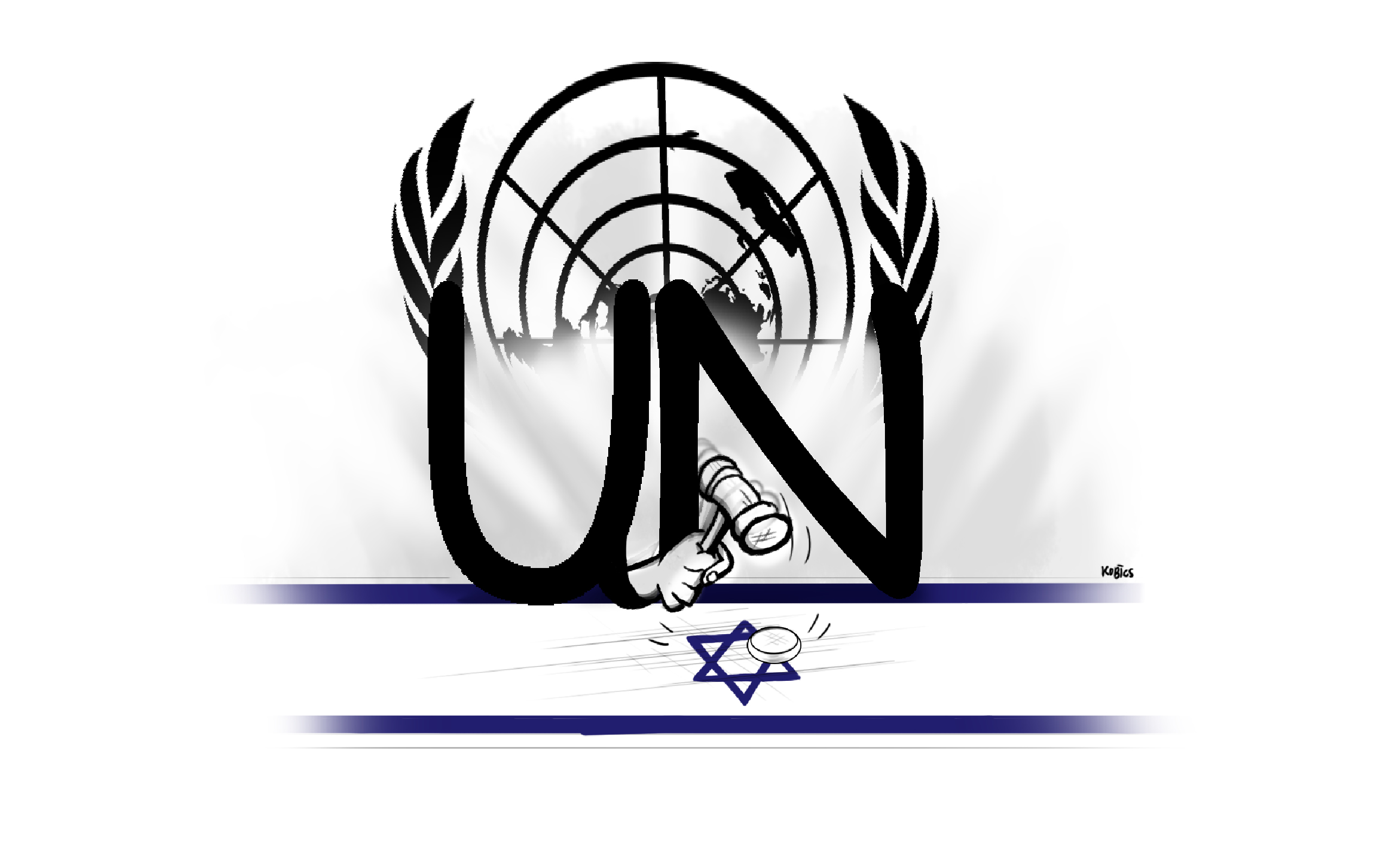
In relation to the Israeli-Palestinian conflict, the UN routinely conducts investigations and releases corresponding reports. These reports, which claim to offer an overview of the situation, are often prejudiced and fail to give equal weight to the merits of each side.
After the 11-day conflict between Israel and Hamas in 2021, the Geneva–based United Nations Human Rights Council (UNHRC) created a three-person commission, to be headed by Navanethem “Navi” Pillay. Exceptionally, the most recent investigative body has taken a scope which extends beyond the 2021 conflict, urging Israel to take actions to solve the greater Israeli-Palestinian conflict.
Pillay’s multiple associations with supporters of BDS, as well as the UN’s disproportionate historical focus on Israel through constant condemnation, further take away from the report’s legitimacy. The report has rightfully been criticized as one-sided, though the Israeli Government’s decision to not cooperate with the commission will further complicate Israel’s relations with the UN as a whole, even on issues with which Israel and the UN agree on. Additionally, it will be manipulated by international critics as purported proof of Israel attempting to hide damaging information.
Despite the consequences associated with any decision to not cooperate with the UN, Israel should refuse to cooperate with investigations of this type. It should do this to take a stand against investigations made in bad faith and avoid legitimizing reports whose unfavorable findings could be easily predicted when taking the international bodies and commission which made the report into account.
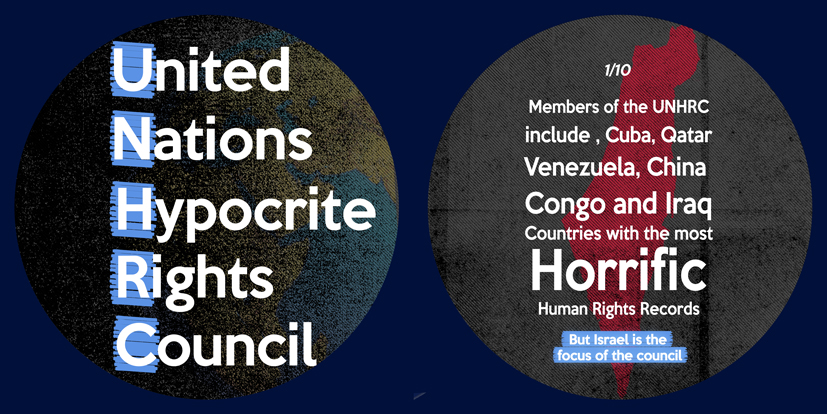
The United Nations’ disproportionate focus on Israel has been documented, with a majority of resolutions criticizing the country, despite it containing a fraction of a percentage of the world’s population and land area.[1] Putting aside the attention that could be given to more rights-abusive countries, the UNHRC itself seats members such as China, Cuba, Pakistan and Venezuela, who are engaged in severe repression and human rights violations.
The report further weighs in on the sources of the Israeli-Palestinian conflict as a whole and identifies Israeli actions as the main cause. This large-scale conclusion goes beyond the usual confines of UN investigations and demonstrates the pre-existing beliefs about the nature of the conflict which the investigation sought to prove. Furthermore, the commission’s brief mentions of the Palestinian Authority and Hamas’s human rights abuses fail to meaningfully place liability on both sides in the conflict or include the threats which Israel faces. Through tone and relative content, the report emphasizes critiques of Israel above all else.
Navi Pillay’s history regarding Israel is ambiguous at best. Pillay, former UN High Commissioner for Human Rights, signed a letter to US President Joe Biden calling on Israel to withdraw entirely from the West Bank shortly before she was appointed head of the commission.[2] She further stated that “Apartheid is now being declared a crime against humanity in the Rome Statute and it means the enforced segregation of people on racial lines and that is happening in Israel.”[3]
While this does not provide any concrete blame of Israel for the violence in 2021, it should come as little surprise that Pillay later stated that "[the report] is as an indicator of the asymmetrical nature of the conflict and the reality of one state occupying the other."[4] Pillay’s colleagues, Miloon Khotari and Chris Sidoti, have similarly clear pre-existing notions about Israel. Khotari, has referred to the Second Intifada as simply a “wave of Palestinian resistance,” described Israel’s government as a theocracy and openly called for an end to military cooperation with Israel.
Similarly, Sidoti has worked with pro-BDS organizations such as the Australian Center for International Justice and the Independent Commission for Human Rights, established by Yasser Arafat himself in 1993.[5] These appointments greatly diminished the legitimacy of the commission from the beginning, and the backgrounds of its members and the UN bodies which created it give the appearance that the investigation was never a major factor behind the tone and substance of the report.
The COI investigation’s boundaries make cooperation disadvantageous, as its scope and mandate both ensure abnormal treatment. The investigation can include events going all the way back to the founding of Israel, and this COI will continue indefinitely, with more reports to follow each year even after the current report’s release. The wide scope and continuous nature demonstrate the UN’s obsession with condemning Israel, as no other COI has ever been given this kind of never-ending mandate.
Israel could cooperate with proceedings and argue that it has nothing to hide, though doing this would not lessen international blame on Israel and it would continue to be subject to both double standards and disproportionate emphasis by the UNHRC and by the international community at large. Instead, the cooperation would be taken as simply a prerequisite for the investigation itself, and there would be a report written in a similarly one-sided manner.
The significance of negative reports could prove damaging to Israel’s reputation amongst some, though importantly, these reports will continue to be released with or without Israel’s cooperation. Boycotting will allow Israel to take an active stance in fighting a report which Israel feels is unfair, as opposed to letting the UN villainize Israel and only voicing disagreement after it is done.
While some might argue that refusing to cooperate with an investigation will isolate Israel from allies and the international community as a whole, Israel’s allies understand this. The commitment between them and Israel to their alliances will remain in all likelihood no matter what conclusions the UNHRC might reach from its numerous investigations, as they have for decades. Because of this, Israel has limited benefits to cooperating with the UN on this issue and little downside for refusing to do so.
Israel should not and does not deny that many Palestinians have a poor quality of life for a variety of reasons, and accordingly has investigated reported incidents based off of investigations such as the Goldstone reports, even without cooperating during the reports’ productions.[6] In this way, while the decision to boycott the investigation does not solve the underlying problem of discrimination against Israel and can give off an appearance of concealing evidence, Israel has the standing and experience to make this decision given the nature of the investigation.
By Ethan Kanef, intern at JIJ
[1] Becker, R.N., Hillman, A.L., Potrafke, N. et al. The preoccupation of the United Nations with Israel: Evidence and theory. Rev Int Organ 10, 413–437 (2015). https://doi.org/10.1007/s11558-014-9207-3
[2] #NowistheTime. June 14, 2021, https://nowisthetimecoalition.com/.
[3] “Navi Pillay on Israel Being an Apartheid State: Short Version.” Www.youtube.com, 29 Jan. 2018, www.youtube.com/watch?v=6sIEfCf1Dhs. Accessed 12 July 2022.
[4] “Commission of Inquiry on the Occupied Palestinian Territory, Including East Jerusalem, and Israel, Issues First Report.” The Office of the High Commissioner for Human Rights, June 7, 2022. https://www.ohchr.org/en/press-releases/2022/06/commission-inquiry-occupied-palestinian-territory-including-east-jerusalem
[5] Bayefsky, Prof Anne. “The Newest Anti-Israel UN Action Must Be Challenged – Now.” Jerusalem Center for Public Affairs, jcpa.org/article/the-newest-anti-israel-un-action-must-be-challenged-now/. Accessed 11 July 2022.
[6] Goldstone, Richard. “Reconsidering the Goldstone Report on Israel and War Crimes.” The Washington Post. WP Company, April 1, 2011.
Human Rights Council - Political Bias
The UN Human Rights Council “database” of business enterprises
On 24 March 2016, at its 31st session, the Human Rights Council (HRC) adopted resolution 31/36 entitled “Israeli settlements in the Occupied Palestinian Territory, including East Jerusalem, and in the occupied Syrian Golan”.[1] Paragraph 17 (OP 17) of this resolution requests the United Nations High Commissioner for Human Rights (OHCHR) produce a database of all business enterprises engaged in certain Israeli settlement activity in the occupied Palestinian territory, or the "Blacklist".
While local and international business activity in disputed or occupied territories is widespread, and involves some of the world’s largest companies, Resolution 31/36 represents the only known UN effort to produce a “database” of such activity in respect of one situation. The fact that such business activity is so ubiquitous and rarely criticized demonstrates that it is not viewed as raising legal or human rights issues, while the desire to establish a database only with respect to business activity in Israeli settlement communities points to the political bias of the body that initiated this process.
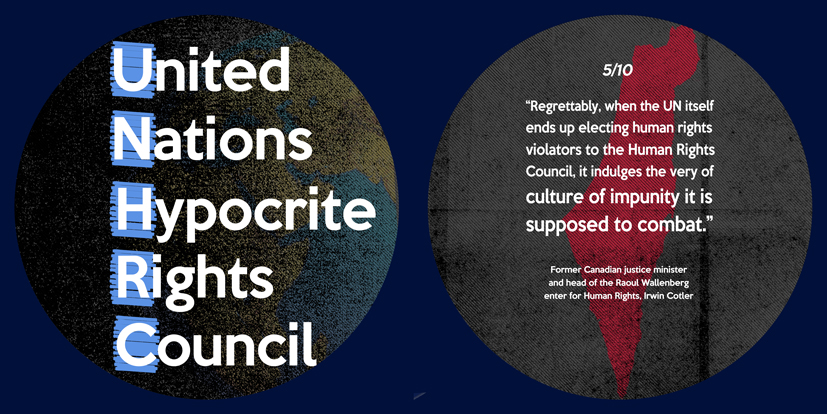
OP17 was adopted despite the strong opposition of the US, EU and Israel. It is the product of a specific discriminatory HRC agenda item, the organization's only country-specific agenda item, which reflects ongoing and well documented institutional bias against Israel in the HRC. The Council is widely criticized as a deeply politicized body, whose agenda is often dictated by the world’s worst human rights violators, and whose legitimacy and credibility in the human rights arena has been fundamentally undermined as a result.
Israel, together with the United States and numerous other leading States, have expressed, consistent opposition to the database and its publication, and have conveyed this position in their public and private communications. Israel has no intention of cooperating with this illegitimate exercise for the following reasons:
- Lack of authority to produce database: The production of a “database” exceeds the mandate of the OHCHR, which has neither the competence nor the capacity to engage in this action. The responsibility for ensuring compliance of business enterprises with relevant laws, or for promoting any relevant non-binding guidelines with respect to business practices, rests exclusively with the States in which the relevant enterprises are domiciled or operating.
- Lack of authority to communicate to companies: The HRC and OHCHR are bodies mandated to deal with State conduct in the human rights field and they have no legal or other authority over business enterprises.
- Lawfulness of business activity: Business activity in areas of Judea and Samaria (West Bank) under Israeli jurisdiction in accordance with existing Israeli-Palestinian agreements, is entirely lawful. Indeed, the notion that business enterprises are even subject to international law, international humanitarian law, and international human rights law is highly questionable and has been rejected by Courts in leading national jurisdictions.
- Blacklist: The creation of a database, and certainly its publication in any form, amounts to an effort to produce a blacklist of companies that are not engaged in any wrongdoing, and with the potential of causing commercial, reputational and legal harm. By engaging in this action, the OHCHR is allowing itself to become an instrument of those engaged in an illegitimate, discriminatory and political motivated agenda.
Furthermore, the methodology of the OHCHR is entirely devoid of transparency, and the information upon which it has based its communication has been drawn from partial, unverifiable and unknown sources, including politically-motivated actors, who responded voluntarily to the OHCHR’s calls. The OHCHR also lacks the requisite competence or capacity to verify independently the information it has received. While Resolution 31/36 requires a database of “all” business enterprises, the process adopted makes the database flawed from its inception and inevitably renders the list the partial, selective and discriminatory in nature
It is important to note that the database initiative is not legal or quasi-legal in nature, and does not, in and of itself, carry with it legal consequences. The process lacks due process and procedural safeguards to ensure that the list will not contain unauthoritative or inappropriately verified information. Furthermore, cooperation by companies with the database initiative may entail potential legal consequences, liability, financial risk and reputational harm. As is known, relevant domestic legislation and anticipated legislative proposals in various jurisdictions prohibit companies from discriminating in their business practices, including laws that specifically pertain to discriminatory practices with respect to Israel or territory subject to Israeli jurisdiction. This pertains, for example, to companies that are domiciled in the US, are subsidiaries of US-domiciled companies, or that do business in the US. In this context, dozens of U.S. State laws currently bar granting contracts to, or pension-fund investment in, companies that boycott Israel or territories under its jurisdiction. Moreover, such cooperation might raise issues under existing relevant US federal legislation.
The UN Human Rights Council “database” of business enterprises
On 24 March 2016, at its 31st session, the Human Rights Council (HRC) adopted resolution 31/36 entitled “Israeli settlements in the Occupied Palestinian Territory, including East Jerusalem, and in the occupied Syrian Golan”.[1] Paragraph 17 (OP 17) of this resolution requests the United Nations High Commissioner for Human Rights (OHCHR) produce a database of all business enterprises engaged in certain Israeli settlement activity in the occupied Palestinian territory, or the "Blacklist".
While local and international business activity in disputed or occupied territories is widespread, and involves some of the world’s largest companies, Resolution 31/36 represents the only known UN effort to produce a “database” of such activity in respect of one situation. The fact that such business activity is so ubiquitous and rarely criticized demonstrates that it is not viewed as raising legal or human rights issues, while the desire to establish a database only with respect to business activity in Israeli settlement communities points to the political bias of the body that initiated this process.
OP17 was adopted despite the strong opposition of the US, EU and Israel. It is the product of a specific discriminatory HRC agenda item, the organization's only country-specific agenda item, which reflects ongoing and well documented institutional bias against Israel in the HRC. The Council is widely criticized as a deeply politicized body, whose agenda is often dictated by the world’s worst human rights violators, and whose legitimacy and credibility in the human rights arena has been fundamentally undermined as a result.
Israel, together with the United States and numerous other leading States, have expressed, consistent opposition to the database and its publication, and have conveyed this position in their public and private communications. Israel has no intention of cooperating with this illegitimate exercise for the following reasons:
- Lack of authority to produce database: The production of a “database” exceeds the mandate of the OHCHR, which has neither the competence nor the capacity to engage in this action. The responsibility for ensuring compliance of business enterprises with relevant laws, or for promoting any relevant non-binding guidelines with respect to business practices, rests exclusively with the States in which the relevant enterprises are domiciled or operating.
- Lack of authority to communicate to companies: The HRC and OHCHR are bodies mandated to deal with State conduct in the human rights field and they have no legal or other authority over business enterprises.
- Lawfulness of business activity: Business activity in areas of Judea and Samaria (West Bank) under Israeli jurisdiction in accordance with existing Israeli-Palestinian agreements, is entirely lawful. Indeed, the notion that business enterprises are even subject to international law, international humanitarian law, and international human rights law is highly questionable and has been rejected by Courts in leading national jurisdictions.
- Blacklist: The creation of a database, and certainly its publication in any form, amounts to an effort to produce a blacklist of companies that are not engaged in any wrongdoing, and with the potential of causing commercial, reputational and legal harm. By engaging in this action, the OHCHR is allowing itself to become an instrument of those engaged in an illegitimate, discriminatory and political motivated agenda.
Furthermore, the methodology of the OHCHR is entirely devoid of transparency, and the information upon which it has based its communication has been drawn from partial, unverifiable and unknown sources, including politically-motivated actors, who responded voluntarily to the OHCHR’s calls. The OHCHR also lacks the requisite competence or capacity to verify independently the information it has received. While Resolution 31/36 requires a database of “all” business enterprises, the process adopted makes the database flawed from its inception and inevitably renders the list the partial, selective and discriminatory in nature
It is important to note that the database initiative is not legal or quasi-legal in nature, and does not, in and of itself, carry with it legal consequences. The process lacks due process and procedural safeguards to ensure that the list will not contain unauthoritative or inappropriately verified information. Furthermore, cooperation by companies with the database initiative may entail potential legal consequences, liability, financial risk and reputational harm. As is known, relevant domestic legislation and anticipated legislative proposals in various jurisdictions prohibit companies from discriminating in their business practices, including laws that specifically pertain to discriminatory practices with respect to Israel or territory subject to Israeli jurisdiction. This pertains, for example, to companies that are domiciled in the US, are subsidiaries of US-domiciled companies, or that do business in the US. In this context, dozens of U.S. State laws currently bar granting contracts to, or pension-fund investment in, companies that boycott Israel or territories under its jurisdiction. Moreover, such cooperation might raise issues under existing relevant US federal legislation.
The potential legal consequences, liability, financial risk and reputational harm is not merely a theoretical possibility, as the Airbnb case which unfolded from late 2018 to April 2019 exemplified. In this case Airbnb announced its intention to delist an estimated 200 listings of Israeli properties in Judea and Samaria. The company announced in April 2019 that his policy will not be implemented as part of settlement reached with all lawsuits that were brought by hosts and potential hosts and guests who objected to the policy on grounds of discrimination. This policy was not only attacked in the courts as it landed Airbnb on the top ten antisemitic events of 2018 by the Wiesenthal Center, led to US State investment boards to add the company to their blacklists as well as a host of leading political figures, including State Governors and American Vice President Mike Pence. All this not only led the company to abandon its policy, it also led to the company stating that "Airbnb has always opposed the BDS movement"[2]. This case exemplifies the risk the potential risk stated above.
The potential legal consequences, liability, financial risk and reputational harm is not merely a theoretical possibility, as the Airbnb case which unfolded from late 2018 to April 2019 exemplified. In this case Airbnb announced its intention to delist an estimated 200 listings of Israeli properties in Judea and Samaria. The company announced in April 2019 that his policy will not be implemented as part of settlement reached with all lawsuits that were brought by hosts and potential hosts and guests who objected to the policy on grounds of discrimination. This policy was not only attacked in the courts as it landed Airbnb on the top ten antisemitic events of 2018 by the Wiesenthal Center, led to US State investment boards to add the company to their blacklists as well as a host of leading political figures, including State Governors and American Vice President Mike Pence. All this not only led the company to abandon its policy, it also led to the company stating that "Airbnb has always opposed the BDS movement"[2]. This case exemplifies the risk the potential risk stated above.
[1]https://www.ohchr.org/EN/HRBodies/HRC/RegularSessions/Session31/Pages/DatabaseHRC3136.aspx
[2] https://news.airbnb.com/update-listings-disputed-regions/

Boycotting the Boycotters
By Nikki Golomb.
Former Pink Floyd musician Roger Waters is facing severe backlash from the German Jewish community for his open support for the BDS (boycott, divest, and sanction) movement and for anti-Semitic accusations.
Sound familiar? It should. The same events transpired in 2013, when the Dusseldorf Jewish community advocated a boycott of Waters’ concert following anti-Semitic incidents in his Brussels concert. Those included such things as floating a giant pig balloon with a Jewish star on it, accusing Israel of apartheid, and urging other artists to join him in his boycott until Israel complies with the double standards held against it by much of the international order.
Recently, Roger Waters released a recital of Mohammed Darwish's poem, "The Penultimate Speech of the 'Red Indian' to the White Man," recited to the background of an oud playing traditional Palestinian music. The poem, and the timing of its release - soon after Trump's declaration of Jerusalem as the capital of Israel - was a deliberate attempt to equate Israel and the United States with white colonialists, and the Palestinians with the helpless Indians who are defenseless against the "erection of the 'white man's' world on their remains." The poem finishes with the question: "Where, oh white master, are you taking my people... and yours?" Waters’ implication, that in recognizing Jewish history Trump was the white master forcing Palestinians out of Jerusalem, is a distortion. Firstly, it is implying American sovereignty over Jerusalem, which is not the case. Secondly, Trump’s statement did nothing to diminish the rights of Palestinians in Jerusalem. Furthermore, equating the plight of Palestinians to that of the First Nations people in the Americas is a problematic analogy, particularly in light of the hundreds of years of difference between the cases.
The Anti-Defamation League (ADL), which previously supported Waters’ seemingly innocent criticism of Israel, reexamined his words and actions in 2013. In an open letter to Waters they expressed the conclusion that his views “are in fact colored by offensive and dangerous undercurrents of anti-Jewish sentiment.” The letter ended with the hope that he would use his fame and talent instead to promote peace in a constructive and positive way.
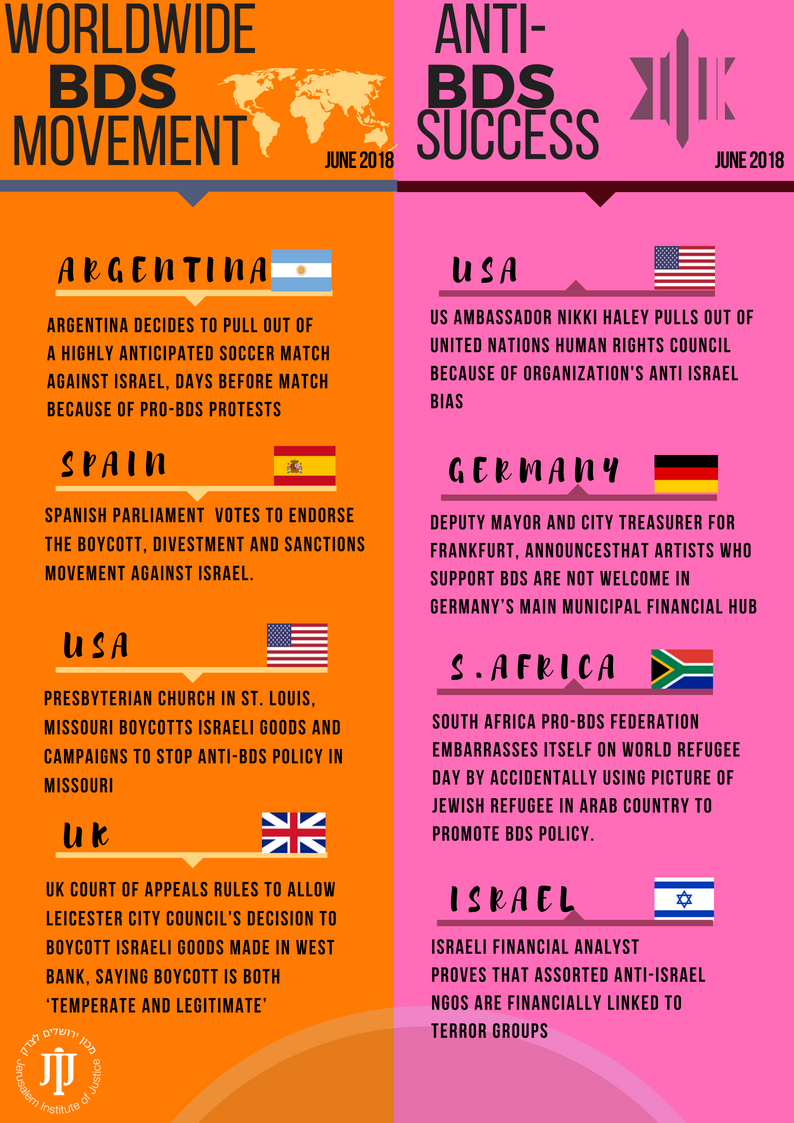
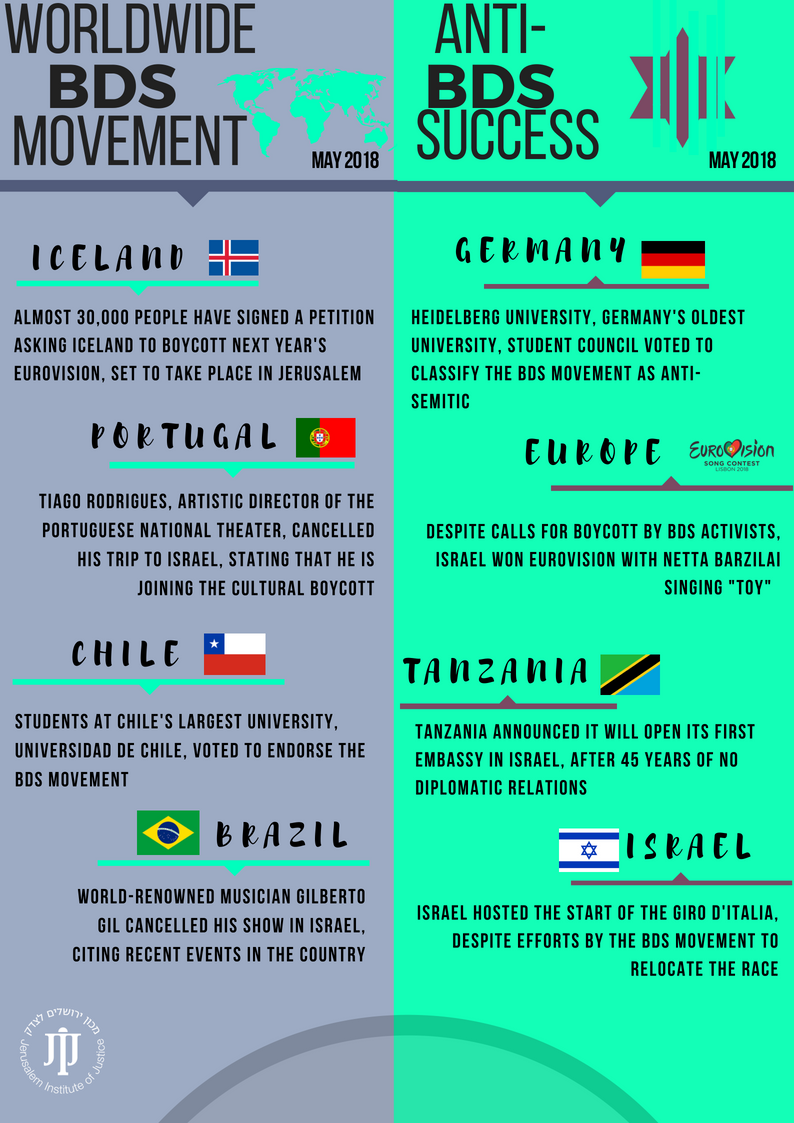
In the four years that have passed, however, not much seems to have changed. Still a vocal supporter of BDS and still accused of public anti-Semitism, Waters is once again facing a boycott of his concert from Germany’s Jewish community. In addition to the boycott, Cologne citizen Malca Goldstein-Wolf wrote a petition – signed by over 1,300 people – requesting public broadcasting services to cancel their plans to air his concerts. As a result of the petition and accusations of anti-Semitism against him, “five state television and radio affiliates of the national ARD network” have complied with the requests of the petition and will not be airing his concert.
In an attempt to distance themselves from the horror of the Holocaust and the anti-Semitism preceding it, the German government implemented strict laws outlawing the spread of anti-Semitic ideologies. Various forms are illegal in Germany, including Holocaust denial, approval of Nazism, the use of Nazi symbols, and the sale of Hitler’s autobiography Mein Kampf. Anti-Semitism, however, remains relatively high in the region. Twenty-seven percent of adults in Germany harbor anti-Semitic views, according to a variety of indicators related to the perception of Jewish national loyalty, control of the economy and media, etc. This dichotomy highlights the ideological distance between the government and the people with regard to their perception of Jews. The success of this boycott, however, marks an important change in which German society and government are working together to fight against anti-Semitism in the country.
But what is the integrity of responding to a boycott with a boycott? While it is important to stop hate speech before it happens, is it not a bit problematic to use their own tactics against them? Marek Lieberberg is both Waters’ tour director and the son of Holocaust survivors. While he rejects BDS, he also does not want to deny Waters his freedom of opinion. On the other hand, boycotting a BDS supporter sends a direct message to the movement regarding the meaning behind its actions. Organizing a boycott of Waters’ show in Germany serves the dual purpose of rejecting anti-Semitism and anti-Zionism, while also encouraging BDS supporters to think about what exactly they are boycotting.
In an incident that reflects the flip side of the same coin, Australian rock star Nick Cave made the decision to perform in Israel because of BDS. After being presented with a petition calling for artists to boycott Israel and refusing to sign it, Cave stated, “I like Israel and Israelis, and it’s important for me to do something of substance about it.” He booked a tour in Israel in direct response to the BDS movement gaining traction among artists, thus bringing light to the effects the movement has on many facets of society.
There is a very fine line between legitimate criticism of Israeli policies and anti-Semitism. However, Waters’ support for BDS, while using anti-Semitic imagery in his concerts and publicly accusing Israel of apartheid, leaves no doubt that his actions are truly anti-Semitic. Staging a boycott of his tour in Germany sends the message to BDS supporters that anti-Semitism has no place in public art. Hopefully, awareness of the cause and the boycott itself will encourage others to question the purpose of the BDS movement and its effects on both Israel and the international order.
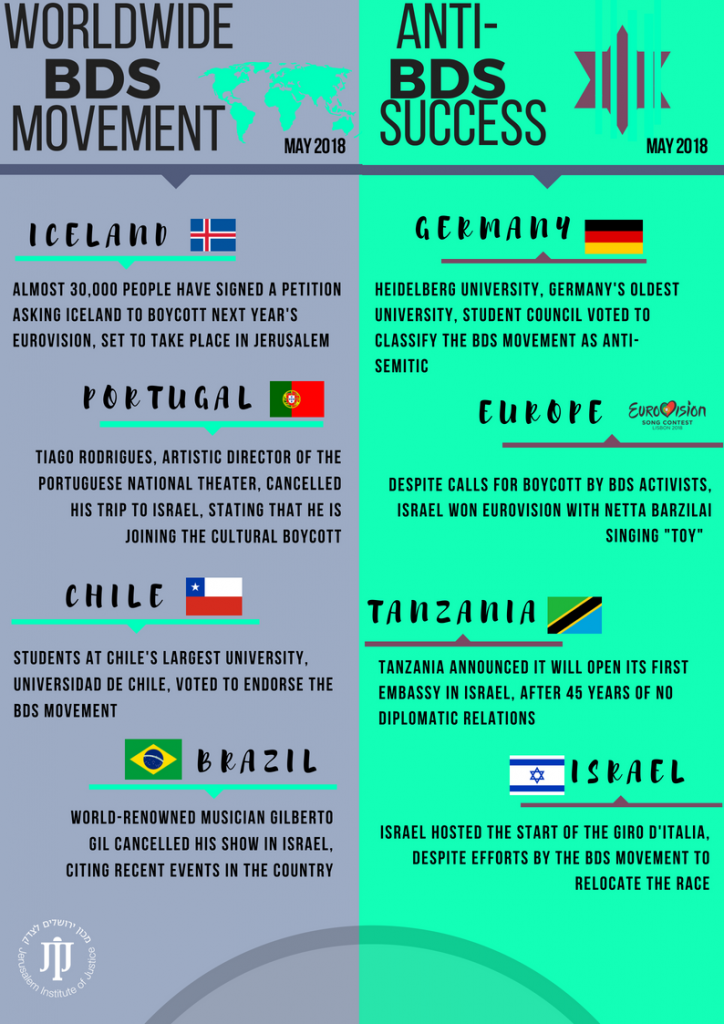
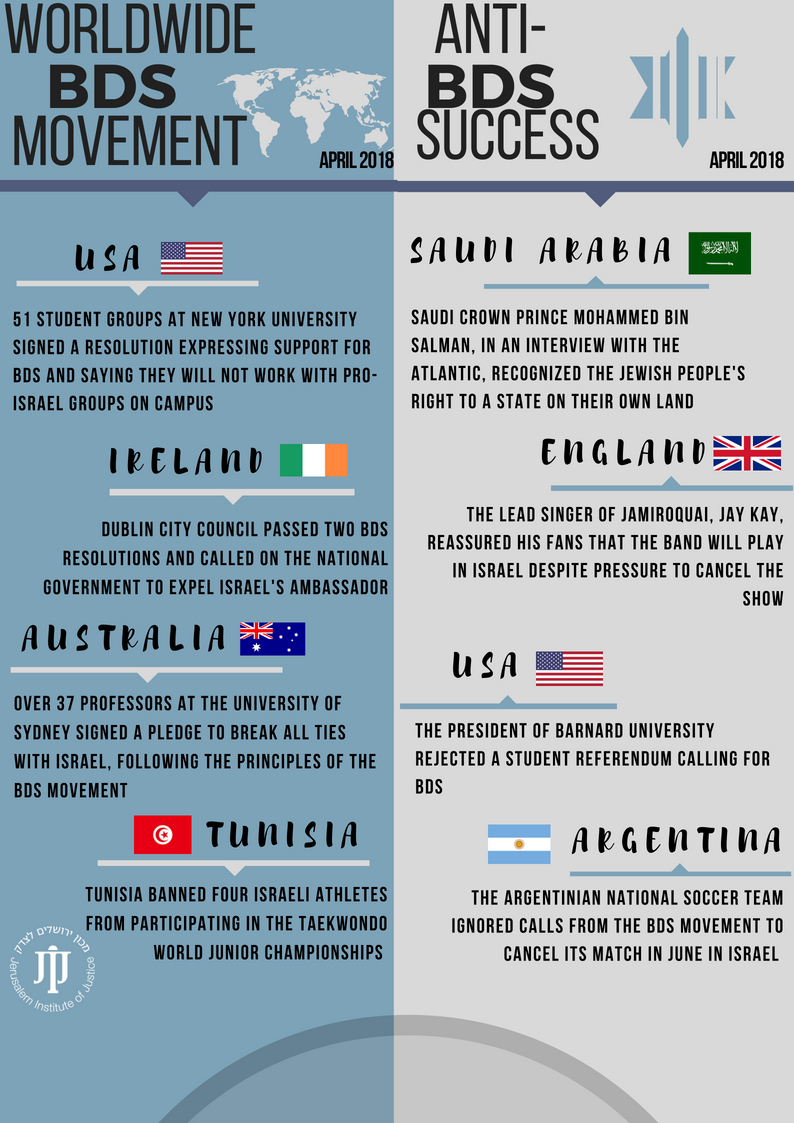
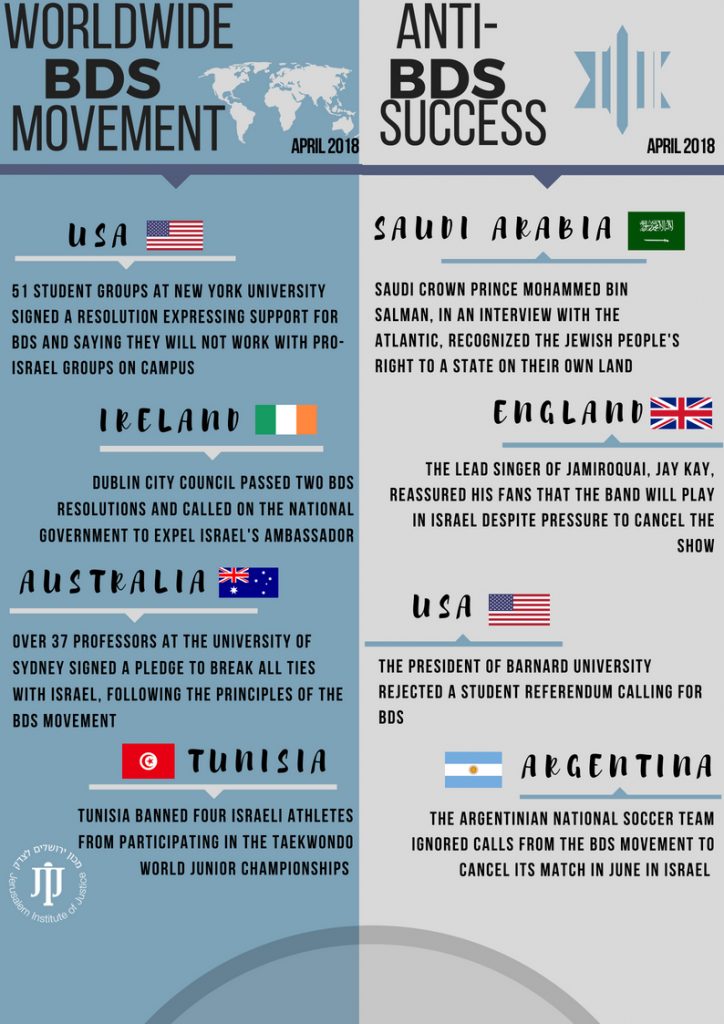

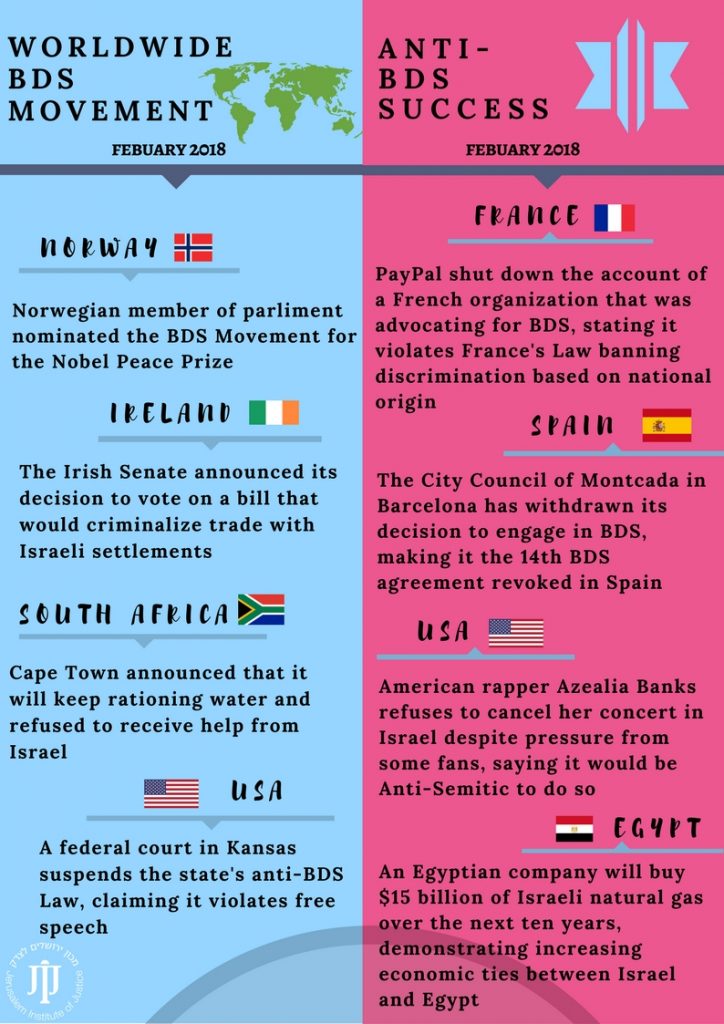


THE CITY OF THE FUTURE
By Nikki Golomb.
Palestinian-American businessman and entrepreneur Bashar al-Masri is making history – by building the first modern Palestinian city. Rawabi, the name of the city and the Arabic word for “hills”, is envisioned to become a modern, hi-tech, and comfortable city in a region devastated by poverty and poor infrastructure. Though the city is still in the process of being built, the first residents moved to Rawabi in August 2015. Despite political and economic challenges, it has already created 6,000 new jobs in construction and engineering, and estimated to produce another 5,000 in retail, health, and more.
Al-Masri has worked closely with Israeli contractors, advisers, and companies to import necessary materials. Furthermore, Rawabi is modeled off of Israeli city Modi’in, an Israeli city which was also meticulously planned. Al-Masri continues to visit Modi’in for ideas, and draws inspiration from Israel’s modern and hi-tech atmosphere. His work with Israelis is groundbreaking, and the unique partnerships he has created inspire optimism with regards to Israeli-Palestinian business relations and the future of intercultural cooperation.
Surprisingly, al-Masri wasn’t always open to working with Israelis. He was jailed eight times as a teenager for throwing rocks and organizing demonstrations, was involved in the first intifada, and was a close acquaintance of Yasser Arafat. Although he still refuses to work with Israeli settlers in the West Bank, he has had positive experiences working with Israeli businessmen and women and has only kind things to say. Israeli workers and companies have worked with al-Masri to help him create the new city and, despite political and economic challenges, continue to provide technology and other material supplies in addition to advisement and consultation.
Despite this great success and the promising new Palestinian city, however, al-Masri has faced substantial backlash from Palestinians. They accuse him of supporting Israel’s “occupation, colonization and apartheid against the Palestinian people,” and even go so far as to say that creating a modern, comfortable Palestinian city undermines the daily struggles they are facing. The Boycott Divestment and Sanctions National Committee (BNC), the leading organization of the BDS movement, has condemned Rawabi as “normalization” of anti-Palestinian Israeli policies and claims that it undermines the Palestinian fight for freedom and justice. Al-Masri disagrees, instead arguing that building Rawabi will not only improve the lives of Palestinians, but also prevent Israelis from settling there. (It should be noted, however, that Rawabi is located in Area A and is thus under Arab control where Israelis are not allowed to live.) He also points out that the Palestinian Authority has provided no funding towards the establishment of Rawabi; the PA, he believes, should view it as a priority and invest in Rawabi by building a school, clinic, or other public infrastructure, yet he has not received any financial support from them whatsoever.
Bashar al-Masri’s project is groundbreaking in two endeavors: first, by creating the first Palestinian city to be planned from the very beginning, and second, by establishing significant business ties between Palestinians and Israelis. Israel has helped in nearly every stage of the creation of Rawabi, despite it being an entirely Palestinian city. Instead of viewing this as a hand outstretched for peace, however, the anti-Israel movement has just added this Palestinian city to its list of projects presumed to revoke the rights of Palestinians. Yet this could not be further from the truth. Rawabi is creating jobs exclusively for Palestinians, providing a comfortable and affordable living situation, and improving the overall quality of life for Palestinians. Modernization does not equal Westernization, nor does working with Israelis equate to denying Palestinians their rights. When the PA and critics realize this, we can expect to see a positive change in Israeli-Palestinian relations, as well as better lives for Palestinians who are struggling.