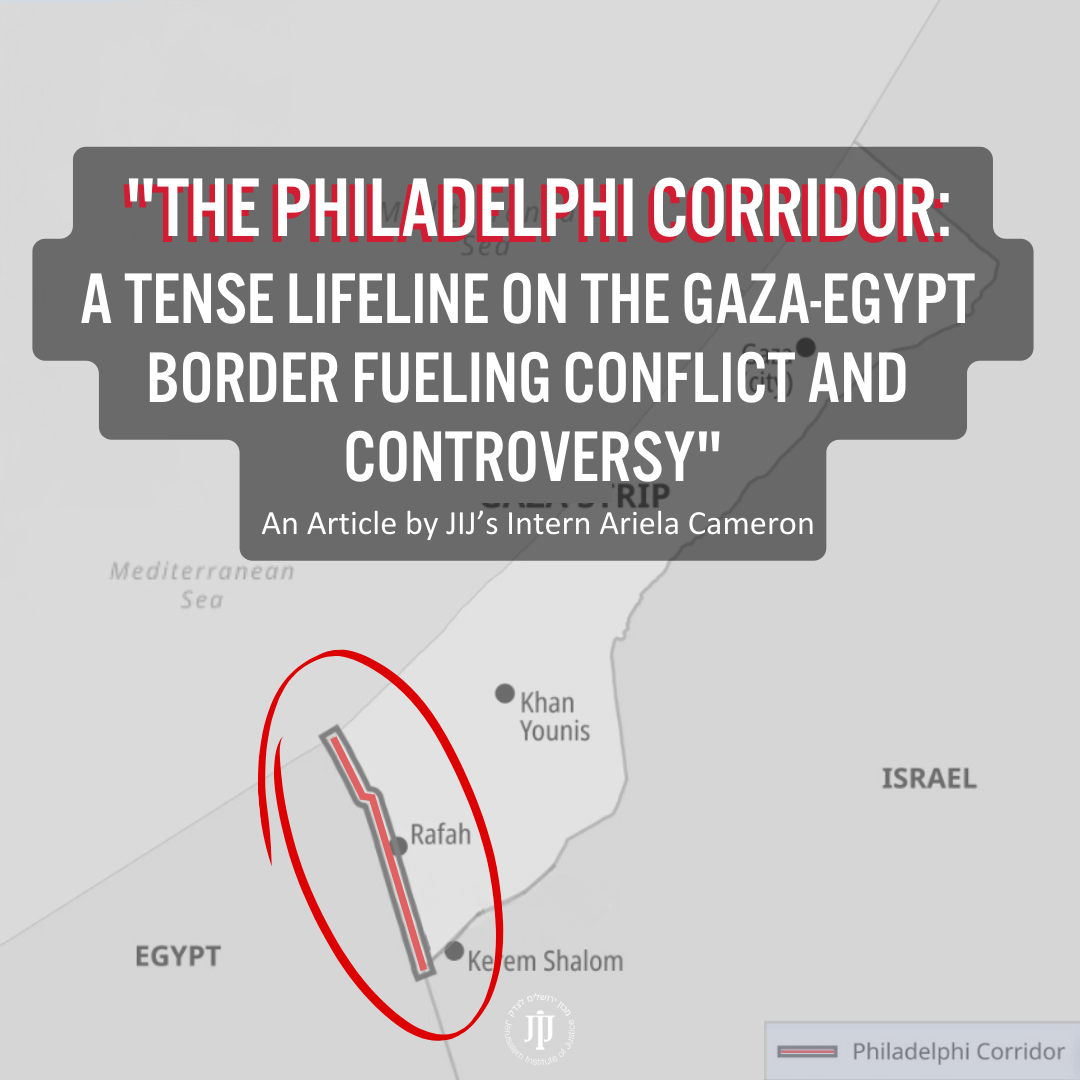
Philadelphi Corridor: The Critical Strip Shaping Gaza's Future Amid Tensions and Negotiations
The Philadelphi Corridor, running along the Gaza-Egypt border, is a focal point of intense
debate. It plays a critical role as a vital conduit for essential supplies and materials into Gaza,
acting both as an air bridge for resupply and a checkpoint for movement in and out of the
territory. During the Swords of Iron War, Israel's control of this corridor has been viewed by
the Western world as worsening the isolation of Gazans, who are already displaced for their
safety.
The corridor’s significance is underscored1 by its’ role in transporting essential supplies,
including food and weapons. Currently controlled by the Israeli Defence Forces (IDF), its
management raises concerns about its effects on aid from Iran and Iraq and its role in
smuggling. "That control is critical … some areas are wide enough for trucks, which have been
used to smuggle weapons and personnel into Gaza."2 This corridor can significantly impact the
humanitarian situation and potentially cause chaos if used for smuggling. If controlled by
Hamas, it remains a persistent issue for Israel.
Hamas, elected to the Palestinian Parliament in 2006, has clashed with Fatah and the
Palestinian Authority (PA), which both support a two-state solution that Hamas opposes. The
corridor's control limits Hamas' access to weapons and supplies from Egypt, giving Israel
leverage to weaken Hamas and influence negotiations. However, the Western world
disapproves of this control and is urging Israeli leaders and the IDF to withdraw military
personnel before finalizing a deal.
Egypt has cautioned Israel against taking actions that could drive Gazans to cross the border or
jeopardise the significant peace agreement between the two nations established in 19793. In
response, Israel plans to relinquish partial control of the corridor as part of a hostage deal with
Hamas, aiming to preserve its alliance with Egypt. This move alleviates pressure on Prime
Minister Netanyahu and shifts responsibility to Hamas leaders like Yahya Sinwar. By agreeing
to the terms set out by the US, Israel disrupts Hamas’s supply chain and affects Western
perceptions of the situation.
Recently, the US has been facilitating talks for a ceasefire and hostage return, focusing on “how
to advance hostage negotiations”4. Netanyahu has indicated that the IDF will stay within the
corridor. The US supports the IDF’s strategic aims due to its alliance with Israel, but
maintaining control of the corridor does not help in retrieving hostages. Despite public pressure
for a quick resolution, Israel views the corridor as vital for strategy and negotiations, rejecting
a full military withdrawal. Prominent figures like Antony Blinken advocate for a swift
resolution to ensure safety. As of August 24th, 2024, President Biden and Prime Minister
Netanyahu have reached an agreement on the corridor. Despite differing views, they have
informally agreed to a military withdrawal as per request from Egypt and Hamas6.
Written by Ariela Cameron
Jerusalem Institute of Justice Intern
To Read the Article with the notes- Click Here

Philadelphi Corridor: The Critical Strip Shaping Gaza's Future Amid Tensions and Negotiations
The Philadelphi Corridor, running along the Gaza-Egypt border, is a focal point of intense
debate. It plays a critical role as a vital conduit for essential supplies and materials into Gaza,
acting both as an air bridge for resupply and a checkpoint for movement in and out of the
territory. During the Swords of Iron War, Israel's control of this corridor has been viewed by
the Western world as worsening the isolation of Gazans, who are already displaced for their
safety.
The corridor’s significance is underscored1 by its’ role in transporting essential supplies,
including food and weapons. Currently controlled by the Israeli Defence Forces (IDF), its
management raises concerns about its effects on aid from Iran and Iraq and its role in
smuggling. "That control is critical … some areas are wide enough for trucks, which have been
used to smuggle weapons and personnel into Gaza."2 This corridor can significantly impact the
humanitarian situation and potentially cause chaos if used for smuggling. If controlled by
Hamas, it remains a persistent issue for Israel.
Hamas, elected to the Palestinian Parliament in 2006, has clashed with Fatah and the
Palestinian Authority (PA), which both support a two-state solution that Hamas opposes. The
corridor's control limits Hamas' access to weapons and supplies from Egypt, giving Israel
leverage to weaken Hamas and influence negotiations. However, the Western world
disapproves of this control and is urging Israeli leaders and the IDF to withdraw military
personnel before finalizing a deal.
Egypt has cautioned Israel against taking actions that could drive Gazans to cross the border or
jeopardise the significant peace agreement between the two nations established in 19793. In
response, Israel plans to relinquish partial control of the corridor as part of a hostage deal with
Hamas, aiming to preserve its alliance with Egypt. This move alleviates pressure on Prime
Minister Netanyahu and shifts responsibility to Hamas leaders like Yahya Sinwar. By agreeing
to the terms set out by the US, Israel disrupts Hamas’s supply chain and affects Western
perceptions of the situation.
Recently, the US has been facilitating talks for a ceasefire and hostage return, focusing on “how
to advance hostage negotiations”4. Netanyahu has indicated that the IDF will stay within the
corridor. The US supports the IDF’s strategic aims due to its alliance with Israel, but
maintaining control of the corridor does not help in retrieving hostages. Despite public pressure
for a quick resolution, Israel views the corridor as vital for strategy and negotiations, rejecting
a full military withdrawal. Prominent figures like Antony Blinken advocate for a swift
resolution to ensure safety. As of August 24th, 2024, President Biden and Prime Minister
Netanyahu have reached an agreement on the corridor. Despite differing views, they have
informally agreed to a military withdrawal as per request from Egypt and Hamas6.
Written by Ariela Cameron
Jerusalem Institute of Justice Intern
To Read the Article with the notes- Click Here
Jerusalem Institute of Justice - Statement in Response to ICJ Advisory Opinion
On Friday, July 19, the International Court of Justice (ICJ) issued its Advisory Opinion on the "Legal Consequences Arising from the Policies and Practices of Israel in the Occupied Palestinian Territory, Including East Jerusalem".
The Jerusalem Institute of Justice expresses disappointment with the Court’s treatment of the numerous complex issues surrounding the Israeli-Palestinian conflict. The ICJ advisory opinion is both factually and legally flawed, wrongfully applying the laws of belligerent occupation and the laws on the use of force. While the Court asserted that it was not called upon to pronounce on Israel’s historical ties to the territory, it nonetheless has chosen to completely disregard that these ties exist. Moreover, the opinion does not acknowledge Israel’s legitimate security concerns. Instead, it prescribes that Israel must completely withdraw from what it designates as the Occupied Palestinian Territories.
We maintain that these intricate political, legal, cultural, and religious issues can only be effectively addressed through peace negotiations. By addressing these controversies in a superficial and sweeping manner, the Court has potentially undermined the pursuit of a negotiated solution. Despite its non-binding nature, this opinion carries serious implications for Israel and the broader conflict resolution process.
We emphasize that the State of Israel possesses a robust and independent legal system that diligently applies international humanitarian and human rights law to the unique aspects of the Israeli-Palestinian conflict, and one that ensures that allegations of breaches of international law are investigated.
In conclusion, we believe that the ICJ’s opinion, in its current form, ignores the complex and nuanced nature of the Israeli-Palestinian conflict. Achieving lasting peace and resolving these challenging issues requires a commitment to direct negotiations, mutual understanding, and a recognition of the legitimate concerns and claims of the parties involved.