
United Nations and Genocide
By Nikki Golomb.
The Jerusalem Institute of Justice conducted a report assessing the ability of the United Nations to protect populations from genocide. The document analyzes the legal obligations of the international order to protect populations from genocide, as well as the success the UN has had in doing so. The report is split into three sections: historical background, current assessment, and discussion and recommendations. JIJ took into consideration six case studies total, three historical instances of genocide and three current events. From these analyses, the report then draws a conclusion on whether the UN successfully protects populations from genocide. Finally, JIJ provides several recommendations for the UN and other intergovernmental organizations to improve the protection provided to vulnerable populations.
Historical Background
After providing the UN definition of genocide and the methodology used to conduct the report, JIJ explores in the document the significance of the Holocaust in the establishment of the United Nations and the creation of a body meant to protect vulnerable populations. The historical uniqueness of the Holocaust and the inability of the world to prevent it sparked the need for an international body to prevent and punish such crimes against humanity – and thus, the United Nations was born.
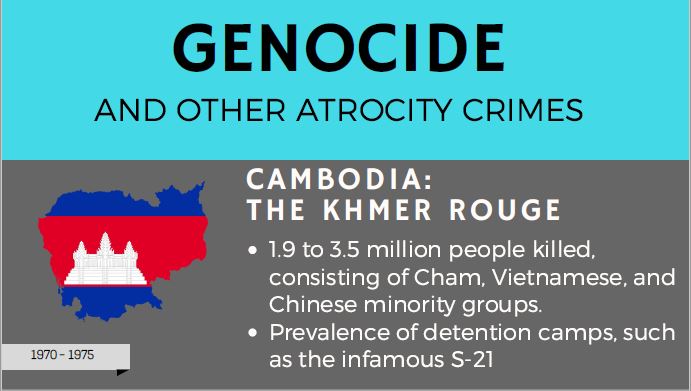
However, incidents of genocide that followed the establishment of the UN exposed the flaws in the organization’s ability to enforce preventative or protective measures. In fact, although the Convention on the Prevention and Punishment of the Crime of Genocide mandates that contracting parties make an effort “to prevent and to punish” genocide, there is no mention of counteracting it. Cambodia, Rwanda, and Yugoslavia – three countries which experienced a genocide after the establishment of the UN – were all addressed by the UN and had a peacekeeping force (PKF) sent before the tensions escalated into genocide. The PKF, however, were clearly unsuccessful. This was due partially to the narrow parameters the PKF were given to work, and partially to a lack of political will to engage. Because of complex regional and interstate conflicts, the UN was unable to gather a consensus to form a mandate strong enough to keep the violence from escalating. In other words, politics got in the way of protection of human rights and lives – all three times.
Current Assessment
Several current conflicts have been identified by the UN as either crimes against humanity or genocide. The conflicts analyzed in this report are Darfur, the Rohingya people in Myanmar, and ISIS and Syria. Once again, the UN has failed to label any of these as a genocide (except for ISIS’s violence against the Yazidi people), further demonstrating the lack of a political will to intercede, as labeling them as a genocide would obligate the UN to act. Instead, by recognizing the crimes against humanity, the international order is able to enforce weak mandates and sanctions that do not complicate international relations among permanent member-states of the United Nations, but also do nothing to stem the tide of violence in the regions. Furthermore, no action can be taken without a unanimous decision made by the permanent member-states of the UN. Because of the complicated relations among these states, unanimity is rare. History appears to be repeating itself, as politics are once again impeding the international order’s ability to protect populations from genocide.
Discussion and Recommendations
The report concludes with an analysis of the problems affecting the UN’s ability to protect from genocide. These problems include politicization and lack of political will. Politicization refers to the tendency of the UN to become so consumed in interstate politics that human rights abuses become a secondary issue. Despite the founding assumption that the global community has a responsibility to protect, the UN has struggled to achieve a collective will to intervene in genocide and other crimes against humanity due to politics. Lack of political will is related in that states do not believe intervention to be in their national interest, and as a result have no incentive to intervene. This again implies that politics, specifically domestic politics, supersede international human rights.
JIJ then offers a series of recommendations to the UN to better protect vulnerable populations. These recommendations, designed to address the problems analyzed in the report, cover a wide variety of possible solutions, from adding “counteracting” genocide to the language of the Convention to enforcing stricter human rights requirements of member-states. The recommendations also include demanding better accountability and challenging the notion that international human rights abuses are not of national interest, thus addressing the problem of politicization.
Should the UN (or other IGOs and human rights activists) adopt these recommendations, the international community would be better equipped to prevent, counteract, and punish genocide. Minimizing politicization, enforcing stronger mandates, encouraging states to intervene, and providing incentives for states to maintain a certain human rights standard are basic yet vital changes that can be made to improve the global response to genocide. Once we are able to look at the past and recognize where we went wrong, we will be able to address the problems that still exist today and, hopefully, work together towards a future of human rights and dignity for all.

UNITED NATIONS AND GENOCIDE
A Comparative Historical Assessment on the Ability of the UN
to Protect Populations from Genocide
The Jerusalem Institute of Justice conducted a report assessing the ability of the United Nations to protect populations from genocide. The document analyzes the legal obligations of the international order to protect populations from genocide, as well as the success the UN has had in doing so. The report is split into three sections: historical background, current assessment, and discussion and recommendations. JIJ took into consideration six case studies total, three historical instances of genocide and three current events. From these analyses, the report then draws a conclusion on whether the UN successfully protects populations from genocide. Finally, JIJ provides several recommendations for the UN and other intergovernmental organizations to improve the protection provided to vulnerable populations.
Historical Background
After providing the UN definition of genocide and the methodology used to conduct the report, JIJ explores in the document the significance of the Holocaust in the establishment of the United Nations and the creation of a body meant to protect vulnerable populations. The historical uniqueness of the Holocaust and the inability of the world to prevent it sparked the need for an international body to prevent and punish such crimes against humanity – and thus, the United Nations was born.
However, incidents of genocide that followed the establishment of the UN exposed the flaws in the organization’s ability to enforce preventative or protective measures. In fact, although the Convention on the Prevention and Punishment of the Crime of Genocide mandates that contracting parties make an effort “to prevent and to punish” genocide, there is no mention of counteracting it. Cambodia, Rwanda, and Yugoslavia – three countries which experienced a genocide after the establishment of the UN – were all addressed by the UN and had a peacekeeping force (PKF) sent before the tensions escalated into genocide. The PKF, however, were clearly unsuccessful. This was due partially to the narrow parameters the PKF were given to work, and partially to a lack of political will to engage. Because of complex regional and interstate conflicts, the UN was unable to gather a consensus to form a mandate strong enough to keep the violence from escalating. In other words, politics got in the way of protection of human rights and lives – all three times.
Current Assessment
Several current conflicts have been identified by the UN as either crimes against humanity or genocide. The conflicts analyzed in this report are Darfur, the Rohingya people in Myanmar, and ISIS and Syria. Once again, the UN has failed to label any of these as a genocide (except for ISIS’s violence against the Yazidi people), further demonstrating the lack of a political will to intercede, as labeling them as a genocide would obligate the UN to act. Instead, by recognizing the crimes against humanity, the international order is able to enforce weak mandates and sanctions that do not complicate international relations among permanent member-states of the United Nations, but also do nothing to stem the tide of violence in the regions. Furthermore, no action can be taken without a unanimous decision made by the permanent member-states of the UN. Because of the complicated relations among these states, unanimity is rare. History appears to be repeating itself, as politics are once again impeding the international order’s ability to protect populations from genocide.
Discussion and Recommendations
The report concludes with an analysis of the problems affecting the UN’s ability to protect from genocide. These problems include politicization and lack of political will. Politicization refers to the tendency of the UN to become so consumed in interstate politics that human rights abuses become a secondary issue. Despite the founding assumption that the global community has a responsibility to protect, the UN has struggled to achieve a collective will to intervene in genocide and other crimes against humanity due to politics. Lack of political will is related in that states do not believe intervention to be in their national interest, and as a result have no incentive to intervene. This again implies that politics, specifically domestic politics, supersede international human rights.
JIJ then offers a series of recommendations to the UN to better protect vulnerable populations. These recommendations, designed to address the problems analyzed in the report, cover a wide variety of possible solutions, from adding “counteracting” genocide to the language of the Convention to enforcing stricter human rights requirements of member-states. The recommendations also include demanding better accountability and challenging the notion that international human rights abuses are not of national interest, thus addressing the problem of politicization.
Should the UN (or other IGOs and human rights activists) adopt these recommendations, the international community would be better equipped to prevent, counteract, and punish genocide. Minimizing politicization, enforcing stronger mandates, encouraging states to intervene, and providing incentives for states to maintain a certain human rights standard are basic yet vital changes that can be made to improve the global response to genocide. Once we are able to look at the past and recognize where we went wrong, we will be able to address the problems that still exist today and, hopefully, work together towards a future of human rights and dignity for all.
Download
A Journey to Poland
Article by Louie Parker intern at the Jerusalem Institute of Justice.
I recently embarked on a trip to Poland as part of the Masa Global Leadership Institute Poland Program. The aim of the trip was to explore both the Jewish and non-Jewish culture and history of Poland, to better understand the Holocaust and to explore the resurgence of Jewish culture and communities in Poland.
The expectations for the trip were somewhat mixed. We were made aware of the fact that this was not a trip dealing solely with the Holocaust, but rather an explorative vignette onto Judaism’s place in historical and modern-day Poland. Moreover, rather than viewing the country through the prism of objective numbers (such as the 6-million Jewish people who lost their lives in the Holocaust), we were aiming to attach a human face to Poland’s history and meet the people actively trying to strengthen their Jewish community.
Upon landing in Warsaw, I was immediately stunned by both the beauty and the modernity of the city. Preconceived ideas of Eastern European dreariness and Bauhaus architecture were replaced by impressive skyscrapers and beautiful remnants of Poland’s imperial past. It resembled something closer to London than St. Petersburg or Moscow.
Poland is a beautiful country. The people there are proud, and justifiably so, of their nation’s achievements throughout the years and famous Polish figures like Chopin and Pope John Paul II. However, there is an undeniable struggle to reconcile the past with the future. How can a country that experienced genocide within the last century project an aura of racial and religious tolerance? Fortunately, based on what we observed, the country is making substantial inroads in strengthening its Jewish community.
In Warsaw, museums such as the Polin Museum are an indispensable source of information on the Jewish people’s 1,000-year history in Poland. The global Jewish community is paying more attention to Poland’s importance, and is investing both finances and individual efforts into strengthening the Jewish minority there. Rabbi Michael Schudrich, who has served as the Chief Rabbi of Poland for over 12 years, is such an example of these rallying efforts.
There is a real fascination with Poland’s pre-war Jewish history amongst tourists and Polish citizens alike. Small Jewish towns, or shtetls, like Tykocin allow a rare insight into the social structures that governed rural Jewish communities for centuries.
Krakow is equally, if not more, beautiful than its Warsaw counterpart. The old central neighbourhood of Kazimierz and its museums and synagogues have been carefully preserved to reflect its historic Jewish character. Encouragingly, there was even a shortage of seating at the Synagogue during their Friday night service.
The Jewish Community Centers in Poland are playing an extremely important role in strengthening the Jewish community, particularly as it relates to the many people who have only recently learned of their distant Jewish heritage and are now questioning their dual-natured Polish-Jewish identity. They organize Shabbat meals and run interfaith dialogue sessions and education seminars on a wide range of topics.
It was certainly an eerie feeling to think, as we were walking the streets of Warsaw and Krakow and taking in the magic of pre-war and post-Soviet Poland’s Jewish culture, that these same places bore witness to the some of the greatest assaults on humanity in history. While we chatted and passed bars and restaurants playing progressive jazz, it was sobering to remember the hundreds of thousands of Jews carted off to death camps from this same very place. It seemed inconceivable that as we walked around the neighbourhood of Podgórze, the Plaszow concentration camp made famous by Schindler’s List was less than 2 kilometers away.
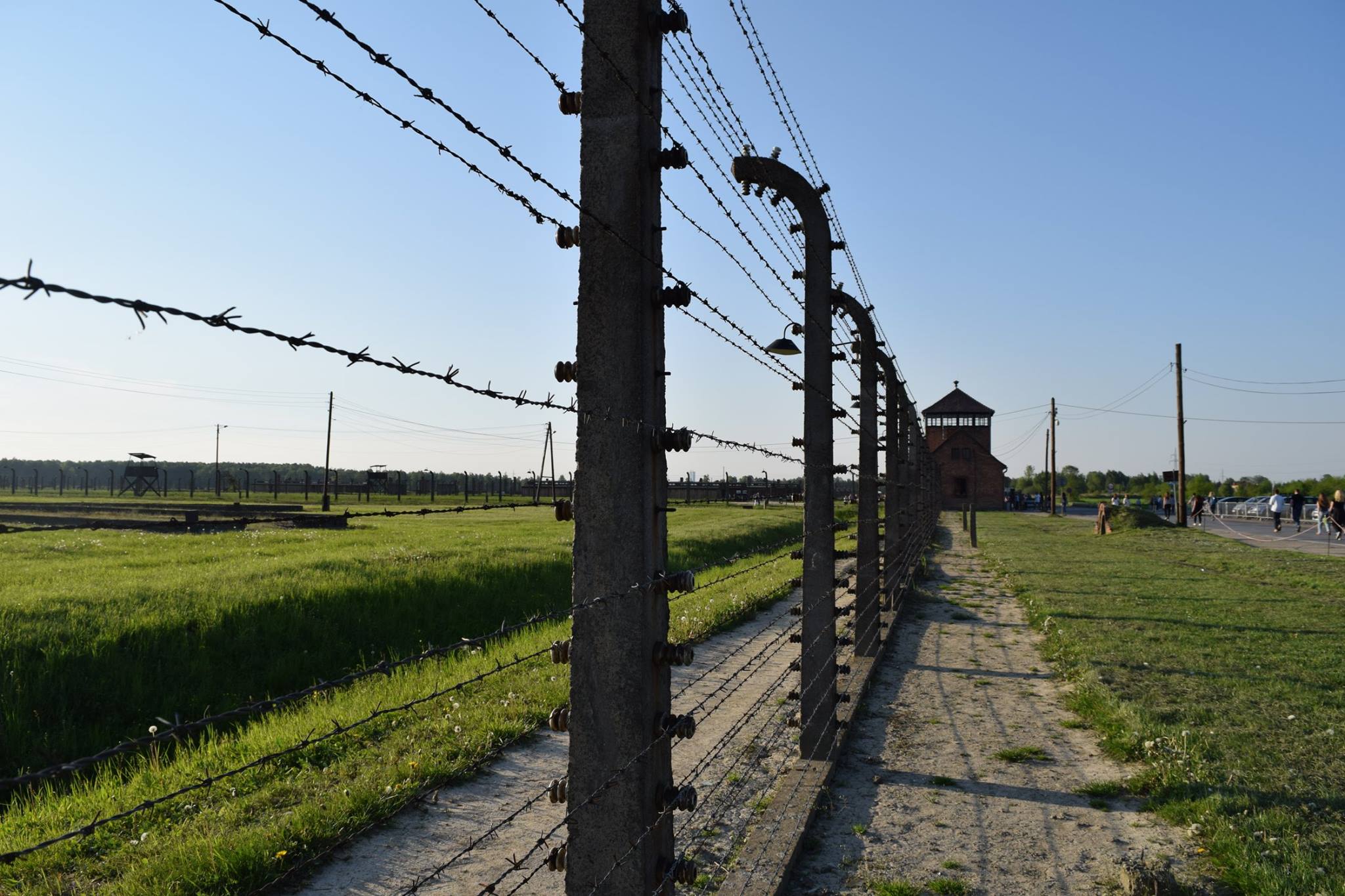
At the Treblinka and Auschwitz-Birkenau concentration camps, I sifted through the millions of names of those who had perished at the hands of the genocide. I was amazed to see, among the names of my Hungarian ancestors who had perished, the many others who bore the same name – often from the same district of Budapest. It seemed to speak to the enormity of the calamity that befell Europe’s Jewish community and the apparent ease at which multiple lives can be taken away.
Our immensely-experienced guide, Raquel Orenstein of the Yad VaShem Museum, imparted a gem of knowledge unto us. She encouraged those who come to Poland, or those who study the Holocaust, to question the psychological and behavioural underpinnings of what befell the victims of the Holocaust:
- How can one be seduced by a message of hate?
- What are the effects of mob mentality?
- What does it take to murder a fellow human being?
This viewpoint left a lasting impression on me. I found myself exploring the human aspects of the Holocaust, rather than focusing on facts and data. It felt very uncomfortable asking myself ‘had I been a Polish or German citizen, what would I have done? Would I have hidden my Jewish or Roma countrymen and women? Would I have been a partisan, a bystander or an active perpetrator? How easily would our modern conception of benevolence and human rights have been eschewed by the seductive nature of fascism and scapegoating?’
Having these questions in mind made the trip an unforgettable experience. My only advice to any prospective travellers or visitors would be to immerse oneself in a more holistic encounter with Poland. Although the brutality and horror of Poland’s history are both undeniable and unimaginable, the resurgence of Jewish culture and the strengthening of the Jewish community there gives us reason to be hopeful that the relationship between Jews and Poland is not resigned to the history books.

Hypocrisy In Iran
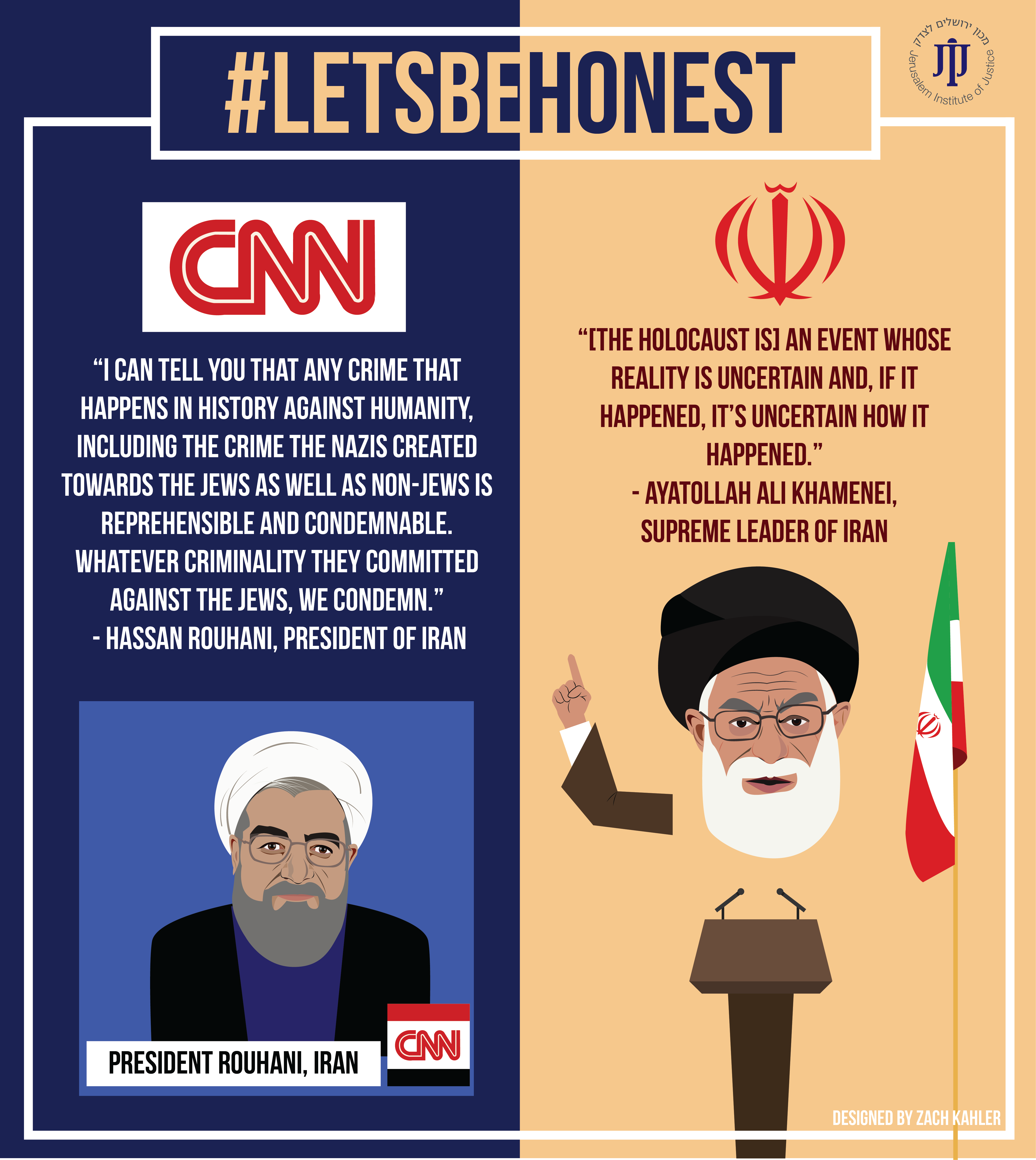
Iran's leaders make contradicting comments regarding the historical occurence of the Holocaust. The #LetsBeHonest Campaign seeks to expose the duplicitous claims spoken by Arab leaders to the West and exposes their true intentions toward peace.
Download
We Mourn the Passing of Eli Wiesel
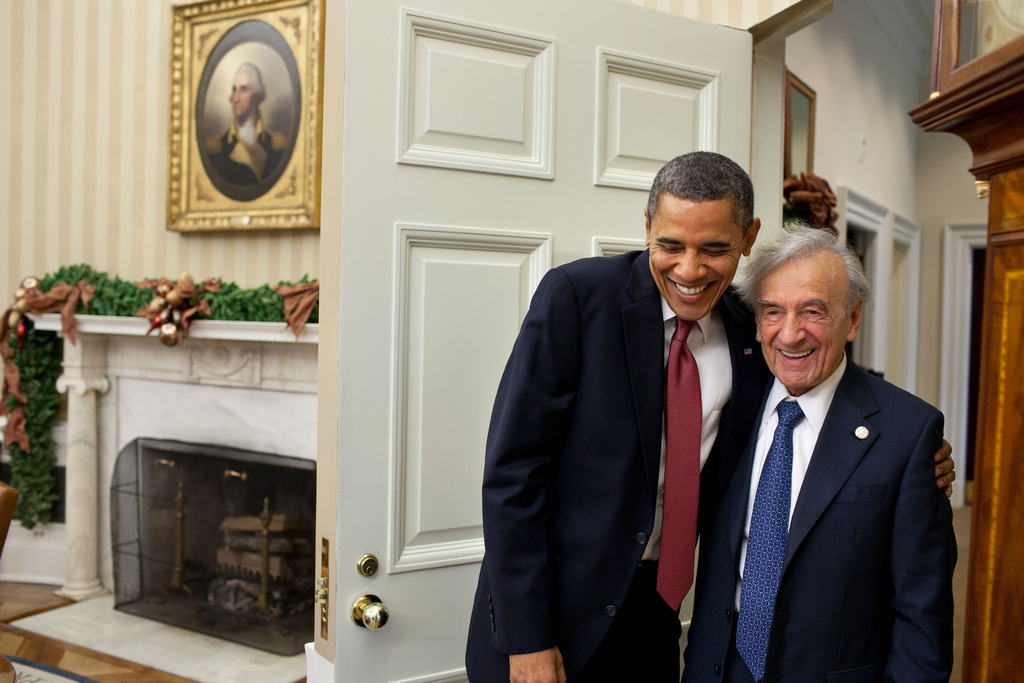
The Jerusalem Institute of Justice mourns the passing of Elie Wiesel, 87, one of the world’s most dedicated, untiring, and articulate voices against man’s inhumanity to man. After he experienced the horrors of the Holocaust as a child prisoner in Auschwitz and Buchenwald, Elie Wiesel dedicated his life to generating public awareness and to fighting against genocide, hatred, and injustice.
Wiesel’s passion for justice knew no bounds. He defended the cause of Soviet Jews, Nicaragua's Miskito Indians, Ethiopian-born Israeli youth, Argentina's "Disappeared," Cambodian refugees, the Kurds, and victims of famine and genocide in Africa, apartheid in South Africa and war in the former Yugoslavia.
He was recognized for not remaining silent in the face of the enemies of human rights and human dignity, stating during his Nobel Peace Prize acceptance speech, “We must always take sides. Neutrality helps the oppressor, never the victim. Silence encourages the tormentor, never the tormented.” He would often say, “the opposite of love is not hate, it is indifference.”
We join all those who love humanity and hate injustice in honoring the legacy and mourning the loss of Elie Wiesel, the conscience of a generation