
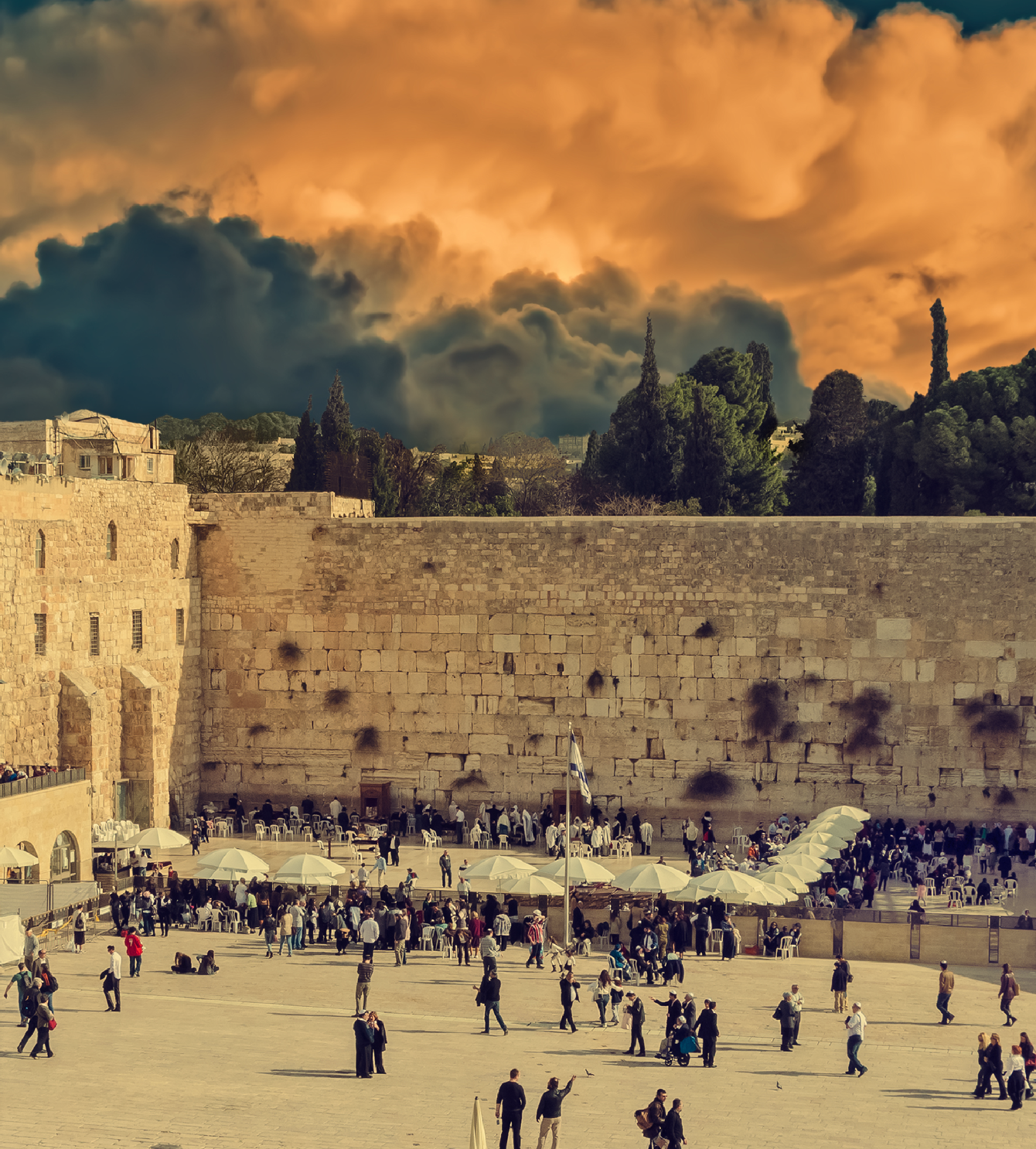
What can JIJ do in a year?
2024 was our busiest and most impactful year since our founding 20 years ago
With your help, in 2024, JIJ provided FREE legal aid to 2,733 survivors of terrorism, human trafficking, and discrimination, including:
- 32 wounded Israeli soldiers
- 40 survivors of human trafficking
- 17 survivors of the October 7th massacre
- 68 families seeking Israeli citizenship or residency
- 112 refugees from Ukraine, Russia, and Eritrea
- 120 Israeli families displaced from their homes on the Gaza & Lebanon borders
How does JIJ do all of this in one year? With you, our amazing supporters. Thank you!
Our media presence grew & our team appeared on:




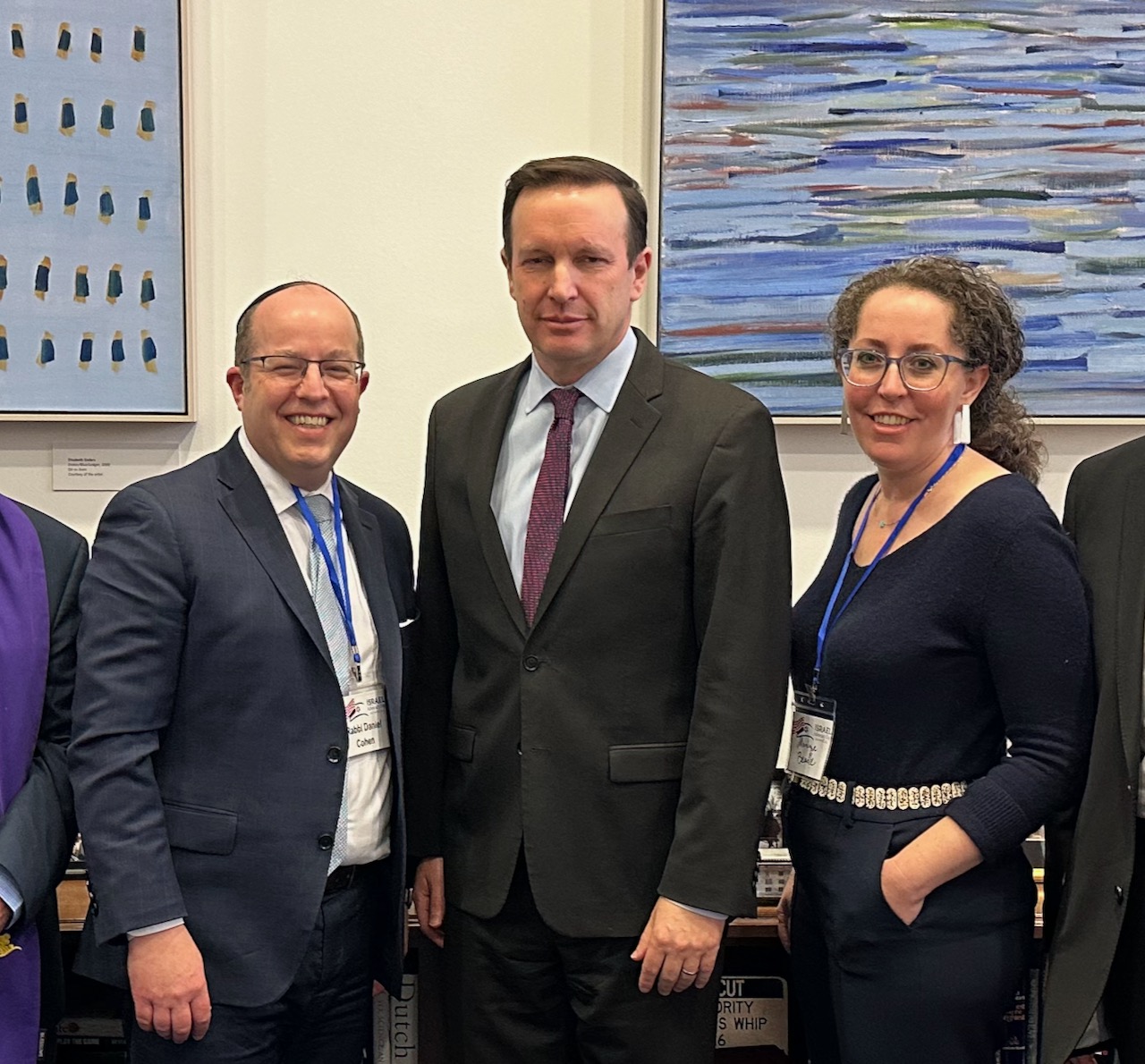
We met personally with dozens of global leaders, including Israel’s First Lady Michal Herzog, United Nations SRSG Pramila Patten, & US Senators Chris Murphy, Richard Blumenthal, & John Fetterman.
We shared our research, forensic evidence, and legal analysis with diplomats from 30 countries.
January - June
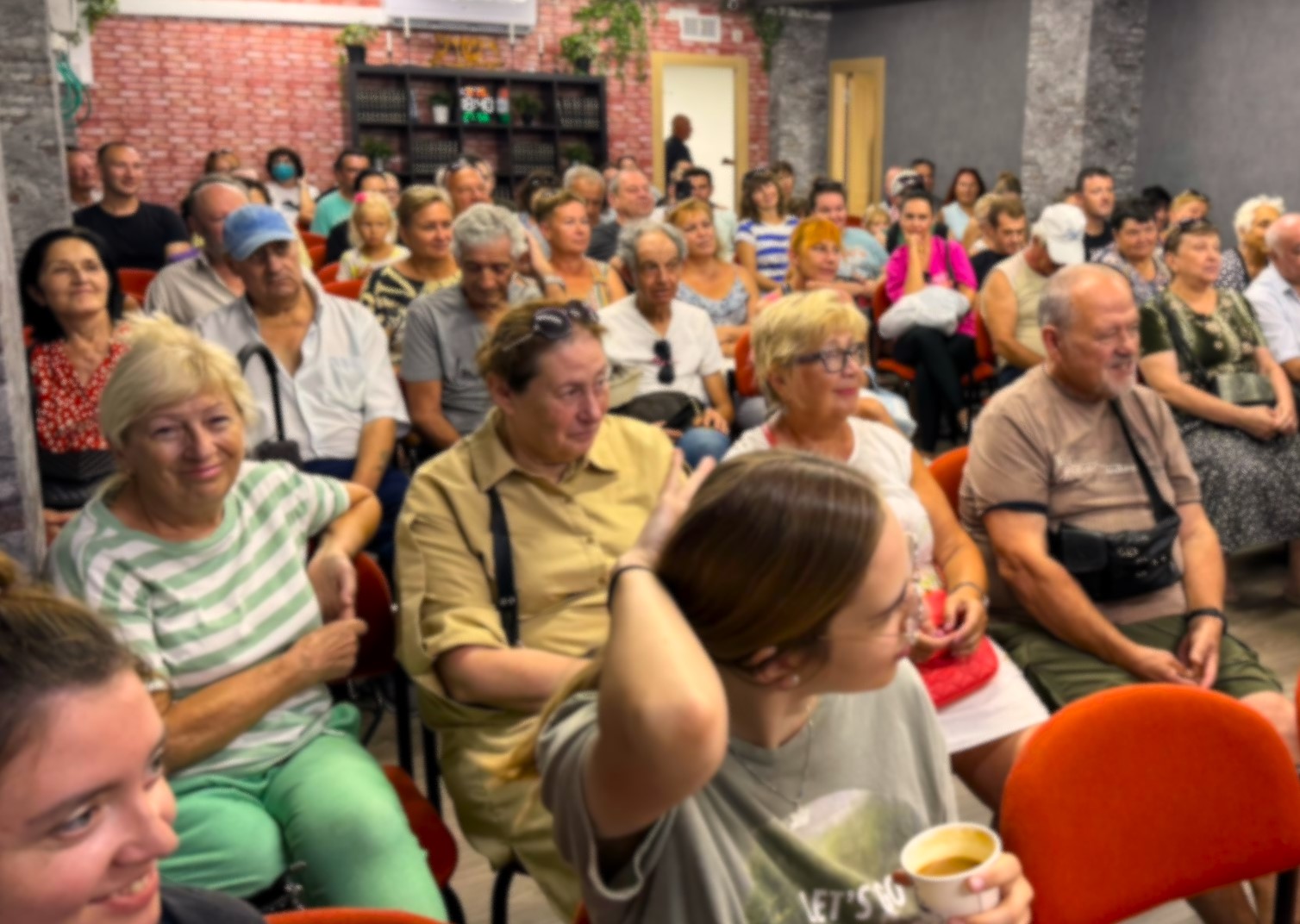
JIJ held a series of free “ Know Your Rights” seminars for:
- 120 Israeli families who became suddenly homeless, unemployed, or disabled as a result of the war
- 57 Ukrainian & Russian refugee families
- 9 of these families receive Israeli citizenship through the Law of Return
- 500 wounded soldiers
Gathered 84 political & religious leaders in the U.S. for a private screening of unedited, uncensored footage of the October 7th massacre recovered from the bodies of Hamas terrorists and compiled by the IDF.
Drafted an urgent petition to Stop Funding UNRWA & persuaded key members of the Senate Foreign Relations Committees to enact a 1-year ban on US funding to UNRWA.
Hosted UN diplomats from 18 countries to hear testimony from Yuval Raphael a survivor of the Oct. 7th massacre. Yuval went to the Nova Festival to dance all night with her friends. At dawn, Hamas invaded, and she sought refuge in a roadside bomb shelter, which became a tomb when terrorists found them.
Launched the Survivors Seeking Justice project, and filmed detailed video testimonies of 17 survivors of the Oct. 7th massacre.
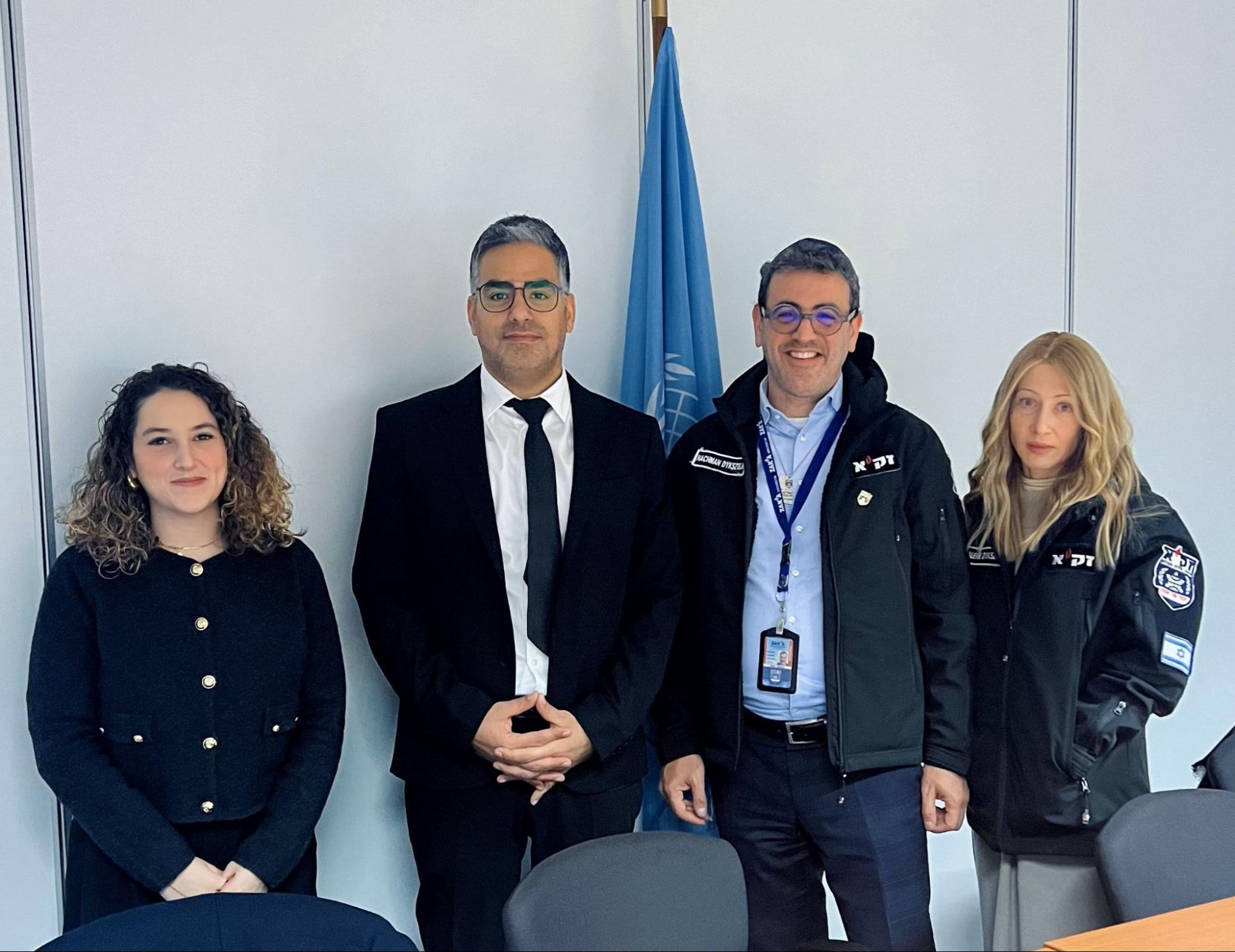
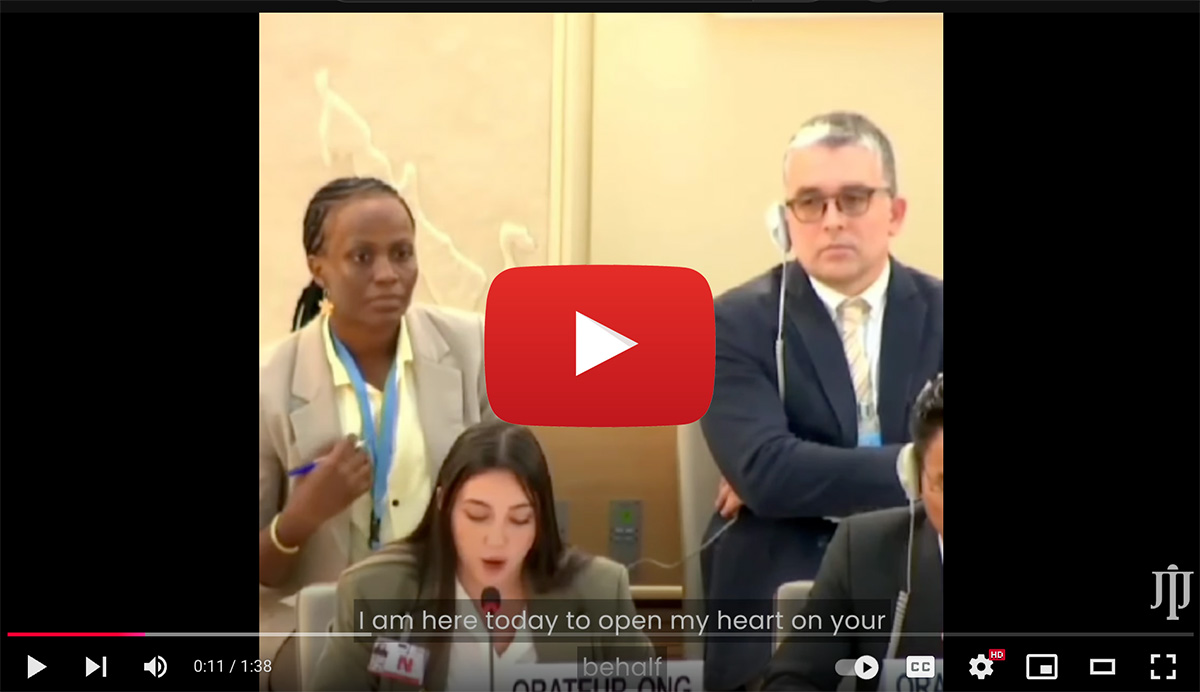
JIJ lawyers presented forensic evidence & first responder testimony to senior UN officials. This proof confirmed a pattern of sexual violence perpetrated by Hamas on Oct. 7th and stopped the rape deniers in their tracks.
July-December
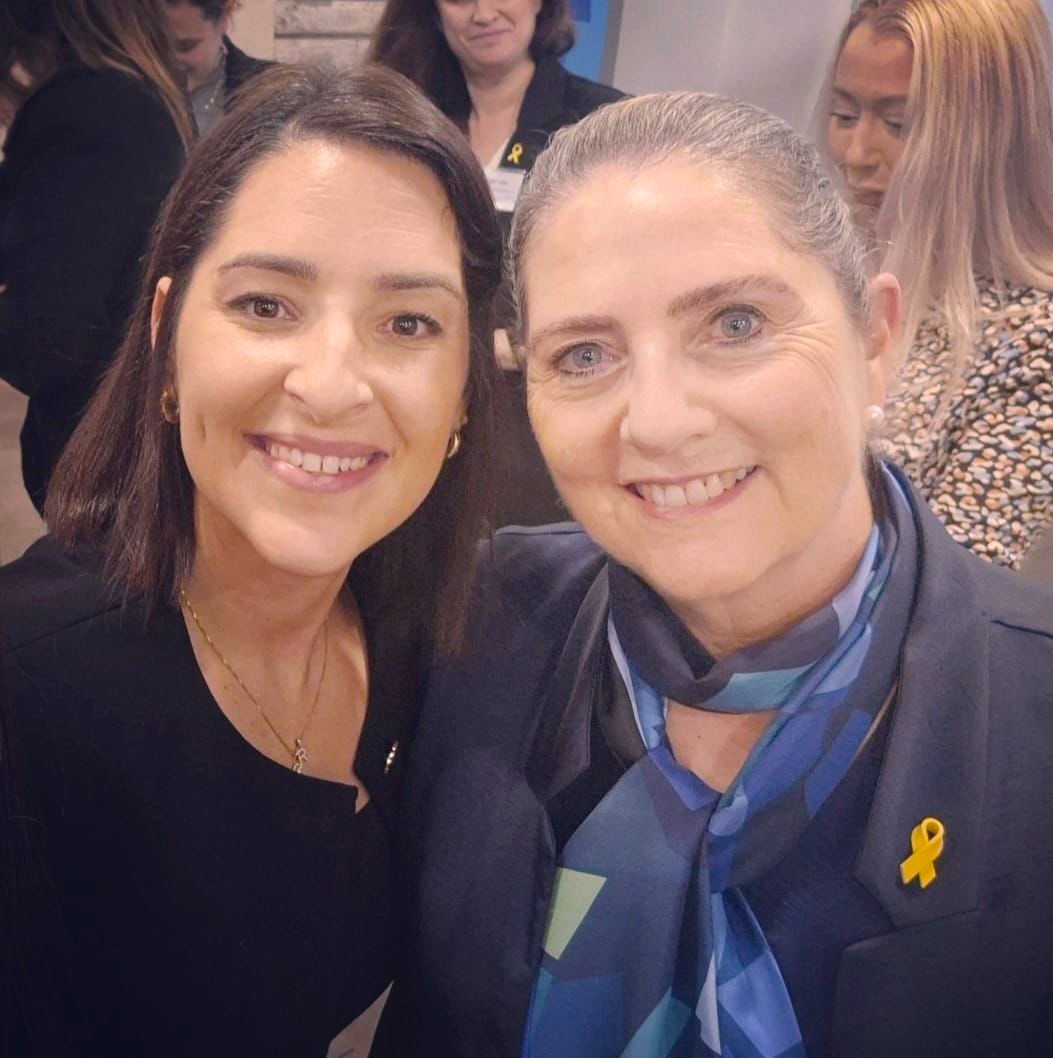
Discussed Israel’s anti-trafficking law with First Lady Michal Herzog. In 2018, JIJ persuaded the
Knesset to adopt a 5-year pilot program that treats women in the sex industry as victims of abuse, & the pimps as criminals. We’re advocating to make the law permanent!
JIJ assisted Israeli police in busting a major human trafficking ring - resulting in the arrest of 14 human traffickers, which was only possible through the testimony of our brave client.
We gave free seminars to soldiers recuperating at Ichilov & Tel Hashomer Hospitals. While private lawyers take 30-50% of a wounded soldier’s disability benefit as payment, JIJ is the only organization providing FREE legal aid to wounded Israeli soldiers, with 32 new soldier clients in 2024.
Intervened at the International Criminal Court with an amicus brief making it clear that the Court lacks jurisdiction over Israeli leaders.
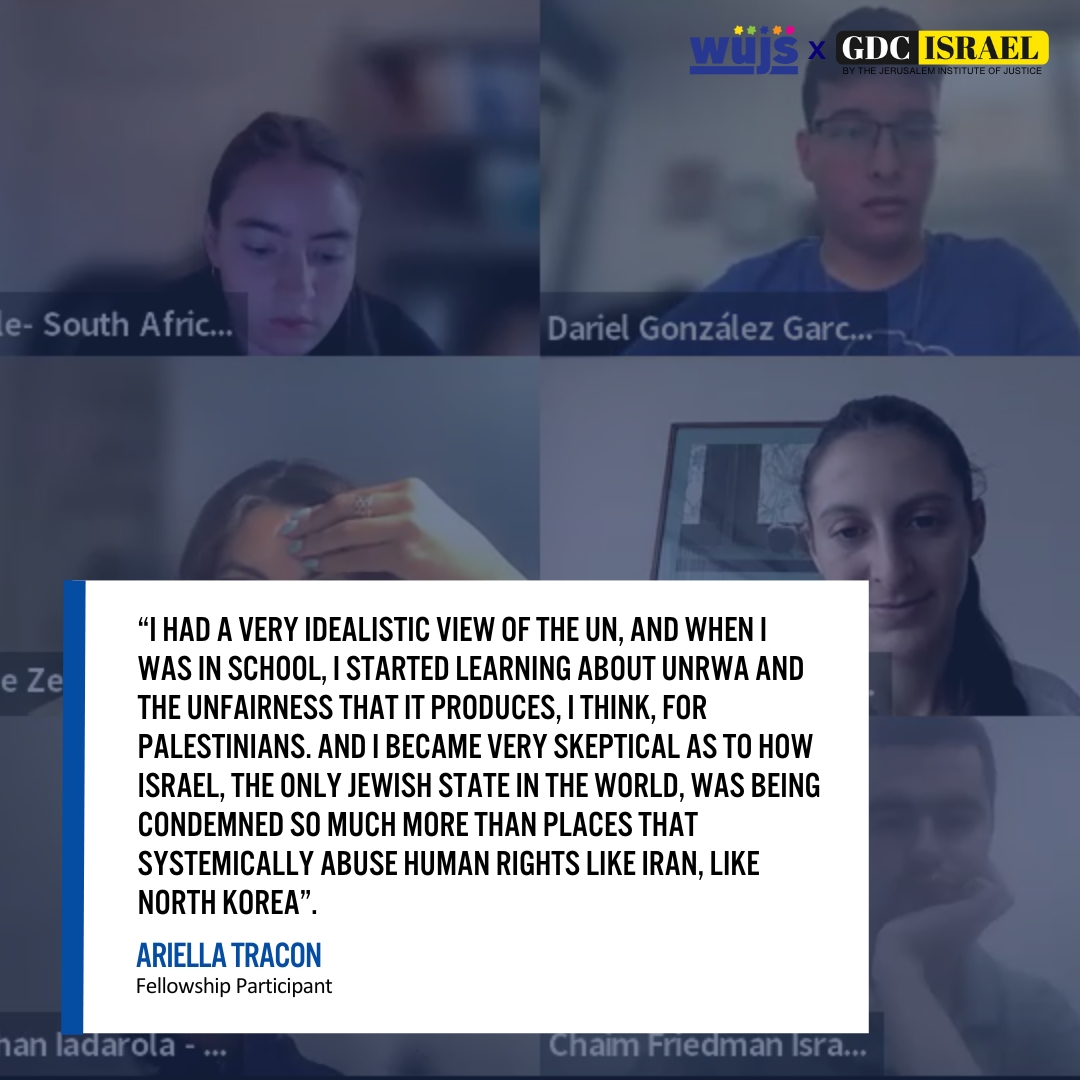
Partnered with the World Union of Jewish Students to train & empower student leaders. Over 8 weeks, we trained 23 Jewish university students from 16 countries to combat antisemitism on their campuses.
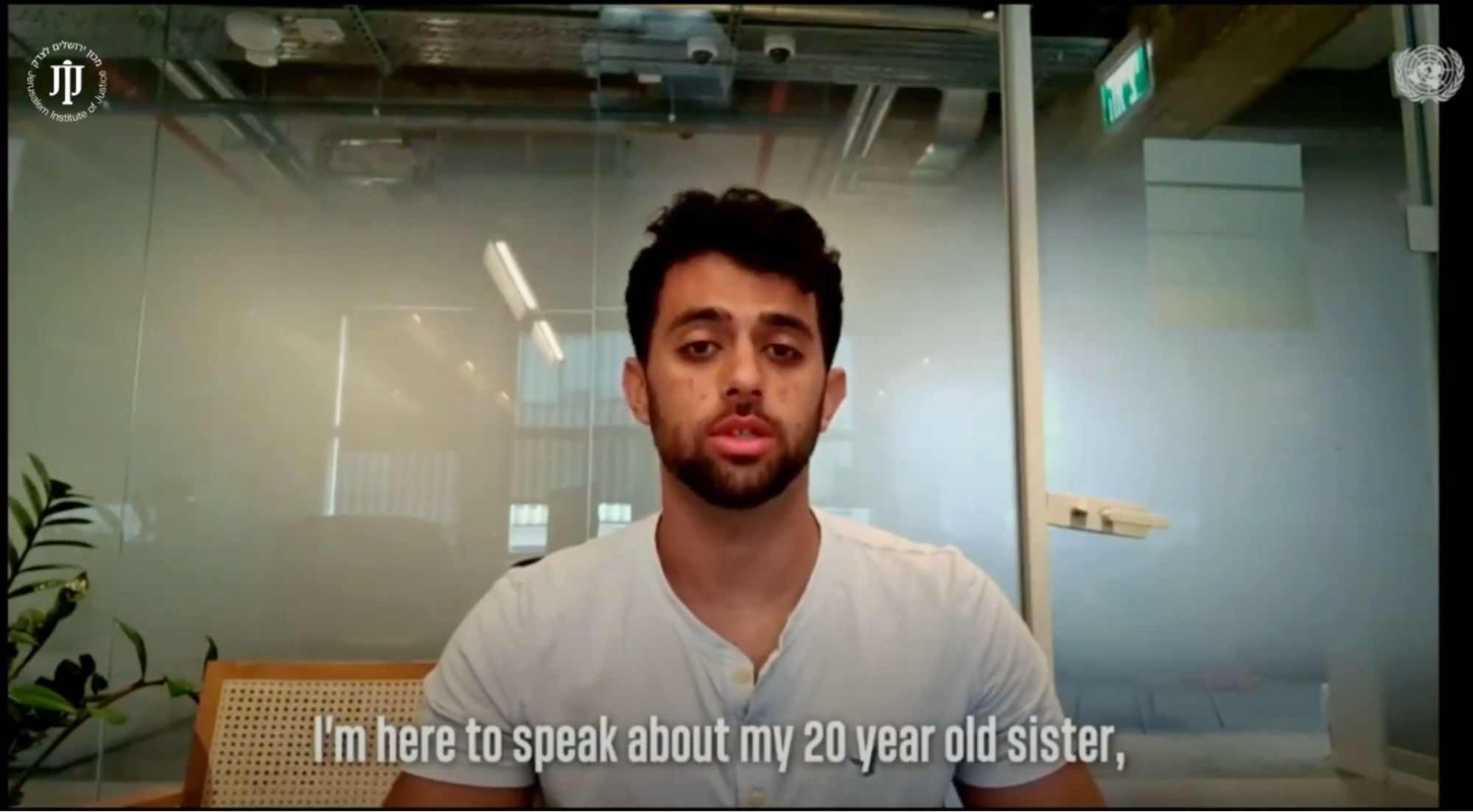
The UN Human Rights Council convened a special gathering on the Jewish New Year, to condemn Israel. The timing was intentional - to prevent opposition. In response, we gave our General Assembly floor time to Amit Levy, brother of Naama Levy, who was kidnapped by Hamas on Oct. 7th. Amit gave powerful testimony on the need to free all of the hostages.
Every single donation you give, whether it’s $1000 or $10, changes lives!

What can JIJ do in a year?
2024 was our busiest and most impactful year since our founding 20 years ago
With your help, in 2024, JIJ provided FREE legal aid to 2,733 survivors of terrorism, human trafficking, and discrimination, including:
- 32 wounded Israeli soldiers
- 40 survivors of human trafficking
- 17 survivors of the October 7th massacre
- 68 families seeking Israeli citizenship or residency
- 112 refugees from Ukraine, Russia, and Eritrea
- 120 Israeli families displaced from their homes on the Gaza & Lebanon borders
How does JIJ do all of this in one year? With you, our amazing supporters. Thank you!
Our media presence grew & our team appeared on:
We met personally with dozens of global leaders, including Israel’s First Lady Michal Herzog, United Nations SRSG Pramila Patten, & US Senators Chris Murphy, Richard Blumenthal, & John Fetterman.
We shared our research, forensic evidence, and legal analysis with diplomats from 30 countries.
January - June
JIJ held a series of free “ Know Your Rights” seminars for:
- 120 Israeli families who became suddenly homeless, unemployed, or disabled as a result of the war
- 57 Ukrainian & Russian refugee families
- 9 of these families receive Israeli citizenship through the Law of Return
- 500 wounded soldiers
Gathered 84 political & religious leaders in the U.S. for a private screening of unedited, uncensored footage of the October 7th massacre recovered from the bodies of Hamas terrorists and compiled by the IDF.
Drafted an urgent petition to Stop Funding UNRWA & persuaded key members of the Senate Foreign Relations Committees to enact a 1-year ban on US funding to UNRWA.
Hosted UN diplomats from 18 countries to hear testimony from Yuval Raphael a survivor of the Oct. 7th massacre. Yuval went to the Nova Festival to dance all night with her friends. At dawn, Hamas invaded, and she sought refuge in a roadside bomb shelter, which became a tomb when terrorists found them.
Launched the Survivors Seeking Justice project, and filmed detailed video testimonies of 17 survivors of the Oct. 7th massacre.
JIJ lawyers presented forensic evidence & first responder testimony to senior UN officials. This proof confirmed a pattern of sexual violence perpetrated by Hamas on Oct. 7th and stopped the rape deniers in their tracks.
July-December
Discussed Israel’s anti-trafficking law with First Lady Michal Herzog. In 2018, JIJ persuaded the
Knesset to adopt a 5-year pilot program that treats women in the sex industry as victims of abuse, & the pimps as criminals. We’re advocating to make the law permanent!
JIJ assisted Israeli police in busting a major human trafficking ring - resulting in the arrest of 14 human traffickers, which was only possible through the testimony of our brave client.
We gave free seminars to soldiers recuperating at Ichilov & Tel Hashomer Hospitals. While private lawyers take 30-50% of a wounded soldier’s disability benefit as payment, JIJ is the only organization providing FREE legal aid to wounded Israeli soldiers, with 32 new soldier clients in 2024.
Intervened at the International Criminal Court with an amicus brief making it clear that the Court lacks jurisdiction over Israeli leaders.
Partnered with the World Union of Jewish Students to train & empower student leaders. Over 8 weeks, we trained 23 Jewish university students from 16 countries to combat antisemitism on their campuses.
The UN Human Rights Council convened a special gathering on the Jewish New Year, to condemn Israel. The timing was intentional - to prevent opposition. In response, we gave our General Assembly floor time to Amit Levy, brother of Naama Levy, who was kidnapped by Hamas on Oct. 7th. Amit gave powerful testimony on the need to free all of the hostages.
Every single donation you give, whether it’s $1000 or $10, changes lives!
JIJ's Statement on The ICC Ruling
JIJ's Statement on The ICC Ruling to Issue of Arrest Warrant Against Prime Minister Benjamin Netanyahu and Defense Minister Yoav Galant
The Jerusalem Institute for Justice vehemently condemns the International Criminal Court’s (ICC) ruling to issue arrest warrants against Prime Minister Benjamin Netanyahu and Defense Minister Yoav Galant. This ruling is a purely political decision that not only flagrantly violates legal and moral standards but also shamefully capitulates to the pressures of anti-Israeli factions.
The ICC, established to protect genuine victims and hold accountable leaders responsible for the gravest crimes, has, for the first time in its history, chosen to target a democratic nation with a robust, independent judiciary fully dedicated to upholding the principles and rules of international law. This is a deplorable and calculated attempt to undermine the State of Israel and the IDF as they take decisive actions to defend the very existence of the world’s only Jewish state against an attempt to eradicate it. These efforts come in response to the most extensively documented barbaric massacre of modern times, orchestrated by Hamas and other terror groups.
We are deeply disappointed by the court’s decision to dismiss JIJ’s arguments, as outlined in our recently submitted legal observation. The court has chosen to disregard our strong legal arguments and overreach by asserting jurisdiction it does not possess. In doing so, it has acted in violation of the binding agreement between the parties to this ruling, wrongly recognized Palestine as a state despite its failure to meet the established threshold conditions, and blatantly ignored the existence of a robust, independent judicial system within a democratic state. Even more troubling, the court has created a false moral equivalence between the leaders of a democratic state and the arch-terrorists of Hamas. To further undermine its credibility, the court also decided to issue an arrest warrant against the dead terror mastermind, Mohammed Deif.
This ruling targets our leaders in the immediate term, but the repercussions are far more profound and far-reaching. It delivers a severe blow to the court's integrity, inflicting irreparable harm on public trust and the very concept of international justice. What should serve as a safeguard against atrocities has been twisted into a political weapon wielded against moral, law-abiding nations. The Jerusalem Institute for Justice urgently calls on the international community to stand against this outrageous ruling. Only by taking a firm stand can we begin to restore faith in the mechanisms of international accountability and uphold the principles of true justice.

Three Strikes for Starmer
Three Strikes for Starmer
When Sir Keir Starmer ascended to the leadership of the UK Labour Party in 2020, he promised a decisive break from Jeremy Corbyn. Hamas and Hezbollah would no longer be considered ‘friends’, anti-Semitism would no longer be tolerated, and Israel would no longer be demonized.
Over the last four years, Starmer made significant progress on these fronts. He purged Corbyn from the Labor Party, adopted the recommendations of the Equality and Human Rights Commission’s investigation into anti-Semitism,[1] and affirmed Israel’s right to self-defense.
The Anglo-Jewish community responded constructively to these changes. Where British Jews voted for the Conservatives over Corbyn by a six-to-one margin in 2017, Starmer attracted support from a plurality of Anglo-Jewish voters.[2] This reflected voting patterns across the British electorate, enabling Labour to return to power after 14 years in opposition.
Since Labour assumed power in July, however, the Party has taken three troubling decisions on Israel. In isolation, any one of these decisions could be dismissed as a blip on the radar. In their totality, they suggest a failure to root out the ideological undercurrents of Corbynism.
UNRWA
The first warning sign appeared on July 19, when Foreign Secretary Danny Lammy agreed to restore £21 million in funding for the United Nations Relief and Works Agency (UNRWA). In announcing this decision, Lammy parroted UNRWA’s assertion that they ‘meet the highest standards of neutrality.’[3]
Such a claim is not credible. Israel has produced substantive evidence showing that UNRWA facilities have been systematically used as command centers and storage facilities for Hamas.[4] It has identified 42 employees of UNRWA who assisted Hamas on October 7, and it has alleged that over 10% of their workers are affiliated with terrorist groups.[5] Last month, UNRWA fired nine of its employees for their involvement in the October 7 massacre.
Lammy sidestepped this evidence by focusing on the UN-commissioned Colonna report from April 2024. But this report did not support the Foreign Secretary’s claim of neutrality. Instead, it found that alleged breaches of neutrality by UNRWA ‘escalated significantly’ after October 7. Referring to anti-Semitic educational content as a ‘grave violation of neutrality’, it noted that 3.85% of textbook pages in Palestinian schools contain concerning material.[6]
ICC
On July 26, the Labour Government made its second move against Israel. It dropped a pre-trial submission challenging the International Criminal Court’s (ICC) jurisdiction over Israeli Prime Minister Benjamin Netanyahu and Defence Minister Yoav Gallant.
In June, the Sunak Government had responded to ICC Prosecutor Karim Khan’s application for arrest warrants against Israel’s leaders by requesting permission to comment on ‘outstanding jurisdictional issues.’ The Government wanted the Court to address the implications of the Oslo Accords, which deny criminal jurisdiction to the Palestinian Authority over Israeli nationals.[7] The Court agreed to accept submissions from the UK and other interested parties until August 6.
By dropping the UK’s request for comment, the Starmer Government weakens pressure on the Court to address an important pre-trial question. It advances Prosecutor Khan’s unprecedented attempt to target the elected leaders of a democratic state, and it signals moral cowardice in the face of the ICC’s efforts to equate Hamas terrorists with leaders bound by the rule of law.
Export Licenses
On September 2, Labour completed its trifecta of measures against Israel. Secretary Lammy announced that the UK would suspend 30 of its 350 arms export licenses to Israel.[8] Coming on the same day as the funerals of six murdered hostages, the announcement provoked opposition in Israel and America.
Though the Foreign Secretary emphasized that ‘this is not an arms embargo’, his decision to block export licenses represents a clear departure from his predecessor. In December 2023, then Foreign Secretary Lord David Cameron concluded that Israel is ‘committed to comply with International Humanitarian Law.’ Following five legal assessments, Cameron reiterated his stance in April 2024, rejecting calls to suspend export licenses.[9]
Though Britain does not account for a large share of Israel’s arms imports, these restrictions will affect the supply of drones, jets, and other aircraft. Coming just weeks after the UK dropped its challenge to the ICC, the decision reflects a troubling pattern of one-sided measures against Israel’s legitimate right to self-defense.
Conclusion
Starmer deserves credit for confronting rampant anti-Semitism in the Labour Party. He has repudiated the sordid legacy of Corbyn and worked to regain the trust of British Jews.
It seems, however, that his foreign policy has privileged the concerns of a loud left flank over the defense of a democratic ally. In just two months, Labour has departed from the Conservatives on three issues. Each of these actions has hurt Israel’s security while exacerbating the divide between British and American policy. To maintain good will at home and abroad, Starmer is due for a course correction.
Written by Ben Solomon
JIJ Intern
Click Here To read the full article including notes
Amicus Brief- Challenging ICC's Prosecutor’s Request to Issue Arrest Warrants for Israeli Leaders
On August 6, the Jerusalem Institute of Justice legal team, submitted its Written Observations to the International Criminal Court on the unresolved matters of jurisdiction with respect to the ‘Situation in Palestine' case.In our submission, we've challenged the ICC's jurisdiction to issue arrest warrants against Israeli citizens, questioned the classification of "Palestine" as a state, and asserted that the Gaza Strip is not under occupation.
The Jerusalem Institute of Justice submitted its reservations to the International Criminal Court (ICC) , stating that the tribunal may not exercise its authority over Israeli citizens, in light of the Oslo Accords, which were signed between the State of Israel and the Palestine Liberation Organization (PLO) and regulated the jurisdiction in these territories.
This submission follows a request by the ICC prosecutor to issue arrest warrants against Prime Minister Benjamin Netanyahu and Defense Minister Yoav Gallant for their alleged responsibility for war crimes and crimes against humanity. Representing survivors of the Hamas massacre on October 7, the JIJ seeks to challenge the tribunal’s attempt to exert authority over Israeli citizens, contrary to the Oslo Accords. In the documents filed, the JIJ’s legal experts dispute the classification of “Palestine” as a state and argue that the Gaza Strip is not under occupation.
The Jerusalem Institute of Justice shares the ICC’s commitment to fight impunity for serious violations of international law. At the same time, this goal cannot be realized at the expense of circumventing existing legal frameworks. We call on the tribunal to refrain from making unilateral decisions that could damage the peace process.
JIJ unequivocally argued that the Oslo Accords, which govern relations between Israel and the Palestinians, constitute a binding and central legal document recognized internationally. According to these agreements, the Palestinian Authority has no criminal jurisdiction over Israeli citizens and cannot transfer powers it does not possess to the ICC.
The JIJ also noted that in its 2021 decision, the tribunal declared it could not determine whether Palestine was a state. The Chief Prosecutor’s current classification of the conflict, both as an international conflict and as a non-international conflict, stems from uncertainty in the law and its interpretation by the tribunal. This situation affects the types of crimes investigated and creates an imbalance in the application of the law between the different parties.
For an entity to be considered a state and for the conflict to be classified as an international conflict, it must meet four conditions: a permanent population, a defined territory, an effective government, and the ability to engage in international relations. The JIJ argues that Palestine does not meet these conditions, and its unilateral declaration of statehood contravenes the Oslo Accords and is therefore illegal under international law.
The second option for recognizing the conflict as an international confrontation is to acknowledge the occupation. In this respect, JIJ argues that Israel withdrew from the Gaza Strip in 2005 and does not control it, a necessary element for being considered an occupier. Thus, Israel’s current military actions in Gaza are characterized as a response to active hostilities of Hamas, not an occupation.
JIJ emphasizes the need to respect existing agreements and the rules of international law and warns against any modifications, deviations, or reinterpretations of these agreements by the tribunal. The Institute further notes that, to ensure a clear and fair legal framework in Israeli-Palestinian relations and to prevent unilateral decisions that could jeopardize the peace process, the tribunal must uphold what the parties agreed to in the Oslo Accords and the boundaries defined therein.
Observations ‘Situation in Palestine’
JIJ submited to the International Criminal Court these written observations on the unresolved matters of jurisdiction with respect to the ‘Situation in Palestine’.
In accordance with the Pre-Trial Chamber’s order of July 22, 2024, granting the Jerusalem
Institute of Justice (JIJ) leave to submit observations pursuant to Rule 103 of the ICC Rules
of Procedure
The Jerusalem Institute of Justice submitted its reservations to the International Criminal Court (ICC) , stating that the tribunal may not exercise its authority over Israeli citizens, in light of the Oslo Accords, which were signed between the State of Israel and the Palestine Liberation Organization (PLO) and regulated the jurisdiction in these territories.
This submission follows a request by the ICC prosecutor to issue arrest warrants against Prime Minister Benjamin Netanyahu and Defense Minister Yoav Gallant for their alleged responsibility for war crimes and crimes against humanity. Representing survivors of the Hamas massacre on October 7, the JIJ seeks to challenge the tribunal's attempt to exert authority over Israeli citizens, contrary to the Oslo Accords. In the documents filed, the JIJ's legal experts dispute the classification of "Palestine" as a state and argue that the Gaza Strip is not under occupation.
The Jerusalem Institute of Justice shares the ICC's commitment to fight impunity for serious violations of international law. At the same time, this goal cannot be realized at the expense of circumventing existing legal frameworks. We call on the tribunal to refrain from making unilateral decisions that could damage the peace process.
JIJ unequivocally argued that the Oslo Accords, which govern relations between Israel and the Palestinians, constitute a binding and central legal document recognized internationally. According to these agreements, the Palestinian Authority has no criminal jurisdiction over Israeli citizens and cannot transfer powers it does not possess to the ICC.
The JIJ also noted that in its 2021 decision, the tribunal declared it could not determine whether Palestine was a state. The Chief Prosecutor’s current classification of the conflict, both as an international conflict and as a non-international conflict, stems from uncertainty in the law and its interpretation by the tribunal. This situation affects the types of crimes investigated and creates an imbalance in the application of the law between the different parties.
For an entity to be considered a state and for the conflict to be classified as an international conflict, it must meet four conditions: a permanent population, a defined territory, an effective government, and the ability to engage in international relations. The JIJ argues that Palestine does not meet these conditions, and its unilateral declaration of statehood contravenes the Oslo Accords and is therefore illegal under international law.
The second option for recognizing the conflict as an international confrontation is to acknowledge the occupation. In this respect, JIJ argues that Israel withdrew from the Gaza Strip in 2005 and does not control it, a necessary element for being considered an occupier. Thus, Israel's current military actions in Gaza are characterized as a response to active hostilities of Hamas, not an occupation.
JIJ emphasizes the need to respect existing agreements and the rules of international law and warns against any modifications, deviations, or reinterpretations of these agreements by the tribunal. The Institute further notes that, to ensure a clear and fair legal framework in Israeli-Palestinian relations and to prevent unilateral decisions that could jeopardize the peace process, the tribunal must uphold what the parties agreed to in the Oslo Accords and the boundaries defined therein.
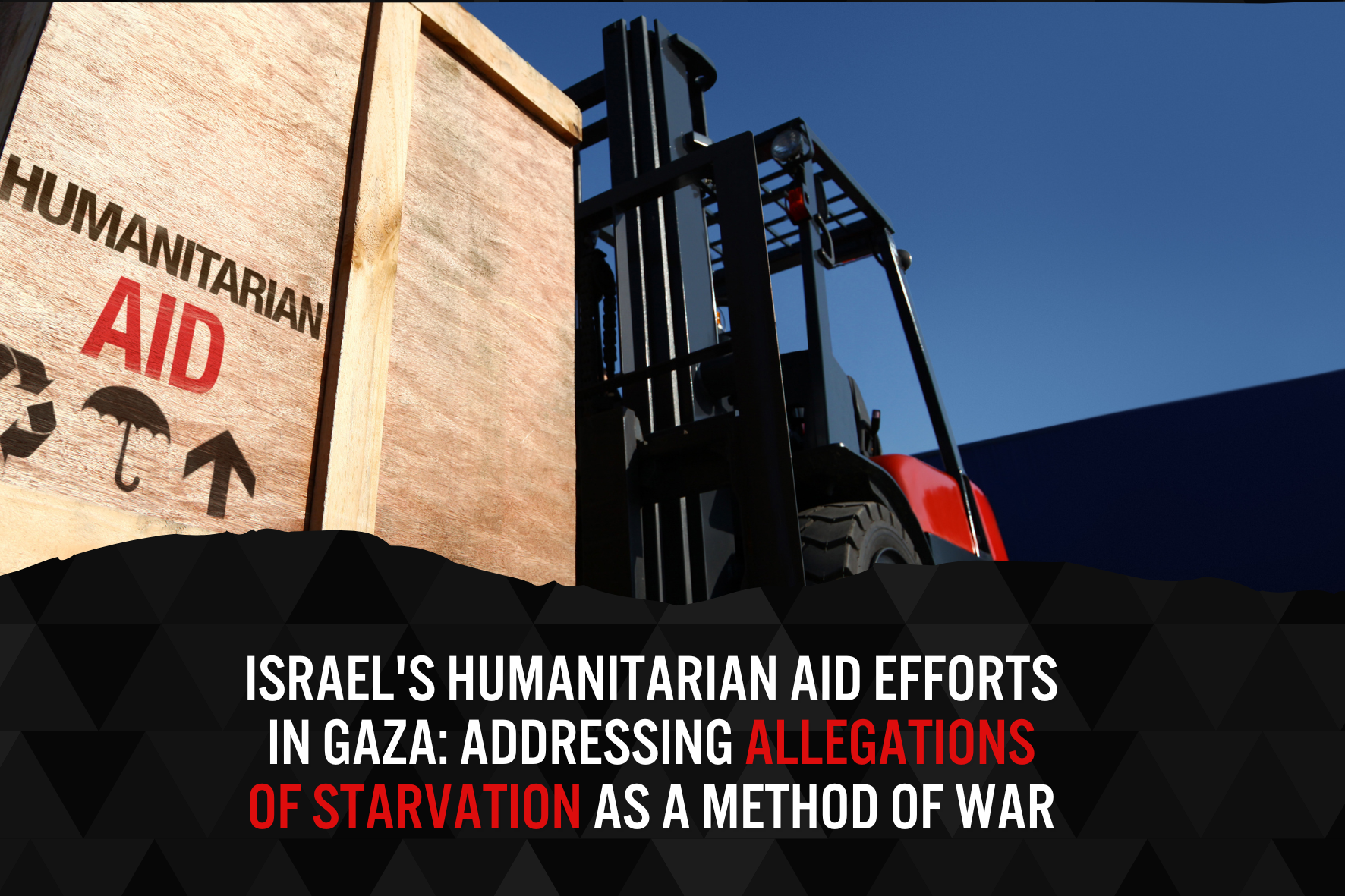
Israel's Humanitarian Aid Efforts in Gaza: Addressing Allegations of Starvation as a Method of War
The ongoing conflict in Gaza has sparked intense international scrutiny, with serious allegations leveled against Israel regarding its treatment of Palestinian civilians. Among the most grave accusations are claims that Israel is deliberately using starvation as a weapon of war. This article aims to examine these allegations in light of Israel's documented humanitarian aid efforts and the complex realities on the ground in Gaza, providing a comprehensive analysis of the current situation and its historical context. The gravity of the allegations has drawn attention from international legal bodies. The International Court of Justice (ICJ) as well as the International Criminal Court (ICC) have consistently placed Israel under unfair scrutiny for a starvation crisis that does not exist.
In its provisional measures order, the ICJ highlighted the severe humanitarian situation in Gaza and the potential for irreparable harm due to lack of access to essential resources. The court stated:
"The catastrophic humanitarian situation in the Gaza Strip is at serious risk of deteriorating further. In view of the fundamental values sought to be protected by the Genocide Convention, the Court considers that the plausible rights in question in these proceedings, namely the right of Palestinians in the Gaza Strip to be protected from acts of genocide and related prohibited acts [under the] Convention … are of such a nature that prejudice to them is capable of causing irreparable harm".[1]
Similarly, the International Criminal Court (ICC) has expressed concern over the situation. In a statement, the ICC Prosecutor Karim A.A. Khan KC said:
"My Office is actively investigating any alleged war crimes in the region, including those related to the deprivation of essential resources such as food and water. The use of starvation of civilians as a method of warfare is a war crime in international armed conflicts".[2]
These quotes illustrate the fact that these international legal bodies have been subjecting Israel to unfair biases that are not consistent with the statistics provided below regarding Israel’s humanitarian aid deliveries and coordinations.
Since the outbreak of the conflict on October 7, 2023, Israel has been working to facilitate the entry of humanitarian aid into Gaza. According to COGAT (Coordination of Government Activities in the Territories), the Israeli body responsible for coordinating aid, over 18,000 trucks carrying humanitarian aid have entered Gaza through the Rafah and Kerem Shalom crossings as of June 2024.[3] Additionally, an average of 200-250 aid trucks are entering Gaza daily.[4] The aid includes food, water, medical supplies, and other essential items.
Despite the complex security concerns and logistical challenges, Israel opened a third humanitarian aid route into northern Gaza in May 2024, known as the Western Erez crossing, aimed at increasing the flow of aid into the region.[5] This effort was part of a coordinated initiative with the U.S. government to enhance aid delivery routes to the Gaza Strip, particularly to its northern areas.
Contrary to allegations of deliberate starvation, the amount of food entering Gaza appears to be sufficient for the population. A study by Columbia University professors found that 250 truckloads of food per day is sufficient to feed the entire Gazan population of 2.2 million people.The study concluded that each Gazan was provided with approximately 3,374 kilocalories per day, while only 2,100 kilocalories are needed. This amount is almost identical to the 2.36 kg of food per day that the UN's Food and Agriculture Organization estimates the average individual consumes in North America. [6]
These figures suggest that the food supply entering Gaza is more than adequate to meet the nutritional needs of the population.
It is important to note that the situation in Gaza was already dire prior to October 7th, 2023. The region already had limited economic opportunities and access to resources. According to the United Nations Relief and Works Agency (UNRWA), before the current conflict: Unemployment in Gaza stood at 45% (one of the highest rates in the world), 80% of the population relied on
international aid, and 90-95% of the water from the coastal aquifer was unfit for human consumption.[7] [8]
These pre-existing conditions have undoubtedly exacerbated the current humanitarian crisis, making it even more challenging to address the population's needs. Between the amount of aid that Israel has provided since October 7th and the amount of resources Gaza lacked prior to October 7th, claims that Israel is using starvation as a method of war are baseless and egregious.
Reports indicate that Hamas has been interfering with aid distribution within Gaza. According to various sources, including the United Nations:
Jordanian Aid Convoy Hijacking:
On May 2, 2024, Hamas hijacked a major humanitarian aid shipment from the Jordan Hashemite Charity Organization. The aid, which had transited through Israel’s newly-opened Erez crossing, was seized by Hamas after the Jordanian military unloaded it inside Gaza. The U.S. State Department condemned the act, noting that the aid was eventually recovered by the United Nations, but the incident marked a significant case of aid diversion by Hamas.[9] [10]
Drone Footage of Aid Theft:
The Israel Defense Forces (IDF) released drone footage showing Hamas operatives hijacking aid trucks, beating civilians, and transporting the stolen supplies to a Hamas stronghold. The footage depicted men loading humanitarian supplies onto a pickup truck and using force against civilians. This visual evidence highlighted the systematic nature of Hamas's interference with aid distribution.[11]
General Reports of Aid Diversion:
According to various reports, including those from the United Nations, Hamas has been consistently hijacking aid trucks entering Gaza. These reports indicate that Hamas militants often divert supplies intended for civilians to their fighters or sell them on the black market. This practice has been a significant obstacle to effective aid distribution within Gaza.[12]
The types of aid being stolen reportedly include: food supplies, medical equipment and medicines, fuel (which is critical for powering hospitals and water desalination plants), and building materials. This interference significantly complicates the humanitarian situation, making it more difficult to ensure aid reaches those most in need.
Not only do the aforementioned findings indicate that Israel is actively trying to provide sufficient humanitarian aid to Gaza, recent reports from the Famine Review Committee (FRC) of The Integrated Food Security Phase Classification (IPC) state that the available evidence does not support the notion that there is a famine in Gaza. The IPC is a multi-partner initiative that works to classify the severity and magnitude of food insecurity and malnutrition across the globe. The IPC is used by governments, UN agencies, NGOs, and other stakeholders to inform decision-making for better food security policy and programming. In March, 2024, the FRC reported that “Famine is now projected and imminent in the North Gaza and Gaza Governorates and is expected to become manifest during the projection period from mid-March 2024 to May 2024.”[13] This report was used in the ICJ’s statement in March telling Israel to improve humanitarian aid into Gaza.[14] However, the FRC has now stated in their June report that “the available evidence does not indicate that famine is currently occurring.”[15] Following this update from the FRC, Arif Husain, the chief economist at the UN World Food Programme, commented on the situation in a press briefing. Husain stated that there is a lack of reliable and supported evidence to confirm the sentiment that Israel is intentionally starving Palestinians. He stated there are currently no proven statistics pertaining to deaths by starvation in Gaza and added “It's not even a matter of being available. I don't think that they are even collected."[16] This exemplifies the fact that misinformation about Israel is rampant. Israel has remained committed to providing Gaza civilians humanitarian aid and yet cannot escape the false allegations of causing a genocide through the utilization of starvation as a method of warfare.
While the humanitarian situation in Gaza remains challenging, the data on aid deliveries and food supplies facilitated by Israel contradicts allegations of deliberate starvation or the use of hunger as a weapon of war. The evidence suggests that Israel is making significant efforts to provide humanitarian assistance to Gaza's civilian population, despite the ongoing conflict.
The complexities of aid distribution within Gaza, including the reported interference by Hamas, highlight the need for a more nuanced understanding of the situation. As the conflict continues, it is crucial for all parties to prioritize the protection of civilians and ensure that humanitarian aid reaches those in need efficiently and effectively.
This article was written by Kevin Bina, a rising senior at the University of Pennsylvania studying Philosophy, Politics, and Economics. Bina is currently serving as an International Law and Diplomacy Intern at The Jerusalem institute of Justice
Read the full Article with the Foot-notes:
https://jij.org/wp-content/uploads/2024/07/Article-Israels-Humanitarian-Aid-Efforts-in-Gaza-1.pdf
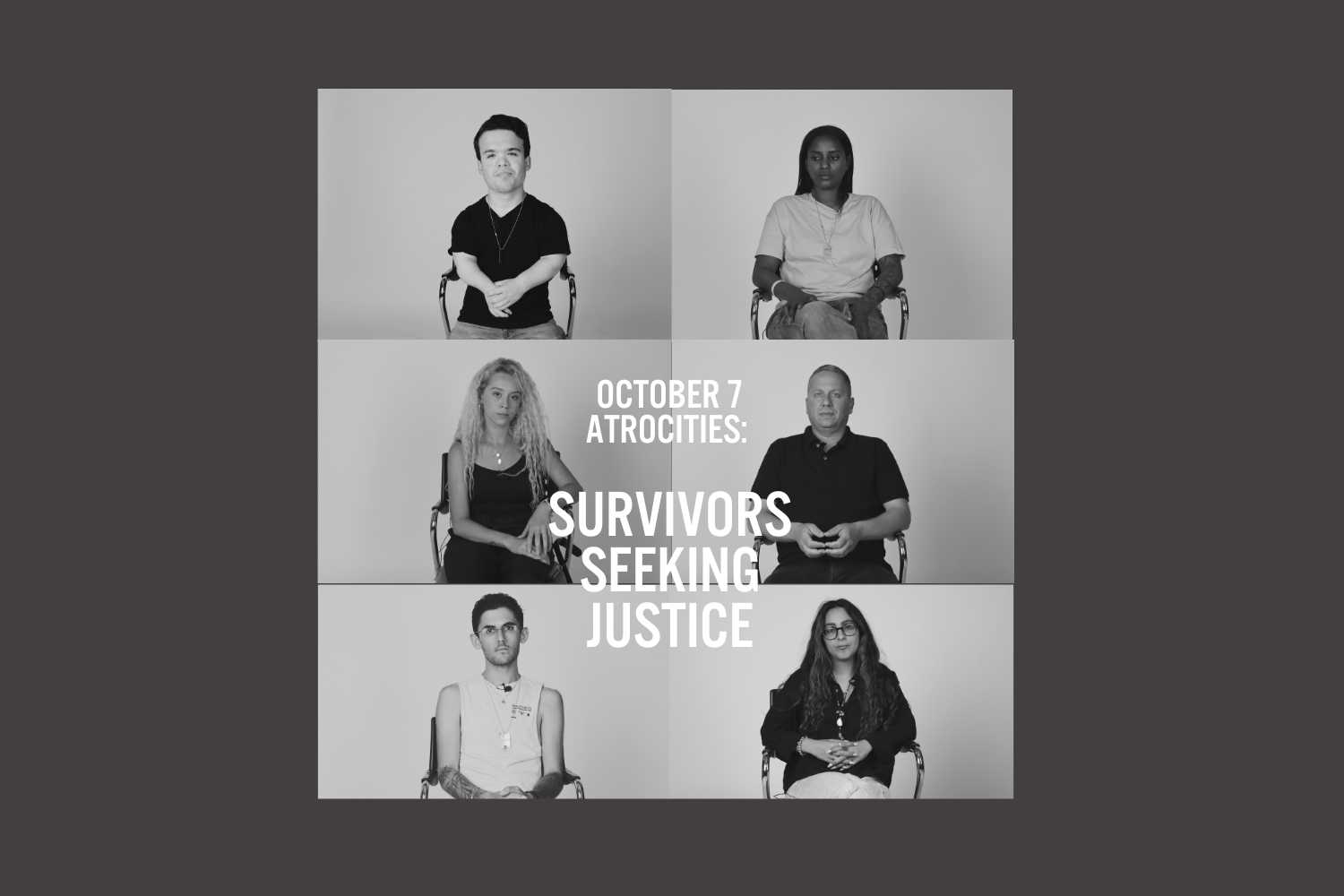
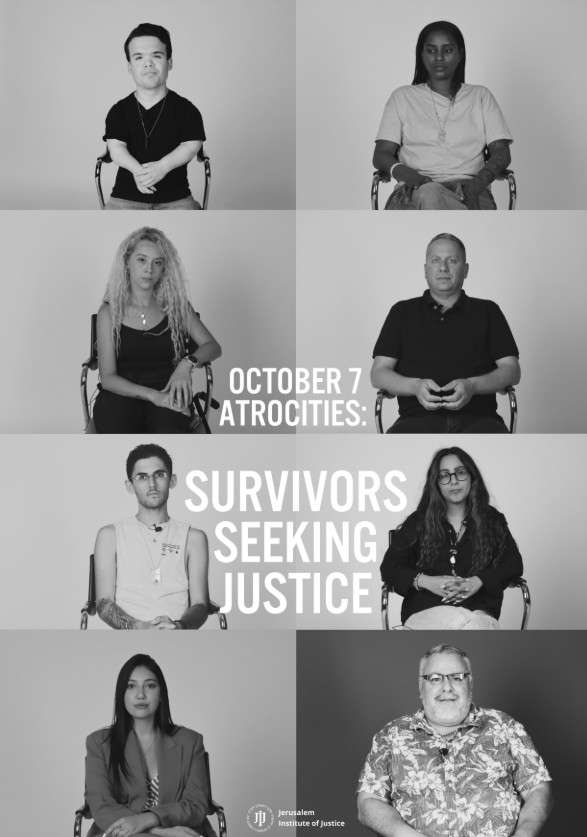
Survivors Seeking Justice
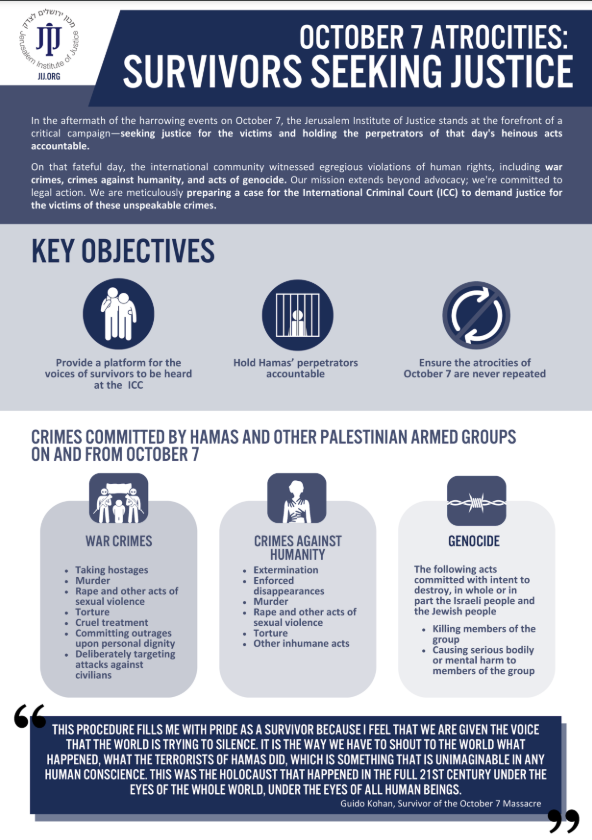
In the afthermath of the harrowing events on October 7, the Jerusalem Institute of Justice stands at the forefront of a campaign to seek justice for the survivors and to hold the perpetrators of that day's heniouse acts accountable. Here are the facts.
Download
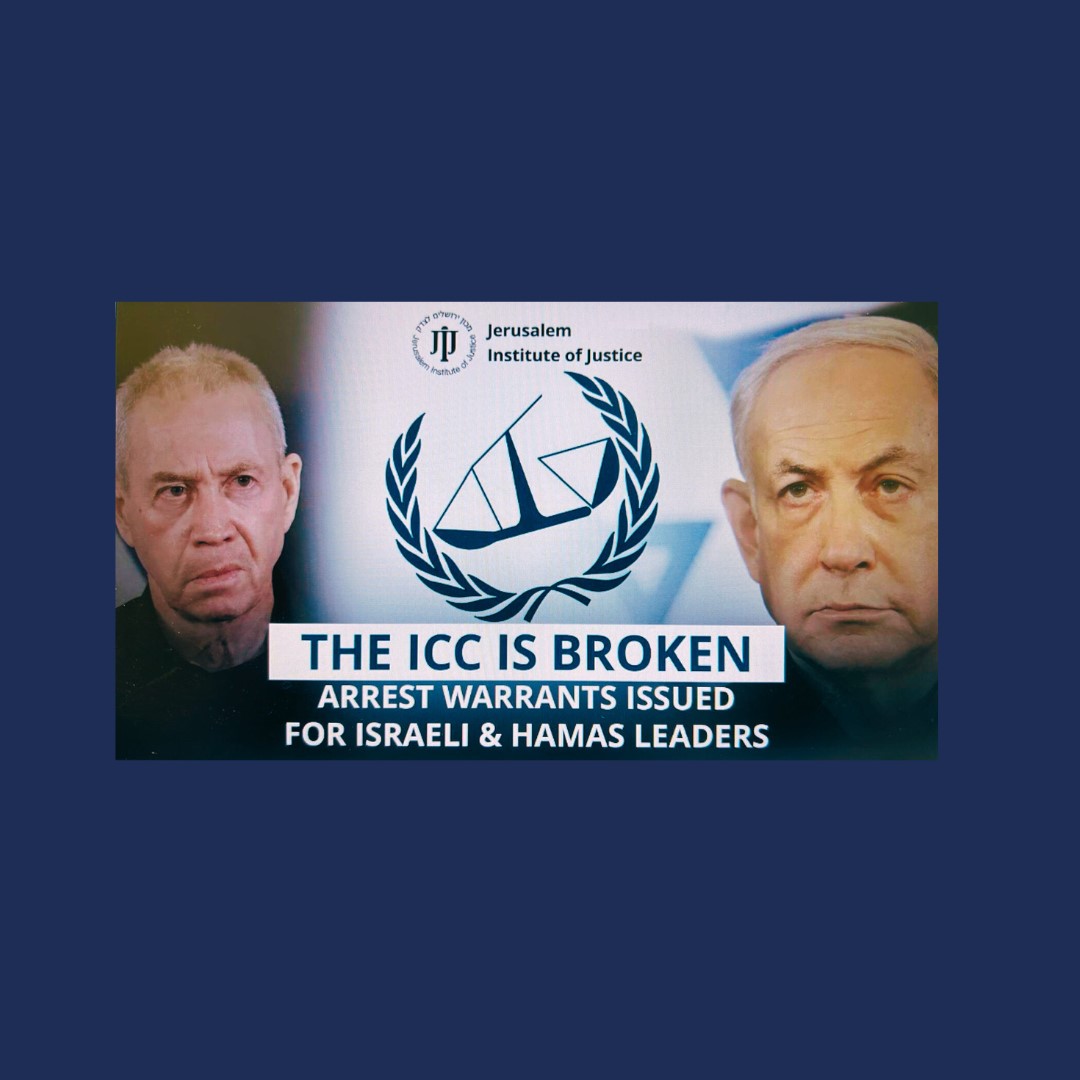
Response to ICC Prosecutor’s Request for Arrest Warrants for Hamas & Israeli Leaders
The Jerusalem Institute of Justice welcomes the ICC Prosecutor’s request for the issuance of
arrest warrants for Hamas’ leaders Yahya Sinwar, Mohamed Deif, and Ismail Haniyeh. We
are disappointed that Hamas’ leaders were not charged with the crime of genocide, despite
constantly expressing their fervent intent to exterminate all Israeli nationals and Jews, and
live streaming the evidence of how they brought this intent to action on October 7th.
We are appalled that the Prosecutor intentionally delayed this maneuver, seeking to pair it
with a request for arrest warrants for Israeli leaders Benjamin Netanyahu and Yoav Gallant.
If the Pre-Trial Chamber approves of this linkage, it will draw a false moral equivalence
between the parties to this conflict.
Since its establishment, the ICC has refrained from pursuing democratically elected officials
whose armies are engaged in wars of self-defense. It is fundamentally reckless to break from
this precedent for the first time when the democratic officials in question are the leaders of
the world’s only Jewish state, and at a time of rising global antisemitism. This development
will only serve to validate the claims of Hamas’ sympathizers across the globe, inspiring
more frequent and more violent attacks on Jewish people across the Diaspora.
The State of Israel has demonstrated that it is able and willing to investigate its own soldiers
and officials for any alleged violations of international law, including international
humanitarian law. Consequently, and in accordance with the principle of complementarity,
one of the most basic principles of the ICC, the Court should refrain from interfering.
The Prosecutor’s case against Israel rests on charges of “starvation” in seeming ignorance of
the fact that unprecedented levels of aid have entered Gaza since October 7th, including
400,000 tons of donated food.
Jerusalem Institute of Justice has sought the arrest of Hamas’ leaders through repeated
requests to the ICC’s Office of the Prosecutor since 2017, highlighting their systematic use of
torture, indoctrination of children, recruitment of child soldiers, and the abuse of civilians as
human shields. If they had been arrested for those crimes years ago, perhaps October 7th
never would have happened.
Despite today’s disappointing developments, we remain committed to pursuing justice for the
survivors and victims of Hamas’ atrocities, including through continued engagement with the
Office of the Prosecutor.
Responding to the ICC - New Reports
Watch the following interviews of JIJ's team
Interview with JIJ Director of US Policy & Diplomacy, Monique Beadle on i24 News.
Interview with JIJ Human Rights Lawyer, Carolina Gimberg on Kan En Espanol.
Interview with JIJ Attorney, Uri Morad on Radio 103FM.
Interview with JIJ Attorney, Uri Morad on Radio Kan Moreshet