
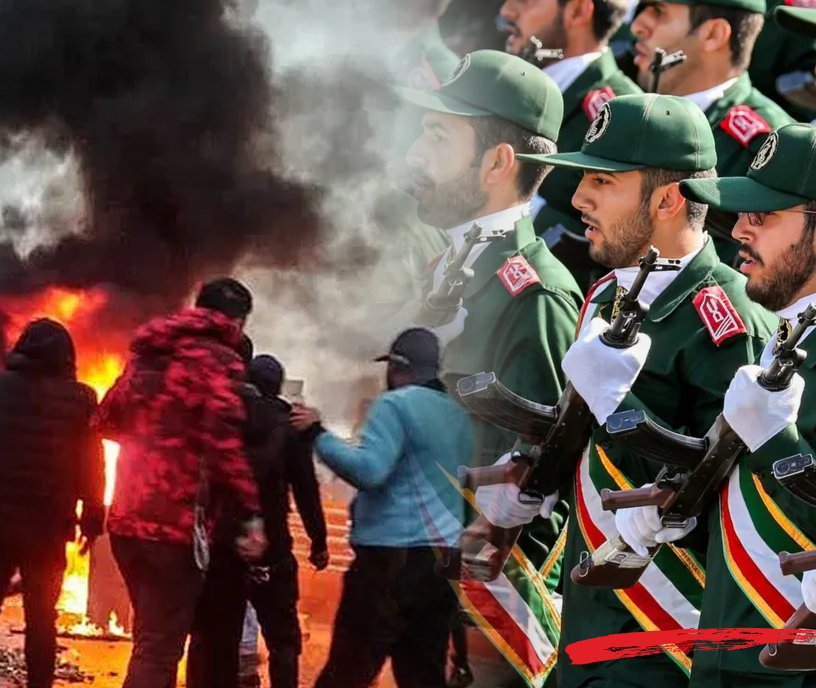
Justice Before Diplomacy - Indict the IRGC
Don't Let the Iranian Revolutionary
Guard Corps (IRGC) Walk Free
The US and Iran are moving toward a peace deal. A political ceasefire cannot become a free pass for war crimes, including the assassination of 40,000 civilian protestors. Add your name and demand that the men who launched thousands of missiles at civilians face arrest, not amnesty.
PETITION: Justice Before Diplomacy. Indict the IRGC.
TO: The Prosecutor of the International Criminal Court (ICC) and European Justice Ministries
A US-Iran peace deal cannot mean amnesty for war crimes.
In January 2026, the Iranian regime assassinated 40,000 civilian protestors. Between February and April 2026, the Islamic Revolutionary Guard Corps (IRGC) launched an unprecedented campaign of terror, firing over 2,300 ballistic missiles and 5,350 drones at civilian centers across Israel and the broader Middle East.
This devastation was not collateral damage. It was the strategic objective. The IRGC deliberately used illegal cluster bombs in densely populated cities to maximize civilian casualties, a severe violation of international law.
We cannot allow the architects of this massacre to live, travel, and bank freely in the West under the cover of a new diplomatic arrangement. The ICC and European prosecutors have the legal jurisdiction to act right now.
We, the undersigned, demand the immediate issuance of binding international arrest warrants for the IRGC command structure and Supreme Leader Mojtaba Khamenei.

Restoring Deterrence: Israel's Strikes and Strategic Offensives Against Hezbollah
https://www.youtube.com/watch?v=f2tfsbRfy-g
In this lecture, from our GDC Virtual Classroom series, we’ll take you behind the scenes of Israel’s bold and strategic fight against Hezbollah. You’ll discover how the IDF executed daring operations, including the remote detonation of thousands of Hezbollah's explosives, crippling their rocket capabilities. We’ll explore how Israel systematically dismantled Hezbollah’s leadership, including the assassination of its leader, Hassan Nasrallah, and launched a ground operation in southern Lebanon. If you’re ready to uncover the gripping details of Israel’s game-changing military tactics, this is a lecture you won’t want to miss.
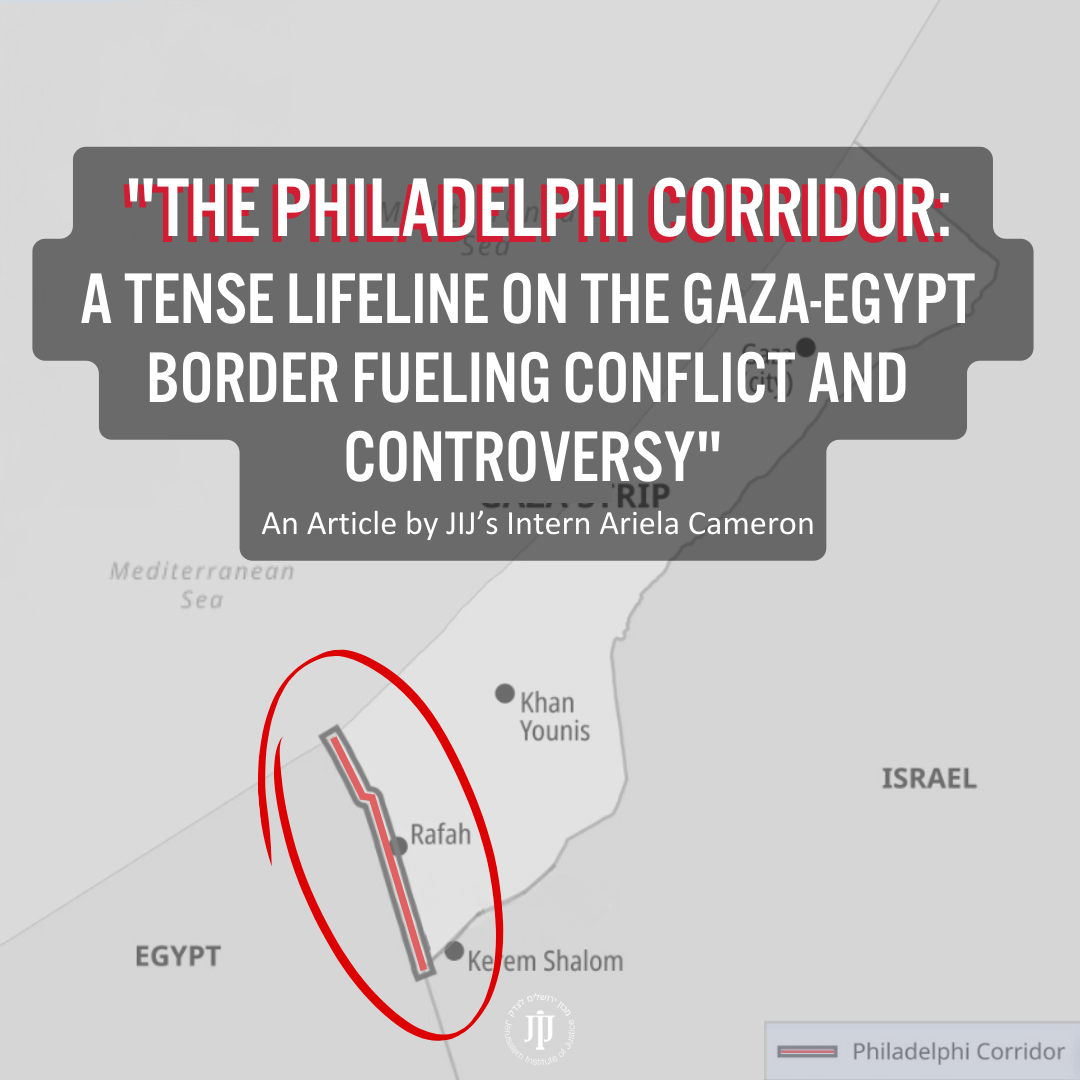
Philadelphi Corridor: The Critical Strip Shaping Gaza's Future Amid Tensions and Negotiations
The Philadelphi Corridor, running along the Gaza-Egypt border, is a focal point of intense
debate. It plays a critical role as a vital conduit for essential supplies and materials into Gaza,
acting both as an air bridge for resupply and a checkpoint for movement in and out of the
territory. During the Swords of Iron War, Israel's control of this corridor has been viewed by
the Western world as worsening the isolation of Gazans, who are already displaced for their
safety.
The corridor’s significance is underscored1 by its’ role in transporting essential supplies,
including food and weapons. Currently controlled by the Israeli Defence Forces (IDF), its
management raises concerns about its effects on aid from Iran and Iraq and its role in
smuggling. "That control is critical … some areas are wide enough for trucks, which have been
used to smuggle weapons and personnel into Gaza."2 This corridor can significantly impact the
humanitarian situation and potentially cause chaos if used for smuggling. If controlled by
Hamas, it remains a persistent issue for Israel.
Hamas, elected to the Palestinian Parliament in 2006, has clashed with Fatah and the
Palestinian Authority (PA), which both support a two-state solution that Hamas opposes. The
corridor's control limits Hamas' access to weapons and supplies from Egypt, giving Israel
leverage to weaken Hamas and influence negotiations. However, the Western world
disapproves of this control and is urging Israeli leaders and the IDF to withdraw military
personnel before finalizing a deal.
Egypt has cautioned Israel against taking actions that could drive Gazans to cross the border or
jeopardise the significant peace agreement between the two nations established in 19793. In
response, Israel plans to relinquish partial control of the corridor as part of a hostage deal with
Hamas, aiming to preserve its alliance with Egypt. This move alleviates pressure on Prime
Minister Netanyahu and shifts responsibility to Hamas leaders like Yahya Sinwar. By agreeing
to the terms set out by the US, Israel disrupts Hamas’s supply chain and affects Western
perceptions of the situation.
Recently, the US has been facilitating talks for a ceasefire and hostage return, focusing on “how
to advance hostage negotiations”4. Netanyahu has indicated that the IDF will stay within the
corridor. The US supports the IDF’s strategic aims due to its alliance with Israel, but
maintaining control of the corridor does not help in retrieving hostages. Despite public pressure
for a quick resolution, Israel views the corridor as vital for strategy and negotiations, rejecting
a full military withdrawal. Prominent figures like Antony Blinken advocate for a swift
resolution to ensure safety. As of August 24th, 2024, President Biden and Prime Minister
Netanyahu have reached an agreement on the corridor. Despite differing views, they have
informally agreed to a military withdrawal as per request from Egypt and Hamas6.
Written by Ariela Cameron
Jerusalem Institute of Justice Intern
To Read the Article with the notes- Click Here
Philadelphi Corridor: The Critical Strip Shaping Gaza's Future Amid Tensions and Negotiations
The Philadelphi Corridor, running along the Gaza-Egypt border, is a focal point of intense
debate. It plays a critical role as a vital conduit for essential supplies and materials into Gaza,
acting both as an air bridge for resupply and a checkpoint for movement in and out of the
territory. During the Swords of Iron War, Israel's control of this corridor has been viewed by
the Western world as worsening the isolation of Gazans, who are already displaced for their
safety.
The corridor’s significance is underscored1 by its’ role in transporting essential supplies,
including food and weapons. Currently controlled by the Israeli Defence Forces (IDF), its
management raises concerns about its effects on aid from Iran and Iraq and its role in
smuggling. "That control is critical … some areas are wide enough for trucks, which have been
used to smuggle weapons and personnel into Gaza."2 This corridor can significantly impact the
humanitarian situation and potentially cause chaos if used for smuggling. If controlled by
Hamas, it remains a persistent issue for Israel.
Hamas, elected to the Palestinian Parliament in 2006, has clashed with Fatah and the
Palestinian Authority (PA), which both support a two-state solution that Hamas opposes. The
corridor's control limits Hamas' access to weapons and supplies from Egypt, giving Israel
leverage to weaken Hamas and influence negotiations. However, the Western world
disapproves of this control and is urging Israeli leaders and the IDF to withdraw military
personnel before finalizing a deal.
Egypt has cautioned Israel against taking actions that could drive Gazans to cross the border or
jeopardise the significant peace agreement between the two nations established in 19793. In
response, Israel plans to relinquish partial control of the corridor as part of a hostage deal with
Hamas, aiming to preserve its alliance with Egypt. This move alleviates pressure on Prime
Minister Netanyahu and shifts responsibility to Hamas leaders like Yahya Sinwar. By agreeing
to the terms set out by the US, Israel disrupts Hamas’s supply chain and affects Western
perceptions of the situation.
Recently, the US has been facilitating talks for a ceasefire and hostage return, focusing on “how
to advance hostage negotiations”4. Netanyahu has indicated that the IDF will stay within the
corridor. The US supports the IDF’s strategic aims due to its alliance with Israel, but
maintaining control of the corridor does not help in retrieving hostages. Despite public pressure
for a quick resolution, Israel views the corridor as vital for strategy and negotiations, rejecting
a full military withdrawal. Prominent figures like Antony Blinken advocate for a swift
resolution to ensure safety. As of August 24th, 2024, President Biden and Prime Minister
Netanyahu have reached an agreement on the corridor. Despite differing views, they have
informally agreed to a military withdrawal as per request from Egypt and Hamas6.
Written by Ariela Cameron
Jerusalem Institute of Justice Intern
To Read the Article with the notes- Click Here
Guardian of the Walls
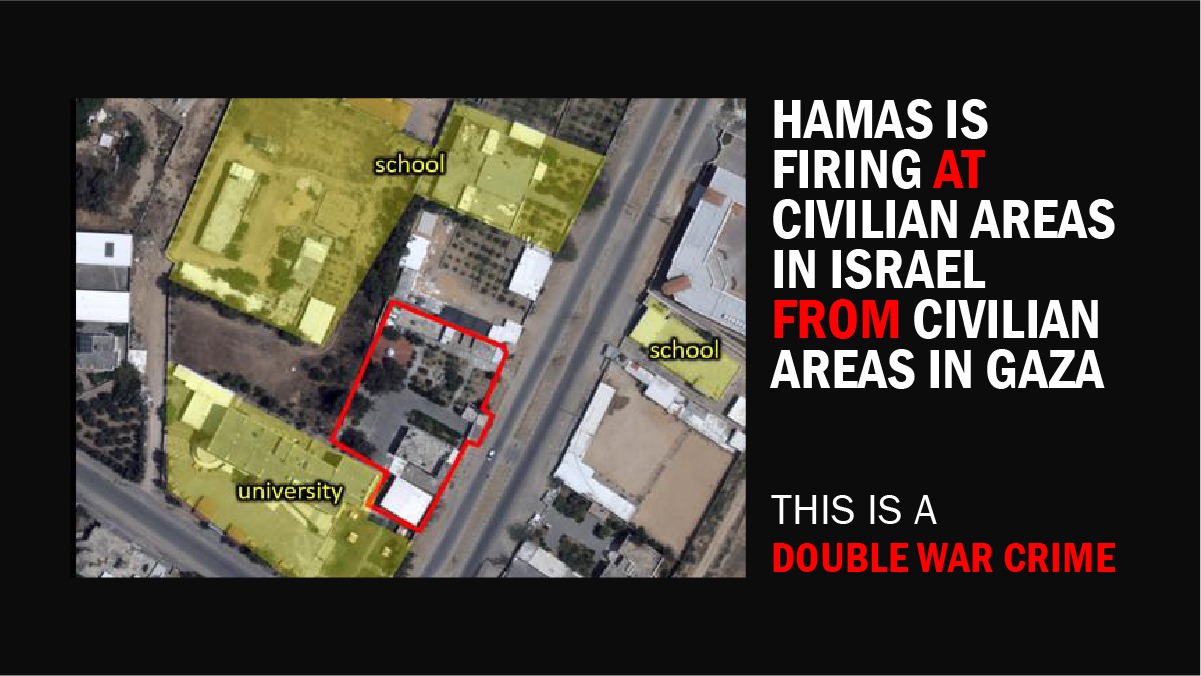
The recent 11 day conflict between Israel and Hamas was named "Operation Guardian of the Walls" by Israel. Hamas has named it the "Sword of Jerusalem." Hamas, a terrorist organization was waiting for the right opportunity to ignite the region and enter a violent confrontation with Israel. Its leaders were interested in declaring publically, that they have control over all affairs regarding Jerusalem. The matter of the evacuation of families from the Sheikh Jarrah neighborhood in East Jerusalem (in accordance with the ruling of the Israeli court), along with the perceived weakness of the President of the Palestinian Authority, Mahmoud Abbas, provided Hamas with the appropriate pretext. Thus, on May 10, on the day Israel celebrates the unification of Jerusalem, Hamas initiated a missile attack on Jerusalem. For Israel, this attack turned into an opportunity to critically undermine the terrorist threat posed by Hamas and militant groups operating in Gaza.
Israel made it clear that it will not tolerate being fired upon. And to have rockets launched at its capital, Jerusalem, was unacceptable!
The political echelon in Israel set three goals for Operation Guardian of the Walls:
- - Increasing Israeli military deterrence capabilities
- - Destruction of terrorist infrastructure, elimination of the rocket manufacturing and launching capacities of Hamas
- - Separating Hamas from any affairs related to Jerusalem
A review of the results of Operation Guardian of the Walls reveals a partial success. Israeli military deterrence capabilities have been restored through the almost total destruction of rocket production capacity in the Gaza Strip and critical damage to the "Gaza Metro," Hamas' tunnel network. Hamas was the first to ask for a ceasefire. As for the third goal that Israel set, the severance of Hamas' connection to Jerusalem, it seems that unfortunately, Israel has failed here. Hamas, succeeded in framing the national and political narrative in which it operated, linking the fate of the Gaza Strip to that of East Jerusalem and the West Bank. Hamas made it clear to Israel and the entire world that it has no problem sacrificing Gaza, and its two million citizens, to gain Jerusalem. This was confirmed in a speech given by Ismail Haniyeh, the head of the Hamas political bureau, from his seat in Qatar, in which he states that Hamas is fighting not for the Gaza Strip, but for Jerusalem.
Hamas' most notable achievement was without a doubt, the ability to create additional battle fronts for Israel. From the northern border with Lebanon and by igniting internal conflicts in Israel's cities, leading to unprecedented attacks by Israeli Arabs on Jews which in turn led Israeli nationalists to reciprocate. This phenomenon carried beyond the borders of Israel when Palestinians and Muslims brutally attacked Jews in New York and Los Angeles, London and France. However, Hamas's attempts to light up the West Bank were fortunately, not successful.
The main lesson that Israel must learn from this last round of conflict lies precisely in the goal that Israel did not set for itself. Israel did not define the issue of hasbara (Israeli diplomacy) as a clear goal and perhaps as a result it failed miserably. It honestly must be said; Israel has not been able to withstand the flood of anti-Israel, pro-Palestinian messaging spread on social media. Israel failed to reveal Hamas's true face and its desire to deliberately harm uninvolved civilians on both sides of the conflict. Israel has also failed to show the world how the IDF operates in an impressively surgical way, using advanced technological means to avoid harming civilians. Non-functioning hasbara damaged Israel, this is exhibited by the lack of political support given to it by European countries. The pressure that rose from social media, exploded onto the streets and then returned to social media, accelerated the political timeframe that Israel had to achieve its goals. Israel's strengths and supremacy in every military parameter had a negative effect on its hasbara efforts.
In order to change the balance of power in the field of hasbara, Israel must establish, as soon as possible, a single body entrusted with the task of creating a coherent and uniform narrative.
For Israel’s Prime Minister, Benjamin Netanyahu and his government, Operation Guardian of the Walls was also an opportunity to strengthen ties with the new Biden administration. Biden, who was under pressure from European countries and the UN to compel Israel to end the operation after five days of fighting, conducted eight phone calls with Netanyahu. Netanyahu certainly understood the message and decided to end this round, making the appropriate political gesture to Biden. Israel needs the United States by its side on other fronts. The Iranian threat is perhaps the most prominent of them.
The entrance into an agreement of ceasefire at 2:00am Friday morning was only made possible by Biden's demand to Egyptian President Al Sisi that he guarantees that the violent factions in Gaza stop the rocket fire. The strategic alliance between Israel and the United States is certainly one of the most important in Israel's foreign relations. The United States by stopping three attempts of the UN Security Council to condemn Israel, has once again proven that despite disagreements on certain issues, it stands by Israel.
Operation Guardian of the Walls in numbers:
- - 11 days of fighting
- - 12 Israelis killed
- - 4,000 + rockets fired at Israel, 90% of them intercepted by the IDF
- - 5 senior Hamas and Islamic Jihad commanders killed
- - 680 rockets launched by Hamas misfired hitting Gazan civilians
- - 200 + Gazan civilians killed
- - 20 terrorist operatives killed by Hamas fire
- - 100 + kilometers of terrorism tunnels demolished
- - 100 + terrorist operatives eliminated
- - Over two million Gazan civilians held hostage by the terrorist organization Hamas
- - One Iron Dome system
By Adv. Uri Morad
IDF Lone Soldiers
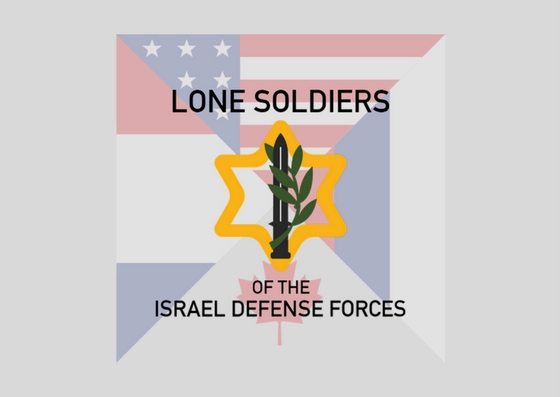
In Israel, whether you are sitting on a bus, waiting on line to buy a falafel, or simply walking down the street, you will almost always see men or women dressed in an olive green, tan or a blue uniform. These are the soldiers of the Israel Defense Forces. With about 177,000 soldiers on active duty, the IDF is comprised of a myriad of young men and women. About 6,300 of those are considered “lone soldiers,” or soldiers serving in the IDF that have no support or family ties in Israel. About 45% of “lone soldiers” come from other countries, and leave family and countless friends behind to serve the Jewish state. The other 50% of those lone soldiers are comprised of orphans, are from low-socioeconomic status, or least common, come from ultra-orthodox and Haredi backgrounds. These religious men and women volunteer to serve in the IDF and are then shunned and disowned by their families and communities.
It is a common belief amongst the ultra-Orthodox and Haredi sects of Judaism, that the state of Israel should not exist until the Messiah comes. Due to this belief, do not support an Israeli army. In their communities, the mentality is that men must rigorously study the Torah and religious texts all day while the women must support the men by working and taking care of the family. The leaders of the communities believe that going to the army stops the men from studying all day, which they believe is their obligation to God. Some Haredi’s go as far to say that joining the army is an “assault” on the Torah by the Israeli government. In addition to this view, some Haredim also claim that being in the army exposes ultra-Orthodox members to the “negative influences” of the secular world. In June of 2017, over 20,000 anti-Zionist Jews, mainly members of the Hasidic sect of Judaism, gathered in Brooklyn to express their outrage of the conscription of Haredi yeshiva students. Protestors spoke out against Israel’s arresting of individuals who resisted the compulsory draft mandate, claiming that their “brethren in Israel” were being persecuted and oppressed.
Those from the ultra-Orthodox community that do end up joining the IDF are often kicked out of their houses and are shunned by their families. One example of this is a young man, who spoke to Al-Monitor and asked not to divulge his name, revealed that six weeks before his draft date, his mother told him that if he did indeed choose to serve, he would have to leave the house. “When she understood that I was determined, he said, ‘Take your things and don’t ever come back.’ That’s what I did. I left with nothing and not knowing where I was going.” The young man tried to contact his mother during basic training, but she refused to answer him. During his basic training in the Givati Brigade, he continued to study Gemara and finished an entire treatise by the time he was inducted into the IDF. The fact he studied Gemara while in the army made his community even angrier.
The Lone Soldier Center in Memory of Michael Levin share more of these kinds of stories and tell the testimonies of the lone soldiers they have helped. Another story is of a young man, A., decided not go to yeshiva anymore when he was 12 years old and was taken in by a grandfather after being kicked out by his family. When his grandfather passed away, the only place for A. was on the street. Since he came from a long line of great rabbis, A. received some interaction while he was living on the streets; however, once he joined the army, the community cut off all communication with him.
About 400-600 Haredi or former Haredi soldiers who have no family ties come to the Lone Soldier Center yearly, needing help in various areas. “Many of these soldiers don’t know how to budget their money in the army, since they weren’t taught math beyond grade level,” says Lizzie Noach, the Project Coordinator for the Lone Soldier Center. “They don’t have a formal education; many come to see Tziki (Aud, the coordinator for at risk soldiers at the Lone Soldier Center) for help pre-army. They don’t really speak English and have poor Hebrew, as they only speak Yiddish at home and in yeshiva.” Additionally, Noach says the Ministry of Defense does not always give Israeli lone soldiers, “lone soldier” status to receive even the general funds and benefits that are given to all lone soldiers. To prove lone soldier status, one must provide paperwork proving that they have either have no family support in Israel, contact with any family members or that they are not receiving money from family members. However, for soldiers who either left home in their teens or were living on the streets before joining the army, this paperwork is non-existent, as there is no record of where they had been living prior.
It is common, coming from a religious background and religious education, that many of these ultra-Orthodox soldiers do not have general knowledge of basics of math, science, and technology among other things. Tens of thousands of men in the Haredi school system are not educated in math or science past a fourth grade level. Moshe Shenfeld, the head of Out for Change, an organization which assists former members of the Haredi community in educational and vocational training, reports that just 3-5% of boys who study in Haredi schools receive a full matriculation degree.
According to Out for Change, the government sets aside NIS 500 million a year to assist students from the ultra-Orthodox yeshivas, who are a part Haredi community, that want to further their education after their formal schooling is completed. These funds are used to set up courses from the Education Ministry to help such students fill the gaps in their education and receive a matriculation certificate, provide vocational training, and job training during their army service. However, this money is only for soldiers and those who are still a part of the Haredi community, who serve in religious units. The Netzah Yehuda Battalion, part of the Kfir Infantry Brigade, is one of the two strictly Haredi units in the IDF. Today, it is the largest battalion in the IDF with over 700 soldiers in four different companies and one elite counterterror squadron. Haredi soldiers typically spend two years serving and then one year completing high school completion exams and acquiring skills for a profession once they reentered civilian life. Netzah Yehuda offers resources to help these soldiers complete matriculation and pre-college studies. For soldiers who do not qualify for government tuition assistance, “Friends of Nahal Haredi” helps to subsidize costs of tuition for schools and programs that help Haredi soldiers complete their core education. However, they only help soldiers within that specific unit who do not qualify for assistance, and not infantry soldiers in general.
Soldiers who come from an ultra-Orthodox background who join other units that are designated to be religious or Haredi units, are also given financial assistance from the Ministry of Defense to complete their matriculation, as many of these soldiers do not have the requisite level of core education necessary to either enter university or become a member of the workforce post army service. Unfortunately, there are many other Haredi and ex-Haredi soldiers who do not get assistance at all, simply because they are not members of religious units.
Yossi Klar from, Out for Change says, “What the army does with Haredi soldiers is it gives them two things depending on age and route they take. If you’re younger than 21 and fit, then you are integrated into a Haredi infantry unit; there, the last eight months of your 2 year and 8 month service, are spent in school, completing your education, while if you are non-Haredi, or you used to be, you won’t get those 8 months for education. You have to serve those 8 months in full army service.”
The second route for Haredi soldiers, if you are over the age of 21, is integration into non-infantry units, where they are given jobs such as electricians and other technical jobs. “The army puts an emphasis on making sure every job they integrate to, they will find a job when they leave the army,” Klar says. “We used to call it ‘creditation.’ This is the credit you get from serving in the army, you come out with a job. To getting into a job in the Intelligence community, you need to have very high ratings in your tests before you go into the army, and ex-Orthodox people usually don’t have those ratings like non-Orthodox people because they did not have basic studies and those tests test basic studies in Israeli curriculum so they usually get very low grades. Haredi people are integrated even though they have low grades into any unit they want, and ex-Haredi people cannot do that, so the discrimination goes both ways.”
Soldiers who come from an ultra-Orthodox background who join other units that are deemed religious or Haredi, are given financial assistance from the Ministry of Defense to complete their matriculation, as many of these soldiers do not have the requisite level of core education necessary to either enter university or become a member of the workforce post army service. Unfortunately, there are many other Haredi and ex-Haredi soldiers who do not get assistance at all, simply because they are not members of religious units. The Ministry of Defense does not give the same financial assistance to religious soldiers in regular units as they would to religious soldiers in Haredi units due to the individual soldiers’ choice to not continue along the learning path, as many religious units set aside time for Torah learning.
It is an absolute travesty that the Ministry of Defense does not allot the same financial aid to the Haredi or former Haredi lone soldiers as they do to the ones serving in the religious units of the IDF, simply because they aren’t following the religious path of learning. They still lack the same core education as their religious unit counterparts and deserve the same kind of financial assistance to help them complete their high school matriculation after their army service is finished. JIJ is lobbying the government to help those who are no longer members of the Haredi community, but still suffer the same educational and vocational detriments as those who are still members. Nob profit organizations such as the Lone Soldier Center and Out for Change can only do so much; it is up to the government and the people to help make a change to help those that give up so much to help.
Remember the Second Lebanon War
On July 16, 2008 the bodies of Eldad Regev and Ehud Goldwasser were released by Hezbollah and returned to Israel. Regev and Goldwasser, honored soldiers, were both part of the Israeli Defense Forces (IDF); Regev was in the Givati brigade, and Goldwasser was ranked First Sergeant. Both soldiers were kidnapped on July 12, 2006, near the border of Lebanon. As a result of their deaths, the Second Lebanon War ensued.
Hezbollah began this military strife by sending rockets toward Shlomi, a town in northern Israel. This was followed by their infiltration through the northern border of Israel where they murdered eight soldiers, injured another six soldiers, and kidnapped Eldad and Ehud. Hezbollah continuously fired hundreds of rockets to cities throughout Israel. As a result of their operation, known as “True Promise,” the IDF organized air as well as artillery raids to fend off the Lebanese army and Hezbollah. The IDF later began a ground invasion into Lebanon. Former Prime Minister Ehud Olmert attempted to make peace by constructing a four-point plan. The main objectives included returning Eldad Regev and Ehud Goldwasser, in addition to having a cease-fire. In a blatant disregard for this proposal, thousands of rockets were fired at Israeli cities.
After a month of war, on August 11, the United Nations (UN) approved the Security Council Resolution 1701, which called for an immediate ceasefire. This was an attempt to end the conflict by disarming Hezbollah and withdrawing Israeli forces from the south of Lebanon. The casualties that resulted from the war were horrific; 121 IDF soldiers were killed, 43 Israelis, and approximately 1,191 Lebanese.
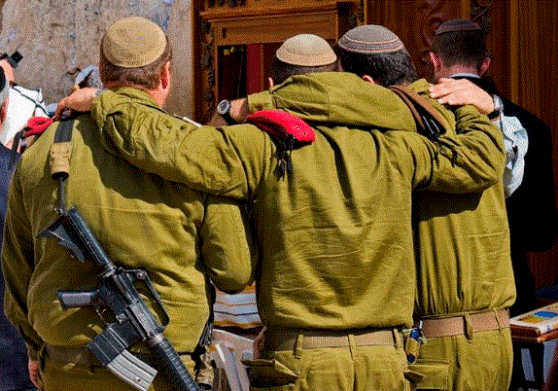
We must always recognize the extent of our soldiers’ service, their courage as they fight on our behalf, and the risk they take to protect Israeli lives. The Jerusalem Institute of Justice acknowledges the fact that IDF soldiers’ bravery and devotion are what keep the state of Israel proudly standing as a democratic home for its citizens. We salute and thank the IDF soldiers, who fight on our behalf and place the lives of others before their own.
Article by Moriah Khalili