
Amicus Brief- Challenging ICC's Prosecutor’s Request to Issue Arrest Warrants for Israeli Leaders
On August 6, the Jerusalem Institute of Justice legal team, submitted its Written Observations to the International Criminal Court on the unresolved matters of jurisdiction with respect to the ‘Situation in Palestine' case.In our submission, we've challenged the ICC's jurisdiction to issue arrest warrants against Israeli citizens, questioned the classification of "Palestine" as a state, and asserted that the Gaza Strip is not under occupation.
The Jerusalem Institute of Justice submitted its reservations to the International Criminal Court (ICC) , stating that the tribunal may not exercise its authority over Israeli citizens, in light of the Oslo Accords, which were signed between the State of Israel and the Palestine Liberation Organization (PLO) and regulated the jurisdiction in these territories.
This submission follows a request by the ICC prosecutor to issue arrest warrants against Prime Minister Benjamin Netanyahu and Defense Minister Yoav Gallant for their alleged responsibility for war crimes and crimes against humanity. Representing survivors of the Hamas massacre on October 7, the JIJ seeks to challenge the tribunal’s attempt to exert authority over Israeli citizens, contrary to the Oslo Accords. In the documents filed, the JIJ’s legal experts dispute the classification of “Palestine” as a state and argue that the Gaza Strip is not under occupation.
The Jerusalem Institute of Justice shares the ICC’s commitment to fight impunity for serious violations of international law. At the same time, this goal cannot be realized at the expense of circumventing existing legal frameworks. We call on the tribunal to refrain from making unilateral decisions that could damage the peace process.
JIJ unequivocally argued that the Oslo Accords, which govern relations between Israel and the Palestinians, constitute a binding and central legal document recognized internationally. According to these agreements, the Palestinian Authority has no criminal jurisdiction over Israeli citizens and cannot transfer powers it does not possess to the ICC.
The JIJ also noted that in its 2021 decision, the tribunal declared it could not determine whether Palestine was a state. The Chief Prosecutor’s current classification of the conflict, both as an international conflict and as a non-international conflict, stems from uncertainty in the law and its interpretation by the tribunal. This situation affects the types of crimes investigated and creates an imbalance in the application of the law between the different parties.
For an entity to be considered a state and for the conflict to be classified as an international conflict, it must meet four conditions: a permanent population, a defined territory, an effective government, and the ability to engage in international relations. The JIJ argues that Palestine does not meet these conditions, and its unilateral declaration of statehood contravenes the Oslo Accords and is therefore illegal under international law.
The second option for recognizing the conflict as an international confrontation is to acknowledge the occupation. In this respect, JIJ argues that Israel withdrew from the Gaza Strip in 2005 and does not control it, a necessary element for being considered an occupier. Thus, Israel’s current military actions in Gaza are characterized as a response to active hostilities of Hamas, not an occupation.
JIJ emphasizes the need to respect existing agreements and the rules of international law and warns against any modifications, deviations, or reinterpretations of these agreements by the tribunal. The Institute further notes that, to ensure a clear and fair legal framework in Israeli-Palestinian relations and to prevent unilateral decisions that could jeopardize the peace process, the tribunal must uphold what the parties agreed to in the Oslo Accords and the boundaries defined therein.


Indoctrination of Children- Policy Proposal to the ICC
Summary of Input to the Office of the Prosecutor at the International Criminal Court
To Renew the Policy Paper on Crimes Against or Affecting Children
For the full report, press here
The Jerusalem Institute of Justice has submitted its substantive input to the Office of the Prosecutor of the International Criminal Court as part of their public consultation aimed at updating the policy paper concerning crimes against or affecting children. The primary objective of this public consultation, in which our organization actively engages, is to enhance the effectiveness of investigations and prosecutions pertaining to crimes committed against or adversely impacting children. JIJ actively works to raise awareness and combat the utilization of children in hostilities, highlighting the significance of addressing indoctrination as a means of exerting psychological pressure on children to join armed groups.
The Rome Statute of the International Criminal Court does not explicitly define the actions of conscripting, enlisting, or using children in hostilities. Instead, the scope of these activities is determined by referencing relevant treaties, principles of international law, and general legal principles derived from national legal systems, all in line with internationally recognized human rights standards. The ICC Trial Chamber I acknowledged that children under 15 are typically unable to give genuine and informed consent when enlisting. Given the interpretive nature of the Rome Statute, indoctrination can be considered within the purview of enlisting or conscripting as it involves imposing prescribed beliefs, inhibiting critical evaluation, and fostering violence normalization. Indoctrination plays a significant role in exerting psychological pressure on children to join armed groups or forces, and its methods can range from formal education to military-oriented summer camps, mass media, and online networks.
The involvement of children as combatants in conflict situations not only jeopardizes their own well-being and development but also poses a threat to the prospects of peace and stability in affected regions. Children exposed to violence during their formative years are at risk of becoming agents of violence themselves, hindering their potential as contributors to lasting peace. Conflict-affected children suffer enduring mental and physical trauma, with child soldiers experiencing even greater levels of violence as witnesses and perpetrators. This trauma can manifest in various disorders, impacting their mental health, behavior, and education. The consequences of children's trauma extend beyond their individual experiences, profoundly shaping communities and societies. Transgenerational effects are observed, with former child soldiers more likely to exhibit violent behavior, and their trauma potentially being passed down to their own children, perpetuating a cycle of violence and contributing to ongoing conflicts. Recognizing the broader impact and intergenerational nature of child soldiering highlights the urgent need to address this issue as a means to break the cycle of violence and promote sustainable peace.
For the full report, press here
Download
Ismail Haniyeh - Crimes Against Humanity
Communication to the Office of the Prosecutor of the International Criminal Court regarding Crimes against Humanity committed by Ismail Haniyeh against the Palestinian population in the Gaza Strip from June 2014 through July 2018
EXECUTIVE SUMMARY
We, the Jerusalem Institute of Justice, submit this communication to the Office of the Prosecutor of the International Criminal Court concerning Ismail Haniyeh’s crimes against humanity committed through widespread and/or systematic acts of murder, imprisonment, and torture of civilians in the Gaza Strip.
On January 16, 2015, the Prosecutor began a preliminary examination into the “situation in Palestine” to determine whether a full investigation should be opened for crimes committed within the Palestinian territories. In this communication, we contend that if any full investigation is to be pursued into crimes committed in such territories or by Palestinian nationals, then a case should be lodged against Haniyeh.
Haniyeh is, and has been at all times material to this communication, a senior leader of Hamas. He has played a pivotal role in developing and enforcing Hamas’ extremist ideology and consistent human rights violations against the Gazan civilian population as well as others. As the de facto and subsequently de jure leader of Hamas, Haniyeh wielded effective control over the relevant activities in Gaza. Hamas’ interconnected command structure is such that the political, social, and military wings of the organization are intertwined, and in reality, under a common, highly-centralized leadership. Accordingly, Haniyeh knew of and was in a position to prevent the crimes against humanity that have been committed against the civilian population of Gaza; yet he has manifestly failed to do so.
The case is grave enough to merit further investigation. Haniyeh’s crimes have had and will continue to have devastating consequences on the entire population of Gaza, as well as their families and the rest of society in the surrounding region. These crimes benefit no one but the Hamas leadership. As the Hamas-dominated Gazan courts have done nothing to punish those who play a direct role in committing these crimes against humanity, there is no prospect of local justice.
Haniyeh’s crimes are not merely historical; they are ongoing and contribute to the continued conflict between Hamas and Fatah and to the instability in the region. This internal conflict within the Palestinian leadership is damaging to the Palestinian population it is supposed to represent, and it constantly diminishes any chance of peaceful coexistence with its neighbours. The ICC has the rare opportunity to take an important step not just in punishing perpetrators and deterring crimes against humanity, but also in improving Gaza’s civil society and promoting peace. For all these reasons, if any investigation is to be pursued into crimes committed in Palestine, then we respectfully urge the Office of the Prosecutor to launch a full investigation into the actions of Haniyeh.
Download
52 testimonies of cruel torture
Notice to the Prosecutor at the International Criminal Court
Crimes against Humanity committed
against Palestinian citizens
Fifty-two Palestinian testimonies were submitted to the International Criminal Court in The Hague. These testimonies expose the brutal abuses committed by the Palestinian Authority against their own citizens.
“The Palestinian Authority is responsible for severe abuses, including: the murder, kidnapping, imprisonment, torture, and rape of 52 Palestinian and Israeli citizens, residents of the West Bank,” stated the long (1,800 pages) precedent setting verdict that was issued by judge Moshe Drori of the Jerusalem District Court.
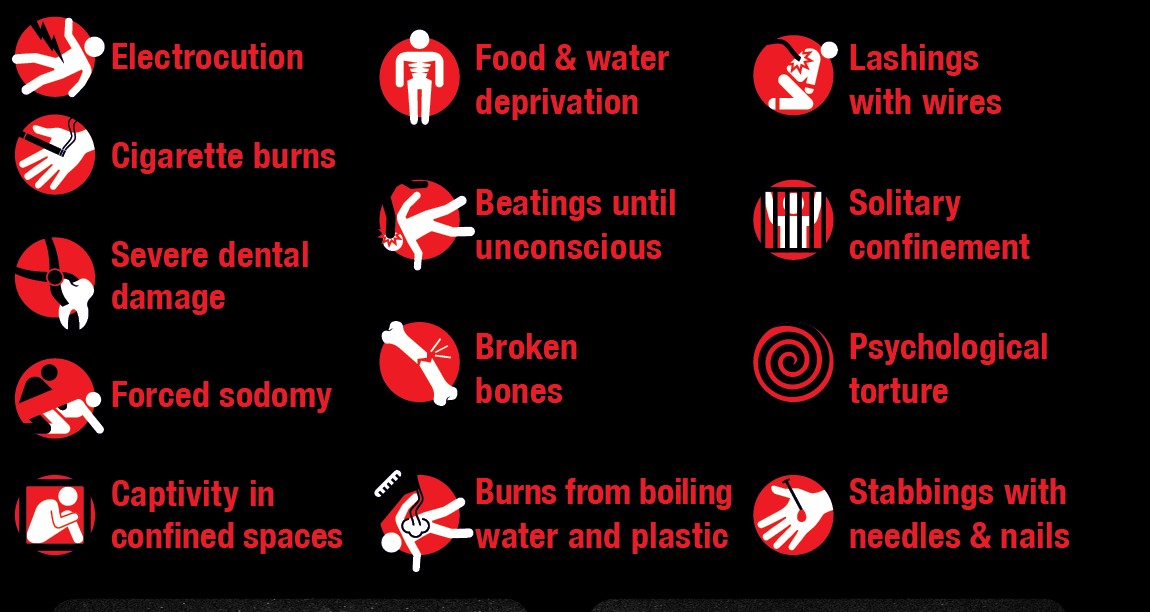
The verdict described horrifying torture. Electric shocks, hanging upside down for long periods of time, pouring boiling plastic on the body, extraction of nails and teeth, sterilization, sleep deprivation, food restriction, the killing and raping of family members, the removal of a premature baby from her incubator, and other forms of inhumane abuse.
The verdict stated that the Palestinian Authority is responsible for murder and torture. The court ordered the PA to pay the plaintiffs partial compensation totaling over 3.8 million dollars for their imprisonment and over 400,000 dollars for trial expenses. Currently, the court continues to discuss the rate of additional compensation to the plaintiffs for the tortures, suffering, and disabilities they endured and for their property that was seized. It is estimated that the total compensation will amount to almost 28 million dollars.
The Jerusalem Institute of Justice along with Attorney Barak Kedem from the Arbus Kedem-Tzur firm, who represented the plaintiffs at the District Court of Jerusalem are working together in order to show the world the cruelty of the Palestinian Authority to their prisoners. These horrifying testimonies were submitted the to the ICC.
Attorney Uri Morad, Dir. of the International Law Department at the Jerusalem Institute of Justice, explains: “In February we addressed the ICC requesting that the Office of the Prosecutor open criminal investigations against the chair of the PA, Mahmud Abbas (Abu Mazen), for crimes he committed against his own people, including a long, systematic campaign of murder, torture, and imprisonment. These testimonies point to the existence of a well-oiled machine that oppresses a civil society.”
Attorney Barak Kedem adds, “The fact that there are people who experience this hell on earth should shock every human being, regardless of their nationality or political affiliation. One can’t stand idly by after hearing of the PA’s atrocities. I hope that the statements presented to the ICC will cause world leaders to ask themselves: ‘Do I want to continue to be part of this machine that transfers funds to the PA?’ The ICC will bring the perpetrators to justice.”
Prior to filing the testimonies, some of the plaintiffs agreed to be filmed and explain the horrors they experienced. From the testimonies-
“After the arrest, I suffered a heart attack, after seeing my little daughter paralyzed, because the PA removed her from her incubator in order to get revenge on me.”
“I wanted to die over 20 times a day, due to the suffering. The torture was horrible. One time they sat me on an electric chair, I was sure I would die.”
“A PA official showed me an explosive belt and told me that either I would wear it and perform a suicide bombing in Israel, or that they would kill me there.”
Included in the testimonies brought to the ICC is the account of a Palestinian civilian who entered Israel to carry out a terrorist attack. He was injured in a car accident on his way. He received high quality medical attention in Israel, and his life was no longer at risk. Following the treatment, he changed his position and became a collaborator and aided Israel in its war on terror. The PA’s retaliation was cruel. His wife was giving birth to a premature baby that needed the support of an incubator. The PA immediately removed them both from the hospital. This baby grew up to have severe physical and cognitive disabilities. Today she is 17 years old, and lives in a rehabilitative hospital in Beit Levinstein.
Download
Silencing Critical Voices
Article by Catarina Gruber.
The United Nations General Assembly granted Palestine the status of a non-member observer state on November 29, 2012. This status enabled Palestine to ratify international conventions and treaties and join over 115 international organizations and agencies.
By upgrading the international status to a non-member observer state, Palestine was also able to join the International Court of Justice and the International Criminal Court. Hence, Palestine is permitted to sue Israel for acts that take place in their territory, such as alleged crimes against humanity and war crimes.
However, Mahmoud Abbas and the Palestinian Authority do not themselves comply with the basic principles of international law and human rights. Abbas rules over Palestine with an iron fist. Abbas is implicated in the many cases of unlawful imprisonment, torture and murder of the civilian population of the West Bank, including his political rivals and critics.
Abbas shows no compunction when silencing critical voices. Issa Amro, a prominent Facebook activist, who dared to speak out against the Palestinian Authority in a post, was arrested and imprisoned for seven days for the crimes of insulting “higher authorities” and creating a “sectarian strife” in 2017.
Torture is carried out by Abbas’ forces on a large scale. More than 180 Palestinian civilians are tortured yearly. Young men from Balata Refugee Camp, widely known as a central point of resistance against Abbas, were detained on allegations of criminal activity in 2017. Palestinian security forces subjected them to prolonged torture, repeatedly using grave physical violence, and locking them into tiny 60cm by 60cm cubicles with nearly no possibility to move. The accused were kept imprisoned in those spaces for up to 22 hours a day for 22 consecutive days.
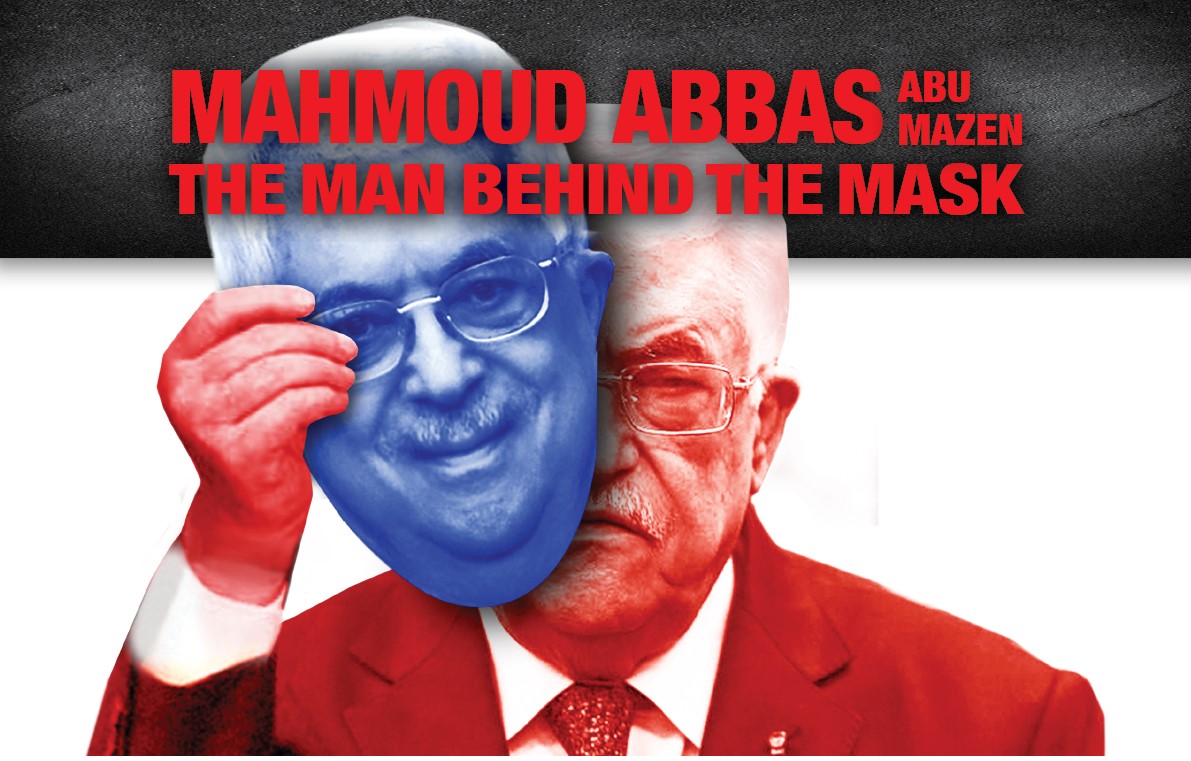
Mahmoud Abbas’ reputation as a peacemaker is just a façade that hides his true identity and agenda. The peace process came to a halt long before the US decision to relocate their embassy to Jerusalem. There are strong allegations of Abbas having played a role in the 1972 massacres at the Munich Olympics and the continual payments made to Palestinian terrorists and their families cause additional cracks in the veneer Abbas hides behind.
The misery of the Palestinian population in Gaza is also largely due to Abbas’ inadequacy as a leader. He has reduced the electricity supply, provoked healthcare bottlenecks and has stopped the payment of salaries of officials in Gaza. He wants to bring his strongest political rivals, the Hamas, to their knees even if the price is the suffering of the civilian population.
However, whenever Abbas visits Brussels, he is warmly welcomed like an old friend of the European Union. As one of the initiators of the 1993 Oslo Accords, he is considered moderate. Thus, his administration continues to be sponsored by the EU with hundreds of millions of euros. No consequences, certainly not financial ones, have been imposed because of Abbas’ appalling actions.
The more accusations against Mahmoud Abbas came to light, the more obvious it became that his actions could not be ignored any longer. The Jerusalem Institute of Justice (JIJ) took initiative and started a legal examination of the crimes committed by Abbas. While collecting data, the testimonies against Abbas grew and the number of cases reached an alarming amount. In consultation with experts in international law the JIJ rendered the factual data into a legal report.
On February 20, 2019 the JIJ submitted a communication to the Office of the Prosecutor (OTP) of the International Criminal Court (ICC) in The Hague regarding crimes against humanity committed against the Palestinian citizens in the West Bank by Mahmoud Abbas. In a meeting with the OTP the issue was taken very seriously, and constructive thoughts were shared. This tribunal has the moral responsibility to bring the perpetrator of such horrific crimes to justice.
Mahmoud Abbas - Accused of Crimes Against Humanity
Communication to the Office of the Prosecutor of the International Criminal Court regarding Crimes Against Humanity committed against Palestinian citizens in the West Bank by Mahmoud Abbas
EXECUTIVE SUMMARY
We, the Jerusalem Institute of Justice, submit this communication to the Office of the Prosecutor of the International Criminal Court concerning Mahmoud Abbas, in relation to crimes against humanity committed through a systematic and widespread campaign of murder, torture, and unlawful imprisonment against parts of the Palestinian population in in the territory of Judea and Samaria, known as the “West Bank”.
Abbas is a national of the Hashemite Kingdom of Jordan (“Jordan”), which has been a State Party to the ICC since 2002. Accordingly, the ICC has jurisdiction over crimes he has committed under the Rome Statute, regardless of where they took place.
Abbas became President of the Palestinian Authority (“PA”) in January 2005. Despite his term of office having elapsed without further elections being held, Abbas remains internationally recognized President and de facto leader of the PA, the body which maintains effective control over certain areas in the West Bank.
During his time in power, Abbas has directed or allowed various crimes against humanity against Palestinian groups – including those deemed to have been critical of the current PA government or which have supported rival Palestinian factions. Abbas knew of and was in a position to prevent the crimes against humanity that have been committed against the civilian population of the West Bank, yet he has manifestly failed to do so.
The case is grave enough to merit further investigation. Abbas’s crimes have had and will continue to have deleterious consequences on the Palestinian population of the West Bank, their families as well as the society and region. These crimes benefit no one but the PA leadership. There is no prospect of local justice; pursuant to a series of international agreements, the PA has sole jurisdiction over crimes committed by Palestinians against Palestinians within the West Bank. The PA courts are not independent of the PA government, and have done nothing to punish those who play a direct role in committing these crimes against humanity. In any event, as PA President, there is no realistic chance of Abbas being prosecuted by courts over which his administration exerts significant control.
The crimes of Abbas are not merely historical; they are ongoing and contribute to the continued conflict between the rival Palestinian political factions Hamas and Fatah, and to the instability in the region. This internal conflict within the Palestinian leadership is damaging to the Palestinian population it is supposed to represent, and renders peaceful coexistence with its neighbours increasingly difficult. The ICC has the rare opportunity to take an important step not just in punishing perpetrators and deterring crimes against humanity, but also in sending a powerful statement that torture and similar acts are unacceptable. For all these reasons, we urge the Office of the Prosecutor to launch a full investigation.
Download
MILITARIZATION OF CHILDREN
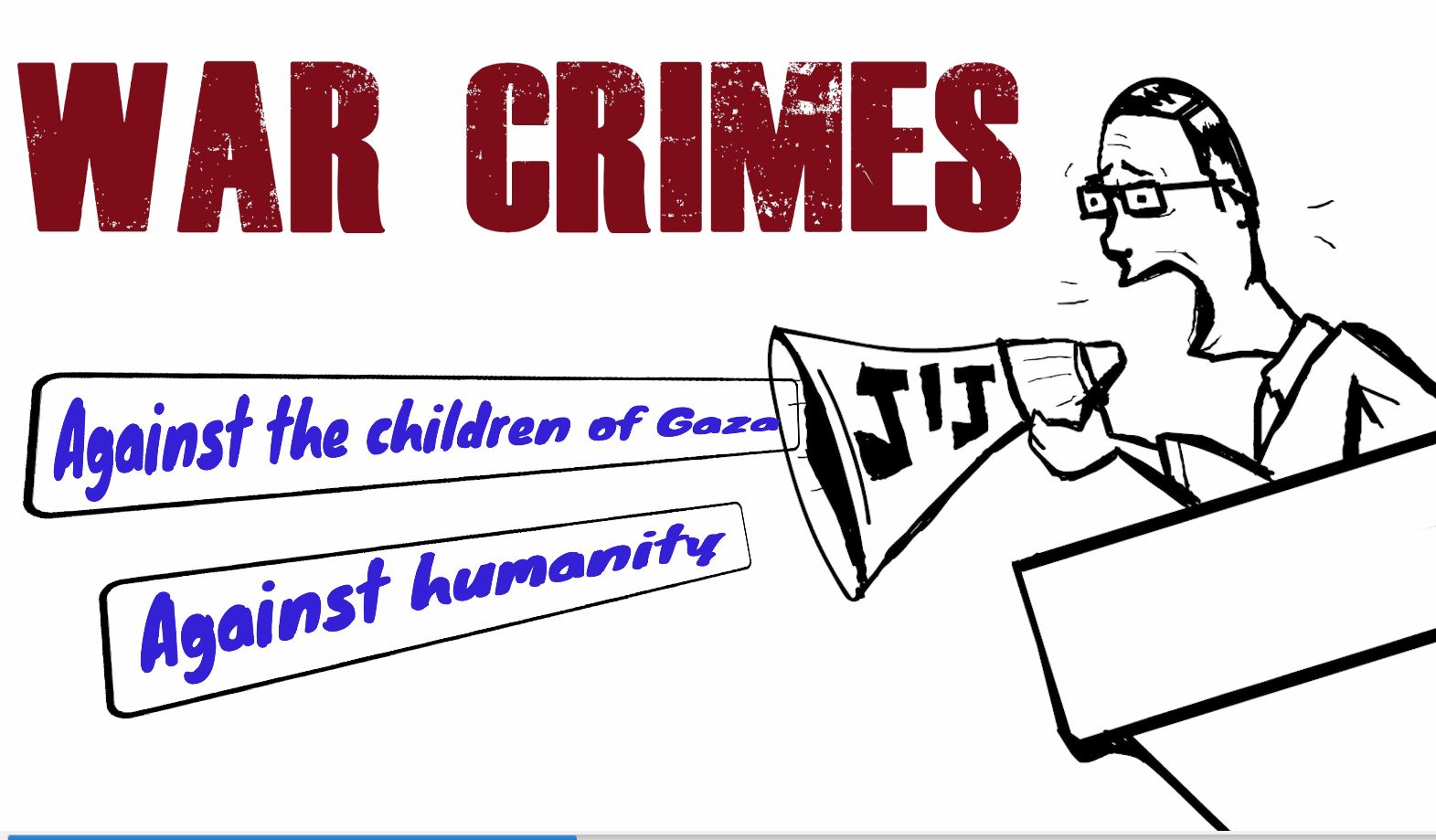
The Jerusalem Institute of Justice The Complainant v. Ismail Abdel Salam Ahmed Haniyeh (إسماعيل عبد السلام أحمد هنية). Accused of war crimes committed against the children of Gaza. Communication to the Prosecutor of the International Criminal Court regarding the militarization of children as amounting to war crimes by Ismail Abdel Salam Ahmed Haniyeh
Submitted on September 13, 2018
EXECUTIVE SUMMARY
We, the Jerusalem Institute of Justice, submit this communication to the Office of the Prosecutor of the International Criminal Court concerning Ismail Haniyeh’s war crimes through the recruitment, enlistment and use of children below the age of 15 to participate directly in hostilities in an armed conflict.
On January 16, 2015, the Prosecutor began a preliminary examination into the “situation in Palestine” to determine whether a full investigation should be opened for crimes committed within the Palestinian territories. In this communication, we contend that if any full investigation is to be pursued into crimes committed “Palestine” then a case should be lodged against Haniyeh.
Haniyeh is, and has been at all times material to this communication, a senior leader of Hamas. He has played a pivotal role in developing and enforcing Hamas’s extremist ideology and consistent human rights violations against, amongst others, the Gazan civilian population. Not only did Haniyeh fail to prevent war crimes against children committed by Hamas operatives, he has actively encouraged the recruitment of child soldiers to bolster the Hamas military and paramilitary forces.
In this communication we provide evidence that Haniyeh is guilty of the war crime of conscripting, enlisting or using children below the age of 15 to participate actively in hostilities. Though this known colloquially as using “child soldiers”, the crime also includes the use of children to support hostilities, including as “human shields”.
First as the de facto and subsequently the de jure leader of Hamas, Haniyeh wielded effective control over the relevant activities in the Gaza Strip. Hamas’ interconnected command structure is such that the political, social and military wings of the organisation are intertwined, and in reality under a common, highly-centralised leadership. Accordingly Haniyeh knew of and was in a position to prevent the enlistment/conscription/use of children as active participants in hostilities, but failed to do so. Secondly and even more egregiously, Haniyeh was an active proponent of the enlistment/conscription/use through his attendance of graduation ceremonies for military training camps aimed at recruiting children, and giving numerous speeches in which he advocated children joining the military struggle against Israel.
The case is grave enough to merit further investigation. Haniyeh’s crimes have had and will continue to have devastating consequences on the children of Gaza, their families as well as their society and region. Apart from mental and physical injuries or even deaths, these actions destroy the childhood of their victims, and perpetuate an endless cycle of conflict which benefits no one but the Hamas leadership. There is no prospect of local justice; the Hamas-dominated Gazan Courts have done nothing to punish those who play a direct role in committing these crimes against children.
Haniyeh’s crimes are not merely historical; they are ongoing and contribute to the radicalisation of each new generation of Palestinians – rendering peaceful coexistence with their neighbours increasingly difficult. The ICC therefore has the rare opportunity to take an important step not just in punishing perpetrators and deterring war crimes, but also in improving Gaza’s civil society and promoting peace. For all these reasons, we urge the Office of the Prosecutor to launch a full investigation into the actions of Haniyeh.