
Report of the “State of Palestine”
Jerusalem Institute of Justice written submission
to the UN Human Rights Committee
on the Report of the “State of Palestine”
Executive Summary
Press this link for the full report
The Jerusalem Institute of Justice (JIJ) submitted a report to the Human Rights Committee of the UN regarding Palestinian adherence to the International Covenant on Civil and Political Rights (ICCPR). JIJ's report exposes inadequate law enforcement, incitement to violence, and acts of torture and inhumane treatment by the Palestinian government, directly contradicting Palestinian claims of compliance with international law.
The Human Rights Committee is a United Nations treaty body comprised of 18 international law experts tasked with ensuring that countries adhere to the International Covenant on Civil and Political Rights (ICCPR). Countries self-report their adherence to the treaty to legitimize their sovereignty and prove their benevolence. The State of Palestine used its report to deceive the international community and attack the State of Israel while claiming they uphold International Law.
Article 2 of the ICCPR prohibits discrimination. However, the Palestinian educational curriculum promotes violence, excludes peace education, and fosters a biased narrative. Palestinian textbooks legitimize violence, glorify terrorists, erase Israel from maps, and demonize Israelis. This indoctrination of violence among children has long-lasting effects and obstructs peace initiatives, and it can manifest itself in acts of terror perpetrated by children and adults. In the State of Palestine, terrorists are rewarded with glory. Their families receive a payment if the terrorist dies or is arrested; the price increases corresponding to the severity of the crimes. Alongside monetary incentives, terrorists are treated like martyrs. Summer camps where Palestinian children are trained to fight Israel through acts of violence are named after killed terrorists.
Article 6 of the ICCPR safeguards the right to life. The use of human shields by the Palestinian authorities is a grave violation of international humanitarian law and breaches Article 6. This concerning practice has been observed in various conflicts, including Operation Protective Edge and the March of Return protests. Moreover, evidence suggests the concealment of rocket production facilities, armories, and combatants in or near residential areas, further jeopardizing civilians and disregarding international norms.
Article 7 of the ICCPR prohibits torture and cruel treatment. However, the Palestinian authorities have a significant gap between their legal framework and practical enforcement in preventing such acts. The Committee Against Torture (CAT) has expressed concerns over incidents of torture and mistreatment in custody, including the lack of confidentiality in complaint handling and the insufficient independence of investigation bodies. Former detainees' testimonies provide clear evidence of inhumane treatment, torture, denial of rights, and various forms of abuse. Arbitrary arrests and torture are used against Palestinians exercising their fundamental rights, like peaceful protests or criticizing the regime. These abuses appear to stem from higher authorities' directives. From 2016 to 2021, the Palestinian Independent Commission for Human Rights received 4,279 claims. Palestinians commit these acts of torture onto Palestinians.
Article 20 prohibits war propaganda and advocacy for hatred; JIJ's report highlights the notable discrepancy between the legal measures established by the Palestinian authorities and their practical enforcement. Despite legal restrictions, instances of incitement and hate speech persist. Palestinian television broadcasts content, such as the series "The Path of Sacrifice," glorifying terrorists and their acts of terror. Social media platforms like TikTok and Telegram are also utilized to spread messages of hate and incitement, including simulated attacks by young children against Israeli soldiers. Palestinian leaders publicly encourage lone-wolf attacks and the procurement of weapons, fostering hatred instead of promoting peace. School textbooks and cultural events are utilized to propagate hate, as seen in a musical production featuring dancers in military attire glorifying combat against the perceived "enemy."
Lastly, Article 24 safeguards the rights of children. Despite international laws protecting children's vulnerability, Palestinian children continue to be recruited and involved in violent acts, including clashes, shootings, and stabbings. Organizations like Hamas run summer camps that promote aggression and hostility, jeopardizing these children's safety, rights, and development. This perpetuates a culture of violence with far-reaching consequences for individuals and society.
Based on the information provided, JIJ recommends that the Human Rights Committee issue the following calls to the “State of Palestine”: expunge textbooks advocating violence and terrorism, adopt an internationally accepted definition of terrorism, cease financial support to terrorism, refrain from using human shields or concealing military targets in civilian areas, end the use of torture and ensure thorough investigations, discontinue the promotion of hatred and violence through media and social media platforms, and take measures to prevent the recruitment of children in hostilities and protect their rights. These recommendations aim to promote peace, tolerance, and the protection of human rights.

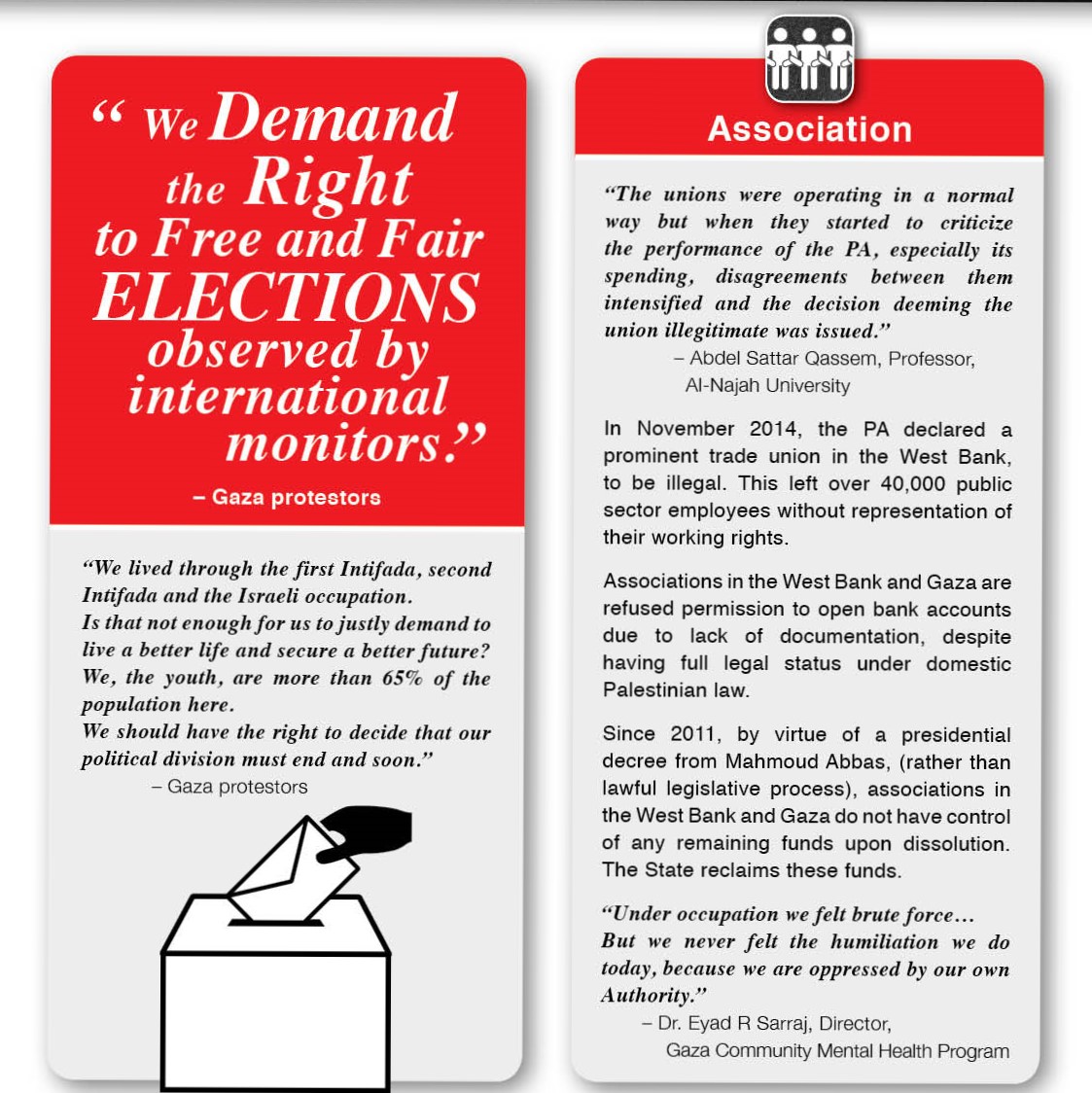
Palestinians- Governmental Censorship
Between Hamas and the Palestinian Authority, Palestinians in the West Bank and Gaza enjoy no freedom of expression. From censorship of the press, media control, prohibition on criticizing authorities, these organizations are in direct violation of international freedom standards.
Download
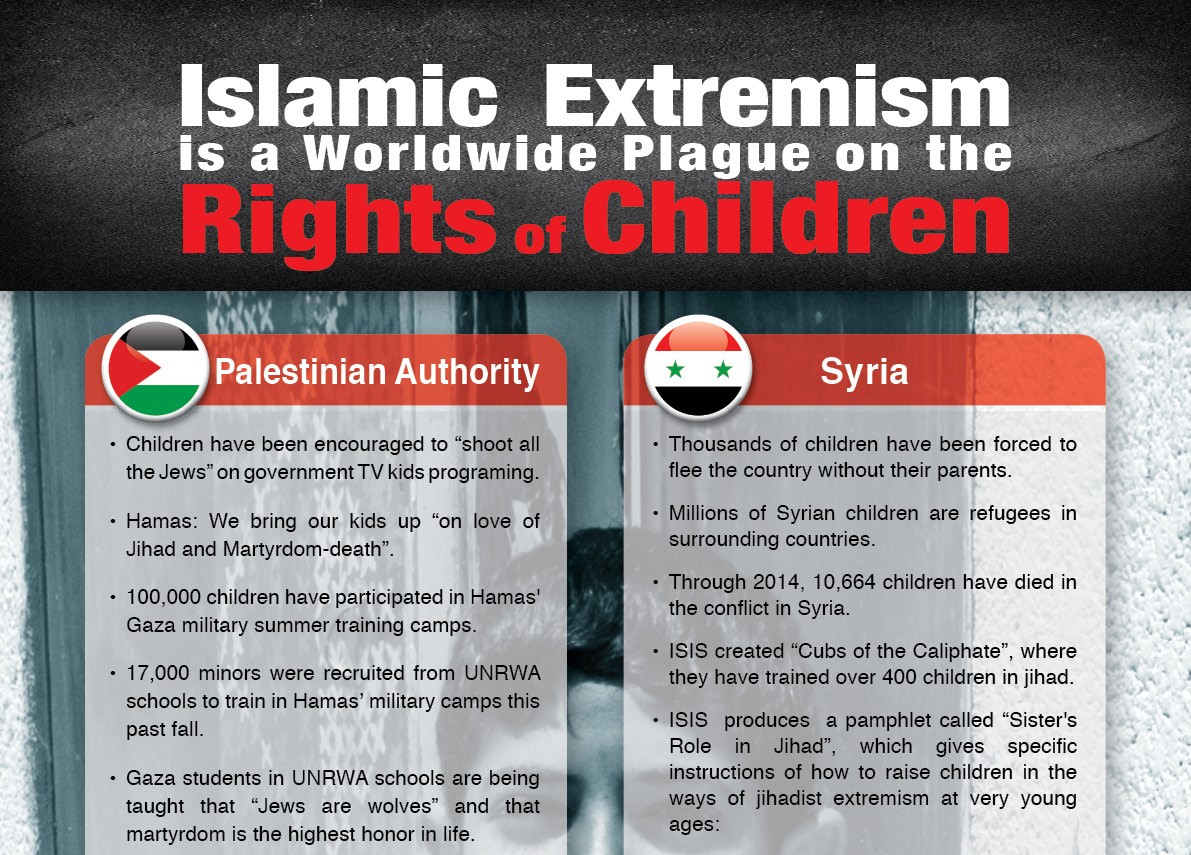
Islamic Extremism VS. Children's Rights
Islamic extremism has detrimental effects on the rights of children worldwide. Young boys and girls constantly are in danger and have their rights violated by groups such as ISIS and the Taliban. This graphic aims to expose the violations done unto children by Islamic extremism around the world.
Download
NGOs in Human Rights Monitoring
This report examines the different actors involved in the UN human rights monitoring system, specifically treaty bodies and civil society actors. It also surveys in detail the role of NGOs as civil society actors reporting to UN bodies and then highlights human rights issues identified during the course an internship at the Jerusalem Institute of Justice.
Download
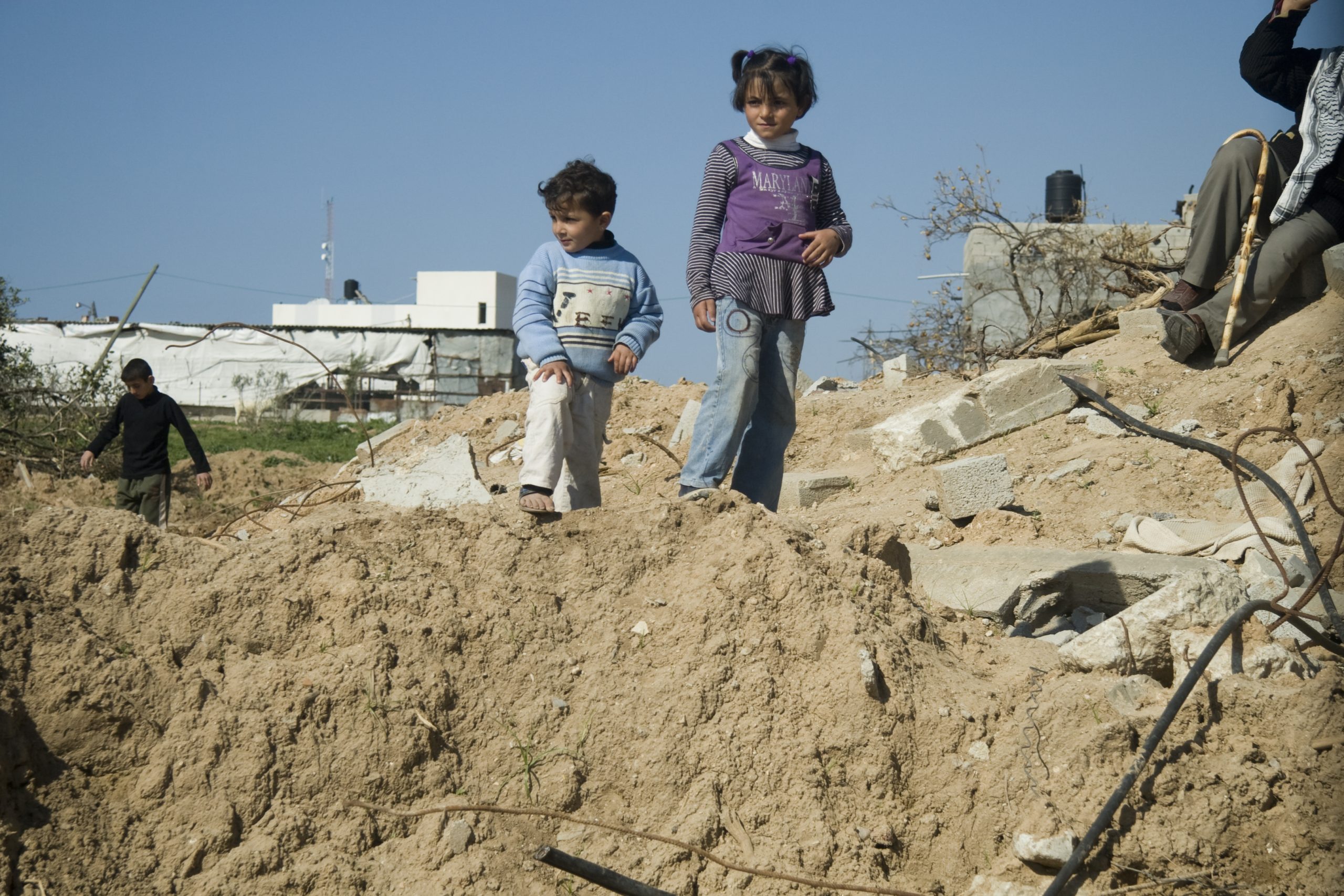
Sons of Violence - Palestinian Children
Violations of Children’s Rights Under the Palestinian Authority and Hamas
This report examines the degree to which the Palestinian governing authorities in the West Bank and Gaza adhere to United Nations Committee on the Rights of the Child (CRC). With a population of 4,550,368 people in 2014 9 and 47.5% being under the age of 18 in mid-2013,10 the West Bank and Gaza have one of the youngest populations in the Middle East. According to both the Palestinian Central Bureau of Statistics (PCBS) and the World Bank, 40% of the population was under 15 11 and 30% aged between 15 and 29 in 2014. 12 In 2013, 70% of the Palestinians in the West Bank and Gaza were under the age of 24. The implementation of the CRC in the Palestinian territories thus takes on even greater importance. The foremost current violations of children’s rights in the West Bank and Gaza as detailed in this report suggest that neither the PA nor Hamas intended to fulfill their international promises.
Download

Torture and Cruel, Inhuman, Degrading Treatment or Punishment under the PA and Hamas
In this report, the Jerusalem Institute of Justice (JIJ) examines the observance of the UN Convention against torture and other cruel, inhuman or degrading treatment or punishment (UNCAT) signed by the Palestinian Authority (PA). Through research and personal interviews, JIJ evaluates human rights deficiencies throughout the territories under the control of the Palestinian Authority and Hamas in accordance with international legal norms. Despite the Palestinian Authority’s formal commitment to international human rights standards, this report documents a broad array of continuing abuses. The ratification of the UNCAT and other conventions by the Palestinian Authority, does not seem to have sufficient legal weight necessary to stop the abuse of human rights. As long as the Palestinian Authority does not respect the Convention and continues to allow torture and ill treatment, there will never be freedom, but a constant fear of torture without redress..
Download
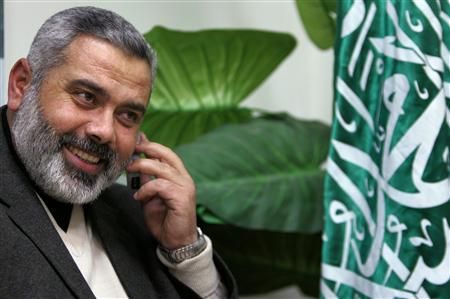
Hamas & the International Human Rights Law
This paper first determined that Hamas, as a quasi-state actor, is bound by International Human Rights Law (IHRL). Not only is the purpose of IHRL served by applying it to all international actors, but international law affirmatively obligates in particular quasi-state actors—entities that have significant control and influence over a population—to comply with IHRL. Second, this paper discussed statehood under international law and the consequences should a terrorist organization become the governing entity of a recognized state, including granting immunity to terrorist leaders, justifying terrorism, and undermining the international community’s ability to firmly and decisively combat terrorism.