
A New Rivalry?
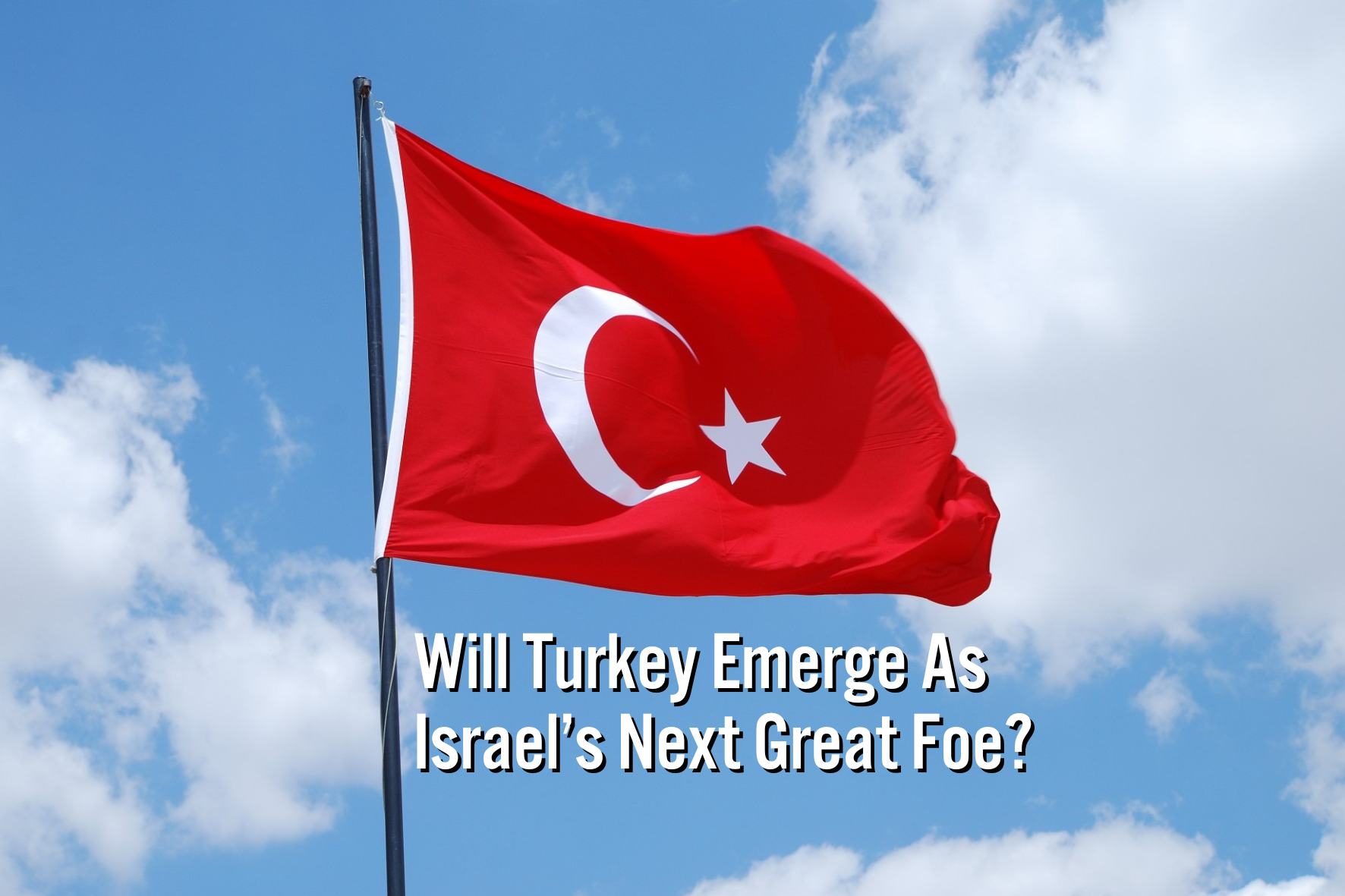
Will Turkey Emerge As Israel’s Next Great Foe?
Turkish-Israeli relations have always been in flux. Turkey was the first Muslim-majority country to recognise Israel, and the 1990s were characterised by strengthening relations[1]. However, relations began to deteriorate at the beginning of the 21st century, coinciding with the election of Erdogan and Turkey’s shift towards Islam and championing of the Palestinian issue. This deterioration reached its zenith after the 2010 Gaza Flotilla incident[2], with full diplomatic relations only restored over a decade later[3]. Following the 7th October, Turkish-Israeli relations have returned to rock-bottom, with Erdogan exclaiming that Turkey has “severed all relations with Israel”[4].
Concurrently, Bashar al-Asssad’s regime in Syria has fallen to Turkish-backed rebels, providing Erdogan the opportunity to reassert Turkish influence across a classical Ottoman region. This resembles Iran’s opportunities to restore influence across former Persian regions following the fall of Saddam in Iraq, which led to increased tensions with Israel. Given sunken Turkish-Israel relations, and Turkey’s newfound regional opportunities, will Turkey tread in Iran’s footsteps and emerge as Israel’s next great foe, a possibility hypothesised by the recent Nagel committee report[5], or is there reason to be optimistic about the future of the Turkish-Israeli relationship?
Mirroring Iran
Both Turkey and Iran envision a self-aggrandising destiny as a regional and global power, derived from nostalgia for their former empires. As such Turkey has strong contemporary interest in Syria. Turkey holds 3.2 million Syrian refugees[6] that Erdogan wishes to return as soon as possible due to the economic burden they have placed on Turkey. Erdogan also wants to eradicate Kurdish resistance in Syria, in contrast to Israel’s alignment with the Kurds, used to counter Iraqi and Iranian interests[7]. The Kurdish issue in Syria could become one point of contention between Israel and Turkey.
Another point of contention is Turkey’s strong relationship with the new Syrian regime, demonstrated by Turkish diplomats being the first foreign dignitaries to meet with the new Syrian leaders[8]. If Turkey begins to provide weapons to Syria, and Syria enters into a conflict with Israel, a possibility given the new Syrian regime’s Islamic terrorist origins and unresolved Syria-Israel border disputes, then Israel would be required to strike Turkish assets in Syria, analogous to Israel’s strikes against Islamic Revolutionary Guard Corps (IRGC) assets in Syria prior to Assad’s defeat, which led to direct Israel-Iran conflict. Hence, Turkey’s growing influence in Syria could precipitate a conflict between Israel and Turkey, mirroring the development of the Israel-Iran conflict.
Turkey’s domestic politics produces strong anti-Israel rhetoric. 84% of Turks, including 92% who voted for Erdogan, support Hamas in the current war[9], demonstrating strong domestic incentive for hostility towards Israel. Additionally, Erdogan is a strong supporter of the Muslim Brotherhood movement[10], of which Hamas is an offshoot, leading to strong Turkish support for Hamas, causing friction in Turkish-Israeli relations. Turkey’s domestic and ideological considerations have led to a deterioration in Turkish rhetoric regarding Israel, mirroring Iran’s anti-Israel hostility, which became a multiplier for Israel-Iran tensions, suggesting Turkish-Israeli relations may go the same way.
Moderating factors
Despite some of the similarities between Turkey and Iran, there are differences which can moderate Turkish-Israeli tensions. Unlike Iran, which is over 90% Shia[11], Turkey is 88% Sunni[12]. Therefore, whilst Iran, the centre of Shia thought, can exert influence across all Shia populations in the region, Turkey has to compete with other centres of Sunni power for regional influence, limiting Turkey’s ability to emulate Iran’s Shia crescent.
Unlike Iran, Turkey remains in the US security sphere and is a member of NATO. Thus, the US has incentive to moderate Turkish-Israeli tensions. Additionally, Israel and Turkey remain strategic partners to Azerbaijan, another country that can moderate Turkish-Israeli tensions.
In contrast to Iran’s consistent hostility towards Israel, Erdogan’s Israel policy has been characterised by flip-flopping, with periods of good and bad relations. Though, during periods of bad relations, trade relations have still been able to flourish. Hence, Turkey’s Israel policy could be interpreted more as short-term opportunism than a long-term anti-Israel plan that characterises Iranian policy.
Conclusion
Turkey has all the requisite attributes for mirroring Iran and becoming Israel’s next major foe. Turkey, like Iran, has ambitions to cultivate a sphere of influence across their former imperial regions, whilst spouting extreme anti-Israel rhetoric, and supporting Palestinian terrorist groups. Hence, Israel must prepare the necessary military capabilities in case a direct confrontation with Turkey does break out, as recommended by the Nagel committee report. However, unlike Iran, there are significant forces capable of moderating Turkish belligerence before Turkey reaches foe status. Erdogan has not committed to a consistent Israel policy through the years and has significant economic interest in maintaining a cordial relationship with Israel. Additionally, Israel has plenty of diplomatic avenues to shape Turkey’s behaviour in Israel’s favour. Israel can leverage its relationship with the US, NATO, and Azerbaijan, all partners of Turkey, in moderating tensions, as well as pursue ties with traditional Turkish adversaries like Greece and Cyprus to balance against Turkish power. The future of Turkish-Israel relations is not set in stone, but there is plenty of reason to be hopeful.
By: Eitan Litvin, JIJ Intern
[1] Tür, Ozlem. “Turkey and Israel in the 2000s-from cooperation to conflict.” Israel Studies, vol. 17, no. 3, 2012, pp. 45-66.
[2] “Timeline: Main Events in the Gaza Flotilla Affair.” Reuters, 2010, https://www.reuters.com/article/world/timeline-main-events-in-the-gaza-flotilla-affair-idUSTRE6562BN/. Accessed 21/01/2025.
[3] Obel, Ash. “Israel and Turkey to Restore Ambassadors in Full Renewal of Diplomatic Ties.” timesofisrael.com, 2022, https://www.timesofisrael.com/israel-and-turkey-to-restore-ambassadors-in-full-renewal-of-diplomatic-ties/. Accessed 21/01/2025.
[4] Soylu, Ragip. “Turkey Severs All Relations with Israel, Says Erdogan.” Middle East Eye, 2024, https://www.middleeasteye.net/news/turkey-severs-all-relations-israel-says-erdogan. Accessed 19/01/2025.
[5] Etzion, Udi. “Nagel Committee Warns Israel Must Prepare For Potential War with Turkey” The Jerusalem Post, 2025, https://www.jpost.com/israel-news/article-83636. Accessed 19/01/2025.
[6] “Overview | UNHCR Turkey.” UNHCR Turkey, 2025, www.unhcr.org/tr/en/ne-yapiyoruz/overview. Accessed 21/01/2025.
[7] Quitaz, Suzan. “The Historic Ties Between Israel and the Kurds of Iraq Will Continue.” Jerusalem Center for Public Affairs, 2023, https://jcpa.org/article/the-historic-ties-between-israel-and-the-kurds-of-iraq-will-continue/. Accessed 19/01/2025
[8] “Leader of New Syrian Government to Make First Foreign Visit to Türkiye.” Report News Agency, 2025, https://report.az/en/region/leader-of-new-syrian-government-to-make-first-foreign-visit-to-turkiye/. Accessed 19/01/2025.
[9] Dalmis, Ibrahim. “Public Opinion and Reaction to Israel’s War on Gaza after October 7 in Türkiye.” Insight Turkey, 2024, https://www.insightturkey.com/articles/public-opinion-and-reaction-to-israels-war-on-gaza-after-october-7-in-turkiye. Accessed 19/01/2025.
[10] Kenez, Levent. “Erdogan Still Maintains Close Ties with Muslim Brotherhood despite Reproachement with Sisi” Nordic Monitor, 2024, https://nordicmonitor.com/2024/09/erdogan-still-maintains-close-ties-with-muslim-brotherhood-despite-rapprochement-with-sisi/. Accessed 19/01/2025.
[11] “Iran - United State Department of State.” United States Department of State, 2023, https://www.state.gov/reports/2022-report-on-international-religious-freedom/iran/. Accessed 21/01/2025.
[12] “Turkey - United States Department of State.” United States Department of State, 2023, https://www.state.gov/reports/2022-report-on-international-religious-freedom/turkey/. Accessed 21/01/2025.

A New Rivalry?
Will Turkey Emerge As Israel’s Next Great Foe?
Turkish-Israeli relations have always been in flux. Turkey was the first Muslim-majority country to recognise Israel, and the 1990s were characterised by strengthening relations[1]. However, relations began to deteriorate at the beginning of the 21st century, coinciding with the election of Erdogan and Turkey’s shift towards Islam and championing of the Palestinian issue. This deterioration reached its zenith after the 2010 Gaza Flotilla incident[2], with full diplomatic relations only restored over a decade later[3]. Following the 7th October, Turkish-Israeli relations have returned to rock-bottom, with Erdogan exclaiming that Turkey has “severed all relations with Israel”[4].
Concurrently, Bashar al-Asssad’s regime in Syria has fallen to Turkish-backed rebels, providing Erdogan the opportunity to reassert Turkish influence across a classical Ottoman region. This resembles Iran’s opportunities to restore influence across former Persian regions following the fall of Saddam in Iraq, which led to increased tensions with Israel. Given sunken Turkish-Israel relations, and Turkey’s newfound regional opportunities, will Turkey tread in Iran’s footsteps and emerge as Israel’s next great foe, a possibility hypothesised by the recent Nagel committee report[5], or is there reason to be optimistic about the future of the Turkish-Israeli relationship?
Mirroring Iran
Both Turkey and Iran envision a self-aggrandising destiny as a regional and global power, derived from nostalgia for their former empires. As such Turkey has strong contemporary interest in Syria. Turkey holds 3.2 million Syrian refugees[6] that Erdogan wishes to return as soon as possible due to the economic burden they have placed on Turkey. Erdogan also wants to eradicate Kurdish resistance in Syria, in contrast to Israel’s alignment with the Kurds, used to counter Iraqi and Iranian interests[7]. The Kurdish issue in Syria could become one point of contention between Israel and Turkey.
Another point of contention is Turkey’s strong relationship with the new Syrian regime, demonstrated by Turkish diplomats being the first foreign dignitaries to meet with the new Syrian leaders[8]. If Turkey begins to provide weapons to Syria, and Syria enters into a conflict with Israel, a possibility given the new Syrian regime’s Islamic terrorist origins and unresolved Syria-Israel border disputes, then Israel would be required to strike Turkish assets in Syria, analogous to Israel’s strikes against Islamic Revolutionary Guard Corps (IRGC) assets in Syria prior to Assad’s defeat, which led to direct Israel-Iran conflict. Hence, Turkey’s growing influence in Syria could precipitate a conflict between Israel and Turkey, mirroring the development of the Israel-Iran conflict.
Turkey’s domestic politics produces strong anti-Israel rhetoric. 84% of Turks, including 92% who voted for Erdogan, support Hamas in the current war[9], demonstrating strong domestic incentive for hostility towards Israel. Additionally, Erdogan is a strong supporter of the Muslim Brotherhood movement[10], of which Hamas is an offshoot, leading to strong Turkish support for Hamas, causing friction in Turkish-Israeli relations. Turkey’s domestic and ideological considerations have led to a deterioration in Turkish rhetoric regarding Israel, mirroring Iran’s anti-Israel hostility, which became a multiplier for Israel-Iran tensions, suggesting Turkish-Israeli relations may go the same way.
Moderating factors
Despite some of the similarities between Turkey and Iran, there are differences which can moderate Turkish-Israeli tensions. Unlike Iran, which is over 90% Shia[11], Turkey is 88% Sunni[12]. Therefore, whilst Iran, the centre of Shia thought, can exert influence across all Shia populations in the region, Turkey has to compete with other centres of Sunni power for regional influence, limiting Turkey’s ability to emulate Iran’s Shia crescent.
Unlike Iran, Turkey remains in the US security sphere and is a member of NATO. Thus, the US has incentive to moderate Turkish-Israeli tensions. Additionally, Israel and Turkey remain strategic partners to Azerbaijan, another country that can moderate Turkish-Israeli tensions.
In contrast to Iran’s consistent hostility towards Israel, Erdogan’s Israel policy has been characterised by flip-flopping, with periods of good and bad relations. Though, during periods of bad relations, trade relations have still been able to flourish. Hence, Turkey’s Israel policy could be interpreted more as short-term opportunism than a long-term anti-Israel plan that characterises Iranian policy.
Conclusion
Turkey has all the requisite attributes for mirroring Iran and becoming Israel’s next major foe. Turkey, like Iran, has ambitions to cultivate a sphere of influence across their former imperial regions, whilst spouting extreme anti-Israel rhetoric, and supporting Palestinian terrorist groups. Hence, Israel must prepare the necessary military capabilities in case a direct confrontation with Turkey does break out, as recommended by the Nagel committee report. However, unlike Iran, there are significant forces capable of moderating Turkish belligerence before Turkey reaches foe status. Erdogan has not committed to a consistent Israel policy through the years and has significant economic interest in maintaining a cordial relationship with Israel. Additionally, Israel has plenty of diplomatic avenues to shape Turkey’s behaviour in Israel’s favour. Israel can leverage its relationship with the US, NATO, and Azerbaijan, all partners of Turkey, in moderating tensions, as well as pursue ties with traditional Turkish adversaries like Greece and Cyprus to balance against Turkish power. The future of Turkish-Israel relations is not set in stone, but there is plenty of reason to be hopeful.
By: Eitan Litvin, JIJ Intern
[1] Tür, Ozlem. “Turkey and Israel in the 2000s-from cooperation to conflict.” Israel Studies, vol. 17, no. 3, 2012, pp. 45-66.
[2] “Timeline: Main Events in the Gaza Flotilla Affair.” Reuters, 2010, https://www.reuters.com/article/world/timeline-main-events-in-the-gaza-flotilla-affair-idUSTRE6562BN/. Accessed 21/01/2025.
[3] Obel, Ash. “Israel and Turkey to Restore Ambassadors in Full Renewal of Diplomatic Ties.” timesofisrael.com, 2022, https://www.timesofisrael.com/israel-and-turkey-to-restore-ambassadors-in-full-renewal-of-diplomatic-ties/. Accessed 21/01/2025.
[4] Soylu, Ragip. “Turkey Severs All Relations with Israel, Says Erdogan.” Middle East Eye, 2024, https://www.middleeasteye.net/news/turkey-severs-all-relations-israel-says-erdogan. Accessed 19/01/2025.
[5] Etzion, Udi. “Nagel Committee Warns Israel Must Prepare For Potential War with Turkey” The Jerusalem Post, 2025, https://www.jpost.com/israel-news/article-83636. Accessed 19/01/2025.
[6] “Overview | UNHCR Turkey.” UNHCR Turkey, 2025, www.unhcr.org/tr/en/ne-yapiyoruz/overview. Accessed 21/01/2025.
[7] Quitaz, Suzan. “The Historic Ties Between Israel and the Kurds of Iraq Will Continue.” Jerusalem Center for Public Affairs, 2023, https://jcpa.org/article/the-historic-ties-between-israel-and-the-kurds-of-iraq-will-continue/. Accessed 19/01/2025
[8] “Leader of New Syrian Government to Make First Foreign Visit to Türkiye.” Report News Agency, 2025, https://report.az/en/region/leader-of-new-syrian-government-to-make-first-foreign-visit-to-turkiye/. Accessed 19/01/2025.
[9] Dalmis, Ibrahim. “Public Opinion and Reaction to Israel’s War on Gaza after October 7 in Türkiye.” Insight Turkey, 2024, https://www.insightturkey.com/articles/public-opinion-and-reaction-to-israels-war-on-gaza-after-october-7-in-turkiye. Accessed 19/01/2025.
[10] Kenez, Levent. “Erdogan Still Maintains Close Ties with Muslim Brotherhood despite Reproachement with Sisi” Nordic Monitor, 2024, https://nordicmonitor.com/2024/09/erdogan-still-maintains-close-ties-with-muslim-brotherhood-despite-rapprochement-with-sisi/. Accessed 19/01/2025.
[11] “Iran - United State Department of State.” United States Department of State, 2023, https://www.state.gov/reports/2022-report-on-international-religious-freedom/iran/. Accessed 21/01/2025.
[12] “Turkey - United States Department of State.” United States Department of State, 2023, https://www.state.gov/reports/2022-report-on-international-religious-freedom/turkey/. Accessed 21/01/2025.
Unraveling the Trio: Understanding the Complexities of Saudi Arabia's Relationship with Israel, and the United States
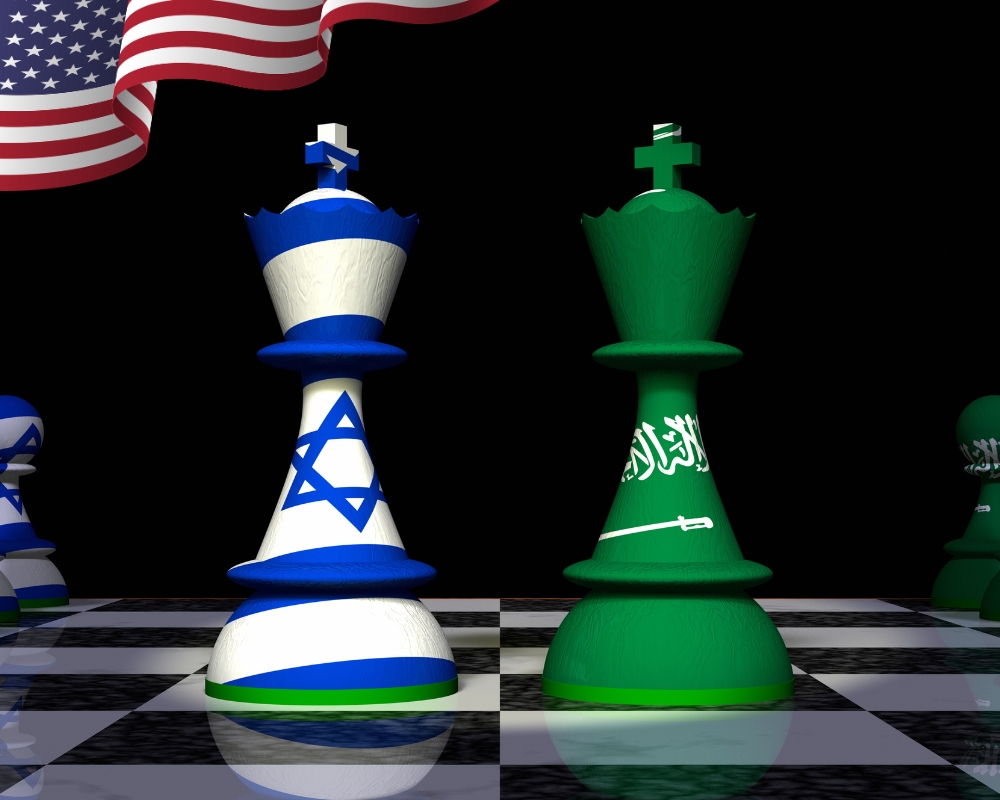
When the Abraham Accords were signed in 2020, a key country was missing from the deal: the Kingdom of Saudi Arabia. By not signing the Accords, Saudi Arabia has kept its point of leverage in its negotiations with the United States and with the Israeli-Palestinian Conflict. Saudi Arabia recognizes the power they hold in the Middle East, and they want to get the most from both the United States and Israel before they agree to normalize relations with the Jewish state.
Each combination of the three-sided relationship between Israel, the United States, and Saudi Arabia must be understood to grasp what it will take for Saudi Arabia to normalize relations with Israel.
First, it is important to understand the relationship between Israel and Saudi Arabia. Historically, the two states have been enemies. The Saudis voted against the United Nations Resolution 181, also known as the Partition Plan for Palestine, they have sent troops to fight the Israelis in several wars, and they have consistently supported the Palestinians in their efforts against Israel.
For one, the Saudis support the Palestinians in their fight for the land that currently belongs to Israel. In order for Saudi Arabia to make peace with Israel, the Saudis want Israel to adopt the Arab Peace Initiative (API). The API calls for Israel to pull out of territories gained in the 1967 war, for Israel to recognize a sovereign Palestinian state with its capital in East Jerusalem, and for Israel to solve the Palestinian refugee issue (“Arab Peace Initiative”). In this regard, “solving” the Palestinian refugee issue would mean losing Israel’s identity as the only Jewish state.
If Israel agrees to these conditions, then Saudi Arabia may move to normalize relations with them. But Israel cannot adopt these conditions, for they would be ceding valuable defensive holdings and giving too much to the Palestinians. Saudi Arabia is using the Palestinians as leverage in the negotiations because they want an Arab-controlled Israel, and “the API regards the Arab-Israel normalization as the reward for solving the Israel-Palestinian dispute (Teller Abraham Accords: Saudi Arabia is still not budging).
Next, it is important to understand the relationship between the United States and Saudi Arabia. The Abraham Accords were mediated by the United States, and Saudi Arabia has not signed the peace treaty because they wanted more from the Americans. In order to achieve peace, Prince Mohammed bin Salman “has told both Israeli and American officials that he wants Washington to treat Saudi Arabia as the major regional force he believes it is by resuming arms sales halted last fall and by offering the kind of security commitment it extends to close allies” (Traub, Netanyahu Has Drawn a Saudi-U.S Road Map).
Saudi Arabia wants to be on the good side of the American military, and the Americans have their priorities as well. The United States is intent on preventing Iran from creating its own nuclear weapons, and it would also prefer Saudi Arabia to be the dominant Middle Eastern state over Iran. With this, Saudi Arabia laid their claims on the table in recent talks with America. They want the U.S to support Saudi Arabia’s goal of building their own nuclear weapons; they want an American promise to defend Saudi Arabia in times of war, and they want the U.S to grant them special status as a major non-NATO ally (Nissenbaum, et al., Saudi Arabia Seeks U.S Security Pledges).
Again, these are steep demands by the Saudis. The United States does not want to support a nuclear Saudi Arabia, as this would lead to a nuclear arms race between them and Iran, which would turn into a disastrous situation. They also do not want to formally recognize Saudi Arabia as an ally, which would rope them into any future Middle Eastern conflicts.
The last relationship to understand in this trio is between the United States and Israel. Israel wants the United States to create peace with Saudi Arabia to further protect its position as a stable state in the Middle East. Saudi Arabia is one of the most important countries not at peace with Israel, and an agreement between the two states would further solidify Israel’s place in the Middle East.
While the relationship between Saudi Arabia and Iran is not part of the trio negotiating peace, it is equally important as the others. For decades, the two states have battled over dominance in the Middle East. This has resulted in proxy warfare between the states, as in the Syrian Civil War and in the Yemeni Civil War. After years of tension, diplomacy between the states has become a recent possibility. In March, the leaders of the two states agreed to restore ties in agreement mediated by China. In this agreement, they said they will affirm “the respect for the sovereignty of states and the on-interference in internal affairs of states” (Gadzo, “Changing Global Order”). In a statement released by Saudi Arabia, Saudi Arabia and Iran reached “an agreement to resume diplomatic relations between them and re-open their embassies and missions” (“Joint Trilateral Statement”). While Saudi Arabia and Iran are still battling for Middle Eastern dominance, tensions between the two are softening while diplomacy is rising.
Despite Israel’s hope that the United States will strike peace with Saudi Arabia, the Saudi demands are too much for the Americans. The United States would not want to be forced to protect Saudi Arabia in times of war, and they certainly do not want the Saudis to have nuclear weapons. Israel and Saudi Arabia cannot achieve peace themselves, as well, because the Saudi claims for a sovereign Palestine are impossible for Israel to accept. As of now, the demands by the Saudis are too high, and unless they cede some of them, official peace will not be achieved.
By Ethan Wenger – JIJ Intern
Unraveling the Trio: Understanding the Complexities of Saudi Arabia's Relationship with Israel, and the United States
When the Abraham Accords were signed in 2020, a key country was missing from the deal: the Kingdom of Saudi Arabia. By not signing the Accords, Saudi Arabia has kept its point of leverage in its negotiations with the United States and with the Israeli-Palestinian Conflict. Saudi Arabia recognizes the power they hold in the Middle East, and they want to get the most from both the United States and Israel before they agree to normalize relations with the Jewish state.
Each combination of the three-sided relationship between Israel, the United States, and Saudi Arabia must be understood to grasp what it will take for Saudi Arabia to normalize relations with Israel.
First, it is important to understand the relationship between Israel and Saudi Arabia. Historically, the two states have been enemies. The Saudis voted against the United Nations Resolution 181, also known as the Partition Plan for Palestine, they have sent troops to fight the Israelis in several wars, and they have consistently supported the Palestinians in their efforts against Israel.
For one, the Saudis support the Palestinians in their fight for the land that currently belongs to Israel. In order for Saudi Arabia to make peace with Israel, the Saudis want Israel to adopt the Arab Peace Initiative (API). The API calls for Israel to pull out of territories gained in the 1967 war, for Israel to recognize a sovereign Palestinian state with its capital in East Jerusalem, and for Israel to solve the Palestinian refugee issue (“Arab Peace Initiative”). In this regard, “solving” the Palestinian refugee issue would mean losing Israel’s identity as the only Jewish state.
If Israel agrees to these conditions, then Saudi Arabia may move to normalize relations with them. But Israel cannot adopt these conditions, for they would be ceding valuable defensive holdings and giving too much to the Palestinians. Saudi Arabia is using the Palestinians as leverage in the negotiations because they want an Arab-controlled Israel, and “the API regards the Arab-Israel normalization as the reward for solving the Israel-Palestinian dispute (Teller Abraham Accords: Saudi Arabia is still not budging).
Next, it is important to understand the relationship between the United States and Saudi Arabia. The Abraham Accords were mediated by the United States, and Saudi Arabia has not signed the peace treaty because they wanted more from the Americans. In order to achieve peace, Prince Mohammed bin Salman “has told both Israeli and American officials that he wants Washington to treat Saudi Arabia as the major regional force he believes it is by resuming arms sales halted last fall and by offering the kind of security commitment it extends to close allies” (Traub, Netanyahu Has Drawn a Saudi-U.S Road Map).
Saudi Arabia wants to be on the good side of the American military, and the Americans have their priorities as well. The United States is intent on preventing Iran from creating its own nuclear weapons, and it would also prefer Saudi Arabia to be the dominant Middle Eastern state over Iran. With this, Saudi Arabia laid their claims on the table in recent talks with America. They want the U.S to support Saudi Arabia’s goal of building their own nuclear weapons; they want an American promise to defend Saudi Arabia in times of war, and they want the U.S to grant them special status as a major non-NATO ally (Nissenbaum, et al., Saudi Arabia Seeks U.S Security Pledges).
Again, these are steep demands by the Saudis. The United States does not want to support a nuclear Saudi Arabia, as this would lead to a nuclear arms race between them and Iran, which would turn into a disastrous situation. They also do not want to formally recognize Saudi Arabia as an ally, which would rope them into any future Middle Eastern conflicts.
The last relationship to understand in this trio is between the United States and Israel. Israel wants the United States to create peace with Saudi Arabia to further protect its position as a stable state in the Middle East. Saudi Arabia is one of the most important countries not at peace with Israel, and an agreement between the two states would further solidify Israel’s place in the Middle East.
While the relationship between Saudi Arabia and Iran is not part of the trio negotiating peace, it is equally important as the others. For decades, the two states have battled over dominance in the Middle East. This has resulted in proxy warfare between the states, as in the Syrian Civil War and in the Yemeni Civil War. After years of tension, diplomacy between the states has become a recent possibility. In March, the leaders of the two states agreed to restore ties in agreement mediated by China. In this agreement, they said they will affirm “the respect for the sovereignty of states and the on-interference in internal affairs of states” (Gadzo, “Changing Global Order”). In a statement released by Saudi Arabia, Saudi Arabia and Iran reached “an agreement to resume diplomatic relations between them and re-open their embassies and missions” (“Joint Trilateral Statement”). While Saudi Arabia and Iran are still battling for Middle Eastern dominance, tensions between the two are softening while diplomacy is rising.
Despite Israel’s hope that the United States will strike peace with Saudi Arabia, the Saudi demands are too much for the Americans. The United States would not want to be forced to protect Saudi Arabia in times of war, and they certainly do not want the Saudis to have nuclear weapons. Israel and Saudi Arabia cannot achieve peace themselves, as well, because the Saudi claims for a sovereign Palestine are impossible for Israel to accept. As of now, the demands by the Saudis are too high, and unless they cede some of them, official peace will not be achieved.
By Ethan Wenger – JIJ Intern
What Turkey’s Elections Mean for Israel
Turkey has elected Recep Tayyip Erdogan as their president in a runoff election. Erdogan, a member of the Justice and Development Party, or the AKP, ran on a promise to solve Turkey’s inflation problem, provide aid to those affected by the recent devastating earthquake, and solve the issue of Syrian refugees. Erdogan defeated Kemal Kılıçdaroğlu, a member of the Republican People’s Party, by 52% to 48%. Kılıçdaroğlu ran on a hardline promise to rid Turkey of the refugees.
The AKP, Erdogan’s party, describes itself as a democratic conservative party that does not adhere to any religion. It is considered right-wing, with some experts labeling it far-right recently. Despite the party’s claims that it is not Islamic, most of its support comes from conservatives and Islamic people.
Kılıçdaroğlu’s party, the Republican People’s Party, is the other large political party in Turkey and is social democratic and Kemalist. The party follows six foundational principles, represented in the six arrows on their logo: republicanism, reformism, laicism, populism, nationalism, and statism. The party is more left-leaning socially, supporting LGBT and Women’s rights, alongside being pro-European and pro-NATO.
With Erdogan winning the election, Turkey can be expected to become more nationalist, conservative, and right-wing. The Turkish people have proven loyal to Erdogan, continuing to support him despite his government’s slow reaction to the earthquake and extreme inflation. They are dedicated to the Turkish leader who makes them proud to be Turkish, even though his policies and actions may not be politically in their best interest.
Now, what does this mean for Israel? The Turkish-Israeli relationship has a rocky history, even though Turkey was the first Muslim country to formalize relations with Israel in 1949. In the 2000s, there were several moments where the relationship faltered, stemming from instability in the Middle East and because of the Israeli-Palestinian conflict. In 2017, Erdogan threatened to end its ties with Israel after the United States recognized Jerusalem as Israel’s capital. In 2022, Erdogan met with then-Israeli Prime Minister Yair Lapid, the first time the two state leaders had met in 14 years.
Even though Erdogan has been in power for many years, his stance on Israel has switched several times. Today, he has a realistic view of Israel's importance in the Middle East as a strong military and economic point. He views Israel in terms of what they can do for Turkey, and since Israel is prosperous today, he wants to maintain a good relationship with the state. Also, Erdogan may see Israel as a connection to the United States, which Turkey must keep strong.
Erdogan cannot be trusted to behave in any consistent way towards Israel. If a relationship with Israel is good for Turkey, Erdogan will continue establishing diplomatic ties. But if the tide turns and Turkey can no longer extract value from Israel, Erdogan is more than capable of cutting ties and ending the relationship.
By Ethan Wenger - JIJ Intern