
Is “Jewish Democracy” an Oxymoron?
By Nikki Golomb.
There’s a phrase I have heard over and over again throughout my life: “Put two Jews in a room and you’ll get three opinions.” Once, however, I heard an amended version: “Put two Israelis in a room and you’ll get three opinions, a new political party, and probably an invitation to Shabbat dinner.” The more I’m learning about Israeli politics, however, the more I’m realizing it is less of a joke and more of a commentary on the complexity of Israeli politics and social life.
Israel prides itself as being both the only true democracy in the Middle East, as well as the only Jewish state in the world. Some people, however, do not believe that Israel can be both Jewish and democratic; they say that mixing religion with politics inherently makes it undemocratic. However, this argument ignores the many other democracies with a state religion; for example, nobody questions the democratic integrity of Christian states such as the UK, Greece, Costa Rica, or Denmark (among others). Other countries additionally have religiously-affiliated political parties, even though the country itself does not have a national religion. Despite the mixing of religion and politics, these countries remain internationally recognized democratic states.
Taking this into consideration, the question thus becomes whether Judaism in particular is incompatible with democracy. In order to answer this, one must look at the Torah and Jewish values. The Torah states that an acceptable political system must be “rooted in popular consent and involving the people in governance,” a significant characteristic of democracy. It additionally documents the creation of a modern justice system under Moses, who established a multi-tiered court system after the Exodus from Egypt. Although there are no direct references to democracy in the Torah, values such as equality, justice, and rule of the people which are vital to democratic institutions are emphasized, meaning Judaism and the nature of democracy are not inherently incompatible. Jewish values additionally tell us that all people are created b’tzelem Elokim – in the image of G-d. This belief equalizes all people, regardless of religion, ethnicity, nationality, etc. and demands that everyone is treated with the same respect and dignity. The value of tzedek, or justice, also has clear implications on democratic life by further emphasizing the importance of establishing a just society.
Others argue that while Judaism and democracy are not inherently contradictory, the ways they manifest themselves in Israel do not represent true democracy. According to the Jerusalem Center for Public Affairs, there are two vital aspects of democracy: 1) self-governance, or the meaningful participation of citizens in the political system, and 2) plurality, or the ability of everybody to live according to their own beliefs and coexist in society. Both of these features are represented in the Israeli political system. Israel has a parliamentary system of government, called the Knesset; Members of Knesset are voted upon by the people, and all citizens have the right to vote regardless of religion, ethnicity, or any other identity. All citizens are also eligible to run for government, or create their own political party; both Arabs and Haredi Jews, for instance, have their own political parties and are also represented in other parties. In terms of pluralism, it is no question that various ethnic and religious groups coexist in Israel. Jews and Arabs alike have the right to vote; receive state-funded education; and are represented as Members of Knesset, judges, and other high-power positions. Many organizations exist, including JIJ, which work to promote pluralism in Israeli society. This would not be possible in a nondemocratic country or exclusively ethnic nation-state.
It is true that Israel, like every other country, is not perfect. Discrimination exists, representation can and should be improved, and conflict between religion and government remain a hot political topic. The “perfect” balance has not yet been found. However, this does not take away from the Jewishness or democracy of the state. Christian democracies exist with little to no questioning of whether they can be both religious and democratic. Those who claim that a “Jewish democracy,” on the other hand, is an oxymoron either do not have a complete understanding of Jewish and/or democratic values, or do not know how Israel’s political system works. Jewish values influence the political environment, yet Israel meets every requirement of a democratic nation. Once we accept that Israel is both Jewish and democratic, we can better understand the political nature of the government and work within the system to create positive political and social change.

A Journey to Poland
Article by Louie Parker intern at the Jerusalem Institute of Justice.
I recently embarked on a trip to Poland as part of the Masa Global Leadership Institute Poland Program. The aim of the trip was to explore both the Jewish and non-Jewish culture and history of Poland, to better understand the Holocaust and to explore the resurgence of Jewish culture and communities in Poland.
The expectations for the trip were somewhat mixed. We were made aware of the fact that this was not a trip dealing solely with the Holocaust, but rather an explorative vignette onto Judaism’s place in historical and modern-day Poland. Moreover, rather than viewing the country through the prism of objective numbers (such as the 6-million Jewish people who lost their lives in the Holocaust), we were aiming to attach a human face to Poland’s history and meet the people actively trying to strengthen their Jewish community.
Upon landing in Warsaw, I was immediately stunned by both the beauty and the modernity of the city. Preconceived ideas of Eastern European dreariness and Bauhaus architecture were replaced by impressive skyscrapers and beautiful remnants of Poland’s imperial past. It resembled something closer to London than St. Petersburg or Moscow.
Poland is a beautiful country. The people there are proud, and justifiably so, of their nation’s achievements throughout the years and famous Polish figures like Chopin and Pope John Paul II. However, there is an undeniable struggle to reconcile the past with the future. How can a country that experienced genocide within the last century project an aura of racial and religious tolerance? Fortunately, based on what we observed, the country is making substantial inroads in strengthening its Jewish community.
In Warsaw, museums such as the Polin Museum are an indispensable source of information on the Jewish people’s 1,000-year history in Poland. The global Jewish community is paying more attention to Poland’s importance, and is investing both finances and individual efforts into strengthening the Jewish minority there. Rabbi Michael Schudrich, who has served as the Chief Rabbi of Poland for over 12 years, is such an example of these rallying efforts.
There is a real fascination with Poland’s pre-war Jewish history amongst tourists and Polish citizens alike. Small Jewish towns, or shtetls, like Tykocin allow a rare insight into the social structures that governed rural Jewish communities for centuries.
Krakow is equally, if not more, beautiful than its Warsaw counterpart. The old central neighbourhood of Kazimierz and its museums and synagogues have been carefully preserved to reflect its historic Jewish character. Encouragingly, there was even a shortage of seating at the Synagogue during their Friday night service.
The Jewish Community Centers in Poland are playing an extremely important role in strengthening the Jewish community, particularly as it relates to the many people who have only recently learned of their distant Jewish heritage and are now questioning their dual-natured Polish-Jewish identity. They organize Shabbat meals and run interfaith dialogue sessions and education seminars on a wide range of topics.
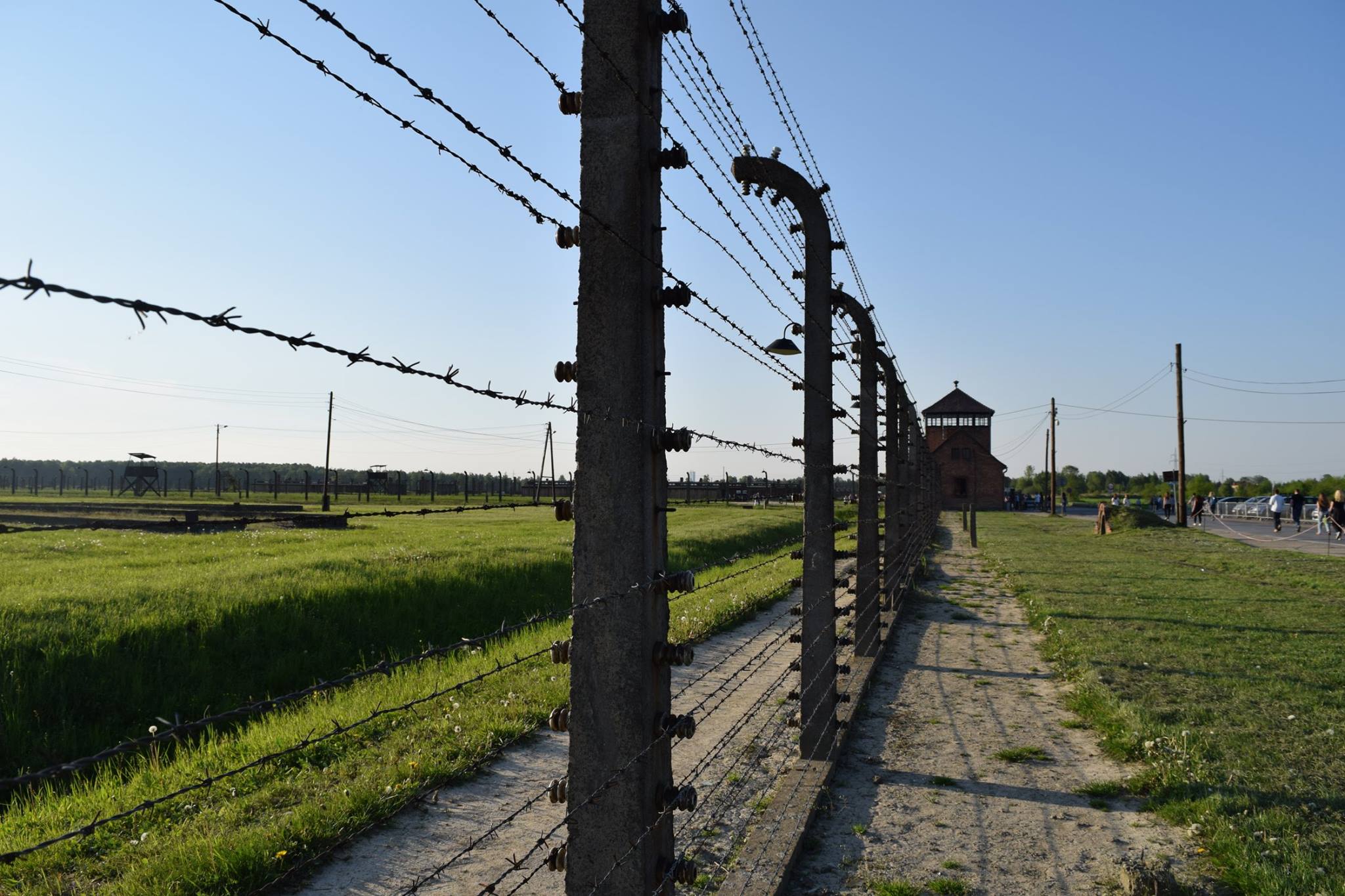
It was certainly an eerie feeling to think, as we were walking the streets of Warsaw and Krakow and taking in the magic of pre-war and post-Soviet Poland’s Jewish culture, that these same places bore witness to the some of the greatest assaults on humanity in history. While we chatted and passed bars and restaurants playing progressive jazz, it was sobering to remember the hundreds of thousands of Jews carted off to death camps from this same very place. It seemed inconceivable that as we walked around the neighbourhood of Podgórze, the Plaszow concentration camp made famous by Schindler’s List was less than 2 kilometers away.
At the Treblinka and Auschwitz-Birkenau concentration camps, I sifted through the millions of names of those who had perished at the hands of the genocide. I was amazed to see, among the names of my Hungarian ancestors who had perished, the many others who bore the same name – often from the same district of Budapest. It seemed to speak to the enormity of the calamity that befell Europe’s Jewish community and the apparent ease at which multiple lives can be taken away.
Our immensely-experienced guide, Raquel Orenstein of the Yad VaShem Museum, imparted a gem of knowledge unto us. She encouraged those who come to Poland, or those who study the Holocaust, to question the psychological and behavioural underpinnings of what befell the victims of the Holocaust:
- How can one be seduced by a message of hate?
- What are the effects of mob mentality?
- What does it take to murder a fellow human being?
This viewpoint left a lasting impression on me. I found myself exploring the human aspects of the Holocaust, rather than focusing on facts and data. It felt very uncomfortable asking myself ‘had I been a Polish or German citizen, what would I have done? Would I have hidden my Jewish or Roma countrymen and women? Would I have been a partisan, a bystander or an active perpetrator? How easily would our modern conception of benevolence and human rights have been eschewed by the seductive nature of fascism and scapegoating?’
Having these questions in mind made the trip an unforgettable experience. My only advice to any prospective travellers or visitors would be to immerse oneself in a more holistic encounter with Poland. Although the brutality and horror of Poland’s history are both undeniable and unimaginable, the resurgence of Jewish culture and the strengthening of the Jewish community there gives us reason to be hopeful that the relationship between Jews and Poland is not resigned to the history books.