
A Mission to Secure Justice
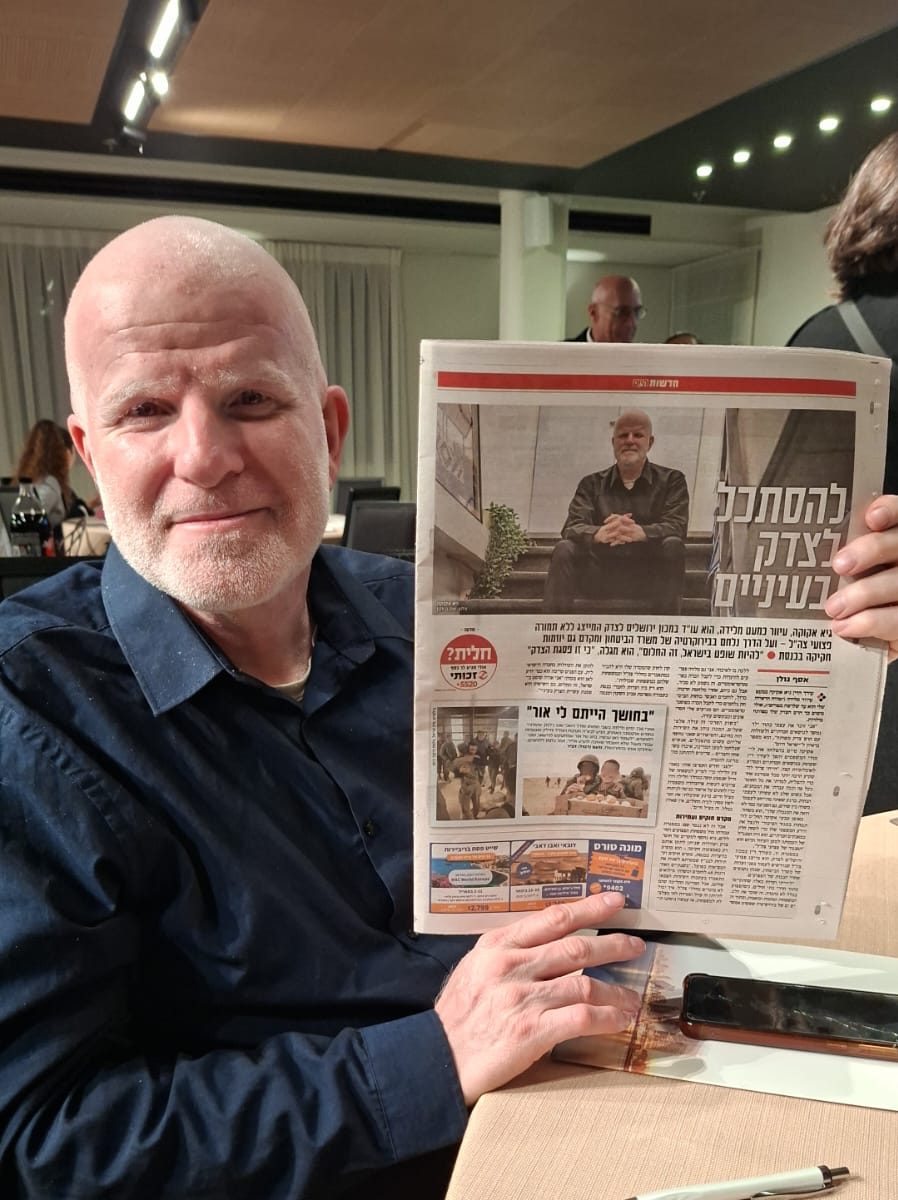
The Blind Advocate: Guy Akuka’s Mission to Secure Justice for Israel's Wounded
Guy Akuka, nearly blind since birth, does not see the world like most people. With a visual range of only three meters, he has spent his life sharpening a different kind of vision: a profound sense of social justice. Today, as a senior attorney for the Jerusalem Institute of Justice (JIJ), Akuka has become a lifeline for IDF veterans, providing expert legal representation to those navigating the grueling bureaucracy of the Ministry of Defense.
Legal Advocacy
While many lawyers charge thousands for specialized military advocacy, Akuka provides his services pro bono through JIJ. His mission is to ensure that no soldier is left behind by the system they served.
"I remember myself as a child being drawn to social issues and injustices," he told Israel Hayom. After overcoming significant hurdles to memorize his law school curriculum and pass the bar, he chose to leverage his degree for the public good. Now, under the banner of JIJ, he has become known as the "Defender of the Wounded."
Navigating the "Sea of Bureaucracy"
Representing veterans, Akuka enters the rooms where most dare not go. He accompanies families to medical committees—sometimes held in hospital rooms while the soldier is still unconscious—to determine disability percentages.
"It’s heartbreaking," Akuka says. "Families are in shock and pain, and amidst that, there is a sea of bureaucracy you can easily drown in."
His work has become even more critical following the Iron Swords War. Despite the national consensus on the sacrifice of soldiers, many fighters still struggle to receive recognition for PTSD. "They come to me helpless," Akuka explains. "The Jerusalem Institute of Justice provides this service for free because those who fought for the state shouldn't have to beg the state for recognition."
From the Hospital Room to the Knesset
Akuka’s work with JIJ isn't limited to individual cases; he is a force in the halls of power. He frequently appears before Knesset committees to draft legislation and file petitions to the High Court of Justice to fix systemic failures.
His current battle is one of his most painful: The Recognition of the Fallen.
"In the last two years, 68 soldiers and reservists committed suicide as a result of their service, yet the state does not recognize them as fallen soldiers. It’s a slap in the face to the families. Through the Institute, we have drafted a legal amendment to ensure they are recognized and their families are embraced as bereaved families."
The Ultimate Dream
Despite the grueling hours and the emotional toll of his work with JIJ, Akuka is looking toward the future. His ultimate goal is to move from the podium to the bench.
"I will be a judge in Israel," he declares. "That is the dream. To me, the judicial seat is the pinnacle of doing justice."

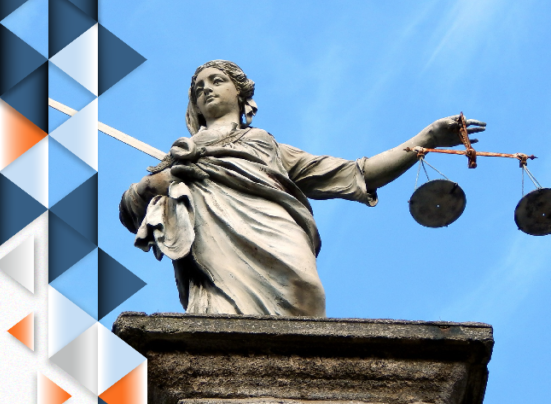
JUSTICE, THE BIBLE, AND US
Operating in the only democracy in the Middle East, the Jerusalem Institute of Justice uses the law to seek equality and fair treatment. Since the establishment of Israel in 1948, the country has been striving to find a balance between democratic values and its nature as a Jewish State.
We sometimes find a disparity between the law and political interests. For example, since the state’s beginnings, Jewish Ultra-Orthodox political factions have had a monopoly on matters of faith, deciding who is a Jew and who receives religious and civil rights. This creates huge challenges for other streams of Judaism and for those who profess any other faith, highlighting the need for the services provided by JIJ.
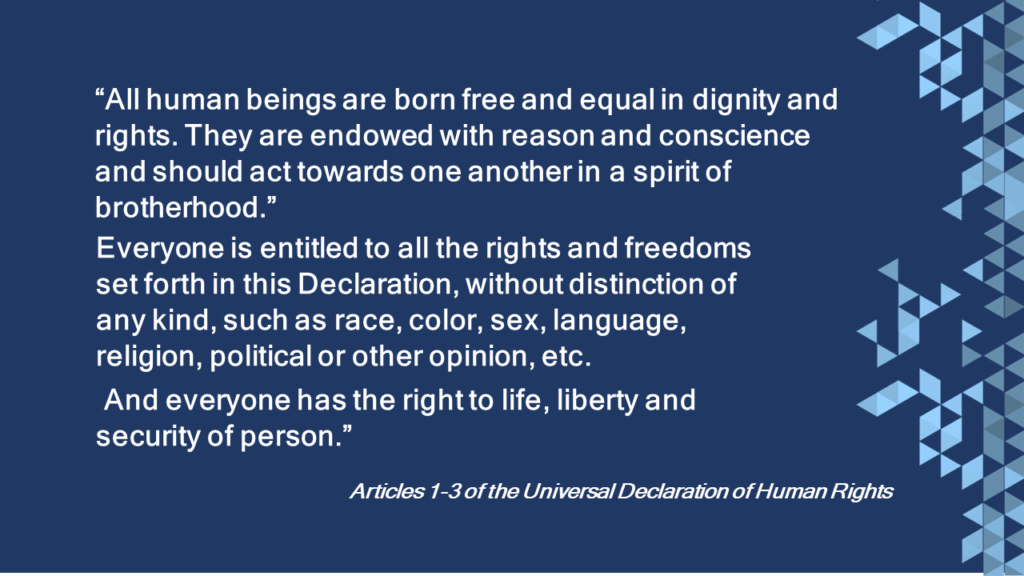
As an Israeli human and civil rights organization, JIJ draws its working principles from two monuments of thought. These are monuments that have decisively impacted western civilization. The first of course is the Bible, the second, which was written after the Holocaust, is the Universal Declaration of Human rights.
The Bible expresses God’s heart for the world, teaching us as it says in Micah 6:8, to walk humbly, pursue justice, love mercy, to have a proper regard for each person and to influence the development of a better society.
The rabbis in the Talmud say that the Torah begins and ends with justice. (Exodus Rabbah 30:19). But what is Justice? In Judaism, justice is the equal and right application of God’s law and morality for mankind.
In Hebrew, there is a clear connection between
- Justice-Tzedek,
- A righteous person- Tzadik,
- And acts of righteousness- Tzedakah
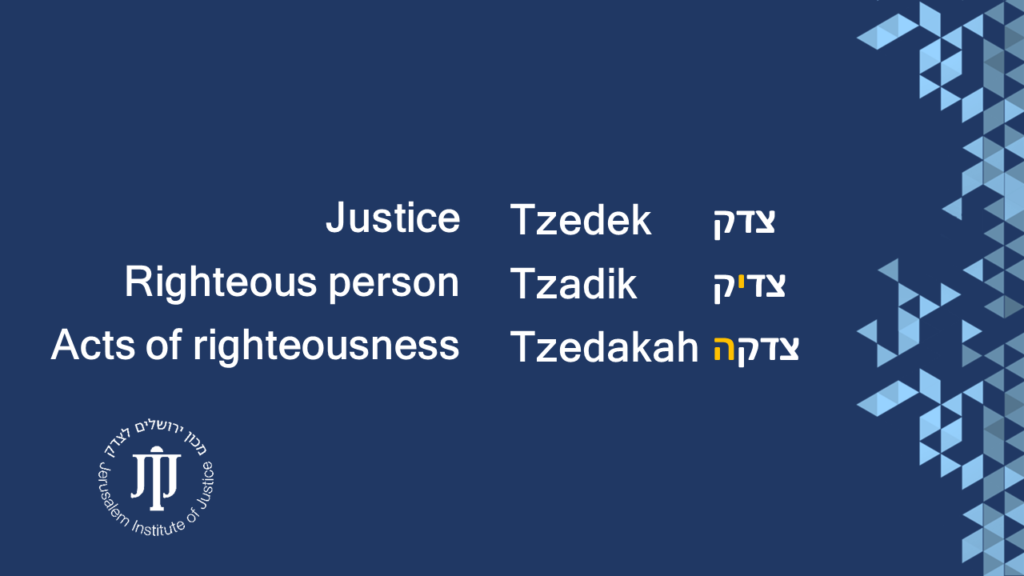
These terms are rooted in wisdom. The base of these words are three letters (tzadik, dalet and kuf) צ-ד-ק.
The only difference between the words is the addition of letters י(yud) and ה (heh) which both represent in Jewish tradition the full name of the Lord. Here we see the centrality of God in justice.
- To bring justice צדק,
- a godly person, צדיק,
- must perform godly acts, צדקה
The Universal Declaration of Human Rights which was based on Judeo-Christian values, mirrors the principles of human dignity, our responsibility to each other and personal freedoms.
Part 2 – coming soon
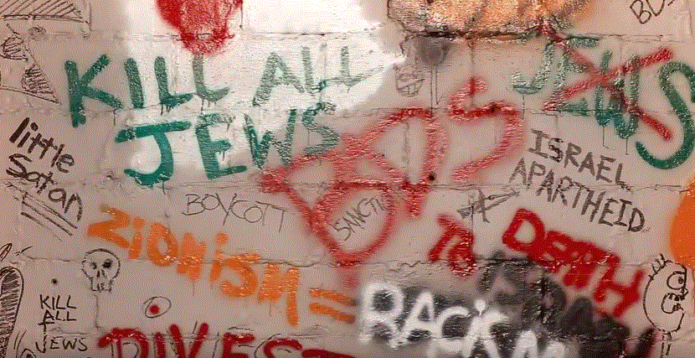
Join the Battle Against Anti-Semitism
There are few betrayals as disheartening as when law enforcement officers abuse the citizens whose lives they are paid to protect.
JIJ team traveled to Brussels, Belgium to testify in a case funded by JIJ's Litigation Fund for Combatting Anti-Semitism. We are officially requesting the State Prosecutor to indict a Belgium police officer, who wrote on his Facebook page, "The word Jew itself is dirty. If I were in Israel, frankly, I would do to the Jews what they do with the Palestinians — slaughter each and every one of them." We should never underestimate the power of words, especially when spoken by people in authority.
Anti-Semitic incidents are more prevalent today in Western Societies than they have been since the 1930's. In 2016, Jews in Europe have been insulted, harassed, stalked, chased, spat on, beaten, raped, and murdered for being Jewish. Just two weeks ago, a machete-wielding teen attacked a Jewish teacher outside of a Synagogue in the French city of Marseilles. This act prompted a local Jewish authority to ask fellow Jews to refrain from wearing their traditional kippas (skull caps) to stay safe. The attacker told police that he had acted in the name of the Islamic State.
France is still reeling from a series of attacks in Paris on November 13, 2015 that killed 130 people and just marked the anniversary of attacks on the satirical newspaper, Charlie Hebdo, and a kosher grocery store, which killed 17 people. In each case, the Islamic State group claimed responsibility.
JIJ will continue to fight anti-Semitism both in the courtroom and in the court of public opinion. Each of our cases requires hundreds of hours of preparation and thousands of dollars in expenses. We would like to thank everybody who has contributed to JIJ's advocacy, and ask you to consider donating again today. Your support will help us expand our advocacy, to ensure that anti-Semitic incidents in our region and beyond do not remain unanswered.