
Navigating Rehabilitation Benefits: Israel’s Ministry of Defense
How to Properly Prepare Your Claim to the Rehabilitation Department of Israel’s Ministry of Defense
When applying to the Rehabilitation Department of Israel’s Ministry of Defense, the first steps are critical. Even a small mistake at the outset can jeopardize recognition of your injury — and with it, access to treatment, rehabilitation, and compensation.
At the Jerusalem Institute of Justice, our legal team has extensive experience guiding veterans, reservists, and their families through this complex process. Below, we outline the key principles every applicant should know.
1. Prepare Your Medical Documentation
Israeli law requires anyone injured during military service or reserve duty to provide up-to-date medical documentation that clearly describes the condition.
For psychological injuries such as post-traumatic stress disorder (PTSD), this means obtaining an official diagnosis from a psychiatrist that explicitly states PTSD as a recognized medical condition. Without this documentation, the recognition process cannot even begin.
2. Injury Recognition – The Foundation of the Process
The first stage of filing a claim is injury recognition. At this stage, the Ministry of Defense decides whether your injury will be acknowledged as service-related.
If recognition is denied, the case will not advance to the medical board, blocking any chance of further evaluation. Because of this, precision and legal accuracy at this stage are essential.
3. Preparing for a PTSD Evaluation
PTSD must be recognized as an independent medical condition under Israeli law. Not every complaint will result in recognition.
Your symptoms must be presented in line with clinical diagnostic criteria. Knowing which symptoms matter, and how to describe them, is critical. Consulting both a lawyer and a PTSD specialist can make the difference between approval and rejection.
4. Professional Guidance Is the Key to Success
Every Israeli citizen has the right to apply for rehabilitation if the injury is service-related. However, the outcome depends largely on how the case is presented.
At JIJ, our lawyers provide full guidance at every step — from gathering medical records to preparing for the medical board. Our mission is to ensure your claim is submitted with clarity, accuracy, and confidence.
Conclusion
The recognition process is as much legal as it is medical. Proper preparation and professional guidance often determine whether a claim succeeds or fails.
At JIJ, we provide this legal support completely free of charge, ensuring that every soldier and veteran can access the rehabilitation and justice they deserve.

Navigating Rehabilitation Benefits: Israel’s Ministry of Defense
How to Properly Prepare Your Claim to the Rehabilitation Department of Israel’s Ministry of Defense
When applying to the Rehabilitation Department of Israel’s Ministry of Defense, the first steps are critical. Even a small mistake at the outset can jeopardize recognition of your injury — and with it, access to treatment, rehabilitation, and compensation.
At the Jerusalem Institute of Justice, our legal team has extensive experience guiding veterans, reservists, and their families through this complex process. Below, we outline the key principles every applicant should know.
1. Prepare Your Medical Documentation
Israeli law requires anyone injured during military service or reserve duty to provide up-to-date medical documentation that clearly describes the condition.
For psychological injuries such as post-traumatic stress disorder (PTSD), this means obtaining an official diagnosis from a psychiatrist that explicitly states PTSD as a recognized medical condition. Without this documentation, the recognition process cannot even begin.
2. Injury Recognition – The Foundation of the Process
The first stage of filing a claim is injury recognition. At this stage, the Ministry of Defense decides whether your injury will be acknowledged as service-related.
If recognition is denied, the case will not advance to the medical board, blocking any chance of further evaluation. Because of this, precision and legal accuracy at this stage are essential.
3. Preparing for a PTSD Evaluation
PTSD must be recognized as an independent medical condition under Israeli law. Not every complaint will result in recognition.
Your symptoms must be presented in line with clinical diagnostic criteria. Knowing which symptoms matter, and how to describe them, is critical. Consulting both a lawyer and a PTSD specialist can make the difference between approval and rejection.
4. Professional Guidance Is the Key to Success
Every Israeli citizen has the right to apply for rehabilitation if the injury is service-related. However, the outcome depends largely on how the case is presented.
At JIJ, our lawyers provide full guidance at every step — from gathering medical records to preparing for the medical board. Our mission is to ensure your claim is submitted with clarity, accuracy, and confidence.
Conclusion
The recognition process is as much legal as it is medical. Proper preparation and professional guidance often determine whether a claim succeeds or fails.
At JIJ, we provide this legal support completely free of charge, ensuring that every soldier and veteran can access the rehabilitation and justice they deserve.
Fighting for Families of Children with Severe Disabilities
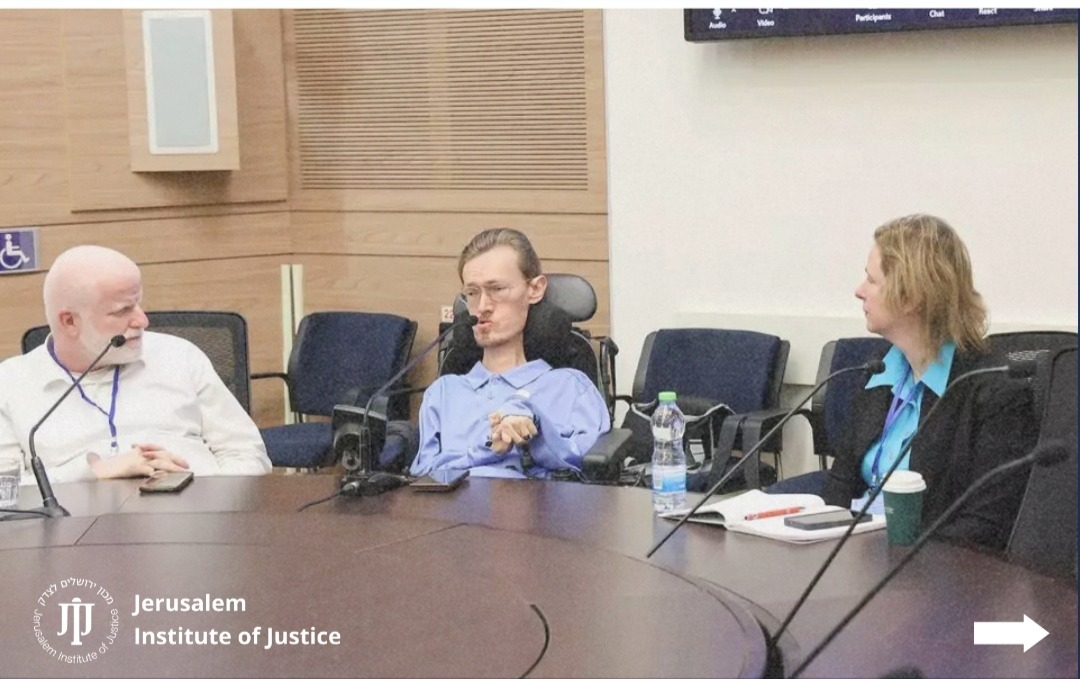
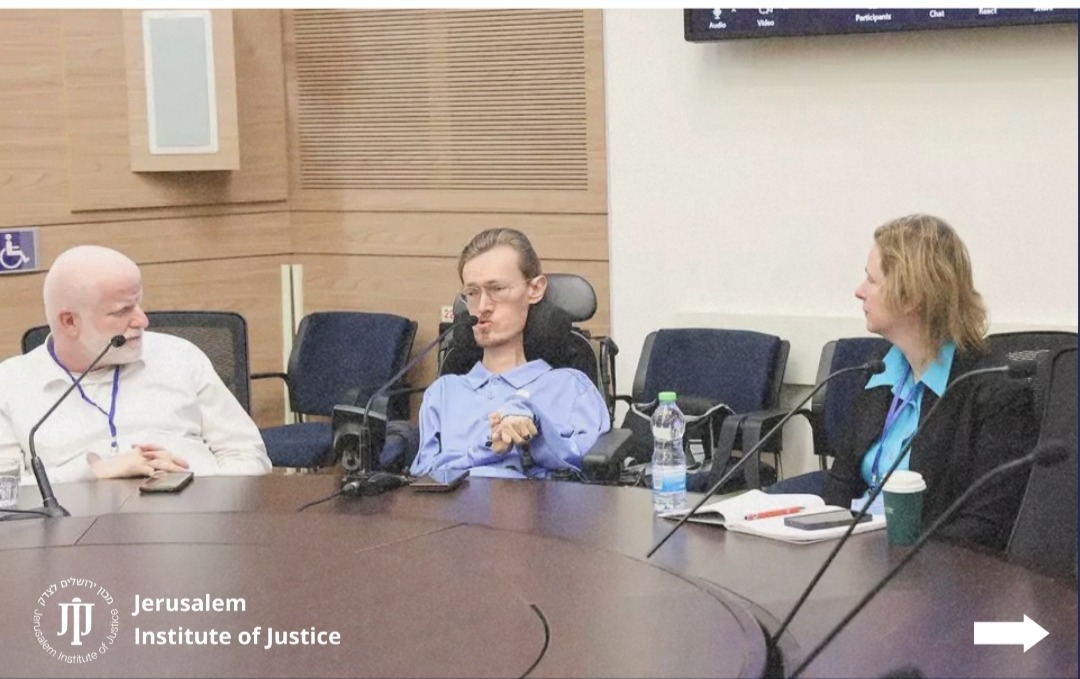
One of Israel’s most urgent social crises: the struggles facing families of children with severe disabilities. JIJ attorneys recently took part in a special Knesset committee addressing this issue. The discussion, chaired by MK Hava Eti Atia, revealed the depth of the problem—parents left without essential state support, battling every day to provide around-the-clock care.
Testimonies from parents were heartbreaking. Many spoke of foreign caregivers suddenly resigning, stipends that do not cover even basic needs, and a complete lack of a backup system when help disappears overnight. Despite years of promised reforms, families continue to face impossible choices, carrying alone the weight of responsibility that should be shared by society and the state.
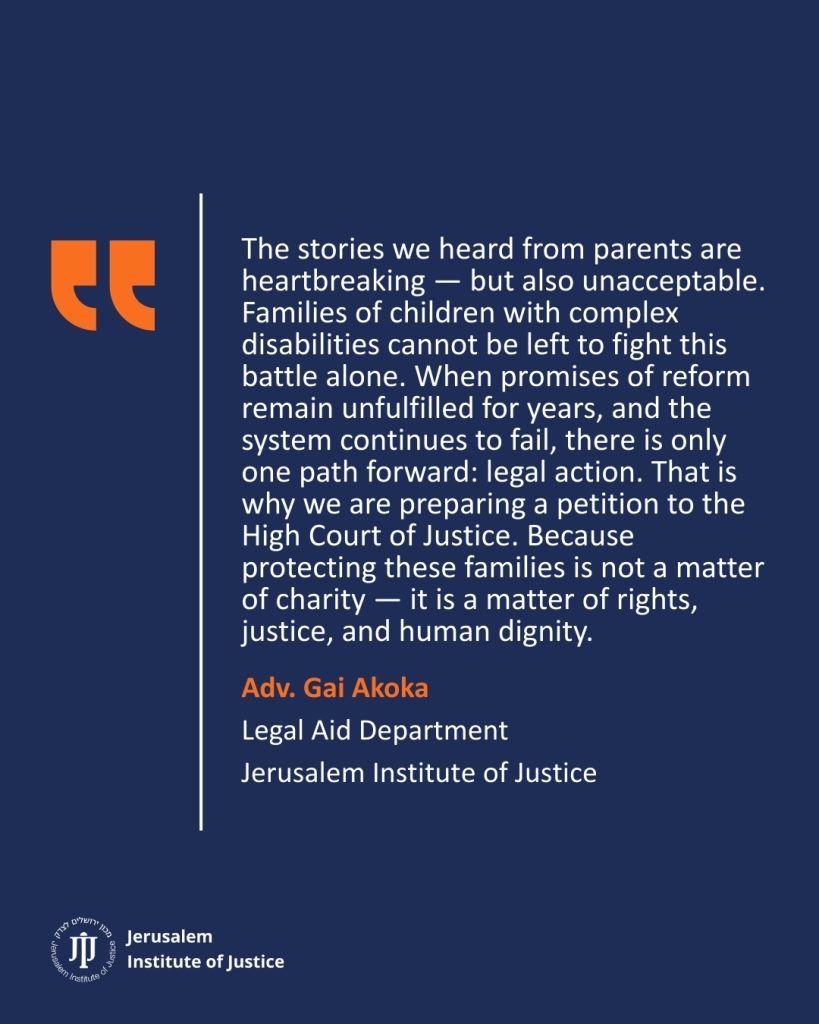
JIJ’s Legal Aid Department is now preparing a petition to Israel’s High Court of Justice, demanding structural change. Our goal is clear: to secure lasting solutions so that no family raising a child with severe disabilities is left abandoned.
As Adv. Gai Akoka of JIJ emphasized: “Protecting these families is not a matter of charity — it is a matter of rights, justice, and human dignity.”
Through our legal advocacy, we aim not only to highlight this crisis but to ensure that the voices of these families lead to real reform. Justice cannot wait.
Fighting for Families of Children with Severe Disabilities
One of Israel’s most urgent social crises: the struggles facing families of children with severe disabilities. JIJ attorneys recently took part in a special Knesset committee addressing this issue. The discussion, chaired by MK Hava Eti Atia, revealed the depth of the problem—parents left without essential state support, battling every day to provide around-the-clock care.
Testimonies from parents were heartbreaking. Many spoke of foreign caregivers suddenly resigning, stipends that do not cover even basic needs, and a complete lack of a backup system when help disappears overnight. Despite years of promised reforms, families continue to face impossible choices, carrying alone the weight of responsibility that should be shared by society and the state.
JIJ’s Legal Aid Department is now preparing a petition to Israel’s High Court of Justice, demanding structural change. Our goal is clear: to secure lasting solutions so that no family raising a child with severe disabilities is left abandoned.
As Adv. Gai Akoka of JIJ emphasized: “Protecting these families is not a matter of charity — it is a matter of rights, justice, and human dignity.”
Through our legal advocacy, we aim not only to highlight this crisis but to ensure that the voices of these families lead to real reform. Justice cannot wait.