

Peticion de Apoyo a 7 de octubre
POR LA MEMORIA DEL 7 DE OCTUBRE, CONTRA EL ODIO Y EL TERRORISMO
Petición dirigida al Secretario General de las Naciones Unidas, António Guterres. A tres años de los ataques terroristas del 7 de octubre de 2023 perpetrados por Hamas, alzamos nuestra voz para preservar la memoria y la dignidad de las víctimas y sobrevivientes, enfrentar el antisemitismo y rechazar toda forma de negación, banalización o justificación de las atrocidades cometidas aquel día.
PETICIÓN POR LA MEMORIA DEL 7 DE OCTUBRE, CONTRA EL ODIO Y EL TERRORISMO
Petición al Secretario General de las Naciones Unidas, António Guterres
Nosotros, miembros de comunidades latinoamericanas unidos por el compromiso de preservar la memoria y la dignidad de las víctimas y sobrevivientes de los ataques del 7 de octubre de 2023, elevamos esta petición al Secretario General de las Naciones Unidas.
Ese fatídico 7 de octubre, Hamas y otros grupos terroristas palestinos llevaron a cabo un brutal ataque contra Israel. Civiles inocentes fueron asesinados, torturados y víctimas de actos de violencia sexual. Entre las víctimas había mujeres, niños, bebés y adultos mayores. Ese mismo día, 251 personas fueron secuestradas y llevadas como rehenes a Gaza. Muchos permanecieron allí durante más de dos años. Solo después de 843 días fue recuperado y devuelto a Israel el último rehén que permanecía en Gaza. Muchos de los secuestrados, lamentablemente, no regresaron con vida.
Tres años después, frente a la persistencia del antisemitismo y de narrativas que niegan, banalizan o buscan justificar la violencia cometida por Hamas, creemos que recordar no es suficiente. La memoria exige también responsabilidad y acción.
Por ello, solicitamos al Secretario General que, antes de concluir su mandato:
- condene de manera inequívoca el terrorismo de Hamas y la toma de rehenes, sin justificaciones ni relativizaciones;
- garantice que, en el marco de las Naciones Unidas, se otorguen de manera efectiva la prioridad, los espacios, la atención y los recursos necesarios para combatir el antisemitismo, la negación y banalización de los ataques del 7 de octubre y toda forma de incitación al odio contra el pueblo judío;
- vele para que los órganos y mecanismos de las Naciones Unidas actúen conforme a los principios de imparcialidad, universalidad y no selectividad, y aseguren que sus espacios no sean utilizados para legitimar discursos de odio, incitación o deshumanización dirigidos contra el Estado de Israel;
- brinde los espacios institucionales y simbólicos correspondientes para preservar y amplificar las voces de las víctimas y sobrevivientes del 7 de octubre, de modo que sus historias formen parte de la memoria colectiva internacional.
Al firmar esta petición, reafirmamos nuestro compromiso con la memoria de quienes fueron asesinados, con quienes sobrevivieron y continúan recuperándose de heridas visibles e invisibles, y con las familias que cargan hasta hoy con las consecuencias del 7 de octubre.
Reafirmamos también nuestro compromiso con el derecho del Estado de Israel a existir, con el derecho del pueblo judío a vivir con seguridad y autodeterminación, y con el derecho de todas las personas de la región a vivir en paz, seguridad y dignidad.
Alzamos nuestra voz por quienes ya no pueden hacerlo.
Recordar es también actuar.
Una iniciativa de

PETICIÓN POR LA MEMORIA DEL 7 DE OCTUBRE, CONTRA EL ODIO Y EL TERRORISMO

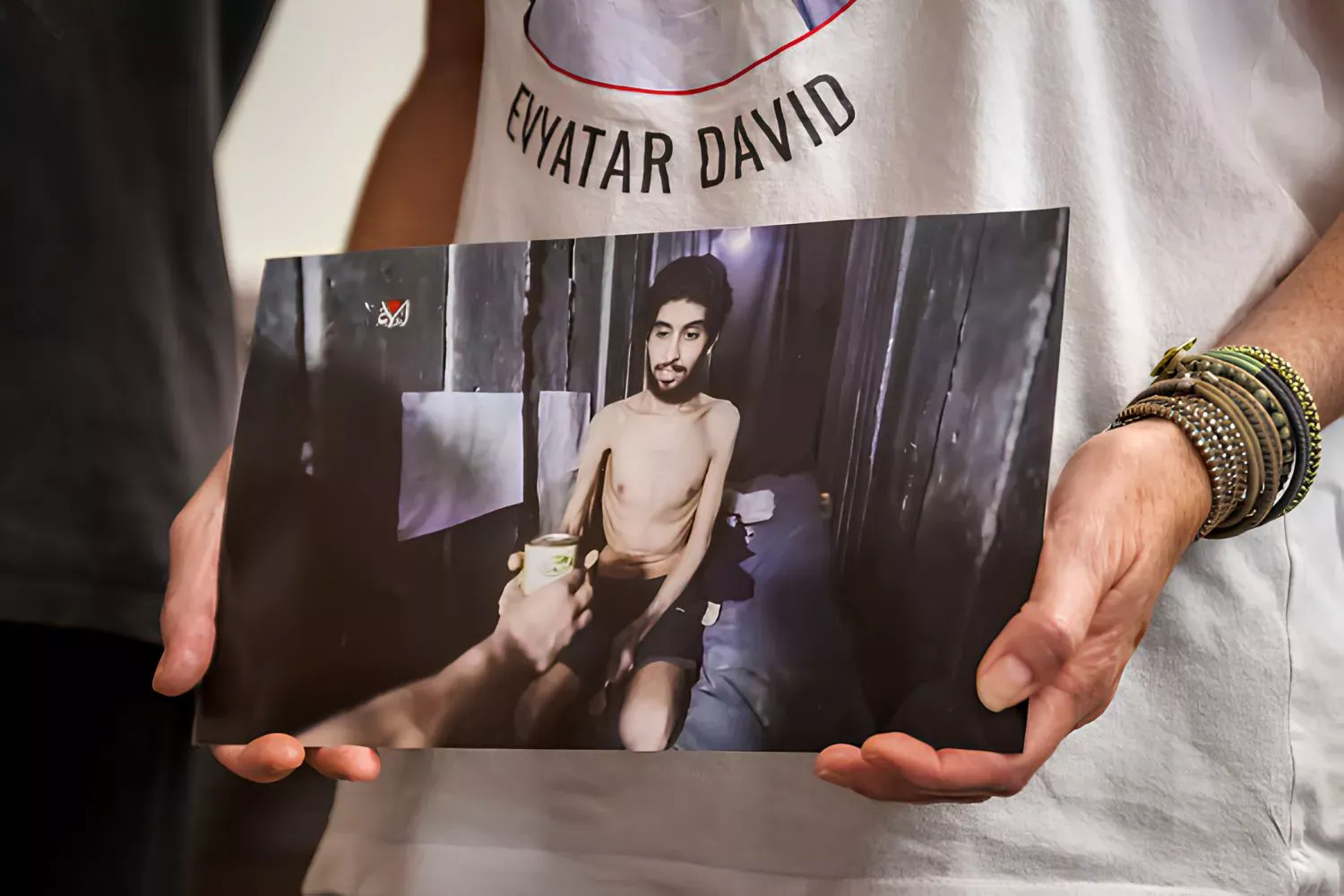
Kidnapped: Hostage-Taking as a Form of Torture
“We were brutally kidnapped from our house. Our girls saw things
that kids that age, or any age, should not see. You feel like you want
to pinch yourself and wake up from this movie. We just slept, cried.
Every day that passed was an endless eternity.”
- Danielle Aloni
Executive Summary
On October 7, 2023, Hamas and its related militias invaded southern Israel and forcibly abducted 247 men, women, and children. Prior to that attack, 4 hostages were already being held in Gaza. Over 2 years later, all of the hostages have come home, and a reckoning is now due.
This report is based on the testimony of released hostages and the health care professionals who treat them. It analyzes the clear and absolute prohibition on torture under international law, and integrates the findings of the United Nations Special Rapporteur on Torture, whose 2025 report identified a clear pattern of physical and psychological abuse suffered by hostages during captivity, as well as post-traumatic harm after their release.
We reveal here that 88 percent of the hostages were civilians. Among them, 23 hostages were aged 12 or younger at the time of their abduction, and 34 were aged 60 or older. Fifty percent of the hostages were non-Israeli or held dual or multiple citizenships, including citizens of at least 24 different countries.
The hostages were held in harsh, degrading, and inhumane conditions and were denied medical care, food, access to personal hygiene, and natural light. Threats of execution, prolonged isolation, sexual assault, and abuse were routine experiences in captivity. 68% of the hostages held for over 200 days were forced to participate in propaganda videos. So far, 12 released hostages have described being sexually assaulted in captivity, including women and men. 33 hostages were executed by their captors.
At least 78 released hostages showed signs of starvation, acute malnutrition, and severe muscle wasting, having received as little as a single piece of bread each day, even as their captors ate full meals. Most hostages faced inadequate hygiene, physical violence, and extended periods of immobility during captivity. Psychological assessments further reveal acute dissociation, emotional numbing, and severe mental withdrawal.
“For 491 days, I was kept mostly underground in Hamas terror tunnels, chained, starved, beaten, and humiliated.” - Eli Sharabi
This report calls upon United Nations mechanisms, State Parties to the Convention Against Torture, and international accountability bodies to address the October 7 attacks and the hostage-taking as conduct that constitutes torture, and recognize former hostages and their families as victims of torture. Torture is absolutely prohibited under international law. It cannot be justified or contextualized. Hostage-taking is not merely arbitrary detention. It is the deliberate weaponization of human suffering to bend political will.
The Jerusalem Institute of Justice urges States and international bodies to reject any framing of the hostage-taking of Israelis as a legitimate military tactic or political bargaining tool. Finally, we call for the perpetrators and co-conspirators to be held accountable through criminal trials, civil litigation, and the application of universal jurisdiction.
Gaza After Hamas
GAZA AFTER HAMAS:
THE PALESTINIAN AUTHORITY`S CAPACITY TO GOVERN
Despite the Palestinian Authority’s historical support for armed struggle against Israel, the PA’s steadily eroding legitimacy among the Palestinian public, and deep Israeli distrust, alongside the absence of a stable and strong alternative leadership and the PA’s response to the October 7 massacre, international discourse around the potential involvement of the Palestinian Authority in the Gaza Strip is growing. Some in the international community consider the PA the most legitimate potential actor to govern Gaza because the PA is the internationally recognized governing body of the Palestinian people through the Palestinian Liberation Organization (PLO) and the Oslo Accords. In their view, the PA is also the only Palestinian institution with pre-established ministries, security structures, and donor-backed administrative capacity to run the Strip effectively.
However, to be accepted on an international level (specifically according to the terms of the United States and Trump) as a candidate for the governance of the Gaza Strip, it must undergo verifiable reform on three main fronts: the elimination of the “Pay-for-Slay” fund, the eradication of indoctrinatory educational systems, and the establishment of stable government structures and cooperative leadership.

From Media Consumer to Content Creator
Ben Solomon reflects on his transformative journey as an intern at JIJ, where he tackled Israel's biggest challenges—Hamas, Hezbollah, Iran, and lawfare—through reading, debating, and writing. Dive into his story and discover the building blocks of effective Israel advocacy
My most rewarding experience at JIJ was producing and recording a series of 15-minute lectures on the central challenges facing Israel (Hamas, Hezbollah, Iran, and lawfare). Before coming to JIJ, I considered myself an informed consumer of media about Israel. Creating content, however, is much harder than consuming it. As I went about producing material of my own, I realized how little I had previously known about the threats facing Israel and the realities of the Middle East.
How did I go about overcoming this knowledge deficit to produce original content for viewers in Israel and the Diaspora? By reading, by debating, and by writing.
Read
Israel has a vibrant and diverse English-language press. Almost every day, I would spend time reading live blogs in the Times of Israel and current affairs in the Jerusalem Post. To expose myself to different perspectives, I viewed op-eds in Israel Hayom and Ynetnews. The perspectives which I saw in these outlets made me appreciate the thought processes driving Israel’s decision making.
Beyond news articles, my understanding of Israel improved tremendously from reading books. For modern Israeli history, I recommend reading Yossi Klein Halevi, Michael Oren, and Daniel Gordis. All three have written highly accessible books which deal with Israel’s achievements in war and in peace. Historical background makes it much easier to understand Israel’s contemporary dilemmas.
Besides books, I advise digging into the treasure trove of audiovisual resources available online. To understand events from decades ago, I would watch old documentaries and political speeches. For up-to-date analyses of events, I turned to podcasters like Dan Senor and Ezra Klein. The content is accessible – you just need to seek it out.
Debate
Once I read a lot about Israel, I started to form my own opinions about difficult topics, such as the breakdown of peace negotiations, international hostility toward Israel, and strategies for confronting Iran. The best way for me to test these opinions was by defending them against competing viewpoints. I regularly entered Uri’s office ( JIJ's director of International Law and Policy) in the middle of the day, where I could spend 30 minutes or more trying to make sense of current affairs. The office space at JIJ is very open, without the hierarchical separations of an American workspace.
These discussions also took place outside the confines of the office. I loved arguing with Israeli friends and family to see whether my emerging views could withstand other people’s ingrained opinions. When I travelled outside Tel Aviv for Shabbats or excursions, I tried to learn as much as possible about the dividing lines within Israeli society.
As I talked to more and more people about Israel, I found myself enthralled by the diversity of opinions within the country. Israel is certainly not the caricature of “apartheid” and “genocide” presented on college campuses and at the United Nations. But nor is it a straightforward or homogenous society. It is, instead, the melting pot of an ancient people, unified in its desire for the blessings of peace, but divided over how to achieve that end.
Write
During my first month at JIJ, I remember being nervous to commit my ideas to writing. I had already read several books and spent plenty of time exposing myself to the viewpoints of other people. But at the same time, I was reluctant to take the leap from being a consumer to a producer of information.
The way that I overcame this writer’s block was by introducing frameworks for content delivery: the “Five Pillars of Hamas” or the “Seven Front War.” Once I had established these frameworks, I could fill them with material to support an overall argument. Sub-dividing lectures into different chapters made it much easier to package them for social media.
One of the real challenges of writing about Israel is making it accessible for a non-specialist audience. It is easy to get caught in the weeds of international law, such as the details of past United Nations resolutions or jurisdictional questions at the International Criminal Court. While I enjoyed trying to grapple with these technicalities, I focused my public outreach on presenting a bigger picture viewpoint of Israel’s predicament.
The final challenge of the lecture series was turning long scripts into interesting videos. Given my lack of confidence with the teleprompter, I decided to commit the scripts to memory. I found memorization to be a challenging but highly worthwhile exercise; it pushed me to see the value in every sentence and to clarify the connections between them.
Conclusion
As I look back on the last five months, I am grateful to have contributed to JIJ’s mission of international advocacy for the Jewish state. I feel equipped with the tools to effectively advocate for Israel back home.
In reflecting on my own contribution to JIJ, I would add this: the internship is what you make of it. You will make the most meaningful contribution by working on projects which reflect your skill set and interests. In my case, I was naturally drawn to a project which enabled me to lecture about geopolitics. But JIJ is not a one-size-fits-all model; the internship is flexible enough to accommodate your personal strengths.
Whatever projects you end up working on, I believe that the three fundamentals of reading, debating, and writing will be applicable. These are the indispensable building blocks of Israel advocacy.
What can JIJ do in a year?
2024 was our busiest and most impactful year since our founding 20 years ago
With your help, in 2024, JIJ provided FREE legal aid to 2,733 survivors of terrorism, human trafficking, and discrimination, including:
- 32 wounded Israeli soldiers
- 40 survivors of human trafficking
- 17 survivors of the October 7th massacre
- 68 families seeking Israeli citizenship or residency
- 112 refugees from Ukraine, Russia, and Eritrea
- 120 Israeli families displaced from their homes on the Gaza & Lebanon borders
How does JIJ do all of this in one year? With you, our amazing supporters. Thank you!
Our media presence grew & our team appeared on:




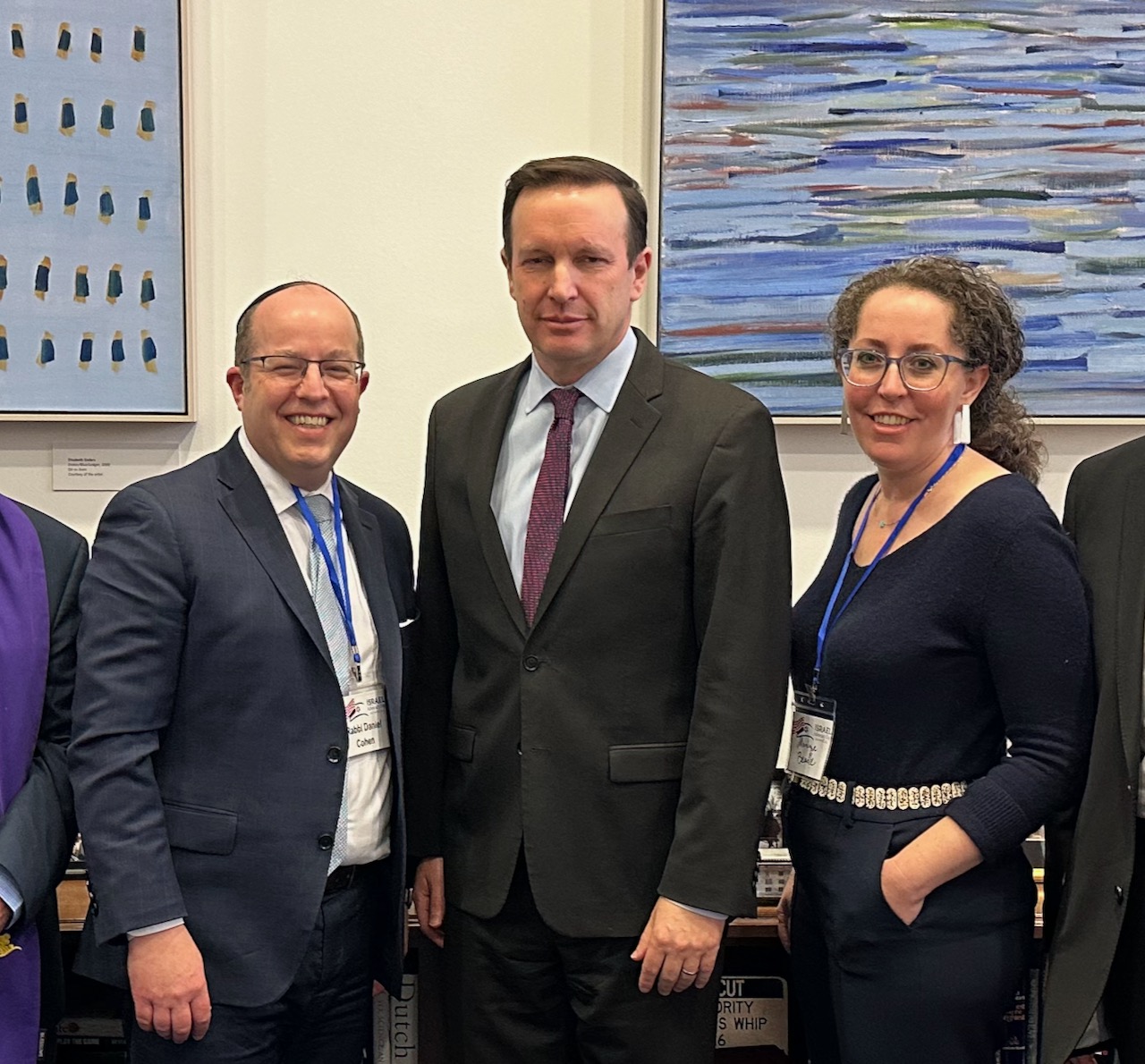
We met personally with dozens of global leaders, including Israel’s First Lady Michal Herzog, United Nations SRSG Pramila Patten, & US Senators Chris Murphy, Richard Blumenthal, & John Fetterman.
We shared our research, forensic evidence, and legal analysis with diplomats from 30 countries.
January - June
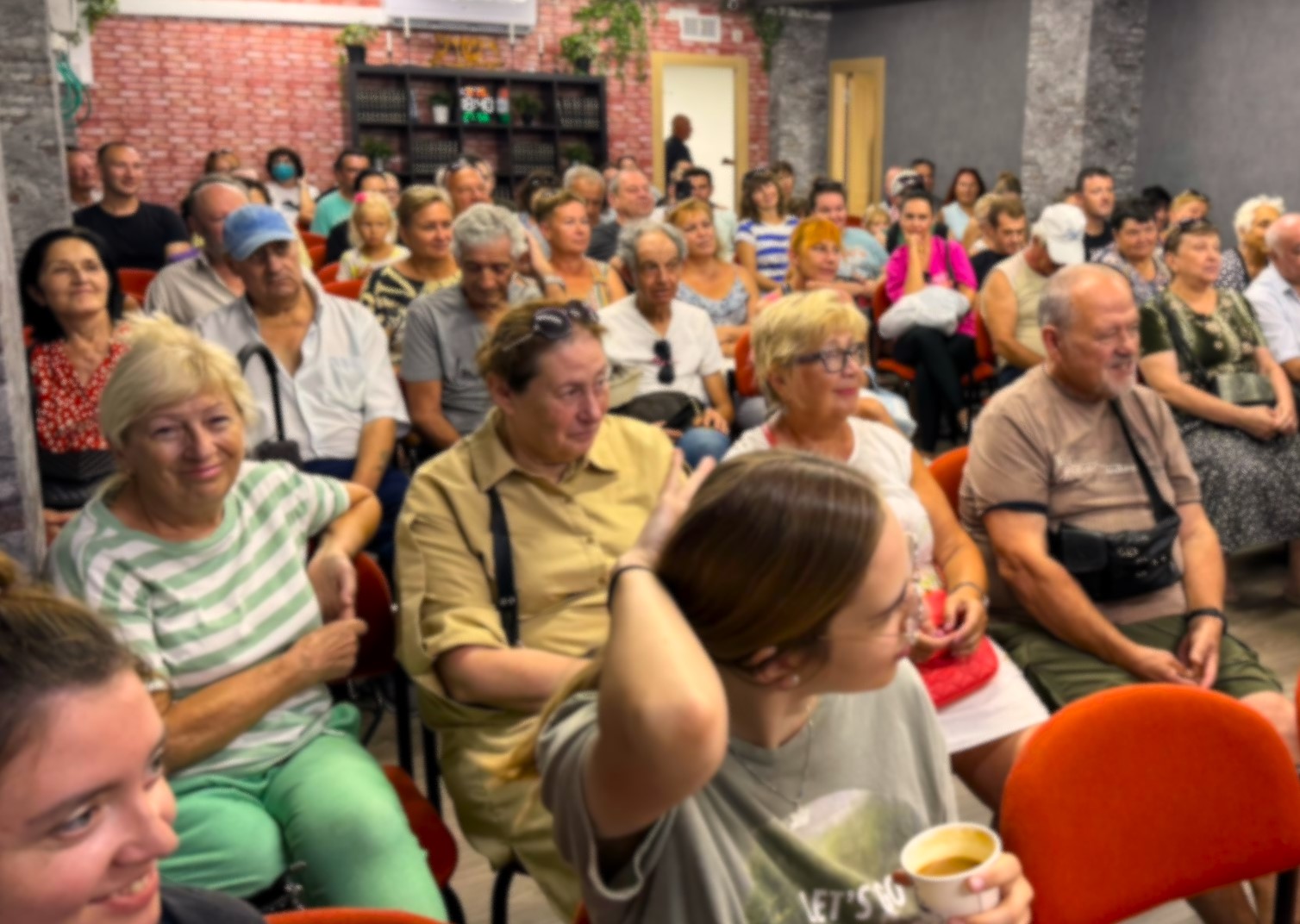
JIJ held a series of free “ Know Your Rights” seminars for:
- 120 Israeli families who became suddenly homeless, unemployed, or disabled as a result of the war
- 57 Ukrainian & Russian refugee families
- 9 of these families receive Israeli citizenship through the Law of Return
- 500 wounded soldiers
Gathered 84 political & religious leaders in the U.S. for a private screening of unedited, uncensored footage of the October 7th massacre recovered from the bodies of Hamas terrorists and compiled by the IDF.
Drafted an urgent petition to Stop Funding UNRWA & persuaded key members of the Senate Foreign Relations Committees to enact a 1-year ban on US funding to UNRWA.
Hosted UN diplomats from 18 countries to hear testimony from Yuval Raphael a survivor of the Oct. 7th massacre. Yuval went to the Nova Festival to dance all night with her friends. At dawn, Hamas invaded, and she sought refuge in a roadside bomb shelter, which became a tomb when terrorists found them.
Launched the Survivors Seeking Justice project, and filmed detailed video testimonies of 17 survivors of the Oct. 7th massacre.
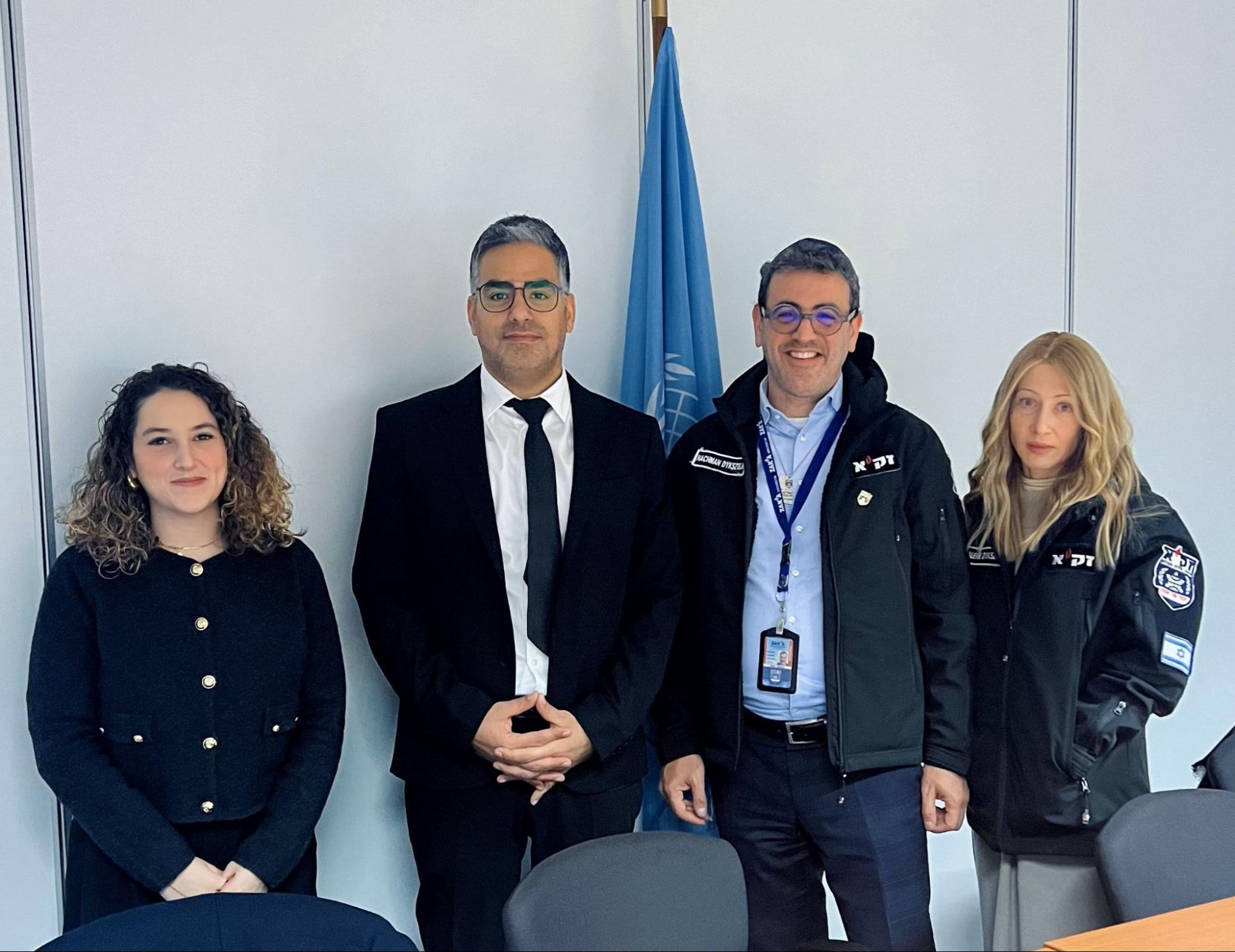
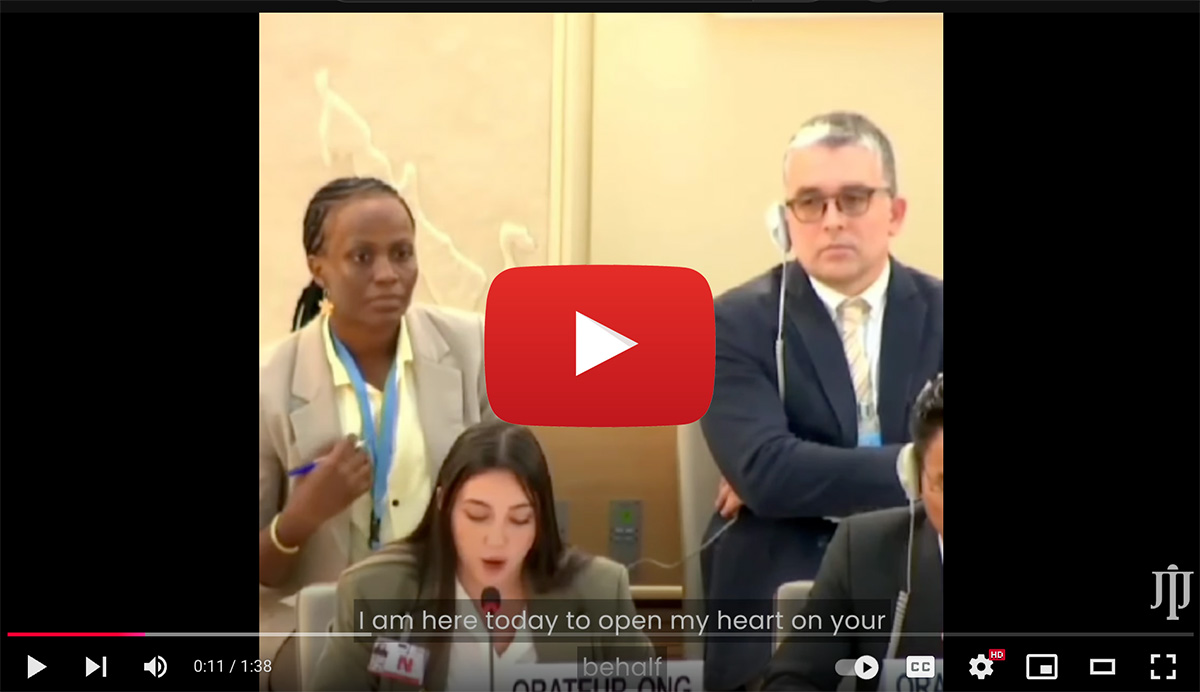
JIJ lawyers presented forensic evidence & first responder testimony to senior UN officials. This proof confirmed a pattern of sexual violence perpetrated by Hamas on Oct. 7th and stopped the rape deniers in their tracks.
July-December
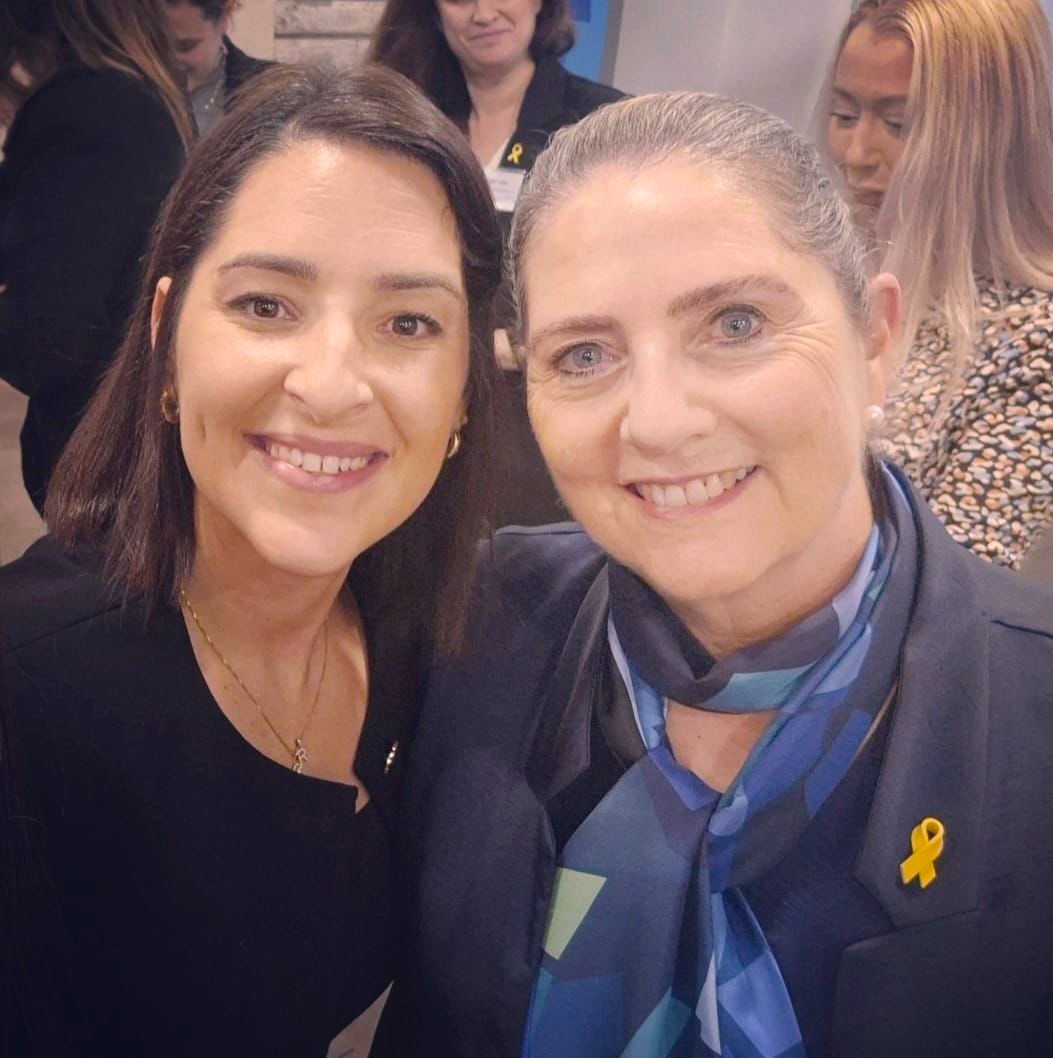
Discussed Israel’s anti-trafficking law with First Lady Michal Herzog. In 2018, JIJ persuaded the
Knesset to adopt a 5-year pilot program that treats women in the sex industry as victims of abuse, & the pimps as criminals. We’re advocating to make the law permanent!
JIJ assisted Israeli police in busting a major human trafficking ring - resulting in the arrest of 14 human traffickers, which was only possible through the testimony of our brave client.
We gave free seminars to soldiers recuperating at Ichilov & Tel Hashomer Hospitals. While private lawyers take 30-50% of a wounded soldier’s disability benefit as payment, JIJ is the only organization providing FREE legal aid to wounded Israeli soldiers, with 32 new soldier clients in 2024.
Intervened at the International Criminal Court with an amicus brief making it clear that the Court lacks jurisdiction over Israeli leaders.
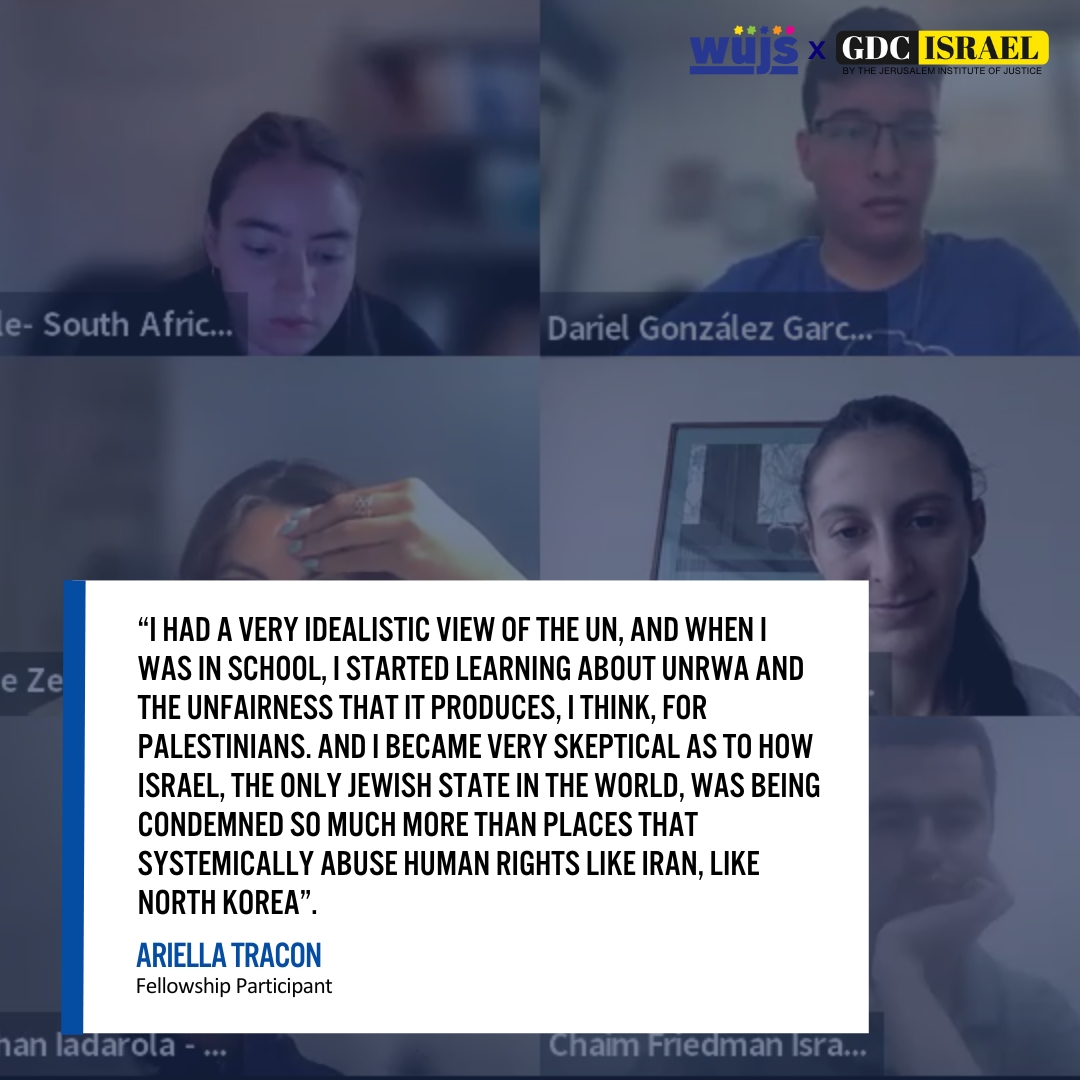
Partnered with the World Union of Jewish Students to train & empower student leaders. Over 8 weeks, we trained 23 Jewish university students from 16 countries to combat antisemitism on their campuses.
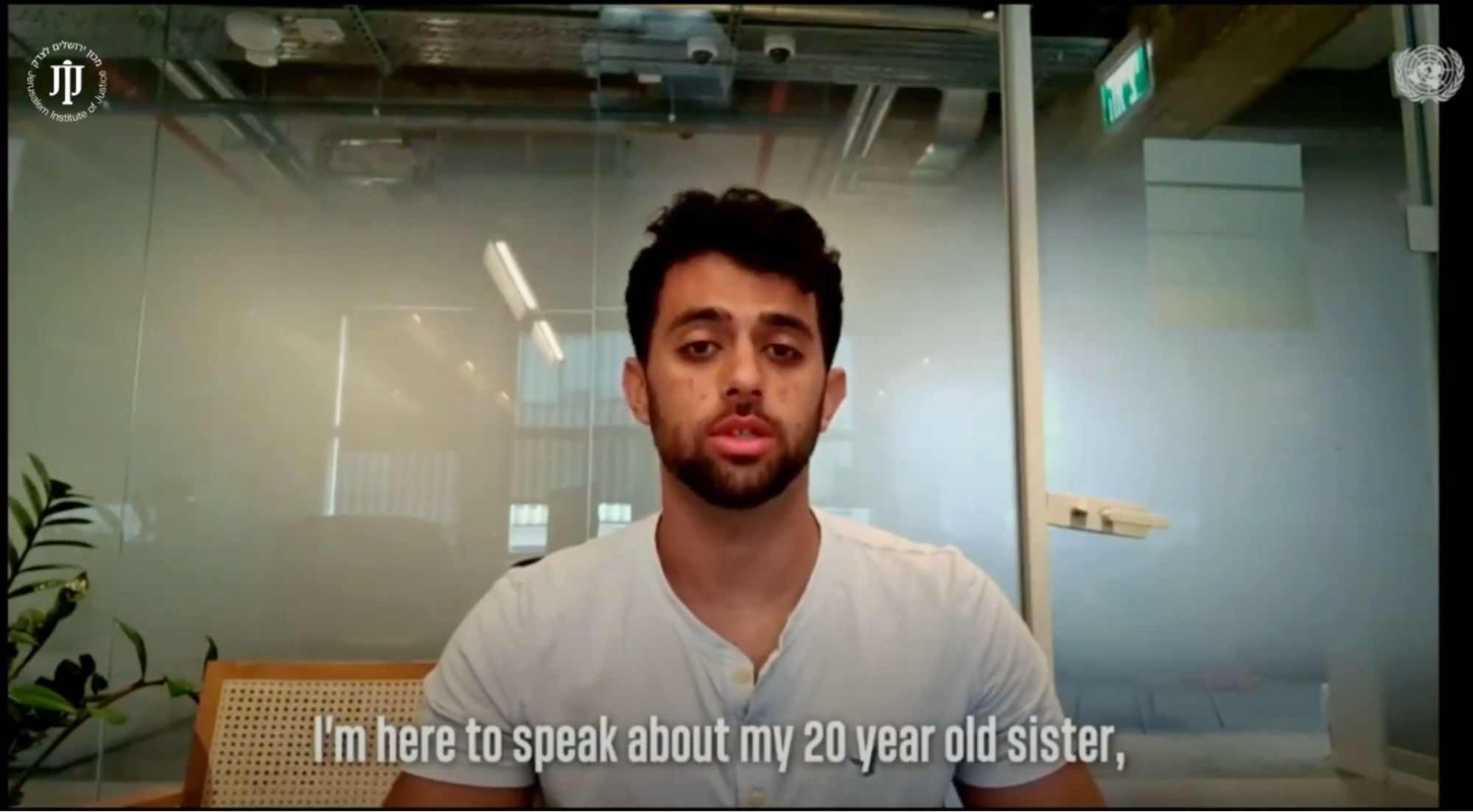
The UN Human Rights Council convened a special gathering on the Jewish New Year, to condemn Israel. The timing was intentional - to prevent opposition. In response, we gave our General Assembly floor time to Amit Levy, brother of Naama Levy, who was kidnapped by Hamas on Oct. 7th. Amit gave powerful testimony on the need to free all of the hostages.
Every single donation you give, whether it’s $1000 or $10, changes lives!
What can JIJ do in a year?
2024 was our busiest and most impactful year since our founding 20 years ago
With your help, in 2024, JIJ provided FREE legal aid to 2,733 survivors of terrorism, human trafficking, and discrimination, including:
- 32 wounded Israeli soldiers
- 40 survivors of human trafficking
- 17 survivors of the October 7th massacre
- 68 families seeking Israeli citizenship or residency
- 112 refugees from Ukraine, Russia, and Eritrea
- 120 Israeli families displaced from their homes on the Gaza & Lebanon borders
How does JIJ do all of this in one year? With you, our amazing supporters. Thank you!
Our media presence grew & our team appeared on:
We met personally with dozens of global leaders, including Israel’s First Lady Michal Herzog, United Nations SRSG Pramila Patten, & US Senators Chris Murphy, Richard Blumenthal, & John Fetterman.
We shared our research, forensic evidence, and legal analysis with diplomats from 30 countries.
January - June
JIJ held a series of free “ Know Your Rights” seminars for:
- 120 Israeli families who became suddenly homeless, unemployed, or disabled as a result of the war
- 57 Ukrainian & Russian refugee families
- 9 of these families receive Israeli citizenship through the Law of Return
- 500 wounded soldiers
Gathered 84 political & religious leaders in the U.S. for a private screening of unedited, uncensored footage of the October 7th massacre recovered from the bodies of Hamas terrorists and compiled by the IDF.
Drafted an urgent petition to Stop Funding UNRWA & persuaded key members of the Senate Foreign Relations Committees to enact a 1-year ban on US funding to UNRWA.
Hosted UN diplomats from 18 countries to hear testimony from Yuval Raphael a survivor of the Oct. 7th massacre. Yuval went to the Nova Festival to dance all night with her friends. At dawn, Hamas invaded, and she sought refuge in a roadside bomb shelter, which became a tomb when terrorists found them.
Launched the Survivors Seeking Justice project, and filmed detailed video testimonies of 17 survivors of the Oct. 7th massacre.
JIJ lawyers presented forensic evidence & first responder testimony to senior UN officials. This proof confirmed a pattern of sexual violence perpetrated by Hamas on Oct. 7th and stopped the rape deniers in their tracks.
July-December
Discussed Israel’s anti-trafficking law with First Lady Michal Herzog. In 2018, JIJ persuaded the
Knesset to adopt a 5-year pilot program that treats women in the sex industry as victims of abuse, & the pimps as criminals. We’re advocating to make the law permanent!
JIJ assisted Israeli police in busting a major human trafficking ring - resulting in the arrest of 14 human traffickers, which was only possible through the testimony of our brave client.
We gave free seminars to soldiers recuperating at Ichilov & Tel Hashomer Hospitals. While private lawyers take 30-50% of a wounded soldier’s disability benefit as payment, JIJ is the only organization providing FREE legal aid to wounded Israeli soldiers, with 32 new soldier clients in 2024.
Intervened at the International Criminal Court with an amicus brief making it clear that the Court lacks jurisdiction over Israeli leaders.
Partnered with the World Union of Jewish Students to train & empower student leaders. Over 8 weeks, we trained 23 Jewish university students from 16 countries to combat antisemitism on their campuses.
The UN Human Rights Council convened a special gathering on the Jewish New Year, to condemn Israel. The timing was intentional - to prevent opposition. In response, we gave our General Assembly floor time to Amit Levy, brother of Naama Levy, who was kidnapped by Hamas on Oct. 7th. Amit gave powerful testimony on the need to free all of the hostages.
Every single donation you give, whether it’s $1000 or $10, changes lives!
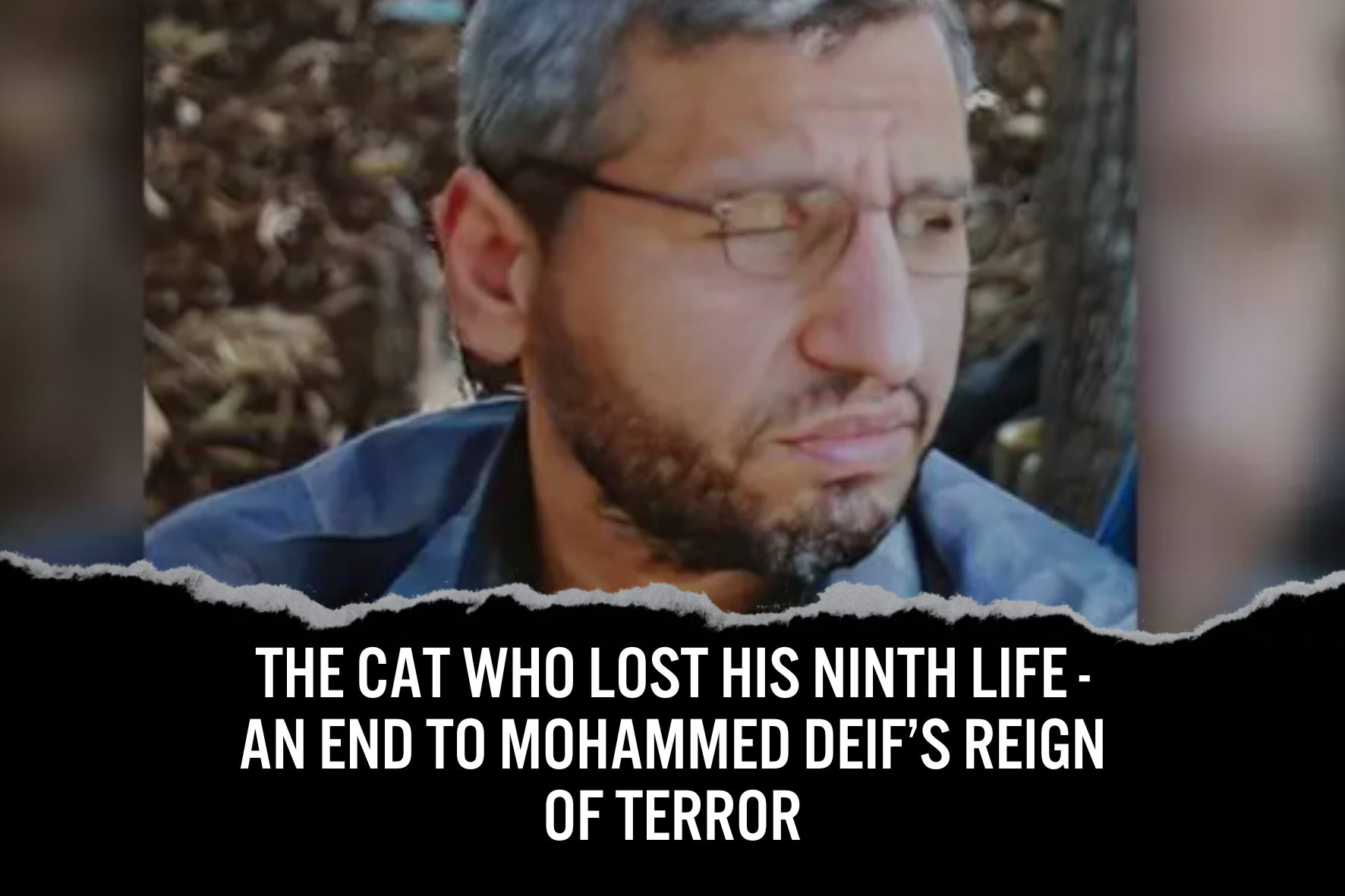
The Cat Who Lost His 9th Life
An End to Mohammed Deif’s Reign of Terror
Mohammed Diab Ibrahim al-Masri, more commonly known as Mohammed Deif, was a Hamas terrorist who is credited for being the mastermind behind the October 7th Hamas terrorist attacks. Deif is a figure synonymous with terror and violence and served as the leader of the Izz al-Din al-Qassam Brigades (IQB) which is the military wing of Hamas. Deif orchestrated numerous attacks against Israel, leaving a trail of destruction and loss in his wake.
Deif's tenure as the head of the al-Qassam Brigades, which began in 2002, was characterized by a series of deadly attacks. Even prior to gaining this position, Deif masterminded several suicide bombings in 1996 that killed over 50 Israelis civilians. Since his reign of terror began, he was instrumental in developing Hamas' capabilities, including rocket attacks and tunnel warfare. His strategies took the brutal, inhumane, and despicable atrocities being committed by Hamas to an even more dangerous level.
Deif's ability to evade capture and assassination earned him the nickname "the cat with nine lives." Since 1995, he had been the top target on Israel's most wanted list, surviving at least seven targeted killing attempts. Despite sustaining severe injuries, including the loss of an eye, Deif evaded death and continued to lead Hamas' military operations from the shadows.
In recent developments, there were allegations that Mohammed Deif may have been killed in an Israeli airstrike. On July 12th, 2024, Israeli fighter jets targeted a compound in the Al-Mawasi/Khan Younis area which was believed to be housing Deif and other high-ranking Hamas officials. While Israeli authorities had indicated "increasing signs" that Deif was killed in the operation, Hamas denied the claims and there was no definitive proof. Just over a week later, the IDF confirmed on July 21st that Deif was in fact killed in the attack.
Deif's actions did not go unnoticed on the international stage. Prior to his death, he had been designated a Specially Designated Global Terrorist by the U.S. Department of State and added to the European Union's terrorist blacklist. In May 2024, the International Criminal Court (ICC) applied for arrest warrants for Deif and other Hamas leaders, citing charges of extermination, murder, and other war crimes.
Mohammed Deif's legacy is one of relentless violence and strategic terrorism. His actions caused immense suffering and have perpetuated the cycle of violence in the Israeli-Palestinian conflict. The unfortunate reality of the situation is that Deif’s death simply means he will be replaced by another terrorist as hateful and dangerous as him. As long as figures like Deif remain in positions of power, the prospects for peace in the region remain bleak. His story is a stark reminder of the devastating impact of Hamas’s heinous and barbaric crimes. The ongoing struggle for stability and security in the Middle East will only continue without a unified front opposing terrorism and extremism.
By Kevin Bina – JIJ Intern
to read the Article with the Foot-Notes
Op-ed Mohammaed Deif
ECHOES OF DENIAL - OCT. 7TH ATROCITIES & RISING ANTISEMITISM- Report
The October 7, 2023, atrocities committed by Hamas against Israeli civilians were among the most documented terror attacks in history. Despite overwhelming evidence, including livestreamed videos and numerous survivor testimonies, a disturbing p.attern of distortion and denial of these events has emerged. This report examines the denial of the October 7 atrocities, links such denial to rising antisemitism, and reviews the current legal frameworks addressing atrocity denial. It also discusses the necessity and promotes the adoption of new legislation against such denial and provides recommendations for international cooperation to combat this dangerous phenomenon
Israel's Humanitarian Aid Efforts in Gaza: Addressing Allegations of Starvation as a Method of War
The ongoing conflict in Gaza has sparked intense international scrutiny, with serious allegations leveled against Israel regarding its treatment of Palestinian civilians. Among the most grave accusations are claims that Israel is deliberately using starvation as a weapon of war. This article aims to examine these allegations in light of Israel's documented humanitarian aid efforts and the complex realities on the ground in Gaza, providing a comprehensive analysis of the current situation and its historical context. The gravity of the allegations has drawn attention from international legal bodies. The International Court of Justice (ICJ) as well as the International Criminal Court (ICC) have consistently placed Israel under unfair scrutiny for a starvation crisis that does not exist.
In its provisional measures order, the ICJ highlighted the severe humanitarian situation in Gaza and the potential for irreparable harm due to lack of access to essential resources. The court stated:
"The catastrophic humanitarian situation in the Gaza Strip is at serious risk of deteriorating further. In view of the fundamental values sought to be protected by the Genocide Convention, the Court considers that the plausible rights in question in these proceedings, namely the right of Palestinians in the Gaza Strip to be protected from acts of genocide and related prohibited acts [under the] Convention … are of such a nature that prejudice to them is capable of causing irreparable harm".[1]
Similarly, the International Criminal Court (ICC) has expressed concern over the situation. In a statement, the ICC Prosecutor Karim A.A. Khan KC said:
"My Office is actively investigating any alleged war crimes in the region, including those related to the deprivation of essential resources such as food and water. The use of starvation of civilians as a method of warfare is a war crime in international armed conflicts".[2]
These quotes illustrate the fact that these international legal bodies have been subjecting Israel to unfair biases that are not consistent with the statistics provided below regarding Israel’s humanitarian aid deliveries and coordinations.
Since the outbreak of the conflict on October 7, 2023, Israel has been working to facilitate the entry of humanitarian aid into Gaza. According to COGAT (Coordination of Government Activities in the Territories), the Israeli body responsible for coordinating aid, over 18,000 trucks carrying humanitarian aid have entered Gaza through the Rafah and Kerem Shalom crossings as of June 2024.[3] Additionally, an average of 200-250 aid trucks are entering Gaza daily.[4] The aid includes food, water, medical supplies, and other essential items.
Despite the complex security concerns and logistical challenges, Israel opened a third humanitarian aid route into northern Gaza in May 2024, known as the Western Erez crossing, aimed at increasing the flow of aid into the region.[5] This effort was part of a coordinated initiative with the U.S. government to enhance aid delivery routes to the Gaza Strip, particularly to its northern areas.
Contrary to allegations of deliberate starvation, the amount of food entering Gaza appears to be sufficient for the population. A study by Columbia University professors found that 250 truckloads of food per day is sufficient to feed the entire Gazan population of 2.2 million people.The study concluded that each Gazan was provided with approximately 3,374 kilocalories per day, while only 2,100 kilocalories are needed. This amount is almost identical to the 2.36 kg of food per day that the UN's Food and Agriculture Organization estimates the average individual consumes in North America. [6]
These figures suggest that the food supply entering Gaza is more than adequate to meet the nutritional needs of the population.
It is important to note that the situation in Gaza was already dire prior to October 7th, 2023. The region already had limited economic opportunities and access to resources. According to the United Nations Relief and Works Agency (UNRWA), before the current conflict: Unemployment in Gaza stood at 45% (one of the highest rates in the world), 80% of the population relied on
international aid, and 90-95% of the water from the coastal aquifer was unfit for human consumption.[7] [8]
These pre-existing conditions have undoubtedly exacerbated the current humanitarian crisis, making it even more challenging to address the population's needs. Between the amount of aid that Israel has provided since October 7th and the amount of resources Gaza lacked prior to October 7th, claims that Israel is using starvation as a method of war are baseless and egregious.
Reports indicate that Hamas has been interfering with aid distribution within Gaza. According to various sources, including the United Nations:
Jordanian Aid Convoy Hijacking:
On May 2, 2024, Hamas hijacked a major humanitarian aid shipment from the Jordan Hashemite Charity Organization. The aid, which had transited through Israel’s newly-opened Erez crossing, was seized by Hamas after the Jordanian military unloaded it inside Gaza. The U.S. State Department condemned the act, noting that the aid was eventually recovered by the United Nations, but the incident marked a significant case of aid diversion by Hamas.[9] [10]
Drone Footage of Aid Theft:
The Israel Defense Forces (IDF) released drone footage showing Hamas operatives hijacking aid trucks, beating civilians, and transporting the stolen supplies to a Hamas stronghold. The footage depicted men loading humanitarian supplies onto a pickup truck and using force against civilians. This visual evidence highlighted the systematic nature of Hamas's interference with aid distribution.[11]
General Reports of Aid Diversion:
According to various reports, including those from the United Nations, Hamas has been consistently hijacking aid trucks entering Gaza. These reports indicate that Hamas militants often divert supplies intended for civilians to their fighters or sell them on the black market. This practice has been a significant obstacle to effective aid distribution within Gaza.[12]
The types of aid being stolen reportedly include: food supplies, medical equipment and medicines, fuel (which is critical for powering hospitals and water desalination plants), and building materials. This interference significantly complicates the humanitarian situation, making it more difficult to ensure aid reaches those most in need.
Not only do the aforementioned findings indicate that Israel is actively trying to provide sufficient humanitarian aid to Gaza, recent reports from the Famine Review Committee (FRC) of The Integrated Food Security Phase Classification (IPC) state that the available evidence does not support the notion that there is a famine in Gaza. The IPC is a multi-partner initiative that works to classify the severity and magnitude of food insecurity and malnutrition across the globe. The IPC is used by governments, UN agencies, NGOs, and other stakeholders to inform decision-making for better food security policy and programming. In March, 2024, the FRC reported that “Famine is now projected and imminent in the North Gaza and Gaza Governorates and is expected to become manifest during the projection period from mid-March 2024 to May 2024.”[13] This report was used in the ICJ’s statement in March telling Israel to improve humanitarian aid into Gaza.[14] However, the FRC has now stated in their June report that “the available evidence does not indicate that famine is currently occurring.”[15] Following this update from the FRC, Arif Husain, the chief economist at the UN World Food Programme, commented on the situation in a press briefing. Husain stated that there is a lack of reliable and supported evidence to confirm the sentiment that Israel is intentionally starving Palestinians. He stated there are currently no proven statistics pertaining to deaths by starvation in Gaza and added “It's not even a matter of being available. I don't think that they are even collected."[16] This exemplifies the fact that misinformation about Israel is rampant. Israel has remained committed to providing Gaza civilians humanitarian aid and yet cannot escape the false allegations of causing a genocide through the utilization of starvation as a method of warfare.
While the humanitarian situation in Gaza remains challenging, the data on aid deliveries and food supplies facilitated by Israel contradicts allegations of deliberate starvation or the use of hunger as a weapon of war. The evidence suggests that Israel is making significant efforts to provide humanitarian assistance to Gaza's civilian population, despite the ongoing conflict.
The complexities of aid distribution within Gaza, including the reported interference by Hamas, highlight the need for a more nuanced understanding of the situation. As the conflict continues, it is crucial for all parties to prioritize the protection of civilians and ensure that humanitarian aid reaches those in need efficiently and effectively.
This article was written by Kevin Bina, a rising senior at the University of Pennsylvania studying Philosophy, Politics, and Economics. Bina is currently serving as an International Law and Diplomacy Intern at The Jerusalem institute of Justice
Read the full Article with the Foot-notes:
https://jij.org/wp-content/uploads/2024/07/Article-Israels-Humanitarian-Aid-Efforts-in-Gaza-1.pdf
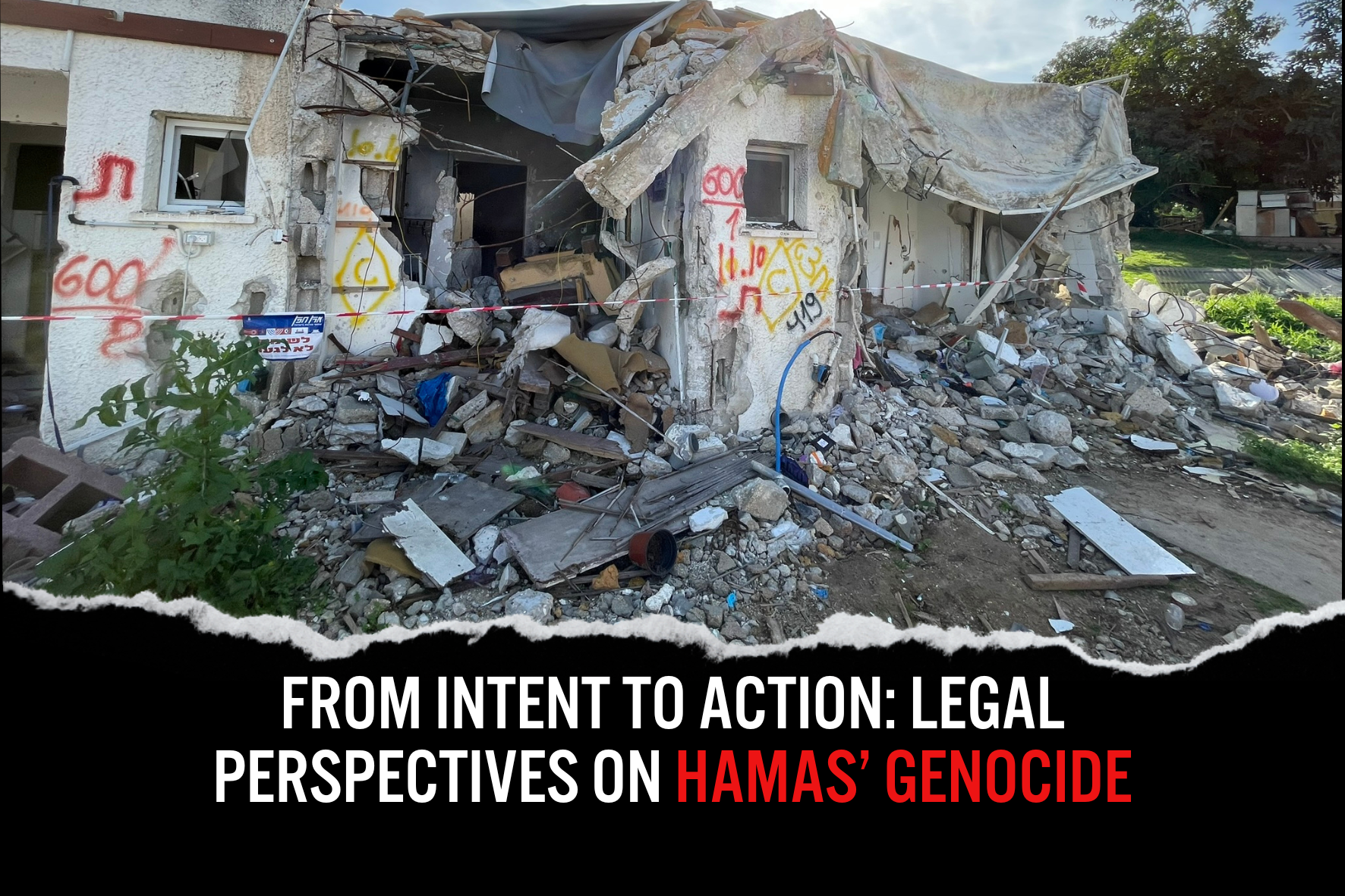
From Intent to Action: Legal Perspectives on Hamas’ Genocide
CONTENT WARNING: THIS REPORT CONTAINS EXPLICIT GRAPHIC CONTENT, INCLUDING IMAGES AND DESCRIPTIONS OF KILLINGS, SEXUAL VIOLENCE, AND OTHER FORMS OF EXTREME VIOLENCE, WHICH MAY BE DISTURBING OR TRIGGERING TO SOME READERS
This report provides a comprehensive analysis of the October 7, 2023, attacks perpetrated by Hamas and other terrorist organizations, arguing that these acts fulfill the criteria to be considered genocide under international law. The document outlines the historical context of the Genocide Convention of 1948, emphasizing the legal definition of genocide and its codification in international law, particularly under the Rome Statute of the International Criminal Court (ICC).
In this report meticulously details the background, entities involved, and the horrifying acts of October 7, focusing on the systematic attacks by Hamas and other Palestinian armed groups against Israeli nationals, resulting in over 1,200 deaths and numerous acts of violence, including rape, mutilation, and kidnapping. It argues that these acts satisfy the physical element (actus reus) of genocide, including killing members of a group, causing serious harm, and imposing measures intended to prevent births within the group.
Furthermore, it elaborates on the mental component (dolus specialis) required for genocide, highlighting how speeches and actions by Hamas’ most influential leaders before and after the attacks evidence genocidal intent. The report discusses individual and state responsibility for genocide, noting the role of the ICC, the International Court of Justice (ICJ), and the application of universal jurisdiction in prosecuting such crimes. It also addresses the Palestinian Authority's complicity through financial incentives for terrorists (the "Pay for Slay" policy) and public endorsements of the attacks.
The report concludes by underscoring the necessity of recognizing and naming the crime committed on October 7 as genocide in accordance with legal standards and the evidence presented. It calls for accountability through international legal mechanisms to address and prevent such atrocities in the future.