
Amnesty International = Bias Against Israel

We have written a letter to Amnesty International in response to their extremely biased report against Israel titled “Israel’s Apartheid Against Palestinians: Cruel System of Domination and Crime Against Humanity”.
Dear Amnesty International,
We, the Jerusalem Institute of Justice, an Israeli NGO fighting to promote human rights, defend democracy, and improve the overall quality of life for Israelis and Palestinians alike, find it of the utmost importance to address your recent report titled “Israel’s apartheid against Palestinians: Cruel system of domination and crime against humanity”.
We believe the report’s attempt to allege that Israel has maintained “a system of oppression and domination” over the Palestinians that meets the international definition of apartheid is a preposterous and baseless claim. Israeli Arabs take an active part in Israeli life, as military and police commanders, as ministers, as diplomats, and as Supreme Court judges. In addition, there’s an Arab party in the current coalition and in June 2021 Israeli Arab Parliament Members held a conference in the parliament of the so called apartheid regime of Israel titled: “Between Occupation to Apartheid”. The report also accuses Israel’s “apartheid” of extending “over Palestinian refugees whose right of return to their homes remains controlled by Israel.” To claim that Israel imposes a system of oppression and domination on Palestinians that live in Lebanon, Jordan, or the United States is completely absurd.
We condemn the terminology used in the report referring to the terrorist organization “Hamas” as solely an “armed group”, whereas this organization clearly falls under the various definitions for terrorism. Furthermore, the European Union, the United Kingdom, and the United States have all designated it as a terrorist organization. Hamas periodically violates International Humanitarian Law by firing rockets and mortars from densely populated areas, thus placing Gazan civilians in grave danger as “human shields.” In the most recent Israel-Gaza conflict, in May 2021, Hamas (the armed Palestinian groups that the report refers to) fired thousands of indiscriminate rockets towards Israeli towns, killing thirteen Israelis. Hamas also misfired hundreds of rockets that fell into the Gaza Strip, killing Palestinians and damaging Palestinian property, these acts are heinous war crimes, yet your report does not mention them even once. The report only mentions alleged war crimes committed by Israel.
Moreover, this report is above all a blatant means to delegitimize the State of Israel and criminalize Israeli laws and practices that are designed to safeguard Jewish identity, such as the Law of Return. The report infers that this law is a form of oppression of Palestinians: “This unequal and separate citizenship structure has resulted in stark discrimination against Palestinian citizens in several ways”. To propose that the law constitutes a form of discrimination towards Palestinians is outrageous, since its sole purpose is to safeguard Israel’s Jewish character. Furthermore, this law and others are enshrined under international law and parallel the practices of many nation-states.
Yours sincerely,
Flavia Sevald, CEO,
Jerusalem Institute of Justice,
If you agree with this letter and want to send a petition to Amnesty International letting them know that you stand up for Israel and believe their report is biased click the button below to sign the petition. It will get sent to Amnesty International’s London
headquarters.
PETITION TO AMNESTY INTERNATIONAL
Dear Amnesty International,
I stand with the Jerusalem Institute of Justice, an Israeli NGO fighting to promote human rights, defend democracy, and improve the overall quality of life for Israelis and Palestinians alike, and find it of the utmost importance to address your recent report titled “Israel’s apartheid against Palestinians: Cruel system of domination and crime against humanity”.
We believe the report’s attempt to allege that Israel has maintained “a system of oppression and domination” over the Palestinians that meets the international definition of apartheid is a preposterous and baseless claim. Israeli Arabs take an active part in Israeli life, as military and police commanders, as ministers, as diplomats, and as Supreme Court judges.
Moreover, this report is above all a blatant means to delegitimize the State of Israel and criminalize Israeli laws and practices that are designed to safeguard Jewish identity.
We call upon Amnesty International to cease their attack on Israel!
I declare that the State of Israel does not perpetuate apartheid and has a right to exist as the homeland of the Jewish people.
Signed by

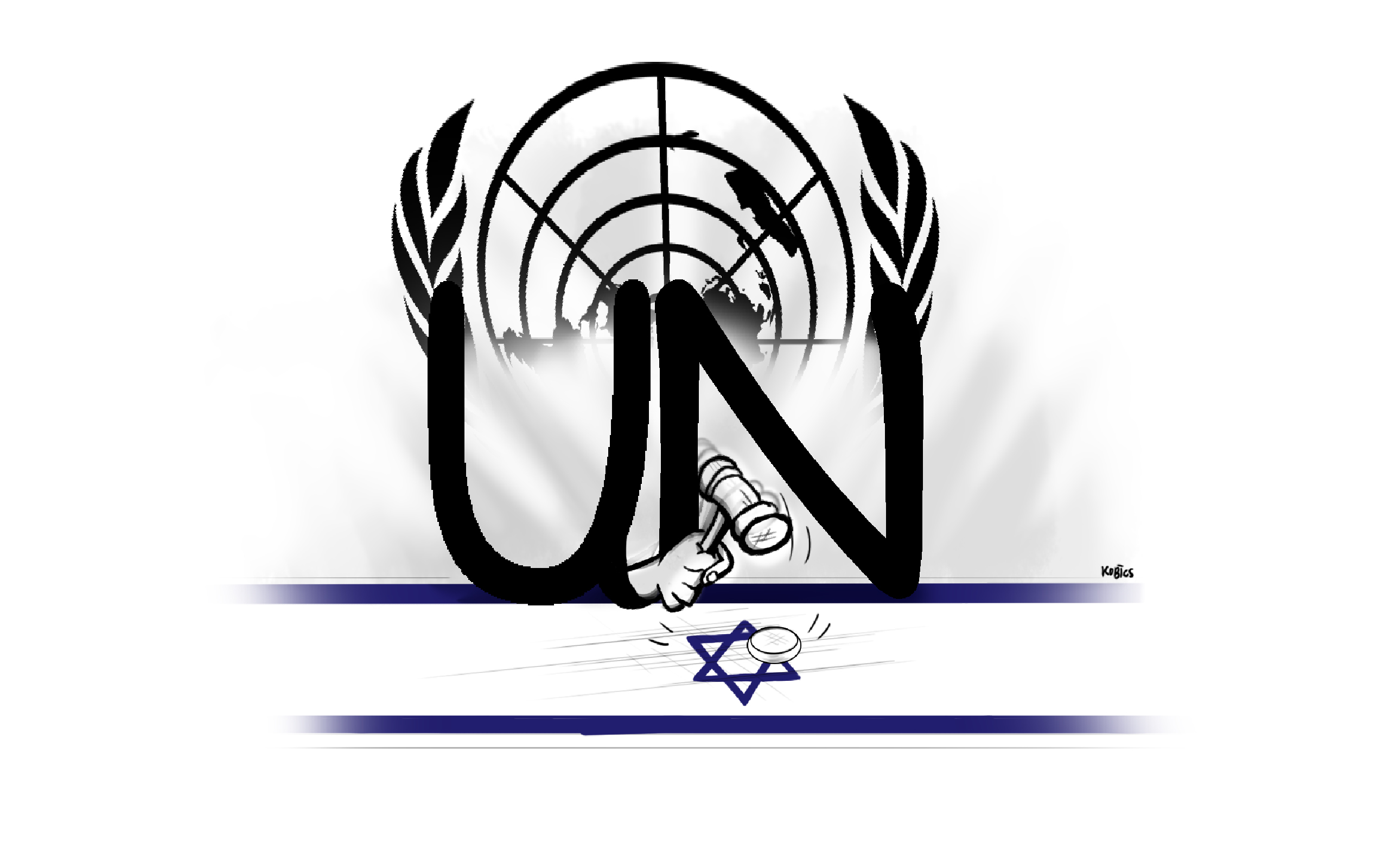
Stop the Apartheid Lie - Petition Against the UNHRC

With an extremely wide scope, an unreasonable budget of $18 million, 18 full-time employees and three members with a track record of hostility towards Israel chosen to lead the inquiry, the UN Human Rights Council (UNHRC) has initiated a permanent “Commission of Inquiry” (COI) into Israel, which constitutes a blatant and unprecedented direct attack on Israel.
The United Nations (UN) is perhaps the most biased global human rights organization in modern history when it comes to Israel. During the 70 plus years of Israel-UN relations, much ink has been spilled on the disproportionate preoccupation of the UN with Israel. Starting with a disgraceful resolution determining that Zionism is a form of racism and racial discrimination, to an unequivocal recognition by former UN secretary-general, Ban Ki-moon officially confirming that the UN is biased against Israel. But every time you think they hit rock bottom, a new low is waiting around the corner. This time the hypocrisy and prejudice that characterize the UN’s approach toward Israel have reached new lows.
With an extremely wide scope, an unreasonable budget of $18 million, 18 full-time employees and three members with a track record of hostility towards Israel chosen to lead the inquiry, the UN Human Rights Council (UNHRC) has initiated a permanent “Commission of Inquiry” (COI) into Israel, which constitutes a blatant and unprecedented direct attack on Israel.
The pretext for this inquiry was to investigate the May 2021, 11-day conflict between Israel and Hamas, in which Hamas fired thousands of indiscriminate rockets towards Israeli towns, killing innocent Israelis and Palestinians alike. The real reason for this inquiry though is to accuse Israel of systematic discrimination and repression based on the national, ethnic, racial or religious identity of Palestinians. In other words, to classify Israel as an Apartheid state.
The UN refuses to allow the facts and the reality on the ground to divert it from its course. A reality in which Arab Israelis are intertwined in all aspects of the Israeli society. They are leading commanders in the Israeli Defense Forces, they hold high positions in the Israeli Police Forces, and they serve as ministers, diplomats, and even judges at the Israeli Supreme Court. But all of this is completely irrelevant for the UN.
As part of the orchestrated apartheid campaign, Amnesty International, the world’s largest human rights organization and a leading player in antisemitic campaigns, published a 211-page report accusing Israel of implementing an institutionalized regime of Jewish oppression and control over the Palestinians. The report denies Israel’s right to exist as the nation state of the Jewish people. It is a clear and blatant demonstration of modern antisemitism. It features twisted legal analyses and a series of fabrications intertwined with ridiculous terminology. One that describes, inter alia, the designated terror group Hamas, as an “Armed Group”.
The publication of the report at this time is intended to strengthen the legitimacy of the UNHRC Committee and its conclusions. A foregone conclusion. In addition, Amnesty calls on the international community to exercise pressure on Israel by calling for an Arms Embargo on Israel and calling on the Chief Prosecutor of the International Criminal Court in The Hague to investigate Israel for committing the crime of Apartheid.
Israel understands very well that this is a rigged game. The committee’s conclusions were reached even before the committee began its work. I expect that the committee will determine that Israel is an apartheid state.
A similar process took place several months ago when the International Criminal Court in The Hague announced the opening of a criminal investigation against Israel, in a disgraceful political decision that lacks any legal or moral justification.
Israel has officially announced that it will not cooperate with the UNHRC probe and will not allow its members to enter Israel. Israel has recently refused a request by Ms. Navi Pillay, the Commission’s chair to meet with Israeli officials. This will not be the first time that Israel chooses not to cooperate with initiatives and resolutions that meet all the characteristics of modern antisemitism. Open boycott instead of cooperation, is Israel’s new approach.
PETITION TO THE UNITED NATIONS HUMAN RIGHTS COUNCIL
Dear United Nations Human Rights Council,
I stand with the Jerusalem Institute of Justice, an Israeli NGO fighting to promote human rights, defend democracy, and improve the overall quality of life for Israelis and Palestinians alike, and find it of the utmost importance to reject the so-called independent commission named “The United Nations Independent International Commission of Inquiry on the Occupied Palestinian Territory, including East Jerusalem, and Israel”.
The mandate and structure of this “inquiry” have been designed to rewrite history from 1948, to find Israel guilty of apartheid and to declare the “root causes” of “conflict” to be Jewish infringement of Muslim rights. The commission’s plan is to falsely accuse Israel of racism, to validate criminal prosecutions of Israelis and to call upon “third states” and “business enterprises” to boycott, divest and sanction Israel.
Also, the three members of this Commission are anything but independent. The head of the commission, Navi Pillay, was a key leader of the 2001 UN Durban World Conference against Racism which called Israel a racist state. As United Nations High Commissioner for Human Rights during the 2008-9 and 2014 Gaza wars, Pillay played a pivotal role in promoting the Goldstone report and the outrageous slander that Israel targeted and murdered children. Since leaving office, she’s made a habit of promoting BDS and accusing Israel of apartheid. In addition, the two other members of the committee, Miloon Kothari and Chris Sidoti, both hold anti-Israel extremism and Palestinian partisanship records.
The result of this witch hunt is a foregone conclusion. Therefore we demand the Human Rights Council to revoke the resolution forming this commission.
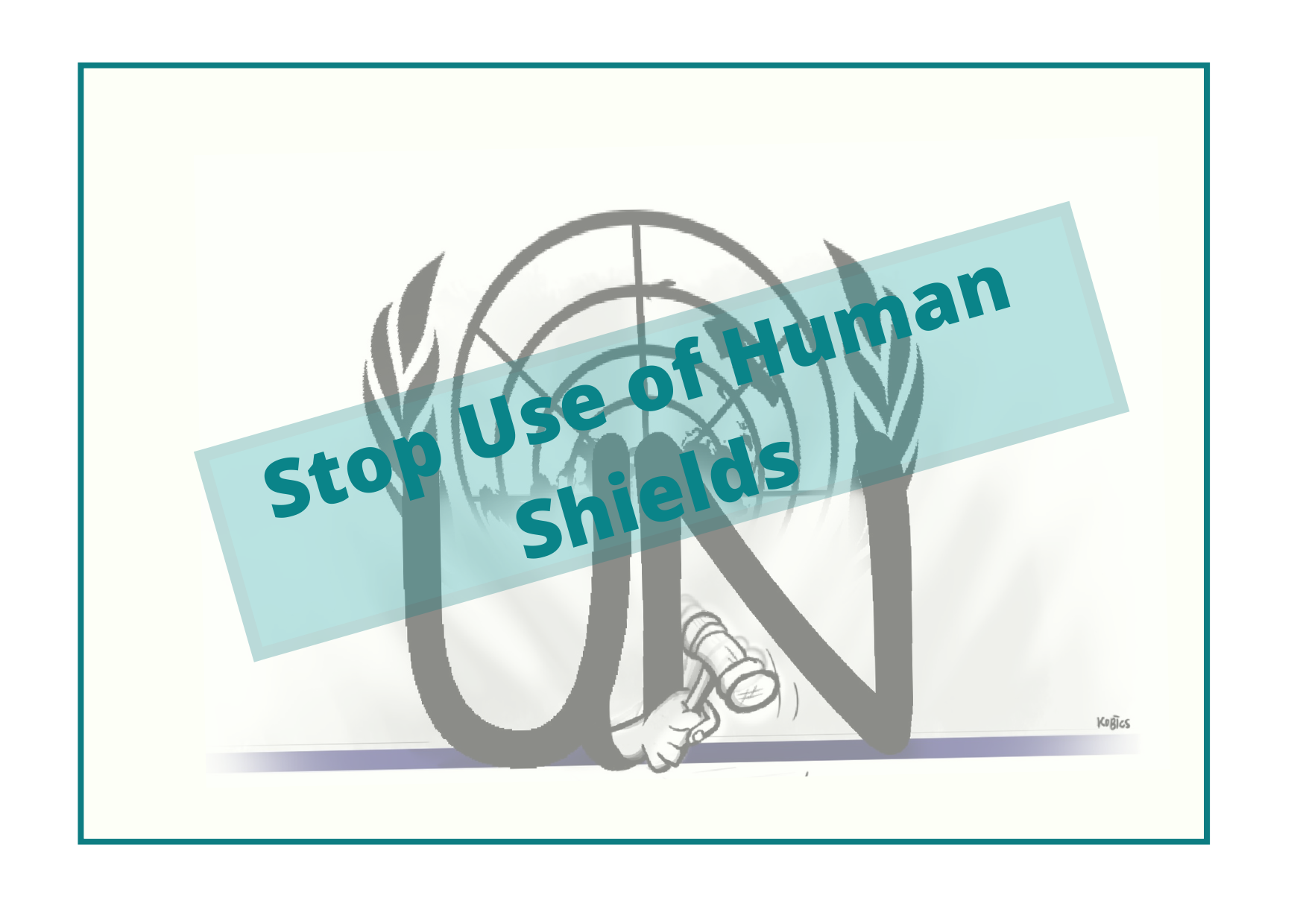
Human Shields = UN War Crimes
Jerusalem Institute of Justice- Submission to The Independent International Commission of Inquiry on the Occupied Palestinian Territory, including East Jerusalem, and Israel
Dear Honorable Commission,
We, the Jerusalem Institute of Justice, are a not-for-profit human rights organization, with Special Consultative Status at the UN Economic and Social Council, fighting to promote human rights, defend democracy, and improve the overall quality of life for Israelis and Palestinians alike. Due to our hope of ever-lasting peace in the region, we find it of the utmost importance to address your call for submissions of relevant information and documentation to the mandate of the Commission.
The attached report concerning Hamas’s actions during Protective Edge Operation (the 2014 Gaza war) was filed by our organization at the Office of the Prosecutor at the International Criminal Court (ICC) in The Hague on the 6th of March 2017. We argued that a full investigation of crimes committed within the Palestinian territories should be pursued, and a case should be lodged, against Ismail Haniyeh, head of the political wing of Hamas, for his role in the commission of war crimes during the 2014 Gaza war. Following this communication, and others, an investigation of the “Situation in Palestine” was commenced by the Chief Prosecutor of the ICC on the 3rd of March 2021. The submission of this report is in accordance with the COI’s mandate to collect evidence and information of abuses of international human rights law and identify those responsible.
There were two primary war crimes committed by Hamas militants during the war within the Gaza strip. First, they consistently used civilians for military protection and purposes, placing the Gazan population in grave danger as “human shields.” This was done by firing rockets and mortars from densely populated areas, by encouraging (and sometimes forcing) civilians to remain in potential military targets, and by storing rockets in schools, hospitals, mosques, and other civilian structures. Second, the rockets Hamas used during the war are inherently indiscriminate under international law, and were therefore unlawful to use. These rockets are unable to be controlled, and therefore could not accurately be fired at lawful military targets.
These heinous crimes reoccurred during the most recent Gaza conflict in May 2021– Hamas fired more than 4,360 rockets and mortars from residential areas. Of those, approximately 680 misfired and fell into the Gaza Strip, killing Palestinians and damaging Palestinian property, and 3,570 of the remaining rockets struck Israeli towns and cities. Thirteen Israelis were killed, and hundreds were injured. These war crimes are also considered criminal activity pursuant to Article 8 of the Rome Statute of the International Criminal Court – “War Crime of Using Protected Persons as Shields”.
We urge the commission to look into these violations of Human Rights committed by Hamas and include them in their report due to be presented in the Human Rights Council’s June regular session.
Yours sincerely,
Flavia Sevald, CEO,
Jerusalem Institute of Justice,

Your Worst Enemy is Your Best Teacher
by JIJ intern
The Israeli-Palestinian conflict involves two peoples, the Jews and the Palestinians. The two groups often have two competing narratives, two contrasting histories, two sets of terminologies and even two different maps (Ipfatid, 2021). This contributes to a zero-sum mindset in which voices on each side view the other groups’ perspective as an existential threat.
Unfortunately, the international community often takes advantage of both parties distress by sharing incomplete, inaccurate or outdated information on the Israeli-Palestinian conflict. This usually accentuates the divide between Palestinians and Jews (Ipfatid, 2021).
In order to move past this divide, I believe that Israelis and Palestinians, Jews and Arabs, must find common ground between their respective narratives. Luckily, important peace-builders, such as Yossi Klein-Halevi, New York Times best-selling author of Letters to my Palestinian Neighbour, are actively working toward integrating each group’s national narrative in an effort to achieve a lasting, warm peace (Klein-Halevi, 2021).
In Klein-Halevi’s brilliant talk on YouTube titled Israeli and Palestinian Narratives, he breaks down the strengths and the weaknesses of each party’s narrative (JBS, 2015). For the Palestinians, there is the advantage of being the majority presence in Israel/Palestine prior to 19th century Zionist immigration. Meanwhile, for the Jews there is the advantage of identity: a consistent story linking the Jewish people to the land of Israel for 3,500 years.
The more the conflict between the two parties has intensified, the more each side has learned to compensate for deficits in their own story through the other group’s narrative (JBS, 2015). For instance, Zionist immigration to the Land of Israel starting in the 19th century allowed Jews to no longer be a minority within the Holy Land. Meanwhile, in the 19th century, the Palestinians did not have a distinct national identity. To compensate for this lack, Palestinians cultivated a national identity separate from the broader Arab and Muslim world (JBS, 2015).
That being said, the friction between Jewish presence in the Holy Land and a distinct Palestinian identity is often at the heart of the divide between the two parties. There are people on both sides of the conflict that declare the other group is an illegitimate, foreign interloper with no rights to live or self-determinate in this land (Behan, 2021).
Despite this sentiment, in some ways both parties have already succeeded in their national aspirations: there is now a large Jewish presence in the Land of Israel and there is also a distinct Palestinian national identity. Given that the Jews and the Palestinians, whether it was unintentionally or purposefully, learned from each other how to strengthen their own national movements, this may present a potential pathway to conflict resolution: recognizing similarities (JBS, 2015).
Bridging the gap between both parties’ national narratives may involve acknowledging the commonalities between Jewish and Palestinian aspirations. This includes recognizing the legitimacy of both peoples’ identities and recognizing the right for both peoples to live in this land (Behan, 2021).
Finally, this includes acknowledging that both sides have at times experienced the Israeli-Arab conflict as victims. Israelis often see themselves as a minority within the broader Arab and Muslim world, most of which has historically sought to destroy the Jewish state. Meanwhile, Palestinians usually perceive themselves as a marginalized population resisting a well-established country (Ipfatid, 2021). Ultimately, to move forward there must be a willingness from both Jews and Palestinians to humanize, empathize and integrate each other’s national narratives on the conflict (JBS, 2015).
References
Behan, Daniel (2021, March 16). Palestinians and Ashkenazi Jews: Co-Indigenous To The Same Land. Retrieved February 1, 2021, from https://blogs.timesofisrael.com/ palestinians-and-ashkenazi-jews-co-indigenous-to-the-same-land/ [@ipfatid] (2021, June 2).
Why is Approaching the Israeli-Palestinian Conflict With Nuance So Difficult [infographic]. Instagram. https://www.instagram.com/ipfatid/ [JBS] (2015, April 14).
Yossi Klein Halevi: Israeli and Palestinian Narratives [Video]. Youtube. YouTube.com/watch?v=_bLOfHov7IY&t=399s Klein-Halevi, Yossi (2021, November 23).
To The Students Who Walked Out on Palestinian Israeli Dialogue. Retrieved February 1, 2021, from israel.com/to-the-students-who-walkedout-on-palestinian-israeli-dialogue/?fbclid=IwAR1Ks61fQ8HhWDKnpwZ2ACVEhJ9eOxnCGfJE_mxkDUGGvvBMypUJ0KAqc
Silencing Critical Voices
Article by Catarina Gruber.
The United Nations General Assembly granted Palestine the status of a non-member observer state on November 29, 2012. This status enabled Palestine to ratify international conventions and treaties and join over 115 international organizations and agencies.
By upgrading the international status to a non-member observer state, Palestine was also able to join the International Court of Justice and the International Criminal Court. Hence, Palestine is permitted to sue Israel for acts that take place in their territory, such as alleged crimes against humanity and war crimes.
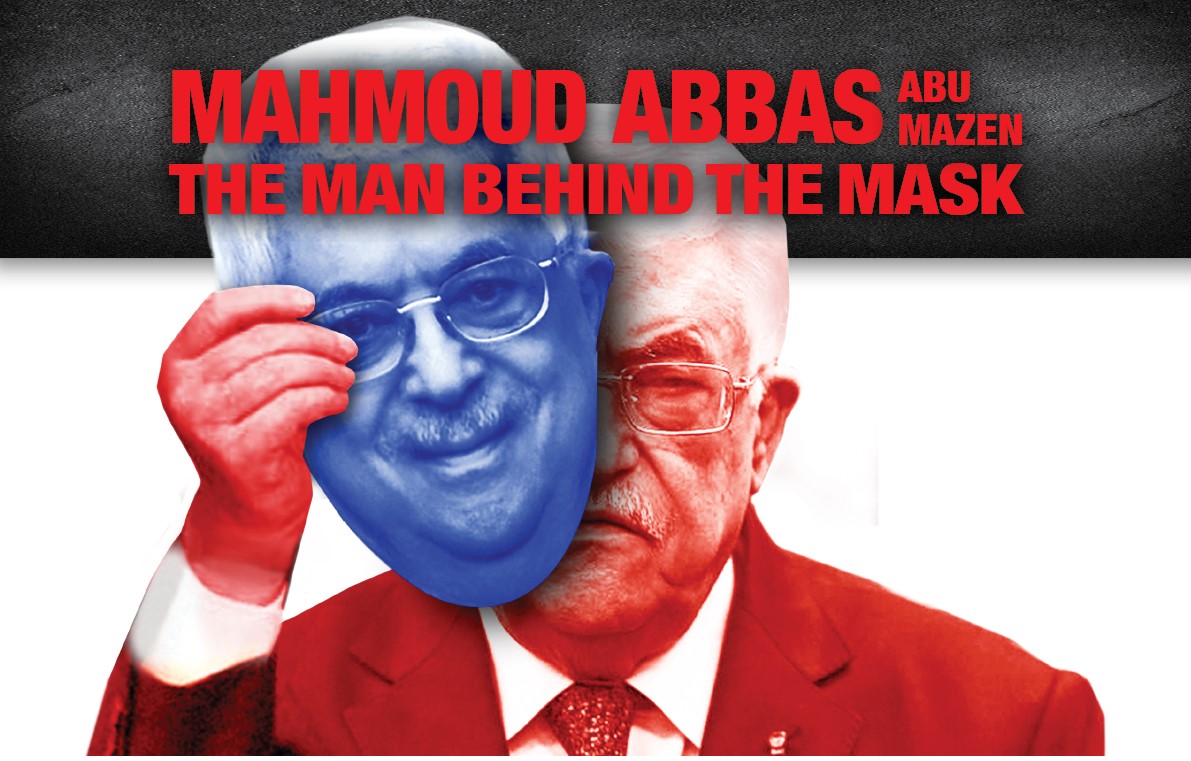
However, Mahmoud Abbas and the Palestinian Authority do not themselves comply with the basic principles of international law and human rights. Abbas rules over Palestine with an iron fist. Abbas is implicated in the many cases of unlawful imprisonment, torture and murder of the civilian population of the West Bank, including his political rivals and critics.
Abbas shows no compunction when silencing critical voices. Issa Amro, a prominent Facebook activist, who dared to speak out against the Palestinian Authority in a post, was arrested and imprisoned for seven days for the crimes of insulting “higher authorities” and creating a “sectarian strife” in 2017.
Torture is carried out by Abbas’ forces on a large scale. More than 180 Palestinian civilians are tortured yearly. Young men from Balata Refugee Camp, widely known as a central point of resistance against Abbas, were detained on allegations of criminal activity in 2017. Palestinian security forces subjected them to prolonged torture, repeatedly using grave physical violence, and locking them into tiny 60cm by 60cm cubicles with nearly no possibility to move. The accused were kept imprisoned in those spaces for up to 22 hours a day for 22 consecutive days.
Mahmoud Abbas’ reputation as a peacemaker is just a façade that hides his true identity and agenda. The peace process came to a halt long before the US decision to relocate their embassy to Jerusalem. There are strong allegations of Abbas having played a role in the 1972 massacres at the Munich Olympics and the continual payments made to Palestinian terrorists and their families cause additional cracks in the veneer Abbas hides behind.
The misery of the Palestinian population in Gaza is also largely due to Abbas’ inadequacy as a leader. He has reduced the electricity supply, provoked healthcare bottlenecks and has stopped the payment of salaries of officials in Gaza. He wants to bring his strongest political rivals, the Hamas, to their knees even if the price is the suffering of the civilian population.
However, whenever Abbas visits Brussels, he is warmly welcomed like an old friend of the European Union. As one of the initiators of the 1993 Oslo Accords, he is considered moderate. Thus, his administration continues to be sponsored by the EU with hundreds of millions of euros. No consequences, certainly not financial ones, have been imposed because of Abbas’ appalling actions.
The more accusations against Mahmoud Abbas came to light, the more obvious it became that his actions could not be ignored any longer. The Jerusalem Institute of Justice (JIJ) took initiative and started a legal examination of the crimes committed by Abbas. While collecting data, the testimonies against Abbas grew and the number of cases reached an alarming amount. In consultation with experts in international law the JIJ rendered the factual data into a legal report.
On February 20, 2019 the JIJ submitted a communication to the Office of the Prosecutor (OTP) of the International Criminal Court (ICC) in The Hague regarding crimes against humanity committed against the Palestinian citizens in the West Bank by Mahmoud Abbas. In a meeting with the OTP the issue was taken very seriously, and constructive thoughts were shared. This tribunal has the moral responsibility to bring the perpetrator of such horrific crimes to justice.
6 Moral Teachings from Assad and other Criminals
Written by Yarden Biyalistok Cohen
Before addressing our topic, I would like to thank you readers, for not letting hate and prejudice guide your life, and for your willingness to establish your perspective on facts and on more than one point of view.
The topic we are about to discuss is regarding the resolutions made by the UN General Assembly on November 29, also known as "Palestine Day". I won't try to argue against the very existence of such a day, although trying to promote an "Israel Day" at the UN would be a better joke than having a day dedicated to bicycles, or the full moon (both are real by the way and take place at the 30th of April and June 3rd respectively, or even better "Tuna day" which occurs on the 2nd of May).
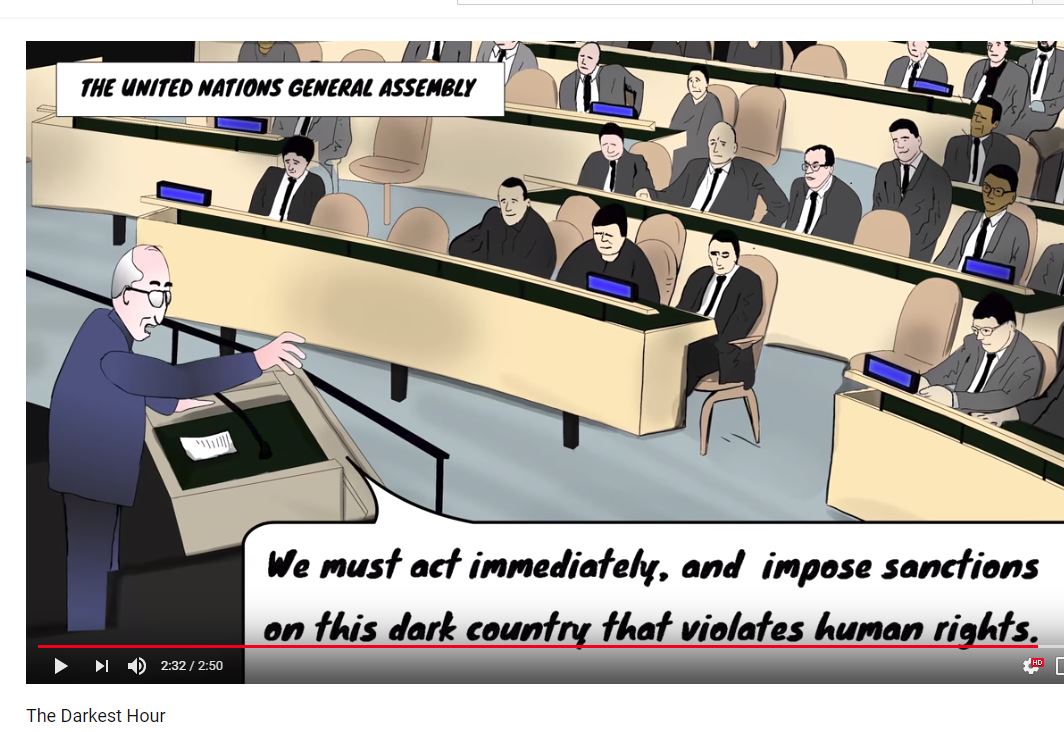
Six resolutions were made on "Palestine Day", and were signed by countries that are almost the dictionary definition of an oppressive tyranny, and human rights violators, such as Sudan, Venezuela, Saudi Arabia, and Yemen. The resolutions of the General Assembly all addressed Israel, and were aimed at undermining its legitimacy and sovereignty. On that day, the Chair of the Committee on the Exercise of the Inalienable Rights of the Palestinian People Cheikh Niang (Senegal), wore a scarf that revealed his “objectivity”, and his willingness to let the discussion be “impartial”. On the scarf, of course, was the flag of the Palestinian Authority (maybe on May 2nd he will show up in a scarf showing solidarity with the tuna fish).
In most cases, we would simply continue by stating that the demonization of Israel and the Jewish people is not news. Unfortunately Anti-Semitism was around way before the establishment of the UN and most likely to stay here after it. Nevertheless, the first of the 6 resolutions calls for the deliberation on "fifty years of occupation" and to express solidarity and support to the Palestinians. The second resolution asks to continue the collaboration with the Palestinian people and their leaders, widen the scope of documentation and expand the Question of Palestine’s website. The third resolution asks to continue investigations into the legal ramifications of the "Israeli West Bank Barrier". The Security Fence is exactly that, a fence that was built to stop the entrance of suicide bombers and other terrorists into Israel, and the last part of it was finished back in 2006. The Security Fence was under meticulous scrutiny by the Israeli Justice system. This General Assembly resolution only emphasizes its real goals, to undermine Israeli sovereignty. As proof the committee asks to investigate within Israel's territory, not just the areas where the Security Fence is located. I wonder if the final report would state that the proof that the Fence is unnecessary is that the investigating operatives were not actually killed by suicide bombers.
The fourth and fifth resolutions express concern regarding the provocation that took place at Jerusalem's Holy Sites, during Tisha B'av which is a Jewish day of grief, remembering the desolation of both Temples. The Jewish people in Israel requested to pray at the Temple Mount, which is inside Israel's borders. The Jordanian press published bombastic headlines like "The Jews are storming al-Aqsa", which painted the act of praying with false war-like colors, aiming to harm Israel's legitimacy. Apparently you deserve freedom to worship only if you are not Jewish.
The last resolution sheds an even brighter light upon the infamous UN bias against Israel. The resolution calls for Israel to give back the Israeli Golan Heights to Syria (that is also a signatory of the resolution). Israel annexed the Golan Heights after Syria attacked in 1973; the attack took place on the Jewish holy day of Yom Kippur, a day of fasting for the Jewish people. The Syrian forces rushed into the Israeli cities aiming to annihilate them. After Israel repelled the attack, the government decided to annex the Israeli Golan as a natural security border. A portion of the mountain ridge stayed in Syrian hands, thus serving as a natural boundary for both countries.
Since then, that front has been quiet, showing how Israel has managed to use a mountain as a peace resource. The people of the Golan Heights (almost all are Druze) have established good and ongoing relations with the Israeli people and the Israeli government. They enjoy freedom, equality, economic development and of course human rights. Their brothers and sisters that are unfortunately not on the Israeli side of the border, have suffered oppression from the Syrian regime, the Syrian civil war, and have also fallen victim of extermination attempts by ISIS.
During the Syrian civil war Israel has done its best to relieve civilians from as much suffering as possible, by using its military to provide to countless Syrian civilians with medical assistance. The very existence of Israel serves as protection to Syrian citizens who flee to the border. Israel has cared for the wellbeing of the Syrian people far more than the Syrian regime, who has slaughtered hundreds of thousands of their own people.
This resolution asks to cede Israeli territory to Syria and by doing that further increase the body count. Israel of course cannot accept this resolution since it jeopardizes the safety and security of its citizens, Jews, Arabs and Druze. In addition, I want to ask you, if you can help me find the connection between this resolution and the Palestinian people’s suffering?
As Israelis, we lost our trust in the UN long ago. From here it seems as if it serves as an international Anti-Semitic arm, which promotes the exact opposite ideals than the ones it was founded upon. I urge you to help reclaim truth and reason! Help us protect our Druze brothers, our freedom of worship, and the purity of intentions in the UN.
The Refugee Problem: An Artificial Crisis
“To us, the refugee issue is the winning card which means the end of the Israeli state.” Those were the words of Sakher Habash, a senior member of Fatah Central Committee, lecturing in 1998 at An-Najah University in Nablus.
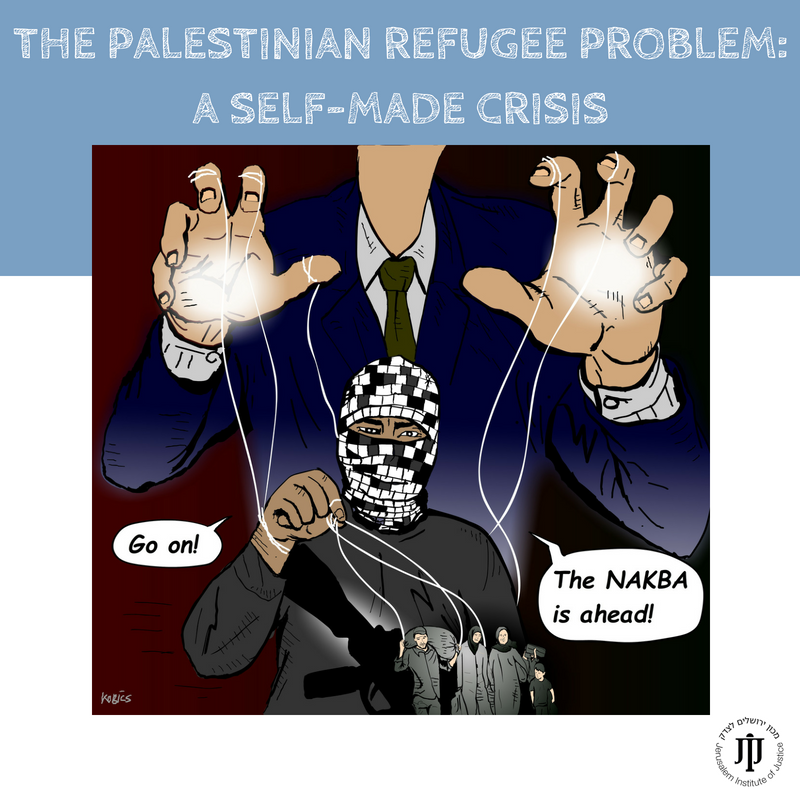
Winning card? End of the Israeli state? In that brief sentence Habash revealed both the reason why Palestinian leadership refuses to help the Palestinian refugees and the desired end of their agenda. While military action, terrorism, and deception have failed to accomplish the elimination of the Jewish state, the Palestinian leaders perpetually keep the refugees in miserable camps simply to be used as human pawns in a cynical and dishonest propaganda campaign. That campaign has successfully deceived many in the West, including the EU; especially many pro-BDS religious organizations and NGOs who, pre-disposed by their Kairos and replacement theology (with its implicit anti-Semitism), are only too willing to be convinced.
The BDS movement relies on the ignorance of its audience. Analyst David Meir-Levi calls the protracted refugee crisis “an artificial crisis maintained by Arab rulers in order to exploit their own people’s suffering – to create a ‘poster child’ for Palestinian victimhood, a staging ground for anti-Israel propaganda, a training center for Arab terrorists, and a trump card for the anti-Israel jihad when all else fails.” (www.aish.com/jw/me/498116622.html)
The Arab refugee problem basically started in 1947; but we need to go back further and note that Israel was created out of Turkish land from the Ottoman Empire. Before the British Mandate, the Arabs living in Palestine considered themselves to be Syrian citizens. There was no group of people who identified themselves as Palestinian and therefore no territory being claimed by a Palestinian national entity.
Fast-forwarding to 1947, the UN Partition Plan (Resolution 181) would have created two states out of the west-of-Jordan remainder of the Mandate. The Arab states rejected the partition plan and launched a war on Israel in a coordinated attack. That military assault was the initial cause of the Arab refugee problem.
It was the Arab states, eight of them, not the Israelis or the Palestinian Arabs, who started the war. Rejecting Israel’s peace offers, they intended to annihilate the Jews. They lost the war in a humiliating defeat, and the infant state of Israel prevailed. Ever since then the Muslim Arabs commemorate that defeat (Israel’s amazing survival) as al-Nakba, “the catastrophe.” But what they call the catastrophe was entirely unnecessary and avoidable. In truth, they have only themselves to blame for initiating the war of aggression that they so ignominiously lost. Likewise, they have themselves to blame for the resulting refugee problem.
Scholar Sol Stern says this: “The Nakba is the heart of the Palestinians’ backward-looking national narrative which depicts the creation of the State of Israel in 1948 as the original sin that dispossessed the land’s native people. […] Every year the legend grows.” (www.city-journal.org/html/nakba-obsession-13303.html)
Chairman Yasser Arafat, declared in his 2003 Nakba Day speech, “On this accursed day, the state of Israel was established by force of arms. … Our people were strewn from our homeland, in exile, in the diaspora, and in the refugee camps by massacres. (https://www.memri.org/reports/arafats-nakba-day-speech)
Stern notes, “Echoing the Nakba narrative is an international coalition of leftists that celebrates the Palestinians as the quintessential Other, the last victims of Western racism and colonialism.” That coalition of leftists conspicuously includes the religious proponents of BDS.
Armed with newly declassified British archives, historian Ephraim Karsch writes, “It was only from the early 1950’s onward, as the Palestinians and their Western supporters gradually rewrote their national narrative, that Israel, rather than the Arab states, became the Nakba’s main, if not sole, culprit. The ex-Mufti led the way by casting his countrymen as the hapless victims of a Jewish grand design to dispossess them of their patrimony….” (Karsch, Palestine Betrayed)
Revisionist historian and frequent critic of Israel Benny Morris writes that in defiance of Resolution 181, the Arabs “launched hostilities against the Jewish community in Palestine in the hope of aborting the emergence of the Jewish state and perhaps destroying the community. But they lost; and one of the results was the displacement of 700,000 of them from their homes….” Morris says that most of those 700,000 fled their homes with the promise from their leaders that they could return shortly after a quick Arab victory. Two-thirds of those were displaced, he notes, “from one part of Palestine to another and not from their country (which is the usual definition of a refugee)….” (Quoted in Stern)
The number of Palestinian refugees who fled in 1947-49 is disputed. Figures from a 1947 census and the UN indicate a number closer to half a million. The Palestinians fled for different reasons.[1] Most of them fled to get out of the way of the expected Arab invasion. We should note here in passing that the number of Jewish refugees who were expelled at the same time from Arab countries, around 850,000, surpassed the number of Palestinian refugees. Those Jewish refugees were stripped of their property and citizenship in those countries. That comparison is a telling study, but our focus here is on the Palestinians.
Contrary to the anti-Zionist narrative, Israel in 1948 encouraged the Palestinians to stay in their homes and become Israeli citizens. The May 14th Proclamation of Independence said, “In the midst of wanton aggression, we yet call upon the Arab inhabitants of the State of Israel to preserve the ways of peace and play their part in the development of the State, on the basis of full and equal citizenship and due representation in all its bodies and institutions.”
David Ben Gurion had declared, years before 1948, “All our aspiration is built on the assumption … that there is enough room in the country for ourselves and the Arabs.” In November 1947 Golda Meir told a crowd in Jerusalem, “Our hands are extended in peace to our neighbors. Both states can live in peace with one another and cooperate for the welfare of their inhabitants.” (Ephraim Karsch, Palestine Betrayed)
“Had the Arabs accepted the 1947 UN resolution,” writes Mitchell Bard, “not a single Palestinian would have become a refugee. An independent Arab state would now exist beside Israel.” Time and again since 1947, Arab leaders have rejected Israeli peace overtures, revealing that only a zero-sum “river-to-the sea” judenrein Levant will satisfy them. Apparently, their allies in the BDS movement have no problem with that outcome.
Several relevant issues spin off from the Palestinian refugee problem. One can ask: Why do the Arab nations, after seven decades, still refuse to welcome the refugees? Why does the UN persist in exercising a double standard for Palestinian refugees, vis-à-vis all the other millions of refugees in the world? Why does the UN maintain UNRWA, a special administrative department for Palestinians, while the rest of the world’s refugees are administered collectively under the UNHCR? Why does the UN spend three times more money per capita on Palestinian refugees than on other refugees in the world? Why does the UN apply a special definition of refugee to the Palestinians, uniquely giving refugee status to multiple descendant generations of Palestinians, most of whom were born long after 1948? These and other related issues deserve attention, but our spotlight here is on the false claim, often trumpeted in pro-BDS religious circles, that Israel caused the problem.
To quote David Meir-Levi: “It was not Israel that caused the Arab refugee problem, nor Israel that obstructed its solution. On the contrary, the Arab refugee problem was the direct result of the aggression by the Arab states, and their refusal after failing to obliterate Israel to sign a formal peace, or to take care of the Arab refugees who remained outside Israel’s borders.” (www.aish.com/jw/me/48916622.html)
[1] “A large part of the Arab civilian population was deluded into believing that it was in its interest to withdraw from the areas in conflict and in this way to enable the Arab armies to wipe out the Jews. They hoped to fall heir to the property of the defeated Jews.” […] [By contrast,] “The defeated Arab countries compelled their Jewish citizens, by direct or indirect means, to emigrate from their countries of residence. … The Jewish refugees left all their property in their ountries of origin. […] The Arab nations that made war on Israel, and encouraged the Palestinian Arabs to reject adamantly all offers of compromise continue to refuse to assume responsibility for the Arab refugees.” Avneri, Arieh. The Claim of Dispossession: Jewish Land-Settlement and the Arabs, 1878-1948. 283-284.
Apartheid: What it is and what it isn’t
By Nikki Golomb.
“For the purpose of the present Convention, the term "the crime of apartheid", which shall include similar policies and practices of racial segregation and discrimination as practised in southern Africa, shall apply to the following inhuman acts committed for the purpose of establishing and maintaining domination by one racial group of persons over any other racial group of persons and systematically oppressing them…”
UN International Convention on the Suppression and Punishment of the Crime of Apartheid
Apartheid, the Dutch word for separation, was the official system of political, economic, social, and cultural oppression of the Black majority in South Africa from 1948 until 1991. Although different forms of racism and discrimination still exist around the world today, the specific methods of oppression exercised by the South African government during this time are unique to the system of apartheid. The United Nations Apartheid Convention (cited above) lists several methods of oppression indicative of apartheid, thus defining it as a distinct system of legislative discrimination.
A common misconception among the anti-Israel community is that Israel is an apartheid state. In order to dispel this misunderstanding, it is important to recognize two facts: first, that Arab Israelis and Jewish Israelis are equal under Israeli law; and second, that Palestinians living in the West Bank and Gaza are not Israeli citizens, and thus are not subject to Israeli law.
First, let us explore the rights of Arab Israelis. In order to do this, it is important to recognize the difference between societal discrimination and legal discrimination. Societal discrimination, for example, would explain that Arab Israelis are likely to receive a poorer education when compared to Jewish Israelis due to Arabs being viewed by some as second-class citizens, economic factors which make it difficult for Arab families to pay for private education, and a history of discrimination of which the effects are still being felt today. Lawful discrimination, on the other hand, would imply the legalization of forced school segregation based on ethnicity, as well as substandard educational materials and resources provided to Arab schools. While it is true that state religious (Jewish) schools and Arab and Druze schools exist, they are meant to cater toward each individual group’s cultural needs and are provided with uniform subject matter and appropriate funding; furthermore, the majority of Israeli students attend public (mixed) schools [source]. In terms of higher education, Arab Israelis make up 14.4% of Bachelor Degree students; 10% of Master Degree students; 6% of PhD candidates; and 35% of medical school students at the Technion [source]. While South Africa under apartheid gave Black citizens an inferior education, Israel provides equal education for all of its citizens, regardless of ethnicity. Arab Israelis additionally enjoy the right to vote, the right to form political parties, freedom of expression, and all other rights granted to all Israeli citizens.
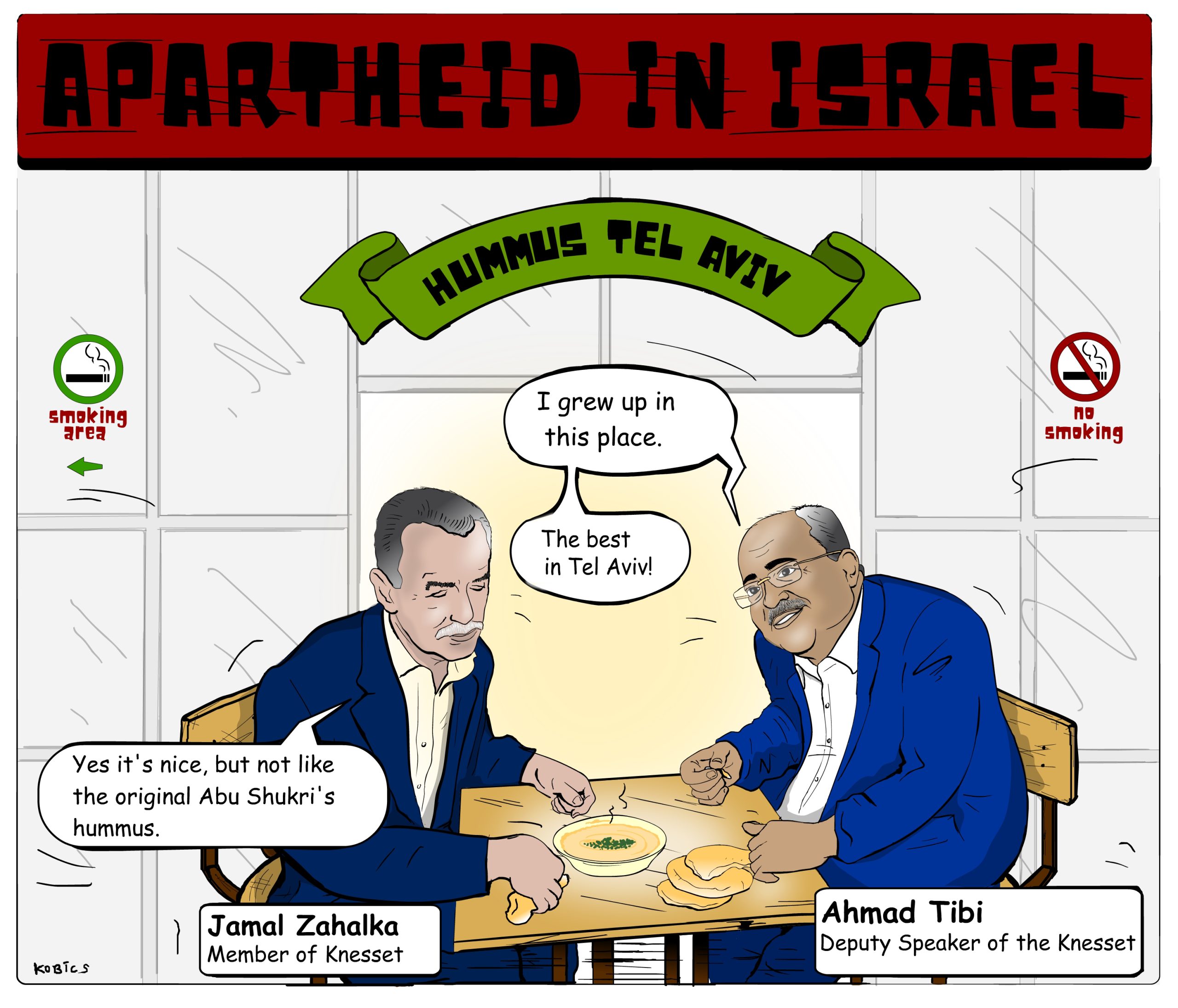
Arab Israelis also have many prominent positions in Israeli society, a phenomenon which would be downright impossible, let alone illegal, under apartheid. Seventeen Arab Israelis were elected to serve in the current Israeli Knesset, comprising 14% of all Members of Knesset. An Arab Justice serves on the Israeli Supreme Court, and 52 of Israel’s 672 Judges are Arab. Arab Israelis additionally work as professors, doctors, journalists, and other high-power positions throughout Israeli society. While these numbers do not reflect complete equality (in which, theoretically, Arabs would make up 19% of these workers, as they comprise 19% of the population of Israel), it again highlights the important distinction between social discrimination and legal segregation. Israel cannot be an apartheid state, because all of its citizens are treated equally under the law.
Now we can look at the more complex issue of Palestinian rights. While it is true that Palestinians living in the West Bank and the Gaza Strip cannot vote in Israeli elections, do not have access to Israeli education, and are not represented in the Knesset, this is because of the simple fact that they are not Israeli citizens. Just as I, an American Jew, cannot vote in Israeli elections because I am not an Israeli citizen, neither can a Palestinian. Since the Oslo Accords in 1993, Palestinians are subject to their own governments; and though these governments (the Palestinian Authority in the West Bank, and Hamas in Gaza) are anything but just, Israel has no governmental authority in those territories. Israel cannot be an apartheid state on the grounds of the rights of Palestinians simply because the Israeli government is in no position to grant or deny Palestinians civil and political rights.
With regards to what many refer to as the “apartheid wall,” the Security Fence along the border of Israel and the West Bank is actually a fence that is less than 5% wall. Although security checkpoints are an inconvenient reality that create difficulties for Palestinians when they enter Israel, they are necessary in order to protect the lives of all Israeli citizens. The fence, which was built during the second Intifada, stopped hundreds of terror attacks a day during the height of its success. While many Palestinians feel it is degrading and it is not a perfect solution by any means, it is a necessity in order to ensure the security of Israeli citizens. Just as you and I must go through border control when entering a different country, those wishing to enter Israel from the West Bank must also endure a security checkpoint. This is not apartheid – it is national security.
Discrimination is, like in all countries around the world, a problem in Israel which is being addressed. However, it is not the legalized system of oppression that many claim it to be. Arab Israelis have full rights under Israeli law, and Palestinians are subject to their own laws and policies. While the methods of protecting national security are not perfect and social equality has not yet been realized, calling Israel a state of apartheid is both factually inaccurate and offensive to the Black South Africans who lived through true apartheid. In order to truly advocate for the rights of those in and around Israel, it is vital to do so using all the facts and correct terminology. It is impossible to fight against something which does not exist, and it is a waste of time and energy to do so when there are real problems that must be addressed.
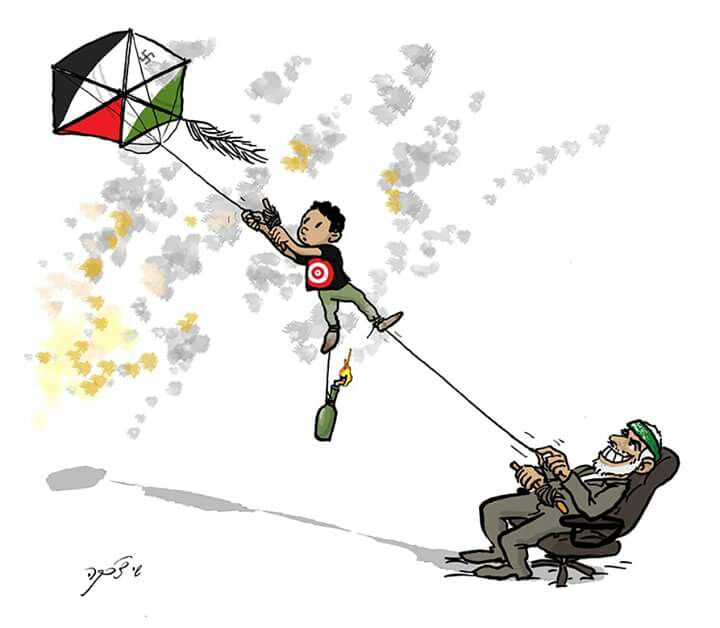
Not a peaceful protest
Gaza | Insider Update |
Hamas' violent confrontation campaign is not a peaceful protest
· The Hamas terror organization led another round of its confrontation campaign from Gaza against Israel. Orchestrated by Hamas, approximately 40,000 rioters gathered at the border and several thousand tried to storm into Israel at 13 locations.
· The rioters hurled firebombs and explosive devices, burned tires, threw rocks and launched flaming objects with the intention of igniting fires in Israeli territory, breaking into Israeli villages, and harming Israeli security officers.
· Israel made relentless efforts to prevent the masses from violently breaching the border. These included early warnings (by leaflets, direct phone calls, on radio and social media), as well as the use of non-lethal means (water cannons, tear gas, smoke grenades, rubber bullets).
· Inflamed and violent crowds cannot be allowed to storm the border fence, opening a way to infiltrate into Israeli towns and threaten Israeli civilians.
· What is happening at the Gaza-Israel border is not a protest; it is a well-prepared campaign by the Hamas terror organization, sending the masses to the fence, knowing they will get hurt, and hiding armed operatives among them, using civilians as human shields.
· The confrontations at the Gaza-Israel border started at the end of March, when Hamas led thousands of Palestinians in a confrontation campaign with Israel under the title "March of Return". The aim was to break the border fence, storm Israeli towns and attack Israeli civilians, reflecting Hamas' outspoken goal: the destruction of the State of Israel.
· Any country faced with a situation in which a terror organization is trying to storm its territory with the declared goal of murder and destruction will not hesitate to stop this aggression at its border.
· 53 of 62 of the Palestinian casualties sustained in the 14 May riots were acknowledged by Hamas and the Palestinian Islamic Jihad as terror operatives affiliated with their organizations.
· Hamas is a terror organization that has ruled the Gaza Strip since 2007, with the declared goal of the destruction of the State of Israel. Hamas seeks to murder Israelis by terror attacks, firing rockets, placing IEDs and building terror tunnels into Israeli territory.

Incitement: The Low-Hanging Fruit to Achieving a Peace Deal
One of our interns recently sat down for an interview with former Israeli Ambassador to Canada Alan Baker of the Jerusalem Center for Public Affairs. In line with his role as the organization’s international law expert and Director at the Institute for Contemporary Affairs, the Ambassador has amassed a wealth of experience in dealing with the international legal implications of incitement.
The protracted conflict between Israel, the Palestinians and the wider Arab world has endured for over six decades. One reason for this is that many of the issues up for negotiation in a final peace agreement - refugees, borders, demilitarization and settlements - are notoriously complex. However, the issue of incitement is one point of difference between the two parties that could and should be easily resolved.
Within the context of Israeli-Palestinian relations, incitement refers to either:
- The act of encouraging or urging another person to commit violence, or
- Knowingly disseminating false information about a particular group of people with the aim of provoking a violent reaction
When asked about the issue’s centrality in resolving the conflict, Ambassador Baker pointed out that incitement is specifically addressed in the interim agreement of the Oslo Accords. He notes “a committee was set up – the Palestinians, the Israelis, and the Americans, to handle incitement by everyone”. Interestingly, the inclusion within the agreement framework was borrowed from Israel’s peace treaties with Israel and Jordan. Again, the Ambassador points out that “there are specific provisions there calling upon each side to do whatever is necessary – from the point of view of education and one thing or another – to encourage good neighbourliness and prevent incitement”.
The strategic use of incitement has permeated Palestinian leadership since before the inception of the Israeli state. Most infamously, it was employed to horrific effect in the Hebron Massacre of 1929, where between 67-69 Jewish people were killed by Arab mobs who were told of supposed Jewish plans to storm the Al-Aqsa mosque in Jerusalem. In contemporary times, we have seen a rapid resurgence of these accusations from the upper echelons of the Palestinian Authority. In September 2015, at the height of a wave of car-ramming and stabbing attacks, PA President Mahmoud Abbas alleged Jewish interference at the Muslim holy site. “Al-Aqsa is ours and so is the Church of the Holy Sepulchre”, he proclaimed. “They have no right to desecrate them with their filthy feet. We won’t allow them to do so and we will do whatever we can to defend Jerusalem.” As foreign governments - particularly the Obama administration - were urging parties to calm tensions and combat incitement, Abbas continued “each drop of blood that was spilled in Jerusalem is pure blood as long as it’s for the sake of Allah. Every martyr will be in heaven and every wounded person will be rewarded, by Allah’s will”. As recently as July 2017, PA Parliament Member for Fatah, Hatem Abd Al-Qader, stated “we are moving towards an escalation. The Israelis are moving towards an escalation, and we have no problem on our part that there will also be an escalation from the Palestinian side. Escalation is answered with escalation, and violence is answered with violence”.
As it currently stands, access to the site is governed by an arrangement achieved immediately after Israel’s unification of Jerusalem in the Six Day War of 1967. More commonly known as the ‘status quo’, the site is administered by a Jordanian trust known as the waqf and grants access to Muslims, Christians and Jews but forbids prayer by the latter two groups. Apart from the periodic unsubstantiated allegations from Palestinian leaders, no evidence exists suggesting any current or planned changes to the status quo. Member of Knesset Yehuda Glick, who currently serves in the governing Likud party, can attest to this. Prior to his ascension to the Knesset, Glick was a prominent campaigner for Jewish prayer rights at the Temple Mount and, therefore, alterations to the status quo. During that time, he survived an assassination attempt by a man who believed Glick to be “an enemy of Al-Aqsa”. Ironically, he serves in a governing party that enforces an arrangement to which he is diametrically opposed.
Importantly, the phenomenon of incitement is not limited to perceived incursions on the Temple Mount. Religious clergy play a significant role in shaping their followers’ attitudes to violence. For example, in October 2015, Rafah cleric Sheikh Muhammad Sallah "Abu Rajab" brandished a knife while exclaiming “Form stabbing quads. We don't want just a single stabber. Oh young men of the West Bank: Attack in threes and fours. Some should restrain the victim, while others attack him with axes and butcher knives…Oh men of the West Bank, next time, attack in a group of three, four, or five. Attack them in groups. Cut them into body parts”.
Ambassador Baker became well-known in the international legal community for authoring the Draft International Convention for the Prevention of Incitement to Terror, which borrowed language and preambular paragraphs from other U.N. Conventions addressing terrorism. However, the dissonance between the recognition of the problem and the collective will to act ultimately torpedoed the document’s success. “Everybody admits and accepts the fact that incitement is a central component of terror today but nobody’s prepared to act against it”, argues Baker. “There’s a resolution every year in the General Assembly condemning international terrorism and this includes advocating, inciting… but it’s not a legal document - it’s a political thing accepted by a political majority but it has no teeth.”
Similarly, the Ambassador laments the lack of collective will to combat incitement on the international stage. He was disappointed that his efforts to prosecute former Iranian President Mahmoud Ahmadinejad for inciting genocide against Jews and Israelis - in contravention of Article 3(c) of the Convention on the Prevention and Punishment of the Crime of Genocide - were unsuccessful. “Not only is Ahmadinejad violating provisions of the ICC Statute, it doesn’t matter because he’s also violating the Convention Against Genocide by advocating genocide and therefore he’s bound, he’s violating international law.” He added that, together with the Canadian B’nei Brith, he even drafted a charge sheet detailing which international crimes he committed.
The elusive peace between Israelis and Palestinians will neither be achieved easily nor overnight. Although we may not know the exact nature of any final agreement, we can say which actions will torpedo any progress. It won’t include conspiracies of Jewish hordes swarming Islamic holy sites, nor calls to arms aimed at instigating a religious war. Palestinian leaders and clerics owe it to their children to spread a message of nonviolence. They must reject – not just publicly – the idea of mukawama (armed resistance) and champion the idea that there is no glory in the afterlife for stabbing innocent people or car ramming children. Words matter – particularly with impressionable youth and the age of technology. As such, incitement in all its forms is a disaster for coexistence.