

Hamas Terrorizes The People of Gaza
Learn more about how Hamas abuses the rights and freedoms of Palestinians in the Gaza Strip.
Download

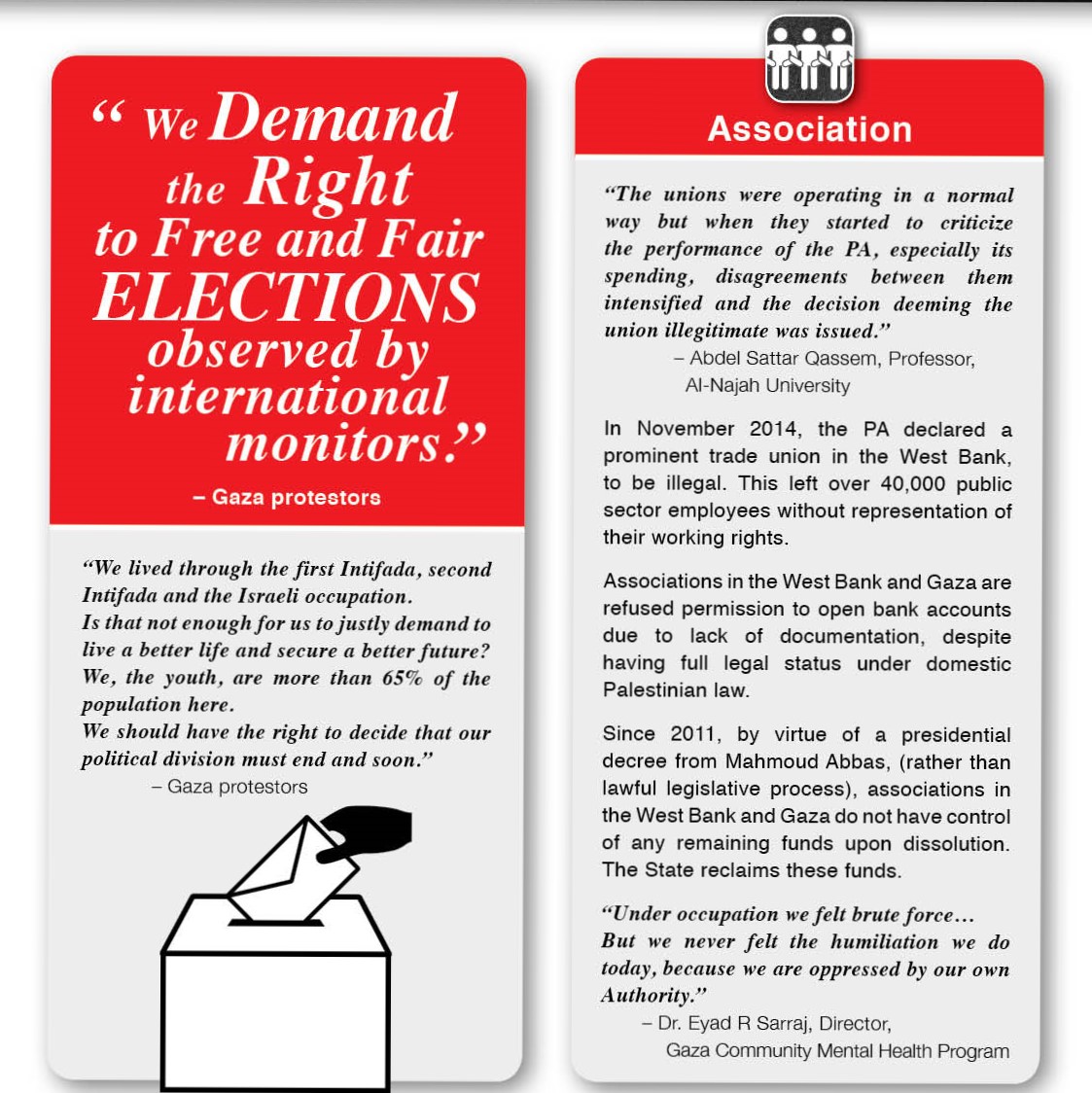
Palestinians- Governmental Censorship
Between Hamas and the Palestinian Authority, Palestinians in the West Bank and Gaza enjoy no freedom of expression. From censorship of the press, media control, prohibition on criticizing authorities, these organizations are in direct violation of international freedom standards.
Download
Yahya Sinwar - Hamas' New Man
The recent replacement of Khaled Meshaal with Ismail Haniyeh as Chairman of the Hamas Political Bureau momentarily left a rare vacancy in the role of Hamas’ overall leader in Gaza. However, the position was immediately filled after the group elected Yahya Sinwar to fill the role.
Relatively unknown by those outside Israel and the Palestinian territories, speculation abounds as to how Hamas – and by extension Gaza - will behave under Sinwar’s leadership.
We explore the life of Sinwar and how his policy prescriptions and personality traits will influence Hamas’ relationship with Israel, the people of Gaza and the Palestinian people as a whole.
Early Life
Sinwar was born in 1962 in the Khan Yunis refugee camp in Southern Gaza. He graduated from high school at the Khan Yunis Secondary School for Boys, after which he graduated from the Hamas-affiliated Islamic University of Gaza (its co-founders happen to be the co-founders of Hamas; Sheikh Ahmed Yassin and Mahmoud al-Zahar) with a Bachelor’s degree in Arabic Studies.
His first foray into Palestinian nationalism came in 1982 when he was arrested for subversive activities and spent several months in the Far’a prison. There, he met other Hamas militants such as Salah Shehade – the former leader of the Izz ad-Din al-Qassam Brigades.
Movement Through Hamas
He was arrested again in 1985[1]. Upon his release, he co-founded the Munazzamat al Jihad w’al-Dawa (Majd) with Rawhi Mushtaha. The mission of the Majd, among other things, was to identify Israeli spies in Hamas, other political parties and among Palestinian civilians[2]. Since then, the paranoia of Israeli collaborators has occupied much of Hamas’ attention, most infamously when at least 23 people were summarily and extrajudicially executed in July/August 2014 after they were accused of collaborating with Israel[3].
In 1988, he masterminded the abduction and killing of two Israeli Defence Force soldiers. He was later arrested, convicted of murder, and sentenced to multiple life sentences[4]. He would go on to serve 22 years of his sentence, before being released in 2011 along with 1,026 other prisoners as part of the prisoner exchange agreement for the release of Gilad Shalit. By Hamas’ own admission, just 41 of these prisoners collectively killed 569 Israelis[5].
Following his release, Sinwar ascended through Hamas’ political ranks rather than his previous military roles. He was elected to the Hamas political bureau during the group’s secret internal elections in 2012[6].
In September 2015, the United States government declared Sinwar a terrorist[7]
His volatile temperament and unpredictability have earned him a reputation of notoriety both in Israel and within Gaza. In early 2016, it is alleged that he organized the execution of Hamas commander Mahmoud Ishtiwi due to an internal rivalry within the organization. Furthermore, it is also alleged that Sinwar himself was the man who physically detained Ishtiwi at gunpoint after bursting through his front door[8][9].
In July 2016, he was chosen to take charge of Israelis held captive by the Al-Qassam Brigades in the Gaza Strip[10].
Future Prospects
The appointment of Sinwar is not an exercise in stability or continuity for Hamas. Rather, it represents their perceived need for a renewal of leadership amid growing cynicism of career politicians and public anger over issues such as delayed reconstruction and electricity outages. In contrast to Ismail Haniyeh and Khaled Meshaal, Sinwar is neither a career politician nor a technocrat. Nonetheless, as a man who has served in both the military and political wings of Hamas, he is seen as being capable of bridging the divides between these two factions.
A key focus of his leadership will likely be an increase in the kidnapping of Israeli soldiers. He sees the tactic as incredibly useful as Hamas can repatriate former militants back into their ranks, increase support for Hamas among Palestinian people and dictate the terms of their prisoners’ release to Israel. Indeed, following his release, Sinwar told Hamas media that the group should ‘kidnap more soldiers to exchange them for the freedom of our loved ones who are still behind bars[11]’.
His militancy and hardline stance, while not out of place in Hamas, are somewhat more extreme than his predecessor Ismail Haniyeh. His unpredictability may drag the group into another war with Israel. Furthermore, his predecessor was a far more experienced statesman who knew how to balance the regional interests and cooperation of countries such as Egypt, Turkey, Qatar and Iran.
[1] Balousha, H. & Booth, W. 2017, ‘Hamas names hard-liner as its new political leader in Gaza’, The Washington Post, February 13, viewed 3 April 2017, https://www.washingtonpost.com/world/middle_east/hamas-names-hard-liner-as-its-new-political-leader-in-gaza-/2017/02/13/b4e31518-f1f6-11e6-9fb1-2d8f3fc9c0ed_story.html?utm_term=.0083adce8049
[2] Beaumont, P. 2017, ‘Election of new Hamas Gaza Strip leader increases fears of confrontation’, The Guardian, February 13, viewed 3 April 2017,
[3] Amnesty International 2015, ‘”Strangling Necks” – Abductions, Torture and Summary Killings of Palestinians by Hamas Forces During the 2014 Gaza/Israel Conflict’, United Kingdom, viewed 3 April 2017, p. 5, available via https://www.amnesty.org/en/documents/mde21/1643/2015/en/
[4] Balousha, H. & Booth, W., op. cit.
[5] Isaacharoff, A. 2011, ‘Shalit’s Captors: He Wasn’t Tortured, He Received Medical Care and Watched TV’, Haaretz, October 20, viewed 3 April 2017, http://www.haaretz.com/israel-news/shalit-s-captors-he-wasn-t-tortured-he-received-medical-care-and-watched-tv-1.391072
[6] Dalloul, M. A. 2017, ‘The new leader of Hamas in Gaza is Yahya Al-Sinwar’, Middle East Monitor, February 13, viewed 3 April 2017, https://www.middleeastmonitor.com/20170213-the-new-leader-of-hamas-in-gaza-is-yahya-al-sinwar/
[7] U.S. Department of State, ‘Terrorist Designations of Yahya Sinwar, Rawhi Mushtaha, and Muhammed Deif’,
[8] Isaacharoff, A. 2017, ‘Yahya Sinwar can ignite Israel’s south – and may want to’, The Times of Israel, February 12, viewed 3 April 2017, http://www.timesofisrael.com/yahya-sinwar-the-man-who-can-ignite-the-south-and-may-want-to/
[9] Coordination of Government Activities in the Territories (COGAT), ‘The Secret that Hamas Wants to Remain Buried Forever’, Israeli Government, February 9 2017, viewed 3 April 2017, http://www.cogat.mod.gov.il/en/Our_Activities/Pages/HamasSecretIshtiwi8.02.2017.aspx
[10] Dalloul, M. A., op. cit.
[11] Boyle, C. & Siemaszko, C. 2011, ‘Israeli soldier Gilad Shalit freed, reunites with family after five years as Hamas prisoner’, New York Daily News, October 19, viewed 3 April 2017, https://www.counterextremism.com/extremists/yahya-sinwar
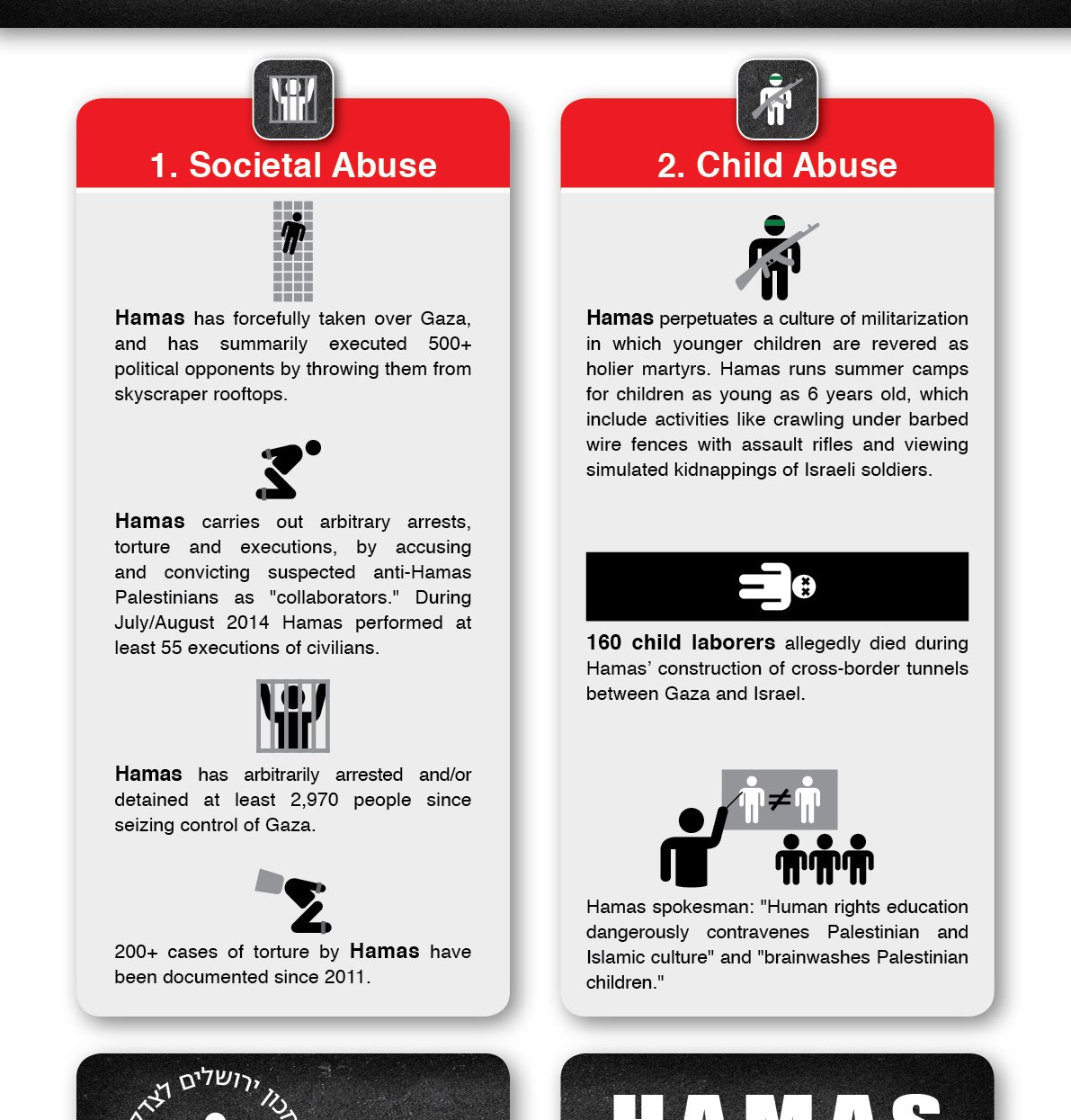
Why is Hamas Bad for Palestinians?
Learn how Hamas terrorizes the Palestinian population in the Gaza Strip.
Downloads

LET’S BE HONEST
Regional leaders tailor In the field of international politics and conflict, understanding words and the meanings behind them is essential. their narratives depending on their audience, either Western sensibilities or crafting their language to cater to internal ears. Which message are we to believe? This project challenges the hypocritical rhetoric of Arab leaders by exposing the blatant lies told to the West by exposing their true intentions toward peace.
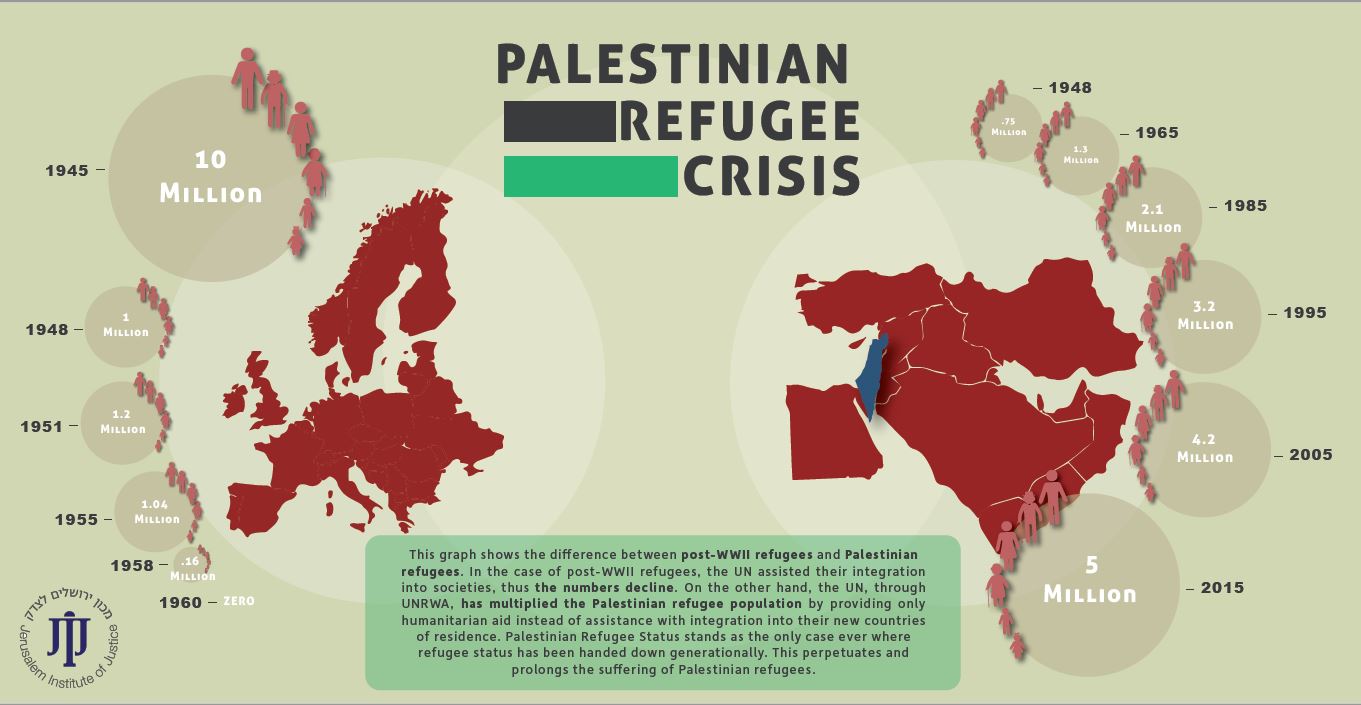
PALESTINIAN HUMAN RIGHTS
Since 2011, we have been holding events on college campuses across the world in an effort to promote balanced academic discourse, an area generally dominated by anti- Zionist sentiment. We began an initiative in 2012 to further our mission to ensure the rights of all peoples in and around Israel. We held a series of events entitled “Palestinian Human Rights Week” in Toronto, York, Helsinki, and Tel Aviv. Since then, we have expanded to the San Francisco Bay area, including at universities such as UC Berkeley, UC Davis, and UC San Jose. We also sponsored events in Finland, Norway, Sweden, France, United Kingdom, Germany and the Netherlands by reaching out to government bodies, students, and the press.