
The Cynical Exploitation of Israeli Democracy
In 1990, Nelson Mandela was released from Victor Verster Prison in Cape Town after spending twenty-seven years behind bars. His only crime was that of rebelling against the white minority that subjugated his people by denying them the right to vote, to acquire land and to protest.
Similar regimes of oppression exist today in Iran, which executes political dissidents; in the West Bank, where being homosexual is a criminal offence; and in Saudi Arabia, which practices gender apartheid. As of yet, the international community has failed to put as much pressure on these regimes as it did on Pretoria, partly because it has been preoccupied with turning the nation-state of the Jewish people into a pariah. The United Nations, for example, has passed more resolutions condemning Israel than the other nations of the world combined. It is impossible to consider these figures and not come to the conclusion that the international community’s double-standard against Israel is blatant and morally bankrupt; much worse is that it has been aided in this endeavor by so-called human rights activists within Israel.
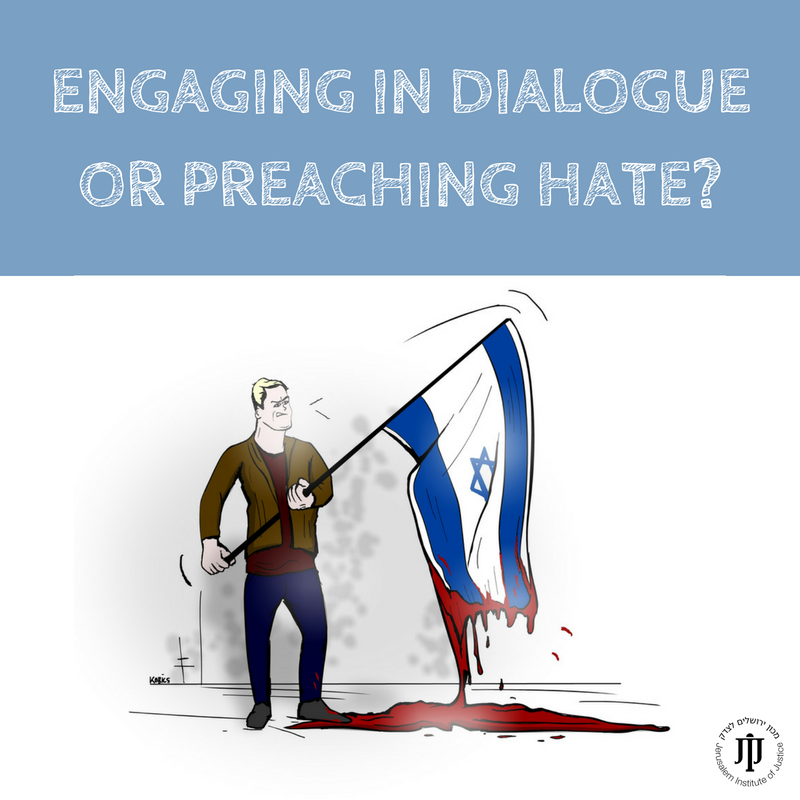
About a year ago, two members of the Israeli Knesset — Aida Touma Suleiman and Mossi Raz — hosted an event in parliament titled: “54 years - Between Occupation and Apartheid.” The event, funded by the Israeli taxpayer, quickly descended into an anti-Zionist hate festival, filled with lies about the so-called apartheid system imposed upon Palestinians in the “occupied territories and within Israel.”
Of course, Raz and Suleiman had every right to host the event. In fact, that they were able to host it serves as a testament to the health of Israel’s thriving democracy. Former Israeli Prime Minister Menachem Begin put it most succinctly: “Without an opposition, there can be no democracy; without it, the essence of human liberty is in danger.” But I also reserve the right to express what I think about those who cynically exploit the seat of Israeli democracy as a means of delegitimizing the Jewish state — and it’s not much.
The hypocrisy of the Knesset members, especially Suleiman, an Arab-Israeli representative in the Knesset, is nothing short of astonishing. She does not speak Yiddish and may not be familiar with the term ‘chutzpah’, but her behavior suggests she is full of it. Israel is a vibrant democracy where Arabs benefit from affirmative action policies, teach in Israeli universities and enjoy equal rights to their Jewish counterparts. This includes the right to serve on the Supreme Court, to vote and to elect members to the Knesset; some of whom oppose Israel’s right to exist and denounce her as an apartheid state.
To be sure, what is true of Israel is not necessarily true of the disputed territories. Israel withdrew from Gaza in 2005 and was consequently met with heavy rocket fire from Hamas militants. She maintains control over the West Bank only due to Palestinian rejectionism — that is, the inability of Palestinian leaders to accept a two-state solution that leaves Israel’s existence as a Jewish and democratic state in-tact.
In 2000, Yasser Arafat balked at a generous offer of statehood on 97% of the West Bank, with its capital in Jerusalem and a large compensation package for Palestinian refugees displaced during wars started by Israel’s neighbours. This drew opprobrium even from Arab leaders, including Prince Bandar of Saudi Arabia who described the rejection as “a crime against the Palestinian people, in fact against the entire region.” Likewise, in 2008 Olmert offered the Palestinians a deal which would have granted them sovereignty over even more territory, only to be met with no response from Arafat’s successor, Mahmoud Abbas.
Had these offers been accepted, there would be no roads restricted to Israelis or civilian settlements in the West Bank; the so-called accoutrement of Israeli apartheid. These policies are controversial, if not disagreeable. But to wage the ‘apartheid’ libel against Israel’s settlement enterprise and security precautions in the disputed territories — those which exist only due to Palestinian intransigence — is to egregiously misuse the term and minimize the horrors of the actual anti-apartheid struggles that took place in South Africa. One of the most celebrated proponents of this struggle — Martin Luther King Jr — once venerated Israel as “one of the great outposts of democracy in the world.” He would be dismayed with Suleiman exploiting his life mission to support her anti-Israel bigotry.
by Joe Beare, JIJ Intern

If You Can't Win the Game, Change the Rules
"There will be no advance and separate peace with the Arab world without the Palestinian process and Palestinian peace" – Former US Secretary of State John Kerry, (04/12/16)[1]
In the following piece we will explain how the validity of the above outdated perception has diminished. There has been an on-going shift in Israel's long-established paradigm concerning peacemaking in the Israeli-Palestinian conflict. A major milestone in this shift was the signing of the Abrahamic Accords in September, 2020 and the following peace agreements with the United Arab Emirates and Bahrain.
In the past decade or so, Israel has been actively changing the pre-existing concept that claimed that for the country to have diplomatic relations with the Arab world, it must first reach peace with the Palestinians. The new paradigm demonstrates that Israel does not have to establish a lasting agreement with the Palestinians to broker relations with the rest of the Arab world. Even more so, Israel is in a position of strength when approaching the negotiation table with the Palestinians, while being backed by the moderate Arab states.
Since the founding of the modern State of Israel, the Arab world had refused to grant it any form of recognition. The first Arab state to break away from this consensus was Egypt which signed a peace treaty with Israel in March, 1979. The only other Arab country to follow Egypt's example, until recent years, was Jordan in October, 1994. Yet, there have been a number of Arab states that have formed some level of diplomatic relations with Israel without signing a peace treaty: Morocco between 1994 and 2000,[2] Tunisia between 1996 and 2000,[3] and Oman between 1996 and 2000 as well.[4] These diplomatic ties were severed upon the eruption of the Second Intifada.
The Second Intifada (Palestinian armed uprising) started as an outcome of the failure of the 2000 Camp David Summit, during which the Israeli representatives went to great lengths to accommodate Palestinian demands. There have been additional efforts at brokering peace with the Palestinians since then, e.g. former Israeli Prime Minister Olmert's peace plan presented in 2008, but each one has been met with increasing opposition.
The great leap towards peace from the Gulf Cooperation Council (GCC) has been led by the UAE and Bahrain who both signed peace treaties with Israel on the 15th of September, 2020 together with the Abrahamic Accords.[5] The undisclosed relations between the UAE and Israel during the past 20 years were led by the Israeli Ministry of Foreign Affairs which helped broker economic agreements between Israeli and Emirati companies.[6] At the same time, the countries had secret security relations in an effort to contain Iran's aggression in the region. Israel and the UAE share two main enemies: on the one hand, Iran and its axis of resistance in the region, and on the other, the Muslim Brotherhood and Sunni extremism. Strategically, the UAE have been anxious since the alleged Iranian attack in Saudi Arabia in September, 2019 and threats released by Iranian-backed Houthi rebels in Yemen to launch missiles on the UAE.[7]
It is interesting to look at the polarized Palestinian and Arab League's reactions to the different peace agreements. The Palestinian Authority announced on the 18th of August, 2020, following the joint Israeli-UAE announcement on normalizing relations, that they consider it a "stab in the back" and they totally reject it. Shortly afterward, the Palestinians recalled their ambassadors to the UAE and Bahrain.[8] The Arab League in turn refused to accept the addition of a statement condemning the peace agreements, as requested by the Palestinians, at the Arab League Summit on the 9th of September, 2020.[9] Palestinian leaders have realized that the Arab world is rather accepting of the idea of normalizing relations with Israel. This realization led the Palestinian government sending their ambassadors back to the UAE and Bahrain on the 18th of November, 2020.[10] We are seeing the beginning of the ripple effect of the new diplomatic strategy.
Following the Abrahamic Accords, Israel and Sudan announced normalization of relations between them on the 23rd of October, 2020. This was another major milestone because in contrast to the UAE and Bahrain who were never in real conflict with Israel, Sudan actually took part in fighting against Israel in the 1948 War of Independence and the Six-Day war in 1967.[11] The peace with Sudan is also very symbolic because it was at the Arab League Summit in Khartoum, shortly after the Six-Day War, that the Arab States agreed on the famous three No's: No to recognizing Israel, No to negotiating with Israel and No to peace with Israel.
The latest development in the region is the US-brokered peace agreement between Israel and Morocco which was made possible after the US announced that it "recognizes Moroccan sovereignty over the entire Western Sahara territory."[12] These renewed relations are another attempt at gathering regional support for the US-Israel backed opposition to the Iranian regime. Also, the new Israeli-Moroccan alliance was only made possible thanks to the Arab Gulf states’ embrace of Israel. The Palestinian government for the first time, changed their approach and did not release a statement of condemnation as they had done in previous cases.
"No Arab state, no moderate Sunni state, no one will have open relations with Israel…as long as the Palestinian problem isn't solved." – Former PM of Israel Ehud Olmert, (22/01/20)[13]
Olmert, who has led peace talks with the Palestinians as mentioned earlier, could not have been more wrong in this statement. Four Arab states have formalized open relations with Israel, and we expect this trend to continue.
We hope these peace treaties will bring about real peace, economic prosperity and friendship between the citizens of Israel and the people of the moderate Arab states.
-------------------------------------------------------------------------------------------------------------------------------
[1] https://2009-2017.state.gov/secretary/remarks/2016/12/264824.htm
[2] https://mitvim.org.il/en/publication/israel-the-second-largest-moroccan-diaspora-in-the-world/
[3] https://www.regthink.org/articles/normalization-between-israel-and-tunisia
[4] https://www.jpost.com/Opinion/Israels-renewed-affair-with-Oman-57141
[5] https://www.inss.org.il/publication/abraham-accord-behind-the-scenes/
[6] https://www.haaretz.co.il/news/politics/.premium-1.9083879
[7] https://www.ynet.co.il/article/ryObszQMw#autoplay
[8] https://www.ynet.co.il/news/article/SJqcIkmqv
[9] https://www.haaretz.co.il/news/politics/1.9142202
[10] https://www.ynet.co.il/news/article/SJqcIkmqv
[11] https://www.atlanticcouncil.org/blogs/new-atlanticist/experts-react-sudan-and-israel-reach-historic-peace-agreement/
[12] https://edition.cnn.com/2020/12/10/politics/trump-israel-morocco/index.html
[13] https://www.inn.co.il/news/447227
Amnesty International- Hamas excessive use of force
March 28th, 2019
Amnesty International Israel
Kibutz Galuyot Rd. 32
Tel Aviv – Yaffo
Dear Amnesty International,
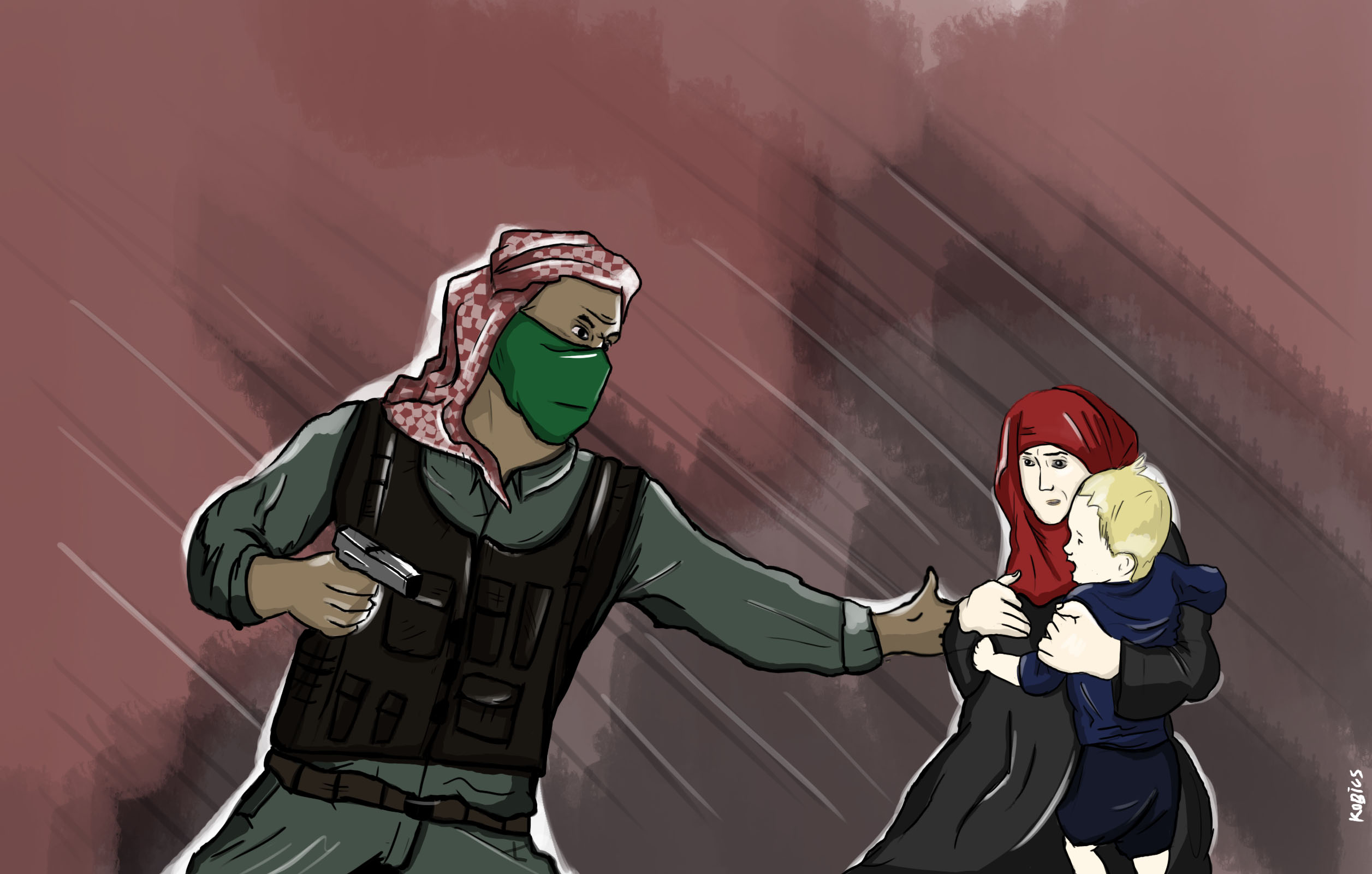
As an NGO who shares the objective of defending human rights, we endorse your condemnation of terrorist organization Hamas’ brutal and excessive use of force against Palestinian protesters, journalists, and human rights workers and your related call for action.
The Jerusalem Institute of Justice strongly condemns how Hamas’ security forces countered the peaceful Palestinian demonstration known as “The revolt of the hungry” on March 14th. We want to express our contempt for Hamas’ actions such as arbitrary arrests, beatings, torture and the use of grenades and live ammunition. Not only did the Palestinian population suffer, so did journalists and human right workers. We decry the detention of Hind Khoudary and the threats directed towards her.
We understand that this event affected your organization on a personal level. And this makes us wonder, where were the reports on Hamas’ previous crimes against the Palestinian population when you were not personally targeted? Why would you only raise issue with Hamas’ atrocities now?
Since 2016, 17.000 Palestinian children have been used and abused for military purpose. Where have you been? Where were you when Hamas opened summer camps for Palestinian children where they ‘enjoy’ various activities such as military training and Hamas ideology indoctrination?
It suggests that you genuinely care about Human Rights violations. However, only when they happen on your doorstep, with your own people involved. Moreover, because the use of excessive force by Hamas against its own population reached alarming levels long before March 14th 2019, may we ask what makes this event different?
Apart from these critical questions, we support your recent condemnation and your call for action regarding Hamas’ human rights violations on March 14th. Better now than never. And we see your statement about watching the Gaza authorities and your call for investigations as a message of hope. We therefore look forward to your follow up reports and reply on this matter.
Yours sincerely,
Flavia Sevald, CEO
Jerusalem Institute of Justice
Palestinian Women Group against Arab Women Rights
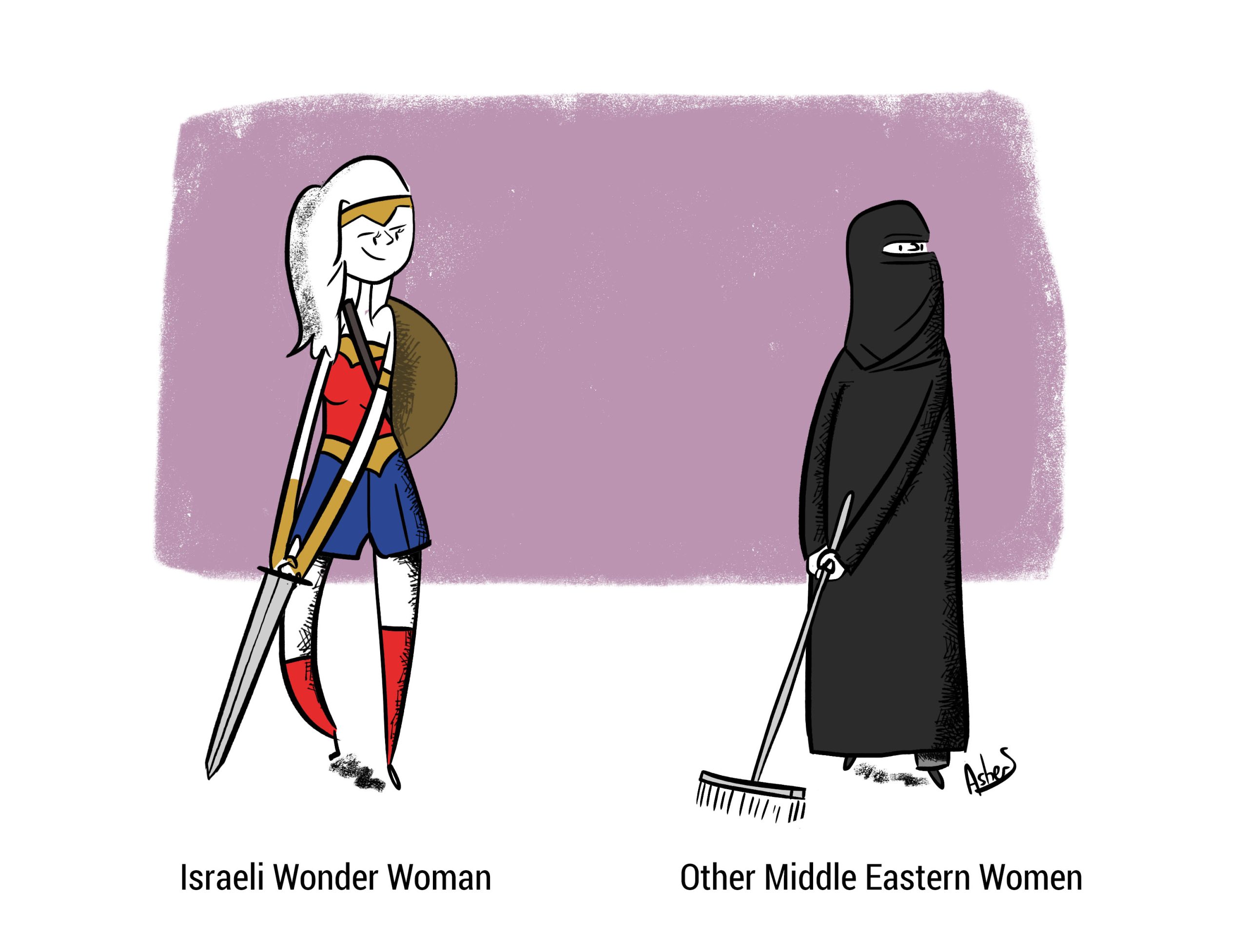
The Culture and Free Thought Association (CFTA) is a Palestinian NGO situated in Khan Younis, a city in the southern Gaza Strip. Their vision statement reads: “CFTA aspires to be a leading organizational contributor to civil society efforts to build a Palestinian society in which all citizens enjoy freedom, equality, and human rights.” They have received, along with other organizations, €481,773 from the European Union (EU) to support women's rights in the Middle East. At face value, CFTA sounds like an organization that should be supported and that deserves the money they received from the EU. But what has CFTA decided to do with all that money? They decided to support anti-Israel policies, calling for women around the world to boycott Israel because of the “awful” way Israel treats women. This position is ironic to the highest degree taking into consideration that Israel is, by far, the most feminist country in the Middle East.
Rape is one of the most egregious crimes being perpetuated against women. Being so, the punishment for rape should be proportionate to how devastating the offense is. In Israel you can expect 16 years to life in prison for the crime of rape. In Jordan, rape is only punishable by 7 years. That is less than the amount of time in prison you would receive for armed robbery in some states in the United States. Has The Culture and Free Thought Assoc. called out to boycott Jordan for their “slap on the wrist" attitude towards rape sentencing? Another crime that affects specifically women is marital abuse. 51% of the women in the Gaza Strip have been subjected to a form of violence within the household (PCBS, Violence Survey in Palestinian Society, 2011). Has CFTA made a call to boycott their own government for allowing a terrifying rate of marital abuse?
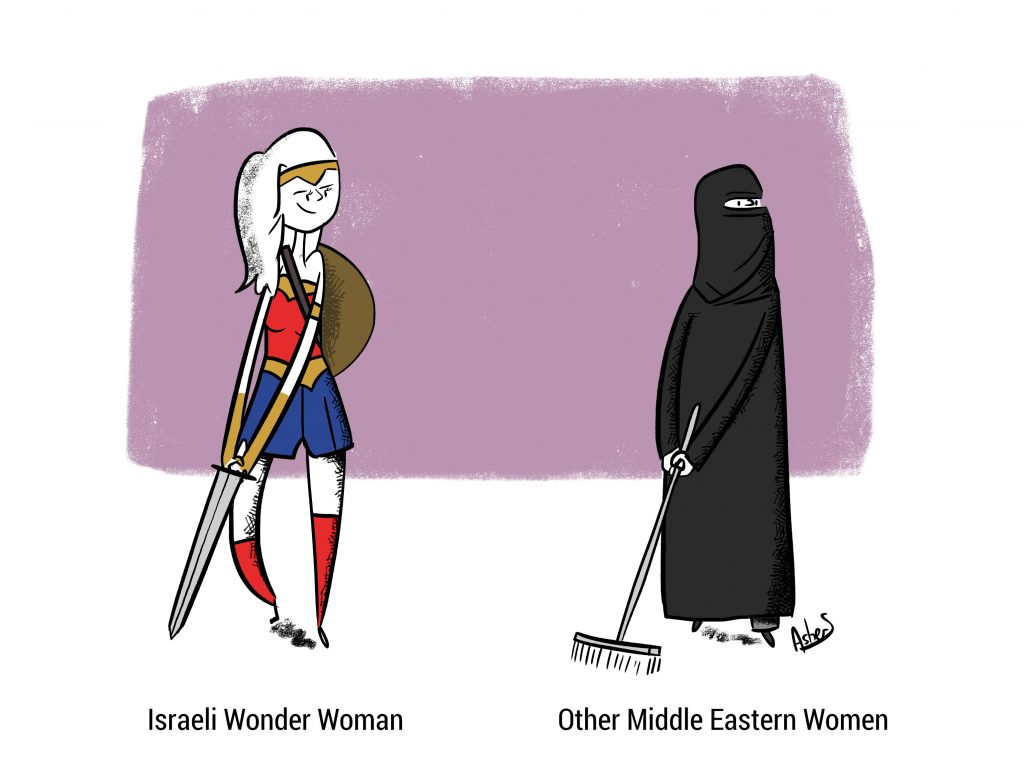
If rape and abuse are not so important for the CFTA, what about Female Genital Mutilation (FGM)? The destruction of a woman’s genitalia is a heinous crime that should be outlawed everywhere. Unfortunately, this practice is still prevalent in many places. In Egypt, FGM is a common practice that hurts, and even kills, thousands of little girls due to unclean medical procedures and the infections that followed. Fortunately, in 2007, the Egyptian Ministry of Health and Population banned all forms of FGM, but this has not stopped the practice. In 2014, UNICEF reported that 91% of women in Egypt had undergone some form of FGM. FGM has never been an accepted practice and is illegal in Israel. Why does an NGO, specifically designed to protect and stand up for women's rights, condemn Israel, when countless young girls are being butchered in neighboring Arab countries?
How is a woman’s testimony in court weighed against a man’s? In Egypt, Iraq, Iran, Syria, Jordan, Saudi Arabia, and all areas governed by the Palestinian Authority, a woman’s testimony is worth half that of a man’s. This means that if a women accuses a man of committing a crime against her, whether it be assault, robbery, rape, etc., she will need another female witness just to have the same amount of credibility as the man. What country in the Middle East does treat both genders’ testimonies equally? You’d be right to assume, yet again, Israel.
Is Israel a misogynist country? Is Israel a patriarchal society? In Israel, a child is granted citizenship automatically if the father or the mother is a citizen. Not all countries in the Middle East follow the example Israel lays out. In Jordan and Lebanon, the child’s father must be a citizen. Even if a mother is a Jordanian or a Lebanese citizen, if she marries a foreigner, the child does not receive her citizenship.
Forced child marriage is an abhorrent practice and a violation of children's rights. As of 2017, in Gaza, 15% of girls under the age of 18 are married as well as 1% of girls under the age of 15. To clarify, almost 4,000 girls under the age of 15 in Gaza are married. In Egypt, it’s 17% under the age of 18 and 2% under 15. Iran? 17% and 3%. What does 3% look like? 526,854 little girls that are sold into marriage before the age of 15. In Israel it is illegal for a person to marry someone under the age of 18.
One of the strongest indicators of gender equality is women in positions of political authority. As of 2018, 28% of the Israeli Parliament is women. That beats even the United States, where only 20% of Congress is women. And where does the Middle East stand on female empowerment? The average percentage of women in positions of political power across the Middle East is a whopping…6%.
If the Culture and Free Thought Association wanted to actually talk about gender inequality and women’s empowerment, they could target any number of the issues addressed in this article. They could call for their neighboring countries to reform. Unfortunately, they are more interested in forwarding their political agenda by ignoring women's rights violations in the Middle East and attacking the only feminist country in the area, Israel.