
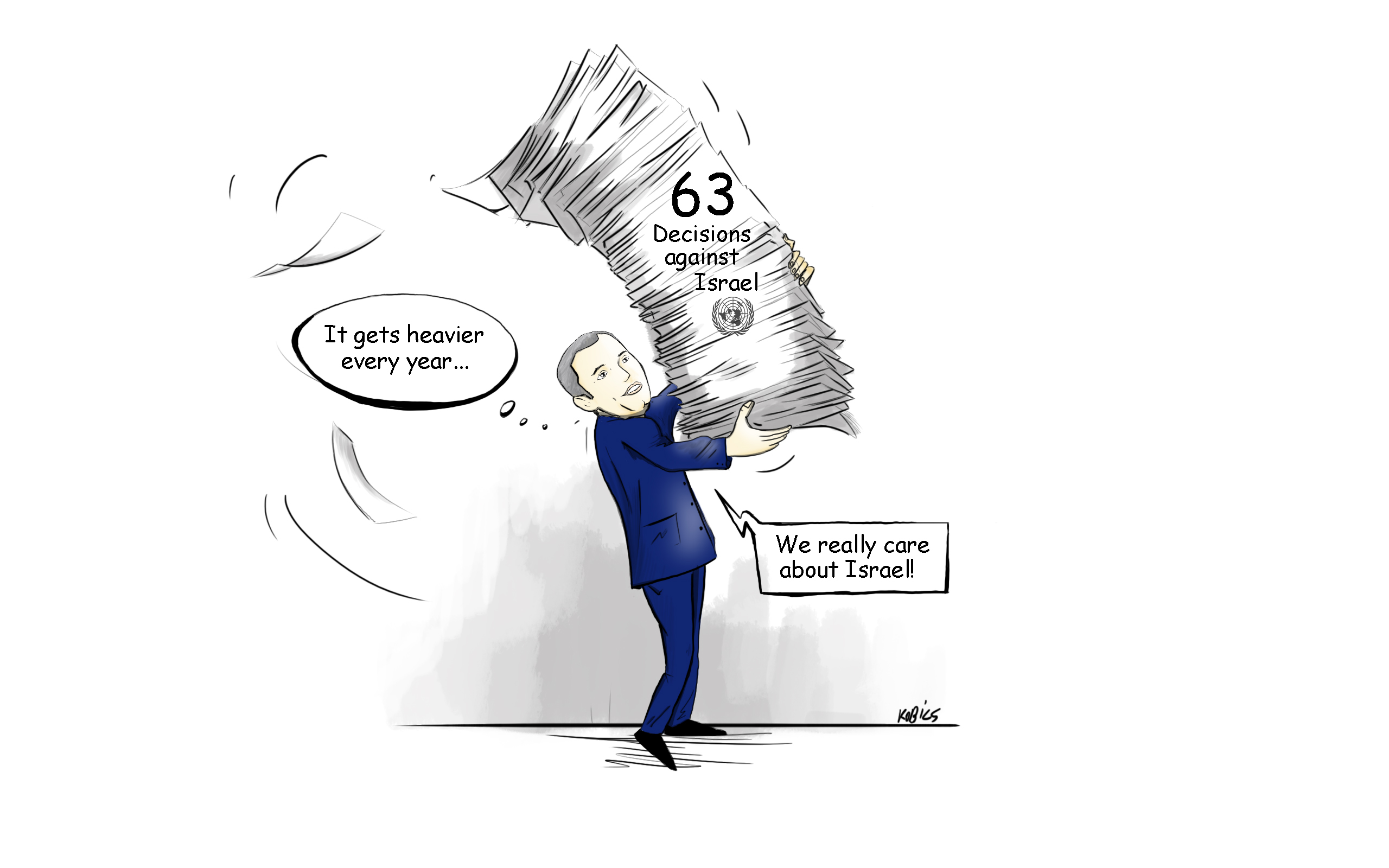
Do your Job! Nikolay
An open letter to Nickolay Mladenov, supposed promoter of peace in the Middle East
The Honorable Nikolay Mladenov
UN Special Coordinator for the Middle East Peace Process
Dear Mr. Mladenov,
Your latest comments regarding the Israel/Gaza conflict leave me feeling confused. You are quoted saying, “If [the UN] stopped talking to Israelis and Palestinians about peace, Israel would come off as a lot worse in world media” (https://hamodia.com/2018/06/13/un-envoy-helping-gazans-comes-return-israeli-soldiers-remains/). From that comment, I can infer that you mean that the UN is helping Israel’s image improve with the rest of the world. I would very much like to hear you elaborate just how the UN is helping present a positive image of Israel on the world stage?
Was the UN attempting to support Israel and present a positive image when passing a resolution against Israel for its response to the Gaza border fence riots? It was admitted by a Hamas official, prior to the voting of the resolution, that 50 of the 62 rioters killed at the Gaza border riot were Hamas terrorists. Knowing this, the UN still voted 120-8 that Israel used excessive force. How can you say that Israel protecting its border from actual terrorists was unjustified? Resolutions like this, that unfairly target Israel and tell half-truths, make it appear, Mr. Nikolay Mladenov, that the UN is not preventing the worsening of Israel’s world image, but advocating for it.
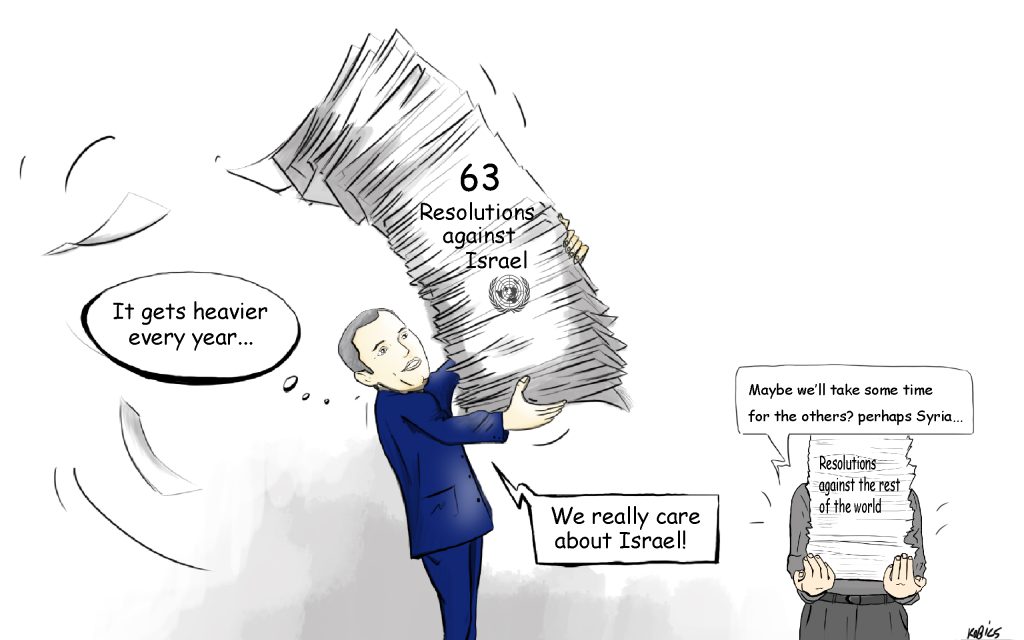
Supporting Israel doesn’t have to mean saying positive things about the Jewish state. You could show support simply by being unbiased, and by disavowing countries or groups when they attempt to harm Israel. You don’t have to look hard to find an instance of Hamas doing something worth condemning. Hamas fires rockets from heavily populated areas into Israel which puts Gazan civilians at risk. Hamas places military compounds in the basements of schools and hospitals thereby endangering children and the sick. Most recently, Hamas sent terrorists to the Gaza border fence in an attempt to use a riot as a smokescreen to sneak into Israel and cause harm however possible. If the UN really cared about representing the Israel/Gaza conflict fairly, and not just trying to negatively paint Israel as the bad guy, wouldn’t the UN condemn some of these actions by Hamas?
Just recently, Nikki Haley, the United States’ ambassador to the UN proposed a resolution to condemn Hamas's violent border riots. What happened? The proposal didn’t even receive a 2/3 majority. Why couldn’t the UN condemn such an obvious wrongdoing by Hamas. Mr. Mladenov, this complete unwillingness to condemn even the most obvious violations gives the appearance that the UN does not want to “support both sides” as you say, but instead only criticize Israel.
Mr. Mladenov, your job as the UN Special Coordinator for the Middle East Peace Process is to, “lead the UN system in all political and diplomatic efforts related to the peace process in the Middle East and to coordinate the humanitarian and development work of UN agencies and programs in the occupied Palestinian territory, in support of the Palestinian Authority and the Palestinian people.” How does your agency support a terrorist organization that has complete control over the Gaza Strip? Does your agency support legitimizing a terrorist group by giving them a country to control? How does supporting a group, whose mission is to destroy Israel, show Israelis that the UN is trying to protect Israel’s world image?
The United Nations is designed to prevent conflict. Instead of preparing for battle, countries should be able to come before the UN in agreement to prevent bloodshed. But when the UN consistently attacks only one side, it makes a State believe that their voice doesn’t matter, or even worse, that the UN is against them. Israel has time and time again shown restraint against its enemies while Hamas shows no such restraint in its plans to destroy Israel, kill Jews, and do so while killing its own citizens. You say that the UN helps support Israel’s image on the world stage, but your actions show otherwise.
Constantly waiting,
A concerned intern of the Jerusalem Institute of Justice
Article by Jared White

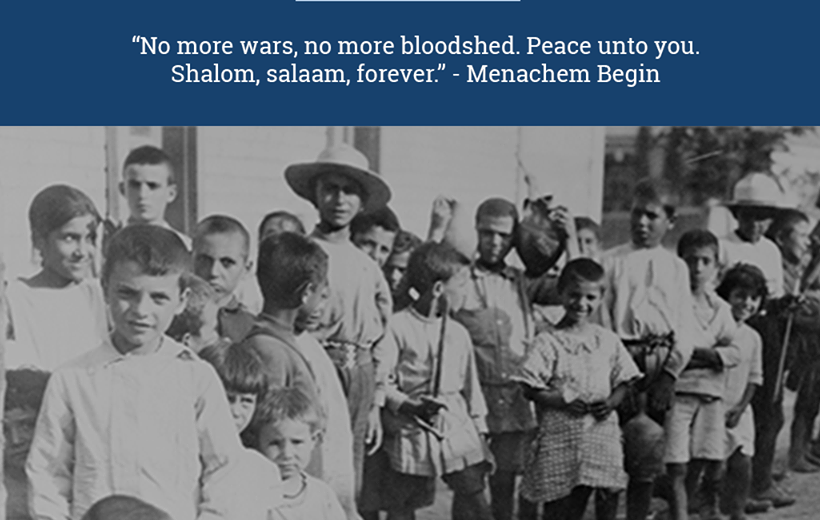
A Difficult Quest For Peace
A History of Public Opinion from 1967-2017
Fifty years ago, confronted with clear evidence of an impending Egyptian-led invasion, Israel's leaders gambled its national survival by launching a pre-emptive assault. What became known as the "Six Day War" has since become a signal historical event in the nation's history, and still shapes the collective consciousness of the Israeli people. Within less than a week, the tiny country's territory tripled.
The unsought Israeli control of East Jerusalem, the West Bank, the Golan Heights, the Gaza Strip, and the Sinai Desert brought urgent questions before the nation. Should Israel permanently annex one-or-more of these regions? Might they serve, instead, as critical bargaining pieces in a quest to persuade her enemies to abandon their dreams of Israel's destruction? What legal and ethical principles should guide the national debate?
Fifty years later, East Jerusalem has been integrated into Jerusalem's municipal borders. To meet critical security needs, the Golan Heights has been annexed into Israel. The Sinai Desert was returned to Egypt. Although Israel withdrew voluntarily from Gaza, the final status of Gaza and the West Bank remain undetermined. In other words, the questions posed by the miraculous outcome of the Six Day War remain unanswered.
The opinions of the Israeli people about these complex legal, ethical, political, and security issues have been measured, repeatedly, for five decades. Polling data makes up an overlooked, but vital, vector of national feedback during several crucial phases of the post-1967 era. Changing national convictions have influenced the decisions of political leaders, even as those leaders have, in turn, shaped public views.
This paper tracks the public's evolving response to the continuing conflict and, especially, to the indeterminate status of the territories. We conclude that the public showed a surprisingly sophisticated, if intuitive, grasp of the substantial risks tied to the most sweeping proposals and initiatives spanning 1967 to 2017. Our analysis will help anticipate, to some extent, the pathway which still lies ahead for the nation.