
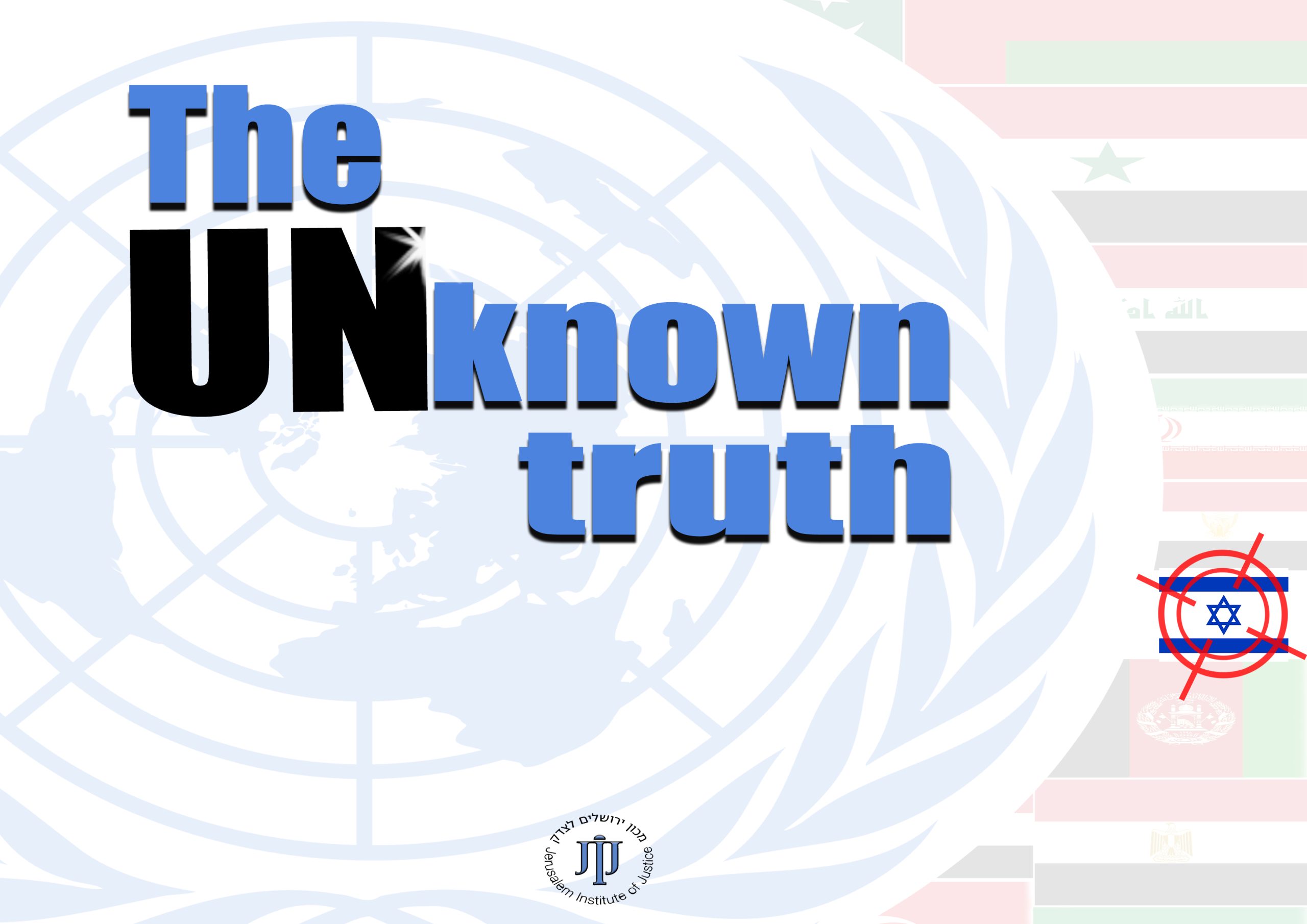
How the United Nations Indirectly Funds Hamas
Article by Beniamino Parenzo as an intern at the Jerusalem Institute of Justice.
The United Nation Office for the Coordination of Humanitarian Affairs and Western governments funnel critical financial support to a Hamas-tied “charity” organization in disregard of its known history.
Islamic Relief Worldwide (IRW) is an international organization based in the United Kingdom that maintains offices around the world, including Gaza and the West Bank. IRW operates, ostensibly, as an international relief and development charity. Their website’s mission statement reads, “inspired by Islamic faith, we have been striving to make the world a better and fairer place.” Apparently, making the world ‘a better and fairer place’ includes financing Hamas.
According to investigations carried out by the Israel Security Agency, IRW has played a central role over the years in channeling money to this terrorist organization. Based on Shin Bet’s findings, Israel’s Defense Minister declared IRW illegal on June 19, 2014 and banned it from operating anywhere in Israel and the West Bank.
This should hardly have come as a surprise to any impartial observer. As long ago as 2006, the Israeli Ministry for Foreign Affairs had designated IRW a terrorist front, noting that “IRW provides support and assistance to Hamas’s infrastructure.” That same year, on May 10th, Israeli police arrested IRW’s Gaza coordinator, Iyaz Ali, who admitted he was aware that “. . . several of the organizations supported by the IRW in Judea, Samaria and Gaza were indeed identified with Hamas.”
A Long History of IRW Ties to Extremist Organizations
While ties to Hamas mark IRW’s most striking alliance, this ‘charity’ organization boasts a long history of personal and financial connections to varied Islamic extremist groups and pro-terror organizations. The reader’s eye cannot fail to notice Al Qaeda-related organizations, including the “Charitable Society for Social Welfare” and “Human Concern International,” as well as the Hamas-funded “Human Appeal International” on the public list of IRW donors. To say this is concerning understates the likely impact of these donors upon IRW actions.
Not only does the IRW receive funds from terrorist organizations, but some of its trustees and directors have long-maintained personal ties to other extremist organizations. For instance, Essam El-Haddad, a former trustee of both IRW and Islamic Relief UK, left IRW in 2012 to become the National Security Advisor for Egypt’s former President, Mohamed Morsi, of the Muslim Brotherhood party. Abdul Wahab Noorwali, another trustee of IRW, was the Assistant Secretary General of the “World Assembly of Muslim Youth,” an association that the U.S. government has accused of linkage to Osama Bin Laden and the Hamas leader, Sheikh Ahmed Yassin. In 2003, Yassin thanked the World Assembly of Muslim Youth for their continued financial support. Ahmed Al-Rawi, a director of IRW, was the former head of the “Federation of Islamic Organizations in Europe” and president of the “Muslim Association of Britain,” both regarded as groups aligned with the European Muslim Brotherhood. And the list goes on.
The Funding of IRW by UNOCHA
While shutting off IRW funding to Hamas falls outside the scope of international mandates, those who defend democracy and human rights might well expect the United Nations to act in concert with Europe and the United States to limit, where possible, IRW access to western funds. To the contrary, the U.N. funds IRW, provoking this compelling question: “what motivates the United Nations Office for the Coordination of Humanitarian Affairs (UNOCHA), under-written by Western governments, to provide direct financial support to IRW and, thereby, to provide indirect financial support to Hamas through IRW?”
UNOCHA, an arm of the United Nations Secretariat, serves as the primary coordinator of NGO funding and activity and is charged with responsibility “for bringing together humanitarian actors to ensure a coherent response to emergencies.” UNOCHA determines the relative priorities and needs of societies in crisis, sets strategic response objectives and coordinates the funding of local NGOs tasked with meeting those needs by defining so-called Humanitarian Response Plans (HRPs).
IRW has been permitted to continue its activities as a “Participating Organization” in UNOCHA’s HRPs, despite the decree issued by the Israeli Defense Minister that bans the organization for its financial ties with Hamas.
All funding records managed by UNOCHA are publicly accessible from the Financial Tracking Service (FTS) database. Taking into account both the pledged and paid contributions made to IRW after the 2014 banning decree, this organization has been given, or promised, more than $80 million U.S. Dollars through the UNOCHA humanitarian coordinating mechanism. The European Union, United Kingdom and Sweden are listed alongside other stated donors to IRW.
An Unacceptable Situation
Who would not wish to believe that the governments named above were unaware of the alleged role played by IRW in financing what they themselves deem a terrorist organization? However, following the Israeli warrant against IRW in 2014, the NGO Monitor made a formal inquiry into the funding of Hamas through IRW. While all of the entities named above did reply, none took a position on IRW’s alleged misconduct, nor did they implement a satisfactory monitoring mechanism to track the spending of funds donated to IRW. In other words, the status quo was reaffirmed.
In short, Islamic Relief Worldwide (IRW) sustains a long, unbroken history of ties with controversial extremist groups that has been banned from operating in Israel and the West Bank because of its role in funneling money to Hamas. Yet, this same organization receives funds from multiple Western governments through a mechanism set up, approved, and controlled by the United Nations. None of these entities have addressed the unchallengeable Israeli claim that IRW channels money to a known terrorist organization.
This is not science fiction, though it would have seemed so a few short years ago. We cannot answer the question raised earlier about the motivations which direct U.N. funding of Hamas through Islamic Relief Worldwide. However, whatever the motivation, the unbelievable, unacceptable and shocking truth which connects UNOCHA to extremism and terrorism demands immediate, corrective action by the United Nations.
This article originally appeared in The Times Of Israel, here.

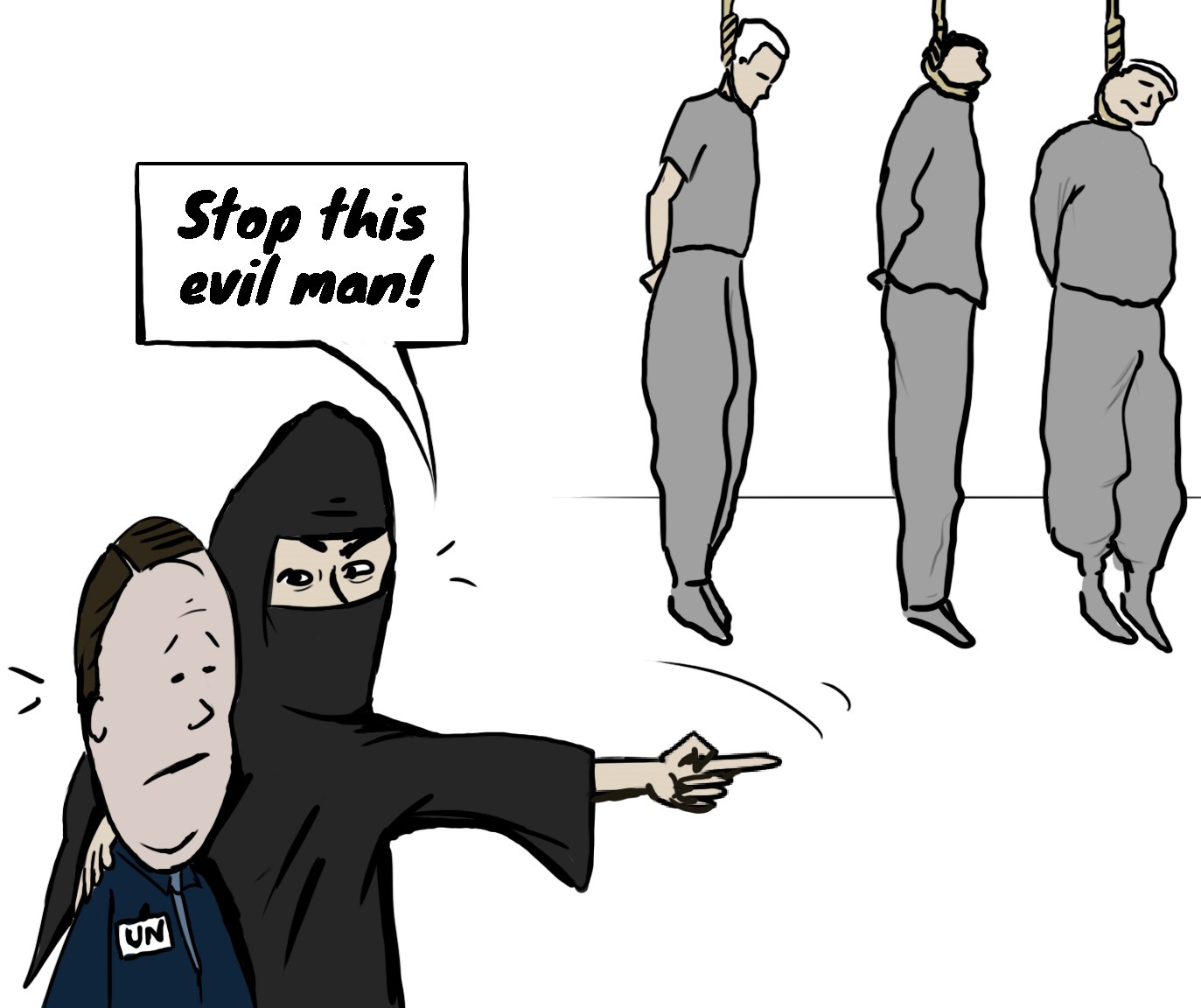
UNdermining women’s Rights
Hillary Clinton, at the time First Lady of the United States, famously proclaimed at the 1995 United Nations Fourth World Conference on Women that “women’s rights are human rights.” Despite this declaration 23 years ago, the United Nations has a long way to go towards ensuring women’s rights are upheld across the world. Unfortunately, the current structure of the United Nations often obstructs women’s rights by favoring self-interested, geopolitical partisanship.
The United Nations Commission on the Status of Women is the body responsible for investigating and promoting gender equality. This organization focuses on issues of peace, violence against women, female political participation, and economic opportunity for women, among other areas. Member states can introduce and vote on resolutions, and are elected from different continents to ensure representation among distinct geographical regions.
In 2017, the United Nations Economic and Social Council, which oversees the Commission, elected Saudi Arabia to serve as a full member. Saudi Arabia’s place in the Commission on the Status of Women is notable because of its reputation as a country that regularly disregards women’s rights. The World Economic Forum’s 2017 Global Gender Gap Report ranked Saudi Arabia 138 out of 144 countries in terms of gender parity, highlighting the difference in opportunities afforded to men and women in the country. Saudi Arabian women are greatly underrepresented in political life, as there are no women serving on the High Court or Supreme Judicial Court. Furthermore, women’s testimonies are worth only half of a man’s in Saudi Arabian courts, posing legal challenges for women trying to defend their interests. The kingdom withheld the right to drive automobiles from its female citizens until 2018. Prior to this change in laws, it was the only country in the world with such a restriction. Given this context, Saudi Arabia’s membership in a commission meant to help women is not only ironic, but morally reprehensible.
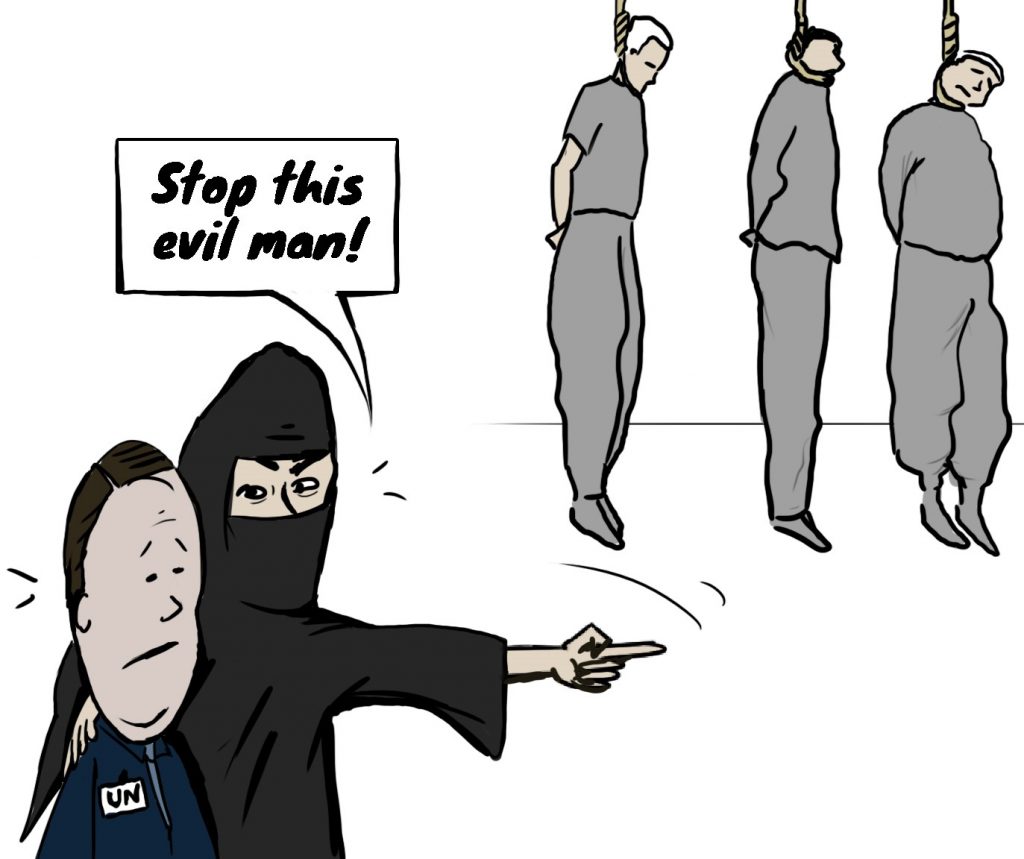
The presence of Saudi Arabia in this committee serves a political purpose. Through its membership in the Commission on the Status of Women, Saudi Arabia affects public opinion and condemns its geopolitical enemies, thus directing international attention and criticism away from its own anti-women agenda. In 2018, Saudi Arabia supported a resolution on supporting and aiding Palestinian women, which largely criticized Israel’s occupational role in Gaza and the West Bank. While there is merit to these conclusions, the Israeli-Palestinian conflict is far from the only instance of oppression against women in the Middle East region. However, this resolution was the only one focused on that region passed by the Commission on the Status of Women in 2018. In this manner, Saudi Arabia and partnering member states distract from the many other women’s rights abuses in the Middle East that they are responsible for.
Furthermore, the presence of member states in this body with such egregious women’s rights violations calls into question its legitimacy. If Saudi Arabia does not treat its female citizens with the equal rights and protections of its male citizens, what authority does it have to recognize and condemn similar abuses committed by other nations? How can such a council be trusted to resolve the very inequities that its members promote?
No country may have a perfect track record on women’s rights, but enabling a country that so clearly disregards its women to create policy on the topic is an affront towards the promotion of global gender equality. Of course, the gender imparities that women face globally, and the inherent flaws in the United Nations, are not resolved solely through the removal of Saudi Arabia from this commission. However, Saudi Arabia’s presence in this commission clearly does not advance the cause of women’s rights. Calling the United Nations’ methodology and authority into question is a necessary democratic means to ensure that all nations not protecting their female citizens are held accountable by this organization.
The United Nations serves a noble purpose in its mission statement to “work for the protection of all human rights for all people.” Such a commitment, however, is an empty promise given the United Nations’ support for noted women’s rights abusing nations, such as Saudi Arabia. Rather than empowering women, this institution often empowers women’s rights abusers. Criticism of the United Nations, and calling for greater accountability within the organization, protects the interests of women globally.
Letter to Nikki Haley
The Honorable Nikki Haley
U.S. Permanent Representative to the United Nations
United States Mission to the United Nations
799 United Nations Plaza
New York, NY 10017
Dear Ambassador Nikki Haley,
The Jerusalem Institute of Justice (JIJ) is a non-government organization located in the heart of Jerusalem, Israel. Our sole focus is the cultivation and defense of human rights, the rule of law, and true democracy for all people, both in Israel, and the Middle East as a whole. We regard ourselves as a bridge for the indomitable ambitions of the United States and Israel; for the values that both our countries have always shared.
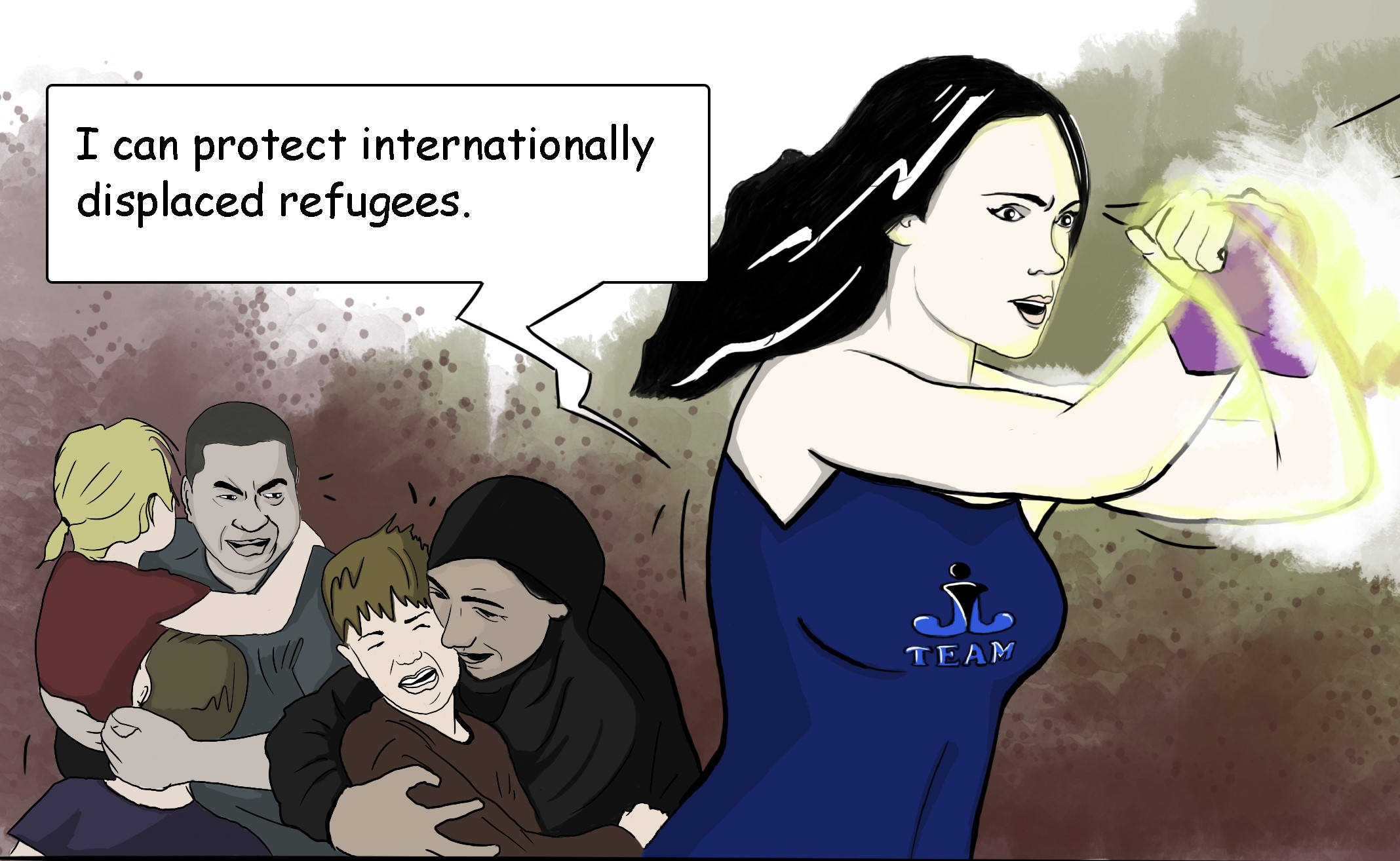
Ambassador Haley, the entire JIJ team sincerely applauds your staunch support of Israel and human rights worldwide. The bias shown against Israel by the UN has long been at the forefront of our minds, but we are happy to see that your presence in the United Nations is developing a new narrative with a more balanced perspective on human rights. Your most recent proposal to condemn Hamas for the violence perpetuated at the Gaza border has reassured us that an unbiased voice of reason can, and will prevail at the UN General Assembly. The UN approves resolution after resolution to unjustly condemn Israel while Hamas's crimes fall on the deaf ears of the General Assembly. Your courage to stand up for justice by advocating for a narrative of symmetry, wherein Hamas’s atrocities can finally be denounced, inspired 62 countries to vote for justice. It is a triumph to see other countries beginning to stand up and recognize the truth, and your part in this cannot be overstated. Throughout the world, your denunciation of terrorism and your support for Israel is ringing true.
We would also like to point out, and praise, your recent courageous decision to leave the United Nations Human Rights Council. This action speaks volumes about true commitment to the global support of human rights. We stand behind you in the conviction that your departure may draw attention to the hypocrisy of Human Rights Council. We agree, wholeheartedly, with you that the council has developed a disquieting history of attacking Israel, while monumental human rights violations by countries including Saudi Arabia, Cuba, and Qatar have gone unaddressed. Your decision affirms the unbreakable bond between the United States and Israel. Hopefully, your actions will provoke the reorganization of the crucial Human Rights Council into a more effective and unbiased assembly.
The JIJ stands ready to aid you, Ambassador Haley, in whatever capacity we are able to. Our staff is constantly hard at work researching issues of human rights in the Middle East. We are currently focused on a UN project aiming to expose anti-Israel bias by deconstructing each resolution made against Israel, and responding with instances of the same injustice in other parts of the world that the UN conveniently ignores. Our research demonstrates the tremendous bias existing in past General Assembly resolutions against Israel. Last year alone, 21 resolutions were passed against Israel, while only 6 were passed towards the rest of the world combined. This is nothing short of a deep-seated prejudice that we cannot afford to ignore.
Once again, we here at the JIJ thank you for all that you do. If there is anything that the JIJ can do to support you and the excellent work you are accomplishing, please do not hesitate to contact us.
Sincerely,
The JIJ Team