

Unraveling the Trio: Understanding the Complexities of Saudi Arabia's Relationship with Israel, and the United States
When the Abraham Accords were signed in 2020, a key country was missing from the deal: the Kingdom of Saudi Arabia. By not signing the Accords, Saudi Arabia has kept its point of leverage in its negotiations with the United States and with the Israeli-Palestinian Conflict. Saudi Arabia recognizes the power they hold in the Middle East, and they want to get the most from both the United States and Israel before they agree to normalize relations with the Jewish state.
Each combination of the three-sided relationship between Israel, the United States, and Saudi Arabia must be understood to grasp what it will take for Saudi Arabia to normalize relations with Israel.
First, it is important to understand the relationship between Israel and Saudi Arabia. Historically, the two states have been enemies. The Saudis voted against the United Nations Resolution 181, also known as the Partition Plan for Palestine, they have sent troops to fight the Israelis in several wars, and they have consistently supported the Palestinians in their efforts against Israel.
For one, the Saudis support the Palestinians in their fight for the land that currently belongs to Israel. In order for Saudi Arabia to make peace with Israel, the Saudis want Israel to adopt the Arab Peace Initiative (API). The API calls for Israel to pull out of territories gained in the 1967 war, for Israel to recognize a sovereign Palestinian state with its capital in East Jerusalem, and for Israel to solve the Palestinian refugee issue (“Arab Peace Initiative”). In this regard, “solving” the Palestinian refugee issue would mean losing Israel’s identity as the only Jewish state.
If Israel agrees to these conditions, then Saudi Arabia may move to normalize relations with them. But Israel cannot adopt these conditions, for they would be ceding valuable defensive holdings and giving too much to the Palestinians. Saudi Arabia is using the Palestinians as leverage in the negotiations because they want an Arab-controlled Israel, and “the API regards the Arab-Israel normalization as the reward for solving the Israel-Palestinian dispute (Teller Abraham Accords: Saudi Arabia is still not budging).
Next, it is important to understand the relationship between the United States and Saudi Arabia. The Abraham Accords were mediated by the United States, and Saudi Arabia has not signed the peace treaty because they wanted more from the Americans. In order to achieve peace, Prince Mohammed bin Salman “has told both Israeli and American officials that he wants Washington to treat Saudi Arabia as the major regional force he believes it is by resuming arms sales halted last fall and by offering the kind of security commitment it extends to close allies” (Traub, Netanyahu Has Drawn a Saudi-U.S Road Map).
Saudi Arabia wants to be on the good side of the American military, and the Americans have their priorities as well. The United States is intent on preventing Iran from creating its own nuclear weapons, and it would also prefer Saudi Arabia to be the dominant Middle Eastern state over Iran. With this, Saudi Arabia laid their claims on the table in recent talks with America. They want the U.S to support Saudi Arabia’s goal of building their own nuclear weapons; they want an American promise to defend Saudi Arabia in times of war, and they want the U.S to grant them special status as a major non-NATO ally (Nissenbaum, et al., Saudi Arabia Seeks U.S Security Pledges).
Again, these are steep demands by the Saudis. The United States does not want to support a nuclear Saudi Arabia, as this would lead to a nuclear arms race between them and Iran, which would turn into a disastrous situation. They also do not want to formally recognize Saudi Arabia as an ally, which would rope them into any future Middle Eastern conflicts.
The last relationship to understand in this trio is between the United States and Israel. Israel wants the United States to create peace with Saudi Arabia to further protect its position as a stable state in the Middle East. Saudi Arabia is one of the most important countries not at peace with Israel, and an agreement between the two states would further solidify Israel’s place in the Middle East.
While the relationship between Saudi Arabia and Iran is not part of the trio negotiating peace, it is equally important as the others. For decades, the two states have battled over dominance in the Middle East. This has resulted in proxy warfare between the states, as in the Syrian Civil War and in the Yemeni Civil War. After years of tension, diplomacy between the states has become a recent possibility. In March, the leaders of the two states agreed to restore ties in agreement mediated by China. In this agreement, they said they will affirm “the respect for the sovereignty of states and the on-interference in internal affairs of states” (Gadzo, “Changing Global Order”). In a statement released by Saudi Arabia, Saudi Arabia and Iran reached “an agreement to resume diplomatic relations between them and re-open their embassies and missions” (“Joint Trilateral Statement”). While Saudi Arabia and Iran are still battling for Middle Eastern dominance, tensions between the two are softening while diplomacy is rising.
Despite Israel’s hope that the United States will strike peace with Saudi Arabia, the Saudi demands are too much for the Americans. The United States would not want to be forced to protect Saudi Arabia in times of war, and they certainly do not want the Saudis to have nuclear weapons. Israel and Saudi Arabia cannot achieve peace themselves, as well, because the Saudi claims for a sovereign Palestine are impossible for Israel to accept. As of now, the demands by the Saudis are too high, and unless they cede some of them, official peace will not be achieved.
By Ethan Wenger – JIJ Intern

Unraveling the Trio: Understanding the Complexities of Saudi Arabia's Relationship with Israel, and the United States
When the Abraham Accords were signed in 2020, a key country was missing from the deal: the Kingdom of Saudi Arabia. By not signing the Accords, Saudi Arabia has kept its point of leverage in its negotiations with the United States and with the Israeli-Palestinian Conflict. Saudi Arabia recognizes the power they hold in the Middle East, and they want to get the most from both the United States and Israel before they agree to normalize relations with the Jewish state.
Each combination of the three-sided relationship between Israel, the United States, and Saudi Arabia must be understood to grasp what it will take for Saudi Arabia to normalize relations with Israel.
First, it is important to understand the relationship between Israel and Saudi Arabia. Historically, the two states have been enemies. The Saudis voted against the United Nations Resolution 181, also known as the Partition Plan for Palestine, they have sent troops to fight the Israelis in several wars, and they have consistently supported the Palestinians in their efforts against Israel.
For one, the Saudis support the Palestinians in their fight for the land that currently belongs to Israel. In order for Saudi Arabia to make peace with Israel, the Saudis want Israel to adopt the Arab Peace Initiative (API). The API calls for Israel to pull out of territories gained in the 1967 war, for Israel to recognize a sovereign Palestinian state with its capital in East Jerusalem, and for Israel to solve the Palestinian refugee issue (“Arab Peace Initiative”). In this regard, “solving” the Palestinian refugee issue would mean losing Israel’s identity as the only Jewish state.
If Israel agrees to these conditions, then Saudi Arabia may move to normalize relations with them. But Israel cannot adopt these conditions, for they would be ceding valuable defensive holdings and giving too much to the Palestinians. Saudi Arabia is using the Palestinians as leverage in the negotiations because they want an Arab-controlled Israel, and “the API regards the Arab-Israel normalization as the reward for solving the Israel-Palestinian dispute (Teller Abraham Accords: Saudi Arabia is still not budging).
Next, it is important to understand the relationship between the United States and Saudi Arabia. The Abraham Accords were mediated by the United States, and Saudi Arabia has not signed the peace treaty because they wanted more from the Americans. In order to achieve peace, Prince Mohammed bin Salman “has told both Israeli and American officials that he wants Washington to treat Saudi Arabia as the major regional force he believes it is by resuming arms sales halted last fall and by offering the kind of security commitment it extends to close allies” (Traub, Netanyahu Has Drawn a Saudi-U.S Road Map).
Saudi Arabia wants to be on the good side of the American military, and the Americans have their priorities as well. The United States is intent on preventing Iran from creating its own nuclear weapons, and it would also prefer Saudi Arabia to be the dominant Middle Eastern state over Iran. With this, Saudi Arabia laid their claims on the table in recent talks with America. They want the U.S to support Saudi Arabia’s goal of building their own nuclear weapons; they want an American promise to defend Saudi Arabia in times of war, and they want the U.S to grant them special status as a major non-NATO ally (Nissenbaum, et al., Saudi Arabia Seeks U.S Security Pledges).
Again, these are steep demands by the Saudis. The United States does not want to support a nuclear Saudi Arabia, as this would lead to a nuclear arms race between them and Iran, which would turn into a disastrous situation. They also do not want to formally recognize Saudi Arabia as an ally, which would rope them into any future Middle Eastern conflicts.
The last relationship to understand in this trio is between the United States and Israel. Israel wants the United States to create peace with Saudi Arabia to further protect its position as a stable state in the Middle East. Saudi Arabia is one of the most important countries not at peace with Israel, and an agreement between the two states would further solidify Israel’s place in the Middle East.
While the relationship between Saudi Arabia and Iran is not part of the trio negotiating peace, it is equally important as the others. For decades, the two states have battled over dominance in the Middle East. This has resulted in proxy warfare between the states, as in the Syrian Civil War and in the Yemeni Civil War. After years of tension, diplomacy between the states has become a recent possibility. In March, the leaders of the two states agreed to restore ties in agreement mediated by China. In this agreement, they said they will affirm “the respect for the sovereignty of states and the on-interference in internal affairs of states” (Gadzo, “Changing Global Order”). In a statement released by Saudi Arabia, Saudi Arabia and Iran reached “an agreement to resume diplomatic relations between them and re-open their embassies and missions” (“Joint Trilateral Statement”). While Saudi Arabia and Iran are still battling for Middle Eastern dominance, tensions between the two are softening while diplomacy is rising.
Despite Israel’s hope that the United States will strike peace with Saudi Arabia, the Saudi demands are too much for the Americans. The United States would not want to be forced to protect Saudi Arabia in times of war, and they certainly do not want the Saudis to have nuclear weapons. Israel and Saudi Arabia cannot achieve peace themselves, as well, because the Saudi claims for a sovereign Palestine are impossible for Israel to accept. As of now, the demands by the Saudis are too high, and unless they cede some of them, official peace will not be achieved.
By Ethan Wenger – JIJ Intern

Getting BDS Right
This past week, the founder of the BDS movement, Omar Barghouti, was denied entrance into the United States.
Barghouti’s chief allies claimed this amounted to a gross human rights violation. Others charge the Trump administration for failing to uphold press freedoms. Some American Jewish leaders, notably Peter Beinart, argued that providing a platform for Barghouti’s views would have demonstrated the maturity and vitality of Judaism.
Here is how Barghouti himself characterized the move: “Israel is not merely continuing its decades-old system of military occupation, apartheid, and ethnic cleansing. It is increasingly outsourcing its outrageous McCarthyite repression to the U.S., and to xenophobic, far right cohorts across the world.”
To weigh their criticisms, right or wrong, we have to get BDS itself right.
Omar Barghouti is a Qatari who grew up in Egypt, moved to Israel, and then styled himself a Palestinian. He belongs to a wealthy, politically connected Arab clan that includes two cousins active in explicit anti-Israel terrorism.
Barghouti has written books in Arabic which deny any ancient Jewish claims to the Land; repudiate decades of international law which gave sovereignty to Israel alongside similar grants of sovereignty for other Arab states; and ignore the absolute rejection by Palestinians of multiple Israeli offers to share peace within the Land. He believes Jews in Israel never had, and so do not have, even today, any rights to collective self-determination, and has often stated that “no Palestinian can ever accept a Jewish state in Palestine.” Interviewed after the visa denial, Barghouti repeated the baseless charge on which he founded BDS: “Since its creation, Israel has always been an apartheid state.”
The American action may well have arisen from conviction that Barghouti is, at root, an anti-Semite working slyly by stages towards the elimination of Israel. This accords with his life history, BDS strategy and numerous public statements. It would hardly represent a novel interpretation by the Trump administration. Many have charged Barghouti with antisemitism over the years. His scheduled NYC workshop included one main speaker recently fired by CNN, hardly a conservative outlet, as an anti-Semite. The other has stalwartly defended Ilhan Omar against all-too-credible charges of antisemitism.
The novelty, even shock that Barghouti experienced over his rejection, comes from this President’s continued determination to act upon pronouncements which have often served as mere diplomatic posturing for past administrations. This decision may also be connected with the recent appointment of Elan Carr as the face of U.S. opposition to BDS and growing antisemitism world-wide.
Some have suggested another reason the American government has refused comment on Barghouti’s visa denial. They, as well as the Israelis, may suspect he planned other activities along the way similar to the ones which led to criminal tax evasion charges in 2017.
In any case, the visa denial could not have stemmed from the obvious delusion that this would somehow suppress, successfully, the speech rights of Omar Barghouti, let alone from some absurd, hypocritical right-wing ‘fear’ of free speech. Undoubtedly, and this must have been anticipated, his trip has received far more public attention, even sympathy, than if he had traveled physically. Notably, those condemning the American position have not commented on Barghouti’s virtual presence at the same panels for which he was scheduled. Some of these critics have been central participants to these discussions.
For Barghouti, this could become a case of ‘be careful what you wish for, lest it happen’. He has always craved the media spotlight, which has now been turned up brighter than ever before. Naturally, he has wasted no time in reframing his finely-honed narrative to include this unexpected embarrassment. However, first Israel, and now America, has put Barghouti on public notice that they are also watching his actions, on- and off-stage, with ever-increasing attention. The latter may finally be getting BDS right.
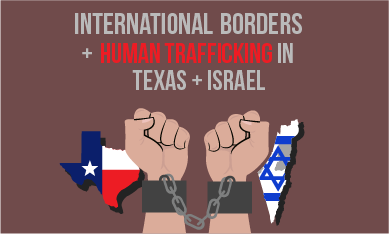
International Borders and Human Trafficking in Israel and Texas
Israel and Texas may not seem to have much in common upon initial thought. After all, the State of Texas is approximately 33 times the size of Israel, yet, both lands face human trafficking concerns due to their international borders. The Trafficking Victims Protection Act (TVPA) defines “severe human trafficking” as:
“sex trafficking in which a commercial sex act is induced by force, fraud, or coercion, or in which the person ... has not attained 18 years of age; or the recruitment, harboring, transportation, provision, or obtaining of a person for labor or services, through the use of force, fraud, or coercion ... A victim need not be physically transported from one location to another for the crime to fall within this definition.”
In Texas, the border with Mexico spans 1254 miles (2018 km) comprising the longest stretch of border with Mexico when compared to any other state. In comparison, Israel has 664 miles (1068 km) of border with 6 different border countries. Specifically, the Israel-Egypt border has a long history of human trafficking. This article explores both governments’ approaches to human trafficking and border security.
Texas
The State of Texas has battled with human trafficking across the Mexico border for decades. In fact, the U.S. Department of Justice estimates as many as one-quarter of all human trafficking victims pass through Texas. A University of Texas study found that there are 313,000 victims of human trafficking in Texas. Texas also houses the metroplex of Houston, which the Department of Justice has called the “most intense jurisdiction for trafficking in the U.S.”.
There are two primary factors that contribute to the issue of trafficking in Texas. The Mexico border, along with the major thoroughfares in Houston, the 4th largest city in the U.S., creates a prime environment for traffickers to smuggle humans into the United States. However, Texas has proven to be proactive in seeking to prosecute, prevent, and punish the crime of human trafficking. The U.S. Attorney Office for the Southern District of Texas, encompassing 44,000 square miles and 8.3 million people, “prosecutes more cases against defendants than any other United States Attorney Office nationwide.” Additionally, Texas has received a score of 94 and an “A” from Shared Hope International’s Protected Innocence Project report in 2016. Not surprisingly, Texas is not the only land faced with human trafficking concerns due to an international border.
Israel
Israel also experienced a major problem with human trafficking, especially in the 1990s when sex trafficking was rampant. Most victims of the sex trafficking epidemic were women from the Former Soviet Union who were exploited because of their poverty. A wake-up call came when the U.S. State Department placed Israel alongside Pakistan and Bahrain in Tier 3 of the annual Trafficking in Persons (TIP) Report in 2001. Tier 3 is the lowest possible level in the TIP Report and is an indication that a country is doing close to nothing to combat human trafficking within its borders. This spurred the Israeli authorities, along with anti-trafficking NGOs and advocates, to begin addressing the problem of trafficking. Between 2003 and 2005, Israel amended several laws to provide more support for trafficking victims, including legal representation and access to shelters. Israeli authorities also began to crack down on traffickers. As a result of their significant efforts to prevent and prosecute human trafficking, Israel was moved to Tier 2 of the TIP Report in 2002. The Knesset subcommittee on Combatting Human Trafficking and Prostitution chairwoman, Aliza Lavie, celebrated the improvements in the fight against modern-day slavery, however she noted that the progress “does not mean we can stop fighting.” Accordingly, a breakthrough in the fight against trafficking came with the construction of the southern border fence with Egypt.
Border Security by The Numbers
In 2013, Israel completed construction of a 150-mile (245 km) fence along its border with Egypt. The number of illegal crossers on the Israel-Egypt border dropped 99 percent after the construction of the fence, from more than 16,000 in 2011 to less than 20 in 2016. Israel spent $415 million ($2.9 million per mile) to construct the southern border fence and spends approximately $8.3 million annually ($58,000 per mile) to maintain the fence. For every 1.2 miles of fencing, Israel stations one person along its border with Egypt.
Although the United States does not have a complete border fence with Mexico, the U.S. has spent $2.3 billion to construct 654 miles of pedestrian and vehicle barrier fencing along the U.S.-Mexico border. Further, it costs the U.S. $50 to $55 million annually ($77,000 per mile) to maintain its 650 miles of fencing along the border with Mexico. This cost of maintenance is 33 percent more than Israel. Manpower is not neglected either, with approximately one person stationed for every 2.2 miles of the Mexico border. With these numbers in mind, a comparison of human trafficking in Texas and Israel is more easily understood.
Human Trafficking Today in Texas and Israel
In 2017, both the United States and Israel received a Tier 1 ranking in the U.S. Department of State’s TIP Report. Although Tier 1 is the highest level on the tier system, it does not mean there is no human trafficking in that country. Unfortunately, according to the Texas Department of Public Safety, the issue of trafficking is not going away any time soon. Notably, in the 2017 Texas Public Safety Threat Overview, trafficking is the fastest growing organized crime in Texas. Although Israel may no longer be a haven for sex traffickers, trafficking still exists. With the closed borders, traffickers now bring victims into Israel through the Ben Gurion International Airport in Tel Aviv. According to the Border Control Commissioner, over the past year and a half, 372 women have been stopped from entering through Ben Gurion Airport. Michal Yusupov, head of the Population Control Division, noted that the number of women attempting to enter Israel has increased in the past year. Even though all 372 women were prohibited from entering, it is likely that others have entered under the guise of tourism without being stopped. Even still, the 2017 TIP Report noted Israel’s “serious and sustained” efforts to eliminate trafficking. Some countries are now looking to Israel’s successful fight against trafficking to learn what strategies are most effective.
What Can Texas Learn From Israel
Reports supporting the building of a fence on the United States-Mexico border often use Israel’s success with the Israel-Egypt border fence as an example. Although the U.S., and especially Texas, can learn many important border security lessons from Israel due to the similarities in human trafficking, there are complications that are often forgotten in these reports. Take, for example, the sheer length of the U.S.-Mexico border which is drastic in comparison to the Israel-Egypt border. As previously mentioned, Israel’s border stretches approximately 150 miles, while just the Texas-Mexico border is over 1200 miles. Another complication arises from the fact that the U.S.-Mexico border runs alongside four states, all with varying opinions on border security. The bordering states of New Mexico and California both have laws that limit how local police interact with federal immigration agents—also known as sanctuary cities. The two other border states, Arizona and Texas, do not have such laws. This discrepancy makes a unified plan for border security difficult to draft and implement.
Despite the challenges, much progress can be made in U.S. border security based on Israel’s success when the beforementioned nuances are taken into consideration. For instance, technology has proven to be key in monitoring and capturing traffickers in Israel. Israel uses an array of technology including seismic sensors, radars, and balloons with cameras to reinforce its southern border fence. The Port Authority of Texas has taken note of Israel’s use of technology. In 2014, Texas contracted with an Israeli company, RADWIN, to use advanced cameras to monitor ports-of-entry into the United States. The modern tactic to combat human trafficking is combined governmental efforts and advanced technology. Texas may not be able to copy-cat Israel’s border fence; however, this does not mean the U.S. cannot use Israel as an example to find the most effective border security strategy unique to the Texas-Mexico border.