
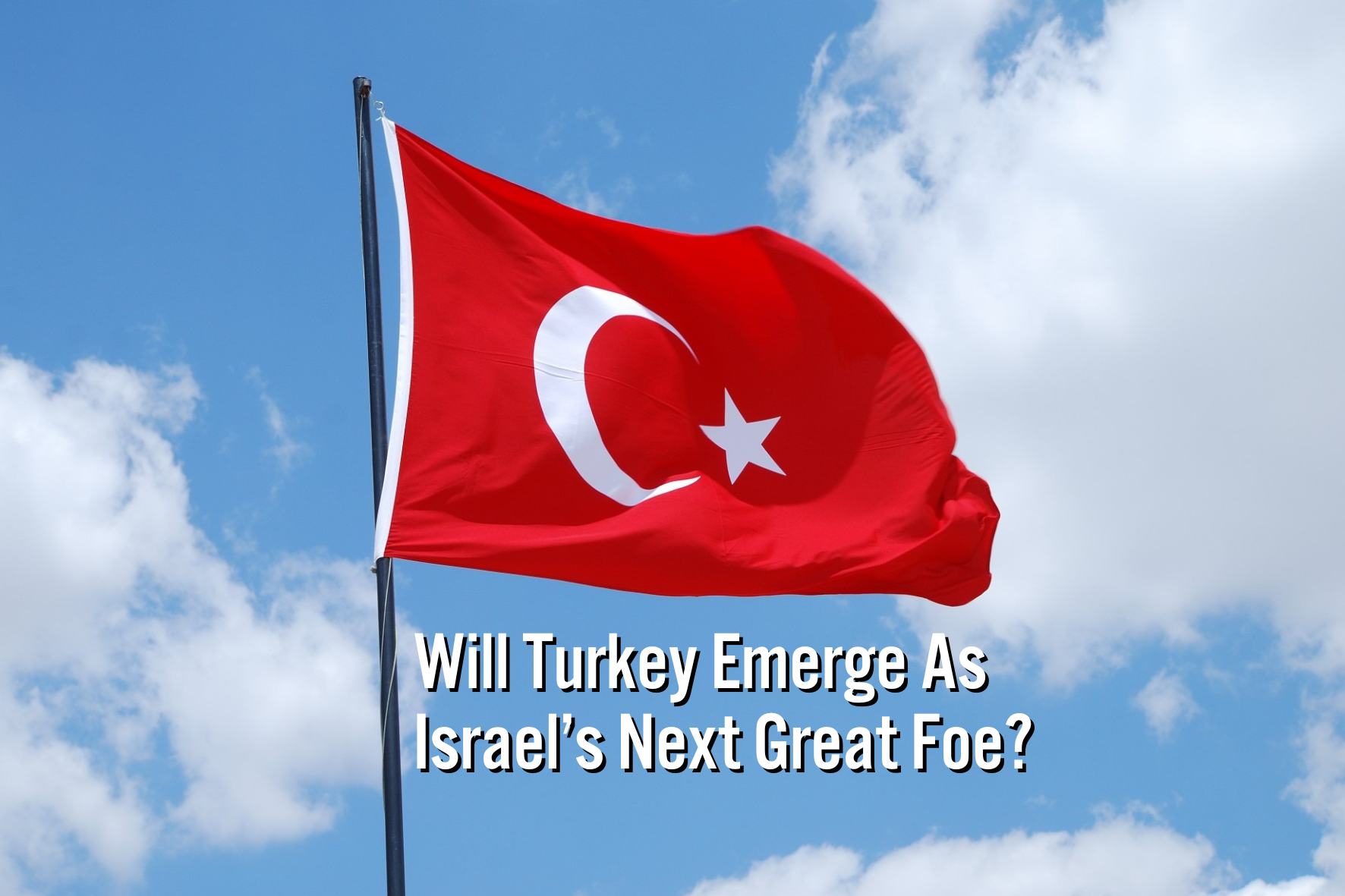
A New Rivalry?
Will Turkey Emerge As Israel’s Next Great Foe?
Turkish-Israeli relations have always been in flux. Turkey was the first Muslim-majority country to recognise Israel, and the 1990s were characterised by strengthening relations[1]. However, relations began to deteriorate at the beginning of the 21st century, coinciding with the election of Erdogan and Turkey’s shift towards Islam and championing of the Palestinian issue. This deterioration reached its zenith after the 2010 Gaza Flotilla incident[2], with full diplomatic relations only restored over a decade later[3]. Following the 7th October, Turkish-Israeli relations have returned to rock-bottom, with Erdogan exclaiming that Turkey has “severed all relations with Israel”[4].
Concurrently, Bashar al-Asssad’s regime in Syria has fallen to Turkish-backed rebels, providing Erdogan the opportunity to reassert Turkish influence across a classical Ottoman region. This resembles Iran’s opportunities to restore influence across former Persian regions following the fall of Saddam in Iraq, which led to increased tensions with Israel. Given sunken Turkish-Israel relations, and Turkey’s newfound regional opportunities, will Turkey tread in Iran’s footsteps and emerge as Israel’s next great foe, a possibility hypothesised by the recent Nagel committee report[5], or is there reason to be optimistic about the future of the Turkish-Israeli relationship?
Mirroring Iran
Both Turkey and Iran envision a self-aggrandising destiny as a regional and global power, derived from nostalgia for their former empires. As such Turkey has strong contemporary interest in Syria. Turkey holds 3.2 million Syrian refugees[6] that Erdogan wishes to return as soon as possible due to the economic burden they have placed on Turkey. Erdogan also wants to eradicate Kurdish resistance in Syria, in contrast to Israel’s alignment with the Kurds, used to counter Iraqi and Iranian interests[7]. The Kurdish issue in Syria could become one point of contention between Israel and Turkey.
Another point of contention is Turkey’s strong relationship with the new Syrian regime, demonstrated by Turkish diplomats being the first foreign dignitaries to meet with the new Syrian leaders[8]. If Turkey begins to provide weapons to Syria, and Syria enters into a conflict with Israel, a possibility given the new Syrian regime’s Islamic terrorist origins and unresolved Syria-Israel border disputes, then Israel would be required to strike Turkish assets in Syria, analogous to Israel’s strikes against Islamic Revolutionary Guard Corps (IRGC) assets in Syria prior to Assad’s defeat, which led to direct Israel-Iran conflict. Hence, Turkey’s growing influence in Syria could precipitate a conflict between Israel and Turkey, mirroring the development of the Israel-Iran conflict.
Turkey’s domestic politics produces strong anti-Israel rhetoric. 84% of Turks, including 92% who voted for Erdogan, support Hamas in the current war[9], demonstrating strong domestic incentive for hostility towards Israel. Additionally, Erdogan is a strong supporter of the Muslim Brotherhood movement[10], of which Hamas is an offshoot, leading to strong Turkish support for Hamas, causing friction in Turkish-Israeli relations. Turkey’s domestic and ideological considerations have led to a deterioration in Turkish rhetoric regarding Israel, mirroring Iran’s anti-Israel hostility, which became a multiplier for Israel-Iran tensions, suggesting Turkish-Israeli relations may go the same way.
Moderating factors
Despite some of the similarities between Turkey and Iran, there are differences which can moderate Turkish-Israeli tensions. Unlike Iran, which is over 90% Shia[11], Turkey is 88% Sunni[12]. Therefore, whilst Iran, the centre of Shia thought, can exert influence across all Shia populations in the region, Turkey has to compete with other centres of Sunni power for regional influence, limiting Turkey’s ability to emulate Iran’s Shia crescent.
Unlike Iran, Turkey remains in the US security sphere and is a member of NATO. Thus, the US has incentive to moderate Turkish-Israeli tensions. Additionally, Israel and Turkey remain strategic partners to Azerbaijan, another country that can moderate Turkish-Israeli tensions.
In contrast to Iran’s consistent hostility towards Israel, Erdogan’s Israel policy has been characterised by flip-flopping, with periods of good and bad relations. Though, during periods of bad relations, trade relations have still been able to flourish. Hence, Turkey’s Israel policy could be interpreted more as short-term opportunism than a long-term anti-Israel plan that characterises Iranian policy.
Conclusion
Turkey has all the requisite attributes for mirroring Iran and becoming Israel’s next major foe. Turkey, like Iran, has ambitions to cultivate a sphere of influence across their former imperial regions, whilst spouting extreme anti-Israel rhetoric, and supporting Palestinian terrorist groups. Hence, Israel must prepare the necessary military capabilities in case a direct confrontation with Turkey does break out, as recommended by the Nagel committee report. However, unlike Iran, there are significant forces capable of moderating Turkish belligerence before Turkey reaches foe status. Erdogan has not committed to a consistent Israel policy through the years and has significant economic interest in maintaining a cordial relationship with Israel. Additionally, Israel has plenty of diplomatic avenues to shape Turkey’s behaviour in Israel’s favour. Israel can leverage its relationship with the US, NATO, and Azerbaijan, all partners of Turkey, in moderating tensions, as well as pursue ties with traditional Turkish adversaries like Greece and Cyprus to balance against Turkish power. The future of Turkish-Israel relations is not set in stone, but there is plenty of reason to be hopeful.
By: Eitan Litvin, JIJ Intern
[1] Tür, Ozlem. “Turkey and Israel in the 2000s-from cooperation to conflict.” Israel Studies, vol. 17, no. 3, 2012, pp. 45-66.
[2] “Timeline: Main Events in the Gaza Flotilla Affair.” Reuters, 2010, https://www.reuters.com/article/world/timeline-main-events-in-the-gaza-flotilla-affair-idUSTRE6562BN/. Accessed 21/01/2025.
[3] Obel, Ash. “Israel and Turkey to Restore Ambassadors in Full Renewal of Diplomatic Ties.” timesofisrael.com, 2022, https://www.timesofisrael.com/israel-and-turkey-to-restore-ambassadors-in-full-renewal-of-diplomatic-ties/. Accessed 21/01/2025.
[4] Soylu, Ragip. “Turkey Severs All Relations with Israel, Says Erdogan.” Middle East Eye, 2024, https://www.middleeasteye.net/news/turkey-severs-all-relations-israel-says-erdogan. Accessed 19/01/2025.
[5] Etzion, Udi. “Nagel Committee Warns Israel Must Prepare For Potential War with Turkey” The Jerusalem Post, 2025, https://www.jpost.com/israel-news/article-83636. Accessed 19/01/2025.
[6] “Overview | UNHCR Turkey.” UNHCR Turkey, 2025, www.unhcr.org/tr/en/ne-yapiyoruz/overview. Accessed 21/01/2025.
[7] Quitaz, Suzan. “The Historic Ties Between Israel and the Kurds of Iraq Will Continue.” Jerusalem Center for Public Affairs, 2023, https://jcpa.org/article/the-historic-ties-between-israel-and-the-kurds-of-iraq-will-continue/. Accessed 19/01/2025
[8] “Leader of New Syrian Government to Make First Foreign Visit to Türkiye.” Report News Agency, 2025, https://report.az/en/region/leader-of-new-syrian-government-to-make-first-foreign-visit-to-turkiye/. Accessed 19/01/2025.
[9] Dalmis, Ibrahim. “Public Opinion and Reaction to Israel’s War on Gaza after October 7 in Türkiye.” Insight Turkey, 2024, https://www.insightturkey.com/articles/public-opinion-and-reaction-to-israels-war-on-gaza-after-october-7-in-turkiye. Accessed 19/01/2025.
[10] Kenez, Levent. “Erdogan Still Maintains Close Ties with Muslim Brotherhood despite Reproachement with Sisi” Nordic Monitor, 2024, https://nordicmonitor.com/2024/09/erdogan-still-maintains-close-ties-with-muslim-brotherhood-despite-rapprochement-with-sisi/. Accessed 19/01/2025.
[11] “Iran - United State Department of State.” United States Department of State, 2023, https://www.state.gov/reports/2022-report-on-international-religious-freedom/iran/. Accessed 21/01/2025.
[12] “Turkey - United States Department of State.” United States Department of State, 2023, https://www.state.gov/reports/2022-report-on-international-religious-freedom/turkey/. Accessed 21/01/2025.

A New Rivalry?
Will Turkey Emerge As Israel’s Next Great Foe?
Turkish-Israeli relations have always been in flux. Turkey was the first Muslim-majority country to recognise Israel, and the 1990s were characterised by strengthening relations[1]. However, relations began to deteriorate at the beginning of the 21st century, coinciding with the election of Erdogan and Turkey’s shift towards Islam and championing of the Palestinian issue. This deterioration reached its zenith after the 2010 Gaza Flotilla incident[2], with full diplomatic relations only restored over a decade later[3]. Following the 7th October, Turkish-Israeli relations have returned to rock-bottom, with Erdogan exclaiming that Turkey has “severed all relations with Israel”[4].
Concurrently, Bashar al-Asssad’s regime in Syria has fallen to Turkish-backed rebels, providing Erdogan the opportunity to reassert Turkish influence across a classical Ottoman region. This resembles Iran’s opportunities to restore influence across former Persian regions following the fall of Saddam in Iraq, which led to increased tensions with Israel. Given sunken Turkish-Israel relations, and Turkey’s newfound regional opportunities, will Turkey tread in Iran’s footsteps and emerge as Israel’s next great foe, a possibility hypothesised by the recent Nagel committee report[5], or is there reason to be optimistic about the future of the Turkish-Israeli relationship?
Mirroring Iran
Both Turkey and Iran envision a self-aggrandising destiny as a regional and global power, derived from nostalgia for their former empires. As such Turkey has strong contemporary interest in Syria. Turkey holds 3.2 million Syrian refugees[6] that Erdogan wishes to return as soon as possible due to the economic burden they have placed on Turkey. Erdogan also wants to eradicate Kurdish resistance in Syria, in contrast to Israel’s alignment with the Kurds, used to counter Iraqi and Iranian interests[7]. The Kurdish issue in Syria could become one point of contention between Israel and Turkey.
Another point of contention is Turkey’s strong relationship with the new Syrian regime, demonstrated by Turkish diplomats being the first foreign dignitaries to meet with the new Syrian leaders[8]. If Turkey begins to provide weapons to Syria, and Syria enters into a conflict with Israel, a possibility given the new Syrian regime’s Islamic terrorist origins and unresolved Syria-Israel border disputes, then Israel would be required to strike Turkish assets in Syria, analogous to Israel’s strikes against Islamic Revolutionary Guard Corps (IRGC) assets in Syria prior to Assad’s defeat, which led to direct Israel-Iran conflict. Hence, Turkey’s growing influence in Syria could precipitate a conflict between Israel and Turkey, mirroring the development of the Israel-Iran conflict.
Turkey’s domestic politics produces strong anti-Israel rhetoric. 84% of Turks, including 92% who voted for Erdogan, support Hamas in the current war[9], demonstrating strong domestic incentive for hostility towards Israel. Additionally, Erdogan is a strong supporter of the Muslim Brotherhood movement[10], of which Hamas is an offshoot, leading to strong Turkish support for Hamas, causing friction in Turkish-Israeli relations. Turkey’s domestic and ideological considerations have led to a deterioration in Turkish rhetoric regarding Israel, mirroring Iran’s anti-Israel hostility, which became a multiplier for Israel-Iran tensions, suggesting Turkish-Israeli relations may go the same way.
Moderating factors
Despite some of the similarities between Turkey and Iran, there are differences which can moderate Turkish-Israeli tensions. Unlike Iran, which is over 90% Shia[11], Turkey is 88% Sunni[12]. Therefore, whilst Iran, the centre of Shia thought, can exert influence across all Shia populations in the region, Turkey has to compete with other centres of Sunni power for regional influence, limiting Turkey’s ability to emulate Iran’s Shia crescent.
Unlike Iran, Turkey remains in the US security sphere and is a member of NATO. Thus, the US has incentive to moderate Turkish-Israeli tensions. Additionally, Israel and Turkey remain strategic partners to Azerbaijan, another country that can moderate Turkish-Israeli tensions.
In contrast to Iran’s consistent hostility towards Israel, Erdogan’s Israel policy has been characterised by flip-flopping, with periods of good and bad relations. Though, during periods of bad relations, trade relations have still been able to flourish. Hence, Turkey’s Israel policy could be interpreted more as short-term opportunism than a long-term anti-Israel plan that characterises Iranian policy.
Conclusion
Turkey has all the requisite attributes for mirroring Iran and becoming Israel’s next major foe. Turkey, like Iran, has ambitions to cultivate a sphere of influence across their former imperial regions, whilst spouting extreme anti-Israel rhetoric, and supporting Palestinian terrorist groups. Hence, Israel must prepare the necessary military capabilities in case a direct confrontation with Turkey does break out, as recommended by the Nagel committee report. However, unlike Iran, there are significant forces capable of moderating Turkish belligerence before Turkey reaches foe status. Erdogan has not committed to a consistent Israel policy through the years and has significant economic interest in maintaining a cordial relationship with Israel. Additionally, Israel has plenty of diplomatic avenues to shape Turkey’s behaviour in Israel’s favour. Israel can leverage its relationship with the US, NATO, and Azerbaijan, all partners of Turkey, in moderating tensions, as well as pursue ties with traditional Turkish adversaries like Greece and Cyprus to balance against Turkish power. The future of Turkish-Israel relations is not set in stone, but there is plenty of reason to be hopeful.
By: Eitan Litvin, JIJ Intern
[1] Tür, Ozlem. “Turkey and Israel in the 2000s-from cooperation to conflict.” Israel Studies, vol. 17, no. 3, 2012, pp. 45-66.
[2] “Timeline: Main Events in the Gaza Flotilla Affair.” Reuters, 2010, https://www.reuters.com/article/world/timeline-main-events-in-the-gaza-flotilla-affair-idUSTRE6562BN/. Accessed 21/01/2025.
[3] Obel, Ash. “Israel and Turkey to Restore Ambassadors in Full Renewal of Diplomatic Ties.” timesofisrael.com, 2022, https://www.timesofisrael.com/israel-and-turkey-to-restore-ambassadors-in-full-renewal-of-diplomatic-ties/. Accessed 21/01/2025.
[4] Soylu, Ragip. “Turkey Severs All Relations with Israel, Says Erdogan.” Middle East Eye, 2024, https://www.middleeasteye.net/news/turkey-severs-all-relations-israel-says-erdogan. Accessed 19/01/2025.
[5] Etzion, Udi. “Nagel Committee Warns Israel Must Prepare For Potential War with Turkey” The Jerusalem Post, 2025, https://www.jpost.com/israel-news/article-83636. Accessed 19/01/2025.
[6] “Overview | UNHCR Turkey.” UNHCR Turkey, 2025, www.unhcr.org/tr/en/ne-yapiyoruz/overview. Accessed 21/01/2025.
[7] Quitaz, Suzan. “The Historic Ties Between Israel and the Kurds of Iraq Will Continue.” Jerusalem Center for Public Affairs, 2023, https://jcpa.org/article/the-historic-ties-between-israel-and-the-kurds-of-iraq-will-continue/. Accessed 19/01/2025
[8] “Leader of New Syrian Government to Make First Foreign Visit to Türkiye.” Report News Agency, 2025, https://report.az/en/region/leader-of-new-syrian-government-to-make-first-foreign-visit-to-turkiye/. Accessed 19/01/2025.
[9] Dalmis, Ibrahim. “Public Opinion and Reaction to Israel’s War on Gaza after October 7 in Türkiye.” Insight Turkey, 2024, https://www.insightturkey.com/articles/public-opinion-and-reaction-to-israels-war-on-gaza-after-october-7-in-turkiye. Accessed 19/01/2025.
[10] Kenez, Levent. “Erdogan Still Maintains Close Ties with Muslim Brotherhood despite Reproachement with Sisi” Nordic Monitor, 2024, https://nordicmonitor.com/2024/09/erdogan-still-maintains-close-ties-with-muslim-brotherhood-despite-rapprochement-with-sisi/. Accessed 19/01/2025.
[11] “Iran - United State Department of State.” United States Department of State, 2023, https://www.state.gov/reports/2022-report-on-international-religious-freedom/iran/. Accessed 21/01/2025.
[12] “Turkey - United States Department of State.” United States Department of State, 2023, https://www.state.gov/reports/2022-report-on-international-religious-freedom/turkey/. Accessed 21/01/2025.
A Year of Resilience

Israel in the Past 70 Years
View Israel's past agreements, war involvements, disputes and activities- as well as it's place within the United Nations. In 2018, we will view the outcome of Trump's declaration of Jerusalem being Israel's capital city.
Download
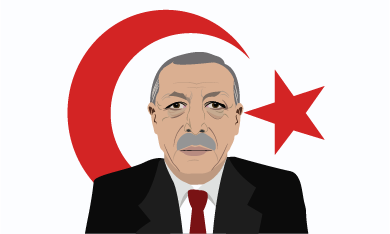
Turkey’s Authoritarian Slide
On October 29, 1923, a young Turkish statesman named Mustafa Kemal Ataturk proclaimed the birth of the Republic of Turkey and became its inaugural President. Following the aggression and regional hegemony of the Ottoman Empire up until the end of the Great War, the Turks’ new state was envisaged to fulfil their self-determination without the imperialist and theocratic proclivities of the Sultanate.
To a large degree, this has been the case for most the last century. Apart from its occupation of Northern Cyprus and its intermittent crackdowns on Kurdish communities, it bore little resemblance to the empire of old. Defined more by its secular constitution and burgeoning economy, Turkey relinquished its former role as Islam’s political authority.
However, under the Presidency of Recep Tayyip Erdoğan, the Republic has begun a gradual, creeping recession into authoritarianism.
The first signs of this slide appeared in relation to the media. Following the anti-Erdoğan Gezi Park protests of 2013, the government responded with sweeping new laws aimed at stifling the media. Incidents involving restrictions on the media included:
- Journalists from Cihan News Agency and the Zaman newspaper were repeatedly barred from attending government press conferences or asking questions.
- The Radio and Television Supreme Council issued fines to pro-opposition news channels such as Halk TV and Ulusal Kanal for their coverage of the protests, alleging that the images were likely to frighten and destabilize the wellbeing of children who could be potentially watching.
- After the protests had subsided, President Erdoğan tightened controls on the internet and blocked Twitter and YouTube.
Alarmingly, according to the Committee to Protect Journalists, Turkey has 81 journalists incarcerated as of December 1 2016. This is the highest of any other country, including all the journalists currently jailed in North Korea, Cuba, Russia and China combined.
The undermining of Turkey’s separation of powers is also concerning. The governing powers and functions in Turkey are divided between the executive, the legislative and an independent judiciary. By design, the religious inclinations of Erdoğan’s Justice and Freedom Party (AKP) are at odds with the historically-secular judiciary. In January 2014, the President purged the judiciary of several officials either for their secularist credentials or those whom he thought to be aligned with his rival Fetullah Gülen. Many of these sacked judicial officers were later replaced by AKP supporters. This was followed by another purge of the judiciary in July 2016, where 2,745 Turkish judges (36% of all judges in Turkey at the time) were removed from duty and ordered to be detained.
Turkey again made international headlines when it held a constitutional referendum in April of this year. The referendum, which succeeded with a ‘yes’ vote of 51.41% to a ‘no’ vote of 48.59%, essentially undermined the liberal founding principles of the Republic and the constitutional constraints on the Presidency. Opposition leader Mithat Sancar stated that a successful ‘yes’ vote and its corresponding amendments would cause the country to ‘quickly become an autocracy’ and eventually a ‘pure dictatorship’. These amendments included:
- Removing the requirement that the judiciary be neutral
- Widely expanding the responsibilities and powers of the Presidency
- Enhancing the President’s powers during a state of emergency
- Dissolving the position of Prime Minister
Following a coup attempt in late 2016, the government initiated a crackdown to purge the military, judiciary, government and civil service of not only those who were implicated in the coup attempt, but also those deemed to be disloyal or dissenting to President Erdoğan. Over 100,000 officials have been dismissed or suspended, including 28,000 teachers. At least 2,200 judges were jailed pending investigation, with 3,400 permanently dismissed. The government also temporarily derogated from many of the key provisions of the European Convention on Human Rights and the International Convention on Civil and Political Rights. The state of emergency also weakened the safeguards against abuse in detention, leading to increased reports of torture and ill-treatment in police detention such as the beating and stripping of detainees as well as threats of rape.
Furthermore, the Turkish government has intensified actions that intimidate and target the country’s Kurdish minority. Curfews have been enforced in Southern Kurdish towns and cities and, as estimated by Amnesty International, up to half a million people have been forced out of their homes because of security operations by Turkish authorities. Many homes and historic buildings of cultural significance to the Kurds, such as in the city of Diyarbakir, have been shelled or demolished. A report by the Office of the United Nations High Commissioner for Human Rights released in February 2017 accused Turkish authorities of killing hundreds of Kurdish people between July 2015 and the end of 2016.
Importantly, Turkey is bound by a wide range of human rights obligations under international law. Among other treaties, they are a party to the International Convention on Civil and Political Rights, the International Covenant on Economic, Social and Cultural Rights and the United Nations Convention Against Torture. Thus, it is increasingly alarming that the government is engaging in such flagrant violations of their international legal commitments. Although faced with the undeniable threats from terrorism, military mutinies and corruption, President Erdoğan has exaggerated these threats to justify the suppression of free speech, freedom of assembly and the required impartiality of Turkey’s judicial branch of government. Along with his government, he should be subject to extensive further inquiry into these human rights abuses.