
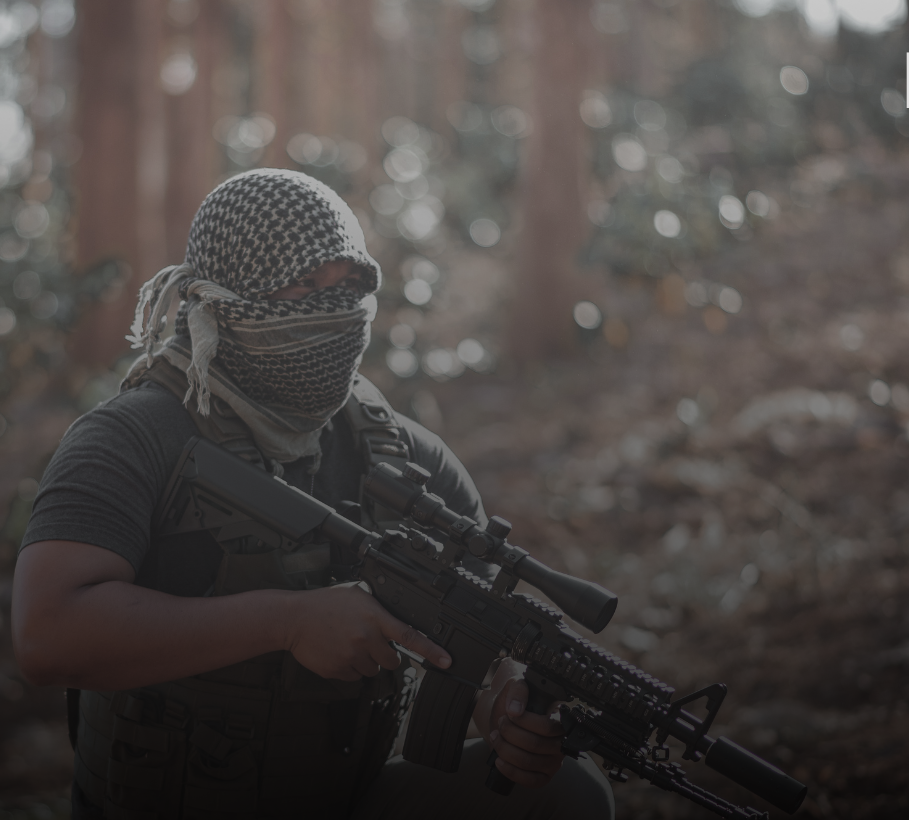
What will come of the recent escalation in the West Bank?
Last week, rockets were fired from Jenin, in the West Bank, toward Israel for the first time in 18 years. This week, Israel launched its biggest operation in the West Bank in decades. Tension and violence are escalating between Israel and the Palestinians in the West Bank, but what is the cause, and what does this mean in the larger question of the Israeli-Palestinian conflict?
The Israeli military operation in Jenin is a counter-terrorism campaign that is mainly a response to a string of terrorist attacks in recent weeks. On June 19, Israel launched a raid in Jenin in search of several Palestinian terrorists planning attacks in Israel, and they were quickly met with armed resistance (Lynfield, “Israeli Forces launch raid in Jenin”).
A day after this, on June 20, two Palestinians killed four Israelis at a settlement near Nablus, in the West Bank. Palestinian terrorist group Hamas, which operates out of Gaza, claimed responsibility for the gunmen (Gritten, Four Israelis killed by Palestinian gunmen”).
Four days later, on June 24, another terrorist, claimed to be a member of the Al-Aqsa Martyrs Brigade, opened fire on Israeli soldiers at the major checkpoint connecting Ramallah and East Jerusalem (Fabian, “Shooting at checkpoint near Jerusalem”). The Al-Aqsa Martyrs Brigade is the military wing of Fatah, a Palestinian political group which lost the only election, in 2006, to Hamas but still has power in the West Bank.
Now, this week, after mounting tensions in the region, Israel has launched its biggest operation in the West Bank in two decades. Israel has announced that this counter-terrorism operation is to destabilize terrorist groups in the West Bank which have become too comfortable and too dangerous.
The operation has involved numerous drone strikes and an armed brigade on the ground, targeting terrorist hot spots in Jenin and in the refugee camp in the city. Israel has claimed that this operation is not aimed at taking and holding territory (Mckernan, “Biggest West Bank incursion in 20 years”), but to disable terrorists from carrying out attacks on Israel.
These recent terrorist attacks, and the Israeli response, is a result of decades of conflict between Israel and the Palestinians. The two have never been able to agree on borders or on coexistence, sparking several wars and many operations. This recent violence is an extension of the historic conflict, but it is influenced by modern issues, and it is being fought between complex parties.
The Palestinians launch terrorist attacks against Israel because they do not want the Jewish state to exist in the land they view as theirs. Several of the groups that hold power and operate in Palestinian land are not interested in a political solution, and often refuse to negotiate with Israel. The groups responsible for the recent attacks, mainly Hamas and Fatah, both have military wings that operate in the West Bank, and specifically in Jenin.
The groups receive much of their funding from Iran and call for radical Israeli cessions to achieve peace. Hamas wants Israel to fall back to the pre-1967 borders, they want to grant all Palestinians the right of return, and they want what is now Israel to become an Islamic state. Of course, these demands are impossible, and they are used as an excuse for violence.
Since Israel, obviously, refuses to cooperate with Palestinian demands, terrorist groups have been able to grow and operate in Palestinian land. Terrorist groups have found a safe haven in the West Bank, and specifically in Jenin, and the most recent Israeli operation shows that Israel refuses to allow terrorists to operate in the region. If Palestinian authorities continue to foster these terrorist groups, Israel may continue to launch operations against them, escalating the conflict between the parties.
This operation, the biggest in twenty years, may be a sign of more to come between Israel, the Palestinian groups in the West Bank, and the Palestinians across the rest of the region.
By Ethan Wenger – JIJ Intern


Does Humanity End at the Border?
In a world where oppression and punishment are a means of securing power, respect for human life becomes scarce and is replaced by inhumanity and suffering. But do we really know what is happening on the other side of Israel's border?
Imagine that you and your family live somewhere in the West Bank. One day, you discover that a child is about to be used as a suicide bomber to blow up a bus. A desire to do everything possible to prevent a child from becoming a suicide bomber and averting the death of many innocent people is a natural response for you and me. However, under the Palestinian Authority (PA), this response would be grounds for receiving a life sentence and thus commences a nightmare. Because you have tried to stop a fatal attack, you will be arrested and all the people around you will pay a price.
First, it starts with your child. Let’s say your child was born prematurely and she needs to remain in an incubator that provides an environment that allows her to properly mature.
However, because the PA operates like a machine of terror; cruel and creative forms of inhumane acts are implemented against individuals as a form of punishment. And for this reason, because you saved innocent people, the PA decided not to give your child the necessary treatment and they expel your child from the hospital. Consequently, an innocent child is severely handicapped not only physically but also psychologically for all her life. Still, the punishment goes on.
You might be imprisoned and subjected to many different types of torture, such as being tied to a post and beaten until losing consciousness, burnt with cigarettes, having boiling and cold water thrown on you, having your nails and teeth ripped out, being electrocuted and deprived of sleep and food. The methods of torture are endless. This is not a nightmare or fiction, but rather the reality of many Palestinian citizens who oppose the politics of the PA or take a stand against acts of terror. This is one of the many real cases that occurred under the PA regime which JIJ has documented and reported.
Palestinian security forces systematically inflict ill-treatment and torture on their citizens as a form of government policy, cruelly disrespecting human rights. The PA speaks worldwide, appealing for the rights of the Palestinians and their territories, but it is the PA who violates the rights of its own citizens by secretly shedding blood and putting in place an oppressive machine to destroy all who disagree with their acts.
The Oslo Agreement was signed in September 1993 by the State of Israel and the Palestine Liberation Organization (PLO). The Palestinian Authority (PA) was then created in 1994 to govern the Gaza Strip and the West Bank (areas A and B). However, the Palestinians have not complied with the provisions of the treaty. Violent clashes broke out between the two Palestinian factions: Hamas and Fatah following the January 2006 Palestinian Legislative Council (PLC) elections. Thus, in 2007, Hamas lost its ruling position in the West Bank, being replaced by Fatah and independent members. Hamas, in turn, expelled Fatah from Gaza and retained control of that area. This division resulted in two separate administrations: the Palestinian Authority, led by Fatah under Mahmoud Abbas controlling the West Bank; and control of the Gaza Strip by Ismail Haniyeh, Hamas's leader. These groups have since then exercised effective control over everything that happens in those regions.
Palestinian witnesses reported and described the abuses that the PA had perpetrated against them, including abduction, imprisonment, torture, and rape. The PA reportedly murdered and illegally detained many of their citizens intentionally and premeditatedly to intimidate its civilians.
This is condemned by international criminal law. A crime against humanity is characterized as any of the atrocious acts indicated in art.7 of the Rome Statute, committed in the framework of a widespread or systematic attack against the civilian population, with knowledge of that attack. Thus, illegal acts include sexual assault, torture, murder, kidnapping, and imprisonment.
The international legal standard of general human rights must be met by all governments and regimes in order to ensure peace, prosperity and the welfare of individuals. It falls upon society as a whole to prevent crimes against humanity from occurring. Therefore, the best definition of international crimes is that which contemplates the idea of acts performed by states or individuals, and that violate principles and rules that protect values to which humanity attaches great importance. According to the Rome Statute, crimes against humanity can occur in times of war or peace. In this article, it is clear what the elements of the crime are. First, a physical element is required, such as murder, imprisonment, torture and other inhumane acts. The second element is contextual, meaning a crime is committed as part of a widespread ("large-scale nature of the attack, which should be massive, frequent, carried out collectively with considerable seriousness and directed against a multiplicity of victims") or systematic attack directed at any civilian population ("the organized nature of the acts of violence and the improbability of their random occurrence"). This means that there have to be numerous threats in a geographical area and that the violence has to follow a methodical approach. Finally, the crime must be committed with the knowledge of an attack, that is, the mental element. Beyond all these elements, crimes against humanity occur only when they are committed for the sake of a state or political organization.
In these terms, it is considered that the PA violated the human rights of its citizens by murdering, imprisoning, torturing, and kidnapping them. These acts were carried out in a judicious, organized and frequent manner to a multitude of victims, under a large-scale attack.
Palestinian citizens experienced severe physical and mental pain and suffering, which was premeditated and calculatedly caused by their leaders to oppress them and to preserve positions of leadership in both territories. This violates international human rights law. The PA controls both the police and the military as well as the courts themselves, so nothing is done to help Palestinian citizens within the West Bank. This is a cycle of violence, repression, and misery for the victims, their families, the entire Palestinian people, and potentially even their regional neighbors. Palestinian leaders must realize that because they have signed and agreed to treaties such as the Rome Statute, they are legally obligated to prevent cruel acts against their own people.
On this matter, the Jerusalem Institute of Justice has already submitted several communications to the Office of the Prosecutor (OTP) of the International Criminal Court (ICC) regarding crimes against humanity committed by Palestinian leaders, such as murder, imprisonment and torture, respectively, against Palestinian civilians.
Crimes against humanity are serious violations of international law. It is time to take responsibility, we must not only point the finger at the culprits of these atrocities but also at the supporters and spectators who become accomplices. The real victims of this war are the Palestinian citizens who are cynically exploited as political pawns.
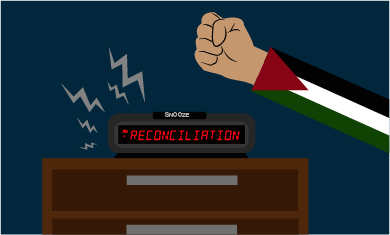
Hamas, the PA and Groundhog Day
…. why doesn’t anyone in Cairo look happy on the historic occasion of signing a reconciliation deal in October, 2017?
Like the classic Bill Murray movie, Groundhog Day, Hamas and the Palestinian Authority hear their clock alarms go off only to discover they are repeating the same events over-and-over. In their case, these events are their fantasy reconciliation, first tried in 2007, 2008, 2011, 2012, 2014 and now yet again in 2017. These words about the ‘historic’ 2014 effort could have been written today. Still, could the seventh time be the charm?
Just. Possibly. What has changed?
In a region where movements are the extension of leaders, more than states, three major Palestinian players have chained themselves together and then, no doubt unintentionally, lost the disentanglement key.
The first player, Yehya Al-Sinwar, famed architect of Hamas terrorism, took a governmental leadership role early in 2017. Facing the unexpected rebellion of thousands in Gaza this spring who were driven into the streets by a desperation greater even than fear of their own leaders, Sinwar began reaching out, remarkably, to a childhood friend but longer-time enemy, Mohammed Dahlan.
Dahlan, a former Fatah security chief in Gaza, was long a bitter political and military foe of Hamas. However, Dahlan has been engaged in a multi-year internal war with PA leader, Mahmoud Abbas, over the latter’s determined refusal to open any path for a successor, and Dahlan above all.
Al-Sinwar, with Dahlan’s help, began searching for ways to pressure the PA, as well as secure direct aid for Gaza from Dahlan’s own sponsors in the UAE.
If Sinwar and Dahlan believed the old man in Ramallah would buckle, they miscalculated badly. Abbas immediately cut PA distribution of electricity to Hamas by 40% and added a series of other punishing actions. He even fired 6,000 of the PA’s own employees in Gaza. Money (especially the lack of it) talks.
Now, even more desperate, Hamas reached out to another enemy, President Abdel Fattah el-Sisi of Egypt. Hamas agreed to halt its long-successful attrition of Egyptian security across a broad swath of the Sinai in return for Gaza infrastructure aid. Sisi agreed, providing that Hamas also signed on for reconciliation with Abbas, as well as broader Egyptian leadership of regional peace efforts. This converges with Egypt’s own ambitions and need to be seen again as a Sunni power broker across the Middle East and counter-poise to Iran. Good luck with that.
Fast-forward: the (now) four-fold tag team of mutual despisers crafted a marvelous reconciliation agreement that called for the Palestinian Authority to resume direct governance of the Gaza Strip while Hamas disarms. Anwar Sadat himself could hardly have done better, and all this without apparent pressure from Israel, nor obvious involvement from the remarkably invisible American President.
Lest it all seem entirely fictional, Hamas leaked the signed agreement and entertained the PA in Gaza for the first time in a decade. All players professed, in unison, that the play must certainly go on, according to plan.
Yes, but whose plan?
Yehya Al-Sinwa had promised to break the headof anyone who stood in the way of the agreement, which sounded promising. Alas, he then proclaimed with still greater insistence that “The discussion is no longer about recognizing Israel but about wiping Israel out,” adding for good measure, that Hamas would disarm when “Satan enters paradise.” Oops.
Neither Israel nor the famed Quartet has greeted this with, shall we say, enthusiasm.
So, recalling Groundhog Day, isn’t this latest reconciliation much ado about less-than-nothing at all?
Possibly. Not. This has become the first act in a new, highly consequential drama to determine who will take control of Palestinianism in the near-future, given the shared failures of Hamas and PA to deliver either victory-over or peace-with Israel. Like its kissing cousin, the interminable Palestinian-Israeli peace process, this latest intra-Palestinian reconciliation process may now be an unstoppable public-relations fixture.
Meanwhile, the three main players are glued together. Abbas will go, but he will most likely refuse to disappear until Dahlan has been denied the throne in Ramallah. For their part, Sinwar and Hamas need the PA as a foil for their military ambitions, and would prefer a compromised and dependent Dahlan at its head over someone who owes them nothing. Dahlan, of course, foresees Hamas dependence upon him. Meanwhile, Sisi loses nothing if reconciliation collapses, but stands to gain much even from a modest, positive result.
Of the main players, who has been the winner to-date?
Conventional wisdom, as always, claims to know: it’s Abbas, followed closely by el-Sisi. Even if Hamas reneges on demilitarization, the PA seems to have gained the upper-hand in Gaza. But there are a few who believe that Hamas has enticed both Abbas and Sisi into a cunning trap, aided as usual by Iran.
As for the losers, sadly, it remains the Palestinian people, as usual. Even those Palestinians who blame Israel recognize internal failures as the critical cause for current events: “Both Hamas and Fatah are out of options. Their regional politicking was a failure, and their political program ceased to impress Palestinians who are feeling orphaned and abandoned.”
If our analysis proves right, this latest reconciliation ‘process’ must provide a second and third act to follow the first. We will devote future posts, as needed, to analyze relationships between the major players over the coming months, as well as the curious invisibility of America’s President Trump and the veiled visibility of Israel during these seemingly crucial days of negotiation.
Meanwhile, set your alarm and keep an eye out for groundhogs.
What Palestinians are Afraid to Tell
https://www.youtube.com/watch?v=qrF09CvzyLg
We believe that these voices must be heard!
The international community, and particularly the US and EU, have invested unwisely and irresponsibly in the Palestinian Authority. Much of the money has been stolen in broad daylight by their corrupt leaders. These leaders have absolutely no incentive to ever build a Palestinian state or make peace. The conflict with Israel is very lucrative for them personally, and very little funding is actually monitored or preconditioned on progress or reforms. Instead of building a Palestinian democracy, their leaders have built a radicalized police state which systematically abuses human rights in the West Bank and Gaza. To think that this system is funded by Western democracies is so disheartening.
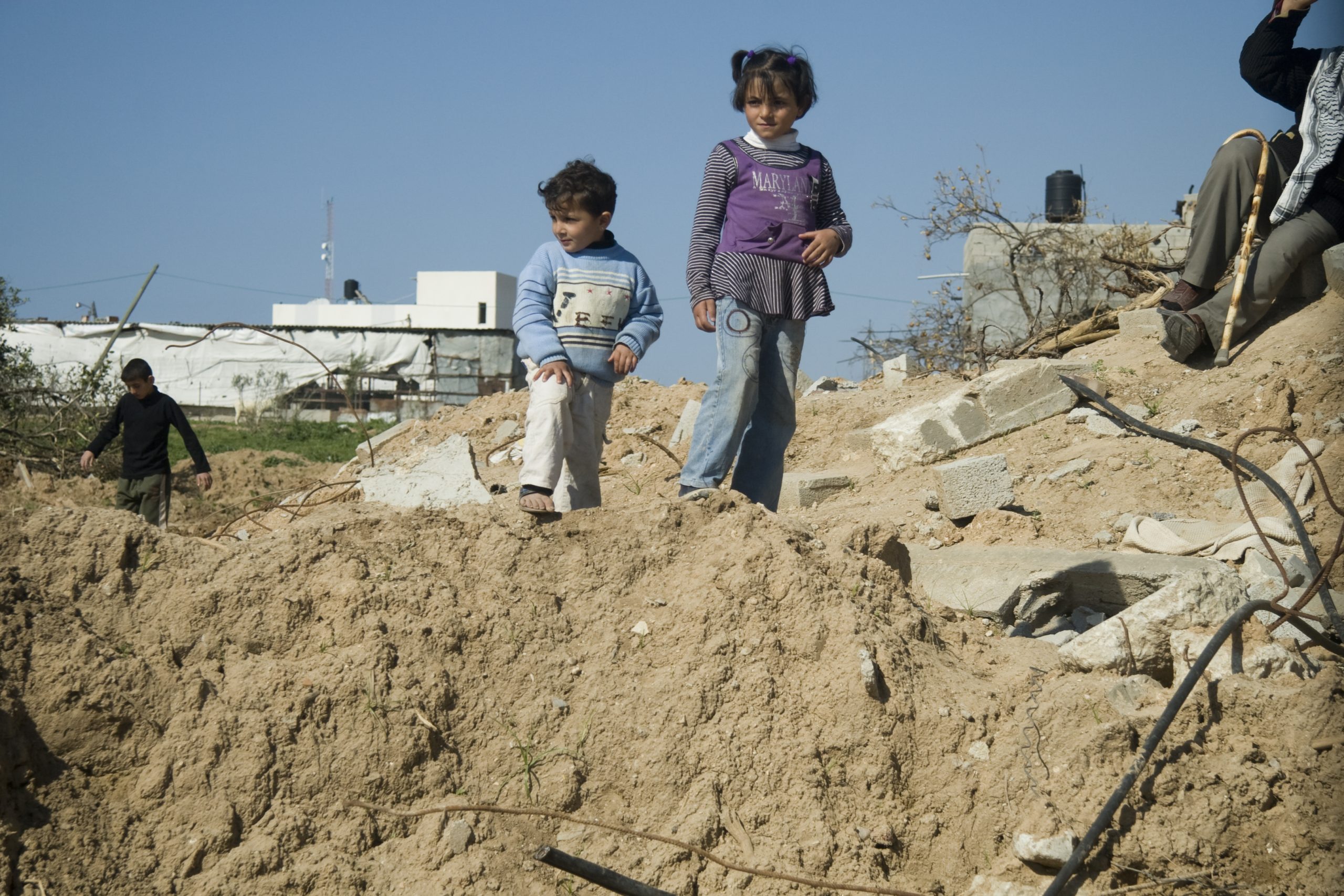
Sons of Violence - Palestinian Children
Violations of Children’s Rights Under the Palestinian Authority and Hamas
This report examines the degree to which the Palestinian governing authorities in the West Bank and Gaza adhere to United Nations Committee on the Rights of the Child (CRC). With a population of 4,550,368 people in 2014 9 and 47.5% being under the age of 18 in mid-2013,10 the West Bank and Gaza have one of the youngest populations in the Middle East. According to both the Palestinian Central Bureau of Statistics (PCBS) and the World Bank, 40% of the population was under 15 11 and 30% aged between 15 and 29 in 2014. 12 In 2013, 70% of the Palestinians in the West Bank and Gaza were under the age of 24. The implementation of the CRC in the Palestinian territories thus takes on even greater importance. The foremost current violations of children’s rights in the West Bank and Gaza as detailed in this report suggest that neither the PA nor Hamas intended to fulfill their international promises.
Download
Political Rights Violations in the West Bank and Gaza by the Palestinian Authority and Hamas
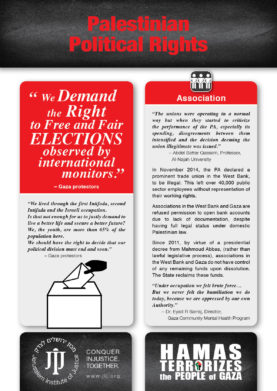
In this report, the Jerusalem Institute of Justice (JIJ) examines political rights and freedoms in the West Bank and Gaza. Through comprehensive research and interviews with those living and working in the West Bank and Gaza, this report aims to illuminate the situation on the ground with regard to political rights for Palestinians in these territories. Freedom of Assembly is routinely violated throughout the West Bank and Gaza either by unlawful police interference in private assemblies, or disproportionate use of force in public assemblies. Freedom of Association is severely restricted, with the Ministry of Interior assuming control over the set-up, funding and dissolution of associations and charities. The Palestinian Authority and Hamas are making little effort to protect and promote these rights of the Palestinian people and are thus in violation of international law.
Download
Political Rights Offenses Under the Palestinian Authority
Assessing the implementation of the International Covenant on Civil and Political Rights
For the full report click, here.
In this report, the Jerusalem Institute of Justice (JIJ) examines political rights and freedoms in the West Bank and Gaza under the Palestinian Authority (PA). Through comprehensive research and interviews with residents and workers in the West Bank and Gaza, this report aims to illuminate the current situation with regard to political rights for Palestinians in these territories. After the State of Palestine achieved “non-member observer state” status from the UN General Assembly in 2012, President Mahmoud Abbas signed and acceded to multiple international humanitarian and human rights treaties and conventions, thus rendering the State of Palestine accountable for the upholding certain rights. This report deals with three major rights: the freedom of assembly, the freedom of association, and electoral rights.
Freedom of Assembly
A part of international law, the UN’s International Bill on Human Rights guarantees the right to freedom of assembly. On April 2, 2014, the State of Palestine became a signatory to the International Covenant on Civil and Political Rights 1976 (ICCPR). However, it appears that the application of these laws does not always uphold these rights.
In Gaza, two forms of domestic law in the West Bank currently govern the right to Freedom of Assembly: Palestinian Basic Law and Public Meeting Law No. 12 of 1998. Under the PA, individuals are required to provide permits for demonstrations. Demonstrations that are against PA policies are often dispersed. While a broad range of non-governmental organizations operate freely in the West Bank, many Hamas-affiliated civic associations have been shut down for political reasons.
Under Article 2 of Public Meetings Law No. 12 of 1998, a public assembly is defined as any public gathering of 50 or more persons in a public open space (Art. 1). The statute goes on to provide restrictions to this right, such as the need for a 48-hour written notice of the assembly to be submitted to the Director of Police (Art. 3), for the notice to be signed by at least three organizers of the assembly, and for notification of the time, place, and purpose of the meeting (Art.4).
The Executive Bill issued by the late President Yasser Arafat, limited the right of assembly by giving the police the right to “disperse and end any meeting upon determination [by the police] that the meeting is not following its stated purpose or objective.” Furthermore, the Executive Bill outlined requirements that organizers of meetings take account for the provisions set out in Presidential Decree No. 3 of 1998 concerning the “perpetuation of national unity and incitement prevention.” This makes it more difficult for Palestinians to exercise their right to freedom of assembly, and leaves considerable room for abuse of executive power. The executive power is indeed oftentimes abused due to a lack of separation of power between the executive, legislative, and judicial branches.
Generally speaking, when it comes to secret or indoor meetings, there is no interference in the West Bank, though in Gaza Hamas commonly breaks up private meetings in homes, thus violating the Basic Law.
Public assemblies tend to have more restrictions, especially when the issue addressed by the assembly proves to be political. In certain instances, the authority will not only be present with security forces, but also will even ban the assembly altogether – a blatant violation of the right of assembly guaranteed by the Basic Law and the Public Meetings Law.
The Public Meetings Law No. 12, and specifically its accompanying restrictions under the Executive Bill, have become an excuse for Hamas security forces to ban, attack and forcibly disperse many assemblies and public meetings. This has often been carried out with the use of disproportionate force, and with reports of police using clubs and stun grenades. An international call for accountability has been met with the appointing of committees that look into incidents of excessive and unjustified force. Although in some occasions disciplinary action was taken against offending officers, it seems that the motive originated from a desire to pacify the people rather than to search for long-term change in the effort to uphold the right to Freedom of Assembly.
Freedom of Association
Freedom of Association refers specifically to individual and workers’ rights to form associations or organizations, trade unions, non-governmental organizations, and charities, among others. The right to freedom of association is guaranteed under both the ICCPR and the UDHR. In terms of domestic law, the West Bank and Gaza, under the split governance of Hamas and Fatah respectively, have distinct legislation governing the right to freedom of association, though this right is accounted for under the Palestinian Basic Law of 2003, which currently serves as a temporary constitution. However, this freedom is regularly violated when it involves any form of political discussion.
In the West Bank and Gaza, the Law of Charitable Associations and Community Organizations No. 1 of 2000 (hereafter Associations Law), and the Palestinian Labor Law No. 7 of 2000 (hereafter Labor Law) also govern the right of association. This right can be best assessed when split into two categories: Charitable Associations and Community Organizations, and Trade Unions.
A series of administrative directives and decisions undermine the effective implementation of the protection of freedom of association. Firstly, under the Associations Law all associations must be registered with the authorities in order to carry out their activities. In theory this is only to notify the authority of the existence of a charity, which is considered legal within two months of submitting the application, with or without a response from the authorities. In practice, however, the registration system has become a licensing process, which is funneled through the Ministry of Interior, giving it undue power. This extends to funding and finance, as the Ministry of Interior may scrutinize the allocation and raising of funds, possibly allowing for inappropriate government intervention in NGO activities.
The Monetary Authority has issued instructions to banks in the West Bank and Gaza, that associations must present certification of legal status to the bank when wishing to open an account. This leaves many associations and organizations unable to open an account, despite having legal status by virtue of the two-month time lapse, as many have not received any formal documentation from the Ministry of Interior. Therefore, from a legal standpoint, many associations with legal status are prevented from carrying out their activities due to restrictive administrative decisions (or complete lack of decision) from the Ministry of Interior. Additionally, it has been reported that authorities in the West Bank may refuse to allow the opening of organizations registered in Gaza, and vice-versa, though the law does not allow this.
Another issue lies in the case of the dissolution of an organization, wherein the funds are transferred to the Palestinian National Authority public treasury. This amendment clearly opens the door to corruption and the misuse of funds by government officials with political motives.
Such government control is excessive. This abuse of power is especially noticeable when comparing freedom of association in other nations such as the US and the UK.
International and domestic laws also ensure the protection of workers’ rights. However, the PA has banned all Union of Public Employees activities. This effectively deprives public sector employees in the West Bank from being represented by their elected representatives and from undertaking any collective bargaining or any form of dialogue with their employer, the Palestinian government. However, in 2013, Hamas introduced a new Trade Unions Law No. 2 of 2013 to replace the former 1954 Egyptian Law for Trade Unions. As progressive this might seem, the new Trade Unions Law has been said to place severe restrictions on the exercise of the freedom of association and assembly. Unfortunately, the specifics of this cannot be commented upon, as the Trade Unions Law itself is only available in Arabic.
Electoral Rights
The right to take part in political life is enshrined in the Universal Declaration of Human Rights under Article 21, which states that the will of the people shall be expressed in periodic and genuine elections. General Comment No. 25 on the ICCPR also states that electoral rights ensure that individuals may freely determine their political status and choose the form of their government or constitution. Additionally, the 2003 Basic Law covers the right to vote under Article 26 (3) and (4). However, no general elections have taken place in the Palestinian Authority since 2006. This general election followed the presidential election of Mahmoud Abbas in 2005, one year earlier. The laws governing this area stipulate that general and presidential elections should be held every four years – the reality is quite different.
Local elections in the West Bank and Gaza have a rather tumultuous history. The first local elections took place in 2004-2005 under Local Elections Law No. 10 of 2005 and were carried out in five rounds of elections. The next elections were due to take place in 2010, but were postponed indefinitely after the Central Elections Commission (CEC) for Palestine (the body governing elections) announced that it would not be possible to conduct voter registration in Gaza and Jerusalem.
The disruptions to local and general elections in the West Bank and Gaza are undoubtedly a result of the Hamas-Fatah political divide. Following Hamas’ victory in the 2006 legislative elections, tensions rose between the two factions with Hamas later seizing control of the Gaza Strip in 2007. There have been multiple attempts at reconciliation between the two parties but the relationship has continued to deteriorate.
Abbas’ term as president should have ended in 2009, yet this year marks his tenth year as President of the Palestinian Authority with no presidential elections in sight. As with Freedom of Assembly, this is an issue with the separation of powers. The legislature is not separate from the executive branch, whose political division is causing the continuous violation of the Palestinian right to vote. Given that the separation of powers is a fundamental principle of democratic society, this should be of great concern to the international community.
The State of Palestine acceded to the International Covenant on Civil and Political Rights in April of 2014 and as such, is obligated to uphold the human freedoms documented therein. These rights are fundamental rights in international law and treaties, and should be accorded such significance. As it stands currently, the Palestinian Authority and Hamas are making little effort to protect and promote these rights of the Palestinian people and are thus in violation of international law.
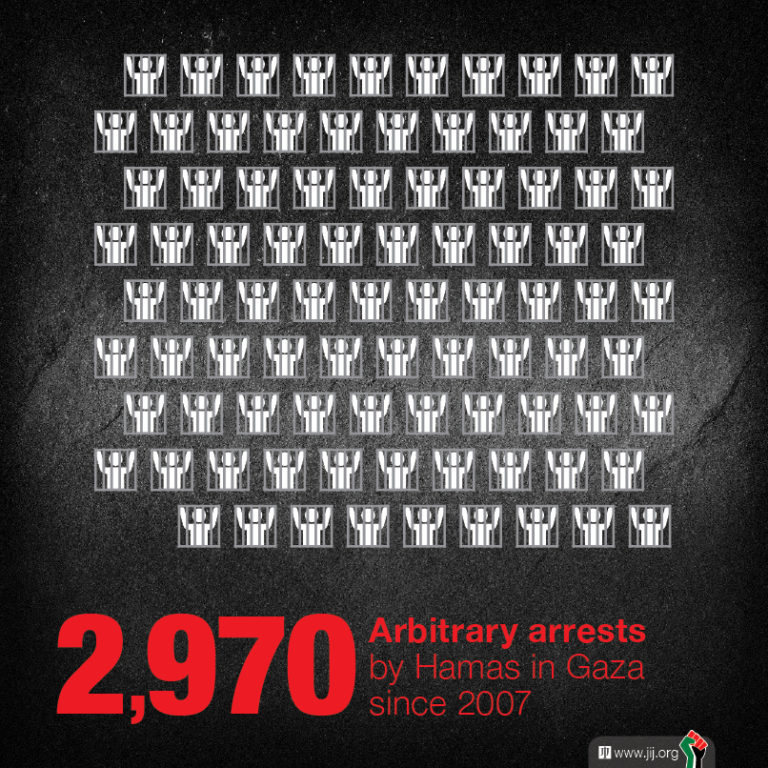
Torture and the Degrading Treatement in the West Bank and Gaza
Assessing the Implementation of UN Convention Against Torture
For the full report click, here.
Article 5 of the Universal Declaration of Human Rights, along with Article 7 of the International Covenant on Civil and Political Rights (ICCPR) declare that no person shall be subject to torture, to cruel, inhuman, or degrading treatment or punishment. This report examines the Palestinian Authority’s (PA) adherence to the UN Convention Against Torture (UNCAT), to which it is a signatory member. Since 1984, 155 states have ratified UNCAT. Of 142 states investigated for their adherence to and implementation of UNCAT, at least 79 still carry out acts of torture (2014). Even for those 40 states who have not adopted the Convention, a global ban on torture, as part of customary international law, compels all states against the use of torture and cruel, inhuman punishment.
Palestinians in the West Bank and Gaza are repeatedly subjected to severe violations of the basic rights of freedom from torture and abuse at the hands of Palestinian leadership. This report provides a better understanding of the current situation within the territories and of the UNCAT violations committed by the PA.
Many critics of the use of torture argue that it is immoral and impractical, as the information obtained through it is often false. Human Rights Watch states that torture is “a bedrock principle of international law. Torture, as well as cruel, inhuman or degrading treatment, shall be banned at all times, in all places, including in times of war…” Yet, various organizations report that torture and cruel punishment occur on a regular basis in the territories, sometimes resulting in death.
ACCESSION TO UNCAT — April 2, 2014
Upon receiving ‘Observer State’ status to the UN in November 2012, Palestine was granted access to various international conventions and organizations, and the PA acceded to 15 international conventions and treaties regarding human rights, humanitarian law, and diplomatic relations. As such, the PA has obliged itself to comply with a number of conventions and their provisions, including the Convention against Torture and Other Cruel, Inhuman or Degrading Treatment of Punishment (1984). In December 2014, the PA ratified yet another 20 international treaties and conventions. As a signatory member of these international treaty and conventions, the State of Palestine is required to submit reports of the status of human rights in Palestine and the procedures adopted to improve human rights where they are lacking. As of writing, no reports have been submitted.
An Optional Protocol to UNCAT (OPCAT) was adopted by the UN General Assembly in December 2002, which took effect June 2006, whose objective is to establish a system of regular visits to the West Bank and Gaza to prevent torture and other inhuman treatment. However, Palestine has yet to sign OPCAT, though the Palestinian Ministry of Foreign Affairs has the protocol listed as one of the treaties “they want to sign.” According to one UN official, reasons for not signing thus far include not wanting to allow open access to an international body to look into all places of detention that the PA would rather keep away from the public eye.
THE STATE OF PALESTINE AND OTHER HUMAN RIGHTS DECLARATIONS
The PA, as a member of the Organization of Islamic Cooperation, adopted both the Cairo Declaration on Human Rights in Islam (CDHRI) and the Arab Charter on Human Rights (ACHHR). Article 20 of the CDHRI states that it is not tolerable to arrest an individual, restrict his freedom, or exile or punish him without legitimate reason. As well, physical and psychological torture, as well as any form of humiliation, is not permissible. Similarly, Article 8 of the ACHHR outline prohibitions on torture and cruel, inhuman treatment. However, while both declarations prohibit torture, both also stipulate that all rights and freedoms are subject to Sharia Law. Furthermore, Article 4.2 of the Amended Palestinian Basic Law states that Sharia Law serves as the main source of legislation. Issues here arise with how Sharia Law dictates punishment for those who inflict torture on others: “the punishment of such an act [torture] is Qisas, which means that the criminal would be punished with the same act he/she did.” Responding to torture with torture is in violation of UNCAT.
UNCAT ARTICLES
According to the definition provided by UNCAT, for an act to be considered torture it must be intentional, cause severe pain or suffering, be intended to achieve a purpose (as mentioned), and it must be done by, or with the acquiescence of, a public official. Article 13 of Palestinian Basic Law corroborates this, stating that no duress, either slight or moderate, can be used against any person.
According to the Independent Commission for Human Rights (ICHR), 1,274 complaints of violations of the right to freedom from torture and ill-treatment were reported in 2014. These abuses continued regularly throughout 2015, despite the ratification of UNCAT. One common target of Palestinian officials is local and foreign journalists, who are often detained and tortured for critical remarks that refer to Fatah, Palestinian leadership, or corruption in Palestine. The PA does not tolerate criticism, and continuously intimidates journalists to deter them from exercising their freedom of expression. One source reports that “a journalist must be very careful. In Gaza, there are journalists being tortured. There is torture considered [sic] as a common procedure…”
Despite Palestinian Law ensuring freedom from torture, documented accounts of torture of Palestinians in Palestinian prisons have been collected by organizations like the Arab Organization for Human Rights in London (AOHR UK). An article by Middle East Monitor states that the headquarters of PA intelligence services in Bethlehem is a “slaughter house” used for torturing prisoners.
In June 2015, Awni Mazen Al-Shaksheer, a Palestinian student from Nablus, was arrested and tortured by intelligence services for his involvement in student activism. He was beaten with sticks, cables, punched, kicked, and slapped, as well as subject to sleep deprivation, a form of psychological torture. He was held in two different prisons, never charged, nor given the right to appear before a judge. This case is not unique; Palestinians are routinely arrested and detained by PA forces for various reasons, including activism against the government. According to a 2014 Annual Report by the Palestinian Center for Human Rights, security officers in the West Bank and Gaza continue to practice torture as a primary means of obtaining information when dealing with prisoners.
FATAH vs. HAMAS
Though Fatah and Hamas make up the heart of Palestinian leadership, their relations are severely strained. In 2014, they attempted to reconcile in an agreement to create an interim government; however, they have failed to cooperate. Fatah, as the governing faction in the West Bank, is carrying out the “worst kind of torture” against Hamas members, while Hamas is reported to carry out a “brutal campaign of abductions, torture, and unlawful killings against Palestinians accused of collaborating with Israel and others.” In August 2014, at least 25 Palestinians were executed by armed Gazan groups.
CONTESTING TORTURE UNDER UNCAT
Despite Article 13 of the Amended Palestinian Basic Law prohibiting ‘any duress or torture’, the US Department of State Report 2014 reported on several abuse cases. These complaints included victims being forced to stand in uncomfortable stress positions, flogging, hand binding, suspension, blindfolding, punching, and beatings with clubs, electric cables, or hoses. There are also reports the PA security forces use these tactics on Palestinian minors.
Torture is clearly defined as a criminal offense, and Article 32 of the Amended Palestinian Basic Law reiterates this point by stating that any violation of personal freedom, of the sanctity of the private life of human beings, or of any of the rights or liberties that have been guaranteed by law or by Basic Law, are considered to be criminal offenses. As well, the Jordanian Penal Code No. 74 of 1960 criminalizes acts of torture conducted by an official with the goal of obtaining a confession. The issue here: these acts are not referred to as ‘torture’ in the text; rather, they are crimes that simply meet the definition of torture.
While it is a criminal act meant to be punished as a crime, too many cases reveal that torture is used widely within Palestine with little to no punishment enforced. Most of these acts are committed in hidden places or prisons, and Human Rights Watch reports that no Palestinian security official has ever been convicted for abuse in custody.
The reason for lack of enforcement against the use of torture could be related to the language used in the legal code. Not all torture is prohibited by the Penal Code, specifically those acts not used to gain information or confessions.
The PA does not admit that torture takes place within their jurisdiction, or admits only isolated incidents insisting that action be taken against those responsible. Moreover, PA officials insist that security personnel be educated on the prohibition of torture. “All of the personnel know that torture is forbidden. Not all of them know that it is against [the] human rights convention.”
There are hundreds of torture incidents reported yearly in both the West Bank and Gaza according to the ICHR. These are often exceed or justified based on claims that PA forces lack the necessary tools to investigate crimes, like DNA testing and eavesdropped equipment, so they use torture to make up for equipment they lack. This excuse does not account for the amount of foreign money pouring into the PA that could be used to aid security officials.
Amnesty International reports (2015) that in the West Bank, detainees alleged they were tortured or ill-treated by police and other security officials. In Gaza, at least three men were reported to have died in custody, allegedly from torture by internal security officials. One case, reported by The Times of Israel shares the story about Ahmad Bilal Abd al-Malak al-Deekm, who was arrested for criticizing the government on social media. Al-Deekm reported he was subjected to various forms of abuse and torture, including sleep deprivation, beatings, verbal abuse, and was forced to perform humiliating acts (which qualify as psychological torture).
Individuals must have a place to complain and air grievances, like security or military courts. However, in Palestinian territories, not only does it take many years to complete a legal process relating to cases and victims of torture, but also courts are not completely independent. If Palestinians do not have reliable, impartial, and uncorrupted authorities to whom they can report grievances, then agreement and adherence to the provisions laid out in Article 13 can never be achieved.
To reiterate, Article 13 states that duress or torture are prohibited. Though Palestinian Basic Law ensures that violations of this will be met with compensation, there is little evidence to prove this method works in practice. A resident from Ramallah stated the lack of compensations for these violations in an interview conducted in November 2015 “…The government does not compensate those who have been tortured and does not provide them with psychological support…” These cases are more often than not mishandled and purposely delayed, and victims cannot expect to be granted redress, compensation, or rehabilitation as long as this practice continues.
The case of al-Deekm has met these setbacks, with the PA refusing to provide him with any redress. One source, a representative of the Civil Commission for Independence of the Judiciary and Rule of Law, acknowledges the government may not want to pay monetary compensation, but some kind of compensation must be had for the violations that have been inflicted upon the victims.
Other acts of ill-treatment, as defined by a UN official, are acts of cruel, inhuman, or degrading treatment or punishment that are not intended to cause harm (like bad prison conditions), or where the pain and suffering caused by these acts do not meet the ‘minimum requirement’ for the definition of torture. There are many methods of torture not included in the official definition, and therefore do not need to be ‘punished’ by law. These include hitting a victim “softly”, as is done by Palestinian security forces. As well, many psychological methods are not regarded as torture, including sleep deprivation, witness the torture of family members, solitary confinement, taunting, sexual and cultural humiliations, etc.
Regardless of kind of torture, whether ‘soft’ or not, victims suffer various consequences, including PTSD, or ‘continuing traumatic stress disorder.’ Other psychological illnesses include depression, anxiety, insomnia, hallucinations, and flashbacks — all chronic effects of torture. Victims of both physical and psychological torture experience difficulty reintegrating into one’s daily life, relationships, and society, as well as being at higher risk of suicide.
As the PA ratified UNCAT in April 2014, a report should have been submitted by May 2015. As of writing, no report has been submitted. Reasons for not submitting reports, according to an interviewee at The Civil Commission for the Independence of Judiciary and Rule of Law, include a lack of capacity in the administration, or because the report is not a priority. The Director of the Civil Commission for the Independence of the Judiciary and the Rule of Law claims that if the PA wanted to forbid torture or show their respect for human rights, “they [would] report and publish all agreements and consider them as law.” In summary, there seems to be no value to the PA ratification of UNCAT and other conventions; it holds no legal significance to stop human rights abuses in the territories.
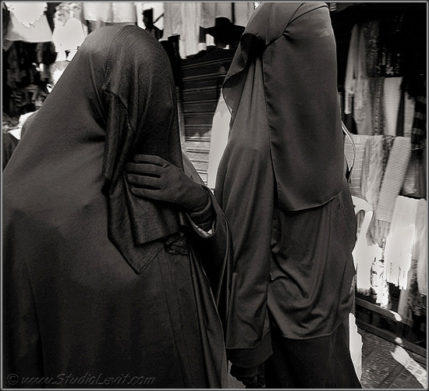
Discrimination against Women under the Palestinian Authority and Hamas
The following report examines the degree to which the Palestinian governing authorities in the West Bank and Gaza adhere to CEDAW. Findings indicate their acute failure to protect women’s rights within both legal codes and cultural practices. Even in cases where legal codes guarantee certain women’s rights, laws are either not enforced
or inconsistently enforced and very few categories of rights receive complete protection. For example, in 2011 the Fatah-controlled Palestinian Authority (PA) published an extensive document entitled “National Strategy to Combat Violence Against Women 2011-2019.” This document is an impressive acknowledgement of women’s rights violations, but despite the authorities’ ostensible intentions to counteract violence against women, the problems outlined remain rampant.
Downloads
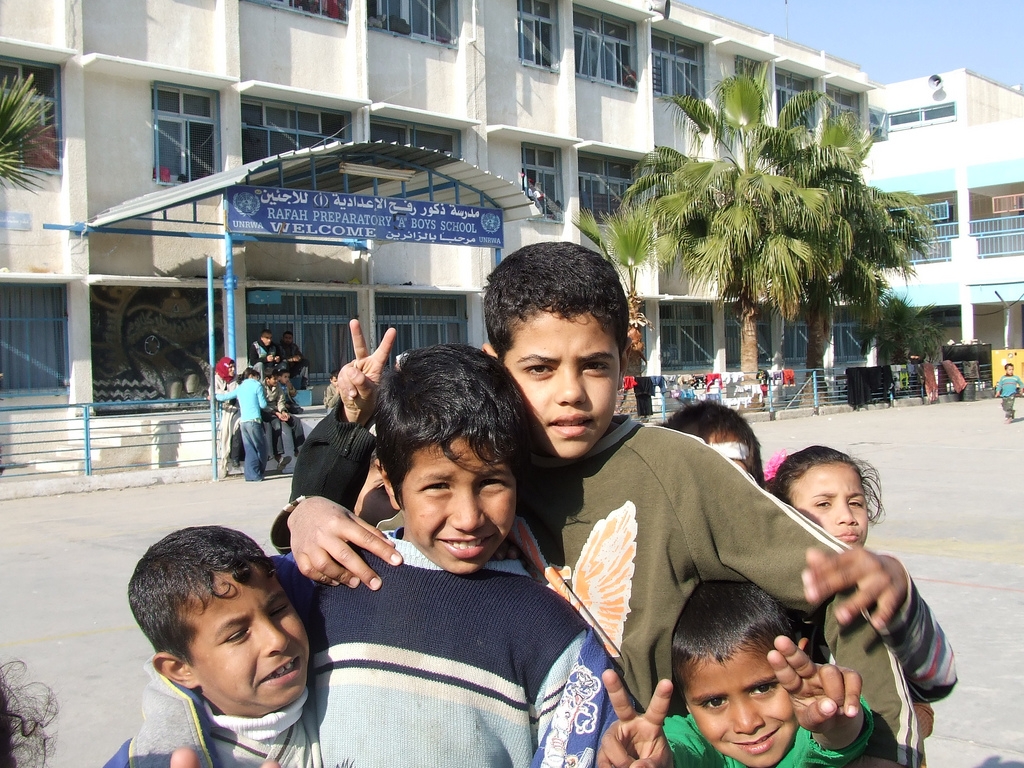
Hidden Injustices
This report highlights the human rights violations regularly committed by the Palestinian government authorities. These include arbitrary detention, torture and cruel punishment, violation of the freedom of expression and the freedoms of the press, violation of the freedom of religion and minority rights, and violation of the rights of women and children. The EU and the US share a guiding principle that all nations should uphold and affirm the human rights of each individual, wherever they may reside in the world. As critical sustainers of the Palestinian Authority’s leadership through the provision of vast quantities of annual aid, how much more so, then, ought the EU and the US require accountability of the PA?