
Christians from Gaza specifically threatened by Hamas
Letter to the UN Special Rapporteur on minority issues
To: Prof. Nicolas Levrat Date: November 21, 2023
UN Special Rapporteur on minority issues
8-14 Avenue de la Paix 1211 Genève 10, Switzerland
Dear Mr. Levrat,
We are writing to express our deep concern about the extremely dangerous situation of the Christian Palestinians in northern Gaza. Specifically, we urgently request your intervention to safeguard the rights and well-being of innocent individuals belonging to this minority group by facilitating their immediate evacuation to a safe haven.
The conditions of violence, segregation, and exclusion of this minority group in Gaza are not new. In 2022, the Palestinian Center for Policy and Survey Research conducted a public opinion poll among Palestinian Christians in the West Bank and the Gaza Strip. The report of the survey shows that an overwhelming majority of 69% are worried about the presence of armed Palestinian factions such as Hamas. Additionally, two-thirds said they are worried about the fact that the Palestinian Basic Law refers to the principles of the Islamic Sharia as a main source of legislation and are concerned about the rise of political Islam as represented by Hamas, Islamic Jihad, al Tahrir Party, as well as extreme and conservatives in the Palestinian society.
Amidst the ongoing Israel-Gaza conflict, reports indicate that approximately 590 Christians are seeking shelter in the Catholic Church under the Latin Patriarchate in Gaza City, around 350 are taking refuge in the Greek Orthodox church, and an additional 53 are sheltering in private houses. These 1,000 Christian Palestinians have no safe haven in Gaza.
While the Israeli Defense Forces' policy urges Palestinians in and around Gaza City to seek refuge in southern Gaza in the next two days for safety and access to essential resources, this call does not ensure the safety of this particular minority group.
Palestinian Christians fear for their lives if they relocate to southern Gaza. They believe that leaving the historic church buildings, their current safe havens in and around Gaza City, and relocating to the south would expose them to potential genocide. They are regarded as pagans, heathens, and idol-worshippers by Hamas, the Palestinian Islamic Jihad, and all Islamist terror organizations governing Gaza.
They anticipate no mercy in the south, expecting Islamist extremists to perpetrate atrocities, including mutilation, torture, rape, and burning alive. Under your mandate as the Special Rapporteur on minority issues, it is imperative to take immediate and decisive action by closely collaborating with the International Committee of the Red Cross. We urge the prompt evacuation of the 1,000 Christian Palestinians sheltered in Gaza City to a safe haven while providing them with the essential resources they need to survive, such as access to food, clean water, and medical care.
The International Committee of the Red Cross, a neutral entity established to safeguard and aid victims of armed conflicts and uphold International Humanitarian Law, operates effectively in Gaza. Its mission aligns with the Special Rapporteur's mandate to overcome existing obstacles to the full and effective realization of the rights of persons belonging to minorities in armed conflicts.
Sincerely,
Flavia Sevald Adv. Uri Morad, Director of the International
Chief Executive Officer Law & Public Diplomacy Department
CC: Mirjana Spoljaric Egger, President of the International Committee of the Red Cross.
William Schomburg, Head of Sub-Delegation for the International Committee of the Red
Cross (ICRC) in Gaza

Letter to the UN Special Rapporteur on Minority Issues
SEEKING TO EVACUATE PALESTINIAN CHRISTIANS FROM GAZA PERSECUTED BY HAMAS
Prof. Nicolas Levrat Date: November 21, 2023
UN Special Rapporteur on minority issues
8-14 Avenue de la Paix 1211 Genève 10, Switzerland
Dear Mr. Levrat,
I am writing on behalf of the Jerusalem Institute of Justice, an NGO holding special consultative status before the United Nations Economic and Social Council.
We wish to express our profound concern regarding the perilous situation of Christian Palestinians in northern Gaza. We urgently request your intervention to safeguard the rights and well-being of innocent individuals belonging to this minority group by facilitating their immediate evacuation to a safe haven.
Enclosed, please find a letter wherein we respectfully and firmly request the Special Rapporteur on minority issues, under your mandate, to take immediate and decisive action. Collaboration with the International Committee of the Red Cross is crucial for the prompt evacuation of the 1,000 Christian Palestinians sheltered in Gaza City to a secure location. It is imperative to provide them with essential resources for survival, including access to food, clean water, and medical care.
Additionally, I kindly request confirmation of receipt of this email.
Best regards,
Alan Dosoretz
Human Rights, Diplomacy & Education Officer
Letter to ICRC - On Social Media Biased Reporting
LETTER TO THE PRESIDENT OF THE INTERNATIONAL COMMITTEE OF THE RED CROSS
November 16, 2023
To: Ms. Mirjana Spoljaric Egger,
President of the International Committee of the Red Cross
19 Avenue de la Paix 1202 Geneva Switzerland
Date: November 15, 2023
We are writing to bring to your attention a pressing issue concerning the use of social media by the
International Committee of the Red Cross (ICRC) in the context of the ongoing Hamas-Israel conflict.
In today's world, social media has an immense influence on the perception of conflicts, shaping
narratives and inadvertently affecting conflict dynamics. Recent events have underscored the critical
importance of the ICRC's response in this domain.
The central concern at hand revolves around the balance and neutrality of the content disseminated
through ICRC's social media channels. As an independent and neutral organization dedicated to
upholding humanitarian protection for conflict victims and the principles of international
humanitarian law (IHL), it is imperative that ICRC's social media communications maintain a high
standard of neutrality, balance, and accuracy in portraying conflicts.
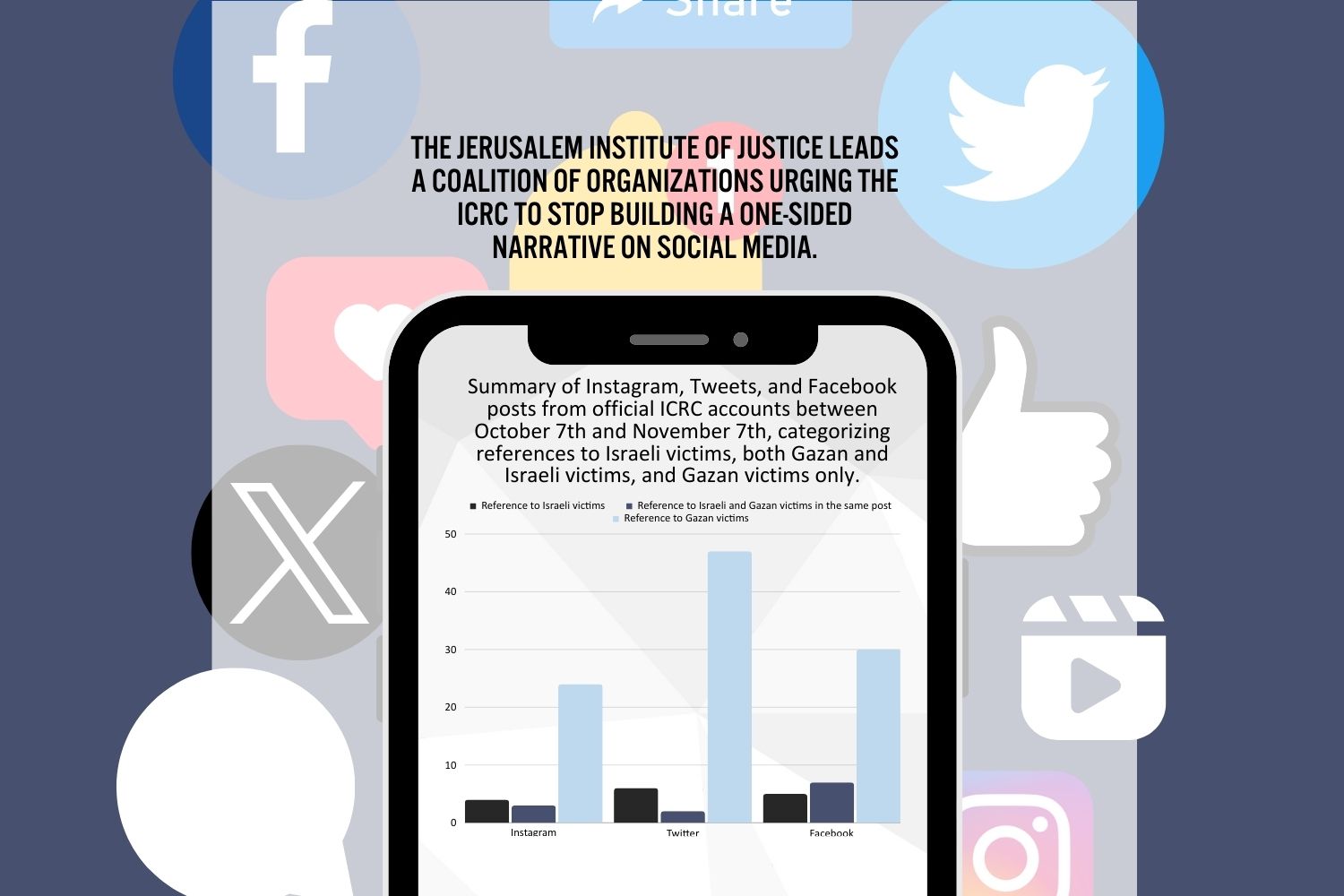
Of particular concern is the apparent disproportion in the content's focus. A noticeable emphasis on
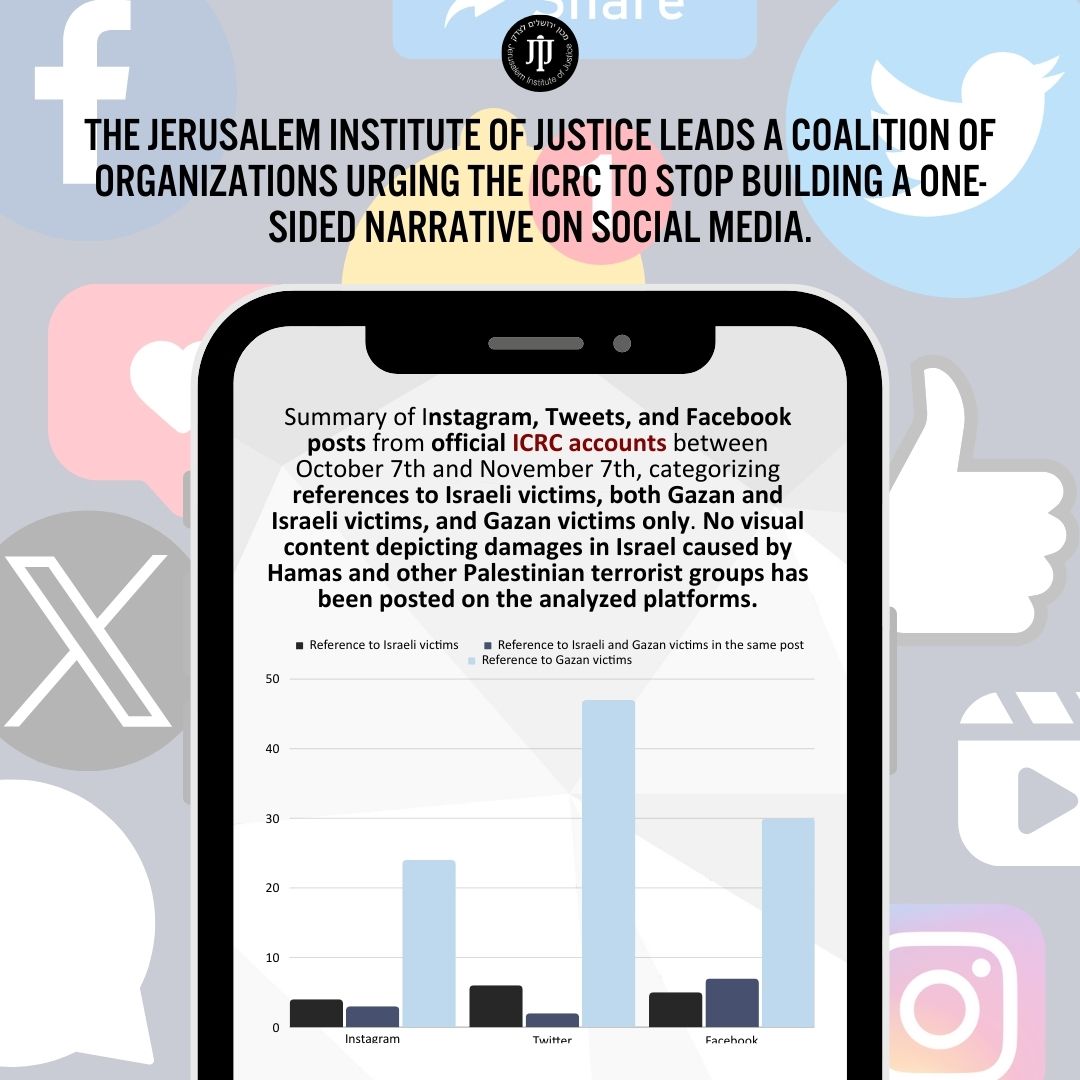
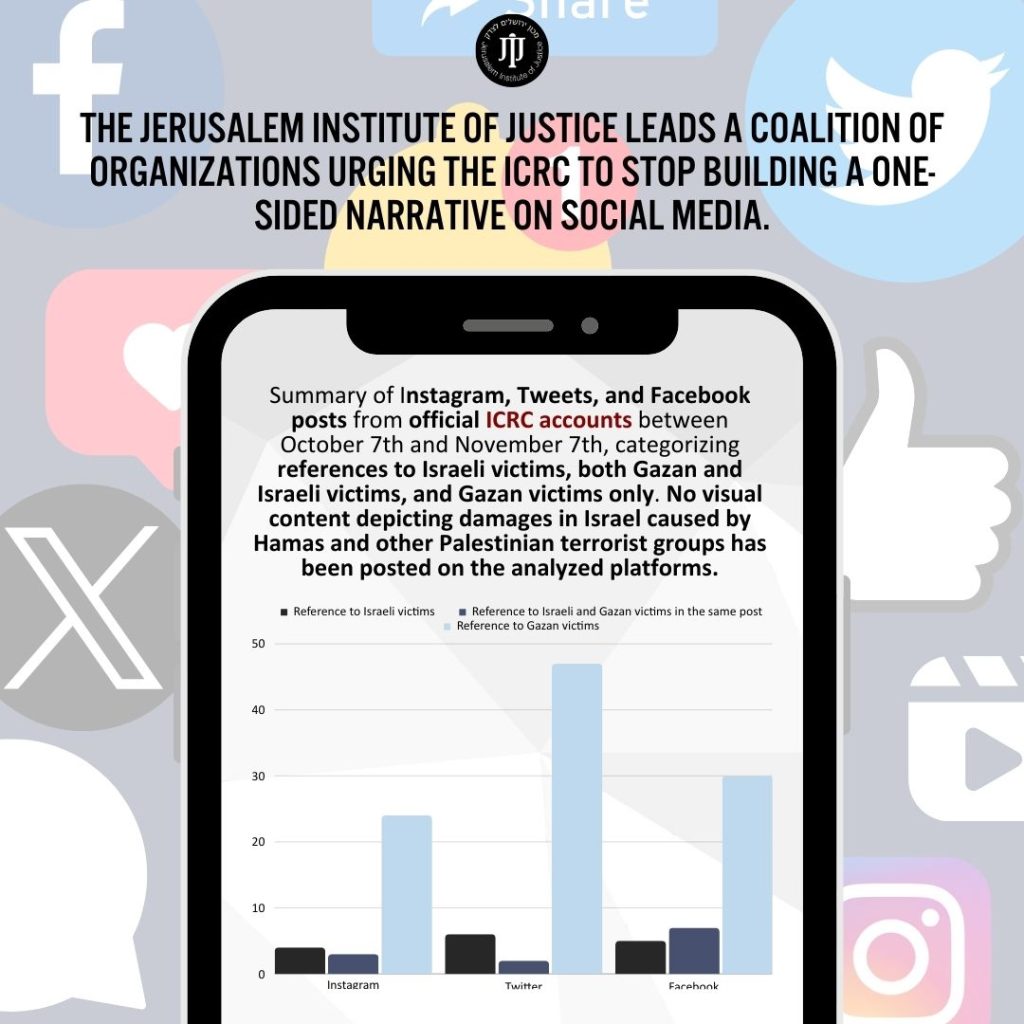
the Gaza Strip is evident in the content shared by ICRC on its social media platforms (see Annex 1).
This is evident in depictions of scenes from Gaza, casualty statistics, and information about victims
within Gaza. However, a significant absence exists concerning content depicting the atrocities
committed by Hamas on October 7 and the impact on communities in Israel near the Gaza Strip.
Furthermore, a notable gap in communication on ICRC's Instagram account was observed following
the October 7 attack. While references were made to hostage-taking and the importance of adhering
to international humanitarian law, a more robust stance against the violations of international
humanitarian law committed by Hamas on October 7, including acts of sexual violence and genocide,
was expected.
Equally concerning is the absence of any posts, whether images, graphics, or videos, addressing the
damages suffered on Israeli soil. This encompasses distressing scenes of houses reduced to rubble,
charred walls, mass destruction, and the devastating harms caused by rocket hits on civilian
infrastructure in Tel Aviv, Ashkelon, and other locations.
The consequences of this content disproportion are significant, as it affects the overall narrative,
public perception, and understanding of the conflict. Given the ICRC's influential role in providing
information, it is essential to adopt a more balanced and nuanced approach in social media
communications.
From October 7 until October 25, there has been a 500% increase in the volume of antisemitic events
compared to the same period last year. Specifically in social networks, the increase of online
antisemitic discourse was, between October 7-23, 400% compared to the 17 days prior to the war and
340% compared to the same dates in the previous months (The State of Antisemitism in the World A
Summary of the First Three Weeks of the 'Swords of Iron' War, 2023).
This alarming surge in online antisemitism has had dire real-world consequences. Instances of
antisemitic violence and vandalism have occurred globally, with private houses and apartments in
cities like Berlin, Paris, and others being marked with Stars of David. Synagogues, Holocaust
memorials, Jewish schools, Jewish cemeteries, and historic Jewish sites in locations such as Girona,
Berlin, Vienna, Rome, and Thessaloniki have been targets of attacks, often accompanied by anti-Israel
and antisemitic graffiti, including swastikas. A particularly distressing incident took place on
November 4 when a 30-year-old Jewish woman was stabbed in her home in Lyon, and her attacker
defaced her door with a swastika symbol. Tragically, on November 6, a pro-Palestinian protestor killed
Paul Kessler, a 65-year-old Jewish man, further underscoring the devastating real-world impact of
rising antisemitism.
The perilous connection between online antisemitism and tangible acts of violence against Jewish
individuals, communities, and institutions underscores the pressing need for fair and responsible
communication on social media platforms. This is why we firmly believe that the ICRC should maintain
balance and neutrality in the content shared on social media platforms.
Our request is not to remove existing content but to enhance it with a more comprehensive portrayal
of the situation, one that encompasses the atrocities committed in Israel by Hamas and other
Palestinian terrorist groups. Your proactive response to this matter will contribute to a more informed
and balanced public discourse on these critical issues.
Sincerely,
 CC: Fabrizio Carboni, ICRC regional director for the Near and Middle East
Alessandra Menegon, Head of the Delegation of the ICRC in Israel and the Occupied Territories
Ewan Watson, Head of Public Relations
Biased Narratives on Red Cross Social Media
THE JERUSALEM INSTITUTE OF JUSTICE LEADS A COALITION OF ORGANIZATIONS URGING
THE ICRC TO STOP BUILDING ONE-SIDED NARRATIVES ON SOCIAL MEDIA
To: Ms. Mirjana Spoljaric Egger,
President of the International Committee of the Red Cross
19 Avenue de la Paix 1202 Geneva Switzerland
Date: November 15, 2023
We are writing to bring to your attention a pressing issue concerning the use of social media by the
International Committee of the Red Cross (ICRC) in the context of the ongoing Hamas-Israel conflict.
In today's world, social media has an immense influence on the perception of conflicts, shaping
narratives and inadvertently affecting conflict dynamics. Recent events have underscored the critical
importance of the ICRC's response in this domain.
The central concern at hand revolves around the balance and neutrality of the content disseminated
through ICRC's social media channels. As an independent and neutral organization dedicated to
upholding humanitarian protection for conflict victims and the principles of international
humanitarian law (IHL), it is imperative that ICRC's social media communications maintain a high
standard of neutrality, balance, and accuracy in portraying conflicts.
Of particular concern is the apparent disproportion in the content's focus. A noticeable emphasis on
the Gaza Strip is evident in the content shared by ICRC on its social media platforms (see Annex 1).
This is evident in depictions of scenes from Gaza, casualty statistics, and information about victims
within Gaza. However, a significant absence exists concerning content depicting the atrocities
committed by Hamas on October 7 and the impact on communities in Israel near the Gaza Strip.
Furthermore, a notable gap in communication on ICRC's Instagram account was observed following
the October 7 attack. While references were made to hostage-taking and the importance of adhering
to international humanitarian law, a more robust stance against the violations of international
humanitarian law committed by Hamas on October 7, including acts of sexual violence and genocide,
was expected.
Equally concerning is the absence of any posts, whether images, graphics, or videos, addressing the
damages suffered on Israeli soil. This encompasses distressing scenes of houses reduced to rubble,
charred walls, mass destruction, and the devastating harms caused by rocket hits on civilian
infrastructure in Tel Aviv, Ashkelon, and other locations.
The consequences of this content disproportion are significant, as it affects the overall narrative,
public perception, and understanding of the conflict. Given the ICRC's influential role in providing
information, it is essential to adopt a more balanced and nuanced approach in social media
communications.
From October 7 until October 25, there has been a 500% increase in the volume of antisemitic events
compared to the same period last year. Specifically in social networks, the increase of online
antisemitic discourse was, between October 7-23, 400% compared to the 17 days prior to the war and
340% compared to the same dates in the previous months (The State of Antisemitism in the World A
Summary of the First Three Weeks of the 'Swords of Iron' War, 2023).
This alarming surge in online antisemitism has had dire real-world consequences. Instances of
antisemitic violence and vandalism have occurred globally, with private houses and apartments in
cities like Berlin, Paris, and others being marked with Stars of David. Synagogues, Holocaust
memorials, Jewish schools, Jewish cemeteries, and historic Jewish sites in locations such as Girona,
Berlin, Vienna, Rome, and Thessaloniki have been targets of attacks, often accompanied by anti-Israel
and antisemitic graffiti, including swastikas. A particularly distressing incident took place on
November 4 when a 30-year-old Jewish woman was stabbed in her home in Lyon, and her attacker
defaced her door with a swastika symbol. Tragically, on November 6, a pro-Palestinian protestor killed
Paul Kessler, a 65-year-old Jewish man, further underscoring the devastating real-world impact of
rising antisemitism.
The perilous connection between online antisemitism and tangible acts of violence against Jewish
individuals, communities, and institutions underscores the pressing need for fair and responsible
communication on social media platforms. This is why we firmly believe that the ICRC should maintain
balance and neutrality in the content shared on social media platforms.
Our request is not to remove existing content but to enhance it with a more comprehensive portrayal
of the situation, one that encompasses the atrocities committed in Israel by Hamas and other
Palestinian terrorist groups. Your proactive response to this matter will contribute to a more informed
and balanced public discourse on these critical issues.
Sincerely,
CC: Fabrizio Carboni, ICRC regional director for the Near and Middle East
Alessandra Menegon, Head of the Delegation of the ICRC in Israel and the Occupied Territories
Ewan Watson, Head of Public Relations
Biased Narratives on Red Cross Social Media
THE JERUSALEM INSTITUTE OF JUSTICE LEADS A COALITION OF ORGANIZATIONS URGING
THE ICRC TO STOP BUILDING ONE-SIDED NARRATIVES ON SOCIAL MEDIA
To: Ms. Mirjana Spoljaric Egger,
President of the International Committee of the Red Cross
19 Avenue de la Paix 1202 Geneva Switzerland
Date: November 15, 2023
We are writing to bring to your attention a pressing issue concerning the use of social media by the
International Committee of the Red Cross (ICRC) in the context of the ongoing Hamas-Israel conflict.
In today's world, social media has an immense influence on the perception of conflicts, shaping
narratives and inadvertently affecting conflict dynamics. Recent events have underscored the critical
importance of the ICRC's response in this domain.
The central concern at hand revolves around the balance and neutrality of the content disseminated
through ICRC's social media channels. As an independent and neutral organization dedicated to
upholding humanitarian protection for conflict victims and the principles of international
humanitarian law (IHL), it is imperative that ICRC's social media communications maintain a high
standard of neutrality, balance, and accuracy in portraying conflicts.
Of particular concern is the apparent disproportion in the content's focus. A noticeable emphasis on
the Gaza Strip is evident in the content shared by ICRC on its social media platforms (see Annex 1).
This is evident in depictions of scenes from Gaza, casualty statistics, and information about victims
within Gaza. However, a significant absence exists concerning content depicting the atrocities
committed by Hamas on October 7 and the impact on communities in Israel near the Gaza Strip.
Furthermore, a notable gap in communication on ICRC's Instagram account was observed following
the October 7 attack. While references were made to hostage-taking and the importance of adhering
to international humanitarian law, a more robust stance against the violations of international
humanitarian law committed by Hamas on October 7, including acts of sexual violence and genocide,
was expected.
Equally concerning is the absence of any posts, whether images, graphics, or videos, addressing the
damages suffered on Israeli soil. This encompasses distressing scenes of houses reduced to rubble,
charred walls, mass destruction, and the devastating harms caused by rocket hits on civilian
infrastructure in Tel Aviv, Ashkelon, and other locations.
The consequences of this content disproportion are significant, as it affects the overall narrative,
public perception, and understanding of the conflict. Given the ICRC's influential role in providing
information, it is essential to adopt a more balanced and nuanced approach in social media
communications.
From October 7 until October 25, there has been a 500% increase in the volume of antisemitic events
compared to the same period last year. Specifically in social networks, the increase of online
antisemitic discourse was, between October 7-23, 400% compared to the 17 days prior to the war and
340% compared to the same dates in the previous months (The State of Antisemitism in the World A
Summary of the First Three Weeks of the 'Swords of Iron' War, 2023).
This alarming surge in online antisemitism has had dire real-world consequences. Instances of
antisemitic violence and vandalism have occurred globally, with private houses and apartments in
cities like Berlin, Paris, and others being marked with Stars of David. Synagogues, Holocaust
memorials, Jewish schools, Jewish cemeteries, and historic Jewish sites in locations such as Girona,
Berlin, Vienna, Rome, and Thessaloniki have been targets of attacks, often accompanied by anti-Israel
and antisemitic graffiti, including swastikas. A particularly distressing incident took place on
November 4 when a 30-year-old Jewish woman was stabbed in her home in Lyon, and her attacker
defaced her door with a swastika symbol. Tragically, on November 6, a pro-Palestinian protestor killed
Paul Kessler, a 65-year-old Jewish man, further underscoring the devastating real-world impact of
rising antisemitism.
The perilous connection between online antisemitism and tangible acts of violence against Jewish
individuals, communities, and institutions underscores the pressing need for fair and responsible
communication on social media platforms. This is why we firmly believe that the ICRC should maintain
balance and neutrality in the content shared on social media platforms.
Our request is not to remove existing content but to enhance it with a more comprehensive portrayal
of the situation, one that encompasses the atrocities committed in Israel by Hamas and other
Palestinian terrorist groups. Your proactive response to this matter will contribute to a more informed
and balanced public discourse on these critical issues.
Sincerely,
CC: Fabrizio Carboni, ICRC regional director for the Near and Middle East
Alessandra Menegon, Head of the Delegation of the ICRC in Israel and the Occupied Territories
Ewan Watson, Head of Public Relations
LOCATE AND FACILITATE THE RELEASE OF THE HOSTAGES
JERUSALEM INSTITUTE OF JUSTICE LEADS COALITION OF 50 ORGANIZATIONS
URGING INTERNATIONAL RED CROSS TO SECURE RELEASE OF THE GAZA CAPTIVES
A coalition of 50 organizations urge the ICRC to verify the status of more than 150 Israelis kidnapped in the Gaza Strip
In the wake of Hamas’ barbaric rampage through the civilian communities of southern Israel, the Jerusalem Institute of Justice, the Jerusalem Institute of Justice, leads a coalition of 50 organizations in urging the International Committee of the Red Cross (ICRC) to verify the status of the 150+ Israeli hostages taken into captivity in Gaza. Read the letter here
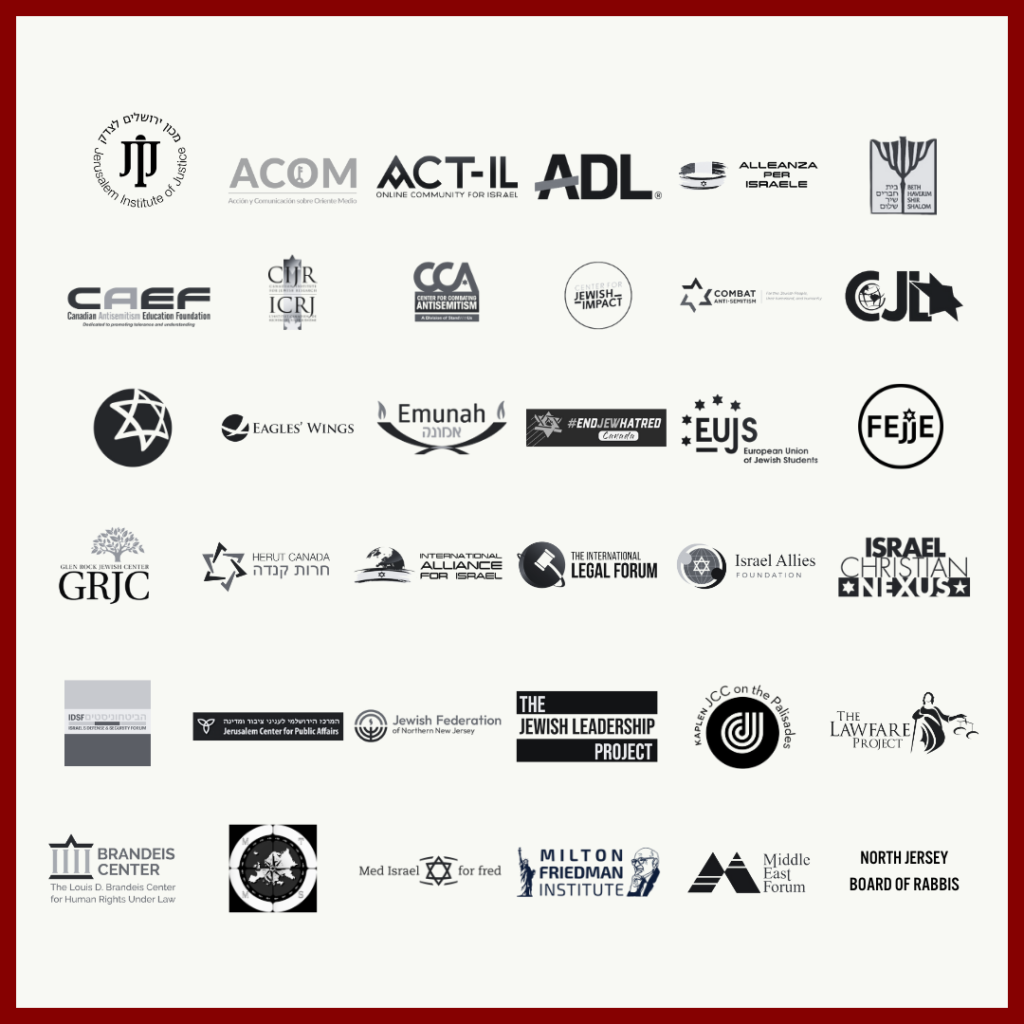
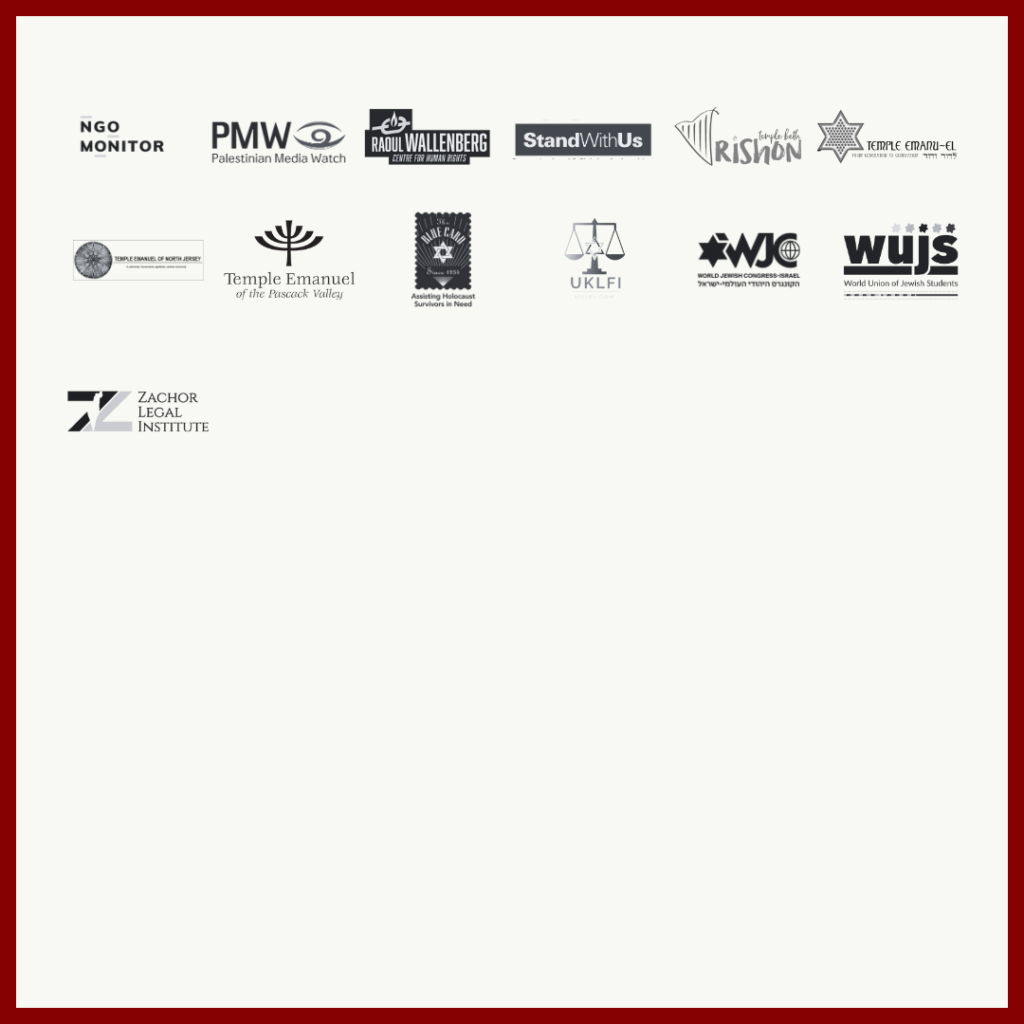
This list reflects a broad consensus between Israel and the global Diaspora, religious and secular organizations, and Jewish and Christian communities. In this dark time for our nation, our hearts are moved by the opportunity to speak with one voice. In addition to sending this letter, we are requesting an urgent meeting with the Jerusalem staff of the ICRC and plan to bring some of the families of the Israeli hostages to that meeting to make personal the urgency of our appeal.
“Hamas has openly advertised its penchant for torturing, raping, denying medical treatment, degrading, humiliating, and threatening to execute these hostages,” said Uri Morad, Director of International Law & Public Diplomacy for the Jerusalem Institute of Justice (JIJ). “The International Red Cross must act urgently to locate and establish communication with the kidnapped Israelis if it has any hope of fulfilling its mission and bringing an end to this war.”
In a joint letter, JIJ advocacy efforts were joined by prominent Israeli, North American, and European organizations who are committed to countering anti-Semitism and anti-Israel bias, including the Anti-Defamation League, Jerusalem Center for Public Affairs, NGO Monitor, Middle East Forum, and StandWithUs. The group also included several Jewish and Christian communities, including the Jewish Federation of Northern New Jersey, Israel Christian Nexus, and numerous diaspora synagogues.
Specifically, the coalition urged the International Red Cross to take the following steps:
• Locate and establish communication with the Israelis held hostage in the Gaza Strip.
• Call for Hamas to cease its heinous acts of raping and sexually abusing Israelis.
• Condemn the use of human shields as military targets, including hospitals and schools, and the horrifying practice of exhibiting and mutilating dead bodies.
• Facilitate the immediate return of the Israeli hostages.
“This past week constitutes the worst time in Jewish history since the Holocaust, a time when the International Red Cross was, by its own admission, ‘impotent’ in the face of Nazi persecution and genocide,” said Flavia Sevald, CEO of JIJ. “In today’s war, the perpetrators may have changed, but their agenda is the same. The International Red Cross has a double duty to get it right this time.”
Jerusalem Institute of Justice (JIJ) is the only Israeli human rights NGO with consultative status before the United Nations that is pro-Israel. Within the international community, JIJ has persistently advocated for the release of Israeli citizens from captivity. Within Israel, JIJ provides free legal aid to minority ethnic and religious groups, with a track record of 25 precedent-setting victories in the Israeli Supreme Court.
ICRC- Must Locate and Facilitate Release of Hostages
JERUSALEM INSTITUTE OF JUSTICE LEADS COALITION OF 50 ORGANIZATIONS
URGING INTERNATIONAL RED CROSS TO SECURE RELEASE OF THE GAZA CAPTIVES
A coalition of 50 organizations urge the ICRC to verify the status of more than 150 Israelis kidnapped in the Gaza Strip
In the wake of Hamas’ barbaric rampage through the civilian communities of southern Israel, the Jerusalem Institute of Justice leads a coalition of 50 organizations in urging the International Committee of the Red Cross (ICRC) to verify the status of the 150+ Israeli hostages taken into captivity in Gaza. Here
This list reflects a broad consensus between Israel and the global Diaspora, religious and secular organizations. In this dark time for our nation, our hearts are moved by the opportunity to speak with one voice. In addition to sending this letter, we are requesting an urgent meeting with the Jerusalem staff of the ICRC and plan to bring some of the families of the Israeli hostages to that meeting to make personal the urgency of our appeal.
“Hamas has openly advertised its penchant for torturing, raping, denying medical treatment, degrading, humiliating, and threatening to execute these hostages,” said Uri Morad, Director of International Law & Public Diplomacy for the Jerusalem Institute of Justice (JIJ). “The International Red Cross must act urgently to locate and establish communication with the kidnapped Israelis if it has any hope of fulfilling its mission and bringing an end to this war.”
In a joint letter, JIJ advocacy efforts were joined by prominent Israeli, North American, and European organizations who are committed to countering anti-Semitism and anti-Israel bias, including the Anti-Defamation League, Jerusalem Center for Public Affairs, NGO Monitor, Middle East Forum, and StandWithUs. The group also included several Jewish and Christian communities, including the Jewish Federation of Northern New Jersey, Israel Christian Nexus, and numerous diaspora synagogues.
Specifically, the coalition urged the International Red Cross to take the following steps:
• Locate and establish communication with the Israelis held hostage in the Gaza Strip.
• Call for Hamas to cease its heinous acts of raping and sexually abusing Israelis.
• Condemn the use of human shields as military targets, including hospitals and schools, and the horrifying practice of exhibiting and mutilating dead bodies.
• Facilitate the immediate return of the Israeli hostages.
“This past week constitutes the worst time in Jewish history since the Holocaust, a time when the International Red Cross was, by its own admission, ‘impotent’ in the face of Nazi persecution and genocide,” said Flavia Sevald, CEO of JIJ. “In today’s war, the perpetrators may have changed, but their agenda is the same. The International Red Cross has a double duty to get it right this time.”
Jerusalem Institute of Justice (JIJ) is the only Israeli human rights NGO with consultative status before the United Nations that is pro-Israel. Within the international community, JIJ has persistently advocated for the release of Israeli citizens from captivity. Within Israel, JIJ provides free legal aid to minority ethnic and religious groups, with a track record of 25 precedent-setting victories in the Israeli Supreme Court.