
Petición por la memoria del 7 de octubre
POR LA MEMORIA DEL 7 DE OCTUBRE, CONTRA EL ODIO Y EL TERRORISMO
Petición dirigida al Secretario General de las Naciones Unidas, António Guterres. A tres años de los ataques terroristas del 7 de octubre de 2023 perpetrados por Hamas, alzamos nuestra voz para preservar la memoria y la dignidad de las víctimas y sobrevivientes, enfrentar el antisemitismo y rechazar toda forma de negación, banalización o justificación de las atrocidades cometidas aquel día.
PETICIÓN POR LA MEMORIA DEL 7 DE OCTUBRE, CONTRA EL ODIO Y EL TERRORISMO
Petición al Secretario General de las Naciones Unidas, António Guterres
Nosotros, miembros de comunidades latinoamericanas unidos por el compromiso de preservar la memoria y la dignidad de las víctimas y sobrevivientes de los ataques del 7 de octubre de 2023, elevamos esta petición al Secretario General de las Naciones Unidas.
Ese fatídico 7 de octubre, Hamas y otros grupos terroristas palestinos llevaron a cabo un brutal ataque contra Israel. Civiles inocentes fueron asesinados, torturados y víctimas de actos de violencia sexual. Entre las víctimas había mujeres, niños, bebés y adultos mayores. Ese mismo día, 251 personas fueron secuestradas y llevadas como rehenes a Gaza. Muchos permanecieron allí durante más de dos años. Solo después de 843 días fue recuperado y devuelto a Israel el último rehén que permanecía en Gaza. Muchos de los secuestrados, lamentablemente, no regresaron con vida.
Tres años después, frente a la persistencia del antisemitismo y de narrativas que niegan, banalizan o buscan justificar la violencia cometida por Hamas, creemos que recordar no es suficiente. La memoria exige también responsabilidad y acción.
Por ello, solicitamos al Secretario General que, antes de concluir su mandato:
- condene de manera inequívoca el terrorismo de Hamas y la toma de rehenes, sin justificaciones ni relativizaciones;
- garantice que, en el marco de las Naciones Unidas, se otorguen de manera efectiva la prioridad, los espacios, la atención y los recursos necesarios para combatir el antisemitismo, la negación y banalización de los ataques del 7 de octubre y toda forma de incitación al odio contra el pueblo judío;
- vele para que los órganos y mecanismos de las Naciones Unidas actúen conforme a los principios de imparcialidad, universalidad y no selectividad, y aseguren que sus espacios no sean utilizados para legitimar discursos de odio, incitación o deshumanización dirigidos contra el Estado de Israel;
- brinde los espacios institucionales y simbólicos correspondientes para preservar y amplificar las voces de las víctimas y sobrevivientes del 7 de octubre, de modo que sus historias formen parte de la memoria colectiva internacional.
Al firmar esta petición, reafirmamos nuestro compromiso con la memoria de quienes fueron asesinados, con quienes sobrevivieron y continúan recuperándose de heridas visibles e invisibles, y con las familias que cargan hasta hoy con las consecuencias del 7 de octubre.
Reafirmamos también nuestro compromiso con el derecho del Estado de Israel a existir, con el derecho del pueblo judío a vivir con seguridad y autodeterminación, y con el derecho de todas las personas de la región a vivir en paz, seguridad y dignidad.
Alzamos nuestra voz por quienes ya no pueden hacerlo.
Recordar es también actuar.
Una iniciativa de
PETICIÓN POR LA MEMORIA DEL 7 DE OCTUBRE, CONTRA EL ODIO Y EL TERRORISMO

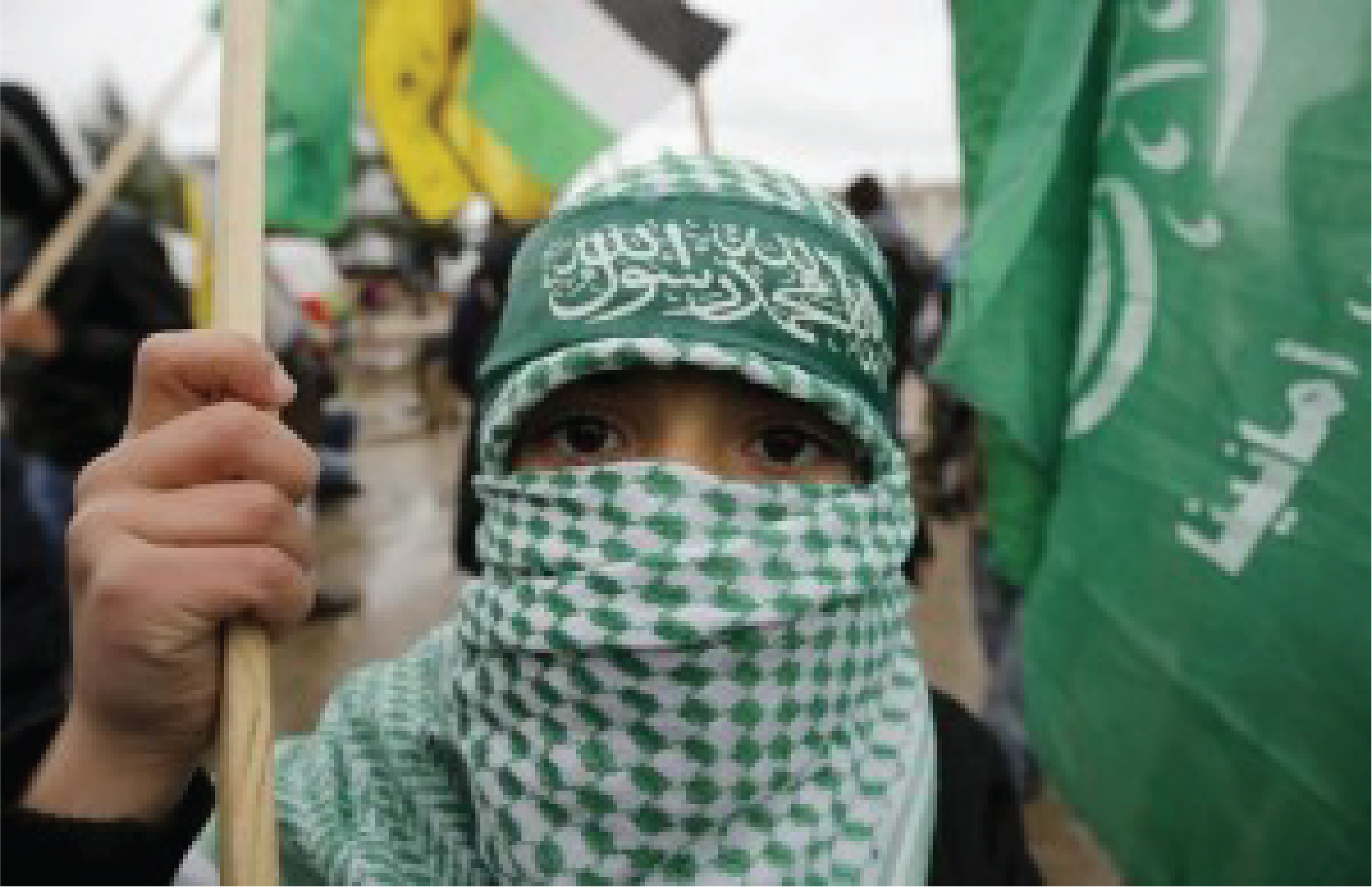
Hamas Charter 1988 vs 2017: Why Rhetoric Has Never Meant Reform
Originally published 2017 | Updated January 2026
For many years, Hamas' Charter of 1988 has undermined their legitimacy within the international community. Many advocates in favor of Palestinian independence have found themselves unable to endorse the violence, antisemitism, and calls for genocide contained within the document.
In 2017, Hamas released a revised document titled "General Principles and Policies" in an attempt to rebrand their public image. It served as an affirmation of their ideologies and positions on issues relating to Israel.
Nearly a decade later, and in the shadow of the October 7 massacre, this effort at rebranding can be assessed with greater clarity. From a legal perspective, the revised document did not constitute ideological reform. It was a strategic exercise in linguistic moderation that left Hamas' core objectives intact and legally indefensible.
The Contradiction at the Heart of Hamas' Position
The 2017 document provides insight into Hamas' willingness, or lack thereof, to coexist with an Israeli state:
"Hamas rejects any alternative to the full and complete liberation of Palestine, from the river to the sea. However, without compromising its rejection of the Zionist entity and without relinquishing any Palestinian rights, Hamas considers the establishment of a fully sovereign and independent Palestinian state, with Jerusalem as its capital along the lines of the 4th of June 1967, with the return of the refugees and the displaced to their homes from which they were expelled, to be a formula of national consensus." [i]
This is an oxymoron of a policy, requiring intellectual gymnastics to understand both its consistency and logic. Acceptance of a state along the pre-1967 armistice lines denotes a willingness or reluctant acceptance to live alongside an Israeli state, rather than a "full and complete liberation of Palestine, from the river to the sea." The two positions are incompatible.
Their so-called "acceptance" of a state is essentially an acceptance of a starting point from which to appropriate modern-day Israel. This was admitted by senior Hamas leader Mahmoud al-Zahhar in 2011, who referred to the acceptance of the pre-1967 lines as "just a phase" until Hamas has a chance to "regain the land, even if we [Hamas] have to do so inch by inch." [ii]
Following this logic, Brazil could hypothetically accept a state in Rio de Janeiro yet maintain the entire territorial integrity of modern-day Brazil. Or, more appropriately, the Islamic State could accept a state in Raqqa, Syria, yet maintain its ambitions to establish a Caliphate from Spain to Afghanistan.
Under international law, recognition is not symbolic. It is a prerequisite for durable sovereignty, stable borders, and peaceful relations between states. Hamas' position reduces the concept of statehood to a tactical waypoint rather than a terminal political solution. From a legal standpoint, such a posture fails the minimum threshold of good faith required for participation in any peace process.
Antisemitism in the 1988 Hamas Charter
The 1988 Charter contains conspiratorial antisemitic accusations of Jewish and Zionist domination of global institutions, as well as insinuations about the malevolence of Jewish people:
"Writers, intellectuals, media people, orators, educators and teachers, and all the various sectors in the Arab and Islamic world - all of them are called upon to perform their role, and to fulfil their duty, because of the ferocity of the Zionist offensive and the Zionist influence in many countries exercised through financial and media control, as well as the consequences that all this lead to in the greater part of the world." [iii]
"The Zionist plan is limitless. After Palestine, the Zionists aspire to expand from the Nile to the Euphrates. When they will have digested the region they overtook, they will aspire to further expansion, and so on. Their plan is embodied in the "Protocols of the Elders of Zion", and their present conduct is the best proof of what we are saying." [iv]
"Israel, Judaism and Jews challenge Islam and the Moslem people. "May the cowards never sleep." [v]
"The Jews made no exception for women or children. Their policy of striking fear in the heart is meant for all. They attack people where their breadwinning is concerned, extorting their money and threatening their honour." [vi]
Calls for Violence and Genocide in the Original Charter
The original 1988 Charter did not just draw attention to the supposed true aspirations of world Jewry. It openly advocated for violence and genocide against Jewish people:
"We should not forget to remind every Moslem that when the Jews conquered the Holy City in 1967, they stood on the threshold of the Aqsa Mosque and proclaimed that "Mohammed is dead, and his descendants are all women." [vii]
However, the original 1988 Charter did not just draw attention to the supposed true aspirations of world Jewry. Rather, they openly advocated for violence and genocide against Jewish people:
"In face of the Jews' usurpation of Palestine, it is compulsory that the banner of Jihad be raised" [viii]
"Arab and Islamic Peoples should augment by further steps on their part; Islamic groupings all over the Arab world should also do the same, since all of these are the best-equipped for the future role in the fight with the warmongering Jews" [ix]
"Our struggle against the Jews is very great and very serious" [x]
"The Day of Judgement will not come about until Moslems fight the Jews (killing the Jews), when the Jew will hide behind stones and trees. The stones and trees will say O Moslems, O Abdulla, there is a Jew behind me, come and kill him. Only the Gharkad tree, (evidently a certain kind of tree) would not do that because it is one of the trees of the Jews." (related by al-Bukhari and Moslem) [xi]
The 2017 Document: Antisemitism by Substitution
The revised document is careful to adopt a more palatable tone regarding Jewish people:
"Hamas affirms that its conflict is with the Zionist project not with the Jews because of their religion. Hamas does not wage a struggle against the Jews because they are Jewish but wages a struggle against the Zionists who occupy Palestine. Yet, it is the Zionists who constantly identify Judaism and the Jews with their own colonial project and illegal entity." [xii]
The term "Jews" has been euphemistically replaced with the term "Zionists." This semantic shift does not withstand legal scrutiny.
When "Zionists" are portrayed as a monolithic global force, accused of controlling international institutions, denied historical or cultural ties to the land, and stripped of the right to national self-determination, the distinction collapses. Contemporary international standards, including those adopted by the U.S. State Department, the EU, and numerous international bodies, recognize that denying the Jewish people the right to self-determination or the legitimacy of Israel's existence constitutes modern antisemitism.
The revised language does not abandon antisemitic tropes; it repackages them in terms more palatable to diplomatic audiences.
The Muslim Brotherhood Connection
The revised document presents a major shift in Hamas' public acknowledgement of its ideological and political affiliation. It makes no mention of The Muslim Brotherhood, the Islamist movement designated as a terrorist organization in Russia, Egypt, Bahrain, and Saudi Arabia. This is despite the fact that Hamas emerged as an offshoot of the Egyptian Muslim Brotherhood and is referenced in the original 1988 Charter:
"The Islamic Resistance Movement is one of the wings of Moslem Brotherhood in Palestine. Moslem Brotherhood Movement is a universal organization which constitutes the largest Islamic movement in modern times." [xv]
Although Hamas has not commented on the Brotherhood's omission from its new document, it is likely an attempt to garner favor with regional players such as Egypt and Saudi Arabia who have designated the group as a terrorist organization.
Yet omission is not disavowal. There is no evidence of ideological severance, operational distancing, or repudiation of the Brotherhood's core worldview. The silence reflects a tactical calculation aimed at diplomatic maneuvering rather than genuine transformation.
The Persistence of Violent Doctrine
Crucially, Hamas has never renounced violence against civilians. The 2017 document does not repudiate the 1988 Charter's endorsement of armed struggle, nor does it disavow the religious framing of violence as an obligation.
This is not merely a rhetorical omission. In international humanitarian law, intent matters, but conduct matters more. The systematic targeting of civilians, hostage-taking, sexual violence, and indiscriminate attacks are prohibited per se, regardless of political grievance. These acts constitute war crimes and, in certain contexts, crimes against humanity.
The events of October 7, 2023, eliminated any residual ambiguity about Hamas' operational doctrine. They demonstrated continuity, not rupture, between ideology and action.
Hamas Leaders Confirm: The Charter Remains
For those who viewed the revised document as a step in the right direction, senior Hamas leader Mahmoud al-Zahhar clarified in May 2017 that its revised document did not contradict its founding Charter of 1988:
"The pledge Hamas made before God was to liberate all of Palestine…The Charter is the core of [Hamas’] position and the mechanism of this position is the document…We have reaffirmed the unchanging constant principles that we do not recognize Israel; we do not recognize the land occupied in 1948 as belonging to Israel and we do not recognize that the people who came here (Jews) own this land." [xvii]
Law, Not Language, Determines Legitimacy
Under international law, legitimacy is not conferred by revised phrasing or selective omissions. It is earned through demonstrable compliance with legal norms: recognition of existing states, renunciation of violence against civilians, adherence to humanitarian law, and acceptance of peaceful dispute resolution.
Hamas has met none of these criteria.
The lesson of the past decade is clear: rhetoric cannot substitute for responsibility. Hamas' revised language did not signal ideological evolution; it signaled strategic adaptation.
International law is not deceived by euphemism. It judges actors by their objectives, conduct, and adherence to binding norms. On all three counts, Hamas remains in fundamental violation of the principles that govern lawful political participation and the protection of human rights.
Rebranding does not erase responsibility. And moderation in words, when contradicted by violence in practice, carries no legal weight.
The Jerusalem Institute of Justice provides free legal aid to survivors of terrorism, human trafficking, and discrimination. We fight against antisemitism around the world and stand up for Israel on the world stage by being the only pro-Israel non-profit with ECOSOC status at the United Nations. Your donations can help make a difference against antisemitism as well as provide free legal aid to those who need it most in Israel.
References
- [i] Hamas 2017, A Document of General Principles & Policies, May 1, viewed 11 May 2017, http://hamas.ps/en/post/678/
- [ii] Middle East Media Research Institute (MEMRI) 2011, ‘Hamas Leader Mahmoud Al-Zahhar Slams PA President for “Aimless Kangaroo-Like” Political Gymnastics and Says: We Will Not Relinquish Any Piece of Palestinian Land’ (Transcript of Excerpts from Television Interview with Hamas Leader Mahmoud al-Zahhar on Dream 1 TV), July 20, viewed 11 May 2017, https://www.memri.org/tv/hamas-leader-mahmoud-al-zahhar-slams-pa-president-abbas-aimless-kangaroo-political-gymnastics-and/transcript
- [iii] Hamas 1988, ‘The Covenant of the Islamic Resistance Movement’, Yale Law School Lillian Goldman Library: The Avalon Project, viewed 11 May 2017, http://avalon.law.yale.edu/20th_century/hamas.asp
- [iv] ibid
- [v] ibid
- [vi] ibid
- [vii] ibid
- [viii] ibid
- [ix] ibid
- [x] ibid
- [xi] ibid
- [xii] Hamas 1988, op. cit.
- [xiii] U.S. Department of State 2017, ‘Defining Anti-Semitism’, January 20, viewed 14 May 2017, https://www.state.gov/s/rga/resources/267538.htm
- [xiv] Abu-Amr, Z. 1994, Islamic Fundamentalism in the West Bank and Gaza: Muslim Brotherhood and Islamic Jihad, India University Press, United States of America, p. 16
- [xv] Hamas 1988, op. cit.
- [xvi] Middle East Media Research Institute (MEMRI) 2010, ‘Morsi in 2010: No to Negotiations with the Blood-Sucking Warmongering “Descendants of Apes and Pigs”; Calls to Boycott U.S. Products’ (Transcript of Excerpts from Archival Interviews with Mohammed Morsi, September 23, viewed 14 May 2017, https://www.memri.org/tv/morsi-2010-no-negotiations-blood-sucking-warmongering-descendants-apes-and-pigs-calls-boycott-us/transcript
- [xvii] Jerusalem Post 2017, ‘Hamas Says New Document ‘Not a Substitute for Founding Charter’, May 11, viewed 14 May 2017
2025 Report - ECHOES OF DENIAL - OCT. 7TH ATROCITIES & RISING ANTISEMITISM
“Denial of atrocity crimes is a warning sign of societal fragility and the enduring presence of
the conditions that allowed this large-scale hatred and violence to erupt in the past.”
Alice Wairimu Nderitu, Under-Secretary General and Special
Adviser on Prevention of Genocide to the United Nations
Secretary General
The October 7, 2023, atrocities committed by Hamas against Israeli civilians were among the most documented terror attacks in history. Despite overwhelming evidence, including livestreamed videos and numerous survivor testimonies, a disturbing pattern of distortion and denial of these events has emerged. This report examines the denial of the October 7 atrocities, links such denial to rising antisemitism, and reviews the current legal frameworks addressing atrocity denial. It also discusses the necessity and promotes the adoption of new legislation against such denial and provides recommendations for international cooperation to combat this dangerous phenomenon.

From Media Consumer to Content Creator
Ben Solomon reflects on his transformative journey as an intern at JIJ, where he tackled Israel's biggest challenges—Hamas, Hezbollah, Iran, and lawfare—through reading, debating, and writing. Dive into his story and discover the building blocks of effective Israel advocacy
My most rewarding experience at JIJ was producing and recording a series of 15-minute lectures on the central challenges facing Israel (Hamas, Hezbollah, Iran, and lawfare). Before coming to JIJ, I considered myself an informed consumer of media about Israel. Creating content, however, is much harder than consuming it. As I went about producing material of my own, I realized how little I had previously known about the threats facing Israel and the realities of the Middle East.
How did I go about overcoming this knowledge deficit to produce original content for viewers in Israel and the Diaspora? By reading, by debating, and by writing.
Read
Israel has a vibrant and diverse English-language press. Almost every day, I would spend time reading live blogs in the Times of Israel and current affairs in the Jerusalem Post. To expose myself to different perspectives, I viewed op-eds in Israel Hayom and Ynetnews. The perspectives which I saw in these outlets made me appreciate the thought processes driving Israel’s decision making.
Beyond news articles, my understanding of Israel improved tremendously from reading books. For modern Israeli history, I recommend reading Yossi Klein Halevi, Michael Oren, and Daniel Gordis. All three have written highly accessible books which deal with Israel’s achievements in war and in peace. Historical background makes it much easier to understand Israel’s contemporary dilemmas.
Besides books, I advise digging into the treasure trove of audiovisual resources available online. To understand events from decades ago, I would watch old documentaries and political speeches. For up-to-date analyses of events, I turned to podcasters like Dan Senor and Ezra Klein. The content is accessible – you just need to seek it out.
Debate
Once I read a lot about Israel, I started to form my own opinions about difficult topics, such as the breakdown of peace negotiations, international hostility toward Israel, and strategies for confronting Iran. The best way for me to test these opinions was by defending them against competing viewpoints. I regularly entered Uri’s office ( JIJ's director of International Law and Policy) in the middle of the day, where I could spend 30 minutes or more trying to make sense of current affairs. The office space at JIJ is very open, without the hierarchical separations of an American workspace.
These discussions also took place outside the confines of the office. I loved arguing with Israeli friends and family to see whether my emerging views could withstand other people’s ingrained opinions. When I travelled outside Tel Aviv for Shabbats or excursions, I tried to learn as much as possible about the dividing lines within Israeli society.
As I talked to more and more people about Israel, I found myself enthralled by the diversity of opinions within the country. Israel is certainly not the caricature of “apartheid” and “genocide” presented on college campuses and at the United Nations. But nor is it a straightforward or homogenous society. It is, instead, the melting pot of an ancient people, unified in its desire for the blessings of peace, but divided over how to achieve that end.
Write
During my first month at JIJ, I remember being nervous to commit my ideas to writing. I had already read several books and spent plenty of time exposing myself to the viewpoints of other people. But at the same time, I was reluctant to take the leap from being a consumer to a producer of information.
The way that I overcame this writer’s block was by introducing frameworks for content delivery: the “Five Pillars of Hamas” or the “Seven Front War.” Once I had established these frameworks, I could fill them with material to support an overall argument. Sub-dividing lectures into different chapters made it much easier to package them for social media.
One of the real challenges of writing about Israel is making it accessible for a non-specialist audience. It is easy to get caught in the weeds of international law, such as the details of past United Nations resolutions or jurisdictional questions at the International Criminal Court. While I enjoyed trying to grapple with these technicalities, I focused my public outreach on presenting a bigger picture viewpoint of Israel’s predicament.
The final challenge of the lecture series was turning long scripts into interesting videos. Given my lack of confidence with the teleprompter, I decided to commit the scripts to memory. I found memorization to be a challenging but highly worthwhile exercise; it pushed me to see the value in every sentence and to clarify the connections between them.
Conclusion
As I look back on the last five months, I am grateful to have contributed to JIJ’s mission of international advocacy for the Jewish state. I feel equipped with the tools to effectively advocate for Israel back home.
In reflecting on my own contribution to JIJ, I would add this: the internship is what you make of it. You will make the most meaningful contribution by working on projects which reflect your skill set and interests. In my case, I was naturally drawn to a project which enabled me to lecture about geopolitics. But JIJ is not a one-size-fits-all model; the internship is flexible enough to accommodate your personal strengths.
Whatever projects you end up working on, I believe that the three fundamentals of reading, debating, and writing will be applicable. These are the indispensable building blocks of Israel advocacy.
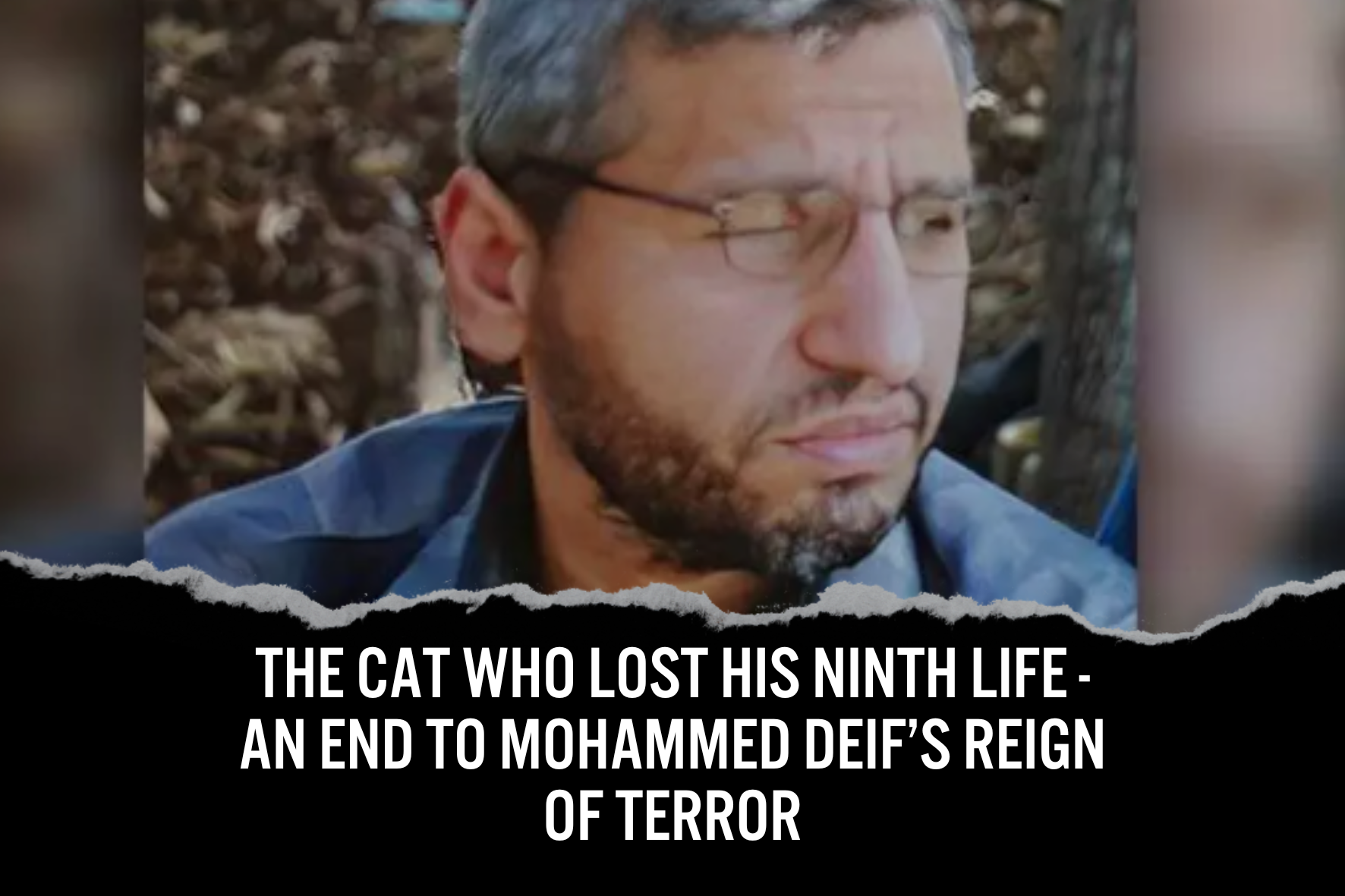
The Cat Who Lost His 9th Life
An End to Mohammed Deif’s Reign of Terror
Mohammed Diab Ibrahim al-Masri, more commonly known as Mohammed Deif, was a Hamas terrorist who is credited for being the mastermind behind the October 7th Hamas terrorist attacks. Deif is a figure synonymous with terror and violence and served as the leader of the Izz al-Din al-Qassam Brigades (IQB) which is the military wing of Hamas. Deif orchestrated numerous attacks against Israel, leaving a trail of destruction and loss in his wake.
Deif's tenure as the head of the al-Qassam Brigades, which began in 2002, was characterized by a series of deadly attacks. Even prior to gaining this position, Deif masterminded several suicide bombings in 1996 that killed over 50 Israelis civilians. Since his reign of terror began, he was instrumental in developing Hamas' capabilities, including rocket attacks and tunnel warfare. His strategies took the brutal, inhumane, and despicable atrocities being committed by Hamas to an even more dangerous level.
Deif's ability to evade capture and assassination earned him the nickname "the cat with nine lives." Since 1995, he had been the top target on Israel's most wanted list, surviving at least seven targeted killing attempts. Despite sustaining severe injuries, including the loss of an eye, Deif evaded death and continued to lead Hamas' military operations from the shadows.
In recent developments, there were allegations that Mohammed Deif may have been killed in an Israeli airstrike. On July 12th, 2024, Israeli fighter jets targeted a compound in the Al-Mawasi/Khan Younis area which was believed to be housing Deif and other high-ranking Hamas officials. While Israeli authorities had indicated "increasing signs" that Deif was killed in the operation, Hamas denied the claims and there was no definitive proof. Just over a week later, the IDF confirmed on July 21st that Deif was in fact killed in the attack.
Deif's actions did not go unnoticed on the international stage. Prior to his death, he had been designated a Specially Designated Global Terrorist by the U.S. Department of State and added to the European Union's terrorist blacklist. In May 2024, the International Criminal Court (ICC) applied for arrest warrants for Deif and other Hamas leaders, citing charges of extermination, murder, and other war crimes.
Mohammed Deif's legacy is one of relentless violence and strategic terrorism. His actions caused immense suffering and have perpetuated the cycle of violence in the Israeli-Palestinian conflict. The unfortunate reality of the situation is that Deif’s death simply means he will be replaced by another terrorist as hateful and dangerous as him. As long as figures like Deif remain in positions of power, the prospects for peace in the region remain bleak. His story is a stark reminder of the devastating impact of Hamas’s heinous and barbaric crimes. The ongoing struggle for stability and security in the Middle East will only continue without a unified front opposing terrorism and extremism.
By Kevin Bina – JIJ Intern
to read the Article with the Foot-Notes
Op-ed Mohammaed Deif
ECHOES OF DENIAL - OCT. 7TH ATROCITIES & RISING ANTISEMITISM- Report
“Denial of atrocity crimes is a warning sign of societal fragility and the enduring presence of
the conditions that allowed this large-scale hatred and violence to erupt in the past.”
Alice Wairimu Nderitu, Under-Secretary General and Special
Adviser on Prevention of Genocide to the United Nations
Secretary General
The October 7, 2023, atrocities committed by Hamas against Israeli civilians were among the most documented terror attacks in history. Despite overwhelming evidence, including livestreamed videos and numerous survivor testimonies, a disturbing pattern of distortion and denial of these events has emerged. This report examines the denial of the October 7 atrocities, links such denial to rising antisemitism, and reviews the current legal frameworks addressing atrocity denial. It also discusses the necessity and promotes the adoption of new legislation against such denial and provides recommendations for international cooperation to combat this dangerous phenomenon.
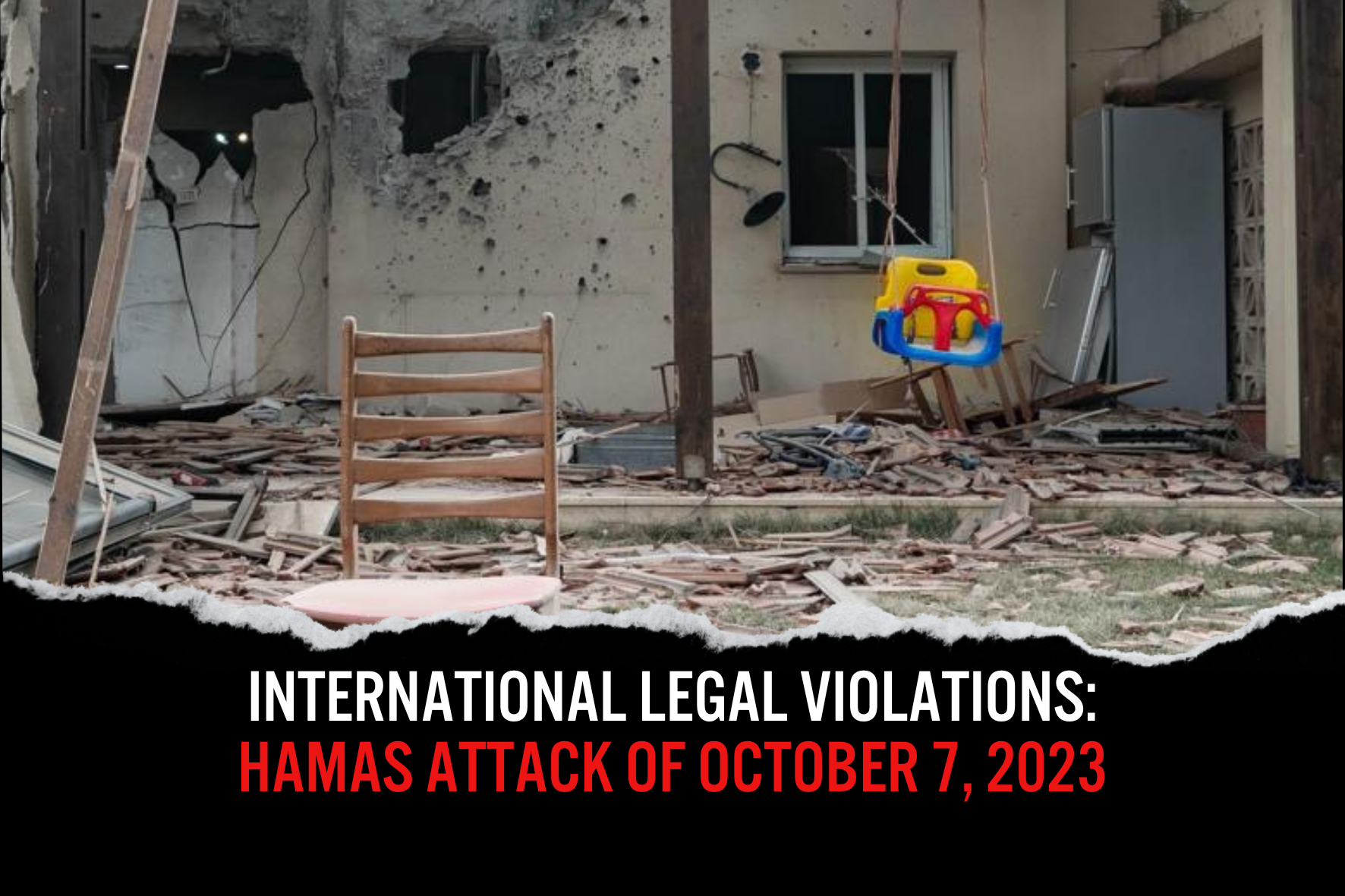
International Legal Violations Hamas Attack of October 7, 2023
CONTENT WARNING: THIS REPORT CONTAINS EXPLICIT GRAPHIC CONTENT, INCLUDING IMAGES AND DESCRIPTIONS OF KILLINGS, SEXUAL VIOLENCE, AND OTHER FORMS OF EXTREME VIOLENCE, WHICH MAY BE DISTURBING OR TRIGGERING TO SOME READERS
This report delineates several instances of international human rights law (IHRL) and international humanitarian law (IHL) violations perpetrated by Hamas and other Palestinian terrorist groups on October 7, 2023. The instances of violations presented herein are not exhaustive and constitute only a partial representation of the atrocities perpetrated during the mentioned
period.
The comprehensive evidence in this report unequivocally establishes the October 7th attack by Hamas and other Palestinian armed groups as a severe violation of fundamental international laws and basic human principles. Though only a fraction of the transgressions committed, the atrocities detailed herein affirm the breach of specific International Humanitarian Law (IHL) and International Human Rights Law (IHRL) rules.
Considerable efforts by states, human rights defenders, international organizations, civil society, and others have been invested in establishing bodies and mechanisms, particularly within the United Nations, to uphold international law and ensure accountability for those who violate it. These UN mechanisms must be leveraged to address the atrocities of October 7th.
In light of the above, we urge the implementation of all available actions to address the human rights and humanitarian law violations outlined in this document, along with the following specific measures:
- 1- Advocate and activate accountability measures for the atrocities committed and raise awareness about the documented violations, both within the United Nations system and globally, and to garner support for preventive and accountability measures.
- 2- Report the findings to the relevant bodies, including those of the United Nations. Implementation of preventive measures to deter future violations, such as increasedmonitoring, diplomatic pressure, and peacekeeping efforts, to mitigate the risk of further human rights abuses.
- 3- Monitor the situation closely, providing regular updates and follow-up reports to assess the progress made in addressing the documented violations and implementing accountability measures.
The acts committed on October 7th represent the gravest violations of basic human rights, demanding urgent intervention and unwavering commitment to justice.
How to Stand Up for Israel Webinar when the World asks us to Sit Down
Learn how to stand for Israel, address some of the thorniest accusations against Israel, and deepen your understanding of the fundamental issues and interests that shape Hamas' propaganda war.
Highlights include a lively discussion on:
What does the Palestinian nationalist movement really want? [5:18]
3 Arab massacres of Jews you didn't learn about in school. [6:45]
Is Israel committing war crimes or genocide? [12:29]
The anatomy of a blood libel. [16:33]
Why are some Jewish people anti-Israel? [27:51]
How Hamas shapes the United Nations' narrative. [41:17]
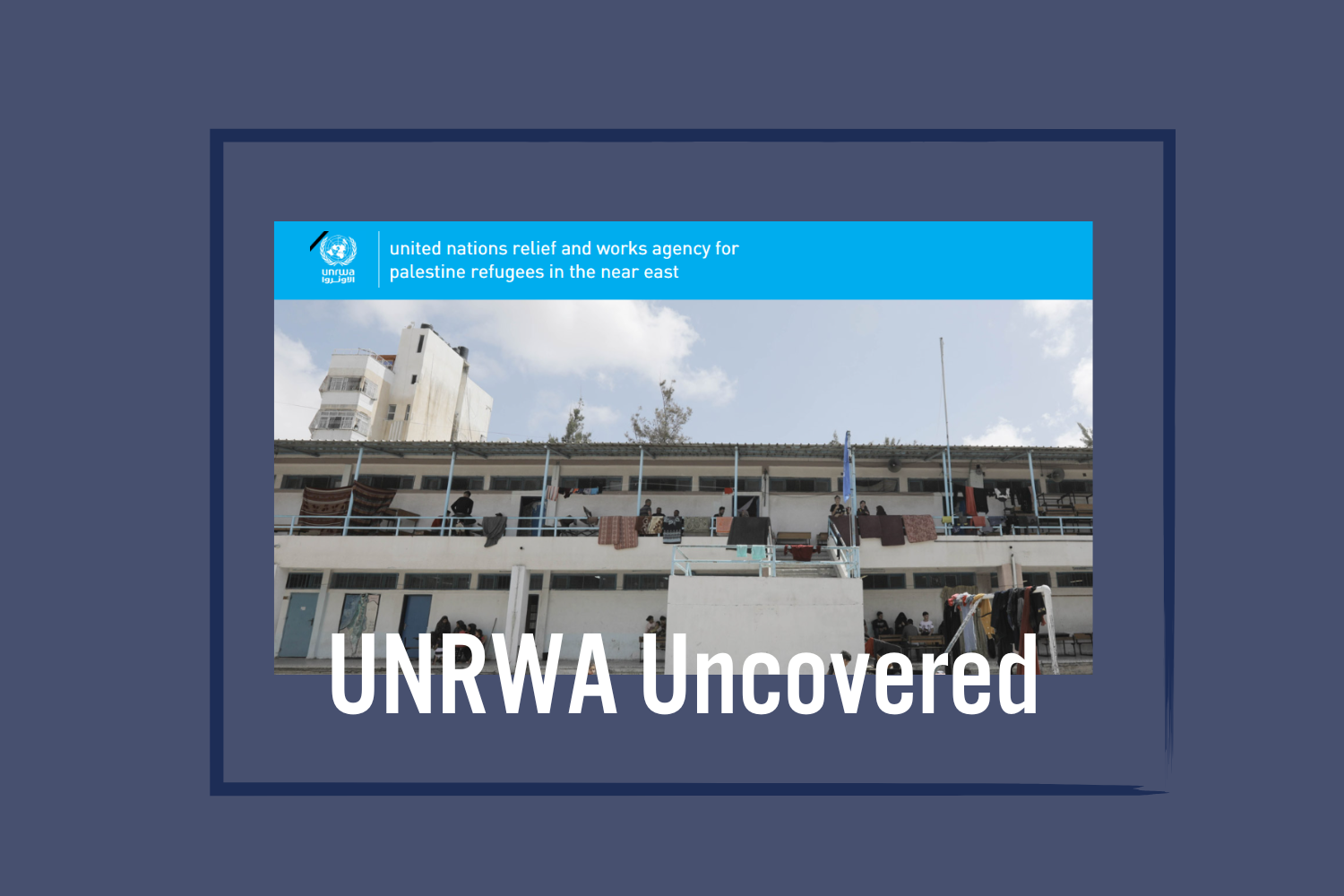
STOP FUNDING HAMAS THROUGH UNRWA!
Facts that you must know about UNRWA.
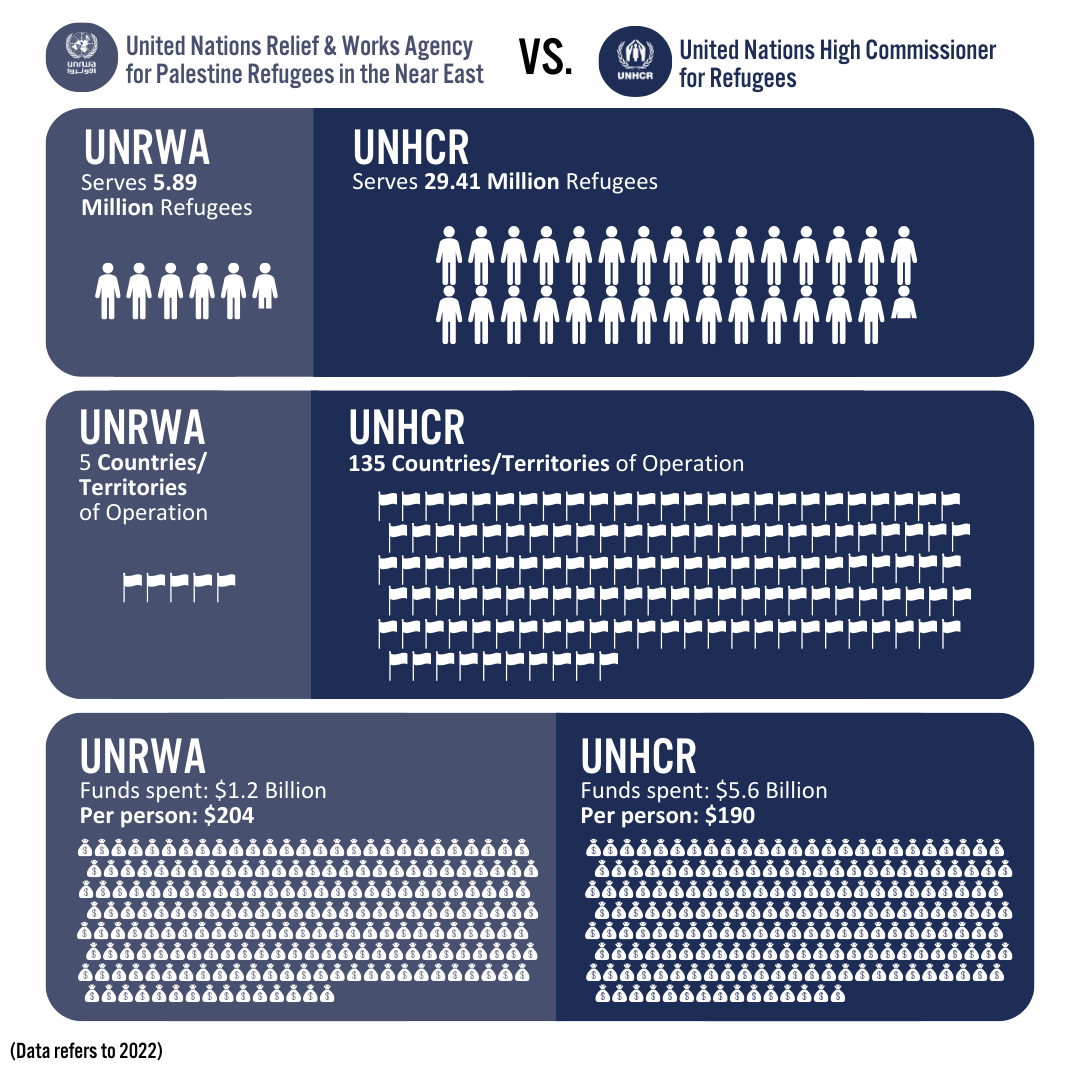
Did you know that the UN has a separate agency that only serves Palestinians? There is no other people group in the world that gets their own UN agency. This organization is now on the 76th year of its original 3-year mandate. Instead of helping Palestinians settle down and build peaceful communities, for decades UNRWA has used money from generous Western donors to perpetuate the conflict under the guise of “humanitarianism.”
Did you know that UNRWA created its own definition of “refugee” status? In the rest of the world, refugees are people who are forced to flee their country of origin. They are served by the UN’s Refugee agency, which helps them gain citizenship and adjust to their new lives in new places. But UNRWA doesn’t want Palestinians to adjust to reality. If they did, UNRWA would go out of business! Instead it extends “refugee” status to the original refugees’ great-great-grandchildren, and beyond. Thanks to UNRWA, there are scores of Palestinian millionaires who hold multiple foreign passports, yet are still
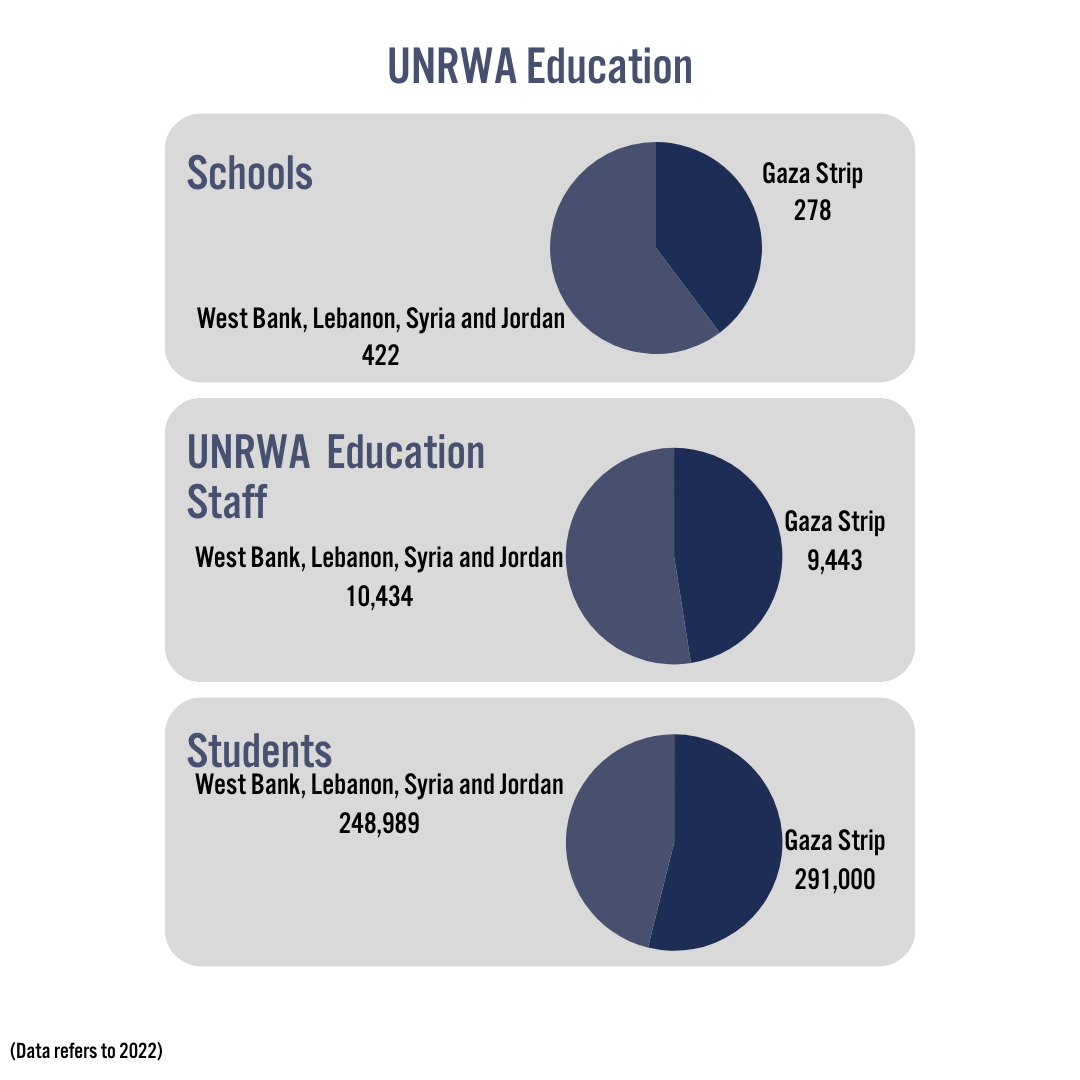
Did you know that UNRWA runs 278 schools for 291,000 Gazan children? In these schools, the UN teaches Palestinian children that they are “refugees,” even though they are Palestinians living on Palestinian land. UNRWA praises terrorists who kill Jews, celebrates martyrdom, and teaches students that one day Israel will be destroyed.
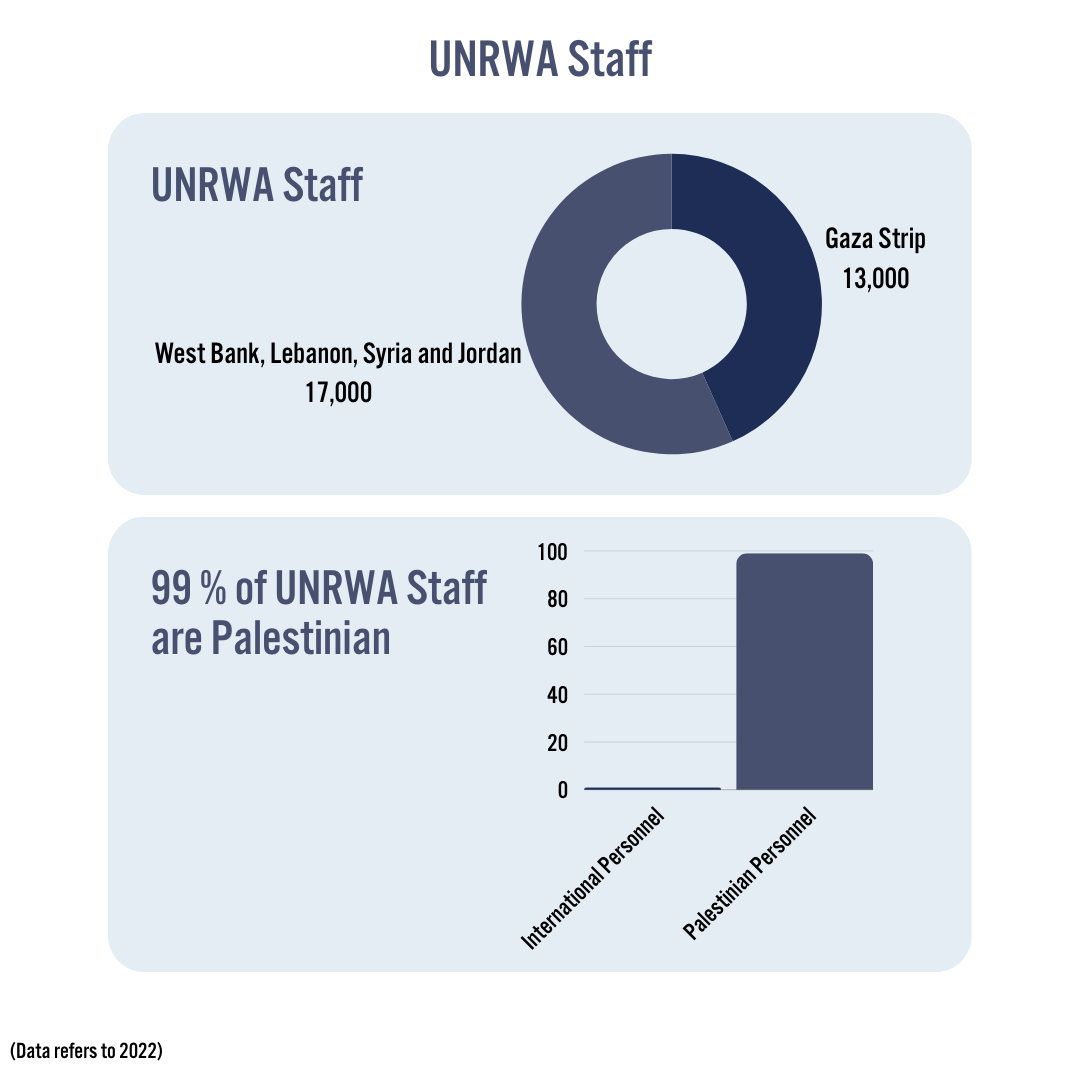
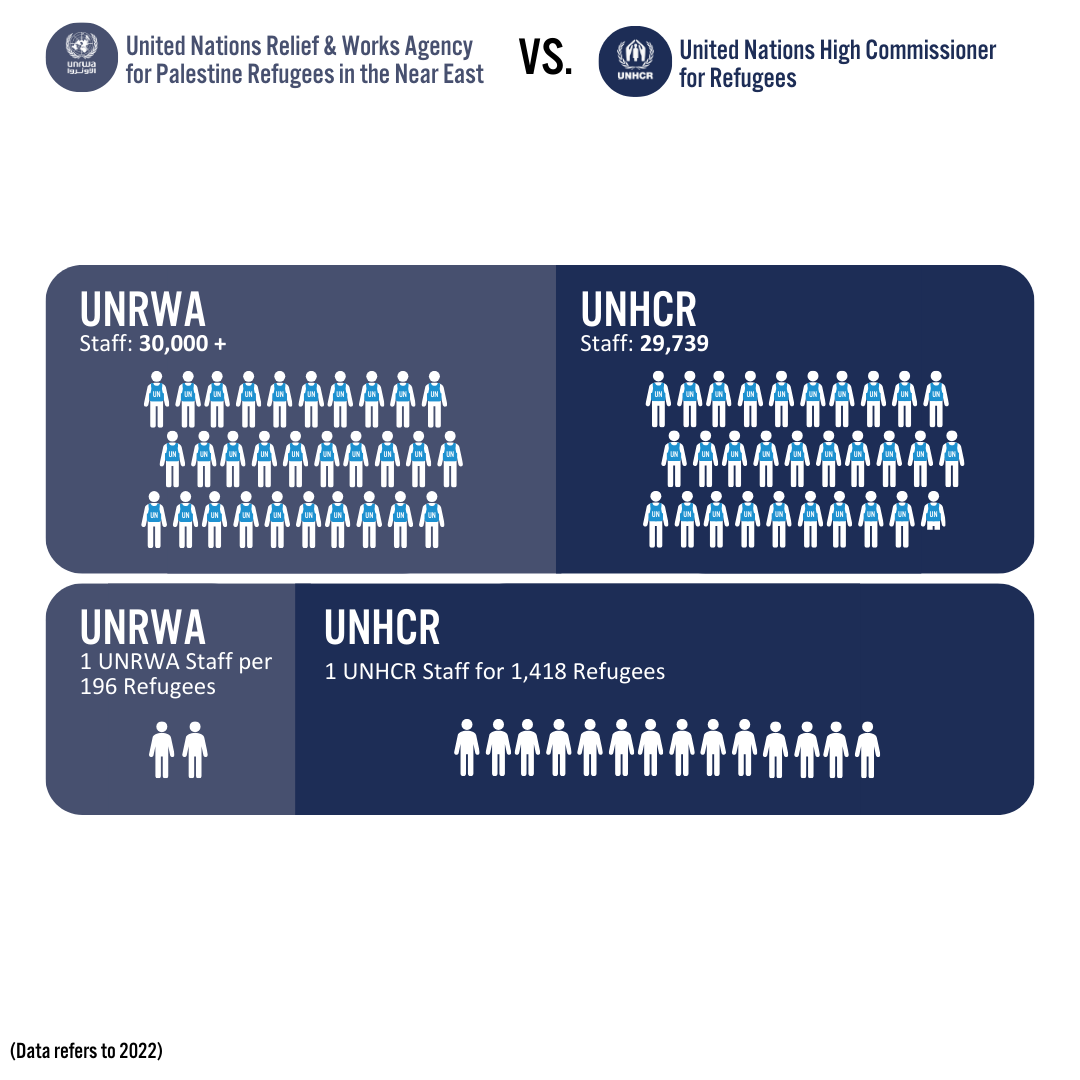
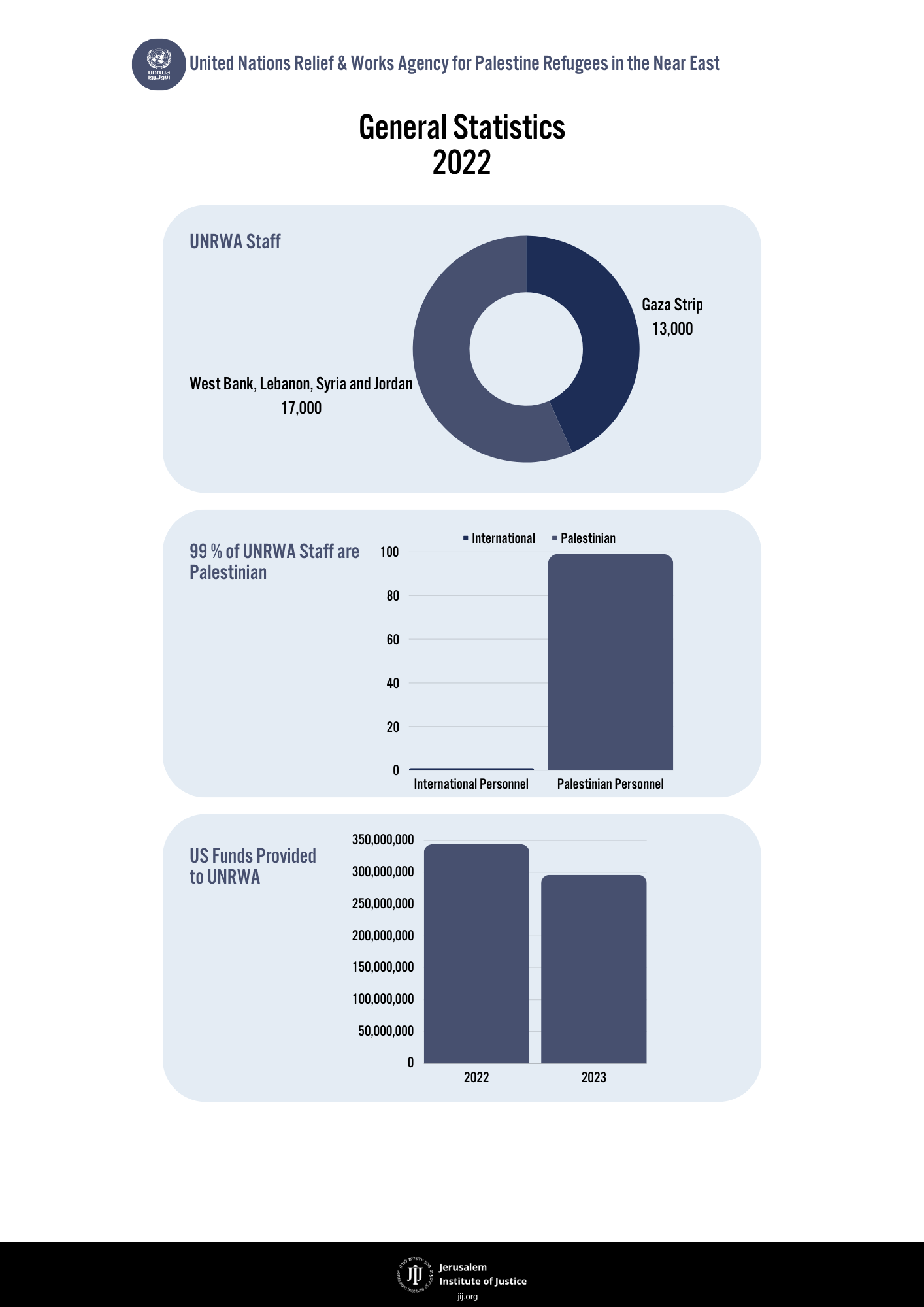
Did you know that UNRWA almost exclusively hires Palestinians? No Jews allowed! Every other UN agency is staffed by people from around the world. This helps UN agencies maintain genuine “neutrality” in conflict zones that are full of political tension. But UNRWA is unique. Over 99% of its employees are Palestinian nationals. According to Israeli intelligence, approximately 15% of adult males in Gaza have ties to Hamas. But within the staff of UNRWA, it’s 23%. A greater percentage of UN employees in Gaza are Hamas-affiliated than the general populace of Gaza!
NOW is the time to radically restructure UNRWA to stop the ongoing radicalization of Palestinian society. Why? Because Palestinians deserve better than UNRWA.
Help us meet this moment. Sign our petition to STOP FUNDING UNRWA until and unless the agency is radically reformed and restructured.
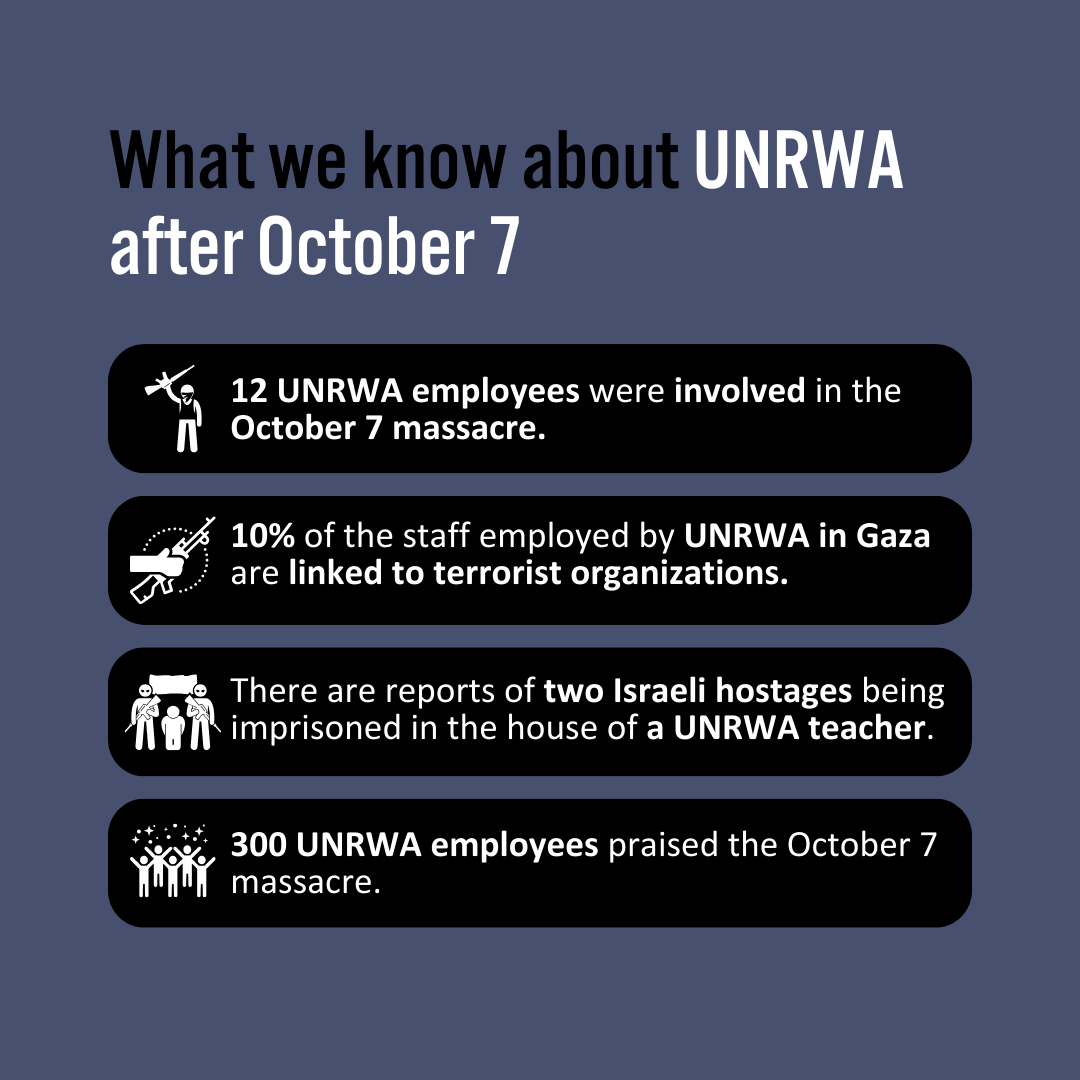
What happens when well-meaning Western donors feed money to a UN agency that turns a blind eye to terrorism? The numbers tell the story.
On October 7th:
- 133 UNRWA school graduates invaded Israel to murder and kidnap Israeli civilians,
- 12 UNRWA staff directly participated in the massacre,
- 2 UNRWA teachers held hostages captive in their own homes,
- 30 UNRWA teachers publicly celebrated the violence on social media, while
- 1,200 UNRWA staff quietly helped Hamas with cars, weapons, money, information, and hideouts.
In the wake of these damning revelations, 14 donor countries, led by the United States, have paused their funding to UNRWA, demanding an investigation. It’s a good first step, but this call for an “investigation” could be an invitation to sweep UNRWA’s problems under the rug. Fire a few people, blame the “few bad apples,” rename a few departments, and turn the money spigot back on. Why? Because “UNRWA is the only option.”
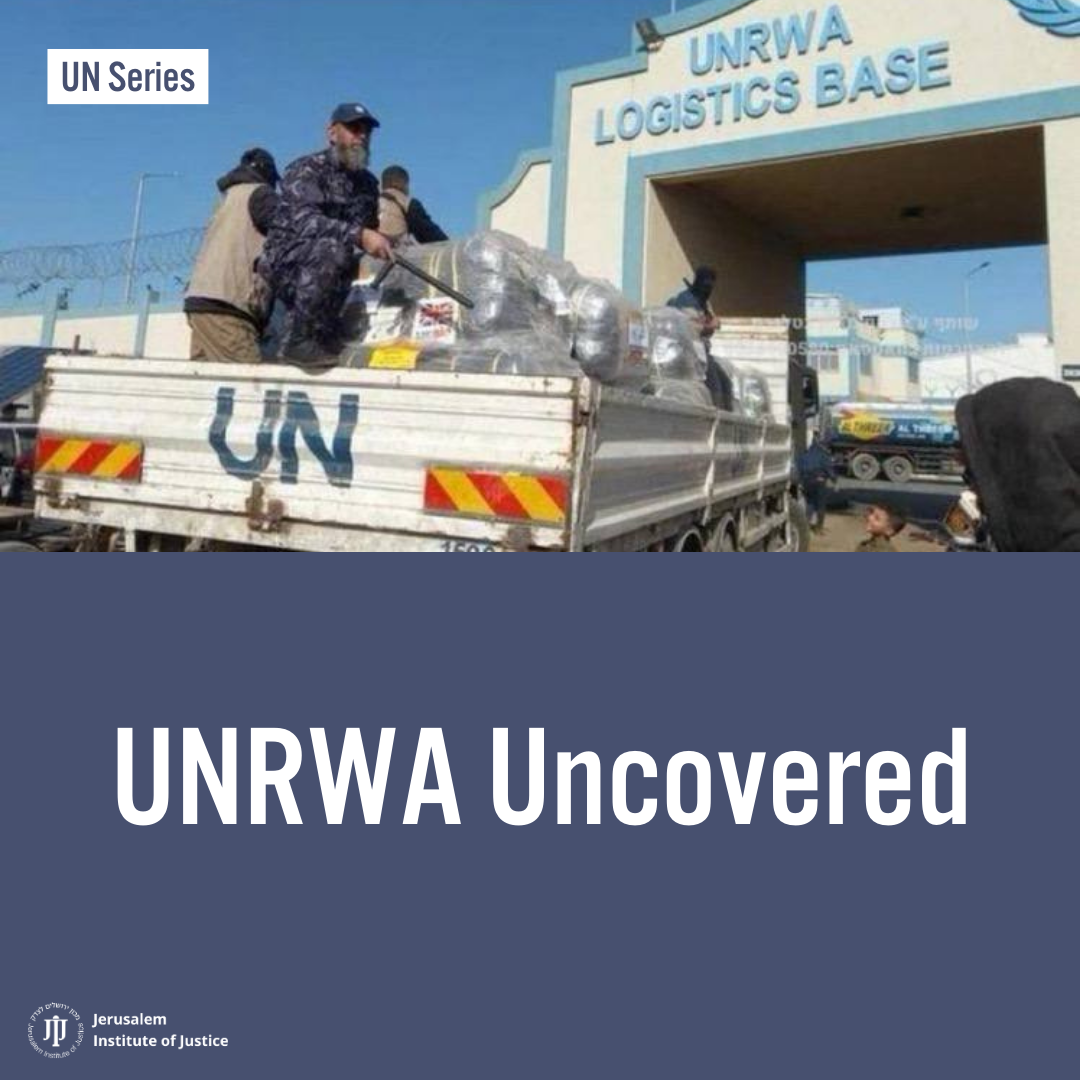
UNRWA is the only option because Hamas made it that way. UNRWA developed a monopoly on aid delivery in Gaza because it is the only aid agency in the world that has been willing to play by Hamas’ rules, which are: see no evil, hear no evil, speak no evil.
- When Hamas puts its members on the payroll, UNRWA allows it because Hamas isn’t recognized as a terrorist group by the UN!
- When Hamas stores rockets, grenades, and suicide belts inside UN schools, shelters, and clinics, UNRWA pretends not to see.
- When Hamas fighters jump onto aid trucks to steal their contents, UNRWA claims they’re just providing security.
You understand the problem now. You see that we can’t waste this moment. Now is the time to radically restructure UNRWA to stop the ongoing radicalization of Palestinian society.
Why? Because Palestinians deserve better than UNRWA. They deserve food, medicine, and shelter delivered by transparent organizations that are not routinely infiltrated by terrorists. They deserve to receive humanitarian aid and not see most of it stolen by Hamas. They deserve schools that promote coexistence with Jews and other minorities in the Middle East.
Help us meet this moment. Sign our petition to STOP FUNDING UNRWA until and unless the agency is radically reformed and restructured.
Click the button below if you wish to support our ongoing efforts.
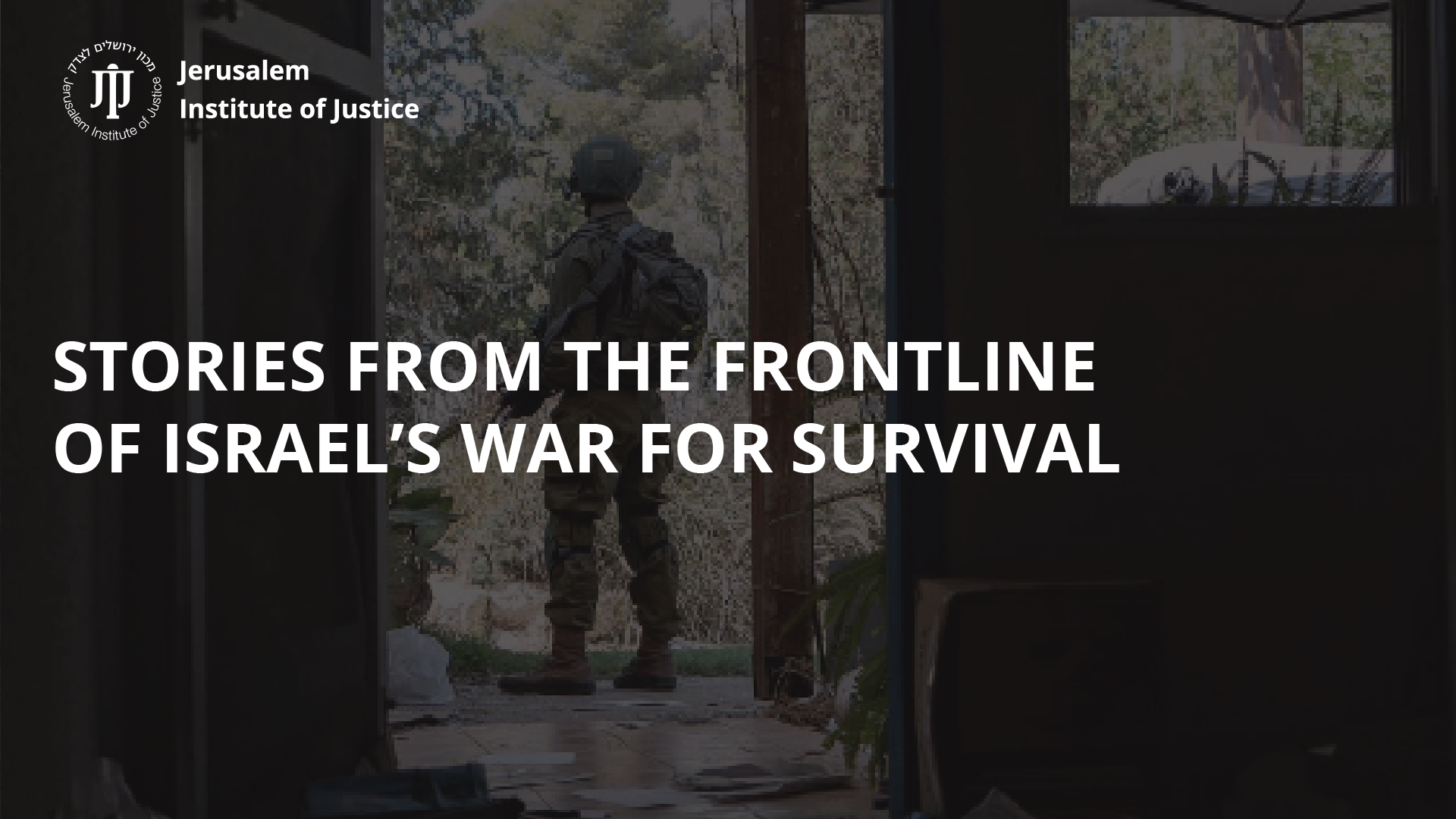
Stories from the Frontline of Israel's War for Survival
Real accounts from former and current IDF soldiers & reservists and their stories from the frontlines of Israel's War for Survival against the terrorists in Gaza.