
Defunding Terror - Hamas
Jerusalem Institute of Justice is proud to sign on to this amicus brief, petitioning the US Supreme Court to hear the case in which National Westminster Bank transferred money that was knowingly going to the US designated terror organization, Hamas.
Amicus Brief Introduction:
The raison d’etre of the Palestinian Islamic Resistance Movement, known by its acronym “Hamas,” is—as explicitly stated in Hamas’ Charter of 1988 and often repeated by its leadership—the murder of Jews and the violent expulsion of #Jews from their biblical ancestral homeland, the Land of #Israel. Petitioners and their loved ones were injured or killed in Hamas’ pursuit of its goals. And Respondent National Westminster Bank PLC (NatWest) knowingly aided and abetted those goals, through its facilitation of financial transactions for Interpal, knowing of Interpal’s connections to Hamas, and the foreseeable consequences of those financial transactions.

JIJ Gains Special Consultative Status at the United Nations Economic and Social Council
The Jerusalem Institute of Justice has obtained Special Consultative Status at the United Nations Economic and Social Council. This is a great honor as only about 60 Israeli organizations have this status and only a handful NGOs that deal with human rights. Today JIJ joins that list.
So what does this mean for the important work that we do on behalf of Israel on the world stage?
- - We will provide expert analysis on issues directly from our experience in the field.
- - JIJ will serve as an early warning agent on human rights issues and more.
- - We will help monitor and implement international agreements.
- - We will help raise public awareness on relevant issues.
- - We will contribute with essential information at United Nations events.
- - We will have the opportunity to attend international conferences and events and make written and oral statements there.
- - We will organize side events.
- - JIJ will be able to enter the United Nations premises and have the opportunity to network and lobby for Israel and much more.
The United Nations ECOSOC provides JIJ the opportunity to be heard by a global audience and directly contribute to its agenda.
Let's continue to impact real change and fight injustice together. Share this great news with your friends and family and if you are able to, donate by clicking the button below and let's embark on this new chapter together.
The Perpetual Safety Struggle
ANTISEMITISM ON THE CAMPUS OF THE UNIVERSITY OF FLORIDA
From the Perspective of Ryan Marcus, a Jewish Student
The population of Jewish students at the University of Florida in 2019 was greater than 18% of the total campus population. That statistic has most likely increased over the past 3 years. The university needs to recognize and provide a safe environment for this group, which is almost one-fifth of the entire student population of the University of Florida. This Jewish group has created a deep-rooted community that desires to provide safety for its members as well as a rich education that can broaden minds, educate, challenge and refine opinions and allow them to develop to their highest potential. The opportunity for students to major in Jewish Studies and attend events at the local Hillel and Chabad centers creates a sense of safety and security that Jewish students rely on to thrive. These spaces aid in cultivating Jewish leadership on campus and amplify the voices of Jewish individuals in telling their authentic truths.
Deplorably, at the same time, antisemitic ideas and sentiments are filtering throughout the general population of the student body of the University of Florida, in the guise of political discourse. Antisemitism, according to the working definition framed by the International Holocaust Remembrance Alliance (“IHRA”), “is a certain perception of Jews, which may be expressed as hatred toward Jews. Rhetorical and physical manifestations of antisemitism are directed toward Jewish or non-Jewish individuals and/or their property, toward Jewish community institutions and religious facilities.”
In November of 2019, Yoni Michanie, a reserve member of the Israeli Defense Force (IDF), came to speak about his life experience as a soldier. Soon after he began his presentation, he was met with a vexing disruption as roughly one hundred protesting students stood up and walked out with signs to express antisemitic and anti-Zionist tropes (The Gainesville Sun). These students, members of a campus organization called Students for Justice in Palestine (SJP), sought to derail the dialogue and undermine Yoni’s lived experiences. According to the Gainesville article, the slurs such as “war criminal” and “colonist” were used to target Yoni. These slurs fall well within the IHRA definition of antisemitism by demonizing all Israeli citizens who moved to the land of Israel to seek refuge in a time of persecution, as well as applying a double standard to the IDF’s actions.
As a Jewish student on a college campus, the sentiments expressed in this protest effectively popped the secure bubble that I, Ryan Marcus, had convinced myself I existed in. It served as an alarming reminder that antisemitism continues to guide collective narratives which isolate Jewish students through both verbal attacks and written statements. In demonizing and attacking Yoni Michanie, not just for his participation in the IDF but against all Jews, I myself felt attacked and vulnerable. The attacks were not just directed towards Yoni but against all Jews at the University of Florida who sympathized with him.
In the ensuing weeks, I became more alert and aware of my surroundings, coming to terms with the fact that the place I believed to be a safe haven was merely an extension of the depraved world around me. Later that year I found myself taking a relatively mundane walk to class through campus when I encountered an older man sitting on a bench and holding a cardboard sign, which read something to the effect of “Free Palestine” and included a reference to the Jewish people as being to blame for the conflict. Thrown utterly off guard and unable to process what I was witnessing, I immediately and unconsciously reached for my hamsa necklace to ensure it was not visible to the man in front of me. At that moment I helplessly walked past the bench, hoping nothing would give away my Jewish identity.
A university which is supposed to engender dispassionate discussion of differing opinions failed me at that moment. I did not feel I could sit in this man’s presence and discuss our differing opinion; instead I felt threatened and at a loss for words. While the university was quick to issue a statement condemning the antisemitic remarks uttered during the SJP protest, that institutional step did not go far enough; it did not address the real issue of antisemitism on the campus of the University of Florida, and thus failed at what could have been a powerful teaching opportunity between expressing a political opinion and an out-and-out attack against an entire people group. Demonstrations which target Israel, the home of the Jewish people, and call for the elimination of a space for Jewish people on the globe have become endemic on college campuses. As a result of these organized protests, curricula in Jewish Studies has become more defensive. Courses focusing on Israeli society have shifted over the years to emphasize the ongoing conflict in the Middle East through a lens which subtly demonizes the Jewish people for their existence in the region. By using educational spaces to reframe the establishment of Israel and to paint the Jewish people as greedy colonizers, the entire history of the Jewish people is being rewritten with a new narrative. As a result, I can personally attest that to be Jewish on college campuses where this narrative has become the norm is extremely frightening.
In conclusion, how then should the University of Florida respond to this increasing wave of antisemitism? First, it needs to be recognized. There is a difference between the free and open communication of diverse opinions and blatant antisemitic acts which lead to violence. University authorities need to understand what that difference is. Concrete steps must be taken to create a campus where ignorant and prejudicial statements targeting entire groups of people are called out and corrected. Actions must be identified for what they are in order to recognize their true repercussions. That is the point of a teaching institution. In each of the events I experienced, the antisemitism expressed created an increasingly more distressing environment for myself and other Jewish students to exist. The next step for the University of Florida would be to learn and adopt the IHRA working definition of antisemitism in order to create a safer, more inclusive campus for all students, where Jewish students are not alienated or left feeling paralyzed with fear because of their cultural identity and unique connection to their religion, and where non-Jewish students can learn the difference between a differing opinion and an antisemitic threat.
Grethel Aguila Special to The Sun. (2019, November 26). UF group wants apology after post-protest email. Gainesville Sun. https://www.gainesville.com/news/20191126/uf-group-wants-apology-after-post-protest-email.
Working Definition of Antisemitism. IHRA. https://www.holocaustremembrance.com/resources/working-definitions-charters/working-definition-antisemitism.

Evicting Zionism
By Emma Rosenau.
In April of 2019, I visited Emory University in Atlanta, Georgia. I had committed to go to school there and was going for accepted students’ day to meet my future classmates. Sitting in the hotel with my mom, we saw a post in an Emory Facebook group. Jewish and non-Jewish students alike had woken up to flyers posted on the doors of their dorm rooms. They read “EVICTION NOTICE. We regret to inform you that your suite is scheduled for demolition in three days.” (Emory Students for Justice in Palestine, 2019) At the bottom of the notice in small print the flyer states, “THIS IS NOT A REAL EVICTION NOTICE. This is intended to draw attention to the reality that Palestinians confront on a regular basis” (Emory Students for Justice in Palestine, 2019). I was shocked, I had thought that Emory was an open-minded, welcoming community with a large Jewish population (a little less than 20% of students at Emory are Jewish). Now, my first experience on campus was witnessing the Jewish community protest the flyers that were a part of Students for Justice in Palestine’s (SJP) ‘Israeli Apartheid Week.’
The university’s response was bleak. They had approved the posting of the flyers in communal spaces but said that the only rule that had been broken was that they were hung in unapproved areas (on students’ doors). The flyers were viewed as a form of free expression; despite the mental toll it took on Jewish students. SJP’s “free expression of ideas” quickly crossed into the realm of antisemitism. The flyer demonizes Israel when writing that “Palestinian homes are destroyed as a part of the state of Israel’s ongoing attempts to ethnically cleanse the region of its Arab inhabitants and maintain an exclusively ‘Jewish’ character of the state” (Students for Justice in Palestine, 2019)
There is a fine line between legitimate criticism of Israel and antisemitism, and it can be distinguished by using the 3D test, a guide created by Israeli politician, Natan Sharansky. The 3D’s are demonization, delegitimization and double standards. These flyers perfectly fit into demonization of Israel: they imply that Israel is an evil state trying to accomplish ethnic cleansing of Arab citizens. A claim like this is not only wildly inaccurate, but it is also dangerous to the Jewish community. Israel has never engaged in mass-murder or ethnic cleansing and its Arab neighbors have always been the one to initiate conflict. Immediately upon the creation of Israel in 1948, neighboring Arab states began a war in an effort to destroy Israel, and hostilities have continued ever since. Since its founding, Israel has never been motivated by the destruction of the Palestinian people, rather its goal has been simple: defend its existence.
To imply that Israel is ethnically cleansing Palestinians puts Jews around the world in danger. Many people are unable to separate the Jewish people from the Israeli government, thus resulting in an increase in antisemitism worldwide when fighting breaks out in the Middle East involving Israel. In May of 2021, Europe saw an almost 500% increase in antisemitic attacks as a result of many people claiming that Israel was ethnically cleansing Palestinians during the unrest between Israel and the terrorist organization, Hamas (Community Security Trust). The false claims of ethnic cleansing demonizes Israel in the eyes of the rest of the world, thus putting all Jews at risk.
Emory University does not have a working definition of antisemitism and as a result, SJP was not held accountable for their harmful and antisemitic flyers. The university even told Jewish leaders on campus that they agreed the demonization on the flyers was antisemitic, but without a working definition of antisemitism, there was no path towards disciplining the creators of the flyers.
Two years later, Emory still has not adopted any working definition of antisemitism, but not for lack of trying from Jewish student leaders. Members of EIPAC (Emory Israel Public Affairs Committee – the university chapter of AIPAC) and other student leaders have spent the last two years working on proposals to urge the university to adopt the IHRA working definition of antisemitism, which states:
“Antisemitism is a certain perception of Jews, which may be expressed as hatred toward Jews. Rhetorical and physical manifestations of antisemitism are directed toward Jewish or non-Jewish individuals and/or their property, toward Jewish community institutions and religious facilities” (IHRA).
These flyers are not the only act of antisemitism that has occurred on Emory’s campus in the last two years. Many Jewish students face antisemitism on a regular basis and until Emory University adopts the IHRA definition of antisemitism, its Jewish students will remain susceptible to normalized acts of antisemitism similar to these eviction notices.
Works Cited
“CST Stands against Anti-Jewish Hate – Blog.” CST, cst.org.uk/news/blog/2021/05/19/cst-stands-against-anti-jewish-hate.
Emory Students for Justice in Palestine. Eviction Notice. 2019
“Working Definition of Antisemitism.” IHRA, www.holocaustremembrance.com/resources/working-definitions-charters/working-definition-antisemitism.
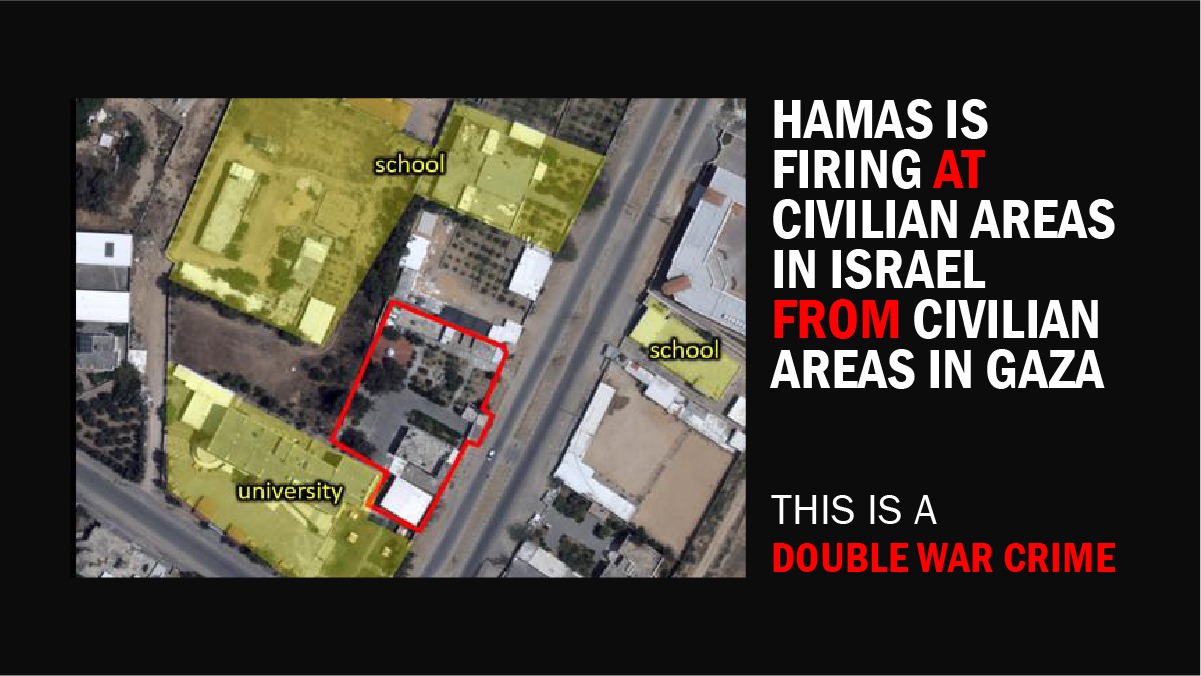
Guardian of the Walls
The recent 11 day conflict between Israel and Hamas was named "Operation Guardian of the Walls" by Israel. Hamas has named it the "Sword of Jerusalem." Hamas, a terrorist organization was waiting for the right opportunity to ignite the region and enter a violent confrontation with Israel. Its leaders were interested in declaring publically, that they have control over all affairs regarding Jerusalem. The matter of the evacuation of families from the Sheikh Jarrah neighborhood in East Jerusalem (in accordance with the ruling of the Israeli court), along with the perceived weakness of the President of the Palestinian Authority, Mahmoud Abbas, provided Hamas with the appropriate pretext. Thus, on May 10, on the day Israel celebrates the unification of Jerusalem, Hamas initiated a missile attack on Jerusalem. For Israel, this attack turned into an opportunity to critically undermine the terrorist threat posed by Hamas and militant groups operating in Gaza.
Israel made it clear that it will not tolerate being fired upon. And to have rockets launched at its capital, Jerusalem, was unacceptable!
The political echelon in Israel set three goals for Operation Guardian of the Walls:
- - Increasing Israeli military deterrence capabilities
- - Destruction of terrorist infrastructure, elimination of the rocket manufacturing and launching capacities of Hamas
- - Separating Hamas from any affairs related to Jerusalem
A review of the results of Operation Guardian of the Walls reveals a partial success. Israeli military deterrence capabilities have been restored through the almost total destruction of rocket production capacity in the Gaza Strip and critical damage to the "Gaza Metro," Hamas' tunnel network. Hamas was the first to ask for a ceasefire. As for the third goal that Israel set, the severance of Hamas' connection to Jerusalem, it seems that unfortunately, Israel has failed here. Hamas, succeeded in framing the national and political narrative in which it operated, linking the fate of the Gaza Strip to that of East Jerusalem and the West Bank. Hamas made it clear to Israel and the entire world that it has no problem sacrificing Gaza, and its two million citizens, to gain Jerusalem. This was confirmed in a speech given by Ismail Haniyeh, the head of the Hamas political bureau, from his seat in Qatar, in which he states that Hamas is fighting not for the Gaza Strip, but for Jerusalem.
Hamas' most notable achievement was without a doubt, the ability to create additional battle fronts for Israel. From the northern border with Lebanon and by igniting internal conflicts in Israel's cities, leading to unprecedented attacks by Israeli Arabs on Jews which in turn led Israeli nationalists to reciprocate. This phenomenon carried beyond the borders of Israel when Palestinians and Muslims brutally attacked Jews in New York and Los Angeles, London and France. However, Hamas's attempts to light up the West Bank were fortunately, not successful.
The main lesson that Israel must learn from this last round of conflict lies precisely in the goal that Israel did not set for itself. Israel did not define the issue of hasbara (Israeli diplomacy) as a clear goal and perhaps as a result it failed miserably. It honestly must be said; Israel has not been able to withstand the flood of anti-Israel, pro-Palestinian messaging spread on social media. Israel failed to reveal Hamas's true face and its desire to deliberately harm uninvolved civilians on both sides of the conflict. Israel has also failed to show the world how the IDF operates in an impressively surgical way, using advanced technological means to avoid harming civilians. Non-functioning hasbara damaged Israel, this is exhibited by the lack of political support given to it by European countries. The pressure that rose from social media, exploded onto the streets and then returned to social media, accelerated the political timeframe that Israel had to achieve its goals. Israel's strengths and supremacy in every military parameter had a negative effect on its hasbara efforts.
In order to change the balance of power in the field of hasbara, Israel must establish, as soon as possible, a single body entrusted with the task of creating a coherent and uniform narrative.
For Israel’s Prime Minister, Benjamin Netanyahu and his government, Operation Guardian of the Walls was also an opportunity to strengthen ties with the new Biden administration. Biden, who was under pressure from European countries and the UN to compel Israel to end the operation after five days of fighting, conducted eight phone calls with Netanyahu. Netanyahu certainly understood the message and decided to end this round, making the appropriate political gesture to Biden. Israel needs the United States by its side on other fronts. The Iranian threat is perhaps the most prominent of them.
The entrance into an agreement of ceasefire at 2:00am Friday morning was only made possible by Biden's demand to Egyptian President Al Sisi that he guarantees that the violent factions in Gaza stop the rocket fire. The strategic alliance between Israel and the United States is certainly one of the most important in Israel's foreign relations. The United States by stopping three attempts of the UN Security Council to condemn Israel, has once again proven that despite disagreements on certain issues, it stands by Israel.
Operation Guardian of the Walls in numbers:
- - 11 days of fighting
- - 12 Israelis killed
- - 4,000 + rockets fired at Israel, 90% of them intercepted by the IDF
- - 5 senior Hamas and Islamic Jihad commanders killed
- - 680 rockets launched by Hamas misfired hitting Gazan civilians
- - 200 + Gazan civilians killed
- - 20 terrorist operatives killed by Hamas fire
- - 100 + kilometers of terrorism tunnels demolished
- - 100 + terrorist operatives eliminated
- - Over two million Gazan civilians held hostage by the terrorist organization Hamas
- - One Iron Dome system
By Adv. Uri Morad

Enough is Enough: Say NO to Funding Terrorism
By Yesica Goblirsch
Funding Terror
August 23rd, 2017 should have been an enjoyable day for Rina Shnerb, when she and her family decided to hike at a spring near Dolev in Israel. Horrifically, during their hike, a bomb detonated, killing seventeen-year-old Rina and injuring her father and brother. This tragic incident should have never occurred.
It was a terror cell of the Popular Front for the Liberation of Palestine (PFLP), a terrorist organization, designated as such by the EU, the US, Canada, and Israel, that planned the attack and detonated the bomb that murdered Rina Shnerb and injured her father and brother. In fact, it was Samer Arbid, an accountant for the Union of Agricultural Work Committees (UAWC) who commanded the PFLP terror cell that planned and detonated the bomb that slew Rina. Why does this matter? The UAWC, that holds strong ties to BDS (Boycott, Divest and Sanctions) and is affiliated with the PFLP, was directly financed by the Netherlands. This is only one example of the improper use of European-funded Palestinian organizations.
The Netherlands is not the sole culprit in funding terror activities. The European Union, Belgium, Germany, France and the United Kingdom all have directly or indirectly funded terror-linked organizations. Like the UAWC, the Al-Haq, Addameer and many other organizations, enjoy stable, multi-year funding from Europe while holding strong ties to the PFLP.
You might wonder, how organizations like the UAWC manage to continue to receive funding from the European Union and aforementioned member states. They “whitewash” themselves, deflecting attention to emphasize human rights rather than illicit activities. These funds in fact are supporting illegal and nefarious activities. This reality demands that accountability measures and protocols to stop terror financing be strengthened and improved in order to prevent future tragedies. Terrorism must be condemned in all circumstances.
Accountability
The European Union and its member states, who directly or indirectly fund terror and/or BDS activities, need to be held accountable. Where there is a lack of accountability, integrity and transparency, there is greater room for error and for the abuse and misuse of funds. Not just any funds, but taxpayer funds. It is not fair to taxpayers to have their tax dollars inadvertently or directly inflict or cause violence. They have the right to know how their tax dollars are spent and must hold their respective governments accountable. Any citizen with a genuine heart and love for their country would denounce terror funding in any form.
In light of tragedies like these, the EU needs to hold organizations accountable to reveal sub-granting parties and partners. To disclose how funds received are spent, and to renounce ties to terrorism. Organizations that refuse to comply with these requirements should have their funding frozen until the EU and its member states respond accordingly. These proposed requirements are not unreasonable but are imperative.
Rina Shnerb’s premature demise could have been prevented. Tragedies like Rina’s will be repeated if these organizations continue to receive funding without stipulations. Thus, it is essential that we resolve to do whatever it takes to make sure it does not happen again. The European Union has the tools to better ensure that NGOs do not receive funds due to “whitewashing” themselves. The EU countries need to make an effort to inform themselves how their donations are being used. One way to encourage this, is for European taxpayers to hold their governments accountable. They must demand disclosures, transparency and that their leaders actively shun the funding of terrorism and violence.
Terror financing is unacceptable and there is no excuse for not holding organizations with ties to terrorism accountable. We need to learn from tragic experiences and bring about positive change. Terrorism in its entirety is wrong. Enough is enough, it is time to draw a line and say no to funding terrorism.
If You Can't Win the Game, Change the Rules
"There will be no advance and separate peace with the Arab world without the Palestinian process and Palestinian peace" – Former US Secretary of State John Kerry, (04/12/16)[1]
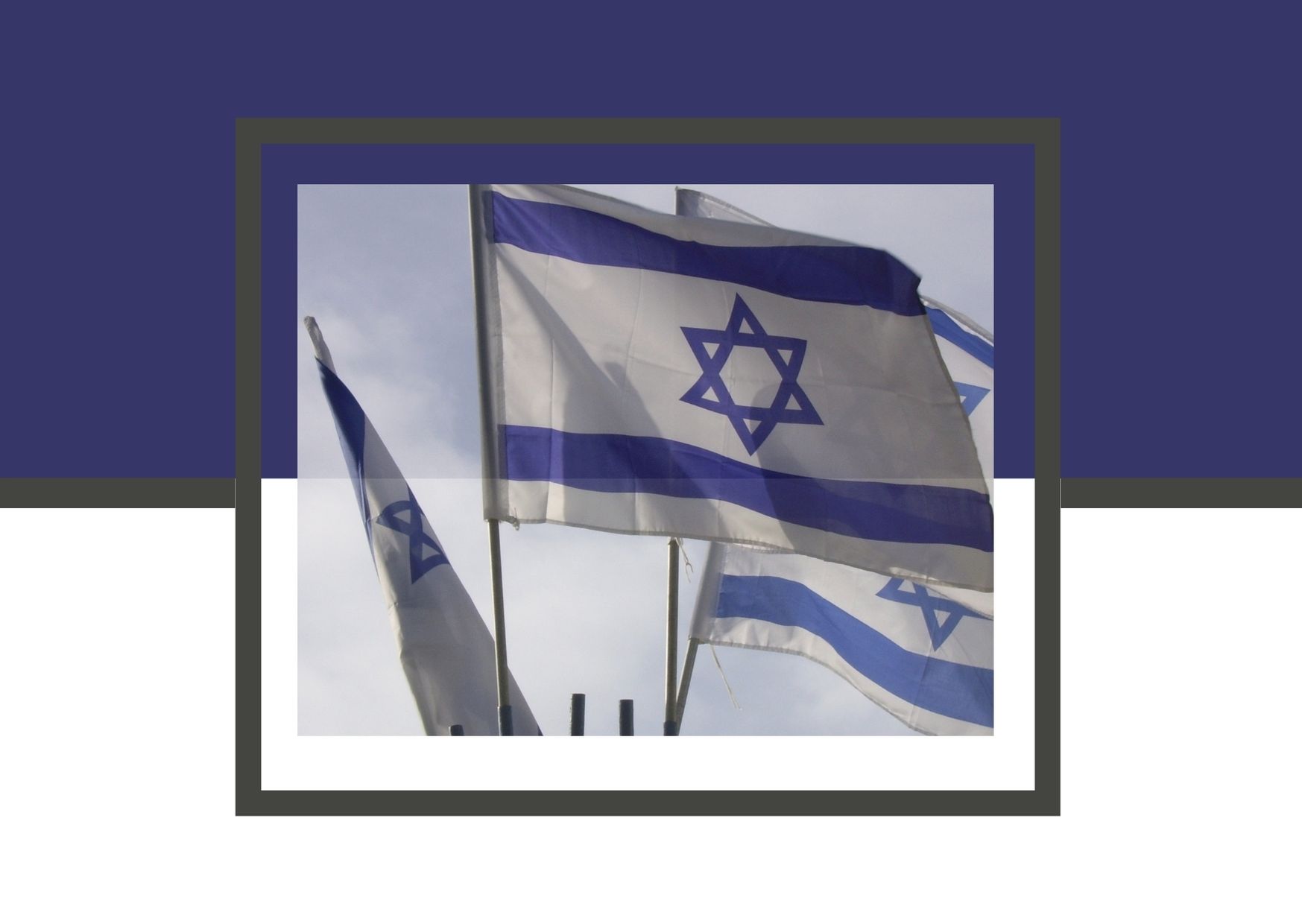
In the following piece we will explain how the validity of the above outdated perception has diminished. There has been an on-going shift in Israel's long-established paradigm concerning peacemaking in the Israeli-Palestinian conflict. A major milestone in this shift was the signing of the Abrahamic Accords in September, 2020 and the following peace agreements with the United Arab Emirates and Bahrain.
In the past decade or so, Israel has been actively changing the pre-existing concept that claimed that for the country to have diplomatic relations with the Arab world, it must first reach peace with the Palestinians. The new paradigm demonstrates that Israel does not have to establish a lasting agreement with the Palestinians to broker relations with the rest of the Arab world. Even more so, Israel is in a position of strength when approaching the negotiation table with the Palestinians, while being backed by the moderate Arab states.
Since the founding of the modern State of Israel, the Arab world had refused to grant it any form of recognition. The first Arab state to break away from this consensus was Egypt which signed a peace treaty with Israel in March, 1979. The only other Arab country to follow Egypt's example, until recent years, was Jordan in October, 1994. Yet, there have been a number of Arab states that have formed some level of diplomatic relations with Israel without signing a peace treaty: Morocco between 1994 and 2000,[2] Tunisia between 1996 and 2000,[3] and Oman between 1996 and 2000 as well.[4] These diplomatic ties were severed upon the eruption of the Second Intifada.
The Second Intifada (Palestinian armed uprising) started as an outcome of the failure of the 2000 Camp David Summit, during which the Israeli representatives went to great lengths to accommodate Palestinian demands. There have been additional efforts at brokering peace with the Palestinians since then, e.g. former Israeli Prime Minister Olmert's peace plan presented in 2008, but each one has been met with increasing opposition.
The great leap towards peace from the Gulf Cooperation Council (GCC) has been led by the UAE and Bahrain who both signed peace treaties with Israel on the 15th of September, 2020 together with the Abrahamic Accords.[5] The undisclosed relations between the UAE and Israel during the past 20 years were led by the Israeli Ministry of Foreign Affairs which helped broker economic agreements between Israeli and Emirati companies.[6] At the same time, the countries had secret security relations in an effort to contain Iran's aggression in the region. Israel and the UAE share two main enemies: on the one hand, Iran and its axis of resistance in the region, and on the other, the Muslim Brotherhood and Sunni extremism. Strategically, the UAE have been anxious since the alleged Iranian attack in Saudi Arabia in September, 2019 and threats released by Iranian-backed Houthi rebels in Yemen to launch missiles on the UAE.[7]
It is interesting to look at the polarized Palestinian and Arab League's reactions to the different peace agreements. The Palestinian Authority announced on the 18th of August, 2020, following the joint Israeli-UAE announcement on normalizing relations, that they consider it a "stab in the back" and they totally reject it. Shortly afterward, the Palestinians recalled their ambassadors to the UAE and Bahrain.[8] The Arab League in turn refused to accept the addition of a statement condemning the peace agreements, as requested by the Palestinians, at the Arab League Summit on the 9th of September, 2020.[9] Palestinian leaders have realized that the Arab world is rather accepting of the idea of normalizing relations with Israel. This realization led the Palestinian government sending their ambassadors back to the UAE and Bahrain on the 18th of November, 2020.[10] We are seeing the beginning of the ripple effect of the new diplomatic strategy.
Following the Abrahamic Accords, Israel and Sudan announced normalization of relations between them on the 23rd of October, 2020. This was another major milestone because in contrast to the UAE and Bahrain who were never in real conflict with Israel, Sudan actually took part in fighting against Israel in the 1948 War of Independence and the Six-Day war in 1967.[11] The peace with Sudan is also very symbolic because it was at the Arab League Summit in Khartoum, shortly after the Six-Day War, that the Arab States agreed on the famous three No's: No to recognizing Israel, No to negotiating with Israel and No to peace with Israel.
The latest development in the region is the US-brokered peace agreement between Israel and Morocco which was made possible after the US announced that it "recognizes Moroccan sovereignty over the entire Western Sahara territory."[12] These renewed relations are another attempt at gathering regional support for the US-Israel backed opposition to the Iranian regime. Also, the new Israeli-Moroccan alliance was only made possible thanks to the Arab Gulf states’ embrace of Israel. The Palestinian government for the first time, changed their approach and did not release a statement of condemnation as they had done in previous cases.
"No Arab state, no moderate Sunni state, no one will have open relations with Israel…as long as the Palestinian problem isn't solved." – Former PM of Israel Ehud Olmert, (22/01/20)[13]
Olmert, who has led peace talks with the Palestinians as mentioned earlier, could not have been more wrong in this statement. Four Arab states have formalized open relations with Israel, and we expect this trend to continue.
We hope these peace treaties will bring about real peace, economic prosperity and friendship between the citizens of Israel and the people of the moderate Arab states.
-------------------------------------------------------------------------------------------------------------------------------
[1] https://2009-2017.state.gov/secretary/remarks/2016/12/264824.htm
[2] https://mitvim.org.il/en/publication/israel-the-second-largest-moroccan-diaspora-in-the-world/
[3] https://www.regthink.org/articles/normalization-between-israel-and-tunisia
[4] https://www.jpost.com/Opinion/Israels-renewed-affair-with-Oman-57141
[5] https://www.inss.org.il/publication/abraham-accord-behind-the-scenes/
[6] https://www.haaretz.co.il/news/politics/.premium-1.9083879
[7] https://www.ynet.co.il/article/ryObszQMw#autoplay
[8] https://www.ynet.co.il/news/article/SJqcIkmqv
[9] https://www.haaretz.co.il/news/politics/1.9142202
[10] https://www.ynet.co.il/news/article/SJqcIkmqv
[11] https://www.atlanticcouncil.org/blogs/new-atlanticist/experts-react-sudan-and-israel-reach-historic-peace-agreement/
[12] https://edition.cnn.com/2020/12/10/politics/trump-israel-morocco/index.html
[13] https://www.inn.co.il/news/447227

KIDS NOT SOLDIERS
Battlefield experiences have a tendency to remain with us throughout our life. Nearly 20 years have passed and I still recall like it happened yesterday, the face of that small helpless Palestinian girl the combatant, her uncle, gripped in one hand. In his other hand, he was holding an automatic rifle, shooting at me and my unit. I do not know her name or what happened to her. What I do know is that she was a victim. A victim of tragic life circumstances. He was the relative of a wanted terrorist from Gaza. When my unit and I arrived to arrest his cousin, he left the house clutching the girl and firing at us. He knew that she was his only chance to escape.
This experience will surely stick with me, but it also tells a broader story and highlights a worrying phenomenon.
The Palestinian systematic and widespread use of children, as young as ten, to take an active part in hostilities against Israel has become an alarming reality. Innocent Palestinian children serve as human shields and fulfill a wide range of military duties. From supporting the home front to active participation in hostilities. Their involvement is dependent upon the current need and upon their maturity and set of skills.
The roots of this phenomenon of exploiting young children in combat are based on institutional and widespread indoctrination. A well-structured brainwashing system for toddlers, as young as three, prepares the ground for an effective and well-oiled mechanism of targeting, recruiting and training children. This mechanism is maintained by a scheme of financial incentives for the children and their families.
Behind this cynical exploitation of the weakest in society, stand prominent Palestinian leaders, who see human rights as irrelevant. They are the planners and the executers of this despicable strategy.
Creating an entire generation of children educated on the values of hatred and martyrdom will perpetuate the Israeli-Palestinian conflict. Long-standing incitement and assuring world fame for those who murder Israelis, will bring more and more children to choose a violent path and lower the motivation (which is not high anyway) to promote a peaceful solution to the Israeli-Palestinian conflict. This perverse education system is also shaping the future generations of Palestinian leadership.
A simple profit-loss analysis reveals that the only ones who profit from the use of children for militia purposes, is the Palestinian leadership, whether by increasing their fighting forces or for the purpose of creating false propaganda in the case of the unfortunate death of children.
Theoretically, the tools to fight the growing use of children for militia purposes, are available. Among them we find, progressive legal codifications and designated tribunals to prosecute those responsible. Along with intergovernmental organizations, civil society organizations and designated international conventions to address this issue. And yet, as long as the political motivation of those involved continues to blur the boundaries between good and evil, ignores the facts on the ground and refuses to acknowledge the existence of this phenomena propagated by Palestinian leadership, a prolonged struggle lies ahead.
As of today, unfortunate and surprising as it may sound, the United Nations International Children’s Emergency Fund (UNICEF) refuses to recognize the use of children by the Palestinian leadership as weapons of war. UNICEF simply shows no real commitment to put aside political interests and protect the real victims.
The international community must be the voice for Palestinian children. It must sharply and clearly condemn any use of children for combat purposes. UNICEF, for its part, must acknowledge and condemn the Palestinian leadership.
No one promised us that this struggle would be short or easy, but we see some positive signs coming from the direction of the International Criminal Court in The Hague (ICC). The fact that along with the ICC’s political and controversial determination to investigate Israelis, the ICC also expressed its intensions to investigate Hamas for criminal acts against the Palestinian civilian population; such as murder and torture, as well as using them as human shields, is a step in the right direction. I’m proud to say that the efforts of the Jerusalem Institute of Justice, succeeded to convince the ICC to accept the legal and evidentiary infrastructure we presented to it, calling for the investigation into Hamas’ war crimes and holding Palestinian leaders responsible.
This week, as we are observing Palestinian Child Soldiers week, we take the opportunity to raise awareness, stand in solidarity with Palestinian children and join the call on UNICEF to demand Hamas, Palestinian Islamic Jihad, PFLP and the PLO to operate in accordance with the 2007 Paris Principles and end the systemic indoctrination and use of Palestinian children in military efforts of any type.
Adv. Uri Morad
Dir. International Law & Public Diploma
Jerusalem Institute of Justice
The Transparent Jew
In 2018, just a few days after my arrival to Europe from Israel, I sat in my teenage bedroom and recalled the countless incidents overseas in which I had lied about my nationality. I started laughing at myself, mildly concerned by how I easily conformed to a different culture, and even more surprised by how quickly my chameleon identity was accepted. I thought to myself, it’s better to laugh than to cry. For the first time, I was able to acknowledge that I had been raised to hide my heritage when I was outside my safe space. Doing so, I decided to no longer conceal my Jewish-Israeli identity.
In my new country, I had hoped to perfect my response to the simple question “where are you from?”. My ideal reply would be short and succinct, one I could pull off and use to secure a harassment-free encounter - nevertheless, it was impossible, and every attempt was to be located somewhere between awkward to disingenuous.
King Solomon was right when he declared, “There is nothing new under the sun”. Unfortunate as it may be, the Jewish necessity to cover its ethno-religious identity dates back in time to the Roman exile - when Jews suffered huge losses and humiliation as their ancestral homeland was colonized, erasing the Jewish identity of the land. Consciously or unconsciously, the destruction of the Jewish temple and the renaming of the land had severe repercussions on the Jewish identity, remaining until today.
Since then, two thousand years of Jewish people “pray[s] to be back in Zion, for the messiah to come and rebuild the temple.”- The eagerness to return to the homeland they came from has never diminished. This is the essence of Zionism, the liberation and restoration of the Jewish identity, that was severely colonized and morphed by countless foreign entities throughout history.
Does this Zionism, (which would later become a political movement) represent the solution our ancestors yearned for - an independent Jewish nation that is capable of both rediscovering its identity while eliminating the inherent hatred within those that had colonized it? In a utopian world - indeed, but not within the society I witnessed.
The creation of Israel is the most successful indigenous liberation in history; it is the hammer that broke the famous, self-tailored, “comfortable” Jewish character - weak and quiet Jews that are easily trampled and find themselves at the mercy of the majority. The founding of the State of Israel generated strong and empowered Jews that pursued their indigenous right to self-determination in their ancestral homeland.
Paradoxically, the United Nations is the organization which defines indigenous rights, along with the unofficial-leadership of the P5 - which are collectively known for enjoying a colonial history. The UN consistently fails to preserve Jewish rights as they don’t address the contemporary rise of Antisemitism on both sides of the political map. Nor has it brought justice to the hundreds of thousands of Mizrahi Jews, whose assets were confiscated by Arab governments while they were persecuted and forced to exile(1). It routinely
promotes state-based resolutions against Israel (18 in 2019) while ignoring the actions of China, Hamas, Venezuela, Qatar, Pakistan, and others(2). It continues popularizing anti-Israel propaganda, mainly without any concrete data - just like its false accusations against Israel for promoting gender-based violence in the Palestinian territories.
This flourishing prejudice fostered by the UN and many of its members, comes into practice in different expressions. These range from anti-Semitic attacks, to harassment on the street and to various forms of discrimination. But all roads lead to Rome, or as I stated previously, to the Jewish identity crisis in the diaspora. As part of my personal decolonization process I had to get rid of my habit of lying about my nationality. So, I faced three words that unfold western prejudice: “I am Israeli”. Very quickly I realized that not only are Jews a target, but so are Israelis. This raises the question: in their eyes, what does it even mean to be Israeli?
In Europe, I‘ve been spat on, barked at, questioned, boycotted, and discriminated against - only for exposing one, if not the most essential component of my identity: my nationality. In fact, most people decided for themselves that I am a Jew, a Zionist, a baby-killer, an ex-military officer, and a murderer based on my passport. I wish this was an over-exaggeration. During my time in Europe, almost every reference to the Holocaust or to Judaism was hijacked by political debates and comparisons, mostly based on media-information and history revisionists – even in the academic sphere.
Many Europeans are swept by the anti-Zionist narratives, and I can easily sort them into two groups (which have a tendency to overlap): those that stand against Israel’s actions, and those who deny it’s right to exist. Therefore, not everything about anti-Zionism is anti-Semitic. Israel is not a perfect country and its Jewish characteristic doesn’t grant it immunity from criticism. However, why are Israel’s current political actions equated with the ancient Zionist movement? We can clearly see that many of the modern anti-Zionist narratives are based on anti-Semitic assumptions and prejudices. The border between legitimate political criticism and anti-Semitism is very thin. But claims that consciously erase, or at least ignore, the origins of Judaism and the indigenous status of the Judeans in the land of Israel are inherently anti-Semitic. We can conclude that every type of delegitimization of Israel’s right to exist is anti-Semitic, regardless of how it manifests, and it is the basic premise of this article.
Anti-Zionism creates the dichotomy between “the good Jews” – the minority that doesn’t believe in Israel’s right to exist (e.g “Neturei Karta”) and “the bad Jews” – which are the 95% of Jews that do believe in Israel’s right to exist(3). Europeans (and quite frankly, far too many people in general) are taught that Zionism is “evil and racist”, without being informed that Jews are Zionists because of the violent racism they have survived. I have no desire or intention to be the “good Jew” these anti-Semites like to tokenize for their own agenda. It is no wonder that the majority of anti-Zionists I have met were from the left side of the political map. They identify themselves with the progressive social values of the left: supporting gender equality and other liberal values that the “good Jews” publicly stand against. This is not a coincidence, it is a known counterfeit tactic used by the left to legitimize anti-Semitism in the name of anti-Zionism.
It is important to highlight that Israel is not a perfect state, nor does it claim to be one - but its roots date back more than 3700 years of Judean civilization and so, it is time that the world abandon the myth of Jews with trembling knees. “We paid for it. We fought for it. We died for it. We will stand by our principles. We will defend them. And, when necessary, we will die for them again” (Prime Minister Menachem Begin Z”L, 1982)
My journey in Europe, which has yet to end, has brought me to the conclusion that I am a transparent Jew. Solely based on my Israeli nationality, everyone thinks they know everything about me, from the grocer to my professors. I have no other identity behind which to hide. I promised myself and my Jewish ancestors that I will not adopt a false identity just to fit the European world. And now, I pay the price. This decision to proudly stand as an Israeli woman has already affected my friendships. I’ve faced academic discrimination and I’ve experienced tremendous fear about publicly displaying any Jewish symbols, whether it be speaking Hebrew in the metro or wearing my Star of David necklace.
It was George Steiner in his book “In Bluebeard’s Castle” who argued that the image of Western culture as self-evidently superior and as the embodiment of almost the sum total of intellectual and moral power is a racially tinged absurdity(4). Maybe, just maybe, western powers should redirect their attention in discussions about the Middle East and Judean indigenous history. Instead of assuming to know all of the complexities and conflicts of the region, my European neighbors should not embrace their deeply inherited superior essence nor should they forget their thriving colonial history, in which they exploited indigenous people.
I am sitting in my teenage bedroom again, recalling my personal decolonization odyssey and the identity liberation we as a community embark upon, and I don’t regret any passage of it.
By Shai Emanuel Yamin
------------------------------------------
1 "One Year Later — The Answer To "Where Are Your Jews?" - UN Watch". UN Watch, 2018,
https://unwatch.org/one-year-later-answer-jews/.
2 "2019-2020 UN General Assembly Resolutions Singling Out Israel – Texts, Votes, Analysis - UN
Watch". UN Watch, 2019, https://unwatch.org/2019-un-general-assembly-resolutions-singling-outisrael-
texts-votes-analysis/.
3 Weiss, Barri. "American Liberalism In Danger". Tablet Magazine, 2020, https://www.tabletmag.com/sections/news/articles/stop-being-shocked
4 Steiner, George. In Bluebeard's Castle. YALE UNIVERSITY PRESS: NEW HAVEN , 1971

The Tide Rises the Tide Falls
Two occurrences in the sphere of international relations between Israel and the EU caused confusion and consternation to many who follow this field.
On the one hand, on Tuesday morning, December 3rd, The European Union Court of Justice ruled that products made in Israel must be labelled as such and may not be marketed as products made in Israel. “Foodstuffs originating in the territories occupied by the State of Israel must bear the indication of their territory of origin, accompanied, where those foodstuffs come from an Israeli settlement within that territory, by the indication of that provenance”, the court (the EU’s highest legal authority) announced in a press release[1].
The decision was widely condemned by Israel and pro-Israel figures and advocacy groups, with Israel’s Foreign Ministry rejecting the ruling, Israel’s Foreign Ministry rejected the ruling, saying it set a “double standard” that unfairly singles out Israel when there are dozens of territorial disputes worldwide. “The European Court of Justice’s ruling is unacceptable both morally and in principle,” said Foreign Minister Israel Katz. “I intend to work with European foreign ministers to prevent the implementation of this gravely flawed policy.” The pro-settler Yesha Council also denounced the court ruling, as did Eugene Kontorovich, a professor of international law and the director of International Law at the Jerusalem-based Kohelet Policy Forum, and Gerald Steinberg, a political science professor and the head of NGO Monitor, a Jerusalem-based watchdog group critical of pro-Palestinian nonprofits.
Meanwhile, the Palestinian Authority and pro-Palestine groups welcomed the ruling, with Saeb Erekat releasing an official statement[2] welcoming the ruling. Hanan Ashrawi, a senior Palestinian official, welcomed the ruling as a “first step” and encouraged Europe to ban settlement products altogether. “If they do not allow these illegal products to enter European soil, then that would really serve the cause of justice,” she said. Human Rights Watch and Oxfam released similar sentiments.
Experts and diplomats started wondering on the possible effect this might have on EU-Palestinian Authority relations, and EU-Israel relations, with some seeing this as pushback against The United States’ recent declaration that Israeli settlements on the West Bank are “not inconsistent with” international law.
But mere hours later, a different tune was heard, as over a dozen countries abruptly changed their voting pattern at the United Nations in Israel’s favor, opposing an annual resolution that has passed every year since 1977 mandating a special “Division for Palestinian Rights” inside the UN Secretariat traditionally critical of the Jewish state. Of the 13 countries that changed their voting habits, 11 were from the EU – specifically Germany, the Czech Republic, Austria, Bulgaria, Denmark, Estonia, Greece, Lithuania, the Netherlands, Romania and Slovakia. 2 more EU countries (Malta and Cyprus) voted for the resolution, with 14 (among them France, the UK, Spain and Italy) continuing to abstain, as per the status quo until now.
Suddenly, Israel’s Foreign Ministry was congratulating its EU allies and itself, Foreign Minister Israel Katz stating that: “I am pleased that a significant group of countries has decided today to make heard a clear moral stance against discrimination toward Israel at the UN. This is an important step in the long struggle against the bias toward Israel at the UN. What particularly stands out is the change in the position of several European Union states, and I hope that the remaining EU members will adopt this position soon.” Yinam Cohen, the director of the UN Political Affairs Department at the Foreign Ministry, said that the voting “marks a significant first step in the long way to change the bias against Israel in the UN.”
So what is going on here? How is it that in the morning, the EU was anti-Israel and pro-Palestine, and by evening, it was pro-Israel and anti-Palestine?
The key is differentiating between the formal legal proceedings invoked by the EU Court of Justice and the diplomatic efforts of the EU attaches. If one reads the Court’s decision, it seems to be a fair legal decision based on honest interpretation of existing rules and resolutions. It’s a legal Decision based on legal standards, not necessarily affected by recent politics (specifically, it seems to depend on a notice from 2015). As such, even if all the judges were pro-Israel, they could not have come to a different legal decision. What matters, however, is how the ruling will be enforced. The real origin of the produce is not always easy to identify, experts say, and the European Commission said it is up to individual EU countries to ensure that labels are correct and that the origin of settlement produce made known in a way that is “not misleading to the consumer.” Furthermore, EU Commission Spokeswoman Mina Andreeva explicitly stated that Israel has a special trading relationship with the EU, with products originating in its internationally recognized borders benefiting from preferential tariff treatment. “This situation will remain unchanged,” she said. “The EU does not support any form of boycott or sanctions against Israel.”
In contrast, countries in the EU recognizing the implicit bias of the UN against Israel and changing their voting habits in consequence of this is diplomatically significant. Indeed, it may indicate a sea change in terms of Israel’s foreign policy. Germany’s decision in May to fight the anti-Israel bias at the UN, announced by Heiko Maas, and The Czech’s Republic working hard inside the EU forums to generate change regarding voting patterns on Israel at the UN were cited as developments leading to the change by Yinam Cohen. Furthermore, the effect of the recent decisions by the United States, both regarding West Bank Settlements and the Golan Heights cannot be discounted. It may be that the tide is beginning to turn in favor of Israel in international relations.
[1] https://curia.europa.eu/jcms/upload/docs/application/pdf/2019-11/cp190140en.pdf
[2] https://www.nad.ps/en/media-room/press-releases/dr-saeb-erekat-ruling-european-court-justice-labeling-israeli-settlement