

Building Bridges Project
An important dimension of the Jerusalem Institute of Justice's work is to promote unbiased understanding and disseminate accurate information to different sectors of Israeli society. The Jerusalem Institute of Justice welcomes the opportunity to speak to tour groups from a variety of backgrounds, organizations, faiths, student groups, etc. By speaking to and providing information to thousands of people each year, we hope to stimulate constructive conversation about the political realities Israel faces internally and internationally.
Want to host a JIJ lecture? Contact us today at [email protected]


A Reaction to the UN’s Lack of Reaction
Last week, the 75th session of the United Nations was officially opened, but it was a little different this time around. This year, endless convoys of leaders from all over the world did not fill the streets of New York. Instead, they delivered their remarks through recorded statements.
A few hours later and approximately 250 miles away, on the White House lawn, an important message of peace was being conveyed to the world. The State of Israel signed an historic peace agreement with the United Arab Emirates and Bahrain. This was only the beginning of something great; several other Muslim and Arab countries have already announced their intentions to join the initiative and normalize their relations with Israel.
In my naivety I thought the UN, the largest international human rights platform in the world, whose stated goal is the promotion of human rights and the achievement of world peace, would take advantage of the opportunity to praise this important step toward peace in the Middle East during their opening session. For some reason, they didn’t find the time for it. Forget praising this momentous occasion, what about simply recognizing it? I guess they didn’t have time for that either. However, there was plenty of time for the United Nation’s High Commissioner for Human Rights, Michelle Bachelet to attack and solely blame Israel for the situation in Gaza.
Once again, the UN’s true colors are exposed. And again, the UN proves that it doesn’t value nor demonstrate the tenets it sets forth and expects its member states to uphold. The peace agreement with the UAE and Bahrain was made despite the UN, rather than thanks to it.
We can only hope that through changing the Israeli-Palestinian relations paradigm and opening up channels of dialogue with Muslim and Arab nations, Israel will be able to overcome the automatic majority and the decades-long, antagonistic voting bloc in the UN.
Adv. Uri Morad
International Law & Public Diplomacy
Jerusalem Institute of Justice

The Cat is Out of the Bag
The Gaza Voice, a recorded podcast released on May 21st 2020 contains Boycott Divestment Sanctions (BDS) co-founder Omar Barghouti saying, “If the refugees return to their homes [in Israel] as the BDS movement calls for, if we bring an end to Israel’s apartheid regime and if we end the occupation on lands occupied in 1967, including Jerusalem, what will be left of the Zionist regime? That’s the question. Meaning, what will the two states be based on?”[1]
The organization claims to advocate for Israeli political reform and the improvement of Palestinian human rights, not the elimination of the State of Israel. But Barghouti hints here at exactly that. He reveals what could be the underlying intentions of BDS’s three official goals. [2]
We interpret Barghouti’s statement as the following: if BDS successfully achieves the goals it built its platform on, Israel will no longer exist. To answer Barghouti’s rhetorical question, not much will be left of the “Zionist regime”. Answering the three objectives essentially erases what Israel has built over the past 72 years, which includes its normalized relations with the neighboring Arab countries. This contradicts Barghouti’s reference to “two states”, as in having a two state solution. Barghouti understands this, as he reveals in this segment of the twenty-minute podcast.
It should be noted this rhetoric isn’t a shocking revelation. Barghouti has previously stated that Jews cannot have their own state in Palestine. [3] However, what is important about this recent quote is that it reminds the listener of the movement to disrespect the right to self-determination and ultimately delegitimize the state of Israel. The argument that BDS is less impactful toward Israel than it claims to be is irrelevant here; [4] the focus is on the fact that Barghouti continues to preach an unrealistic and undesirable approach when facing a country that has already solidified, built itself up, and is now thriving.
Why unrealistic and undesirable? The organization, with Barghouti as one of its international representatives, goes further than confronting politics and human rights. It questions the existence of a legitimate state and hints at its eventual downfall. It’s dangerous territory to cross into, and it’s something that individual supporters and affiliated groups (NGOs and others) of BDS should understand.
Barghouti continues by saying, “There won’t be any Zionist State like the one we are talking about (present day Israel)… and the Palestinian minority will become a Palestinian majority in the state that today is called Israel.”
Well, what would it mean if Israel did not exist? What would we lose? To name a few basic things: the lack of a Jewish home which was deemed necessary by the United Nations after an extensive history of persecution and incontestable anti-Semitism that is prevalent until this day. It would mean losing the “Start-Up Nation”; the loss of a greenhouse constantly bearing the fruit of an incredible number of innovations and developments that benefit the whole world. It would mean the loss of a home not only for Jews, but for Christians, Druze, and other Arab populations as well.
Thank you Barghouti for revealing that BDS’s end goal is to eliminate Israel.
[1] https://soundcloud.com/user-742784347/bds
[2] https://bdsmovement.net/call
[3] https://www.nytimes.com/2019/07/27/world/middleeast/bds-israel-boycott-antisemitic.html
[4] https://www.brookings.edu/blog/order-from-chaos/2018/01/26/how-much-does-bds-threaten-israels-economy/

Prostitution and Rehabilitation
Can we welcome the closure of the strip clubs while the women are thrown to the street?
Closing strip clubs is an important step, but as is common here, only half the job has been done!
Article by Tzipi Sa’ar translated from Hebrew 19.02.2020 12:13, Haaretz newspaper.
The closure of strip clubs in Tel Aviv is great news. We are finally recognizing that buying a woman’s body for sexual purposes is an act that disgraces women and is a phenomenon that should be eradicated from this world. At the same time, it is impossible to ignore that, as is common here, only half the work has been done. The clubs were closed, but the women working there were offered no professional retraining or alternative livelihood as options. As a result, some of the women, although supporting the closure of the clubs in which they worked, also protested these very closures.
We cannot and must not ignore their voices. This does not mean that stripping should continue, but that eliminating this practice must be accompanied by adequate steps in favor of the women who happened to get trapped into such reality.
First of all it should be clear: as long as there is legitimacy for a situation where a woman’s body, or parts of it, are currency or a commodity for a merchant, it is impossible to fundamentally change the existing culture that, in this context, may move within a range between objectification - to rape- or even to murder by a spouse. A commodity is considered property that is owned and this “ownership” by men - of women - fundamentally underlies the ills noted here. According to this twisted logic, a woman who wants to leave her spouse violates his “property rights”. This conflict sometimes, in extreme cases, ends in the murder of the wife.
As for stripping, to a large extent, it is nothing but prostitution in disguise. In a discussion in the Knesset’s Committee of the Promotion of Woman Status, a survivor of prostitution testified stating, “Stripping is like a teaser for advertising prostitution. Because whoever likes the dancer is allowed to take her to a private room and, for a fee, gets a sexual service there. You feel as if you are in a store with price tag on you. Those who are better dancers, of course, have a higher price tag.”
According to a document submitted to the committee, “For many young women, strip clubs serve as the gateway to the world of prostitution. While lap-dancing on a customer’s knees in the back rooms or at other locations within the strip club, the young women are required to satisfy their clients’ sexual needs and demands. They also must allow the customer to touch their body parts. To cope, they detach themselves from who they are, from their consciousness, and in particular from their feelings about what happens with their bodies. Strip clubs serve as a cover for brothels, where sexual acts - complete or partial - between clients and women are performed under the auspices, encouragement and support of club owners who in this manner make fortunes.”
The Jerusalem Institute of Justice (JIJ) research has shown similar findings as well. A JIJ position paper cites Judge Michal Agmon Gonen, who imposed a ban on the operation of strip clubs in the Ramat Gan Stock Exchange area, as stating that strip clubs are an integral part of the sex industry. The study further says that, while hiding behind different phrases, for all intents and purposes, strip clubs operate as brothels and the only difference between the two seems to be the social approval of the strip clubs in contrast to the disgrace that brothels carry.
The judge wrote, “Strip clubs are used to systemically hurt women and the difference from brothels is definitely artificial.” This contrived difference needs to be eliminated. One can also hope that more and more men will understand what stripping really is and reject, for example, an invitation to a “bachelor party” with a stripper. In this spirit, and with an administrative warrant, the police closed three strip clubs in Tel Aviv last month. They were following the instructions of former state attorney Shai Nitzan which include a definition of lap-dancing as a form of prostitution and therefore clubs allowing lap dancing are operating a brothel which is a criminal offense.
But what about the argument of some women who engage in stripping, and even prostitution, who say they engage in these activities voluntarily? Well, here we have compelling data regarding the personal harm to prostitutes that is impossible to ignore: the early age of entry into prostitution (14), the high rate of women in prostitution who were victims of childhood sexual abuse (about 90%), the horrendous short life expectancy of women in prostitution (40 years), and more.
Still, some would say, “Who authorized you to decide for other women what is good for them? And what about those women who do it voluntarily?” Well, we accept that among women in stripping and maybe even prostitution there are those who choose it freely, however, these examples represent a very small minority. When the harm of “freedom of occupation” is compared with the bitter and harsh fate of the vast majority of women trapped in stripping and prostitution - it is clear what decision is needed to be made.
As a comparison, there are other forms of restricted behavior. There are some individuals who would choose to sell a kidney on the black market to support their family or to cover a major debt. Society draws a red line here and says this activity is not moral and is therefore not allowed. The fact that society does not generally draw a similar red line in the context of a sex sale is simply an indication of a moral failure and an issue that requires redress.
After all the above, under no circumstances should women in prostitution or stripping be abandoned to their fate. These welcomed changes in law and enforcement must be accompanied by comprehensive and practical programs designed to help these women find alternative ways to make a living. This must not be lip service only. One cannot cheer for strip clubs being closed while watching the women being thrown to the street. The truth is that the government approved a plan for prostitution rehabilitation over a year ago, but according to a petition submitted in the end of 2019, this program is not yet implemented. We, as the people who support the eradication of this practice, should be the first to demand the immediate and comprehensive implementation of these rehabilitation strategies.
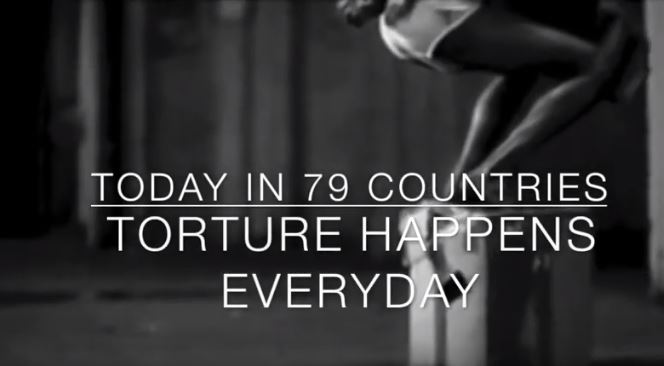
Torture of Palestinians - Revealing the Truth
https://www.youtube.com/watch?v=W_rhMEGWy-I
Torture and other inhuman treatment is a daily phenomenon in Palestinian prisons.
Be a voice for the voiceless! Share this video!
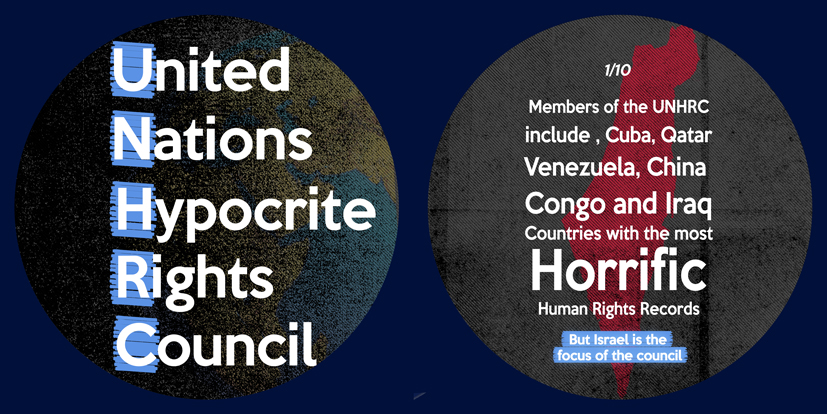
Human Rights Council - Political Bias
The UN Human Rights Council “database” of business enterprises
On 24 March 2016, at its 31st session, the Human Rights Council (HRC) adopted resolution 31/36 entitled “Israeli settlements in the Occupied Palestinian Territory, including East Jerusalem, and in the occupied Syrian Golan”.[1] Paragraph 17 (OP 17) of this resolution requests the United Nations High Commissioner for Human Rights (OHCHR) produce a database of all business enterprises engaged in certain Israeli settlement activity in the occupied Palestinian territory, or the "Blacklist".
While local and international business activity in disputed or occupied territories is widespread, and involves some of the world’s largest companies, Resolution 31/36 represents the only known UN effort to produce a “database” of such activity in respect of one situation. The fact that such business activity is so ubiquitous and rarely criticized demonstrates that it is not viewed as raising legal or human rights issues, while the desire to establish a database only with respect to business activity in Israeli settlement communities points to the political bias of the body that initiated this process.
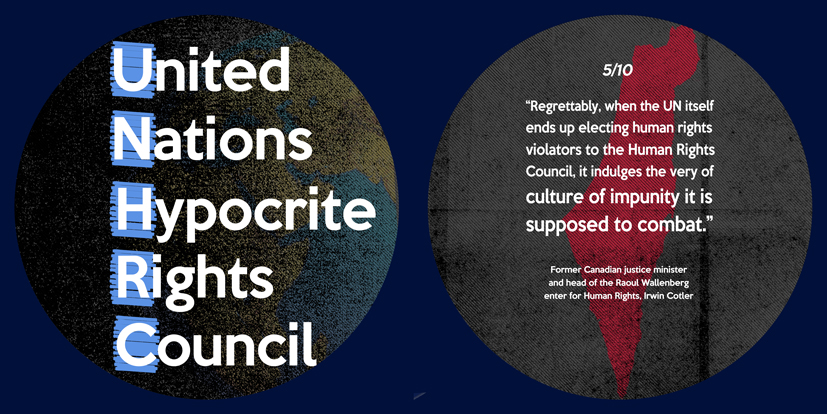
OP17 was adopted despite the strong opposition of the US, EU and Israel. It is the product of a specific discriminatory HRC agenda item, the organization's only country-specific agenda item, which reflects ongoing and well documented institutional bias against Israel in the HRC. The Council is widely criticized as a deeply politicized body, whose agenda is often dictated by the world’s worst human rights violators, and whose legitimacy and credibility in the human rights arena has been fundamentally undermined as a result.
Israel, together with the United States and numerous other leading States, have expressed, consistent opposition to the database and its publication, and have conveyed this position in their public and private communications. Israel has no intention of cooperating with this illegitimate exercise for the following reasons:
- Lack of authority to produce database: The production of a “database” exceeds the mandate of the OHCHR, which has neither the competence nor the capacity to engage in this action. The responsibility for ensuring compliance of business enterprises with relevant laws, or for promoting any relevant non-binding guidelines with respect to business practices, rests exclusively with the States in which the relevant enterprises are domiciled or operating.
- Lack of authority to communicate to companies: The HRC and OHCHR are bodies mandated to deal with State conduct in the human rights field and they have no legal or other authority over business enterprises.
- Lawfulness of business activity: Business activity in areas of Judea and Samaria (West Bank) under Israeli jurisdiction in accordance with existing Israeli-Palestinian agreements, is entirely lawful. Indeed, the notion that business enterprises are even subject to international law, international humanitarian law, and international human rights law is highly questionable and has been rejected by Courts in leading national jurisdictions.
- Blacklist: The creation of a database, and certainly its publication in any form, amounts to an effort to produce a blacklist of companies that are not engaged in any wrongdoing, and with the potential of causing commercial, reputational and legal harm. By engaging in this action, the OHCHR is allowing itself to become an instrument of those engaged in an illegitimate, discriminatory and political motivated agenda.
Furthermore, the methodology of the OHCHR is entirely devoid of transparency, and the information upon which it has based its communication has been drawn from partial, unverifiable and unknown sources, including politically-motivated actors, who responded voluntarily to the OHCHR’s calls. The OHCHR also lacks the requisite competence or capacity to verify independently the information it has received. While Resolution 31/36 requires a database of “all” business enterprises, the process adopted makes the database flawed from its inception and inevitably renders the list the partial, selective and discriminatory in nature
It is important to note that the database initiative is not legal or quasi-legal in nature, and does not, in and of itself, carry with it legal consequences. The process lacks due process and procedural safeguards to ensure that the list will not contain unauthoritative or inappropriately verified information. Furthermore, cooperation by companies with the database initiative may entail potential legal consequences, liability, financial risk and reputational harm. As is known, relevant domestic legislation and anticipated legislative proposals in various jurisdictions prohibit companies from discriminating in their business practices, including laws that specifically pertain to discriminatory practices with respect to Israel or territory subject to Israeli jurisdiction. This pertains, for example, to companies that are domiciled in the US, are subsidiaries of US-domiciled companies, or that do business in the US. In this context, dozens of U.S. State laws currently bar granting contracts to, or pension-fund investment in, companies that boycott Israel or territories under its jurisdiction. Moreover, such cooperation might raise issues under existing relevant US federal legislation.
The UN Human Rights Council “database” of business enterprises
On 24 March 2016, at its 31st session, the Human Rights Council (HRC) adopted resolution 31/36 entitled “Israeli settlements in the Occupied Palestinian Territory, including East Jerusalem, and in the occupied Syrian Golan”.[1] Paragraph 17 (OP 17) of this resolution requests the United Nations High Commissioner for Human Rights (OHCHR) produce a database of all business enterprises engaged in certain Israeli settlement activity in the occupied Palestinian territory, or the "Blacklist".
While local and international business activity in disputed or occupied territories is widespread, and involves some of the world’s largest companies, Resolution 31/36 represents the only known UN effort to produce a “database” of such activity in respect of one situation. The fact that such business activity is so ubiquitous and rarely criticized demonstrates that it is not viewed as raising legal or human rights issues, while the desire to establish a database only with respect to business activity in Israeli settlement communities points to the political bias of the body that initiated this process.
OP17 was adopted despite the strong opposition of the US, EU and Israel. It is the product of a specific discriminatory HRC agenda item, the organization's only country-specific agenda item, which reflects ongoing and well documented institutional bias against Israel in the HRC. The Council is widely criticized as a deeply politicized body, whose agenda is often dictated by the world’s worst human rights violators, and whose legitimacy and credibility in the human rights arena has been fundamentally undermined as a result.
Israel, together with the United States and numerous other leading States, have expressed, consistent opposition to the database and its publication, and have conveyed this position in their public and private communications. Israel has no intention of cooperating with this illegitimate exercise for the following reasons:
- Lack of authority to produce database: The production of a “database” exceeds the mandate of the OHCHR, which has neither the competence nor the capacity to engage in this action. The responsibility for ensuring compliance of business enterprises with relevant laws, or for promoting any relevant non-binding guidelines with respect to business practices, rests exclusively with the States in which the relevant enterprises are domiciled or operating.
- Lack of authority to communicate to companies: The HRC and OHCHR are bodies mandated to deal with State conduct in the human rights field and they have no legal or other authority over business enterprises.
- Lawfulness of business activity: Business activity in areas of Judea and Samaria (West Bank) under Israeli jurisdiction in accordance with existing Israeli-Palestinian agreements, is entirely lawful. Indeed, the notion that business enterprises are even subject to international law, international humanitarian law, and international human rights law is highly questionable and has been rejected by Courts in leading national jurisdictions.
- Blacklist: The creation of a database, and certainly its publication in any form, amounts to an effort to produce a blacklist of companies that are not engaged in any wrongdoing, and with the potential of causing commercial, reputational and legal harm. By engaging in this action, the OHCHR is allowing itself to become an instrument of those engaged in an illegitimate, discriminatory and political motivated agenda.
Furthermore, the methodology of the OHCHR is entirely devoid of transparency, and the information upon which it has based its communication has been drawn from partial, unverifiable and unknown sources, including politically-motivated actors, who responded voluntarily to the OHCHR’s calls. The OHCHR also lacks the requisite competence or capacity to verify independently the information it has received. While Resolution 31/36 requires a database of “all” business enterprises, the process adopted makes the database flawed from its inception and inevitably renders the list the partial, selective and discriminatory in nature
It is important to note that the database initiative is not legal or quasi-legal in nature, and does not, in and of itself, carry with it legal consequences. The process lacks due process and procedural safeguards to ensure that the list will not contain unauthoritative or inappropriately verified information. Furthermore, cooperation by companies with the database initiative may entail potential legal consequences, liability, financial risk and reputational harm. As is known, relevant domestic legislation and anticipated legislative proposals in various jurisdictions prohibit companies from discriminating in their business practices, including laws that specifically pertain to discriminatory practices with respect to Israel or territory subject to Israeli jurisdiction. This pertains, for example, to companies that are domiciled in the US, are subsidiaries of US-domiciled companies, or that do business in the US. In this context, dozens of U.S. State laws currently bar granting contracts to, or pension-fund investment in, companies that boycott Israel or territories under its jurisdiction. Moreover, such cooperation might raise issues under existing relevant US federal legislation.
The potential legal consequences, liability, financial risk and reputational harm is not merely a theoretical possibility, as the Airbnb case which unfolded from late 2018 to April 2019 exemplified. In this case Airbnb announced its intention to delist an estimated 200 listings of Israeli properties in Judea and Samaria. The company announced in April 2019 that his policy will not be implemented as part of settlement reached with all lawsuits that were brought by hosts and potential hosts and guests who objected to the policy on grounds of discrimination. This policy was not only attacked in the courts as it landed Airbnb on the top ten antisemitic events of 2018 by the Wiesenthal Center, led to US State investment boards to add the company to their blacklists as well as a host of leading political figures, including State Governors and American Vice President Mike Pence. All this not only led the company to abandon its policy, it also led to the company stating that "Airbnb has always opposed the BDS movement"[2]. This case exemplifies the risk the potential risk stated above.
The potential legal consequences, liability, financial risk and reputational harm is not merely a theoretical possibility, as the Airbnb case which unfolded from late 2018 to April 2019 exemplified. In this case Airbnb announced its intention to delist an estimated 200 listings of Israeli properties in Judea and Samaria. The company announced in April 2019 that his policy will not be implemented as part of settlement reached with all lawsuits that were brought by hosts and potential hosts and guests who objected to the policy on grounds of discrimination. This policy was not only attacked in the courts as it landed Airbnb on the top ten antisemitic events of 2018 by the Wiesenthal Center, led to US State investment boards to add the company to their blacklists as well as a host of leading political figures, including State Governors and American Vice President Mike Pence. All this not only led the company to abandon its policy, it also led to the company stating that "Airbnb has always opposed the BDS movement"[2]. This case exemplifies the risk the potential risk stated above.
[1]https://www.ohchr.org/EN/HRBodies/HRC/RegularSessions/Session31/Pages/DatabaseHRC3136.aspx
[2] https://news.airbnb.com/update-listings-disputed-regions/

Does Humanity End at the Border?
In a world where oppression and punishment are a means of securing power, respect for human life becomes scarce and is replaced by inhumanity and suffering. But do we really know what is happening on the other side of Israel's border?
Imagine that you and your family live somewhere in the West Bank. One day, you discover that a child is about to be used as a suicide bomber to blow up a bus. A desire to do everything possible to prevent a child from becoming a suicide bomber and averting the death of many innocent people is a natural response for you and me. However, under the Palestinian Authority (PA), this response would be grounds for receiving a life sentence and thus commences a nightmare. Because you have tried to stop a fatal attack, you will be arrested and all the people around you will pay a price.
First, it starts with your child. Let’s say your child was born prematurely and she needs to remain in an incubator that provides an environment that allows her to properly mature.
However, because the PA operates like a machine of terror; cruel and creative forms of inhumane acts are implemented against individuals as a form of punishment. And for this reason, because you saved innocent people, the PA decided not to give your child the necessary treatment and they expel your child from the hospital. Consequently, an innocent child is severely handicapped not only physically but also psychologically for all her life. Still, the punishment goes on.
You might be imprisoned and subjected to many different types of torture, such as being tied to a post and beaten until losing consciousness, burnt with cigarettes, having boiling and cold water thrown on you, having your nails and teeth ripped out, being electrocuted and deprived of sleep and food. The methods of torture are endless. This is not a nightmare or fiction, but rather the reality of many Palestinian citizens who oppose the politics of the PA or take a stand against acts of terror. This is one of the many real cases that occurred under the PA regime which JIJ has documented and reported.
Palestinian security forces systematically inflict ill-treatment and torture on their citizens as a form of government policy, cruelly disrespecting human rights. The PA speaks worldwide, appealing for the rights of the Palestinians and their territories, but it is the PA who violates the rights of its own citizens by secretly shedding blood and putting in place an oppressive machine to destroy all who disagree with their acts.
The Oslo Agreement was signed in September 1993 by the State of Israel and the Palestine Liberation Organization (PLO). The Palestinian Authority (PA) was then created in 1994 to govern the Gaza Strip and the West Bank (areas A and B). However, the Palestinians have not complied with the provisions of the treaty. Violent clashes broke out between the two Palestinian factions: Hamas and Fatah following the January 2006 Palestinian Legislative Council (PLC) elections. Thus, in 2007, Hamas lost its ruling position in the West Bank, being replaced by Fatah and independent members. Hamas, in turn, expelled Fatah from Gaza and retained control of that area. This division resulted in two separate administrations: the Palestinian Authority, led by Fatah under Mahmoud Abbas controlling the West Bank; and control of the Gaza Strip by Ismail Haniyeh, Hamas's leader. These groups have since then exercised effective control over everything that happens in those regions.
Palestinian witnesses reported and described the abuses that the PA had perpetrated against them, including abduction, imprisonment, torture, and rape. The PA reportedly murdered and illegally detained many of their citizens intentionally and premeditatedly to intimidate its civilians.
This is condemned by international criminal law. A crime against humanity is characterized as any of the atrocious acts indicated in art.7 of the Rome Statute, committed in the framework of a widespread or systematic attack against the civilian population, with knowledge of that attack. Thus, illegal acts include sexual assault, torture, murder, kidnapping, and imprisonment.
The international legal standard of general human rights must be met by all governments and regimes in order to ensure peace, prosperity and the welfare of individuals. It falls upon society as a whole to prevent crimes against humanity from occurring. Therefore, the best definition of international crimes is that which contemplates the idea of acts performed by states or individuals, and that violate principles and rules that protect values to which humanity attaches great importance. According to the Rome Statute, crimes against humanity can occur in times of war or peace. In this article, it is clear what the elements of the crime are. First, a physical element is required, such as murder, imprisonment, torture and other inhumane acts. The second element is contextual, meaning a crime is committed as part of a widespread ("large-scale nature of the attack, which should be massive, frequent, carried out collectively with considerable seriousness and directed against a multiplicity of victims") or systematic attack directed at any civilian population ("the organized nature of the acts of violence and the improbability of their random occurrence"). This means that there have to be numerous threats in a geographical area and that the violence has to follow a methodical approach. Finally, the crime must be committed with the knowledge of an attack, that is, the mental element. Beyond all these elements, crimes against humanity occur only when they are committed for the sake of a state or political organization.
In these terms, it is considered that the PA violated the human rights of its citizens by murdering, imprisoning, torturing, and kidnapping them. These acts were carried out in a judicious, organized and frequent manner to a multitude of victims, under a large-scale attack.
Palestinian citizens experienced severe physical and mental pain and suffering, which was premeditated and calculatedly caused by their leaders to oppress them and to preserve positions of leadership in both territories. This violates international human rights law. The PA controls both the police and the military as well as the courts themselves, so nothing is done to help Palestinian citizens within the West Bank. This is a cycle of violence, repression, and misery for the victims, their families, the entire Palestinian people, and potentially even their regional neighbors. Palestinian leaders must realize that because they have signed and agreed to treaties such as the Rome Statute, they are legally obligated to prevent cruel acts against their own people.
On this matter, the Jerusalem Institute of Justice has already submitted several communications to the Office of the Prosecutor (OTP) of the International Criminal Court (ICC) regarding crimes against humanity committed by Palestinian leaders, such as murder, imprisonment and torture, respectively, against Palestinian civilians.
Crimes against humanity are serious violations of international law. It is time to take responsibility, we must not only point the finger at the culprits of these atrocities but also at the supporters and spectators who become accomplices. The real victims of this war are the Palestinian citizens who are cynically exploited as political pawns.
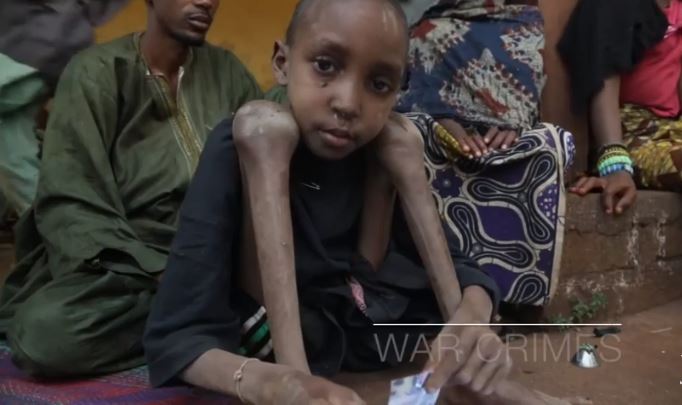
Humanitarian Crises - Happening Now
https://www.youtube.com/watch?v=8QXToXcq6As
Parts of the world are experiencing humanitarian crises, what can be done about it?
Be a voice for the voiceless! Share this video!
When Children are Shields
https://www.youtube.com/watch?v=qPEXtdjadiI
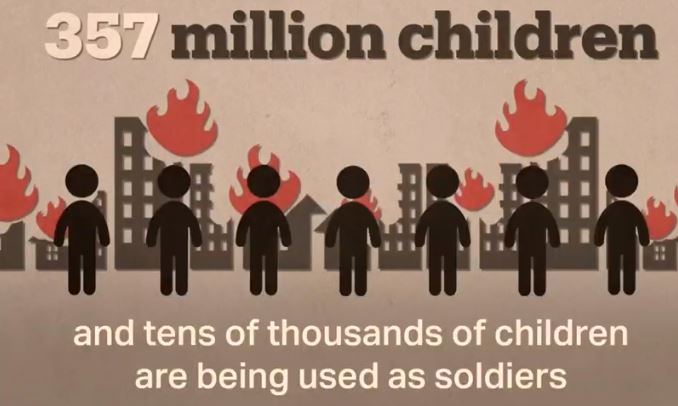
More than 357 Million children live in conflict zones today. Tens of thousands are used as child soldiers. They become fighters, suicide bombers, human shields, messengers, spies and are used for sex. What are you doing about it? Be a voice for the voiceless! Share this video!

Chronicle of a Predetermined Decision
The decision of the Chief Prosecutor of the International Criminal Court in The Hague to launch a “comprehensive criminal investigation” of “alleged war crimes” committed in what has been named the "situation in Palestine" is dramatic but not surprising. The writing was on the wall, written in large Gothic font. The decision was made somewhere in 2015, when the Chief Prosecutor, Ms. Fatou Bensouda, accepted Palestine's request to join as a member state of the court.
The motives for Bensouda’s decision were probably political and as a result, answers from the political field are now needed. Let us not be mistaken, Israel has a long list of weighty legal arguments in her defense, but unfortunately, these will not rescue her from the current situation. Any attempt to fend off political interests with legal arguments, however strong, is doomed to fail.
At this time, it is essential for Israel to have political backing from the US and to encourage the positive winds blowing from England, as this is an hour for politics and diplomacy.
This kind of pressure was recently exerted with great success by the United States, where a series of resolute statements and decisions from the former National Security Adviser John Bolton and Secretary of State Mike Pompeo were able to thwart the ICC’s intention to investigate war crimes that US forces allegedly committed on Afghanistan's soil. Incidentally, the ICC's decision to reject the motion to investigate the alleged war crimes came immediately after the denial of entry into the United States of the Chief Prosecutor and an explicit threat to use the American Service-Members' Protection Act, better known as the "The Hague Invasion Law," which gives the president a free hand to take all necessary measures in order to release American soldiers, if the ICC decides to order their imprisonment. In addition, the law prohibits any cooperation or transfer of evidentiary materials to the ICC.
The broad American defense umbrella was kindly offered to Israel as well. The sand in Israel’s hourglass started draining on Friday and will last for several months. Within this time, the Chief Prosecutor, Ms. Fatou Bensouda, will receive the opinion of the pre-trial court regarding its legal position on the issue of the court's jurisdiction to investigate the “situation in Palestine”. The court's legal position does not oblige by law, but it can outline the limits and scope of the investigation, since these arise from a determination regarding the territory in which the court may exercise its authority.
The Jerusalem Institute of Justice, a legal research institute operating in the international legal arena, has recognized and anticipated the decision of the ICC and has worked hard to ensure that the ICC investigates the real criminals who are directly responsible for committing war crimes in our region, the Hamas terrorist organization. Our efforts have borne fruit. The ICC accepted the legal and evidentiary infrastructure we presented to it and stated that it intends to investigate, inter alia, the criminal use of the Palestinian civilian population as human shields, as well as victims of murder and torture.
It is important to clarify that the ICC in its decision to investigate Israel, clearly deviates from its given mandate. This mandate does not involve the criminal investigation of leaders from countries with a self-reliant, independent, and reliable judicial mechanism. Past experience shows that Israel and specifically the IDF are able to conduct self-examination and critique of their actions. Wherever Israel recognizes a potential deviation from the morality and values that characterize the IDF in its activity (in the myriad of complex challenges that it faces), it is still able to ask and answer tough questions when needed.
Adv Uri Morad,
Director of the of International Law & Public Diplomacy Department