

Torture and Cruel, Inhuman, Degrading Treatment or Punishment under the PA and Hamas
In this report, the Jerusalem Institute of Justice (JIJ) examines the observance of the UN Convention against torture and other cruel, inhuman or degrading treatment or punishment (UNCAT) signed by the Palestinian Authority (PA). Through research and personal interviews, JIJ evaluates human rights deficiencies throughout the territories under the control of the Palestinian Authority and Hamas in accordance with international legal norms. Despite the Palestinian Authority’s formal commitment to international human rights standards, this report documents a broad array of continuing abuses. The ratification of the UNCAT and other conventions by the Palestinian Authority, does not seem to have sufficient legal weight necessary to stop the abuse of human rights. As long as the Palestinian Authority does not respect the Convention and continues to allow torture and ill treatment, there will never be freedom, but a constant fear of torture without redress..
Download

Political Rights Violations in the West Bank and Gaza by the Palestinian Authority and Hamas
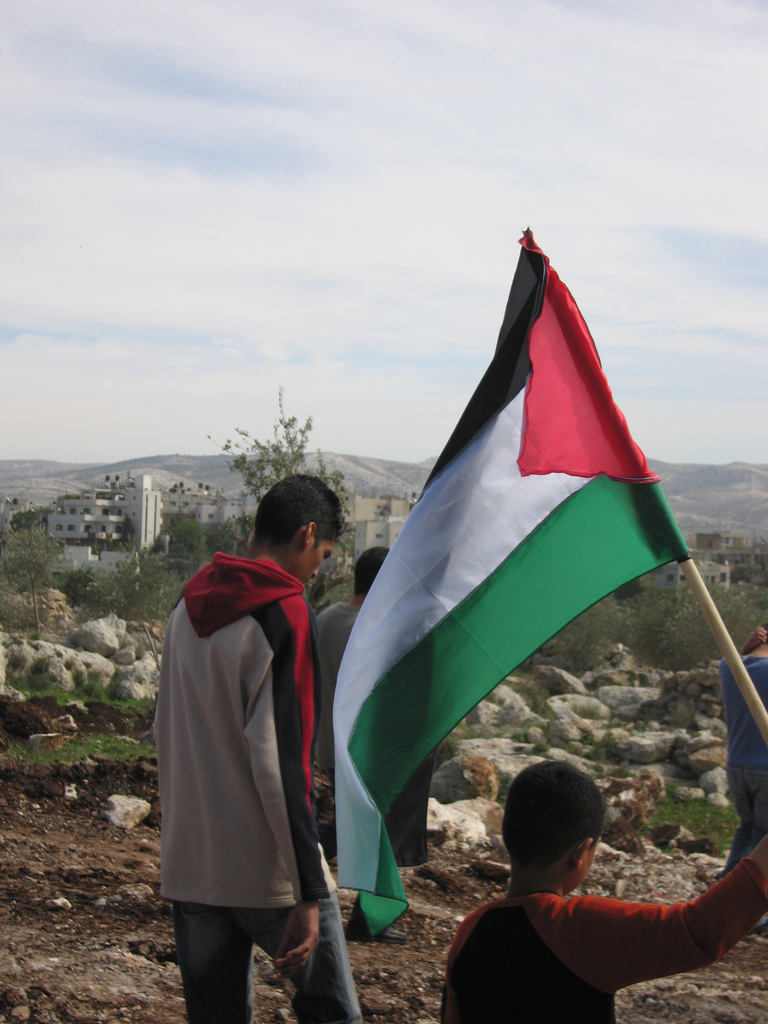
In this report, the Jerusalem Institute of Justice (JIJ) examines political rights and freedoms in the West Bank and Gaza. Through comprehensive research and interviews with those living and working in the West Bank and Gaza, this report aims to illuminate the situation on the ground with regard to political rights for Palestinians in these territories. Freedom of Assembly is routinely violated throughout the West Bank and Gaza either by unlawful police interference in private assemblies, or disproportionate use of force in public assemblies. Freedom of Association is severely restricted, with the Ministry of Interior assuming control over the set-up, funding and dissolution of associations and charities. The Palestinian Authority and Hamas are making little effort to protect and promote these rights of the Palestinian people and are thus in violation of international law.
Download
Violations of Freedom of Expression and Freedom of the Press Under the Palestinian Authority and Hamas
This report exposes the censorship on freedom of expression and freedom of press in the Palestinian territories. Journalists and citizens are restricted from speaking out on many topics, and areas such as politics and corruption are red line (forbidden) issues. The consequences of criticizing the reigning government can range on a spectrum from arbitrary arrest, torture and other abuses. Journalists are not protected by any body and therefore are constantly at risk.
While free press and speech are suppressed, hate speech and incitement of violence are common occurrences by Palestinian individuals and officials. Palestinian public bodies do not work to quell such actions, and in some ways political institutions encourage and sanction them. Even more so, journalists, religious leaders and government officials are at the core of spreading and promoting hate, antisemitism, and anti-Israel propaganda. With the rise in popularity of social media, the internet has become a main forum with which hate speech is circulated throughout the Palestinian community and disseminated world-wide.
Downloads
Dealing with Refugees
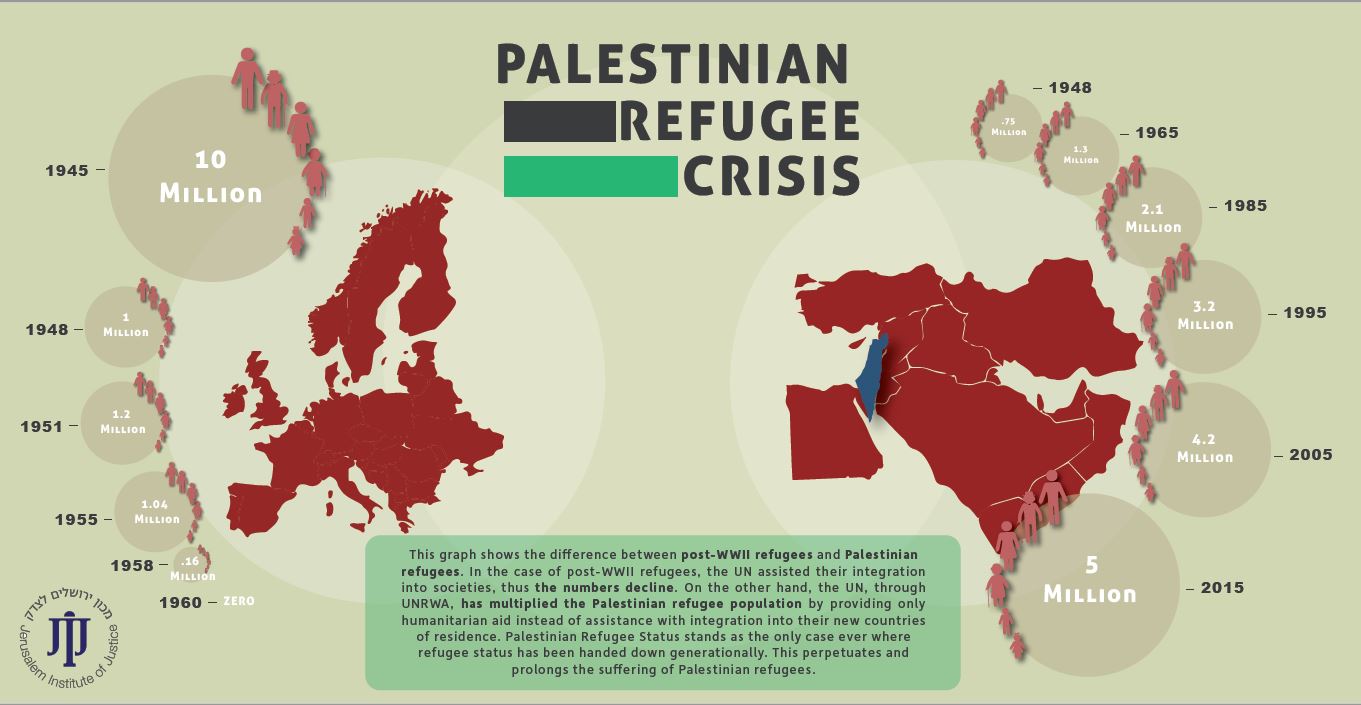
A comparison of refugees after World War II in Europe and Palestine
This report examines refugee populations following World War II in Europe and Palestine, and common characteristics with the current Syrian refugee crises. After the conclusion of World War II in Europe as former residents resettled or integrated, the number of European refugees and camps declined. At the same time, the number of Palestinian refugees continued to grow as they were not naturalized in their host countries. Instead they were inheriting refugee status after being registered as such by the United Nations Relief and Works Agency, a UN institution exclusively responsible for the Palestinians.
The following pages compares the circumstances and call for right of return between those expelled from Germany after World War II and Palestinian refugees. The aim of this paper is to show that there are alternative stop UNRWA's current policies and retaining refugee status for an entire population group is not the optimal way to solve the problem.
Downloads



A Journey to Poland
Article by Louie Parker intern at the Jerusalem Institute of Justice.
I recently embarked on a trip to Poland as part of the Masa Global Leadership Institute Poland Program. The aim of the trip was to explore both the Jewish and non-Jewish culture and history of Poland, to better understand the Holocaust and to explore the resurgence of Jewish culture and communities in Poland.
The expectations for the trip were somewhat mixed. We were made aware of the fact that this was not a trip dealing solely with the Holocaust, but rather an explorative vignette onto Judaism’s place in historical and modern-day Poland. Moreover, rather than viewing the country through the prism of objective numbers (such as the 6-million Jewish people who lost their lives in the Holocaust), we were aiming to attach a human face to Poland’s history and meet the people actively trying to strengthen their Jewish community.
Upon landing in Warsaw, I was immediately stunned by both the beauty and the modernity of the city. Preconceived ideas of Eastern European dreariness and Bauhaus architecture were replaced by impressive skyscrapers and beautiful remnants of Poland’s imperial past. It resembled something closer to London than St. Petersburg or Moscow.
Poland is a beautiful country. The people there are proud, and justifiably so, of their nation’s achievements throughout the years and famous Polish figures like Chopin and Pope John Paul II. However, there is an undeniable struggle to reconcile the past with the future. How can a country that experienced genocide within the last century project an aura of racial and religious tolerance? Fortunately, based on what we observed, the country is making substantial inroads in strengthening its Jewish community.
In Warsaw, museums such as the Polin Museum are an indispensable source of information on the Jewish people’s 1,000-year history in Poland. The global Jewish community is paying more attention to Poland’s importance, and is investing both finances and individual efforts into strengthening the Jewish minority there. Rabbi Michael Schudrich, who has served as the Chief Rabbi of Poland for over 12 years, is such an example of these rallying efforts.
There is a real fascination with Poland’s pre-war Jewish history amongst tourists and Polish citizens alike. Small Jewish towns, or shtetls, like Tykocin allow a rare insight into the social structures that governed rural Jewish communities for centuries.
Krakow is equally, if not more, beautiful than its Warsaw counterpart. The old central neighbourhood of Kazimierz and its museums and synagogues have been carefully preserved to reflect its historic Jewish character. Encouragingly, there was even a shortage of seating at the Synagogue during their Friday night service.
The Jewish Community Centers in Poland are playing an extremely important role in strengthening the Jewish community, particularly as it relates to the many people who have only recently learned of their distant Jewish heritage and are now questioning their dual-natured Polish-Jewish identity. They organize Shabbat meals and run interfaith dialogue sessions and education seminars on a wide range of topics.
It was certainly an eerie feeling to think, as we were walking the streets of Warsaw and Krakow and taking in the magic of pre-war and post-Soviet Poland’s Jewish culture, that these same places bore witness to the some of the greatest assaults on humanity in history. While we chatted and passed bars and restaurants playing progressive jazz, it was sobering to remember the hundreds of thousands of Jews carted off to death camps from this same very place. It seemed inconceivable that as we walked around the neighbourhood of Podgórze, the Plaszow concentration camp made famous by Schindler’s List was less than 2 kilometers away.
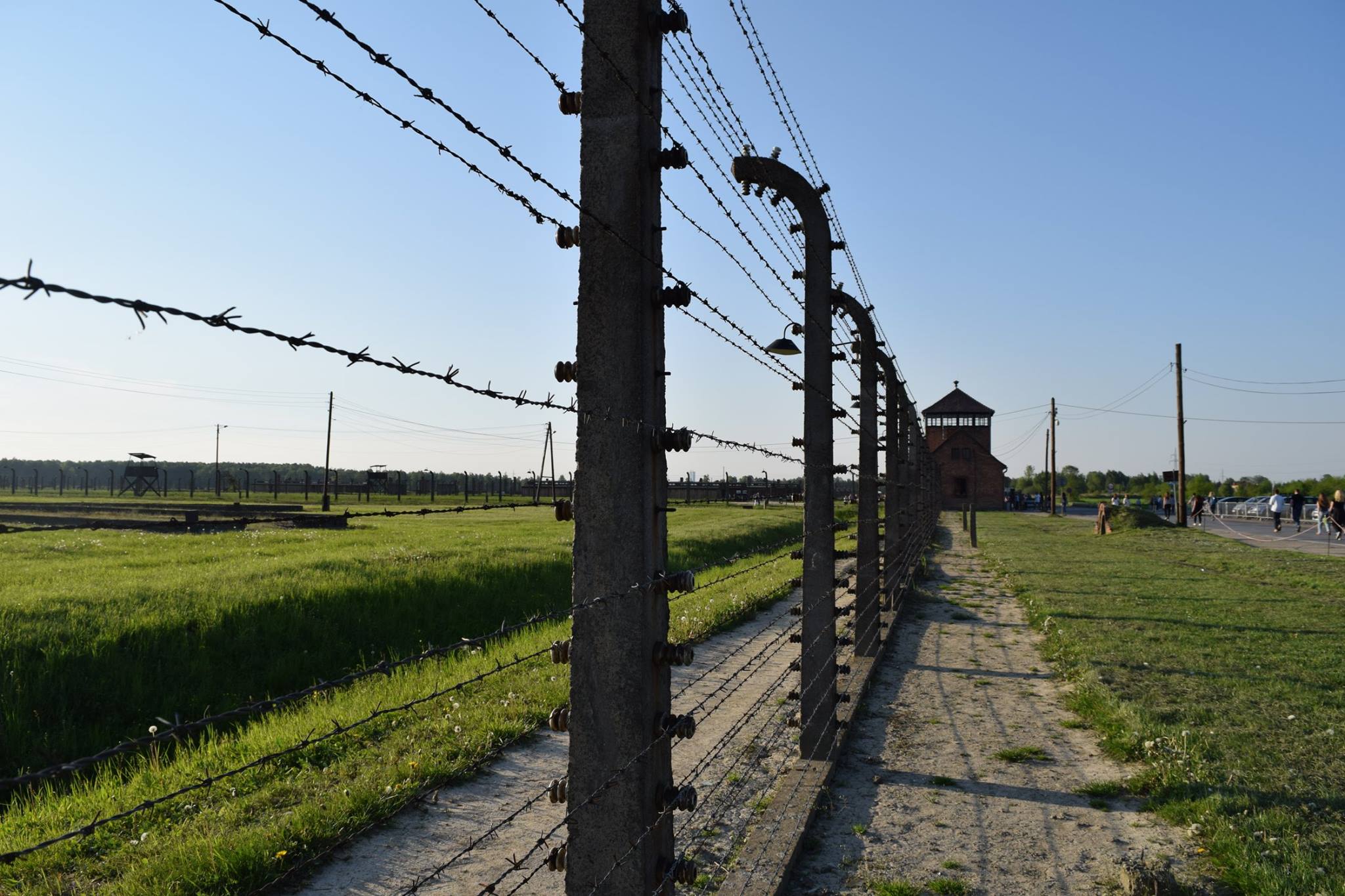
At the Treblinka and Auschwitz-Birkenau concentration camps, I sifted through the millions of names of those who had perished at the hands of the genocide. I was amazed to see, among the names of my Hungarian ancestors who had perished, the many others who bore the same name – often from the same district of Budapest. It seemed to speak to the enormity of the calamity that befell Europe’s Jewish community and the apparent ease at which multiple lives can be taken away.
Our immensely-experienced guide, Raquel Orenstein of the Yad VaShem Museum, imparted a gem of knowledge unto us. She encouraged those who come to Poland, or those who study the Holocaust, to question the psychological and behavioural underpinnings of what befell the victims of the Holocaust:
- How can one be seduced by a message of hate?
- What are the effects of mob mentality?
- What does it take to murder a fellow human being?
This viewpoint left a lasting impression on me. I found myself exploring the human aspects of the Holocaust, rather than focusing on facts and data. It felt very uncomfortable asking myself ‘had I been a Polish or German citizen, what would I have done? Would I have hidden my Jewish or Roma countrymen and women? Would I have been a partisan, a bystander or an active perpetrator? How easily would our modern conception of benevolence and human rights have been eschewed by the seductive nature of fascism and scapegoating?’
Having these questions in mind made the trip an unforgettable experience. My only advice to any prospective travellers or visitors would be to immerse oneself in a more holistic encounter with Poland. Although the brutality and horror of Poland’s history are both undeniable and unimaginable, the resurgence of Jewish culture and the strengthening of the Jewish community there gives us reason to be hopeful that the relationship between Jews and Poland is not resigned to the history books.
Restoration and Freedom
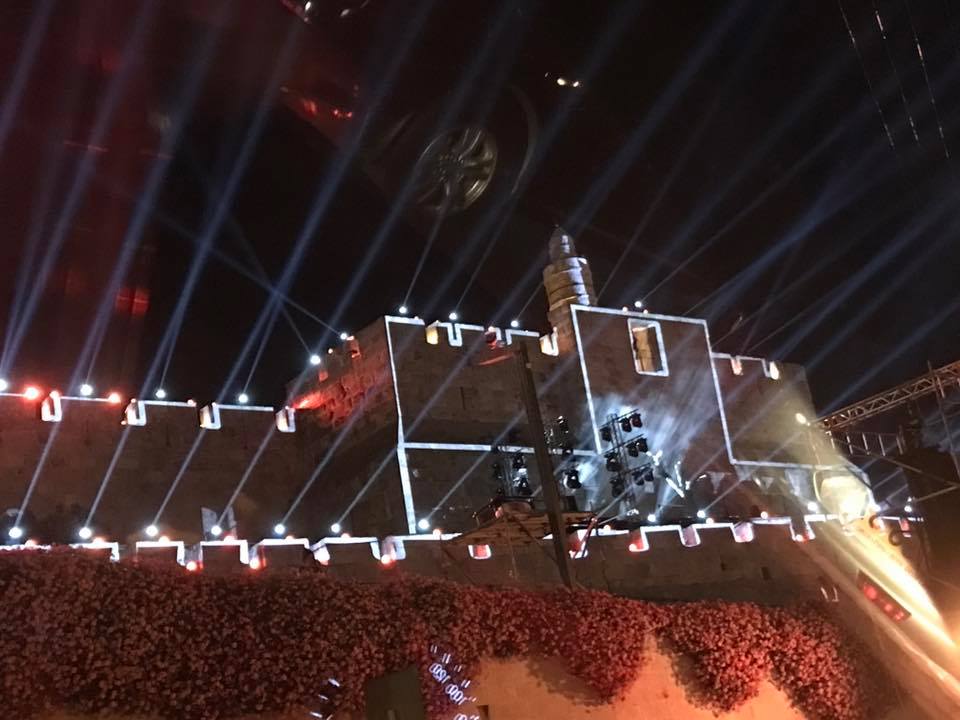
Jewish sovereignty was restored over all of Jerusalem, 50 years ago, in 1967. This restoration allowed peoples from all religions unfettered access to its Holy sites for the first time in approximately two millennia. We honor this occasion by celebrating "Jerusalem Day", today Wednesday, May 24th.
Historically, Jewish majority in the city of Jerusalem was established in the late 1880's. 100 years ago, Western Imperialistic powers led by General Allenby liberated the city of Jerusalem from the Islamic control of the Ottoman Empire, and thereafter, through the Balfour Declaration established that Palestine would be recognized as "a national home for the Jewish people".
In November, 1947, the UN General Assembly adopted a partition of Mandatory Palestine at the end of the British Mandate. The Partition Plan recommended a Special International Regime for the city of Jerusalem and the creation of independent Arab and Jewish States. This plan was never accepted by the Arab states and Jerusalem was under Jordanian control.
Under Jordanian occupation, Jerusalem was systematically Islamicized. No Jews were permitted to live in the city, and the Christian population dropped sharply from 25,000 to 9,000. Jordanian policy imposed the Arabic-language; included the destruction of dozens of synagogues; use of government-issued textbooks in Christian schools; a prohibition on the purchase of property by churches and a denial of church funding of social and medical services, including hospitals; and a total ban on visits to Jewish holy places by Jewish pilgrims.
The religious persecution continued until Jordan chose to join a coalition of Arab states and invade Israel in 1967. Israel's victory in the Six Day War resulted in the reunification of Jerusalem and freedom of worship was restored to members of all faiths.
Isaiah 62:6 - I have set watchmen upon thy walls, O Jerusalem, they shall never hold their peace day nor night: ye that make mention of the LORD, keep not silence...
Times and seasons are ultimately beyond our control. However, the Jerusalem Institute of Justice remains dedicated to confronting discrimination and exploitation by promoting human dignity to ethnic, religious and cultural minorities in Israel and throughout the Middle East. We hope and pray that this year restoration and freedom will come to many people in our region.
_______________________________________
Read more about JIJ: Click here
Browse our projects: Click here
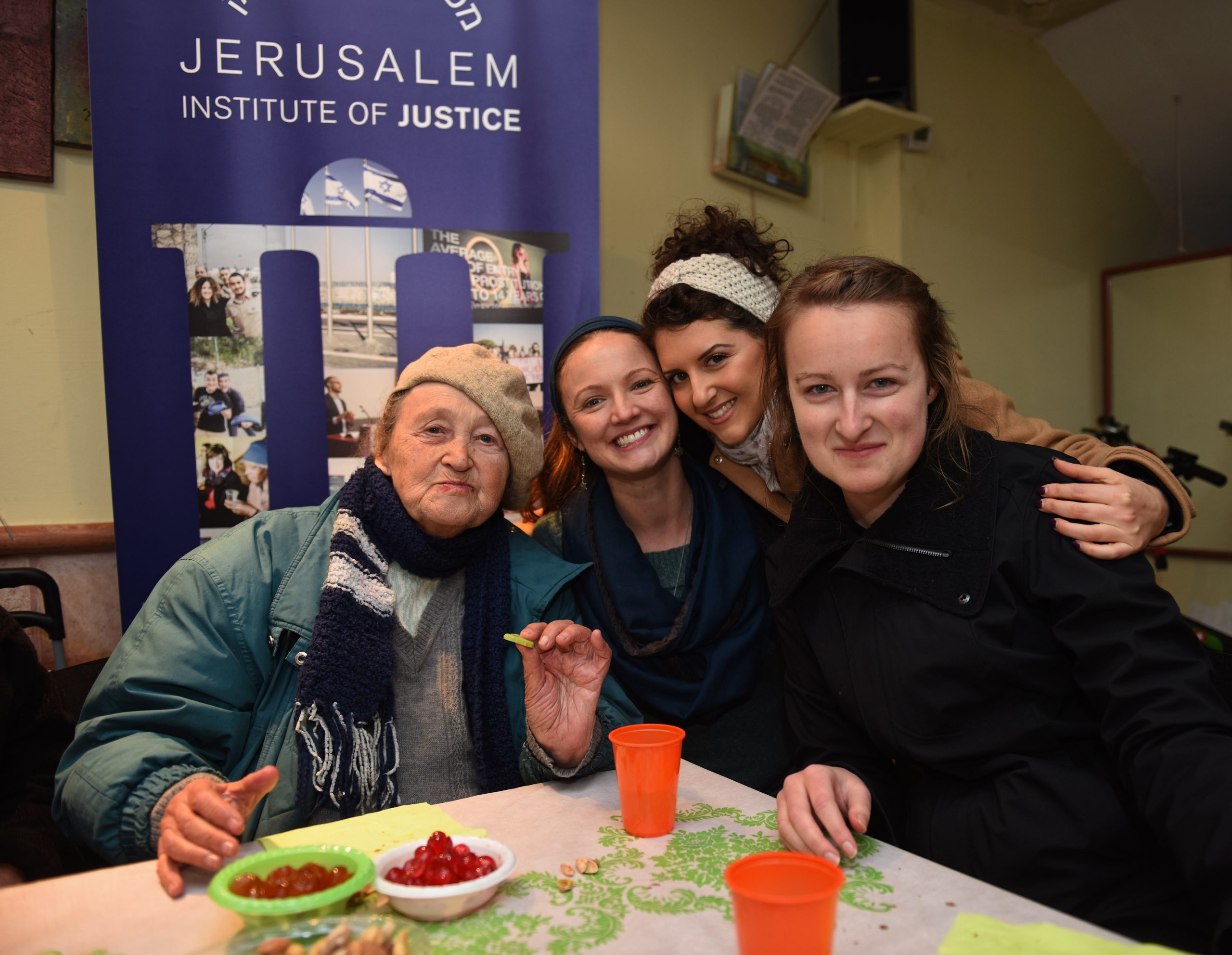
Embracing Holocaust Survivors
https://www.youtube.com/watch?v=3_ndhmAg1io
Currently, there are about 150,000 Holocaust survivors living in Israel. The average age of the survivors is 88. This extraordinary group of people have overcome great tragedy and suffering. We must record their stories so the world does not forget, and we want to honor and comfort them while they remain with us. JIJ sponsors fun activities and holiday events for survivors, where we give food, clothing, blankets and love.