
ICRC- Must Locate and Facilitate Release of Hostages
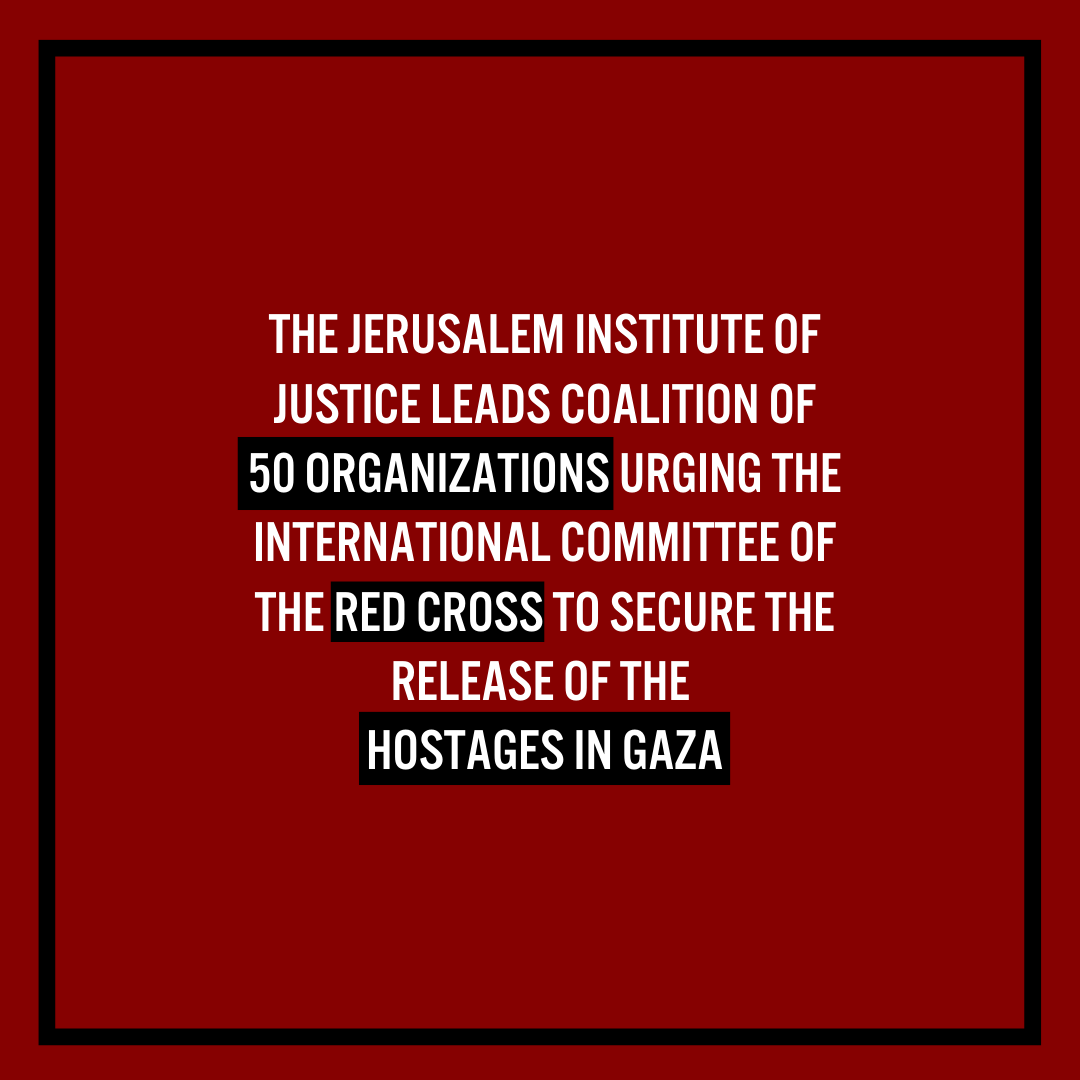
JERUSALEM INSTITUTE OF JUSTICE LEADS COALITION OF 50 ORGANIZATIONS
URGING INTERNATIONAL RED CROSS TO SECURE RELEASE OF THE GAZA CAPTIVES
A coalition of 50 organizations urge the ICRC to verify the status of more than 150 Israelis kidnapped in the Gaza Strip
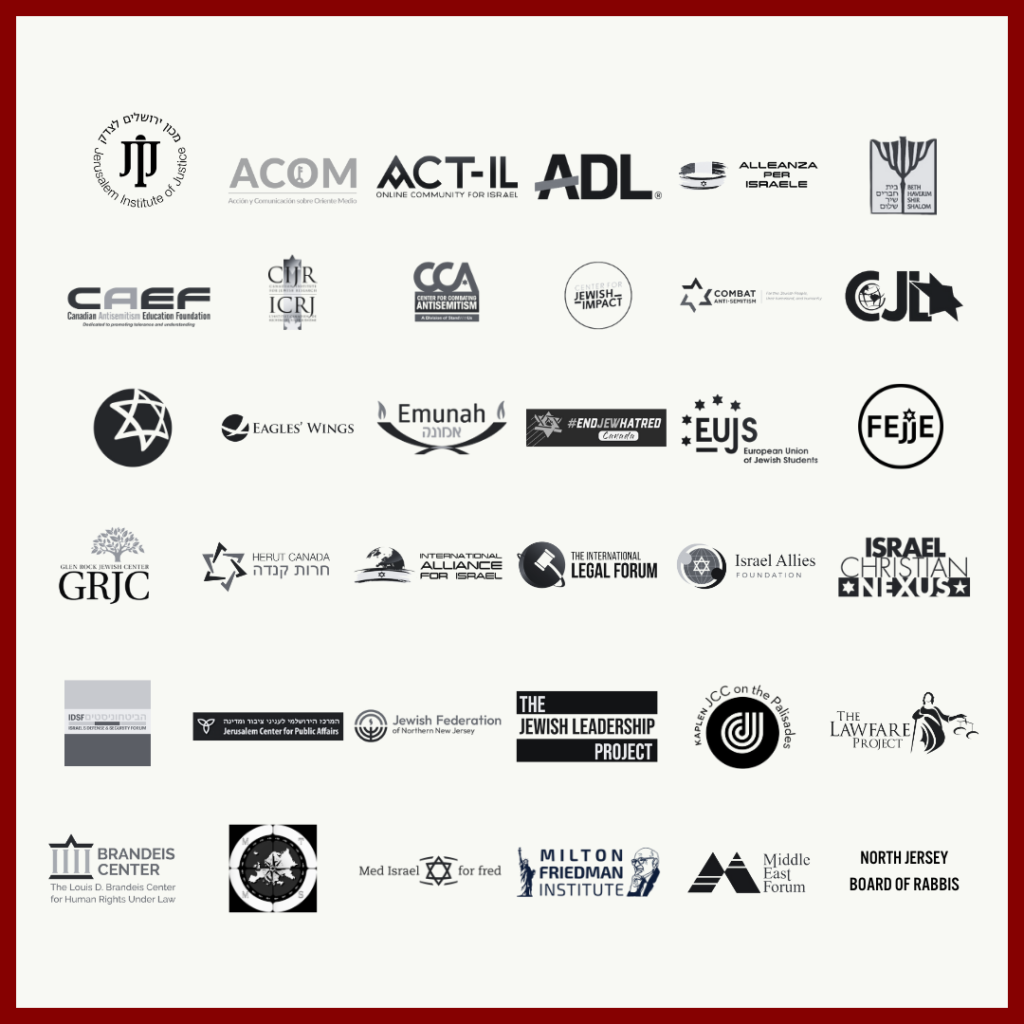
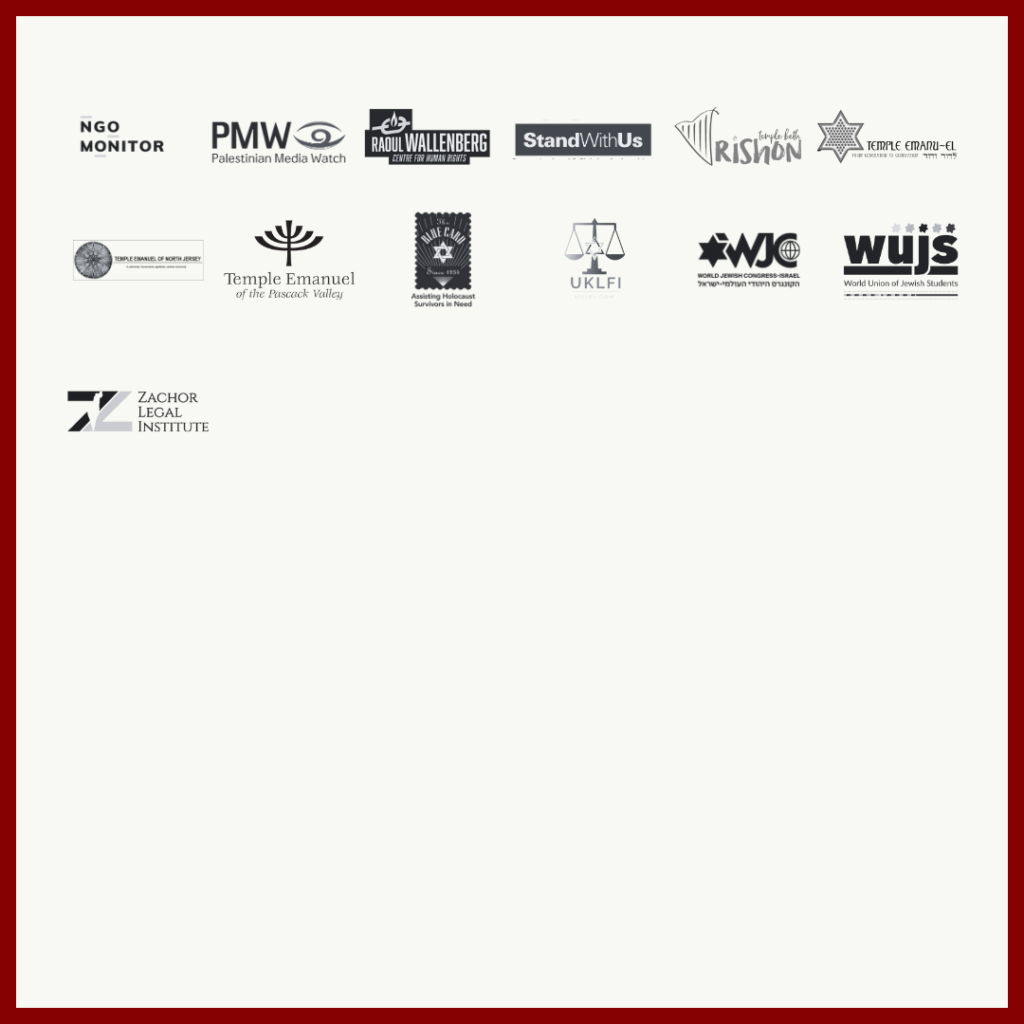
In the wake of Hamas’ barbaric rampage through the civilian communities of southern Israel, the Jerusalem Institute of Justice leads a coalition of 50 organizations in urging the International Committee of the Red Cross (ICRC) to verify the status of the 150+ Israeli hostages taken into captivity in Gaza. Here
This list reflects a broad consensus between Israel and the global Diaspora, religious and secular organizations. In this dark time for our nation, our hearts are moved by the opportunity to speak with one voice. In addition to sending this letter, we are requesting an urgent meeting with the Jerusalem staff of the ICRC and plan to bring some of the families of the Israeli hostages to that meeting to make personal the urgency of our appeal.
“Hamas has openly advertised its penchant for torturing, raping, denying medical treatment, degrading, humiliating, and threatening to execute these hostages,” said Uri Morad, Director of International Law & Public Diplomacy for the Jerusalem Institute of Justice (JIJ). “The International Red Cross must act urgently to locate and establish communication with the kidnapped Israelis if it has any hope of fulfilling its mission and bringing an end to this war.”
In a joint letter, JIJ advocacy efforts were joined by prominent Israeli, North American, and European organizations who are committed to countering anti-Semitism and anti-Israel bias, including the Anti-Defamation League, Jerusalem Center for Public Affairs, NGO Monitor, Middle East Forum, and StandWithUs. The group also included several Jewish and Christian communities, including the Jewish Federation of Northern New Jersey, Israel Christian Nexus, and numerous diaspora synagogues.
Specifically, the coalition urged the International Red Cross to take the following steps:
• Locate and establish communication with the Israelis held hostage in the Gaza Strip.
• Call for Hamas to cease its heinous acts of raping and sexually abusing Israelis.
• Condemn the use of human shields as military targets, including hospitals and schools, and the horrifying practice of exhibiting and mutilating dead bodies.
• Facilitate the immediate return of the Israeli hostages.
“This past week constitutes the worst time in Jewish history since the Holocaust, a time when the International Red Cross was, by its own admission, ‘impotent’ in the face of Nazi persecution and genocide,” said Flavia Sevald, CEO of JIJ. “In today’s war, the perpetrators may have changed, but their agenda is the same. The International Red Cross has a double duty to get it right this time.”
Jerusalem Institute of Justice (JIJ) is the only Israeli human rights NGO with consultative status before the United Nations that is pro-Israel. Within the international community, JIJ has persistently advocated for the release of Israeli citizens from captivity. Within Israel, JIJ provides free legal aid to minority ethnic and religious groups, with a track record of 25 precedent-setting victories in the Israeli Supreme Court.

A War for Human Rights
Following the many atrocities that have been committed against Israeli civilians in an unprecedented terrorist attack to the south of the country, the JIJ submitted a letter to the United Nations Office of the High Commissioner for Human Rights. We urge them to take immediate action to address the grave human rights violations taking place by Hamas and other terrorist organizations.
ADDRESSED TO 09.10.2023
Office of the United Nations High Commissioner for Human Rights
Palais Wilson
52 rue des Pâquis
CH-1201 Geneva, Switzerland
Dear Sir/Madam,
I am writing on behalf of the Jerusalem Institute of Justice (JIJ) in consultative status, an Israeli
legal and research institute advocating for human rights in Israel and the Middle East.
We call upon the United Nations Human Rights Council (HRC) to fulfil its responsibility of
promoting and protecting human rights by condemning the horrific acts of terrorism
perpetrated by the terrorist Palestinian organization Hamas against the Israeli population.
While we appreciate today’s act of solidarity of standing in silence in memory of those who
were brutally murdered, the scale of this past days’ atrocities demands further action.
As outlined in General Assembly Resolution 60/251, the Human Rights Council has the
mandate and responsibility to promote and protect human rights worldwide. The inhuman
actions carried out by Hamas, including the kidnapping of innocent civilians and infiltrations
into Israeli territory to perpetrate acts of terror via land, sea and air, should have already
garnered the immediate attention and condemnation of this Council.
The information regarding the ongoing conflict is both stark and undeniable. It has resulted in
the loss of over 1,000 innocent lives and the kidnapping of more than 150 Israelis and foreign
nationals, including women, children, and elderly people who were abducted violently from
their homes. Additionally, more than 2,500 individuals have been injured. Furthermore, it is
worth noting that more than 5,000 rockets have been launched towards Israeli citizens.
Evidence is also emerging of a pattern of gross human rights violations including torture,
dismemberment, beheadings, the use of rape as a weapon of war, and the desecration of victims'
dead bodies. This only serves to demonstrate the terrorist groups' genocidal intentions to
continue perpetrating mass atrocities on Israeli civilians, while recklessly endangering
Palestinian civilians.
There can be no excuse for the silence of this Council in the face of such atrocities, which
constitutes the most destructive pogrom against Jewish people since the Holocaust.
We implore this Council to take this opportunity to fulfill its mandate and stand on the right
side of history concerning human rights. As the world is watching, we expect this Council to
rise above past biases and act in accordance with its stated principles.
The pursuit of peace and the protection of human rights should always transcend political
considerations, and it is our sincere belief that the Council can play a crucial role in promoting
justice and safeguarding the rights of all individuals affected by this conflict.
We urge the United Nations Human Rights Council to take immediate and meaningful action
to address the grave human rights violations taking place and to condemn, with intentional
force, the horrifying acts committed by the Palestinian terrorist organization Hamas. Only
through such actions can the Council uphold its commitment to the principles of human rights,
justice, and peace.
Sincerely,
Flavia Sevald Adv. Uri Morad, Director of the International
Chief Executive Officer Law & Public Diplomacy Department
Lydia Morgan, COO
A War for Human Rights
Following the many atrocities that have been committed against Israeli civilians in an unprecedented terrorist attack to the south of the country, the JIJ submitted a letter to the United Nations Office of the High Commissioner for Human Rights. We urge them to take immediate action to address the grave human rights violations taking place by Hamas and other terrorist organizations.
ADDRESSED TO 09.10.2023
Office of the United Nations High Commissioner for Human Rights
Palais Wilson
52 rue des Pâquis
CH-1201 Geneva, Switzerland
Dear Sir/Madam,
I am writing on behalf of the Jerusalem Institute of Justice (JIJ) in consultative status, an Israeli
legal and research institute advocating for human rights in Israel and the Middle East.
We call upon the United Nations Human Rights Council (HRC) to fulfil its responsibility of
promoting and protecting human rights by condemning the horrific acts of terrorism
perpetrated by the terrorist Palestinian organization Hamas against the Israeli population.
While we appreciate today’s act of solidarity of standing in silence in memory of those who
were brutally murdered, the scale of this past days’ atrocities demands further action.
As outlined in General Assembly Resolution 60/251, the Human Rights Council has the
mandate and responsibility to promote and protect human rights worldwide. The inhuman
actions carried out by Hamas, including the kidnapping of innocent civilians and infiltrations
into Israeli territory to perpetrate acts of terror via land, sea and air, should have already
garnered the immediate attention and condemnation of this Council.
The information regarding the ongoing conflict is both stark and undeniable. It has resulted in
the loss of over 1,000 innocent lives and the kidnapping of more than 150 Israelis and foreign
nationals, including women, children, and elderly people who were abducted violently from
their homes. Additionally, more than 2,500 individuals have been injured. Furthermore, it is
worth noting that more than 5,000 rockets have been launched towards Israeli citizens.
Evidence is also emerging of a pattern of gross human rights violations including torture,
dismemberment, beheadings, the use of rape as a weapon of war, and the desecration of victims'
dead bodies. This only serves to demonstrate the terrorist groups' genocidal intentions to
continue perpetrating mass atrocities on Israeli civilians, while recklessly endangering
Palestinian civilians.
There can be no excuse for the silence of this Council in the face of such atrocities, which
constitutes the most destructive pogrom against Jewish people since the Holocaust.
We implore this Council to take this opportunity to fulfill its mandate and stand on the right
side of history concerning human rights. As the world is watching, we expect this Council to
rise above past biases and act in accordance with its stated principles.
The pursuit of peace and the protection of human rights should always transcend political
considerations, and it is our sincere belief that the Council can play a crucial role in promoting
justice and safeguarding the rights of all individuals affected by this conflict.
We urge the United Nations Human Rights Council to take immediate and meaningful action
to address the grave human rights violations taking place and to condemn, with intentional
force, the horrifying acts committed by the Palestinian terrorist organization Hamas. Only
through such actions can the Council uphold its commitment to the principles of human rights,
justice, and peace.
Sincerely,
Flavia Sevald Adv. Uri Morad, Director of the International
Chief Executive Officer Law & Public Diplomacy Department
Lydia Morgan, COO
Committing to Palestinian rights (?)
In 2012, the United Nations (UN) granted the Palestinians non-member observer State status. Following this decision, the “State of Palestine” – as officially named in the UN – ratified several international treaties, supposedly to commit itself to comply with human rights and other international legal obligations. One such treaty is the International Covenant on Civil and Political Rights (ICCPR), which obligates those countries that have joined the treaty to respect and ensure the protection of fundamental human rights, such as the right to life, equality, and freedom of thought.
But how does one ensure that countries actually comply with their obligations and protect the rights of those under their jurisdiction? This is, in fact, the role of the UN Human Rights Committee, which receives reports from the State parties on the measures they have adopted in relation to the rights contained in the ICCPR. For this purpose, the Committee receives both the report of the state in question as well as documents submitted by organizations that wish to provide more information on the state’s compliance with the ICCPR. After analyzing the information received, the Committee issues recommendations to the state.
This month, it was the State of Palestine’s turn to attend and be examined by the Committee. Last week, the Committee issued its recommendations to the State of Palestine, also expressing its concerns on the numerous human rights violations that appear to be committed by Palestinian authorities.
Among the several human rights abuses highlighted in the Committee’s concluding observations, there is one that has not received enough attention from the international community: detainees are often subjected to torture by Palestinian security forces and intelligence services. The Committee has expressed its concerns “about consistent reports indicating that persons in custody, including in the facilities under the authority of the security forces and intelligence services, are subjected to torture or ill-treatment.”
What is even more alarming is the fact that many of the persons subjected to torture are actually children. The Palestinian Independent Commission for Human Rights, the national human rights institution established by Presidential Decree and has the function of an ombudsman, informed the UN Committee Against Torture that between 2016 and 2021, they received 4,279 claims of torture and other forms of cruel, inhuman, and degrading treatment, with 12% of them filed by children (Shadow Report of the Independent Commission for Human Rights on the initial report submitted by the State of Palestine on the implementation of the Convention against Torture, 2022).
The report submitted by the Jerusalem Institute of Justice (JIJ) also provides detailed information on the many cases of torture committed by the Palestinian authorities. Most individuals subjected to torture and inhumane treatment are those who exercise their fundamental rights by participating in peaceful protests or publicly voicing criticism against the authorities and those who are accused of “collaborating with Israel.” As pointed out by JIJ’s report, “these abuses and acts of torture have occurred across various periods, underscoring the fact that they are not isolated incidents.”
What is also concerning is the culture of impunity sustained by the Palestinian authorities. As pointed out by the Committee, only a few complaints of torture are investigated, and almost none of the investigations have resulted in the prosecution and conviction of the perpetrators. The Committee has therefore called upon the State of Palestine to “investigate promptly, thoroughly and effectively all cases of torture and ill-treatment in all places of deprivation of liberty, to ensure that perpetrators are prosecuted and, if convicted, punished with penalties commensurate with the gravity of the offenses and that victims of such violations receive full reparation and are provided with redress.”
But how does all this effort by the Committee and organizations truly translate into real-life change? Does this have any actual impact on those individuals whose rights are being violated by the Palestinian Authorities? Moreover, the Committee is one of many bodies in the UN that are responsible to oversee and ensure the respect of human rights. Even several bodies were specifically established regarding the rights of the Palestinians, so shouldn’t these institutions also focus on the human rights violations being committed by the Palestinian authorities?
The status of the Palestinians remains a contentious topic, subject to ongoing debate. Palestinian authorities have sought state recognition, which the UN eventually granted. However, this recognition must not be mere rhetoric or a political instrument; it holds the potential to make a meaningful difference. Regrettably, the UN has sometimes been manipulated as a platform for discussions that, under the guise of safeguarding human rights, mask hidden agendas and overlook real abuses.
The UN Human Rights Committee, composed of independent experts rather than states, plays a crucial role in safeguarding the rights of every individual. As a human rights advocate, I remain optimistic that this framework can lead to positive outcomes, hoping that even the State of Palestine, in its pursuit of recognition, will fulfill its obligations and uphold human rights.
By Carolina Grimberg Golijov, JIJ's Human Rights, Law and Research Officer.
Committing to Palestinian rights (?)
In 2012, the United Nations (UN) granted the Palestinians non-member observer State status. Following this decision, the “State of Palestine” – as officially named in the UN – ratified several international treaties, supposedly to commit itself to comply with human rights and other international legal obligations. One such treaty is the International Covenant on Civil and Political Rights (ICCPR), which obligates those countries that have joined the treaty to respect and ensure the protection of fundamental human rights, such as the right to life, equality, and freedom of thought.
But how does one ensure that countries actually comply with their obligations and protect the rights of those under their jurisdiction? This is, in fact, the role of the UN Human Rights Committee, which receives reports from the State parties on the measures they have adopted in relation to the rights contained in the ICCPR. For this purpose, the Committee receives both the report of the state in question as well as documents submitted by organizations that wish to provide more information on the state’s compliance with the ICCPR. After analyzing the information received, the Committee issues recommendations to the state.
This month, it was the State of Palestine’s turn to attend and be examined by the Committee. Last week, the Committee issued its recommendations to the State of Palestine, also expressing its concerns on the numerous human rights violations that appear to be committed by Palestinian authorities.
Among the several human rights abuses highlighted in the Committee’s concluding observations, there is one that has not received enough attention from the international community: detainees are often subjected to torture by Palestinian security forces and intelligence services. The Committee has expressed its concerns “about consistent reports indicating that persons in custody, including in the facilities under the authority of the security forces and intelligence services, are subjected to torture or ill-treatment.”
What is even more alarming is the fact that many of the persons subjected to torture are actually children. The Palestinian Independent Commission for Human Rights, the national human rights institution established by Presidential Decree and has the function of an ombudsman, informed the UN Committee Against Torture that between 2016 and 2021, they received 4,279 claims of torture and other forms of cruel, inhuman, and degrading treatment, with 12% of them filed by children (Shadow Report of the Independent Commission for Human Rights on the initial report submitted by the State of Palestine on the implementation of the Convention against Torture, 2022).
The report submitted by the Jerusalem Institute of Justice (JIJ) also provides detailed information on the many cases of torture committed by the Palestinian authorities. Most individuals subjected to torture and inhumane treatment are those who exercise their fundamental rights by participating in peaceful protests or publicly voicing criticism against the authorities and those who are accused of “collaborating with Israel.” As pointed out by JIJ’s report, “these abuses and acts of torture have occurred across various periods, underscoring the fact that they are not isolated incidents.”
What is also concerning is the culture of impunity sustained by the Palestinian authorities. As pointed out by the Committee, only a few complaints of torture are investigated, and almost none of the investigations have resulted in the prosecution and conviction of the perpetrators. The Committee has therefore called upon the State of Palestine to “investigate promptly, thoroughly and effectively all cases of torture and ill-treatment in all places of deprivation of liberty, to ensure that perpetrators are prosecuted and, if convicted, punished with penalties commensurate with the gravity of the offenses and that victims of such violations receive full reparation and are provided with redress.”
But how does all this effort by the Committee and organizations truly translate into real-life change? Does this have any actual impact on those individuals whose rights are being violated by the Palestinian Authorities? Moreover, the Committee is one of many bodies in the UN that are responsible to oversee and ensure the respect of human rights. Even several bodies were specifically established regarding the rights of the Palestinians, so shouldn’t these institutions also focus on the human rights violations being committed by the Palestinian authorities?
The status of the Palestinians remains a contentious topic, subject to ongoing debate. Palestinian authorities have sought state recognition, which the UN eventually granted. However, this recognition must not be mere rhetoric or a political instrument; it holds the potential to make a meaningful difference. Regrettably, the UN has sometimes been manipulated as a platform for discussions that, under the guise of safeguarding human rights, mask hidden agendas and overlook real abuses.
The UN Human Rights Committee, composed of independent experts rather than states, plays a crucial role in safeguarding the rights of every individual. As a human rights advocate, I remain optimistic that this framework can lead to positive outcomes, hoping that even the State of Palestine, in its pursuit of recognition, will fulfill its obligations and uphold human rights.
By Carolina Grimberg Golijov, JIJ's Human Rights, Law and Research Officer.

53rd Session of the Rights Council - Agenda Item 7 - JIJ's Statement
https://www.youtube.com/watch?v=rUUKMJd_Chc
On the 10th of July, the UN Human Rights Council held a session on Item 7 of its agenda. This Item is defined as the “Human rights situation in Palestine and other occupied Arab territories.” This is, in fact, the only country-specific item on the agenda and has served as a pretext to issue a disproportionate amount of resolutions against Israel. The Jerusalem Institute of Justice, which holds Special Consultative Status in the UN, has participated in this session. JIJ’s Human Rights, Law, and Research Officer, Carolina Grimberg Golijov, issued a statement opposing this item and calling upon the Council to respect its mandate and work for the protection of human rights.
Read the full transcript: JIJ's Oral Statement Transcript - 53rd HRC session -agenda item 7
53rd Session of the Human Rights Council - Agenda Item 7 - JIJ's Statement
https://www.youtube.com/watch?v=rUUKMJd_Chc
On the 10th of July, the UN Human Rights Council held a session on Item 7 of its agenda. This Item is defined as the “Human rights situation in Palestine and other occupied Arab territories.” This is, in fact, the only country-specific item on the agenda and has served as a pretext to issue a disproportionate amount of resolutions against Israel.
The Jerusalem Institute of Justice, which holds Special Consultative Status in the UN, has participated in this session. JIJ’s Human Rights, Law, and Research Officer, Carolina Grimberg Golijov, issued a statement opposing this item and calling upon the Council to respect its mandate and work for the protection of human rights.
Read the full transcript: JIJ's Oral Statement Transcript - 53rd HRC session -agenda item 7
A Step Too Far: The UN Human Rights Council COI Report on Israel
After clashes between Israel and Hamas in May 2021, the UN Human Rights Council opened a Commission of Inquiry (COI) to investigate human rights abuses in Israel. Over the course of the past two years, the COI has produced three reports detailing one-sided, biased information about the events on the ground, falsely portraying reality for so many Israelis and Palestinians. In its latest report, the COI focused on “Israel’s attacks, restrictions, and harassment of civil society actors” and revealed numerous concerning human rights violations in the Palestinian Territories and East Jerusalem. However, the UN fell into its biased routine of disproportionate representation once again.
Although unequal treatment is expected with the UN’s long history of anti-Israel sentiment, the most recent proceedings took matters to new heights. Throughout the report and live session, the COI explicitly supported BDS and similar Israel-boycott organizations and categorized them as legitimate forms of protest. The COI also ignored terrorism enacted by both Palestinian leadership and civilians and called on UN member states to support the Palestinian resistance. These actions not only fail to uphold the COI’s mission to “establish the facts and circumstances” and “identify those responsible,” but it glorifies antisemitism in the world’s most prominent human rights organization, setting a precedent that poses a serious threat to Jews around the world (the UN Independent International COI on the OPT Mandate, 2021).
In the COI report’s section detailing Israel’s delegitimization of Palestinian civil society, the COI claims that Israel instituted various measures to limit BDS, such as removing their funding and cutting business deals. By preventing BDS from acting freely, Israeli authorities were denying their supporters the right to freedom of expression, which is considered a human rights violation. As a response, the COI asserts that:
“Everyone shall have the right to freedom of expression; this right shall include freedom to seek, receive and impart information and ideas of all kinds, regardless of frontiers, either orally, in writing or in print, in the form of art, or through any other media of his choice,” (Human Rights Council 53rd Session Report, pp 11)
Such statements blatantly support accounts of institutionalized antisemitism and violent resistance espoused by BDS leaders. There are numerous cases in which the BDS has voiced its antisemitic views. BDS co-founder and leader Omar Barghouti freely admits that BDS “opposes a Jewish state in any part of Palestine.” In another, a BDS leader in South Africa stated, “BDS [...] will help bring about the defeat of Zionist Israel and victory for Palestine.” Lastly, Barghouti claimed that “B.D.S. treats resistance to what it sees as Israeli oppression, including by armed struggle, as a legitimate right. Asked if B.D.S. condemned the violence that targeted Israeli soldiers, he declined to comment” (Halbfinger et. al, Is B.D.S. Anti-Semitic? A Closer Look at the Boycott Israel Campaign).
BDS’ opposition to a Jewish state in Israel’s borders is not hidden. They openly deny the Jewish people’s right to self-determination in the land of Israel and advocate against a peaceful solution. While every individual should have the right to criticize any institution and exercise his or her freedom of expression, there is a difference between disagreement and encouraging human rights crimes. BDS clearly legitimizes terrorism and harm to innocent Israeli civilians as a means to wipe Israel off the face of the Earth.
To add fuel to the fire, the COI commissioners have explicitly shared similar views in interviews and sessions. Navi Pillay, the chief commissioner, has spent a large portion of her career fighting Israel, from lobbying governments to boycott Israel to creating the “Sanction Apartheid Israel” petition. On numerous occasions, Pillay has affirmed her support for BDS, such as “I hope that the Palestinian struggle to end colonization gains this kind of momentum, especially in the civilian campaign of BDS, Boycott, Divestment, and Sanctions” at a conference in South Africa (November 29, 2017). Furthermore, Miloon Kothari, one of three commissioners of the COI, stated outright in the session, “States want to [...] correctly uphold the rights of the Ukrainians to resist, and we want to see the same standards applied to the case of Israel and Palestine.” In short, just as the Ukrainians use armed resistance and violence against Russia, so should the Palestinians. Violence is an encouraged response (3rd Meeting 53rd Session of Human Rights Council).
By confirming BDS as a legitimate protest organization, the UNHRC supports both human rights violations and violence as a means to an end. They support the continuation of conflict, not peace, and are actively making the world a more dangerous place for the Jewish people.
As a Jewish student studying human rights in university, I am deeply disappointed in the COI’s report and frightened by its precedent. Firstly, one of the most important lessons of higher education is to never rely on one narrative. Every conflict has multiple angles, but ignoring basic facts detracts from the truth. Highlighting the Israeli perspective is just as crucial to progress as highlighting the Palestinian one, and peace can only emerge through mutual recognition.
Secondly, this statement arrives at a dangerous time for the Jewish people, as antisemitism has slowly crept back into all sectors of our society. Many of my peers have been alienated for their assumed pro-Israel opinions after simply expressing their Jewish identities. Not only do individuals fear expressing their opinions on Israel, but the environment no longer allows them to be open about being Jewish. By giving the green light to BDS, the COI contributes to “removing [...] civil-society actors from the public space to stop their activities, silencing their voices and punishing them, and often also deterring others,” the exact environment the UNHRC claims Israeli authorities wrongfully create for Palestinians (Human Rights Council 53rd Session Report pp 20).
As a path forward, the UNHRC COI must condemn BDS for crossing the line from free speech to antisemitism. By drawing this line, the UNHRC can simultaneously protect the freedom of expression, as well as the Jewish people. Second, the UNHRC must recognize the terrorism enacted by Palestinian civilians and leadership. If they assert that Israeli violence is a human rights crime, they must at least recognize that it exists on the other side, let alone criticize it.
The only path to upholding human rights is to escape emotional narrative, present challenging issues from either side and hold both sides accountable for their actions. It is crucial to call out Israel when they commit crimes, just as criticism is warranted for any democracy, but displaying biased, one-sided evidence only inhibits progress and perpetuates the harmful, decades-long conflict. Every innocent Palestinian and Israeli equally deserves fair treatment from their governments and international institutions, and hiding the truth prevents human rights for all.
By Molly Goldstein - JIJ Intern
A Step Too Far: The UN Human Rights Council COI Report on Israel
After clashes between Israel and Hamas in May 2021, the UN Human Rights Council opened a Commission of Inquiry (COI) to investigate human rights abuses in Israel. Over the course of the past two years, the COI has produced three reports detailing one-sided, biased information about the events on the ground, falsely portraying reality for so many Israelis and Palestinians. In its latest report, the COI focused on “Israel’s attacks, restrictions, and harassment of civil society actors” and revealed numerous concerning human rights violations in the Palestinian Territories and East Jerusalem. However, the UN fell into its biased routine of disproportionate representation once again.
Although unequal treatment is expected with the UN’s long history of anti-Israel sentiment, the most recent proceedings took matters to new heights. Throughout the report and live session, the COI explicitly supported BDS and similar Israel-boycott organizations and categorized them as legitimate forms of protest. The COI also ignored terrorism enacted by both Palestinian leadership and civilians and called on UN member states to support the Palestinian resistance. These actions not only fail to uphold the COI’s mission to “establish the facts and circumstances” and “identify those responsible,” but it glorifies antisemitism in the world’s most prominent human rights organization, setting a precedent that poses a serious threat to Jews around the world (the UN Independent International COI on the OPT Mandate, 2021).
In the COI report’s section detailing Israel’s delegitimization of Palestinian civil society, the COI claims that Israel instituted various measures to limit BDS, such as removing their funding and cutting business deals. By preventing BDS from acting freely, Israeli authorities were denying their supporters the right to freedom of expression, which is considered a human rights violation. As a response, the COI asserts that:
“Everyone shall have the right to freedom of expression; this right shall include freedom to seek, receive and impart information and ideas of all kinds, regardless of frontiers, either orally, in writing or in print, in the form of art, or through any other media of his choice,” (Human Rights Council 53rd Session Report, pp 11)
Such statements blatantly support accounts of institutionalized antisemitism and violent resistance espoused by BDS leaders. There are numerous cases in which the BDS has voiced its antisemitic views. BDS co-founder and leader Omar Barghouti freely admits that BDS “opposes a Jewish state in any part of Palestine.” In another, a BDS leader in South Africa stated, “BDS [...] will help bring about the defeat of Zionist Israel and victory for Palestine.” Lastly, Barghouti claimed that “B.D.S. treats resistance to what it sees as Israeli oppression, including by armed struggle, as a legitimate right. Asked if B.D.S. condemned the violence that targeted Israeli soldiers, he declined to comment” (Halbfinger et. al, Is B.D.S. Anti-Semitic? A Closer Look at the Boycott Israel Campaign).
BDS’ opposition to a Jewish state in Israel’s borders is not hidden. They openly deny the Jewish people’s right to self-determination in the land of Israel and advocate against a peaceful solution. While every individual should have the right to criticize any institution and exercise his or her freedom of expression, there is a difference between disagreement and encouraging human rights crimes. BDS clearly legitimizes terrorism and harm to innocent Israeli civilians as a means to wipe Israel off the face of the Earth.
To add fuel to the fire, the COI commissioners have explicitly shared similar views in interviews and sessions. Navi Pillay, the chief commissioner, has spent a large portion of her career fighting Israel, from lobbying governments to boycott Israel to creating the “Sanction Apartheid Israel” petition. On numerous occasions, Pillay has affirmed her support for BDS, such as “I hope that the Palestinian struggle to end colonization gains this kind of momentum, especially in the civilian campaign of BDS, Boycott, Divestment, and Sanctions” at a conference in South Africa (November 29, 2017). Furthermore, Miloon Kothari, one of three commissioners of the COI, stated outright in the session, “States want to [...] correctly uphold the rights of the Ukrainians to resist, and we want to see the same standards applied to the case of Israel and Palestine.” In short, just as the Ukrainians use armed resistance and violence against Russia, so should the Palestinians. Violence is an encouraged response (3rd Meeting 53rd Session of Human Rights Council).
By confirming BDS as a legitimate protest organization, the UNHRC supports both human rights violations and violence as a means to an end. They support the continuation of conflict, not peace, and are actively making the world a more dangerous place for the Jewish people.
As a Jewish student studying human rights in university, I am deeply disappointed in the COI’s report and frightened by its precedent. Firstly, one of the most important lessons of higher education is to never rely on one narrative. Every conflict has multiple angles, but ignoring basic facts detracts from the truth. Highlighting the Israeli perspective is just as crucial to progress as highlighting the Palestinian one, and peace can only emerge through mutual recognition.
Secondly, this statement arrives at a dangerous time for the Jewish people, as antisemitism has slowly crept back into all sectors of our society. Many of my peers have been alienated for their assumed pro-Israel opinions after simply expressing their Jewish identities. Not only do individuals fear expressing their opinions on Israel, but the environment no longer allows them to be open about being Jewish. By giving the green light to BDS, the COI contributes to “removing [...] civil-society actors from the public space to stop their activities, silencing their voices and punishing them, and often also deterring others,” the exact environment the UNHRC claims Israeli authorities wrongfully create for Palestinians (Human Rights Council 53rd Session Report pp 20).
As a path forward, the UNHRC COI must condemn BDS for crossing the line from free speech to antisemitism. By drawing this line, the UNHRC can simultaneously protect the freedom of expression, as well as the Jewish people. Second, the UNHRC must recognize the terrorism enacted by Palestinian civilians and leadership. If they assert that Israeli violence is a human rights crime, they must at least recognize that it exists on the other side, let alone criticize it.
The only path to upholding human rights is to escape emotional narrative, present challenging issues from either side and hold both sides accountable for their actions. It is crucial to call out Israel when they commit crimes, just as criticism is warranted for any democracy, but displaying biased, one-sided evidence only inhibits progress and perpetuates the harmful, decades-long conflict. Every innocent Palestinian and Israeli equally deserves fair treatment from their governments and international institutions, and hiding the truth prevents human rights for all.
By Molly Goldstein - JIJ Intern
What will come of the recent escalation in the West Bank?
Last week, rockets were fired from Jenin, in the West Bank, toward Israel for the first time in 18 years. This week, Israel launched its biggest operation in the West Bank in decades. Tension and violence are escalating between Israel and the Palestinians in the West Bank, but what is the cause, and what does this mean in the larger question of the Israeli-Palestinian conflict?
The Israeli military operation in Jenin is a counter-terrorism campaign that is mainly a response to a string of terrorist attacks in recent weeks. On June 19, Israel launched a raid in Jenin in search of several Palestinian terrorists planning attacks in Israel, and they were quickly met with armed resistance (Lynfield, “Israeli Forces launch raid in Jenin”).
A day after this, on June 20, two Palestinians killed four Israelis at a settlement near Nablus, in the West Bank. Palestinian terrorist group Hamas, which operates out of Gaza, claimed responsibility for the gunmen (Gritten, Four Israelis killed by Palestinian gunmen”).
Four days later, on June 24, another terrorist, claimed to be a member of the Al-Aqsa Martyrs Brigade, opened fire on Israeli soldiers at the major checkpoint connecting Ramallah and East Jerusalem (Fabian, “Shooting at checkpoint near Jerusalem”). The Al-Aqsa Martyrs Brigade is the military wing of Fatah, a Palestinian political group which lost the only election, in 2006, to Hamas but still has power in the West Bank.
Now, this week, after mounting tensions in the region, Israel has launched its biggest operation in the West Bank in two decades. Israel has announced that this counter-terrorism operation is to destabilize terrorist groups in the West Bank which have become too comfortable and too dangerous.
The operation has involved numerous drone strikes and an armed brigade on the ground, targeting terrorist hot spots in Jenin and in the refugee camp in the city. Israel has claimed that this operation is not aimed at taking and holding territory (Mckernan, “Biggest West Bank incursion in 20 years”), but to disable terrorists from carrying out attacks on Israel.
These recent terrorist attacks, and the Israeli response, is a result of decades of conflict between Israel and the Palestinians. The two have never been able to agree on borders or on coexistence, sparking several wars and many operations. This recent violence is an extension of the historic conflict, but it is influenced by modern issues, and it is being fought between complex parties.
The Palestinians launch terrorist attacks against Israel because they do not want the Jewish state to exist in the land they view as theirs. Several of the groups that hold power and operate in Palestinian land are not interested in a political solution, and often refuse to negotiate with Israel. The groups responsible for the recent attacks, mainly Hamas and Fatah, both have military wings that operate in the West Bank, and specifically in Jenin.
The groups receive much of their funding from Iran and call for radical Israeli cessions to achieve peace. Hamas wants Israel to fall back to the pre-1967 borders, they want to grant all Palestinians the right of return, and they want what is now Israel to become an Islamic state. Of course, these demands are impossible, and they are used as an excuse for violence.
Since Israel, obviously, refuses to cooperate with Palestinian demands, terrorist groups have been able to grow and operate in Palestinian land. Terrorist groups have found a safe haven in the West Bank, and specifically in Jenin, and the most recent Israeli operation shows that Israel refuses to allow terrorists to operate in the region. If Palestinian authorities continue to foster these terrorist groups, Israel may continue to launch operations against them, escalating the conflict between the parties.
This operation, the biggest in twenty years, may be a sign of more to come between Israel, the Palestinian groups in the West Bank, and the Palestinians across the rest of the region.
By Ethan Wenger – JIJ Intern