


Terror Tunnels: An International Legal Perspective
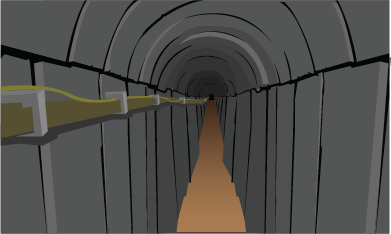
Perhaps the most significant feature of 2014’s Operation Protective Edge was the emergence of the terror tunnel phenomenon. Unlike Hamas’ traditional modus operandi of rocket attacks from Gaza, the tunnel phenomenon showcased the alarming ability of Hamas militants to burrow behind enemy lines into Israeli territory and launch attacks on towns and kibbutzim.
Amid reports that Israel might need to consider a threat of Hezbollah tunnels in northern Israel, we analyze the applicability of international law to these tunnels.
Given the recent emergence of the tunnels, their limited use around the world, and their ineffectiveness to state actors, international law does not specifically outline prohibitions on their use. Such is the view of Israeli international legal expert Professor Daphne Richemond-Barak, who noted ‘there is no legal literature’ on the issue and even ‘very little military theory and strategy’. Instead, we are forced to rely on relevant international humanitarian treaty and customary law.
The most obvious contravention of international law relates to the tunnels’ ability to assist in aggression against both Israeli targets and its territorial integrity. Although self-defense is guaranteed to member states of the United Nations by Article 51 of the UN Charter, Hamas’ claims of the tunnel’s ‘defensive’ nature are dubious at best. Many of the now-destroyed tunnels extended into areas of Israel without military targets, such as those with exit points close to the kibbutzim of Kerem Shalom, Holit and Nir Oz. Thus, the tunnels are understood to pose an intentional threat toward civilian targets within Israeli territory – well beyond the pretext of self-defense.
The exit points of these tunnels are not the only areas in violation of international law. The positioning of these tunnels’ entry points is also of significance, particularly as it relates to the Geneva Convention Relative to the Protection of Civilian Persons in Time of War (IV). The central theme of this treaty is the separation of civilians from military personnel to safeguard the wellbeing of non-combatants. Alarmingly, many of the tunnels’ entry points emanate from civilian areas and infrastructure such as mosques, schools and apartment blocks. This is in contravention of the following international laws:
- Article 28 of the 1949 Geneva Convention IV
- Articles 12(4) and 51(7) of the 1977 Additional Protocol 1 to the Geneva Conventions
- Article 8(2)(b)(xxiii) of the 1998 International Criminal Court Statute
- Customary International Law
Richemond-Barak also notes the significant risk posed to children in the construction of the tunnels. As argued in a Journal of Palestine Studies article of 2012, by Hamas’ own admission at least 160 individuals had died in constructing the tunnels at the time of the article’s publishing. Alarmingly, an extremely high number of these are believed to be children as they are ‘prized for their nimble bodies’.
Furthermore, the way in which these tunnels must be eliminated also makes Hamas liable for violations of international law. The aforementioned access points of the tunnels (in mosques, schools, apartment blocks etc.) inevitably means that their dismantlement will result in damage to civilian infrastructure and endanger the lives of civilians themselves. Mapping the paths and structural integrity of the tunnels is extremely difficult and rarely accurate. For those tasked with destroying the tunnels, there is a substantial element of ‘unknown’ in doing so; increasing the likelihood of unforeseen damage to Gazan civilians and their infrastructure.
Thus, in the absence of international law that deals specifically with the phenomenon of terror tunnels, one must apply existing relevant international humanitarian laws and norms to the issue. In doing so, one can establish that the use of underground terror tunnels is undeniably contrary to international law and a war crime.
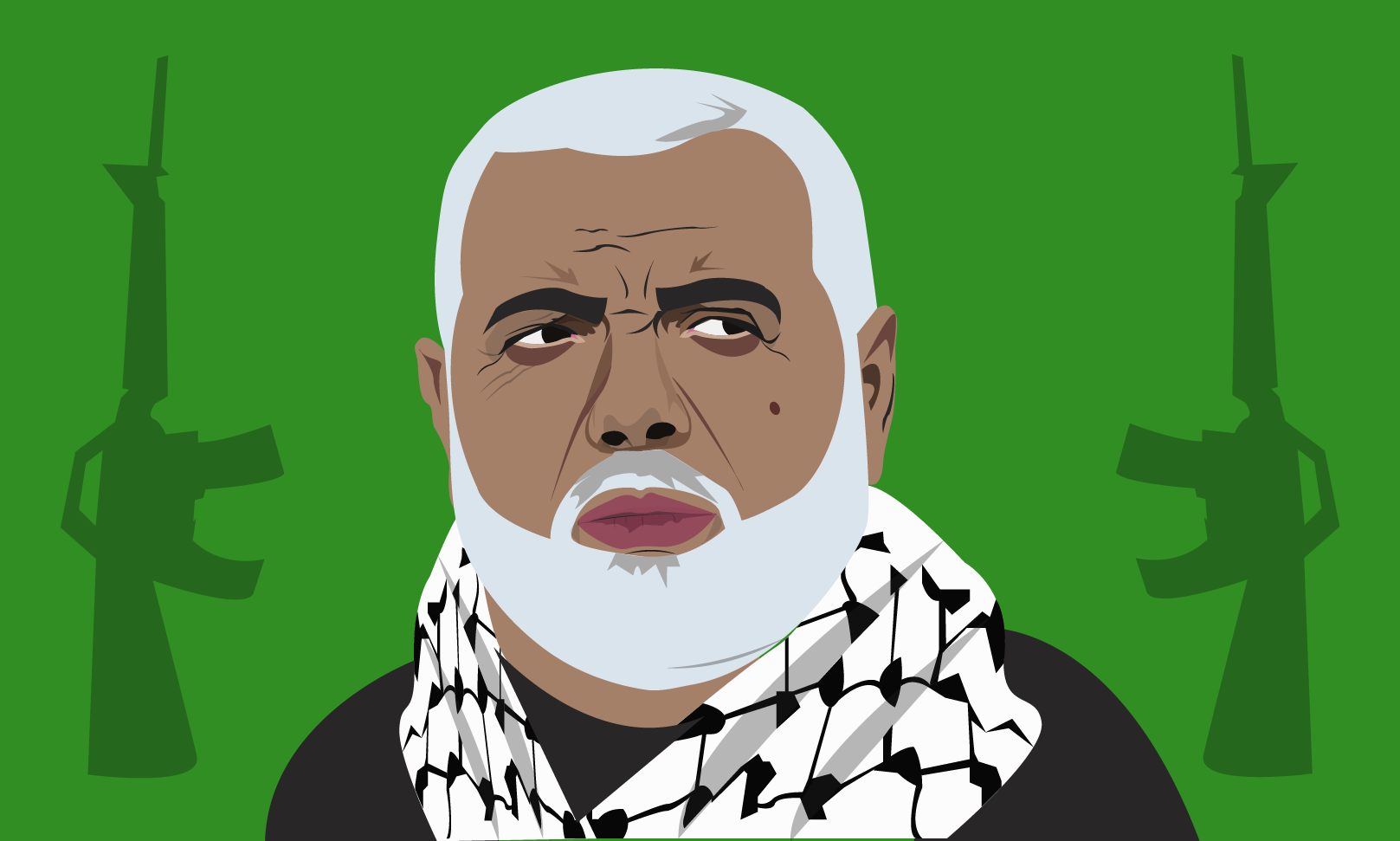
International leader Ismail Haniyeh
Ismail Haniyeh
The recent replacement of Khaled Meshaal with Ismail Haniyeh as Chairman of the Hamas Political Bureau signals a major shift in the inertia that has characterized the group in recent decades. Meshaal has served in his current role for over 20 years, while Haniyeh served as the disputed Prime Minister of the Palestinian Authority between 2006 and 2014.
So how much do we know about Hamas’ future leader? And what can we expect from the man who has enemies not only in Israel, but also among the Palestinian political establishment?
Early Life & Background
Haniyeh was born in 1963 in the Al-Shati Refugee Camp in the north of the Gaza Strip – at that time under Egyptian military occupation. His parents originated from Ashkelon, but became refugees after fleeing the 1948 Arab-Israeli War.
He attended schools run by the United Nations Relief and Works Agency and graduated from the Islamic University of Gaza with a degree in Arabic literature. During these years he became involved with Hamas and served as the head of the students’ council representing the Muslim Brotherhood (The Islamic University of Gaza’s founder happens to be Mahmoud al-Zahar – one of the co-founders of Hamas). He graduated at the same time as the first intifada, which likely helped to formulate his antagonism toward Israel and his esteem for armed resistance. He was given a short prison sentence by Israeli authorities in Gaza for his role in the protests and was detained again in 1988 and imprisoned for 6 months. In 1989, he was again imprisoned for three years.
Haniyeh was released in 1992 and was deported by Israeli authorities to Lebanon with senior Hamas leaders and 400 other activists. Using Lebanon as their base, they garnered substantial support and media exposure – both in the Middle East and around the world. He was able to return to Gaza in 1993 and was appointed Dean of the Islamic University of Gaza.
In 1997, he became the head of the office of Sheikh Ahmed Yassin – the spiritual leader and one of the co-founders of Hamas. The two men enjoyed a close relationship, leading to Haniyeh also serving as the group’s representative to the Palestinian Authority.
Amid the second Intifada, Hamas’ popularity surged as a response to the perceived success of armed resistance and suicide bombing. Furthermore, with many members of Hamas’ leadership being assassinated by Israeli security forces, Haniyeh was able to avoid competing with factional and personal rivals within Hamas for more authoritative positions.
Movement Through Hamas
Haniyeh’s ascension through the Hamas ranks also drew increased attention from Israeli security focus. In line with Israel’s policy of targeting leaders complicit in terror attacks against Israelis, Haniyeh and Yassin were slightly injured in an Israeli airstrike on an apartment block in Gaza city in September 2013. Six months later, Yassin was killed in a targeted assassination by an Israeli helicopter. As the spiritual leader, co-founder and close friend of Haniyeh, Yassin’s assassination more than likely strengthened Haniyeh’s loathing of Israel. Following Yassin’s assassination, Abdel-Aziz Rantissi was appointed his successor in Gaza. However, he too was assassinated in April 2014. Because of these efficient assassinations, Hamas decided to install a secret ‘collective leadership’ with Haniyeh, Mahmoud al-Zahar and Said al-Siyam.
In December 2005, Haniyeh was chosen to head the Hamas list in the Palestinian legislative elections. In the elections the following month, Hamas won a commanding majority with 76 seats out of a possible 132. Fatah won the next most seats with 43. Haniyeh was then confirmed as Prime Minister of the Palestinian National Authority and was asked by President Mahmoud Abbas to form a government.
Weeks of negotiations regarding a coalition with Fatah and other factions failed, and Haniyeh was forced to appoint a cabinet comprised primarily of Hamas members. This new cabinet was met with skepticism and repudiation from the US and the EU, both of whom threatened to cut funding to the Palestinian Authority unless Hamas renounced violence and recognized Israel. Haniyeh did not meet these requests and pleaded with them to not carry out their threats.
Strained Relations with Fatah
On December 14, 2016, an assassination attempt occurred at the Rafah border crossing between Gaza and Egypt that killed one of Haniyeh’s bodyguards and injured his son. Hamas consequently blamed Fatah for the assassination attempt.
In June 2007, after a week of fierce fighting between Hamas and Fatah, Hamas seized control of the Gaza Strip. President Abbas subsequently dissolved the Hamas-dominated government and dismissed Haniyeh as Prime Minister. Unsurprisingly, Haniyeh rejected the move and presented himself as the de facto Prime Minister - and would remain so up until June 2014.
Since that time, his role has been characterized by two main activities: trying to reach a reconciliation/unity agreement with Fatah and continuing the policy of mukawama (armed resistance) against Israel and its citizens. No elections have been held in the Gaza Strip since 2006, enabling Hamas to cement their control of the territory.
As the most senior official of the Gazan government, Haniyeh is understood to be responsible for the human rights abuses and war crimes emanating from Hamas in the territory. This means that, among other incidents, he is liable for:
- 3,278 rocket attacks on Israel in 2008
- 2,248 rocket attacks on Israel in 2012
- 4,562 rocket attacks on Israel between 8 July-26 August 2014
- The summary, extrajudicial executions of at least 23 people in July/August 2014
Personal Life
Haniyeh has thirteen children. He is thought to have become a millionaire through over 2,500 square meters of land in Gaza as well as selling subsidized fuel for profit. Three of his sisters, Kholidia, Laila and Sabah, are citizens of Israel and live in the Bedouin town of Tel as-Sabi near Beersheva.
In early 2012, Israeli authorities granted permission for Haniyeh’s sister and her critically ill husband to travel to Rabin Medical Center in Petah Tikva to receive emergency heart treatment. Similarly, in addition to several other members of Haniyeh’s family, his daughter spent a week in a Tel Aviv hospital for emergency treatment in October 2014.
Future Prospects
Amid the change in leadership, the continuity of past Hamas behavior will remain. Although the group will vote on a new charter in the near-future, they are not expected to renounce violence or support any of the norms laid out in the Oslo Accords of 1993. Due to pressure from the international community and media, they may do away with various anti-Semitic articles of the charter such as ‘The Day of Judgment will not come until Muslims fight the Jews, when the Jew will hide behind stones and trees. The stones and trees will say, “O Muslim, O servant of God, there is a Jew behind me, come and kill him”’.
His attitude toward both Israel and Fatah is not likely to be any warmer than his predecessor. He would harbor added enmity toward Israel for destroying his house in 2014’s Operation Protective Edge and for assassinating his mentor Sheikh Yassin. In relation to Fatah, he no doubt still resents the fact that he was dismissed as the Prime Minister of the Palestinian Authority in favor of Third Way’s Salam Fayyad. Known as a firebrand public speaker, he is likely to be received more poorly by the international community than the erudite and softly-spoken Meshaal. Coupled with the volatile militancy he displays at Hamas rallies, it does not bode well for those hoping for peace and stability.
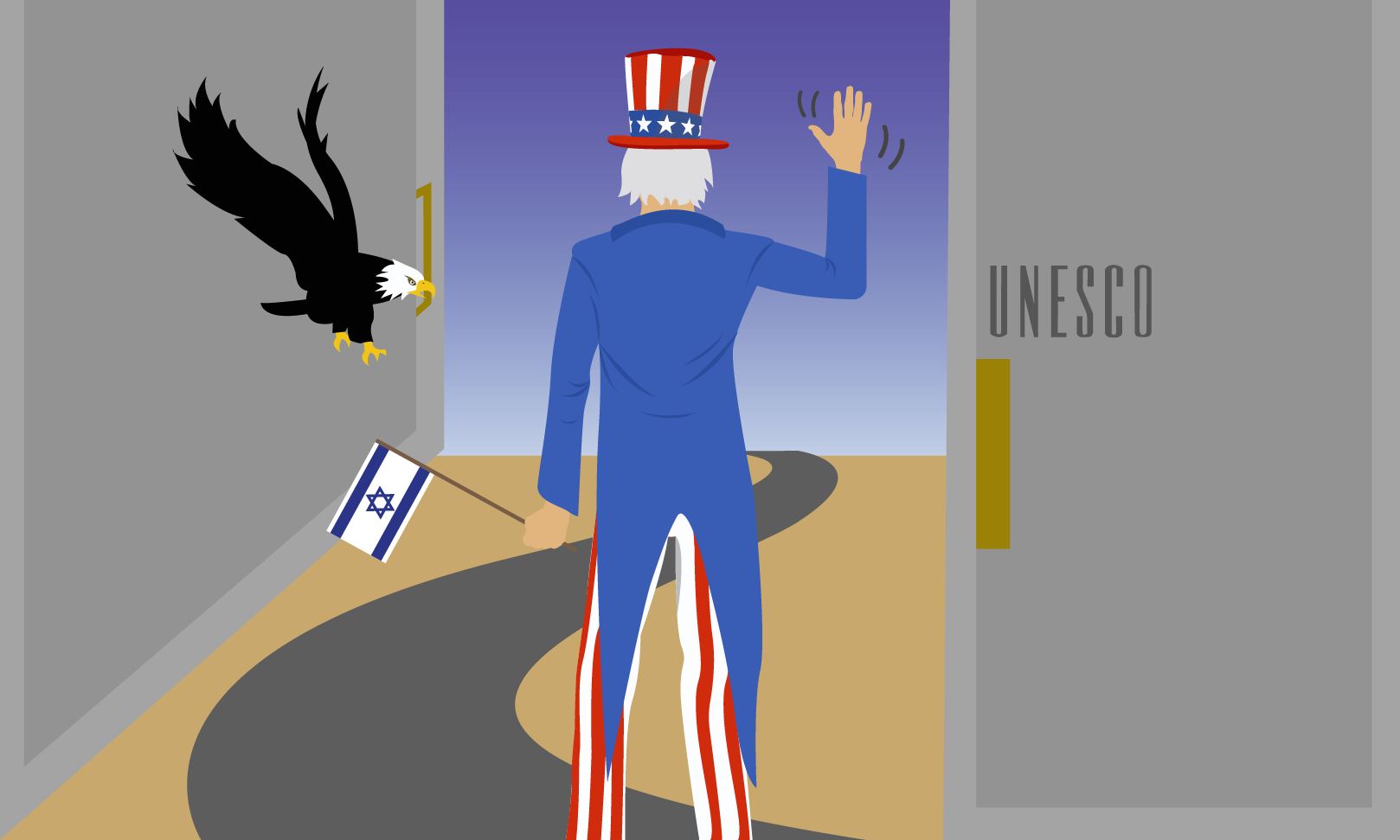
Your Regret Has Been Duly Noted
The recent decision of the U.S. to withdraw from UNESCO triggered an expression of profound regret by its director, but begs the question, “... and what took you so long?”
Led by President Reagan, the U.S. played hooky from UNESCO from 1984 to 2003 on the grounds that the organization “extraneously politicized virtually every subject it deals with, (and) has exhibited hostility toward the basic institutions of a free society, especially a free market and a free press.” That invites repetition of the old joke, “But aside from that, Mrs. Lincoln, what did you think of the play?
The same sound grounds for withdrawal from UNESCO have been well-publicized for the past five years. Could withdrawal have anything to do, for instance, with past decisions to include the writings of Che Guevara in UNESCO’s “memory of the world” register? The reappointment of Syria to a committee dealing with human rights? Formation of a Unesco chair at the Islamic University of Gaza - an institution tied to Hamas? Or, maybe, giving out a life-sciences award that was sponsored by Africa’s longest-ruling dictator?
While the decision’s timing may have caught Israel by surprise, the decision process had been underway for some time, with Israel’s knowledge and participation. It hardly exposes a grave lack of mutual coordination. Otherwise, Netanyahu could not have joined hands mere hours after the decision became public, thus avoiding charges of collusion between Israel and the United States.
Claiming, typically, to know Americans best, UNESCO’s Director General argued that “universality” drives detailed goals shared by the American people themselves, and should take priority over non-payment of America’s financial dues. Yet Irina Bukova knows that financial withdrawal in 2011 was mandated by U.S. law after UNESCO admitted ‘Palestine’ as a full member. This served as an advance warning of stronger steps to come, despite Secretary of State John Kerry’s personal determination to subvert Congressional intent and restore participation without conditions. Or is Bukova using diplomatic sarcasm to blast Trump for choosing money over human need, an obligation she will oh-so-nobly defer?
Even the New York Times placed the key decision-point in its headline and lead, though bracketed, with quotation marks: “What it (the Trump administration) called the group’s ‘anti-Israel’ bias’. " Since no one had demanded the U.S. pay up, tying withdrawal to finances may not rise to the level of fake news, but its frequent mention in media coverage amounts to mere journalistic noise.
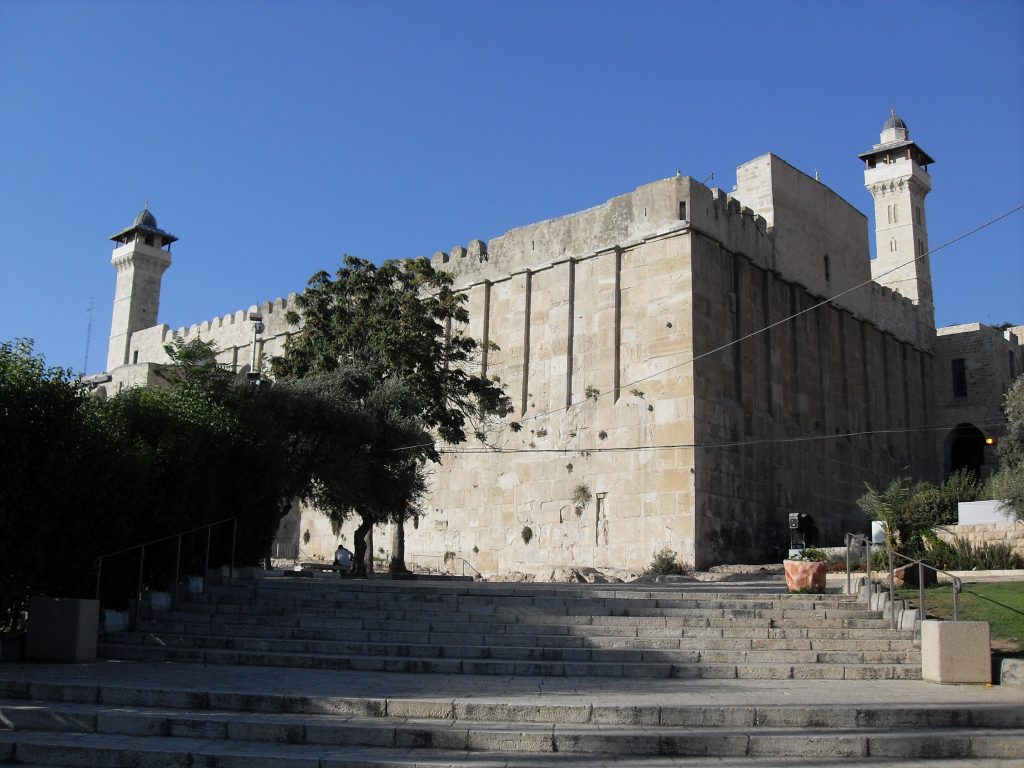
By contrast, the National Geographic, a long-time apologist for UNESCO, detailed the crucial connection between its mission to protect World Heritage Sites, actual (not merely ‘claimed’) anti-Israel bias and American withdrawal. Having determined in 2001, that the Temple Mount shall be named and referenced as always-and-only a protected Muslim holy site, this summer’s UNESCO decision to contradict Moses and declare Hebron the historic heritage of Palestinians probably served as the tippingpoint to three months of internal American and Israeli consultation.
(below, Cave of the Patriarchs, Hebron)
Arguably, the U.S. withdrawal has as much to do with image as substance. Yet, in the U.N. and, even more so, the Middle East, image and substance often prove to be one and the same.
Then again, just possibly the tide may be turning in favor of historic truth over narrative fictions. "I think it's a catastrophic decision," said Daniel Rondeau, a former French envoy to the body. "It's a fracture that seriously jeopardizes the very nature of UNESCO - its universal dimension - and the very concept of multilateralism." Given the perverse ways that UNESCO defines and acts upon so-called ‘universal’ and ‘multilateral’ values, one can only hope that Rondeau’s fears are justified, and that the doors of this theatre of the absurd will, indeed, close.

Egypt: A Return to Martial Law
In the last decade, Egypt has experienced some of the most monumental political shifts in the modern history of the Middle East. In 2011, after 30 years of authoritarian rule under President Hosni Mubarak, the revolutionary sentiments of the Arab Spring gained a foothold among the Egyptian people. A combination of mass demonstrations, civil disobedience and strikes resulted in the overthrow of the Mubarak regime on 11 February, 2011.
Following the overthrow, Egypt was governed by a military junta until it appointed Mohammed Morsi as its first democratically-elected president on 24 June 2012. Morsi, of the Islamist movement the Muslim Brotherhood, affirmed that the Egyptian people were the true source of power in their country. “You grant it, and you withdraw it”, he declared to the public when he took a symbolic oath of office in Tahrir Square. Although incidences of police brutality and government overreach were reduced under Morsi’s presidency, he drew international condemnation for polarizing relations between Egypt’s majority Muslim community and its sizeable Coptic minority community, as well as his inability to prevent violence directed at the Coptic community.
In July 2013, just over a year into his presidency, Morsi was overthrown by the military in a coup d’état. Following the coup, the constitution was suspended and in May 2014 army chief General Abdel-Fattah el-Sisi was elected President by an overwhelming majority of 93%.
Since that time, his presidency has been characterized by authoritarian rule and the systematic curtailing of human rights and civil liberties in the Middle East’s most populous nation.
Freedom of Expression/Freedom of the Media
The suppression of media freedom by Egyptian authorities is perhaps the most internationally-recognized issue pertaining to Egypt’s human rights record. The most noteworthy case involves the three Al Jazeera journalists Mohamed Fahmy, Peter Greste and Baher Mohamed. The trio were arrested in December 2013 on charges of news reporting that was ‘damaging to national security’, and were held in solitary confinement for a month before any formal charges were made. In late December 2013, they were given multi-year prison sentences after a trial in which prosecutors failed to present any credible evidence of criminal wrongdoing, although all three men have now been freed because of immense pressure from the international community.
In a more recent case, Misr 25 journalist Khaled Abdel Wahab Radwan was sentenced to 15 years in prison. It followed his arrest in March 2014 on espionage charges, although it is widely believed to be an attempt to silence criticism of President el-Sisi - as Misr 25 was owned by the Muslim Brotherhood[1]. Three of Radwan’s colleagues, who were tried in absentia, were sentenced to death for sending documents to their broadcaster’s headquarters in Doha for journalistic purposes[2].
Wider non-journalistic expression is similarly suppressed by the Egyptian government. A Human Rights Watch report published in 2015 stated:
‘Authorities detained dozens of people for such offences as possessing flyers with anti-military slogans, rapping in public against the police, or displaying signs commemorating victims of the Rab’a [the violent dispersal of sit-in protestors by Egyptian military and police personnel that resulted in the deaths of at least 817 people] dispersal. Journalists, academics, former lawmakers and human rights defenders were among those charged with crimes or banned from travel outside Egypt[3.’
Although Egypt’s constitution guarantees freedom of religion, authorities have prosecuted writers and activists on charges of ‘contempt of religion’ and ‘blasphemy. Such was the case with author Karam Saber, who was sentenced in absentia to five years in prison in 2013 for ‘contempt of religion’[4].
Capital Punishment
Contrary to the majority of UN member states and key provisions of international customary and treaty law, Egypt retains the use of the death penalty. A wide variety of crimes - including non-violent crimes such as drug possession, treason, and desertion - can carry a death penalty. Under the presidency of el-Sisi, the number of executions has increased significantly. No executions were performed in 2012 and 2013 (before el-Sisi ascended to the presidency), while 15, 22, and 44 executions were carried out in the years 2014, 2015 and 2016 respectively (el-Sisi became president in 2014).
For countries that do retain the death penalty, international law mandates effective safeguards and protections for those on trial for capital offences. Regrettably, Egypt has not met many of these requirements. For example, in March and April of 2014, a criminal court handed down the death penalty to more than 1,200 people allegedly involved in a terrorist attack. The judge did not allow the defendants the right to mount a meaningful defence or ensure that all had access to counsel[5]. The first trial, which resulted in 529 death sentences, lasted less than an hour, and only 74 defendants were present. The court also barred some defence lawyers from attending. In the second trial, which yielded 683 death sentences, none of the defendants attended.
As recently as April 2017, Human Rights Watch reported and published a video of Egyptian security forces carrying out summary executions in the Sinai Peninsula. In the video, two unarmed detainees are shot in the head. According to Joe Stork, of Human Rights Watch’s Middle East section, testimony had been collected suggesting security forces have been removing prisoners from detention centres and executing them.
Ambiguous Criminal Offences
The Egyptian government’s authoritarian proclivities have seen a reintroduction of crimes that, although intended to maintain national security and enforce the rule of law, carry vague meaning and questionable legal validity. Under the presidency of el-Sisi, people have been convicted on charges of receiving foreign funding to damage Egypt’s ‘national interests’, ‘peace’, ‘unity’ or ‘security’; as well as ‘insulting the president’ and ‘misusing social media platforms’. In addition, a law passed in 2013 allowed the Interior Ministry to ban and forcefully disperse protests and arrest participants on ambiguous grounds such as ‘imped[ing] citizens’ interests’. By having such vague criminal offences enshrined in the Egyptian legal system, it imparts a substantial degree of subjectivity onto cases where people are accused of such crimes. Hence, should the Egyptian government decide to silence or incarcerate their critics, there is legal recourse to invoke a charge as dubious as ‘working to disrupt unity’ to arbitrarily punish them.
Torture and Ill-Treatment
In recent years, Egypt has displayed an alarmingly high number of incidences of torture and ill-treatment within their correctional facilities. Prisons are notoriously overcrowded, with those accused of more severe crimes consigned to sections of facilities that are more dangerous and derelict. For example, in the aforementioned case of the Al Jazeera journalists, Peter Greste was held in the main section of the notorious Tora prison complex, whilst his two colleagues accused of more serious crimes were held in the far more draconian Scorpion prison built for convicted terrorists. Although the main section of the complex is cramped, severely overcrowded and poorly ventilated, the Scorpion section inmates had to sleep on the floor in mosquito-infested cells in solitary confinement.
According to an investigation by the Egyptian newspaper Al Watan, at least 90 people died in 2014 in local police stations and security directorates in the governorates of Cairo and Giza alone[5]. Furthermore, there is also widespread reports of severe beatings during arrests, arrival at police stations and transfers between prisons. Many complaints have been made of torture, including through the use of electric shocks, to coerce confessions[6].
Women’s Rights
Egyptian women remain particularly vulnerable to sexual and physical abuse due to antiquated cultural attitudes, legal loopholes, and systemic impunity granted to perpetrators by judicial and police authorities. Although el-Sisi’s government has pledged his commitment to combat domestic and sexual violence against women, the alarmingly high rates of abuse suggest either an inability or unwillingness to tackle the problem. For example, a ministerial committee formed by the President on the issue of harassment has not even proposed a law on violence against women. To date, no such law exists that criminalizes domestic violence[7].
Egypt also has some of the highest rates of female genital mutilation (FGM) in the world. A 2013 report by UNICEF revealed 91% of Egyptian girls and women have undergone some form of FGM[26]. Egypt also had the highest number of incidents (27.2 million) of the countries examined in the report. Such an endemic occurrence of FGM stands in strong contrast to the prohibitions set out in the Declaration on the Elimination of Violence Against Women of 1993.
Conclusion
As the most populous nation in the Middle East, Egypt plays an important role both regionally and internationally. Given its sovereignty over the Suez Canal and its strategic location between Africa, Europe and the Middle East, its security and stability is a significant priority for the international community. It has portrayed itself as the key bulwark against terrorism and religious extremism. However, in doing so, it has eschewed the hallmarks of democracy and the rule of law in favour of authoritarianism. The fundamental human rights of free speech, freedom of assembly and the right to a fair trial have been systemically eroded. Egypt is party to core treaties of international law such as the International Covenant on Civil and Political Rights (1976), the Convention on the Elimination of All Forms of Discrimination Against Women (1981) and the Convention Against Torture (1987). As such, any authority exercised toward Egyptian citizenry should be exercised in a manner that holds human rights as sacrosanct and corresponds with their international legal obligations.
[1] Tadros, M. 2013, ‘The Brothers and the Copts’, Middle East Institute, August 12, viewed 5 June 2017,
[2] Committee to Protect Journalists, op. cit.
[3] Human Rights Watch 2015, op. cit.
[4] Ibid.
[5 Human Rights Watch 2015, op. cit.
[5] Human Rights Watch 2015, op. cit.
[6] Ibid.
[7] Ibid.


Turkey’s Authoritarian Slide
On October 29, 1923, a young Turkish statesman named Mustafa Kemal Ataturk proclaimed the birth of the Republic of Turkey and became its inaugural President. Following the aggression and regional hegemony of the Ottoman Empire up until the end of the Great War, the Turks’ new state was envisaged to fulfil their self-determination without the imperialist and theocratic proclivities of the Sultanate.
To a large degree, this has been the case for most the last century. Apart from its occupation of Northern Cyprus and its intermittent crackdowns on Kurdish communities, it bore little resemblance to the empire of old. Defined more by its secular constitution and burgeoning economy, Turkey relinquished its former role as Islam’s political authority.
However, under the Presidency of Recep Tayyip Erdoğan, the Republic has begun a gradual, creeping recession into authoritarianism.
The first signs of this slide appeared in relation to the media. Following the anti-Erdoğan Gezi Park protests of 2013, the government responded with sweeping new laws aimed at stifling the media. Incidents involving restrictions on the media included:
- Journalists from Cihan News Agency and the Zaman newspaper were repeatedly barred from attending government press conferences or asking questions.
- The Radio and Television Supreme Council issued fines to pro-opposition news channels such as Halk TV and Ulusal Kanal for their coverage of the protests, alleging that the images were likely to frighten and destabilize the wellbeing of children who could be potentially watching.
- After the protests had subsided, President Erdoğan tightened controls on the internet and blocked Twitter and YouTube.
Alarmingly, according to the Committee to Protect Journalists, Turkey has 81 journalists incarcerated as of December 1 2016. This is the highest of any other country, including all the journalists currently jailed in North Korea, Cuba, Russia and China combined.
The undermining of Turkey’s separation of powers is also concerning. The governing powers and functions in Turkey are divided between the executive, the legislative and an independent judiciary. By design, the religious inclinations of Erdoğan’s Justice and Freedom Party (AKP) are at odds with the historically-secular judiciary. In January 2014, the President purged the judiciary of several officials either for their secularist credentials or those whom he thought to be aligned with his rival Fetullah Gülen. Many of these sacked judicial officers were later replaced by AKP supporters. This was followed by another purge of the judiciary in July 2016, where 2,745 Turkish judges (36% of all judges in Turkey at the time) were removed from duty and ordered to be detained.
Turkey again made international headlines when it held a constitutional referendum in April of this year. The referendum, which succeeded with a ‘yes’ vote of 51.41% to a ‘no’ vote of 48.59%, essentially undermined the liberal founding principles of the Republic and the constitutional constraints on the Presidency. Opposition leader Mithat Sancar stated that a successful ‘yes’ vote and its corresponding amendments would cause the country to ‘quickly become an autocracy’ and eventually a ‘pure dictatorship’. These amendments included:
- Removing the requirement that the judiciary be neutral
- Widely expanding the responsibilities and powers of the Presidency
- Enhancing the President’s powers during a state of emergency
- Dissolving the position of Prime Minister
Following a coup attempt in late 2016, the government initiated a crackdown to purge the military, judiciary, government and civil service of not only those who were implicated in the coup attempt, but also those deemed to be disloyal or dissenting to President Erdoğan. Over 100,000 officials have been dismissed or suspended, including 28,000 teachers. At least 2,200 judges were jailed pending investigation, with 3,400 permanently dismissed. The government also temporarily derogated from many of the key provisions of the European Convention on Human Rights and the International Convention on Civil and Political Rights. The state of emergency also weakened the safeguards against abuse in detention, leading to increased reports of torture and ill-treatment in police detention such as the beating and stripping of detainees as well as threats of rape.
Furthermore, the Turkish government has intensified actions that intimidate and target the country’s Kurdish minority. Curfews have been enforced in Southern Kurdish towns and cities and, as estimated by Amnesty International, up to half a million people have been forced out of their homes because of security operations by Turkish authorities. Many homes and historic buildings of cultural significance to the Kurds, such as in the city of Diyarbakir, have been shelled or demolished. A report by the Office of the United Nations High Commissioner for Human Rights released in February 2017 accused Turkish authorities of killing hundreds of Kurdish people between July 2015 and the end of 2016.
Importantly, Turkey is bound by a wide range of human rights obligations under international law. Among other treaties, they are a party to the International Convention on Civil and Political Rights, the International Covenant on Economic, Social and Cultural Rights and the United Nations Convention Against Torture. Thus, it is increasingly alarming that the government is engaging in such flagrant violations of their international legal commitments. Although faced with the undeniable threats from terrorism, military mutinies and corruption, President Erdoğan has exaggerated these threats to justify the suppression of free speech, freedom of assembly and the required impartiality of Turkey’s judicial branch of government. Along with his government, he should be subject to extensive further inquiry into these human rights abuses.
Standing up for European Principles On Human Rights
Now More Than Ever:
Summary: Decision Action Still Needed
Four years ago, an audit by the European Court of Auditors (ECA) noted serious irregularities in funds distributed to the Palestinian Authority, especially aid grants remitted to ‘workers’ in Gaza who could not show evidence of employment. Transparency International reported widespread irregularities and likely corruption throughout the payment system in a 2016 report.
Overall, while some modest improvements have been noted, decisive EU action to mandate adequate accounting checks and, where necessary, impose appropriate penalties for non-compliance remains essential.
The 2012 ECA Report on Aid to Workers in Gaza
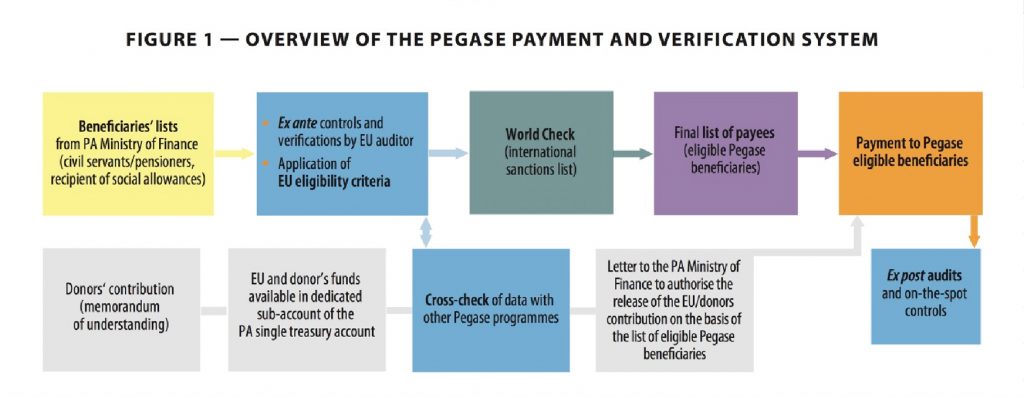
In late 2012, the European Court of Auditors conducted an on-site study in Israel to verify the aid distribution mechanism from the EU through PEGASE to the Palestinian Authority (PA). PEGASE describes itself as:
"… the European Union’s mechanism to support the Palestinian people through implementation of … the PA’s own Single Treasury Account (STA) or via direct payments to eligible companies and individuals in full transparency, co-operation and agreement with the PA."
This illustration from the 2013 ECA report depicted the steps to be carried out by the PEGASE process:
In a key finding, the ECA report stated that:
"Pegase DFS has contributed to essential public services, but the audit found that in Gaza a considerable number of civil servants were being paid without going to work and providing a public service due to the political situation in Gaza. The Commission and the EEAS have not sufficiently addressed this problem."
Consequently, the ECA advised the EU to forge an agreement with the PA to cease civil servant payments in Gaza and transfer these to the West Bank, as well as to “apply conditionality to the future Pegase DFS, specifically by linking it to concrete progress by the PA on civil service reform.”
The EU Commission agreed to the latter recommendation on conditionality. However, the EU did not then accept the proposal to sever payments to civil service workers in Gaza. Nevertheless, in February 2017, the decision was taken to shift funding of Gaza public employees in favor of direct aid to poor families. The Communication officer of the EU Commission, Shadi Othman, positioned this to the Palestinian media as a minor change in procedure. In a separate interview, Othman opposed the conditionality provisions of the ECA recommendations as a form of ‘blackmail’ against the Palestinian people.
The 2016 Transparency International Report
On Illicit Enrichment of Palestinian Public Officials
Transparency International is a global NGO leading the fight against governmental corruption. Sweden sponsored, though it did not necessarily concur with the conclusions reached in their report titled “Asset Declarations in Palestine: Illicit Enrichment and Conflicts of Interest of Public Officials.”
The report observed that more than US$160 billon is believed to have been stolen by regime officials over the years in Egypt, Libya, Tunisia and Yemen alone. Subsequently, international standards for declaring and tracking asset accumulation by public officials have been defined and, sometimes, adopted by affected countries. This has included organizations like the Palestinian Authority. Even so, the report contains scathing criticism of the gulf between formal adoption and on-the-ground practices.
Not a single standard of the ten outlined below have been implemented effectively - some not at all - by the PA:
- Creation of a legal basis for detecting illegal enrichment and conflicts of interest (a law passed in 2002 was later revised to exclude many government officials, including judges).
- Declaration of all income, gifts, loans and sales of property by those entering public service (the current regulations are ambiguous, creating the potential for hiding illicit funds in non-reportable categories).
- All officials should be required to declare assets (judiciary officials, at high risk of illicit activities, are excluded; family members are included but do not, in practice, declare).
- Asset declarations must be submitted when assuming office (no statistics on compliance, but it is believed the majority of required declarations are never submitted; the provision seems to be “toothless”).
- Asset declaration must be verified (no law in place, no evidence that even a single case has been brought against an official in non-compliance).
- An oversight body will conduct asset verification, with access to public databases (created, without dedicated staff, training or procedures).
- Formal operation will occur between the oversight body and prosecution, police and finance intelligence (not established).
- Asset declarations will be visible and accessible to the public (not implemented).
This table illustrates the categorization of assets subject to declaration, showing which items must be declared. As mentioned above, some categories are ambiguous and can be flexibly ‘interpreted’ by those making asset declarations:
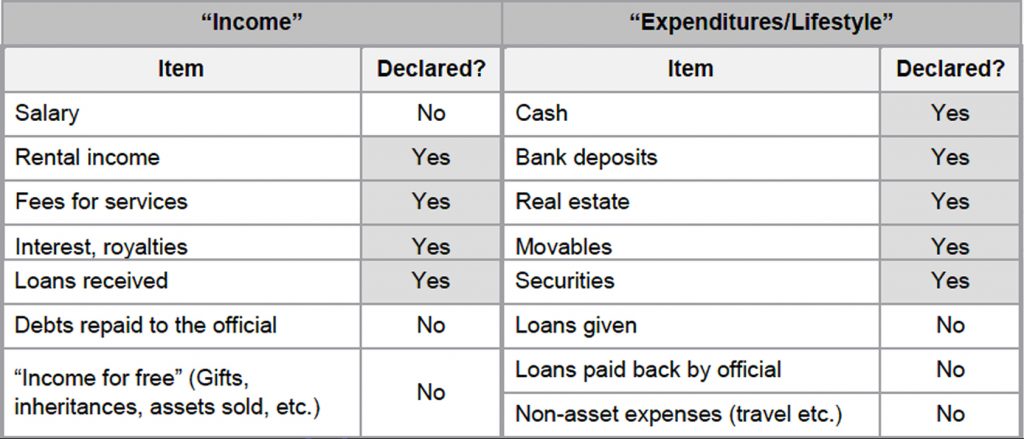
The 2016 Transparency International report concluded by stating that “Palestine has fallen behind international standards on asset declaration” and by offering a series of reform proposals.
Conclusion: The More Things Change …
A proverbial French expression notes that ‘the more things change, the more they remain the same.’ Regrettably, this applies to EU funding of PA activities. While we commend the efforts of the ECA and Transparency International to shed continued light on the lack of substantive accountability by the PA, it falls to the EU to take the decisive action required for permanent reform.
Conditionality - the formal linkage between change in PA behavior and aid distribution to Palestinians - must include measurable criteria for each standard of financial accountability. Enforcement, including sanctions where needed, must be applied without reference to PA complaints. The EU can, through this method alone, offer genuine help to the Palestinian people who are the hoped-for recipients of financial aid that today, as in the past, too often finds its ways into the private bank accounts of a corrupt political and legal class.