
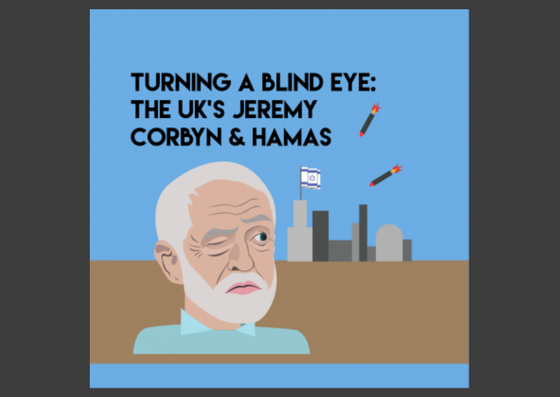
Turning A Blind Eye: Jeremy Corbyn and Hamas
Jeremy Corbyn
In 2015, Jeremy Corbyn was elected leader of the British Labour Party. This political faction prides itself in representing all sectors of society, specifically minorities and oppressed communities. In line with the party’s ideology, Corbyn has been depicted as a champion of human rights through condemning countries and leaders that violate them and standing up for persecuted peoples. For example, Corbyn criticized British Prime Minister Theresa May on International Human Rights Day for holding talks with delegates from Saudia Arabia and Bahrain, notorious violators of international human rights laws.
But while Mr. Corbyn seems to hold a steadfast position on human rights, his support for certain groups and organizations contradict his purported values. Specifically, their his support for the terrorist organization Hamas has created controversy:
In 2009, Corbyn urged the British government to remove Hamas and its leadership from the British list of condemned terrorist groups. That same year, Corbyn invited representatives from Hamas and Hezbollah to a meeting in the British parliament. Hamas and Hezbollah are both currently classified as terrorist groups by the European Union and the United States of America. During his speech, Corbyn referred to Hamas and Hezbollah as “friends” and “hardworking”.
With the British leaders’ support of the organization, it is important to evaluate Hamas’ poor Human Rights record.
Hamas and Human Rights
The Palestinian Resistance Movement Hamas has been categorized as a terrorist organization by the international community and condemned for their multitude of human rights abuses. The following presents specific examples in which the organization violates international law.
Torture
Torture is labeled as a violation of international law in Article 5 of the United Nation’s Universal Declaration of Human Rights.
From December 2016 through March 2017, 38 complaints of torture were reported to the Independent Commission for Human Rights. Reports in Gaza include beatings, suspending detainees to which his shoulders became dislocated, and making prisoners stand in uncomfortable positions for long periods of time.
Prisons
Arbitrary arrest, detention or imprisonment is labeled a violation of international law in Article 9 of the United Nation’s Universal Declaration of Human Rights.
Hamas has passed legislation that imprisons any Palestinian for 10 years if they are caught interacting with Israeli NGOs. That means any hospital staff or families of patients interacting with an organization like “Save a Child’s heart,” which provides free cardiac treatment, would be arrested by Hamas.
The security forces also arrest Palestinians whom they claim dress improperly. Some men committed the crime of what the authorities called “pop-star” haircuts, while others had pants that were too low or too tight. These perpetrators were arrested, had their heads shaved, and beaten.
Women’s Rights
Article 55 of the Charter of the United Nations outlines “universal respect for, and observance of, human rights and fundamental freedoms for all without distinction as to race, sex, language or religion”.
And even though Articles 17 and 18 of the Hamas Charter define the mother the head of household charged with furthering the education of her children and preparing them to fulfill religious commandments, the organization’s treatment of women is anything but egalitarian:
- Hamas has a special police force to ensure that women dress in a conservative Muslim manor.
- A woman can only file for divorce under certain circumstances, such as if the husband can’t afford to pay her dowry. A woman can attempt to separate from her husband under the claim of mistreatment, but the courts decide what constitutes such abuse and generally do not sway in favor of the wife. Overall, divorce stemming from the complains of a woman is more of an exception than a normative right.
- Adultery is punishable by imprisonment under Hamas. While both men and women are subject to consequences for such, women carry out usually double the prison sentence as compared to men who commit adultery.
Freedom of Thought and Expression
Under article 18 of the Universal Declaration of Human Rights, “everyone has the right to freedom of thought, conscience and religion”.
While Muslims represent 99% of the population in Gaza, there is a very small minority of Christians, constituting about 1% within the territory. Even though the Hamas Charter claims to allow them to live peacefully under Islamic rule, Christians are constantly harassed and threatened by Hamas. For example, shortly after the terrorist group assumed control of Gaza, Hamas burned down and invaded a church and Catholic school.
A Christian bookstore in Gaza was burned down that same year. The owner of the store was also kidnapped and killed by Hamas.
Under Article 19 of the Universal Declaration of Human Rights, all people have the “right to freedom of opinion and expression…without interference and to seek, receive and impart information and ideas through any media and regardless of frontiers”.
The media in Gaza has been under Hamas’ control since 2007, with journalists only allowed to report on topics approved by the government.
Western journalists reporting on the poor living conditions in Gaza are subject to threats and mistreatment by Hamas. Many recounted that Hamas officers have destroyed or confiscated their materials and cameras due to depicting the true situation within the territory.
Children’s Rights
According to the convention of the Rights of Children and the UN Declaration of Human Rights, recruitment and Use of Children is one of the grave violations against children during armed conflict. The UN defines a child as anyone under the age of 18.
Izzedim Kassam, the military wing of Gaza, implemented a program in 2013 that youth from the ages 15 to 17 in preparation for combat. Some of the lessons in this program include handling grenade launcher and urban warfare.
War Crimes
Human shields are considered a war crime, is described by the Rome Statue as: “utilizing the presence of a civilian or other protected person to render certain points, areas or military forces immune from military operations”.
From June 13th to August 26th 2014, during the Israeli-Hamas conflict, the citizens of Gaza were under constant threat from Hamas. The group often uses their own people as human shields by carrying out terrorist activities in civilian areas.. These infrastructures are then targeted and bombed because they are the origin site of rocket fire. And while Israel warns Palestinians to evacuate beforehand, Hamas operatives stop citizens from leaving, intentionally putting their own people in direct danger.
The bodies of those killed in Gaza are then showcased to the media to rally against Israel, but really they in reality victims of the Hamas terrorist agenda.
Conclusion
As outlined above, Hamas has clearly violated a multitude of UN Human Rights and international laws. However, British Labour Party leader Jeremy Corbyn has made statements and carried out actions supporting the organization.
The United Nations Universal Declaration of Human Rights outlines the laws and values that all nations and leaders must abide by. The principals set out are supposed to be followed whether at home or abroad by signatory nations. Mr. Corbyn’s contradicting commitment to the Declaration and his support of Hamas, a gross violator of human rights, undermines the legitimacy and importance of Human Rights in Gaza and validates the abuses of the Hamas government. With Great Britain being a leading world power, turning a blind eye to the terror carried out in Gaza can only lead others to follow and further human rights violations to continue into the future.
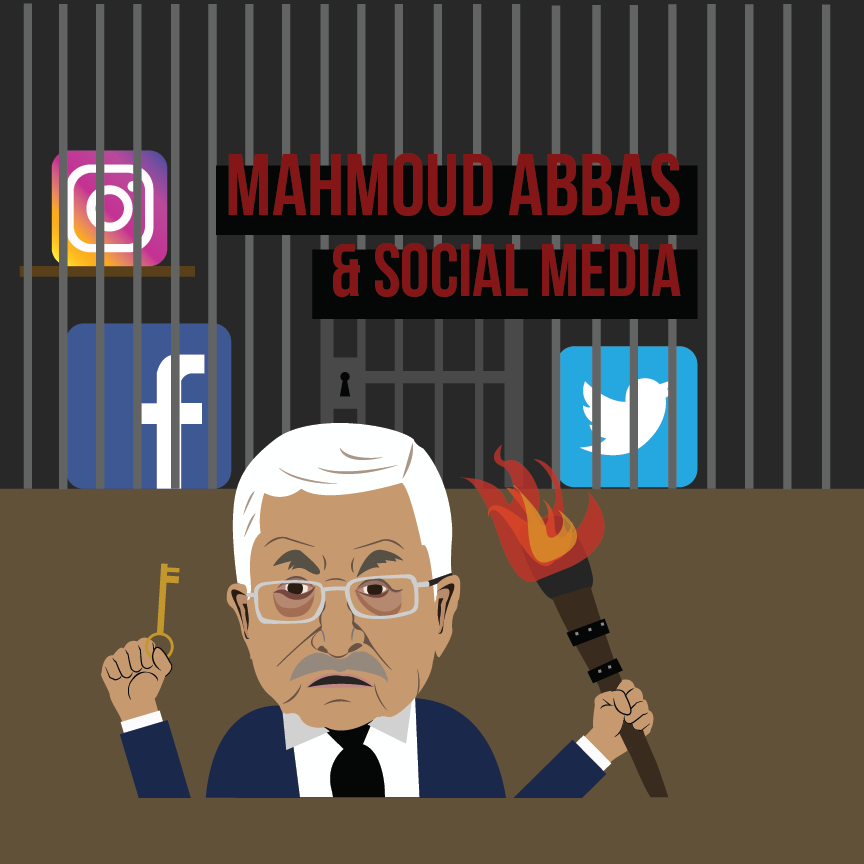
Abbas Doesn't 'Like' Social Media. The Feeling Is Mutual.
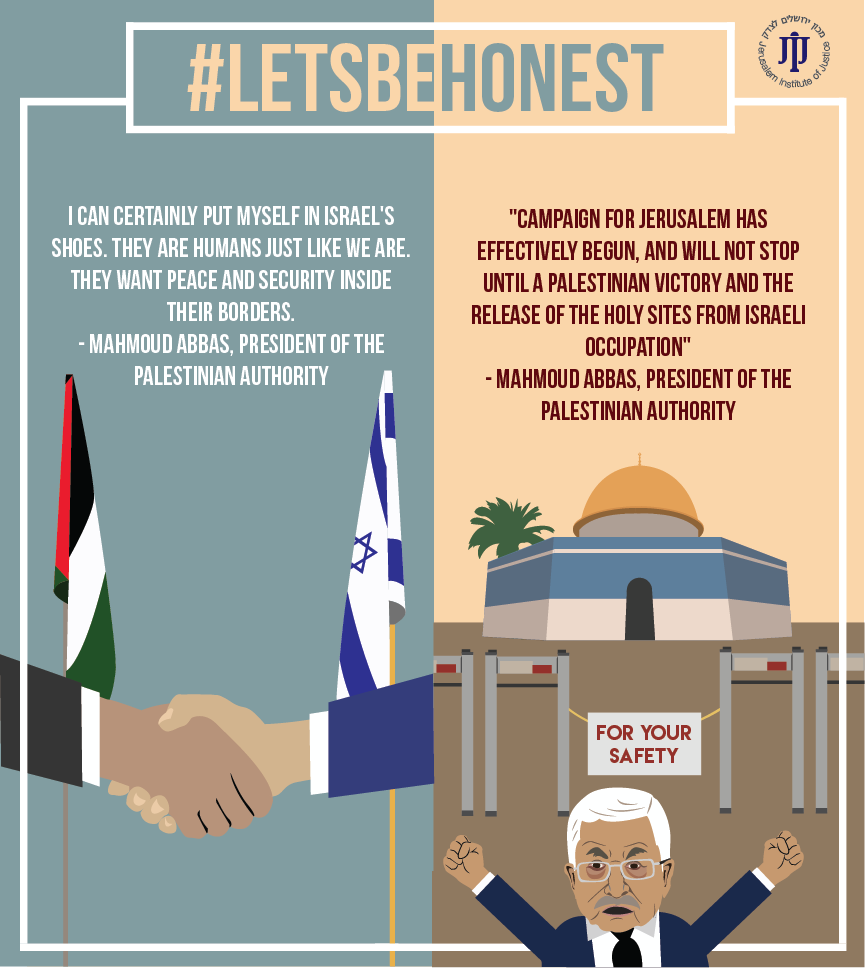
Palestinian Authority (PA) President Mahmoud Abbas won't be collecting any 'likes' for his recent crackdown against social media and news websites. Those who say the wrong thing, defined vaguely as 'endangering the safety of the state’ or ‘harming national unity' may now receive jail terms up to life in prison.
Without social media, Palestinians would be unable to get their stories out to the world. As one example, Palestine Informer, offers a rare, uncensored glimpse into life as-it-is experienced by ordinary Palestinians. No longer.
Abbas may have believed he could decree a two-for-one winning strategy with this new Cyber-Crime decree.
First, the President criminalized fully-justified criticism of his regime by rivals and, notably, Mohammed Dahlan. Second, he placed intense pressure on Hamas for their recent arrest of a Palestinian television reporter, Fuad Jaradeh. No doubt, Hamas did this to humiliate Abbas. It worked and then some.
The new law has already become a public relations disaster. Ammar Dweik, head of the PA's own Independent Commission for Human Rights, told Ynet news that the law is 'one of the worst' issued in PA history. That is quite an achievement! Even normally loyal or, at least, cowed Palestinian journalists are pushing back. As one wrote, "what is laughable is that this law carried penalties that are tougher than those imposed on thieves and sex offenders." Let’s just say we won’t count this as a ‘like’ for the law.
Oh, and speaking of liking things, anyone who merely promotes content that Abbas deems offensive by 'liking' and sharing it with friends can also be prosecuted and jailed alongside the author. As the PA prosecutor explained, “you cannot accuse the president …. of treason or make fun of him in an image, or something like that.” Surely, that helps clarify things, no?
President Abbas doesn't like social media and the Internet. Everyone gets that. Even so, the law seems unusually bizarre, unless Abbas has decided that his own political survival now hinges on naked suppression of free speech. If so, the President may soon discover that social media's dislike of his crude campaign of censorship sweeps away his 20th century regime, led by otherwise conservative 21st century Palestinians.
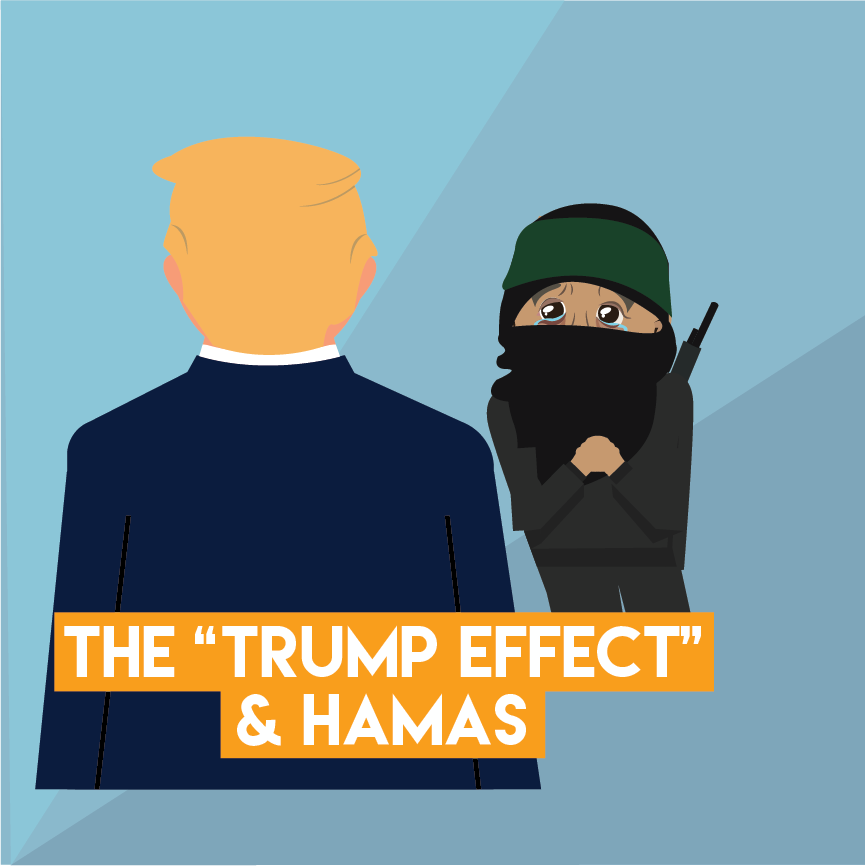
The "Trump Effect" and Hamas
Donald Trump’s ascent to the United States presidency has had a domino effect on the Arab world, with the aftershocks directly targeting the Palestinian organization Hamas. Under Trump’s foreign policy, the president takes a hardliner approach to global terrorism. Trump hopes to defeat Islamic radical terrorism through partnering with other countries in “aggressive joint operations.” Trump also emphasizes that the United States is always happy when “old enemies become friends” and help aid in their military ventures. Various Arab leaders who have had rocky relations with past presidential administrations see this conciliatory approach as an opportunity and are making political decisions that align with Trump. Saudi Arabia specifically has benefited from the President’s willingness to look towards the future, evidenced by the recent meetings and arms deal between the two countries. The Palestinian Authority (PA), in preparation for their meeting with Trump as well as the resurgence of peace negotiations, cracked down on Hamas in Gaza. By cutting funding for electricity to Gaza, the PA is attempting to prove to Trump that they are committed to fighting against global terrorism. Differently than Obama, Donald Trump is willing to look past human rights concerns in favor of furthering his goal of eradicating global terrorism.
While President Trump has not issued any directive orders against Hamas, his demanding rhetoric has influenced Arab countries to act against the organization to curry favor with the United States. Originally, Hamas viewed the Trump presidency as an opportunity to restore relations with the US. They saw Trump as “having a greater threshold for boldness than [his] predecessors…could be a historic opportunity to pressure Israel.” Well aware of Trump’s policy towards terrorism combined with the rising humanitarian crisis in Gaza, Hamas knew that relations with the administration could make or break their ten-year regime in the territory. In early May, Hamas published a new policy document for the first time since their founding charter in the late 1980s. While Hamas leaders publically argue that this is part of the natural evolution of Hamas, the document appears to be largely moderated from their original position. They state that they are prepared to accept a two state solution with 1967 borders. Compared to their original stance that would not accept anything less than all of Israel, this an apparent large concession. Hamas also provides that their conflict is not with Jews specifically as a people, but with the “Zionist project”. In moderating their policy, Hamas is hoping to open a new era of relations with the United States to retain their power hold in the Gaza strip.
Much to the disappointment of Hamas leadership, President Trump was not swayed by their apparent mainstreaming. With many analysts calling the new document simply window dressing to appeal to Western audiences, the President’s administration barely acknowledged their change in policy. A few weeks later, Trump addressed 55 Arab countries at the Rihyad Summit in Saudi Arabia in which he emphasized the necessity of partnering with other countries to “stamp out extremism” and labeling Hamas as a terrorist organization. He repeated to the delegates present to “drive them out” and “strip them of their access to funds.” By formally connecting Hamas and his goal of eradicating terrorism, Trump laid out to these Arab countries a clear path to contracting better relations with the United States.
Just a few days later, four Arab countries spurred the President’s demands into action. Egypt, the United Arab Emirates, Bahrain, and Saudi Arabia cut diplomatic ties with Qatar over their support for groups such as Hamas, Hezbollah and Iran that the United States categorized as terrorist entities. Qatar has invested millions into Gaza’s infrastructure, given substantial financial aid to the territory and also provides refuge for the organization’s exiled leaders. However, days after the beginning of the crisis, Qatar expelled Hamas leaders from Doha due to “unspecified pressure” as well as suspended electricity funding to Gaza. Hamas expressed their outrage at being ostracized by the Trump administration and the subsequent punishing of Qatar, one of their largest backers. A spokesman decried “the statement describing Hamas as a terror group…is a distortion of our image and shows a complete bias to the Zionist occupation.”
With this seemingly waning support from Qatar combined with the Palestinian’s Authority recent crack down on Hamas, the organization needs to secure partnerships with other actors in order to keep control of the Gaza strip and stay in power against the Palestinian Authority. As the humanitarian crisis will only escalate with the loss of funding and electricity, Hamas’ proximate actions will determine the organizations future. Their search is already bringing more contention to the region as they have begun to cozying up with more extreme factions such as Iran and Hezbollah due to regional isolation. The Palestinian Authority is also keeping a close eye on the reconciliation with exiled Fatah leader Mohammed Dahlan who keeps close relations with Egyptian leadership.
Hamas’ true colors:
While Hamas seemingly moderated their policy in early March, the organization returned to their original extremist ideology just a few months later. In his first public speech to the people of Gaza in early July, the new political leader Ismail Haniyeh did not attempt to appeal to Western audiences and directly contradicts their new policy document. . Hamas’ hopes for negotiating with the US are extinguished due to regional developments such as the Gulf Crisis that was indirectly affected by Trump’s anti-terror rhetoric. Where Hamas conceded to accepting a two state solution with 1967 borders, the political leader calls for a Palestinian State that “can not give up a grain of soil” and “will foil any attempt to the so-called solution of ‘alternative homeland’.” He also refers to “schemes of Judaization,” detracting from the previous statement that Hamas’ issue is not with Jews but solely Zionism. He slams President Trump for labeling Hamas a terror organization, encouraging the “Zionist enemy” and “blackmail[ing] the Arab and Islamic forces” against the “Palestinian cause.” He also berates the Palestinian Authority for “responding to American dictations.”
Haniyeh is reacting to Trump’s foreign policy by crafting his speech to appeal to potential Arab backers. The Hamas leader hopes to quell some of the regional pressure against the organization by reaffirming their commitment to their “Arab brothers”. Haniyeh argues that Hamas is a resistance movement solely focused on furthering the Palestinian cause, that their issue is not with Arab countries but solely Israeli occupation. His promises are most likely directed at Egypt who has accused Hamas of aiding guerilla rebels within their country. Haniyeh claims that Arab countries will “only see virtue from Hamas and…wish[es] them security, stability and protection.” Haniyeh further paints a number of Arab countries as friends of the Gazan movement even as many of them have had cold ties with Hamas, in hopes of facilitating warmer relations. Haniyeh thanked Egypt, Qatar and Turkey for their historical and hopefully continued support of the Palestinian people in Gaza. He also labeled Saudi Arabia as an ally, even as the country condemns Hamas as a terrorist organization after meeting with Donald Trump. Most importantly, Haniyeh publically confirmed the organization’s ties with other US condemned extremist groups such as Iran. He thanked the country for “developing its military power,” confirming what had only previously been rumored throughout the Middle East.
Hamas looks for allies:
With Donald Trump indirectly influencing Gulf Countries, the Palestinian Authority and even Qatar to break with Hamas, the organization must secure other financial backers for survival. But although Egypt cut ties with Qatar after Donald Trump’s speech, the country and Hamas have been in recent talks. As the two share a border, reopening negotiations is critical for Hamas’ survival and in aiding the humanitarian crisis. Hamas and Egypt have had especially rocky relations since the 2013 overthrow of the Muslim Brotherhood in Egypt, of which Hamas is a direct offshoot of. Since the coup, the Egyptian government has accused Hamas of being responsible for a number of attacks, to which the organization refutes. Egypt has further blockaded the Rafah border in an attempt to control smuggling of weapons into Egypt to support the government’s adversaries. In their new policy document, Hamas attempts to distance themselves from the Muslim Brotherhood by negating to mention their ties with the organization, in an effort to restore relations with Egypt.
Current talks between Hamas and Egypt are also being facilitated by the presence of former Fatah leader Mohammed Dahlan. Once a high ranking official in the Palestinian Authority leading the fight against Hamas in 2006, Dahlan was exiled and expelled from Fatah in 2011 because he of his perceived threat to Abbas’ power. The former Hamas adversary sees Hamas’ isolation as an opportunity to align with the organization against the PA. Dahlan enjoys close relations with Egypt’s president Abdel Fattah al-Sisi and has been acting as an intermediary in meetings between Egypt and Hamas. For his efforts, Dahlan would be allowed to return to Gaza to be in charge of foreign relations while Hamas keeps control over the territory’s security. After what Hamas called “9 days of constructive meetings with Cairo officials,” Egypt agreed to provide some electricity in exchange for a commitment to tighten security on the border to stop smuggling weapons into Egypt to aid government enemies. They also demanded that Hamas stop negotiations with Iran. In an effort to prove their commitment to the negotiations, Hamas began construction in late June on a no-go security zone to control and boost border security.
However, President Abbas is worried by the resurging negotiations between the two forces. The PA president needs Hamas at its weakest to regain control over the Gaza strip and to be seen as the legitimate voice of the Palestinian people in future Israeli-Palestinian peace negotiations. As Abbas was set to meet with the Egyptian president in Cairo, purchased fuel from Egypt was drastically reduced in Gaza due to interference by the PA. Relations with Egypt may not only be subject to fissure due to external sabotage by Abbas, but also because of Hamas’ recent cozying up to Iran. As part of their negotiations, Egypt warned Gaza leadership not to reconcile with the country. Once the strongest of allies, Hamas and Iran have been at odds since 2012 when the Palestinian organization supported the wrong side in Syria. Subsequently, Iran cut off public relations and military aid. However, as the Trump administration has condemned both Iran and Hamas as terrorist entities, the two are facing regional isolation together and has only brought them closer. Iran is also pleased with the change in Hamas’ political leadership, as they favor Ismail Haniyeh over the former political chief Khaled Meshaal. After reportedly meeting with a delegation in Lebanon, Iran allegedly agreed to resume financial funding to Hamas in the near future. In Lebanon, Hamas began to reconcile with another labeled terror organization, Hezbollah, “under an Iranian umbrella”. The day after Haniyeh’s July speech that publically affirmed the reconciliation, another high ranking Hamas official declared the next day that ties with Iran are “as close and strong as ever.” If Hamas continues to entertain relations with Iran, budding negotiations with Egypt may dissolve even without the meddling of the Palestinian Authority. This would force Hamas to be almost completely dependent on Iran. This resurgence of alliances can only mean bad news for Israel as the two unite to carry out attacks from both Lebanon and Gaza.
While Donald Trump envisions his hardliner approach as the best way to combat terrorism, recent developments in the Middle East such as the Gulf Crisis and actions by the PA have only radicalized Hamas away from their attempt at moderating their policy in March. As the hot summer progresses and the humanitarian crisis only worsens, Hamas will pursue whatever course of action to maintain power in the Gaza Strip, with Iran seeming to be the most probable and reliable ally.

The "Trump Effect" and the Palestinian Authority
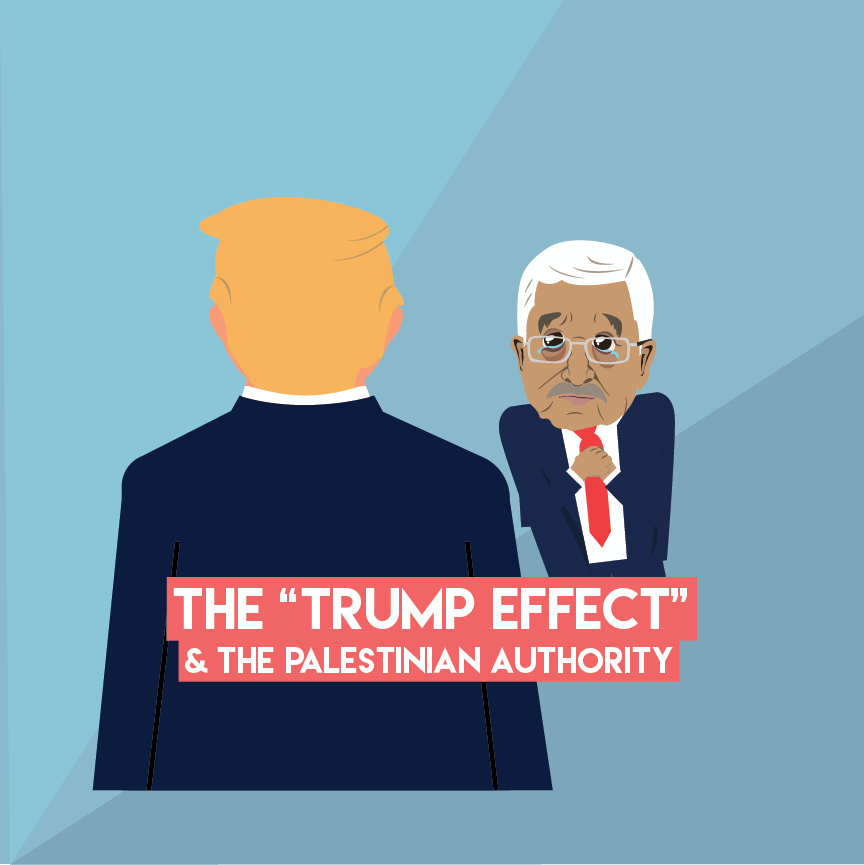
On April 27th, 2017, the Palestinian Authority announced that it would no longer be paying Israel to supply electricity to the Gaza strip. President Mahmoud Abbas’ stated rationale for this drastic decision was to increase pressure on Hamas by withholding finances and shake the terrorist group’s ten-year reign. The Gaza strip already only had six hours of electricity per day, but with this new lack of funding will be reduced to a mere 2-4 hours. This aggressive strategy is a result of years of failed attempts between the Palestinian Authority’s governing faction, Fatah, and Hamas to reconcile. But occurring only one week before his first face-to-face meeting with US president Donald Trump, the timing of Abbas’ decision calls into question the true purpose behind his actions.
Being dubbed the “Trump effect” by academics, the new US president’s rhetoric on cracking down on global terrorism and de-emphasis on human rights has influenced decisions of middle Eastern leaders. For Palestinian Authority President Mahmoud Abbas, cutting off funding for electricity in Gaza one week before his meeting with Trump was a strategic decision to gain the favor of the new United States president. Trump is eager to restart the peace process between the Israelis and Palestinians, and with his extremely pro-Israel sympathies and anti-Muslim rhetoric, the United States will likely side with the Israelis at the negotiating table. Abbas, aware of Trump’s “Israel bias” as well as claims by Netanyahu that there is no united voice of the Palestinian people to negotiate with or true partner for peace, needed to prove that he is a legitimate partner and committed to aiding the war on terror.
Abbas has been formulating a strategy to best approach Donald Trump since November. Shortly after the election, Abbas reportedly assembled a committee of experts on US policy and government to advise and aid him on the audacious and unpredictable president. With Trump announcing his intent to move the US embassy to Jerusalem, Abbas likely knew that were the peace process to restart between the Palestinians and Israelis, he could not count on the Trump administration to act as an unbiased mediator. In order to be considered a legitimate and equal partner in negotiations, the Palestinian Authority needed more than just idealistic rhetoric to gain favor with Donald Trump. Abbas had to take action tailored specifically to the policy goals of the new president.
Cracking down on global terrorism is a foremost prerogative of the Trump administration. Their “highest priority” is to to gain “peace through strength” by “defeating radical Islamic terror” by working with “international partners to cut off funding for terrorist groups.” As both the United States and the Israel condemn Hamas as a terrorist organization, Abbas cutting off funding for the Gaza strip follows directly from the Trump policy and works in accord with the outline set by the administration. Two weeks before his meeting with Trump, Abbas stated to the Arab Gulf States that he was “tired of funding the Hamas government in Gaza.” One week later, he put his words into action. The Palestinian Authority is attempting to exhibit to the Trump administration that they can be seen as a committed ally in the war on terror. By taking action against Hamas and further separating themselves from the radical organization, they are creating a foundation with the United States and Israel to combat a mutual enemy. This commonality may serve to gain them legitimacy and favor in the eyes of the Trump administration that will be helpful in future negotiations.
Not only did Abbas need to present the Palestinian Authority to Trump as committed to peace and eradicating terrorism, he needed to present a unified Palestinian front to the United States. Since the split between Fatah, the governing party of the Palestinian Authority and Hamas in Gaza in 2007, Israeli Prime Minister Netanyahu has claimed that peace negotiations with the Palestinians are futile because there is no united voice of their people. Abbas needs to regain control and power over Gaza in order to frustrate attempts by Hamas to carry out actions that may unravel any progress. He hopes that pressuring Hamas by worsening the humanitarian crisis in Gaza will loosen the organization’s hold on the territory and acquiesce back to the PA. With both territories back under his jurisdiction, Abbas can invalidate Israeli claims that there is no unified representative of the Palestinian people. Trump has also stated that “there cannot be lasting peace unless Palestinian leaders speak in a unified voice…against violence and hate.” Israel believes that “Abbas is trying to force Hamas into a move that would – a least symbolically – demonstrate Palestinian unity” in preparation for meeting with the United States. After yet another failure to create a unity government between Fatah and Hamas by the middle of April, Abbas consequently had to look for other ways to regain control over the Gaza strip to present a united front.
The different stances on human rights between Barak Obama and Donald Trump were another factor shaping the decision of Abbas to cut off electricity funding to Gaza. Obama’s foreign policy program Countering Violence Extremism emphasized the importance of recognizing human rights violations as the drivers of terrorism. In a 2011 speech on “Remarks by the President on the Middle East and Africa,” Barak Obama stated that support for human rights was not a secondary interest but a “top priority” in the war on terror. This policy marked his years in office with an “awkward balance” between condemning human rights violations in states such as Saudi Arabia, but allying with these nations to fight against terrorist organizations. Cutting off funding for electricity in Gaza would have likely been condemned by the Obama administration as a human rights violation. Abbas then would not have utilized such a strategy as it would not have been looked on favorably by the previous president. The PA’s actions to pressure Hamas would have likely been exceedingly different under the Obama administration.
Trump, however, is not so much concerned with the human rights consequences of policies that progress the war on terror. Trump stated in an interview that “first we have to confront and eradicate terrorism” and that the “way you address human rights issues… is to improve conditions in the region…human rights would improve as security and stability do.” Trump has been criticized for this stance by Democrats who argue that he is de-emphasizing human rights in favor of focusing solely on fighting terrorism. This is evident in his failure to discuss Saudi Arabia’s notorious human rights violations during his visit to the country. He told leaders that he wasn’t there to “lecture them” but instead to only discuss the mutual goal of fighting global terrorist groups such as ISIS and Hamas. Where the Palestinian Authority’s actions would have been condemned by the Obama Administration due to escalating the human rights crises in Gaza, the Trump administration would instead view this as proof that Abbas is committed to fighting against Hamas and gain legitimacy as peace partners.
The success of Abbas’ tactical decision comes at the cusp of Trump’s remarks at a press conference after the two leaders’ meeting. Trump stated that “President Abbas has spoken out against…terrorist groups, and we must continue to build our partnership with the Palestinian security forces to counter and defeat terrorism.” Abbas’ proximate actions against Hamas worked in his favor, as the Trump administration recognized his work against terrorism. Looking at the implications of Trump’s foreign policy on decisions of the Palestinian Authority is necessary to predicting as well as understanding the motivation behind future actions of President Mahmoud Abbas. With Trump committed to restarting the Israeli-Palestinian negotiations, Abbas needs to show the new administration the Palestinians are ready and wanting for peace. By carrying out action in accord with Trump’s harsh on terrorism policy, the PA hopes to butter up the new president. In the press conference after their meeting, Abbas regaled to Trump and the world that “we are endeavoring to bring about security, free and peace…we believe that we can be…true partner, to you to bring about a historic peace treaty.” With his actions against Hamas, Abbas now has substance to back up his words. Abbas will likely continue to cater his actions to appease Trump in the immediate future in preparation for the renewal of the peace process.
Deflection and Evasion: Human Rights in the Gulf
On March 15, 2006, the United Nations General Assembly established the United Nations Human Rights Council (hereafter UNHRC). This would replace the United Nations Commission on Human Rights, which had been heavily criticized for admitting to its membership the repressive regimes of countries such as China, Zimbabwe, Syria and Saudi Arabia.
So how far has the Council progressed? Surely after the upheaval and rebranding of an institution that had stood since 1946, a new wave of human rights advocacy and legitimacy would sweep the 193-member state organization.
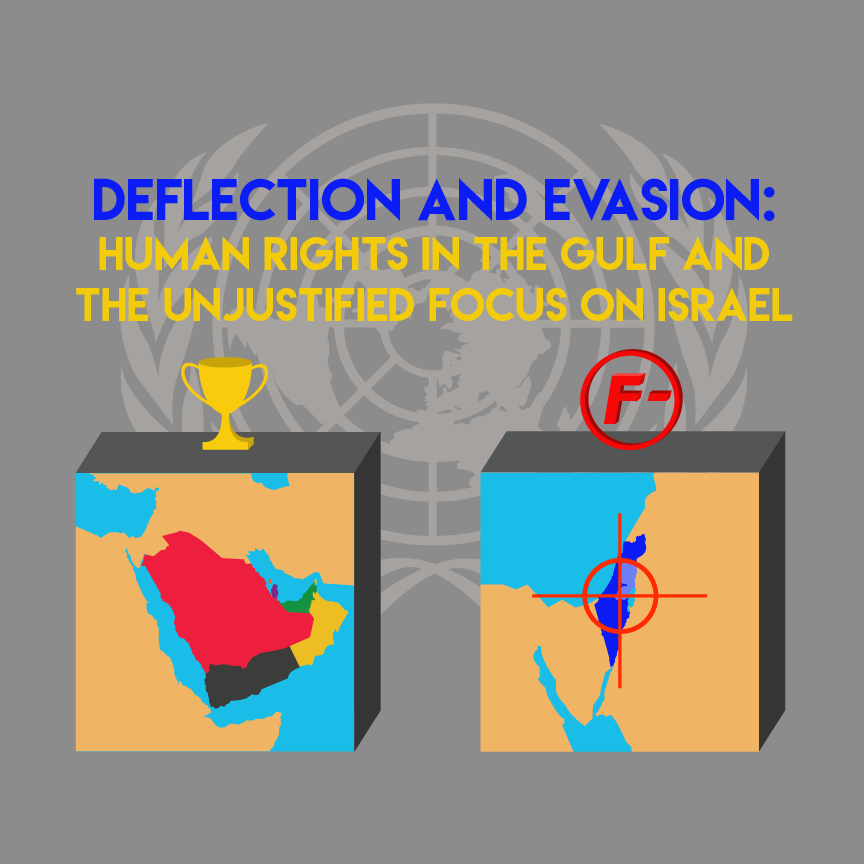
Along with Qatar and the United Arab Emirates, the trusted old guard Saudi Arabia continues to enjoy a seat at the table.
At a time where the US is reportedly considering withdrawing its membership of the UNHRC due to its criticism of Israel, it behooves one to consider how Israel’s human rights record compares to that of Saudi Arabia, Qatar, and the UAE.
In regard to civil and political rights, otherwise termed as ‘the first wave' or 'first generation' of human rights, Israel boasts a significantly better record than that of its Gulf state counterparts. It does not practice the death penalty, with the last execution being that of Adolf Eichmann – the notorious Nazi convicted of war crimes, genocide, and crimes against humanity – in 1962. It is home to a diverse group of competing political parties, ranging from religious Zionist parties such as the Jewish Home Party to explicitly anti-Zionist parties such as Balad.
By contrast, due to the varying degrees to which their legal systems incorporate Sharia Law, these three Gulf nations all retain the practice of the death penalty for crimes as serious as murder to those as minor and dubious as apostasy, adultery and sodomy (homosexuality). Between January 1 2016 and July 27 2016, Saudi Arabia executed 108 people. In 2016, Freedom House rated the Kingdom’s political rights a score of 3/40 and their civil liberties a score of 7/60. Saudi citizens face criminal prosecution for political dissent, and the ban on political parties has virtually eliminated any opposition to the monarchy’s decrees. The most notable case is that of Saudi blogger Raif Badawi, who was sentenced to a flogging of 1000 lashes in 2014 for ‘insulting Islam’.
LGBT rights have rightly emerged as a preeminent concern for human rights activists. The Israeli legal system maintains strong protections for the rights of LGBT people. Consensual same-sex acts have been de facto legal since 1963 and formally legal since 1988. The concept of ‘sodomy’ has no legal validity or relevance within Israeli legal system. LGBT people are protected under the law from discrimination within society and the military, with violent crimes motivated by sexual orientation considered hate crimes and requiring double the punishment of regular violent crimes. Furthermore, same-sex couples are afforded extensive adoption rights.
The Gulf nations paint a very different picture of livability for LGBT people. Article 177 of the Dubai Penal Code states that consensual sodomy is punishable by up to 10 years in prison. Along with the near-identical Qatari policy, these procedures almost seem lenient when compared to that of Saudi Arabia. The Kingdom’s wahhabist ultra-conservatism views homosexuality as the ultimate deviancy, as well as what are perceived to be the related issues of transgender citizens and cross-dressing. The legal punishments for homosexual sex in Saudi Arabia include fines, prison sentences, floggings, chemical castration, torture and execution – often by beheading.
The Israeli-Gulf divide also occurs along the lines of women’s rights. Israel ranks 18th in the world in terms of gender equality according to the United Nations Development Program. Women are protected from discrimination under the law and have enjoyed prominent positions within Israeli society such as Prime Minister, President of the Supreme Court, Chairperson of the Reserve Bank and Major General. The Knesset’s Committee on the Status of Women has as its stated objectives: the prevention of discrimination, combatting violence against women, and promoting equality in politics, lifecycle events and education.
Conversely, women’s rights in Saudi Arabia are abysmal by international standards. The country ranked 134th globally in the World Economic Forum’s Global Gender Gap Report of 2015. Saudi law requires all women to have a male guardian in public and as such are not permitted to shop, conduct business or drive without a male companion. Saudi authorities also mandate draconian laws regarding the modesty of women’s clothing. Failure to comply with these laws can incur harassment from the Mutaween (religious police). Polygamy remains legal as does the marrying of child brides. In court, the testimony of one man equals that of two women. Domestic violence is a common occurrence, as is the denial of property and employment rights to women.
Although Israel defines itself as a Jewish and democratic state, it also guarantees freedom of religion to all its citizens. Christian, Muslim and Baha’i communities have jurisdiction over their own adherents in matters of marriage, divorce and burial. Synagogues, mosques, churches and khalwats (Druze prayer houses) can operate without fear of government intrusion or closure. Importantly, Israeli law does not prohibit leaving a religious group, otherwise known as ‘apostasy’.
In Qatar, the idea of religious freedom is at best illusory for its Muslim population. Under Articles 245-260 of the Qatari Law 11 of 2004, blasphemy and other insults or challenges to the doctrines of Islam are punishable by prison sentences, whilst the offence of apostasy is punishable by the death penalty. Apostasy is similarly punished in the UAE and Saudi Arabia. Saudi Arabia retains the more archaic beliefs of the Gulf trio, by prosecuting people for sorcery and witchcraft. It also tasks the Mutaween with enforcing Sharia law throughout the country. This involves reporting unrelated males and females who socialize, enforcing strict Islamic dress codes, enforcing Muslim dietary requirements, prohibiting people from proselytizing other religions and banning consumer products deemed to be un-Islamic.
As the nations of the world vote on 15 new members to the UNHRC at the convening of the General Assembly in September, two concerns should be at the forefront of their minds. Firstly, human rights are important and adherence to their norms requires constant introspection and critical self-examination. Their inalienability is an equalizer for people across the globe, be they rich or poor, black or white. They serve to allow people, among other things, the freedom to speak their mind and guard the dignity and liberty to which they are naturally entitled. Secondly, having a UNHRC characterized by hypocrisy ultimately undermines their principled mandate. Allowing repressive regimes like Qatar, the UAE and Saudi Arabia to deflect their horrendous records onto Israel is an exercise in evasion. Israel is an imperfect democracy; elevated by morality yet burdened with deficiencies. Nonetheless, we should set the bar higher than floggings, chemical castrations and beheadings.
The Qatar Crisis: A Human Rights Issue Too
The recent decision by Saudi Arabia, the United Arab Emirates (UAE) and Bahrain to sever diplomatic and economic ties with Qatar has been dominantly viewed through the lens of its political and security implications alongside Qatar’s alleged support for terrorist organizations. However, there are often-overlooked aspects of the commonly-called blockade that are worthy of a greater amount of consideration: human rights and international law. While there are other human rights challenges in Qatar, this article seeks to examine the effects of the recent crisis.
One component of the break in diplomatic ties between these GCC nations was a demand by Saudi Arabia, the UAE, and Bahrain for Qatari citizens to depart their countries within two weeks or face unspecified consequences. Similarly, these governments urged their citizens residing in Qatar to return home by this same deadline or potentially risk losing citizenship. Such a move may not sound extremely disruptive on face, but the action is nowhere near benign.
Members of the Gulf Cooperation Council (GCC) – including Qatar, Saudi Arabia, the UAE, and Bahrain – experience an extremely high level of economic and social integration with one another. In the 2001 Economic Agreement Between the GCC States, these nations made a binding commitment for GCC citizens to “be accorded, in any Member States, the same treatment accorded to its own citizens, without differentiation or discrimination, in all economic activities.” This meant that citizens of any GCC country had equal rights to purchase property, obtain healthcare, insurance, education, and other social services in any Gulf country they chose to reside in. In addition, citizens of Gulf states experienced freedom of movement – oft-considered a basic human right – to allow them to travel without restriction among the Gulf states.
As a result of this close integration, many individuals chose to pursue their education, find jobs, or start businesses in countries other than the one in which they held citizenship. It was customary to travel between the states regularly, especially given the frequency of flights between the nations. But, after the onset of the recent crisis, both Qataris in the condemning nations and citizens of those three countries in Qatar faced interruptions of their basic lifestyle choices. The high level of interdependence between these GCC states underscores the gravity of the recent actions taken, especially in the face of GCC agreements that ensure equal treatment to all GCC-nation citizens. The individuals affected by these measures number at least 13,000, according to the Qatar National Human Rights Committee.
These individuals could either depart from their current country of residence without any prospect of returning – leaving behind the life they made and likely losing their job – or they could stay, running the risk of losing citizenship in their native country. Neither option sounds particularly enticing, especially once various complications are considered. Students in university could be forced to leave prior to finishing exams. Patients undergoing medical treatment could have to choose whether to proceed with treatment or face the consequences of noncompliance with the mandates.
For mixed-nationality families, these challenges are particularly acute. Children with different citizenships than one of their parents could face separation, regardless of the age of the child. For families impacted by divorce or death of a parent, there could be even more complications. Although the blockade countries claim that special attention would be paid to such cases, little materialization of any altered standards has appeared.
Not only were citizens of Saudi Arabia, Bahrain, and the UAE required to return to their native countries, but there were also new standards instituted regarding “sympathizing” with Qatar. If any individual publicly makes a statement sympathy towards Qatar, whether it be on social media or in public, they could be liable for heavy fines or even imprisonment. In the UAE, for example, sympathizing with Qatar could result in imprisonment for up to 15 years or a fine of up to 500,000 dirhams.
In total, the blockade measures violate multiple international agreements, whether widely accepted standards such as the Universal Declaration of Human Rights or more specific agreements that apply to the countries involved, like the Arab Charter on Human Rights. The violations are similar across the various treaties; however, problems regarding enforcement arise given that Saudi Arabia, the UAE, and Bahrain are not parties to many of the basic UN human rights treaties. The fact that these nations have not ratified such treaties itself should not be ignored, but for the time being, it is more relevant to focus on the agreements that these nations are signatories to, such as the Arab Charter on Human Rights and the GCC Human Rights Declaration. Although currently lacking an effective enforcement mechanism like an Arab Court of Human Rights, the standards set forth in the Arab Charter on Human Rights articulate binding norms that Arab nations agreed to. Similarly, the GCC Human Rights Declaration lists a set of goals that GCC countries want to aspire to regarding human rights. At the bottom of the page is an organized list of the articles of each agreement that the current actions violate.
Not only do the actions directly implicate international standards, but there are also consequences for individuals’ daily lives that simply result from the break in diplomatic and economic connections between the nations. Trade ties between the GCC countries have been a primary factor in the success of their respective economies. As such, the break in economic associations has radically altered the way that Qatar supplies its population with necessary economic goods and services. Food imports have been shifted – away from Saudi Arabia – towards Turkey and Iran. Due to the quick switch in economic partners, a complete replacement of all the goods that used to flow in from Saudi Arabia has not been possible. As such, greater food imports from places like Turkey primarily supply large supermarkets in Doha, putting strain on smaller grocery stores. Deficits of products, combined with high prices, will challenge individuals in Qatar, especially low-income families and migrant workers. In the short-term, access to food will continue to be limited, hampering individuals’ abilities to fulfill basic needs. To better prevent such shortages and broader economic losses long-term, Qatar is likely to further increase economic cooperation with Iran and Turkey, but it is precisely this move that may deepen the extent of the crisis.
The blockade countries presented Qatar a list of demands that, when fulfilled, would result in reinstated cooperation. Prominently featured are pleas to “curb diplomatic ties with Iran” and to “immediately terminate the Turkish military presence currently in Qatar and end any joint military cooperation with Turkey inside of Qatar.” The blockade countries threaten that if the demands are not complied with by July 3, then the list of demands will no longer be valid. Meanwhile, Qatar – looking to fill the cooperative vacuum left behind by the withdrawal of Saudi Arabia, the UAE, and Bahrain – finds increasing incentives to work with Iran and Turkey. As a result, compromising on the demands made by the blockade countries will only prove to be more difficult as the crisis continues.
The risks of the crisis continuing for an extended period of are manifold. Qatar has sufficient financial resources and flexibility not to immediately cave into all of the demands, but it cannot last forever without the cooperation of the blockade countries. Already hit with losses recently due to low energy prices – impacting the profitability of its main industry, LNG – Qatar finds itself in a less prosperous position. Yet, the perceived importance of the issues at stake for both sides ensure that no country will easily succumb. As the crisis continues, families will continue to be divided and economies on both sides will continue to be hard hit, impacting the basic lives of individuals across these nations.
The human rights questions posed by the blockade are of extreme importance, and should not be ignored. Although Saudi Arabia, Bahrain, and the UAE claim to be taking these actions to criticize Qatar’s support for terrorist organizations like Hamas, ending Qatar’s support for Hamas will not necessarily result in a more peaceful outcome. According to Haim Malka of the Center for Strategic and International Studies (CSIS), weakened financing streams from Qatar could lead to fragmentation of Hamas, potentially opening the door to infighting and increased violence from terrorist groups vying for power in Gaza. Regardless of the eventual outcome on terrorist organizations, human rights are inalienable, a relevant consideration when making any diplomatic decision. Before the crisis continues for an extended period of time, it is essential for the human rights considerations to be dealt with.
International Agreement Violations:
Freedom of Belief and Expression
Arab Charter on Human Rights, Article 3 - “Each State party to the present Charter undertakes to ensure to all individuals subject to its jurisdiction the right to enjoy the rights and freedoms set forth herein, without distinction on grounds of race, colour, sex, language, religious belief, opinion, thought, national or social origin, wealth, birth or physical or mental disability.”
Arab Charter on Human Rights, Article 32 – “The present Charter guarantees the right to information and to freedom of opinion and expression, as well as the right to seek, receive and impart information and ideas through any medium, regardless of geographical boundaries.”
GCC Human Rights Declaration, Article 9 – “Everyone has the right to freedom of opinion and expression, and exercising such freedom is guaranteed insofar as it accords with Islamic Sharia law, public order and the regulations (laws) regulating this area.”
Freedom of Movement
Arab Charter on Human Rights, Article 26 – “ 1. Everyone lawfully within the territory of a State party shall, within that territory, have the right to freedom of movement and to freely choose his residence in any part of that territory in conformity with the laws in force. 2. No State party may expel a person who does not hold its nationality but is lawfully in its territory, other than in pursuance of a decision reached in accordance with law and after that person has been allowed to submit a petition to the competent authority, unless compelling reasons of national security preclude it. Collective expulsion is prohibited under all circumstances.”
Arab Charter on Human Rights, Article 27 – “ 1. No one may be arbitrarily or unlawfully prevented from leaving any country, including his own, nor prohibited from residing, or compelled to reside, in any part of that country. 2. No one may be exiled from his country or prohibited from returning thereto.”
GCC Human Rights Declaration, Article 10 – “Freedom of movement, residence and departure is a right of every human being according to the regulations (law)”
GCC Human Rights Declaration, Article 11 – “No one shall be deported from his country or prevented from entering it”
Protection of the Family
Arab Charter on Human Rights, Article 33 – “2. The State and society shall ensure the protection of the family, the strengthening of family ties, the protection of its members and the prohibition of all forms of violence or abuse in the relations among its members, and particularly against women and children. They shall also ensure the necessary protection and care for mothers, children, older persons and persons with special needs and shall provide adolescents and young persons with the best opportunities for physical and mental development. 3. The States parties shall take all necessary legislative, administrative and judicial measures to guarantee the protection, survival, development and well-being of the child in an atmosphere of freedom and dignity and shall ensure, in all cases, that the child's best interests are the basic criterion for all measures taken in his regard, whether the child is at risk of delinquency or is a juvenile offender.”
GCC Human Rights Declaration, Article 14 – “The family is the natural and fundamental group unit of society, originally composed of a man and a woman, governed by religion, morals and patriotism; its entity and bonds are maintained and reinforced by religion. Motherhood, childhood and members of the family are protected by religion as well as the State and society against all forms of abuse and domestic violence.”