

My Encounter with Hatred: A Student in London
The first time the BDS movement caught my attention was on April 27, 2017. The date is etched into my mind because up until that day, I’d always thought of anti-Zionism as the ‘pet hate’ of the Jewish community, the enemy that we need in order to justify ourselves and to make excuses for ‘security measures’. Like Jews of many generations, I preferred to focus on the challenges of day-to-day living and not look at the totally irrational hatred being spread against me and my people. The basic rationale of my thinking was that Jew-hatred and Zionist-hatred doesn’t make sense, therefore it can’t be such a big problem.
On April 27, 2017 that changed.
I had been accepted to start studying in one of the major London universities and was at the university to make inquiries regarding my enrollment. My head was held high because I was proud to have the opportunity to be educated in this well-reputed institution. As I walked through the campus, I was intrigued to hear the sound of drums and people shouting. Slightly surprised but being compulsively inquisitive, I drew near to see the meaning of the rowdiness in civilized London. It didn’t take long to recognize – the Palestinian flags and chants immediately flooded my mind with memories of having stones hurled at me while on duty in the West Bank and pictures of one of my soldiers who got hit by a massive rock in the chest while overseeing a demonstration.
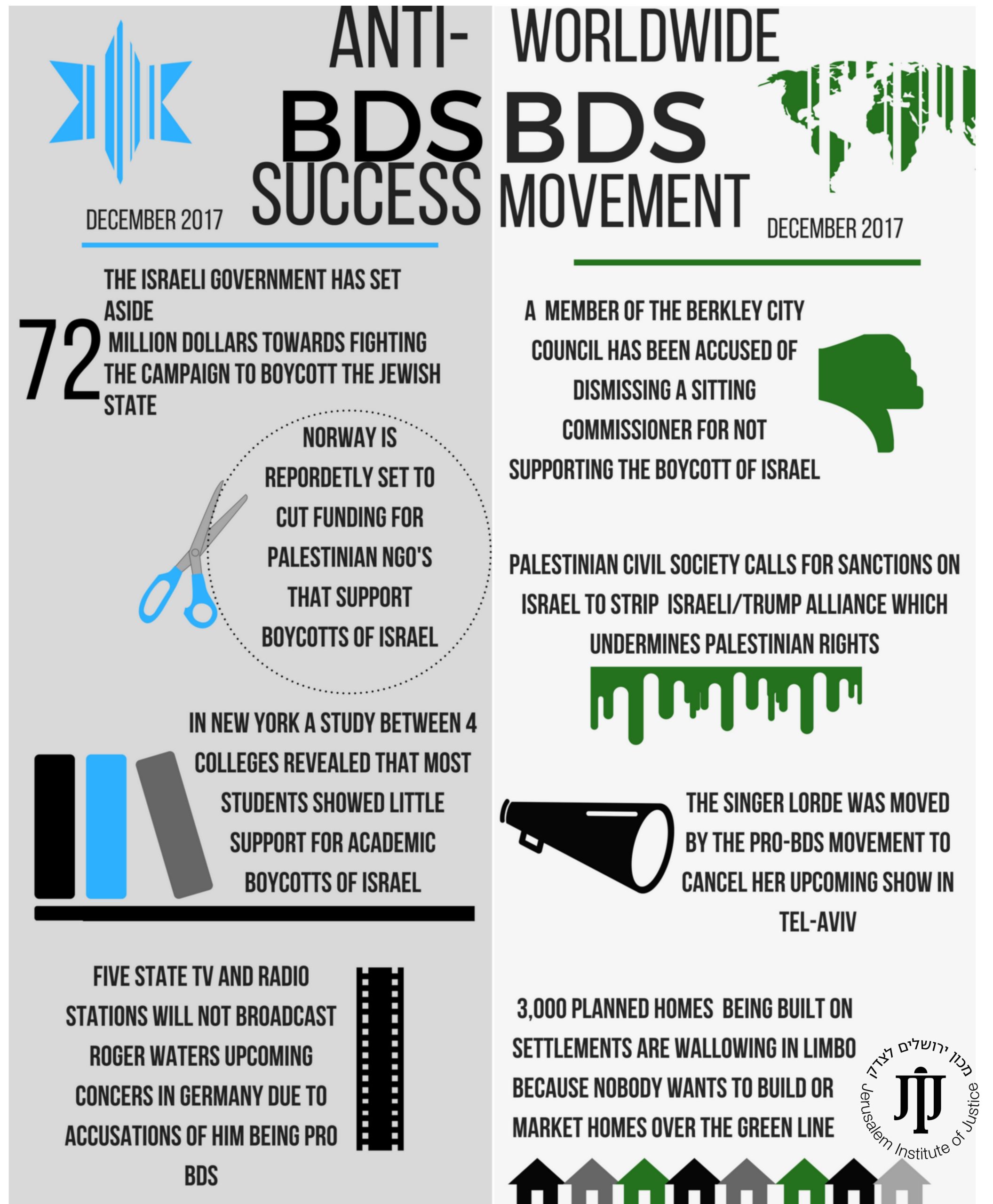
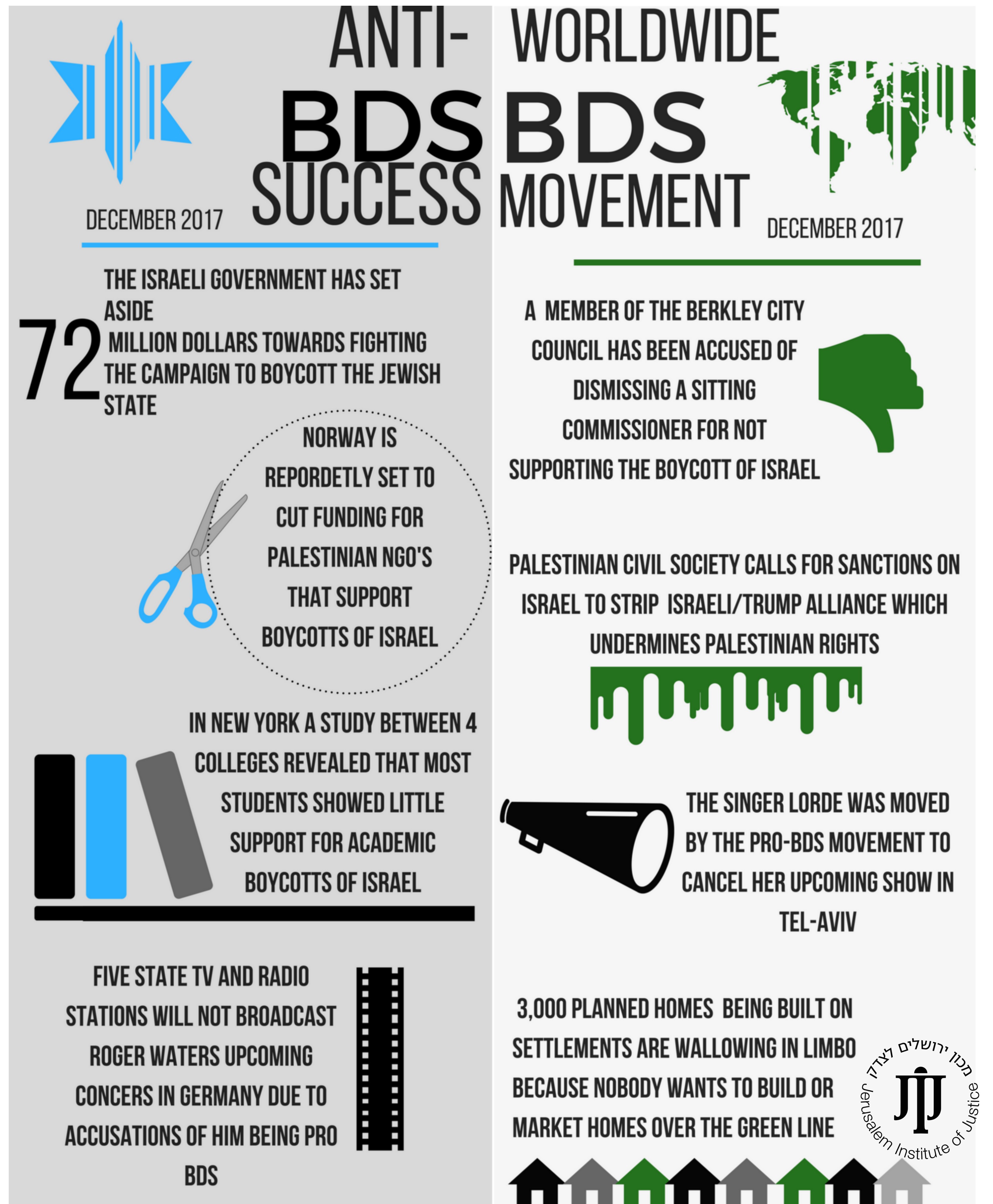
Taken by surprise, I walked amongst the protestors. Seeing people from a whole range of ethnic backgrounds, I attempted to fathom what was going on behind the aggressive shouts. “From the river to the sea, Palestine will be free!” and “Israel is a fascist state!” were chanted by the sea of protestors. What was the meaning of all this? It turned out that the protest was against the Israeli Ambassador’s speaking on the university campus – as this invitation was seen to be ‘provocative’. They wanted the university to boycott the speaker because the speaker represented Israel, which they saw as being an evil occupier. It was chilling to think that in the middle of London, people were openly advocating for the end of the State of Israel, ‘from the river to the sea’.
Even though I found it difficult to hold my resolve together amidst those who were in essence denying my identity as an Israeli, I have always been taught of the importance of listening to the other side and to be willing to admit when I am wrong. So, I stuck around and wandered between the protestors, asking them what they knew about the conflict and trying to understand why they were so worked up. Most of the answers I got were that the Palestinians are being butchered by the Israelis and that we all need to do everything we can to fight the ‘evil occupation’. These 19 and 20-year-olds who had been educated that Israel is an evil-colonialist venture, seemed surprised when I told them I had just finished my service in the IDF as an Officer in a Combat Unit and that I was a relatively normal human being, not thirsty for Palestinian blood. When asked if I’d given my testimony to “Breaking the Silence” – an organization of former IDF soldiers who testify to having been forced to commit violations against Palestinians – I responded that I hadn’t because I didn’t have any violations to report: my commanders were men of integrity, amongst the most moral people I know, and I had always taught my troops to have value for all human life – Jew, Arab and everyone else.
Sadly, the protestors didn’t seem to care very much for talking, the atmosphere wasn’t one for talking or thinking – rather, one of being joined together in the anti-Israel mob. As I politely approached individuals to ask them questions about the implications of their demands on the Jewish people, I was angrily brushed aside. It reminded me of drunk fans cursing a referee at a football match or scenes from Gladiator at the Colosseum – the chants and drum beats working up ‘anti-emotion’ against Israel and her Ambassador.
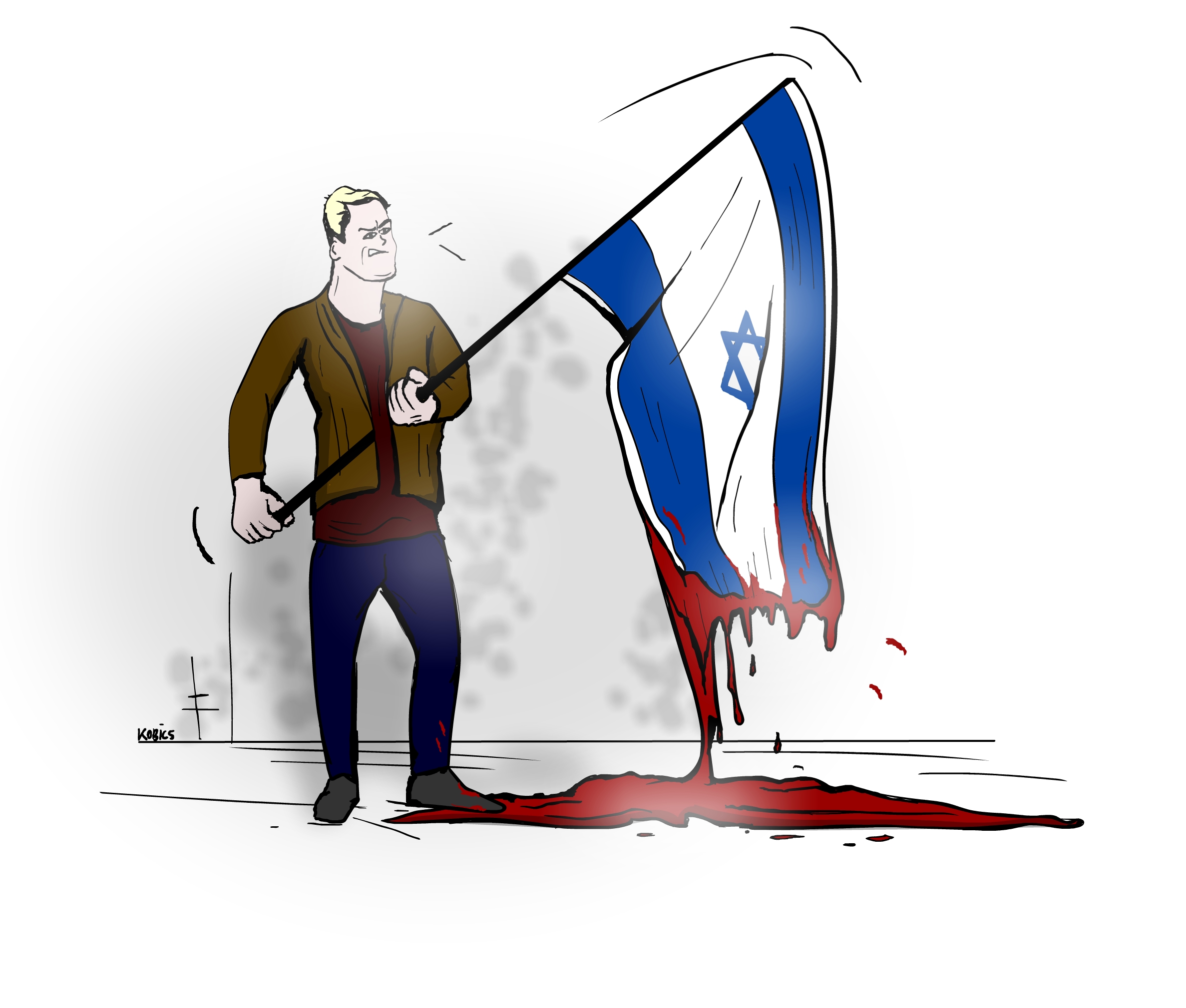
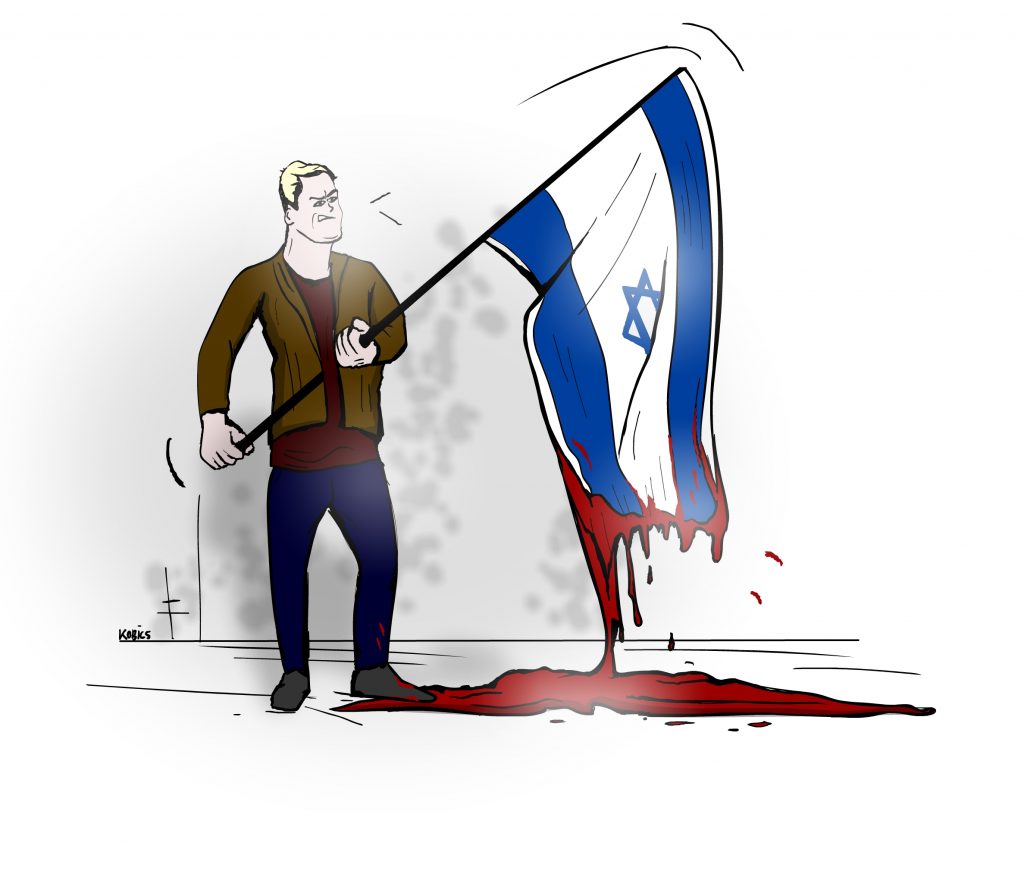
The hardest part of the protest for me was seeing the protestors take an Israeli flag, dipping it in red paint and waving it around. The Israeli flag is designed to remind one of the Jewish prayer shawl, and to me it represents the hope of the Jewish people for sovereignty. This blatant desecration of the flag cut me to the heart. I don’t hate Palestinians, and I would never desecrate a Palestinian flag. I don’t agree with all of the policies of the Israeli government, and I sincerely desire peace. When people I know in Israel try to delegitimize the rights of the Palestinian people, I speak up. What good can come of desecrating my flag – making it look like it’s dipped in blood? I wanted to scream and shout and let out all the scorn and insult that this caused me, but I realized that I was helpless. I could do nothing. Letting out my anger would only be adding gasoline to the flame of hatred against me and my nation.
After the protest, I was left with a lot to process. Emotionally and mentally drained, I left the campus to do some serious soul-searching. Why so much hatred? Why is the BDS movement so intent on drowning out other voices (my voice)? They say that I’ve been brainwashed, even though I’m willing to try and listen to them. Could it be that they are brainwashed? Should determining who is right or wrong in a conflict be decided in a shouting match? Is the populistic mob-like behavior I experienced in London the way forward?
After these experiences I was challenged to read a book by Ilan Pappe and Noam Chomsky explaining the BDS movement claims, and as a result I have become more aware than before of the need for personal and Israeli self-criticism. But alongside this, I have become concerned about the BDS movement, the amount of irrational hatred it is spreading, and its means of achieving it. Two wrongs do not make a right. Trying to prevent dialogue and attempting to drown out voices is not going to bring justice, reconciliation, or hope – it is merely going to make people hate more. I’m only 26, but I’ve seen enough hatred in my life. I hope most people will agree with me that we don’t need any more hatred in our world.

Is “Jewish Democracy” an Oxymoron?
By Nikki Golomb.
There’s a phrase I have heard over and over again throughout my life: “Put two Jews in a room and you’ll get three opinions.” Once, however, I heard an amended version: “Put two Israelis in a room and you’ll get three opinions, a new political party, and probably an invitation to Shabbat dinner.” The more I’m learning about Israeli politics, however, the more I’m realizing it is less of a joke and more of a commentary on the complexity of Israeli politics and social life.
Israel prides itself as being both the only true democracy in the Middle East, as well as the only Jewish state in the world. Some people, however, do not believe that Israel can be both Jewish and democratic; they say that mixing religion with politics inherently makes it undemocratic. However, this argument ignores the many other democracies with a state religion; for example, nobody questions the democratic integrity of Christian states such as the UK, Greece, Costa Rica, or Denmark (among others). Other countries additionally have religiously-affiliated political parties, even though the country itself does not have a national religion. Despite the mixing of religion and politics, these countries remain internationally recognized democratic states.
Taking this into consideration, the question thus becomes whether Judaism in particular is incompatible with democracy. In order to answer this, one must look at the Torah and Jewish values. The Torah states that an acceptable political system must be “rooted in popular consent and involving the people in governance,” a significant characteristic of democracy. It additionally documents the creation of a modern justice system under Moses, who established a multi-tiered court system after the Exodus from Egypt. Although there are no direct references to democracy in the Torah, values such as equality, justice, and rule of the people which are vital to democratic institutions are emphasized, meaning Judaism and the nature of democracy are not inherently incompatible. Jewish values additionally tell us that all people are created b’tzelem Elokim – in the image of G-d. This belief equalizes all people, regardless of religion, ethnicity, nationality, etc. and demands that everyone is treated with the same respect and dignity. The value of tzedek, or justice, also has clear implications on democratic life by further emphasizing the importance of establishing a just society.
Others argue that while Judaism and democracy are not inherently contradictory, the ways they manifest themselves in Israel do not represent true democracy. According to the Jerusalem Center for Public Affairs, there are two vital aspects of democracy: 1) self-governance, or the meaningful participation of citizens in the political system, and 2) plurality, or the ability of everybody to live according to their own beliefs and coexist in society. Both of these features are represented in the Israeli political system. Israel has a parliamentary system of government, called the Knesset; Members of Knesset are voted upon by the people, and all citizens have the right to vote regardless of religion, ethnicity, or any other identity. All citizens are also eligible to run for government, or create their own political party; both Arabs and Haredi Jews, for instance, have their own political parties and are also represented in other parties. In terms of pluralism, it is no question that various ethnic and religious groups coexist in Israel. Jews and Arabs alike have the right to vote; receive state-funded education; and are represented as Members of Knesset, judges, and other high-power positions. Many organizations exist, including JIJ, which work to promote pluralism in Israeli society. This would not be possible in a nondemocratic country or exclusively ethnic nation-state.
It is true that Israel, like every other country, is not perfect. Discrimination exists, representation can and should be improved, and conflict between religion and government remain a hot political topic. The “perfect” balance has not yet been found. However, this does not take away from the Jewishness or democracy of the state. Christian democracies exist with little to no questioning of whether they can be both religious and democratic. Those who claim that a “Jewish democracy,” on the other hand, is an oxymoron either do not have a complete understanding of Jewish and/or democratic values, or do not know how Israel’s political system works. Jewish values influence the political environment, yet Israel meets every requirement of a democratic nation. Once we accept that Israel is both Jewish and democratic, we can better understand the political nature of the government and work within the system to create positive political and social change.

Egypt: A Return to Martial Law
In the last decade, Egypt has experienced some of the most monumental political shifts in the modern history of the Middle East. In 2011, after 30 years of authoritarian rule under President Hosni Mubarak, the revolutionary sentiments of the Arab Spring gained a foothold among the Egyptian people. A combination of mass demonstrations, civil disobedience and strikes resulted in the overthrow of the Mubarak regime on 11 February, 2011.
Following the overthrow, Egypt was governed by a military junta until it appointed Mohammed Morsi as its first democratically-elected president on 24 June 2012. Morsi, of the Islamist movement the Muslim Brotherhood, affirmed that the Egyptian people were the true source of power in their country. “You grant it, and you withdraw it”, he declared to the public when he took a symbolic oath of office in Tahrir Square. Although incidences of police brutality and government overreach were reduced under Morsi’s presidency, he drew international condemnation for polarizing relations between Egypt’s majority Muslim community and its sizeable Coptic minority community, as well as his inability to prevent violence directed at the Coptic community.
In July 2013, just over a year into his presidency, Morsi was overthrown by the military in a coup d’état. Following the coup, the constitution was suspended and in May 2014 army chief General Abdel-Fattah el-Sisi was elected President by an overwhelming majority of 93%.
Since that time, his presidency has been characterized by authoritarian rule and the systematic curtailing of human rights and civil liberties in the Middle East’s most populous nation.
Freedom of Expression/Freedom of the Media
The suppression of media freedom by Egyptian authorities is perhaps the most internationally-recognized issue pertaining to Egypt’s human rights record. The most noteworthy case involves the three Al Jazeera journalists Mohamed Fahmy, Peter Greste and Baher Mohamed. The trio were arrested in December 2013 on charges of news reporting that was ‘damaging to national security’, and were held in solitary confinement for a month before any formal charges were made. In late December 2013, they were given multi-year prison sentences after a trial in which prosecutors failed to present any credible evidence of criminal wrongdoing, although all three men have now been freed because of immense pressure from the international community.
In a more recent case, Misr 25 journalist Khaled Abdel Wahab Radwan was sentenced to 15 years in prison. It followed his arrest in March 2014 on espionage charges, although it is widely believed to be an attempt to silence criticism of President el-Sisi - as Misr 25 was owned by the Muslim Brotherhood[1]. Three of Radwan’s colleagues, who were tried in absentia, were sentenced to death for sending documents to their broadcaster’s headquarters in Doha for journalistic purposes[2].
Wider non-journalistic expression is similarly suppressed by the Egyptian government. A Human Rights Watch report published in 2015 stated:
‘Authorities detained dozens of people for such offences as possessing flyers with anti-military slogans, rapping in public against the police, or displaying signs commemorating victims of the Rab’a [the violent dispersal of sit-in protestors by Egyptian military and police personnel that resulted in the deaths of at least 817 people] dispersal. Journalists, academics, former lawmakers and human rights defenders were among those charged with crimes or banned from travel outside Egypt[3.’
Although Egypt’s constitution guarantees freedom of religion, authorities have prosecuted writers and activists on charges of ‘contempt of religion’ and ‘blasphemy. Such was the case with author Karam Saber, who was sentenced in absentia to five years in prison in 2013 for ‘contempt of religion’[4].
Capital Punishment
Contrary to the majority of UN member states and key provisions of international customary and treaty law, Egypt retains the use of the death penalty. A wide variety of crimes - including non-violent crimes such as drug possession, treason, and desertion - can carry a death penalty. Under the presidency of el-Sisi, the number of executions has increased significantly. No executions were performed in 2012 and 2013 (before el-Sisi ascended to the presidency), while 15, 22, and 44 executions were carried out in the years 2014, 2015 and 2016 respectively (el-Sisi became president in 2014).
For countries that do retain the death penalty, international law mandates effective safeguards and protections for those on trial for capital offences. Regrettably, Egypt has not met many of these requirements. For example, in March and April of 2014, a criminal court handed down the death penalty to more than 1,200 people allegedly involved in a terrorist attack. The judge did not allow the defendants the right to mount a meaningful defence or ensure that all had access to counsel[5]. The first trial, which resulted in 529 death sentences, lasted less than an hour, and only 74 defendants were present. The court also barred some defence lawyers from attending. In the second trial, which yielded 683 death sentences, none of the defendants attended.
As recently as April 2017, Human Rights Watch reported and published a video of Egyptian security forces carrying out summary executions in the Sinai Peninsula. In the video, two unarmed detainees are shot in the head. According to Joe Stork, of Human Rights Watch’s Middle East section, testimony had been collected suggesting security forces have been removing prisoners from detention centres and executing them.
Ambiguous Criminal Offences
The Egyptian government’s authoritarian proclivities have seen a reintroduction of crimes that, although intended to maintain national security and enforce the rule of law, carry vague meaning and questionable legal validity. Under the presidency of el-Sisi, people have been convicted on charges of receiving foreign funding to damage Egypt’s ‘national interests’, ‘peace’, ‘unity’ or ‘security’; as well as ‘insulting the president’ and ‘misusing social media platforms’. In addition, a law passed in 2013 allowed the Interior Ministry to ban and forcefully disperse protests and arrest participants on ambiguous grounds such as ‘imped[ing] citizens’ interests’. By having such vague criminal offences enshrined in the Egyptian legal system, it imparts a substantial degree of subjectivity onto cases where people are accused of such crimes. Hence, should the Egyptian government decide to silence or incarcerate their critics, there is legal recourse to invoke a charge as dubious as ‘working to disrupt unity’ to arbitrarily punish them.
Torture and Ill-Treatment
In recent years, Egypt has displayed an alarmingly high number of incidences of torture and ill-treatment within their correctional facilities. Prisons are notoriously overcrowded, with those accused of more severe crimes consigned to sections of facilities that are more dangerous and derelict. For example, in the aforementioned case of the Al Jazeera journalists, Peter Greste was held in the main section of the notorious Tora prison complex, whilst his two colleagues accused of more serious crimes were held in the far more draconian Scorpion prison built for convicted terrorists. Although the main section of the complex is cramped, severely overcrowded and poorly ventilated, the Scorpion section inmates had to sleep on the floor in mosquito-infested cells in solitary confinement.
According to an investigation by the Egyptian newspaper Al Watan, at least 90 people died in 2014 in local police stations and security directorates in the governorates of Cairo and Giza alone[5]. Furthermore, there is also widespread reports of severe beatings during arrests, arrival at police stations and transfers between prisons. Many complaints have been made of torture, including through the use of electric shocks, to coerce confessions[6].
Women’s Rights
Egyptian women remain particularly vulnerable to sexual and physical abuse due to antiquated cultural attitudes, legal loopholes, and systemic impunity granted to perpetrators by judicial and police authorities. Although el-Sisi’s government has pledged his commitment to combat domestic and sexual violence against women, the alarmingly high rates of abuse suggest either an inability or unwillingness to tackle the problem. For example, a ministerial committee formed by the President on the issue of harassment has not even proposed a law on violence against women. To date, no such law exists that criminalizes domestic violence[7].
Egypt also has some of the highest rates of female genital mutilation (FGM) in the world. A 2013 report by UNICEF revealed 91% of Egyptian girls and women have undergone some form of FGM[26]. Egypt also had the highest number of incidents (27.2 million) of the countries examined in the report. Such an endemic occurrence of FGM stands in strong contrast to the prohibitions set out in the Declaration on the Elimination of Violence Against Women of 1993.
Conclusion
As the most populous nation in the Middle East, Egypt plays an important role both regionally and internationally. Given its sovereignty over the Suez Canal and its strategic location between Africa, Europe and the Middle East, its security and stability is a significant priority for the international community. It has portrayed itself as the key bulwark against terrorism and religious extremism. However, in doing so, it has eschewed the hallmarks of democracy and the rule of law in favour of authoritarianism. The fundamental human rights of free speech, freedom of assembly and the right to a fair trial have been systemically eroded. Egypt is party to core treaties of international law such as the International Covenant on Civil and Political Rights (1976), the Convention on the Elimination of All Forms of Discrimination Against Women (1981) and the Convention Against Torture (1987). As such, any authority exercised toward Egyptian citizenry should be exercised in a manner that holds human rights as sacrosanct and corresponds with their international legal obligations.
[1] Tadros, M. 2013, ‘The Brothers and the Copts’, Middle East Institute, August 12, viewed 5 June 2017,
[2] Committee to Protect Journalists, op. cit.
[3] Human Rights Watch 2015, op. cit.
[4] Ibid.
[5 Human Rights Watch 2015, op. cit.
[5] Human Rights Watch 2015, op. cit.
[6] Ibid.
[7] Ibid.
Turkey’s Authoritarian Slide
On October 29, 1923, a young Turkish statesman named Mustafa Kemal Ataturk proclaimed the birth of the Republic of Turkey and became its inaugural President. Following the aggression and regional hegemony of the Ottoman Empire up until the end of the Great War, the Turks’ new state was envisaged to fulfil their self-determination without the imperialist and theocratic proclivities of the Sultanate.
To a large degree, this has been the case for most the last century. Apart from its occupation of Northern Cyprus and its intermittent crackdowns on Kurdish communities, it bore little resemblance to the empire of old. Defined more by its secular constitution and burgeoning economy, Turkey relinquished its former role as Islam’s political authority.
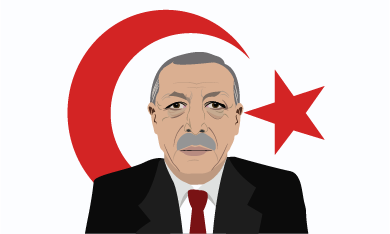
However, under the Presidency of Recep Tayyip Erdoğan, the Republic has begun a gradual, creeping recession into authoritarianism.
The first signs of this slide appeared in relation to the media. Following the anti-Erdoğan Gezi Park protests of 2013, the government responded with sweeping new laws aimed at stifling the media. Incidents involving restrictions on the media included:
- Journalists from Cihan News Agency and the Zaman newspaper were repeatedly barred from attending government press conferences or asking questions.
- The Radio and Television Supreme Council issued fines to pro-opposition news channels such as Halk TV and Ulusal Kanal for their coverage of the protests, alleging that the images were likely to frighten and destabilize the wellbeing of children who could be potentially watching.
- After the protests had subsided, President Erdoğan tightened controls on the internet and blocked Twitter and YouTube.
Alarmingly, according to the Committee to Protect Journalists, Turkey has 81 journalists incarcerated as of December 1 2016. This is the highest of any other country, including all the journalists currently jailed in North Korea, Cuba, Russia and China combined.
The undermining of Turkey’s separation of powers is also concerning. The governing powers and functions in Turkey are divided between the executive, the legislative and an independent judiciary. By design, the religious inclinations of Erdoğan’s Justice and Freedom Party (AKP) are at odds with the historically-secular judiciary. In January 2014, the President purged the judiciary of several officials either for their secularist credentials or those whom he thought to be aligned with his rival Fetullah Gülen. Many of these sacked judicial officers were later replaced by AKP supporters. This was followed by another purge of the judiciary in July 2016, where 2,745 Turkish judges (36% of all judges in Turkey at the time) were removed from duty and ordered to be detained.
Turkey again made international headlines when it held a constitutional referendum in April of this year. The referendum, which succeeded with a ‘yes’ vote of 51.41% to a ‘no’ vote of 48.59%, essentially undermined the liberal founding principles of the Republic and the constitutional constraints on the Presidency. Opposition leader Mithat Sancar stated that a successful ‘yes’ vote and its corresponding amendments would cause the country to ‘quickly become an autocracy’ and eventually a ‘pure dictatorship’. These amendments included:
- Removing the requirement that the judiciary be neutral
- Widely expanding the responsibilities and powers of the Presidency
- Enhancing the President’s powers during a state of emergency
- Dissolving the position of Prime Minister
Following a coup attempt in late 2016, the government initiated a crackdown to purge the military, judiciary, government and civil service of not only those who were implicated in the coup attempt, but also those deemed to be disloyal or dissenting to President Erdoğan. Over 100,000 officials have been dismissed or suspended, including 28,000 teachers. At least 2,200 judges were jailed pending investigation, with 3,400 permanently dismissed. The government also temporarily derogated from many of the key provisions of the European Convention on Human Rights and the International Convention on Civil and Political Rights. The state of emergency also weakened the safeguards against abuse in detention, leading to increased reports of torture and ill-treatment in police detention such as the beating and stripping of detainees as well as threats of rape.
Furthermore, the Turkish government has intensified actions that intimidate and target the country’s Kurdish minority. Curfews have been enforced in Southern Kurdish towns and cities and, as estimated by Amnesty International, up to half a million people have been forced out of their homes because of security operations by Turkish authorities. Many homes and historic buildings of cultural significance to the Kurds, such as in the city of Diyarbakir, have been shelled or demolished. A report by the Office of the United Nations High Commissioner for Human Rights released in February 2017 accused Turkish authorities of killing hundreds of Kurdish people between July 2015 and the end of 2016.
Importantly, Turkey is bound by a wide range of human rights obligations under international law. Among other treaties, they are a party to the International Convention on Civil and Political Rights, the International Covenant on Economic, Social and Cultural Rights and the United Nations Convention Against Torture. Thus, it is increasingly alarming that the government is engaging in such flagrant violations of their international legal commitments. Although faced with the undeniable threats from terrorism, military mutinies and corruption, President Erdoğan has exaggerated these threats to justify the suppression of free speech, freedom of assembly and the required impartiality of Turkey’s judicial branch of government. Along with his government, he should be subject to extensive further inquiry into these human rights abuses.