
JUSTICE, THE BIBLE, AND US
Operating in the only democracy in the Middle East, the Jerusalem Institute of Justice uses the law to seek equality and fair treatment. Since the establishment of Israel in 1948, the country has been striving to find a balance between democratic values and its nature as a Jewish State.
We sometimes find a disparity between the law and political interests. For example, since the state’s beginnings, Jewish Ultra-Orthodox political factions have had a monopoly on matters of faith, deciding who is a Jew and who receives religious and civil rights. This creates huge challenges for other streams of Judaism and for those who profess any other faith, highlighting the need for the services provided by JIJ.
As an Israeli human and civil rights organization, JIJ draws its working principles from two monuments of thought. These are monuments that have decisively impacted western civilization. The first of course is the Bible, the second, which was written after the Holocaust, is the Universal Declaration of Human rights.
The Bible expresses God’s heart for the world, teaching us as it says in Micah 6:8, to walk humbly, pursue justice, love mercy, to have a proper regard for each person and to influence the development of a better society.
The rabbis in the Talmud say that the Torah begins and ends with justice. (Exodus Rabbah 30:19). But what is Justice? In Judaism, justice is the equal and right application of God’s law and morality for mankind.
In Hebrew, there is a clear connection between
- Justice-Tzedek,
- A righteous person- Tzadik,
- And acts of righteousness- Tzedakah
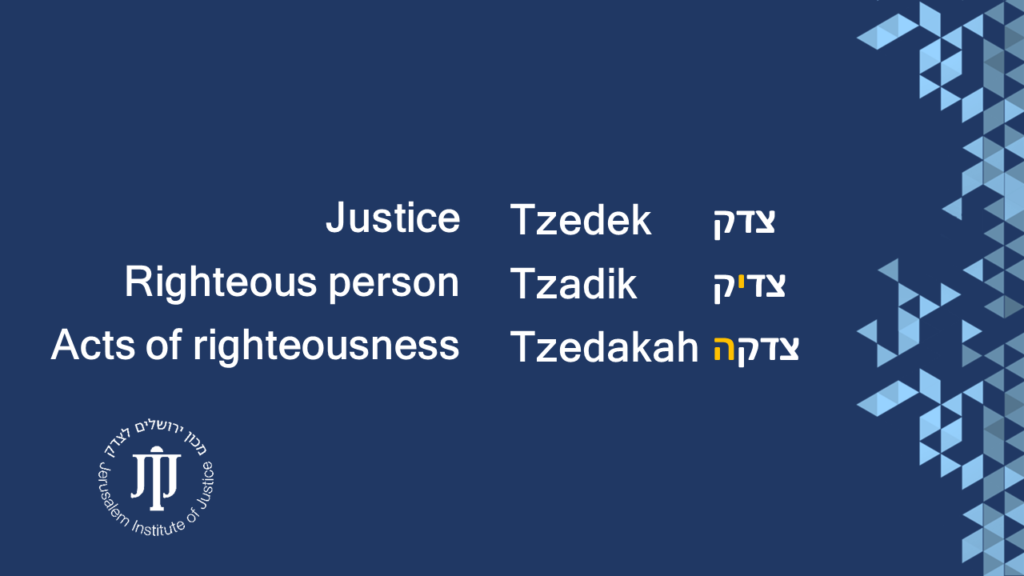
These terms are rooted in wisdom. The base of these words are three letters (tzadik, dalet and kuf) צ-ד-ק.
The only difference between the words is the addition of letters י(yud) and ה (heh) which both represent in Jewish tradition the full name of the Lord. Here we see the centrality of God in justice.
- To bring justice צדק,
- a godly person, צדיק,
- must perform godly acts, צדקה
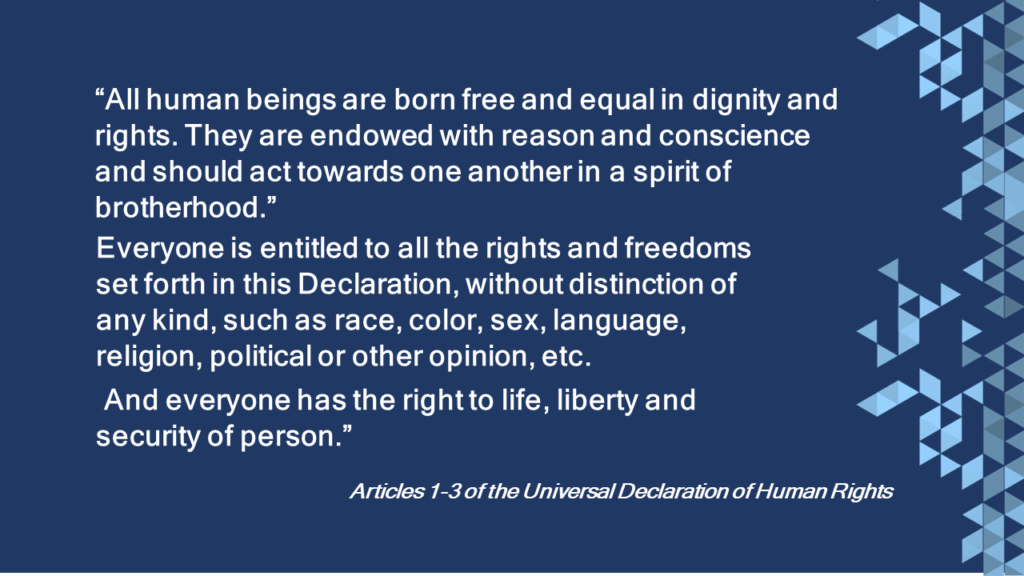
The Universal Declaration of Human Rights which was based on Judeo-Christian values, mirrors the principles of human dignity, our responsibility to each other and personal freedoms.
Part 2 – coming soon

Yom Yerushalayim: Significance for Freedom of Religion
On May 13, Israelis and Jews will celebrate Jerusalem Day, commemorating the reunification of Jerusalem under Israeli sovereignty during the Six Day War of 1967. For some, the day is a celebration of renewed access to the Western Wall and the rest of the Jewish Quarter of the Old City. For others, it is a more general celebration of success in the face of overwhelming odds.
However, one of the most underappreciated outcomes of a united Jerusalem relates to freedom of religion. Throughout the historical periods of Jewish, Christian and Muslim rule, the great faiths erected monuments and places of worship unrivalled by other cities. The Hurva and Ohel Yitzhak Synagogues are a window into the city’s Jewish history, in the same way that the Churches of the Holy Sepulchre and St. Anne are to the city’s Christian heritage. Similarly, the Al-Aqsa Mosque and the Dome of the Rock are revered by Muslims worldwide and are a core component of the city’s Islamic heritage.
It is for this reason that the 1947 UN Partition Plan originally designated Jerusalem as corpus separatum (separated body), to be an international city that guaranteed access to adherents of the three Abrahamic faiths.
However, the cosmopolitan nature of the city today is very different to the atmosphere between 1948-1967.
Prior to 1967, Jordanian authorities severely limited freedom of religion in the city. Upon capturing the Jewish Quarter in 1948’s War of Independence, Transjordanian Arab Legion Major Abdullah el-Tell is said to have told his superiors: ‘For the first time in 1,000 years not a single Jew remains in the Jewish Quarter. Not a single building remains intact. This makes the Jews' return here impossible[1].’
Contrast this to the pronouncements of Prime Minister David Ben Gurion in 1948. When it appeared the Jewish forces were on the cusp of capturing the Old City of Jerusalem, he famously ordered the commander of Jerusalem, David Shaltiel, to ‘prepare a special force - loyal and obedient - …that will mercilessly use machine guns against every Jew – and especially against every Jewish soldier - who will attempt to rob or desecrate a Christian or Muslim holy place[2]’.
Between 1948 and 1967, the city was characterized by the repression of religious freedom and the destruction of minorities’ places of worship. All but two of the Old City’s 58 synagogues were destroyed under Jordanian rule[3]. Furthermore, Jordan’s King Hussein permitted the uprooting of thousands of tombstones at the Mount of Olives Cemetery for the construction of roads through the complex and even latrines for the Jordanian soldiers stationed there.
Even in recent decades, we can again see questionable respect for religious sites. The Solomon’s Stables structure existed under the Southeast corner of the Temple Mount and contained artefacts from eras as the First and Second Temple, Roman, Byzantine and Muslim periods[4]. However, the Israeli Islamic Movement decided in 1995-1996 to renovate the complex with the aim of converting it to a mosque[5]. With careless demolition procedures and without the official approval from relevant authorities, substantial irreversible damage was done to the Southern Wall of the city. As early as 2001, the Antiquities Authority discovered considerable swelling on the Wall, leading to the possibility that, along with the Eastern Wall, it could collapse[6].
The Temple Mount/Haram al-Sharif is another area that relies heavily on the guarantee of freedom of religion. Currently administered by the Jordanian funded waqf (Islamic trust), the complex is important in both historical and religious terms. Rather than infringe upon the right of access to Muslim adherents, the status quo agreement guarantees their access at the expense of Jewish adherents. While Jews have the right to enter the compound, they are forbidden from praying or carrying religious artefacts such as siddurim or kippot out of sensitivity for the Muslim sites there.
These Jerusalem-specific arrangements complement an extensive legislative regime aimed at protecting freedom of religion. The Protection of Holy Places Law of 1967 guarantees freedom of access to sacred places, protection against their desecration and even protection against violations of adherents’ feelings toward these places[7]. Furthermore, Israeli law does not prohibit changing one’s religion nor does it prohibit proselytizing (missionizing).
Thus, in celebrating Jerusalem Day, focus should not only be upon the unexpected victory of Israel’s military in 1967. It should be on the underlying heritage that unites the three Abrahamic religions, and the way in which Israel’s sovereignty over Jerusalem has safeguarded religious freedom.
[1] Zilhka, A. (1992), ‘History of the Israeli-Palestinian Conflict’ in E. W. Fernea and M. E. Hocking (eds.), The Struggle for Peace: Israelis and Palestinians, University of Texas Press, United States, p. 53
[2] Ankori, G. (2006), Palestinian Art, Reaktion Books, London, p. 26
[3] Jewish Telegraphic Agency Daily News Bulletin (1967), ‘Cabinet Report Says Jordan Destroyed 56 Old City Synagogues, Desecrated Cemetery’, November 2, p. 2, accessed March 7 2017, http://pdfs.jta.org/1967/1967-11-02_212.pdf
[4] Gonen, R. (2003), Contested Holiness: Jewish, Muslim and Christian Perspectives on the Temple Mount in Jerusalem, KTAV Publishing, United States, p. 167-169
[5] Shragai, N. (2012), ‘The Danger to Al-Aksa from Muslim Building Activity in Solomon’s Stables’, in Jerusalem Center for Public Affairs, The “Al-Aksa Is in Danger” Libel: The History of a Lie, accessed March 7 2017, http://jcpa.org/danger-to-al-aksa-from-muslim-building-in-solomons-stables/
[6] ibid
[7] The Israeli Knesset, Protection of Holy Places Law 5727 (1967), accessed March 7 2017, https://www.knesset.gov.il/laws/special/eng/HolyPlaces.htm

Is “Jewish Democracy” an Oxymoron?
By Nikki Golomb.
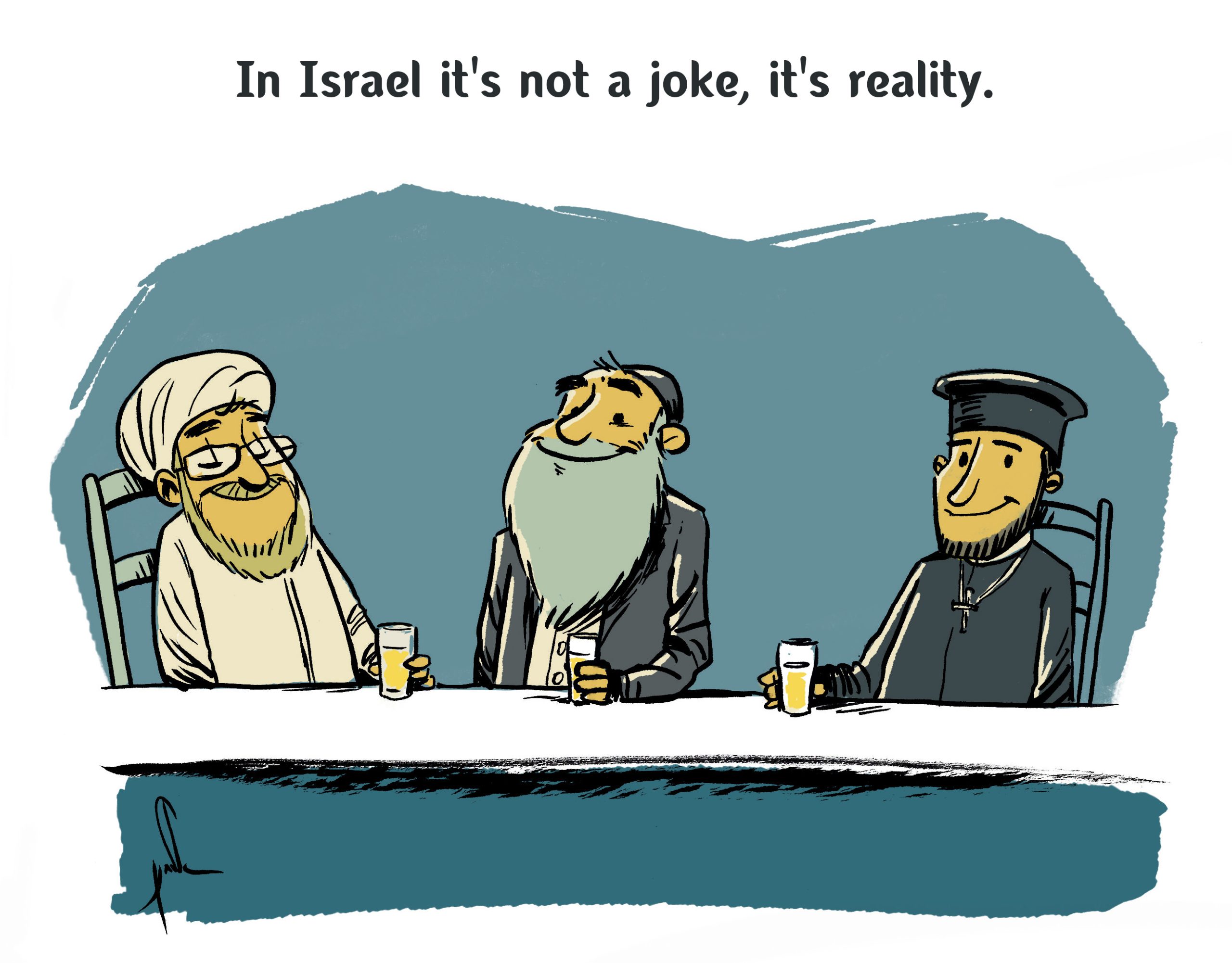
There’s a phrase I have heard over and over again throughout my life: “Put two Jews in a room and you’ll get three opinions.” Once, however, I heard an amended version: “Put two Israelis in a room and you’ll get three opinions, a new political party, and probably an invitation to Shabbat dinner.” The more I’m learning about Israeli politics, however, the more I’m realizing it is less of a joke and more of a commentary on the complexity of Israeli politics and social life.
Israel prides itself as being both the only true democracy in the Middle East, as well as the only Jewish state in the world. Some people, however, do not believe that Israel can be both Jewish and democratic; they say that mixing religion with politics inherently makes it undemocratic. However, this argument ignores the many other democracies with a state religion; for example, nobody questions the democratic integrity of Christian states such as the UK, Greece, Costa Rica, or Denmark (among others). Other countries additionally have religiously-affiliated political parties, even though the country itself does not have a national religion. Despite the mixing of religion and politics, these countries remain internationally recognized democratic states.
Taking this into consideration, the question thus becomes whether Judaism in particular is incompatible with democracy. In order to answer this, one must look at the Torah and Jewish values. The Torah states that an acceptable political system must be “rooted in popular consent and involving the people in governance,” a significant characteristic of democracy. It additionally documents the creation of a modern justice system under Moses, who established a multi-tiered court system after the Exodus from Egypt. Although there are no direct references to democracy in the Torah, values such as equality, justice, and rule of the people which are vital to democratic institutions are emphasized, meaning Judaism and the nature of democracy are not inherently incompatible. Jewish values additionally tell us that all people are created b’tzelem Elokim – in the image of G-d. This belief equalizes all people, regardless of religion, ethnicity, nationality, etc. and demands that everyone is treated with the same respect and dignity. The value of tzedek, or justice, also has clear implications on democratic life by further emphasizing the importance of establishing a just society.
Others argue that while Judaism and democracy are not inherently contradictory, the ways they manifest themselves in Israel do not represent true democracy. According to the Jerusalem Center for Public Affairs, there are two vital aspects of democracy: 1) self-governance, or the meaningful participation of citizens in the political system, and 2) plurality, or the ability of everybody to live according to their own beliefs and coexist in society. Both of these features are represented in the Israeli political system. Israel has a parliamentary system of government, called the Knesset; Members of Knesset are voted upon by the people, and all citizens have the right to vote regardless of religion, ethnicity, or any other identity. All citizens are also eligible to run for government, or create their own political party; both Arabs and Haredi Jews, for instance, have their own political parties and are also represented in other parties. In terms of pluralism, it is no question that various ethnic and religious groups coexist in Israel. Jews and Arabs alike have the right to vote; receive state-funded education; and are represented as Members of Knesset, judges, and other high-power positions. Many organizations exist, including JIJ, which work to promote pluralism in Israeli society. This would not be possible in a nondemocratic country or exclusively ethnic nation-state.
It is true that Israel, like every other country, is not perfect. Discrimination exists, representation can and should be improved, and conflict between religion and government remain a hot political topic. The “perfect” balance has not yet been found. However, this does not take away from the Jewishness or democracy of the state. Christian democracies exist with little to no questioning of whether they can be both religious and democratic. Those who claim that a “Jewish democracy,” on the other hand, is an oxymoron either do not have a complete understanding of Jewish and/or democratic values, or do not know how Israel’s political system works. Jewish values influence the political environment, yet Israel meets every requirement of a democratic nation. Once we accept that Israel is both Jewish and democratic, we can better understand the political nature of the government and work within the system to create positive political and social change.
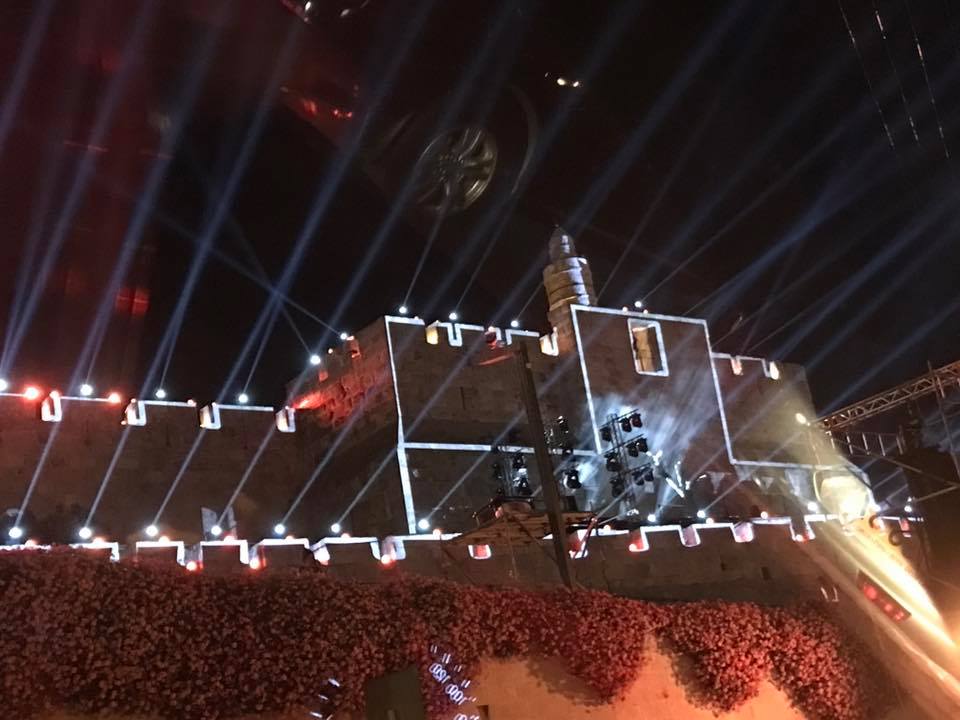
Restoration and Freedom
Jewish sovereignty was restored over all of Jerusalem, 50 years ago, in 1967. This restoration allowed peoples from all religions unfettered access to its Holy sites for the first time in approximately two millennia. We honor this occasion by celebrating "Jerusalem Day", today Wednesday, May 24th.
Historically, Jewish majority in the city of Jerusalem was established in the late 1880's. 100 years ago, Western Imperialistic powers led by General Allenby liberated the city of Jerusalem from the Islamic control of the Ottoman Empire, and thereafter, through the Balfour Declaration established that Palestine would be recognized as "a national home for the Jewish people".
In November, 1947, the UN General Assembly adopted a partition of Mandatory Palestine at the end of the British Mandate. The Partition Plan recommended a Special International Regime for the city of Jerusalem and the creation of independent Arab and Jewish States. This plan was never accepted by the Arab states and Jerusalem was under Jordanian control.
Under Jordanian occupation, Jerusalem was systematically Islamicized. No Jews were permitted to live in the city, and the Christian population dropped sharply from 25,000 to 9,000. Jordanian policy imposed the Arabic-language; included the destruction of dozens of synagogues; use of government-issued textbooks in Christian schools; a prohibition on the purchase of property by churches and a denial of church funding of social and medical services, including hospitals; and a total ban on visits to Jewish holy places by Jewish pilgrims.
The religious persecution continued until Jordan chose to join a coalition of Arab states and invade Israel in 1967. Israel's victory in the Six Day War resulted in the reunification of Jerusalem and freedom of worship was restored to members of all faiths.
Isaiah 62:6 - I have set watchmen upon thy walls, O Jerusalem, they shall never hold their peace day nor night: ye that make mention of the LORD, keep not silence...
Times and seasons are ultimately beyond our control. However, the Jerusalem Institute of Justice remains dedicated to confronting discrimination and exploitation by promoting human dignity to ethnic, religious and cultural minorities in Israel and throughout the Middle East. We hope and pray that this year restoration and freedom will come to many people in our region.
_______________________________________
Read more about JIJ: Click here
Browse our projects: Click here
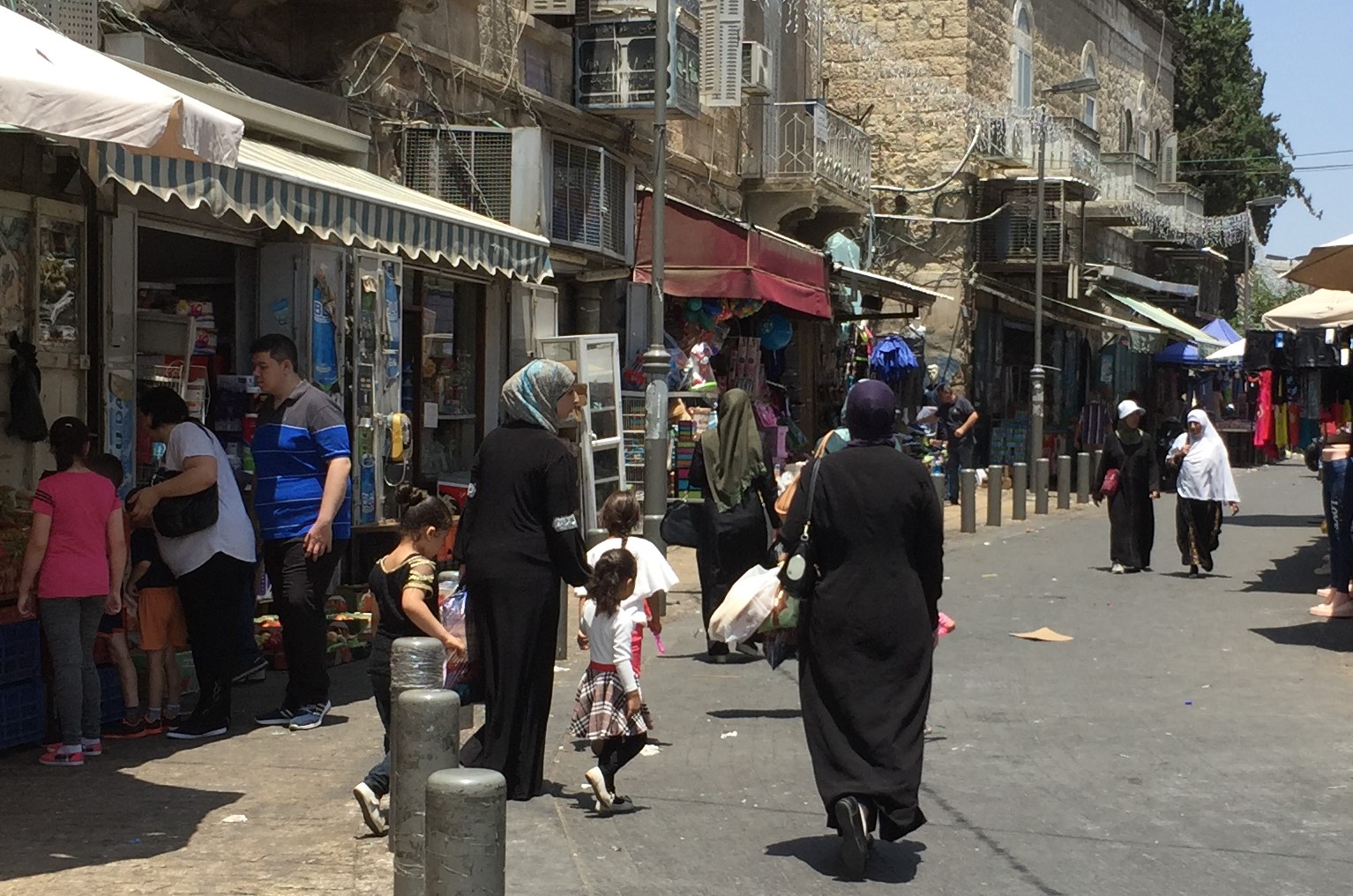
Freedom of Religion - A human rights-based approach to discrimination against religious minorities in the Palestinian Authority
This report focuses on the religious freedom of different religious minority groups under the rule of the Palestinian Authority (PA) in the West Bank and Gaza. These areas were officially governed by a unity government consisting of both Fatah and Hamas. In 2014 the PA signed and ratified 15 international conventions dealing with, among other issues, the right to freedom of religion. The government is therefore obliged to grant people living in areas under the PA’s control the freedoms enshrined in these conventions.