
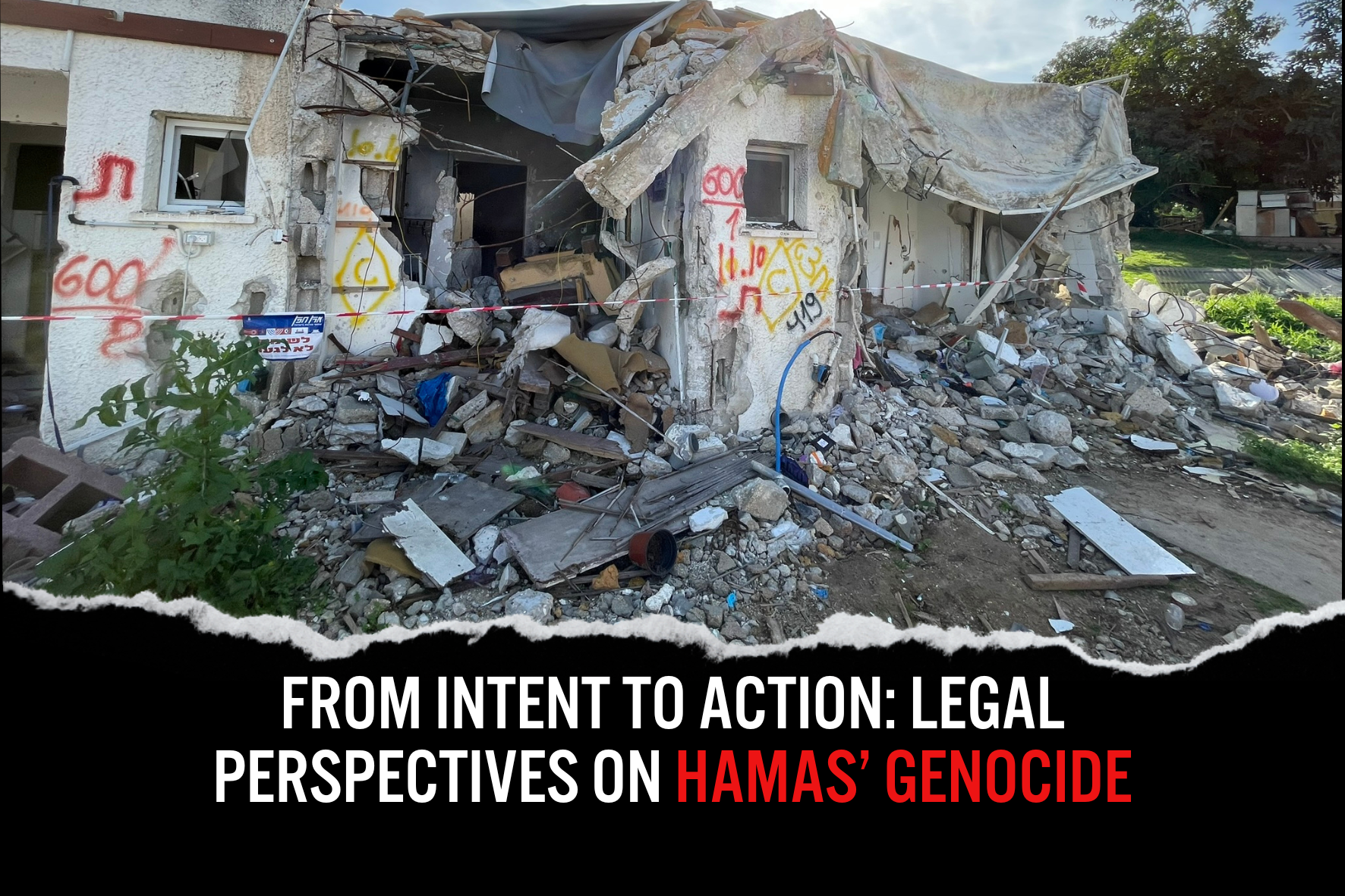
From Intent to Action: Legal Perspectives on Hamas’ Genocide
CONTENT WARNING: THIS REPORT CONTAINS EXPLICIT GRAPHIC CONTENT, INCLUDING IMAGES AND DESCRIPTIONS OF KILLINGS, SEXUAL VIOLENCE, AND OTHER FORMS OF EXTREME VIOLENCE, WHICH MAY BE DISTURBING OR TRIGGERING TO SOME READERS
This report provides a comprehensive analysis of the October 7, 2023, attacks perpetrated by Hamas and other terrorist organizations, arguing that these acts fulfill the criteria to be considered genocide under international law. The document outlines the historical context of the Genocide Convention of 1948, emphasizing the legal definition of genocide and its codification in international law, particularly under the Rome Statute of the International Criminal Court (ICC).
In this report meticulously details the background, entities involved, and the horrifying acts of October 7, focusing on the systematic attacks by Hamas and other Palestinian armed groups against Israeli nationals, resulting in over 1,200 deaths and numerous acts of violence, including rape, mutilation, and kidnapping. It argues that these acts satisfy the physical element (actus reus) of genocide, including killing members of a group, causing serious harm, and imposing measures intended to prevent births within the group.
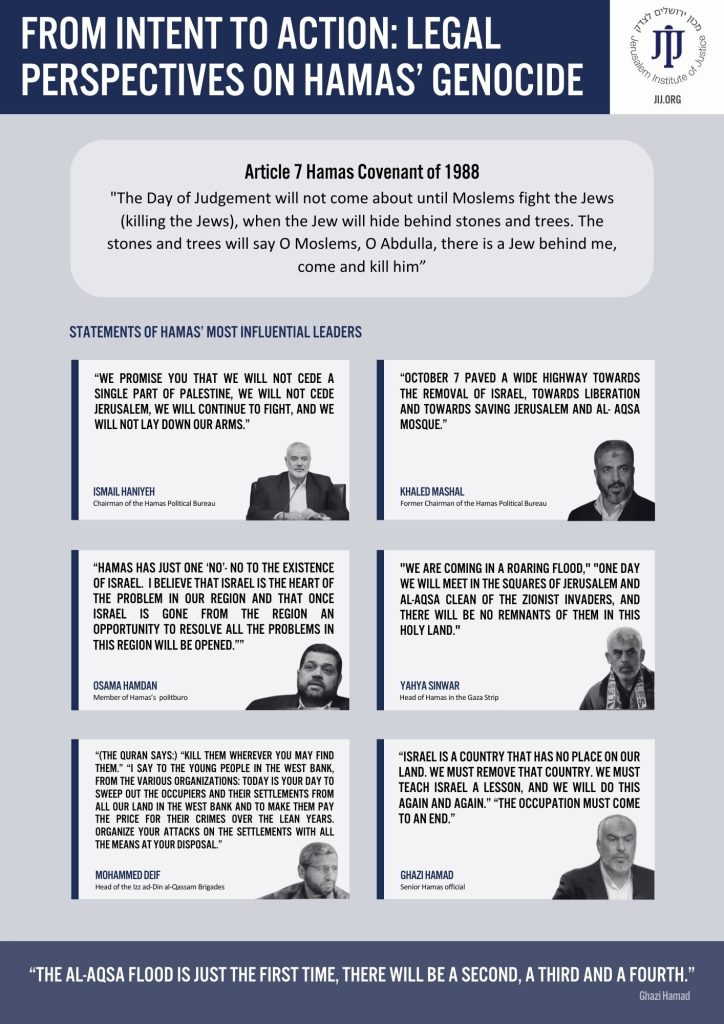
Furthermore, it elaborates on the mental component (dolus specialis) required for genocide, highlighting how speeches and actions by Hamas’ most influential leaders before and after the attacks evidence genocidal intent. The report discusses individual and state responsibility for genocide, noting the role of the ICC, the International Court of Justice (ICJ), and the application of universal jurisdiction in prosecuting such crimes. It also addresses the Palestinian Authority's complicity through financial incentives for terrorists (the "Pay for Slay" policy) and public endorsements of the attacks.
The report concludes by underscoring the necessity of recognizing and naming the crime committed on October 7 as genocide in accordance with legal standards and the evidence presented. It calls for accountability through international legal mechanisms to address and prevent such atrocities in the future.

From Intent to Genocide
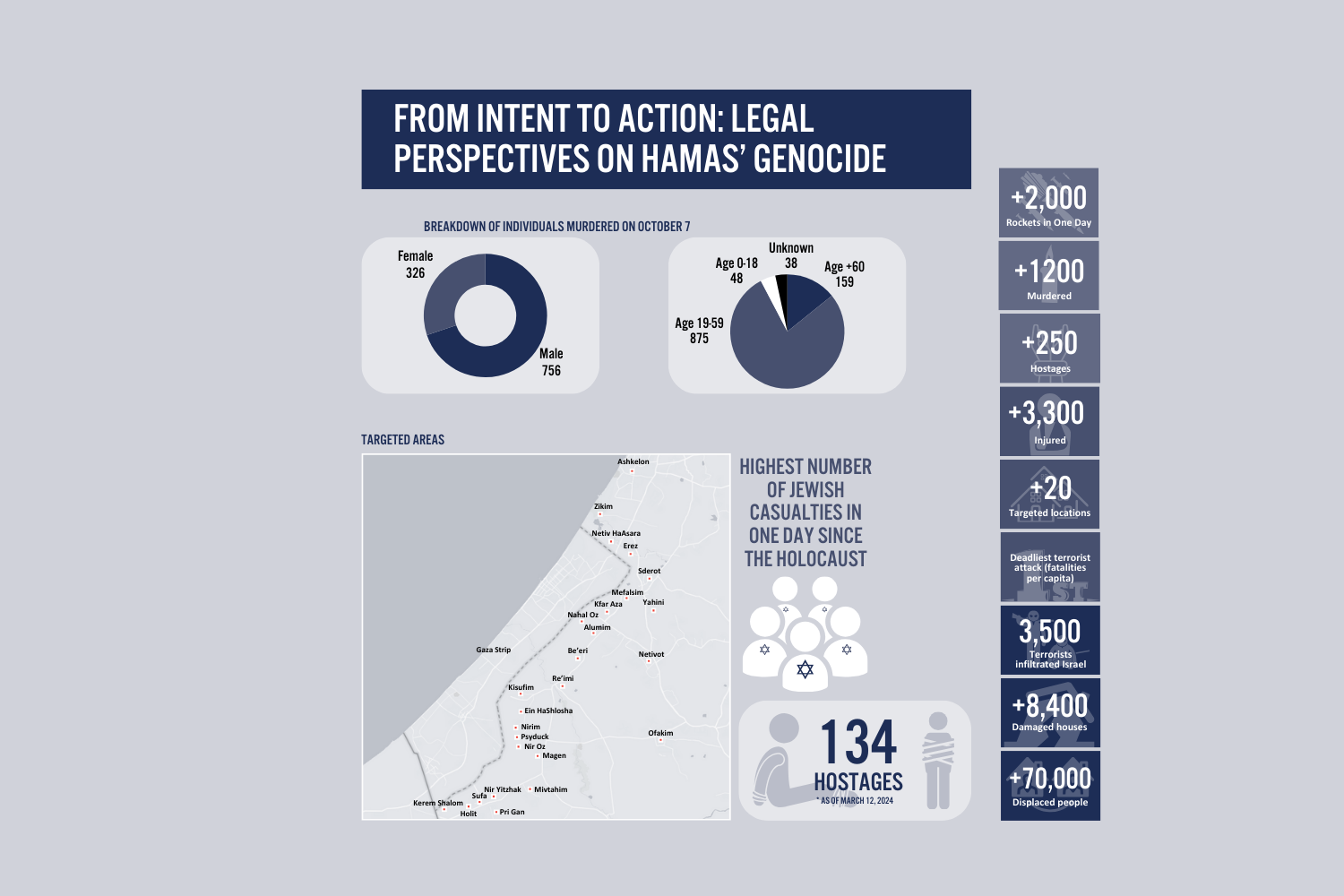
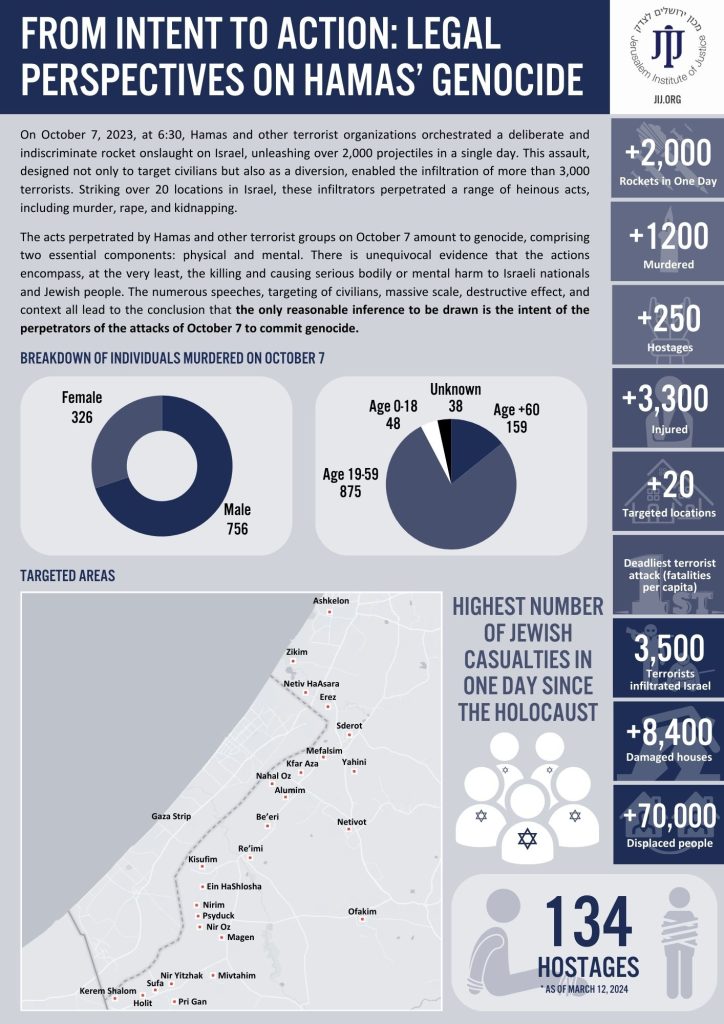
On October 7, 2023, at 6:30, Hamas and other terrorist organizations orchestrated a deliberate and indiscriminate rocket onslaught on Israel, unleashing over 2,000 projectiles in a single day. This assault, designed not only to target civilians but also as a diversion, enabled the infiltration of more than 3,000 terrorists. Striking over 20 locations in Israel, these infiltrators perpetrated a range of heinous acts, including murder, rape, and kidnapping.
The acts perpetrated by Hamas and other terrorist groups on October 7 amount to genocide, comprising two essential components: physical and mental. There is unequivocal evidence that the actions encompass, at the very least, the killing and causing serious bodily or mental harm to Israeli nationals and Jewish people. The numerous speeches, targeting of civilians, massive scale, destructive effect, and context all lead to the conclusion that the only reasonable inference to be drawn is the intent of the perpetrators of the attacks of October 7 to commit genocide.
Download
United Nations and Genocide
By Nikki Golomb.
The Jerusalem Institute of Justice conducted a report assessing the ability of the United Nations to protect populations from genocide. The document analyzes the legal obligations of the international order to protect populations from genocide, as well as the success the UN has had in doing so. The report is split into three sections: historical background, current assessment, and discussion and recommendations. JIJ took into consideration six case studies total, three historical instances of genocide and three current events. From these analyses, the report then draws a conclusion on whether the UN successfully protects populations from genocide. Finally, JIJ provides several recommendations for the UN and other intergovernmental organizations to improve the protection provided to vulnerable populations.
Historical Background
After providing the UN definition of genocide and the methodology used to conduct the report, JIJ explores in the document the significance of the Holocaust in the establishment of the United Nations and the creation of a body meant to protect vulnerable populations. The historical uniqueness of the Holocaust and the inability of the world to prevent it sparked the need for an international body to prevent and punish such crimes against humanity – and thus, the United Nations was born.
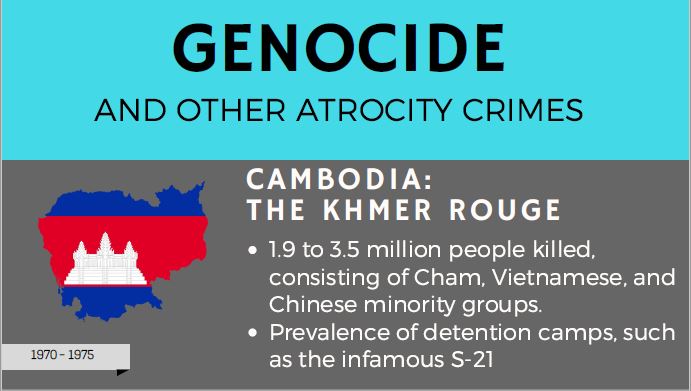
However, incidents of genocide that followed the establishment of the UN exposed the flaws in the organization’s ability to enforce preventative or protective measures. In fact, although the Convention on the Prevention and Punishment of the Crime of Genocide mandates that contracting parties make an effort “to prevent and to punish” genocide, there is no mention of counteracting it. Cambodia, Rwanda, and Yugoslavia – three countries which experienced a genocide after the establishment of the UN – were all addressed by the UN and had a peacekeeping force (PKF) sent before the tensions escalated into genocide. The PKF, however, were clearly unsuccessful. This was due partially to the narrow parameters the PKF were given to work, and partially to a lack of political will to engage. Because of complex regional and interstate conflicts, the UN was unable to gather a consensus to form a mandate strong enough to keep the violence from escalating. In other words, politics got in the way of protection of human rights and lives – all three times.
Current Assessment
Several current conflicts have been identified by the UN as either crimes against humanity or genocide. The conflicts analyzed in this report are Darfur, the Rohingya people in Myanmar, and ISIS and Syria. Once again, the UN has failed to label any of these as a genocide (except for ISIS’s violence against the Yazidi people), further demonstrating the lack of a political will to intercede, as labeling them as a genocide would obligate the UN to act. Instead, by recognizing the crimes against humanity, the international order is able to enforce weak mandates and sanctions that do not complicate international relations among permanent member-states of the United Nations, but also do nothing to stem the tide of violence in the regions. Furthermore, no action can be taken without a unanimous decision made by the permanent member-states of the UN. Because of the complicated relations among these states, unanimity is rare. History appears to be repeating itself, as politics are once again impeding the international order’s ability to protect populations from genocide.
Discussion and Recommendations
The report concludes with an analysis of the problems affecting the UN’s ability to protect from genocide. These problems include politicization and lack of political will. Politicization refers to the tendency of the UN to become so consumed in interstate politics that human rights abuses become a secondary issue. Despite the founding assumption that the global community has a responsibility to protect, the UN has struggled to achieve a collective will to intervene in genocide and other crimes against humanity due to politics. Lack of political will is related in that states do not believe intervention to be in their national interest, and as a result have no incentive to intervene. This again implies that politics, specifically domestic politics, supersede international human rights.
JIJ then offers a series of recommendations to the UN to better protect vulnerable populations. These recommendations, designed to address the problems analyzed in the report, cover a wide variety of possible solutions, from adding “counteracting” genocide to the language of the Convention to enforcing stricter human rights requirements of member-states. The recommendations also include demanding better accountability and challenging the notion that international human rights abuses are not of national interest, thus addressing the problem of politicization.
Should the UN (or other IGOs and human rights activists) adopt these recommendations, the international community would be better equipped to prevent, counteract, and punish genocide. Minimizing politicization, enforcing stronger mandates, encouraging states to intervene, and providing incentives for states to maintain a certain human rights standard are basic yet vital changes that can be made to improve the global response to genocide. Once we are able to look at the past and recognize where we went wrong, we will be able to address the problems that still exist today and, hopefully, work together towards a future of human rights and dignity for all.