

Never use the phrase “your mother”
“This July, Gazan journalist and activist Amer Balousha published a post on Facebook in which he wondered whether his leaders' mothers also have to sleep on the floor in order to cool themselves down in the unbearable summer heat.“
Granted, a Palestinian journalist as experienced as Amer Balousha should never have used the phrase “your mother” in connection with the actions of Hamas or PA leaders. That way, trouble lies. Precisely. Neither Balousha’s words, nor the reason for his words, were lightly chosen.
Balousha’s purported crime, “Misuse of Technology,” doesn’t exist within Palestinian law, but why be picky? Suppression of free speech by either Hamas or the PA would be merely a boring ‘dog bites man’ story, except that Balousha belongs to a grassroots, bottom-up, youth-centered political movement that is demanding organizational reconciliation and political reforms from both Hamas and the PA. Al-Monitor, an Arab publication, termed these so-called “Patriots to End the Split” a “first-of-its-kind popular movement in Palestine”.
Balousha, with other Gazans, smashed through an earlier tipping point amidst the drastically curtailed electrical service triggered by PA pressure on Hamas earlier this year. Desperate Gazans had flooded the streets, risking their lives to vote their anger against the regime. Significantly, Hamas hadn’t dared crush the rebellion. Instead, they began ratcheting up the pressure on free speech to play for time, while reaching out to former enemies, including the PA, to craft a new political arrangement. Meanwhile, the heat has continued to rise month-by-month, not only in the homes of Gazan mothers, but far more so in the power corridors of Gaza and Ramallah.
Meanwhile, in parallel, the PA has also been concocting absurd laws to cover the unjust arrests of political activists and journalists.
Most notably, Issa Amro, an intense proponent of (mostly) non-violent resistance against Israel, was arrested this summer for criticizing the arrest of a PA journalist, Ayman Quwasme, who had himself called for Abbas to resign. Quwasme, director of Hebron’s Freedom Radio, had posted this to Facebook, stripping away the fiction that blamed Israel for the PA’s direct suppression of speech: “This media network is in an area that is under the complete control of the Palestinian Authority, yet, they remain silent, and cannot protect us. We have nothing to do with incitement. We try to deliver the message of the simple people in need, to the officials. We try to be the voice of the voiceless, and that is why we keep getting attacked and harassed.”
Why, though, was Abbas incensed with Quwasme, and willing to endure near-universal condemnation over the arrest of Amro? Because the PA, like Hamas, has reached the end of its perceived legitimacy in the eyes of its own people. The regime, like its spiritual brothers elsewhere, now suppresses free speech in a manner that “is not much different than that (experienced) under Bashar Assad’s Syria or even North Korea.” Even an Israeli General’s son petitioned Abbas for Amro’s freedom. This demonstrates why organizations like JIJ defend the free speech rights of all. Something more truly human than the typical enmity between Israel and the Palestinians has come into play here.
The Balousha incident would be just another forgettable statistic in the battle over speech, except for Amer Balousha’s formal, active connection to the group of “Patriots”. Even so, mainstream media reports have missed it.
His arrest suggests a fresh way for us to ‘read’ the relative progress of the reconciliation process between Hamas and the Palestinian Authority ‒ keep a record of which dissenters are allowed to speak up, and whether those speakers include those whose lives have been devastated by the corrupt, venal and pointless war between Hamas and the PA since 2006.
Balousha was freed fairly soon after his arrest, pledging not to speak about the incident on social (or traditional) media. Notably, neither he nor the “Patriots” have silenced themselves when it comes to a host of other flashpoints.
Since this grassroots youth movement seeks the inclusion of all Palestinian political groups in a multi-party internal reconciliation ‒ 13 parties, to be precise ‒ we may expect free-speech suppression by both Hamas and the PA to increase, not decrease, in the short-term. They disagree about much else, but form a perfectly united front against free-speech.
Unfortunately for their shared kleptocracy, an entire generation of disenfranchised Palestinians have nothing to lose in their struggle for human rights because they have grown up learning, bitterly, that they surely have nothing to gain by silence.
When 500 young Gazans are willing, as they were this month, to be photographed and surveilled in public for the cause of speech and justice, even Hamas can feel the earth move beneath its feet. Israel has become the least of this younger Palestinian generation’s problems or adversaries. Ask Issa Amro about that. Regional peace may depend, in decades to come, upon this group of young Palestinian leaders who are, today, well-known only to the security forces in Gaza and Ramallah. Alas, many of these 500 may come to be remembered as martyrs to the cause of free speech at that same future date.

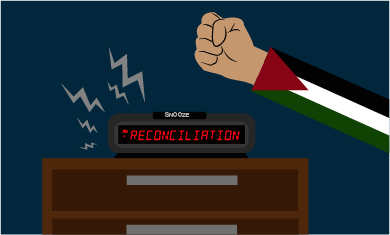
Hamas, the PA and Groundhog Day
…. why doesn’t anyone in Cairo look happy on the historic occasion of signing a reconciliation deal in October, 2017?
Like the classic Bill Murray movie, Groundhog Day, Hamas and the Palestinian Authority hear their clock alarms go off only to discover they are repeating the same events over-and-over. In their case, these events are their fantasy reconciliation, first tried in 2007, 2008, 2011, 2012, 2014 and now yet again in 2017. These words about the ‘historic’ 2014 effort could have been written today. Still, could the seventh time be the charm?
Just. Possibly. What has changed?
In a region where movements are the extension of leaders, more than states, three major Palestinian players have chained themselves together and then, no doubt unintentionally, lost the disentanglement key.
The first player, Yehya Al-Sinwar, famed architect of Hamas terrorism, took a governmental leadership role early in 2017. Facing the unexpected rebellion of thousands in Gaza this spring who were driven into the streets by a desperation greater even than fear of their own leaders, Sinwar began reaching out, remarkably, to a childhood friend but longer-time enemy, Mohammed Dahlan.
Dahlan, a former Fatah security chief in Gaza, was long a bitter political and military foe of Hamas. However, Dahlan has been engaged in a multi-year internal war with PA leader, Mahmoud Abbas, over the latter’s determined refusal to open any path for a successor, and Dahlan above all.
Al-Sinwar, with Dahlan’s help, began searching for ways to pressure the PA, as well as secure direct aid for Gaza from Dahlan’s own sponsors in the UAE.
If Sinwar and Dahlan believed the old man in Ramallah would buckle, they miscalculated badly. Abbas immediately cut PA distribution of electricity to Hamas by 40% and added a series of other punishing actions. He even fired 6,000 of the PA’s own employees in Gaza. Money (especially the lack of it) talks.
Now, even more desperate, Hamas reached out to another enemy, President Abdel Fattah el-Sisi of Egypt. Hamas agreed to halt its long-successful attrition of Egyptian security across a broad swath of the Sinai in return for Gaza infrastructure aid. Sisi agreed, providing that Hamas also signed on for reconciliation with Abbas, as well as broader Egyptian leadership of regional peace efforts. This converges with Egypt’s own ambitions and need to be seen again as a Sunni power broker across the Middle East and counter-poise to Iran. Good luck with that.
Fast-forward: the (now) four-fold tag team of mutual despisers crafted a marvelous reconciliation agreement that called for the Palestinian Authority to resume direct governance of the Gaza Strip while Hamas disarms. Anwar Sadat himself could hardly have done better, and all this without apparent pressure from Israel, nor obvious involvement from the remarkably invisible American President.
Lest it all seem entirely fictional, Hamas leaked the signed agreement and entertained the PA in Gaza for the first time in a decade. All players professed, in unison, that the play must certainly go on, according to plan.
Yes, but whose plan?
Yehya Al-Sinwa had promised to break the headof anyone who stood in the way of the agreement, which sounded promising. Alas, he then proclaimed with still greater insistence that “The discussion is no longer about recognizing Israel but about wiping Israel out,” adding for good measure, that Hamas would disarm when “Satan enters paradise.” Oops.
Neither Israel nor the famed Quartet has greeted this with, shall we say, enthusiasm.
So, recalling Groundhog Day, isn’t this latest reconciliation much ado about less-than-nothing at all?
Possibly. Not. This has become the first act in a new, highly consequential drama to determine who will take control of Palestinianism in the near-future, given the shared failures of Hamas and PA to deliver either victory-over or peace-with Israel. Like its kissing cousin, the interminable Palestinian-Israeli peace process, this latest intra-Palestinian reconciliation process may now be an unstoppable public-relations fixture.
Meanwhile, the three main players are glued together. Abbas will go, but he will most likely refuse to disappear until Dahlan has been denied the throne in Ramallah. For their part, Sinwar and Hamas need the PA as a foil for their military ambitions, and would prefer a compromised and dependent Dahlan at its head over someone who owes them nothing. Dahlan, of course, foresees Hamas dependence upon him. Meanwhile, Sisi loses nothing if reconciliation collapses, but stands to gain much even from a modest, positive result.
Of the main players, who has been the winner to-date?
Conventional wisdom, as always, claims to know: it’s Abbas, followed closely by el-Sisi. Even if Hamas reneges on demilitarization, the PA seems to have gained the upper-hand in Gaza. But there are a few who believe that Hamas has enticed both Abbas and Sisi into a cunning trap, aided as usual by Iran.
As for the losers, sadly, it remains the Palestinian people, as usual. Even those Palestinians who blame Israel recognize internal failures as the critical cause for current events: “Both Hamas and Fatah are out of options. Their regional politicking was a failure, and their political program ceased to impress Palestinians who are feeling orphaned and abandoned.”
If our analysis proves right, this latest reconciliation ‘process’ must provide a second and third act to follow the first. We will devote future posts, as needed, to analyze relationships between the major players over the coming months, as well as the curious invisibility of America’s President Trump and the veiled visibility of Israel during these seemingly crucial days of negotiation.
Meanwhile, set your alarm and keep an eye out for groundhogs.
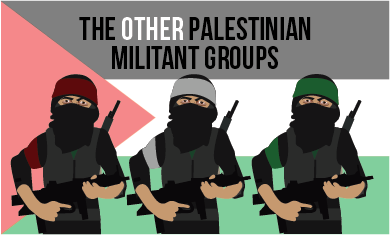
The Other Palestinian Militant Groups
Given the well-known profile of Hamas, you may be forgiven for thinking that they are the only militant group in the Palestinian territories. Their famous green banners, softly-spoken leader Khaled Meshaal and rallies attended by tens of thousands have elevated their profile to global recognition. However, their military wing the Izz ad-Din al-Qassam Brigades are by no means the only militant group in the West Bank or Gaza Strip.
The al-Aqsa Martyrs’ Brigade are associated with the governing Fatah party and are, at least theoretically, a secular entity[1]. Rather than impose theocratic rule over Israel and the Palestinian territories, its intention is to expel Israelis from the territory by means of armed resistance. Believed to have been established in late 2000, the Brigade became proficient in the practice of suicide bombing – a trademark of Hamas. Examples of this include the suicide bombing on a bus in Rehavia in January 2004[2], and the twin-suicide bombing at the Tel Aviv bus station that killed 23 people in January 2003[3]. After the Palestinian intifadas and the international community’s intolerance of Palestinian terrorism, the group remained largely dormant. On July 26, 2007, Palestinian Authority (PA) President Mahmoud Abbas announced the disarmament of ‘all the armed militias and irregular military or paramilitary groups’ existing in the Palestinian Authority[4]. The militiamen were ordered to turn in their weapons to the PA, sign a declaration renouncing terror and then had the option of being absorbed into the PA’s security forces. Conventional wisdom would suggest such a disarmament, in addition to Fatah’s adherence to the Oslo Accords and the Palestinian Liberation Organization’s 1993 rejection of violence and terrorism, would negate the existence of a Fatah-affiliated military group.
However, during Operation Protective Edge in July 2014, their headquarters in the West Bank announced an ‘open war against the Zionist enemy in all [possible] ways with [operational] surprises, in accordance with all the laws and international conventions that bestow on us [the Palestinian people] the right to armed struggle so as to remove this occupation from all the Palestinian land[5]’. While their exact membership is unknown, they published a list in August 2016 detailing over 30 attacks they were responsible for between July and the first half of August. These include firing toward the Gush Etzion Junction on July 23 and August 10, as well as shooting near the settlement of Itamar on July 25[6].
The other important group is the Al-Quds Brigade, the armed wing of the Islamist movement Palestinian Islamic Jihad (PIJ). In terms of ideology, they are largely indistinguishable from Hamas and their military wing. They reject the idea of living alongside an Israeli state and advocate for continued armed resistance. The group operates primarily out of the Gaza Strip and to a lesser extent in the West Bank due to the PA’s security arrangements with Israel. In Gaza, they are known to work closely with Hamas and have coordinated rocket attacks together, according to PIJ leader Ramadan Shalah[7].
Other smaller groups, with limited military capabilities, include the Popular Resistance Committees (PRC), Popular Front for the Liberation of Palestine (PFLP), and Harakat al-Sabireen. However, these groups suffer from limited financial assets and much of their intended recruitment goes to Hamas’ military wing, the al-Aqsa Martyrs’ brigade and the Al-Quds brigade.
The challenge for Israel is how to engage an enemy that is a non-state entity. These groups operate in densely populated areas and often intentionally fire out of civilian infrastructure. Furthermore, many militants are often in contravention of international humanitarian customary and treaty law when they are either not appropriately uniformed or wear the uniforms of the Israeli military. One such example was the use of a van with a ‘TV’ insignia by members of the Al-Quds Brigade and the al-Aqsa Martyrs’ Brigade to attack an Israeli military position on the border with Gaza in 2007[8]. Questions relating to the responsibility of militant groups to international humanitarian law are explored in the JIJ Report Hamas and the International Human Rights Law.
[1] Robinson, P. 2008, Dictionary of International Security, Polity Press, UK, p. 16
[2] Aderet, O. 2010, ‘The Intifada That Was’, Haaretz, October 1, viewed 8 March 2017, http://www.haaretz.com/israel-news/the-intifada-that-was-1.316608
[3] Israeli Ministry of Foreign Affairs 2003, ‘Suicide bombing at old central bus station in Tel-Aviv-5-Jan-2003’, January 5, viewed 9 March 2017, http://mfa.gov.il/MFA/MFA-Archive/2003/Pages/Suicide%20bombing%20at%20old%20central%20bus%20station%20in%20Tel-.aspx
[4] Abbas cited in Halevi, J. D. 2014, ‘The Al-Aqsa Martyrs Brigades, the Military Wing of Fatah, Is Officially Returning to Armed Struggle and Terror’, Jerusalem Center for Public Affairs, August 20, viewed 9 March 2017, http://jcpa.org/al-aqsa-martyrs-brigades-military-wing-fatah/
[5] Halevi, J. D. 2014, ‘The Al-Aqsa Martyrs Brigades, the Military Wing of Fatah, Is Officially Returning to Armed Struggle and Terror’, Jerusalem Center for Public Affairs, August 20, viewed 9 March 2017, http://jcpa.org/al-aqsa-martyrs-brigades-military-wing-fatah/
[6] ibid
[7] Hashem, A. 2014, ‘Islamic Jihad leader: negotiations gain “nothing”’, Al-Monitor, March 14, viewed 9 March 2017, http://www.al-monitor.com/pulse/originals/2014/03/islamic-jihad-pa-israel-ramadan-abdullah-shalah.html
[8] Human Rights Watch 2007, ‘Gaza: Armed Palestinian Groups Commit Grave Crimes’, June 13, viewed 9 March 2017, http://pantheon.hrw.org/legacy/english/docs/2007/06/13/isrlpa16156.htm
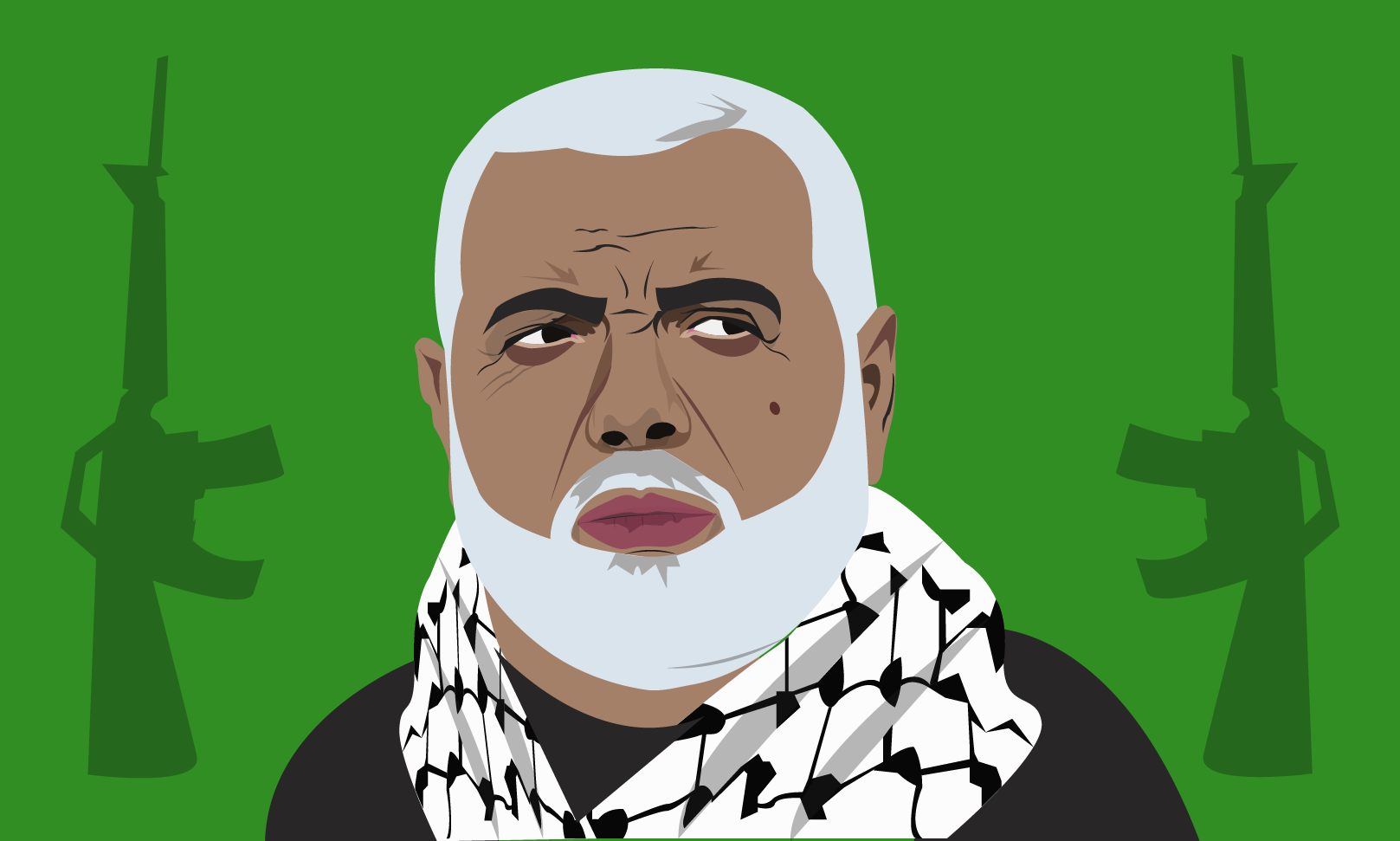
International leader Ismail Haniyeh
Ismail Haniyeh
The recent replacement of Khaled Meshaal with Ismail Haniyeh as Chairman of the Hamas Political Bureau signals a major shift in the inertia that has characterized the group in recent decades. Meshaal has served in his current role for over 20 years, while Haniyeh served as the disputed Prime Minister of the Palestinian Authority between 2006 and 2014.
So how much do we know about Hamas’ future leader? And what can we expect from the man who has enemies not only in Israel, but also among the Palestinian political establishment?
Early Life & Background
Haniyeh was born in 1963 in the Al-Shati Refugee Camp in the north of the Gaza Strip – at that time under Egyptian military occupation. His parents originated from Ashkelon, but became refugees after fleeing the 1948 Arab-Israeli War.
He attended schools run by the United Nations Relief and Works Agency and graduated from the Islamic University of Gaza with a degree in Arabic literature. During these years he became involved with Hamas and served as the head of the students’ council representing the Muslim Brotherhood (The Islamic University of Gaza’s founder happens to be Mahmoud al-Zahar – one of the co-founders of Hamas). He graduated at the same time as the first intifada, which likely helped to formulate his antagonism toward Israel and his esteem for armed resistance. He was given a short prison sentence by Israeli authorities in Gaza for his role in the protests and was detained again in 1988 and imprisoned for 6 months. In 1989, he was again imprisoned for three years.
Haniyeh was released in 1992 and was deported by Israeli authorities to Lebanon with senior Hamas leaders and 400 other activists. Using Lebanon as their base, they garnered substantial support and media exposure – both in the Middle East and around the world. He was able to return to Gaza in 1993 and was appointed Dean of the Islamic University of Gaza.
In 1997, he became the head of the office of Sheikh Ahmed Yassin – the spiritual leader and one of the co-founders of Hamas. The two men enjoyed a close relationship, leading to Haniyeh also serving as the group’s representative to the Palestinian Authority.
Amid the second Intifada, Hamas’ popularity surged as a response to the perceived success of armed resistance and suicide bombing. Furthermore, with many members of Hamas’ leadership being assassinated by Israeli security forces, Haniyeh was able to avoid competing with factional and personal rivals within Hamas for more authoritative positions.
Movement Through Hamas
Haniyeh’s ascension through the Hamas ranks also drew increased attention from Israeli security focus. In line with Israel’s policy of targeting leaders complicit in terror attacks against Israelis, Haniyeh and Yassin were slightly injured in an Israeli airstrike on an apartment block in Gaza city in September 2013. Six months later, Yassin was killed in a targeted assassination by an Israeli helicopter. As the spiritual leader, co-founder and close friend of Haniyeh, Yassin’s assassination more than likely strengthened Haniyeh’s loathing of Israel. Following Yassin’s assassination, Abdel-Aziz Rantissi was appointed his successor in Gaza. However, he too was assassinated in April 2014. Because of these efficient assassinations, Hamas decided to install a secret ‘collective leadership’ with Haniyeh, Mahmoud al-Zahar and Said al-Siyam.
In December 2005, Haniyeh was chosen to head the Hamas list in the Palestinian legislative elections. In the elections the following month, Hamas won a commanding majority with 76 seats out of a possible 132. Fatah won the next most seats with 43. Haniyeh was then confirmed as Prime Minister of the Palestinian National Authority and was asked by President Mahmoud Abbas to form a government.
Weeks of negotiations regarding a coalition with Fatah and other factions failed, and Haniyeh was forced to appoint a cabinet comprised primarily of Hamas members. This new cabinet was met with skepticism and repudiation from the US and the EU, both of whom threatened to cut funding to the Palestinian Authority unless Hamas renounced violence and recognized Israel. Haniyeh did not meet these requests and pleaded with them to not carry out their threats.
Strained Relations with Fatah
On December 14, 2016, an assassination attempt occurred at the Rafah border crossing between Gaza and Egypt that killed one of Haniyeh’s bodyguards and injured his son. Hamas consequently blamed Fatah for the assassination attempt.
In June 2007, after a week of fierce fighting between Hamas and Fatah, Hamas seized control of the Gaza Strip. President Abbas subsequently dissolved the Hamas-dominated government and dismissed Haniyeh as Prime Minister. Unsurprisingly, Haniyeh rejected the move and presented himself as the de facto Prime Minister - and would remain so up until June 2014.
Since that time, his role has been characterized by two main activities: trying to reach a reconciliation/unity agreement with Fatah and continuing the policy of mukawama (armed resistance) against Israel and its citizens. No elections have been held in the Gaza Strip since 2006, enabling Hamas to cement their control of the territory.
As the most senior official of the Gazan government, Haniyeh is understood to be responsible for the human rights abuses and war crimes emanating from Hamas in the territory. This means that, among other incidents, he is liable for:
- 3,278 rocket attacks on Israel in 2008
- 2,248 rocket attacks on Israel in 2012
- 4,562 rocket attacks on Israel between 8 July-26 August 2014
- The summary, extrajudicial executions of at least 23 people in July/August 2014
Personal Life
Haniyeh has thirteen children. He is thought to have become a millionaire through over 2,500 square meters of land in Gaza as well as selling subsidized fuel for profit. Three of his sisters, Kholidia, Laila and Sabah, are citizens of Israel and live in the Bedouin town of Tel as-Sabi near Beersheva.
In early 2012, Israeli authorities granted permission for Haniyeh’s sister and her critically ill husband to travel to Rabin Medical Center in Petah Tikva to receive emergency heart treatment. Similarly, in addition to several other members of Haniyeh’s family, his daughter spent a week in a Tel Aviv hospital for emergency treatment in October 2014.
Future Prospects
Amid the change in leadership, the continuity of past Hamas behavior will remain. Although the group will vote on a new charter in the near-future, they are not expected to renounce violence or support any of the norms laid out in the Oslo Accords of 1993. Due to pressure from the international community and media, they may do away with various anti-Semitic articles of the charter such as ‘The Day of Judgment will not come until Muslims fight the Jews, when the Jew will hide behind stones and trees. The stones and trees will say, “O Muslim, O servant of God, there is a Jew behind me, come and kill him”’.
His attitude toward both Israel and Fatah is not likely to be any warmer than his predecessor. He would harbor added enmity toward Israel for destroying his house in 2014’s Operation Protective Edge and for assassinating his mentor Sheikh Yassin. In relation to Fatah, he no doubt still resents the fact that he was dismissed as the Prime Minister of the Palestinian Authority in favor of Third Way’s Salam Fayyad. Known as a firebrand public speaker, he is likely to be received more poorly by the international community than the erudite and softly-spoken Meshaal. Coupled with the volatile militancy he displays at Hamas rallies, it does not bode well for those hoping for peace and stability.

Turning A Blind Eye: Jeremy Corbyn and Hamas
Jeremy Corbyn
In 2015, Jeremy Corbyn was elected leader of the British Labour Party. This political faction prides itself in representing all sectors of society, specifically minorities and oppressed communities. In line with the party’s ideology, Corbyn has been depicted as a champion of human rights through condemning countries and leaders that violate them and standing up for persecuted peoples. For example, Corbyn criticized British Prime Minister Theresa May on International Human Rights Day for holding talks with delegates from Saudia Arabia and Bahrain, notorious violators of international human rights laws.
But while Mr. Corbyn seems to hold a steadfast position on human rights, his support for certain groups and organizations contradict his purported values. Specifically, their his support for the terrorist organization Hamas has created controversy:
In 2009, Corbyn urged the British government to remove Hamas and its leadership from the British list of condemned terrorist groups. That same year, Corbyn invited representatives from Hamas and Hezbollah to a meeting in the British parliament. Hamas and Hezbollah are both currently classified as terrorist groups by the European Union and the United States of America. During his speech, Corbyn referred to Hamas and Hezbollah as “friends” and “hardworking”.
With the British leaders’ support of the organization, it is important to evaluate Hamas’ poor Human Rights record.
Hamas and Human Rights
The Palestinian Resistance Movement Hamas has been categorized as a terrorist organization by the international community and condemned for their multitude of human rights abuses. The following presents specific examples in which the organization violates international law.
Torture
Torture is labeled as a violation of international law in Article 5 of the United Nation’s Universal Declaration of Human Rights.
From December 2016 through March 2017, 38 complaints of torture were reported to the Independent Commission for Human Rights. Reports in Gaza include beatings, suspending detainees to which his shoulders became dislocated, and making prisoners stand in uncomfortable positions for long periods of time.
Prisons
Arbitrary arrest, detention or imprisonment is labeled a violation of international law in Article 9 of the United Nation’s Universal Declaration of Human Rights.
Hamas has passed legislation that imprisons any Palestinian for 10 years if they are caught interacting with Israeli NGOs. That means any hospital staff or families of patients interacting with an organization like “Save a Child’s heart,” which provides free cardiac treatment, would be arrested by Hamas.
The security forces also arrest Palestinians whom they claim dress improperly. Some men committed the crime of what the authorities called “pop-star” haircuts, while others had pants that were too low or too tight. These perpetrators were arrested, had their heads shaved, and beaten.
Women’s Rights
Article 55 of the Charter of the United Nations outlines “universal respect for, and observance of, human rights and fundamental freedoms for all without distinction as to race, sex, language or religion”.
And even though Articles 17 and 18 of the Hamas Charter define the mother the head of household charged with furthering the education of her children and preparing them to fulfill religious commandments, the organization’s treatment of women is anything but egalitarian:
- Hamas has a special police force to ensure that women dress in a conservative Muslim manor.
- A woman can only file for divorce under certain circumstances, such as if the husband can’t afford to pay her dowry. A woman can attempt to separate from her husband under the claim of mistreatment, but the courts decide what constitutes such abuse and generally do not sway in favor of the wife. Overall, divorce stemming from the complains of a woman is more of an exception than a normative right.
- Adultery is punishable by imprisonment under Hamas. While both men and women are subject to consequences for such, women carry out usually double the prison sentence as compared to men who commit adultery.
Freedom of Thought and Expression
Under article 18 of the Universal Declaration of Human Rights, “everyone has the right to freedom of thought, conscience and religion”.
While Muslims represent 99% of the population in Gaza, there is a very small minority of Christians, constituting about 1% within the territory. Even though the Hamas Charter claims to allow them to live peacefully under Islamic rule, Christians are constantly harassed and threatened by Hamas. For example, shortly after the terrorist group assumed control of Gaza, Hamas burned down and invaded a church and Catholic school.
A Christian bookstore in Gaza was burned down that same year. The owner of the store was also kidnapped and killed by Hamas.
Under Article 19 of the Universal Declaration of Human Rights, all people have the “right to freedom of opinion and expression…without interference and to seek, receive and impart information and ideas through any media and regardless of frontiers”.
The media in Gaza has been under Hamas’ control since 2007, with journalists only allowed to report on topics approved by the government.
Western journalists reporting on the poor living conditions in Gaza are subject to threats and mistreatment by Hamas. Many recounted that Hamas officers have destroyed or confiscated their materials and cameras due to depicting the true situation within the territory.
Children’s Rights
According to the convention of the Rights of Children and the UN Declaration of Human Rights, recruitment and Use of Children is one of the grave violations against children during armed conflict. The UN defines a child as anyone under the age of 18.
Izzedim Kassam, the military wing of Gaza, implemented a program in 2013 that youth from the ages 15 to 17 in preparation for combat. Some of the lessons in this program include handling grenade launcher and urban warfare.
War Crimes
Human shields are considered a war crime, is described by the Rome Statue as: “utilizing the presence of a civilian or other protected person to render certain points, areas or military forces immune from military operations”.
From June 13th to August 26th 2014, during the Israeli-Hamas conflict, the citizens of Gaza were under constant threat from Hamas. The group often uses their own people as human shields by carrying out terrorist activities in civilian areas.. These infrastructures are then targeted and bombed because they are the origin site of rocket fire. And while Israel warns Palestinians to evacuate beforehand, Hamas operatives stop citizens from leaving, intentionally putting their own people in direct danger.
The bodies of those killed in Gaza are then showcased to the media to rally against Israel, but really they in reality victims of the Hamas terrorist agenda.
Conclusion
As outlined above, Hamas has clearly violated a multitude of UN Human Rights and international laws. However, British Labour Party leader Jeremy Corbyn has made statements and carried out actions supporting the organization.
The United Nations Universal Declaration of Human Rights outlines the laws and values that all nations and leaders must abide by. The principals set out are supposed to be followed whether at home or abroad by signatory nations. Mr. Corbyn’s contradicting commitment to the Declaration and his support of Hamas, a gross violator of human rights, undermines the legitimacy and importance of Human Rights in Gaza and validates the abuses of the Hamas government. With Great Britain being a leading world power, turning a blind eye to the terror carried out in Gaza can only lead others to follow and further human rights violations to continue into the future.
Hamas Terrorizes The People of Gaza
Learn more about how Hamas abuses the rights and freedoms of Palestinians in the Gaza Strip.
Download

Hamas' "Sinking Business"
In the past two years, over 400,000 illegal individuals from from the Middle-East and North Africa to Europe by sea due to the oppressive conditions in these areas. One Gazan in reference to Hamas stated that "It's better to die at sea than to die of despair and frustration in Gaza."
Downloads
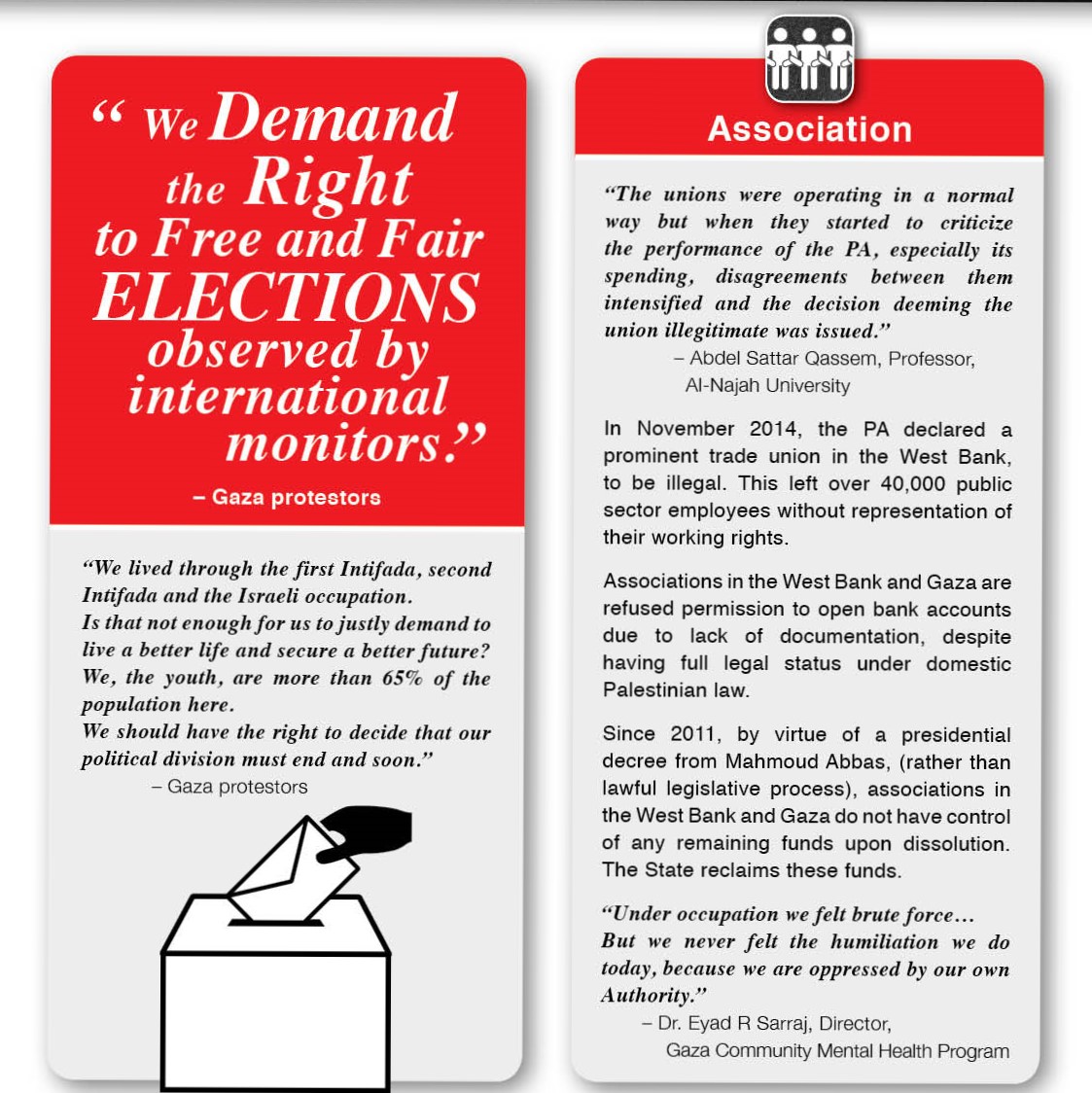
Palestinians- Governmental Censorship
Between Hamas and the Palestinian Authority, Palestinians in the West Bank and Gaza enjoy no freedom of expression. From censorship of the press, media control, prohibition on criticizing authorities, these organizations are in direct violation of international freedom standards.
Download
Suppression Palestinian Political Rights
The Palestinian people's political rights in the West Bank and Gaza are continually violated by the PA and Hamas. From the lack of free elections for almost a decade to the suppression of freedom of assembly, Palestinians in the West Bank and Gaza are denied their rights and these institutions are in violation of international humanitarian law.
Download
Yahya Sinwar - Hamas' New Man
The recent replacement of Khaled Meshaal with Ismail Haniyeh as Chairman of the Hamas Political Bureau momentarily left a rare vacancy in the role of Hamas’ overall leader in Gaza. However, the position was immediately filled after the group elected Yahya Sinwar to fill the role.
Relatively unknown by those outside Israel and the Palestinian territories, speculation abounds as to how Hamas – and by extension Gaza - will behave under Sinwar’s leadership.
We explore the life of Sinwar and how his policy prescriptions and personality traits will influence Hamas’ relationship with Israel, the people of Gaza and the Palestinian people as a whole.
Early Life
Sinwar was born in 1962 in the Khan Yunis refugee camp in Southern Gaza. He graduated from high school at the Khan Yunis Secondary School for Boys, after which he graduated from the Hamas-affiliated Islamic University of Gaza (its co-founders happen to be the co-founders of Hamas; Sheikh Ahmed Yassin and Mahmoud al-Zahar) with a Bachelor’s degree in Arabic Studies.
His first foray into Palestinian nationalism came in 1982 when he was arrested for subversive activities and spent several months in the Far’a prison. There, he met other Hamas militants such as Salah Shehade – the former leader of the Izz ad-Din al-Qassam Brigades.
Movement Through Hamas
He was arrested again in 1985[1]. Upon his release, he co-founded the Munazzamat al Jihad w’al-Dawa (Majd) with Rawhi Mushtaha. The mission of the Majd, among other things, was to identify Israeli spies in Hamas, other political parties and among Palestinian civilians[2]. Since then, the paranoia of Israeli collaborators has occupied much of Hamas’ attention, most infamously when at least 23 people were summarily and extrajudicially executed in July/August 2014 after they were accused of collaborating with Israel[3].
In 1988, he masterminded the abduction and killing of two Israeli Defence Force soldiers. He was later arrested, convicted of murder, and sentenced to multiple life sentences[4]. He would go on to serve 22 years of his sentence, before being released in 2011 along with 1,026 other prisoners as part of the prisoner exchange agreement for the release of Gilad Shalit. By Hamas’ own admission, just 41 of these prisoners collectively killed 569 Israelis[5].
Following his release, Sinwar ascended through Hamas’ political ranks rather than his previous military roles. He was elected to the Hamas political bureau during the group’s secret internal elections in 2012[6].
In September 2015, the United States government declared Sinwar a terrorist[7]
His volatile temperament and unpredictability have earned him a reputation of notoriety both in Israel and within Gaza. In early 2016, it is alleged that he organized the execution of Hamas commander Mahmoud Ishtiwi due to an internal rivalry within the organization. Furthermore, it is also alleged that Sinwar himself was the man who physically detained Ishtiwi at gunpoint after bursting through his front door[8][9].
In July 2016, he was chosen to take charge of Israelis held captive by the Al-Qassam Brigades in the Gaza Strip[10].
Future Prospects
The appointment of Sinwar is not an exercise in stability or continuity for Hamas. Rather, it represents their perceived need for a renewal of leadership amid growing cynicism of career politicians and public anger over issues such as delayed reconstruction and electricity outages. In contrast to Ismail Haniyeh and Khaled Meshaal, Sinwar is neither a career politician nor a technocrat. Nonetheless, as a man who has served in both the military and political wings of Hamas, he is seen as being capable of bridging the divides between these two factions.
A key focus of his leadership will likely be an increase in the kidnapping of Israeli soldiers. He sees the tactic as incredibly useful as Hamas can repatriate former militants back into their ranks, increase support for Hamas among Palestinian people and dictate the terms of their prisoners’ release to Israel. Indeed, following his release, Sinwar told Hamas media that the group should ‘kidnap more soldiers to exchange them for the freedom of our loved ones who are still behind bars[11]’.
His militancy and hardline stance, while not out of place in Hamas, are somewhat more extreme than his predecessor Ismail Haniyeh. His unpredictability may drag the group into another war with Israel. Furthermore, his predecessor was a far more experienced statesman who knew how to balance the regional interests and cooperation of countries such as Egypt, Turkey, Qatar and Iran.
[1] Balousha, H. & Booth, W. 2017, ‘Hamas names hard-liner as its new political leader in Gaza’, The Washington Post, February 13, viewed 3 April 2017, https://www.washingtonpost.com/world/middle_east/hamas-names-hard-liner-as-its-new-political-leader-in-gaza-/2017/02/13/b4e31518-f1f6-11e6-9fb1-2d8f3fc9c0ed_story.html?utm_term=.0083adce8049
[2] Beaumont, P. 2017, ‘Election of new Hamas Gaza Strip leader increases fears of confrontation’, The Guardian, February 13, viewed 3 April 2017,
[3] Amnesty International 2015, ‘”Strangling Necks” – Abductions, Torture and Summary Killings of Palestinians by Hamas Forces During the 2014 Gaza/Israel Conflict’, United Kingdom, viewed 3 April 2017, p. 5, available via https://www.amnesty.org/en/documents/mde21/1643/2015/en/
[4] Balousha, H. & Booth, W., op. cit.
[5] Isaacharoff, A. 2011, ‘Shalit’s Captors: He Wasn’t Tortured, He Received Medical Care and Watched TV’, Haaretz, October 20, viewed 3 April 2017, http://www.haaretz.com/israel-news/shalit-s-captors-he-wasn-t-tortured-he-received-medical-care-and-watched-tv-1.391072
[6] Dalloul, M. A. 2017, ‘The new leader of Hamas in Gaza is Yahya Al-Sinwar’, Middle East Monitor, February 13, viewed 3 April 2017, https://www.middleeastmonitor.com/20170213-the-new-leader-of-hamas-in-gaza-is-yahya-al-sinwar/
[7] U.S. Department of State, ‘Terrorist Designations of Yahya Sinwar, Rawhi Mushtaha, and Muhammed Deif’,
[8] Isaacharoff, A. 2017, ‘Yahya Sinwar can ignite Israel’s south – and may want to’, The Times of Israel, February 12, viewed 3 April 2017, http://www.timesofisrael.com/yahya-sinwar-the-man-who-can-ignite-the-south-and-may-want-to/
[9] Coordination of Government Activities in the Territories (COGAT), ‘The Secret that Hamas Wants to Remain Buried Forever’, Israeli Government, February 9 2017, viewed 3 April 2017, http://www.cogat.mod.gov.il/en/Our_Activities/Pages/HamasSecretIshtiwi8.02.2017.aspx
[10] Dalloul, M. A., op. cit.
[11] Boyle, C. & Siemaszko, C. 2011, ‘Israeli soldier Gilad Shalit freed, reunites with family after five years as Hamas prisoner’, New York Daily News, October 19, viewed 3 April 2017, https://www.counterextremism.com/extremists/yahya-sinwar