
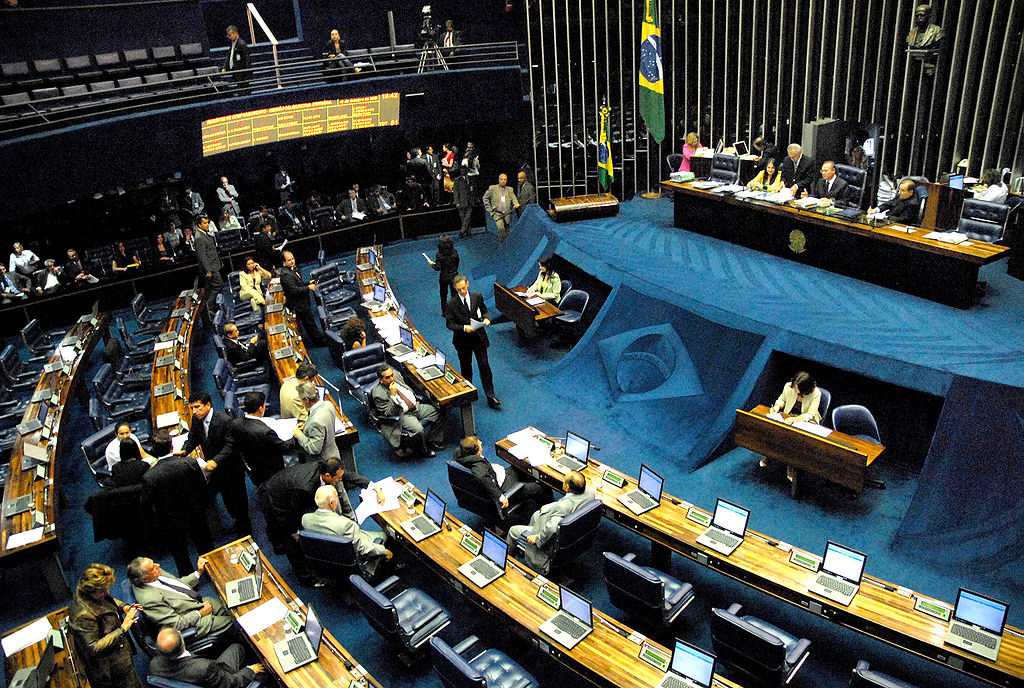
Donations from Brazil to Gaza
The Brazilian government, in an effort to help people who are genuinely suffering in Gaza, has donated to UNRWA. As seen in this report, this international aid ends up in the hands of terrorist groups because of UNRWA’s association with Hamas. Brazil is therefore financing terrorists groups by supplying them with food and financial aid.
Download

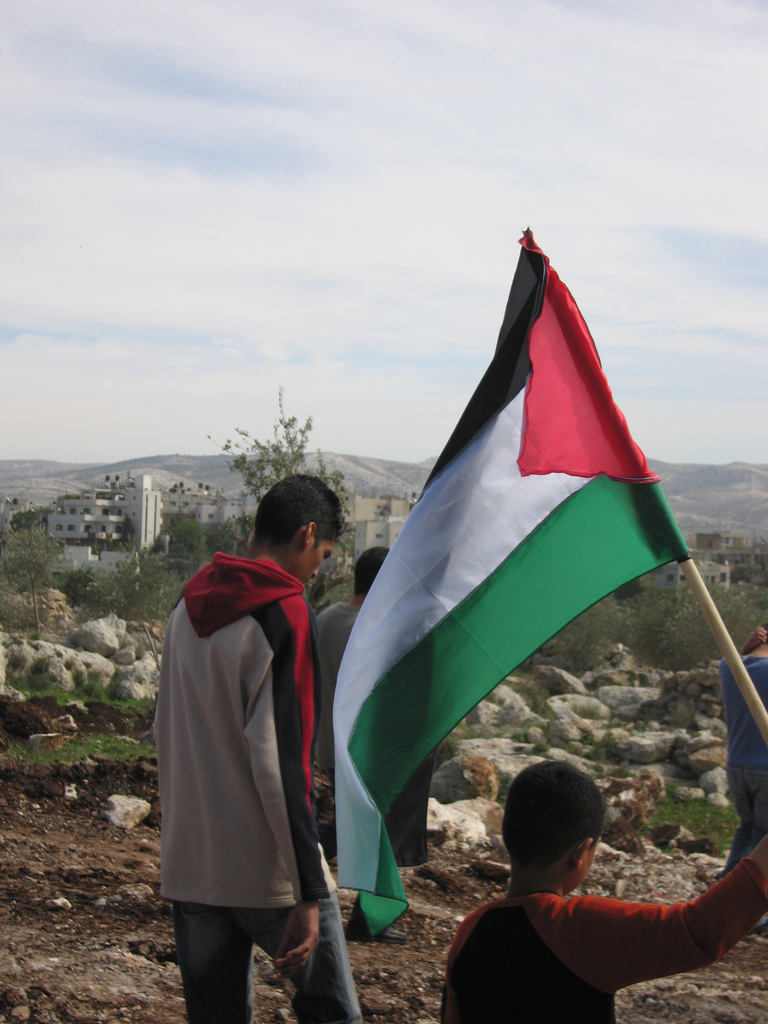
Political Rights Violations in the West Bank and Gaza by the Palestinian Authority and Hamas
In this report, the Jerusalem Institute of Justice (JIJ) examines political rights and freedoms in the West Bank and Gaza. Through comprehensive research and interviews with those living and working in the West Bank and Gaza, this report aims to illuminate the situation on the ground with regard to political rights for Palestinians in these territories. Freedom of Assembly is routinely violated throughout the West Bank and Gaza either by unlawful police interference in private assemblies, or disproportionate use of force in public assemblies. Freedom of Association is severely restricted, with the Ministry of Interior assuming control over the set-up, funding and dissolution of associations and charities. The Palestinian Authority and Hamas are making little effort to protect and promote these rights of the Palestinian people and are thus in violation of international law.
Download

Criminal Charges Against Ismail Haniyeh in The Hague
https://www.youtube.com/watch?v=DDbJusW8DMw
On January 16, 2015, the Office of the Prosecutor to the International Criminal Court began a preliminary examination into the “situation in Palestine” in order to determine whether a full investigation should be opened for crimes committed within the Palestinian territories. On March 6 2017, we, the Jerusalem Institute of Justice filed a communication with the Office of the Prosecutor concerning Hamas’s actions during the 2014 Gaza war. We argue that a full investigation should be pursued, and a case should eventually be lodged against Ismail Haniyeh for his role in the commission of war crimes during the 2014 conflict with Israel.
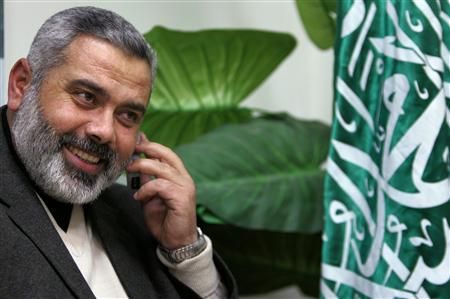
Ismail Haniyeh is the longtime Hamas leader in Gaza and was in power during the 2014 conflict. He has played a pivotal role in crafting Hamas’s extremist ideology and their consistent violation of the Gazan civilian population's human rights. Along with failing to prevent Hamas militants from committing war crimes during the 2014 war, he actively encouraged and funded their unlawful acts.
There were two prominent war crimes committed by Hamas militants during the war in Gaza. First, they consistently put civilians in grave danger by using them for military purposes such as “human shields.” Hams would fire rockets and mortars from densely populated areas, encourage (and sometimes force) civilians to remain in potential military targets, and store weaponry in schools, hospitals, mosques, and other civilian structures. Second, the rockets Hamas used during the war are prohibited under international law. These rockets are exceedingly difficult to control and therefore cannot accurately fire at lawful military targets. Especially because Hamas oftentimes fired from civilian areas, using these unpredictable machinery placed the population in great danger.
Haniyeh played a significant role in these crimes as the head of Hamas’s interconnected structure. He personally, and his government more generally, urged Gazan civilians to remain in the vicinity of their homes despite Israeli warnings. The government, along with its al-Qassam military wing, also established a curfew that would ensure civilians remained in their homes, with some militant groups forcibly confining Gazans when they tried to disobey the curfew. The funding for the military wing, which was responsible for the indiscriminate firing of over 4,000 rockets and mortars, also came directly from foreign aid given to Hamas’s political and social wings. Despite knowing of these acts being commonly committed within its territory, Haniyeh’s political wing did nothing to prevent them being carried out. Not surprisingly, the Hamas run-and-created Gazan courts have also done nothing to punish those who played a direct role in committing these crimes.
These crimes had devastating consequences. Over 2,100 Gazans were killed during the conflict, with these crimes playing a direct and significant role in causing the high number of fatalities. The strain these crimes put on civilians by placing them in the path of danger and cutting off all potential avenues to safety cannot be overstated. Moreover, the indifference with which Hamas sacrificed Gazans for military protection and an advantageous narrative is the precise manner of crime the International Criminal Court was established to combat.
For these reasons, we filed a communication urging the Prosecutor to launch a full investigation into Haniyeh and Hamas. The Court was created to bring to justice the individuals responsible for the worst sorts of crimes, and Haniyeh is an individual who was particularly responsible for a prime example of these crimes being broadly committed.
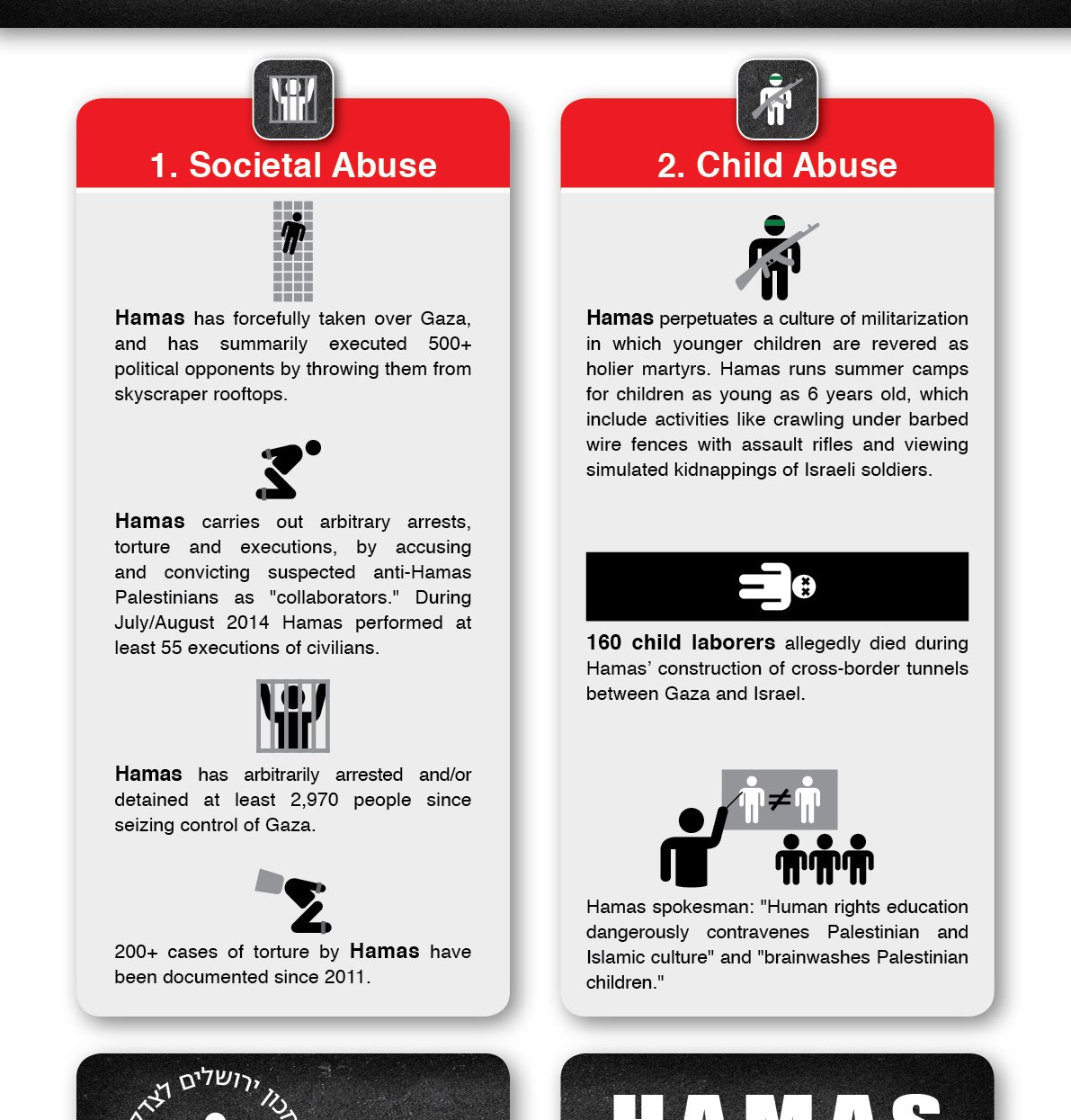
Why is Hamas Bad for Palestinians?
Learn how Hamas terrorizes the Palestinian population in the Gaza Strip.
Downloads
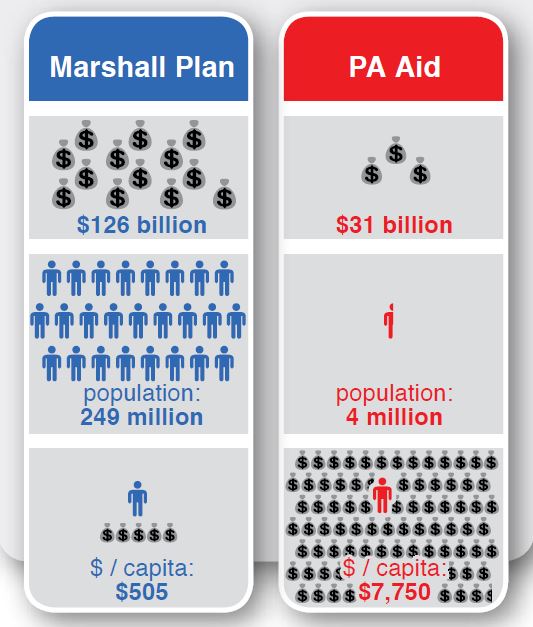
Money Money
Discover how corrupt Palestinian leaders are pocketing Palestinian International Aid.
Downloads
Fighting the right way for the right cause
‘Human Rights’ is a phrase so broadly used in recent decades that some would say its true meaning has been eroded, giving way to a far more cynical use by various parties to further their political agenda. In fact, it seems that with all the growing interest in the topic, the term itself has become a desirable label that can open doors to many different organizations who consider themselves leaders in their struggle. Want media coverage? A fat budget? Doors to be opened, even in oppressive regimes? Add the words "human rights" to your organization’s name and you have a proven recipe for success.
Technological progress has brought with it a wave of stories that have swept the internet and flooded the world. These include descriptions of starvation, illness, persecution, mass murders, and more, by dictatorial regimes and terrorist organizations globally. Including a plethora of heartbreaking personal stories of abuse and suffering, which exposes the dark side of our world. In the age of the information explosion and the worldwide web, which reaches a vast audience, the world can no longer plead ignorance and remain indifferent to these deplorable accounts abuse.
"Human Rights"?
We need to question the integrity of the many organizations that boast "foreign human rights". Do they actually work towards improving and uphold them? If this was indeed the case, there would be no need for the existence of the plethora of human rights organizations around the world. In fact, if every right that is deprived or trampled on was addressed by these organizations, supposedly devoted to their care, it is reasonable to assume that the extent and the severity of the distress in the world would be reduced considerably. The unfortunate reality is that a significant amount of these organizations have different and anomalous interests disguised as human rights, ranging from blatant political activity to personal greed. The human rights issue has been misused and manipulated to such an extent, especially by those who have made a business out of it, that we can no longer see the forest for the trees.
The compassion and good will of donors and philanthropists is taken advantage of by corrupt organizations who misappropriate funds that donors intended for victims and the needy. This is largely due to the lack of supervision and control of such organizations. To make matters worse, often the manner in which these organizations handle humanitarian issues ultimately brings a deterioration in the victim’s condition, increasing their exploitation at the hands of local governmental officials, or at best a stagnation with no change or improvement.
Claims versus Reality
An example of such corruption is the Palestinian Authority, under the leadership of Mahmoud Abbas, which is solely responsible for its overall operations by means of its security forces. These include successive and ongoing torture, illegal arrests and the absolute silencing of freedom of speech. Citizens who dare to utter a hint of criticism or protest against the regime experience violence and oppression. While the PA is responsible for these atrocities, the main culprit of flagrant and grave violation of human rights against Palestinians in the eyes of the public and many governments around the world, ironically is Israel, presented as an apartheid and oppressive state.
This distortion of reality is led by the BDS movement (Boycott, Divestments, Sanctions) calling for the boycotting of Israel throughout the world. This movement purports to represent the plight of the oppressed Palestinians as though it is entirely unaware of the torture chambers of the Palestinian Authority, the illegal detentions carried out daily, or the violent persecution of its members arrested for their opposing political views. If the well being of the Palestinian people was at the very heart of operatives and supporters of the BDS, then why is their outcry not against the Palestinian Authority who is responsible for these violations?
For example, why is the closure of a factory like SodaStream in Ma'aleh Adumim more important to them than the lives of thousands of Palestinians, children and adults, whose lives are now negatively affected in various ways due to its closure? The answer lies in the fact that the organization funding the majority of the movement’s activities, that is, from whom it receives its money ... you guessed it...is the Palestinian Authority itself! This helps to explain the policy of the movement against Israel, however, one has to wonder whether BDS should be defined as a legitimate human rights organization?
Video - 7 Injustices:
You've got your talkers, and you've got your doers
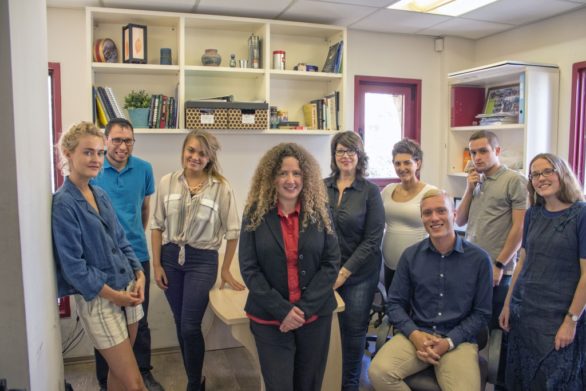
A refreshing example in sharp contrast to the above, can be found in a small organization called the "Jerusalem Institute of Justice" (JIJ). It actively and effectively operates from its offices in Jerusalem in various arenas including: the monitoring and reporting on human rights violations by the Palestinian Authority, a fierce battle against the sex industry and human trafficking in Israel, and the provision of legal aid to victims of discrimination by the Israeli government, regardless of sex, race or religion.
In an exceptional manner, JIJ seems to maintain a balanced view on the human rights which they claim to defend. This is evident on the Institute’s website as well as its social media accounts that include references to gross human rights violations within Israel itself. Combating prostitution and human trafficking in Israel is a joint effort between JIJ, the Knesset and the Israeli government. JIJ is at work in the legal arena, as well as in the news and social media, to promote social awareness. For example, JIJ helped to organize a public protest against the sex and human trafficking industry in front of a strip club called "Pussycat", in Tel Aviv.
JIJ desires to bring a more balanced view to human rights injustices in the region, as opposed to other ‘human rights’ organizations who focus only on Israel’s transgressions. When necessary, JIJ also holds the Israeli establishment to account on issues of discrimination of minority groups within Israel’s jurisdiction, as well as exposing the hidden injustices committed by the Palestinian authorities against its citizens.
A supportive hand
Another heart-warming activity JIJ is involved in is helping the lone soldier, especially those from orthodox religious backgrounds that have been abandoned by their families because of their desire to serve their country. These soldiers, who often suffer severe neglect and economic conditions, receive aid from JIJ in the form of essential supplies, social activities and above all a sympathetic ear and moral support.
For Rosh Hashanah last year JIJ hosted a special meal for dozens of lone soldiers who received a great deal of supplies from their sponsors to help them in their service, such as back packs, new shoes, fleece jackets, and more.
What is your part?
We would all like to be better people by contributing to society. It is important to take action and join the battle for the right cause. However, we need to be careful as to which organizations we choose to support. One needs to ensure that they are actually committed to advancing human rights rather than lining their own pockets, or promoting their own hidden agendas.
True human rights organizations ensure that all human beings have the right to life, liberty, and security of person, including the right to education, freedom from torture or cruelty, freedom to peacefully assemble, and freedom of thought, conscience, and religion. Sadly, they are becoming increasingly rare. It is our responsibility to help them survive by our practical and financial support. Keep in mind that choosing sides only aggravates the conflict and deepens the polarization, this battle should be about right and wrong. The ball is in your court!
Gender Discrimination – Focus: Gaza
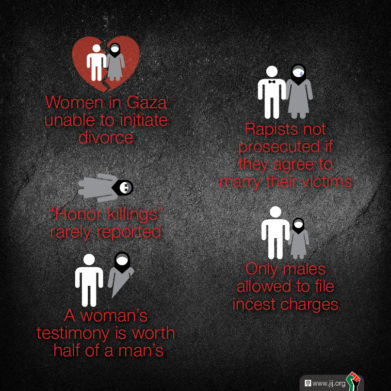
Gender discrimination in the Palestinian territories, especially in Gaza, is rampant. Male bias is present in every aspect of the personal, social and religious lives of everyday Palestinians. The discriminatory family and legal codes, which are grossly outdated, in addition to restrictions on physical integrity, civil liberties, resources and assets, along with blatantly accepted bias towards sons, provide justification and loopholes that inevitably lead to the poor, and often heinous, treatment of daughters, wives, mothers, sisters, nieces, etc.
According to the statistics found in the Social Inequality and Gender Index (SIGI) of the Organization for Economic Cooperation and Development (OECD), the Personal Status Law is adopted from Jordanian (1976 Personal Status Law, applicable in the West Bank) and Egyptian (unmodified 1954 Family Law, applicable in Gaza) religious laws; such laws were inspired by the Hanafi School of Islamic Jurisprudence and contain discriminatory provisions in marriage, child custody, divorce and inheritance.[1] As a result, according to the index scores of SIGI, the Palestinian Authority scores high-very high on the discrimination scale.
The legal age for marriage on the books in Gaza, is seventeen for females and eighteen for males, while there are reports that girls as young as nine and boys as young as twelve can be married if a judge deems it is in the child’s best interest (SIGI, Discriminatory Family Code). Additional reports indicate that fathers can, and do, marry off their daughters by withholding the child’s real age from the judge, often to “relieve financial burden”. Also, women cannot marry without permission from the closest paternal male relative and fathers are considered the natural guardians of children, while mothers are simply physical custodians (SIGI, Discriminatory Family Code). If divorced, mothers generally have physical custody of sons until the age of 10 and of daughters until the age of 12, however, if remarried the mother forfeits such rights. Christian women divorced from Muslim men are afforded even less rights if divorced. According to various reports, women who lost their husbands in conflict were threatened with losing custody of their children and being thrown out of their houses if they refuse to marry their late husband’s brother (SIGI, Discriminatory Family Code).
Restricted Physical Integrity
The most heartbreaking form of gender discrimination, comes in the form of “restricted physical integrity”. Realistically, a women’s body is not her own, it belongs to a male relative, to command and control as he wills. There are few protections in place to protect women from crimes against her person; the international community is still waiting for ratification drafted in 2011 to bring the legislation of the Palestinian Authority up to international standards (SIGI, Restricted Physical Integrity)..
Despite the high prevalence of domestic violence, and its exacerbation by poor living conditions, there are no laws against it, neither in Gaza or the West Bank. A substantial percentage of Palestinian women believe there are justifiable reasons for a husband to beat his wife, with only 39% believing there is no excuse. A large percentage of women claim to suffer violence from their husbands, physical and sexual, this is especially true in Gaza (SIGI, Restricted Physical Integrity). Of those, less than one percent of the victims filed police reports. Societal views of shame and honor keep victims silent having very few places or nowhere to turn to for help, and confidentiality of court proceedings is not guaranteed in domestic violence cases.
In Palestinian society it is taboo to speak of sexual abuse, especially incest, and the victim faces dire consequences and brings shame on herself and her family if she reports it.
There are laws against rape, which grossly lack proper protection and fail to even recognize spousal rape. The age of consent for sex is 18 and there is a minimum punishment for raping a minor, but lighter sentences may be given if the rapist can convince the court that he perceived the victim to be older than 16, which is in itself nonsensical since the legal age of consent is 18. According to various reports, rapists, in both Gaza and the West Bank, are released of all charges if they agree to “marry” their victims, and the victim’s families often pressure them to do so (SIGI, Restricted Physical Integrity).
Incest is not even considered sexual assault in the West Bank as the Jordanian Penal Code sights both the perpetrator and the victim as sharing blame, and that is regardless of the age of the child (SIGI, Restricted Physical Integrity). Women (and girls) are blamed for the sexual violence perpetrated against them and are thus forced to cover their bodies, to avoid being “seductive” even as small children.
Similarly, no laws are in place against sexual harassment, as “immoral advances” of either gender are mentioned in legislation without clarifying what that might be. In Palestinian religious society, even women's nature appearance is considered “provocative” and justification for rape (SIGI, Restricted Physical Integrity). It therefore should come as no surprise that women rarely report sexual harassment.
Female Genital Mutilation (FGM) reportedly takes place in Gaza, but the prevalence is unknown.
[1] OECD, SIGI,Gender Index, Palestinian Authority, available at http://www.genderindex.org/country/palestinian_authority, accessed Aug 20, 2016.
Torture and the Degrading Treatement in the West Bank and Gaza
Assessing the Implementation of UN Convention Against Torture
For the full report click, here.
Article 5 of the Universal Declaration of Human Rights, along with Article 7 of the International Covenant on Civil and Political Rights (ICCPR) declare that no person shall be subject to torture, to cruel, inhuman, or degrading treatment or punishment. This report examines the Palestinian Authority’s (PA) adherence to the UN Convention Against Torture (UNCAT), to which it is a signatory member. Since 1984, 155 states have ratified UNCAT. Of 142 states investigated for their adherence to and implementation of UNCAT, at least 79 still carry out acts of torture (2014). Even for those 40 states who have not adopted the Convention, a global ban on torture, as part of customary international law, compels all states against the use of torture and cruel, inhuman punishment.
Palestinians in the West Bank and Gaza are repeatedly subjected to severe violations of the basic rights of freedom from torture and abuse at the hands of Palestinian leadership. This report provides a better understanding of the current situation within the territories and of the UNCAT violations committed by the PA.
Many critics of the use of torture argue that it is immoral and impractical, as the information obtained through it is often false. Human Rights Watch states that torture is “a bedrock principle of international law. Torture, as well as cruel, inhuman or degrading treatment, shall be banned at all times, in all places, including in times of war…” Yet, various organizations report that torture and cruel punishment occur on a regular basis in the territories, sometimes resulting in death.
ACCESSION TO UNCAT — April 2, 2014
Upon receiving ‘Observer State’ status to the UN in November 2012, Palestine was granted access to various international conventions and organizations, and the PA acceded to 15 international conventions and treaties regarding human rights, humanitarian law, and diplomatic relations. As such, the PA has obliged itself to comply with a number of conventions and their provisions, including the Convention against Torture and Other Cruel, Inhuman or Degrading Treatment of Punishment (1984). In December 2014, the PA ratified yet another 20 international treaties and conventions. As a signatory member of these international treaty and conventions, the State of Palestine is required to submit reports of the status of human rights in Palestine and the procedures adopted to improve human rights where they are lacking. As of writing, no reports have been submitted.
An Optional Protocol to UNCAT (OPCAT) was adopted by the UN General Assembly in December 2002, which took effect June 2006, whose objective is to establish a system of regular visits to the West Bank and Gaza to prevent torture and other inhuman treatment. However, Palestine has yet to sign OPCAT, though the Palestinian Ministry of Foreign Affairs has the protocol listed as one of the treaties “they want to sign.” According to one UN official, reasons for not signing thus far include not wanting to allow open access to an international body to look into all places of detention that the PA would rather keep away from the public eye.
THE STATE OF PALESTINE AND OTHER HUMAN RIGHTS DECLARATIONS
The PA, as a member of the Organization of Islamic Cooperation, adopted both the Cairo Declaration on Human Rights in Islam (CDHRI) and the Arab Charter on Human Rights (ACHHR). Article 20 of the CDHRI states that it is not tolerable to arrest an individual, restrict his freedom, or exile or punish him without legitimate reason. As well, physical and psychological torture, as well as any form of humiliation, is not permissible. Similarly, Article 8 of the ACHHR outline prohibitions on torture and cruel, inhuman treatment. However, while both declarations prohibit torture, both also stipulate that all rights and freedoms are subject to Sharia Law. Furthermore, Article 4.2 of the Amended Palestinian Basic Law states that Sharia Law serves as the main source of legislation. Issues here arise with how Sharia Law dictates punishment for those who inflict torture on others: “the punishment of such an act [torture] is Qisas, which means that the criminal would be punished with the same act he/she did.” Responding to torture with torture is in violation of UNCAT.
UNCAT ARTICLES
According to the definition provided by UNCAT, for an act to be considered torture it must be intentional, cause severe pain or suffering, be intended to achieve a purpose (as mentioned), and it must be done by, or with the acquiescence of, a public official. Article 13 of Palestinian Basic Law corroborates this, stating that no duress, either slight or moderate, can be used against any person.
According to the Independent Commission for Human Rights (ICHR), 1,274 complaints of violations of the right to freedom from torture and ill-treatment were reported in 2014. These abuses continued regularly throughout 2015, despite the ratification of UNCAT. One common target of Palestinian officials is local and foreign journalists, who are often detained and tortured for critical remarks that refer to Fatah, Palestinian leadership, or corruption in Palestine. The PA does not tolerate criticism, and continuously intimidates journalists to deter them from exercising their freedom of expression. One source reports that “a journalist must be very careful. In Gaza, there are journalists being tortured. There is torture considered [sic] as a common procedure…”
Despite Palestinian Law ensuring freedom from torture, documented accounts of torture of Palestinians in Palestinian prisons have been collected by organizations like the Arab Organization for Human Rights in London (AOHR UK). An article by Middle East Monitor states that the headquarters of PA intelligence services in Bethlehem is a “slaughter house” used for torturing prisoners.
In June 2015, Awni Mazen Al-Shaksheer, a Palestinian student from Nablus, was arrested and tortured by intelligence services for his involvement in student activism. He was beaten with sticks, cables, punched, kicked, and slapped, as well as subject to sleep deprivation, a form of psychological torture. He was held in two different prisons, never charged, nor given the right to appear before a judge. This case is not unique; Palestinians are routinely arrested and detained by PA forces for various reasons, including activism against the government. According to a 2014 Annual Report by the Palestinian Center for Human Rights, security officers in the West Bank and Gaza continue to practice torture as a primary means of obtaining information when dealing with prisoners.
FATAH vs. HAMAS
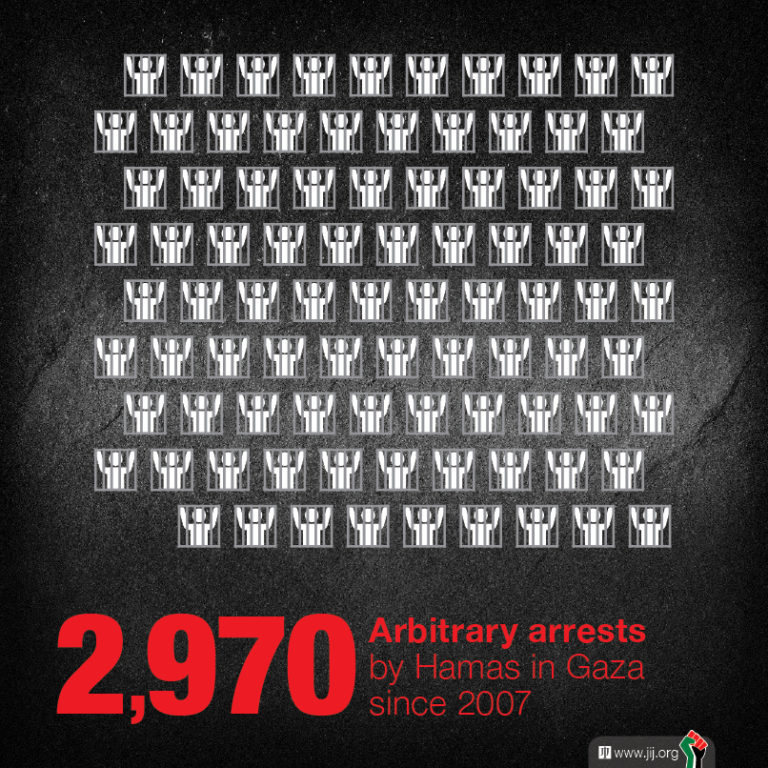
Though Fatah and Hamas make up the heart of Palestinian leadership, their relations are severely strained. In 2014, they attempted to reconcile in an agreement to create an interim government; however, they have failed to cooperate. Fatah, as the governing faction in the West Bank, is carrying out the “worst kind of torture” against Hamas members, while Hamas is reported to carry out a “brutal campaign of abductions, torture, and unlawful killings against Palestinians accused of collaborating with Israel and others.” In August 2014, at least 25 Palestinians were executed by armed Gazan groups.
CONTESTING TORTURE UNDER UNCAT
Despite Article 13 of the Amended Palestinian Basic Law prohibiting ‘any duress or torture’, the US Department of State Report 2014 reported on several abuse cases. These complaints included victims being forced to stand in uncomfortable stress positions, flogging, hand binding, suspension, blindfolding, punching, and beatings with clubs, electric cables, or hoses. There are also reports the PA security forces use these tactics on Palestinian minors.
Torture is clearly defined as a criminal offense, and Article 32 of the Amended Palestinian Basic Law reiterates this point by stating that any violation of personal freedom, of the sanctity of the private life of human beings, or of any of the rights or liberties that have been guaranteed by law or by Basic Law, are considered to be criminal offenses. As well, the Jordanian Penal Code No. 74 of 1960 criminalizes acts of torture conducted by an official with the goal of obtaining a confession. The issue here: these acts are not referred to as ‘torture’ in the text; rather, they are crimes that simply meet the definition of torture.
While it is a criminal act meant to be punished as a crime, too many cases reveal that torture is used widely within Palestine with little to no punishment enforced. Most of these acts are committed in hidden places or prisons, and Human Rights Watch reports that no Palestinian security official has ever been convicted for abuse in custody.
The reason for lack of enforcement against the use of torture could be related to the language used in the legal code. Not all torture is prohibited by the Penal Code, specifically those acts not used to gain information or confessions.
The PA does not admit that torture takes place within their jurisdiction, or admits only isolated incidents insisting that action be taken against those responsible. Moreover, PA officials insist that security personnel be educated on the prohibition of torture. “All of the personnel know that torture is forbidden. Not all of them know that it is against [the] human rights convention.”
There are hundreds of torture incidents reported yearly in both the West Bank and Gaza according to the ICHR. These are often exceed or justified based on claims that PA forces lack the necessary tools to investigate crimes, like DNA testing and eavesdropped equipment, so they use torture to make up for equipment they lack. This excuse does not account for the amount of foreign money pouring into the PA that could be used to aid security officials.
Amnesty International reports (2015) that in the West Bank, detainees alleged they were tortured or ill-treated by police and other security officials. In Gaza, at least three men were reported to have died in custody, allegedly from torture by internal security officials. One case, reported by The Times of Israel shares the story about Ahmad Bilal Abd al-Malak al-Deekm, who was arrested for criticizing the government on social media. Al-Deekm reported he was subjected to various forms of abuse and torture, including sleep deprivation, beatings, verbal abuse, and was forced to perform humiliating acts (which qualify as psychological torture).
Individuals must have a place to complain and air grievances, like security or military courts. However, in Palestinian territories, not only does it take many years to complete a legal process relating to cases and victims of torture, but also courts are not completely independent. If Palestinians do not have reliable, impartial, and uncorrupted authorities to whom they can report grievances, then agreement and adherence to the provisions laid out in Article 13 can never be achieved.
To reiterate, Article 13 states that duress or torture are prohibited. Though Palestinian Basic Law ensures that violations of this will be met with compensation, there is little evidence to prove this method works in practice. A resident from Ramallah stated the lack of compensations for these violations in an interview conducted in November 2015 “…The government does not compensate those who have been tortured and does not provide them with psychological support…” These cases are more often than not mishandled and purposely delayed, and victims cannot expect to be granted redress, compensation, or rehabilitation as long as this practice continues.
The case of al-Deekm has met these setbacks, with the PA refusing to provide him with any redress. One source, a representative of the Civil Commission for Independence of the Judiciary and Rule of Law, acknowledges the government may not want to pay monetary compensation, but some kind of compensation must be had for the violations that have been inflicted upon the victims.
Other acts of ill-treatment, as defined by a UN official, are acts of cruel, inhuman, or degrading treatment or punishment that are not intended to cause harm (like bad prison conditions), or where the pain and suffering caused by these acts do not meet the ‘minimum requirement’ for the definition of torture. There are many methods of torture not included in the official definition, and therefore do not need to be ‘punished’ by law. These include hitting a victim “softly”, as is done by Palestinian security forces. As well, many psychological methods are not regarded as torture, including sleep deprivation, witness the torture of family members, solitary confinement, taunting, sexual and cultural humiliations, etc.
Regardless of kind of torture, whether ‘soft’ or not, victims suffer various consequences, including PTSD, or ‘continuing traumatic stress disorder.’ Other psychological illnesses include depression, anxiety, insomnia, hallucinations, and flashbacks — all chronic effects of torture. Victims of both physical and psychological torture experience difficulty reintegrating into one’s daily life, relationships, and society, as well as being at higher risk of suicide.
As the PA ratified UNCAT in April 2014, a report should have been submitted by May 2015. As of writing, no report has been submitted. Reasons for not submitting reports, according to an interviewee at The Civil Commission for the Independence of Judiciary and Rule of Law, include a lack of capacity in the administration, or because the report is not a priority. The Director of the Civil Commission for the Independence of the Judiciary and the Rule of Law claims that if the PA wanted to forbid torture or show their respect for human rights, “they [would] report and publish all agreements and consider them as law.” In summary, there seems to be no value to the PA ratification of UNCAT and other conventions; it holds no legal significance to stop human rights abuses in the territories.
Eleven Years After Evacuation from Gaza
Article by Moriah Khalili
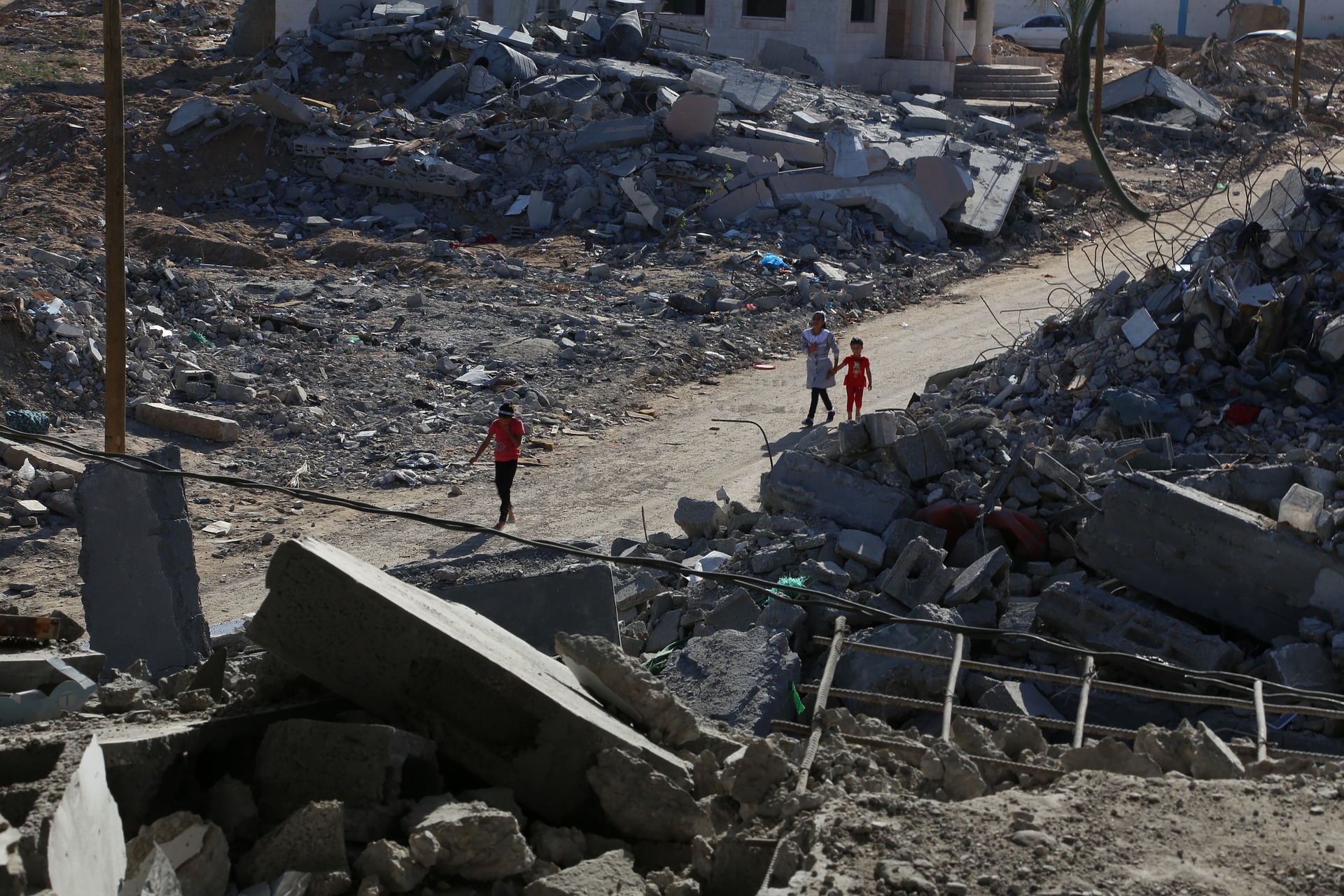
Eleven years ago, after a peacemaking attempt was made by the Israeli government to reduce conflicts with Palestinian authorities in the Middle East, 8,000 Israeli women, men, and children residing in Gaza were forced to evacuate their homes and towns by the Israeli government. The very places that held their dearest memories had to be torn away from them.
The evacuation from the Gaza strip had a specific purpose, or so we thought. The goal of leaving the control of Gaza to the Palestinian Authority was to mitigate tensions with them. We hoped that providing this piece of land would be a step forward in the peacemaking process by addressing their requests.
Since the withdrawal from Gaza, more than 11,000 rockets have been fired into Israel. The Israeli Army was forced to launch three military operations since the event, because rockets are constantly sent to Israeli towns and neighborhoods, murdering and injuring many individuals. Only two summers ago, under Operation Protective Edge, rockets were sent to Israel every day, especially in southern cities. The Iron Dome has been capable of detaining missiles and preventing thousands of people from getting killed.
The Iron Dome, one of the most advanced and efficient anti-missile systems worldwide created in Israel, intercepts rockets that are fired from Gaza. The Iron Dome identifies and destroys missiles that are aimed at Israeli cities before they are able to reach the cities, for it is capable of ascertaining the direct location of where the rocket will hit.
Overall this constant state of uncertainty and terror is a reality that no other country would deem acceptable; since 2001 over 15,200 rockets and mortars have been fired to Israel, with an average of 3 per day targeting Israel.
As a result, Israel inspects all material that arrives to Gaza, and places a military blockade around the coastal area in order to prevent dangerous ammunition that is used for terrorist activity from entering Gaza and being used against Israel. All goods are inspected upon their arrival to Ashdod and sent in trucks to Gaza. This is an efficient, safe way to ensure that civilians will not be harmed from smuggled goods that are imported to Gaza for violent purposes.
Even though this antagonism is brought against Israel by leaders in Gaza, Israel still provides humanitarian aid to supply the residents in Gaza. Part of this security effort includes checking what enters the coast in order to confirm that the material is not harmful. In contrast to Israel’s humane acts, the “efforts” in Gaza have only been geared towards war instead of peace. In order to further rouse tensions, terrorists receive arms from leading countries that oppose Israel. The funds that they receive are used to promote incitement against Israel, rather than to create infrastructure and ameliorate conditions within Gaza.
Despite Israel’s constant peacemaking attempts and the subsequent acts of terror by terrorist organizations, there is still pressure placed by international leaders insisting that Israel give up land for peace. We challenge this request due to the attacks, killings, and missiles, causing innocent civilians to lose family members and friends.
The Gaza evacuation is an explicit paradigm of a land for peace attempt that was proven ineffective, even considered a failure. This is why our officials and citizens are not easily willing to agree to give up more land for peace. We approach the sensitive matter with hesitation, due to the unfruitful results, the lack of change despite our efforts to appease authorities with whom we have questionable relations.
Hamas & the International Human Rights Law
This paper first determined that Hamas, as a quasi-state actor, is bound by International Human Rights Law (IHRL). Not only is the purpose of IHRL served by applying it to all international actors, but international law affirmatively obligates in particular quasi-state actors—entities that have significant control and influence over a population—to comply with IHRL. Second, this paper discussed statehood under international law and the consequences should a terrorist organization become the governing entity of a recognized state, including granting immunity to terrorist leaders, justifying terrorism, and undermining the international community’s ability to firmly and decisively combat terrorism.