
Your Worst Enemy is Your Best Teacher
by JIJ intern
The Israeli-Palestinian conflict involves two peoples, the Jews and the Palestinians. The two groups often have two competing narratives, two contrasting histories, two sets of terminologies and even two different maps (Ipfatid, 2021). This contributes to a zero-sum mindset in which voices on each side view the other groups’ perspective as an existential threat.
Unfortunately, the international community often takes advantage of both parties distress by sharing incomplete, inaccurate or outdated information on the Israeli-Palestinian conflict. This usually accentuates the divide between Palestinians and Jews (Ipfatid, 2021).
In order to move past this divide, I believe that Israelis and Palestinians, Jews and Arabs, must find common ground between their respective narratives. Luckily, important peace-builders, such as Yossi Klein-Halevi, New York Times best-selling author of Letters to my Palestinian Neighbour, are actively working toward integrating each group’s national narrative in an effort to achieve a lasting, warm peace (Klein-Halevi, 2021).
In Klein-Halevi’s brilliant talk on YouTube titled Israeli and Palestinian Narratives, he breaks down the strengths and the weaknesses of each party’s narrative (JBS, 2015). For the Palestinians, there is the advantage of being the majority presence in Israel/Palestine prior to 19th century Zionist immigration. Meanwhile, for the Jews there is the advantage of identity: a consistent story linking the Jewish people to the land of Israel for 3,500 years.
The more the conflict between the two parties has intensified, the more each side has learned to compensate for deficits in their own story through the other group’s narrative (JBS, 2015). For instance, Zionist immigration to the Land of Israel starting in the 19th century allowed Jews to no longer be a minority within the Holy Land. Meanwhile, in the 19th century, the Palestinians did not have a distinct national identity. To compensate for this lack, Palestinians cultivated a national identity separate from the broader Arab and Muslim world (JBS, 2015).
That being said, the friction between Jewish presence in the Holy Land and a distinct Palestinian identity is often at the heart of the divide between the two parties. There are people on both sides of the conflict that declare the other group is an illegitimate, foreign interloper with no rights to live or self-determinate in this land (Behan, 2021).
Despite this sentiment, in some ways both parties have already succeeded in their national aspirations: there is now a large Jewish presence in the Land of Israel and there is also a distinct Palestinian national identity. Given that the Jews and the Palestinians, whether it was unintentionally or purposefully, learned from each other how to strengthen their own national movements, this may present a potential pathway to conflict resolution: recognizing similarities (JBS, 2015).
Bridging the gap between both parties’ national narratives may involve acknowledging the commonalities between Jewish and Palestinian aspirations. This includes recognizing the legitimacy of both peoples’ identities and recognizing the right for both peoples to live in this land (Behan, 2021).
Finally, this includes acknowledging that both sides have at times experienced the Israeli-Arab conflict as victims. Israelis often see themselves as a minority within the broader Arab and Muslim world, most of which has historically sought to destroy the Jewish state. Meanwhile, Palestinians usually perceive themselves as a marginalized population resisting a well-established country (Ipfatid, 2021). Ultimately, to move forward there must be a willingness from both Jews and Palestinians to humanize, empathize and integrate each other’s national narratives on the conflict (JBS, 2015).
References
Behan, Daniel (2021, March 16). Palestinians and Ashkenazi Jews: Co-Indigenous To The Same Land. Retrieved February 1, 2021, from https://blogs.timesofisrael.com/ palestinians-and-ashkenazi-jews-co-indigenous-to-the-same-land/ [@ipfatid] (2021, June 2).
Why is Approaching the Israeli-Palestinian Conflict With Nuance So Difficult [infographic]. Instagram. https://www.instagram.com/ipfatid/ [JBS] (2015, April 14).
Yossi Klein Halevi: Israeli and Palestinian Narratives [Video]. Youtube. YouTube.com/watch?v=_bLOfHov7IY&t=399s Klein-Halevi, Yossi (2021, November 23).
To The Students Who Walked Out on Palestinian Israeli Dialogue. Retrieved February 1, 2021, from israel.com/to-the-students-who-walkedout-on-palestinian-israeli-dialogue/?fbclid=IwAR1Ks61fQ8HhWDKnpwZ2ACVEhJ9eOxnCGfJE_mxkDUGGvvBMypUJ0KAqc

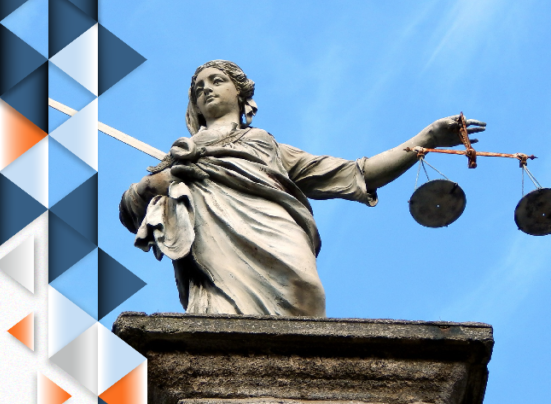
JUSTICE, THE BIBLE, AND US
Operating in the only democracy in the Middle East, the Jerusalem Institute of Justice uses the law to seek equality and fair treatment. Since the establishment of Israel in 1948, the country has been striving to find a balance between democratic values and its nature as a Jewish State.
We sometimes find a disparity between the law and political interests. For example, since the state’s beginnings, Jewish Ultra-Orthodox political factions have had a monopoly on matters of faith, deciding who is a Jew and who receives religious and civil rights. This creates huge challenges for other streams of Judaism and for those who profess any other faith, highlighting the need for the services provided by JIJ.
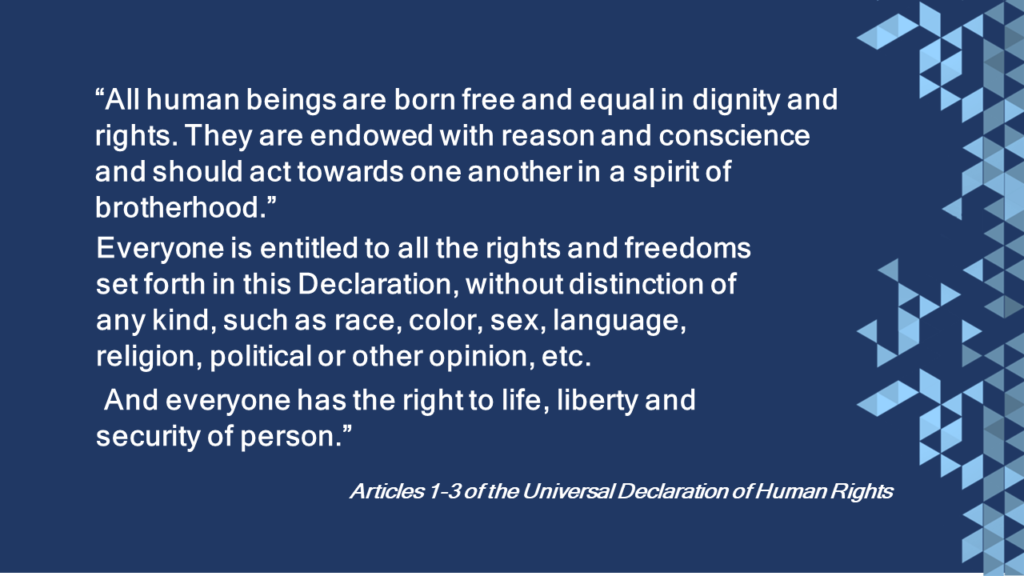
As an Israeli human and civil rights organization, JIJ draws its working principles from two monuments of thought. These are monuments that have decisively impacted western civilization. The first of course is the Bible, the second, which was written after the Holocaust, is the Universal Declaration of Human rights.
The Bible expresses God’s heart for the world, teaching us as it says in Micah 6:8, to walk humbly, pursue justice, love mercy, to have a proper regard for each person and to influence the development of a better society.
The rabbis in the Talmud say that the Torah begins and ends with justice. (Exodus Rabbah 30:19). But what is Justice? In Judaism, justice is the equal and right application of God’s law and morality for mankind.
In Hebrew, there is a clear connection between
- Justice-Tzedek,
- A righteous person- Tzadik,
- And acts of righteousness- Tzedakah
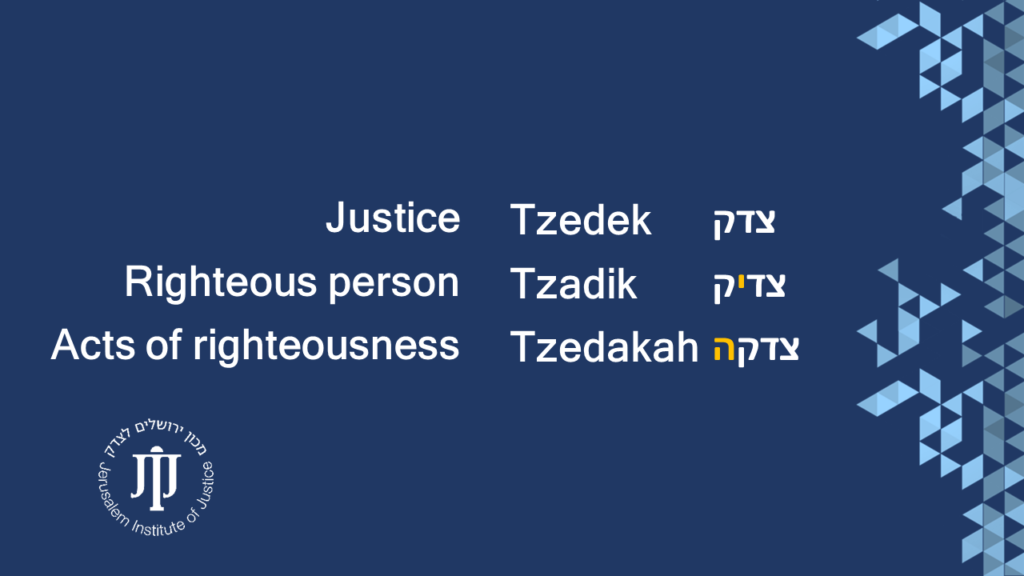
These terms are rooted in wisdom. The base of these words are three letters (tzadik, dalet and kuf) צ-ד-ק.
The only difference between the words is the addition of letters י(yud) and ה (heh) which both represent in Jewish tradition the full name of the Lord. Here we see the centrality of God in justice.
- To bring justice צדק,
- a godly person, צדיק,
- must perform godly acts, צדקה
The Universal Declaration of Human Rights which was based on Judeo-Christian values, mirrors the principles of human dignity, our responsibility to each other and personal freedoms.
Part 2 – coming soon
JIJ Gains Special Consultative Status at the United Nations Economic and Social Council
The Jerusalem Institute of Justice has obtained Special Consultative Status at the United Nations Economic and Social Council. This is a great honor as only about 60 Israeli organizations have this status and only a handful NGOs that deal with human rights. Today JIJ joins that list.
So what does this mean for the important work that we do on behalf of Israel on the world stage?
- - We will provide expert analysis on issues directly from our experience in the field.
- - JIJ will serve as an early warning agent on human rights issues and more.
- - We will help monitor and implement international agreements.
- - We will help raise public awareness on relevant issues.
- - We will contribute with essential information at United Nations events.
- - We will have the opportunity to attend international conferences and events and make written and oral statements there.
- - We will organize side events.
- - JIJ will be able to enter the United Nations premises and have the opportunity to network and lobby for Israel and much more.
The United Nations ECOSOC provides JIJ the opportunity to be heard by a global audience and directly contribute to its agenda.
Let's continue to impact real change and fight injustice together. Share this great news with your friends and family and if you are able to, donate by clicking the button below and let's embark on this new chapter together.

Prostitution and Rehabilitation
Can we welcome the closure of the strip clubs while the women are thrown to the street?
Closing strip clubs is an important step, but as is common here, only half the job has been done!
Article by Tzipi Sa’ar translated from Hebrew 19.02.2020 12:13, Haaretz newspaper.
The closure of strip clubs in Tel Aviv is great news. We are finally recognizing that buying a woman’s body for sexual purposes is an act that disgraces women and is a phenomenon that should be eradicated from this world. At the same time, it is impossible to ignore that, as is common here, only half the work has been done. The clubs were closed, but the women working there were offered no professional retraining or alternative livelihood as options. As a result, some of the women, although supporting the closure of the clubs in which they worked, also protested these very closures.
We cannot and must not ignore their voices. This does not mean that stripping should continue, but that eliminating this practice must be accompanied by adequate steps in favor of the women who happened to get trapped into such reality.
First of all it should be clear: as long as there is legitimacy for a situation where a woman’s body, or parts of it, are currency or a commodity for a merchant, it is impossible to fundamentally change the existing culture that, in this context, may move within a range between objectification - to rape- or even to murder by a spouse. A commodity is considered property that is owned and this “ownership” by men - of women - fundamentally underlies the ills noted here. According to this twisted logic, a woman who wants to leave her spouse violates his “property rights”. This conflict sometimes, in extreme cases, ends in the murder of the wife.
As for stripping, to a large extent, it is nothing but prostitution in disguise. In a discussion in the Knesset’s Committee of the Promotion of Woman Status, a survivor of prostitution testified stating, “Stripping is like a teaser for advertising prostitution. Because whoever likes the dancer is allowed to take her to a private room and, for a fee, gets a sexual service there. You feel as if you are in a store with price tag on you. Those who are better dancers, of course, have a higher price tag.”
According to a document submitted to the committee, “For many young women, strip clubs serve as the gateway to the world of prostitution. While lap-dancing on a customer’s knees in the back rooms or at other locations within the strip club, the young women are required to satisfy their clients’ sexual needs and demands. They also must allow the customer to touch their body parts. To cope, they detach themselves from who they are, from their consciousness, and in particular from their feelings about what happens with their bodies. Strip clubs serve as a cover for brothels, where sexual acts - complete or partial - between clients and women are performed under the auspices, encouragement and support of club owners who in this manner make fortunes.”
The Jerusalem Institute of Justice (JIJ) research has shown similar findings as well. A JIJ position paper cites Judge Michal Agmon Gonen, who imposed a ban on the operation of strip clubs in the Ramat Gan Stock Exchange area, as stating that strip clubs are an integral part of the sex industry. The study further says that, while hiding behind different phrases, for all intents and purposes, strip clubs operate as brothels and the only difference between the two seems to be the social approval of the strip clubs in contrast to the disgrace that brothels carry.
The judge wrote, “Strip clubs are used to systemically hurt women and the difference from brothels is definitely artificial.” This contrived difference needs to be eliminated. One can also hope that more and more men will understand what stripping really is and reject, for example, an invitation to a “bachelor party” with a stripper. In this spirit, and with an administrative warrant, the police closed three strip clubs in Tel Aviv last month. They were following the instructions of former state attorney Shai Nitzan which include a definition of lap-dancing as a form of prostitution and therefore clubs allowing lap dancing are operating a brothel which is a criminal offense.
But what about the argument of some women who engage in stripping, and even prostitution, who say they engage in these activities voluntarily? Well, here we have compelling data regarding the personal harm to prostitutes that is impossible to ignore: the early age of entry into prostitution (14), the high rate of women in prostitution who were victims of childhood sexual abuse (about 90%), the horrendous short life expectancy of women in prostitution (40 years), and more.
Still, some would say, “Who authorized you to decide for other women what is good for them? And what about those women who do it voluntarily?” Well, we accept that among women in stripping and maybe even prostitution there are those who choose it freely, however, these examples represent a very small minority. When the harm of “freedom of occupation” is compared with the bitter and harsh fate of the vast majority of women trapped in stripping and prostitution - it is clear what decision is needed to be made.
As a comparison, there are other forms of restricted behavior. There are some individuals who would choose to sell a kidney on the black market to support their family or to cover a major debt. Society draws a red line here and says this activity is not moral and is therefore not allowed. The fact that society does not generally draw a similar red line in the context of a sex sale is simply an indication of a moral failure and an issue that requires redress.
After all the above, under no circumstances should women in prostitution or stripping be abandoned to their fate. These welcomed changes in law and enforcement must be accompanied by comprehensive and practical programs designed to help these women find alternative ways to make a living. This must not be lip service only. One cannot cheer for strip clubs being closed while watching the women being thrown to the street. The truth is that the government approved a plan for prostitution rehabilitation over a year ago, but according to a petition submitted in the end of 2019, this program is not yet implemented. We, as the people who support the eradication of this practice, should be the first to demand the immediate and comprehensive implementation of these rehabilitation strategies.
Torture of Palestinians - Revealing the Truth
https://www.youtube.com/watch?v=W_rhMEGWy-I
Torture and other inhuman treatment is a daily phenomenon in Palestinian prisons.
Be a voice for the voiceless! Share this video!
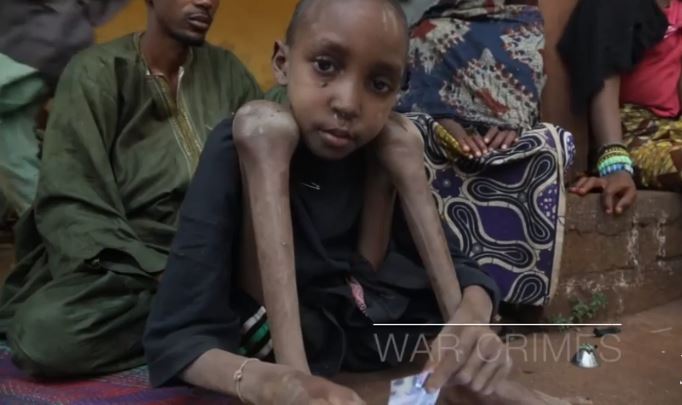
Humanitarian Crises - Happening Now
https://www.youtube.com/watch?v=8QXToXcq6As
Parts of the world are experiencing humanitarian crises, what can be done about it?
Be a voice for the voiceless! Share this video!
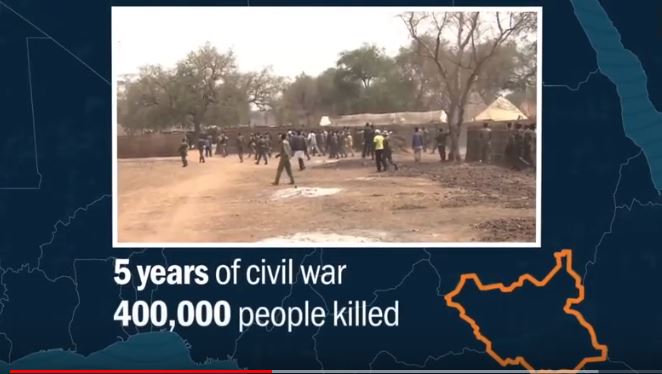
Everyone Loses in War
https://www.youtube.com/watch?v=xBlxdFsWgpo
"All that we strive for as a human family, dignity and hope, progress and prosperity, depends on peace. But peace depends on us."
Secretary General of the UN, Antonio Guterres. Be a voice for the voiceless! Share this video!
the Rights of the Child
November 20, 2018 Jerusalem, Israel
Committee on the Rights of the Child (CRC)
Human Rights Treaties Division (HRTD)
Office of the United Nations High Commissioner for Human Rights (OHCHR)
Palais Wilson - 52, rue des Pâquis
CH-1201 Geneva (Switzerland)
Dear Honorable Members of the United Nations,
On the anniversary of the Convention on the Rights of the Child (CRC), we, the Jerusalem Institute of Justice, appeal to you in order to improve the implementation of the rights of all children in the world.
Twenty-nine years ago, the world made a commitment to promote and protect the rights of its children. The Convention on the Rights of the Child constituted a major advance as it recognized children as right holders and created a positive obligation to treat them with equality, respect and dignity. Without doubt, the CRC has been an important source of inspiration for many countries and has led to substantial changes in laws to safeguard the child’s most fundamental human rights.
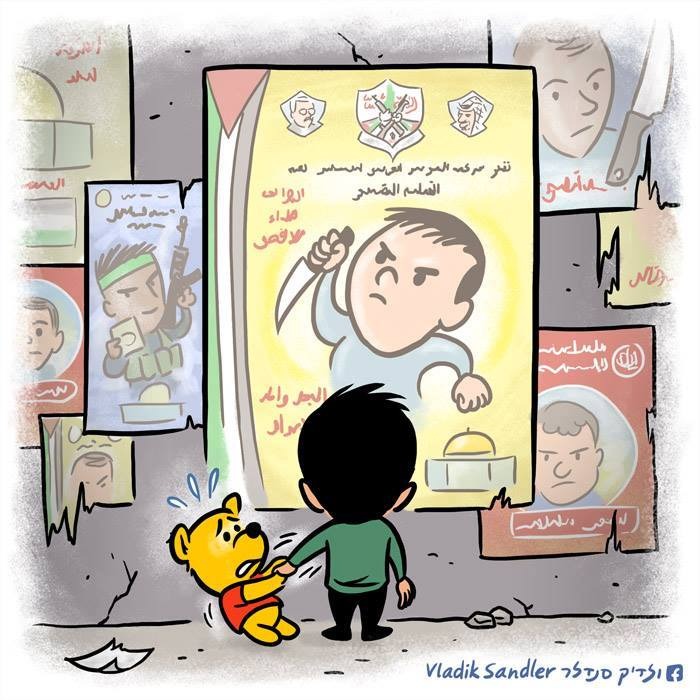
Despite these policies, an increasing number of children have been subjected to unspeakable violence in warfare in the past year. As verified by the United Nations, more than 21,000 serious transgressions of children’s rights have occurred from January to December 2017. One amongst many, is the use of children as human shields during hostilities – a tactic that has become increasingly present in contemporary conflict, notably in Gaza. Indeed, it is well known that Hamas – the de facto governing authority of the Gaza strip since 2007 – actively hides behind innocent lives to ensure its own survival. Children constitute one of its main targets as they are indoctrinated to an ideology of martyrdom and are incited to take part in suicide missions from a very young age. As a result, children become casualties of the cruelty of war, are deprived of normal childhood experiences and see their possible opportunities for the future reduced. More importantly, this practice comes as a serious breach to the very essence of the CRC. We express sincere concern for the future of children in the Middle East, as at the time of this writing, 230,000 children in Gaza are being indoctrinated and educated to an ideology of hatred.
We, the Jerusalem Institute of Justice, firmly condemn such immoral practices and believe, as per Ms. Virginia Gamba – the Special Representative of the Secretary-General for Children and Armed Conflicts –, that parties to conflict should be shielding children from the atrocities of war instead of allowing them to be exploited as human shields, “when your own house or your school can be attacked without qualms, when traditional safe-havens become targets, how can boys and girls escape the brutality of war?”.
We are urging the international community to put an end to this policy and bring justice to the children.
The Jerusalem Institute of Justice (“JIJ”) is a not-for-profit human rights organization that works towards the cultivation of civil justice and democracy. Our sole focus is the development and defense of human rights and providing true democracy for all. More precisely, we hold our focus on the protection of the people who are especially vulnerable to abuse of human rights, particularly children in armed conflict.
Yours sincerely,
Flavia Sevald, CEO
Jerusalem Institute of Justice
My Encounter with Hatred: A Student in London
The first time the BDS movement caught my attention was on April 27, 2017. The date is etched into my mind because up until that day, I’d always thought of anti-Zionism as the ‘pet hate’ of the Jewish community, the enemy that we need in order to justify ourselves and to make excuses for ‘security measures’. Like Jews of many generations, I preferred to focus on the challenges of day-to-day living and not look at the totally irrational hatred being spread against me and my people. The basic rationale of my thinking was that Jew-hatred and Zionist-hatred doesn’t make sense, therefore it can’t be such a big problem.
On April 27, 2017 that changed.
I had been accepted to start studying in one of the major London universities and was at the university to make inquiries regarding my enrollment. My head was held high because I was proud to have the opportunity to be educated in this well-reputed institution. As I walked through the campus, I was intrigued to hear the sound of drums and people shouting. Slightly surprised but being compulsively inquisitive, I drew near to see the meaning of the rowdiness in civilized London. It didn’t take long to recognize – the Palestinian flags and chants immediately flooded my mind with memories of having stones hurled at me while on duty in the West Bank and pictures of one of my soldiers who got hit by a massive rock in the chest while overseeing a demonstration.
Taken by surprise, I walked amongst the protestors. Seeing people from a whole range of ethnic backgrounds, I attempted to fathom what was going on behind the aggressive shouts. “From the river to the sea, Palestine will be free!” and “Israel is a fascist state!” were chanted by the sea of protestors. What was the meaning of all this? It turned out that the protest was against the Israeli Ambassador’s speaking on the university campus – as this invitation was seen to be ‘provocative’. They wanted the university to boycott the speaker because the speaker represented Israel, which they saw as being an evil occupier. It was chilling to think that in the middle of London, people were openly advocating for the end of the State of Israel, ‘from the river to the sea’.
Even though I found it difficult to hold my resolve together amidst those who were in essence denying my identity as an Israeli, I have always been taught of the importance of listening to the other side and to be willing to admit when I am wrong. So, I stuck around and wandered between the protestors, asking them what they knew about the conflict and trying to understand why they were so worked up. Most of the answers I got were that the Palestinians are being butchered by the Israelis and that we all need to do everything we can to fight the ‘evil occupation’. These 19 and 20-year-olds who had been educated that Israel is an evil-colonialist venture, seemed surprised when I told them I had just finished my service in the IDF as an Officer in a Combat Unit and that I was a relatively normal human being, not thirsty for Palestinian blood. When asked if I’d given my testimony to “Breaking the Silence” – an organization of former IDF soldiers who testify to having been forced to commit violations against Palestinians – I responded that I hadn’t because I didn’t have any violations to report: my commanders were men of integrity, amongst the most moral people I know, and I had always taught my troops to have value for all human life – Jew, Arab and everyone else.
Sadly, the protestors didn’t seem to care very much for talking, the atmosphere wasn’t one for talking or thinking – rather, one of being joined together in the anti-Israel mob. As I politely approached individuals to ask them questions about the implications of their demands on the Jewish people, I was angrily brushed aside. It reminded me of drunk fans cursing a referee at a football match or scenes from Gladiator at the Colosseum – the chants and drum beats working up ‘anti-emotion’ against Israel and her Ambassador.
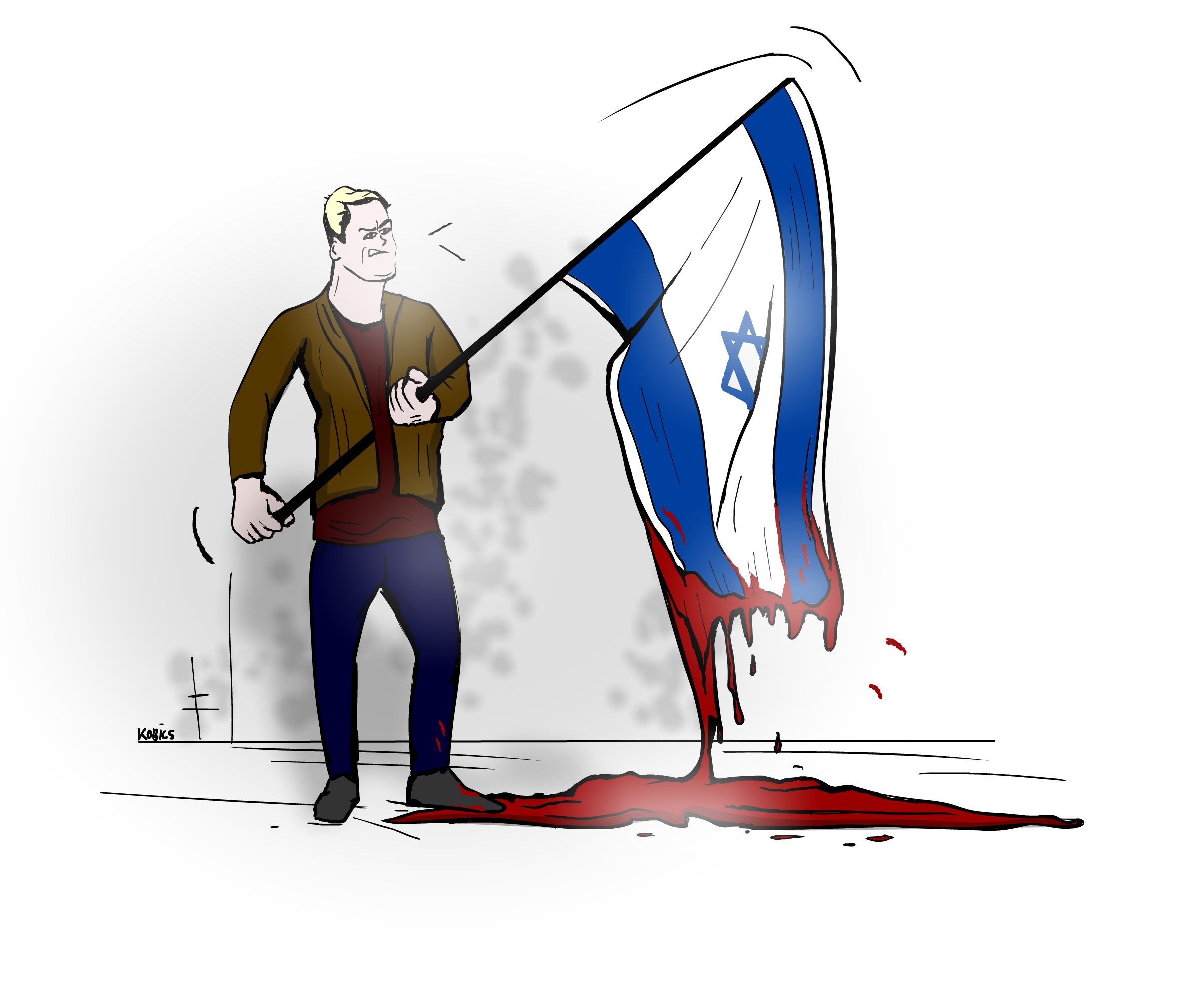
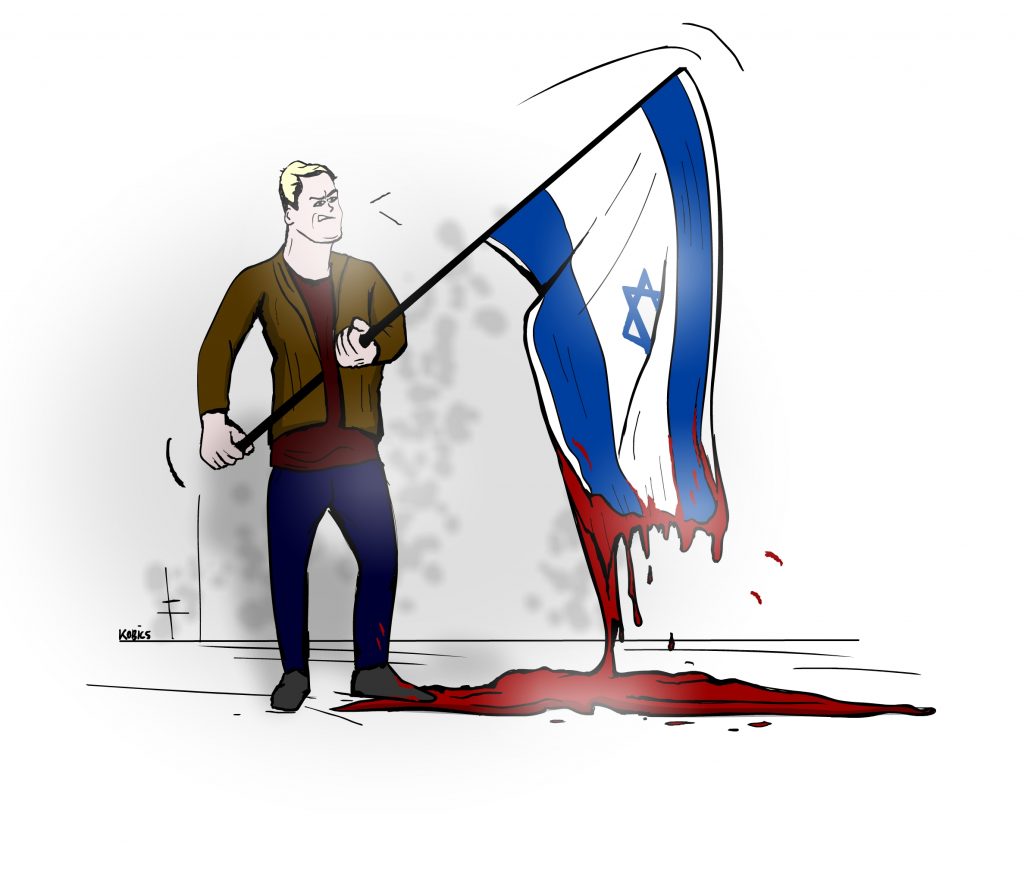
The hardest part of the protest for me was seeing the protestors take an Israeli flag, dipping it in red paint and waving it around. The Israeli flag is designed to remind one of the Jewish prayer shawl, and to me it represents the hope of the Jewish people for sovereignty. This blatant desecration of the flag cut me to the heart. I don’t hate Palestinians, and I would never desecrate a Palestinian flag. I don’t agree with all of the policies of the Israeli government, and I sincerely desire peace. When people I know in Israel try to delegitimize the rights of the Palestinian people, I speak up. What good can come of desecrating my flag – making it look like it’s dipped in blood? I wanted to scream and shout and let out all the scorn and insult that this caused me, but I realized that I was helpless. I could do nothing. Letting out my anger would only be adding gasoline to the flame of hatred against me and my nation.
After the protest, I was left with a lot to process. Emotionally and mentally drained, I left the campus to do some serious soul-searching. Why so much hatred? Why is the BDS movement so intent on drowning out other voices (my voice)? They say that I’ve been brainwashed, even though I’m willing to try and listen to them. Could it be that they are brainwashed? Should determining who is right or wrong in a conflict be decided in a shouting match? Is the populistic mob-like behavior I experienced in London the way forward?
After these experiences I was challenged to read a book by Ilan Pappe and Noam Chomsky explaining the BDS movement claims, and as a result I have become more aware than before of the need for personal and Israeli self-criticism. But alongside this, I have become concerned about the BDS movement, the amount of irrational hatred it is spreading, and its means of achieving it. Two wrongs do not make a right. Trying to prevent dialogue and attempting to drown out voices is not going to bring justice, reconciliation, or hope – it is merely going to make people hate more. I’m only 26, but I’ve seen enough hatred in my life. I hope most people will agree with me that we don’t need any more hatred in our world.
And what about incitment?
If we learned anything from the wave of terror in 2015-2016, it is that words matter. In an environment where Palestinian unemployment remains staggeringly high, disenfranchised youth become more impressionable and susceptible to the pronouncements of charismatic leaders. Hence, when President Abbas decries Jews visiting the Temple Mount as having ‘no right to defile it with their filthy feet’, its legitimacy is only accentuated for young Palestinian men. The recourse to martyrdom then becomes a logical response because, as Abbas describes, ‘we bless every drop of blood that has been spilled for Jerusalem, which is clean and pure blood’.
In cases like these, the line between Zionism and Jews becomes ever more blurred. A disagreement over religious access to a holy site becomes an aspersion on the humanity, or lack thereof, of Jewish people. Coupled with the reverence of Palestinian officials for mukawama (armed resistance), it is a recipe for disaster in coexistence.
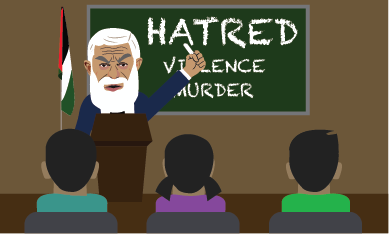
Importantly, this incitement does not occur within a vacuum. It also coincides with an extensive period of classroom indoctrination. From a young age, children are not simply taught to resent encroachment on their land or commit themselves to non-violent resistance. Rather, they are taught to detest Jews and to sacrifice themselves in martyrdom to bring about their demise.
As reported by the Times of Israel in March 2016, one particular ninth-grade textbook was none-too subtle in its advocacy for armed resistance and martyrdom. One page began with a Quranic verse which instructs Muslims to kill or imprison non-believers.
If nothing else, the great crime here is the systematic hijacking of children’s minds. Young children are not yet able to discern what is right from wrong, and they are the victims of efforts to train a generation of young people in hate and animosity. This cycle is then repeated for future generations, when the children mature and circulate the material to the next cohort.
In recent years, the Palestinians have pursued efforts to join the community of nations and the system that binds them together. This includes receiving non-member observer status at the UN in 2012, as well as their ratification of the Rome Statute of the International Criminal Court in 2015. However, accessions such as these also carry responsibilities. It is, at best, disingenuous join an international legal system aimed at preventing large-scale violence whilst sowing the seeds for such calamity among one’s own people.
Given the albeit delayed moves toward free and fair elections in the Palestinian territories, the ball is now in the court of Palestinian officials and candidates. They can propagate insidious blood libels (as Hamas spokesman Osama Hamdan did on Lebanese TV in 2014) or they can reject the nihilism of centuries-old folklore by countering incitement and championing non-violence.