Violations of Freedom of Expression and Freedom of the Press Under the Palestinian Authority and Hamas
This report exposes the censorship on freedom of expression and freedom of press in the Palestinian territories. Journalists and citizens are restricted from speaking out on many topics, and areas such as politics and corruption are red line (forbidden) issues. The consequences of criticizing the reigning government can range on a spectrum from arbitrary arrest, torture and other abuses. Journalists are not protected by any body and therefore are constantly at risk.
While free press and speech are suppressed, hate speech and incitement of violence are common occurrences by Palestinian individuals and officials. Palestinian public bodies do not work to quell such actions, and in some ways political institutions encourage and sanction them. Even more so, journalists, religious leaders and government officials are at the core of spreading and promoting hate, antisemitism, and anti-Israel propaganda. With the rise in popularity of social media, the internet has become a main forum with which hate speech is circulated throughout the Palestinian community and disseminated world-wide.
Downloads

Why is Hamas Bad for Palestinians?
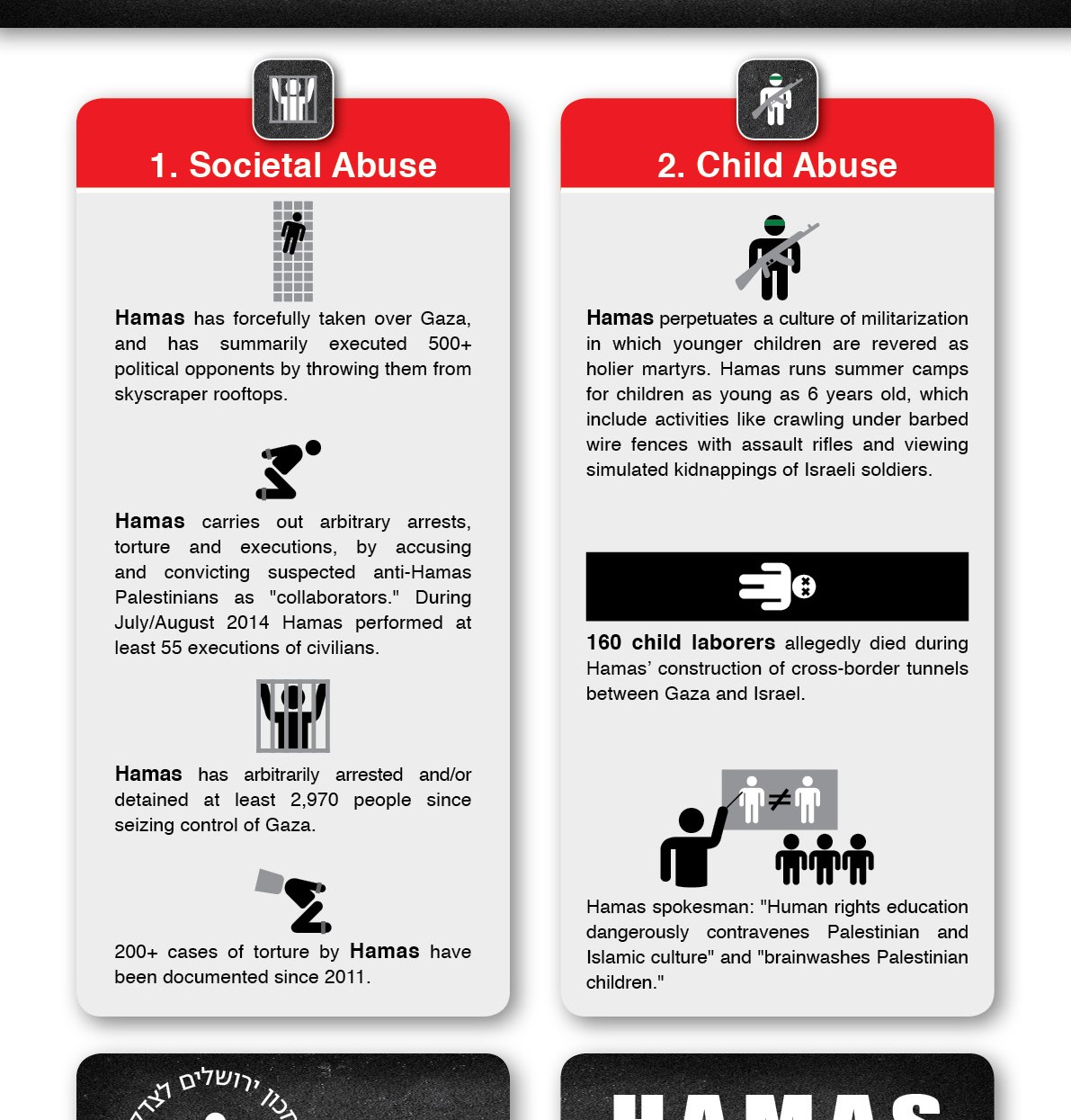
Learn how Hamas terrorizes the Palestinian population in the Gaza Strip.
Downloads
PALESTINIAN HUMAN RIGHTS
Since 2011, we have been holding events on college campuses across the world in an effort to promote balanced academic discourse, an area generally dominated by anti- Zionist sentiment. We began an initiative in 2012 to further our mission to ensure the rights of all peoples in and around Israel. We held a series of events entitled “Palestinian Human Rights Week” in Toronto, York, Helsinki, and Tel Aviv. Since then, we have expanded to the San Francisco Bay area, including at universities such as UC Berkeley, UC Davis, and UC San Jose. We also sponsored events in Finland, Norway, Sweden, France, United Kingdom, Germany and the Netherlands by reaching out to government bodies, students, and the press.
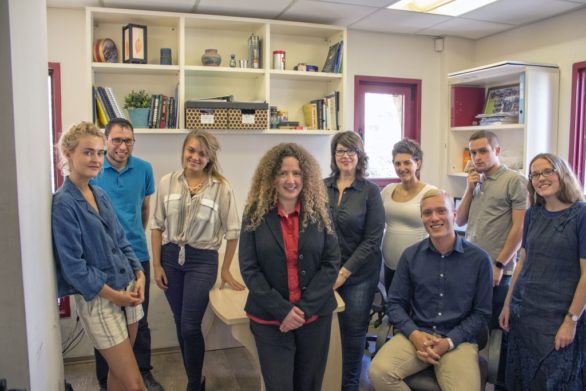
Fighting the right way for the right cause
‘Human Rights’ is a phrase so broadly used in recent decades that some would say its true meaning has been eroded, giving way to a far more cynical use by various parties to further their political agenda. In fact, it seems that with all the growing interest in the topic, the term itself has become a desirable label that can open doors to many different organizations who consider themselves leaders in their struggle. Want media coverage? A fat budget? Doors to be opened, even in oppressive regimes? Add the words "human rights" to your organization’s name and you have a proven recipe for success.
Technological progress has brought with it a wave of stories that have swept the internet and flooded the world. These include descriptions of starvation, illness, persecution, mass murders, and more, by dictatorial regimes and terrorist organizations globally. Including a plethora of heartbreaking personal stories of abuse and suffering, which exposes the dark side of our world. In the age of the information explosion and the worldwide web, which reaches a vast audience, the world can no longer plead ignorance and remain indifferent to these deplorable accounts abuse.
"Human Rights"?
We need to question the integrity of the many organizations that boast "foreign human rights". Do they actually work towards improving and uphold them? If this was indeed the case, there would be no need for the existence of the plethora of human rights organizations around the world. In fact, if every right that is deprived or trampled on was addressed by these organizations, supposedly devoted to their care, it is reasonable to assume that the extent and the severity of the distress in the world would be reduced considerably. The unfortunate reality is that a significant amount of these organizations have different and anomalous interests disguised as human rights, ranging from blatant political activity to personal greed. The human rights issue has been misused and manipulated to such an extent, especially by those who have made a business out of it, that we can no longer see the forest for the trees.
The compassion and good will of donors and philanthropists is taken advantage of by corrupt organizations who misappropriate funds that donors intended for victims and the needy. This is largely due to the lack of supervision and control of such organizations. To make matters worse, often the manner in which these organizations handle humanitarian issues ultimately brings a deterioration in the victim’s condition, increasing their exploitation at the hands of local governmental officials, or at best a stagnation with no change or improvement.
Claims versus Reality
An example of such corruption is the Palestinian Authority, under the leadership of Mahmoud Abbas, which is solely responsible for its overall operations by means of its security forces. These include successive and ongoing torture, illegal arrests and the absolute silencing of freedom of speech. Citizens who dare to utter a hint of criticism or protest against the regime experience violence and oppression. While the PA is responsible for these atrocities, the main culprit of flagrant and grave violation of human rights against Palestinians in the eyes of the public and many governments around the world, ironically is Israel, presented as an apartheid and oppressive state.
This distortion of reality is led by the BDS movement (Boycott, Divestments, Sanctions) calling for the boycotting of Israel throughout the world. This movement purports to represent the plight of the oppressed Palestinians as though it is entirely unaware of the torture chambers of the Palestinian Authority, the illegal detentions carried out daily, or the violent persecution of its members arrested for their opposing political views. If the well being of the Palestinian people was at the very heart of operatives and supporters of the BDS, then why is their outcry not against the Palestinian Authority who is responsible for these violations?
For example, why is the closure of a factory like SodaStream in Ma'aleh Adumim more important to them than the lives of thousands of Palestinians, children and adults, whose lives are now negatively affected in various ways due to its closure? The answer lies in the fact that the organization funding the majority of the movement’s activities, that is, from whom it receives its money ... you guessed it...is the Palestinian Authority itself! This helps to explain the policy of the movement against Israel, however, one has to wonder whether BDS should be defined as a legitimate human rights organization?
Video - 7 Injustices:
You've got your talkers, and you've got your doers
A refreshing example in sharp contrast to the above, can be found in a small organization called the "Jerusalem Institute of Justice" (JIJ). It actively and effectively operates from its offices in Jerusalem in various arenas including: the monitoring and reporting on human rights violations by the Palestinian Authority, a fierce battle against the sex industry and human trafficking in Israel, and the provision of legal aid to victims of discrimination by the Israeli government, regardless of sex, race or religion.
In an exceptional manner, JIJ seems to maintain a balanced view on the human rights which they claim to defend. This is evident on the Institute’s website as well as its social media accounts that include references to gross human rights violations within Israel itself. Combating prostitution and human trafficking in Israel is a joint effort between JIJ, the Knesset and the Israeli government. JIJ is at work in the legal arena, as well as in the news and social media, to promote social awareness. For example, JIJ helped to organize a public protest against the sex and human trafficking industry in front of a strip club called "Pussycat", in Tel Aviv.
JIJ desires to bring a more balanced view to human rights injustices in the region, as opposed to other ‘human rights’ organizations who focus only on Israel’s transgressions. When necessary, JIJ also holds the Israeli establishment to account on issues of discrimination of minority groups within Israel’s jurisdiction, as well as exposing the hidden injustices committed by the Palestinian authorities against its citizens.
A supportive hand
Another heart-warming activity JIJ is involved in is helping the lone soldier, especially those from orthodox religious backgrounds that have been abandoned by their families because of their desire to serve their country. These soldiers, who often suffer severe neglect and economic conditions, receive aid from JIJ in the form of essential supplies, social activities and above all a sympathetic ear and moral support.
For Rosh Hashanah last year JIJ hosted a special meal for dozens of lone soldiers who received a great deal of supplies from their sponsors to help them in their service, such as back packs, new shoes, fleece jackets, and more.
What is your part?
We would all like to be better people by contributing to society. It is important to take action and join the battle for the right cause. However, we need to be careful as to which organizations we choose to support. One needs to ensure that they are actually committed to advancing human rights rather than lining their own pockets, or promoting their own hidden agendas.
True human rights organizations ensure that all human beings have the right to life, liberty, and security of person, including the right to education, freedom from torture or cruelty, freedom to peacefully assemble, and freedom of thought, conscience, and religion. Sadly, they are becoming increasingly rare. It is our responsibility to help them survive by our practical and financial support. Keep in mind that choosing sides only aggravates the conflict and deepens the polarization, this battle should be about right and wrong. The ball is in your court!
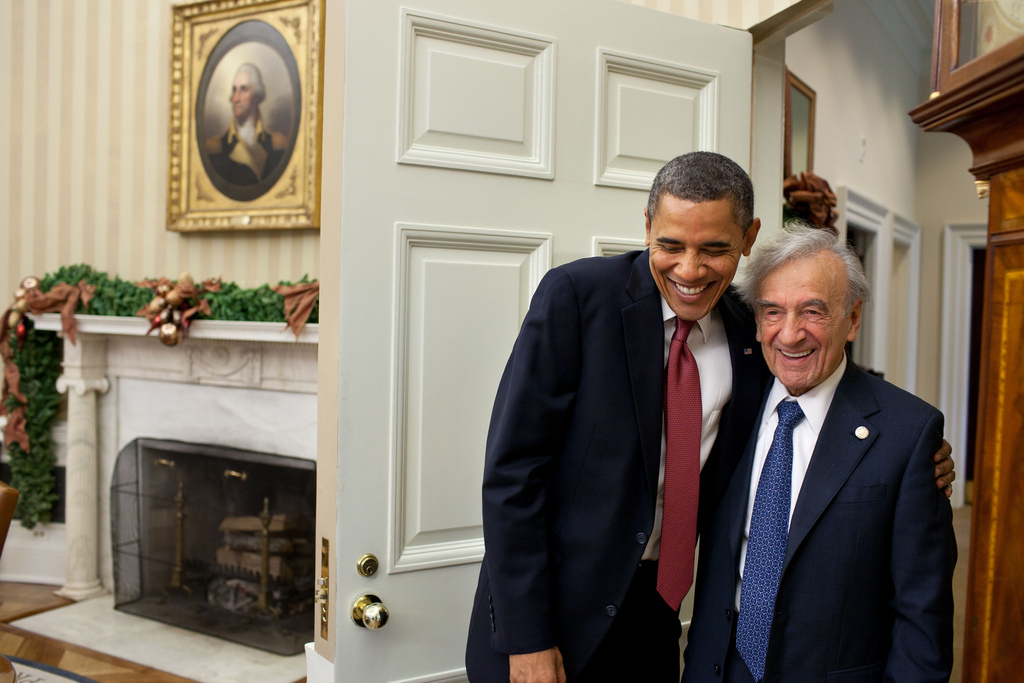
We Mourn the Passing of Eli Wiesel
The Jerusalem Institute of Justice mourns the passing of Elie Wiesel, 87, one of the world’s most dedicated, untiring, and articulate voices against man’s inhumanity to man. After he experienced the horrors of the Holocaust as a child prisoner in Auschwitz and Buchenwald, Elie Wiesel dedicated his life to generating public awareness and to fighting against genocide, hatred, and injustice.
Wiesel’s passion for justice knew no bounds. He defended the cause of Soviet Jews, Nicaragua's Miskito Indians, Ethiopian-born Israeli youth, Argentina's "Disappeared," Cambodian refugees, the Kurds, and victims of famine and genocide in Africa, apartheid in South Africa and war in the former Yugoslavia.
He was recognized for not remaining silent in the face of the enemies of human rights and human dignity, stating during his Nobel Peace Prize acceptance speech, “We must always take sides. Neutrality helps the oppressor, never the victim. Silence encourages the tormentor, never the tormented.” He would often say, “the opposite of love is not hate, it is indifference.”
We join all those who love humanity and hate injustice in honoring the legacy and mourning the loss of Elie Wiesel, the conscience of a generation
Hidden Injustices
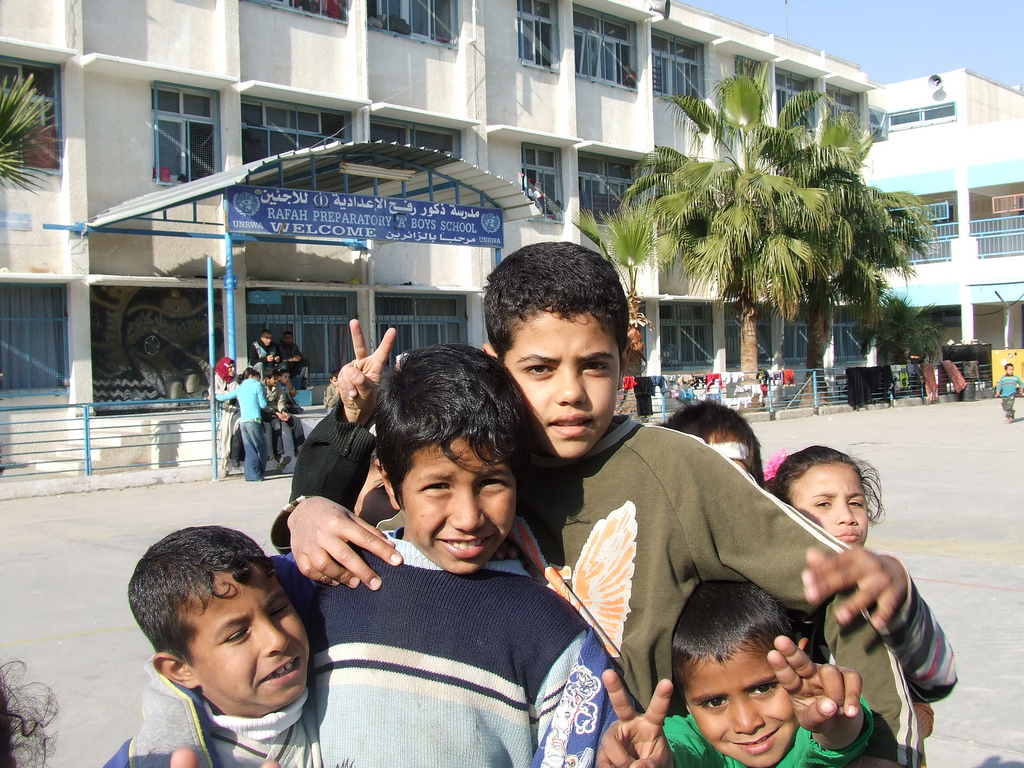
This report highlights the human rights violations regularly committed by the Palestinian government authorities. These include arbitrary detention, torture and cruel punishment, violation of the freedom of expression and the freedoms of the press, violation of the freedom of religion and minority rights, and violation of the rights of women and children. The EU and the US share a guiding principle that all nations should uphold and affirm the human rights of each individual, wherever they may reside in the world. As critical sustainers of the Palestinian Authority’s leadership through the provision of vast quantities of annual aid, how much more so, then, ought the EU and the US require accountability of the PA?
Downloads
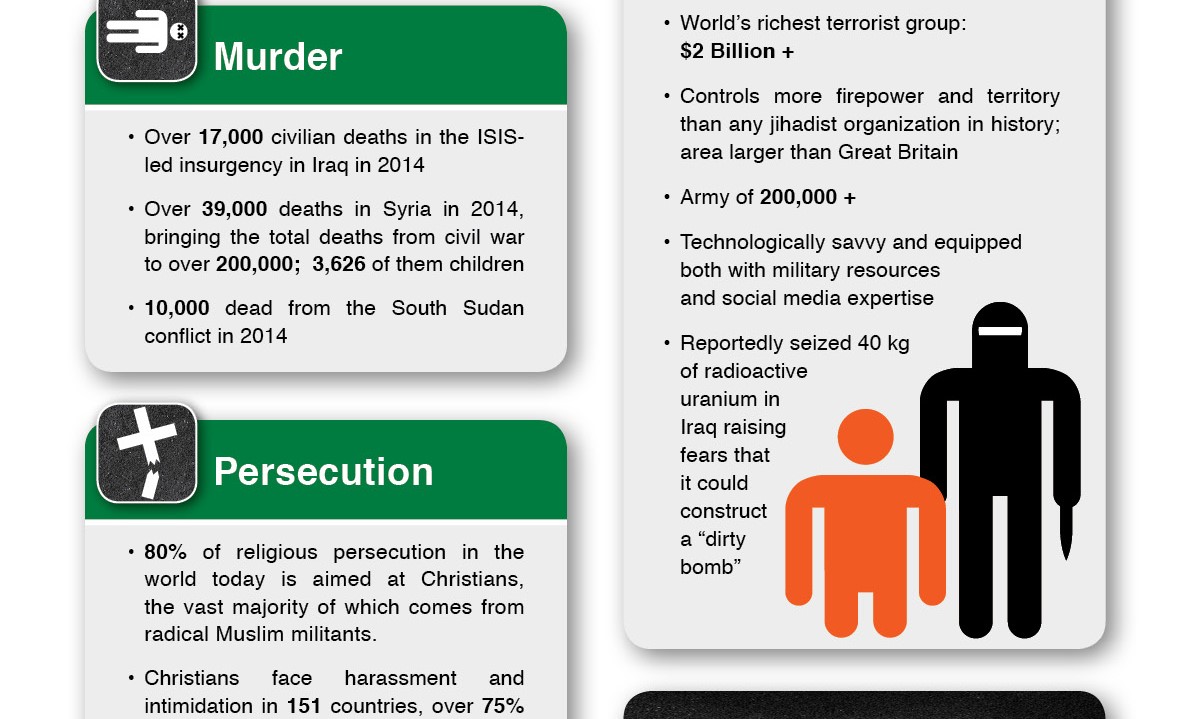
Radical Islam's Ethnic Cleansing: 2014
Through displacement, persecution and murder, radical Islam has and is carrying out ethnic cleansing in the middle East. Specifically focusing on ISIS, this fact sheet exposes the horrific actions of radical Islam among ethnic groups in 2014.