
A Clean Slate Isn’t Charity, It’s Public Policy
https://www.youtube.com/watch?v=YclR4ZvD9Ng
There’s a moment in every rehabilitation story that doesn’t make it into the inspirational quotes. It’s not the first day sober, or the first job interview, or even the first night of safe sleep. It’s the moment a person realizes the past hasn’t just hurt them, it’s still billing them.
For one woman, a survivor of the sex trade, that bill came in the form of 77 fines totaling about 100,000 shekels. Not a “mistake,” not a single misstep—an accumulated record of survival under conditions most of us are lucky never to face. A teenager subjected to severe sexual assault. A descent into prostitution, drug dependence, and life on the street. And then, against the odds, a decision to climb out.
She did what we demand people do when we speak about “responsibility.” She sought help. With the support of a mobile clinic operated through the Haifa Health Bureau, she got clean. She started looking for work. She began the slow, grinding work of rebuilding a life.
And then she hit a wall made of paperwork.
A six-figure debt doesn’t just punish. It paralyzes. It restricts movement, employment, stability—everything rehabilitation requires. It becomes an anchor disguised as accountability: a millstone around the neck of someone trying to swim to shore.
That is why the decision by Israel’s Enforcement and Collection Authority to erase the full amount is more than a compassionate gesture. It’s a statement—rare, and therefore revealing—about what real rehabilitation actually needs.
Attorney Tamar Stachel-Devor of the Jerusalem Institute of Justice, which provides free legal aid to marginalized populations, described the case as exceptional. It was referred to JIJ's free legal aid department by social worker Noga Shiloh from the mobile clinic, and it succeeded because the system was persuaded to see what the numbers usually hide: this wasn’t a “serial offender.” This was a person who had been failed repeatedly—and was still trying.
We should pause on that word: exceptional.
Why should it be exceptional to recognize that fines piled on vulnerable people often function less like deterrence and more like lifelong barriers? Why should the state need a rare, hard-won intervention to do what’s plainly rational: remove obstacles that make recovery less likely, not more?
Because here’s the uncomfortable truth: debt is one of the quietest ways we keep people trapped. It is the bureaucracy’s version of a closed door. And when it’s applied to survivors of exploitation, it starts to resemble a second punishment—this time for daring to survive in the first place.
Canceling 100,000 shekels doesn’t erase the harm she endured. But it does something almost as important: it restores the possibility of a future that isn’t permanently hostage to her past.
“It gives her hope,” said her attorney, Tamar.
Hope isn’t a slogan. It’s infrastructure. And sometimes, the most effective rehabilitation program begins with the simplest policy decision of all: stop charging people for their trauma.
Originally published in Ynet


Israel's 5-Year Report on Human Trafficking
The Justice Ministry of Israel released its first report on human trafficking in Israel spanning from 2017 to 2021 and it identified 325 victims.
This post discusses a report mentioned in an article published originally on the Jerusalem Post website.
The Israel Justice Ministry's Governmental Unit for Coordinating the Fight Against Human Trafficking has published its first activity report, in which it was revealed that Israel has identified 325 victims of human trafficking in the last five years (2017-2021).
The report revealed that 71% of the 325 human trafficking victims were women, and one percent were minors. It also showed that 40% of the victims were trafficked for the sake of sexual exploitation, 44% were held under the conditions of slavery and 16% were trafficked for other reasons.
It was also reported that the Israel Police conducted 789 interrogations of suspects of human trafficking, out of which only 155 were indicted and 99 were convicted.
The report also detailed specific cases of human trafficking that were caught and dealt with, including a trafficking ring that brought women in from abroad for the sake of prostitution, a family that held minors in slavery conditions in their bakery, and a 16-year-old girl who was forced to marry a violent man and then raped and abused by another older man.
The Justice Minister, Gideon Sa'ar, stated that the war against human trafficking is at the center of the country's basic values and that the government has approved a five-year plan to address the issue.
At JIJ, one of our core missions, through our Project NOA (Not Objects Anymore) initiative is to strike the problem at the source and reduce the demand for prostitution and human trafficking. It's not an easy mission but we have had some huge wins over the last 14+ years thanks to the support of our followers, subscribers, and donors.
If you wish to learn more about the report, you can click here to view the original report in Hebrew.
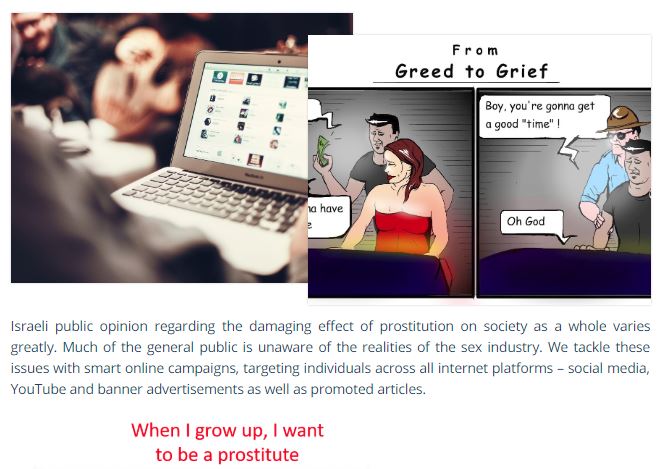
A lifeline for women caught in a cycle of prostitution
This Israeli Facebook group is a lifeline for women caught in a cycle of prostitution
Read Original Article Here
Dorit, 45, who has turned to prostitution on and off since she was a teenager, knew she needed to find a new apartment. The massive amount of clothing and household appliances that she splurged on with the fast cash she made on the street hardly left enough room for her bed.
But without supportive family members or friends, the task of clearing out and selling these items — plus moving her stuff to a new place — seemed physically and financially impossible. But she knew that getting away from this baggage was key to continuing a rehabilitation course — one that taught her job skills and confronted her psychological issues.”
Dorit, who lives in Tel Aviv, Israel, asked that her real name not be used due to the sensitive nature of her story.
Related: This sex trafficking survivor is moving on — by learning how to code
In December, a woman from Dorit's rehabilitation program worked with her on a Facebook post asking for assistance with the move. Within hours, several people Dorit had never met offered to lend a hand, and a few days later, these strangers were packing alongside her, transporting her things and painting her new rental.
“I really don’t know what I would have done without them,” Dorit said recently, adding that she's been able to make a fresh start, and so far, she has stayed out of prostitution.
The volunteers who came to Dorit aid are part of an Israeli, Hebrew-language Facebook group made up of women currently, formerly or trying to get out of prostitution, and other people who simply want to help. The group, called Lo Omdot Mineged, Hebrew for “Not Standing By Idly,” was started up jointly by Naama Goldberg, a self-described feminist, college instructor, doctoral candidate in gender studies, and a mother of three boys who lives near Tel Aviv, and Atar Artzi, a landscape architect and fellow feminist activist.
Related: We asked listeners why they can't quit Facebook. Here's what you said.
The group, now registered as a nonprofit organization, has provided support to hundreds of women — fulfilling requests for everything from groceries to clothing to raising money for an abortion when a woman got pregnant by a client. Most find out about the group through word of mouth.
“We don’t tell these women what to do; if someone wants help, she gets help, that’s it. ... We are all about action.”
Naama Goldberg, Lo Omdot Mineged, founder
“We don’t tell these women what to do; if someone wants help, she gets help, that’s it,” Goldberg explained. “We are all about action.”
Goldberg got the idea for the group after posting a request for donations on her personal Facebook page to help with university tuition payments for a former prostitute she met at a women’s rights rally in Tel Aviv. Within hours, the money was raised. So, Goldberg created Lo Omdot Mineged, thinking it would be a small forum for people willing to contribute in whatever ways they could. Now, it has more than 11,000 members all over the country.
“We never imagined it would be like this,” Goldberg said.
Related: Prostitution takes center stage as Spanish feminists rally to eliminate violence against women
Israel's 'revolution' in managing prostitution
The group has grown at a time of stepped-up efforts in Israel to reduce prostitution and provide assistance to the 12,000 people in sex work across the country — 95 percent of whom are women — according to a recent government survey. In December, the government passed a long-awaited law criminalizing the buying of sex, imposing fines on those who hire prostitutes but not punishing the prostitutes themselves.
Related: Why I can’t quit Facebook: I want to click 'love' when I see refugees' big milestones
This makes Israel the 10th country worldwide to embrace this so-called Nordic model, which originated in Sweden, where it has been credited with reducing prostitution, although experts are still divided on its effectiveness. In 2014, the European Parliament also passed a nonbinding resolution backing the Nordic model, saying this approach gives dignity to women in prostitution.
Along with the bill, the Israeli government earmarked about $30 million to be spent over three years for increased social and rehabilitative services to help people leave prostitution and for educational programs for those caught hiring prostitutes.
“We have seen a complete change in the last decade in the way the government and society relate to this issue.”
Flavia Sevald, Chief Executive Officer of the Jerusalem Institute of Justice
“We have seen a complete change in the last decade in the way the government and society relate to this issue,” said Flavia Sevald, chief executive of the Jerusalem Institute of Justice, a nongovernmental organization promoting human rights and a member of the Coalition Against Prostitution in Israel, a group whose lobbying efforts have been credited with helping create the new law.
In a politically fractured country, the issue has also been one of few that unites the right and the left.
Related: She was forced into sex work. Now that she’s left that behind, she dreams of being a doctor.
“We all put our egos aside and worked as a group,” said Idit Harel Shemesh, founder of the nonprofit organization Mythos, which raises public awareness about prostitution.
Even though the law does not come into effect until 2020, a drop in demand for paid sex has already resulted, and more women have contacted organizations to help them leave prostitution, as they see a threat to their source of income, Shemesh said. While these are widely seen as positive developments, she adds, some in prostitution also fear that their only source of income will be gone.
She says that more efforts are needed to help people transition out of prostitution, which is often a long and difficult process. The industry generates more than $300 million a year in Israel, according to a recent government study.
“It’s quite amazing to be part of this revolution in Israel,” said Reuma Schlesinger, former director of the Task Force on Human Trafficking and Prostitution, a project of the nonprofit Justice Works and a local law firm, which is also part of the Coalition Against Prostitution in Israel. “But it’s also more complicated than it seems when you go into the details.”
Transgender people are especially vulnerable, she says, as there are few social services aimed at them — and transgender prostitutes aren't as welcome by many nonprofits and charities that help females in sex work, according to Schlesinger.
Related: A Dutch brothel where women work for themselves
Leaving prostitution takes 'enormous effort'
To get out of prostitution, it almost always requires addressing issues like mental health, including post-traumatic stress disorder, addiction and emotional challenges, in addition to often not having job skills or social and familial support needed to make a living on their own, said Lilach Tzur Ben-Moshe, founder of Turning the Tables, an Israeli nonprofit organization that teaches sewing, design, business and life skills to women who have left prostitution.
Many of the women in her program ended up in prostitution after a long chain of other challenges, including poverty, childhood abuse, addiction and estrangement from their families, all of which need to be addressed, she said.
“For these women, to leave prostitution, it’s like going from one world to another,” Tzur Ben-Moshe said. “It takes enormous effort.”
Groups like Turning the Tables have increasingly relied on Lo Omdot Mineged to find supplementary support like food and clothing for women they are helping. They see the Facebook group playing an even bigger role once the anti-prostitution law comes into effect, leaving many women with no choice but to seek help.
“It’s such a simple idea, but really a genius idea,” Tzur Ben-Moshe said. “And it has helped so many women in my program remain strong enough to stay in my program.”
Goldberg and her 12-member volunteer staff vets and approves each request for help, often posting it on Facebook under their names after getting private messages both from women in prostitution currently, or previously, and social workers or program representatives. In most cases, the volunteers and women in need don’t meet face-to-face. Instead, Lo Omdot Mineged makes anonymous arrangements to deliver food or other items.
“I need to make sure I protect the privacy and safety of both sides,” Goldberg said. “So, it’s usually a ‘Secret Santa’ type of transaction.”
Sometimes, however, face-to-face meetings occur when volunteers help people move or make a hospital visit, for instance.
“We have developed deeper relationships with many of them, and over time, they begin to open up and ask for more serious help, help in getting out of prostitution altogether,” Goldberg said.
One former prostitute recently credited the group with providing the support she needed last year to stop seeking clients in Tel Aviv’s central bus station. Knowing that there were people who would bring her food and listen to her gave her the strength to get sober.
“Thank you to everyone in the group, this is the first time in my life that I don’t feel scared. I know I always have a listening ear and that there are good people in the world."
Anonymous, former sex worker who received support from Lo Omdot Mineged Facebook group
“Thank you to everyone in the group, this is the first time in my life that I don’t feel scared. I know I always have a listening ear and that there are good people in the world,” she wrote, after describing how a violent sexual attack and attempted robbery was the incident that finally pushed her to reach out to her doctor and begin to change her life.
She also included a note to those in the group who are still in prostitution: “To anyone who reads this and wants to get out of the cycle, just say so, and you will be wrapped in love.”
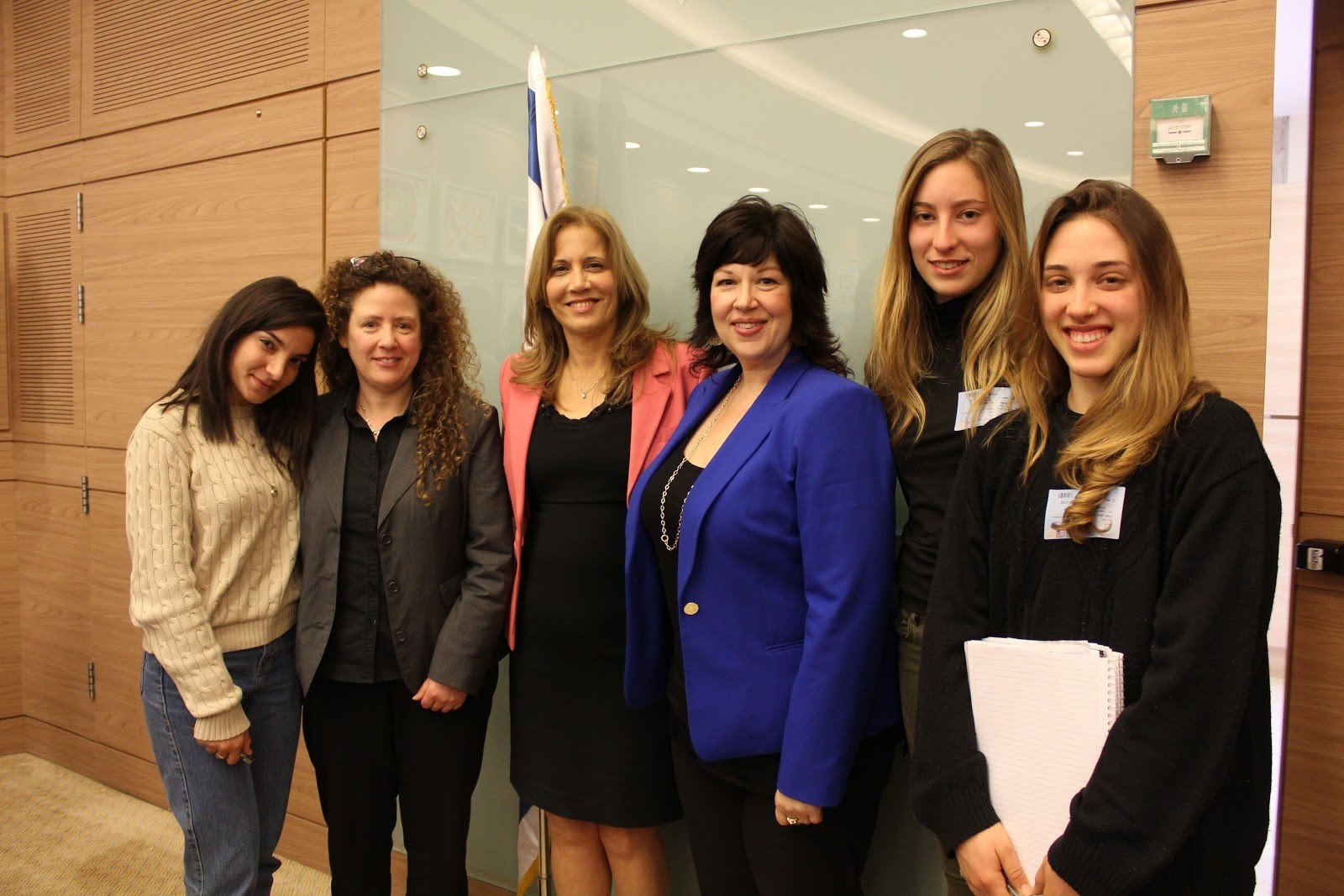
ANTI-PROSTITUTION LEGISLATION
JIJ has been a key player in promoting a legislative model based on Swedish legislation in the Israeli Knesset. The proposed law will prohibit the purchase of sexual services, placing legal responsibility on the buyer and not on the people enslaved in the industry. This bill also creates the social infrastructure that will support those individuals looking to escape their torment.
The criminalization of the purchase of sex services is key in diminishing this industry and liberating its victims. This is due to several compelling reasons. First, criminalization in other countries have proven to be more effective in curbing demand for prostitution, while administrative penalties, that is to issue fines, have proven to be less effective. Second, Israel is a strong democratic country that upholds the rule of law. This means that citizens are more likely to be deterred if a certain act is criminalized, as they will be held accountable. Third, the shame and social stigma of a criminal offence is a powerful deterrent. Fourth, the guilt and recklessness of purchasers of sex services is serious and warrants criminal punishment. Finally, criminalizing the purchase of sex services is crucial in demolishing the sex trafficking epidemic.
SUCCESS!
ISRAEL PASSES LAW BANNING THE BUYING OF SEX
31/12/2018
The Knesset unanimously passed a law forbidding the buying of sex, as Israel joins other countries that have taken this route in recent years such as Sweden and France.
According to the law, which passed in a 34-0 vote, anyone buying or attempting to buy sex would be fined 2,000 shekels ($534), which doubles for a second offense. For any further violations the offender could be prosecuted and the fine could reach 75,300 shekels.
The law goes into effect in a year and a half, to give the state a chance to create rehabilitation services for prostitutes. An inter-ministerial committee on reducing prostitution recommended that the government allocate tens of millions of shekels for this purpose.
In 2016, the Welfare Ministry estimated there were 11,420-12,730 sex workers driving the country’s NIS 1.2 billion ($318 million) industry. According to that report, 71 percent of prostitutes said they began sex work out of financial desperation, and 76% said they would leave the industry if they could.
Punishing prostitution clients was first introduced by Sweden in its 1999 Sex Purchase Act — since adopted by Norway, Iceland, Canada, France, and Northern Ireland — which requires consumers to pay a fine or face up to six months in jail.

A Crime or not a Crime?
By Carol Shi
Should Buyers of Sex Services Be Criminalized?
First Things First: Is Prostitution Bad?
To justify imposing some sort of sanction on purchasers of sex services, we must first acknowledge the dire dangers of prostitution. Prostitution is not merely ‘paid consent for sex’. People in financially vulnerable positions consent to being paid below the minimum wage, or to selling their organs to live. People consent to many things, especially if money is involved, in order to survive. Moreover, the health and safety concerns in prostitution are beyond comprehension – this includes sexual harassment, physical and emotional abuse, rape, and rape without a condom.[1] In the words of a prostitute, ‘What rape is to others is normal to us.’[2] Prostitutes have one of the highest HIV rates of any population studied, with rates as high as 93%.[3] Passing legislation to clamp down on this industry is absolutely crucial. The legalization of prostitution has proven to fail in achieving protection, freedom, or equality – the world is too cruel to allow that. The only way forward is enacting legislation to diminish the demand by penalizing purchasers.
The Knesset’s Dilemma
For the past 8 years, Israel’s government has been in the talks to adopt the ‘Nordic model’ criminalizing the purchaser but not the seller. However, Committee discussions have deviated to adopt a ‘soft’ criminal approach, which is to impose administrative penalties on purchasers, instead of criminalizing them.
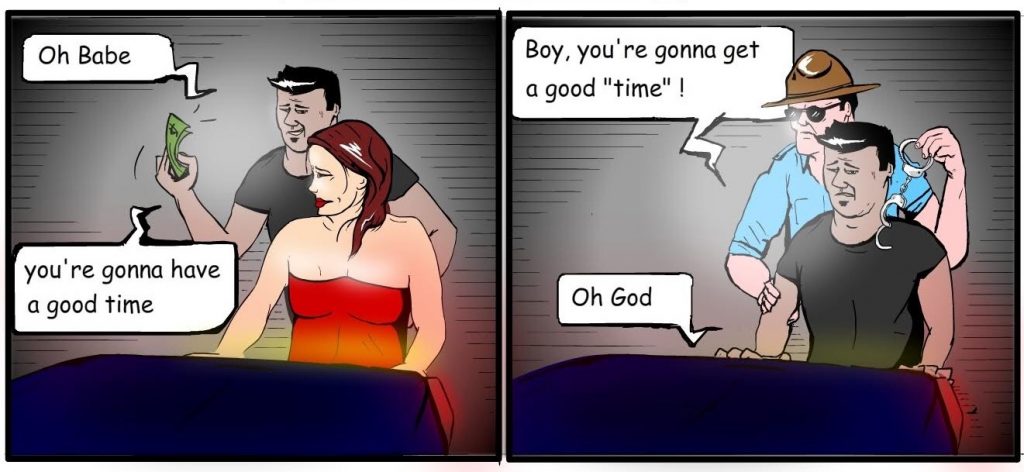
An administrative approach looks like this: A man is caught purchasing sex services from a male prostitute. The purchaser is first given a warning. Ignoring this warning and choosing to indulge in another momentary craving, he is caught a second time. This time, he is handed out a fine and is required to attend mandatory workshops on gender equality and how a body is not a commodity. He reluctantly pays the fine, a third of his monthly income in a top financial consulting firm in Tel Aviv. He attends the workshops while thinking of what to watch on Netflix when he goes home. Considering how the fine was insignificant in comparison to his high paying job, he decides to take a risk and try again. He doesn’t get caught. Perfect. He goes again, to his favorite male prostitute whose name he doesn’t even know. He’s caught a third time. Now, not only is he fined half of his monthly income, he’s given a criminal penalty. After four counts of purchasing prostitutes within the two months, he’s finally criminalized. This is what we call ‘scaled criminalization’,[4] while still falling underneath the administrative approach.
Would a criminal penalty on first count have deterred this man in the first place? The answer is likely yes. Criminalization is arguably the strongest deterrence for several key reasons.
The Rule of Law – What is it?
First, criminalization is most effective for countries that uphold the rule of law. The rule of law is that every person must be held accountable to the law, no matter how powerful or influential they are. This includes lawmakers, politicians, and judges. So, when an individual or governmental body contravenes the law, their actions will be assessed by the courts.
How is the rule of law relevant to deterring purchasers of sex services? Here’s how. Israel is a democratic state, and a core element of democracy is to uphold the rule of law.[5] In studies conducted on purchasers of sex services, countries with a stronger level of democracy, such as the United States and the United Kingdom, had a stronger reaction of deterrence to criminal penalties. Israel is ranked 29th in the world, and first in the Middle East in democracy. Thus, it is safe to say that prospective purchasers will certainly be deterred in Israel when criminal sanctions are imposed.
Shame Sucks
Second, there is a strong social stigma associated with criminal convictions. An administrative fine that can be easily paid off, leaving no criminal record or reputation taint. However, because a criminal conviction is ‘harder’ to receive, it more strongly implies guilt – hence, the social stigma.
People fear the social stigma of having a criminal offence being made known to family and friends. [6] In an interview article on Marie Claire, a client of an escort said, ‘Of course, my wife doesn’t know about any of this – if she ever found out she would leave me immediately. I couldn’t bear to lose her. Occasionally, I have nightmares about my teenage sons discovering what I do, which would probably be worse than my wife finding out. No one in the house would ever speak to me again.’[7]
Shame destroys reputation, which is particularly important for middle to upper-middle class men, who value reputation as it provides them with employment opportunities.[8] Shame also influences beliefs, as it affects what one would think is ‘harmless behavior’ to what is reserved for ‘bad types’.[9] Hence, those who consider themselves with decent morals, do not wish to associate themselves with the ‘bad types’. Thus, the shame element of criminalization is one of the highest form of deterrence, which an administrative penalty does not offer.
A Guilty Mind
Third, purchasers are very aware of the harms prostitutes face. A study was conducted on purchasers of sex services in Lebanon. A 21 year-old buyer, a student, stated that ‘of course’ no woman is happy to be a prostitute. He also expressed awareness of pimping and the mistreatment of women.[10] 80% of the buyers surveyed were aware of the poor socio-economic background of women who enter prostitution,[11] implying that they are aware of the vulnerable states of prostitutes. 82% of the buyers understood that women were under the control of a pimp, and 73% even had direct interaction with the pimp.[12] 61% were aware of the exploitative conditions the women were subject to in prostitution.[13] A 30 year-old buyer, again, married with children, stated ‘For some of them, circumstances force them … They talk a lot, but you don’t want to listen.’[14] Such indifference despite the awareness of the circumstances of vulnerable women should be more harshly punished than simply with administrative sanctions.
The Sex Trafficking Epidemic
Finally, criminalization is a stronger stance to abolishing sex trafficking. The fact is that the male demand for prostitution constitutes the root cause for the trafficking of persons.[15] Both prostitution and sex trafficking would not exist without men’s demand for sex services.[16] Essentially, if there is no demand, there will be no supply.
Forced labor and sex trafficking has been a prominent issue in Israel over the past decade. Recently, there has been an increase of women from Eastern Europe who came to Israel with a tourist visa to serve in the sex industry.[17] In the beginning of 2017, 72 women from Ukraine and Georgia were caught attempting to illegally enter Israel for prostitution purposes.[18] Typically, criminals contact women in Russia or Ukraine online, luring them to arrive in Israel to work as sex workers, promising them large sums of money.[19] However, even if an individual initially consents to participating in prostitution, this is completely eradicated if they are subsequently trapped in service through psychological manipulation or physical force, and becomes a victim of sex trafficking.[20] Thus, there is a pressing need to curb sex trafficking in Israel.
The theory that prostitution laws are related to tackling sex trafficking is not new. The economics behind it is simple: demand plays a vital role. Administrative sanctions reduce demand, but criminalization aims to nullify it. According to the Swedish National Criminal Police, the harsh penalties of the criminalization have been an obstacle to human traffickers and organized criminal groups.[21] Thus, criminalization of the purchase of sexual services destroys the incentive for criminal organizations to establish themselves, which will more effectively diminish sex trafficking in Israel.
Looking Ahead
Allow me to conclude with a final illustration: The purchase of sex services is now criminalized. A man with previous prostitute-buying habits decides he has a familiar urge today. As he strolls along a dark and dingy part of Tel Aviv where he used to visit regularly during surges of similar desire. He thinks about the new law recently imposed, and sees himself standing before a court, facing criminal charges. But what are the chances of him actually being caught and bring brought to court? He remembers, he lives in Israel, not Syria. He winces at the resource and time consuming aspects of being taken to court. Curse this upright democratic system that holds individuals accountable when contravening the law! Still, his urges are pressing and he catches a familiar face smirking at him from a corner. He advances towards this young girl, grinning at the thought of what he could do to her. He stops in his steps, considering how this young girl is likely only in this industry due to financially precarious reasons and is likely to be under the manipulation of a pimp. This young girl may or may not be have been trafficked. She may or may not be underage. But his urges call him, so he shrugs his thoughts off and continues towards this young girl. He begins conversation and reaches for his wallet. He pauses. He thinks about how if he is brought to court and faced with criminal charges, what will his family and colleagues say? What will his boss say? What will his high school friends talk about at their annual reunion? His girlfriend will certainly leave him. Word in the banking industry spreads quickly. He’ll have trouble getting a recommendation for job opportunities. This isn’t something he could pay and walk off from. This charge will taint him. He puts his wallet back in his pocket, apologizes to the young girl, and walks away.
[1] Silbert, H. Pines, A. Y. and Lynch, T. (1970). Substance Abuse and Prostitution. Journal of Psychoactive Drugs, 14, pp. 193-7.
[2] Farley, M. Lynne, J. and Cotton A. J. (2005). Prostitution in Vancouver: Violence and the Colonization of the First Nations Women. Transcult Psychiatry, 42(2), pp. 242-271.
[3] Ward, H. and Day, S. (2006). What Happens to Women Who Sell Sex? Report of a Unique Occupational Cohort. Sexually Transmitted Infections, 82(5), pp. 413-417.
[4] Haaretz. 2018. Israeli gov't committee opts for 'soft criminalization' of prostitute clients - Israel News - Haaretz.com . [ONLINE] Available at: https://www.haaretz.com/israel-news/israeli-gov-t-committee-opts-for-soft-criminalization-of-prostitute-clients-1.5729971. [Accessed 15 March 2018].
[5] H.C. 910/86 Ressler v. Minister of Defence, [32].
[6] Government Offices of Sweden (2010). Evaluation of the Prohibition of the Purchase of Sexual Services. Swedish Parliament, p. 38.
[7] Thompson, A. (2016). Why Do Men Pay for Sex?. Marie Claire UK. [online] Available at: http://www.marieclaire.co.uk/reports/sex-workers-11125 [Accessed 15 Mar. 2018].
[8] Tang, X. (2013) Shame: A Different Criminal Law Proposal for Bullies. Cleveland State Law Review, 61(3), pp. 649-663.
[9] Ibid.
[10] KAFA (enough) Violence and Exploitation (2014). Exploring the Demand for Prostitution: What Male Buyers Say About Their Motives, Practices, and Perception. Ghada Jabbour, pp. 25.
[11] Ibid.
[12] Ibid, pp. 26.
[13] Ibid, pp. 27.
[14] Ibid, pp. 26.
[15] MacKinnon, C. A. (2011). Trafficking, Prostitution, and Inequality. Harvard Civil Rights – Civil Liberties Law Review, 46(2), pp. 271-309.
[16] Joy Ngozi Ezeilo, Report of the Special Rapporteur on trafficking in persons, especially women and children, A/HRC/23/48, United Nations, 18 March 2013.
[17] Hotline for Refugees and Migrants (2015). Trafficking in Persons in Israel. Tel Aviv, pp. 6.
[18] Yaron, L. (2017). Number of Women Brought to Israel for Prostitution on the Rise - and the Police Are Struggling to Deal With It. Haaretz. [online] Available at: http://www.haaretz.com/misc/haaretzcomsmartphoneapp/.premium-women-brought-to-israel-for-prostitution-on-increase-1.5481624 [Accessed 15 Mar. 2018].
[19] Ibid.
[20] U.S. Department of State (2017). Trafficking in Persons Report, pp. 17.
[21] Government Offices of Sweden (2010). Evaluation of the Prohibition of the Purchase of Sexual Services. Swedish Parliament, pp. 37.

JESSICA MEMORIAL SERVICE
In August 2016, Jessica, a slave of the sex-industry, took her life in room 5 of the brothel on 98 HaYarkon Street, Tel Aviv. She was only 36 years old. She died where she had lived and had been abused by dozens of men every day for more than 15 years. Jessica is only one of the hundreds of women who have died as a result of a prostitution in Israel in the last 5 years.
On August 18th, 2016, the first anniversary of Jessica’s death, a memorial assembly was held at Kikar Atarim Square in Tel Aviv; this assembly was dedicated to her memory and the memory of the victims of prostitution in Israel. It was well attended by the public and member of Knesset Shuli Mualem. Every year we continue to commemorate the loss of lives of women in the sex trade.
Want to know when is the next memorial event? Like us on Facebook to get our activity updates – Click here.

ANTI-PROSTITUTION EDUCATIONAL PROGRAM
Early on, we realized that educating society and changing public discourse about prostitution will be key in bringing true change to Israel. We have been successful in presenting our message on Israeli television and have created a short film titled “Zona” that exposes the Israeli sex trade, worked with young Israelis to educate them on the topic and conducted public screening of movies related to the industry.

ANTI-PROSTITUTION AWARENESS CAMPAIGNS
Israeli public opinion regarding the damaging effect of prostitution on society as a whole varies greatly. Much of the general public is unaware of the realities of the sex industry. We tackle these issues with smart online campaigns, targeting individuals across all internet platforms – social media, YouTube and banner advertisements as well as promoted articles.
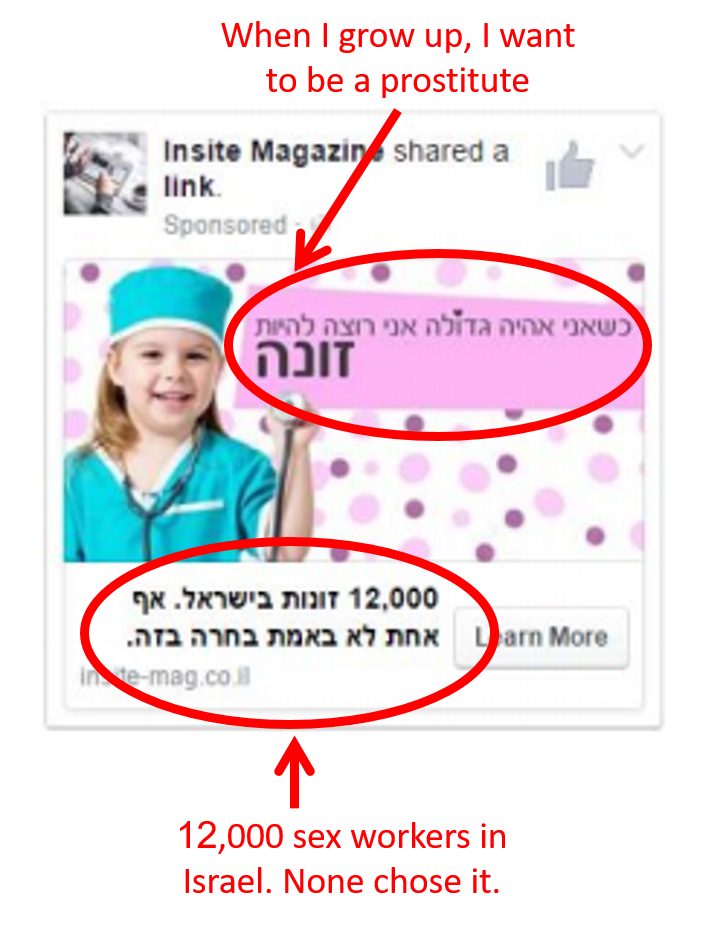
A massive online campaign targeting misconceptions of the prostitution industry, consisting of 3 articles and additional creative (Banners, Graphics)
The campaign reached more than 260K unique impressions, tens of thousands read the articles with great performance (Engagement, Read time etc).
The campaigns are very successful and have led to the creation of a forum for honest discussion.