

A Clean Slate Isn’t Charity, It’s Public Policy
https://www.youtube.com/watch?v=YclR4ZvD9Ng
There’s a moment in every rehabilitation story that doesn’t make it into the inspirational quotes. It’s not the first day sober, or the first job interview, or even the first night of safe sleep. It’s the moment a person realizes the past hasn’t just hurt them, it’s still billing them.
For one woman, a survivor of the sex trade, that bill came in the form of 77 fines totaling about 100,000 shekels. Not a “mistake,” not a single misstep—an accumulated record of survival under conditions most of us are lucky never to face. A teenager subjected to severe sexual assault. A descent into prostitution, drug dependence, and life on the street. And then, against the odds, a decision to climb out.
She did what we demand people do when we speak about “responsibility.” She sought help. With the support of a mobile clinic operated through the Haifa Health Bureau, she got clean. She started looking for work. She began the slow, grinding work of rebuilding a life.
And then she hit a wall made of paperwork.
A six-figure debt doesn’t just punish. It paralyzes. It restricts movement, employment, stability—everything rehabilitation requires. It becomes an anchor disguised as accountability: a millstone around the neck of someone trying to swim to shore.
That is why the decision by Israel’s Enforcement and Collection Authority to erase the full amount is more than a compassionate gesture. It’s a statement—rare, and therefore revealing—about what real rehabilitation actually needs.
Attorney Tamar Stachel-Devor of the Jerusalem Institute of Justice, which provides free legal aid to marginalized populations, described the case as exceptional. It was referred to JIJ's free legal aid department by social worker Noga Shiloh from the mobile clinic, and it succeeded because the system was persuaded to see what the numbers usually hide: this wasn’t a “serial offender.” This was a person who had been failed repeatedly—and was still trying.
We should pause on that word: exceptional.
Why should it be exceptional to recognize that fines piled on vulnerable people often function less like deterrence and more like lifelong barriers? Why should the state need a rare, hard-won intervention to do what’s plainly rational: remove obstacles that make recovery less likely, not more?
Because here’s the uncomfortable truth: debt is one of the quietest ways we keep people trapped. It is the bureaucracy’s version of a closed door. And when it’s applied to survivors of exploitation, it starts to resemble a second punishment—this time for daring to survive in the first place.
Canceling 100,000 shekels doesn’t erase the harm she endured. But it does something almost as important: it restores the possibility of a future that isn’t permanently hostage to her past.
“It gives her hope,” said her attorney, Tamar.
Hope isn’t a slogan. It’s infrastructure. And sometimes, the most effective rehabilitation program begins with the simplest policy decision of all: stop charging people for their trauma.
Originally published in Ynet

A Mission to Secure Justice
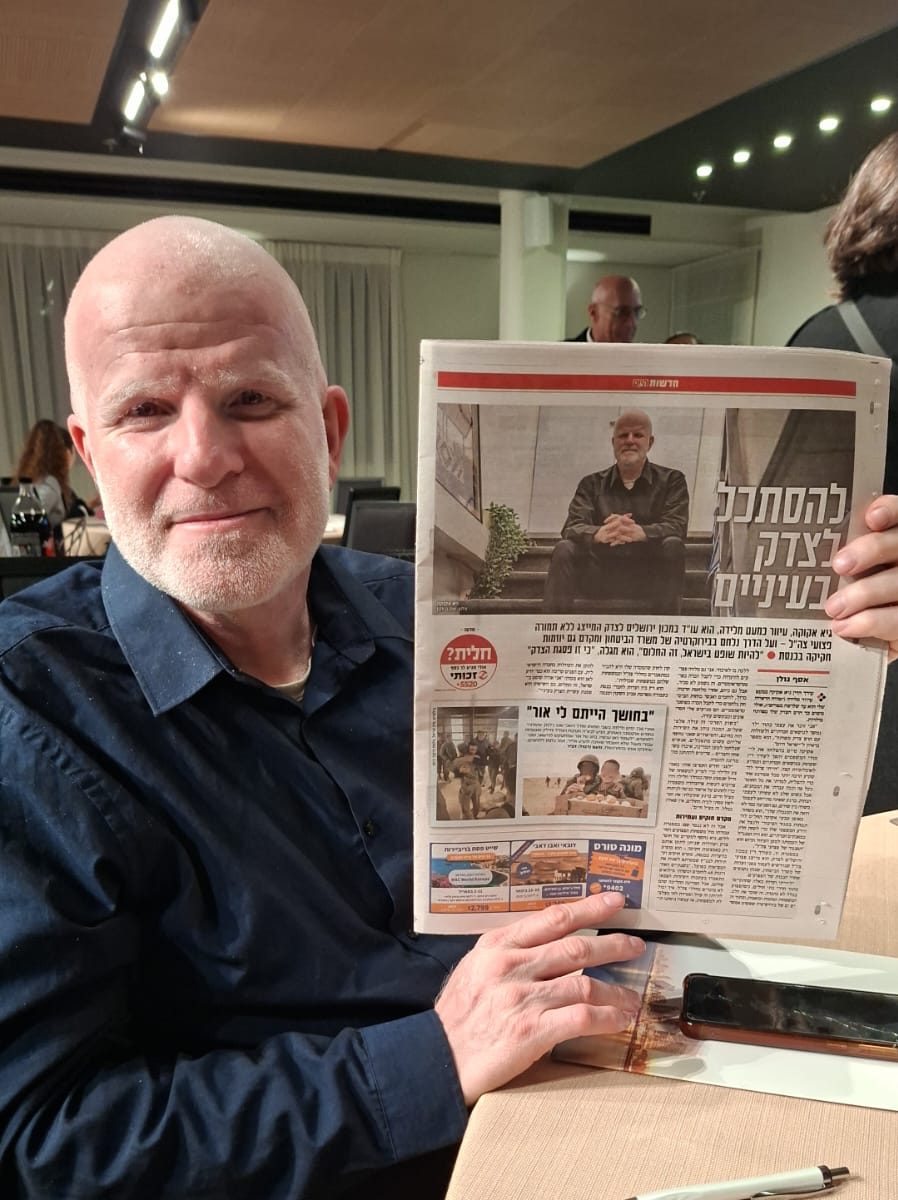
The Blind Advocate: Guy Akuka’s Mission to Secure Justice for Israel's Wounded
Guy Akuka, nearly blind since birth, does not see the world like most people. With a visual range of only three meters, he has spent his life sharpening a different kind of vision: a profound sense of social justice. Today, as a senior attorney for the Jerusalem Institute of Justice (JIJ), Akuka has become a lifeline for IDF veterans, providing expert legal representation to those navigating the grueling bureaucracy of the Ministry of Defense.
Legal Advocacy
While many lawyers charge thousands for specialized military advocacy, Akuka provides his services pro bono through JIJ. His mission is to ensure that no soldier is left behind by the system they served.
"I remember myself as a child being drawn to social issues and injustices," he told Israel Hayom. After overcoming significant hurdles to memorize his law school curriculum and pass the bar, he chose to leverage his degree for the public good. Now, under the banner of JIJ, he has become known as the "Defender of the Wounded."
Navigating the "Sea of Bureaucracy"
Representing veterans, Akuka enters the rooms where most dare not go. He accompanies families to medical committees—sometimes held in hospital rooms while the soldier is still unconscious—to determine disability percentages.
"It’s heartbreaking," Akuka says. "Families are in shock and pain, and amidst that, there is a sea of bureaucracy you can easily drown in."
His work has become even more critical following the Iron Swords War. Despite the national consensus on the sacrifice of soldiers, many fighters still struggle to receive recognition for PTSD. "They come to me helpless," Akuka explains. "The Jerusalem Institute of Justice provides this service for free because those who fought for the state shouldn't have to beg the state for recognition."
From the Hospital Room to the Knesset
Akuka’s work with JIJ isn't limited to individual cases; he is a force in the halls of power. He frequently appears before Knesset committees to draft legislation and file petitions to the High Court of Justice to fix systemic failures.
His current battle is one of his most painful: The Recognition of the Fallen.
"In the last two years, 68 soldiers and reservists committed suicide as a result of their service, yet the state does not recognize them as fallen soldiers. It’s a slap in the face to the families. Through the Institute, we have drafted a legal amendment to ensure they are recognized and their families are embraced as bereaved families."
The Ultimate Dream
Despite the grueling hours and the emotional toll of his work with JIJ, Akuka is looking toward the future. His ultimate goal is to move from the podium to the bench.
"I will be a judge in Israel," he declares. "That is the dream. To me, the judicial seat is the pinnacle of doing justice."
Navigating Rehabilitation Benefits: Israel’s Ministry of Defense
How to Properly Prepare Your Claim to the Rehabilitation Department of Israel’s Ministry of Defense
When applying to the Rehabilitation Department of Israel’s Ministry of Defense, the first steps are critical. Even a small mistake at the outset can jeopardize recognition of your injury — and with it, access to treatment, rehabilitation, and compensation.
At the Jerusalem Institute of Justice, our legal team has extensive experience guiding veterans, reservists, and their families through this complex process. Below, we outline the key principles every applicant should know.
1. Prepare Your Medical Documentation
Israeli law requires anyone injured during military service or reserve duty to provide up-to-date medical documentation that clearly describes the condition.
For psychological injuries such as post-traumatic stress disorder (PTSD), this means obtaining an official diagnosis from a psychiatrist that explicitly states PTSD as a recognized medical condition. Without this documentation, the recognition process cannot even begin.
2. Injury Recognition – The Foundation of the Process
The first stage of filing a claim is injury recognition. At this stage, the Ministry of Defense decides whether your injury will be acknowledged as service-related.
If recognition is denied, the case will not advance to the medical board, blocking any chance of further evaluation. Because of this, precision and legal accuracy at this stage are essential.
3. Preparing for a PTSD Evaluation
PTSD must be recognized as an independent medical condition under Israeli law. Not every complaint will result in recognition.
Your symptoms must be presented in line with clinical diagnostic criteria. Knowing which symptoms matter, and how to describe them, is critical. Consulting both a lawyer and a PTSD specialist can make the difference between approval and rejection.
4. Professional Guidance Is the Key to Success
Every Israeli citizen has the right to apply for rehabilitation if the injury is service-related. However, the outcome depends largely on how the case is presented.
At JIJ, our lawyers provide full guidance at every step — from gathering medical records to preparing for the medical board. Our mission is to ensure your claim is submitted with clarity, accuracy, and confidence.
Conclusion
The recognition process is as much legal as it is medical. Proper preparation and professional guidance often determine whether a claim succeeds or fails.
At JIJ, we provide this legal support completely free of charge, ensuring that every soldier and veteran can access the rehabilitation and justice they deserve.
Navigating Rehabilitation Benefits: Israel’s Ministry of Defense
How to Properly Prepare Your Claim to the Rehabilitation Department of Israel’s Ministry of Defense
When applying to the Rehabilitation Department of Israel’s Ministry of Defense, the first steps are critical. Even a small mistake at the outset can jeopardize recognition of your injury — and with it, access to treatment, rehabilitation, and compensation.
At the Jerusalem Institute of Justice, our legal team has extensive experience guiding veterans, reservists, and their families through this complex process. Below, we outline the key principles every applicant should know.
1. Prepare Your Medical Documentation
Israeli law requires anyone injured during military service or reserve duty to provide up-to-date medical documentation that clearly describes the condition.
For psychological injuries such as post-traumatic stress disorder (PTSD), this means obtaining an official diagnosis from a psychiatrist that explicitly states PTSD as a recognized medical condition. Without this documentation, the recognition process cannot even begin.
2. Injury Recognition – The Foundation of the Process
The first stage of filing a claim is injury recognition. At this stage, the Ministry of Defense decides whether your injury will be acknowledged as service-related.
If recognition is denied, the case will not advance to the medical board, blocking any chance of further evaluation. Because of this, precision and legal accuracy at this stage are essential.
3. Preparing for a PTSD Evaluation
PTSD must be recognized as an independent medical condition under Israeli law. Not every complaint will result in recognition.
Your symptoms must be presented in line with clinical diagnostic criteria. Knowing which symptoms matter, and how to describe them, is critical. Consulting both a lawyer and a PTSD specialist can make the difference between approval and rejection.
4. Professional Guidance Is the Key to Success
Every Israeli citizen has the right to apply for rehabilitation if the injury is service-related. However, the outcome depends largely on how the case is presented.
At JIJ, our lawyers provide full guidance at every step — from gathering medical records to preparing for the medical board. Our mission is to ensure your claim is submitted with clarity, accuracy, and confidence.
Conclusion
The recognition process is as much legal as it is medical. Proper preparation and professional guidance often determine whether a claim succeeds or fails.
At JIJ, we provide this legal support completely free of charge, ensuring that every soldier and veteran can access the rehabilitation and justice they deserve.
Fighting for Families of Children with Severe Disabilities
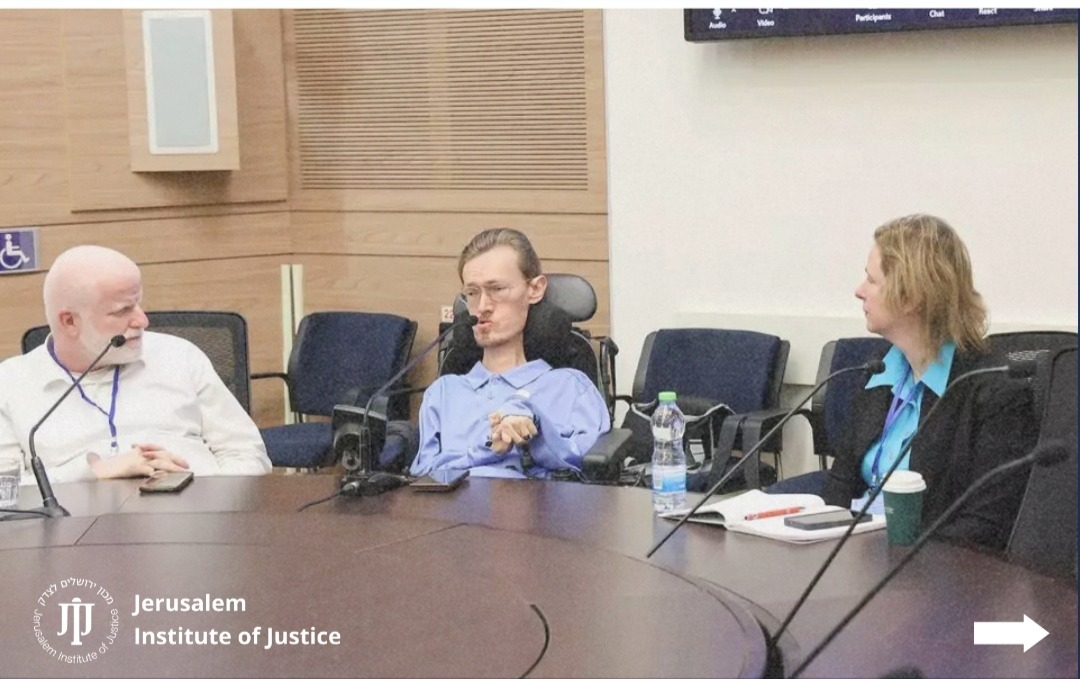
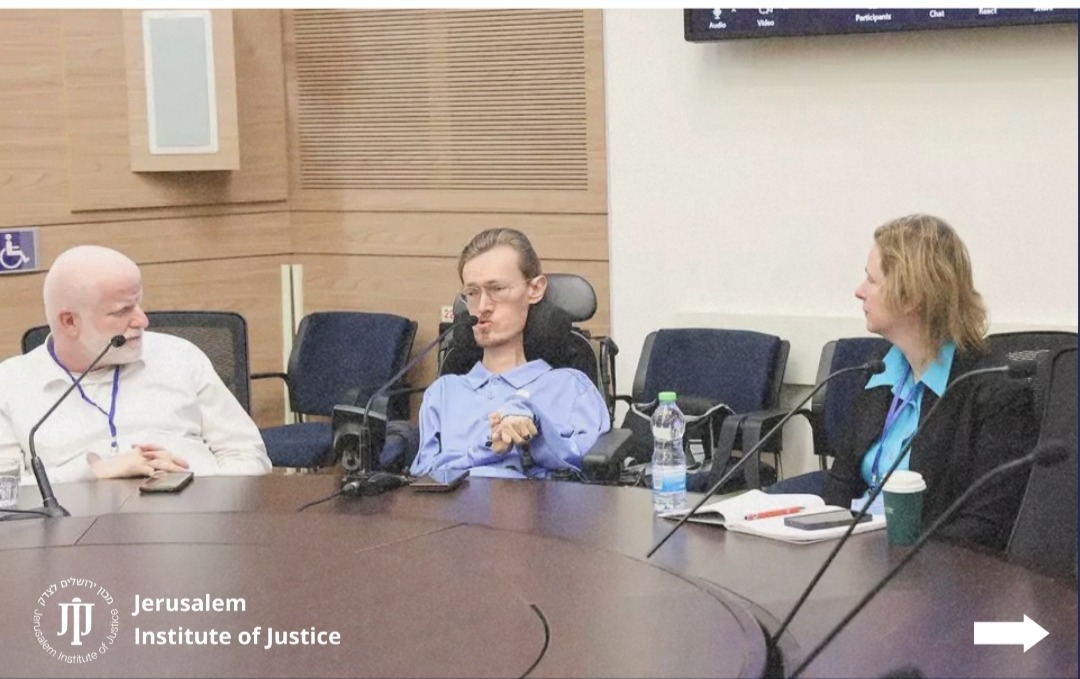
One of Israel’s most urgent social crises: the struggles facing families of children with severe disabilities. JIJ attorneys recently took part in a special Knesset committee addressing this issue. The discussion, chaired by MK Hava Eti Atia, revealed the depth of the problem—parents left without essential state support, battling every day to provide around-the-clock care.
Testimonies from parents were heartbreaking. Many spoke of foreign caregivers suddenly resigning, stipends that do not cover even basic needs, and a complete lack of a backup system when help disappears overnight. Despite years of promised reforms, families continue to face impossible choices, carrying alone the weight of responsibility that should be shared by society and the state.
JIJ’s Legal Aid Department is now preparing a petition to Israel’s High Court of Justice, demanding structural change. Our goal is clear: to secure lasting solutions so that no family raising a child with severe disabilities is left abandoned.
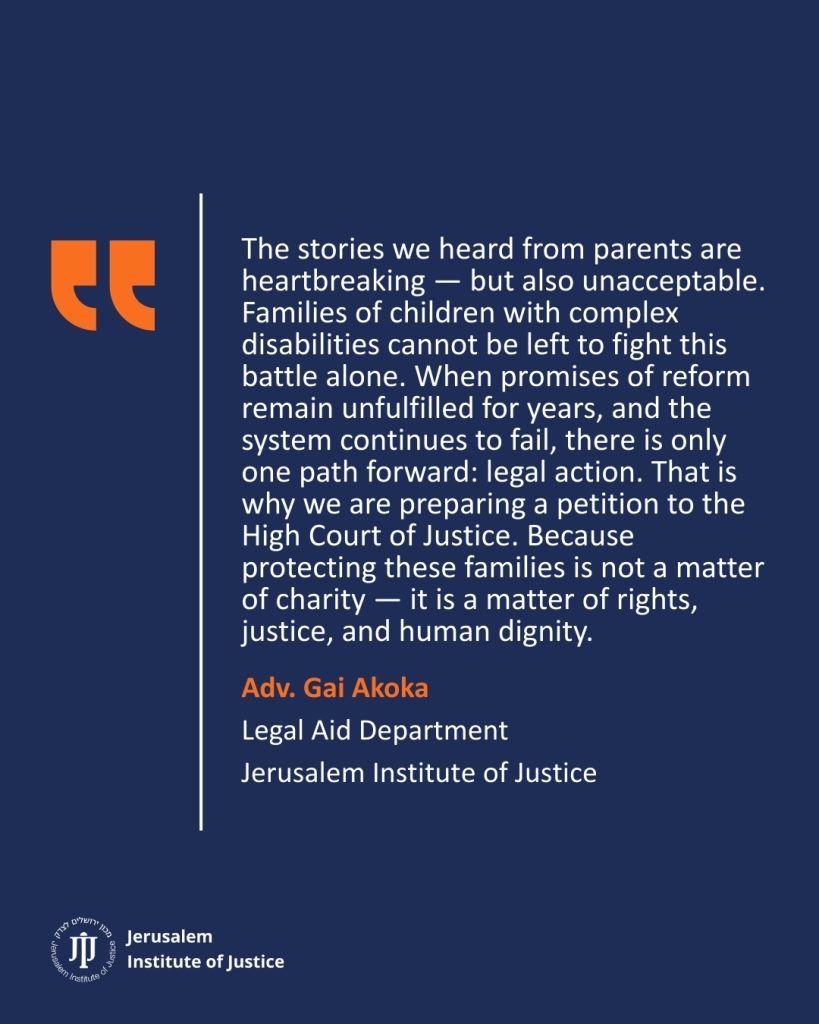
As Adv. Gai Akoka of JIJ emphasized: “Protecting these families is not a matter of charity — it is a matter of rights, justice, and human dignity.”
Through our legal advocacy, we aim not only to highlight this crisis but to ensure that the voices of these families lead to real reform. Justice cannot wait.
Fighting for Families of Children with Severe Disabilities
One of Israel’s most urgent social crises: the struggles facing families of children with severe disabilities. JIJ attorneys recently took part in a special Knesset committee addressing this issue. The discussion, chaired by MK Hava Eti Atia, revealed the depth of the problem—parents left without essential state support, battling every day to provide around-the-clock care.
Testimonies from parents were heartbreaking. Many spoke of foreign caregivers suddenly resigning, stipends that do not cover even basic needs, and a complete lack of a backup system when help disappears overnight. Despite years of promised reforms, families continue to face impossible choices, carrying alone the weight of responsibility that should be shared by society and the state.
JIJ’s Legal Aid Department is now preparing a petition to Israel’s High Court of Justice, demanding structural change. Our goal is clear: to secure lasting solutions so that no family raising a child with severe disabilities is left abandoned.
As Adv. Gai Akoka of JIJ emphasized: “Protecting these families is not a matter of charity — it is a matter of rights, justice, and human dignity.”
Through our legal advocacy, we aim not only to highlight this crisis but to ensure that the voices of these families lead to real reform. Justice cannot wait.
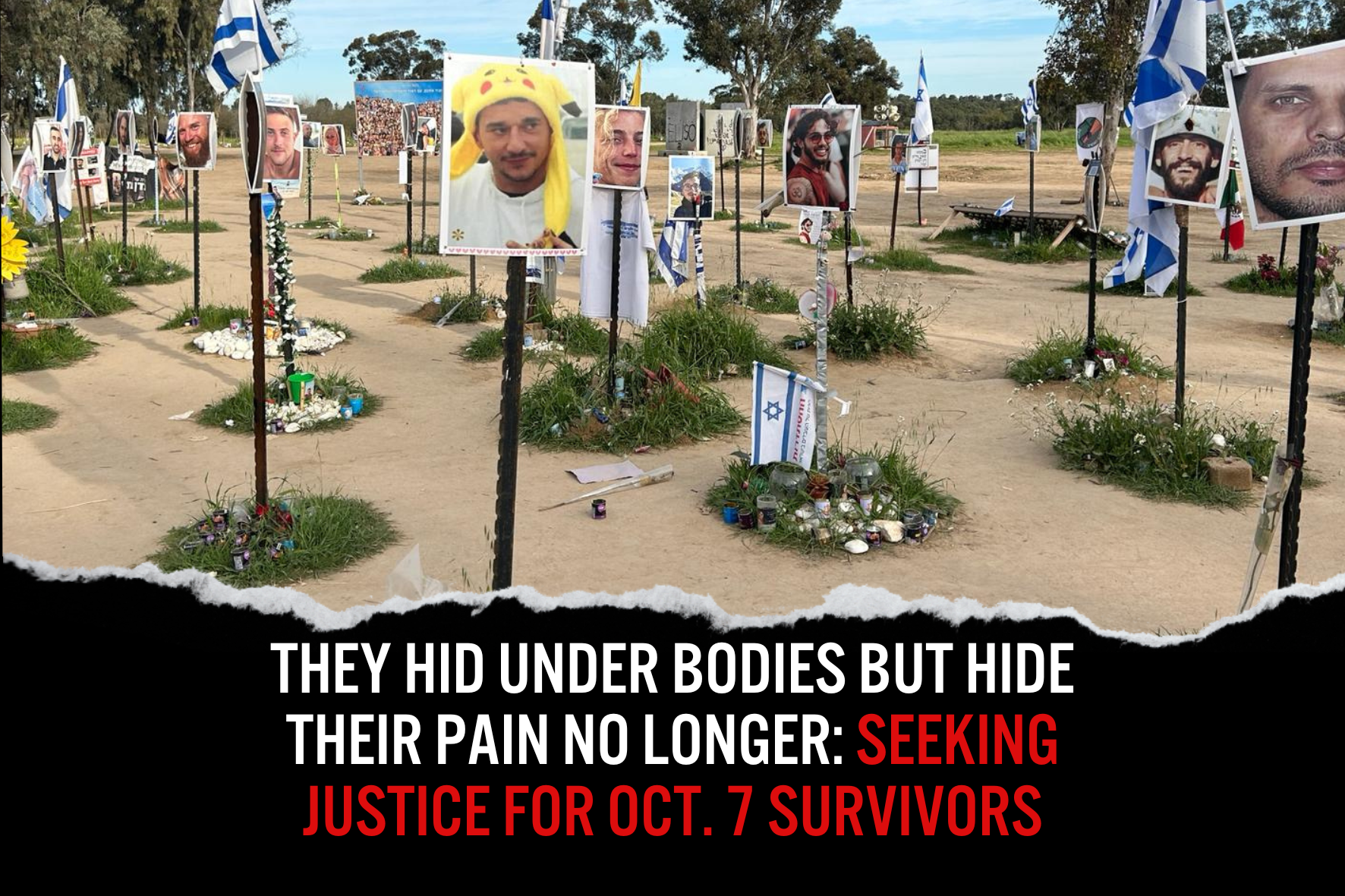
Seeking justice for Oct. 7 survivors
‘I can’t explain how heavy a body becomes when it is dead,” she shared with preternatural calm. It was my first meeting with Yuval Raphael, a 23-year-old with a clear sense of mission, and an undeniable presence.
Despite the pain she carried, her motivation and focus were obvious, especially in her expressive eyes. As she spoke, everyone in the room was captivated by her unwavering voice, which hinted at both readiness and a profound sense of purpose.
Yuval survived the Supernova massacre by hiding in the far corner of the public bomb shelter just outside of Kibbutz Be’eri. We met in February. Four months had passed since October 7 and she was finally ready to tell her story to a team of lawyers and human rights advocates.
For the past seven months, the media spotlight has intensely highlighted the suffering of hostages and victims of Hamas’s sexual violence. However, it’s vital to acknowledge the thousands of survivors who are also struggling, and deserve recognition and justice. From the onset of this conflict, the Jerusalem Institute of Justice (JIJ) has dedicated itself to supporting these Israelis, focusing on their recovery and restitution as a crucial part of our nation’s path forward. Their stories and their healing are fundamental to the fabric of our community.
Approximately 50 festival attendees sought shelter with Yuval, thinking that the small concrete structure would provide safety from the constant barrage of rockets. Instead, this small shelter became their tomb, as the terrorists strafed the inside with bullets at regular intervals and threw grenades. During their first infiltration, Yuval became trapped under the dead body of another young woman. There she would stay for 8 hours, playing dead.
“Every time we [those who were still alive] raised our heads, we couldn’t understand why there were less and less people in the bomb shelter. We thought the terrorists were taking the dead bodies. We didn’t realize it was because of the grenades, blowing up their bodies.” Of the 50 people who sought shelter with Yuval, only 12 survived long enough to be rescued – not by the IDF, but by the father of Nitzan, another young woman hiding in the bomb shelter.
IN MARCH, Yuval joined the JIJ legal team at the UN Headquarters in Geneva, where she engaged extensively with a broad array of ambassadors from around the world, testifying before diplomats of various nations. As she told her story yet again, this time before a distinguished audience, I was haunted by the parallels to my own experience in Gaza in the summer of 2001.
I was 19 years old, stationed in Gaza as a Givati combat soldier. This was well before Israel’s 2005 Disengagement, a time when our military bases, strung like vigilant sentinels along the Gazan border, were the linchpin of security. These outposts were more than just strategic positions: They were our frontline defense – critical for overseeing border crossings, curtailing the flow of arms, and swiftly countering threats.
On a hot summer night, two terrorists penetrated our base, killing my friend Tzachi, along with my commander and his medic. I was 300 meters away and heard about the attack on the radio. My friends who witnessed their murder directly stood inside the first circle of trauma and have struggled ever since to reach the normal milestones of adulthood.
My first brush with Hamas came 23 years ago when I was 19, two weeks before the 9/11 attacks in America. Since then, Hamas’s leaders have amassed a combined net worth of $11 billion. They came for Yuval when she was 23, leaving shrapnel under her skin, and a mind full of nightmares. Hamas leaders have vowed to do this again. As Hamas spokesperson Ghazi Hamad stated, “We must teach Israel a lesson, and we will do it again and again. The Al-Aqsa flood [October 7] is just the first time, and there will be a second, a third, a fourth.”
THE HARROWING experiences recounted by survivors like Yuval Raphael underscore the urgent need for accountability and justice. Initiatives such as legal action against the perpetrators of Hamas are not only crucial for providing closure and restitution to the survivors, but also for upholding the principles of international law.
At a time when the International Court of Justice draws a skewed moral equivalency between an unprovoked slaughter initiated by the leaders of a terrorist organization and the defensive actions of a democratic country, and when the chief prosecutor of the International Criminal Court announces plans to issue arrest warrants against Israeli leaders despite Israel’s strong and independent legal system, it is even more crucial that the voices of the victims are recognized and heard.
By holding accountable those responsible for heinous acts of terrorism, we not only honor the resilience of the survivors, but also send a clear message that such atrocities will not be tolerated. It is imperative that we support efforts to pursue justice, whether through domestic legal mechanisms or international institutions like the International Criminal Court in The Hague, in order to break the cycle of violence and build a safer, more just world for future generations.
The writer serves as the director of international law and public diplomacy at the Jerusalem Institute of Justice, an Israeli organization with special consultative status at the United Nations. The institute has represented survivors of terrorism, human trafficking and discrimination for 20 years. Before attending law school and joining the Israel Bar Association, the writer served as a combat soldier in the IDF.
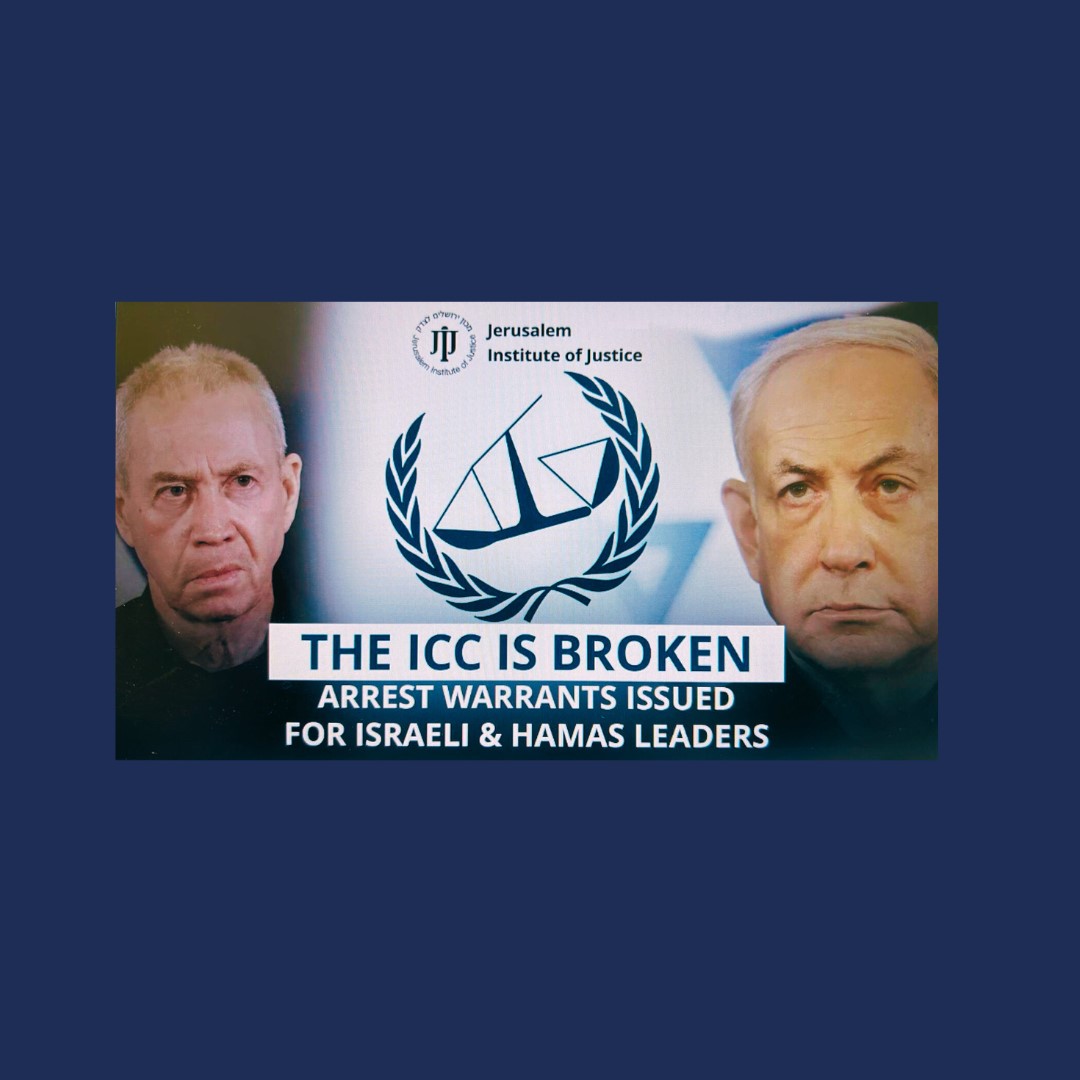
Response to ICC Prosecutor’s Request for Arrest Warrants for Hamas & Israeli Leaders
The Jerusalem Institute of Justice welcomes the ICC Prosecutor’s request for the issuance of
arrest warrants for Hamas’ leaders Yahya Sinwar, Mohamed Deif, and Ismail Haniyeh. We
are disappointed that Hamas’ leaders were not charged with the crime of genocide, despite
constantly expressing their fervent intent to exterminate all Israeli nationals and Jews, and
live streaming the evidence of how they brought this intent to action on October 7th.
We are appalled that the Prosecutor intentionally delayed this maneuver, seeking to pair it
with a request for arrest warrants for Israeli leaders Benjamin Netanyahu and Yoav Gallant.
If the Pre-Trial Chamber approves of this linkage, it will draw a false moral equivalence
between the parties to this conflict.
Since its establishment, the ICC has refrained from pursuing democratically elected officials
whose armies are engaged in wars of self-defense. It is fundamentally reckless to break from
this precedent for the first time when the democratic officials in question are the leaders of
the world’s only Jewish state, and at a time of rising global antisemitism. This development
will only serve to validate the claims of Hamas’ sympathizers across the globe, inspiring
more frequent and more violent attacks on Jewish people across the Diaspora.
The State of Israel has demonstrated that it is able and willing to investigate its own soldiers
and officials for any alleged violations of international law, including international
humanitarian law. Consequently, and in accordance with the principle of complementarity,
one of the most basic principles of the ICC, the Court should refrain from interfering.
The Prosecutor’s case against Israel rests on charges of “starvation” in seeming ignorance of
the fact that unprecedented levels of aid have entered Gaza since October 7th, including
400,000 tons of donated food.
Jerusalem Institute of Justice has sought the arrest of Hamas’ leaders through repeated
requests to the ICC’s Office of the Prosecutor since 2017, highlighting their systematic use of
torture, indoctrination of children, recruitment of child soldiers, and the abuse of civilians as
human shields. If they had been arrested for those crimes years ago, perhaps October 7th
never would have happened.
Despite today’s disappointing developments, we remain committed to pursuing justice for the
survivors and victims of Hamas’ atrocities, including through continued engagement with the
Office of the Prosecutor.
Committing to Palestinian rights (?)
In 2012, the United Nations (UN) granted the Palestinians non-member observer State status. Following this decision, the “State of Palestine” – as officially named in the UN – ratified several international treaties, supposedly to commit itself to comply with human rights and other international legal obligations. One such treaty is the International Covenant on Civil and Political Rights (ICCPR), which obligates those countries that have joined the treaty to respect and ensure the protection of fundamental human rights, such as the right to life, equality, and freedom of thought.
But how does one ensure that countries actually comply with their obligations and protect the rights of those under their jurisdiction? This is, in fact, the role of the UN Human Rights Committee, which receives reports from the State parties on the measures they have adopted in relation to the rights contained in the ICCPR. For this purpose, the Committee receives both the report of the state in question as well as documents submitted by organizations that wish to provide more information on the state’s compliance with the ICCPR. After analyzing the information received, the Committee issues recommendations to the state.
This month, it was the State of Palestine’s turn to attend and be examined by the Committee. Last week, the Committee issued its recommendations to the State of Palestine, also expressing its concerns on the numerous human rights violations that appear to be committed by Palestinian authorities.
Among the several human rights abuses highlighted in the Committee’s concluding observations, there is one that has not received enough attention from the international community: detainees are often subjected to torture by Palestinian security forces and intelligence services. The Committee has expressed its concerns “about consistent reports indicating that persons in custody, including in the facilities under the authority of the security forces and intelligence services, are subjected to torture or ill-treatment.”
What is even more alarming is the fact that many of the persons subjected to torture are actually children. The Palestinian Independent Commission for Human Rights, the national human rights institution established by Presidential Decree and has the function of an ombudsman, informed the UN Committee Against Torture that between 2016 and 2021, they received 4,279 claims of torture and other forms of cruel, inhuman, and degrading treatment, with 12% of them filed by children (Shadow Report of the Independent Commission for Human Rights on the initial report submitted by the State of Palestine on the implementation of the Convention against Torture, 2022).
The report submitted by the Jerusalem Institute of Justice (JIJ) also provides detailed information on the many cases of torture committed by the Palestinian authorities. Most individuals subjected to torture and inhumane treatment are those who exercise their fundamental rights by participating in peaceful protests or publicly voicing criticism against the authorities and those who are accused of “collaborating with Israel.” As pointed out by JIJ’s report, “these abuses and acts of torture have occurred across various periods, underscoring the fact that they are not isolated incidents.”
What is also concerning is the culture of impunity sustained by the Palestinian authorities. As pointed out by the Committee, only a few complaints of torture are investigated, and almost none of the investigations have resulted in the prosecution and conviction of the perpetrators. The Committee has therefore called upon the State of Palestine to “investigate promptly, thoroughly and effectively all cases of torture and ill-treatment in all places of deprivation of liberty, to ensure that perpetrators are prosecuted and, if convicted, punished with penalties commensurate with the gravity of the offenses and that victims of such violations receive full reparation and are provided with redress.”
But how does all this effort by the Committee and organizations truly translate into real-life change? Does this have any actual impact on those individuals whose rights are being violated by the Palestinian Authorities? Moreover, the Committee is one of many bodies in the UN that are responsible to oversee and ensure the respect of human rights. Even several bodies were specifically established regarding the rights of the Palestinians, so shouldn’t these institutions also focus on the human rights violations being committed by the Palestinian authorities?
The status of the Palestinians remains a contentious topic, subject to ongoing debate. Palestinian authorities have sought state recognition, which the UN eventually granted. However, this recognition must not be mere rhetoric or a political instrument; it holds the potential to make a meaningful difference. Regrettably, the UN has sometimes been manipulated as a platform for discussions that, under the guise of safeguarding human rights, mask hidden agendas and overlook real abuses.
The UN Human Rights Committee, composed of independent experts rather than states, plays a crucial role in safeguarding the rights of every individual. As a human rights advocate, I remain optimistic that this framework can lead to positive outcomes, hoping that even the State of Palestine, in its pursuit of recognition, will fulfill its obligations and uphold human rights.
By Carolina Grimberg Golijov, JIJ's Human Rights, Law and Research Officer.
Committing to Palestinian rights (?)
In 2012, the United Nations (UN) granted the Palestinians non-member observer State status. Following this decision, the “State of Palestine” – as officially named in the UN – ratified several international treaties, supposedly to commit itself to comply with human rights and other international legal obligations. One such treaty is the International Covenant on Civil and Political Rights (ICCPR), which obligates those countries that have joined the treaty to respect and ensure the protection of fundamental human rights, such as the right to life, equality, and freedom of thought.
But how does one ensure that countries actually comply with their obligations and protect the rights of those under their jurisdiction? This is, in fact, the role of the UN Human Rights Committee, which receives reports from the State parties on the measures they have adopted in relation to the rights contained in the ICCPR. For this purpose, the Committee receives both the report of the state in question as well as documents submitted by organizations that wish to provide more information on the state’s compliance with the ICCPR. After analyzing the information received, the Committee issues recommendations to the state.
This month, it was the State of Palestine’s turn to attend and be examined by the Committee. Last week, the Committee issued its recommendations to the State of Palestine, also expressing its concerns on the numerous human rights violations that appear to be committed by Palestinian authorities.
Among the several human rights abuses highlighted in the Committee’s concluding observations, there is one that has not received enough attention from the international community: detainees are often subjected to torture by Palestinian security forces and intelligence services. The Committee has expressed its concerns “about consistent reports indicating that persons in custody, including in the facilities under the authority of the security forces and intelligence services, are subjected to torture or ill-treatment.”
What is even more alarming is the fact that many of the persons subjected to torture are actually children. The Palestinian Independent Commission for Human Rights, the national human rights institution established by Presidential Decree and has the function of an ombudsman, informed the UN Committee Against Torture that between 2016 and 2021, they received 4,279 claims of torture and other forms of cruel, inhuman, and degrading treatment, with 12% of them filed by children (Shadow Report of the Independent Commission for Human Rights on the initial report submitted by the State of Palestine on the implementation of the Convention against Torture, 2022).
The report submitted by the Jerusalem Institute of Justice (JIJ) also provides detailed information on the many cases of torture committed by the Palestinian authorities. Most individuals subjected to torture and inhumane treatment are those who exercise their fundamental rights by participating in peaceful protests or publicly voicing criticism against the authorities and those who are accused of “collaborating with Israel.” As pointed out by JIJ’s report, “these abuses and acts of torture have occurred across various periods, underscoring the fact that they are not isolated incidents.”
What is also concerning is the culture of impunity sustained by the Palestinian authorities. As pointed out by the Committee, only a few complaints of torture are investigated, and almost none of the investigations have resulted in the prosecution and conviction of the perpetrators. The Committee has therefore called upon the State of Palestine to “investigate promptly, thoroughly and effectively all cases of torture and ill-treatment in all places of deprivation of liberty, to ensure that perpetrators are prosecuted and, if convicted, punished with penalties commensurate with the gravity of the offenses and that victims of such violations receive full reparation and are provided with redress.”
But how does all this effort by the Committee and organizations truly translate into real-life change? Does this have any actual impact on those individuals whose rights are being violated by the Palestinian Authorities? Moreover, the Committee is one of many bodies in the UN that are responsible to oversee and ensure the respect of human rights. Even several bodies were specifically established regarding the rights of the Palestinians, so shouldn’t these institutions also focus on the human rights violations being committed by the Palestinian authorities?
The status of the Palestinians remains a contentious topic, subject to ongoing debate. Palestinian authorities have sought state recognition, which the UN eventually granted. However, this recognition must not be mere rhetoric or a political instrument; it holds the potential to make a meaningful difference. Regrettably, the UN has sometimes been manipulated as a platform for discussions that, under the guise of safeguarding human rights, mask hidden agendas and overlook real abuses.
The UN Human Rights Committee, composed of independent experts rather than states, plays a crucial role in safeguarding the rights of every individual. As a human rights advocate, I remain optimistic that this framework can lead to positive outcomes, hoping that even the State of Palestine, in its pursuit of recognition, will fulfill its obligations and uphold human rights.
By Carolina Grimberg Golijov, JIJ's Human Rights, Law and Research Officer.