
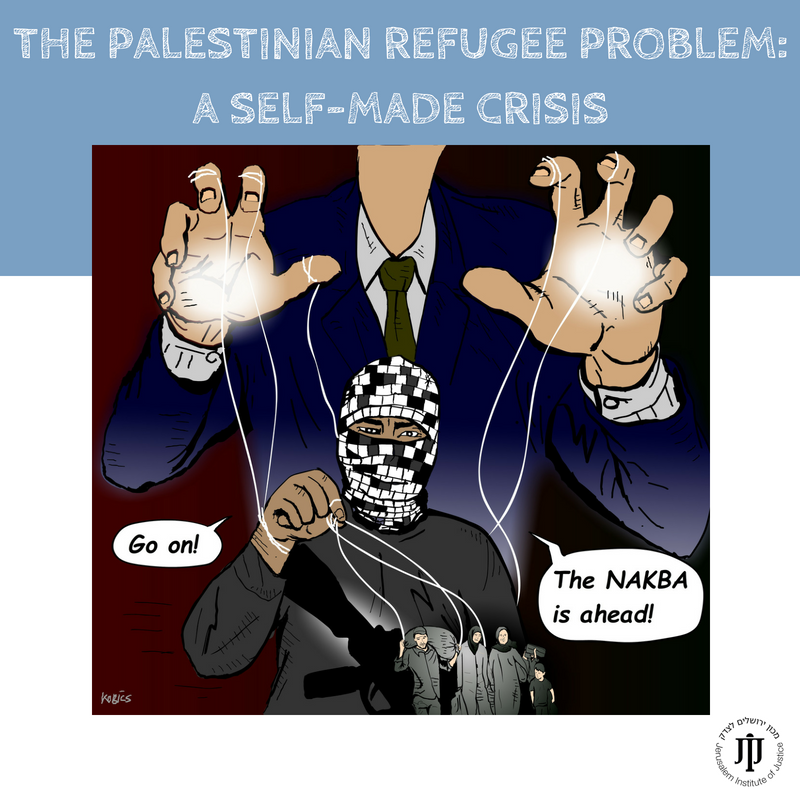
The Refugee Problem: An Artificial Crisis
“To us, the refugee issue is the winning card which means the end of the Israeli state.” Those were the words of Sakher Habash, a senior member of Fatah Central Committee, lecturing in 1998 at An-Najah University in Nablus.
Winning card? End of the Israeli state? In that brief sentence Habash revealed both the reason why Palestinian leadership refuses to help the Palestinian refugees and the desired end of their agenda. While military action, terrorism, and deception have failed to accomplish the elimination of the Jewish state, the Palestinian leaders perpetually keep the refugees in miserable camps simply to be used as human pawns in a cynical and dishonest propaganda campaign. That campaign has successfully deceived many in the West, including the EU; especially many pro-BDS religious organizations and NGOs who, pre-disposed by their Kairos and replacement theology (with its implicit anti-Semitism), are only too willing to be convinced.
The BDS movement relies on the ignorance of its audience. Analyst David Meir-Levi calls the protracted refugee crisis “an artificial crisis maintained by Arab rulers in order to exploit their own people’s suffering – to create a ‘poster child’ for Palestinian victimhood, a staging ground for anti-Israel propaganda, a training center for Arab terrorists, and a trump card for the anti-Israel jihad when all else fails.” (www.aish.com/jw/me/498116622.html)
The Arab refugee problem basically started in 1947; but we need to go back further and note that Israel was created out of Turkish land from the Ottoman Empire. Before the British Mandate, the Arabs living in Palestine considered themselves to be Syrian citizens. There was no group of people who identified themselves as Palestinian and therefore no territory being claimed by a Palestinian national entity.
Fast-forwarding to 1947, the UN Partition Plan (Resolution 181) would have created two states out of the west-of-Jordan remainder of the Mandate. The Arab states rejected the partition plan and launched a war on Israel in a coordinated attack. That military assault was the initial cause of the Arab refugee problem.
It was the Arab states, eight of them, not the Israelis or the Palestinian Arabs, who started the war. Rejecting Israel’s peace offers, they intended to annihilate the Jews. They lost the war in a humiliating defeat, and the infant state of Israel prevailed. Ever since then the Muslim Arabs commemorate that defeat (Israel’s amazing survival) as al-Nakba, “the catastrophe.” But what they call the catastrophe was entirely unnecessary and avoidable. In truth, they have only themselves to blame for initiating the war of aggression that they so ignominiously lost. Likewise, they have themselves to blame for the resulting refugee problem.
Scholar Sol Stern says this: “The Nakba is the heart of the Palestinians’ backward-looking national narrative which depicts the creation of the State of Israel in 1948 as the original sin that dispossessed the land’s native people. […] Every year the legend grows.” (www.city-journal.org/html/nakba-obsession-13303.html)
Chairman Yasser Arafat, declared in his 2003 Nakba Day speech, “On this accursed day, the state of Israel was established by force of arms. … Our people were strewn from our homeland, in exile, in the diaspora, and in the refugee camps by massacres. (https://www.memri.org/reports/arafats-nakba-day-speech)
Stern notes, “Echoing the Nakba narrative is an international coalition of leftists that celebrates the Palestinians as the quintessential Other, the last victims of Western racism and colonialism.” That coalition of leftists conspicuously includes the religious proponents of BDS.
Armed with newly declassified British archives, historian Ephraim Karsch writes, “It was only from the early 1950’s onward, as the Palestinians and their Western supporters gradually rewrote their national narrative, that Israel, rather than the Arab states, became the Nakba’s main, if not sole, culprit. The ex-Mufti led the way by casting his countrymen as the hapless victims of a Jewish grand design to dispossess them of their patrimony….” (Karsch, Palestine Betrayed)
Revisionist historian and frequent critic of Israel Benny Morris writes that in defiance of Resolution 181, the Arabs “launched hostilities against the Jewish community in Palestine in the hope of aborting the emergence of the Jewish state and perhaps destroying the community. But they lost; and one of the results was the displacement of 700,000 of them from their homes….” Morris says that most of those 700,000 fled their homes with the promise from their leaders that they could return shortly after a quick Arab victory. Two-thirds of those were displaced, he notes, “from one part of Palestine to another and not from their country (which is the usual definition of a refugee)….” (Quoted in Stern)
The number of Palestinian refugees who fled in 1947-49 is disputed. Figures from a 1947 census and the UN indicate a number closer to half a million. The Palestinians fled for different reasons.[1] Most of them fled to get out of the way of the expected Arab invasion. We should note here in passing that the number of Jewish refugees who were expelled at the same time from Arab countries, around 850,000, surpassed the number of Palestinian refugees. Those Jewish refugees were stripped of their property and citizenship in those countries. That comparison is a telling study, but our focus here is on the Palestinians.
Contrary to the anti-Zionist narrative, Israel in 1948 encouraged the Palestinians to stay in their homes and become Israeli citizens. The May 14th Proclamation of Independence said, “In the midst of wanton aggression, we yet call upon the Arab inhabitants of the State of Israel to preserve the ways of peace and play their part in the development of the State, on the basis of full and equal citizenship and due representation in all its bodies and institutions.”
David Ben Gurion had declared, years before 1948, “All our aspiration is built on the assumption … that there is enough room in the country for ourselves and the Arabs.” In November 1947 Golda Meir told a crowd in Jerusalem, “Our hands are extended in peace to our neighbors. Both states can live in peace with one another and cooperate for the welfare of their inhabitants.” (Ephraim Karsch, Palestine Betrayed)
“Had the Arabs accepted the 1947 UN resolution,” writes Mitchell Bard, “not a single Palestinian would have become a refugee. An independent Arab state would now exist beside Israel.” Time and again since 1947, Arab leaders have rejected Israeli peace overtures, revealing that only a zero-sum “river-to-the sea” judenrein Levant will satisfy them. Apparently, their allies in the BDS movement have no problem with that outcome.
Several relevant issues spin off from the Palestinian refugee problem. One can ask: Why do the Arab nations, after seven decades, still refuse to welcome the refugees? Why does the UN persist in exercising a double standard for Palestinian refugees, vis-à-vis all the other millions of refugees in the world? Why does the UN maintain UNRWA, a special administrative department for Palestinians, while the rest of the world’s refugees are administered collectively under the UNHCR? Why does the UN spend three times more money per capita on Palestinian refugees than on other refugees in the world? Why does the UN apply a special definition of refugee to the Palestinians, uniquely giving refugee status to multiple descendant generations of Palestinians, most of whom were born long after 1948? These and other related issues deserve attention, but our spotlight here is on the false claim, often trumpeted in pro-BDS religious circles, that Israel caused the problem.
To quote David Meir-Levi: “It was not Israel that caused the Arab refugee problem, nor Israel that obstructed its solution. On the contrary, the Arab refugee problem was the direct result of the aggression by the Arab states, and their refusal after failing to obliterate Israel to sign a formal peace, or to take care of the Arab refugees who remained outside Israel’s borders.” (www.aish.com/jw/me/48916622.html)
[1] “A large part of the Arab civilian population was deluded into believing that it was in its interest to withdraw from the areas in conflict and in this way to enable the Arab armies to wipe out the Jews. They hoped to fall heir to the property of the defeated Jews.” […] [By contrast,] “The defeated Arab countries compelled their Jewish citizens, by direct or indirect means, to emigrate from their countries of residence. … The Jewish refugees left all their property in their ountries of origin. […] The Arab nations that made war on Israel, and encouraged the Palestinian Arabs to reject adamantly all offers of compromise continue to refuse to assume responsibility for the Arab refugees.” Avneri, Arieh. The Claim of Dispossession: Jewish Land-Settlement and the Arabs, 1878-1948. 283-284.


Financing the Suffering of the Palestinians
https://www.youtube.com/watch?v=m5YPCenFVS0
United Nations employs two groups to help refugees. One group helps refugees settle, while the other keeps them in limbo for generations. Watch this video to see how this contradiction developed and how we can help Palestinians escape decades of poverty in refugee camps.
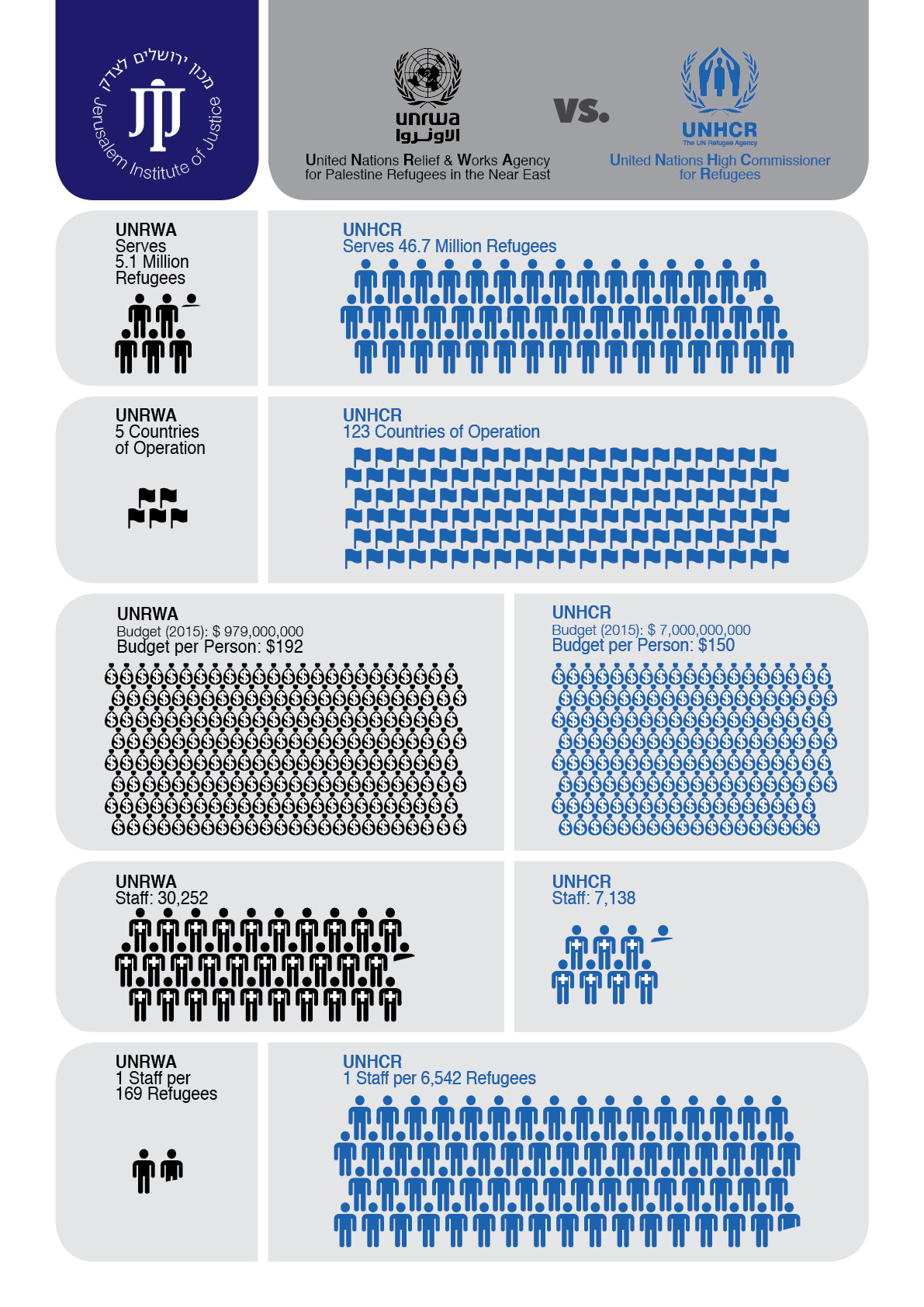
UNRWA vs. UNHCR
This fact sheet compares the United Nations Relief and Works Agency (UNRWA) for Palestinian Refugees in the Near East with the United Nations High Commissioner for Refugees (UNHCR)
Download
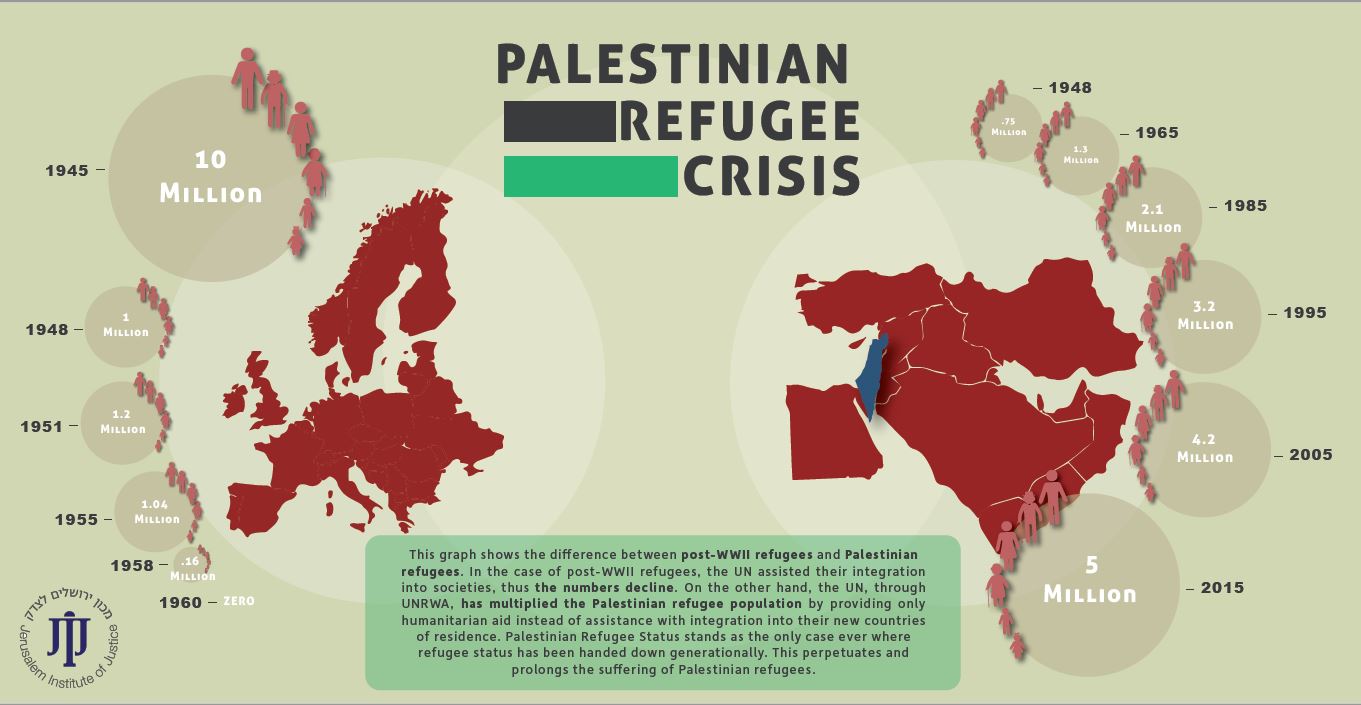
Dealing with Refugees
A comparison of refugees after World War II in Europe and Palestine
This report examines refugee populations following World War II in Europe and Palestine, and common characteristics with the current Syrian refugee crises. After the conclusion of World War II in Europe as former residents resettled or integrated, the number of European refugees and camps declined. At the same time, the number of Palestinian refugees continued to grow as they were not naturalized in their host countries. Instead they were inheriting refugee status after being registered as such by the United Nations Relief and Works Agency, a UN institution exclusively responsible for the Palestinians.
The following pages compares the circumstances and call for right of return between those expelled from Germany after World War II and Palestinian refugees. The aim of this paper is to show that there are alternative stop UNRWA's current policies and retaining refugee status for an entire population group is not the optimal way to solve the problem.
Downloads
A Human Rights Approach to the Perpetuated Palestinian Refugee Crisis
5-6 million Palestinians who have inherited the status of ‘refugee’ living today throughout the Middle East are, for the most part, condemned to living lives of abject poverty. The policies of the Arab nations discriminate against Palestinian refugees, unjustly trapping them in an economic and social underclass in which they do not enjoy equal access to civil rights, economic and social privileges. As long as Palestinian refugees are treated as pawns in the Middle East conflict, with their interests held hostage to distant promises of a permanent peace agreement, they will continue to pay the highest price.
Downloads
Reassesing UNRWA
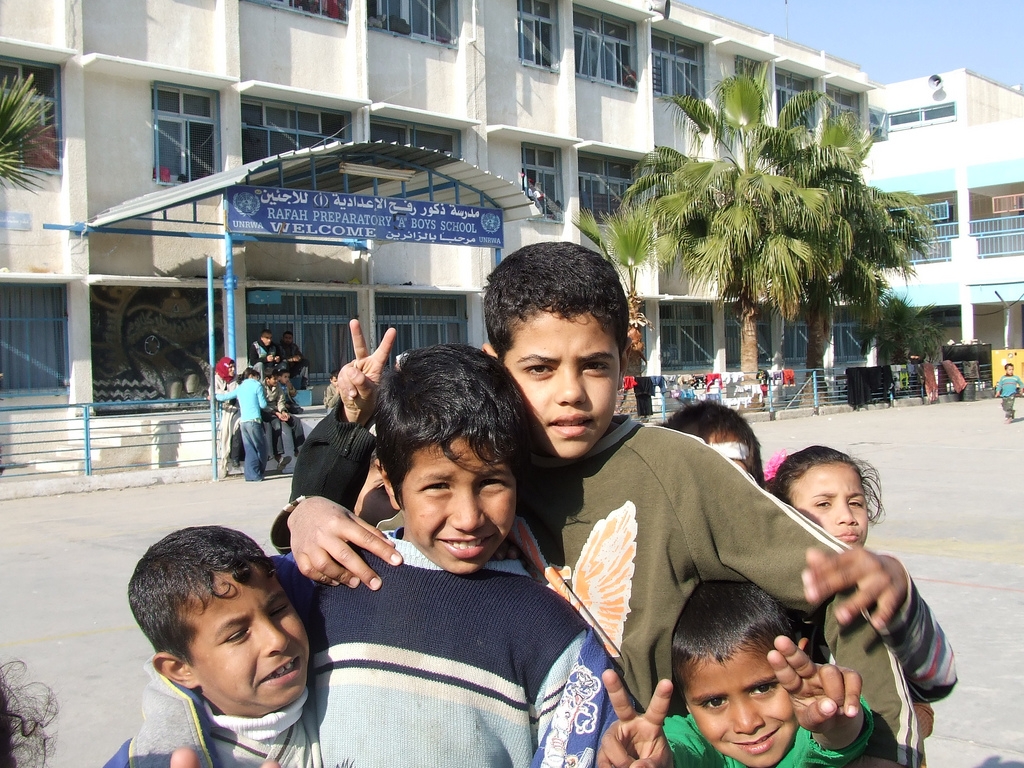
This report analyzes the contrasting histories and track records of UNRWA and UNHCR. UNRWA’s original mission has been fatally compromised by a combination of systemic corruption and intervention into the internal political affairs of host countries. Most recently, this has included growing acquiescence, if not outright support, of ideological hostility to Israel and regional terrorism. By comparison, UNHCR remains faithful to its original mission, demonstrating a track record of substantive assistance to refugee communities. Therefore, we recommend the dissolution of UNRWA by its absorption, where useful, into UNHCR.