
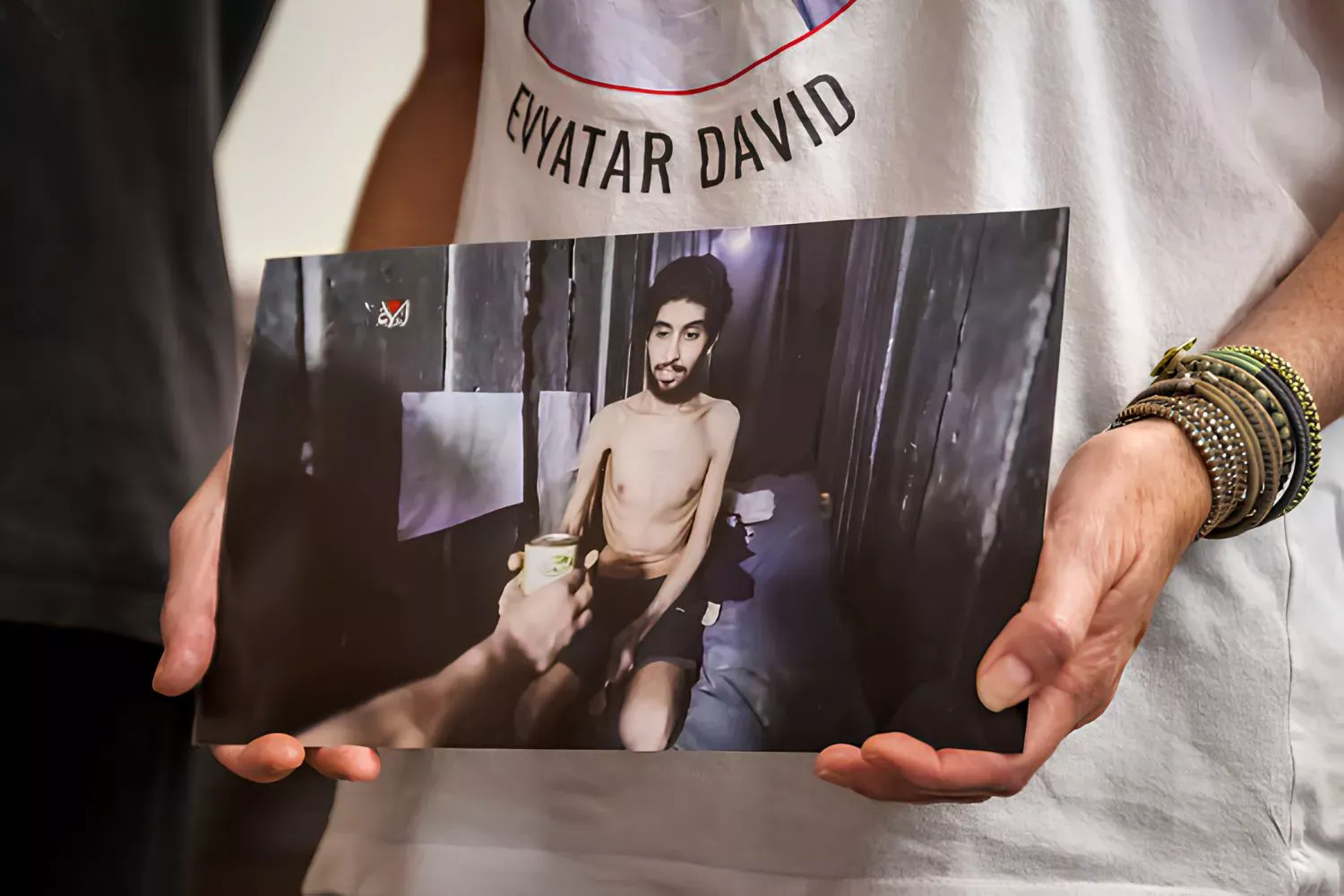
Kidnapped: Hostage-Taking as a Form of Torture
“We were brutally kidnapped from our house. Our girls saw things
that kids that age, or any age, should not see. You feel like you want
to pinch yourself and wake up from this movie. We just slept, cried.
Every day that passed was an endless eternity.”
- Danielle Aloni
Executive Summary
On October 7, 2023, Hamas and its related militias invaded southern Israel and forcibly abducted 247 men, women, and children. Prior to that attack, 4 hostages were already being held in Gaza. Over 2 years later, all of the hostages have come home, and a reckoning is now due.
This report is based on the testimony of released hostages and the health care professionals who treat them. It analyzes the clear and absolute prohibition on torture under international law, and integrates the findings of the United Nations Special Rapporteur on Torture, whose 2025 report identified a clear pattern of physical and psychological abuse suffered by hostages during captivity, as well as post-traumatic harm after their release.
We reveal here that 88 percent of the hostages were civilians. Among them, 23 hostages were aged 12 or younger at the time of their abduction, and 34 were aged 60 or older. Fifty percent of the hostages were non-Israeli or held dual or multiple citizenships, including citizens of at least 24 different countries.
The hostages were held in harsh, degrading, and inhumane conditions and were denied medical care, food, access to personal hygiene, and natural light. Threats of execution, prolonged isolation, sexual assault, and abuse were routine experiences in captivity. 68% of the hostages held for over 200 days were forced to participate in propaganda videos. So far, 12 released hostages have described being sexually assaulted in captivity, including women and men. 33 hostages were executed by their captors.
At least 78 released hostages showed signs of starvation, acute malnutrition, and severe muscle wasting, having received as little as a single piece of bread each day, even as their captors ate full meals. Most hostages faced inadequate hygiene, physical violence, and extended periods of immobility during captivity. Psychological assessments further reveal acute dissociation, emotional numbing, and severe mental withdrawal.
“For 491 days, I was kept mostly underground in Hamas terror tunnels, chained, starved, beaten, and humiliated.” - Eli Sharabi
This report calls upon United Nations mechanisms, State Parties to the Convention Against Torture, and international accountability bodies to address the October 7 attacks and the hostage-taking as conduct that constitutes torture, and recognize former hostages and their families as victims of torture. Torture is absolutely prohibited under international law. It cannot be justified or contextualized. Hostage-taking is not merely arbitrary detention. It is the deliberate weaponization of human suffering to bend political will.
The Jerusalem Institute of Justice urges States and international bodies to reject any framing of the hostage-taking of Israelis as a legitimate military tactic or political bargaining tool. Finally, we call for the perpetrators and co-conspirators to be held accountable through criminal trials, civil litigation, and the application of universal jurisdiction.

Where is the UN special rapporteur on Torture’s involvement in the protection of Israeli civilians?
Date: November 6th, 2023
To: Dr. Alice Jill Edwards
UN Special Rapporteur on Torture and Other
Cruel, Inhuman or Degrading Treatment or Punishment
8-14 Avenue de la Paix 1211 Genève 10, Switzerland
Dear Ms. Edwards,
We are writing to express our deep concern about the situation in the region and, more
specifically, to urgently request your intervention in safeguarding the rights and well-being of
innocent individuals who have suffered from attacks, torture, rape, kidnappings, and murders
at the hands of Hamas and other Palestinian terrorist groups.
Forensic examinations of the victims from October 7th have revealed numerous acts of
torture committed by Hamas terrorists, including burning people alive, decapitations,
mutilations inflicted on children and the elderly. Other atrocities by Hamas include cutting
open a pregnant woman's stomach and pulling out her baby, tying up babies, and cutting off
the arm of a 10-year-old girl, who tragically succumbed to severe blood loss. These actions
represent a clear violation of Article 2 of the Convention against Torture and Other Cruel,
Inhuman or Degrading Treatment or Punishment (hereinafter referred to as “the
Convention”).
We greatly appreciate your statement dated October 12, 2023, in which you expressed being
"shaken by the mass murder and kidnappings of civilians by Hamas in Israel." The latest
reports indicate that the heinous attacks carried out by Hamas have resulted in the tragic loss
of over 1,400 lives, with more than 5,300 people injured and 241 individuals held hostage in
Gaza.
Notwithstanding, we are disturbed by the extremely biased statements made on the same day
during the Special Procedure of the Human Rights Council. The special rapporteurs who
participated in this procedure made a regrettable, unfair, and narrow-minded comparison
between the inhuman attacks perpetrated by Hamas against innocent civilians and the Israeli
self-defense military response to the terrorist groups in Gaza. While the attacks by Hamas
clearly violate Article 2 of the Convention, the State of Israel's response to these attacks is
firmly grounded in the self-defense principle established in Article 51 of the United Nations
Charter. Equating the inhuman actions of Hamas with Israel's self-defense response is a
dangerous comparison that only serves those who seek to justify the human rights violations
committed by Palestinian terrorist groups during the attacks on October 7th against innocent
people.
We do not know if the horrifying atrocities perpetrated by Hamas and other Palestinian
terrorist groups against the hostages have concluded, and now is the time for the United
Nations to exert all efforts to halt these inhuman and degrading acts. We urge your
intervention to undertake a fact-finding mission to Gaza and conduct on-site investigations
into the conditions of the 241 hostages held by Hamas. We also request your assurance that
Articles 5 and 16 of the Convention are not being violated.
It is imperative that, under your mandate as the Special Rapporteur on torture and other cruel,
inhuman, or degrading treatment or punishment, you take active and concrete measures to
provide the Human Rights Council with firsthand evidence of the atrocities committed by
Hamas against innocent individuals.
Where is the UN special rapporteur on Torture’s involvement in the protection of Israeli civilians?
Date: November 6th, 2023
To: Dr. Alice Jill Edwards
UN Special Rapporteur on Torture and Other
Cruel, Inhuman or Degrading Treatment or Punishment
8-14 Avenue de la Paix 1211 Genève 10, Switzerland
Dear Ms. Edwards,
We are writing to express our deep concern about the situation in the region and, more
specifically, to urgently request your intervention in safeguarding the rights and well-being of
innocent individuals who have suffered from attacks, torture, rape, kidnappings, and murders
at the hands of Hamas and other Palestinian terrorist groups.
Forensic examinations of the victims from October 7th have revealed numerous acts of
torture committed by Hamas terrorists, including burning people alive, decapitations,
mutilations inflicted on children and the elderly. Other atrocities by Hamas include cutting
open a pregnant woman's stomach and pulling out her baby, tying up babies, and cutting off
the arm of a 10-year-old girl, who tragically succumbed to severe blood loss. These actions
represent a clear violation of Article 2 of the Convention against Torture and Other Cruel,
Inhuman or Degrading Treatment or Punishment (hereinafter referred to as “the
Convention”).
We greatly appreciate your statement dated October 12, 2023, in which you expressed being
"shaken by the mass murder and kidnappings of civilians by Hamas in Israel." The latest
reports indicate that the heinous attacks carried out by Hamas have resulted in the tragic loss
of over 1,400 lives, with more than 5,300 people injured and 241 individuals held hostage in
Gaza.
Notwithstanding, we are disturbed by the extremely biased statements made on the same day
during the Special Procedure of the Human Rights Council. The special rapporteurs who
participated in this procedure made a regrettable, unfair, and narrow-minded comparison
between the inhuman attacks perpetrated by Hamas against innocent civilians and the Israeli
self-defense military response to the terrorist groups in Gaza. While the attacks by Hamas
clearly violate Article 2 of the Convention, the State of Israel's response to these attacks is
firmly grounded in the self-defense principle established in Article 51 of the United Nations
Charter. Equating the inhuman actions of Hamas with Israel's self-defense response is a
dangerous comparison that only serves those who seek to justify the human rights violations
committed by Palestinian terrorist groups during the attacks on October 7th against innocent
people.
We do not know if the horrifying atrocities perpetrated by Hamas and other Palestinian
terrorist groups against the hostages have concluded, and now is the time for the United
Nations to exert all efforts to halt these inhuman and degrading acts. We urge your
intervention to undertake a fact-finding mission to Gaza and conduct on-site investigations
into the conditions of the 241 hostages held by Hamas. We also request your assurance that
Articles 5 and 16 of the Convention are not being violated.
It is imperative that, under your mandate as the Special Rapporteur on torture and other cruel,
inhuman, or degrading treatment or punishment, you take active and concrete measures to
provide the Human Rights Council with firsthand evidence of the atrocities committed by
Hamas against innocent individuals.
UNICEF's Lack of involvement in the protection of Israeli children
In a letter to Catherine Russell, Executive Director of UNICEF, the Jerusalem Institute of Justice calls upon UNICEF to uphold the principles outlined in the United Nations Convention On The Rights Of The Child, which guides UNICEF's mandate.
Specifically, we emphasize that according to the Convention, UNICEF must ensure that no child shall be subjected to torture or other cruel, inhuman, or degrading treatment (article 37) and take all feasible measures to ensure the protection and care of children affected by an armed conflict (article 38).
While UNICEF has made public statements about supporting children in the Gaza Strip and emphasizing the critical need to protect them, we earnestly implore that equal attention and support be extended to Israeli children who are not collateral damage of the conflict but rather a deliberate target of these terrorist groups.
Disturbingly, numerous Israeli children, including infants, have lost their parents due to heinous acts of terrorism. This is the case of the 10-month-old twins of Itay and Hadar Berdichevsky, a young couple of 30, who placed their children in a hidden shelter when they heard terrorists at their door. The couple valiantly attempted to shield their babies from harm, but tragically, they were murdered during the attack. The twins survived the ordeal, left orphaned by this senseless act of violence.
Moreover, children, including babies, have been horrifically murdered by Hamas, as verified by various reliable sources, including U.S. Secretary of State Antony Blinken, who confirmed that dozens of Israeli babies were murdered, beheaded, and burnt by Hamas terrorists.
The lack of UNICEF's involvement in the protection of Israeli children is perplexing and unacceptable. We look to UNICEF to demonstrate an unwavering commitment to the protection and well-being of ALL children in the region.
ICRC- Must Locate and Facilitate Release of Hostages
JERUSALEM INSTITUTE OF JUSTICE LEADS COALITION OF 50 ORGANIZATIONS
URGING INTERNATIONAL RED CROSS TO SECURE RELEASE OF THE GAZA CAPTIVES
A coalition of 50 organizations urge the ICRC to verify the status of more than 150 Israelis kidnapped in the Gaza Strip
In the wake of Hamas’ barbaric rampage through the civilian communities of southern Israel, the Jerusalem Institute of Justice leads a coalition of 50 organizations in urging the International Committee of the Red Cross (ICRC) to verify the status of the 150+ Israeli hostages taken into captivity in Gaza. Here
This list reflects a broad consensus between Israel and the global Diaspora, religious and secular organizations. In this dark time for our nation, our hearts are moved by the opportunity to speak with one voice. In addition to sending this letter, we are requesting an urgent meeting with the Jerusalem staff of the ICRC and plan to bring some of the families of the Israeli hostages to that meeting to make personal the urgency of our appeal.
“Hamas has openly advertised its penchant for torturing, raping, denying medical treatment, degrading, humiliating, and threatening to execute these hostages,” said Uri Morad, Director of International Law & Public Diplomacy for the Jerusalem Institute of Justice (JIJ). “The International Red Cross must act urgently to locate and establish communication with the kidnapped Israelis if it has any hope of fulfilling its mission and bringing an end to this war.”
In a joint letter, JIJ advocacy efforts were joined by prominent Israeli, North American, and European organizations who are committed to countering anti-Semitism and anti-Israel bias, including the Anti-Defamation League, Jerusalem Center for Public Affairs, NGO Monitor, Middle East Forum, and StandWithUs. The group also included several Jewish and Christian communities, including the Jewish Federation of Northern New Jersey, Israel Christian Nexus, and numerous diaspora synagogues.
Specifically, the coalition urged the International Red Cross to take the following steps:
• Locate and establish communication with the Israelis held hostage in the Gaza Strip.
• Call for Hamas to cease its heinous acts of raping and sexually abusing Israelis.
• Condemn the use of human shields as military targets, including hospitals and schools, and the horrifying practice of exhibiting and mutilating dead bodies.
• Facilitate the immediate return of the Israeli hostages.
“This past week constitutes the worst time in Jewish history since the Holocaust, a time when the International Red Cross was, by its own admission, ‘impotent’ in the face of Nazi persecution and genocide,” said Flavia Sevald, CEO of JIJ. “In today’s war, the perpetrators may have changed, but their agenda is the same. The International Red Cross has a double duty to get it right this time.”
Jerusalem Institute of Justice (JIJ) is the only Israeli human rights NGO with consultative status before the United Nations that is pro-Israel. Within the international community, JIJ has persistently advocated for the release of Israeli citizens from captivity. Within Israel, JIJ provides free legal aid to minority ethnic and religious groups, with a track record of 25 precedent-setting victories in the Israeli Supreme Court.
REPORT OF THE “STATE OF PALESTINE”
Jerusalem Institute of Justice written submission
TO THE UN HUMAN RIGHTS COMMITTEE
ON THE REPORT OF THE “STATE OF PALESTINE”
Executive Summary
Press this link for the full report
The Jerusalem Institute of Justice (JIJ) submitted a report to the Human Rights Committee of the UN regarding Palestinian adherence to the International Covenant on Civil and Political Rights (ICCPR). JIJ’s report exposes inadequate law enforcement, incitement to violence, and acts of torture and inhumane treatment by the Palestinian government, directly contradicting Palestinian claims of compliance with international law.
The Human Rights Committee is a United Nations treaty body comprised of 18 international law experts tasked with ensuring that countries adhere to the International Covenant on Civil and Political Rights (ICCPR). Countries self-report their adherence to the treaty to legitimize their sovereignty and prove their benevolence. The State of Palestine used its report to deceive the international community and attack the State of Israel while claiming they uphold International Law.
Article 2 of the ICCPR prohibits discrimination. However, the Palestinian educational curriculum promotes violence, excludes peace education, and fosters a biased narrative. Palestinian textbooks legitimize violence, glorify terrorists, erase Israel from maps, and demonize Israelis. This indoctrination of violence among children has long-lasting effects and obstructs peace initiatives, and it can manifest itself in acts of terror perpetrated by children and adults. In the State of Palestine, terrorists are rewarded with glory. Their families receive a payment if the terrorist dies or is arrested; the price increases corresponding to the severity of the crimes. Alongside monetary incentives, terrorists are treated like martyrs. Summer camps where Palestinian children are trained to fight Israel through acts of violence are named after killed terrorists.
Article 6 of the ICCPR safeguards the right to life. The use of human shields by the Palestinian authorities is a grave violation of international humanitarian law and breaches Article 6. This concerning practice has been observed in various conflicts, including Operation Protective Edge and the March of Return protests. Moreover, evidence suggests the concealment of rocket production facilities, armories, and combatants in or near residential areas, further jeopardizing civilians and disregarding international norms.
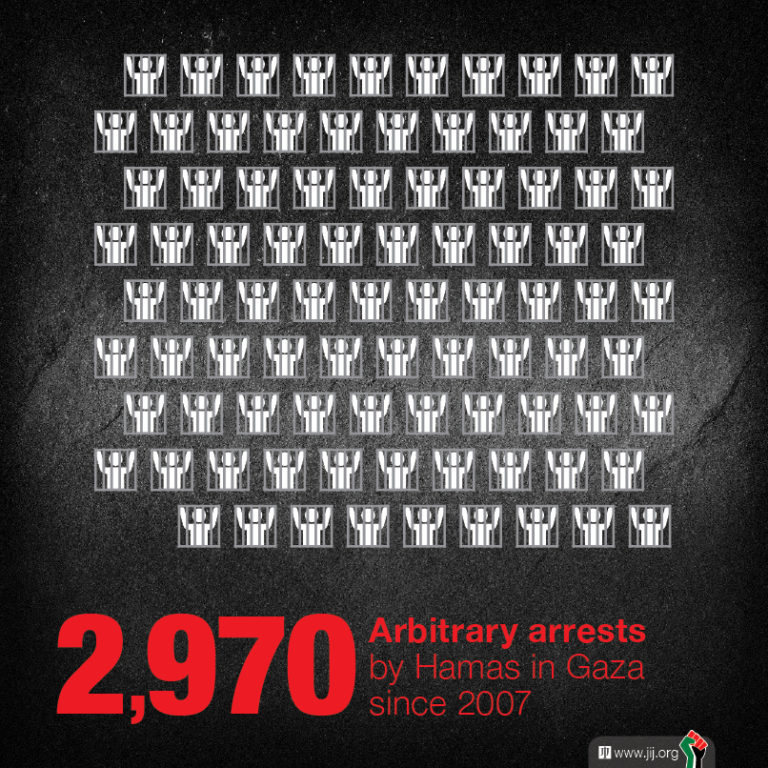
Article 7 of the ICCPR prohibits torture and cruel treatment. However, the Palestinian authorities have a significant gap between their legal framework and practical enforcement in preventing such acts. The Committee Against Torture (CAT) has expressed concerns over incidents of torture and mistreatment in custody, including the lack of confidentiality in complaint handling and the insufficient independence of investigation bodies. Former detainees’ testimonies provide clear evidence of inhumane treatment, torture, denial of rights, and various forms of abuse. Arbitrary arrests and torture are used against Palestinians exercising their fundamental rights, like peaceful protests or criticizing the regime. These abuses appear to stem from higher authorities’ directives. From 2016 to 2021, the Palestinian Independent Commission for Human Rights received 4,279 claims. Palestinians commit these acts of torture onto Palestinians.
Article 20 prohibits war propaganda and advocacy for hatred; JIJ’s report highlights the notable discrepancy between the legal measures established by the Palestinian authorities and their practical enforcement. Despite legal restrictions, instances of incitement and hate speech persist. Palestinian television broadcasts content, such as the series “The Path of Sacrifice,” glorifying terrorists and their acts of terror. Social media platforms like TikTok and Telegram are also utilized to spread messages of hate and incitement, including simulated attacks by young children against Israeli soldiers. Palestinian leaders publicly encourage lone-wolf attacks and the procurement of weapons, fostering hatred instead of promoting peace. School textbooks and cultural events are utilized to propagate hate, as seen in a musical production featuring dancers in military attire glorifying combat against the perceived “enemy.”
Lastly, Article 24 safeguards the rights of children. Despite international laws protecting children’s vulnerability, Palestinian children continue to be recruited and involved in violent acts, including clashes, shootings, and stabbings. Organizations like Hamas run summer camps that promote aggression and hostility, jeopardizing these children’s safety, rights, and development. This perpetuates a culture of violence with far-reaching consequences for individuals and society.
Based on the information provided, JIJ recommends that the Human Rights Committee issue the following calls to the “State of Palestine”: expunge textbooks advocating violence and terrorism, adopt an internationally accepted definition of terrorism, cease financial support to terrorism, refrain from using human shields or concealing military targets in civilian areas, end the use of torture and ensure thorough investigations, discontinue the promotion of hatred and violence through media and social media platforms, and take measures to prevent the recruitment of children in hostilities and protect their rights. These recommendations aim to promote peace, tolerance, and the protection of human rights.
REPORT OF THE “STATE OF PALESTINE”
Jerusalem Institute of Justice written submission
TO THE UN HUMAN RIGHTS COMMITTEE
ON THE REPORT OF THE “STATE OF PALESTINE”
Executive Summary
Press this link for the full report
The Jerusalem Institute of Justice (JIJ) submitted a report to the Human Rights Committee of the UN regarding Palestinian adherence to the International Covenant on Civil and Political Rights (ICCPR). JIJ’s report exposes inadequate law enforcement, incitement to violence, and acts of torture and inhumane treatment by the Palestinian government, directly contradicting Palestinian claims of compliance with international law.
The Human Rights Committee is a United Nations treaty body comprised of 18 international law experts tasked with ensuring that countries adhere to the International Covenant on Civil and Political Rights (ICCPR). Countries self-report their adherence to the treaty to legitimize their sovereignty and prove their benevolence. The State of Palestine used its report to deceive the international community and attack the State of Israel while claiming they uphold International Law.
Article 2 of the ICCPR prohibits discrimination. However, the Palestinian educational curriculum promotes violence, excludes peace education, and fosters a biased narrative. Palestinian textbooks legitimize violence, glorify terrorists, erase Israel from maps, and demonize Israelis. This indoctrination of violence among children has long-lasting effects and obstructs peace initiatives, and it can manifest itself in acts of terror perpetrated by children and adults. In the State of Palestine, terrorists are rewarded with glory. Their families receive a payment if the terrorist dies or is arrested; the price increases corresponding to the severity of the crimes. Alongside monetary incentives, terrorists are treated like martyrs. Summer camps where Palestinian children are trained to fight Israel through acts of violence are named after killed terrorists.
Article 6 of the ICCPR safeguards the right to life. The use of human shields by the Palestinian authorities is a grave violation of international humanitarian law and breaches Article 6. This concerning practice has been observed in various conflicts, including Operation Protective Edge and the March of Return protests. Moreover, evidence suggests the concealment of rocket production facilities, armories, and combatants in or near residential areas, further jeopardizing civilians and disregarding international norms.
Article 7 of the ICCPR prohibits torture and cruel treatment. However, the Palestinian authorities have a significant gap between their legal framework and practical enforcement in preventing such acts. The Committee Against Torture (CAT) has expressed concerns over incidents of torture and mistreatment in custody, including the lack of confidentiality in complaint handling and the insufficient independence of investigation bodies. Former detainees’ testimonies provide clear evidence of inhumane treatment, torture, denial of rights, and various forms of abuse. Arbitrary arrests and torture are used against Palestinians exercising their fundamental rights, like peaceful protests or criticizing the regime. These abuses appear to stem from higher authorities’ directives. From 2016 to 2021, the Palestinian Independent Commission for Human Rights received 4,279 claims. Palestinians commit these acts of torture onto Palestinians.
Article 20 prohibits war propaganda and advocacy for hatred; JIJ’s report highlights the notable discrepancy between the legal measures established by the Palestinian authorities and their practical enforcement. Despite legal restrictions, instances of incitement and hate speech persist. Palestinian television broadcasts content, such as the series “The Path of Sacrifice,” glorifying terrorists and their acts of terror. Social media platforms like TikTok and Telegram are also utilized to spread messages of hate and incitement, including simulated attacks by young children against Israeli soldiers. Palestinian leaders publicly encourage lone-wolf attacks and the procurement of weapons, fostering hatred instead of promoting peace. School textbooks and cultural events are utilized to propagate hate, as seen in a musical production featuring dancers in military attire glorifying combat against the perceived “enemy.”
Lastly, Article 24 safeguards the rights of children. Despite international laws protecting children’s vulnerability, Palestinian children continue to be recruited and involved in violent acts, including clashes, shootings, and stabbings. Organizations like Hamas run summer camps that promote aggression and hostility, jeopardizing these children’s safety, rights, and development. This perpetuates a culture of violence with far-reaching consequences for individuals and society.
Based on the information provided, JIJ recommends that the Human Rights Committee issue the following calls to the “State of Palestine”: expunge textbooks advocating violence and terrorism, adopt an internationally accepted definition of terrorism, cease financial support to terrorism, refrain from using human shields or concealing military targets in civilian areas, end the use of torture and ensure thorough investigations, discontinue the promotion of hatred and violence through media and social media platforms, and take measures to prevent the recruitment of children in hostilities and protect their rights. These recommendations aim to promote peace, tolerance, and the protection of human rights.

Does Humanity End at the Border?
In a world where oppression and punishment are a means of securing power, respect for human life becomes scarce and is replaced by inhumanity and suffering. But do we really know what is happening on the other side of Israel's border?
Imagine that you and your family live somewhere in the West Bank. One day, you discover that a child is about to be used as a suicide bomber to blow up a bus. A desire to do everything possible to prevent a child from becoming a suicide bomber and averting the death of many innocent people is a natural response for you and me. However, under the Palestinian Authority (PA), this response would be grounds for receiving a life sentence and thus commences a nightmare. Because you have tried to stop a fatal attack, you will be arrested and all the people around you will pay a price.
First, it starts with your child. Let’s say your child was born prematurely and she needs to remain in an incubator that provides an environment that allows her to properly mature.
However, because the PA operates like a machine of terror; cruel and creative forms of inhumane acts are implemented against individuals as a form of punishment. And for this reason, because you saved innocent people, the PA decided not to give your child the necessary treatment and they expel your child from the hospital. Consequently, an innocent child is severely handicapped not only physically but also psychologically for all her life. Still, the punishment goes on.
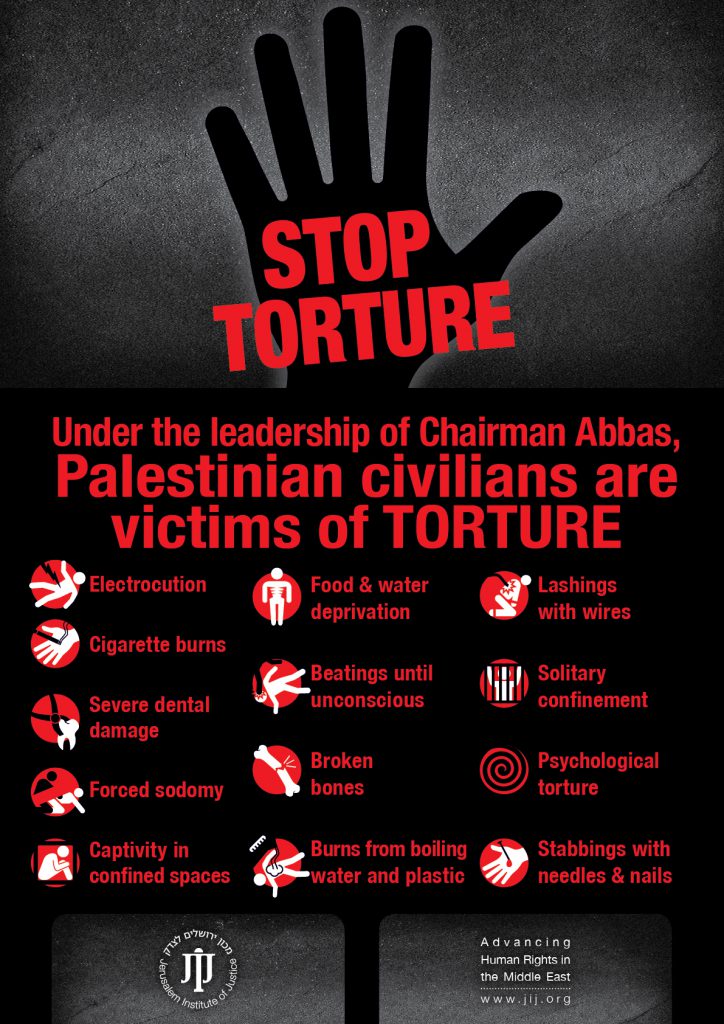
You might be imprisoned and subjected to many different types of torture, such as being tied to a post and beaten until losing consciousness, burnt with cigarettes, having boiling and cold water thrown on you, having your nails and teeth ripped out, being electrocuted and deprived of sleep and food. The methods of torture are endless. This is not a nightmare or fiction, but rather the reality of many Palestinian citizens who oppose the politics of the PA or take a stand against acts of terror. This is one of the many real cases that occurred under the PA regime which JIJ has documented and reported.
Palestinian security forces systematically inflict ill-treatment and torture on their citizens as a form of government policy, cruelly disrespecting human rights. The PA speaks worldwide, appealing for the rights of the Palestinians and their territories, but it is the PA who violates the rights of its own citizens by secretly shedding blood and putting in place an oppressive machine to destroy all who disagree with their acts.
The Oslo Agreement was signed in September 1993 by the State of Israel and the Palestine Liberation Organization (PLO). The Palestinian Authority (PA) was then created in 1994 to govern the Gaza Strip and the West Bank (areas A and B). However, the Palestinians have not complied with the provisions of the treaty. Violent clashes broke out between the two Palestinian factions: Hamas and Fatah following the January 2006 Palestinian Legislative Council (PLC) elections. Thus, in 2007, Hamas lost its ruling position in the West Bank, being replaced by Fatah and independent members. Hamas, in turn, expelled Fatah from Gaza and retained control of that area. This division resulted in two separate administrations: the Palestinian Authority, led by Fatah under Mahmoud Abbas controlling the West Bank; and control of the Gaza Strip by Ismail Haniyeh, Hamas's leader. These groups have since then exercised effective control over everything that happens in those regions.
Palestinian witnesses reported and described the abuses that the PA had perpetrated against them, including abduction, imprisonment, torture, and rape. The PA reportedly murdered and illegally detained many of their citizens intentionally and premeditatedly to intimidate its civilians.
This is condemned by international criminal law. A crime against humanity is characterized as any of the atrocious acts indicated in art.7 of the Rome Statute, committed in the framework of a widespread or systematic attack against the civilian population, with knowledge of that attack. Thus, illegal acts include sexual assault, torture, murder, kidnapping, and imprisonment.
The international legal standard of general human rights must be met by all governments and regimes in order to ensure peace, prosperity and the welfare of individuals. It falls upon society as a whole to prevent crimes against humanity from occurring. Therefore, the best definition of international crimes is that which contemplates the idea of acts performed by states or individuals, and that violate principles and rules that protect values to which humanity attaches great importance. According to the Rome Statute, crimes against humanity can occur in times of war or peace. In this article, it is clear what the elements of the crime are. First, a physical element is required, such as murder, imprisonment, torture and other inhumane acts. The second element is contextual, meaning a crime is committed as part of a widespread ("large-scale nature of the attack, which should be massive, frequent, carried out collectively with considerable seriousness and directed against a multiplicity of victims") or systematic attack directed at any civilian population ("the organized nature of the acts of violence and the improbability of their random occurrence"). This means that there have to be numerous threats in a geographical area and that the violence has to follow a methodical approach. Finally, the crime must be committed with the knowledge of an attack, that is, the mental element. Beyond all these elements, crimes against humanity occur only when they are committed for the sake of a state or political organization.
In these terms, it is considered that the PA violated the human rights of its citizens by murdering, imprisoning, torturing, and kidnapping them. These acts were carried out in a judicious, organized and frequent manner to a multitude of victims, under a large-scale attack.
Palestinian citizens experienced severe physical and mental pain and suffering, which was premeditated and calculatedly caused by their leaders to oppress them and to preserve positions of leadership in both territories. This violates international human rights law. The PA controls both the police and the military as well as the courts themselves, so nothing is done to help Palestinian citizens within the West Bank. This is a cycle of violence, repression, and misery for the victims, their families, the entire Palestinian people, and potentially even their regional neighbors. Palestinian leaders must realize that because they have signed and agreed to treaties such as the Rome Statute, they are legally obligated to prevent cruel acts against their own people.
On this matter, the Jerusalem Institute of Justice has already submitted several communications to the Office of the Prosecutor (OTP) of the International Criminal Court (ICC) regarding crimes against humanity committed by Palestinian leaders, such as murder, imprisonment and torture, respectively, against Palestinian civilians.
Crimes against humanity are serious violations of international law. It is time to take responsibility, we must not only point the finger at the culprits of these atrocities but also at the supporters and spectators who become accomplices. The real victims of this war are the Palestinian citizens who are cynically exploited as political pawns.
Torture and Inhumane Treatment
“The Palestinian Authority is responsible for severe abuses, including: the murder, kidnapping, imprisonment, torture, and rape of 52 Palestinian and Israeli citizens, residents of the West Bank,” stated the long (1,800 pages) precedent setting verdict that was issued approximately two years ago by judge Moshe Drori of the Jerusalem District Court.
The verdict described horrifying torture. Electric shocks, hanging upside down for long periods of time, pouring boiling plastic on the body, extraction of nails and teeth, sterilization, sleep deprivation, food restriction, the killing and raping of family members, the removal of a pre-mature baby from her incubator, and other forms of inhumane abuse.
Download
Torture and the Degrading Treatement in the West Bank and Gaza
Assessing the Implementation of UN Convention Against Torture
For the full report click, here.
Article 5 of the Universal Declaration of Human Rights, along with Article 7 of the International Covenant on Civil and Political Rights (ICCPR) declare that no person shall be subject to torture, to cruel, inhuman, or degrading treatment or punishment. This report examines the Palestinian Authority’s (PA) adherence to the UN Convention Against Torture (UNCAT), to which it is a signatory member. Since 1984, 155 states have ratified UNCAT. Of 142 states investigated for their adherence to and implementation of UNCAT, at least 79 still carry out acts of torture (2014). Even for those 40 states who have not adopted the Convention, a global ban on torture, as part of customary international law, compels all states against the use of torture and cruel, inhuman punishment.
Palestinians in the West Bank and Gaza are repeatedly subjected to severe violations of the basic rights of freedom from torture and abuse at the hands of Palestinian leadership. This report provides a better understanding of the current situation within the territories and of the UNCAT violations committed by the PA.
Many critics of the use of torture argue that it is immoral and impractical, as the information obtained through it is often false. Human Rights Watch states that torture is “a bedrock principle of international law. Torture, as well as cruel, inhuman or degrading treatment, shall be banned at all times, in all places, including in times of war…” Yet, various organizations report that torture and cruel punishment occur on a regular basis in the territories, sometimes resulting in death.
ACCESSION TO UNCAT — April 2, 2014
Upon receiving ‘Observer State’ status to the UN in November 2012, Palestine was granted access to various international conventions and organizations, and the PA acceded to 15 international conventions and treaties regarding human rights, humanitarian law, and diplomatic relations. As such, the PA has obliged itself to comply with a number of conventions and their provisions, including the Convention against Torture and Other Cruel, Inhuman or Degrading Treatment of Punishment (1984). In December 2014, the PA ratified yet another 20 international treaties and conventions. As a signatory member of these international treaty and conventions, the State of Palestine is required to submit reports of the status of human rights in Palestine and the procedures adopted to improve human rights where they are lacking. As of writing, no reports have been submitted.
An Optional Protocol to UNCAT (OPCAT) was adopted by the UN General Assembly in December 2002, which took effect June 2006, whose objective is to establish a system of regular visits to the West Bank and Gaza to prevent torture and other inhuman treatment. However, Palestine has yet to sign OPCAT, though the Palestinian Ministry of Foreign Affairs has the protocol listed as one of the treaties “they want to sign.” According to one UN official, reasons for not signing thus far include not wanting to allow open access to an international body to look into all places of detention that the PA would rather keep away from the public eye.
THE STATE OF PALESTINE AND OTHER HUMAN RIGHTS DECLARATIONS
The PA, as a member of the Organization of Islamic Cooperation, adopted both the Cairo Declaration on Human Rights in Islam (CDHRI) and the Arab Charter on Human Rights (ACHHR). Article 20 of the CDHRI states that it is not tolerable to arrest an individual, restrict his freedom, or exile or punish him without legitimate reason. As well, physical and psychological torture, as well as any form of humiliation, is not permissible. Similarly, Article 8 of the ACHHR outline prohibitions on torture and cruel, inhuman treatment. However, while both declarations prohibit torture, both also stipulate that all rights and freedoms are subject to Sharia Law. Furthermore, Article 4.2 of the Amended Palestinian Basic Law states that Sharia Law serves as the main source of legislation. Issues here arise with how Sharia Law dictates punishment for those who inflict torture on others: “the punishment of such an act [torture] is Qisas, which means that the criminal would be punished with the same act he/she did.” Responding to torture with torture is in violation of UNCAT.
UNCAT ARTICLES
According to the definition provided by UNCAT, for an act to be considered torture it must be intentional, cause severe pain or suffering, be intended to achieve a purpose (as mentioned), and it must be done by, or with the acquiescence of, a public official. Article 13 of Palestinian Basic Law corroborates this, stating that no duress, either slight or moderate, can be used against any person.
According to the Independent Commission for Human Rights (ICHR), 1,274 complaints of violations of the right to freedom from torture and ill-treatment were reported in 2014. These abuses continued regularly throughout 2015, despite the ratification of UNCAT. One common target of Palestinian officials is local and foreign journalists, who are often detained and tortured for critical remarks that refer to Fatah, Palestinian leadership, or corruption in Palestine. The PA does not tolerate criticism, and continuously intimidates journalists to deter them from exercising their freedom of expression. One source reports that “a journalist must be very careful. In Gaza, there are journalists being tortured. There is torture considered [sic] as a common procedure…”
Despite Palestinian Law ensuring freedom from torture, documented accounts of torture of Palestinians in Palestinian prisons have been collected by organizations like the Arab Organization for Human Rights in London (AOHR UK). An article by Middle East Monitor states that the headquarters of PA intelligence services in Bethlehem is a “slaughter house” used for torturing prisoners.
In June 2015, Awni Mazen Al-Shaksheer, a Palestinian student from Nablus, was arrested and tortured by intelligence services for his involvement in student activism. He was beaten with sticks, cables, punched, kicked, and slapped, as well as subject to sleep deprivation, a form of psychological torture. He was held in two different prisons, never charged, nor given the right to appear before a judge. This case is not unique; Palestinians are routinely arrested and detained by PA forces for various reasons, including activism against the government. According to a 2014 Annual Report by the Palestinian Center for Human Rights, security officers in the West Bank and Gaza continue to practice torture as a primary means of obtaining information when dealing with prisoners.
FATAH vs. HAMAS
Though Fatah and Hamas make up the heart of Palestinian leadership, their relations are severely strained. In 2014, they attempted to reconcile in an agreement to create an interim government; however, they have failed to cooperate. Fatah, as the governing faction in the West Bank, is carrying out the “worst kind of torture” against Hamas members, while Hamas is reported to carry out a “brutal campaign of abductions, torture, and unlawful killings against Palestinians accused of collaborating with Israel and others.” In August 2014, at least 25 Palestinians were executed by armed Gazan groups.
CONTESTING TORTURE UNDER UNCAT
Despite Article 13 of the Amended Palestinian Basic Law prohibiting ‘any duress or torture’, the US Department of State Report 2014 reported on several abuse cases. These complaints included victims being forced to stand in uncomfortable stress positions, flogging, hand binding, suspension, blindfolding, punching, and beatings with clubs, electric cables, or hoses. There are also reports the PA security forces use these tactics on Palestinian minors.
Torture is clearly defined as a criminal offense, and Article 32 of the Amended Palestinian Basic Law reiterates this point by stating that any violation of personal freedom, of the sanctity of the private life of human beings, or of any of the rights or liberties that have been guaranteed by law or by Basic Law, are considered to be criminal offenses. As well, the Jordanian Penal Code No. 74 of 1960 criminalizes acts of torture conducted by an official with the goal of obtaining a confession. The issue here: these acts are not referred to as ‘torture’ in the text; rather, they are crimes that simply meet the definition of torture.
While it is a criminal act meant to be punished as a crime, too many cases reveal that torture is used widely within Palestine with little to no punishment enforced. Most of these acts are committed in hidden places or prisons, and Human Rights Watch reports that no Palestinian security official has ever been convicted for abuse in custody.
The reason for lack of enforcement against the use of torture could be related to the language used in the legal code. Not all torture is prohibited by the Penal Code, specifically those acts not used to gain information or confessions.
The PA does not admit that torture takes place within their jurisdiction, or admits only isolated incidents insisting that action be taken against those responsible. Moreover, PA officials insist that security personnel be educated on the prohibition of torture. “All of the personnel know that torture is forbidden. Not all of them know that it is against [the] human rights convention.”
There are hundreds of torture incidents reported yearly in both the West Bank and Gaza according to the ICHR. These are often exceed or justified based on claims that PA forces lack the necessary tools to investigate crimes, like DNA testing and eavesdropped equipment, so they use torture to make up for equipment they lack. This excuse does not account for the amount of foreign money pouring into the PA that could be used to aid security officials.
Amnesty International reports (2015) that in the West Bank, detainees alleged they were tortured or ill-treated by police and other security officials. In Gaza, at least three men were reported to have died in custody, allegedly from torture by internal security officials. One case, reported by The Times of Israel shares the story about Ahmad Bilal Abd al-Malak al-Deekm, who was arrested for criticizing the government on social media. Al-Deekm reported he was subjected to various forms of abuse and torture, including sleep deprivation, beatings, verbal abuse, and was forced to perform humiliating acts (which qualify as psychological torture).
Individuals must have a place to complain and air grievances, like security or military courts. However, in Palestinian territories, not only does it take many years to complete a legal process relating to cases and victims of torture, but also courts are not completely independent. If Palestinians do not have reliable, impartial, and uncorrupted authorities to whom they can report grievances, then agreement and adherence to the provisions laid out in Article 13 can never be achieved.
To reiterate, Article 13 states that duress or torture are prohibited. Though Palestinian Basic Law ensures that violations of this will be met with compensation, there is little evidence to prove this method works in practice. A resident from Ramallah stated the lack of compensations for these violations in an interview conducted in November 2015 “…The government does not compensate those who have been tortured and does not provide them with psychological support…” These cases are more often than not mishandled and purposely delayed, and victims cannot expect to be granted redress, compensation, or rehabilitation as long as this practice continues.
The case of al-Deekm has met these setbacks, with the PA refusing to provide him with any redress. One source, a representative of the Civil Commission for Independence of the Judiciary and Rule of Law, acknowledges the government may not want to pay monetary compensation, but some kind of compensation must be had for the violations that have been inflicted upon the victims.
Other acts of ill-treatment, as defined by a UN official, are acts of cruel, inhuman, or degrading treatment or punishment that are not intended to cause harm (like bad prison conditions), or where the pain and suffering caused by these acts do not meet the ‘minimum requirement’ for the definition of torture. There are many methods of torture not included in the official definition, and therefore do not need to be ‘punished’ by law. These include hitting a victim “softly”, as is done by Palestinian security forces. As well, many psychological methods are not regarded as torture, including sleep deprivation, witness the torture of family members, solitary confinement, taunting, sexual and cultural humiliations, etc.
Regardless of kind of torture, whether ‘soft’ or not, victims suffer various consequences, including PTSD, or ‘continuing traumatic stress disorder.’ Other psychological illnesses include depression, anxiety, insomnia, hallucinations, and flashbacks — all chronic effects of torture. Victims of both physical and psychological torture experience difficulty reintegrating into one’s daily life, relationships, and society, as well as being at higher risk of suicide.
As the PA ratified UNCAT in April 2014, a report should have been submitted by May 2015. As of writing, no report has been submitted. Reasons for not submitting reports, according to an interviewee at The Civil Commission for the Independence of Judiciary and Rule of Law, include a lack of capacity in the administration, or because the report is not a priority. The Director of the Civil Commission for the Independence of the Judiciary and the Rule of Law claims that if the PA wanted to forbid torture or show their respect for human rights, “they [would] report and publish all agreements and consider them as law.” In summary, there seems to be no value to the PA ratification of UNCAT and other conventions; it holds no legal significance to stop human rights abuses in the territories.