
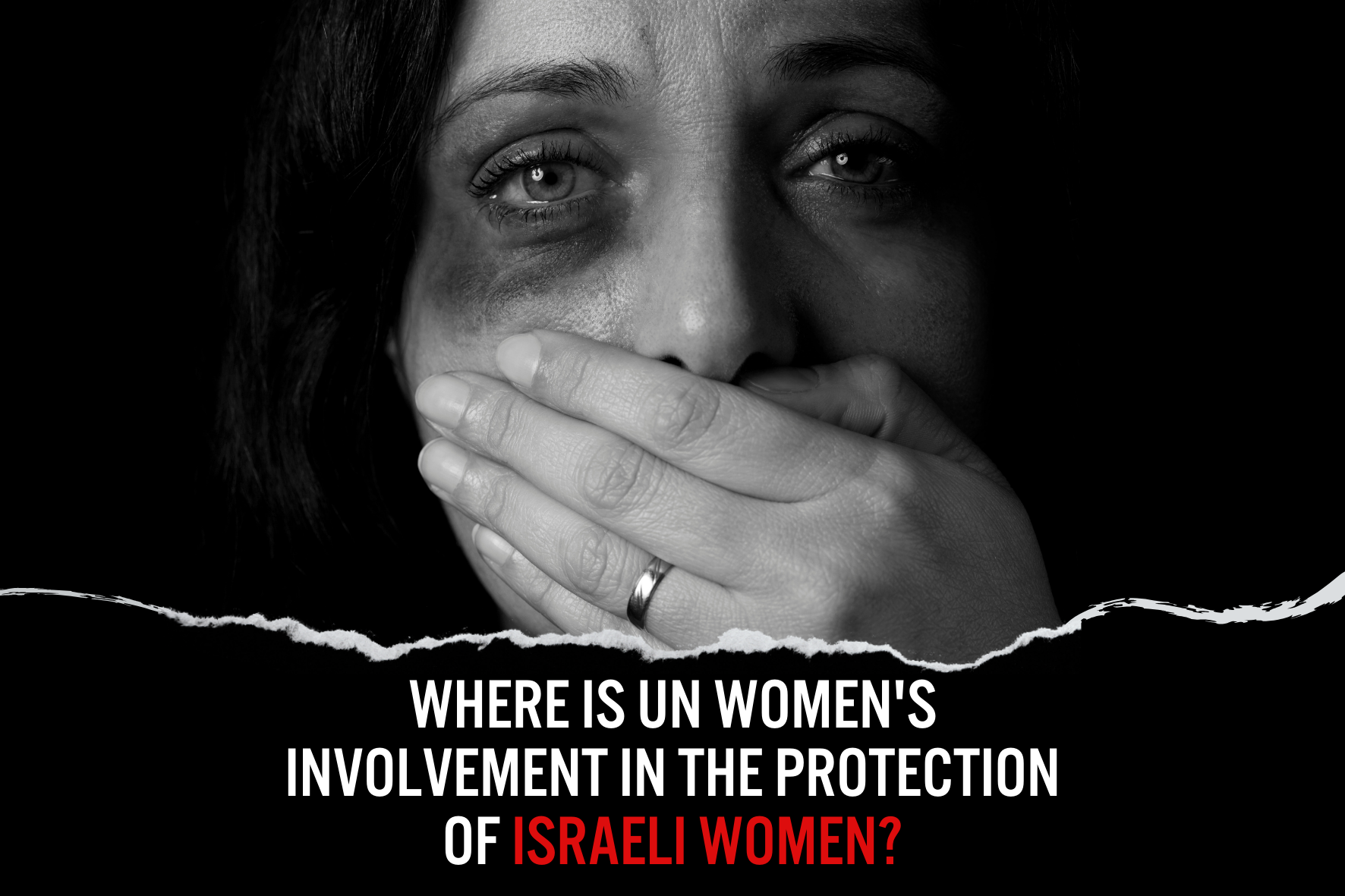
Where is UN women's involvement in the protection of Israeli women?
Date: October 30, 2023
To:
Sima Bahous
Executive Director of UN Women
220 E 42nd St, New York, NY 10017, United States
Dear Executive Director Bahous,
We write to you with deep concern about the situation in the region and, more specifically, to urgently request UN Women's intervention to safeguard the rights and well-being of all women and girls, including those who have been attacked, raped, kidnapped, and murdered by Hamas and other Palestinian armed groups.
The statement by UN Women on October 13th, though appreciated, appears to fall short in fully addressing and safeguarding the rights and well-being of victims who have endured significant hardships in recent events. Our primary concern is the perceived bias in the statement and its omission of acknowledgment regarding the many women and girls in Israel who have suffered due to the atrocities committed by Hamas and other Palestinian armed groups.
We wholeheartedly support UN Women's commitment to the well-being of Palestinian women. However, it is essential that this commitment is not one-sided.
The acts of terror by Hamas against hundreds of women and girls are truly horrific. These ruthless actions include ripping open the belly of a pregnant woman and beheading her unborn child, slaughtering, raping, burning, beheading, and mutilating Israeli women and girls, and burning women and girls alive. Moreover, several women and girls were kidnapped and are still today being held hostage in the Gaza Strip.
It is imperative that UN Women’s mission embraces the well-being of all women and girls, without exception. We, therefore, strongly urge you to take immediate and decisive action to protect and provide unwavering support to the countless women and girls who have suffered at the hands of Hamas and other Palestinian terrorist groups.

Committing to Palestinian rights (?)
In 2012, the United Nations (UN) granted the Palestinians non-member observer State status. Following this decision, the “State of Palestine” – as officially named in the UN – ratified several international treaties, supposedly to commit itself to comply with human rights and other international legal obligations. One such treaty is the International Covenant on Civil and Political Rights (ICCPR), which obligates those countries that have joined the treaty to respect and ensure the protection of fundamental human rights, such as the right to life, equality, and freedom of thought.
But how does one ensure that countries actually comply with their obligations and protect the rights of those under their jurisdiction? This is, in fact, the role of the UN Human Rights Committee, which receives reports from the State parties on the measures they have adopted in relation to the rights contained in the ICCPR. For this purpose, the Committee receives both the report of the state in question as well as documents submitted by organizations that wish to provide more information on the state’s compliance with the ICCPR. After analyzing the information received, the Committee issues recommendations to the state.
This month, it was the State of Palestine’s turn to attend and be examined by the Committee. Last week, the Committee issued its recommendations to the State of Palestine, also expressing its concerns on the numerous human rights violations that appear to be committed by Palestinian authorities.
Among the several human rights abuses highlighted in the Committee’s concluding observations, there is one that has not received enough attention from the international community: detainees are often subjected to torture by Palestinian security forces and intelligence services. The Committee has expressed its concerns “about consistent reports indicating that persons in custody, including in the facilities under the authority of the security forces and intelligence services, are subjected to torture or ill-treatment.”
What is even more alarming is the fact that many of the persons subjected to torture are actually children. The Palestinian Independent Commission for Human Rights, the national human rights institution established by Presidential Decree and has the function of an ombudsman, informed the UN Committee Against Torture that between 2016 and 2021, they received 4,279 claims of torture and other forms of cruel, inhuman, and degrading treatment, with 12% of them filed by children (Shadow Report of the Independent Commission for Human Rights on the initial report submitted by the State of Palestine on the implementation of the Convention against Torture, 2022).
The report submitted by the Jerusalem Institute of Justice (JIJ) also provides detailed information on the many cases of torture committed by the Palestinian authorities. Most individuals subjected to torture and inhumane treatment are those who exercise their fundamental rights by participating in peaceful protests or publicly voicing criticism against the authorities and those who are accused of “collaborating with Israel.” As pointed out by JIJ’s report, “these abuses and acts of torture have occurred across various periods, underscoring the fact that they are not isolated incidents.”
What is also concerning is the culture of impunity sustained by the Palestinian authorities. As pointed out by the Committee, only a few complaints of torture are investigated, and almost none of the investigations have resulted in the prosecution and conviction of the perpetrators. The Committee has therefore called upon the State of Palestine to “investigate promptly, thoroughly and effectively all cases of torture and ill-treatment in all places of deprivation of liberty, to ensure that perpetrators are prosecuted and, if convicted, punished with penalties commensurate with the gravity of the offenses and that victims of such violations receive full reparation and are provided with redress.”
But how does all this effort by the Committee and organizations truly translate into real-life change? Does this have any actual impact on those individuals whose rights are being violated by the Palestinian Authorities? Moreover, the Committee is one of many bodies in the UN that are responsible to oversee and ensure the respect of human rights. Even several bodies were specifically established regarding the rights of the Palestinians, so shouldn’t these institutions also focus on the human rights violations being committed by the Palestinian authorities?
The status of the Palestinians remains a contentious topic, subject to ongoing debate. Palestinian authorities have sought state recognition, which the UN eventually granted. However, this recognition must not be mere rhetoric or a political instrument; it holds the potential to make a meaningful difference. Regrettably, the UN has sometimes been manipulated as a platform for discussions that, under the guise of safeguarding human rights, mask hidden agendas and overlook real abuses.
The UN Human Rights Committee, composed of independent experts rather than states, plays a crucial role in safeguarding the rights of every individual. As a human rights advocate, I remain optimistic that this framework can lead to positive outcomes, hoping that even the State of Palestine, in its pursuit of recognition, will fulfill its obligations and uphold human rights.
By Carolina Grimberg Golijov, JIJ's Human Rights, Law and Research Officer.
Committing to Palestinian rights (?)
In 2012, the United Nations (UN) granted the Palestinians non-member observer State status. Following this decision, the “State of Palestine” – as officially named in the UN – ratified several international treaties, supposedly to commit itself to comply with human rights and other international legal obligations. One such treaty is the International Covenant on Civil and Political Rights (ICCPR), which obligates those countries that have joined the treaty to respect and ensure the protection of fundamental human rights, such as the right to life, equality, and freedom of thought.
But how does one ensure that countries actually comply with their obligations and protect the rights of those under their jurisdiction? This is, in fact, the role of the UN Human Rights Committee, which receives reports from the State parties on the measures they have adopted in relation to the rights contained in the ICCPR. For this purpose, the Committee receives both the report of the state in question as well as documents submitted by organizations that wish to provide more information on the state’s compliance with the ICCPR. After analyzing the information received, the Committee issues recommendations to the state.
This month, it was the State of Palestine’s turn to attend and be examined by the Committee. Last week, the Committee issued its recommendations to the State of Palestine, also expressing its concerns on the numerous human rights violations that appear to be committed by Palestinian authorities.
Among the several human rights abuses highlighted in the Committee’s concluding observations, there is one that has not received enough attention from the international community: detainees are often subjected to torture by Palestinian security forces and intelligence services. The Committee has expressed its concerns “about consistent reports indicating that persons in custody, including in the facilities under the authority of the security forces and intelligence services, are subjected to torture or ill-treatment.”
What is even more alarming is the fact that many of the persons subjected to torture are actually children. The Palestinian Independent Commission for Human Rights, the national human rights institution established by Presidential Decree and has the function of an ombudsman, informed the UN Committee Against Torture that between 2016 and 2021, they received 4,279 claims of torture and other forms of cruel, inhuman, and degrading treatment, with 12% of them filed by children (Shadow Report of the Independent Commission for Human Rights on the initial report submitted by the State of Palestine on the implementation of the Convention against Torture, 2022).
The report submitted by the Jerusalem Institute of Justice (JIJ) also provides detailed information on the many cases of torture committed by the Palestinian authorities. Most individuals subjected to torture and inhumane treatment are those who exercise their fundamental rights by participating in peaceful protests or publicly voicing criticism against the authorities and those who are accused of “collaborating with Israel.” As pointed out by JIJ’s report, “these abuses and acts of torture have occurred across various periods, underscoring the fact that they are not isolated incidents.”
What is also concerning is the culture of impunity sustained by the Palestinian authorities. As pointed out by the Committee, only a few complaints of torture are investigated, and almost none of the investigations have resulted in the prosecution and conviction of the perpetrators. The Committee has therefore called upon the State of Palestine to “investigate promptly, thoroughly and effectively all cases of torture and ill-treatment in all places of deprivation of liberty, to ensure that perpetrators are prosecuted and, if convicted, punished with penalties commensurate with the gravity of the offenses and that victims of such violations receive full reparation and are provided with redress.”
But how does all this effort by the Committee and organizations truly translate into real-life change? Does this have any actual impact on those individuals whose rights are being violated by the Palestinian Authorities? Moreover, the Committee is one of many bodies in the UN that are responsible to oversee and ensure the respect of human rights. Even several bodies were specifically established regarding the rights of the Palestinians, so shouldn’t these institutions also focus on the human rights violations being committed by the Palestinian authorities?
The status of the Palestinians remains a contentious topic, subject to ongoing debate. Palestinian authorities have sought state recognition, which the UN eventually granted. However, this recognition must not be mere rhetoric or a political instrument; it holds the potential to make a meaningful difference. Regrettably, the UN has sometimes been manipulated as a platform for discussions that, under the guise of safeguarding human rights, mask hidden agendas and overlook real abuses.
The UN Human Rights Committee, composed of independent experts rather than states, plays a crucial role in safeguarding the rights of every individual. As a human rights advocate, I remain optimistic that this framework can lead to positive outcomes, hoping that even the State of Palestine, in its pursuit of recognition, will fulfill its obligations and uphold human rights.
By Carolina Grimberg Golijov, JIJ's Human Rights, Law and Research Officer.

53rd Session of the Human Rights Council - Agenda Item 7 - JIJ's Statement
https://www.youtube.com/watch?v=rUUKMJd_Chc
On the 10th of July, the UN Human Rights Council held a session on Item 7 of its agenda. This Item is defined as the “Human rights situation in Palestine and other occupied Arab territories.” This is, in fact, the only country-specific item on the agenda and has served as a pretext to issue a disproportionate amount of resolutions against Israel.
The Jerusalem Institute of Justice, which holds Special Consultative Status in the UN, has participated in this session. JIJ’s Human Rights, Law, and Research Officer, Carolina Grimberg Golijov, issued a statement opposing this item and calling upon the Council to respect its mandate and work for the protection of human rights.
Read the full transcript: JIJ's Oral Statement Transcript - 53rd HRC session -agenda item 7
A Step Too Far: The UN Human Rights Council COI Report on Israel
After clashes between Israel and Hamas in May 2021, the UN Human Rights Council opened a Commission of Inquiry (COI) to investigate human rights abuses in Israel. Over the course of the past two years, the COI has produced three reports detailing one-sided, biased information about the events on the ground, falsely portraying reality for so many Israelis and Palestinians. In its latest report, the COI focused on “Israel’s attacks, restrictions, and harassment of civil society actors” and revealed numerous concerning human rights violations in the Palestinian Territories and East Jerusalem. However, the UN fell into its biased routine of disproportionate representation once again.
Although unequal treatment is expected with the UN’s long history of anti-Israel sentiment, the most recent proceedings took matters to new heights. Throughout the report and live session, the COI explicitly supported BDS and similar Israel-boycott organizations and categorized them as legitimate forms of protest. The COI also ignored terrorism enacted by both Palestinian leadership and civilians and called on UN member states to support the Palestinian resistance. These actions not only fail to uphold the COI’s mission to “establish the facts and circumstances” and “identify those responsible,” but it glorifies antisemitism in the world’s most prominent human rights organization, setting a precedent that poses a serious threat to Jews around the world (the UN Independent International COI on the OPT Mandate, 2021).
In the COI report’s section detailing Israel’s delegitimization of Palestinian civil society, the COI claims that Israel instituted various measures to limit BDS, such as removing their funding and cutting business deals. By preventing BDS from acting freely, Israeli authorities were denying their supporters the right to freedom of expression, which is considered a human rights violation. As a response, the COI asserts that:
“Everyone shall have the right to freedom of expression; this right shall include freedom to seek, receive and impart information and ideas of all kinds, regardless of frontiers, either orally, in writing or in print, in the form of art, or through any other media of his choice,” (Human Rights Council 53rd Session Report, pp 11)
Such statements blatantly support accounts of institutionalized antisemitism and violent resistance espoused by BDS leaders. There are numerous cases in which the BDS has voiced its antisemitic views. BDS co-founder and leader Omar Barghouti freely admits that BDS “opposes a Jewish state in any part of Palestine.” In another, a BDS leader in South Africa stated, “BDS [...] will help bring about the defeat of Zionist Israel and victory for Palestine.” Lastly, Barghouti claimed that “B.D.S. treats resistance to what it sees as Israeli oppression, including by armed struggle, as a legitimate right. Asked if B.D.S. condemned the violence that targeted Israeli soldiers, he declined to comment” (Halbfinger et. al, Is B.D.S. Anti-Semitic? A Closer Look at the Boycott Israel Campaign).
BDS’ opposition to a Jewish state in Israel’s borders is not hidden. They openly deny the Jewish people’s right to self-determination in the land of Israel and advocate against a peaceful solution. While every individual should have the right to criticize any institution and exercise his or her freedom of expression, there is a difference between disagreement and encouraging human rights crimes. BDS clearly legitimizes terrorism and harm to innocent Israeli civilians as a means to wipe Israel off the face of the Earth.
To add fuel to the fire, the COI commissioners have explicitly shared similar views in interviews and sessions. Navi Pillay, the chief commissioner, has spent a large portion of her career fighting Israel, from lobbying governments to boycott Israel to creating the “Sanction Apartheid Israel” petition. On numerous occasions, Pillay has affirmed her support for BDS, such as “I hope that the Palestinian struggle to end colonization gains this kind of momentum, especially in the civilian campaign of BDS, Boycott, Divestment, and Sanctions” at a conference in South Africa (November 29, 2017). Furthermore, Miloon Kothari, one of three commissioners of the COI, stated outright in the session, “States want to [...] correctly uphold the rights of the Ukrainians to resist, and we want to see the same standards applied to the case of Israel and Palestine.” In short, just as the Ukrainians use armed resistance and violence against Russia, so should the Palestinians. Violence is an encouraged response (3rd Meeting 53rd Session of Human Rights Council).
By confirming BDS as a legitimate protest organization, the UNHRC supports both human rights violations and violence as a means to an end. They support the continuation of conflict, not peace, and are actively making the world a more dangerous place for the Jewish people.
As a Jewish student studying human rights in university, I am deeply disappointed in the COI’s report and frightened by its precedent. Firstly, one of the most important lessons of higher education is to never rely on one narrative. Every conflict has multiple angles, but ignoring basic facts detracts from the truth. Highlighting the Israeli perspective is just as crucial to progress as highlighting the Palestinian one, and peace can only emerge through mutual recognition.
Secondly, this statement arrives at a dangerous time for the Jewish people, as antisemitism has slowly crept back into all sectors of our society. Many of my peers have been alienated for their assumed pro-Israel opinions after simply expressing their Jewish identities. Not only do individuals fear expressing their opinions on Israel, but the environment no longer allows them to be open about being Jewish. By giving the green light to BDS, the COI contributes to “removing [...] civil-society actors from the public space to stop their activities, silencing their voices and punishing them, and often also deterring others,” the exact environment the UNHRC claims Israeli authorities wrongfully create for Palestinians (Human Rights Council 53rd Session Report pp 20).
As a path forward, the UNHRC COI must condemn BDS for crossing the line from free speech to antisemitism. By drawing this line, the UNHRC can simultaneously protect the freedom of expression, as well as the Jewish people. Second, the UNHRC must recognize the terrorism enacted by Palestinian civilians and leadership. If they assert that Israeli violence is a human rights crime, they must at least recognize that it exists on the other side, let alone criticize it.
The only path to upholding human rights is to escape emotional narrative, present challenging issues from either side and hold both sides accountable for their actions. It is crucial to call out Israel when they commit crimes, just as criticism is warranted for any democracy, but displaying biased, one-sided evidence only inhibits progress and perpetuates the harmful, decades-long conflict. Every innocent Palestinian and Israeli equally deserves fair treatment from their governments and international institutions, and hiding the truth prevents human rights for all.
By Molly Goldstein - JIJ Intern
A Step Too Far: The UN Human Rights Council COI Report on Israel
After clashes between Israel and Hamas in May 2021, the UN Human Rights Council opened a Commission of Inquiry (COI) to investigate human rights abuses in Israel. Over the course of the past two years, the COI has produced three reports detailing one-sided, biased information about the events on the ground, falsely portraying reality for so many Israelis and Palestinians. In its latest report, the COI focused on “Israel’s attacks, restrictions, and harassment of civil society actors” and revealed numerous concerning human rights violations in the Palestinian Territories and East Jerusalem. However, the UN fell into its biased routine of disproportionate representation once again.
Although unequal treatment is expected with the UN’s long history of anti-Israel sentiment, the most recent proceedings took matters to new heights. Throughout the report and live session, the COI explicitly supported BDS and similar Israel-boycott organizations and categorized them as legitimate forms of protest. The COI also ignored terrorism enacted by both Palestinian leadership and civilians and called on UN member states to support the Palestinian resistance. These actions not only fail to uphold the COI’s mission to “establish the facts and circumstances” and “identify those responsible,” but it glorifies antisemitism in the world’s most prominent human rights organization, setting a precedent that poses a serious threat to Jews around the world (the UN Independent International COI on the OPT Mandate, 2021).
In the COI report’s section detailing Israel’s delegitimization of Palestinian civil society, the COI claims that Israel instituted various measures to limit BDS, such as removing their funding and cutting business deals. By preventing BDS from acting freely, Israeli authorities were denying their supporters the right to freedom of expression, which is considered a human rights violation. As a response, the COI asserts that:
“Everyone shall have the right to freedom of expression; this right shall include freedom to seek, receive and impart information and ideas of all kinds, regardless of frontiers, either orally, in writing or in print, in the form of art, or through any other media of his choice,” (Human Rights Council 53rd Session Report, pp 11)
Such statements blatantly support accounts of institutionalized antisemitism and violent resistance espoused by BDS leaders. There are numerous cases in which the BDS has voiced its antisemitic views. BDS co-founder and leader Omar Barghouti freely admits that BDS “opposes a Jewish state in any part of Palestine.” In another, a BDS leader in South Africa stated, “BDS [...] will help bring about the defeat of Zionist Israel and victory for Palestine.” Lastly, Barghouti claimed that “B.D.S. treats resistance to what it sees as Israeli oppression, including by armed struggle, as a legitimate right. Asked if B.D.S. condemned the violence that targeted Israeli soldiers, he declined to comment” (Halbfinger et. al, Is B.D.S. Anti-Semitic? A Closer Look at the Boycott Israel Campaign).
BDS’ opposition to a Jewish state in Israel’s borders is not hidden. They openly deny the Jewish people’s right to self-determination in the land of Israel and advocate against a peaceful solution. While every individual should have the right to criticize any institution and exercise his or her freedom of expression, there is a difference between disagreement and encouraging human rights crimes. BDS clearly legitimizes terrorism and harm to innocent Israeli civilians as a means to wipe Israel off the face of the Earth.
To add fuel to the fire, the COI commissioners have explicitly shared similar views in interviews and sessions. Navi Pillay, the chief commissioner, has spent a large portion of her career fighting Israel, from lobbying governments to boycott Israel to creating the “Sanction Apartheid Israel” petition. On numerous occasions, Pillay has affirmed her support for BDS, such as “I hope that the Palestinian struggle to end colonization gains this kind of momentum, especially in the civilian campaign of BDS, Boycott, Divestment, and Sanctions” at a conference in South Africa (November 29, 2017). Furthermore, Miloon Kothari, one of three commissioners of the COI, stated outright in the session, “States want to [...] correctly uphold the rights of the Ukrainians to resist, and we want to see the same standards applied to the case of Israel and Palestine.” In short, just as the Ukrainians use armed resistance and violence against Russia, so should the Palestinians. Violence is an encouraged response (3rd Meeting 53rd Session of Human Rights Council).
By confirming BDS as a legitimate protest organization, the UNHRC supports both human rights violations and violence as a means to an end. They support the continuation of conflict, not peace, and are actively making the world a more dangerous place for the Jewish people.
As a Jewish student studying human rights in university, I am deeply disappointed in the COI’s report and frightened by its precedent. Firstly, one of the most important lessons of higher education is to never rely on one narrative. Every conflict has multiple angles, but ignoring basic facts detracts from the truth. Highlighting the Israeli perspective is just as crucial to progress as highlighting the Palestinian one, and peace can only emerge through mutual recognition.
Secondly, this statement arrives at a dangerous time for the Jewish people, as antisemitism has slowly crept back into all sectors of our society. Many of my peers have been alienated for their assumed pro-Israel opinions after simply expressing their Jewish identities. Not only do individuals fear expressing their opinions on Israel, but the environment no longer allows them to be open about being Jewish. By giving the green light to BDS, the COI contributes to “removing [...] civil-society actors from the public space to stop their activities, silencing their voices and punishing them, and often also deterring others,” the exact environment the UNHRC claims Israeli authorities wrongfully create for Palestinians (Human Rights Council 53rd Session Report pp 20).
As a path forward, the UNHRC COI must condemn BDS for crossing the line from free speech to antisemitism. By drawing this line, the UNHRC can simultaneously protect the freedom of expression, as well as the Jewish people. Second, the UNHRC must recognize the terrorism enacted by Palestinian civilians and leadership. If they assert that Israeli violence is a human rights crime, they must at least recognize that it exists on the other side, let alone criticize it.
The only path to upholding human rights is to escape emotional narrative, present challenging issues from either side and hold both sides accountable for their actions. It is crucial to call out Israel when they commit crimes, just as criticism is warranted for any democracy, but displaying biased, one-sided evidence only inhibits progress and perpetuates the harmful, decades-long conflict. Every innocent Palestinian and Israeli equally deserves fair treatment from their governments and international institutions, and hiding the truth prevents human rights for all.
By Molly Goldstein - JIJ Intern
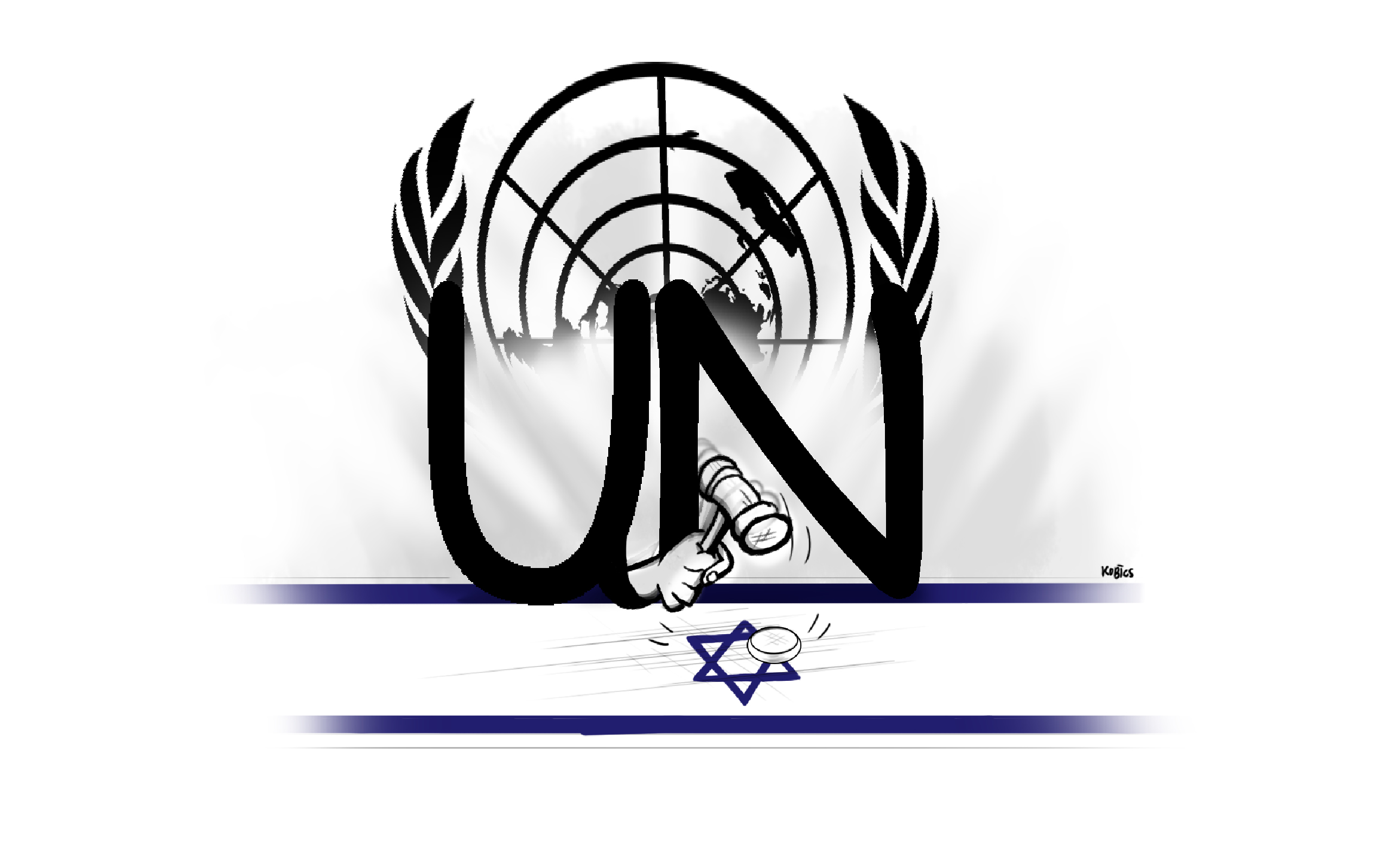
Boycotting UN Investigations
The Only Productive Boycott for Israel
In relation to the Israeli-Palestinian conflict, the UN routinely conducts investigations and releases corresponding reports. These reports, which claim to offer an overview of the situation, are often prejudiced and fail to give equal weight to the merits of each side.
After the 11-day conflict between Israel and Hamas in 2021, the Geneva–based United Nations Human Rights Council (UNHRC) created a three-person commission, to be headed by Navanethem “Navi” Pillay. Exceptionally, the most recent investigative body has taken a scope which extends beyond the 2021 conflict, urging Israel to take actions to solve the greater Israeli-Palestinian conflict.
Pillay’s multiple associations with supporters of BDS, as well as the UN’s disproportionate historical focus on Israel through constant condemnation, further take away from the report’s legitimacy. The report has rightfully been criticized as one-sided, though the Israeli Government’s decision to not cooperate with the commission will further complicate Israel’s relations with the UN as a whole, even on issues with which Israel and the UN agree on. Additionally, it will be manipulated by international critics as purported proof of Israel attempting to hide damaging information.
Despite the consequences associated with any decision to not cooperate with the UN, Israel should refuse to cooperate with investigations of this type. It should do this to take a stand against investigations made in bad faith and avoid legitimizing reports whose unfavorable findings could be easily predicted when taking the international bodies and commission which made the report into account.
The United Nations’ disproportionate focus on Israel has been documented, with a majority of resolutions criticizing the country, despite it containing a fraction of a percentage of the world’s population and land area.[1] Putting aside the attention that could be given to more rights-abusive countries, the UNHRC itself seats members such as China, Cuba, Pakistan and Venezuela, who are engaged in severe repression and human rights violations.
The report further weighs in on the sources of the Israeli-Palestinian conflict as a whole and identifies Israeli actions as the main cause. This large-scale conclusion goes beyond the usual confines of UN investigations and demonstrates the pre-existing beliefs about the nature of the conflict which the investigation sought to prove. Furthermore, the commission’s brief mentions of the Palestinian Authority and Hamas’s human rights abuses fail to meaningfully place liability on both sides in the conflict or include the threats which Israel faces. Through tone and relative content, the report emphasizes critiques of Israel above all else.
Navi Pillay’s history regarding Israel is ambiguous at best. Pillay, former UN High Commissioner for Human Rights, signed a letter to US President Joe Biden calling on Israel to withdraw entirely from the West Bank shortly before she was appointed head of the commission.[2] She further stated that “Apartheid is now being declared a crime against humanity in the Rome Statute and it means the enforced segregation of people on racial lines and that is happening in Israel.”[3]
While this does not provide any concrete blame of Israel for the violence in 2021, it should come as little surprise that Pillay later stated that "[the report] is as an indicator of the asymmetrical nature of the conflict and the reality of one state occupying the other."[4] Pillay’s colleagues, Miloon Khotari and Chris Sidoti, have similarly clear pre-existing notions about Israel. Khotari, has referred to the Second Intifada as simply a “wave of Palestinian resistance,” described Israel’s government as a theocracy and openly called for an end to military cooperation with Israel.
Similarly, Sidoti has worked with pro-BDS organizations such as the Australian Center for International Justice and the Independent Commission for Human Rights, established by Yasser Arafat himself in 1993.[5] These appointments greatly diminished the legitimacy of the commission from the beginning, and the backgrounds of its members and the UN bodies which created it give the appearance that the investigation was never a major factor behind the tone and substance of the report.
The COI investigation’s boundaries make cooperation disadvantageous, as its scope and mandate both ensure abnormal treatment. The investigation can include events going all the way back to the founding of Israel, and this COI will continue indefinitely, with more reports to follow each year even after the current report’s release. The wide scope and continuous nature demonstrate the UN’s obsession with condemning Israel, as no other COI has ever been given this kind of never-ending mandate.
Israel could cooperate with proceedings and argue that it has nothing to hide, though doing this would not lessen international blame on Israel and it would continue to be subject to both double standards and disproportionate emphasis by the UNHRC and by the international community at large. Instead, the cooperation would be taken as simply a prerequisite for the investigation itself, and there would be a report written in a similarly one-sided manner.
The significance of negative reports could prove damaging to Israel’s reputation amongst some, though importantly, these reports will continue to be released with or without Israel’s cooperation. Boycotting will allow Israel to take an active stance in fighting a report which Israel feels is unfair, as opposed to letting the UN villainize Israel and only voicing disagreement after it is done.
While some might argue that refusing to cooperate with an investigation will isolate Israel from allies and the international community as a whole, Israel’s allies understand this. The commitment between them and Israel to their alliances will remain in all likelihood no matter what conclusions the UNHRC might reach from its numerous investigations, as they have for decades. Because of this, Israel has limited benefits to cooperating with the UN on this issue and little downside for refusing to do so.
Israel should not and does not deny that many Palestinians have a poor quality of life for a variety of reasons, and accordingly has investigated reported incidents based off of investigations such as the Goldstone reports, even without cooperating during the reports’ productions.[6] In this way, while the decision to boycott the investigation does not solve the underlying problem of discrimination against Israel and can give off an appearance of concealing evidence, Israel has the standing and experience to make this decision given the nature of the investigation.
By Ethan Kanef, intern at JIJ
[1] Becker, R.N., Hillman, A.L., Potrafke, N. et al. The preoccupation of the United Nations with Israel: Evidence and theory. Rev Int Organ 10, 413–437 (2015). https://doi.org/10.1007/s11558-014-9207-3
[2] #NowistheTime. June 14, 2021, https://nowisthetimecoalition.com/.
[3] “Navi Pillay on Israel Being an Apartheid State: Short Version.” Www.youtube.com, 29 Jan. 2018, www.youtube.com/watch?v=6sIEfCf1Dhs. Accessed 12 July 2022.
[4] “Commission of Inquiry on the Occupied Palestinian Territory, Including East Jerusalem, and Israel, Issues First Report.” The Office of the High Commissioner for Human Rights, June 7, 2022. https://www.ohchr.org/en/press-releases/2022/06/commission-inquiry-occupied-palestinian-territory-including-east-jerusalem
[5] Bayefsky, Prof Anne. “The Newest Anti-Israel UN Action Must Be Challenged – Now.” Jerusalem Center for Public Affairs, jcpa.org/article/the-newest-anti-israel-un-action-must-be-challenged-now/. Accessed 11 July 2022.
[6] Goldstone, Richard. “Reconsidering the Goldstone Report on Israel and War Crimes.” The Washington Post. WP Company, April 1, 2011.
HRC 50th Session - Written Statement
https://www.youtube.com/watch?v=w8SAwlfw0D4
Read Original Document
Mr. President,
We, the Jerusalem Institute of Justice, an Israeli NGO fighting to promote human rights, defend democracy, and improve the overall quality of life for Israelis and Palestinians alike, find it of the utmost importance to reject the so-called independent commission of inquiry named “The United Nations Independent International Commission of Inquiry on the Occupied Palestinian Territory, including East Jerusalem, and Israel (COI)”.
Israel-UN relations have known many lows throughout the years. From General Assembly resolution 3379 equating Zionism with racism, through the anti-Israel 2001 Durban World Conference against Racism which devolved into a vicious forum for Israel bashing and antisemitism, the UN has shown time and time again that its founding values of universality, impartiality, objectivity, and non-selectivity, are disregarded when it comes to the condemning of Israel. Let us be clear, this systematic campaign is done with the clear intention of delegitimizing the only democracy in the middle east.
The COI was formed in the wake of the 2021 Gaza Conflict, a conflict which erupted as a result of the indiscriminate firing of rockets and mortars by the Palestinian terrorist organizations in Gaza. The formation of this COI constitutes an escalation in the UN’s hostile approach towards Israel. If up until today the UN’s resolutions had more of a declarative nature, this COI was formed to prepare the ground for operative steps against Israel. This commission goes as far as to call upon third states to ignore Israel’s sovereignty and take action in regards to the Israeli-Palestinian conflict. Furthermore, the COI was tailor-made to enable the International Criminal Court to take legal action against Israel on the basis of the alleged Israeli breach of the Rome Statue.
It is enough to look at the COI’s mandate to grasp its prejudice towards Israel. The bias of the COI is especially evident in the terminology used in the text of the mandate, which designates the commission to “Investigate all underlying root causes of recurrent tensions, instability and protraction of conflict, including systematic discrimination and repression based on national, ethnic, racial or religious identity”. This kind of terminology has been put forth to prepare the ground for the commission’s expected false conclusion that Israel is an apartheid state. In addition, this terminology shows the commission will try to assign all the responsibility on the continuation of the conflict on Israel.
Furthermore, this commission of inquiry was assigned an extremely wide scope to investigate. Although the inquiry was formed as a response to the 2021 Gaza conflict, the scope of the investigation, as designated by its mandate, permits it to focus on issues related to the conflict since 1948. If this commission was formed as a response to the conflict in Gaza last year, why is it investigating the history of the conflict since 1948? Moreover, the terrorist organization Hamas is not mentioned even once in the resolution or the text of the mandate. This goes to show, once more, the minor role Hamas will be given in this commission’s report.[1]
This commission is of unprecedented measures. It has received an extremely large budget of millions of dollars, an unusually large staff of 18 permanent workers, and is also one of only 2 UN bodies ever created with an open-ended mandate. No other commission of inquiry has ever received a continuing mandate. Additionally, like any other “objective” UN inquiry on Israel, the choice of the inquisitors is intended to pre-determine the answer – even though this is in clear violation of UN rules. The Code of Conduct for Special Procedures Mandate-holders states very clearly that members of inquiries are required to follow to a specific code of conduct - they are supposed to uphold the highest standards of impartiality. “The work of the Council shall be guided by the principles of universality, impartiality, objectivity, and non-selectivity”.[2]
The three members of this Commission are anything but independent. The head of the Commission, Navi Pillay, was a key leader of the 2001 UN Durban World Conference against Racism which called Israel a racist state. Additionally, as United Nations High Commissioner for Human Rights during the 2008-9 and 2014 Gaza wars, Pillay played a pivotal role in promoting the Goldstone report and the outrageous slander that Israel targeted and murdered children. Since leaving office, she’s made a habit of promoting BDS and accusing Israel of apartheid. In a speech to the South African Department of International Relations and Cooperation’s seminar “The Year of Oliver Tambo and The Palestinian Struggle under Apartheid Rule, Pretoria, South Africa,” Pillay stated the following: “Apartheid is now being declared a crime against humanity in the Rome Statute, and it means the enforced segregation of people on racial lines, and that is what is happening in Israel.”[3] At the same event, Pillay also noted that she has met with members of the BDS campaign and that she hoped this “Palestinian struggle to end colonization”[4] will “catch on, as did the anti-apartheid movement.”[5] Is having an individual who has already accused Israel numerous times of being an apartheid state and who has publicly endorsed the BDS campaign lead this commission consistent with the UN’s own standard of impartiality?
In addition, the two other members of the committee, Miloon Kothari and Chris Sidoti, both hold anti-Israel extremism and Palestinian partisanship records. In 2002 Khotari issued a report claiming Israel was guilty of “ethnic cleansing” during the Second Intifada. In 2006 he claimed in a UN press release that the factors underlying the ongoing conflict between Israel and the Palestinians are the World Zionist Organization and Jewish National Fund’s colonization activities in the Jordan Valley. Chris Sidoti provides strategic guidance and advice to the Australian Centre for International Justice which works in partnership with the Palestinian Human Rights Organization Council. This Australian Centre issued a report in 2021 that calls on the Australian government to endorse BDS and the criminal prosecution of Israelis.[6] In conclusion, none of the three members of this so-called independent Inquiry meet the UN’s own rules of independence, impartiality, and objectivity.[7]
The result of this witch hunt is a foregone conclusion. This unfair commission of inquiry is expected to accuse Israel of being an apartheid state and thus target its legitimacy as a state. Therefore, we call on the Human Rights Council to revoke the resolution forming this commission. Alternatively, we recommend the removal of the three prejudiced judges heading the commission and that impartial judges be instated in their place.
Let us finish with, none other than, former Secretary General, Mr. Ban Ki-moon, who in a talk with Israeli students admitted the UN’s bias towards Israel saying the following:
“Unfortunately, because of the [Israeli-Palestinian] conflict, Israel’s been weighed down by criticism and suffered from bias — and sometimes even discrimination.”[8]
[1] https://www.ohchr.org/en/hr-bodies/hrc/co-israel/index
[2] https://ap.ohchr.org/documents/dpage_e.aspx?si=A/HRC/RES/5/2
[3]https://www.youtube.com/watch?v=6sIEfCf1Dhs&ab_channel=NTUInstituteofScience%26TechnologyforHumanity
[4] Ibid.
[5] https://www.youtube.com/watch?v=nF61qfb5J-k&ab_channel=Africa4Palestine
[6] Ibid.
[7] https://ap.ohchr.org/documents/dpage_e.aspx?si=A/HRC/RES/5/2
[8] https://www.timesofisrael.com/israel-faces-bias-at-un-ban-says/
The Transparent Jew
In 2018, just a few days after my arrival to Europe from Israel, I sat in my teenage bedroom and recalled the countless incidents overseas in which I had lied about my nationality. I started laughing at myself, mildly concerned by how I easily conformed to a different culture, and even more surprised by how quickly my chameleon identity was accepted. I thought to myself, it’s better to laugh than to cry. For the first time, I was able to acknowledge that I had been raised to hide my heritage when I was outside my safe space. Doing so, I decided to no longer conceal my Jewish-Israeli identity.
In my new country, I had hoped to perfect my response to the simple question “where are you from?”. My ideal reply would be short and succinct, one I could pull off and use to secure a harassment-free encounter - nevertheless, it was impossible, and every attempt was to be located somewhere between awkward to disingenuous.
King Solomon was right when he declared, “There is nothing new under the sun”. Unfortunate as it may be, the Jewish necessity to cover its ethno-religious identity dates back in time to the Roman exile - when Jews suffered huge losses and humiliation as their ancestral homeland was colonized, erasing the Jewish identity of the land. Consciously or unconsciously, the destruction of the Jewish temple and the renaming of the land had severe repercussions on the Jewish identity, remaining until today.
Since then, two thousand years of Jewish people “pray[s] to be back in Zion, for the messiah to come and rebuild the temple.”- The eagerness to return to the homeland they came from has never diminished. This is the essence of Zionism, the liberation and restoration of the Jewish identity, that was severely colonized and morphed by countless foreign entities throughout history.
Does this Zionism, (which would later become a political movement) represent the solution our ancestors yearned for - an independent Jewish nation that is capable of both rediscovering its identity while eliminating the inherent hatred within those that had colonized it? In a utopian world - indeed, but not within the society I witnessed.
The creation of Israel is the most successful indigenous liberation in history; it is the hammer that broke the famous, self-tailored, “comfortable” Jewish character - weak and quiet Jews that are easily trampled and find themselves at the mercy of the majority. The founding of the State of Israel generated strong and empowered Jews that pursued their indigenous right to self-determination in their ancestral homeland.
Paradoxically, the United Nations is the organization which defines indigenous rights, along with the unofficial-leadership of the P5 - which are collectively known for enjoying a colonial history. The UN consistently fails to preserve Jewish rights as they don’t address the contemporary rise of Antisemitism on both sides of the political map. Nor has it brought justice to the hundreds of thousands of Mizrahi Jews, whose assets were confiscated by Arab governments while they were persecuted and forced to exile(1). It routinely
promotes state-based resolutions against Israel (18 in 2019) while ignoring the actions of China, Hamas, Venezuela, Qatar, Pakistan, and others(2). It continues popularizing anti-Israel propaganda, mainly without any concrete data - just like its false accusations against Israel for promoting gender-based violence in the Palestinian territories.
This flourishing prejudice fostered by the UN and many of its members, comes into practice in different expressions. These range from anti-Semitic attacks, to harassment on the street and to various forms of discrimination. But all roads lead to Rome, or as I stated previously, to the Jewish identity crisis in the diaspora. As part of my personal decolonization process I had to get rid of my habit of lying about my nationality. So, I faced three words that unfold western prejudice: “I am Israeli”. Very quickly I realized that not only are Jews a target, but so are Israelis. This raises the question: in their eyes, what does it even mean to be Israeli?
In Europe, I‘ve been spat on, barked at, questioned, boycotted, and discriminated against - only for exposing one, if not the most essential component of my identity: my nationality. In fact, most people decided for themselves that I am a Jew, a Zionist, a baby-killer, an ex-military officer, and a murderer based on my passport. I wish this was an over-exaggeration. During my time in Europe, almost every reference to the Holocaust or to Judaism was hijacked by political debates and comparisons, mostly based on media-information and history revisionists – even in the academic sphere.
Many Europeans are swept by the anti-Zionist narratives, and I can easily sort them into two groups (which have a tendency to overlap): those that stand against Israel’s actions, and those who deny it’s right to exist. Therefore, not everything about anti-Zionism is anti-Semitic. Israel is not a perfect country and its Jewish characteristic doesn’t grant it immunity from criticism. However, why are Israel’s current political actions equated with the ancient Zionist movement? We can clearly see that many of the modern anti-Zionist narratives are based on anti-Semitic assumptions and prejudices. The border between legitimate political criticism and anti-Semitism is very thin. But claims that consciously erase, or at least ignore, the origins of Judaism and the indigenous status of the Judeans in the land of Israel are inherently anti-Semitic. We can conclude that every type of delegitimization of Israel’s right to exist is anti-Semitic, regardless of how it manifests, and it is the basic premise of this article.
Anti-Zionism creates the dichotomy between “the good Jews” – the minority that doesn’t believe in Israel’s right to exist (e.g “Neturei Karta”) and “the bad Jews” – which are the 95% of Jews that do believe in Israel’s right to exist(3). Europeans (and quite frankly, far too many people in general) are taught that Zionism is “evil and racist”, without being informed that Jews are Zionists because of the violent racism they have survived. I have no desire or intention to be the “good Jew” these anti-Semites like to tokenize for their own agenda. It is no wonder that the majority of anti-Zionists I have met were from the left side of the political map. They identify themselves with the progressive social values of the left: supporting gender equality and other liberal values that the “good Jews” publicly stand against. This is not a coincidence, it is a known counterfeit tactic used by the left to legitimize anti-Semitism in the name of anti-Zionism.
It is important to highlight that Israel is not a perfect state, nor does it claim to be one - but its roots date back more than 3700 years of Judean civilization and so, it is time that the world abandon the myth of Jews with trembling knees. “We paid for it. We fought for it. We died for it. We will stand by our principles. We will defend them. And, when necessary, we will die for them again” (Prime Minister Menachem Begin Z”L, 1982)
My journey in Europe, which has yet to end, has brought me to the conclusion that I am a transparent Jew. Solely based on my Israeli nationality, everyone thinks they know everything about me, from the grocer to my professors. I have no other identity behind which to hide. I promised myself and my Jewish ancestors that I will not adopt a false identity just to fit the European world. And now, I pay the price. This decision to proudly stand as an Israeli woman has already affected my friendships. I’ve faced academic discrimination and I’ve experienced tremendous fear about publicly displaying any Jewish symbols, whether it be speaking Hebrew in the metro or wearing my Star of David necklace.
It was George Steiner in his book “In Bluebeard’s Castle” who argued that the image of Western culture as self-evidently superior and as the embodiment of almost the sum total of intellectual and moral power is a racially tinged absurdity(4). Maybe, just maybe, western powers should redirect their attention in discussions about the Middle East and Judean indigenous history. Instead of assuming to know all of the complexities and conflicts of the region, my European neighbors should not embrace their deeply inherited superior essence nor should they forget their thriving colonial history, in which they exploited indigenous people.
I am sitting in my teenage bedroom again, recalling my personal decolonization odyssey and the identity liberation we as a community embark upon, and I don’t regret any passage of it.
By Shai Emanuel Yamin
------------------------------------------
1 "One Year Later — The Answer To "Where Are Your Jews?" - UN Watch". UN Watch, 2018,
https://unwatch.org/one-year-later-answer-jews/.
2 "2019-2020 UN General Assembly Resolutions Singling Out Israel – Texts, Votes, Analysis - UN
Watch". UN Watch, 2019, https://unwatch.org/2019-un-general-assembly-resolutions-singling-outisrael-
texts-votes-analysis/.
3 Weiss, Barri. "American Liberalism In Danger". Tablet Magazine, 2020, https://www.tabletmag.com/sections/news/articles/stop-being-shocked
4 Steiner, George. In Bluebeard's Castle. YALE UNIVERSITY PRESS: NEW HAVEN , 1971

A Reaction to the UN’s Lack of Reaction
Last week, the 75th session of the United Nations was officially opened, but it was a little different this time around. This year, endless convoys of leaders from all over the world did not fill the streets of New York. Instead, they delivered their remarks through recorded statements.
A few hours later and approximately 250 miles away, on the White House lawn, an important message of peace was being conveyed to the world. The State of Israel signed an historic peace agreement with the United Arab Emirates and Bahrain. This was only the beginning of something great; several other Muslim and Arab countries have already announced their intentions to join the initiative and normalize their relations with Israel.
In my naivety I thought the UN, the largest international human rights platform in the world, whose stated goal is the promotion of human rights and the achievement of world peace, would take advantage of the opportunity to praise this important step toward peace in the Middle East during their opening session. For some reason, they didn’t find the time for it. Forget praising this momentous occasion, what about simply recognizing it? I guess they didn’t have time for that either. However, there was plenty of time for the United Nation’s High Commissioner for Human Rights, Michelle Bachelet to attack and solely blame Israel for the situation in Gaza.
Once again, the UN’s true colors are exposed. And again, the UN proves that it doesn’t value nor demonstrate the tenets it sets forth and expects its member states to uphold. The peace agreement with the UAE and Bahrain was made despite the UN, rather than thanks to it.
We can only hope that through changing the Israeli-Palestinian relations paradigm and opening up channels of dialogue with Muslim and Arab nations, Israel will be able to overcome the automatic majority and the decades-long, antagonistic voting bloc in the UN.
Adv. Uri Morad
International Law & Public Diplomacy
Jerusalem Institute of Justice