
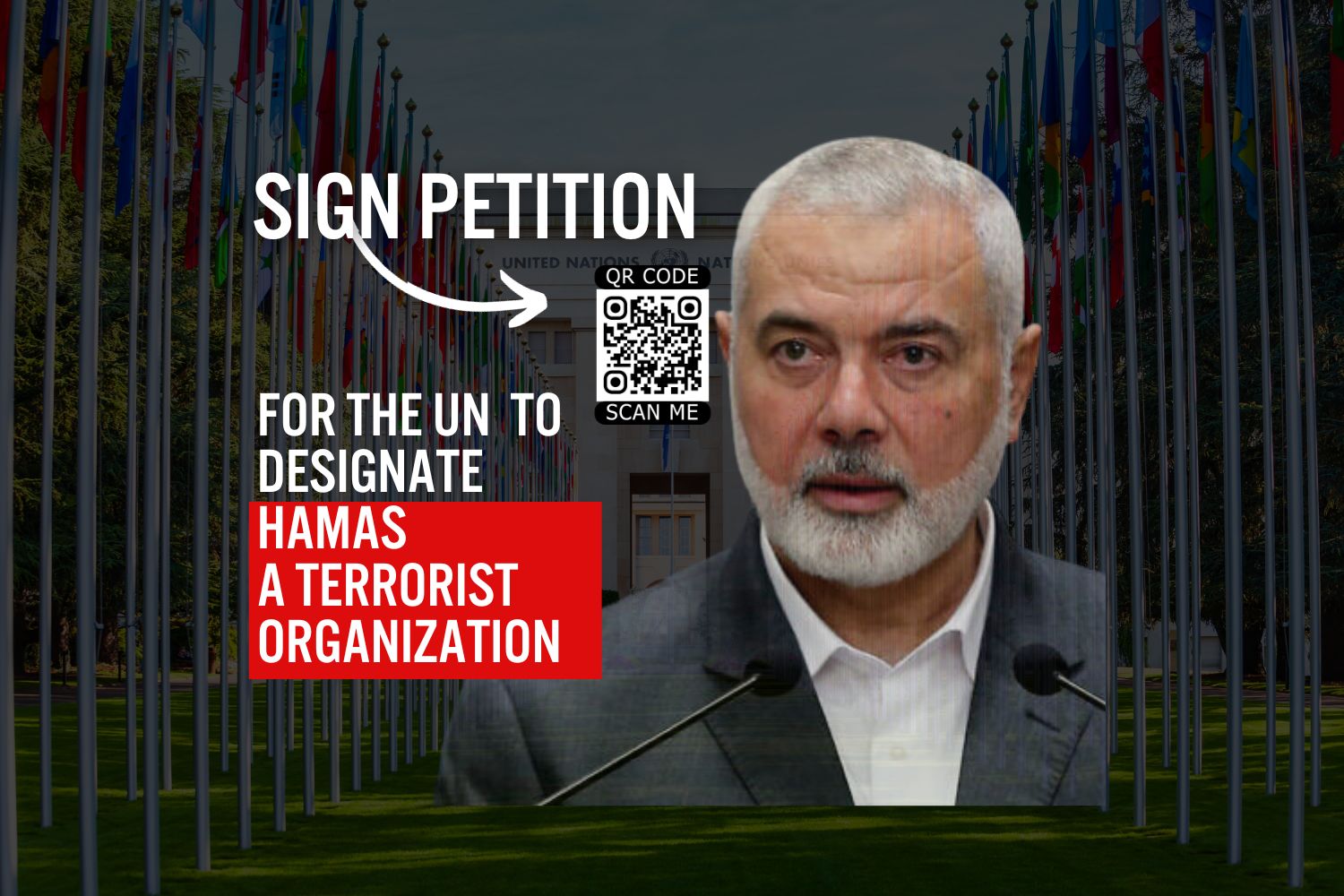
Hamas is a Terrorist Organization - Petition to the United Nations (UN)
34 UNITED STATES SENATORS SIGNED A BIPARTISAN LETTER DRAFTED BY THE JERUSALEM INSTITUTE OF JUSTICE URGING THE UN TO DESIGNATE HAMAS A TERRORIST ORGANIZATION.
34 United States Senators just signed a bipartisan letter drafted by the Jerusalem Institute of Justice, urging the United Nations to designate Hamas as a terrorist organization. Click here to read the letter.
Despite Hamas’ live-streamed atrocities on October 7th, including murdering civilians, taking hostages, mass rape, torture, dismemberment, and beheading … the United Nations still does not recognize them as a terrorist organization! The UN considers the Taliban, Al Qaeda, and the Islamic State to be terrorists, but not Hamas?
This must change. NOW!
Join us in thanking Senators James Lankford (R-OH) & Jacky Rosen (D-NV) for taking the lead on this important initiative.
Add your voice to this committed group of Senators, who are true friends of Israel, and urge Ambassador Linda Thomas-Greenfield, the US Ambassador to the United Nations, to make this a top priority in her negotiation at the UN. Sign the petition below.
PETITION TO US AMBASSADOR TO THE UN
Dear Ambassador Thomas-Greenfield:
We write with our utmost concern regarding the recent terrorist attacks on Israel by Hamas and other terrorist organizations in the region. We commend your unequivocal condemnation of Hamas’ terrorism and your support for Israel’s right to defend its people. Recent events have demonstrated that Hamas’ actions, tactics, and stated goals are in many ways indistinguishable from Al Qaeda, ISIS, and other terrorist organizations the United Nations (UN) has sanctioned. Therefore, we write to urge you to bring a resolution to the UN Security Council recognizing and imposing sanctions on Hamas as a terrorist organization.
As you know, on October 7, 2023, thousands of Hamas terrorists launched attacks, including on civilian communities, in southern Israel, brutally murdering 1,400 innocent people and wounding 4,500 others.
Additionally, Hamas kidnapped over 240 men, women, and children – ranging from infants to Holocaust survivors. Hamas terrorists have committed and continue to commit abhorrent attacks that not only impact Israelis but also directly impact Americans citizens, with at least 32 Americans killed and countless more held in captive as a result of the terrorist attack on October 7. In fact, Hamas hostages come from 25 countries around the world. Hamas’ reign of terror is not just an Israeli problem, but one that impacts us all. Since October 1997, the U.S. Department of Treasury has designated Hamas, Palestinian Islamic Jihad (PIJ), and the Popular Front for the Liberation of Palestine (PFLP) as Foreign Terrorist Organizations.
Additionally, these groups have been listed as Specially Designated Global Terrorists (SDGTs) since October 2001. Numerous other countries and international entities rightfully have designated Hamas as a terrorist organization, including Australia, Canada, the European Union, Japan, Israel, the Organization of American States, Paraguay, New Zealand, and the United Kingdom. Switzerland is also actively exploring legal avenues to designate Hamas as a terrorist entity.
There are multiple consequences of the UN not recognizing Hamas as a terrorist organization. First, the lack of a unified voice among the international community risks eroding the UN’s credibility in response to one of the worst terrorist attacks in history. Additionally, as the largest financial contributor to the UN, the U.S. must take urgent action to prevent the flow of funds into the hands of Hamas. The absence of UN sanctions on Hamas is a glaring loophole, circumventing U.S. financial controls, such as the rigorous standards set by the U.S. Department of Treasury, potentially allowing Hamas to evade U.S. sanctions.
Furthermore, the lack of UN sanctions on Hamas enables them to bolster their capabilities by exploiting international financial channels, including accessing financial systems and soliciting donations from charities.
We are also concerned that a lack of UN sanctions enables Hamas to divert humanitarian aid for malicious intent, which deprives innocent Palestinian civilians of crucial assistance while simultaneously strengthening offensive capabilities used to attack Israel. Hamas continues to divert aid meant for civilians in order to fund its operations by:
- Imposing "taxes" on humanitarian consignments at border checkpoints;
- Seizing a segment of donated goods intended for Palestinian civilians and later selling them illicitly for financial gain;
- Seizing donated supplies – as Hamas did on October 16, 2023, when they took fuel meant for Gazan hospitals from a United Nations Relief and Works Agency site; and
- Dismantling and repurposing humanitarian facilities, like water and sewage components, to create rockets and missiles, some of which misfire and land in Gaza, causing Palestinian civilian casualties and posing threats to aid workers.
We therefore request you bring forward a UN resolution to recognize and sanction Hamas as a terrorist organization. Thank you for your consideration, and we look forward to your timely response.
Sincerely,
PETITION HAS BEEN SUBMITTED TO THE UN. THANKS TO ALL THOSE WHO SIGNED!

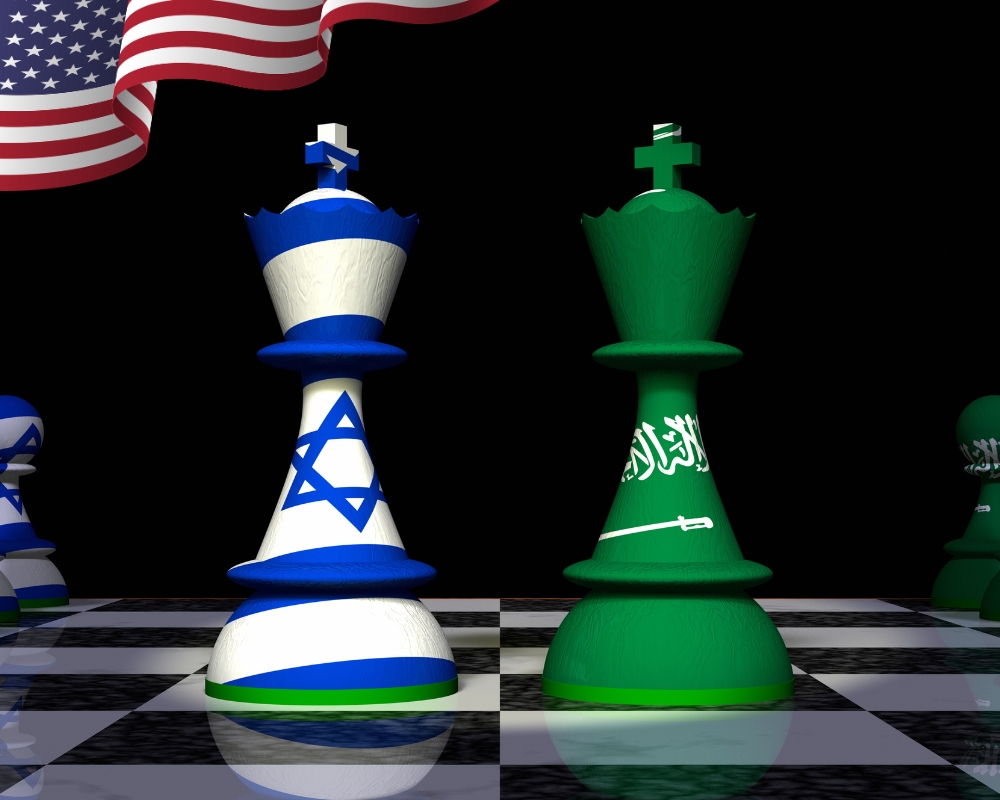
Unraveling the Trio: Understanding the Complexities of Saudi Arabia's Relationship with Israel, and the United States
When the Abraham Accords were signed in 2020, a key country was missing from the deal: the Kingdom of Saudi Arabia. By not signing the Accords, Saudi Arabia has kept its point of leverage in its negotiations with the United States and with the Israeli-Palestinian Conflict. Saudi Arabia recognizes the power they hold in the Middle East, and they want to get the most from both the United States and Israel before they agree to normalize relations with the Jewish state.
Each combination of the three-sided relationship between Israel, the United States, and Saudi Arabia must be understood to grasp what it will take for Saudi Arabia to normalize relations with Israel.
First, it is important to understand the relationship between Israel and Saudi Arabia. Historically, the two states have been enemies. The Saudis voted against the United Nations Resolution 181, also known as the Partition Plan for Palestine, they have sent troops to fight the Israelis in several wars, and they have consistently supported the Palestinians in their efforts against Israel.
For one, the Saudis support the Palestinians in their fight for the land that currently belongs to Israel. In order for Saudi Arabia to make peace with Israel, the Saudis want Israel to adopt the Arab Peace Initiative (API). The API calls for Israel to pull out of territories gained in the 1967 war, for Israel to recognize a sovereign Palestinian state with its capital in East Jerusalem, and for Israel to solve the Palestinian refugee issue (“Arab Peace Initiative”). In this regard, “solving” the Palestinian refugee issue would mean losing Israel’s identity as the only Jewish state.
If Israel agrees to these conditions, then Saudi Arabia may move to normalize relations with them. But Israel cannot adopt these conditions, for they would be ceding valuable defensive holdings and giving too much to the Palestinians. Saudi Arabia is using the Palestinians as leverage in the negotiations because they want an Arab-controlled Israel, and “the API regards the Arab-Israel normalization as the reward for solving the Israel-Palestinian dispute (Teller Abraham Accords: Saudi Arabia is still not budging).
Next, it is important to understand the relationship between the United States and Saudi Arabia. The Abraham Accords were mediated by the United States, and Saudi Arabia has not signed the peace treaty because they wanted more from the Americans. In order to achieve peace, Prince Mohammed bin Salman “has told both Israeli and American officials that he wants Washington to treat Saudi Arabia as the major regional force he believes it is by resuming arms sales halted last fall and by offering the kind of security commitment it extends to close allies” (Traub, Netanyahu Has Drawn a Saudi-U.S Road Map).
Saudi Arabia wants to be on the good side of the American military, and the Americans have their priorities as well. The United States is intent on preventing Iran from creating its own nuclear weapons, and it would also prefer Saudi Arabia to be the dominant Middle Eastern state over Iran. With this, Saudi Arabia laid their claims on the table in recent talks with America. They want the U.S to support Saudi Arabia’s goal of building their own nuclear weapons; they want an American promise to defend Saudi Arabia in times of war, and they want the U.S to grant them special status as a major non-NATO ally (Nissenbaum, et al., Saudi Arabia Seeks U.S Security Pledges).
Again, these are steep demands by the Saudis. The United States does not want to support a nuclear Saudi Arabia, as this would lead to a nuclear arms race between them and Iran, which would turn into a disastrous situation. They also do not want to formally recognize Saudi Arabia as an ally, which would rope them into any future Middle Eastern conflicts.
The last relationship to understand in this trio is between the United States and Israel. Israel wants the United States to create peace with Saudi Arabia to further protect its position as a stable state in the Middle East. Saudi Arabia is one of the most important countries not at peace with Israel, and an agreement between the two states would further solidify Israel’s place in the Middle East.
While the relationship between Saudi Arabia and Iran is not part of the trio negotiating peace, it is equally important as the others. For decades, the two states have battled over dominance in the Middle East. This has resulted in proxy warfare between the states, as in the Syrian Civil War and in the Yemeni Civil War. After years of tension, diplomacy between the states has become a recent possibility. In March, the leaders of the two states agreed to restore ties in agreement mediated by China. In this agreement, they said they will affirm “the respect for the sovereignty of states and the on-interference in internal affairs of states” (Gadzo, “Changing Global Order”). In a statement released by Saudi Arabia, Saudi Arabia and Iran reached “an agreement to resume diplomatic relations between them and re-open their embassies and missions” (“Joint Trilateral Statement”). While Saudi Arabia and Iran are still battling for Middle Eastern dominance, tensions between the two are softening while diplomacy is rising.
Despite Israel’s hope that the United States will strike peace with Saudi Arabia, the Saudi demands are too much for the Americans. The United States would not want to be forced to protect Saudi Arabia in times of war, and they certainly do not want the Saudis to have nuclear weapons. Israel and Saudi Arabia cannot achieve peace themselves, as well, because the Saudi claims for a sovereign Palestine are impossible for Israel to accept. As of now, the demands by the Saudis are too high, and unless they cede some of them, official peace will not be achieved.
By Ethan Wenger – JIJ Intern
Unraveling the Trio: Understanding the Complexities of Saudi Arabia's Relationship with Israel, and the United States
When the Abraham Accords were signed in 2020, a key country was missing from the deal: the Kingdom of Saudi Arabia. By not signing the Accords, Saudi Arabia has kept its point of leverage in its negotiations with the United States and with the Israeli-Palestinian Conflict. Saudi Arabia recognizes the power they hold in the Middle East, and they want to get the most from both the United States and Israel before they agree to normalize relations with the Jewish state.
Each combination of the three-sided relationship between Israel, the United States, and Saudi Arabia must be understood to grasp what it will take for Saudi Arabia to normalize relations with Israel.
First, it is important to understand the relationship between Israel and Saudi Arabia. Historically, the two states have been enemies. The Saudis voted against the United Nations Resolution 181, also known as the Partition Plan for Palestine, they have sent troops to fight the Israelis in several wars, and they have consistently supported the Palestinians in their efforts against Israel.
For one, the Saudis support the Palestinians in their fight for the land that currently belongs to Israel. In order for Saudi Arabia to make peace with Israel, the Saudis want Israel to adopt the Arab Peace Initiative (API). The API calls for Israel to pull out of territories gained in the 1967 war, for Israel to recognize a sovereign Palestinian state with its capital in East Jerusalem, and for Israel to solve the Palestinian refugee issue (“Arab Peace Initiative”). In this regard, “solving” the Palestinian refugee issue would mean losing Israel’s identity as the only Jewish state.
If Israel agrees to these conditions, then Saudi Arabia may move to normalize relations with them. But Israel cannot adopt these conditions, for they would be ceding valuable defensive holdings and giving too much to the Palestinians. Saudi Arabia is using the Palestinians as leverage in the negotiations because they want an Arab-controlled Israel, and “the API regards the Arab-Israel normalization as the reward for solving the Israel-Palestinian dispute (Teller Abraham Accords: Saudi Arabia is still not budging).
Next, it is important to understand the relationship between the United States and Saudi Arabia. The Abraham Accords were mediated by the United States, and Saudi Arabia has not signed the peace treaty because they wanted more from the Americans. In order to achieve peace, Prince Mohammed bin Salman “has told both Israeli and American officials that he wants Washington to treat Saudi Arabia as the major regional force he believes it is by resuming arms sales halted last fall and by offering the kind of security commitment it extends to close allies” (Traub, Netanyahu Has Drawn a Saudi-U.S Road Map).
Saudi Arabia wants to be on the good side of the American military, and the Americans have their priorities as well. The United States is intent on preventing Iran from creating its own nuclear weapons, and it would also prefer Saudi Arabia to be the dominant Middle Eastern state over Iran. With this, Saudi Arabia laid their claims on the table in recent talks with America. They want the U.S to support Saudi Arabia’s goal of building their own nuclear weapons; they want an American promise to defend Saudi Arabia in times of war, and they want the U.S to grant them special status as a major non-NATO ally (Nissenbaum, et al., Saudi Arabia Seeks U.S Security Pledges).
Again, these are steep demands by the Saudis. The United States does not want to support a nuclear Saudi Arabia, as this would lead to a nuclear arms race between them and Iran, which would turn into a disastrous situation. They also do not want to formally recognize Saudi Arabia as an ally, which would rope them into any future Middle Eastern conflicts.
The last relationship to understand in this trio is between the United States and Israel. Israel wants the United States to create peace with Saudi Arabia to further protect its position as a stable state in the Middle East. Saudi Arabia is one of the most important countries not at peace with Israel, and an agreement between the two states would further solidify Israel’s place in the Middle East.
While the relationship between Saudi Arabia and Iran is not part of the trio negotiating peace, it is equally important as the others. For decades, the two states have battled over dominance in the Middle East. This has resulted in proxy warfare between the states, as in the Syrian Civil War and in the Yemeni Civil War. After years of tension, diplomacy between the states has become a recent possibility. In March, the leaders of the two states agreed to restore ties in agreement mediated by China. In this agreement, they said they will affirm “the respect for the sovereignty of states and the on-interference in internal affairs of states” (Gadzo, “Changing Global Order”). In a statement released by Saudi Arabia, Saudi Arabia and Iran reached “an agreement to resume diplomatic relations between them and re-open their embassies and missions” (“Joint Trilateral Statement”). While Saudi Arabia and Iran are still battling for Middle Eastern dominance, tensions between the two are softening while diplomacy is rising.
Despite Israel’s hope that the United States will strike peace with Saudi Arabia, the Saudi demands are too much for the Americans. The United States would not want to be forced to protect Saudi Arabia in times of war, and they certainly do not want the Saudis to have nuclear weapons. Israel and Saudi Arabia cannot achieve peace themselves, as well, because the Saudi claims for a sovereign Palestine are impossible for Israel to accept. As of now, the demands by the Saudis are too high, and unless they cede some of them, official peace will not be achieved.
By Ethan Wenger – JIJ Intern
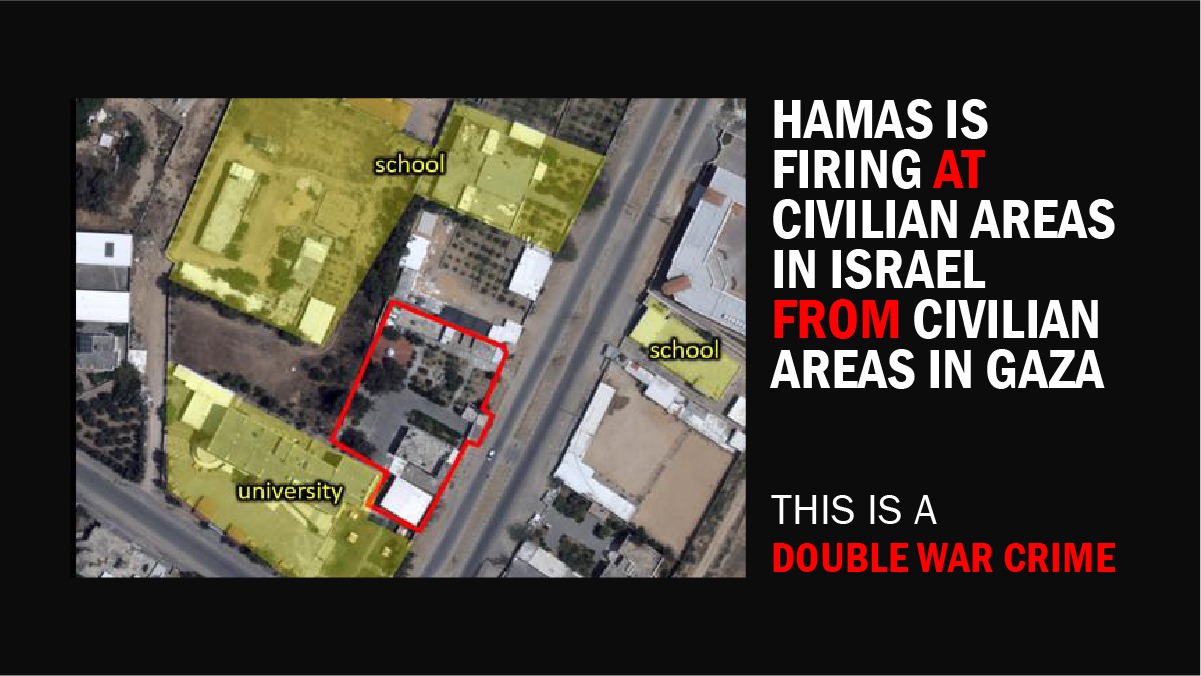
Guardian of the Walls
The recent 11 day conflict between Israel and Hamas was named "Operation Guardian of the Walls" by Israel. Hamas has named it the "Sword of Jerusalem." Hamas, a terrorist organization was waiting for the right opportunity to ignite the region and enter a violent confrontation with Israel. Its leaders were interested in declaring publically, that they have control over all affairs regarding Jerusalem. The matter of the evacuation of families from the Sheikh Jarrah neighborhood in East Jerusalem (in accordance with the ruling of the Israeli court), along with the perceived weakness of the President of the Palestinian Authority, Mahmoud Abbas, provided Hamas with the appropriate pretext. Thus, on May 10, on the day Israel celebrates the unification of Jerusalem, Hamas initiated a missile attack on Jerusalem. For Israel, this attack turned into an opportunity to critically undermine the terrorist threat posed by Hamas and militant groups operating in Gaza.
Israel made it clear that it will not tolerate being fired upon. And to have rockets launched at its capital, Jerusalem, was unacceptable!
The political echelon in Israel set three goals for Operation Guardian of the Walls:
- - Increasing Israeli military deterrence capabilities
- - Destruction of terrorist infrastructure, elimination of the rocket manufacturing and launching capacities of Hamas
- - Separating Hamas from any affairs related to Jerusalem
A review of the results of Operation Guardian of the Walls reveals a partial success. Israeli military deterrence capabilities have been restored through the almost total destruction of rocket production capacity in the Gaza Strip and critical damage to the "Gaza Metro," Hamas' tunnel network. Hamas was the first to ask for a ceasefire. As for the third goal that Israel set, the severance of Hamas' connection to Jerusalem, it seems that unfortunately, Israel has failed here. Hamas, succeeded in framing the national and political narrative in which it operated, linking the fate of the Gaza Strip to that of East Jerusalem and the West Bank. Hamas made it clear to Israel and the entire world that it has no problem sacrificing Gaza, and its two million citizens, to gain Jerusalem. This was confirmed in a speech given by Ismail Haniyeh, the head of the Hamas political bureau, from his seat in Qatar, in which he states that Hamas is fighting not for the Gaza Strip, but for Jerusalem.
Hamas' most notable achievement was without a doubt, the ability to create additional battle fronts for Israel. From the northern border with Lebanon and by igniting internal conflicts in Israel's cities, leading to unprecedented attacks by Israeli Arabs on Jews which in turn led Israeli nationalists to reciprocate. This phenomenon carried beyond the borders of Israel when Palestinians and Muslims brutally attacked Jews in New York and Los Angeles, London and France. However, Hamas's attempts to light up the West Bank were fortunately, not successful.
The main lesson that Israel must learn from this last round of conflict lies precisely in the goal that Israel did not set for itself. Israel did not define the issue of hasbara (Israeli diplomacy) as a clear goal and perhaps as a result it failed miserably. It honestly must be said; Israel has not been able to withstand the flood of anti-Israel, pro-Palestinian messaging spread on social media. Israel failed to reveal Hamas's true face and its desire to deliberately harm uninvolved civilians on both sides of the conflict. Israel has also failed to show the world how the IDF operates in an impressively surgical way, using advanced technological means to avoid harming civilians. Non-functioning hasbara damaged Israel, this is exhibited by the lack of political support given to it by European countries. The pressure that rose from social media, exploded onto the streets and then returned to social media, accelerated the political timeframe that Israel had to achieve its goals. Israel's strengths and supremacy in every military parameter had a negative effect on its hasbara efforts.
In order to change the balance of power in the field of hasbara, Israel must establish, as soon as possible, a single body entrusted with the task of creating a coherent and uniform narrative.
For Israel’s Prime Minister, Benjamin Netanyahu and his government, Operation Guardian of the Walls was also an opportunity to strengthen ties with the new Biden administration. Biden, who was under pressure from European countries and the UN to compel Israel to end the operation after five days of fighting, conducted eight phone calls with Netanyahu. Netanyahu certainly understood the message and decided to end this round, making the appropriate political gesture to Biden. Israel needs the United States by its side on other fronts. The Iranian threat is perhaps the most prominent of them.
The entrance into an agreement of ceasefire at 2:00am Friday morning was only made possible by Biden's demand to Egyptian President Al Sisi that he guarantees that the violent factions in Gaza stop the rocket fire. The strategic alliance between Israel and the United States is certainly one of the most important in Israel's foreign relations. The United States by stopping three attempts of the UN Security Council to condemn Israel, has once again proven that despite disagreements on certain issues, it stands by Israel.
Operation Guardian of the Walls in numbers:
- - 11 days of fighting
- - 12 Israelis killed
- - 4,000 + rockets fired at Israel, 90% of them intercepted by the IDF
- - 5 senior Hamas and Islamic Jihad commanders killed
- - 680 rockets launched by Hamas misfired hitting Gazan civilians
- - 200 + Gazan civilians killed
- - 20 terrorist operatives killed by Hamas fire
- - 100 + kilometers of terrorism tunnels demolished
- - 100 + terrorist operatives eliminated
- - Over two million Gazan civilians held hostage by the terrorist organization Hamas
- - One Iron Dome system
By Adv. Uri Morad
If You Can't Win the Game, Change the Rules
"There will be no advance and separate peace with the Arab world without the Palestinian process and Palestinian peace" – Former US Secretary of State John Kerry, (04/12/16)[1]
In the following piece we will explain how the validity of the above outdated perception has diminished. There has been an on-going shift in Israel's long-established paradigm concerning peacemaking in the Israeli-Palestinian conflict. A major milestone in this shift was the signing of the Abrahamic Accords in September, 2020 and the following peace agreements with the United Arab Emirates and Bahrain.
In the past decade or so, Israel has been actively changing the pre-existing concept that claimed that for the country to have diplomatic relations with the Arab world, it must first reach peace with the Palestinians. The new paradigm demonstrates that Israel does not have to establish a lasting agreement with the Palestinians to broker relations with the rest of the Arab world. Even more so, Israel is in a position of strength when approaching the negotiation table with the Palestinians, while being backed by the moderate Arab states.
Since the founding of the modern State of Israel, the Arab world had refused to grant it any form of recognition. The first Arab state to break away from this consensus was Egypt which signed a peace treaty with Israel in March, 1979. The only other Arab country to follow Egypt's example, until recent years, was Jordan in October, 1994. Yet, there have been a number of Arab states that have formed some level of diplomatic relations with Israel without signing a peace treaty: Morocco between 1994 and 2000,[2] Tunisia between 1996 and 2000,[3] and Oman between 1996 and 2000 as well.[4] These diplomatic ties were severed upon the eruption of the Second Intifada.
The Second Intifada (Palestinian armed uprising) started as an outcome of the failure of the 2000 Camp David Summit, during which the Israeli representatives went to great lengths to accommodate Palestinian demands. There have been additional efforts at brokering peace with the Palestinians since then, e.g. former Israeli Prime Minister Olmert's peace plan presented in 2008, but each one has been met with increasing opposition.
The great leap towards peace from the Gulf Cooperation Council (GCC) has been led by the UAE and Bahrain who both signed peace treaties with Israel on the 15th of September, 2020 together with the Abrahamic Accords.[5] The undisclosed relations between the UAE and Israel during the past 20 years were led by the Israeli Ministry of Foreign Affairs which helped broker economic agreements between Israeli and Emirati companies.[6] At the same time, the countries had secret security relations in an effort to contain Iran's aggression in the region. Israel and the UAE share two main enemies: on the one hand, Iran and its axis of resistance in the region, and on the other, the Muslim Brotherhood and Sunni extremism. Strategically, the UAE have been anxious since the alleged Iranian attack in Saudi Arabia in September, 2019 and threats released by Iranian-backed Houthi rebels in Yemen to launch missiles on the UAE.[7]
It is interesting to look at the polarized Palestinian and Arab League's reactions to the different peace agreements. The Palestinian Authority announced on the 18th of August, 2020, following the joint Israeli-UAE announcement on normalizing relations, that they consider it a "stab in the back" and they totally reject it. Shortly afterward, the Palestinians recalled their ambassadors to the UAE and Bahrain.[8] The Arab League in turn refused to accept the addition of a statement condemning the peace agreements, as requested by the Palestinians, at the Arab League Summit on the 9th of September, 2020.[9] Palestinian leaders have realized that the Arab world is rather accepting of the idea of normalizing relations with Israel. This realization led the Palestinian government sending their ambassadors back to the UAE and Bahrain on the 18th of November, 2020.[10] We are seeing the beginning of the ripple effect of the new diplomatic strategy.
Following the Abrahamic Accords, Israel and Sudan announced normalization of relations between them on the 23rd of October, 2020. This was another major milestone because in contrast to the UAE and Bahrain who were never in real conflict with Israel, Sudan actually took part in fighting against Israel in the 1948 War of Independence and the Six-Day war in 1967.[11] The peace with Sudan is also very symbolic because it was at the Arab League Summit in Khartoum, shortly after the Six-Day War, that the Arab States agreed on the famous three No's: No to recognizing Israel, No to negotiating with Israel and No to peace with Israel.
The latest development in the region is the US-brokered peace agreement between Israel and Morocco which was made possible after the US announced that it "recognizes Moroccan sovereignty over the entire Western Sahara territory."[12] These renewed relations are another attempt at gathering regional support for the US-Israel backed opposition to the Iranian regime. Also, the new Israeli-Moroccan alliance was only made possible thanks to the Arab Gulf states’ embrace of Israel. The Palestinian government for the first time, changed their approach and did not release a statement of condemnation as they had done in previous cases.
"No Arab state, no moderate Sunni state, no one will have open relations with Israel…as long as the Palestinian problem isn't solved." – Former PM of Israel Ehud Olmert, (22/01/20)[13]
Olmert, who has led peace talks with the Palestinians as mentioned earlier, could not have been more wrong in this statement. Four Arab states have formalized open relations with Israel, and we expect this trend to continue.
We hope these peace treaties will bring about real peace, economic prosperity and friendship between the citizens of Israel and the people of the moderate Arab states.
-------------------------------------------------------------------------------------------------------------------------------
[1] https://2009-2017.state.gov/secretary/remarks/2016/12/264824.htm
[2] https://mitvim.org.il/en/publication/israel-the-second-largest-moroccan-diaspora-in-the-world/
[3] https://www.regthink.org/articles/normalization-between-israel-and-tunisia
[4] https://www.jpost.com/Opinion/Israels-renewed-affair-with-Oman-57141
[5] https://www.inss.org.il/publication/abraham-accord-behind-the-scenes/
[6] https://www.haaretz.co.il/news/politics/.premium-1.9083879
[7] https://www.ynet.co.il/article/ryObszQMw#autoplay
[8] https://www.ynet.co.il/news/article/SJqcIkmqv
[9] https://www.haaretz.co.il/news/politics/1.9142202
[10] https://www.ynet.co.il/news/article/SJqcIkmqv
[11] https://www.atlanticcouncil.org/blogs/new-atlanticist/experts-react-sudan-and-israel-reach-historic-peace-agreement/
[12] https://edition.cnn.com/2020/12/10/politics/trump-israel-morocco/index.html
[13] https://www.inn.co.il/news/447227

A Reaction to the UN’s Lack of Reaction
Last week, the 75th session of the United Nations was officially opened, but it was a little different this time around. This year, endless convoys of leaders from all over the world did not fill the streets of New York. Instead, they delivered their remarks through recorded statements.
A few hours later and approximately 250 miles away, on the White House lawn, an important message of peace was being conveyed to the world. The State of Israel signed an historic peace agreement with the United Arab Emirates and Bahrain. This was only the beginning of something great; several other Muslim and Arab countries have already announced their intentions to join the initiative and normalize their relations with Israel.
In my naivety I thought the UN, the largest international human rights platform in the world, whose stated goal is the promotion of human rights and the achievement of world peace, would take advantage of the opportunity to praise this important step toward peace in the Middle East during their opening session. For some reason, they didn’t find the time for it. Forget praising this momentous occasion, what about simply recognizing it? I guess they didn’t have time for that either. However, there was plenty of time for the United Nation’s High Commissioner for Human Rights, Michelle Bachelet to attack and solely blame Israel for the situation in Gaza.
Once again, the UN’s true colors are exposed. And again, the UN proves that it doesn’t value nor demonstrate the tenets it sets forth and expects its member states to uphold. The peace agreement with the UAE and Bahrain was made despite the UN, rather than thanks to it.
We can only hope that through changing the Israeli-Palestinian relations paradigm and opening up channels of dialogue with Muslim and Arab nations, Israel will be able to overcome the automatic majority and the decades-long, antagonistic voting bloc in the UN.
Adv. Uri Morad
International Law & Public Diplomacy
Jerusalem Institute of Justice
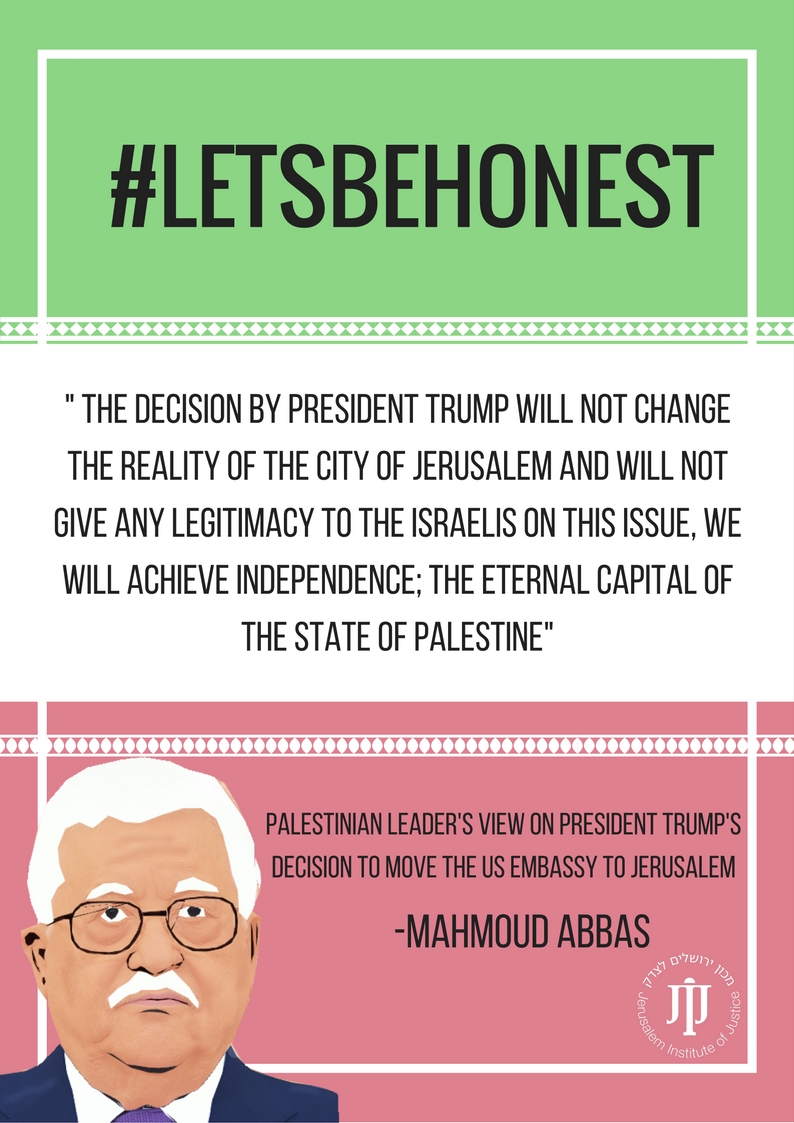
Quotes form Abbas: Following Trump's Declaration
LetsBeHonest attempts to bring truth into our world of cluttered reality. What's the truth in the Middle East? Following Trump's declaration we see outrage and threats coming from our neighboring nations.
Download
None Of Whose Business?
By John Hyrcanus.
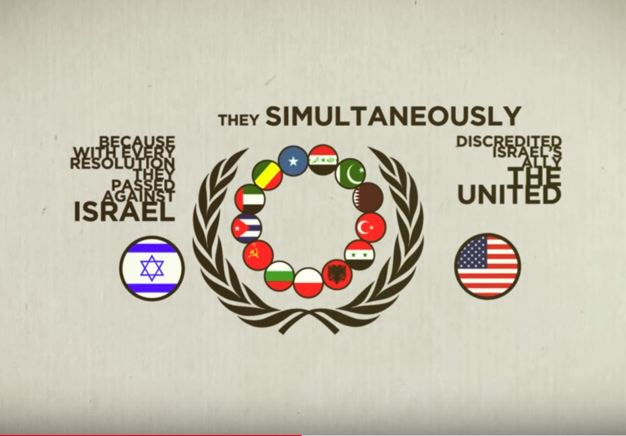
Trying to decide who is ‘up’ and who is ‘down’ after the U.N’s recent condemnation of America’s decision to move its embassy from Tel Aviv to Jerusalem seems a futile exercise. A more consequential issue may be emerging with long-term implications for America, the United Nations and the Middle East - “when does a sovereign nation’s independent action become the legitimate business (that is, concern) of the U.N.?”
To be specific, “is it the rightful business of the U.N. to pass institutional judgment on America’s sovereign decision about her own embassy?”
By a 128-9 vote, the General Assembly condemned America’s embassy decision. This followed almost immediately upon America’s veto of an otherwise unanimous Security Council resolution last week to the same effect. These votes certainly reveal long-held convictions of the United Nations.
The U.N. has never claimed formal, supra-sovereign authority to oversee the internal affairs of Israel, but has frequently spoken and, where allowed, acted as though it is entitled to do so - especially where Jerusalem is concerned. Typically, the U.N. appeals to its self-proclaimed responsibility to serve as an ‘unbiased’ trustee of the city’s sacred religious sites.
A parallel position had remained largely hidden until now. This holds that Jerusalem’s status as Israel’s capital is somehow ‘open’, even though the city’s status has been legally, politically and militarily resolved on Israel’s behalf, repeatedly, for more than a century.
These unwarranted U.N. assertions show how last week’s vote of condemnation was a wholly political, not legal, event. This may be why Prime Minister Netanyahu, using the harshest possible language, described the United Nations itself as a “house of lies” in advance of the vote.
U.N. ambassador Nikki Haley had warned Assembly members in advance that any intrusion into United States sovereignty would provoke a specific and individually-tailored American response. Member nations either judged this an empty threat or reasoned that any consequences would be less serious than appearing to ratify, by implication, this statement of historic fact: “Jerusalem has always been the national capital of the Jewish people.”
The Administration has already matched actions to words. The U.S. will reduce its contribution to the U.N. budget next year by 285 million dollars. Reductions of direct aid to other nations who joined the vote will be weighed separately.
America’s embassy policy in Israel falls far outside any legitimate ‘business’ oversight of the United Nations. America’s recognition of Jerusalem as Israel’s capital neither contradicts nor repudiates any U.N. statute. If America’s decision implies rogue rejection of a tacit U.N. insistence on keeping Jerusalem’s status open, then an open airing of ‘rights’ is long overdue.
In accord with international law, history and tradition, the location of Israel’s capital does not come under the determination of America or the U.N. The United States will move its embassy from Tel Aviv to Jerusalem for the sufficient reason that Israel has always declared Jerusalem to be her national capital.
Your Regret Has Been Duly Noted
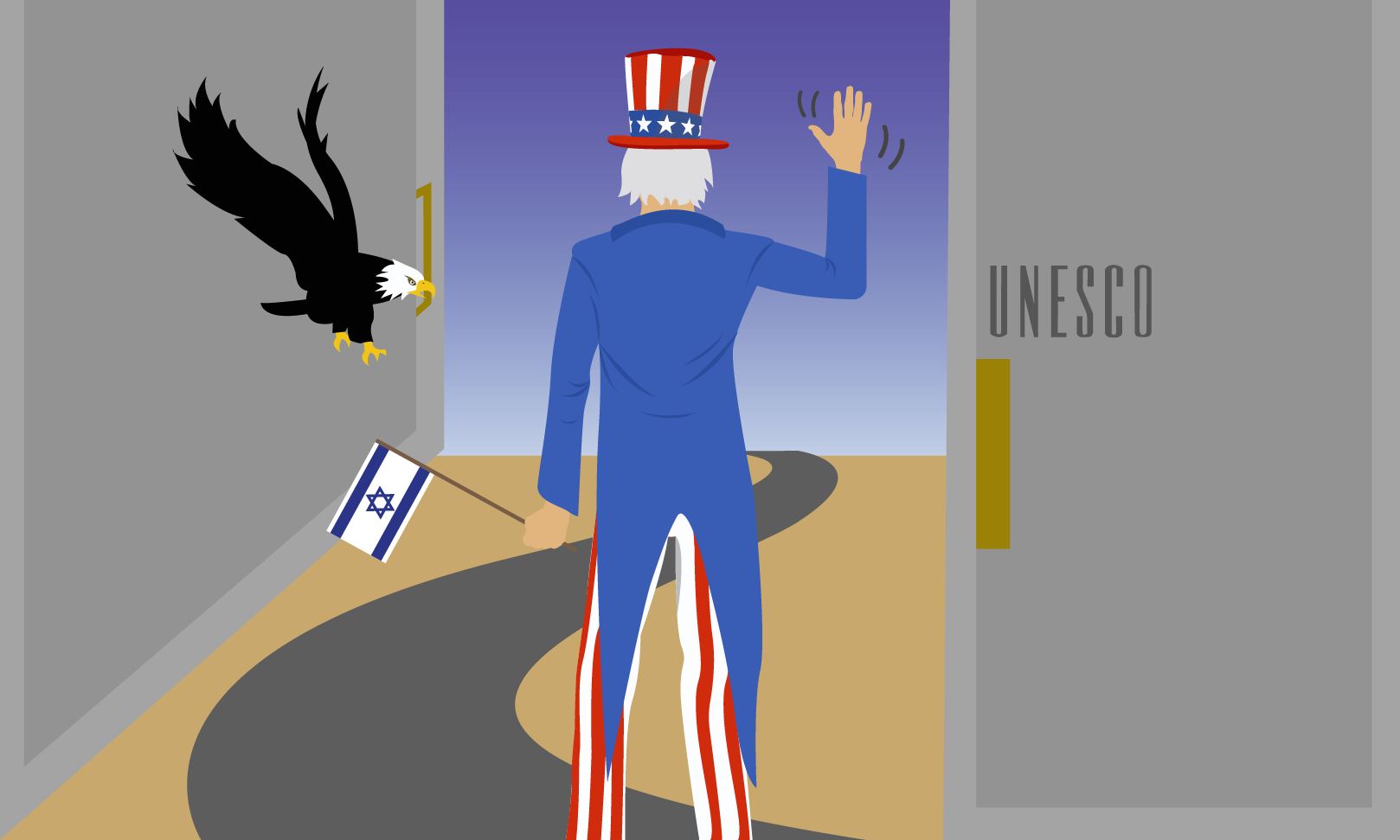
The recent decision of the U.S. to withdraw from UNESCO triggered an expression of profound regret by its director, but begs the question, “... and what took you so long?”
Led by President Reagan, the U.S. played hooky from UNESCO from 1984 to 2003 on the grounds that the organization “extraneously politicized virtually every subject it deals with, (and) has exhibited hostility toward the basic institutions of a free society, especially a free market and a free press.” That invites repetition of the old joke, “But aside from that, Mrs. Lincoln, what did you think of the play?
The same sound grounds for withdrawal from UNESCO have been well-publicized for the past five years. Could withdrawal have anything to do, for instance, with past decisions to include the writings of Che Guevara in UNESCO’s “memory of the world” register? The reappointment of Syria to a committee dealing with human rights? Formation of a Unesco chair at the Islamic University of Gaza - an institution tied to Hamas? Or, maybe, giving out a life-sciences award that was sponsored by Africa’s longest-ruling dictator?
While the decision’s timing may have caught Israel by surprise, the decision process had been underway for some time, with Israel’s knowledge and participation. It hardly exposes a grave lack of mutual coordination. Otherwise, Netanyahu could not have joined hands mere hours after the decision became public, thus avoiding charges of collusion between Israel and the United States.
Claiming, typically, to know Americans best, UNESCO’s Director General argued that “universality” drives detailed goals shared by the American people themselves, and should take priority over non-payment of America’s financial dues. Yet Irina Bukova knows that financial withdrawal in 2011 was mandated by U.S. law after UNESCO admitted ‘Palestine’ as a full member. This served as an advance warning of stronger steps to come, despite Secretary of State John Kerry’s personal determination to subvert Congressional intent and restore participation without conditions. Or is Bukova using diplomatic sarcasm to blast Trump for choosing money over human need, an obligation she will oh-so-nobly defer?
Even the New York Times placed the key decision-point in its headline and lead, though bracketed, with quotation marks: “What it (the Trump administration) called the group’s ‘anti-Israel’ bias’. " Since no one had demanded the U.S. pay up, tying withdrawal to finances may not rise to the level of fake news, but its frequent mention in media coverage amounts to mere journalistic noise.
By contrast, the National Geographic, a long-time apologist for UNESCO, detailed the crucial connection between its mission to protect World Heritage Sites, actual (not merely ‘claimed’) anti-Israel bias and American withdrawal. Having determined in 2001, that the Temple Mount shall be named and referenced as always-and-only a protected Muslim holy site, this summer’s UNESCO decision to contradict Moses and declare Hebron the historic heritage of Palestinians probably served as the tippingpoint to three months of internal American and Israeli consultation.
(below, Cave of the Patriarchs, Hebron)
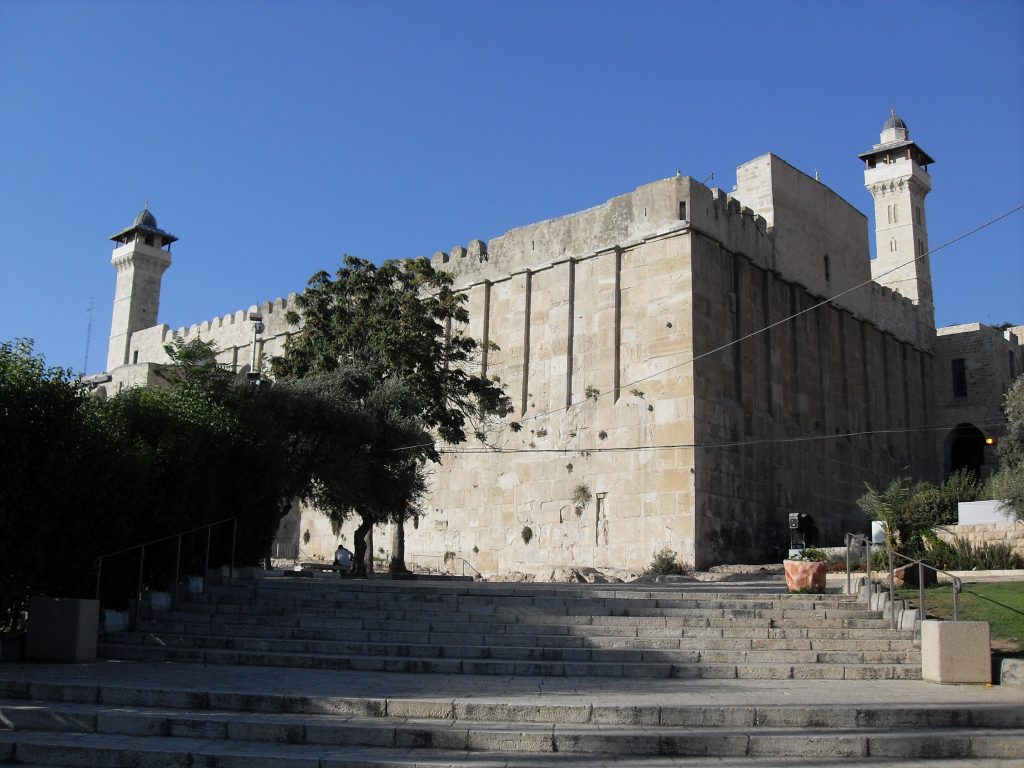
Arguably, the U.S. withdrawal has as much to do with image as substance. Yet, in the U.N. and, even more so, the Middle East, image and substance often prove to be one and the same.
Then again, just possibly the tide may be turning in favor of historic truth over narrative fictions. "I think it's a catastrophic decision," said Daniel Rondeau, a former French envoy to the body. "It's a fracture that seriously jeopardizes the very nature of UNESCO - its universal dimension - and the very concept of multilateralism." Given the perverse ways that UNESCO defines and acts upon so-called ‘universal’ and ‘multilateral’ values, one can only hope that Rondeau’s fears are justified, and that the doors of this theatre of the absurd will, indeed, close.

Nikki Haley's for Human Rights!
How Nikki Haley’s Background and Beliefs Helped Foster Her Zionist Spirit
In the midst of the continuous storm of anti-Semitism and anti-Israel resolutions that have been produced by the United Nations over the last few decades, there is a light that is shining more brightly now than ever before. Nimrata “Nikki” Haley, the 29th US Ambassador to the UN, is the strong voice advocating for Israel and demanding the bias and hatred towards Israel from other countries must stop immediately. Born to Sikh Indian parents in South Carolina, Haley credits them with first instilling in her a sense of pride and gratitude about living in America. “Well, I am the daughter of Indian parents who reminded my brothers, my sister and me every day how blessed we were to live in this country,” said Haley in an interview at the 2017 AIPAC Convention.
After graduating Clemson University with a BA in Accounting, Haley went to work for her mother’s clothing company, Exotica International. After being involved in numerous executive boards in her community and town, Haley was elected to the South Carolina House of Representatives in January of 2005. She continued this role until January 2011, where she was elected the first female governor of South Carolina. In November of 2016, she was appointed by president-elect Donald Trump to be the 29th United States Ambassador to the UN; she was confirmed in January 2017.
During her career in politics, Haley’s strong Zionistic and pro-Israel stance have been a major focus of hers. While Haley was governor of South Carolina, she signed into law a bill to stop efforts of the Boycott, Divestment and Sanctions (BDS) movement. This legislation was the first of its kind on a statewide level. Haley also stated during the announcement of that bill, that "nowhere has the UN’s failure been more consistent and more outrageous than in its bias against our close ally Israel". As Ambassador, Haley has been extremely outspoken about the UN’s blatant bias against Israel and has been extremely vocal in her personal support and her representing the United States supporting Israel. This is a welcome change for many from the stance of former US Ambassador, Samantha Power, and the US’ decision to abstain from the voting of Resolution 2334.
Samantha Power, who was the 28th US Ambassador under the Obama administration, famously abstained from voting on Resolution 2334 in December 2016, which declared that the Israeli settlement building in the West Bank and East Jerusalem was illegal and violated international law. Power told the 15-member U.N. Security Council, “Israeli settlement activity in territories occupied in 1967 undermines Israel’s security, harms the viability of a negotiated two-state outcome, and erodes prospects for peace and stability in the region." It came as a surprise to many that the US would seemingly go against an ally by refusing to vote against the resolution, especially coming from the woman who said “I will stand up for Israel and work tirelessly to defend it” in her Senate confirmation hearing; the resolution passed with 14 votes for and one abstention, the US. Haley later called the decision to abstain “one of the lowest points in our country….when [Power] abstained, the entire Security Council, and the entire audience, got up and applauded, and Israel was sitting there….watching that. Think about what we just did to a friend. You don’t ever applaud in the Security Council. That never happens. It happened that day.”
Haley has unequivocally and steadfastly supported Israel as the voice of the United States to the UN; she has called the UN out on their bias towards Israel dozens of times, especially when the UN named Israel the country with the most human rights violations in March 2017, beating out Iran, Syria, Libya and North Korea. “You know, basically what it comes down to is I'm not there to play,” said Haley during the 2017 AIPAC Conference. “And what I wanted to make sure of was that the United States started leading again. And leading isn't saying and doing things when it's comfortable. Leading is saying and doing things when it's not comfortable.”
When pressed about how she came to have such a strong stance on Israel and how she became so outspoken about defending Israel, Haley said, “[T]he truth is, I have seen so many similarities between the Israeli culture and the Indian culture. We're very close-knit. We love our families. We have a strong work ethic. We believe in professionalism and philanthropy and giving back. It's very true. So that's all the good things.” India and Israel have shared many similarities in values and members of each country frequently visit the other. Around 40,000 Israelis, many of whom have just finished their required military service visit India annually and around 34,000 Indians visit Israel annually. According to a 2009 international study commissioned by the Israeli Foreign Ministry, the greatest level of sympathy towards Israel from a member of the international community can be found in India, with 58% of Indian respondents showing sympathy towards Israel. In 2015, opinion polls showed 70% of Indians had favorable views of Israel.
Others wonder if perhaps Haley’s conversion to Christianity helped further foster her Zionist feelings. When Haley wed her husband, Michael Haley, who was a Christian, they did both a Sikh and Christian ceremony. Haley said about her choice to convert to Christianity, “We chose Christianity because of the way we wanted to live our life and raise our children — it had nothing to do with me thinking there was anything wrong with the way I was raised, and everything to do with the fact that I am moving forward in my life and had to find a path I felt was right for me.” Many Christians do believe in Israel’s right to exist; these Christians are called “Christian Zionists.” Some Christian Zionists believe that the gathering of the Jews in Israel is a prerequisite for the Second Coming of Jesus. Christian Zionists interpret the prophetic texts as describing inevitable future events, and these events primarily involve Israel, meaning the descendants of Jacob, which are the Jewish people. These prophecies are seen as requiring the presence of Jewish people in the Holy Land; this requirement is sometimes interpreted as being fulfilled by the contemporary state of Israel.
Haley has not made a public comment on whether her Christian views have helped cultivate her support for Israel even more, but whatever Haley’s reasoning, there is no doubt Israel and the American Jews are thankful for Haley’s voice and for tossing her hat into the UN’s ring. “For anyone that says you can't get anything done at the U.N.,” Haley says, “they need to know there's a new sheriff in town.”