
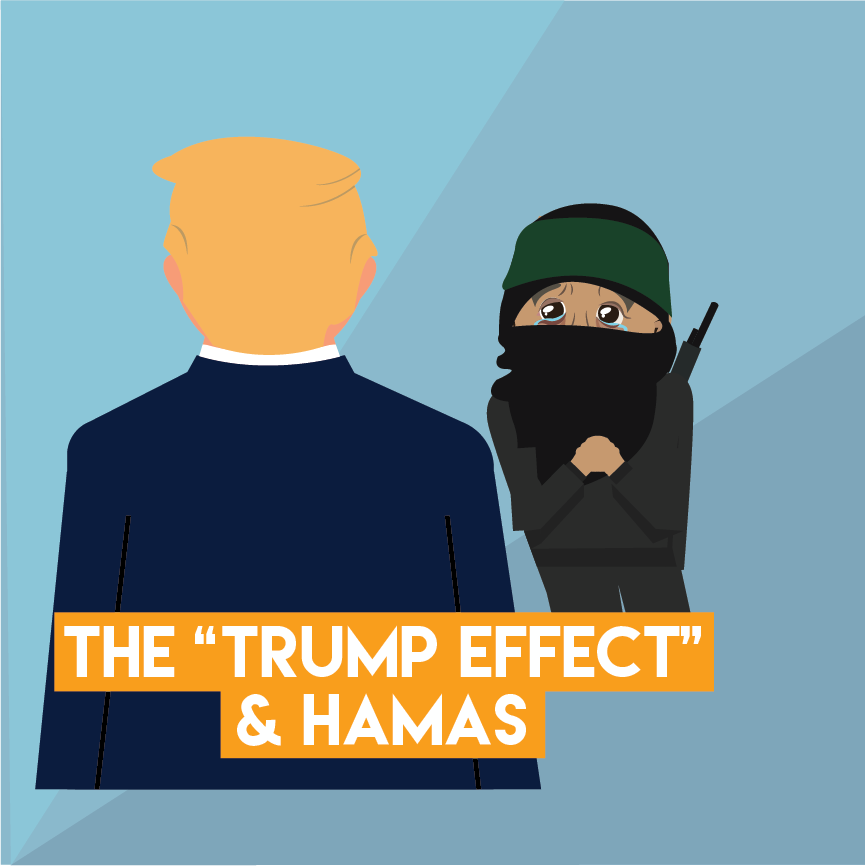
The "Trump Effect" and Hamas
Donald Trump’s ascent to the United States presidency has had a domino effect on the Arab world, with the aftershocks directly targeting the Palestinian organization Hamas. Under Trump’s foreign policy, the president takes a hardliner approach to global terrorism. Trump hopes to defeat Islamic radical terrorism through partnering with other countries in “aggressive joint operations.” Trump also emphasizes that the United States is always happy when “old enemies become friends” and help aid in their military ventures. Various Arab leaders who have had rocky relations with past presidential administrations see this conciliatory approach as an opportunity and are making political decisions that align with Trump. Saudi Arabia specifically has benefited from the President’s willingness to look towards the future, evidenced by the recent meetings and arms deal between the two countries. The Palestinian Authority (PA), in preparation for their meeting with Trump as well as the resurgence of peace negotiations, cracked down on Hamas in Gaza. By cutting funding for electricity to Gaza, the PA is attempting to prove to Trump that they are committed to fighting against global terrorism. Differently than Obama, Donald Trump is willing to look past human rights concerns in favor of furthering his goal of eradicating global terrorism.
While President Trump has not issued any directive orders against Hamas, his demanding rhetoric has influenced Arab countries to act against the organization to curry favor with the United States. Originally, Hamas viewed the Trump presidency as an opportunity to restore relations with the US. They saw Trump as “having a greater threshold for boldness than [his] predecessors…could be a historic opportunity to pressure Israel.” Well aware of Trump’s policy towards terrorism combined with the rising humanitarian crisis in Gaza, Hamas knew that relations with the administration could make or break their ten-year regime in the territory. In early May, Hamas published a new policy document for the first time since their founding charter in the late 1980s. While Hamas leaders publically argue that this is part of the natural evolution of Hamas, the document appears to be largely moderated from their original position. They state that they are prepared to accept a two state solution with 1967 borders. Compared to their original stance that would not accept anything less than all of Israel, this an apparent large concession. Hamas also provides that their conflict is not with Jews specifically as a people, but with the “Zionist project”. In moderating their policy, Hamas is hoping to open a new era of relations with the United States to retain their power hold in the Gaza strip.
Much to the disappointment of Hamas leadership, President Trump was not swayed by their apparent mainstreaming. With many analysts calling the new document simply window dressing to appeal to Western audiences, the President’s administration barely acknowledged their change in policy. A few weeks later, Trump addressed 55 Arab countries at the Rihyad Summit in Saudi Arabia in which he emphasized the necessity of partnering with other countries to “stamp out extremism” and labeling Hamas as a terrorist organization. He repeated to the delegates present to “drive them out” and “strip them of their access to funds.” By formally connecting Hamas and his goal of eradicating terrorism, Trump laid out to these Arab countries a clear path to contracting better relations with the United States.
Just a few days later, four Arab countries spurred the President’s demands into action. Egypt, the United Arab Emirates, Bahrain, and Saudi Arabia cut diplomatic ties with Qatar over their support for groups such as Hamas, Hezbollah and Iran that the United States categorized as terrorist entities. Qatar has invested millions into Gaza’s infrastructure, given substantial financial aid to the territory and also provides refuge for the organization’s exiled leaders. However, days after the beginning of the crisis, Qatar expelled Hamas leaders from Doha due to “unspecified pressure” as well as suspended electricity funding to Gaza. Hamas expressed their outrage at being ostracized by the Trump administration and the subsequent punishing of Qatar, one of their largest backers. A spokesman decried “the statement describing Hamas as a terror group…is a distortion of our image and shows a complete bias to the Zionist occupation.”
With this seemingly waning support from Qatar combined with the Palestinian’s Authority recent crack down on Hamas, the organization needs to secure partnerships with other actors in order to keep control of the Gaza strip and stay in power against the Palestinian Authority. As the humanitarian crisis will only escalate with the loss of funding and electricity, Hamas’ proximate actions will determine the organizations future. Their search is already bringing more contention to the region as they have begun to cozying up with more extreme factions such as Iran and Hezbollah due to regional isolation. The Palestinian Authority is also keeping a close eye on the reconciliation with exiled Fatah leader Mohammed Dahlan who keeps close relations with Egyptian leadership.
Hamas’ true colors:
While Hamas seemingly moderated their policy in early March, the organization returned to their original extremist ideology just a few months later. In his first public speech to the people of Gaza in early July, the new political leader Ismail Haniyeh did not attempt to appeal to Western audiences and directly contradicts their new policy document. . Hamas’ hopes for negotiating with the US are extinguished due to regional developments such as the Gulf Crisis that was indirectly affected by Trump’s anti-terror rhetoric. Where Hamas conceded to accepting a two state solution with 1967 borders, the political leader calls for a Palestinian State that “can not give up a grain of soil” and “will foil any attempt to the so-called solution of ‘alternative homeland’.” He also refers to “schemes of Judaization,” detracting from the previous statement that Hamas’ issue is not with Jews but solely Zionism. He slams President Trump for labeling Hamas a terror organization, encouraging the “Zionist enemy” and “blackmail[ing] the Arab and Islamic forces” against the “Palestinian cause.” He also berates the Palestinian Authority for “responding to American dictations.”
Haniyeh is reacting to Trump’s foreign policy by crafting his speech to appeal to potential Arab backers. The Hamas leader hopes to quell some of the regional pressure against the organization by reaffirming their commitment to their “Arab brothers”. Haniyeh argues that Hamas is a resistance movement solely focused on furthering the Palestinian cause, that their issue is not with Arab countries but solely Israeli occupation. His promises are most likely directed at Egypt who has accused Hamas of aiding guerilla rebels within their country. Haniyeh claims that Arab countries will “only see virtue from Hamas and…wish[es] them security, stability and protection.” Haniyeh further paints a number of Arab countries as friends of the Gazan movement even as many of them have had cold ties with Hamas, in hopes of facilitating warmer relations. Haniyeh thanked Egypt, Qatar and Turkey for their historical and hopefully continued support of the Palestinian people in Gaza. He also labeled Saudi Arabia as an ally, even as the country condemns Hamas as a terrorist organization after meeting with Donald Trump. Most importantly, Haniyeh publically confirmed the organization’s ties with other US condemned extremist groups such as Iran. He thanked the country for “developing its military power,” confirming what had only previously been rumored throughout the Middle East.
Hamas looks for allies:
With Donald Trump indirectly influencing Gulf Countries, the Palestinian Authority and even Qatar to break with Hamas, the organization must secure other financial backers for survival. But although Egypt cut ties with Qatar after Donald Trump’s speech, the country and Hamas have been in recent talks. As the two share a border, reopening negotiations is critical for Hamas’ survival and in aiding the humanitarian crisis. Hamas and Egypt have had especially rocky relations since the 2013 overthrow of the Muslim Brotherhood in Egypt, of which Hamas is a direct offshoot of. Since the coup, the Egyptian government has accused Hamas of being responsible for a number of attacks, to which the organization refutes. Egypt has further blockaded the Rafah border in an attempt to control smuggling of weapons into Egypt to support the government’s adversaries. In their new policy document, Hamas attempts to distance themselves from the Muslim Brotherhood by negating to mention their ties with the organization, in an effort to restore relations with Egypt.
Current talks between Hamas and Egypt are also being facilitated by the presence of former Fatah leader Mohammed Dahlan. Once a high ranking official in the Palestinian Authority leading the fight against Hamas in 2006, Dahlan was exiled and expelled from Fatah in 2011 because he of his perceived threat to Abbas’ power. The former Hamas adversary sees Hamas’ isolation as an opportunity to align with the organization against the PA. Dahlan enjoys close relations with Egypt’s president Abdel Fattah al-Sisi and has been acting as an intermediary in meetings between Egypt and Hamas. For his efforts, Dahlan would be allowed to return to Gaza to be in charge of foreign relations while Hamas keeps control over the territory’s security. After what Hamas called “9 days of constructive meetings with Cairo officials,” Egypt agreed to provide some electricity in exchange for a commitment to tighten security on the border to stop smuggling weapons into Egypt to aid government enemies. They also demanded that Hamas stop negotiations with Iran. In an effort to prove their commitment to the negotiations, Hamas began construction in late June on a no-go security zone to control and boost border security.
However, President Abbas is worried by the resurging negotiations between the two forces. The PA president needs Hamas at its weakest to regain control over the Gaza strip and to be seen as the legitimate voice of the Palestinian people in future Israeli-Palestinian peace negotiations. As Abbas was set to meet with the Egyptian president in Cairo, purchased fuel from Egypt was drastically reduced in Gaza due to interference by the PA. Relations with Egypt may not only be subject to fissure due to external sabotage by Abbas, but also because of Hamas’ recent cozying up to Iran. As part of their negotiations, Egypt warned Gaza leadership not to reconcile with the country. Once the strongest of allies, Hamas and Iran have been at odds since 2012 when the Palestinian organization supported the wrong side in Syria. Subsequently, Iran cut off public relations and military aid. However, as the Trump administration has condemned both Iran and Hamas as terrorist entities, the two are facing regional isolation together and has only brought them closer. Iran is also pleased with the change in Hamas’ political leadership, as they favor Ismail Haniyeh over the former political chief Khaled Meshaal. After reportedly meeting with a delegation in Lebanon, Iran allegedly agreed to resume financial funding to Hamas in the near future. In Lebanon, Hamas began to reconcile with another labeled terror organization, Hezbollah, “under an Iranian umbrella”. The day after Haniyeh’s July speech that publically affirmed the reconciliation, another high ranking Hamas official declared the next day that ties with Iran are “as close and strong as ever.” If Hamas continues to entertain relations with Iran, budding negotiations with Egypt may dissolve even without the meddling of the Palestinian Authority. This would force Hamas to be almost completely dependent on Iran. This resurgence of alliances can only mean bad news for Israel as the two unite to carry out attacks from both Lebanon and Gaza.
While Donald Trump envisions his hardliner approach as the best way to combat terrorism, recent developments in the Middle East such as the Gulf Crisis and actions by the PA have only radicalized Hamas away from their attempt at moderating their policy in March. As the hot summer progresses and the humanitarian crisis only worsens, Hamas will pursue whatever course of action to maintain power in the Gaza Strip, with Iran seeming to be the most probable and reliable ally.

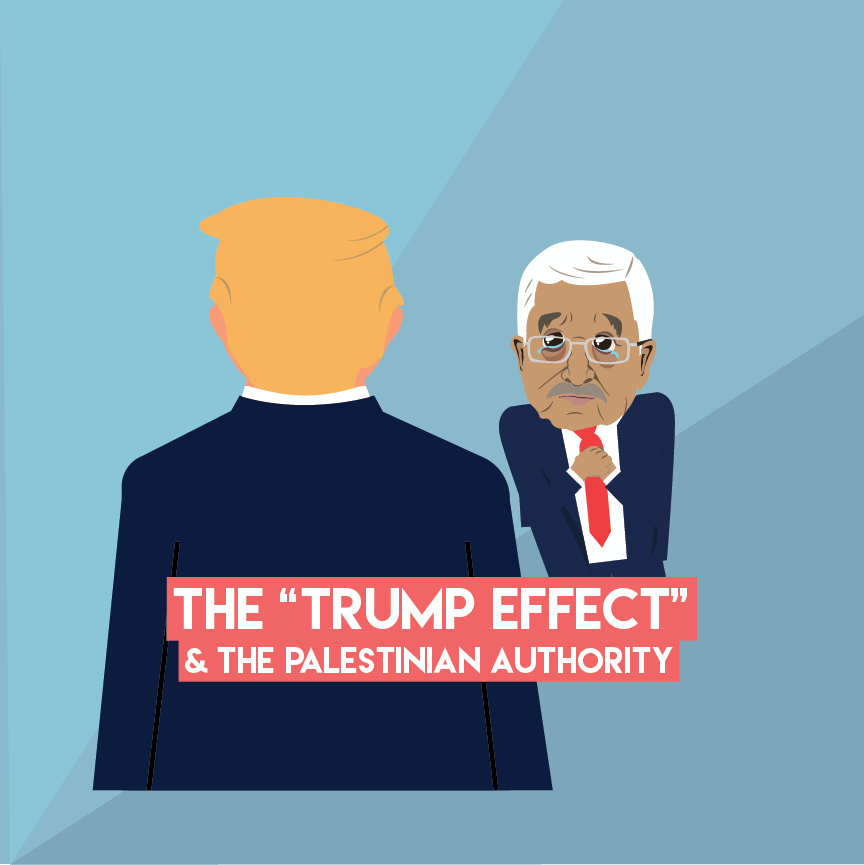
The "Trump Effect" and the Palestinian Authority
On April 27th, 2017, the Palestinian Authority announced that it would no longer be paying Israel to supply electricity to the Gaza strip. President Mahmoud Abbas’ stated rationale for this drastic decision was to increase pressure on Hamas by withholding finances and shake the terrorist group’s ten-year reign. The Gaza strip already only had six hours of electricity per day, but with this new lack of funding will be reduced to a mere 2-4 hours. This aggressive strategy is a result of years of failed attempts between the Palestinian Authority’s governing faction, Fatah, and Hamas to reconcile. But occurring only one week before his first face-to-face meeting with US president Donald Trump, the timing of Abbas’ decision calls into question the true purpose behind his actions.
Being dubbed the “Trump effect” by academics, the new US president’s rhetoric on cracking down on global terrorism and de-emphasis on human rights has influenced decisions of middle Eastern leaders. For Palestinian Authority President Mahmoud Abbas, cutting off funding for electricity in Gaza one week before his meeting with Trump was a strategic decision to gain the favor of the new United States president. Trump is eager to restart the peace process between the Israelis and Palestinians, and with his extremely pro-Israel sympathies and anti-Muslim rhetoric, the United States will likely side with the Israelis at the negotiating table. Abbas, aware of Trump’s “Israel bias” as well as claims by Netanyahu that there is no united voice of the Palestinian people to negotiate with or true partner for peace, needed to prove that he is a legitimate partner and committed to aiding the war on terror.
Abbas has been formulating a strategy to best approach Donald Trump since November. Shortly after the election, Abbas reportedly assembled a committee of experts on US policy and government to advise and aid him on the audacious and unpredictable president. With Trump announcing his intent to move the US embassy to Jerusalem, Abbas likely knew that were the peace process to restart between the Palestinians and Israelis, he could not count on the Trump administration to act as an unbiased mediator. In order to be considered a legitimate and equal partner in negotiations, the Palestinian Authority needed more than just idealistic rhetoric to gain favor with Donald Trump. Abbas had to take action tailored specifically to the policy goals of the new president.
Cracking down on global terrorism is a foremost prerogative of the Trump administration. Their “highest priority” is to to gain “peace through strength” by “defeating radical Islamic terror” by working with “international partners to cut off funding for terrorist groups.” As both the United States and the Israel condemn Hamas as a terrorist organization, Abbas cutting off funding for the Gaza strip follows directly from the Trump policy and works in accord with the outline set by the administration. Two weeks before his meeting with Trump, Abbas stated to the Arab Gulf States that he was “tired of funding the Hamas government in Gaza.” One week later, he put his words into action. The Palestinian Authority is attempting to exhibit to the Trump administration that they can be seen as a committed ally in the war on terror. By taking action against Hamas and further separating themselves from the radical organization, they are creating a foundation with the United States and Israel to combat a mutual enemy. This commonality may serve to gain them legitimacy and favor in the eyes of the Trump administration that will be helpful in future negotiations.
Not only did Abbas need to present the Palestinian Authority to Trump as committed to peace and eradicating terrorism, he needed to present a unified Palestinian front to the United States. Since the split between Fatah, the governing party of the Palestinian Authority and Hamas in Gaza in 2007, Israeli Prime Minister Netanyahu has claimed that peace negotiations with the Palestinians are futile because there is no united voice of their people. Abbas needs to regain control and power over Gaza in order to frustrate attempts by Hamas to carry out actions that may unravel any progress. He hopes that pressuring Hamas by worsening the humanitarian crisis in Gaza will loosen the organization’s hold on the territory and acquiesce back to the PA. With both territories back under his jurisdiction, Abbas can invalidate Israeli claims that there is no unified representative of the Palestinian people. Trump has also stated that “there cannot be lasting peace unless Palestinian leaders speak in a unified voice…against violence and hate.” Israel believes that “Abbas is trying to force Hamas into a move that would – a least symbolically – demonstrate Palestinian unity” in preparation for meeting with the United States. After yet another failure to create a unity government between Fatah and Hamas by the middle of April, Abbas consequently had to look for other ways to regain control over the Gaza strip to present a united front.
The different stances on human rights between Barak Obama and Donald Trump were another factor shaping the decision of Abbas to cut off electricity funding to Gaza. Obama’s foreign policy program Countering Violence Extremism emphasized the importance of recognizing human rights violations as the drivers of terrorism. In a 2011 speech on “Remarks by the President on the Middle East and Africa,” Barak Obama stated that support for human rights was not a secondary interest but a “top priority” in the war on terror. This policy marked his years in office with an “awkward balance” between condemning human rights violations in states such as Saudi Arabia, but allying with these nations to fight against terrorist organizations. Cutting off funding for electricity in Gaza would have likely been condemned by the Obama administration as a human rights violation. Abbas then would not have utilized such a strategy as it would not have been looked on favorably by the previous president. The PA’s actions to pressure Hamas would have likely been exceedingly different under the Obama administration.
Trump, however, is not so much concerned with the human rights consequences of policies that progress the war on terror. Trump stated in an interview that “first we have to confront and eradicate terrorism” and that the “way you address human rights issues… is to improve conditions in the region…human rights would improve as security and stability do.” Trump has been criticized for this stance by Democrats who argue that he is de-emphasizing human rights in favor of focusing solely on fighting terrorism. This is evident in his failure to discuss Saudi Arabia’s notorious human rights violations during his visit to the country. He told leaders that he wasn’t there to “lecture them” but instead to only discuss the mutual goal of fighting global terrorist groups such as ISIS and Hamas. Where the Palestinian Authority’s actions would have been condemned by the Obama Administration due to escalating the human rights crises in Gaza, the Trump administration would instead view this as proof that Abbas is committed to fighting against Hamas and gain legitimacy as peace partners.
The success of Abbas’ tactical decision comes at the cusp of Trump’s remarks at a press conference after the two leaders’ meeting. Trump stated that “President Abbas has spoken out against…terrorist groups, and we must continue to build our partnership with the Palestinian security forces to counter and defeat terrorism.” Abbas’ proximate actions against Hamas worked in his favor, as the Trump administration recognized his work against terrorism. Looking at the implications of Trump’s foreign policy on decisions of the Palestinian Authority is necessary to predicting as well as understanding the motivation behind future actions of President Mahmoud Abbas. With Trump committed to restarting the Israeli-Palestinian negotiations, Abbas needs to show the new administration the Palestinians are ready and wanting for peace. By carrying out action in accord with Trump’s harsh on terrorism policy, the PA hopes to butter up the new president. In the press conference after their meeting, Abbas regaled to Trump and the world that “we are endeavoring to bring about security, free and peace…we believe that we can be…true partner, to you to bring about a historic peace treaty.” With his actions against Hamas, Abbas now has substance to back up his words. Abbas will likely continue to cater his actions to appease Trump in the immediate future in preparation for the renewal of the peace process.