
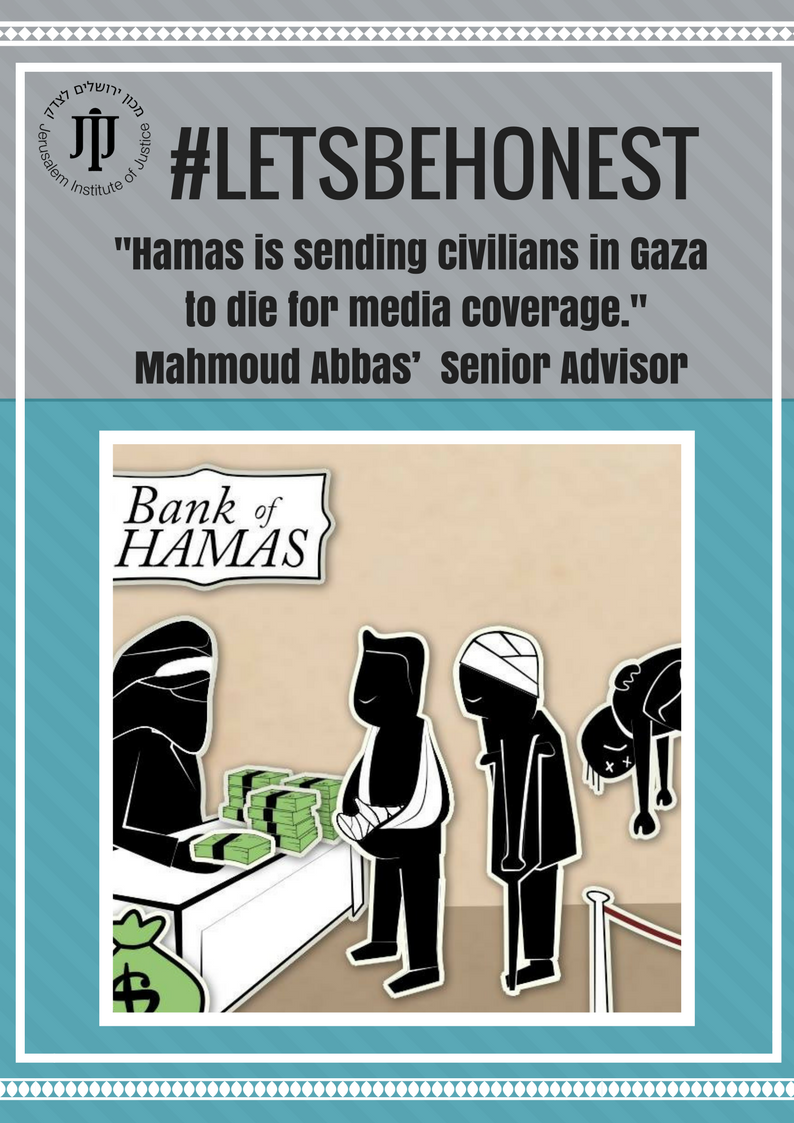
HAMAS IS SENDING GAZANS TO DIE
LetsBeHonest attempts to bring truth into our world of cluttered reality. What's the truth in the Middle East? Hamas is deliberately sending Palestinian civilians to their deaths to grab good headlines, a senior adviser to Palestinian Authority head Mahmoud Abbas charged.
Download

Hamas' True Face Exposed
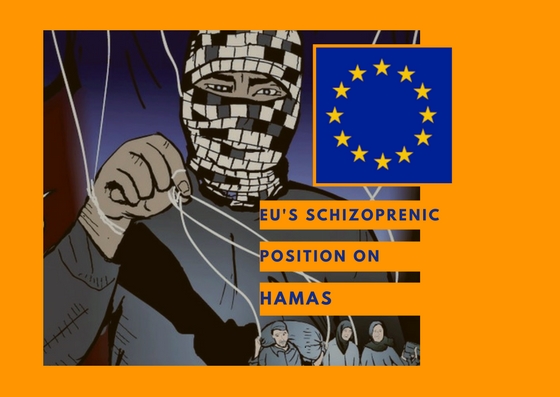
The EU’s Schizophrenic Position on Hamas
An Evaluation of European Policy towards Hamas
Read Full Report
In July 2017, the European Court of Justice (ECJ) ruled that Hamas was rightly put on the list of terror organizations between July 2011 and July 2014. This judgment was a response to the appeal of the European Council against a decision by the General Court, which had ruled that Hamas should not have been on the list during that time. Even though the Advocate General had provided an advisory opinion stating the ECJ should take the same position as the General Court, the ECJ eventually decided in favor of the European Council. While these deliberations were taking place, there was another case pending concerning Hamas' request to be removed from the list from March 26, 2015. This report will analyze the practical implications of the listing of Hamas as a terror organization and present it in perspective to the broader European policy towards the Gaza Strip.
In 2017, the European Court of Justice ruled on an appeal by the European Council and set forth that Hamas will remain on the list of terror organizations. This appears to indicate that the European Union (EU) is convinced of the terrorist nature of Hamas, de-legitimizes the organization and tries to prevent its funding. However, this report shows that the EU's position concerning Hamas is not so clear-cut. Firstly, the EU faces challenges implementing the prevention of funding to Hamas due to its own provision of humanitarian aid to the Gaza Strip, which often implicitly benefits Hamas who maintain effective control over the area. More interestingly, the EU's political response is often highly critical of Israel when addressing the blockade of the Gaza Strip and the hostilities there.
This latest report shows that this criticism is an attempt to transfer responsibility from Hamas to Israel. It is important to understand that these political responses by the EU implicitly consolidate Hamas' rule and in a sense, they become a source of legitimacy for the organization. Moreover, the report shows that the EU's response should be understood in a broader framework, in which it legitimizes Hamas as an organization fighting a legitimate struggle for the Palestinian people, without condemning its methods and practices of terrorism. This report will counter this underlying assumption and urges the EU to acknowledge the responsibility Hamas has in creating the humanitarian crisis in the Gaza Strip. The main argument is that the rule of a terrorist organization over the Gaza Strip is problematic, both for the local population and for Israel. Therefore, it proposes that the EU should problematize the rule of Hamas, and implement measures that will either put pressure on Hamas to abandon its terrorist identity, or that will lead to the complete removal of Hamas from control over the Gaza Strip.

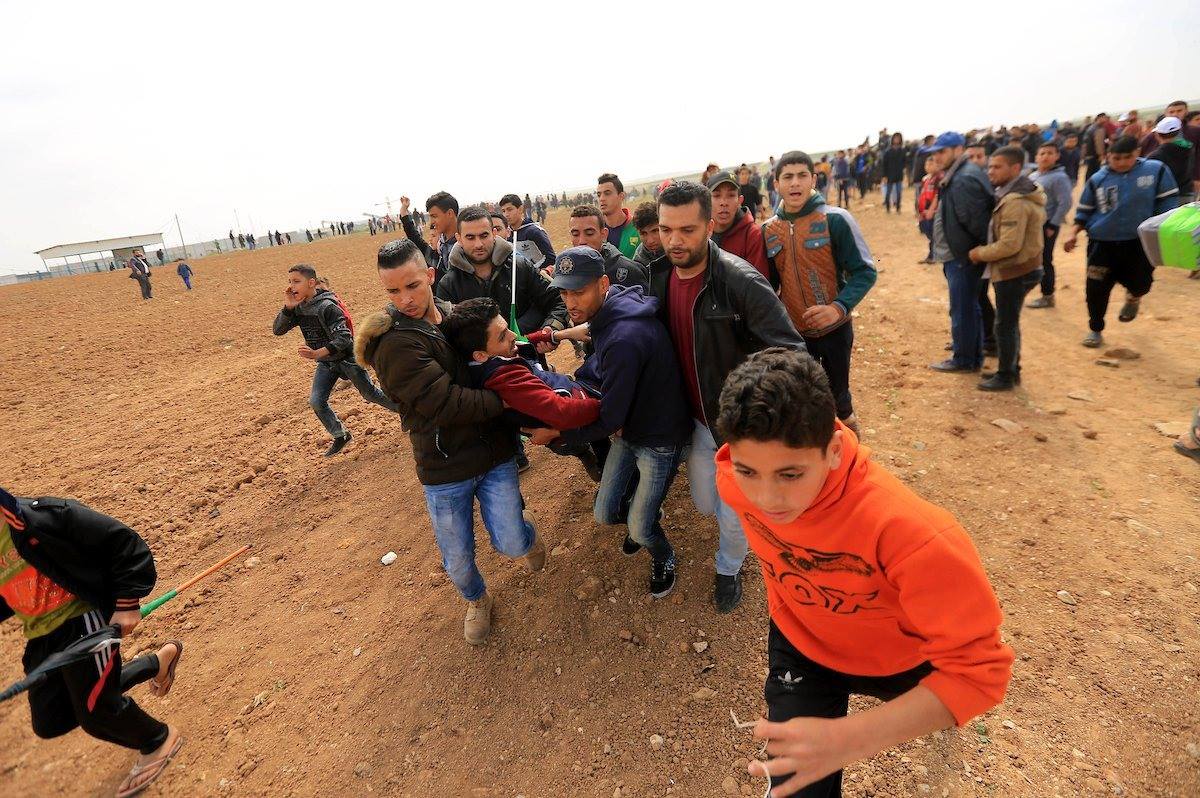
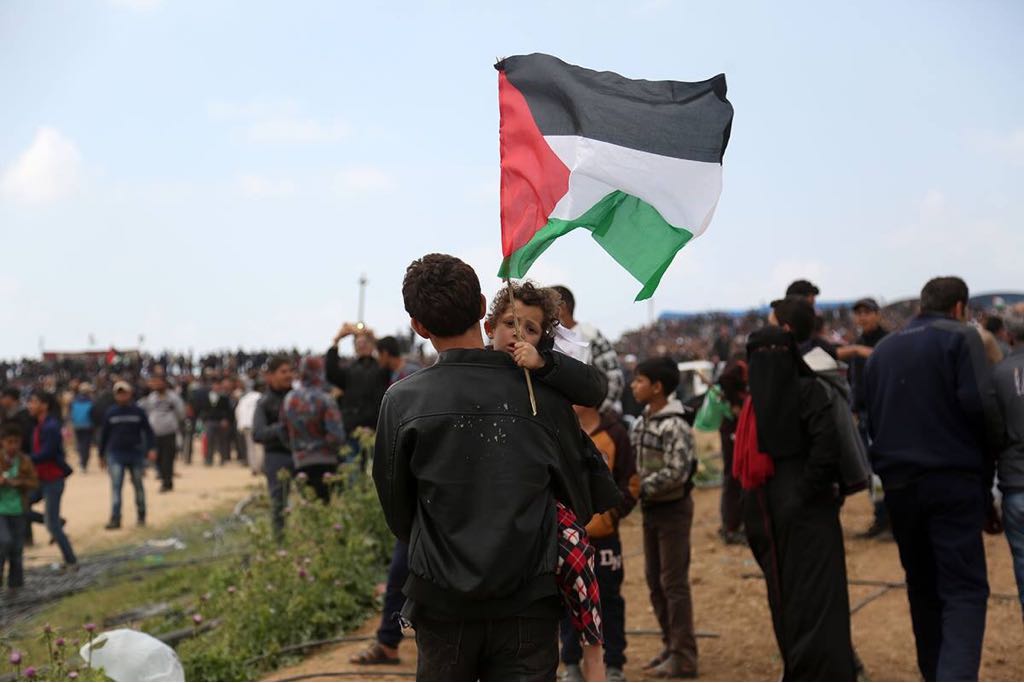
March 31 from the Gaza Strip
1. Hamas is a terror organization whose declared goal is the destruction of the State of Israel. Hamas seeks to murder Israelis by firing rockets, placing IEDs and building terror tunnels into Israeli territory. Hamas is orchestrating a dangerous, mass-scale infiltration into the State of Israel’s sovereign territory.
2. What is happening on the border with the Gaza Strip is not a demonstration. It is an organized riot, being used as a platform for carrying out terrorist attacks and launching a mass assault on the border fence and breaching it. No sovereign state would permit this.
3. Hamas is the initiator of the riots and has the power to put an end to them at any time. Instead of doing this, Hamas is calling for further escalation and is encouraging terror against Israel.
4. Those killed were carrying out violent terrorist activity. Most of these casualties (at least 10) have been identified as known terror operatives. Israel's riot control actions were precise, in accordance with international law. Israel will continue to act with determination to protect its sovereignty and the security of its citizens.
5. The terrorist organizations make cynical use of women and children, who are purposely sent to the fence to be injured. Hamas uses them as cover for its attempts to carry out terrorist attacks, including placing IEDs on the fence and launching rockets.
6. The fence between Israel and the Gaza Strip separates a sovereign state and a terror organization; it separates a country that protects its citizens and murderers who send their people into danger. The fence separates an army that uses force in self-defense in a precise and proportionate manner, and Hamas, an organization that for years has been intent on harming millions of Israelis and sanctifies murder and death. Anyone who mistakenly views in this murderous spectacle even an iota of freedom of expression is blind to the threats facing the State of Israel.
7. Hamas is funded and armed by Iran. It spends huge sums of money on building up its military and on terrorist activity, instead of on the welfare of the population in the Gaza Strip.
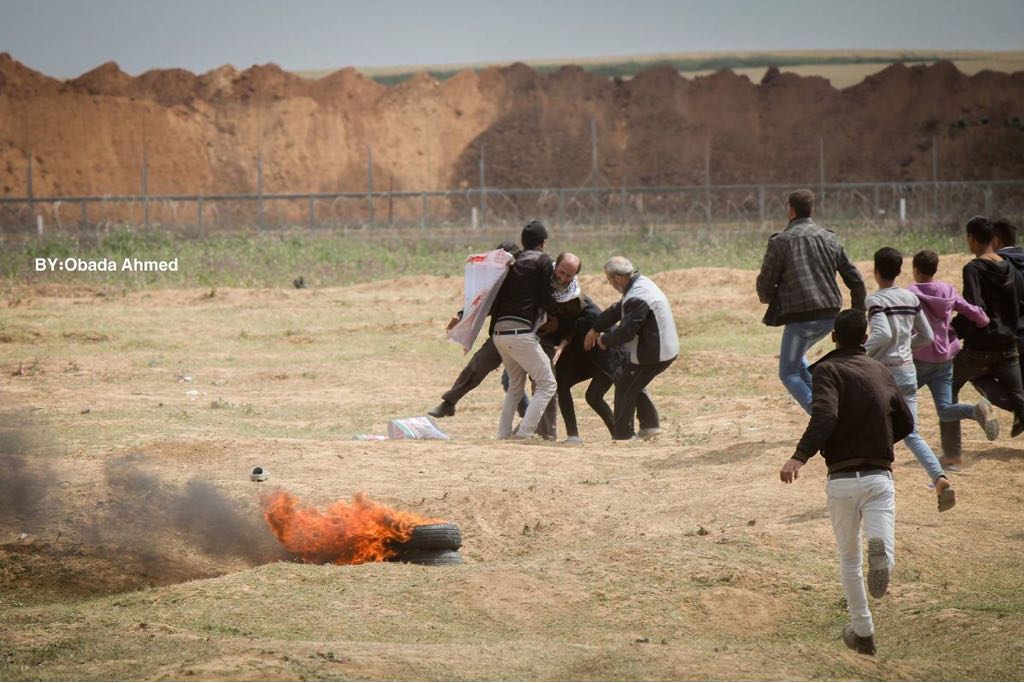
Gaza: IDF Spokesperson Briefing
Talking points from the IDF Spokesperson briefing:
1. This is not a demonstration; it is a terror attack organized by Hamas and the Palestinian Islamic Jihad.
2. For several weeks, the IDF has been receiving information on Hamas’ intentions to take advantage of the event to lay IEDs and to initiate terror attacks. These events actually occurred, including the firing of light arms – two events, laying of IEDs – 4 mines were placed alongside the fence with Gaza, and hundreds of events of stone throwing and lobbing of Molotov cocktails.
3. Hamas is attempting to redirect the frustration of the citizens of Gaza with its failures towards Israel.
4. The area surrounding the fence is a combat zone against terrorist organizations. Hamas is aware of this, and therefore sends women and children into the area, hoping to provoke the IDF into uncontrolled shooting resulting in multiple cases of innocent casualties. Most of the participants in the demonstration (a total of 30,000 participants) were women and children, while all the casualties are of combat age, aged between 18 and 30, and for the most part are known members of terrorist organizations.
5. Hamas attempted to repeat a previous attempt of placing an IED in a flag, similar to an attempt several days ago, which wounded four soldiers.
6. IDF fire was controlled and in accordance with standard procedures. It is known where every bullet hit. Claims of hundreds of Palestinian casualties refer for the most part to inhalation of smoke or as the result of riot control procedures. Hamas intends to turn the fence area into an area of constant confrontation from now until Nakba Day on 15 May. The IDF won’t permit this, and if the events continue will be forced to attack Hamas and Palestinian Islamic Jihad targets in the Strip.
7. The State of Israel has no interest in harming innocents, neither women nor children. We are acting only to prevent terror and violation of Israeli sovereignty. It should be remembered that this is an attempt to violate an undisputed sovereign border. No country would permit this.
8. Claims that this is a demonstration are baseless. In what demonstration do activists draw weapons and shoot at the other side? In yesterday’s events this occurred twice. Four IEDs were placed, hundreds or Molotov cocktails were thrown, including attempts to ignite Israeli mechanical equipment that was parked on our side of the fence. There were also three failed attempts at high trajectory fire during the night.
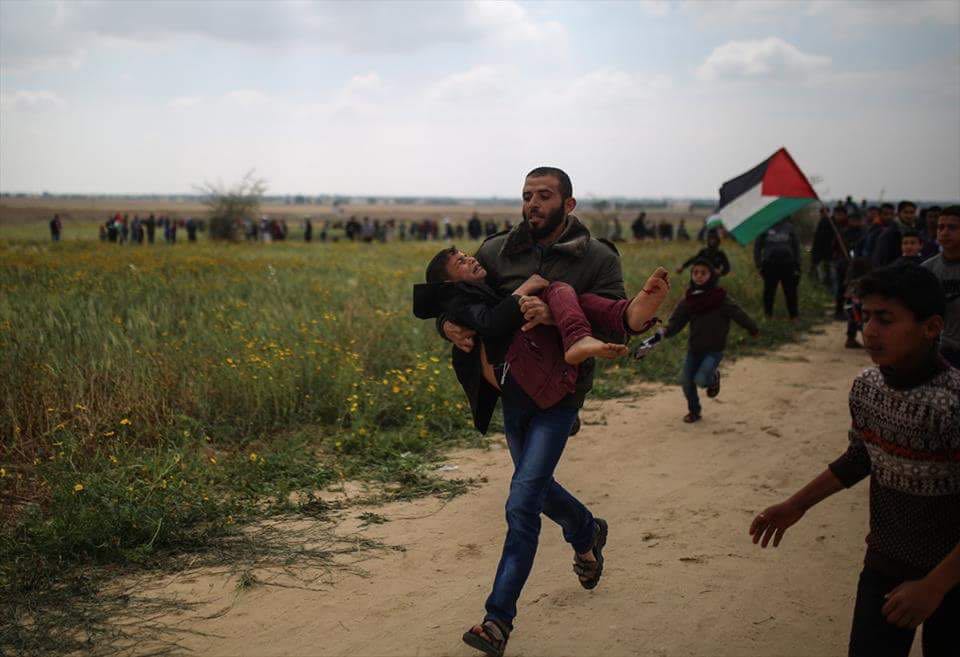
Gaza Passover Riots
Evening update on the situation in Gaza:
Thousands of Palestinians are rioting in five locations throughout the Gaza Strip, rolling burning tires and hurling stones at the security fence and at IDF troops, who are responding with riot dispersal means and firing towards main instigators.
The IDF has enforced a closed military zone in the area surrounding the Gaza Strip in accordance with situation assessments. All activity in the area requires military consent. There are no special instructions for Israeli citizens throughout the Home Front.
With a reinforcement of troops, the IDF is prepared to respond to the violent riots planned throughout the Gaza Strip if needed. The IDF views with great severity any breach of Israeli sovereignty or damage to the security fence. The Hamas terror organization endangers the lives of civilians and uses their own lives for the purpose of terror. The Hamas terror organization is responsible for the violent riots and everything taking places under its auspices.
IDF - Situation update from the Gaza Strip: 17,000 Palestinians are rioting in five locations along the Gaza Strip security fence. The rioters are rolling burning tires and hurling firebombs and rocks at the security fence and at IDF troops, who are responding with riot dispersal means and firing towards main instigators.
With a reinforcement of troops, the IDF is prepared to respond to the violent riots planned throughout the Gaza Strip, if necessary. The IDF views with great severity any breach of Israeli sovereignty or attempts to damage the security infrastructure. The Hamas terror organization endangers the lives of the people of Gaza and uses them to camouflage their terror activity. The Hamas terrorist organization is responsible for the violent riots and everything taking place under its auspices.
IDF: A seven year-old girl was sent across the Gaza Strip border by the Hamas terror organization, where IDF troops identified her.
Upon realizing she was a child, IDF troops ensured she returned safely to her parents. The Hamas terror organization cynically uses women and children, sending them to the security fence and endangering their lives.
IDF: Commanding Officer of the Southern Command, Maj. Gen. Eyal Zamir: "We are identifying attempts to carry out terror attacks under the camouflage of riots. We urge citizens to stay away and warn the Hamas terror organization, which is responsible for the violent riots and everything taking places under its auspices."
Video documenting sabotage attempts that took place during today’s events.
http://videoidf.co.il/300318-CL-01.mp4
IDF: A short while ago, the IDF thwarted an attempted shooting attack by a terror cell in the Northern Gaza Strip. During the attack, two terrorists approached the security fence and fired towards IDF troops. In response, IDF troops immediately fired according to the rules of engagement, targeting the terrorists as well as targeting three nearby terror sites belonging to the Hamas terrorist organization with tank fire and IAF fighter jets. No injuries were reported and no damage was caused.
This severe shooting attack is further proof that the terrorist organizations in the Gaza Strip use these violent riots in order to camouflage terror.
In addition, IDF troops fired towards suspects who had infiltrated into Israeli territory from the Gaza Strip via the security fence.
The Hamas terror organization is responsible for violent riots and everything taking place under its auspices. The IDF will not allow the security fence to be turned into an area of terror.
Video documenting an attempt by terrorists to infiltrate Israel that was thwarted by the IDF.
http://videoidf.co.il/300318-CL-03.mp4
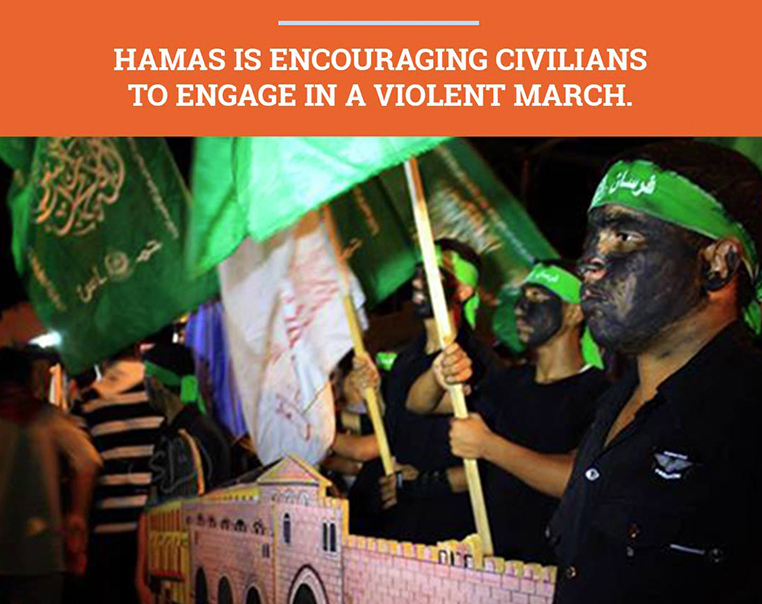
Hamas-led Confrontation Campaign
The Palestinian leadership's latest ploy aims to ignite a confrontation at Israel's borders, in particular with the Gaza Strip. Led and financed mainly by Hamas, the plan is to have thousands of Gazans gather and camp close to the border fence in the coming weeks. They may initiate a mass march, or even a violent storming of the border and clashes with Israeli security forces. The culmination of the campaign is slated for May 15 (the day after Israel declared independence in 1948, labeled "Nakba – Disaster – Day" by the Palestinians).
It should be noted that the Palestinian leadership and Israel agreed in 1995 to resolve through negotiation, not by unilateral moves or violence, permanent status issues such as the settlements, security arrangements and borders, as well as the refugee issue.
The Palestinian representatives again and again rejected serious efforts to reach peace agreements, including far-reaching Israeli proposals in the negotiations held in 2000 and in 2008.The Palestinian leaders left the negotiation table once again in 2014.
Gaza is facing a worrying humanitarian situation, brought on by the dismal failure of Hamas and the PA to provide for the welfare of Gaza's population. Instead of taking responsibility, Palestinian leaders are trying to put the blame on Israel.
Hamas-led Confrontation Campaign
REMEMBER:
1. The campaign organized by Palestinian leaders is in fact a dangerous, premeditated provocation meant to fan the flames of the conflict and increase tension.
2. Israel has the right to defend its borders and to prevent infiltration into its sovereign territory.
3. In the last two weeks, there has been an increase in terror attacks on Israel, supported and encouraged by Palestinian leaders.
4. For almost eleven years, Hamas has ruled the Gaza Strip, preferring to continue the conflict at the expense of the welfare of the Gazan people.
5. Hamas uses its resources for armament, smuggling tunnels, and other militaristic purposes, instead of investing in the civilian infrastructures in Gaza.
6. Hamas is spending more than $10 million to finance the current confrontation campaign, paying Gazans to get them to participate.
7. Hamas's primary goal remains to destroy Israel.
8. Hamas continues to exploit the civilian population of Gaza as human shields.
9. Israel continues its humanitarian support of Gaza, allowing entry of goods, electricity and water as well as the passage of people via Israel for medical reasons.
STOP the LIES of HAMAS -- Share this information with your friends!

A Crime or not a Crime?
By Carol Shi
Should Buyers of Sex Services Be Criminalized?
First Things First: Is Prostitution Bad?
To justify imposing some sort of sanction on purchasers of sex services, we must first acknowledge the dire dangers of prostitution. Prostitution is not merely ‘paid consent for sex’. People in financially vulnerable positions consent to being paid below the minimum wage, or to selling their organs to live. People consent to many things, especially if money is involved, in order to survive. Moreover, the health and safety concerns in prostitution are beyond comprehension – this includes sexual harassment, physical and emotional abuse, rape, and rape without a condom.[1] In the words of a prostitute, ‘What rape is to others is normal to us.’[2] Prostitutes have one of the highest HIV rates of any population studied, with rates as high as 93%.[3] Passing legislation to clamp down on this industry is absolutely crucial. The legalization of prostitution has proven to fail in achieving protection, freedom, or equality – the world is too cruel to allow that. The only way forward is enacting legislation to diminish the demand by penalizing purchasers.
The Knesset’s Dilemma
For the past 8 years, Israel’s government has been in the talks to adopt the ‘Nordic model’ criminalizing the purchaser but not the seller. However, Committee discussions have deviated to adopt a ‘soft’ criminal approach, which is to impose administrative penalties on purchasers, instead of criminalizing them.
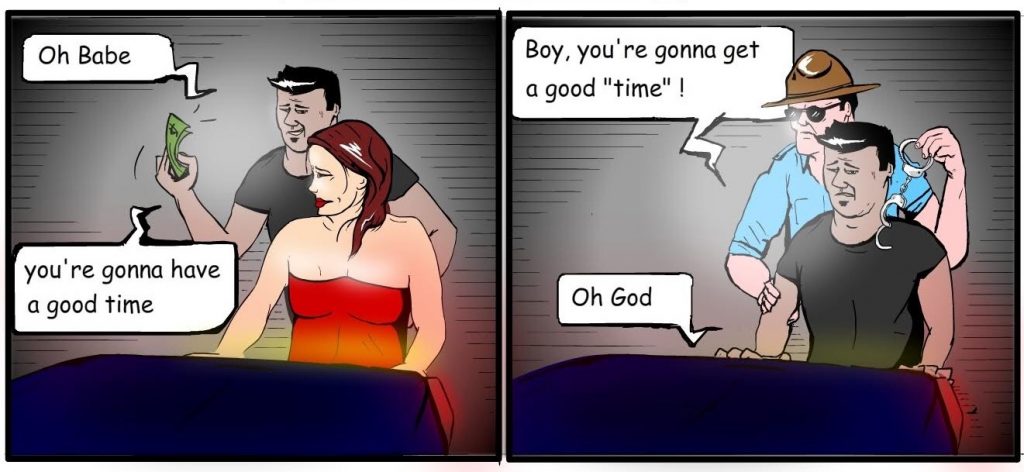
An administrative approach looks like this: A man is caught purchasing sex services from a male prostitute. The purchaser is first given a warning. Ignoring this warning and choosing to indulge in another momentary craving, he is caught a second time. This time, he is handed out a fine and is required to attend mandatory workshops on gender equality and how a body is not a commodity. He reluctantly pays the fine, a third of his monthly income in a top financial consulting firm in Tel Aviv. He attends the workshops while thinking of what to watch on Netflix when he goes home. Considering how the fine was insignificant in comparison to his high paying job, he decides to take a risk and try again. He doesn’t get caught. Perfect. He goes again, to his favorite male prostitute whose name he doesn’t even know. He’s caught a third time. Now, not only is he fined half of his monthly income, he’s given a criminal penalty. After four counts of purchasing prostitutes within the two months, he’s finally criminalized. This is what we call ‘scaled criminalization’,[4] while still falling underneath the administrative approach.
Would a criminal penalty on first count have deterred this man in the first place? The answer is likely yes. Criminalization is arguably the strongest deterrence for several key reasons.
The Rule of Law – What is it?
First, criminalization is most effective for countries that uphold the rule of law. The rule of law is that every person must be held accountable to the law, no matter how powerful or influential they are. This includes lawmakers, politicians, and judges. So, when an individual or governmental body contravenes the law, their actions will be assessed by the courts.
How is the rule of law relevant to deterring purchasers of sex services? Here’s how. Israel is a democratic state, and a core element of democracy is to uphold the rule of law.[5] In studies conducted on purchasers of sex services, countries with a stronger level of democracy, such as the United States and the United Kingdom, had a stronger reaction of deterrence to criminal penalties. Israel is ranked 29th in the world, and first in the Middle East in democracy. Thus, it is safe to say that prospective purchasers will certainly be deterred in Israel when criminal sanctions are imposed.
Shame Sucks
Second, there is a strong social stigma associated with criminal convictions. An administrative fine that can be easily paid off, leaving no criminal record or reputation taint. However, because a criminal conviction is ‘harder’ to receive, it more strongly implies guilt – hence, the social stigma.
People fear the social stigma of having a criminal offence being made known to family and friends. [6] In an interview article on Marie Claire, a client of an escort said, ‘Of course, my wife doesn’t know about any of this – if she ever found out she would leave me immediately. I couldn’t bear to lose her. Occasionally, I have nightmares about my teenage sons discovering what I do, which would probably be worse than my wife finding out. No one in the house would ever speak to me again.’[7]
Shame destroys reputation, which is particularly important for middle to upper-middle class men, who value reputation as it provides them with employment opportunities.[8] Shame also influences beliefs, as it affects what one would think is ‘harmless behavior’ to what is reserved for ‘bad types’.[9] Hence, those who consider themselves with decent morals, do not wish to associate themselves with the ‘bad types’. Thus, the shame element of criminalization is one of the highest form of deterrence, which an administrative penalty does not offer.
A Guilty Mind
Third, purchasers are very aware of the harms prostitutes face. A study was conducted on purchasers of sex services in Lebanon. A 21 year-old buyer, a student, stated that ‘of course’ no woman is happy to be a prostitute. He also expressed awareness of pimping and the mistreatment of women.[10] 80% of the buyers surveyed were aware of the poor socio-economic background of women who enter prostitution,[11] implying that they are aware of the vulnerable states of prostitutes. 82% of the buyers understood that women were under the control of a pimp, and 73% even had direct interaction with the pimp.[12] 61% were aware of the exploitative conditions the women were subject to in prostitution.[13] A 30 year-old buyer, again, married with children, stated ‘For some of them, circumstances force them … They talk a lot, but you don’t want to listen.’[14] Such indifference despite the awareness of the circumstances of vulnerable women should be more harshly punished than simply with administrative sanctions.
The Sex Trafficking Epidemic
Finally, criminalization is a stronger stance to abolishing sex trafficking. The fact is that the male demand for prostitution constitutes the root cause for the trafficking of persons.[15] Both prostitution and sex trafficking would not exist without men’s demand for sex services.[16] Essentially, if there is no demand, there will be no supply.
Forced labor and sex trafficking has been a prominent issue in Israel over the past decade. Recently, there has been an increase of women from Eastern Europe who came to Israel with a tourist visa to serve in the sex industry.[17] In the beginning of 2017, 72 women from Ukraine and Georgia were caught attempting to illegally enter Israel for prostitution purposes.[18] Typically, criminals contact women in Russia or Ukraine online, luring them to arrive in Israel to work as sex workers, promising them large sums of money.[19] However, even if an individual initially consents to participating in prostitution, this is completely eradicated if they are subsequently trapped in service through psychological manipulation or physical force, and becomes a victim of sex trafficking.[20] Thus, there is a pressing need to curb sex trafficking in Israel.
The theory that prostitution laws are related to tackling sex trafficking is not new. The economics behind it is simple: demand plays a vital role. Administrative sanctions reduce demand, but criminalization aims to nullify it. According to the Swedish National Criminal Police, the harsh penalties of the criminalization have been an obstacle to human traffickers and organized criminal groups.[21] Thus, criminalization of the purchase of sexual services destroys the incentive for criminal organizations to establish themselves, which will more effectively diminish sex trafficking in Israel.
Looking Ahead
Allow me to conclude with a final illustration: The purchase of sex services is now criminalized. A man with previous prostitute-buying habits decides he has a familiar urge today. As he strolls along a dark and dingy part of Tel Aviv where he used to visit regularly during surges of similar desire. He thinks about the new law recently imposed, and sees himself standing before a court, facing criminal charges. But what are the chances of him actually being caught and bring brought to court? He remembers, he lives in Israel, not Syria. He winces at the resource and time consuming aspects of being taken to court. Curse this upright democratic system that holds individuals accountable when contravening the law! Still, his urges are pressing and he catches a familiar face smirking at him from a corner. He advances towards this young girl, grinning at the thought of what he could do to her. He stops in his steps, considering how this young girl is likely only in this industry due to financially precarious reasons and is likely to be under the manipulation of a pimp. This young girl may or may not be have been trafficked. She may or may not be underage. But his urges call him, so he shrugs his thoughts off and continues towards this young girl. He begins conversation and reaches for his wallet. He pauses. He thinks about how if he is brought to court and faced with criminal charges, what will his family and colleagues say? What will his boss say? What will his high school friends talk about at their annual reunion? His girlfriend will certainly leave him. Word in the banking industry spreads quickly. He’ll have trouble getting a recommendation for job opportunities. This isn’t something he could pay and walk off from. This charge will taint him. He puts his wallet back in his pocket, apologizes to the young girl, and walks away.
[1] Silbert, H. Pines, A. Y. and Lynch, T. (1970). Substance Abuse and Prostitution. Journal of Psychoactive Drugs, 14, pp. 193-7.
[2] Farley, M. Lynne, J. and Cotton A. J. (2005). Prostitution in Vancouver: Violence and the Colonization of the First Nations Women. Transcult Psychiatry, 42(2), pp. 242-271.
[3] Ward, H. and Day, S. (2006). What Happens to Women Who Sell Sex? Report of a Unique Occupational Cohort. Sexually Transmitted Infections, 82(5), pp. 413-417.
[4] Haaretz. 2018. Israeli gov't committee opts for 'soft criminalization' of prostitute clients - Israel News - Haaretz.com . [ONLINE] Available at: https://www.haaretz.com/israel-news/israeli-gov-t-committee-opts-for-soft-criminalization-of-prostitute-clients-1.5729971. [Accessed 15 March 2018].
[5] H.C. 910/86 Ressler v. Minister of Defence, [32].
[6] Government Offices of Sweden (2010). Evaluation of the Prohibition of the Purchase of Sexual Services. Swedish Parliament, p. 38.
[7] Thompson, A. (2016). Why Do Men Pay for Sex?. Marie Claire UK. [online] Available at: http://www.marieclaire.co.uk/reports/sex-workers-11125 [Accessed 15 Mar. 2018].
[8] Tang, X. (2013) Shame: A Different Criminal Law Proposal for Bullies. Cleveland State Law Review, 61(3), pp. 649-663.
[9] Ibid.
[10] KAFA (enough) Violence and Exploitation (2014). Exploring the Demand for Prostitution: What Male Buyers Say About Their Motives, Practices, and Perception. Ghada Jabbour, pp. 25.
[11] Ibid.
[12] Ibid, pp. 26.
[13] Ibid, pp. 27.
[14] Ibid, pp. 26.
[15] MacKinnon, C. A. (2011). Trafficking, Prostitution, and Inequality. Harvard Civil Rights – Civil Liberties Law Review, 46(2), pp. 271-309.
[16] Joy Ngozi Ezeilo, Report of the Special Rapporteur on trafficking in persons, especially women and children, A/HRC/23/48, United Nations, 18 March 2013.
[17] Hotline for Refugees and Migrants (2015). Trafficking in Persons in Israel. Tel Aviv, pp. 6.
[18] Yaron, L. (2017). Number of Women Brought to Israel for Prostitution on the Rise - and the Police Are Struggling to Deal With It. Haaretz. [online] Available at: http://www.haaretz.com/misc/haaretzcomsmartphoneapp/.premium-women-brought-to-israel-for-prostitution-on-increase-1.5481624 [Accessed 15 Mar. 2018].
[19] Ibid.
[20] U.S. Department of State (2017). Trafficking in Persons Report, pp. 17.
[21] Government Offices of Sweden (2010). Evaluation of the Prohibition of the Purchase of Sexual Services. Swedish Parliament, pp. 37.