
IDF Lone Soldiers
In Israel, whether you are sitting on a bus, waiting on line to buy a falafel, or simply walking down the street, you will almost always see men or women dressed in an olive green, tan or a blue uniform. These are the soldiers of the Israel Defense Forces. With about 177,000 soldiers on active duty, the IDF is comprised of a myriad of young men and women. About 6,300 of those are considered “lone soldiers,” or soldiers serving in the IDF that have no support or family ties in Israel. About 45% of “lone soldiers” come from other countries, and leave family and countless friends behind to serve the Jewish state. The other 50% of those lone soldiers are comprised of orphans, are from low-socioeconomic status, or least common, come from ultra-orthodox and Haredi backgrounds. These religious men and women volunteer to serve in the IDF and are then shunned and disowned by their families and communities.
It is a common belief amongst the ultra-Orthodox and Haredi sects of Judaism, that the state of Israel should not exist until the Messiah comes. Due to this belief, do not support an Israeli army. In their communities, the mentality is that men must rigorously study the Torah and religious texts all day while the women must support the men by working and taking care of the family. The leaders of the communities believe that going to the army stops the men from studying all day, which they believe is their obligation to God. Some Haredi’s go as far to say that joining the army is an “assault” on the Torah by the Israeli government. In addition to this view, some Haredim also claim that being in the army exposes ultra-Orthodox members to the “negative influences” of the secular world. In June of 2017, over 20,000 anti-Zionist Jews, mainly members of the Hasidic sect of Judaism, gathered in Brooklyn to express their outrage of the conscription of Haredi yeshiva students. Protestors spoke out against Israel’s arresting of individuals who resisted the compulsory draft mandate, claiming that their “brethren in Israel” were being persecuted and oppressed.
Those from the ultra-Orthodox community that do end up joining the IDF are often kicked out of their houses and are shunned by their families. One example of this is a young man, who spoke to Al-Monitor and asked not to divulge his name, revealed that six weeks before his draft date, his mother told him that if he did indeed choose to serve, he would have to leave the house. “When she understood that I was determined, he said, ‘Take your things and don’t ever come back.’ That’s what I did. I left with nothing and not knowing where I was going.” The young man tried to contact his mother during basic training, but she refused to answer him. During his basic training in the Givati Brigade, he continued to study Gemara and finished an entire treatise by the time he was inducted into the IDF. The fact he studied Gemara while in the army made his community even angrier.
The Lone Soldier Center in Memory of Michael Levin share more of these kinds of stories and tell the testimonies of the lone soldiers they have helped. Another story is of a young man, A., decided not go to yeshiva anymore when he was 12 years old and was taken in by a grandfather after being kicked out by his family. When his grandfather passed away, the only place for A. was on the street. Since he came from a long line of great rabbis, A. received some interaction while he was living on the streets; however, once he joined the army, the community cut off all communication with him.
About 400-600 Haredi or former Haredi soldiers who have no family ties come to the Lone Soldier Center yearly, needing help in various areas. “Many of these soldiers don’t know how to budget their money in the army, since they weren’t taught math beyond grade level,” says Lizzie Noach, the Project Coordinator for the Lone Soldier Center. “They don’t have a formal education; many come to see Tziki (Aud, the coordinator for at risk soldiers at the Lone Soldier Center) for help pre-army. They don’t really speak English and have poor Hebrew, as they only speak Yiddish at home and in yeshiva.” Additionally, Noach says the Ministry of Defense does not always give Israeli lone soldiers, “lone soldier” status to receive even the general funds and benefits that are given to all lone soldiers. To prove lone soldier status, one must provide paperwork proving that they have either have no family support in Israel, contact with any family members or that they are not receiving money from family members. However, for soldiers who either left home in their teens or were living on the streets before joining the army, this paperwork is non-existent, as there is no record of where they had been living prior.
It is common, coming from a religious background and religious education, that many of these ultra-Orthodox soldiers do not have general knowledge of basics of math, science, and technology among other things. Tens of thousands of men in the Haredi school system are not educated in math or science past a fourth grade level. Moshe Shenfeld, the head of Out for Change, an organization which assists former members of the Haredi community in educational and vocational training, reports that just 3-5% of boys who study in Haredi schools receive a full matriculation degree.
According to Out for Change, the government sets aside NIS 500 million a year to assist students from the ultra-Orthodox yeshivas, who are a part Haredi community, that want to further their education after their formal schooling is completed. These funds are used to set up courses from the Education Ministry to help such students fill the gaps in their education and receive a matriculation certificate, provide vocational training, and job training during their army service. However, this money is only for soldiers and those who are still a part of the Haredi community, who serve in religious units. The Netzah Yehuda Battalion, part of the Kfir Infantry Brigade, is one of the two strictly Haredi units in the IDF. Today, it is the largest battalion in the IDF with over 700 soldiers in four different companies and one elite counterterror squadron. Haredi soldiers typically spend two years serving and then one year completing high school completion exams and acquiring skills for a profession once they reentered civilian life. Netzah Yehuda offers resources to help these soldiers complete matriculation and pre-college studies. For soldiers who do not qualify for government tuition assistance, “Friends of Nahal Haredi” helps to subsidize costs of tuition for schools and programs that help Haredi soldiers complete their core education. However, they only help soldiers within that specific unit who do not qualify for assistance, and not infantry soldiers in general.
Soldiers who come from an ultra-Orthodox background who join other units that are designated to be religious or Haredi units, are also given financial assistance from the Ministry of Defense to complete their matriculation, as many of these soldiers do not have the requisite level of core education necessary to either enter university or become a member of the workforce post army service. Unfortunately, there are many other Haredi and ex-Haredi soldiers who do not get assistance at all, simply because they are not members of religious units.
Yossi Klar from, Out for Change says, “What the army does with Haredi soldiers is it gives them two things depending on age and route they take. If you’re younger than 21 and fit, then you are integrated into a Haredi infantry unit; there, the last eight months of your 2 year and 8 month service, are spent in school, completing your education, while if you are non-Haredi, or you used to be, you won’t get those 8 months for education. You have to serve those 8 months in full army service.”
The second route for Haredi soldiers, if you are over the age of 21, is integration into non-infantry units, where they are given jobs such as electricians and other technical jobs. “The army puts an emphasis on making sure every job they integrate to, they will find a job when they leave the army,” Klar says. “We used to call it ‘creditation.’ This is the credit you get from serving in the army, you come out with a job. To getting into a job in the Intelligence community, you need to have very high ratings in your tests before you go into the army, and ex-Orthodox people usually don’t have those ratings like non-Orthodox people because they did not have basic studies and those tests test basic studies in Israeli curriculum so they usually get very low grades. Haredi people are integrated even though they have low grades into any unit they want, and ex-Haredi people cannot do that, so the discrimination goes both ways.”
Soldiers who come from an ultra-Orthodox background who join other units that are deemed religious or Haredi, are given financial assistance from the Ministry of Defense to complete their matriculation, as many of these soldiers do not have the requisite level of core education necessary to either enter university or become a member of the workforce post army service. Unfortunately, there are many other Haredi and ex-Haredi soldiers who do not get assistance at all, simply because they are not members of religious units. The Ministry of Defense does not give the same financial assistance to religious soldiers in regular units as they would to religious soldiers in Haredi units due to the individual soldiers’ choice to not continue along the learning path, as many religious units set aside time for Torah learning.
It is an absolute travesty that the Ministry of Defense does not allot the same financial aid to the Haredi or former Haredi lone soldiers as they do to the ones serving in the religious units of the IDF, simply because they aren’t following the religious path of learning. They still lack the same core education as their religious unit counterparts and deserve the same kind of financial assistance to help them complete their high school matriculation after their army service is finished. JIJ is lobbying the government to help those who are no longer members of the Haredi community, but still suffer the same educational and vocational detriments as those who are still members. Nob profit organizations such as the Lone Soldier Center and Out for Change can only do so much; it is up to the government and the people to help make a change to help those that give up so much to help.

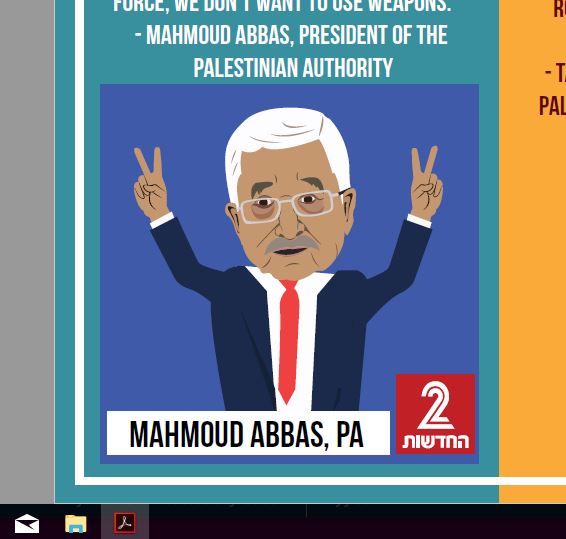
We will kill you with rocks
"We don't want to use terror against Israel." or "We will persue you with car rammings and kill you with rocks."? Which statement is true?
The #LetsBeHonest Campaign seeks to expose the duplicitous claims spoken by Arab leaders to the West and exposes their true intentions toward peace.
Download


What Palestinians are Afraid to Tell
https://www.youtube.com/watch?v=qrF09CvzyLg
We believe that these voices must be heard!
The international community, and particularly the US and EU, have invested unwisely and irresponsibly in the Palestinian Authority. Much of the money has been stolen in broad daylight by their corrupt leaders. These leaders have absolutely no incentive to ever build a Palestinian state or make peace. The conflict with Israel is very lucrative for them personally, and very little funding is actually monitored or preconditioned on progress or reforms. Instead of building a Palestinian democracy, their leaders have built a radicalized police state which systematically abuses human rights in the West Bank and Gaza. To think that this system is funded by Western democracies is so disheartening.
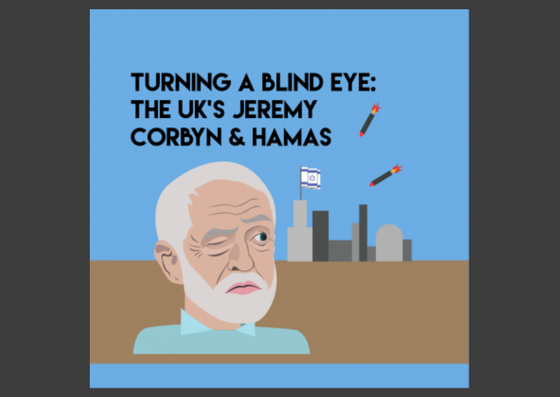
Turning A Blind Eye: Jeremy Corbyn and Hamas
Jeremy Corbyn
In 2015, Jeremy Corbyn was elected leader of the British Labour Party. This political faction prides itself in representing all sectors of society, specifically minorities and oppressed communities. In line with the party’s ideology, Corbyn has been depicted as a champion of human rights through condemning countries and leaders that violate them and standing up for persecuted peoples. For example, Corbyn criticized British Prime Minister Theresa May on International Human Rights Day for holding talks with delegates from Saudia Arabia and Bahrain, notorious violators of international human rights laws.
But while Mr. Corbyn seems to hold a steadfast position on human rights, his support for certain groups and organizations contradict his purported values. Specifically, their his support for the terrorist organization Hamas has created controversy:
In 2009, Corbyn urged the British government to remove Hamas and its leadership from the British list of condemned terrorist groups. That same year, Corbyn invited representatives from Hamas and Hezbollah to a meeting in the British parliament. Hamas and Hezbollah are both currently classified as terrorist groups by the European Union and the United States of America. During his speech, Corbyn referred to Hamas and Hezbollah as “friends” and “hardworking”.
With the British leaders’ support of the organization, it is important to evaluate Hamas’ poor Human Rights record.
Hamas and Human Rights
The Palestinian Resistance Movement Hamas has been categorized as a terrorist organization by the international community and condemned for their multitude of human rights abuses. The following presents specific examples in which the organization violates international law.
Torture
Torture is labeled as a violation of international law in Article 5 of the United Nation’s Universal Declaration of Human Rights.
From December 2016 through March 2017, 38 complaints of torture were reported to the Independent Commission for Human Rights. Reports in Gaza include beatings, suspending detainees to which his shoulders became dislocated, and making prisoners stand in uncomfortable positions for long periods of time.
Prisons
Arbitrary arrest, detention or imprisonment is labeled a violation of international law in Article 9 of the United Nation’s Universal Declaration of Human Rights.
Hamas has passed legislation that imprisons any Palestinian for 10 years if they are caught interacting with Israeli NGOs. That means any hospital staff or families of patients interacting with an organization like “Save a Child’s heart,” which provides free cardiac treatment, would be arrested by Hamas.
The security forces also arrest Palestinians whom they claim dress improperly. Some men committed the crime of what the authorities called “pop-star” haircuts, while others had pants that were too low or too tight. These perpetrators were arrested, had their heads shaved, and beaten.
Women’s Rights
Article 55 of the Charter of the United Nations outlines “universal respect for, and observance of, human rights and fundamental freedoms for all without distinction as to race, sex, language or religion”.
And even though Articles 17 and 18 of the Hamas Charter define the mother the head of household charged with furthering the education of her children and preparing them to fulfill religious commandments, the organization’s treatment of women is anything but egalitarian:
- Hamas has a special police force to ensure that women dress in a conservative Muslim manor.
- A woman can only file for divorce under certain circumstances, such as if the husband can’t afford to pay her dowry. A woman can attempt to separate from her husband under the claim of mistreatment, but the courts decide what constitutes such abuse and generally do not sway in favor of the wife. Overall, divorce stemming from the complains of a woman is more of an exception than a normative right.
- Adultery is punishable by imprisonment under Hamas. While both men and women are subject to consequences for such, women carry out usually double the prison sentence as compared to men who commit adultery.
Freedom of Thought and Expression
Under article 18 of the Universal Declaration of Human Rights, “everyone has the right to freedom of thought, conscience and religion”.
While Muslims represent 99% of the population in Gaza, there is a very small minority of Christians, constituting about 1% within the territory. Even though the Hamas Charter claims to allow them to live peacefully under Islamic rule, Christians are constantly harassed and threatened by Hamas. For example, shortly after the terrorist group assumed control of Gaza, Hamas burned down and invaded a church and Catholic school.
A Christian bookstore in Gaza was burned down that same year. The owner of the store was also kidnapped and killed by Hamas.
Under Article 19 of the Universal Declaration of Human Rights, all people have the “right to freedom of opinion and expression…without interference and to seek, receive and impart information and ideas through any media and regardless of frontiers”.
The media in Gaza has been under Hamas’ control since 2007, with journalists only allowed to report on topics approved by the government.
Western journalists reporting on the poor living conditions in Gaza are subject to threats and mistreatment by Hamas. Many recounted that Hamas officers have destroyed or confiscated their materials and cameras due to depicting the true situation within the territory.
Children’s Rights
According to the convention of the Rights of Children and the UN Declaration of Human Rights, recruitment and Use of Children is one of the grave violations against children during armed conflict. The UN defines a child as anyone under the age of 18.
Izzedim Kassam, the military wing of Gaza, implemented a program in 2013 that youth from the ages 15 to 17 in preparation for combat. Some of the lessons in this program include handling grenade launcher and urban warfare.
War Crimes
Human shields are considered a war crime, is described by the Rome Statue as: “utilizing the presence of a civilian or other protected person to render certain points, areas or military forces immune from military operations”.
From June 13th to August 26th 2014, during the Israeli-Hamas conflict, the citizens of Gaza were under constant threat from Hamas. The group often uses their own people as human shields by carrying out terrorist activities in civilian areas.. These infrastructures are then targeted and bombed because they are the origin site of rocket fire. And while Israel warns Palestinians to evacuate beforehand, Hamas operatives stop citizens from leaving, intentionally putting their own people in direct danger.
The bodies of those killed in Gaza are then showcased to the media to rally against Israel, but really they in reality victims of the Hamas terrorist agenda.
Conclusion
As outlined above, Hamas has clearly violated a multitude of UN Human Rights and international laws. However, British Labour Party leader Jeremy Corbyn has made statements and carried out actions supporting the organization.
The United Nations Universal Declaration of Human Rights outlines the laws and values that all nations and leaders must abide by. The principals set out are supposed to be followed whether at home or abroad by signatory nations. Mr. Corbyn’s contradicting commitment to the Declaration and his support of Hamas, a gross violator of human rights, undermines the legitimacy and importance of Human Rights in Gaza and validates the abuses of the Hamas government. With Great Britain being a leading world power, turning a blind eye to the terror carried out in Gaza can only lead others to follow and further human rights violations to continue into the future.
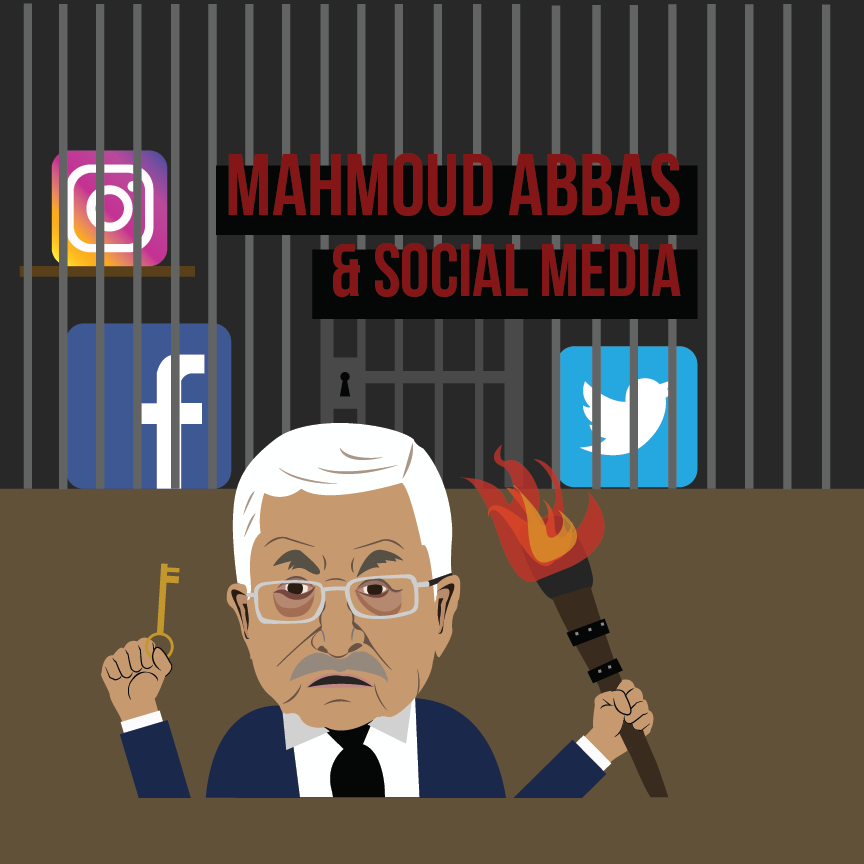
Abbas Doesn't 'Like' Social Media. The Feeling Is Mutual.
Palestinian Authority (PA) President Mahmoud Abbas won't be collecting any 'likes' for his recent crackdown against social media and news websites. Those who say the wrong thing, defined vaguely as 'endangering the safety of the state’ or ‘harming national unity' may now receive jail terms up to life in prison.
Without social media, Palestinians would be unable to get their stories out to the world. As one example, Palestine Informer, offers a rare, uncensored glimpse into life as-it-is experienced by ordinary Palestinians. No longer.
Abbas may have believed he could decree a two-for-one winning strategy with this new Cyber-Crime decree.
First, the President criminalized fully-justified criticism of his regime by rivals and, notably, Mohammed Dahlan. Second, he placed intense pressure on Hamas for their recent arrest of a Palestinian television reporter, Fuad Jaradeh. No doubt, Hamas did this to humiliate Abbas. It worked and then some.
The new law has already become a public relations disaster. Ammar Dweik, head of the PA's own Independent Commission for Human Rights, told Ynet news that the law is 'one of the worst' issued in PA history. That is quite an achievement! Even normally loyal or, at least, cowed Palestinian journalists are pushing back. As one wrote, "what is laughable is that this law carried penalties that are tougher than those imposed on thieves and sex offenders." Let’s just say we won’t count this as a ‘like’ for the law.
Oh, and speaking of liking things, anyone who merely promotes content that Abbas deems offensive by 'liking' and sharing it with friends can also be prosecuted and jailed alongside the author. As the PA prosecutor explained, “you cannot accuse the president …. of treason or make fun of him in an image, or something like that.” Surely, that helps clarify things, no?
President Abbas doesn't like social media and the Internet. Everyone gets that. Even so, the law seems unusually bizarre, unless Abbas has decided that his own political survival now hinges on naked suppression of free speech. If so, the President may soon discover that social media's dislike of his crude campaign of censorship sweeps away his 20th century regime, led by otherwise conservative 21st century Palestinians.
Financing the Suffering of the Palestinians
https://www.youtube.com/watch?v=m5YPCenFVS0
United Nations employs two groups to help refugees. One group helps refugees settle, while the other keeps them in limbo for generations. Watch this video to see how this contradiction developed and how we can help Palestinians escape decades of poverty in refugee camps.
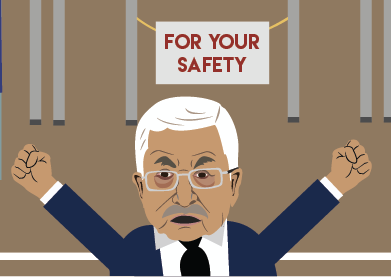
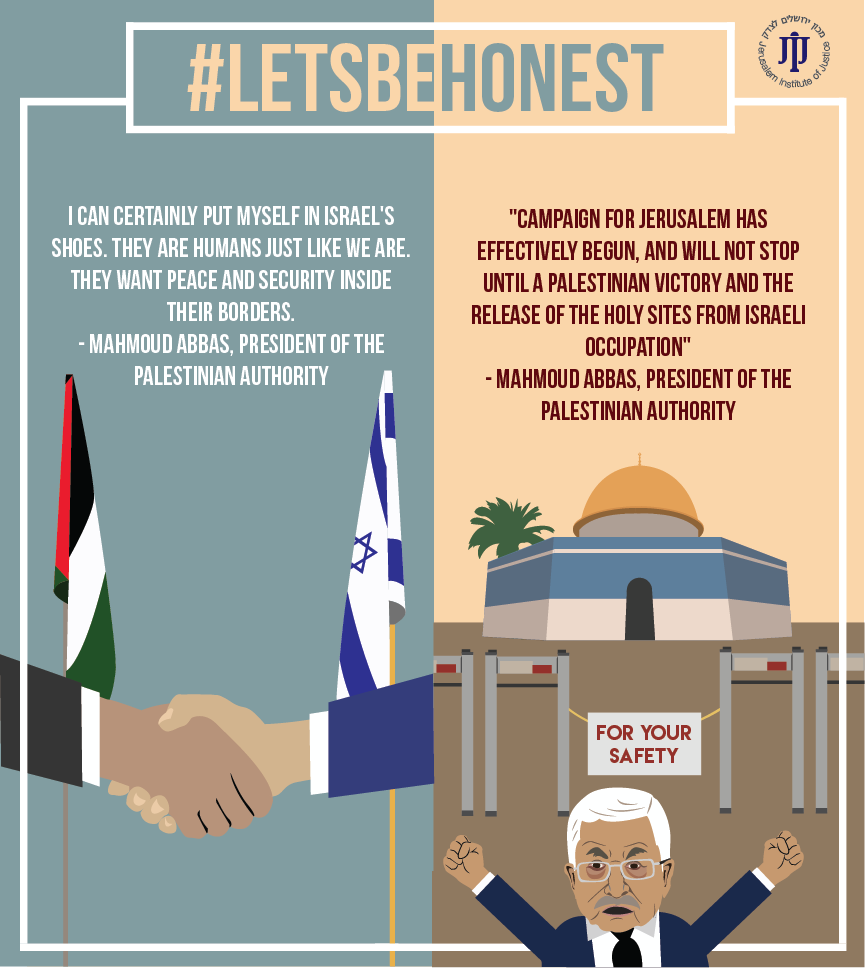
Peace Vs. Incitement
This infographic shows Palestinian Authority's President Mahmoud Abbas duplicity towards Israel. The #LetsBeHonest Campaign seeks to expose the duplicitous claims spoken by Arab leaders to the West and exposes their true intentions toward peace.
Download
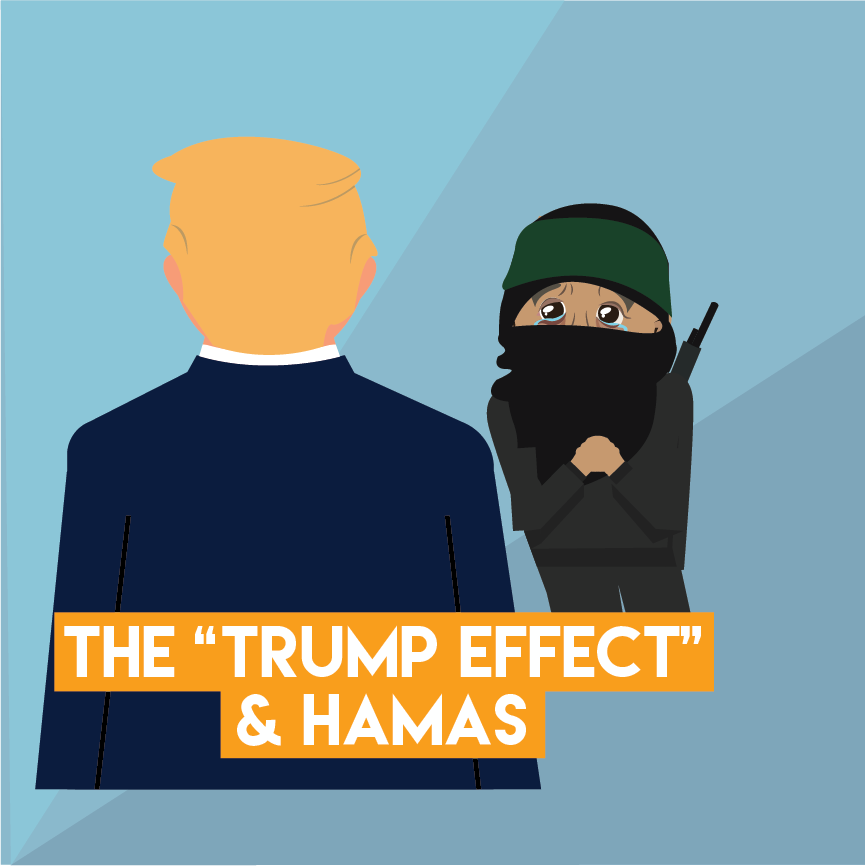
The "Trump Effect" and Hamas
Donald Trump’s ascent to the United States presidency has had a domino effect on the Arab world, with the aftershocks directly targeting the Palestinian organization Hamas. Under Trump’s foreign policy, the president takes a hardliner approach to global terrorism. Trump hopes to defeat Islamic radical terrorism through partnering with other countries in “aggressive joint operations.” Trump also emphasizes that the United States is always happy when “old enemies become friends” and help aid in their military ventures. Various Arab leaders who have had rocky relations with past presidential administrations see this conciliatory approach as an opportunity and are making political decisions that align with Trump. Saudi Arabia specifically has benefited from the President’s willingness to look towards the future, evidenced by the recent meetings and arms deal between the two countries. The Palestinian Authority (PA), in preparation for their meeting with Trump as well as the resurgence of peace negotiations, cracked down on Hamas in Gaza. By cutting funding for electricity to Gaza, the PA is attempting to prove to Trump that they are committed to fighting against global terrorism. Differently than Obama, Donald Trump is willing to look past human rights concerns in favor of furthering his goal of eradicating global terrorism.
While President Trump has not issued any directive orders against Hamas, his demanding rhetoric has influenced Arab countries to act against the organization to curry favor with the United States. Originally, Hamas viewed the Trump presidency as an opportunity to restore relations with the US. They saw Trump as “having a greater threshold for boldness than [his] predecessors…could be a historic opportunity to pressure Israel.” Well aware of Trump’s policy towards terrorism combined with the rising humanitarian crisis in Gaza, Hamas knew that relations with the administration could make or break their ten-year regime in the territory. In early May, Hamas published a new policy document for the first time since their founding charter in the late 1980s. While Hamas leaders publically argue that this is part of the natural evolution of Hamas, the document appears to be largely moderated from their original position. They state that they are prepared to accept a two state solution with 1967 borders. Compared to their original stance that would not accept anything less than all of Israel, this an apparent large concession. Hamas also provides that their conflict is not with Jews specifically as a people, but with the “Zionist project”. In moderating their policy, Hamas is hoping to open a new era of relations with the United States to retain their power hold in the Gaza strip.
Much to the disappointment of Hamas leadership, President Trump was not swayed by their apparent mainstreaming. With many analysts calling the new document simply window dressing to appeal to Western audiences, the President’s administration barely acknowledged their change in policy. A few weeks later, Trump addressed 55 Arab countries at the Rihyad Summit in Saudi Arabia in which he emphasized the necessity of partnering with other countries to “stamp out extremism” and labeling Hamas as a terrorist organization. He repeated to the delegates present to “drive them out” and “strip them of their access to funds.” By formally connecting Hamas and his goal of eradicating terrorism, Trump laid out to these Arab countries a clear path to contracting better relations with the United States.
Just a few days later, four Arab countries spurred the President’s demands into action. Egypt, the United Arab Emirates, Bahrain, and Saudi Arabia cut diplomatic ties with Qatar over their support for groups such as Hamas, Hezbollah and Iran that the United States categorized as terrorist entities. Qatar has invested millions into Gaza’s infrastructure, given substantial financial aid to the territory and also provides refuge for the organization’s exiled leaders. However, days after the beginning of the crisis, Qatar expelled Hamas leaders from Doha due to “unspecified pressure” as well as suspended electricity funding to Gaza. Hamas expressed their outrage at being ostracized by the Trump administration and the subsequent punishing of Qatar, one of their largest backers. A spokesman decried “the statement describing Hamas as a terror group…is a distortion of our image and shows a complete bias to the Zionist occupation.”
With this seemingly waning support from Qatar combined with the Palestinian’s Authority recent crack down on Hamas, the organization needs to secure partnerships with other actors in order to keep control of the Gaza strip and stay in power against the Palestinian Authority. As the humanitarian crisis will only escalate with the loss of funding and electricity, Hamas’ proximate actions will determine the organizations future. Their search is already bringing more contention to the region as they have begun to cozying up with more extreme factions such as Iran and Hezbollah due to regional isolation. The Palestinian Authority is also keeping a close eye on the reconciliation with exiled Fatah leader Mohammed Dahlan who keeps close relations with Egyptian leadership.
Hamas’ true colors:
While Hamas seemingly moderated their policy in early March, the organization returned to their original extremist ideology just a few months later. In his first public speech to the people of Gaza in early July, the new political leader Ismail Haniyeh did not attempt to appeal to Western audiences and directly contradicts their new policy document. . Hamas’ hopes for negotiating with the US are extinguished due to regional developments such as the Gulf Crisis that was indirectly affected by Trump’s anti-terror rhetoric. Where Hamas conceded to accepting a two state solution with 1967 borders, the political leader calls for a Palestinian State that “can not give up a grain of soil” and “will foil any attempt to the so-called solution of ‘alternative homeland’.” He also refers to “schemes of Judaization,” detracting from the previous statement that Hamas’ issue is not with Jews but solely Zionism. He slams President Trump for labeling Hamas a terror organization, encouraging the “Zionist enemy” and “blackmail[ing] the Arab and Islamic forces” against the “Palestinian cause.” He also berates the Palestinian Authority for “responding to American dictations.”
Haniyeh is reacting to Trump’s foreign policy by crafting his speech to appeal to potential Arab backers. The Hamas leader hopes to quell some of the regional pressure against the organization by reaffirming their commitment to their “Arab brothers”. Haniyeh argues that Hamas is a resistance movement solely focused on furthering the Palestinian cause, that their issue is not with Arab countries but solely Israeli occupation. His promises are most likely directed at Egypt who has accused Hamas of aiding guerilla rebels within their country. Haniyeh claims that Arab countries will “only see virtue from Hamas and…wish[es] them security, stability and protection.” Haniyeh further paints a number of Arab countries as friends of the Gazan movement even as many of them have had cold ties with Hamas, in hopes of facilitating warmer relations. Haniyeh thanked Egypt, Qatar and Turkey for their historical and hopefully continued support of the Palestinian people in Gaza. He also labeled Saudi Arabia as an ally, even as the country condemns Hamas as a terrorist organization after meeting with Donald Trump. Most importantly, Haniyeh publically confirmed the organization’s ties with other US condemned extremist groups such as Iran. He thanked the country for “developing its military power,” confirming what had only previously been rumored throughout the Middle East.
Hamas looks for allies:
With Donald Trump indirectly influencing Gulf Countries, the Palestinian Authority and even Qatar to break with Hamas, the organization must secure other financial backers for survival. But although Egypt cut ties with Qatar after Donald Trump’s speech, the country and Hamas have been in recent talks. As the two share a border, reopening negotiations is critical for Hamas’ survival and in aiding the humanitarian crisis. Hamas and Egypt have had especially rocky relations since the 2013 overthrow of the Muslim Brotherhood in Egypt, of which Hamas is a direct offshoot of. Since the coup, the Egyptian government has accused Hamas of being responsible for a number of attacks, to which the organization refutes. Egypt has further blockaded the Rafah border in an attempt to control smuggling of weapons into Egypt to support the government’s adversaries. In their new policy document, Hamas attempts to distance themselves from the Muslim Brotherhood by negating to mention their ties with the organization, in an effort to restore relations with Egypt.
Current talks between Hamas and Egypt are also being facilitated by the presence of former Fatah leader Mohammed Dahlan. Once a high ranking official in the Palestinian Authority leading the fight against Hamas in 2006, Dahlan was exiled and expelled from Fatah in 2011 because he of his perceived threat to Abbas’ power. The former Hamas adversary sees Hamas’ isolation as an opportunity to align with the organization against the PA. Dahlan enjoys close relations with Egypt’s president Abdel Fattah al-Sisi and has been acting as an intermediary in meetings between Egypt and Hamas. For his efforts, Dahlan would be allowed to return to Gaza to be in charge of foreign relations while Hamas keeps control over the territory’s security. After what Hamas called “9 days of constructive meetings with Cairo officials,” Egypt agreed to provide some electricity in exchange for a commitment to tighten security on the border to stop smuggling weapons into Egypt to aid government enemies. They also demanded that Hamas stop negotiations with Iran. In an effort to prove their commitment to the negotiations, Hamas began construction in late June on a no-go security zone to control and boost border security.
However, President Abbas is worried by the resurging negotiations between the two forces. The PA president needs Hamas at its weakest to regain control over the Gaza strip and to be seen as the legitimate voice of the Palestinian people in future Israeli-Palestinian peace negotiations. As Abbas was set to meet with the Egyptian president in Cairo, purchased fuel from Egypt was drastically reduced in Gaza due to interference by the PA. Relations with Egypt may not only be subject to fissure due to external sabotage by Abbas, but also because of Hamas’ recent cozying up to Iran. As part of their negotiations, Egypt warned Gaza leadership not to reconcile with the country. Once the strongest of allies, Hamas and Iran have been at odds since 2012 when the Palestinian organization supported the wrong side in Syria. Subsequently, Iran cut off public relations and military aid. However, as the Trump administration has condemned both Iran and Hamas as terrorist entities, the two are facing regional isolation together and has only brought them closer. Iran is also pleased with the change in Hamas’ political leadership, as they favor Ismail Haniyeh over the former political chief Khaled Meshaal. After reportedly meeting with a delegation in Lebanon, Iran allegedly agreed to resume financial funding to Hamas in the near future. In Lebanon, Hamas began to reconcile with another labeled terror organization, Hezbollah, “under an Iranian umbrella”. The day after Haniyeh’s July speech that publically affirmed the reconciliation, another high ranking Hamas official declared the next day that ties with Iran are “as close and strong as ever.” If Hamas continues to entertain relations with Iran, budding negotiations with Egypt may dissolve even without the meddling of the Palestinian Authority. This would force Hamas to be almost completely dependent on Iran. This resurgence of alliances can only mean bad news for Israel as the two unite to carry out attacks from both Lebanon and Gaza.
While Donald Trump envisions his hardliner approach as the best way to combat terrorism, recent developments in the Middle East such as the Gulf Crisis and actions by the PA have only radicalized Hamas away from their attempt at moderating their policy in March. As the hot summer progresses and the humanitarian crisis only worsens, Hamas will pursue whatever course of action to maintain power in the Gaza Strip, with Iran seeming to be the most probable and reliable ally.