
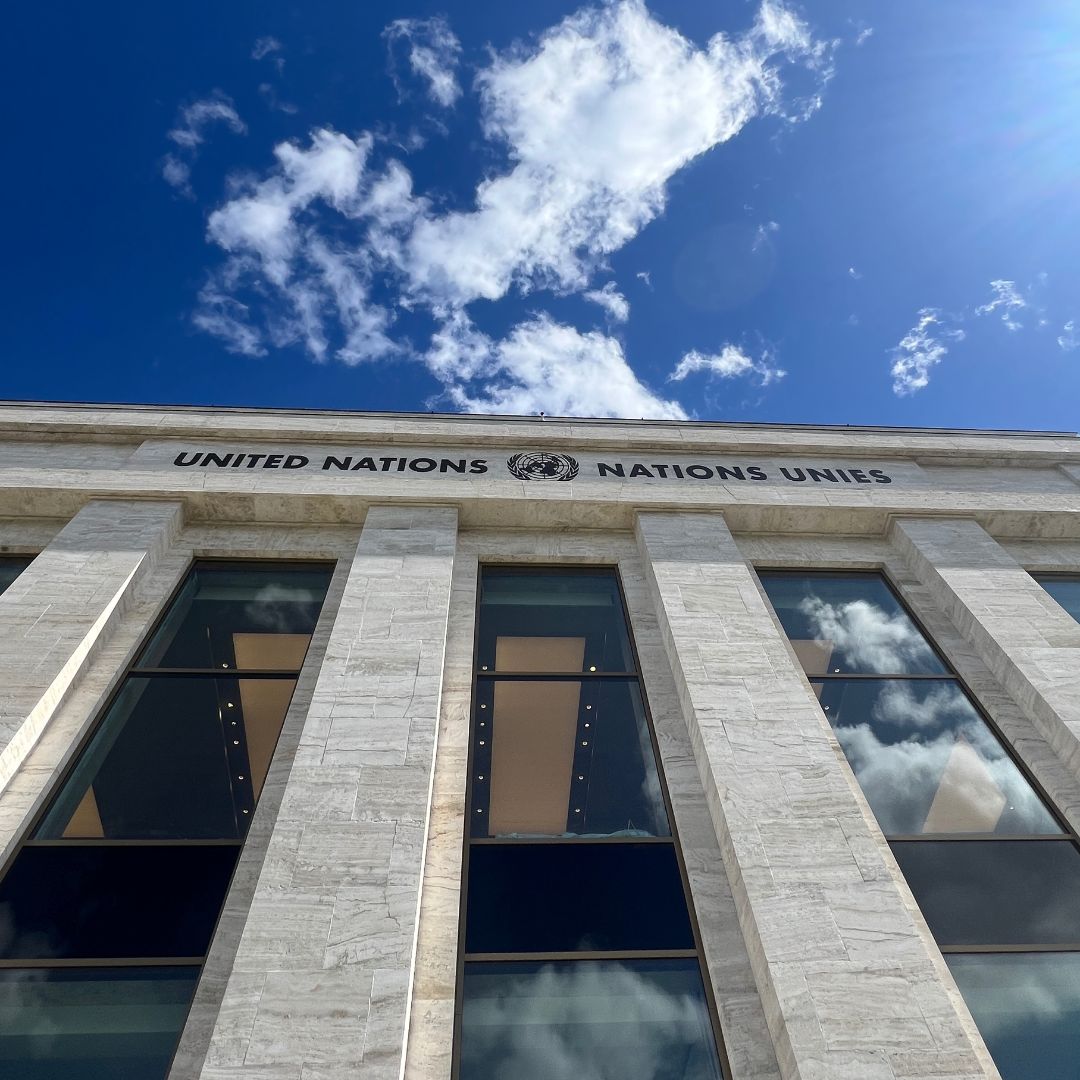
Effects and impacts on the latest UN Human Rights Council resolution
Two weeks ago, the United Nations Human Rights Council (UNHRC) adopted the resolution A/HRC/55/L.30, marking the first official position of the top UN human rights body on the war that started on October 7 atrocities. With a historical background of struggles against Israel by the Council, what does this resolution in particular say and omit? What are the direct effects and impacts on the Jewish State? Let's go deep in.
The UNHRC is the principal intergovernmental body responsible for the promotion and protection of human rights. Since its creation in 2006, the Council has worked to address and take action on human rights violations around the globe. It is composed of 47 member States who are elected by the UN General Assembly for three-year terms. Even though the UNHRC mission is relevant and necessary with the vast number of gory conflicts in the world, its exclusive 'preference' with Israel calls into question the Council's prestige and reputation.
In 2007, when the UNHRC's members were discussing the working methods of the body, they determined that Israel would be the only country whose human rights record is examined under a special agenda item (No. 7), while all other countries’ records are examined in the general debate. From the beginning of its activities, Israel has been by far the biggest target of the Council's resolutions, with 104[1] condemnatory resolutions. Next on the list is Syria with 43, North Korea with 16, and Iran with 14. Not enough, it adopted zero resolutions on gross human rights abuses perpetrated in countries like Saudi Arabia, China, Turkey or Zimbabwe. The open bias of the Council was once again proven during its previous session, which concluded on October 13, when it failed to condemn the terror attacks carried out by Hamas.
The recently approved resolution was brought forward by Pakistan on behalf of the members of the Organization of Islamic Cooperation in the 55th Regular Session of the UNHRC. It calls upon all States to cease the sale, transfer, and diversion of arms to Israel and calls all States to ensure that the United Nations Relief and Works Agency for Palestine Refugees in the Near East (UNRWA) receives predictable, sustained, and sufficient funding, and calls for an immediate ceasefire in Gaza. It was approved by 28 state members, with 13 abstentions, and only 6 countries rejected the resolution, including Argentina, Germany, and the United States.
From a long list of questionable condemnations of Israel that are part of the document, two of them draw attention. First, the call for an arms embargo certainly puts into question Israel's right to self-defense, as it is an explicit attempt to influence the Israel Defense Forces' capacity. This request not only publicly benefits Hamas but also tries to affect the balance of power in the Middle East and the bilateral economic and military relations of Israel. Once an arms embargo is put in place, it can affect major agreements and alliances that are fundamental for Israel's defense against Hamas and other enemies in the region, primarily Iran.
Secondly, it endorses UNRWA and urges its continued funding, despite all evidence[2] that their employees participated in the October 7 massacres and that Hamas has completely infiltrated UNRWA’s staff and exploited its facilities for terrorist purposes. Thus, an open call for the continuity of this agency is a clear message that the UNHRC is blinded about the structural failure of UNRWA, putting at risk both Israelis and Palestinian lives.
As the 'guardian' of global human rights protection, the Council drastically failed (once again) when it didn't comment on the October 7 atrocities committed by Hamas, marked as the darkest day of the Jewish People since the Holocaust with 1,200 murdered. The resolution refuses to describe Hamas’s atrocities for genocidal threats against Israeli civilians, including mass rape and sexual violence against women, or torture and sexual violence against hostages in Gaza, which is still ongoing and has already gone public.[3] Additionally, the resolution is very slight when referring to the remaining 133 hostages taken by Hamas, dedicating 2 sentences from the 8-page document to it.
Approved on the eve of the mark of 180 days of war, the text is clearly one-sided against Israel, as Hamas is not even mentioned once. Meirav Eilon Shahar, Israel’s ambassador to the UN in Geneva, accused the UNHRC of having “long abandoned the Israeli people and long defended Hamas." This resolution is a moral stain on the Council, as it fails to acknowledge Hamas' responsibilities and undermines Israel’s right to self-defense.
Does the A/HRC/55/L.30 resolution have feasible implications? Amid its possible effects and impacts, it can strengthen the political pressure of the international community on Israel or even influence the diplomatic relations with the countries who took an active part in the resolution. But its most visible effect is the symbolic value of the Council's condemnation, although it isn't the first UN institution to state on the current Israel-Gaza War[4][5][6]. The main question is if the resolution will lead the countries to join the arms embargo. Until now, Canada[7] and The Netherlands[8] have announced their intention to halt the sales of weapons to Israel, nevertheless it looks challenging that this international pressure will speak louder than the nation's military interests.
The UNHRC's recent resolution seems to have a low direct impact on Israel, but it turns on another yellow light about further implications. Yet, this resolution not only disclaims Hamas' responsibility for the horrific atrocities it committed but also denies what happened on October 7 and doesn't call in a clear and forceful way for the immediate return of the 133 hostages taken in captivity in inhuman conditions.
Moreover, in the side-event[9] promoted by the Jerusalem Institute of Justice during the 55th regular session of the UNHRC, Dr Sigall Horovitz precisely cleared out: "The Israeli-Palestinian Conflict has reached the bottom of the pit, we are in the heart of darkness. Do we want to stay there? Or do we want to finally address the causes of the violence? Without it, we will never be safe from atrocities".
Article by: Ionatan Gottfried
[1] UN Watch Database. https://unwatch.org/database/
[2] Israel reveals 12 UNRWA staffers it says took part in Oct. 7, says 30 more assisted. (2024, February 16). The Times of Israel. https://www.timesofisrael.com/israel-reveals-12-unrwa-staffers-it-says-took-part-in-oct-7-says-30-more-assisted/
[3] Israeli hostage says she was sexually assaulted and tortured in Gaza. (2024, March 26). The New York Times. https://www.nytimes.com/2024/03/26/world/middleeast/hamas-hostage-sexual-assault.html
[4] U.N. Security Council passes resolution demanding immediate Hamas-Israel war cease-fire, release of hostages. (2024, March 25). CBS News. https://www.cbsnews.com/news/israel-hamas-war-cease-fire-gaza-un-security-council-resolution-ramadan/
[5] General Assembly Adopts Resolution Demanding Immediate Humanitarian Ceasefire in Gaza, Parties’ Compliance with International Law, Release of All Hostages | Meetings Coverage and Press Releases. (2023, December 12). https://press.un.org/en/2023/ga12572.doc.htm
[6] Order of 26 January 2024 | INTERNATIONAL COURT OF JUSTICE. https://www.icj-cij.org/node/203447
[7] Lazaroff, B. T. (2024, March 20). Canada to stop arms sale to Israel, FM Joly says. The Jerusalem Post | JPost.com. https://www.jpost.com/breaking-news/article-792782
[8] Reuters, B. (2024, February 12). Dutch court orders halt to export of F-35 jet parts to Israel. The Jerusalem Post | JPost.com. https://www.jpost.com/breaking-news/article-786463
[9] Jerusalem Institute of Justice (2024, March 28). Preventing Genocide: Legal Perspectives on Oct. 7th [Video]. YouTube. https://www.youtube.com/watch?v=82TPJzTPXHM

Effects and impacts on the latest UN Human Rights Council resolution
Two weeks ago, the United Nations Human Rights Council (UNHRC) adopted the resolution A/HRC/55/L.30, marking the first official position of the top UN human rights body on the war that started on October 7 atrocities. With a historical background of struggles against Israel by the Council, what does this resolution in particular say and omit? What are the direct effects and impacts on the Jewish State? Let's go deep in.
The UNHRC is the principal intergovernmental body responsible for the promotion and protection of human rights. Since its creation in 2006, the Council has worked to address and take action on human rights violations around the globe. It is composed of 47 member States who are elected by the UN General Assembly for three-year terms. Even though the UNHRC mission is relevant and necessary with the vast number of gory conflicts in the world, its exclusive 'preference' with Israel calls into question the Council's prestige and reputation.
In 2007, when the UNHRC's members were discussing the working methods of the body, they determined that Israel would be the only country whose human rights record is examined under a special agenda item (No. 7), while all other countries’ records are examined in the general debate. From the beginning of its activities, Israel has been by far the biggest target of the Council's resolutions, with 104[1] condemnatory resolutions. Next on the list is Syria with 43, North Korea with 16, and Iran with 14. Not enough, it adopted zero resolutions on gross human rights abuses perpetrated in countries like Saudi Arabia, China, Turkey or Zimbabwe. The open bias of the Council was once again proven during its previous session, which concluded on October 13, when it failed to condemn the terror attacks carried out by Hamas.
The recently approved resolution was brought forward by Pakistan on behalf of the members of the Organization of Islamic Cooperation in the 55th Regular Session of the UNHRC. It calls upon all States to cease the sale, transfer, and diversion of arms to Israel and calls all States to ensure that the United Nations Relief and Works Agency for Palestine Refugees in the Near East (UNRWA) receives predictable, sustained, and sufficient funding, and calls for an immediate ceasefire in Gaza. It was approved by 28 state members, with 13 abstentions, and only 6 countries rejected the resolution, including Argentina, Germany, and the United States.
From a long list of questionable condemnations of Israel that are part of the document, two of them draw attention. First, the call for an arms embargo certainly puts into question Israel's right to self-defense, as it is an explicit attempt to influence the Israel Defense Forces' capacity. This request not only publicly benefits Hamas but also tries to affect the balance of power in the Middle East and the bilateral economic and military relations of Israel. Once an arms embargo is put in place, it can affect major agreements and alliances that are fundamental for Israel's defense against Hamas and other enemies in the region, primarily Iran.
Secondly, it endorses UNRWA and urges its continued funding, despite all evidence[2] that their employees participated in the October 7 massacres and that Hamas has completely infiltrated UNRWA’s staff and exploited its facilities for terrorist purposes. Thus, an open call for the continuity of this agency is a clear message that the UNHRC is blinded about the structural failure of UNRWA, putting at risk both Israelis and Palestinian lives.
As the 'guardian' of global human rights protection, the Council drastically failed (once again) when it didn't comment on the October 7 atrocities committed by Hamas, marked as the darkest day of the Jewish People since the Holocaust with 1,200 murdered. The resolution refuses to describe Hamas’s atrocities for genocidal threats against Israeli civilians, including mass rape and sexual violence against women, or torture and sexual violence against hostages in Gaza, which is still ongoing and has already gone public.[3] Additionally, the resolution is very slight when referring to the remaining 133 hostages taken by Hamas, dedicating 2 sentences from the 8-page document to it.
Approved on the eve of the mark of 180 days of war, the text is clearly one-sided against Israel, as Hamas is not even mentioned once. Meirav Eilon Shahar, Israel’s ambassador to the UN in Geneva, accused the UNHRC of having “long abandoned the Israeli people and long defended Hamas." This resolution is a moral stain on the Council, as it fails to acknowledge Hamas' responsibilities and undermines Israel’s right to self-defense.
Does the A/HRC/55/L.30 resolution have feasible implications? Amid its possible effects and impacts, it can strengthen the political pressure of the international community on Israel or even influence the diplomatic relations with the countries who took an active part in the resolution. But its most visible effect is the symbolic value of the Council's condemnation, although it isn't the first UN institution to state on the current Israel-Gaza War[4][5][6]. The main question is if the resolution will lead the countries to join the arms embargo. Until now, Canada[7] and The Netherlands[8] have announced their intention to halt the sales of weapons to Israel, nevertheless it looks challenging that this international pressure will speak louder than the nation's military interests.
The UNHRC's recent resolution seems to have a low direct impact on Israel, but it turns on another yellow light about further implications. Yet, this resolution not only disclaims Hamas' responsibility for the horrific atrocities it committed but also denies what happened on October 7 and doesn't call in a clear and forceful way for the immediate return of the 133 hostages taken in captivity in inhuman conditions.
Moreover, in the side-event[9] promoted by the Jerusalem Institute of Justice during the 55th regular session of the UNHRC, Dr Sigall Horovitz precisely cleared out: "The Israeli-Palestinian Conflict has reached the bottom of the pit, we are in the heart of darkness. Do we want to stay there? Or do we want to finally address the causes of the violence? Without it, we will never be safe from atrocities".
Article by: Ionatan Gottfried
[1] UN Watch Database. https://unwatch.org/database/
[2] Israel reveals 12 UNRWA staffers it says took part in Oct. 7, says 30 more assisted. (2024, February 16). The Times of Israel. https://www.timesofisrael.com/israel-reveals-12-unrwa-staffers-it-says-took-part-in-oct-7-says-30-more-assisted/
[3] Israeli hostage says she was sexually assaulted and tortured in Gaza. (2024, March 26). The New York Times. https://www.nytimes.com/2024/03/26/world/middleeast/hamas-hostage-sexual-assault.html
[4] U.N. Security Council passes resolution demanding immediate Hamas-Israel war cease-fire, release of hostages. (2024, March 25). CBS News. https://www.cbsnews.com/news/israel-hamas-war-cease-fire-gaza-un-security-council-resolution-ramadan/
[5] General Assembly Adopts Resolution Demanding Immediate Humanitarian Ceasefire in Gaza, Parties’ Compliance with International Law, Release of All Hostages | Meetings Coverage and Press Releases. (2023, December 12). https://press.un.org/en/2023/ga12572.doc.htm
[6] Order of 26 January 2024 | INTERNATIONAL COURT OF JUSTICE. https://www.icj-cij.org/node/203447
[7] Lazaroff, B. T. (2024, March 20). Canada to stop arms sale to Israel, FM Joly says. The Jerusalem Post | JPost.com. https://www.jpost.com/breaking-news/article-792782
[8] Reuters, B. (2024, February 12). Dutch court orders halt to export of F-35 jet parts to Israel. The Jerusalem Post | JPost.com. https://www.jpost.com/breaking-news/article-786463
[9] Jerusalem Institute of Justice (2024, March 28). Preventing Genocide: Legal Perspectives on Oct. 7th [Video]. YouTube. https://www.youtube.com/watch?v=82TPJzTPXHM
Responding to the ICC - New Reports
Watch the following interviews of JIJ's team
Interview with JIJ Director of US Policy & Diplomacy, Monique Beadle on i24 News.
Interview with JIJ Human Rights Lawyer, Carolina Gimberg on Kan En Espanol.
Interview with JIJ Attorney, Uri Morad on Radio 103FM.
Interview with JIJ Attorney, Uri Morad on Radio Kan Moreshet
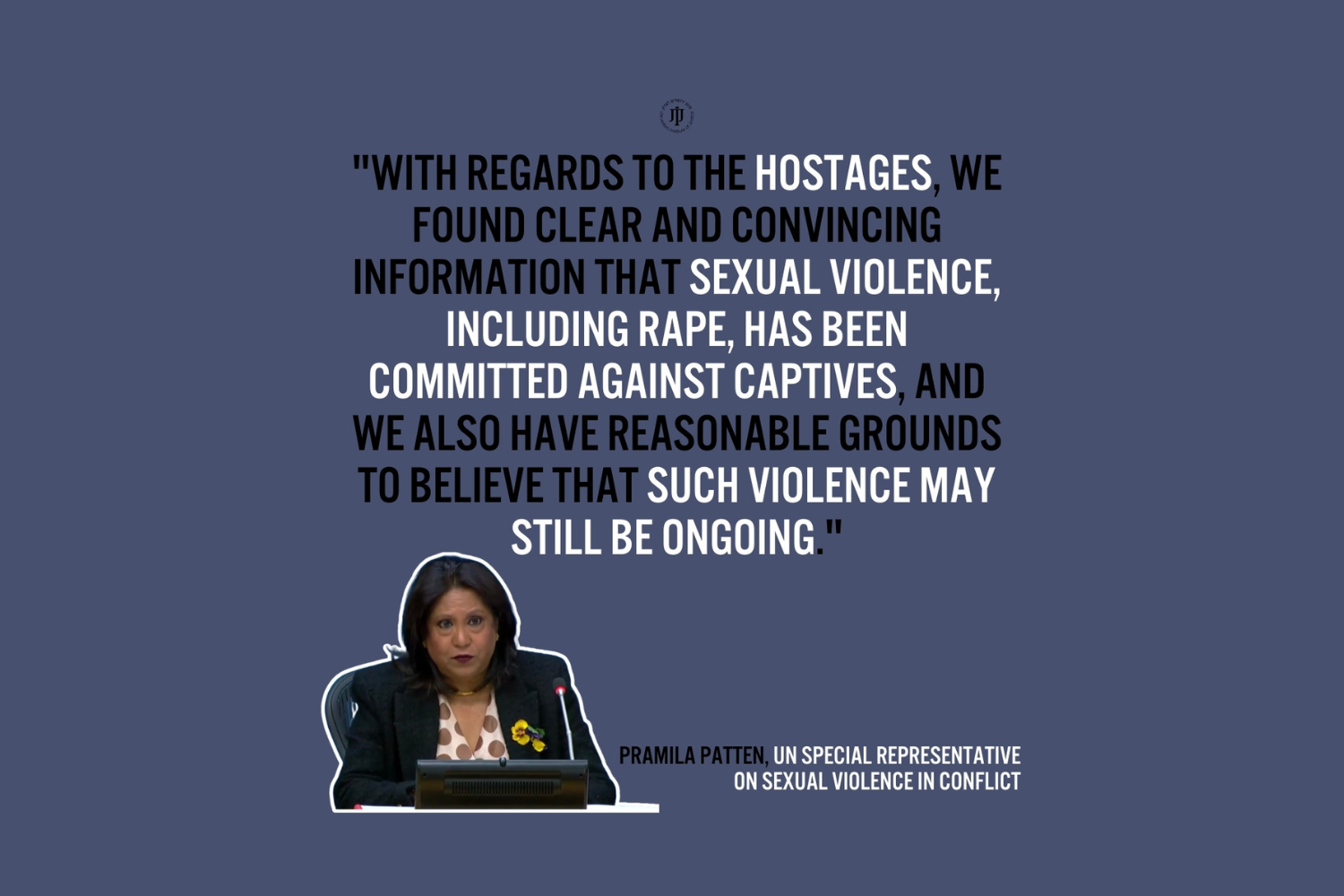
United Nations admits Hamas committed sexual violence on and after Oct. 7
Pramila Patten, a senior UN official, came to Israel a month ago with a mandate to gather information on claims that Hamas terrorists had committed rape and other acts of sexual violence against Israeli women and men on October 7th. Her trip came after months of conspicuous silence on the matter from UN Women, and appalling statements from other UN officials that amounted to gaslighting and atrocity denial.
JIJ’s team of human rights lawyers and researchers met with Patten's team on February 8th. We presented detailed testimony and gruesome photographs taken by first responders who had handled the bodies of the October 7th victims. Watch their public testimony HERE.
JIJ has UN consultative status, which gives us access to senior U.N. officials at critical moments like this. We chose to bring forth the evidence we had collected, for the sake of the murdered victims and living survivors who are still too traumatized for an invasive interrogation.
On Monday, Ms. Patten published her report, finding:
- “Reasonable grounds to believe that sexual violence occurred in multiple locations during the October 7th attacks, including rape and gang rape”
- “The recurring pattern of female victims found undressed, bound, and shot”
- “Clear and convincing information that sexual violence, including rape, sexualized torture, and cruel, inhuman and degrading treatment occurred against some women and children during their time in captivity and … that this violence may be ongoing."
Read the full report HERE.
This is a rare and valuable admission from a senior UN official, that Hamas intentionally used sexual violence as a weapon of war. This rare moment of truth-telling wouldn’t have come without your support.
JIJ does the painstaking work of collecting, interpreting, and presenting the evidence of human rights abuses in Israel and the Middle East. Our goal is to combat atrocity denial, fight for justice for the victims, validate the memories of the living survivors, and hold the perpetrators accountable.
We do this work within the UN, which has utterly failed so far to contend with reality:
- The UN General Assembly has refused to condemn Hamas.
- The UN Security Council still hasn’t recognized Hamas as a terrorist organization.
- The UN "Human Rights Council" was in session on October 7th and chose silence.
- Despite overwhelming evidence, most UN officials still refuse to acknowledge the atrocities committed on Oct 7.
With your support, we’ll continue standing up for Israel inside the UN system, fighting to release the captives, defund Hamas, and secure justice for all of Hamas’ victims.
Petition to Stop Funding UNRWA
What happens when well-meaning Western donors feed money to a UN agency that turns a blind eye to terrorism? The numbers tell the story.
On October 7th:
- 133 UNRWA school graduates invaded Israel to murder and kidnap Israeli civilians
- 12 UNRWA staff directly participated in the massacre
- 2 UNRWA teachers held hostages captive in their own homes
- 30 UNRWA teachers publicly celebrated the violence on social media
- 1,200 UNRWA staff quietly helped Hamas with cars, weapons, money, information, and hideouts
PETITION
His Excellency Mr. António Guterres
Secretary-General United Nations
New York, NY 10017
Your Excellency,
I was horrified to learn that UN employees directly participated in the October 7th massacre, held Israeli hostages captive in their own homes, and celebrated the massacre on social media. It is unacceptable that the United Nations has thousands of terrorists on its payroll, and that it uses donor money to indoctrinate generations of Palestinian children into Hamas’ radical ideology.
The UN cannot sweep away these allegations with a perfunctory “investigation.” This antisemitic agency must be immediately defunded. No donor money should be restored until and unless UNRWA is radically restructured and reformed! Don’t restore funding to UNRWA without:
- New mandate that promotes acceptance of Israel’s existence
- UNESCO-approved curriculum that promotes peace and tolerance, not Jew hatred
- Purge all terror-affiliates from the payroll
- Routine independent audits of all facilities and finances
- An independent ombudsperson to investigate claims of whistleblowers
The people of Gaza deserve better than UNRWA. They deserve food, medicine, education, and shelter delivered by transparent organizations that are not routinely infiltrated by terrorists. They deserve to receive humanitarian aid and not see most of it stolen by Hamas. They deserve schools that promote coexistence with Jews and other minorities in the Middle East.
I support sending aid to Gaza through the World Food Program and UNHCR in the meantime. Thank you for your attention to this important issue.
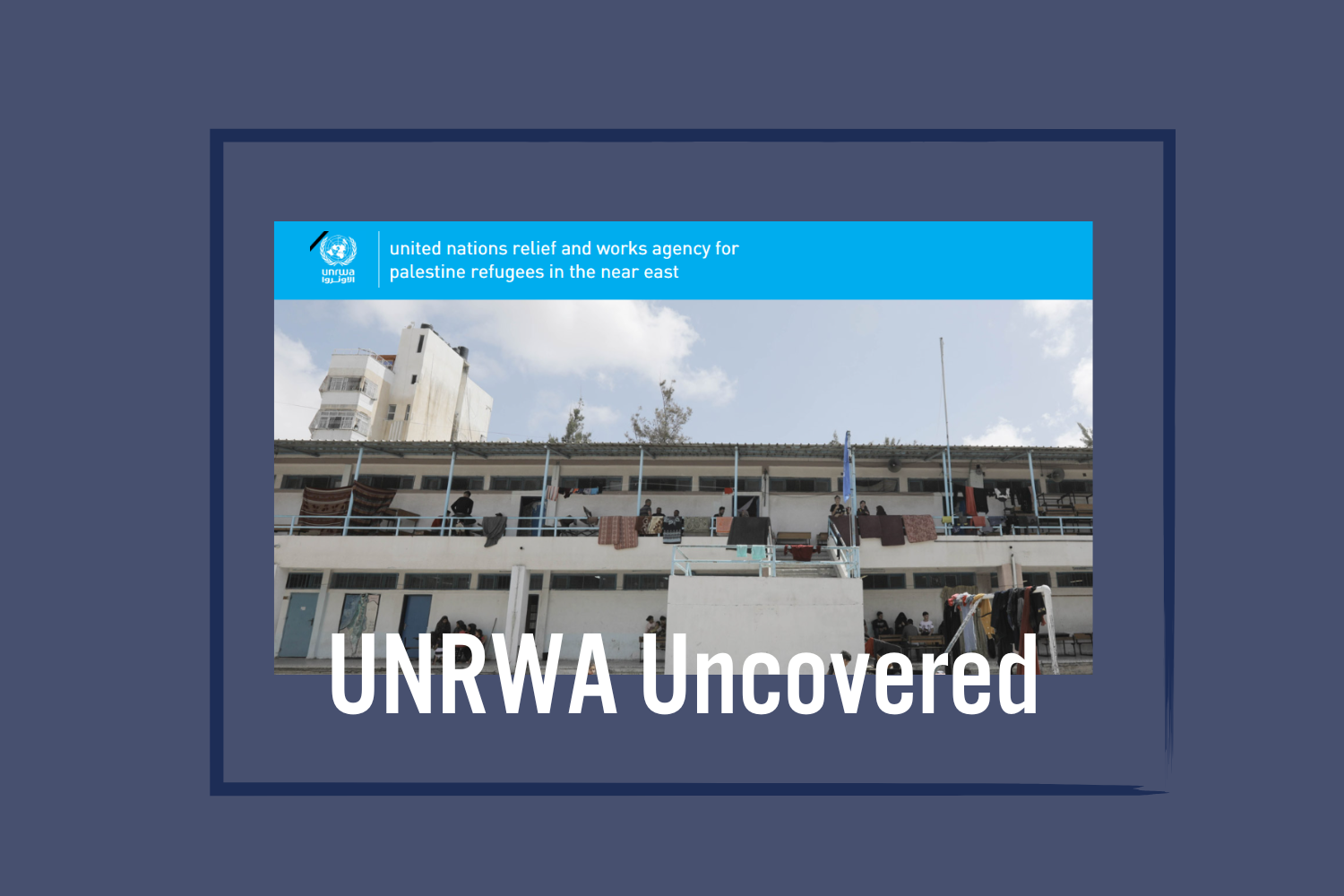
STOP FUNDING HAMAS THROUGH UNRWA!
Facts that you must know about UNRWA.
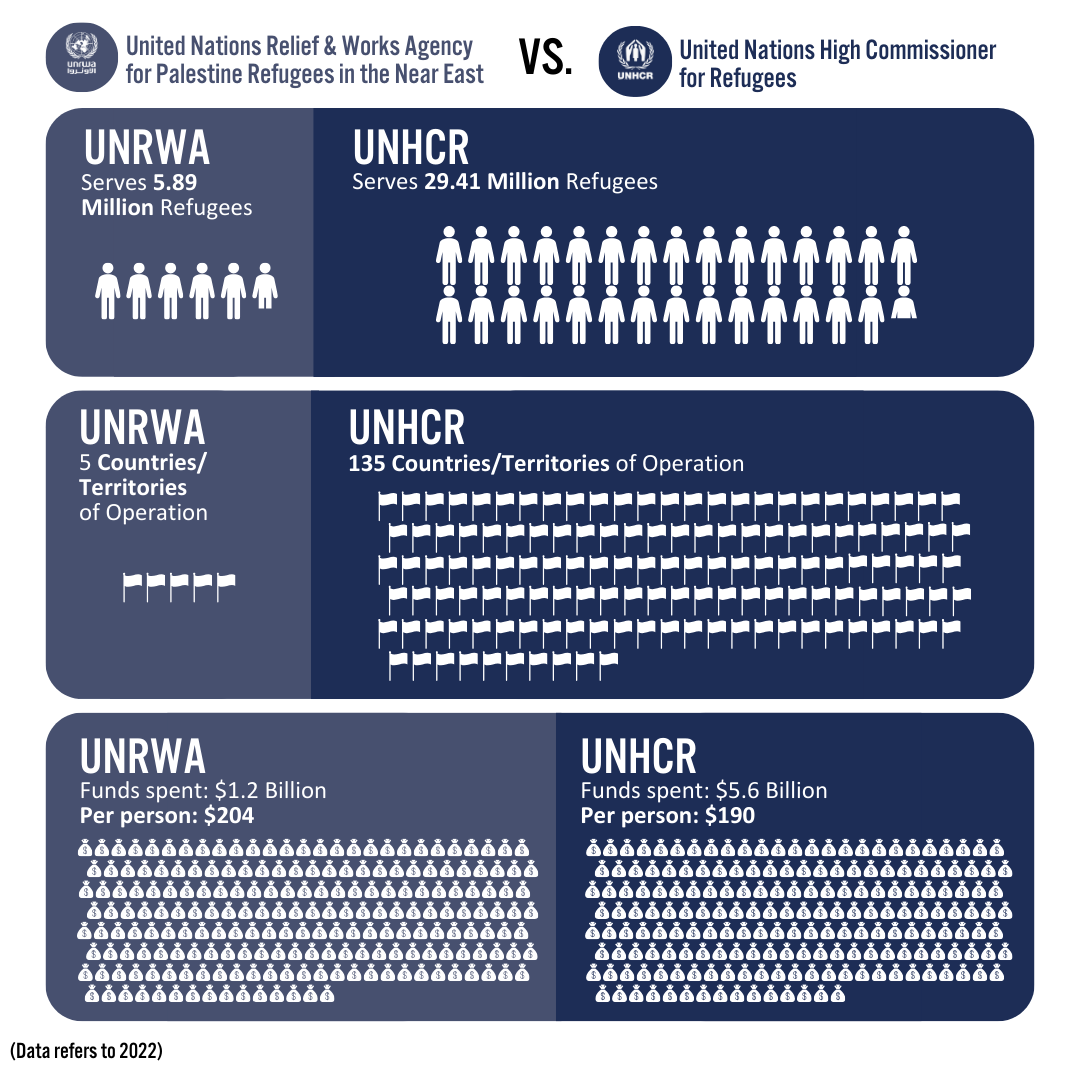
Did you know that the UN has a separate agency that only serves Palestinians? There is no other people group in the world that gets their own UN agency. This organization is now on the 76th year of its original 3-year mandate. Instead of helping Palestinians settle down and build peaceful communities, for decades UNRWA has used money from generous Western donors to perpetuate the conflict under the guise of “humanitarianism.”
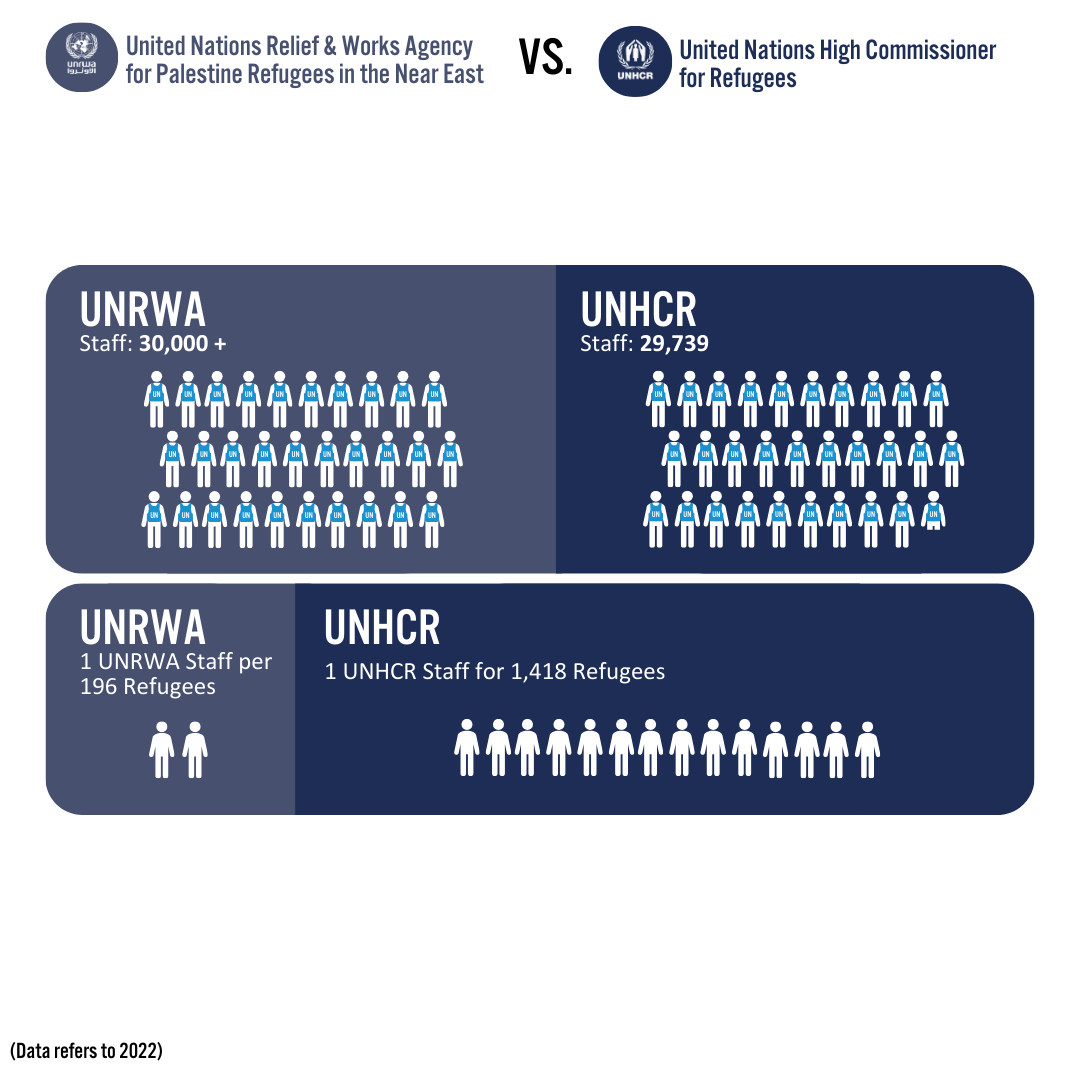
Did you know that UNRWA created its own definition of “refugee” status? In the rest of the world, refugees are people who are forced to flee their country of origin. They are served by the UN’s Refugee agency, which helps them gain citizenship and adjust to their new lives in new places. But UNRWA doesn’t want Palestinians to adjust to reality. If they did, UNRWA would go out of business! Instead it extends “refugee” status to the original refugees’ great-great-grandchildren, and beyond. Thanks to UNRWA, there are scores of Palestinian millionaires who hold multiple foreign passports, yet are still
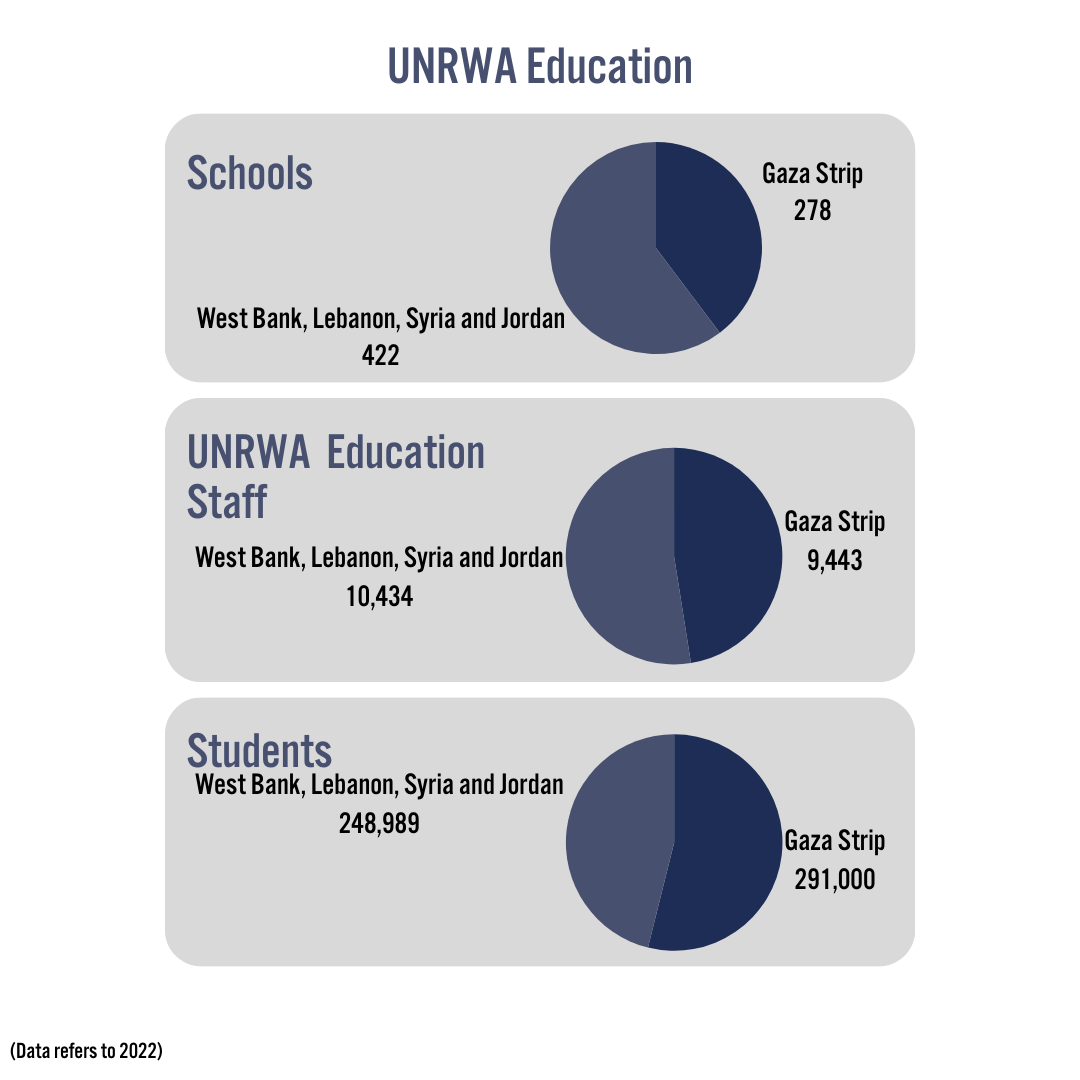
Did you know that UNRWA runs 278 schools for 291,000 Gazan children? In these schools, the UN teaches Palestinian children that they are “refugees,” even though they are Palestinians living on Palestinian land. UNRWA praises terrorists who kill Jews, celebrates martyrdom, and teaches students that one day Israel will be destroyed.
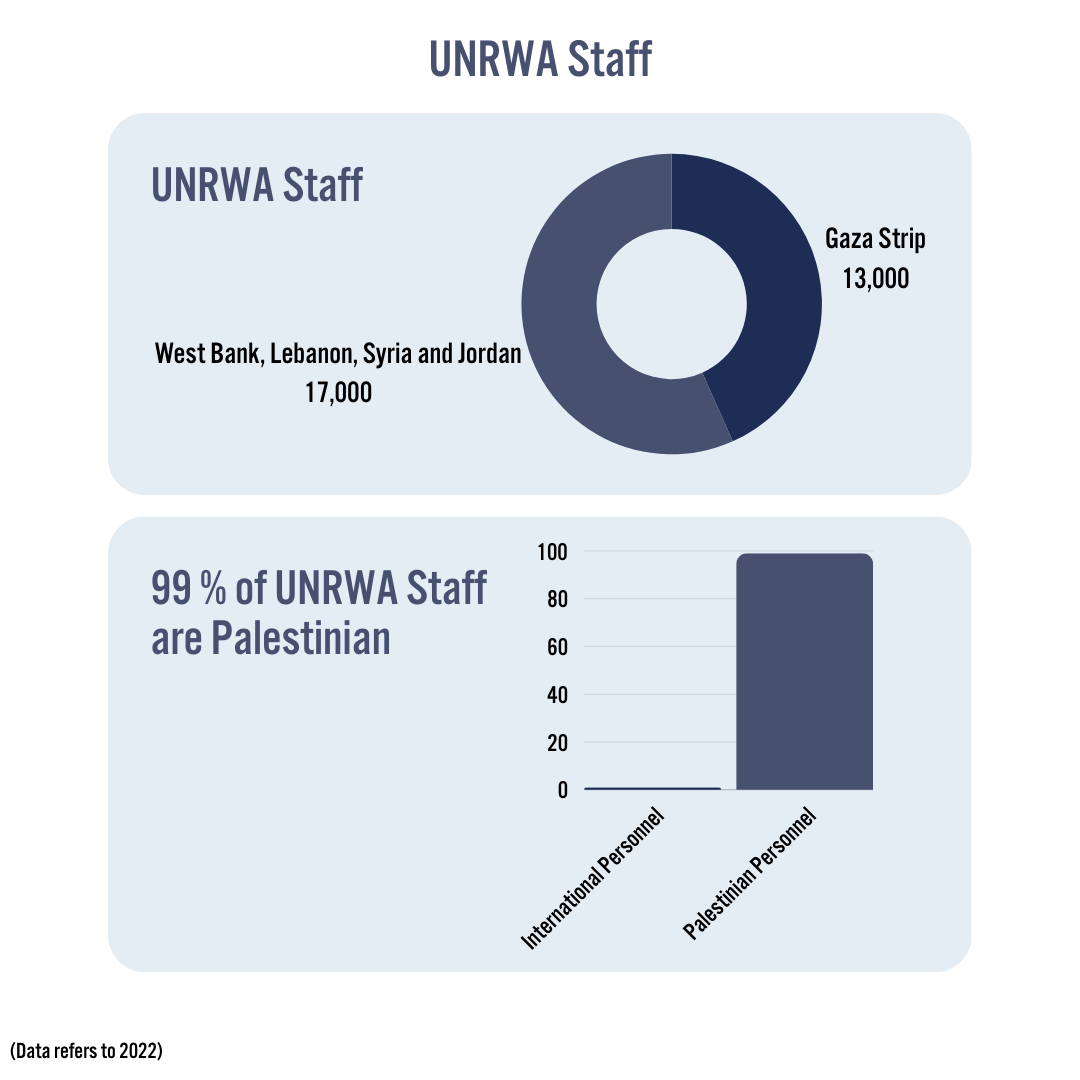
Did you know that UNRWA almost exclusively hires Palestinians? No Jews allowed! Every other UN agency is staffed by people from around the world. This helps UN agencies maintain genuine “neutrality” in conflict zones that are full of political tension. But UNRWA is unique. Over 99% of its employees are Palestinian nationals. According to Israeli intelligence, approximately 15% of adult males in Gaza have ties to Hamas. But within the staff of UNRWA, it’s 23%. A greater percentage of UN employees in Gaza are Hamas-affiliated than the general populace of Gaza!
NOW is the time to radically restructure UNRWA to stop the ongoing radicalization of Palestinian society. Why? Because Palestinians deserve better than UNRWA.
Help us meet this moment. Sign our petition to STOP FUNDING UNRWA until and unless the agency is radically reformed and restructured.
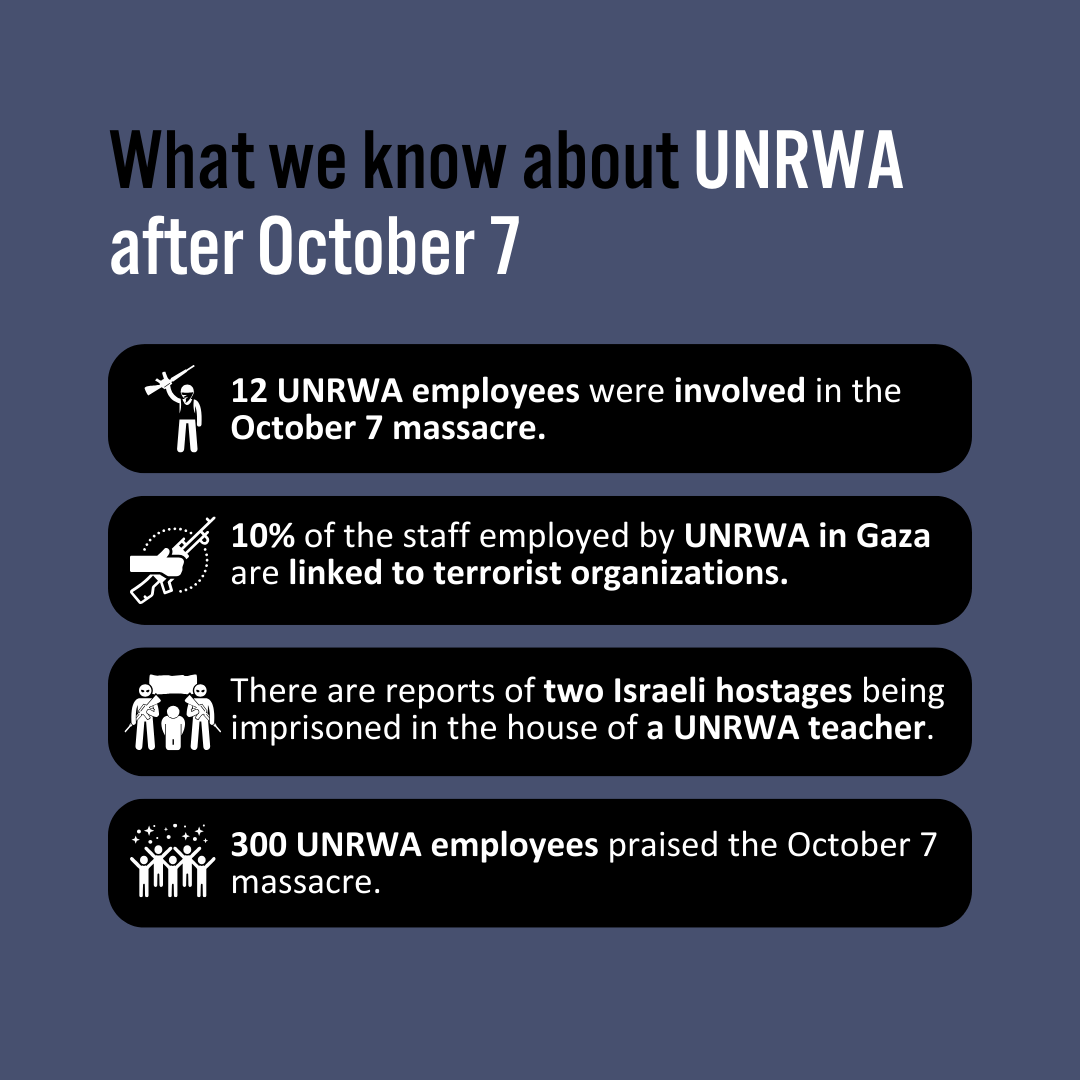
What happens when well-meaning Western donors feed money to a UN agency that turns a blind eye to terrorism? The numbers tell the story.
On October 7th:
- 133 UNRWA school graduates invaded Israel to murder and kidnap Israeli civilians,
- 12 UNRWA staff directly participated in the massacre,
- 2 UNRWA teachers held hostages captive in their own homes,
- 30 UNRWA teachers publicly celebrated the violence on social media, while
- 1,200 UNRWA staff quietly helped Hamas with cars, weapons, money, information, and hideouts.
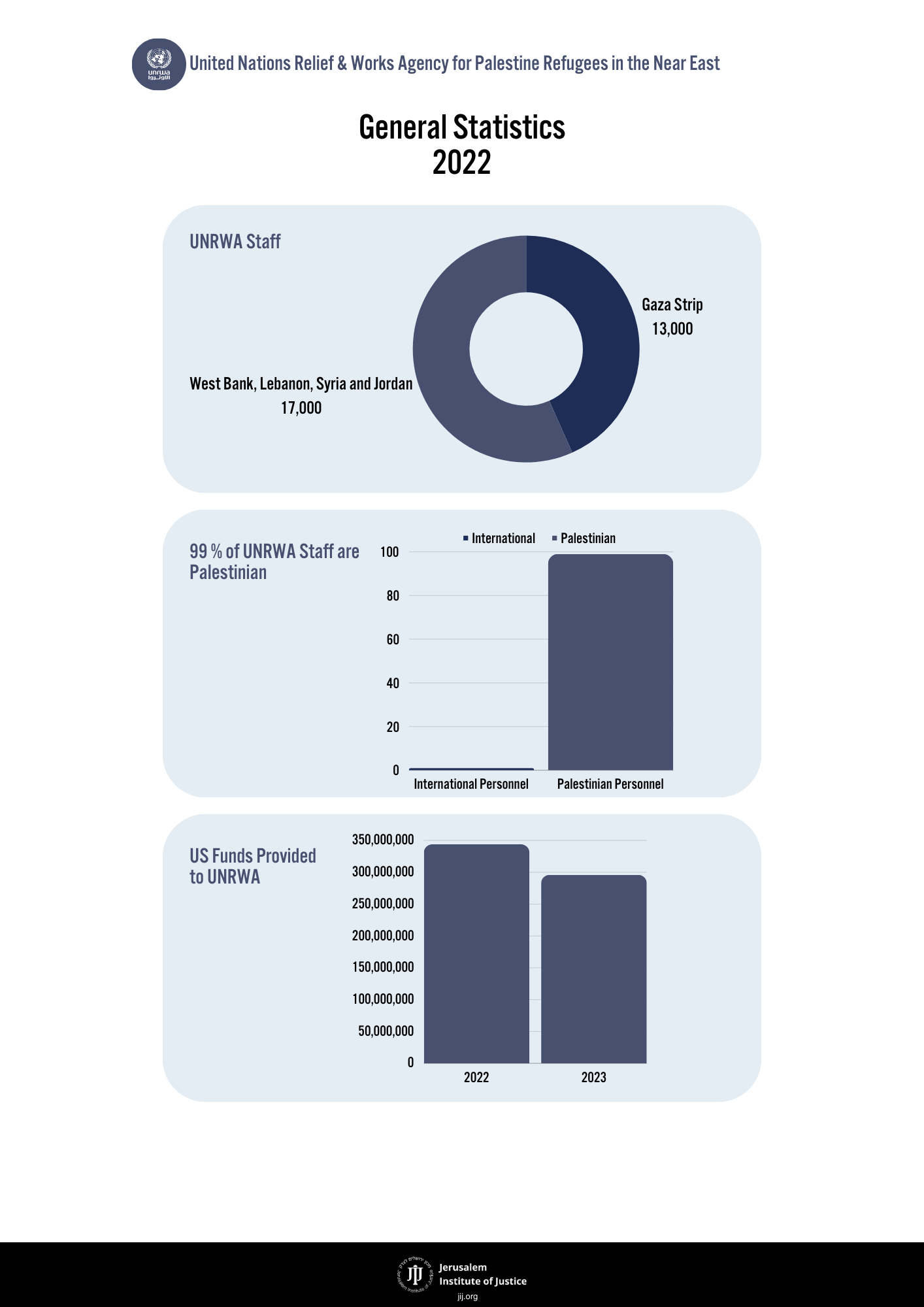
In the wake of these damning revelations, 14 donor countries, led by the United States, have paused their funding to UNRWA, demanding an investigation. It’s a good first step, but this call for an “investigation” could be an invitation to sweep UNRWA’s problems under the rug. Fire a few people, blame the “few bad apples,” rename a few departments, and turn the money spigot back on. Why? Because “UNRWA is the only option.”
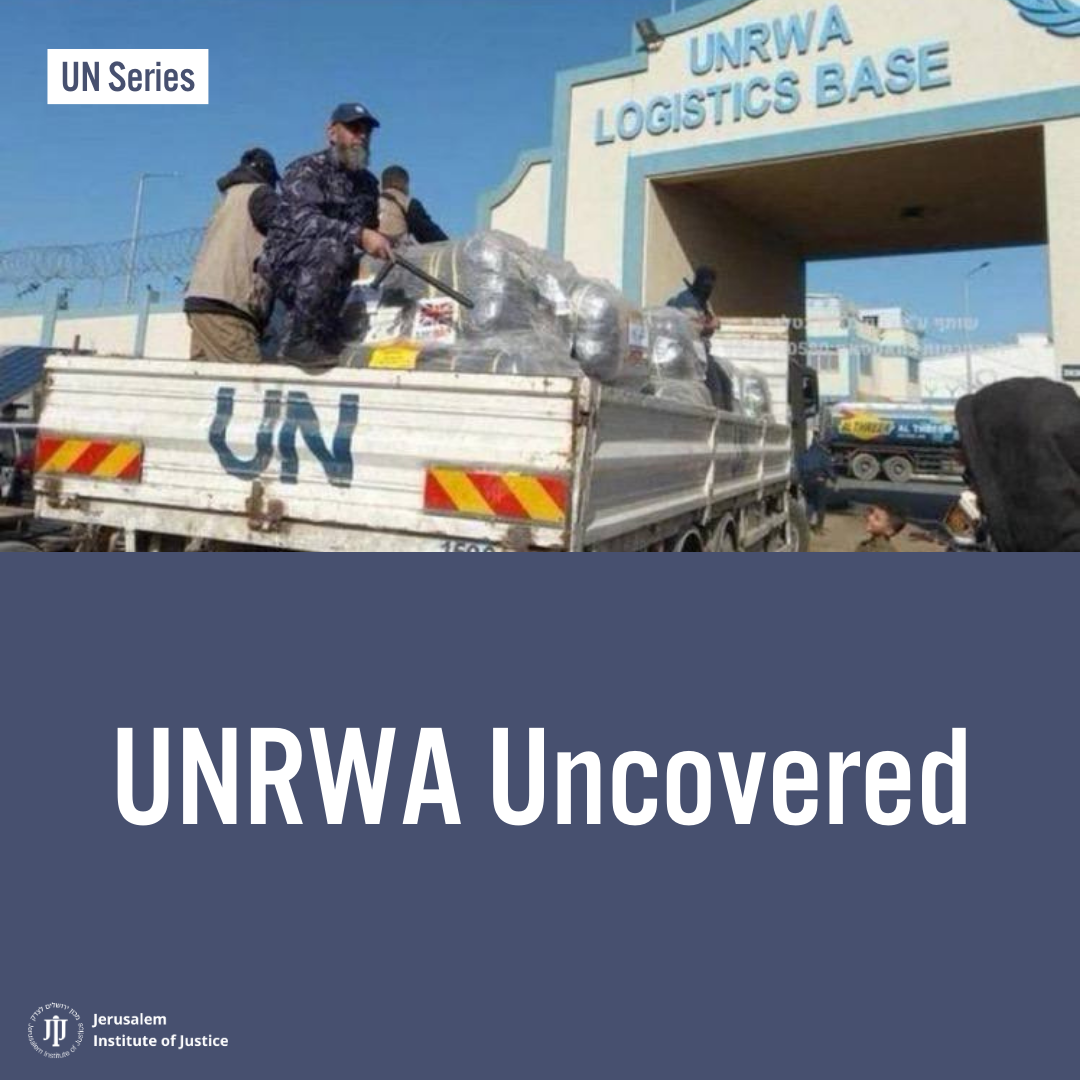
UNRWA is the only option because Hamas made it that way. UNRWA developed a monopoly on aid delivery in Gaza because it is the only aid agency in the world that has been willing to play by Hamas’ rules, which are: see no evil, hear no evil, speak no evil.
- When Hamas puts its members on the payroll, UNRWA allows it because Hamas isn’t recognized as a terrorist group by the UN!
- When Hamas stores rockets, grenades, and suicide belts inside UN schools, shelters, and clinics, UNRWA pretends not to see.
- When Hamas fighters jump onto aid trucks to steal their contents, UNRWA claims they’re just providing security.
You understand the problem now. You see that we can’t waste this moment. Now is the time to radically restructure UNRWA to stop the ongoing radicalization of Palestinian society.
Why? Because Palestinians deserve better than UNRWA. They deserve food, medicine, and shelter delivered by transparent organizations that are not routinely infiltrated by terrorists. They deserve to receive humanitarian aid and not see most of it stolen by Hamas. They deserve schools that promote coexistence with Jews and other minorities in the Middle East.
Help us meet this moment. Sign our petition to STOP FUNDING UNRWA until and unless the agency is radically reformed and restructured.
Click the button below if you wish to support our ongoing efforts.
Letter to the UN Special Rapporteur on Minority Issues
SEEKING TO EVACUATE PALESTINIAN CHRISTIANS FROM GAZA PERSECUTED BY HAMAS
Prof. Nicolas Levrat Date: November 21, 2023
UN Special Rapporteur on minority issues
8-14 Avenue de la Paix 1211 Genève 10, Switzerland
Dear Mr. Levrat,
I am writing on behalf of the Jerusalem Institute of Justice, an NGO holding special consultative status before the United Nations Economic and Social Council.
We wish to express our profound concern regarding the perilous situation of Christian Palestinians in northern Gaza. We urgently request your intervention to safeguard the rights and well-being of innocent individuals belonging to this minority group by facilitating their immediate evacuation to a safe haven.
Enclosed, please find a letter wherein we respectfully and firmly request the Special Rapporteur on minority issues, under your mandate, to take immediate and decisive action. Collaboration with the International Committee of the Red Cross is crucial for the prompt evacuation of the 1,000 Christian Palestinians sheltered in Gaza City to a secure location. It is imperative to provide them with essential resources for survival, including access to food, clean water, and medical care.
Additionally, I kindly request confirmation of receipt of this email.
Best regards,
Alan Dosoretz
Human Rights, Diplomacy & Education Officer
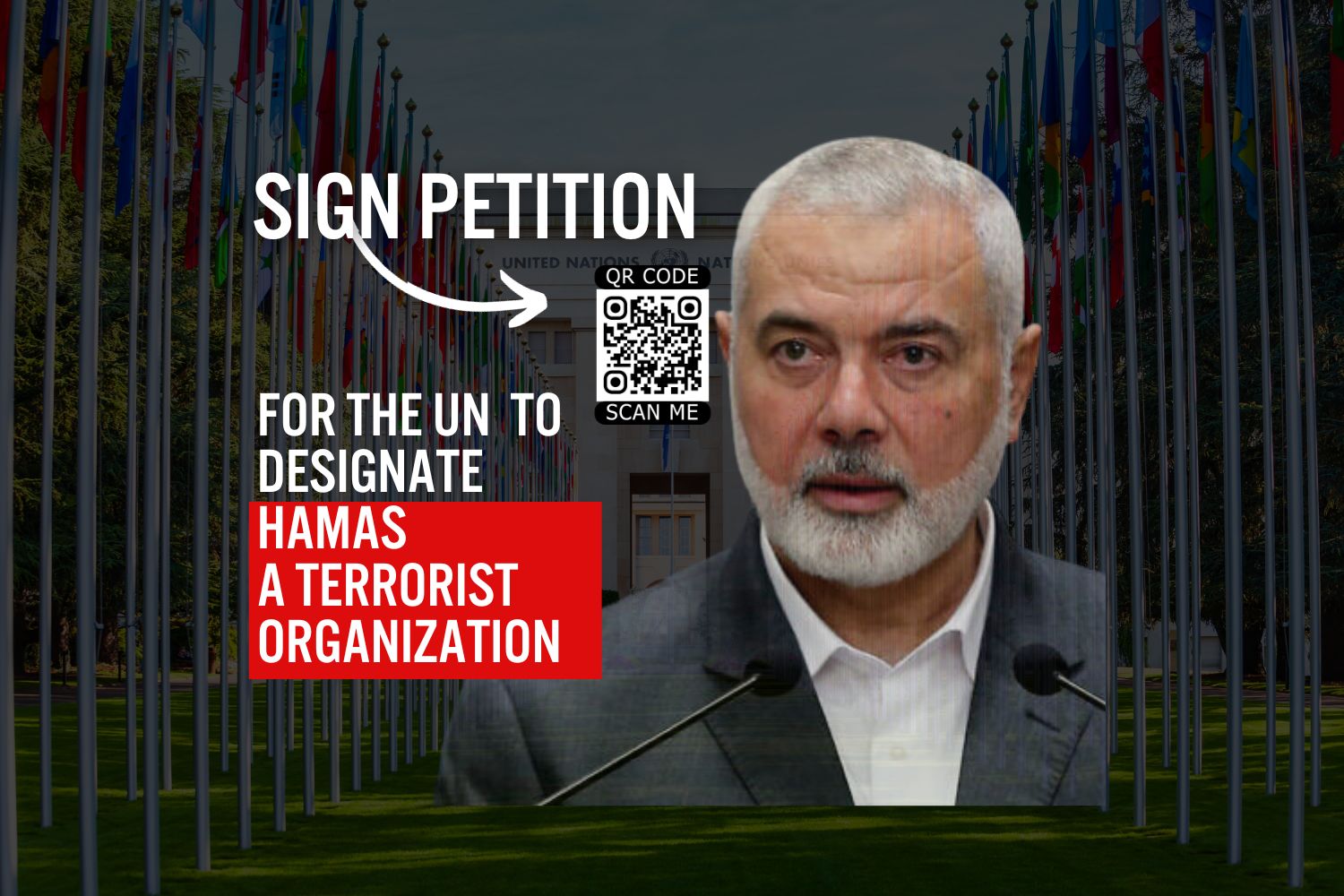
Hamas is a Terrorist Organization - Petition to the United Nations (UN)
34 UNITED STATES SENATORS SIGNED A BIPARTISAN LETTER DRAFTED BY THE JERUSALEM INSTITUTE OF JUSTICE URGING THE UN TO DESIGNATE HAMAS A TERRORIST ORGANIZATION.
34 United States Senators just signed a bipartisan letter drafted by the Jerusalem Institute of Justice, urging the United Nations to designate Hamas as a terrorist organization. Click here to read the letter.
Despite Hamas’ live-streamed atrocities on October 7th, including murdering civilians, taking hostages, mass rape, torture, dismemberment, and beheading … the United Nations still does not recognize them as a terrorist organization! The UN considers the Taliban, Al Qaeda, and the Islamic State to be terrorists, but not Hamas?
This must change. NOW!
Join us in thanking Senators James Lankford (R-OH) & Jacky Rosen (D-NV) for taking the lead on this important initiative.
Add your voice to this committed group of Senators, who are true friends of Israel, and urge Ambassador Linda Thomas-Greenfield, the US Ambassador to the United Nations, to make this a top priority in her negotiation at the UN. Sign the petition below.
PETITION TO US AMBASSADOR TO THE UN
Dear Ambassador Thomas-Greenfield:
We write with our utmost concern regarding the recent terrorist attacks on Israel by Hamas and other terrorist organizations in the region. We commend your unequivocal condemnation of Hamas’ terrorism and your support for Israel’s right to defend its people. Recent events have demonstrated that Hamas’ actions, tactics, and stated goals are in many ways indistinguishable from Al Qaeda, ISIS, and other terrorist organizations the United Nations (UN) has sanctioned. Therefore, we write to urge you to bring a resolution to the UN Security Council recognizing and imposing sanctions on Hamas as a terrorist organization.
As you know, on October 7, 2023, thousands of Hamas terrorists launched attacks, including on civilian communities, in southern Israel, brutally murdering 1,400 innocent people and wounding 4,500 others.
Additionally, Hamas kidnapped over 240 men, women, and children – ranging from infants to Holocaust survivors. Hamas terrorists have committed and continue to commit abhorrent attacks that not only impact Israelis but also directly impact Americans citizens, with at least 32 Americans killed and countless more held in captive as a result of the terrorist attack on October 7. In fact, Hamas hostages come from 25 countries around the world. Hamas’ reign of terror is not just an Israeli problem, but one that impacts us all. Since October 1997, the U.S. Department of Treasury has designated Hamas, Palestinian Islamic Jihad (PIJ), and the Popular Front for the Liberation of Palestine (PFLP) as Foreign Terrorist Organizations.
Additionally, these groups have been listed as Specially Designated Global Terrorists (SDGTs) since October 2001. Numerous other countries and international entities rightfully have designated Hamas as a terrorist organization, including Australia, Canada, the European Union, Japan, Israel, the Organization of American States, Paraguay, New Zealand, and the United Kingdom. Switzerland is also actively exploring legal avenues to designate Hamas as a terrorist entity.
There are multiple consequences of the UN not recognizing Hamas as a terrorist organization. First, the lack of a unified voice among the international community risks eroding the UN’s credibility in response to one of the worst terrorist attacks in history. Additionally, as the largest financial contributor to the UN, the U.S. must take urgent action to prevent the flow of funds into the hands of Hamas. The absence of UN sanctions on Hamas is a glaring loophole, circumventing U.S. financial controls, such as the rigorous standards set by the U.S. Department of Treasury, potentially allowing Hamas to evade U.S. sanctions.
Furthermore, the lack of UN sanctions on Hamas enables them to bolster their capabilities by exploiting international financial channels, including accessing financial systems and soliciting donations from charities.
We are also concerned that a lack of UN sanctions enables Hamas to divert humanitarian aid for malicious intent, which deprives innocent Palestinian civilians of crucial assistance while simultaneously strengthening offensive capabilities used to attack Israel. Hamas continues to divert aid meant for civilians in order to fund its operations by:
- Imposing "taxes" on humanitarian consignments at border checkpoints;
- Seizing a segment of donated goods intended for Palestinian civilians and later selling them illicitly for financial gain;
- Seizing donated supplies – as Hamas did on October 16, 2023, when they took fuel meant for Gazan hospitals from a United Nations Relief and Works Agency site; and
- Dismantling and repurposing humanitarian facilities, like water and sewage components, to create rockets and missiles, some of which misfire and land in Gaza, causing Palestinian civilian casualties and posing threats to aid workers.
We therefore request you bring forward a UN resolution to recognize and sanction Hamas as a terrorist organization. Thank you for your consideration, and we look forward to your timely response.
Sincerely,
PETITION HAS BEEN SUBMITTED TO THE UN. THANKS TO ALL THOSE WHO SIGNED!
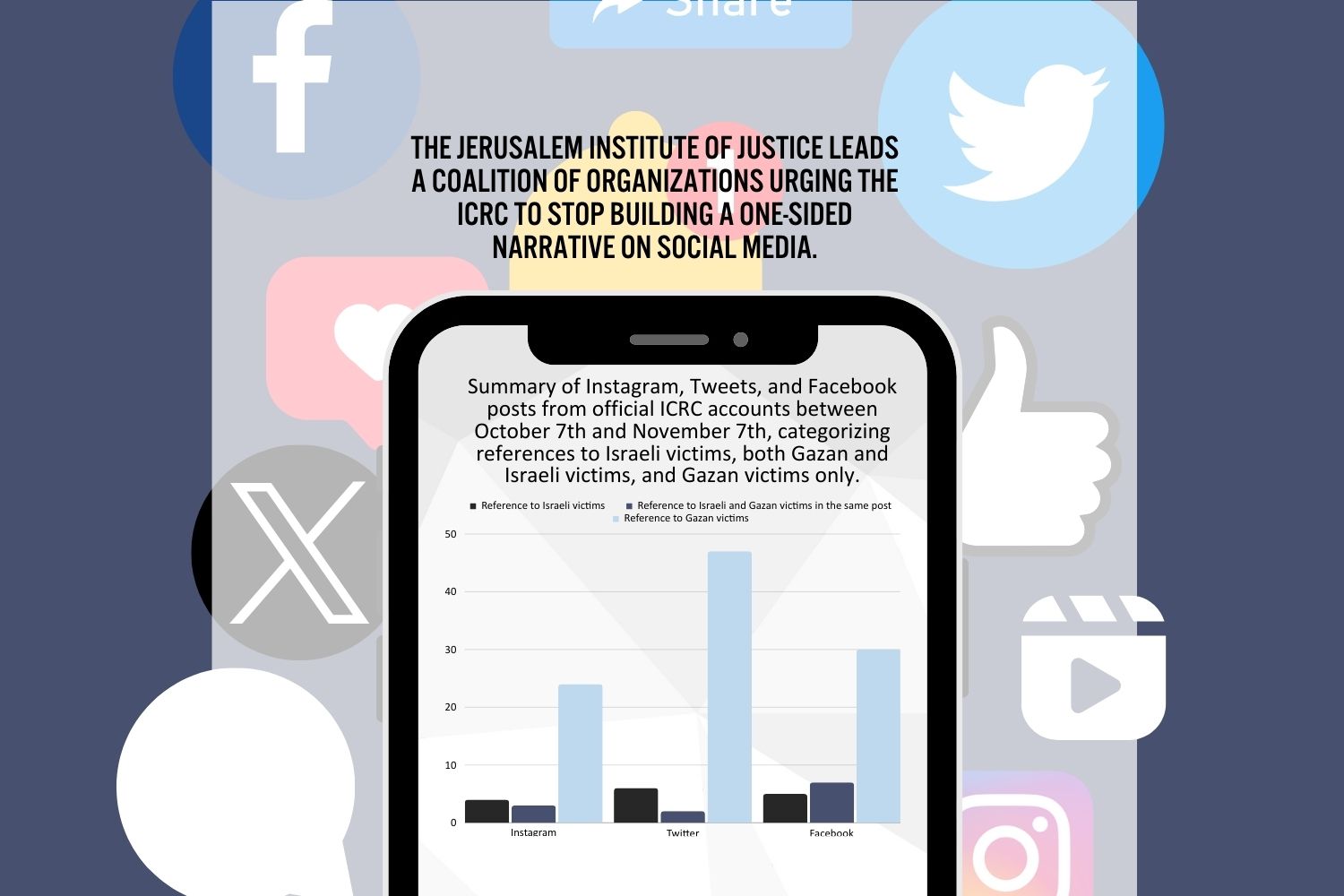
Biased Narratives on Red Cross Social Media
THE JERUSALEM INSTITUTE OF JUSTICE LEADS A COALITION OF ORGANIZATIONS URGING
THE ICRC TO STOP BUILDING ONE-SIDED NARRATIVES ON SOCIAL MEDIA
To: Ms. Mirjana Spoljaric Egger,
President of the International Committee of the Red Cross
19 Avenue de la Paix 1202 Geneva Switzerland
Date: November 15, 2023
We are writing to bring to your attention a pressing issue concerning the use of social media by the
International Committee of the Red Cross (ICRC) in the context of the ongoing Hamas-Israel conflict.
In today's world, social media has an immense influence on the perception of conflicts, shaping
narratives and inadvertently affecting conflict dynamics. Recent events have underscored the critical
importance of the ICRC's response in this domain.
The central concern at hand revolves around the balance and neutrality of the content disseminated
through ICRC's social media channels. As an independent and neutral organization dedicated to
upholding humanitarian protection for conflict victims and the principles of international
humanitarian law (IHL), it is imperative that ICRC's social media communications maintain a high
standard of neutrality, balance, and accuracy in portraying conflicts.
Of particular concern is the apparent disproportion in the content's focus. A noticeable emphasis on
the Gaza Strip is evident in the content shared by ICRC on its social media platforms (see Annex 1).
This is evident in depictions of scenes from Gaza, casualty statistics, and information about victims
within Gaza. However, a significant absence exists concerning content depicting the atrocities
committed by Hamas on October 7 and the impact on communities in Israel near the Gaza Strip.
Furthermore, a notable gap in communication on ICRC's Instagram account was observed following
the October 7 attack. While references were made to hostage-taking and the importance of adhering
to international humanitarian law, a more robust stance against the violations of international
humanitarian law committed by Hamas on October 7, including acts of sexual violence and genocide,
was expected.
Equally concerning is the absence of any posts, whether images, graphics, or videos, addressing the
damages suffered on Israeli soil. This encompasses distressing scenes of houses reduced to rubble,
charred walls, mass destruction, and the devastating harms caused by rocket hits on civilian
infrastructure in Tel Aviv, Ashkelon, and other locations.
The consequences of this content disproportion are significant, as it affects the overall narrative,
public perception, and understanding of the conflict. Given the ICRC's influential role in providing
information, it is essential to adopt a more balanced and nuanced approach in social media
communications.
From October 7 until October 25, there has been a 500% increase in the volume of antisemitic events
compared to the same period last year. Specifically in social networks, the increase of online
antisemitic discourse was, between October 7-23, 400% compared to the 17 days prior to the war and
340% compared to the same dates in the previous months (The State of Antisemitism in the World A
Summary of the First Three Weeks of the 'Swords of Iron' War, 2023).
This alarming surge in online antisemitism has had dire real-world consequences. Instances of
antisemitic violence and vandalism have occurred globally, with private houses and apartments in
cities like Berlin, Paris, and others being marked with Stars of David. Synagogues, Holocaust
memorials, Jewish schools, Jewish cemeteries, and historic Jewish sites in locations such as Girona,
Berlin, Vienna, Rome, and Thessaloniki have been targets of attacks, often accompanied by anti-Israel
and antisemitic graffiti, including swastikas. A particularly distressing incident took place on
November 4 when a 30-year-old Jewish woman was stabbed in her home in Lyon, and her attacker
defaced her door with a swastika symbol. Tragically, on November 6, a pro-Palestinian protestor killed
Paul Kessler, a 65-year-old Jewish man, further underscoring the devastating real-world impact of
rising antisemitism.
The perilous connection between online antisemitism and tangible acts of violence against Jewish
individuals, communities, and institutions underscores the pressing need for fair and responsible
communication on social media platforms. This is why we firmly believe that the ICRC should maintain
balance and neutrality in the content shared on social media platforms.
Our request is not to remove existing content but to enhance it with a more comprehensive portrayal
of the situation, one that encompasses the atrocities committed in Israel by Hamas and other
Palestinian terrorist groups. Your proactive response to this matter will contribute to a more informed
and balanced public discourse on these critical issues.
Sincerely,
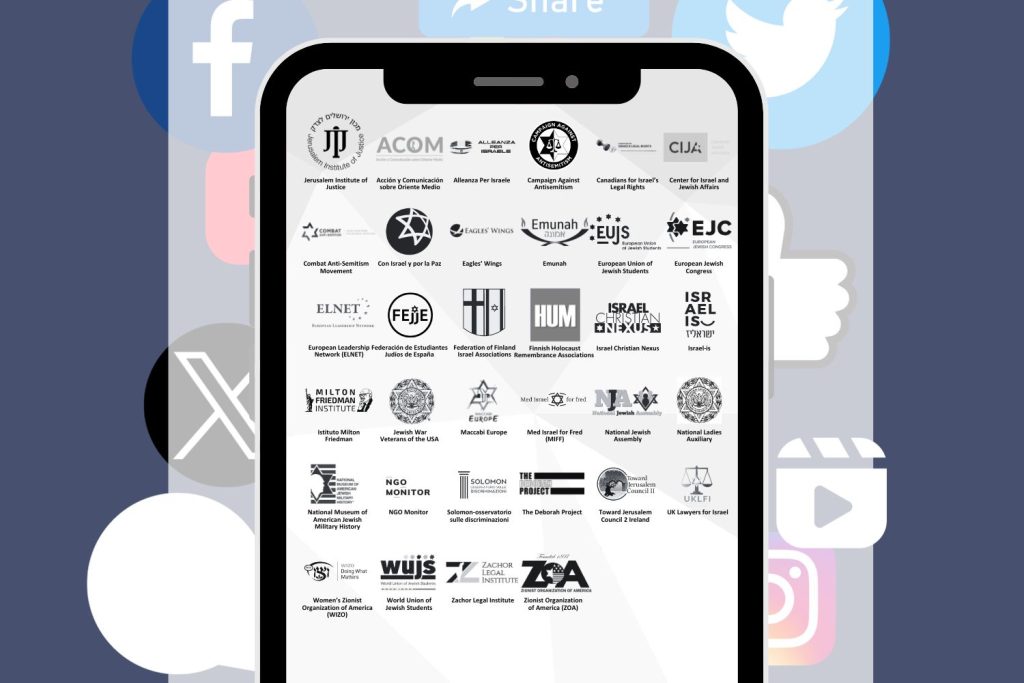
CC: Fabrizio Carboni, ICRC regional director for the Near and Middle East
Alessandra Menegon, Head of the Delegation of the ICRC in Israel and the Occupied Territories
Ewan Watson, Head of Public Relations
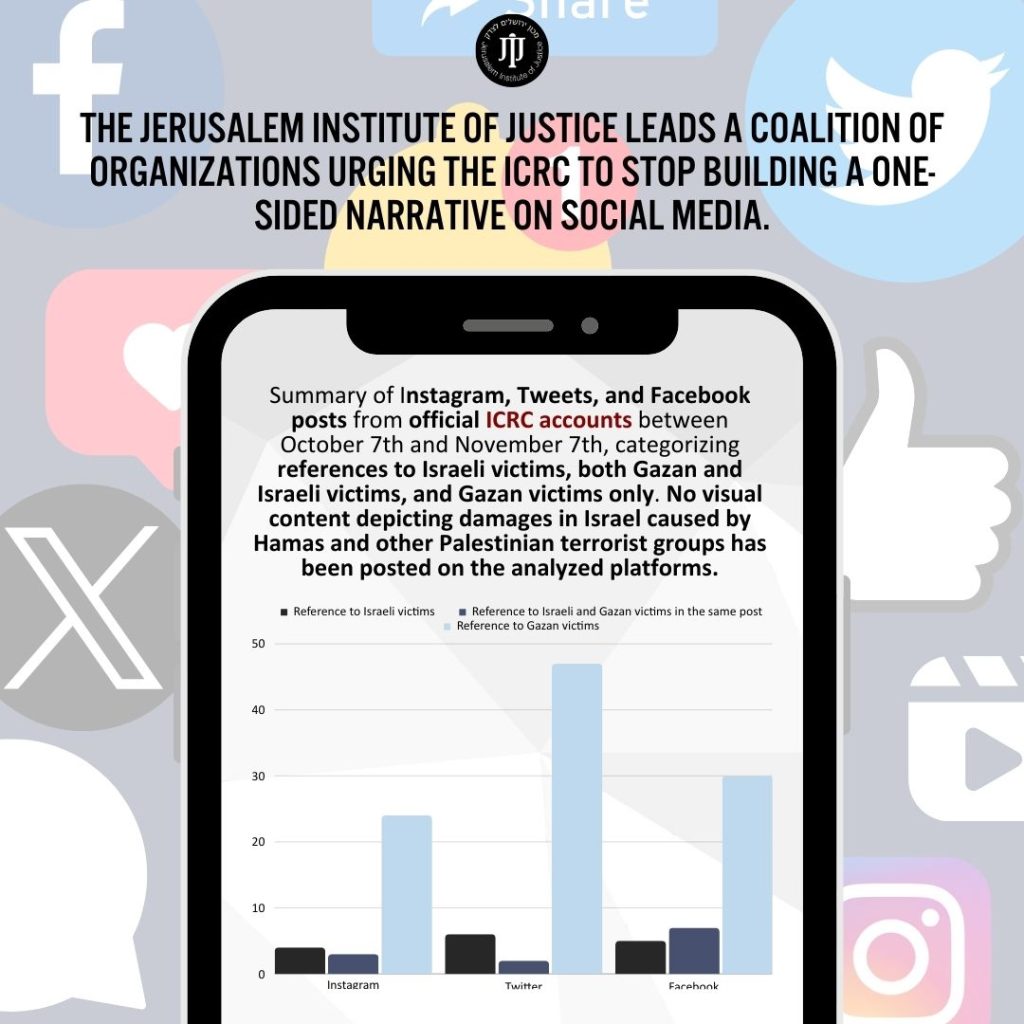
Biased Narratives on Red Cross Social Media
THE JERUSALEM INSTITUTE OF JUSTICE LEADS A COALITION OF ORGANIZATIONS URGING
THE ICRC TO STOP BUILDING ONE-SIDED NARRATIVES ON SOCIAL MEDIA
To: Ms. Mirjana Spoljaric Egger,
President of the International Committee of the Red Cross
19 Avenue de la Paix 1202 Geneva Switzerland
Date: November 15, 2023
We are writing to bring to your attention a pressing issue concerning the use of social media by the
International Committee of the Red Cross (ICRC) in the context of the ongoing Hamas-Israel conflict.
In today's world, social media has an immense influence on the perception of conflicts, shaping
narratives and inadvertently affecting conflict dynamics. Recent events have underscored the critical
importance of the ICRC's response in this domain.
The central concern at hand revolves around the balance and neutrality of the content disseminated
through ICRC's social media channels. As an independent and neutral organization dedicated to
upholding humanitarian protection for conflict victims and the principles of international
humanitarian law (IHL), it is imperative that ICRC's social media communications maintain a high
standard of neutrality, balance, and accuracy in portraying conflicts.
Of particular concern is the apparent disproportion in the content's focus. A noticeable emphasis on
the Gaza Strip is evident in the content shared by ICRC on its social media platforms (see Annex 1).
This is evident in depictions of scenes from Gaza, casualty statistics, and information about victims
within Gaza. However, a significant absence exists concerning content depicting the atrocities
committed by Hamas on October 7 and the impact on communities in Israel near the Gaza Strip.
Furthermore, a notable gap in communication on ICRC's Instagram account was observed following
the October 7 attack. While references were made to hostage-taking and the importance of adhering
to international humanitarian law, a more robust stance against the violations of international
humanitarian law committed by Hamas on October 7, including acts of sexual violence and genocide,
was expected.
Equally concerning is the absence of any posts, whether images, graphics, or videos, addressing the
damages suffered on Israeli soil. This encompasses distressing scenes of houses reduced to rubble,
charred walls, mass destruction, and the devastating harms caused by rocket hits on civilian
infrastructure in Tel Aviv, Ashkelon, and other locations.
The consequences of this content disproportion are significant, as it affects the overall narrative,
public perception, and understanding of the conflict. Given the ICRC's influential role in providing
information, it is essential to adopt a more balanced and nuanced approach in social media
communications.
From October 7 until October 25, there has been a 500% increase in the volume of antisemitic events
compared to the same period last year. Specifically in social networks, the increase of online
antisemitic discourse was, between October 7-23, 400% compared to the 17 days prior to the war and
340% compared to the same dates in the previous months (The State of Antisemitism in the World A
Summary of the First Three Weeks of the 'Swords of Iron' War, 2023).
This alarming surge in online antisemitism has had dire real-world consequences. Instances of
antisemitic violence and vandalism have occurred globally, with private houses and apartments in
cities like Berlin, Paris, and others being marked with Stars of David. Synagogues, Holocaust
memorials, Jewish schools, Jewish cemeteries, and historic Jewish sites in locations such as Girona,
Berlin, Vienna, Rome, and Thessaloniki have been targets of attacks, often accompanied by anti-Israel
and antisemitic graffiti, including swastikas. A particularly distressing incident took place on
November 4 when a 30-year-old Jewish woman was stabbed in her home in Lyon, and her attacker
defaced her door with a swastika symbol. Tragically, on November 6, a pro-Palestinian protestor killed
Paul Kessler, a 65-year-old Jewish man, further underscoring the devastating real-world impact of
rising antisemitism.
The perilous connection between online antisemitism and tangible acts of violence against Jewish
individuals, communities, and institutions underscores the pressing need for fair and responsible
communication on social media platforms. This is why we firmly believe that the ICRC should maintain
balance and neutrality in the content shared on social media platforms.
Our request is not to remove existing content but to enhance it with a more comprehensive portrayal
of the situation, one that encompasses the atrocities committed in Israel by Hamas and other
Palestinian terrorist groups. Your proactive response to this matter will contribute to a more informed
and balanced public discourse on these critical issues.
Sincerely,
CC: Fabrizio Carboni, ICRC regional director for the Near and Middle East
Alessandra Menegon, Head of the Delegation of the ICRC in Israel and the Occupied Territories
Ewan Watson, Head of Public Relations