
How the United Nations Indirectly Funds Hamas
Article by Beniamino Parenzo as an intern at the Jerusalem Institute of Justice.
The United Nation Office for the Coordination of Humanitarian Affairs and Western governments funnel critical financial support to a Hamas-tied “charity” organization in disregard of its known history.
Islamic Relief Worldwide (IRW) is an international organization based in the United Kingdom that maintains offices around the world, including Gaza and the West Bank. IRW operates, ostensibly, as an international relief and development charity. Their website’s mission statement reads, “inspired by Islamic faith, we have been striving to make the world a better and fairer place.” Apparently, making the world ‘a better and fairer place’ includes financing Hamas.
According to investigations carried out by the Israel Security Agency, IRW has played a central role over the years in channeling money to this terrorist organization. Based on Shin Bet’s findings, Israel’s Defense Minister declared IRW illegal on June 19, 2014 and banned it from operating anywhere in Israel and the West Bank.
This should hardly have come as a surprise to any impartial observer. As long ago as 2006, the Israeli Ministry for Foreign Affairs had designated IRW a terrorist front, noting that “IRW provides support and assistance to Hamas’s infrastructure.” That same year, on May 10th, Israeli police arrested IRW’s Gaza coordinator, Iyaz Ali, who admitted he was aware that “. . . several of the organizations supported by the IRW in Judea, Samaria and Gaza were indeed identified with Hamas.”
A Long History of IRW Ties to Extremist Organizations
While ties to Hamas mark IRW’s most striking alliance, this ‘charity’ organization boasts a long history of personal and financial connections to varied Islamic extremist groups and pro-terror organizations. The reader’s eye cannot fail to notice Al Qaeda-related organizations, including the “Charitable Society for Social Welfare” and “Human Concern International,” as well as the Hamas-funded “Human Appeal International” on the public list of IRW donors. To say this is concerning understates the likely impact of these donors upon IRW actions.
Not only does the IRW receive funds from terrorist organizations, but some of its trustees and directors have long-maintained personal ties to other extremist organizations. For instance, Essam El-Haddad, a former trustee of both IRW and Islamic Relief UK, left IRW in 2012 to become the National Security Advisor for Egypt’s former President, Mohamed Morsi, of the Muslim Brotherhood party. Abdul Wahab Noorwali, another trustee of IRW, was the Assistant Secretary General of the “World Assembly of Muslim Youth,” an association that the U.S. government has accused of linkage to Osama Bin Laden and the Hamas leader, Sheikh Ahmed Yassin. In 2003, Yassin thanked the World Assembly of Muslim Youth for their continued financial support. Ahmed Al-Rawi, a director of IRW, was the former head of the “Federation of Islamic Organizations in Europe” and president of the “Muslim Association of Britain,” both regarded as groups aligned with the European Muslim Brotherhood. And the list goes on.
The Funding of IRW by UNOCHA
While shutting off IRW funding to Hamas falls outside the scope of international mandates, those who defend democracy and human rights might well expect the United Nations to act in concert with Europe and the United States to limit, where possible, IRW access to western funds. To the contrary, the U.N. funds IRW, provoking this compelling question: “what motivates the United Nations Office for the Coordination of Humanitarian Affairs (UNOCHA), under-written by Western governments, to provide direct financial support to IRW and, thereby, to provide indirect financial support to Hamas through IRW?”
UNOCHA, an arm of the United Nations Secretariat, serves as the primary coordinator of NGO funding and activity and is charged with responsibility “for bringing together humanitarian actors to ensure a coherent response to emergencies.” UNOCHA determines the relative priorities and needs of societies in crisis, sets strategic response objectives and coordinates the funding of local NGOs tasked with meeting those needs by defining so-called Humanitarian Response Plans (HRPs).
IRW has been permitted to continue its activities as a “Participating Organization” in UNOCHA’s HRPs, despite the decree issued by the Israeli Defense Minister that bans the organization for its financial ties with Hamas.
All funding records managed by UNOCHA are publicly accessible from the Financial Tracking Service (FTS) database. Taking into account both the pledged and paid contributions made to IRW after the 2014 banning decree, this organization has been given, or promised, more than $80 million U.S. Dollars through the UNOCHA humanitarian coordinating mechanism. The European Union, United Kingdom and Sweden are listed alongside other stated donors to IRW.
An Unacceptable Situation
Who would not wish to believe that the governments named above were unaware of the alleged role played by IRW in financing what they themselves deem a terrorist organization? However, following the Israeli warrant against IRW in 2014, the NGO Monitor made a formal inquiry into the funding of Hamas through IRW. While all of the entities named above did reply, none took a position on IRW’s alleged misconduct, nor did they implement a satisfactory monitoring mechanism to track the spending of funds donated to IRW. In other words, the status quo was reaffirmed.
In short, Islamic Relief Worldwide (IRW) sustains a long, unbroken history of ties with controversial extremist groups that has been banned from operating in Israel and the West Bank because of its role in funneling money to Hamas. Yet, this same organization receives funds from multiple Western governments through a mechanism set up, approved, and controlled by the United Nations. None of these entities have addressed the unchallengeable Israeli claim that IRW channels money to a known terrorist organization.
This is not science fiction, though it would have seemed so a few short years ago. We cannot answer the question raised earlier about the motivations which direct U.N. funding of Hamas through Islamic Relief Worldwide. However, whatever the motivation, the unbelievable, unacceptable and shocking truth which connects UNOCHA to extremism and terrorism demands immediate, corrective action by the United Nations.
This article originally appeared in The Times Of Israel, here.


Egypt: A Return to Martial Law
In the last decade, Egypt has experienced some of the most monumental political shifts in the modern history of the Middle East. In 2011, after 30 years of authoritarian rule under President Hosni Mubarak, the revolutionary sentiments of the Arab Spring gained a foothold among the Egyptian people. A combination of mass demonstrations, civil disobedience and strikes resulted in the overthrow of the Mubarak regime on 11 February, 2011.
Following the overthrow, Egypt was governed by a military junta until it appointed Mohammed Morsi as its first democratically-elected president on 24 June 2012. Morsi, of the Islamist movement the Muslim Brotherhood, affirmed that the Egyptian people were the true source of power in their country. “You grant it, and you withdraw it”, he declared to the public when he took a symbolic oath of office in Tahrir Square. Although incidences of police brutality and government overreach were reduced under Morsi’s presidency, he drew international condemnation for polarizing relations between Egypt’s majority Muslim community and its sizeable Coptic minority community, as well as his inability to prevent violence directed at the Coptic community.
In July 2013, just over a year into his presidency, Morsi was overthrown by the military in a coup d’état. Following the coup, the constitution was suspended and in May 2014 army chief General Abdel-Fattah el-Sisi was elected President by an overwhelming majority of 93%.
Since that time, his presidency has been characterized by authoritarian rule and the systematic curtailing of human rights and civil liberties in the Middle East’s most populous nation.
Freedom of Expression/Freedom of the Media
The suppression of media freedom by Egyptian authorities is perhaps the most internationally-recognized issue pertaining to Egypt’s human rights record. The most noteworthy case involves the three Al Jazeera journalists Mohamed Fahmy, Peter Greste and Baher Mohamed. The trio were arrested in December 2013 on charges of news reporting that was ‘damaging to national security’, and were held in solitary confinement for a month before any formal charges were made. In late December 2013, they were given multi-year prison sentences after a trial in which prosecutors failed to present any credible evidence of criminal wrongdoing, although all three men have now been freed because of immense pressure from the international community.
In a more recent case, Misr 25 journalist Khaled Abdel Wahab Radwan was sentenced to 15 years in prison. It followed his arrest in March 2014 on espionage charges, although it is widely believed to be an attempt to silence criticism of President el-Sisi - as Misr 25 was owned by the Muslim Brotherhood[1]. Three of Radwan’s colleagues, who were tried in absentia, were sentenced to death for sending documents to their broadcaster’s headquarters in Doha for journalistic purposes[2].
Wider non-journalistic expression is similarly suppressed by the Egyptian government. A Human Rights Watch report published in 2015 stated:
‘Authorities detained dozens of people for such offences as possessing flyers with anti-military slogans, rapping in public against the police, or displaying signs commemorating victims of the Rab’a [the violent dispersal of sit-in protestors by Egyptian military and police personnel that resulted in the deaths of at least 817 people] dispersal. Journalists, academics, former lawmakers and human rights defenders were among those charged with crimes or banned from travel outside Egypt[3.’
Although Egypt’s constitution guarantees freedom of religion, authorities have prosecuted writers and activists on charges of ‘contempt of religion’ and ‘blasphemy. Such was the case with author Karam Saber, who was sentenced in absentia to five years in prison in 2013 for ‘contempt of religion’[4].
Capital Punishment
Contrary to the majority of UN member states and key provisions of international customary and treaty law, Egypt retains the use of the death penalty. A wide variety of crimes - including non-violent crimes such as drug possession, treason, and desertion - can carry a death penalty. Under the presidency of el-Sisi, the number of executions has increased significantly. No executions were performed in 2012 and 2013 (before el-Sisi ascended to the presidency), while 15, 22, and 44 executions were carried out in the years 2014, 2015 and 2016 respectively (el-Sisi became president in 2014).
For countries that do retain the death penalty, international law mandates effective safeguards and protections for those on trial for capital offences. Regrettably, Egypt has not met many of these requirements. For example, in March and April of 2014, a criminal court handed down the death penalty to more than 1,200 people allegedly involved in a terrorist attack. The judge did not allow the defendants the right to mount a meaningful defence or ensure that all had access to counsel[5]. The first trial, which resulted in 529 death sentences, lasted less than an hour, and only 74 defendants were present. The court also barred some defence lawyers from attending. In the second trial, which yielded 683 death sentences, none of the defendants attended.
As recently as April 2017, Human Rights Watch reported and published a video of Egyptian security forces carrying out summary executions in the Sinai Peninsula. In the video, two unarmed detainees are shot in the head. According to Joe Stork, of Human Rights Watch’s Middle East section, testimony had been collected suggesting security forces have been removing prisoners from detention centres and executing them.
Ambiguous Criminal Offences
The Egyptian government’s authoritarian proclivities have seen a reintroduction of crimes that, although intended to maintain national security and enforce the rule of law, carry vague meaning and questionable legal validity. Under the presidency of el-Sisi, people have been convicted on charges of receiving foreign funding to damage Egypt’s ‘national interests’, ‘peace’, ‘unity’ or ‘security’; as well as ‘insulting the president’ and ‘misusing social media platforms’. In addition, a law passed in 2013 allowed the Interior Ministry to ban and forcefully disperse protests and arrest participants on ambiguous grounds such as ‘imped[ing] citizens’ interests’. By having such vague criminal offences enshrined in the Egyptian legal system, it imparts a substantial degree of subjectivity onto cases where people are accused of such crimes. Hence, should the Egyptian government decide to silence or incarcerate their critics, there is legal recourse to invoke a charge as dubious as ‘working to disrupt unity’ to arbitrarily punish them.
Torture and Ill-Treatment
In recent years, Egypt has displayed an alarmingly high number of incidences of torture and ill-treatment within their correctional facilities. Prisons are notoriously overcrowded, with those accused of more severe crimes consigned to sections of facilities that are more dangerous and derelict. For example, in the aforementioned case of the Al Jazeera journalists, Peter Greste was held in the main section of the notorious Tora prison complex, whilst his two colleagues accused of more serious crimes were held in the far more draconian Scorpion prison built for convicted terrorists. Although the main section of the complex is cramped, severely overcrowded and poorly ventilated, the Scorpion section inmates had to sleep on the floor in mosquito-infested cells in solitary confinement.
According to an investigation by the Egyptian newspaper Al Watan, at least 90 people died in 2014 in local police stations and security directorates in the governorates of Cairo and Giza alone[5]. Furthermore, there is also widespread reports of severe beatings during arrests, arrival at police stations and transfers between prisons. Many complaints have been made of torture, including through the use of electric shocks, to coerce confessions[6].
Women’s Rights
Egyptian women remain particularly vulnerable to sexual and physical abuse due to antiquated cultural attitudes, legal loopholes, and systemic impunity granted to perpetrators by judicial and police authorities. Although el-Sisi’s government has pledged his commitment to combat domestic and sexual violence against women, the alarmingly high rates of abuse suggest either an inability or unwillingness to tackle the problem. For example, a ministerial committee formed by the President on the issue of harassment has not even proposed a law on violence against women. To date, no such law exists that criminalizes domestic violence[7].
Egypt also has some of the highest rates of female genital mutilation (FGM) in the world. A 2013 report by UNICEF revealed 91% of Egyptian girls and women have undergone some form of FGM[26]. Egypt also had the highest number of incidents (27.2 million) of the countries examined in the report. Such an endemic occurrence of FGM stands in strong contrast to the prohibitions set out in the Declaration on the Elimination of Violence Against Women of 1993.
Conclusion
As the most populous nation in the Middle East, Egypt plays an important role both regionally and internationally. Given its sovereignty over the Suez Canal and its strategic location between Africa, Europe and the Middle East, its security and stability is a significant priority for the international community. It has portrayed itself as the key bulwark against terrorism and religious extremism. However, in doing so, it has eschewed the hallmarks of democracy and the rule of law in favour of authoritarianism. The fundamental human rights of free speech, freedom of assembly and the right to a fair trial have been systemically eroded. Egypt is party to core treaties of international law such as the International Covenant on Civil and Political Rights (1976), the Convention on the Elimination of All Forms of Discrimination Against Women (1981) and the Convention Against Torture (1987). As such, any authority exercised toward Egyptian citizenry should be exercised in a manner that holds human rights as sacrosanct and corresponds with their international legal obligations.
[1] Tadros, M. 2013, ‘The Brothers and the Copts’, Middle East Institute, August 12, viewed 5 June 2017,
[2] Committee to Protect Journalists, op. cit.
[3] Human Rights Watch 2015, op. cit.
[4] Ibid.
[5 Human Rights Watch 2015, op. cit.
[5] Human Rights Watch 2015, op. cit.
[6] Ibid.
[7] Ibid.
Turkey’s Authoritarian Slide
On October 29, 1923, a young Turkish statesman named Mustafa Kemal Ataturk proclaimed the birth of the Republic of Turkey and became its inaugural President. Following the aggression and regional hegemony of the Ottoman Empire up until the end of the Great War, the Turks’ new state was envisaged to fulfil their self-determination without the imperialist and theocratic proclivities of the Sultanate.
To a large degree, this has been the case for most the last century. Apart from its occupation of Northern Cyprus and its intermittent crackdowns on Kurdish communities, it bore little resemblance to the empire of old. Defined more by its secular constitution and burgeoning economy, Turkey relinquished its former role as Islam’s political authority.
However, under the Presidency of Recep Tayyip Erdoğan, the Republic has begun a gradual, creeping recession into authoritarianism.
The first signs of this slide appeared in relation to the media. Following the anti-Erdoğan Gezi Park protests of 2013, the government responded with sweeping new laws aimed at stifling the media. Incidents involving restrictions on the media included:
- Journalists from Cihan News Agency and the Zaman newspaper were repeatedly barred from attending government press conferences or asking questions.
- The Radio and Television Supreme Council issued fines to pro-opposition news channels such as Halk TV and Ulusal Kanal for their coverage of the protests, alleging that the images were likely to frighten and destabilize the wellbeing of children who could be potentially watching.
- After the protests had subsided, President Erdoğan tightened controls on the internet and blocked Twitter and YouTube.
Alarmingly, according to the Committee to Protect Journalists, Turkey has 81 journalists incarcerated as of December 1 2016. This is the highest of any other country, including all the journalists currently jailed in North Korea, Cuba, Russia and China combined.
The undermining of Turkey’s separation of powers is also concerning. The governing powers and functions in Turkey are divided between the executive, the legislative and an independent judiciary. By design, the religious inclinations of Erdoğan’s Justice and Freedom Party (AKP) are at odds with the historically-secular judiciary. In January 2014, the President purged the judiciary of several officials either for their secularist credentials or those whom he thought to be aligned with his rival Fetullah Gülen. Many of these sacked judicial officers were later replaced by AKP supporters. This was followed by another purge of the judiciary in July 2016, where 2,745 Turkish judges (36% of all judges in Turkey at the time) were removed from duty and ordered to be detained.
Turkey again made international headlines when it held a constitutional referendum in April of this year. The referendum, which succeeded with a ‘yes’ vote of 51.41% to a ‘no’ vote of 48.59%, essentially undermined the liberal founding principles of the Republic and the constitutional constraints on the Presidency. Opposition leader Mithat Sancar stated that a successful ‘yes’ vote and its corresponding amendments would cause the country to ‘quickly become an autocracy’ and eventually a ‘pure dictatorship’. These amendments included:
- Removing the requirement that the judiciary be neutral
- Widely expanding the responsibilities and powers of the Presidency
- Enhancing the President’s powers during a state of emergency
- Dissolving the position of Prime Minister
Following a coup attempt in late 2016, the government initiated a crackdown to purge the military, judiciary, government and civil service of not only those who were implicated in the coup attempt, but also those deemed to be disloyal or dissenting to President Erdoğan. Over 100,000 officials have been dismissed or suspended, including 28,000 teachers. At least 2,200 judges were jailed pending investigation, with 3,400 permanently dismissed. The government also temporarily derogated from many of the key provisions of the European Convention on Human Rights and the International Convention on Civil and Political Rights. The state of emergency also weakened the safeguards against abuse in detention, leading to increased reports of torture and ill-treatment in police detention such as the beating and stripping of detainees as well as threats of rape.
Furthermore, the Turkish government has intensified actions that intimidate and target the country’s Kurdish minority. Curfews have been enforced in Southern Kurdish towns and cities and, as estimated by Amnesty International, up to half a million people have been forced out of their homes because of security operations by Turkish authorities. Many homes and historic buildings of cultural significance to the Kurds, such as in the city of Diyarbakir, have been shelled or demolished. A report by the Office of the United Nations High Commissioner for Human Rights released in February 2017 accused Turkish authorities of killing hundreds of Kurdish people between July 2015 and the end of 2016.
Importantly, Turkey is bound by a wide range of human rights obligations under international law. Among other treaties, they are a party to the International Convention on Civil and Political Rights, the International Covenant on Economic, Social and Cultural Rights and the United Nations Convention Against Torture. Thus, it is increasingly alarming that the government is engaging in such flagrant violations of their international legal commitments. Although faced with the undeniable threats from terrorism, military mutinies and corruption, President Erdoğan has exaggerated these threats to justify the suppression of free speech, freedom of assembly and the required impartiality of Turkey’s judicial branch of government. Along with his government, he should be subject to extensive further inquiry into these human rights abuses.
Money Money
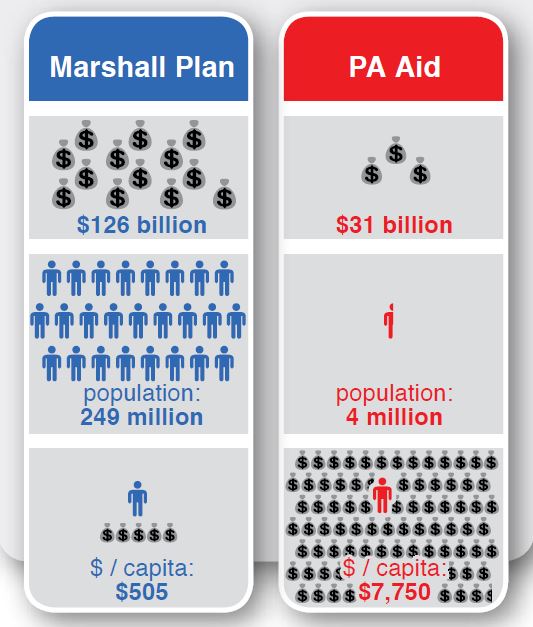
Discover how corrupt Palestinian leaders are pocketing Palestinian International Aid.
Downloads
Donations from Brazil to Gaza
How does international aid benefit terrorist organizations?
Article by Leandro Duchovni Silva
For the full report: Donations from Brazil to Gaza
On July 20, 2010, president Luiz Inácio Lula da Silva sanctioned a law (number 12.292) which allows for donations of up to R$ 25,000 000 to be transferred to the Palestinian Authority by the Brazilian government.
Donations from Brazil to Gaza are controlled by the United Nations Relief and Works Agency for Palestine Refugees in the Near East (UNRWA), which is an organization that has been providing food, medicine, and social services to the Palestinian people for 67 years. Unfortunately, UNRWA has never taken steps to withhold assistance to extremist groups; and in some cases, it has cooperated openly with terrorists. Now that Hamas is the ruling power in Gaza any international aid that UNRWA receives goes directly to this terrorist organization.
In just less than 5 years, Brazil has donated more than 24 million US dollars to Gaza in food and money, which goes directly to Hamas via UNRWA. The majority of the Brazilian population is unaware that this law exists because it's sanctioning was never broadcast in the media. It would appear that the government is purposefully keeping Brazilians ignorant of this law and the consequent inflation of already high taxes.
Since Gaza is under the control of Hamas, one has to wonder whether international aid ever reaches the suffering populace it was intended for. Experience tells us that most of the funds and supplies will end up in the hands of Hamas. “The funneling of international aid to finance terror by Hamas and other violent Islamist groups in the Gaza Strip is widespread and the world is hideously naive as regards the scope of the problem”, said Avi Dichter, former Shin Bet director and now the head of the Knesset’s powerful Foreign Affairs and Defense Committee.
An in-depth look at Gaza will reveal UNRWA’s obligation to Hamas if it wants to continue to operate in Gaza. The problem goes even deeper, UNRWA workers are permitted to openly affiliate with terrorist groups, in fact, it will helps in getting a job. Yoni Fighel, a former Israeli military governor in the Palestinian territories notes that, "as long as UNRWA employees are members of Fatah, Hamas, or PFLP [Popular Front for the Liberation of Palestine], they are going to pursue the interests of their party within the framework of their job … Who's going to check up on them to see that they don't? UNRWA? They are UNRWA."
Furthermore, UNRWA supports Hamas, and other terrorist groups, as part of the Palestinian landscape. Dr. Asaf Romirowsky, a Middle East historian, notes that UNRWA institutions have not only produced terrorist ideologues; they have also produced terrorist masterminds like Ibrahim Maqadama, who “helped create the military structure of Hamas,” according to Dore Gold, former Israeli ambassador to the United Nations. Gold is cited as saying that at least 46 terrorist operatives were students in UNRWA schools. Even UNRWA employees have been involved in terrorist attacks against civilians, with widespread reports of terrorism from UNRWA-supervised facilities, from schools to the transport of terrorists in UNRWA ambulances.
Despite the years of hardship Brazil is facing, politicians are still donating precious money that the country desperately needs to finance terrorist organizations in Gaza. It would be reasonable to assume that if the population of Brazil had known about this law, and the siphoning of their money to terrorist organizations, these donations would not have been permitted.